• 검색 결과가 없습니다.

Electrochemical Characterization of Lithium Polyelectrolyte Based on Ionic Liquid

N/A
N/A
Protected

Academic year: 2021

Share "Electrochemical Characterization of Lithium Polyelectrolyte Based on Ionic Liquid"

Copied!
5
0
0

로드 중.... (전체 텍스트 보기)

전체 글

(1)

− 271

Electrochemical Characterization of Lithium Polyelectrolyte Based on Ionic Liquid

E. H. Cha*, S. A. Lim

, D. W. Kim

††

, and N. S. Choi

†††

College of liberal arts & Science, Hoseo Univ., Asan Choongnam, 336-795, Korea

School of AIBN, Queensland University, Brisbane 6114, Australia

††

Dept of chemical Engineering HanYang Univ. Seungdonggu, Seoul, 133-791, Korea

†††

R&D Center, Samsung SDI Co. Ltd., 428-5, Gonse-dong, Gyeonggi-do 446-577, Korea (Received July 24, 2009 : Accepted August 25, 2009)

Five novel lithium polyelectrolyte-ionic liquid systems, using poly (lithium 2-acrylamido-2-methyl propanesulfonate; PAMPSLi) were prepared and their electrochemical properties were measured.

The ionic conductivity of the PAMPSLi/1-ethyl-3-methylimidazolium tricyano methanide (emImTCM) system was exhibited high conductivity (1.28 × 10

3

S/cm

1

). The high conductivity and low viscosity of PAMPSLi/emImTCM system is due to the high flexibility of imidazolium cation and dis- sociation of lithium cation from the polymer chains. The PAMPSLi/N,N-dimethyl-N-propyl-N- butylammonium tricyanomethanide (N

1134

TCM) and PAMPSLi/N, N-dimethyl-N-propyl-N-buty- lammonium dicyanamide (N

1134

DCA) systems showed fairly high conductivity (6.3 × 10

4

S/cm

1

, 6.0 × 10

4

S/cm

1

). PAMPSLi/Trihexyl (tetradecyl) phosphonium bis (trifluoromethane sulfonyl) amide (P

66614

TFSA) exhibited low conductivity (2.22 × 10

5

Scm

1

) and thermally stable over 400

o

C . Keywords : Conductivity, Imidazolium ionic liquid, Ammonium ionic liquids, Phosphonium ionic liquids, Viscosity

1. Introduction

Ionic liquids which are fascinating materials for a wide range of applications have the properties of large stable liquid range, fairly low viscosity, high conductivity and high thermal and electrochemical stability.

1,2,3)

The physical properties of polyelectrolyte based on imidazolium ionic liquid have been exten- sively studied for their application as electrolyte for batteries and capacitors,

4,5)

fuel cells, dye-sensitive solar cells and actuators. In most of these studies, N, N’ dialkyl- imidazolium salt, especially 1-ethyl- 3-mehyl-imidazolium salt was focused empirically because of low viscosity and correspondingly high ionic conductivity.

6)

The substitution of the methyl group has been shown increasing the electrochemi- cal stability of the imidazolium by over 0,25 V.

7,8)

In the case of lithium polyelectrolytes based on ionic liquids, the lithium ion transport number is usually

significantly small because of ion aggregation and strong association with polymer. The anion species is prefer to have weakly basic and a diffuse charge in order to enhance ionic conductivity and ion dis- sociation The viscosity of the ILs can be varied replacing different cations and anions with polymer.

Quaternary ammonium and phosphonium ILs tend to show somewhat higher viscosity and lower con- ductivity, but more thermal stability and low cost.

9)

Tricyanomethanide and dicyanamide is known to afford very low melting point, low viscosity.

10)

Bis (trifluoromethane sulfonyl amide ion is also known to reduced degree of ion interaction its diffuse charge generates.

This paper reports electrochemical properties of lithium polyelectrolyte based on imidazolium, ammonium and phosphonium liquids.

2. Experimental

The monomer, lithium 2-acrylamido-2-methyl-

*E-mail: [email protected]

(2)

propanesulfonate (AMPSLi), was prepared by the reaction of 2 acrylamide-2-methyl propanesulfonic acid (Aldrich) with lithium carbonate (Aldrich) in a water solution placed in an ice bath. The polymer was synthesized by polymerization of AMPSLi at 80

o

C in presence of K

2

SO

8

initiator (~1 wt%). The final polymer product, PAMPSLi was dried under vac- uum (~80 torr) at 65

o

C for at least 48 h.

11)

PAMPSLi and ionic liquids (10%polymer + 90%ionic liquid was mixed in ethanol over night and then. the transparent gel samples were obtained

11)

PAMPSLi/emImTCM (12-14), PAMPSLi/N

1134

TCM, PAMPSLi/N

1134

DCA, PAMPSLi/emImTFSA (15), PAMPSLi/P

66614

TFSA were prepared. (Scheme1).

Thermal analysis of samples was performed using a TA instruments differential scanning calorimeter (DSC Q100) at a scanning rate of 10

o

C/min over a tempera- ture range of 150

o

C to 150

o

C.(But in this paper the data of DSC was displayed from 150

o

C to 0

o

C).

Impedance measurements were carried out in a small conductance cell. The samples were loaded and her- metically sealed in the cell using a SI1260 imped- ance/gain phase analyzer and Solatron 1296 with Solatron impedance measurement software (v.3.2.0).

The cell constants were determined before and after measurements at room temperature using 0.01 M KCl solution. Measurements were taken at 10

o

C incre- ments from 25 to 65

o

C using the Eurotherm 2240E.

Viscosity of the ionic liquids was measured with an AMVn Automated Microviscometer at 25

o

C, 70

o

C and the ionic liquids were sealed in the sample tube under a nitrogen atmosphere.

A PerkinElmer thermo gravimetric Analyzer was used to test thermal stability of the ionic liquid and scan rate was 10.0

o

C/min from room temperature to 800

o

C.

1

H and

13

C NMR spectra were recorded on a Bruker DPX300 spectrometer for solutions in CDCL

3

. Peaks are noted below only if they were significantly resolved from neighboring peaks and/or the baseline. Tetram- ethylsilane was used as an internal standard. Posi- tive and negative ion electrospray mass spectra were recorded using a Micromass platform electrospray mass spectrometer on samples dissolved in methanol.

NMR data of 5 samples are as follow.

1. 1-ethyl-3-methylimidazolium tricyano meth- anide (emImTCM)

1

Hnmr (CDCl

3

): d 1.65 (t, 3H, CH

3

), 3.98 (s, 3H,

CH

3

), 4.30 (q, 2H, CH

2

), 7.38 (d, 2H, CH), 8.88 (s, 1H, CH).

13

Cnmr (CDCl

3

): d 14.2 (CH

3

), 35.7 (CH

3

), 44.7 (CH

2

), 120.4 (CH), 122.0 (CH). ES-MS: ES

+

m/z 110.6 emIm

+

. ES

-

m/z 89.5 TCM

-

.

2. N,N-dimethyl-N-propyl-N-butylammonium Tricyanomethanide (N

1134

TCM);

1

Hnmr (CH

2

Cl

2

):

d 1.03 (m, 6H, CH

3

), 1.45 (m, 2H, CH

2

), 1.82 (m, 4H, CH

2

), 3.08 (s, 6H, CH

2

), 3.32 (d, 4H, CH

2

), 4.67 (s, CH

2

).

ES

+

m/z 144.0 N

1134+

. ES

-

m/z 89.7 TCM

-

.

3. N, N-dimethyl-N-propyl-N-butylammonium dicyanamide (N

1134

DCA );

1

Hnmr (CH

2

Cl

2

): d 1.05 (m, 6H, CH

3

), 1.47 (m, 2H, CH

2

), 1.82 (m, 4H, CH

2

), 3.11 (s, 6H, CH

2

), 3.35 (d, 4H, CH

2

), 4.67 (s, CH

2

).

ES

+

m/z 143.9 N

1134+

. ES

-

m/z 65.7 DCA

-

.

4. 1-ethyl-3-methylimidazolium bis(trifluoro -meth- ane sulfonyl amide(emIm TFSA) (13)

1

Hnmr (400MHZ, DMSO) d 9.09 (s, 1H), 7.77- 7.68(m,2H),4.19(q,2H,J=7.3Hz), 3.84(s,3H0,1.42 (t,3H, J=7.3Hz)

5. Trihexyl (tetradecyl) phosphonium bis (trifluo- romethane sulfonyl) amide (P

6 6 6 1 4

TFSA)

1

Hnmr:dH(300MHZ;CCl

3

)2.0-2.3(8H,m,CH

2

), 1.4-1.5 (16H,m,CH2), 1.2-1.3(32H,m, CH

2

), 0.79-0.85 (12H, m, CH3) ppm. ES-MS: ES

+

m/483[P

66614

]+

ES-m/z 279[TFSA]-water content(Karl-Fisher): 141ppm, Cl ontent:<100ppm

3. Results and Discussion

The thermal trace of PAMPSLi/emImTCM (a),

Scheme1. (a) EmIm (b) N

1134

(c) P

66614

(3)

PAMPSLi/N

1134

TCM (b), PAMPSLi/ N

1134

DCA(c), PAMPSLi/P

66614

TFSA (d) are shown in Fig. 1. The T

g

of pure N

1134

DCA is not displayed and the emImTCM did not display any solid-solid transitions.

Although the T

g

of emImTFSA was measured, The PAMPSLi/emImTFSA system was immiscible, so the T

g

could not be shown in Fig. 1. Table 1 shows the glass transition temperature (T

g

) and viscosity of, polyelectrolyte based on ionic liquid; As you can see, the T

g

value of polyelectrolyte based on emImTCM, N

1134

TCM and emImTFSA samples have little dif- ference, but the viscosity value of emImTCM is the lowest of all samples.

EmImTCM exhibits the narrower window of electrochemical stability,

2)

but the charge delocaliza- tion occurs stronger and thus, the weaker ion-pairing with the imidazolium cation, providing the emImTCM less viscosity than N

1134

TCM and P

66614

TFSA. The viscosity of N

1134

TCM and N

1134

DCA is fairly low.

An acceptable explanation concerning the ammonium ILs indicates that electron donation from methyl group into cationic center can decrease the positive

charge on the nitrogen atom. Hence the electrostatic interaction between the cation and anion is weakened, which results in reducing both the viscosity.

16)

All polyelectrolyte samples except pure ionic liquids do not have a melting peak from 150

o

C to 0

o

C This means that the presence of polymer in ionic liquids hin- ders the crystallization of the ionic liquid.

15)

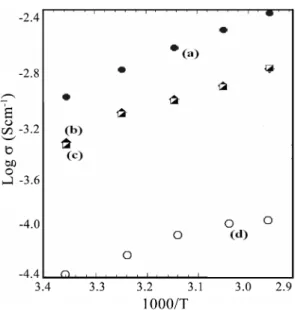
Fig. 3 shows the conductivity of PAMPSLi/emImTCM, PAMPSLi/

N

1134

TCM, PAMPSLi/ N

1134

DCA and PAMPSLi/

P

66614

TFSA(from 25

o

C to 65

o

C). The PAMPSLi - emImTFSA system was immiscible, so the conductivity of the PAMPSLi/emImTFSA could not be measured.

The conductivity of pure emImTFSA is 8.8×10

−3

Scm

−1

. The ionic

conductivity of the PAMPSLi/emImTCM system 1that of PAMPSLi/N

1134

TCM (6.3 × 10

−4

S/cm

−1

), PAMPSLi/N

1134

DCA (6.0×10

−4

S/cm

−1

) and PAMPSLi/

P

66614

TFSA(2.22 × 10

−5

Scm

−1

). High conductivity and low viscosity of PAMPSLi/emImTCM system is due to high flexibility of imidazolium cation by using the polymerizable anion.

17)

The lower viscosity of emImTCM (19.56 cP) than that of N

1134

TCM, and N

1134

DCA , emImTFSA and P

66614

TFSA is affected by higher ionic conductivity. Lower viscosity and dis- sociation of lithium cation from the polymer chains exhibit the higher conductivity. The conductivity of emImTCM is 20mScm

−1

at 25

o

C. This value is superior

Fig. 1. DSC thermograms of (a) PAMPSLi/emImTCM (b) PAMPSLi/N

1134

TCM (c)PAMPSLi/N

1134

DCA (d) PAMPSLi/

P

66614

TFSA

Table 1. Properties of polyelectrolyte

` T

g

(

o

C) σ η (cP)* σ *

a -85.49 1.28 19.56 20

b -86.63 0.63 28.6 20

c - 0.6 28.7 22

d -86.7* - 39 8.8

e -71.34 0.022 450 0.2

σ ( × 10

4

scm

1

); conductivity, η ; viscosity σ * : conductivity of Pure IL

Fig. 1. DSC thermograms of (a) PAMPSLi/emImTCM (b) PAMPSLi/N

1134

TCM (c)PAMPSLi/N

1134

DCA (d) PAMPSLi/

P

66614

TFSA.

Fig. 2. Conductivity of PAMPSLi/emImTCM (a) PAMPSLi/

N

1134

TCM (b) (c) PAMPSLi/N

1134

DCA (c) PAMPSLi/

P

66614

TFSA(d).

(4)

to that of emImTFSA (8.8 mS/cm) and N

1134

TCM (8 mScm

−1

), emImTFSA (8.8 mScm

−1

), P

66614

TFSA (0.89 mScm

−1

) and emImDCA (22 mScm

−1

).

2,14)

Although there was little difference between the T

g

values of emImTCM, N

1134

TCM and N

1134

DCA, the conductivity of PAMPSLi/emImTCM was found to be fairly higher than that of PAMPSLi/N

1134

TCM and PAMPSLi/N

1134

DCA. The ionic conductivity of N

1134

TCM and N

1134

DCA is not as high as that of most other ionic liquids. It is quite viscous by comparison with related ionic liquids (Table 1); this presumably reflects strong electrostatic interactions between ions.

The conductivity and viscosity provide the information on the mobility and aggregation of ions and ion-pairing phenomenon. The viscosity of the IL and its hydro- philicity are critical to achieving high conductivity.

15)

Generally phosphonium ionic liquid showed the lower viscosities and higher conductivities and those of the corresponding phosphonium bis (trifluoromethane sul- fonyl amide) and triethyl (2-methoxyethyl) phospho- nium bis (trifluoromethane sulfonyl amide), exhibited quite low viscosities (35 cP and 44 cP at 25

o

C, respectively) the viscosity of P

66614

TFSA exhibited the highest value of all samples which leads to a slow rate of diffusion of redox species. P

66614

TFSA are based on relatively large cations derived from Trihexyl (tetradecyl) phosphine and therefore, tend to have high viscosities due to their large molecular weights.

14)

Fig. 3 shows a thermogravimetrc trace for emImTCM.

emImTFSA and P

66614

TFSA. It was shown that emImTCM and emImTFSA are stable around 300

o

C, but the phosphonium ionic liquid was thermally stable over 400

o

C. Imidazolium cation is somewhat electro- chemically unstable in the lithium battery system because the catholic limiting potential is ca. +1.0 V vs Li/Li+.

9)

The Gr avimetric decrease of P

66614

TFSA was slower than those of exhibited more thermal stability than that of pure ionic liquid (a).

4. Conclusions

The ionic conductivity of the PAMPSLi/emImTCM system was exhibited high conductivity (1.28 × 10

−3

Scm

−1

). PAMPSLI/ emImTCM system exhib- ited more thermal stability than that of pure ionic liquid.

The ammonium ILs which had low viscosity and fairly high conductivity indicates that electron dona- tion from methyl group into cationic center can decrease the positive charge on the nitrogen atom. Hence the electrostatic interaction between the cation and anion is weakened, which results in reducing both the vis- cosity.

16)

The PAMPSLi/emImTCM, PAMPSLi/

N

1134

TCM and PAMPSLi/N

1134

DCA systems seem to be good electrolytes’ materials for secondary lithium battery. PAMPSLi/P

66614

TFSA exhibited high viscosity and thermal stability. It is believed that phosphonium types are a good alternative to other ionic liquids and thus deserve further research.

Acknowledgements

This work supported by Hoseo University grant (2007-0138)

Reference

1. Wataru Ogihara, Satiko Washiro, Hiromitsu nakajima, Hiroyuki Ohno, Electro- chimica Acta 51 , 2614-2619 (2006).

2. Qing Dai, David B. Menzies, and D. R. Macfarlane, Stuart R, Batten, Stewart Forsyth, Leone spiccia, Yi-Bing Cheng, Maria Forsyth, C.R.Chimie 9 , 617-621 (2006).

3. Hiroyuki Ohno, Masahiro Yoshizawa, and Wataru Ogihara, Electrochimica Acta 50 , 255-261 (2004).

4. A. Stewart, Forsyth, Jennifer M. Pringle, and Douglas R.

MacFarlane, Aust, J. Chem. 57 , 113-119 (2004).

5. A. B. McEwen, H. L. Ngo, K. LeCompte and J. L.

Goldman ,J.Electrochem Soc. 146 , 1687-1689 (1999).

Fig. 3. Thermogravimetri trace for emImTCM (a),

emImTFSA (b), P

66614

TFSA (c), PAMPSLi/ emImTCM (A

emImTCM and emImTFSA. The PAMPSLI/emImTCM

system (A)

(5)

6. Kaori Ito, Naoko Nishina, and hiroyuki Ohno, Electro- chimica Acta . 45 , 1295-1298 (2000).

7. Thomas E. Sutto, Hugh C. De long, and Paul C. Trulove Z.Naturforch.57a 839-846 (2002).

8. R. T. Carlin, J. Fuller, W. K. Kuhn, M. J. Lysaght, and P.

C. Trulove, J.Appl. Electrochem. 26 , 1147-1153 (1996).

9. Katsuhiko Tsunashima and masashi Sugiya, electrochemical and solid-state letter 1192) A17-A19 (2008).

10. Stewart A, Forsyth, Stuart R, Qing Dai, Douglas R.

Macfarlane, Aust.J. Chem. 57 , 121-124 (2004).

11. J, Travas-Sejdic, R. Steiner, Desilvestro, P. pickering, Elec- trochim. Acta 46 , 10-11 1461-1466 (2001).

12. F. M. Gray. Solid polymer Electrolytes: Fundamentals and Applications, VCH,New york, (1991).

13. J. Sun, D. R. Macfarlane, and M. Forsyth, Solid state ionics 147 , 333-339 (2002).

14. S. Forsyth, S. R. Batten, Q. Dai, and D. R. acfarlane, Aust. J.Chem. 57 , 121-124 (2004).

15. M. Forsyth, J, Sun, F. Zhou, R. MacFarlane, Electro- chimica Acta 48 , 2129-2136 (2003).

16. Katsuhiko Tsunashima and masashi Sugiya, electroche- mistry communication 9 , 2353-2358 (2007).

17. E. H. Cha, S. A. Lim, J. H. Park, D. W. Kim, and D. R.

Macfarlane, J.of power sources 178 , 779-782 (2008).

수치

Table 1. Properties of polyelectrolyte
Fig. 3 shows a thermogravimetrc trace for emImTCM.

참조

관련 문서

Protic ionic liquid as electrolyte for high-densities electrochemical double layer capacitors with activated carbon electrode material?. Fabrication and

Abstract−A series of Brønsted-Lewis acidic ionic liquid (BLAIL) catalysts consisting of sulfonated ionic liquid [SO 3 H-pmim]Cl and Sn(II) chloride have been synthesized

이미다졸늄 이온성 액체 (1-methyl-3- propylimidazolium iodide, PMI-I)에 비전도성 폴리아닐린 (Emeraldine Base)을 30 wt%이상 첨가하였을 때 준고형화 현상이

이온성 액체, 1-ethyl-3-m ethylimidazolium tetrafluoroborate와 고분자, poly(vinylidenefluoride)-hexafluoro propyl copolymer(PVdF-HFP, Aldrich)를 이용하여

When the cation of ionic liquids was 1-ethyl-3-methylimidazolium[emim], CO 2 permeability of gel membranes containing bis(trifluoro- methane)sulfoneimide(Tf 2 N - ) anion

Some of merits associated with the use of ILs for fabricating EES devices are as follows: (a) the characteristic properties of IL, includes thermal stability, ionic conductivity,

Cumulative mass flux during 50 years with different extended length of HDPE sheet in clay hydraulic conductivity of 1×10

Recently, we isolated mutant Saccharomyces cerevisiae strains resistant to the ionic liquid 1-ethyl-3-methylimidazolium acetate ([EMIM][Ac]) by using a directed evolutionary