Korean Journal of Microbiology (2019) Vol. 55, No. 3, pp. 296-299 pISSN 0440-2413
DOI https://doi.org/10.7845/kjm.2019.9092 eISSN 2383-9902
Copyright ⓒ 2019, The Microbiological Society of Korea
건강한 한국인 분변으로부터 분리된 Bacteroides sp. KGMB 02408 균주의
유전체 염기서열 초안
유승엽1 ・ 김지선1 ・ 오병섭1 ・ 유승우1 ・ 박승환1 ・ 강세원1 ・ 박잠언1 ・ 최승현1 ・ 한국일1 ・ 이근철1 ・ 엄미경1 ・ 서민국1 ・ 김한솔1 ・ 이동호2 ・ 윤혁2 ・ 김병용3 ・ 이제희3 ・ 이정숙1,4 ・ 이주혁1*
1한국생명공학연구원 생물자원센터, 2분당서울대학교병원, 3천랩, 4과학기술연합대학원대학교
Draft genome sequence of
Bacteroides sp. KGMB 02408 isolated from
a healthy Korean feces
Seung Yeob Yu1, Ji-Sun Kim1, Byeong Seob Oh1, Seoung Woo Ryu1, Seung-Hwan Park1, Se Won Kang1, Jam-Eon Park1, Seung-Hyeon Choi1, Kook-Il Han1, Keun Chul Lee1, Mi Kyung Eom1, Min Kuk Suh1, Han Sol Kim1, Dong Ho Lee2, Hyuk Yoon2, Byung-Yong Kim3, Je Hee Lee3, Jung-Sook Lee1,4, and Ju Huck Lee1*
1
Korean Collection for Type Cultures, Korea Research Institute of Bioscience and Biotechnology, Jeongeup 56212, Republic of Korea
2Seoul National University Bundang Hospital, Seongnam 13620, Republic of Korea 3ChunLab, Inc., Seoul 06725, Republic of Korea
4
University of Science and Technology (UST), Daejeon 34113, Republic of Korea
(Received August 13, 2019; Revised September 4, 2019; Accepted September 4, 2019)
*For correspondence. E-mail: [email protected]; Tel.: +82-63-570-5634; Fax: +82-63-570-5609
The genus of Bacteroides has been isolated from vertebrate animal feces. Bacteroides sp. KGMB 02408 was isolated from fecal samples obtained from a healthy Korean. The whole- genome sequence of Bacteroides sp. KGMB 02408 was analyzed using the PacBio Sequel platform. The genome comprises a 5,771,427 bp chromosome with a G + C content of 39.50%, 5,005 total genes, 18 rRNA genes, and 74 tRNA genes. Furthermore, we found that strain KGMB 02408 had some genes for oxidoreductases and menaquinone biosynthesis in its genome based on the result of genome analysis. Keywords: Bacteroides sp. KGMB 02408, human feces,
mena-quinone
Various symbiotic microorganisms exist in the human intestine. Gram-negative Bacteriodetes accounts for a large
proportion of intestinal microorganisms in healthy adults, most of which are Bacteroides, Alistipes, and Prevotella (The Human Microbiome Project Consortium, 2012). The genus Bacteroides was first proposed by Castellani and Chalmers (1919). Members of the genus Bacteroides are Gram-negative, non-spore-forming, rod-shaped, non-motile and strictly anae-robic bacteria, and comprise more than 92 species (Paster et al., 1994; Smith et al., 2006). As a remarkable genus within the Bacteroidetes phylum, Bacteroides species are one of the most numerous groups of microbiota found in gastrointestinal tract and feces (109–1011 cells/g) of humans and animals, suggesting their strong adaptation in the gut (Finegold et al., 1983). They have various biochemical mechanisms to adopt and survive in the intestinal environment; for example, reducing oxygen level in the gut, degrading and fermenting organic substances pre-sent in the colon, and causing host to produce certain food
Draft genome sequence of Bacteroides sp. KGMB 02408∙
297
Korean Journal of Microbiology, Vol. 55, No. 3
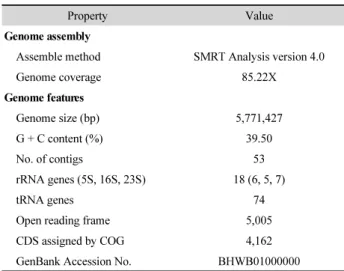
Table 1. General features of Bacteroides sp. KGMB 02408
Property Value
Genome assembly
Assemble method SMRT Analysis version 4.0
Genome coverage 85.22X Genome features Genome size (bp) 5,771,427 G + C content (%) 39.50 No. of contigs 53 rRNA genes (5S, 16S, 23S) 18 (6, 5, 7) tRNA genes 74
Open reading frame 5,005
CDS assigned by COG 4,162
GenBank Accession No. BHWB01000000
source such as fucosylated glycoprotein consumed by other microorganisms (Wexler et al., 2007; Xu et al., 2007). Furthermore, they can metabolize starch, pullulan and gly-cogen in the gastrointestinal tract due to their polysaccharide utilization gene cluster (Koropatkin et al., 2012). Since the Bacteroides species possess the abilities and characters men-tioned above, they can provide favorable gut environment for other microorganism and maintain host’s gut health and ho-meostasis. Recently, a novel bacterial strain designated KGMB 02408 was isolated from a healthy Korean feces. On the basis of the phylogenetic, phenotypic and chemotaxonomic cha-racteristics, strains KGMB 02408 (= KCTC 15687T = SSUB 10523T) was found to belong to a novel species as a member of the genus Bacteroides within the family Bacteroidaceae of Bacteroidia. Here, we described the draft genome sequence and annotation of Bacteroides sp. KGMB 02408 isolated from a healthy Korean feces.
The Bacteroides sp. KGMB 02408 was grown in Tryptic Soy Agar (BD) supplemented with 5% sheep blood (TSAB) in anaerobic chamber (Coy Laboratory Products) containing 90% N2, 5% H2, and 5% CO2. To obtain the genomic DNA of strain KGMB 02408, the grown cells on TSAB plates were collected by the loop and then a Wizard genomic DNA purification kit (Promega) was used to extract the genomic DNA. The purified genomic DNA shearing to a size of 10 kb was done by using a g-TUBETM device according to the manufacturer’s instructions (Covaris). Fragmented DNA size was measured by the Agilent 2100 Bioanalyzer with the DNA 12000 assay (Agilent) and quantity was analyzed by a Qubit 2.0 fluorometer with a Qubit dsDNA HS Assay Kit (Invitrogen). Single-Molecule Real- Time (SMRT) bell library was prepared according to the manufacturer’s instructions (Pacific Biosciences) without a non-size selection. Genome sequencing was performed using a Pacific Biosciences Sequel (Pacific Biosciences) with 2.0 sequencing chemistry and 600 min movies.
The De novo genome assembly was performed with the Hierarchical Genome Assembly Process (HGAP4) pipeline in the SMRT Analysis version 4.0 using default parameters. Po-tential contamination in genome assembles were checked by the Contamination Estimator by 16S (ContEst16S) and CheckM tools (Li et al., 2015; Parks et al., 2015). The gene prediction algorithm called Prodigal and tRNAscan-SE were used to
search coding DNA sequences (CDSs) and tRNAs, respectively. The CRISPRs were found using PILER-CR and CRISPR Recognition Tool (CRT), and rRNAs and other non-coding RNAs were searched by covariance model search with in-ference of Rfam 12.0. Each of the CDSs was annotated by homology search against Swiss-prot, SEED, EggNOG 4.5, and KEGG databases.
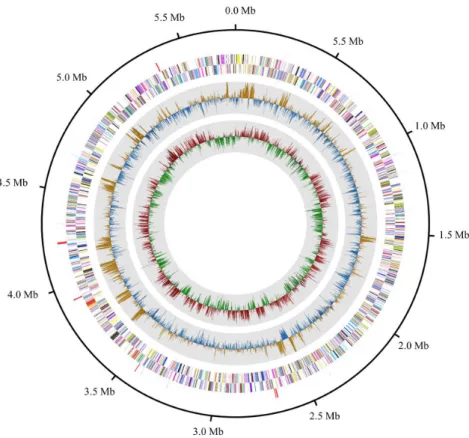
The Table 1 shows the genome statistics; the draft genome of Bacteroides sp. KGMB 02408 is composed of a 5,771,427 bp chromosome with a G + C content of 39.5%. The genome is showed to contain 5,005 CDSs, 18 rRNAs (5S, 16S, 23S), and 74 tRNAs (Fig. 1). A total of 4,162 genes were functionally assigned to categories based on clusters of orthologous group (COG) assignments. The majority of the genes are related to recombination and repair [348 genes (8.36%)] and cell wall/ membrane/envelope biogenesis [319 genes (7.66%)].
We have identified a variety of genes involved in oxidative- reductive reaction and menaquinone biosynthesis in the genome. Interestingly, our previous data showed that strain KGMB 02408 was capable of producing acids from D-xylose by de-hydrogenase. Moreover, the menaquinone 8 and menaquinone 10 were detected as the major respiratory quinones in KGMB 02408. The genome contains family of the oxidoreductases such as D-xylose 1-dehydrogenase (NADP) HDHD and xdh genes. These genes are involved in D-xylose metabolism, pro-ducing D-xylono-1,5-lactone, NADPH and H+ from D-xylose and NADP+. The genome sequence also revealed the genes for quinone biosynthesis such as demethylmenaquinone
methyl-298
∙ Yu et al.미생물학회지 제55권 제3호
Fig. 1. Graphical circular map of Bacteroides sp. KGMB 02408. From the center to the outside: GC skew (red and green), G + C content (yellow and blue), CDSs on the reverse strand (colored by COG categories), CDS on the forward strand (colored by COG categories), and RNA genes (rRNAs-red and tRNAs-blue).
transferase ubiE and 1,4-dihydroxy-2-naphthoate polyprenyl-transferase menA genes. In particular, the ubiE gene catalyzes a chemical reaction, generating menaquinol and S-adenosyl- L-homocysteine from demethylmenaquinol and S-adenosyl-L- methionine in the last step of menaquinone biosynthesis. In addition, the genome has isoprenoid synthesis gene such as isopentenyl-diphosphate Delta-isomerase IdI. This isomeri-zation is a key step in the biosynthesis of isoprenoids through the mevalonate pathway and the MEP pathway, hence strain KGMB 02408 is expected to produce long-chain menaqui-nones such as menaquinone 8. The draft genome sequence of Bacteroides sp. KGMB 02408will contribute to understanding the physiological functions of Bacteroides sp. KGMB 02408 in the gut.
Based on the 16S rRNA gene sequence similarity and average nucleotide identity, the strain KGMB 02408 is most closely related to Bacteroides faecichinchillae KCTC 15666T with the values of 96.5%.
Nucleotide sequence accession number
Bacteroides sp. KGMB 02408 has been deposited in the Korean Collection for Type Cultures under accession number KCTC 15687. The GenBank/EMBL/DDBJ accession number for the genome sequence of Bacteroides sp. KGMB 02408 is BHWB01000000.
적 요
Bacteroides 속 균주들은 척추동물의 분변 등에서 분리된 것으로 알려져 있다. 본 연구에서는 건강한 한국인 분변으로 부터 Bacteroides sp. KGMB 02408 균주를 분리하였으며 PacBio Sequel 플랫폼을 이용하여 Bacteroides sp. KGMB 02408 균주의 유전체서열을 분석하였다. 유전체는 G + C 구 성 비율이 39.5%이고, 5,005개의 유전자와 rRNA 18개 tRNA 74개로 구성되었으며, 염색체의 크기는 5,771,427 bp였다. 또 한, 유전체 분석 결과를 통해 산화-환원 효소와 메나퀴논 생합 성 및 그와 관련된 다양한 유전자를 발견하였다.
Draft genome sequence of Bacteroides sp. KGMB 02408∙
299
Korean Journal of Microbiology, Vol. 55, No. 3
Acknowledgements
This work was supported by the Bio & Medical Technology Development program (Project No. NRF-2016M3A9F394 7962) of the National Research Foundation of Korea (NRF) funded by the Ministry of Science and ICT (MSIT) of the Republic of Korea and a grant from the Korea Research Institute of Bioscience & Biotechnology (KRIBB) Research initiative program.
References
Castellani A and Chalmers AJ. 1919. Manual of tropical medicine, pp. 959–960. 3rd ed., Williams Wood & Co., New York.
Finegold SM, Sutter VL, and Mathisen GE. 1983. Normal indigenous intestinal flora (pp. 3–31) in Human intestinal microflora in health and disease. Academic Press ISBN 0-12-341280-3. Koropatkin NM, Cameron EA, Martens EC. 2012. How glycan
metabolism shapes the human gut microbiota. Nat. Rev. Micro-biol. 10, 323–335.
Li X, Jensen RL, Højberg O, Canibe N, and Jensen BB. 2015.
Olsenella scatoligenes sp. nov., a 3-methylindole- (skatole) and 4-methylphenol- (p-cresol) producing bacterium isolated from pig faeces. Int. J. Syst. Evol. Microbiol. 65, 1227–1233. Parks DH, Imelfort M, Skennerton CT, Hugenholtz P, and Tyson GW.
2015. CheckM: assessing the quality of microbial genomes recovered from isolates, single cells, and metagenomes. Genome Res. 25, 1043–1055.
Paster BJ, Dewhirst FE, Olsen I, and Fraser GJ. 1994. Phylogeny of Bacteroides, Prevotella, and Porphyromonas spp. and related bacteria. J. Bacteriol. 176, 725–732.
Smith CJ, Rocha ER, and Paster BJ. 2006. The medically important Bacteroides spp. in health and disease. In Dworkin M, Falkow S, Rosenberg E, Schleifer KH, Stackebrandt E, et al. (eds.). The Prokaryotes: A Handbook on the Biology of Bacteria, 3rd ed., Vol. 7, pp. 381–427. Springer, New York, USA.
The Human Microbiome Project Consortium. 2012. Structure, function and diversity of the healthy human microbiome. Nature 486, 207–214.
Wexler HM. 2007. Bacteroides: the Good, the Bad, and the Nitty- Gritty. Clin. Microbiol. Rev. 20, 593–621.
Xu J, Mahowald MA, Ley RE, Lozupone CA, Hamady M, Martens EC, Henrissat B, Coutinho PM, Minx P, Latereille P, et al. 2007. Evolution of symbiotic bacteria in the distal human intestine. PLoS Biol. 5, e156.