저작자표시-비영리-변경금지 2.0 대한민국 이용자는 아래의 조건을 따르는 경우에 한하여 자유롭게 l 이 저작물을 복제, 배포, 전송, 전시, 공연 및 방송할 수 있습니다. 다음과 같은 조건을 따라야 합니다: l 귀하는, 이 저작물의 재이용이나 배포의 경우, 이 저작물에 적용된 이용허락조건 을 명확하게 나타내어야 합니다. l 저작권자로부터 별도의 허가를 받으면 이러한 조건들은 적용되지 않습니다. 저작권법에 따른 이용자의 권리는 위의 내용에 의하여 영향을 받지 않습니다. 이것은 이용허락규약(Legal Code)을 이해하기 쉽게 요약한 것입니다. Disclaimer 저작자표시. 귀하는 원저작자를 표시하여야 합니다. 비영리. 귀하는 이 저작물을 영리 목적으로 이용할 수 없습니다. 변경금지. 귀하는 이 저작물을 개작, 변형 또는 가공할 수 없습니다.
농학박사학위논문
한국의 세균성 풋마름병 감염 감자에서 분리한
Ralstonia solanacearum
의 유전체 해독 및 비교분석
Comparative genome analysis of Ralstonia solanacearum
causing potato bacterial wilt in Korea
2018년 2월
서울대학교 대학원
농생명공학부 식물미생물학전공
조 희 정
Comparative genome analysis of Ralstonia solanacearum
causing potato bacterial wilt in Korea
A dissertation submitted in partial
fulfillment of the requirement for
the degree of
DOCTOR OF PHILOSOPHY
to the Faculty of
Department of Agricultural Biotechnology
at
SEOUL NATIONAL UNIVERSITY
by
Heejung Cho
February, 2018
i
Comparative genome analysis of Ralstonia solanacearum
causing potato bacterial wilt in Korea
Heejung Cho
ABSTRACT
Ralstonia solanacearum, causal agent of bacterial wilt, is one of the
most destructive phytopathogen in the world. Soil-borne this bacterium invades plants mainly through the roots, colonizes and proliferates in the xylem, as the results plants wilt by blocking water. R. solanacearum has unusual broad host range over 450 plant species of 50 botanical families. This bacterium distributed worldwide encompassing tropical, subtropical, and temperate region. With these features, this species are very diverse and complex and call as pathogenic Ralstonia solanacearum species complex (RSSC). This study used 93 RSSC isolates collected from potato bacterial wilt (or brown rot) from 1998 to 2003 in Korea. To investigate the host specific factors by comparative genomic analyses, first, their properties were determined by analyzing of phylotype, biovar, and host range. Of the 93 isolates, 71 isolates determined to phylotype I and these divided into
ii
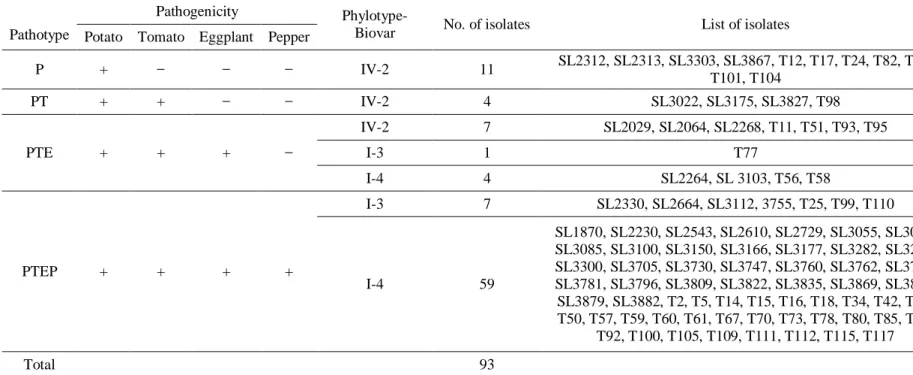
eight isolates of biovar 3 and sixty-three isolates of biovar 4. Twenty-two isolates determined to phylotype IV and these were all biovar 2. This phylotype-biovar classification was consistent with phylogenetic trees based on 16S rRNA and egl gene sequences, in which all biovar 3 and 4 isolates clustered to phylotype I, and all biovar 2 isolates clustered to phylotype IV. Korean phylotype IV isolates were distinct from phylotype I isolates pathologically as well as genetically, which was all phylotype IV isolates were nonpathogenic to peppers. In pathogenicity assays for host range determining, there were four pathotypes: (P) only pathogenic on potato, (PT) pathogenic on potato and tomato, (PTE) pathogenic on potato, tomato, and eggplant, and (PTEPe) pathogenic on all tested crops – potato, tomato, eggplant, and pepper. Based on this host range, twenty-five strains were selected and sequenced whole genome. The newly sequenced 25 Korean genomes were structurally compared with previously published nine genome data using ANI values, pair-wise and multiple genome alignment. As the results, genome sequences were usually conserved among the same phylotypes, but more divergent between phylotype I and IV. After that, to investigate candidate genes responsible for host specificity, functional genome comparisons were performed based on the host range by analyzing of pan-genome and type III secretion system effectors (T3Es). The same pathotype strains exhibited considerable gene repertoires for infection of
iii
tomato, eggplant, or pepper. In pan-genome analysis, total 127 genes present only in tomato nonpathogenic strains, 8 genes in tomato pathogenic strains, 5 genes from eggplant nonpathogenic strains, 7 genes from eggplant pathogenic strains, one gene from pepper nonpathogenic strains, and 34 genes from pepper pathogenic strains. In T3Es analysis, RipH3 and RipS3 were found only in the tomato pathogenic strains and RipAC were only in the eggplant pathogenic strains. This study showed that the host range of R.
solanacearum required comprehensive actions of various virulence factors
involving effectors, secretion systems, attachment, and enzymes, etc.
KEY WORDS: Ralstonia solanacearum, potato bacterial wilt, pathogen, diversity, phylotype, comparative genome, type III effector
iv
CONTENTS
Page
ABSTRACT ... i
CONTENTS ... iv
LIST OF TABLES ... vii
LIST OF FIGURES ... ix
LIST OF ABBREVIATIONS ... xi
GENERAL INTRODUCTION ... 1
LITERATURE CITED ... 9
CHAPTER I. ANALYSIS OF GENETIC AND PATHOGENIC DIVERSITY OF RALSTONIA SOLANACEARUM CAUSING POTATO BACTERIAL WILT IN KOREA ABSTRACT ... 20
INTRODUCTION ... 22
MATERIALS AND METHODS ... 25
1. Collection of isolates and culture conditions ... 25
2. Isolation of genomic DNA ... 25
3. Phylotype identification ... 26
4. Biovar determination ... 27
5. Detection of rsa1 gene ... 28
6. Phylogenetic analysis of 16S rRNA and partial endoglucanase (egl) gene sequences ... 28
7. Host range determination ... 30
RESULTS ... 32
1. Determination of biovar, phylotype, and rsa1 gene ... 32
v
3. Phylogenetic analysis of 16S rRNA and partial endoglucanase
(egl) gene sequences ... 40
4. Host range determination ... 44
DISCUSSION ... 48
LITERATURE CITED ... 53
CHAPTER II. COMPARATIVE GENOME ANALYSIS OF RALSTONIA SOLANACEARUM CAUSING POTATO BACTERIAL WILT IN KOREA ABSTRACT ... 60
INTRODUCTION ... 62
MATERIALS AND METHODS ... 66
1. Strain selection ... 66
2. Genome sequencing ... 69
3. Structural genome comparisons ... 70
4. COG distribution and Pan-genome Orthologous analysis (POG) ... 70
5. Effectors prediction ... 71
6. Genome submission ... 71
RESULTS ... 72
1. General genome features ... 72
2. Structural Genome comparisons: OrthoANI analysis, Pair-wise and Multiple genome alignments ... 76
3. Clusters of Orthologous Group (COG) distribution ... 92
4. Functional genome comparison: phylotype-biovar ... 97
5. Functional genome comparison: host specificity ... 99
vi
DISCUSSION ... 129
LITERATURE CITED ... 135
vii
LIST OF TABLES
Page
CHAPTER I
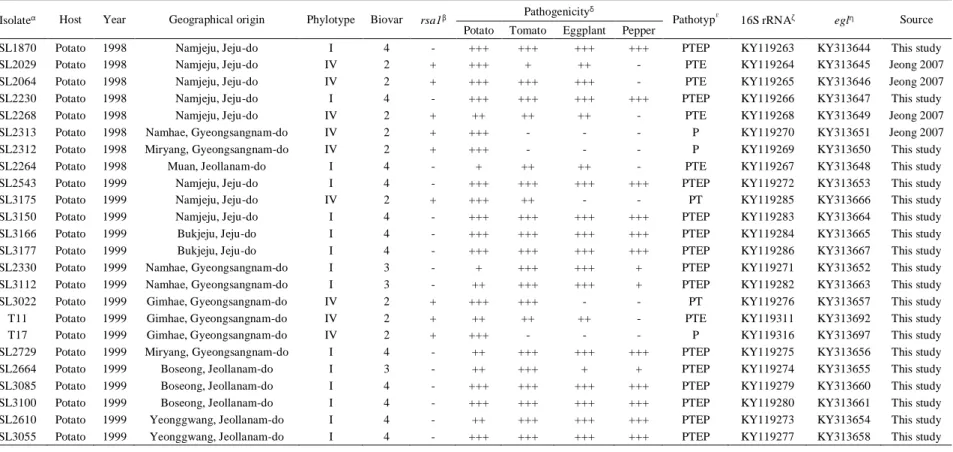
Table 1. Host, year, geographical origin, phylotype, biovar, presence of rsa1 gene, pathogenicity, pathotype, and GenBank accession numbers of 16S rRNA and endoglucanase of the ninety-three R. solanacearum isolates used in this study ... 34 Table 2. Host range of Korean R. solanacearum isolates ... 46
CHAPTER II
Table 1. List of Ralstonia solanacearum strains selected
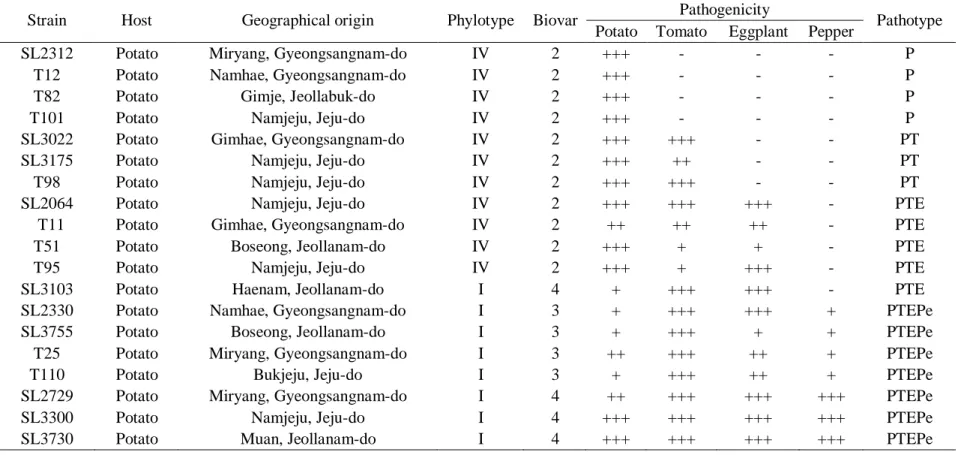
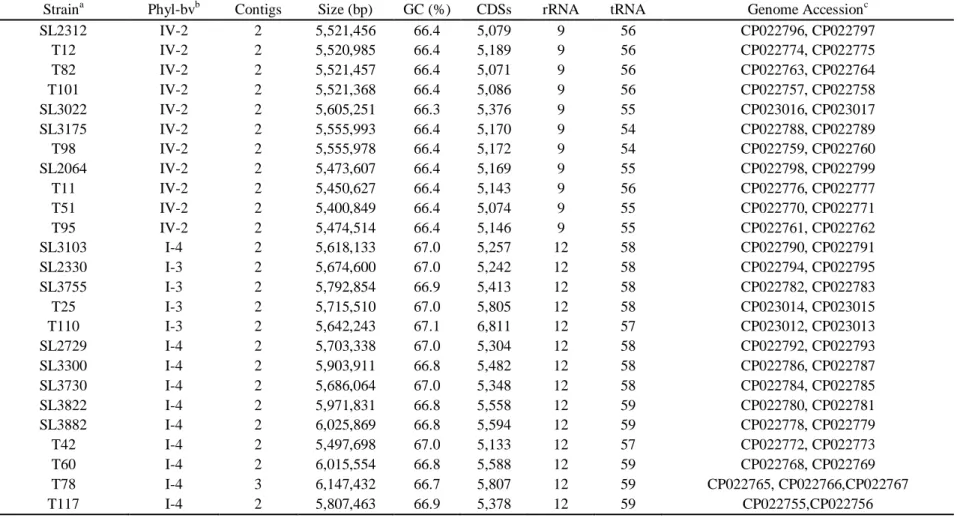
for genome analysis ... 67 Table 2. General genome features of Ralstonia solanacearum strains
sequenced for this work ... 74 Table 3. Pairwise OrthoANI values among the twenty-five Korean and
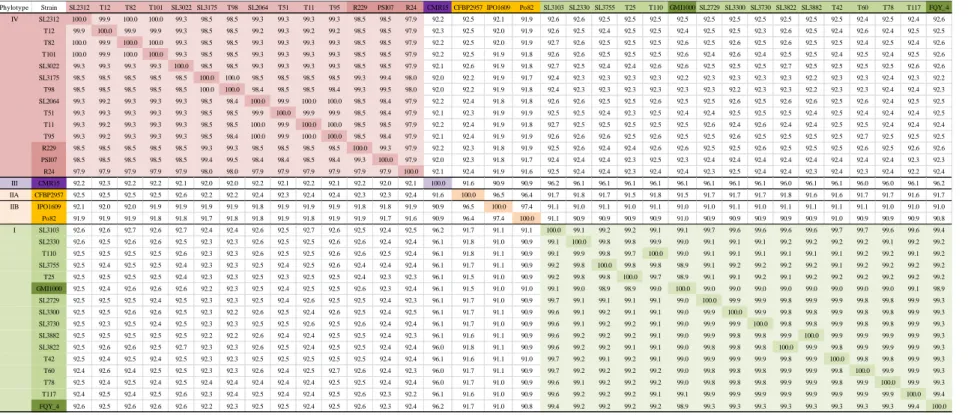
reference strains ... 79 Table 4. The clusters of orthologous groups (COG) functional categories
in twenty-five Korean R. solanacearum strains ... 93 Table 5. Specific gene numbers of tomato, eggplant, and pepper-pathogenic and nonpathogenic R. solanacearum strains ... 100 Table 6. The list of 127 genes present specifically only in 4 tomato
nonpathogenic strains ... 102 Table 7. The list of 8 genes present specifically in 21 tomato
pathogenic strains ... 108 Table 8. The list of 5 genes present specifically only in 7 eggplant
nonpathogenic strains ... 111 Table 9. The list of 7 genes present specifically in 18 eggplant pathogenic
viii
strains ... 114 Table 10. The list of 34 genes present specifically in 13 pepper pathogenic
strains ... 115 Table 11. A gene presents specifically only in 12 pepper nonpathogenic
ix
LIST OF FIGURES
Page
CHAPTER I
Figure 1. Potato-growing areas and geographic locations infected with potato bacterial wilt in Korea from 1998–2003 ... 39 Figure 2. Phylogenetic trees of 16S rRNA (A) and partial endoglucanase
(egl) gene sequences (B) analyzed by ClustalW with 1,000 bootstrap replicates using MegAlign of DNASTAR Lasergene 8
... 42 Figure 3. Host range determination of Ralstonia solanacearum on tomato,
eggplant, and pepper ... 47
CHAPTER II
Figure 1. Phylogenetic tree using genomes of 25 Korean and 9 reference
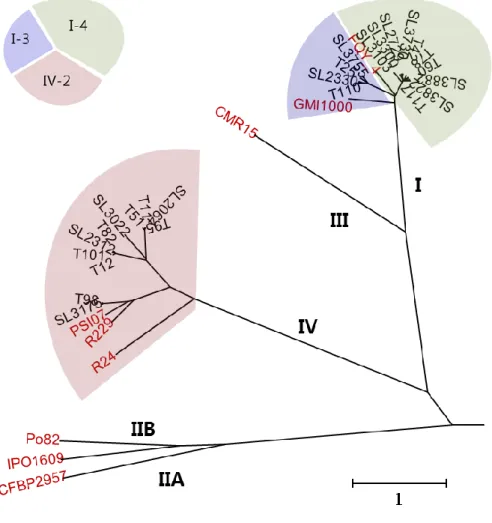
R. solanacearum strains based on OrthoANI value ... 80 Figure 2. Pairwise genome alignment of Korean R. solanacearum strains
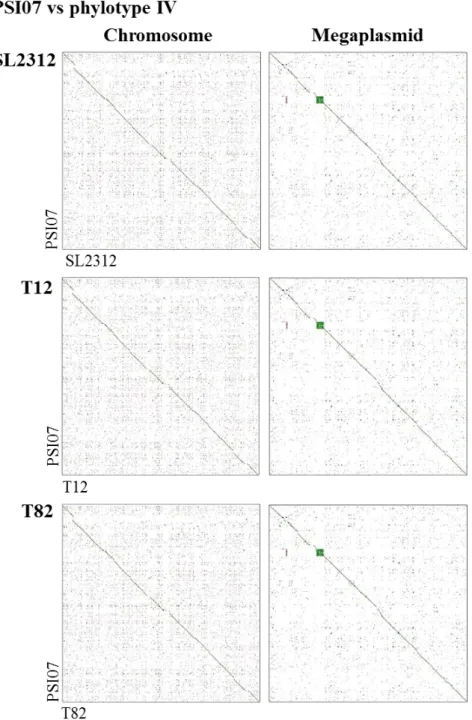
to reference strain GMI1000 for phylotype I or PSI07
for phylotype IV ... 81 Figure 3. Multiple genome alignment for 25 Korean R. solanacearum
strains produced using Mauve software ... 90 Figure 4. Graph of COG functional categories of twenty-five Korean strains
... 95 Figure 5. Venn diagrams of predicted genes for 25 Korean R. solanacearum
according to the phylotype -biovar ... 98 Figure 6. The unique genetic region for tomato nonpathogenic
x
Figure 7. Genetic region of specific gene of tomato pathogenic strains
... 109 Figure 8. Genetic region of specific gene of eggplant nonpathogenic
phylotype IV strains POG_2312_02083 (A) and (B) predicted functional domain ... 112 Figure 9. Genetic region of POG_2330_04180~04191 specific genes for
pepper pathogenic phylotype I strains ... 117 Figure 10. Graph of predicted effector gene numbers ... 119 Figure 11. Distribution of the type III effectors genes of 25 Korean strains
and reference GMI1000 and PSI07 strain ... 121 Figure 12. Data showed the rearrangement of the presence of T3SS effectors
in twenty-five Korean strains and reference GMI1000 and PSI07 strains ... 122 Figure 13. Genetic regions of RipS3 (A) and RipH3 (B) coding gene
specific for tomato pathogenic strains, and predicted functional domain of RipS3 (C) ... 124 Figure 14. Genetic regions of RipAC coding gene (A) specific for eggplant pathogenic strains and predicted functional domain (B) ... 127 Figure 15. Genetic organization of three T2SS gene clusters in phylotype IV
xi
LIST OF ABBREVIATIONS
AFLP Amplified fragment length polymorphism ANI Average nucleotide identity
BDB Blood disease bacterium
BLAST Basic local alignment search tool bp Base pair
DNA Deoxyribonucleic acid EPS Exopolysaccharides
FAO Food and agricultural organization
HRP Hypersensitive response and pathogenicity
ITS 16S-23S rRNA internal transcribed spacer sequence LRR Leucine rich repeat domains
NCBI National center for biotechnology information PCR Polymerase chain reaction
RFLP Restriction fragment length polymorphism Rip Ralstonia injected protein
RSSC Ralstonia solanacearum species complex
T3E Type III effector
T2SS Type II secretion systems T3SS Type III secretion system TZC Tetrazolium chloride
1
GENERAL INTRODUCTION
Bacterial wilt disease occurring in economically important solanaceous crops (tomato, potato, tabacco, pepper, and eggplant) is caused by Ralstonia solanacearum, which is one of the most destructive phytopathogenic bacteria worldwide (Hayward, 1991). R. solanacearum is rod shaped gram-negative bacteria having a flagellum, and belonged to burkholderiaceae family of betaproteobacteria class. This bacterium produces massive fluidal white exopolysaccharides (EPS) on glucose or sucrose containing agar medium, and forms white with pink centered colonies on tetrazolium chloride (TZC) agar (Kelman, 1954). R.
solanacearum is a soil-borne pathogen and can live several years without
host. This bacterium invades host vascular tissues through wounded roots or natural openings. The colonization and production of EPS in the stem block water in the xylem and results in wilting and death of the host plant (Denny, 2006).
R. solanacearum have an unusually broad host range over 450 plant
species belonging to more than 50 families, encompassing monocots and dicots, and herbaceous and woody plants (Hayward, 1991; Jiang et al., 2017; Wicker et al., 2007). R. solanacearum exists in distinct geographical regions,
2
which include tropical, subtropical, warm and some cool temperate areas across the six continents - Asia, Africa, Europe, North and South America, and Oceania (Denny, 2006; Hayward, 1991). These features were well shown in the review paper of China (Jiang et al., 2017). R. solanacearum was prevalent in tropical and subtropical regions and observed various host plants not only herbaceous plants but also woody plants including mulberry, olive, and Eucalyptus spp. (Jiang et al., 2017).
R. solanacearum has revealed great diversity in the genetic and
phenotypic properties as the host range, and this species is called as the R.
solanacearum species complex (RSSC) (Fegan and Prior, 2005; Genin and
Denny, 2012). The first applying term “species complex” to R.
solanacearum was by Gillings and Fahy in 1994 to reflect the genetic
variations. The concept of R. solanacearum species complex expended to include R. syzygii and the blood disease bacterium (BDB), which were closely related organisms, by Tahgavi et al. in 1996.
Traditionally, R. solanacearum has been classified with “races” and “biovars” system, which were based on host range and carbohydrate utilization (Buddenhagen et al., 1962; Hayward, 1964; He et al., 1983; Pegg and Moffett, 1971). Races system, which was suggested by Buddenhagen in 1962 with 3 races, classified this bacterium into 5 races according to host
3
range. Race 1 was strains of pathogenic to tomato, tobacco, many solanaceous and diploid bananas, race 2 was to triploid bananas and Heliconia, race 3 was to potato and tomato, race 4 was to mulberry in China, and race 5 was to ginger in Australia. “Biovars” was proposed by Hayward in 1964. It was divided into five biovars by the ability to oxidize 3 disaccharides (lactose, maltose, and cellobiose) and 3 hexose alcohols (mannitol, sorbitol, and dulcitol) (Hayward, 1964). Biovar 1 oxidized none of six carbohydrates, biovar 2 oxidized 3 disaccharides but not 3 hexose alcohols, biovar 3 oxidized all six carbohyrates, biovar 4 oxidized 3 hexose alcohols but not 3 disaccharides, and biovar 5 oxidized 3 disaccharides and mannitol. Because biovar 2 strains obtained solely from potato and tomato, it was correlated to race 3. But, there were no more correlations between races and biovars.
In 2005, based on the 16S-23S rRNA internal transcribed spacer (ITS) sequence, “phylotypes” scheme was used to classifying of R.
solanacearum. It was determined by amplified PCR fragments using
phylotype specific multiplex primer mixture (Fegan and Prior, 2005). This scheme corresponded to geographic origin; phylotype I included strains isolated primarily from Asia region, phylotype II from the Americas, phylotype III from Africa and nearby islands, and phylotype IV from Indonesia, Australia, and Japan (Fegan and Prior, 2005; Prior and Fegan,
4
2005). Phylotype is also broadly consistent with various genotyping analyses of AFLP, PCR-RFLP on the HRP gene cluster and sequencing analysis of 16S rRNA, hrpB gene, and partial endoglucanase gene.
Recently, the RSSC had reclassified using a polyphasic taxonomic analysis - classical phenotypic tests (physiological and biochemical like oxidase, catalase, hydrolysis of starch, etc), whole-cell fatty acid composition analysis, DNA-DNA hybridization, and phylogenetic analysis of 16S-23S rRNA intergenic spacer (ITS) region and partial endoglucanase (egl) gene sequences. By combining these results, the RSSC was renamed as following: R. solanacearum of phylotype II was reclassified as true R.
solanacearum, phylotype I and III as R. pseudosolanacearum sp. nov., R.
syzygii of phylotype IV as R. syzygii supsp. syzygii supsp. nov., R.
solanacearum of phylotype IV as R. syzygii supsp. indonesiensis supsp. nov.,
and the blood disease bacterium (BDB) of phylotype IV as R. syzygii supsp.
celebesensis supsp. nov. (Safni et al., 2014).
The genome of R. solanacearum was first reported in 2002 with complete sequences of GMI1000 (Salanoubat et al., 2002). This strain had two replicons containing a 3.7-Mb and a 2.1-Mb. The large replicon encoding essential housekeeping gene sets (DNA replication, repair, cell division, transcription, and translation) was referred to as the ‘chromosome’.
5
While having characteristics of plasmid-borne ori loci, the small replicon appeared to megaplasmid. The megaplasmid contained the genes associated with virulence; type III secretion system, flagellum, and exopolysaccharide synthesis. This bipartite genome structure was characteristic of R.
solanacearum. The genome analysis of GMI1000 marked a significant
advance in the pathogenicity of this bacterium by characterizing the molecular complexity. After that, many R. solanacearum species, which were isolated from various hosts including solanaceae plants, banana, clove, and ginger (Cao et al., 2013; Guarischi-Sousa et al., 2016; Hayes et al., 2017; Li et al., 2016; Liu et al., 2017; Patil et al., 2017; Remenant et al., 2011; Shan et al., 2013; She et al., 2015; Sun et al., 2017; Xu et al., 2011). Up to now, 78 genomes of Ralstonia solanacearum species have been sequenced (NCBI database in Dec 2017). The genomes of GMI1000 and FQY_4 strains were used for the phylotype I reference genomes, CFBP2957, IPO1609, and Po82 for phylotype II, CMR15 for phylotype III, and PSI07 for phylotype IV. Comparative analysis of these genomes represented considerable diversity and validated the RSSC phylotype classification scheme by clustered to one of the phylotype I, II, III, and IV groups.
A lot of factors are responsible for pathogenesis of R. solanacearum; type II, III, IV, and VI secretion systems, global regulatory transcription factors, exopolysaccharides, hormones, host cell wall degrading enzymes,
6
adhesion/surface proteins, toxins, oxidative stress resistance, etc. Among them, type III effector proteins (T3E) is translocated directly into host cells through the type III secretion system (T3SS). These proteins have various functions on host plants to invade: the GALA family has F-box and Leucine rich repeat domains (LRR) required for full virulence (Angot et al., 2006; Kajava et al., 2008; Remigi et al., 2011), the PopP family works as avirulence proteins with acetyl transferase activity (PopP2) (Deslandes et al., 2003), and some AWR family effector induces necrotic cell death on host plants (Sole et al., 2012). Likewise, T3Es destruct homeostasis of host plants by disturbing signal transduction. Due to a helpless defense system, host plants allowed bacterial infection and died by wilting (Poueymiro and Genin, 2009). To date, 94 effectors were predicted from 11 RSSC genomes including phylotype I (GMI1000 and RS1000), II (CFBP2957, Molk2, IPO1609, Po82, and UW551), III (CMR15), and IV (PSI07, R24, and BDBR229) (Peeters et al., 2013). These T3E repertoires were highly variable among strains, but it was almost identical in the same phylotypes.
Bacterial wilt in Korea has severely affected many solanaceous crops, such as tomato, potato, eggplant, and pepper, which were economically important plant. This disease also has been observed from paprika, sesame, peanut, sunflower, etc. (Jeong et al., 2007; Lee and Kang, 2013; Lim et al., 2008; Seo et al., 2007; Yun et al., 2004). To overcome this
7
disease, there have been great efforts to forecast by PCR-based detection of causal agent (Cho et al., 2011; Kang et al., 2007) and to prevent by breeding resistant varieties of tomato (Han et al., 2009; Jung et al., 2014; Kim et al., 2016; Lee et al., 2011).According to classifying of Korean R. solanacearum using host range and carbohydrates utilization, all isolates from tomato, eggplant, pepper, paprika, sesame, peanut, and sunflower were determined to race 1 biovar 3 (R1bv3) and race 1 biovar 4 (R1bv4), both which belonged to phylotype I of Asia origin. The isolates from potato were determined to race 1 biovar 4, and race 3 biovar 2 (R3bv2), and R3bv2 belonged to phylotype IV of Indonesia origin.
Potato (Solanum tubersoum L.) is important crop, which is in the top four in the world with maize (Zea mays L.), rice (Oryza sativa L.), and wheat (Triticum aestivum L.) (FAO Crops statistics database: http://faostat.fao.org). This plant originated in the Andes region and first introduced to Europe in the 16th century. Bacterial wilt (or brown rot) is destructive bacterial diseases on potato worldwide and caused by R.
solanacearum. When this bacterium infects potatoes, it causes brown rot on
the tubers and aboveground symptoms including wilting, stunting, and yellowing of leaves (Kelman, 1954; Martin and French, 1985). Estimated damage was over $950 million per year across 80 countries (Elphinstone, 2005). In the United States, because it was considered a serious threat to
8
potato industry, R. solanacearum R3bv2 has been registered as a Select Agent plant pathogen in 2002.
In Korea, potato bacterial wilt was first reported in 1998 in Jeju-do (Lee, 1999). After that, the studies about this disease were started with collecting isolates from rotten lesions, pathogenic assays on various hosts, analyze biochemical properties, genotyping using AFLP, and sequencing of 16S and partial endoglucanase gene. In 2011, it was identified the rsa1 gene from SL2029 (R3bv2), which was avirulent for pepper infection, and this gene made pepper pathogenic SL341 (R1bv4) to pepper nonpathogen strain (Jeong et al., 2011).
To find host specific factors of R. solanacearum, first, the isolates from potato bacterial wilt were analyzed about genetic/biochemical properties and pathogenicity on major solanaceae crops - potato, tomato, eggplant, and pepper. These isolates were determined to phylotype I - biovar 3, phylotype I - biovar 4, and phylotype IV - biovar 2. Pathogenicity assays demonstrated that genetic traits of this bacterium was related to host range, and offered the basement for comparative genomic analyses of the RSSC. Based on sequencing and comparative genome analyses, it was presented the candidate genes responsible for host specificity including type III effectors and pathogenesis related genes.
9
LITERATURE CITED
Angot, A., Peeters, N., Lechner, E., Vailleau, F., Baud, C., Gentzbittel, L., Sartorel, E., Genschik, P., Boucher, C., and Genin, S. 2006.
Ralstonia solanacearum requires F-box-like domain-containing type
III effectors to promote disease on several host plants. Proc Natl
Acad Sci U S A 103:14620-14625.
Buddenhagen, I., Sequeira, L., and Kelman, A. 1962. Designation of races in Pseudomonas solanacearum. (Abstr.) Phytopathology 52:726. Cao, Y., Tian, B., Liu, Y., Cai, L., Wang, H., Lu, N., Wang, M., Shang, S.,
Luo, Z., and Shi, J. 2013. Genome sequencing of Ralstonia
solanacearum FQY_4, isolated from a bacterial wilt nursery used for
breeding crop resistance. Genome Announc 1.
Cho, J.-H., Yim, K.-O., Lee, H.-I., Baeg, J.-H., and Cha, J.-S. 2011. Detection of the causal agent of bacterial wilt, Ralstonia
solanacearum in the seeds of solanaceae by PCR. Research in Plant
Disease 17:184-190.
Denny, T. 2006. Plant pathogenic Ralstonia species. In: Plant-associated
bacteria. Springer. pp. 573-644.
10
Boucher, C., Somssich, I., Genin, S., and Marco, Y. 2003. Physical interaction between RRS1-R, a protein conferring resistance to bacterial wilt, and PopP2, a type III effector targeted to the plant nucleus. Proc Natl Acad Sci U S A 100:8024-8029.
Elphinstone, J. G. 2005. The current bacterial wilt situation: A global overview. Bacterial Wilt: The Disease and the Ralstonia
solanacearum Species Complex. C. Allen, P. Prior, and A. C.
Hayward, eds. American Phytopathological Society, St. Paul, MN.
pp. 9-28.
Fegan, M., and Prior, P. 2005. How complex is the Ralstonia solanacearum species complex. American Phytopathological Society, Saint Paul,
MN. pp. 449-462.
Genin, S., and Denny, T. P. 2012. Pathogenomics of the Ralstonia
solanacearum Species Complex. In: Annual Review of Phytopathology, Vol 50 N. K. VanAlfen, J. E. Leach, and S. Lindow,
eds. pp. 67-89.
Gillings, M.R., and Fahy, P. 1994. Genomic fingerprinting: towards a unified view of the Pseudomonas solanacearum species complex. In: Bacterial wilt: the disease and its cusative agent, Pseudomonas
solanacearum. A.C. Hayward and G.L. Hartman, eds. Wallingford:
11
Guarischi-Sousa, R., Puigvert, M., Coll, N. S., Siri, M. I., Pianzzola, M. J., Valls, M., and Setubal, J. C. 2016. Complete genome sequence of the potato pathogen Ralstonia solanacearum UY031. Stand Genomic
Sci 11:7.
Han, Y.-K., Min, J.-S., Park, J.-H., Han, K.-S., Kim, D.-H., Lee, J.-S., and Kim, H.-H. 2009. Screening of tomato cultivars resistant to bacterial wilts. Research in Plant Disease 15:198-201.
Hayes, M. M., MacIntyre, A. M., and Allen, C. 2017. Complete genome sequences of the plant pathogens Ralstonia solanacearum type strain K60 and R. solanacearum race 3 biovar 2 strain UW551. Genome
Announc 5.
Hayward, A. C. 1964. Characteristics of Pseudomonas solanacearum.
Journal of Applied Bacteriology 27:265-277.
Hayward, A. C. 1991. Biology and epidemiology of bacterial wilt caused by
Pseudomonas solanacearum. Annual Review of Phytopathology
29:65-87.
He, L., Sequeira, L., and Kelman, A. 1983. Characteristics of strains of
Pseudomonas solanacearum from China. Plant disease
67:1357-1361.
Jeong, Y., Kim, J., Kang, Y., Lee, S., and Hwang, I. 2007. Genetic diversity and distribution of Korean isolates of Ralstonia solanacearum. Plant
12 Disease 91:1277-1287.
Jeong, Y., Cheong, H., Choi, O., Kim, J. K., Kang, Y., Kim, J., Lee, S., Koh, S., Moon, J. S., and Hwang, I. 2011. An HrpB-dependent but type III-independent extracellular aspartic protease is a virulence factor of
Ralstonia solanacearum. Mol Plant Pathol 12:373-380.
Jiang, G., Wei, Z., Xu, J., Chen, H., Zhang, Y., She, X., Macho, A. P., Ding, W., and Liao, B. 2017. Bacterial wilt in China: History, current status, and future perspectives. Front Plant Sci 8:1549.
Jung, E. J., Joo, H. J., Choi, Y., Lee, S. Y., Jung, Y. H., Lee, M. H., Kong, H. G., and Lee, S.-W. 2014. Resistance evaluation of tomato germplasm against bacterial wilt by Ralstonia solanacearum. Research in Plant
Disease 20:253-258.
Kajava, A. V., Anisimova, M., and Peeters, N. 2008. Origin and evolution of GALA-LRR, a new member of the CC-LRR subfamily: from plants to bacteria? PLoS One 3:e1694.
Kang, M. J., Lee, M. H., Shim, J. K., Seo, S. T., Shrestha, R., Cho, M. S., Hahn, J. H., and Park, D. S. 2007. PCR-based Specific Detection of
Ralstonia solanacearum by amplification of cytochrome c1 signal
peptide sequences. Journal of Microbiology and Biotechnology 17:1765-1771.
13
solanacearum to colony appearance in a tetrazolium medium.
Phytopathology 44:693-695.
Kim, S. G., Hur, O.-S., Ro, N.-Y., Ko, H.-C., Rhee, J.-H., Sung, J. S., Ryu, K.-Y., Lee, S.-Y., and Baek, H. J. 2016. Evaluation of resistance to
Ralstonia solanacearum in tomato genetic resources at seedling
stage. The Plant Pathology Journal 32:58-64.
Lee, H. J., Jo, E. J., Kim, N. H., Chae, Y., and Lee, S.-W. 2011. Disease responses of tomato pure lines against Ralstonia solanacearum strains from Korea and susceptibility at high temperature. Research
in Plant Disease 17:326-333.
Lee, S. D. 1999. Occurrence and characterization of major plant bacterial diseases in Korea. Ph.D. thesis. Seoul National University, Seoul, Korea.
Lee, Y. K., and Kang, H. W. 2013. Physiological, biochemical and genetic characteristics of Ralstonia solanacearum strains isolated from pepper plants in Korea. Research in Plant Disease 19:265-272. Li, P., Wang, D., Yan, J., Zhou, J., Deng, Y., Jiang, Z., Cao, B., He, Z., and
Zhang, L. 2016. Genomic analysis of phylotype I strain EP1 reveals substantial divergence from other strains in the Ralstonia
solanacearum species complex. Front Microbiol 7:1719.
14
Occurrence and biovar classification of bacterial wilt caused by
Ralstonia solanacearum in eggplant (Solanum melongena). Research
in Plant Disease 14:10-14.
Liu, Y., Tang, Y., Qin, X., Yang, L., Jiang, G., Li, S., and Ding, W. 2017. Genome sequencing of Ralstonia solanacearum CQPS-1, a phylotype I strain collected from a highland area with continuous cropping of tobacco. Front Microbiol 8:974.
Martin, C., and French, E. R. 1985. Bacterial wilt of Potato (Pseudomonas
solanacearum). International Potato Center.
Patil, V. U., Girimalla, V., Sagar, V., Chauhan, R. S., and Chakrabarti, S. K. 2017. Genome sequencing of four strains of Phylotype I, II and IV of
Ralstonia solanacearum that cause potato bacterial wilt in India.
Braz J Microbiol 48:193-195.
Peeters, N., Carrere, S., Anisimova, M., Plener, L., Cazale, A. C., and Genin, S. 2013. Repertoire, unified nomenclature and evolution of the Type III effector gene set in the Ralstonia solanacearum species complex.
BMC Genomics 14:859.
Pegg, K., and Moffett, M. L. 1971. Host range of the ginger strain of
Pseudomonas solanacearum in Queensland. Animal Production
Science 11:696-698.
15
solanacearum: a hundred tricks to kill a plant. Curr Opin Microbiol
12:44-52.
Poueymiro, M., Cunnac, S., Barberis, P., Deslandes, L., Peeters, N., Cazale-Noel, A. C., Boucher, C., and Genin, S. 2009. Two type III secretion system effectors from Ralstonia solanacearum GMI1000 determine host-range specificity on tobacco. Mol Plant Microbe Interact 22:538-550.
Poussier, S., Prior, P., Luisetti, J., Hayward, C., and Fegan, M. 2000. Partial sequencing of the hrpB and endoglucanase genes confirms and expands the known diversity within the Ralstonia solanacearum species complex. Systematic and Applied Microbiology 23:479-486. Prior, P., and Fegan, M. 2005. Recent developments in the phylogeny and
classification of Ralstonia solanacearum. In: I International
Symposium on Tomato Diseases 695. pp. 127-136.
Remenant, B., de Cambiaire, J. C., Cellier, G., Jacobs, J. M., Mangenot, S., Barbe, V., Lajus, A., Vallenet, D., Medigue, C., Fegan, M., Allen, C., and Prior, P. 2011. Ralstonia syzygii, the Blood Disease Bacterium and some Asian R. solanacearum strains form a single genomic species despite divergent lifestyles. PLoS One 6:e24356.
Remigi, P., Anisimova, M., Guidot, A., Genin, S., and Peeters, N. 2011. Functional diversification of the GALA type III effector family
16
contributes to Ralstonia solanacearum adaptation on different plant hosts. New Phytol 192:976-987.
Safni, I., Cleenwerck, I., De Vos, P., Fegan, M., Sly, L., and Kappler, U. 2014. Polyphasic taxonomic revision of the Ralstonia solanacearum species complex: proposal to emend the descriptions of Ralstonia
solanacearum and Ralstonia syzygii and reclassify current R. syzygii
strains as Ralstonia syzygii subsp. syzygii subsp. nov., R.
solanacearum phylotype IV strains as Ralstonia syzygii subsp.
indonesiensis subsp. nov., banana blood disease bacterium strains as
Ralstonia syzygii subsp. celebesensis subsp. nov. and R.
solanacearum phylotype I and III strains as Ralstonia pseudosolanacearum sp. nov. International Journal of Systematic
and Evolutionary Microbiology 64:3087-3103.
Salanoubat, M., Genin, S., Artiguenave, F., Gouzy, J., Mangenot, S., Arlat, M., Billault, A., Brottier, P., Camus, J. C., Cattolico, L., Chandler, M., Choisne, N., Claudel-Renard, C., Cunnac, S., Demange, N., Gaspin, C., Lavie, M., Moisan, A., Robert, C., Saurin, W., Schiex, T., Siguier, P., Thebault, P., Whalen, M., Wincker, P., Levy, M., Weissenbach, J., and Boucher, C. A. 2002. Genome sequence of the plant pathogen
Ralstonia solanacearum. Nature 415:497-502.
17
diversity of Ralstonia solanacearum strains isolated from pepper and tomato plants in Korea. Research in Plant Disease 13:24-29.
Shan, W., Yang, X., Ma, W., Yang, Y., Guo, X., Guo, J., Zheng, H., Li, G., and Xie, B. 2013. Draft genome sequence of Ralstonia
solanacearum race 4 biovar 4 strain SD54. Genome Announc 1.
She, X., Tang, Y., He, Z., and Lan, G. 2015. Genome sequencing of
Ralstonia solanacearum race 4, biovar 4, and phylotype I, strain
YC45, isolated from Rhizoma kaempferiae in Southern China.
Genome Announc 5.
Sole, M., Popa, C., Mith, O., Sohn, K. H., Jones, J. D., Deslandes, L., and Valls, M. 2012. The awr gene family encodes a novel class of
Ralstonia solanacearum type III effectors displaying virulence and
avirulence activities. Mol Plant Microbe Interact 25:941-953.
Sun, Y., Wang, K., Caceres-Moreno, C., Jia, W., Chen, A., Zhang, H., Liu, R., and Macho, A. P. 2017. Genome sequencing and analysis of
Ralstonia solanacearum phylotype I strains FJAT-91, FJAT-452 and
FJAT-462 isolated from tomato, eggplant, and chili pepper in China.
Stand Genomic Sci 12:29.
Taghavi, M., Hayward, C., Sly, L.I., and Fegan, M. 1996 Analysis of the phylogenetic relationships of strains of Burkholderia solanacearum,
18
based on 16S rRNA gene sequences. Int. J. Syst. Bacterial.46:10-15. Wicker, E., Grassart, L., Coranson-Beaudu, R., Mian, D., Guilbaud, C.,
Fegan, M., and Prior, P. 2007. Ralstonia solanacearum strains from Martinique (French west indies) exhibiting a new pathogenic potential. Applied and Environmental Microbiology 73:6790-6801. Xu, J., Zheng, H. J., Liu, L., Pan, Z. C., Prior, P., Tang, B., Xu, J. S., Zhang,
H., Tian, Q., Zhang, L. Q., and Feng, J. 2011. Complete genome sequence of the plant pathogen Ralstonia solanacearum strain Po82.
J Bacteriol 193:4261-4262.
Yun, G.-S., Park, S.-Y., Kang, H. J., Lee, K. Y., and Cha, J.-S. 2004. Contamination level of Ralstonia solanacearum in soil of greenhouses cultivating tomato plants in chungbuk province and characteristics of the isolates. Research in Plant Disease 10:58-62.
19
CHAPTER I
Analysis of genetic and pathogenic diversity of
Ralstonia solanacearum causing potato bacterial wilt
20
ABSTRACT
The Ralstonia solanacearum species complex (RSSC) can be divided into four phylotypes, and includes phenotypically diverse bacterial strains that cause bacterial wilt on various host plants. This study used 93 RSSC isolates responsible for potato bacterial wilt in Korea, and investigated their phylogenetic relatedness based on the analysis of phylotype, biovar, and host range. Of the 93 isolates, twenty-two were identified as biovar 2, eight as biovar 3, and sixty-three as biovar 4. Applied to the phylotype scheme, biovar 3 and 4 isolates belonged to phylotype I, and biovar 2 isolates belonged to phylotype IV. This classification was consistent with phylogenetic trees based on 16S rRNA and egl gene sequences, in which biovar 3 and 4 isolates clustered to phylotype I, and biovar 2 isolates clustered to phylotype IV. Korean biovar 2 isolates were distinct from biovar 3 and 4 isolates pathologically as well as genetically - all biovar 2 isolates were nonpathogenic to peppers. Additionally, in host-determining assays, I found uncommon strains among biovar 2 of phylotype IV, which were the tomato-nonpathogenic strains. Since tomatoes are known to be highly susceptible to RSSC, to the best of my knowledge this is the first report of tomato-nonpathogenic potato strains. These results imply the
21
potential prevalence of greater RSSC diversity in terms of host range than would be predicted based on phylogenetic analysis.
Contents of this chapter have been published in The Plant Pathology Journal (Cho et al., 2018, Analysis of genetic and pathogenic diversity of
Ralstonia solanacearum causing potato bacterial wilt in Korea. Plant Pathol.
22
INTRODUCTION
Ralstonia solanacearum is a causal agent of bacterial wilt disease,
and is one of the most destructive phytopathogenic bacteria worldwide (Hayward, 1991). A soil-borne pathogen, R. solanacearum infects host plants through wounds and natural openings, colonizes and blocks water in the xylem, and finally causes wilting and death of the host plant (Denny, 2006). When this bacterium infects potatoes, it causes brown rot on the tubers and aboveground symptoms including wilting, stunting, and yellowing of leaves (Kelman, 1954; Martin and French, 1985).
The bacteria have an unusually broad host range of over 450 plant species, encompassing monocots and dicots (Hayward, 1991; Wicker et al., 2007). Phylogenetic analysis of R. solanacearum has revealed great diversity, and this group is known as the R. solanacearum species complex (RSSC) (Elphinstone, 2005; Genin and Denny, 2012). Previously, R.
solanacearum has been classified into “races” based on host range
(Buddenhagen et al., 1962; Hayward, 1964; He et al., 1983; Pegg and Moffett, 1971) and “biovars” based on carbohydrate utilization (Hayward, 1964, 1991). However, it has been difficult to define the correlation between races and biovars, with the exception of race 3/biovar 2. Recently, the RSSC
23
has been divided into four phylogenetic groups (“phylotypes”) based on sequence analysis of the internal transcribed spacer (ITS) region of the 16S-23S rRNA gene (Poussier et al., 2000; Prior and Fegan, 2005). This scheme corresponds to geographic origin: phylotype I (Asia), phylotype II (America), phylotype III (Africa), and phylotype IV (Indonesia) (Fegan and Prior, 2005; Prior and Fegan, 2005). The scheme is also broadly consistent with various genetic typing analyses. The RSSC has recently undergone reclassification: R. solanacearum of phylotype II was reclassified as true R.
solanacearum, phylotype I and III as R. pseudosolanacearum, R. syzygii of
phylotype IV as R. syzygii supsp. syzygii, R. solanacearum of phylotype IV as R. syzygii supsp. indonesiensis, and the blood disease bacterium (BDB) of phylotype IV as R. syzygii supsp. celebesensis (Safni et al., 2014).
Korean agriculture has been severely affected by bacterial wilt. This disease has been observed not only in many economically important solanaceous crops, such as potato, tomato, and pepper plants, but also in paprika, sesame, peanut, sunflower, etc. (Jeong et al., 2007; Lee and Kang, 2013; Lim et al., 2008; Seo et al., 2007; Yun et al., 2004). Therefore, there have been great efforts to overcome this disease by breeding resistant varieties or detecting pathogenic bacteria using PCR-based methods (Cho et al., 2011; Han et al., 2009; Jung et al., 2014; Kang et al., 2007; Kim et al., 2016; Lee et al., 2011).
24
In the present study, I collected bacteria from plants affected by potato bacterial wilt in Korea, conducted various genetic analyses, and determined host range. These results demonstrate a relationship between genetic and pathogenic traits, and form the basis for comparative genomic analyses of the RSSC.
25
MATERIALS AND METHODS
1. Collection of isolates and culture conditions
Ralstonia solanacearum isolates were collected by Dr. Young Kee
Lee (T-numbered strains) and Dr. Seungdon Lee (SL-numbered strains) from 1998 to 2003 in Korea. Among the twenty-five locations surveyed, potato bacterial wilt was observed in twelve cities in six Korean provinces (Figure 1). I analyzed ninety-three isolates, which are listed in Table 1. All isolates were identified to R. solanacearum by 16S rRNA sequence analysis. These bacteria were cultured on tetrazolium chloride (TZC) agar medium (peptone 10 g, glucose 2.5 g, casamino acid 1 g, agar 18 g, TZC 50 mg in 1 L distilled water) at 28°C for 48 hr and frozen in 40% glycerol stock at -70°C (Kelman, 1954).
2. Isolation of genomic DNA
To prepare genomic DNA, bacterial cells grown on TZC agar medium were subcultured in LB broth (peptone 10 g, yeast extract 5 g, sodium chloride 5 g in 1 L distilled water) in a 28°C shaking incubator for 16 h. Genomic DNA of all isolates was extracted using the Wizard Genomic
26
DNA Purification Kit (Promega) according to the manufacturer’s instructions.
3. Phylotype identification
The ninety-three isolates were classified into phylotypes as previously described (Prior and Fegan, 2005; Sagar et al., 2014). I determined phylotype using the method of Sagar (2014) based on phylotype-specific multiplex PCR (Pmx-PCR) using the following primers: Nmult:21:1F, 5’-CGTTGATGAGGCGCGCAATTT-3’ (specific for phylotype I, amplicon size is 144 bp when paired with Nmult22:RR); Nmult:21:2F, 5’-AAGTTATGGACGGTGGAAGTC-3’ (phylotype II, 372 bp); Nmult:23:AF, 5’-ATTACGAGAGCAATCGAAAGATT-3’ (phylotype III, 91 bp); Nmult:22:InF, 5’-ATTGCCAAGACGAGAGAAGTA-3’ (phylotype IV, 213 bp), and Nmult:22:RR, 5’-TCGCTTGACCCTATAACGAGTA-3’ (reverse primer for all phylotypes). PCR reactions were carried out in a total volume of 20 μL with Profi-Premix (Bioneer) with primer sets and genomic DNA in an automated thermocycler (model PTC-200, MJ Research) as follows: initial denaturation at 96°C for 5 min, followed by 30 cycles of denaturation at 95°C for 15 sec, annealing at 59°C for 15 sec, and extension at 72°C for 30 sec, with a final extension at
27
72°C for 10 min. Seven microliters of each PCR product was examined by electrophoresis through 1% agarose gel, stained with ethidium bromide, and visualized on a UV-trans-illuminator.
4. Biovar determination
The ability of each isolate to oxidize three disaccharides (maltose, lactose, and cellobiose) and three hexose alcohols (mannitol, sorbitol, and dulcitol) was evaluated by inoculating the isolates on biovar plates following a modified Hayward method (Hayward, 1964). Along with the isolates, 1 mL of the basal medium (NH4H2PO4 1 g, KCl 0.2 g, MgSO47H2O
0.2 g, peptone 1 g, bromothymol blue 8 mg, agar 1.5 g in distilled water 1L, pH 7.1) containing 1% sterilized carbon sources (maltose, lactose, cellobiose, mannitol, sorbitol, and dulcitol) was dispensed into the wells of 24-well plates (SPL Life Sciences). All isolates were inoculated into individual wells with 5 μL of the 108
CFU/mL bacterial suspensions, with two replicates per isolate. The plates were incubated at 28°C for 14 days. The plates were observed every day and the color change of the medium was recorded two weeks after inoculation. The test was repeated twice.
28
5. Detection of rsa1 gene
I carried out PCR to validate the presence of rsa1, which has been reported to be a gene for avirulence of R. solanacearum on pepper hosts (Jeong et al., 2011). To eliminate errors, I prepared two rsa1 gene primer pairs. One pair produced a 720-bp fragment containing the full rsa1 gene including the promotor region (rsa1F; 5’-GCCGCTCGCCGCAATGCTGCC-3’, 720-rsa1R; 5’-TGGGCTGGGTGGGACTTAACC-3’), and the other produced a 315-bp fragment containing a partial rsa1 open reading frame (ORF) region (315-rsa1F; ATCACCAAGATTACCGGAAAG-3’, 315-rsa1R 5’-TGGGCTGGGTGGGACTTAACC-3’). The reactions were carried out as described previously for phylotype determination with a primer set of 720-rsa1F/720-rsa1R at an annealing temperature of 70°C, and with a primer set of 315-rsa1F/315-rsa1R at an annealing temperature of 59°C.
6. Phylogenetic analysis of 16S rRNA and partial endoglucanase (egl) gene sequences
The 16S rRNA genes of the 93 isolates were amplified by PCR in 25-μL reaction volumes containing 1.25 U of Pfu Turbo DNA Polymerase (Stratagene), 2.5 μL of 10× Pfu polymerase buffer, 0.25 mM of each dNTP,
29
1 μL of 10 pmoles of each primer (9F, 5′-GAGTTTGATCCTGGCTCAG-3′; 1512R, 5′-ACGGCTACCTTGTTACGACTT-3′), and 50 ng of genomic DNA. The reaction was performed in an automated thermocycler (model PTC-200, MJ Research) with initial denaturation at 95°C for 5 min, followed by 30 cycles of denaturation at 95°C for 45 sec, annealing at 55°C for 45 sec, and extension at 72°C for 1 min, with a final extension at 72°C for 10 min. The 750-bp partial endoglucanase gene was amplified by PCR in the same reaction as the 16S rRNA gene with primer pairs of Endo-F (5′-ATGCATGCCGCTGGTCGCCGC-3′) and Endo-R (5′-GCGTTGCCCGGCACGAACACC-3′) (Poussier et al., 2000). After the PCR amplicons of 16S rRNA and endoglucanase genes were confirmed by electrophoresis, the sequences of the two genes were determined using an ABI BigDye Terminator v3.1 Cycle Sequencing Kit and an ABI3730XL automated DNA sequencer (Applied Biosystems) according to the manufacturer’s instructions. The 16S rRNA and endoglucanase gene sequences were confirmed and edited with BioEdit 7.2.5 software and trimmed with EditSeq software (DNASTAR Lasergene 8). The analyzed 16S rRNA and partial endoglucanase gene sequences were deposited in the GenBank database, and the accession numbers are listed in Table 1. Reference sequences for the 16S rRNA gene and endoglucanase gene were obtained from the NCBI website with the following GenBank accession
30
numbers: AL646052.1 (GMI1000), FP885891.2 (PSI07), FP885896.1 (CMR15), FP885897.1 (CFBP2957), and CP002820.1 (Po82). The ClustalW method was used for sequence alignment and the construction of phylogenetic trees using 1,000 bootstrap replicates in the MegAlign program (DNASTAR Lasergene 8).
7. Host range determination
For the pathogenicity test, tomato (Lycopersicon esculentum cv. Seokwang) (Lee and Kang, 2013), eggplant (Solanum melongena cv. Heukmajang) (Lee, 1999), and pepper (Capsicum annuum cv. Nokkwang) (Jeong et al, 2007) were grown in a greenhouse at 25–35°C under natural light conditions. For the positive control, potatoes (Solanum tuberosum cv. Sumi) (the original cultivar name: Superior) (Park et al., 2016) were grown in a greenhouse at 20–25°C. Two-week-old seedlings of eggplant and pepper, and 10-day-old seedlings of tomato were transplanted into plastic pots 7 cm in diameter containing commercial soil (Baroker, Seoul Agriculture Materials Co.) and grown in a greenhouse for 2–3 weeks. To prepare the inoculum, all isolates were grown on TZC plates for 48 hr at 28°C. Bacterial cells were suspended in sterile distilled water and the concentration was adjusted to OD600 0.1. After wounding the root of each
31
plant by stabbing with a 3-cm-wide scoop, 50 mL of bacterial suspension of the 93 isolates was poured into each pot. Three plants from each crop were inoculated with each isolate, and pathogenicity assays were repeated two or three times in a greenhouse under natural light conditions. Symptom development was observed every 3 days and recorded at 28 days post-inoculation using the following scale: −, no symptoms; +, one to three leaves wilted; ++, four to six leaves wilted; and +++, seven or more leaves or whole plant wilted.
The tomato plants were photographed at 12 days post-inoculation, and the eggplants and pepper plants were photographed at 19 days post-inoculation.
32
RESULTS
1. Determination of biovar, phylotype, and rsa1 gene
The Korean potato bacterial wilt isolates were analyzed for biovar, phylotype, and presence of the rsa1 gene. Of the 93 isolates analyzed, twenty-two were of biovar 2 (about 24%), eight were of biovar 3 (less than 8%), and sixty-three were of biovar 4 (68%) (Table 1). The isolates of biovar 3 and biovar 4 were classified as phylotype I, and biovar 2 was classified as phylotype IV.
It has been reported that the Rsa1 protein, which is an aspartic protease secreted through the type II secretion systems (T2SSs), is responsible for the loss of bacterial virulence to pepper (Jeong et al., 2011). To validate the presence of this gene, I carried out rsa1 detection PCR. For greater certainty, I used two sets of rsa1 gene primers. One pair was for the full rsa1 gene including the promotor (720-rsa1F/720-rsa1R), while the other was for a partial rsa1 ORF (315-rsa1F/315-rsa1R). From the ninety-three isolates of potato bacterial wilt, all phylotype IV-biovar 2 isolates produced a full 720-bp rsa1 gene fragment at an annealing temperature of 70°C. On the other hand, biovar 3 and biovar 4 isolates of phylotype I did
33
not produce this fragment under these annealing conditions. Partial rsa1 gene PCR was carried out with a 315-rsa1F/315-rsa1R primer set at an annealing temperature of 59°C, and the results were the same as for the PCR of the full rsa1 gene, which was detected in all isolates of phylotype IV and not detected in any isolates of phylotype I.
34
Table 1. Host, year, geographical origin, phylotype, biovar, a rsa1 gene containing, pathogenicity, pathotype, and GenBank accession numbers of 16S rRNA and endoglucanase of the ninety-three R. solanacearum isolates used in this study.
Isolateα Host Year Geographical origin Phylotype Biovar rsa1β Pathogenicity
δ
Pathotypε 16S rRNAζ eglη Source Potato Tomato Eggplant Pepper
SL1870 Potato 1998 Namjeju, Jeju-do I 4 - +++ +++ +++ +++ PTEP KY119263 KY313644 This study SL2029 Potato 1998 Namjeju, Jeju-do IV 2 + +++ + ++ - PTE KY119264 KY313645 Jeong 2007 SL2064 Potato 1998 Namjeju, Jeju-do IV 2 + +++ +++ +++ - PTE KY119265 KY313646 Jeong 2007 SL2230 Potato 1998 Namjeju, Jeju-do I 4 - +++ +++ +++ +++ PTEP KY119266 KY313647 This study SL2268 Potato 1998 Namjeju, Jeju-do IV 2 + ++ ++ ++ - PTE KY119268 KY313649 Jeong 2007 SL2313 Potato 1998 Namhae, Gyeongsangnam-do IV 2 + +++ - - - P KY119270 KY313651 Jeong 2007 SL2312 Potato 1998 Miryang, Gyeongsangnam-do IV 2 + +++ - - - P KY119269 KY313650 This study SL2264 Potato 1998 Muan, Jeollanam-do I 4 - + ++ ++ - PTE KY119267 KY313648 This study SL2543 Potato 1999 Namjeju, Jeju-do I 4 - +++ +++ +++ +++ PTEP KY119272 KY313653 This study SL3175 Potato 1999 Namjeju, Jeju-do IV 2 + +++ ++ - - PT KY119285 KY313666 This study SL3150 Potato 1999 Namjeju, Jeju-do I 4 - +++ +++ +++ +++ PTEP KY119283 KY313664 This study SL3166 Potato 1999 Bukjeju, Jeju-do I 4 - +++ +++ +++ +++ PTEP KY119284 KY313665 This study SL3177 Potato 1999 Bukjeju, Jeju-do I 4 - +++ +++ +++ +++ PTEP KY119286 KY313667 This study SL2330 Potato 1999 Namhae, Gyeongsangnam-do I 3 - + +++ +++ + PTEP KY119271 KY313652 This study SL3112 Potato 1999 Namhae, Gyeongsangnam-do I 3 - ++ +++ +++ + PTEP KY119282 KY313663 This study SL3022 Potato 1999 Gimhae, Gyeongsangnam-do IV 2 + +++ +++ - - PT KY119276 KY313657 This study T11 Potato 1999 Gimhae, Gyeongsangnam-do IV 2 + ++ ++ ++ - PTE KY119311 KY313692 This study T17 Potato 1999 Gimhae, Gyeongsangnam-do IV 2 + +++ - - - P KY119316 KY313697 This study SL2729 Potato 1999 Miryang, Gyeongsangnam-do I 4 - ++ +++ +++ +++ PTEP KY119275 KY313656 This study SL2664 Potato 1999 Boseong, Jeollanam-do I 3 - ++ +++ + + PTEP KY119274 KY313655 This study SL3085 Potato 1999 Boseong, Jeollanam-do I 4 - +++ +++ +++ +++ PTEP KY119279 KY313660 This study SL3100 Potato 1999 Boseong, Jeollanam-do I 4 - +++ +++ +++ +++ PTEP KY119280 KY313661 This study SL2610 Potato 1999 Yeonggwang, Jeollanam-do I 4 - ++ +++ +++ +++ PTEP KY119273 KY313654 This study SL3055 Potato 1999 Yeonggwang, Jeollanam-do I 4 - +++ +++ +++ +++ PTEP KY119277 KY313658 This study
35
Table 1. (Continued)
Isolate Host Year Geographical origin Phylotype Biovar rsa1 Pathogenicity Pathotype 16S rRNA egl Source Potato Tomato Eggplant Pepper
SL3079 Potato 1999 Muan, Jeollanam-do I 4 - +++ +++ +++ +++ PTEP KY119278 KY313659 This study SL3103 Potato 1999 Haenam, Jeollanam-do I 4 - + +++ +++ - PTE KY119281 KY313662 This study SL3300 Potato 2000 Namjeju, Jeju-do I 4 - +++ +++ +++ +++ PTEP KY119289 KY313670 This study SL3303 Potato 2000 Namjeju, Jeju-do IV 2 + +++ - - - P KY119290 KY313671 This study SL3827 Potato 2000 Namjeju, Jeju-do IV 2 + +++ +++ - - PT KY119302 KY313683 This study SL3809 Potato 2000 Namjeju, Jeju-do I 4 - ++ +++ +++ +++ PTEP KY119300 KY313681 This study SL3835 Potato 2000 Namjeju, Jeju-do I 4 - ++ +++ +++ +++ PTEP KY119303 KY313684 This study T92 Potato 2000 Namjeju, Jeju-do I 4 - ++ +++ +++ +++ PTEP KY119340 KY313721 This study T93 Potato 2000 Namjeju, Jeju-do IV 2 + ++ ++ + - PTE KY119341 KY313722 This study SL3796 Potato 2000 Bukjeju, Jeju-do I 4 - +++ +++ +++ +++ PTEP KY119299 KY313680 This study SL3822 Potato 2000 Bukjeju, Jeju-do I 4 - +++ +++ +++ +++ PTEP KY119301 KY313682 This study SL3760 Potato 2000 Namhae, Gyeongsangnam-do I 4 - ++ +++ +++ ++ PTEP KY119295 KY313676 This study T14 Potato 2000 Namhae, Gyeongsangnam-do I 4 - +++ +++ +++ ++ PTEP KY119313 KY313694 This study T15 Potato 2000 Namhae, Gyeongsangnam-do I 4 - ++ +++ +++ + PTEP KY119314 KY313695 This study SL3762 Potato 2000 Gimhae, Gyeongsangnam-do I 4 - ++ +++ +++ ++ PTEP KY119296 KY313677 This study T2 Potato 2000 Gimhae, Gyeongsangnam-do I 4 - ++ +++ +++ + PTEP KY119309 KY313690 This study SL3774 Potato 2000 Miryang, Gyeongsangnam-do I 4 - +++ +++ +++ +++ PTEP KY119297 KY313678 This study SL3781 Potato 2000 Miryang, Gyeongsangnam-do I 4 - +++ +++ +++ +++ PTEP KY119298 KY313679 This study SL3747 Potato 2000 Boseong, Jeollanam-do I 4 - ++ +++ +++ +++ PTEP KY119293 KY313674 This study SL3755 Potato 2000 Boseong, Jeollanam-do I 3 - + +++ + + PTEP KY119294 KY313675 This study SL3283 Potato 2000 Yeonggwang, Jeollanam-do I 4 - +++ +++ +++ +++ PTEP KY119288 KY313669 This study SL3705 Potato 2000 Yeonggwang, Jeollanam-do I 4 - +++ +++ +++ +++ PTEP KY119291 KY313672 This study SL3730 Potato 2000 Muan, Jeollanam-do I 4 - +++ +++ +++ +++ PTEP KY119292 KY313673 This study SL3282 Potato 2000 Goryeong, Gyeongsangbuk-do I 4 - + +++ +++ ++ PTEP KY119287 KY313668 This study SL3873 Potato 2001 Namjeju, Jeju-do I 4 - +++ +++ +++ ++ PTEP KY119306 KY313687 This study T85 Potato 2001 Namjeju, Jeju-do I 4 - + +++ +++ + PTEP KY119338 KY313719 This study T87 Potato 2001 Namjeju, Jeju-do I 4 - ++ +++ +++ + PTEP KY119339 KY313720 This study
36
Table 1. (Continued)
Isolate Host Year Geographical origin Phylotype Biovar rsa1 Pathogenicity Pathotype 16S rRNA egl Source Potato Tomato Eggplant Pepper
T111 Potato 2001 Namjeju, Jeju-do I 4 - ++ +++ +++ +++ PTEP KY119352 KY313733 This study T112 Potato 2001 Namjeju, Jeju-do I 4 - + +++ +++ +++ PTEP KY119353 KY313734 This study SL3867 Potato 2001 Bukjeju, Jeju-do IV 2 + +++ - - - P KY119304 KY313685 This study SL3869 Potato 2001 Bukjeju, Jeju-do I 4 - ++ +++ +++ +++ PTEP KY119305 KY313686 This study T104 Potato 2001 Bukjeju, Jeju-do IV 2 + +++ - - - P KY119348 KY313729 This study T105 Potato 2001 Bukjeju, Jeju-do I 4 - + +++ +++ +++ PTEP KY119349 KY313730 This study T5 Potato 2001 Gimhae, Gyeongsangnam-do I 4 - ++ +++ +++ ++ PTEP KY119310 KY313691 This study T18 Potato 2001 Miryang, Gyeongsangnam-do I 4 - ++ +++ +++ +++ PTEP KY119317 KY313698 This study T77 Potato 2001 Gimje, Jeollabuk-do I 3 - + +++ +++ - PTE KY119334 KY313715 This study T78 Potato 2001 Gimje, Jeollabuk-do I 4 - +++ +++ +++ ++ PTEP KY119335 KY313716 This study T80 Potato 2001 Gimje, Jeollabuk-do I 4 - +++ +++ +++ + PTEP KY119336 KY313717 This study SL3879 Potato 2001 Boseong, Jeollanam-do I 4 - +++ +++ +++ ++ PTEP KY119307 KY313688 This study T56 Potato 2001 Boseong, Jeollanam-do I 4 - + +++ +++ - PTE KY119325 KY313706 This study T57 Potato 2001 Boseong, Jeollanam-do I 4 - + +++ +++ ++ PTEP KY119326 KY313707 This study T58 Potato 2001 Boseong, Jeollanam-do I 4 - + +++ +++ - PTE KY119327 KY313708 This study T59 Potato 2001 Boseong, Jeollanam-do I 4 - +++ +++ +++ ++ PTEP KY119328 KY313709 This study T67 Potato 2001 Yeonggwang, Jeollanam-do I 4 - +++ +++ +++ +++ PTEP KY119331 KY313712 This study T46 Potato 2001 Muan, Jeollanam-do I 4 - ++ +++ +++ ++ PTEP KY119322 KY313703 This study SL3882 Potato 2001 Haenam, Jeollanam-do I 4 - +++ +++ +++ +++ PTEP KY119308 KY313689 This study T73 Potato 2001 Haenam, Jeollanam-do I 4 - ++ +++ +++ +++ PTEP KY119333 KY313714 This study T34 Potato 2001 Goryeong, Gyeongsangbuk-do I 4 - ++ +++ +++ +++ PTEP KY119320 KY313701 This study T115 Potato 2001 Goesan, Chungcheongbuk-do I 4 - +++ +++ +++ +++ PTEP KY119354 KY313735 This study T117 Potato 2001 Goesan, Chungcheongbuk-do I 4 - +++ +++ +++ +++ PTEP KY119355 KY313736 This study T95 Potato 2003 Namjeju, Jeju-do IV 2 + +++ + +++ - PTE KY119342 KY313723 This study T96 Potato 2003 Namjeju, Jeju-do IV 2 + +++ - - - P KY119343 KY313724 This study T98 Potato 2003 Namjeju, Jeju-do IV 2 + +++ +++ - - PT KY119344 KY313725 This study T99 Potato 2003 Namjeju, Jeju-do I 3 - + +++ +++ + PTEP KY119345 KY313726 This study
37
Table 1. (Continued)
Isolate Host Year Geographical origin Phylotype Biovar rsa1 Pathogenicity Pathotype 16S rRNA egl Source Potato Tomato Eggplant Pepper
T100 Potato 2003 Namjeju, Jeju-do I 4 - ++ +++ +++ +++ PTEP KY119346 KY313727 This study T101 Potato 2003 Namjeju, Jeju-do IV 2 + +++ - - - P KY119347 KY313728 This study T109 Potato 2003 Bukjeju, Jeju-do I 4 - + +++ +++ +++ PTEP KY119350 KY313731 This study T110 Potato 2003 Bukjeju, Jeju-do I 3 - + +++ ++ + PTEP KY119351 KY313732 This study T12 Potato 2003 Namhae, Gyeongsangnam-do IV 2 + +++ - - - P KY119312 KY313693 This study T16 Potato 2003 Namhae, Gyeongsangnam-do I 4 - +++ +++ +++ +++ PTEP KY119315 KY313696 This study T24 Potato 2003 Miryang, Gyeongsangnam-do IV 2 + ++ - - - P KY119318 KY313699 This study T25 Potato 2003 Miryang, Gyeongsangnam-do I 3 - ++ +++ ++ + PTEP KY119319 KY313700 This study T82 Potato 2003 Gimje, Jeollabuk-do IV 2 + +++ - - - P KY119337 KY313718 This study T50 Potato 2003 Boseong, Jeollanam-do I 4 - +++ +++ +++ ++ PTEP KY119323 KY313704 This study T51 Potato 2003 Boseong, Jeollanam-do IV 2 + +++ + + - PTE KY119324 KY313705 This study T60 Potato 2003 Yeonggwang, Jeollanam-do I 4 - +++ +++ +++ +++ PTEP KY119329 KY313710 This study T61 Potato 2003 Yeonggwang, Jeollanam-do I 4 - +++ +++ +++ ++ PTEP KY119330 KY313711 This study T42 Potato 2003 Muan, Jeollanam-do I 4 - +++ +++ +++ + PTEP KY119321 KY313702 This study T70 Potato 2003 Haenam, Jeollanam-do I 4 - + +++ +++ ++ PTEP KY119332 KY313713 This study
αIsolate: SL-numbering isolates were obtained from Dr. Seungdon Lee and T-numbering isolates were from Dr. Young Kee Lee.
βrsa1: PCR was carried out using two primer pairs; one pair produced a 720-bp fragment containing full rsa1 gene including promotor (720-rsa1F/720-rsa1R) at 70°C annealing temperature, and another produced a 315-bp fragment containing partial rsa1 ORF region (315-rsa1F/315-rsa1R) at 59°C annealing temperature.
δPathogenicity: Symptoms were recorded at 28 days post inoculation using the following scale: −, no symptoms; +, one to three leaves wilted; ++, four to six leaves wilted; and +++, seven more leaves or whole plant wilted.
ε
Pathotype: (P) only pathogenic on potato and nonpathogenic on tomato, eggplant and pepper, (PT) pathogenic on potato and tomato, and nonpathogenic on eggplant and pepper, (PTE) pathogenic on potato, tomato, and eggplant, and nonpathogenic on pepper, and (PTEP) pathogenic on all tested crops – potato, tomato, eggplant, and pepper.
ζ16S rRNA: GenBank accession number of 16S rRNA.
38
2. Geographical distribution
Figure 1 shows the geographical distribution of the potato bacterial wilt isolates in Korea from 1998 to 2003. Ralstonia solanacearum was first isolated in southern provinces (Gyeongsangnam-do, Jeollanam-do, and Jeju-do) with biovar 2 and biovar 4 isolates in 1998. The biovar 3 bacterium, which infects potato, was first identified in Gyeongsangnam-do in 1999, and was subsequently found in Jeollanam-do, Jeollabuk-do, and Jeju-do. Biovar 4 bacteria that infect potatoes have been isolated in all locations where potato bacterial wilt has been observed. R. solanacearum of biovar 2 has been isolated in seven locations, which are the same as the regions where biovar 3 bacteria have been isolated.
39
Figure 1. Potato-growing areas and geographic locations infected with potato bacterial wilt in Korea from 1998–2003. Potato-growing areas are colored gray, and symbols indicate isolates: ○, phylotype I-biovar 3; ◎, phylotype I-biovar 4; ●, phylotype IV- biovar 2. Each symbol indicates representative locations for the same geographical origin, phylotype, and biovar.
40
3. Phylogenetic analysis of 16S rRNA and partial endoglucanase (egl) gene sequences
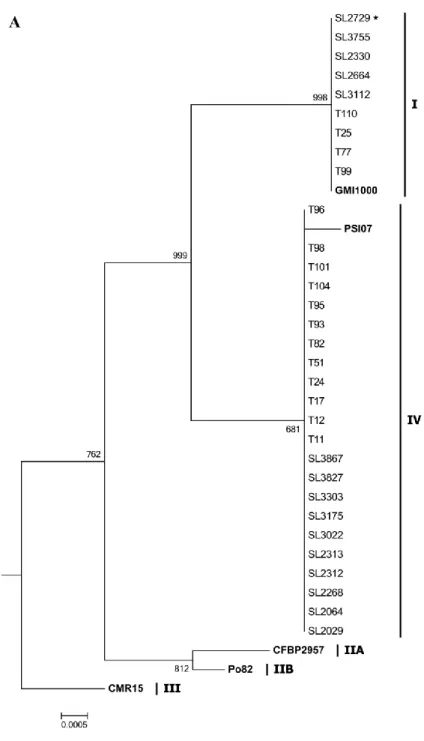
To evaluate the genetic relationship of Korean potato isolates, I sequenced the 16S rRNA gene (about 1,453 nucleotides) and partial endoglucanase gene (760 and 766 nucleotides) of 93 isolates (Table 1) and compared the sequences using the ClustalW program (Figure 2).
The 16S rRNA sequences of biovar 2 isolates were identical to one other, and the sequences of biovar 3 and biovar 4 isolates were also identical. To downsize the phylogenetic tree, SL2729 was chosen to represent the biovar 4 strains. In the 16S rRNA phylogenetic tree, Korean R.
solanacearum isolates were separated into two groups following GMI1000
(phylotype I) and PSI07 (phylotype IV). Korean biovar 2 isolates, which were identified as phylotype IV, were clustered with PSI07 of a representative phylotype IV strain. The isolates of biovar 3 and 4, which were identified as phylotype I, were not only clustered with GMI1000, but also identical with GMI1000 in the sequenced 1,453 nucleotides.
Since the partial endoglucanase gene (egl) sequences were identical among biovar 4 isolates, I analyzed the egl sequence of SL2729 as the representative strain of biovar 4. While the sequences of biovar 4 isolates were identical, the egl sequences of biovar 3 isolates showed subtle
41
differences in nucleotides. In a phylogenetic tree based on the egl gene, biovar 3 and biovar 4 isolates were grouped to phylotype I without GMI1000, which was placed as the outgroup to Korean phylotype I.
42
Figure 2. Phylogenetic trees of 16S rRNA (A) and partial endoglucanase (egl) gene sequences (B) analyzed by ClustalW with 1,000 bootstrap replicates using MegAlign of DNASTAR Lasergene 8. Roman numerals indicate phylotypes and symbols (★) indicate the representative biovar 4 strain.
43