- 40 - [Original Article] Received September 27, 2018 Revised November 4, 2018 Accepted December 8, 2018 †Corresponding author ([email protected]) ORCID Yuri Na http://orcid.org/0000-0001-5302-7053
Broadening Luxury through Sustainability:
Cases from Craft-based Fashion
Yuri Na
Dept. of Craft Design, Keimyung University, Korea
Abstract
Sustainability is an important topic within a variety of design areas, including fashion. The ‘fast fashion’ behavior of consumers is one of the big challenges that sustainable living faces. For the fashion industry, sustainability can be seen as a regulating ethos for higher quality and longer-lasting products, which I argue as embodying an intersection between sustainability and luxury. This study establishes a conceptual model for ‘sustainable luxury’ that can be implemented as a guide in the fashion design industry and education field. This paper will focus particularly on craft-based fashion within the industry. Through conceptual analysis and case studies, I analyze sustainable luxury through the scope of Soper’s (2007) ‘alternative hedonism’, linking hedonic and self-identity values as a foundation for the acceptance of and continued drive toward more sustainable luxury products. Unlike other studies which only emphasize the ecological and environmental aspects of sustainability, viz. green/eco design, this study explores sustainability as balanced with its four dimensions: environmental, economic, social, and cultural. Case studies will exemplify this redefined notion of sustainable luxury. Keywords: alternative hedonism, co-crafting, craft-based fashion, sustainability, sustainable
luxury
I. Introduction
Sustainability is one of the most pressing issues of our time (“We can’t”, 2015). In design and production fields such as the fashion industry, there are many facets of sustainable issues, such as the environmental and social impacts of resource overuse, consumption waste, job insecurity, and child labor, to name but a few (Gardetti & Torres, 2013). The fashion industry is a huge market – about $2.4 trillion in value (McKinsey & Company, 2016) – and its propensity for ‘fast fashion’, the high turnover from ‘new’ to ‘old’, off the rack and into the trash, is emblematic of fashion’s unsustainability (Joy, Sherry Jr, Venkatesh, Wang, & Chan, 2012). Given this, and the prospects of the global fashion industry’s continued annual growth of 2.5-5.5% (McKinsey & Company, 2016), it’s paramount that the fashion industry takes the steps necessary not to ‘comprise the ability of future generations to meet their own needs’ (Brundtland, 1987), and to curb the wastefulness of short-lived ‘fast fashion’. Notions of
‘high quality’ and ‘long-lasting’ products, the essence of sustainably developed products, are what can stem the tide of unsustainability in the fashion industry. These sustainable notions, surprisingly or not, are also foundational values of luxury products.
The word ‘luxury’ exhibits a degree of relativity. A person’s social and economic background and upbringing can play a large role in the concept of luxury. A common contrast is often made between luxury items and the ‘necessaries of life’, luxury items being ‘desirable but not indispensable’ (Luxury, n.d.). However, this definition does not tell us why, from a consumer’s point of view, a luxury item is desired and valued; saying you want a luxury item because you don’t actually need it reveals very little of your desires and values. Instead, a range of values – personal and impersonal – must be taken into account when considering the motivations for luxury purchases (Vigneron & Johnson, 2004). Such purchases have, at bottom, a hedonic component: they increase an individual’s pleasure, which is not a transient type of pleasure, but a more fundamental pleasure that contributes to one’s well-being, self-meaning, and the possibility of leading a good life (Soper, 2007, 2008). The perceived values of luxury items that lead to pleasurable experiences, and their crucial role in guiding luxury item purchases, will be further addressed in Section III.1.
What, then, could be meant by ‘sustainable luxury’? At first glance it can appear to be a contradiction in terms, as a common perception of luxury is that it is about abundance, affluence, ostentation, and thus quite wasteful (Davies, Lee, & Ahonkhai, 2012). It might also be thought that most luxury companies are primarily businesses and are only concerned with turning a profit; any shift to seemingly greater environmental and ethical awareness in regards to production processes is merely a means to tap into shifts in consumer demands and desires for more ethical products, though it may merely be a greenwashing ploy (Bendell & Kleanthous, 2007). It is certainly an important goal for large brands and makers of luxury products to consider their environmental impacts, i.e., to become more sustainable. While the big luxury brands have largely been failing in this regard (Bendell & Kleanthous, 2007), there have been some hopeful and progressive strides taken in recent years by such big names as L’Oréal and Tiffany (“Luxury brands can,” 2016). The concept of sustainable luxury that this study will develop, however, puts more emphasis on the ‘sustainable’ than the ‘luxury’ part.
II. Aim of Research
This study aims to expand upon, and give a foundation to, the concept of sustainable luxury. It is less concerned with the, albeit vital, goal of established luxury goods companies to become more sustainable; rather, it explores how underlying values in the luxury goods world, viz. ‘high quality’ and ‘long-lasting’, are concomitant with the essence of sustainability, and how initiatives that follow the sustainable luxury model can broaden our horizons for what we consider luxurious and of value in most Western societies. The altruistic goal of purchasing more sustainably developed goods, for our sustainable future, meets the hedonic goal of satisfying our desires for valuable purchases that bring us pleasure in our meaningful and good lives. It is from this meeting of goals in the concept of sustainable luxury that we can hope to engender perspectival shifts toward greater sustainability, and to provide a guiding model and goal for designers, producers, educators, and also consumers in various design and product fields, including fashion.
Many researchers insist that craft practice is one of the potential avenues for achieving sustainability within the fashion industry (Dissanayake, Perera, & Wanniarachchi, 2017; Hur & Beverley, 2013). While this study will expand the concept of sustainable luxury, it will also show how the concept is exemplified in cases related to craft practices that balance the four dimensions of sustainability, i.e., ecological, economic, cultural, and social. This paper particularly focuses on craft-based fashion; that is, fashion that includes human hand skills with some tool and machinery assistance. Craft-based fashion usually takes the form of microbusinesses led by individual designers, and is positioned against large corporations and multinational brands. It mainly produces fashion accessories such as bags, shoes, jewelry, textile related items, and some clothing. In this way, what I mean by ‘fashion industry’ in this paper is a limited term in contrast with the general understanding of the fashion industry as a monolithic whole, but it has an important overlap with the craft industry that has the greatest potential for leading the sustainable luxury movement.
Ⅲ. Research Method
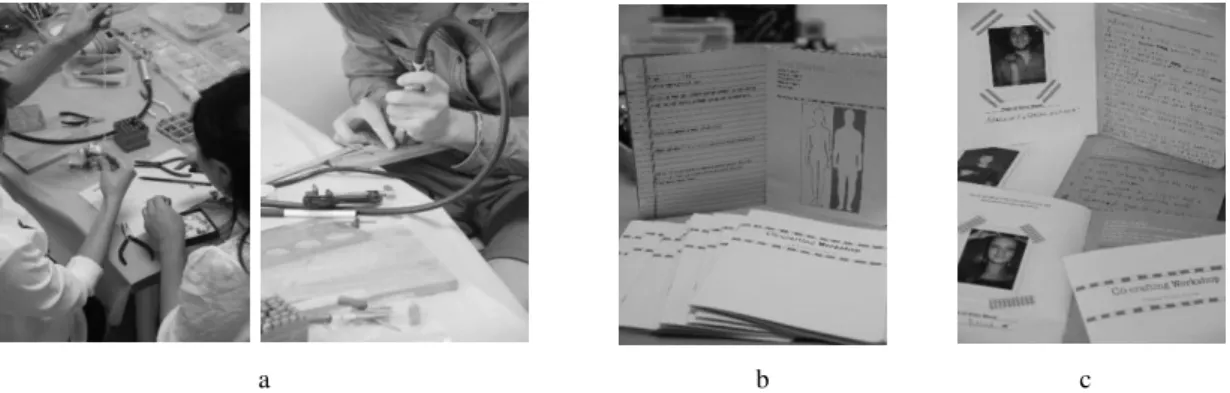
The conceptual model of sustainable luxury will be given based on literature review from three foundational sources: value perception for luxury, shifts in consumption patterns, and alternative hedonism. From this contextualized way of defining the sustainable luxury model, the question as to how the fashion industry (i.e. craft-based fashion, microbusinesses) can become a prime example of sustainable luxury will be addressed. This research also includes a co-crafting workshop with probes that I implemented in Helsinki, Finland, 2013-2014. Six participants (3 males and 3 females) who had no prior experience making jewelry, made jewelry with the guidance of a professional jewelry maker in a one-day workshop. The probe took the form of a personal journal. During the workshop, participants filled in the journal, and after the workshop, they were asked to freely write anything related to the made jewelry in order to track any added value they had for their pieces. Interviews were conducted in 2018, with questions constructed around the four phases of domestication: ‘appropriation, objectification, incorporation, and conversion’ (Silverstone, Hirsch & Morley, 1992).
Beyond the ecological dimension of ‘going green’, sustainability encompasses four balanced dimensions: ecological, economic, cultural, and social (Dresner, 2002). This paper will also address how the fashion industry embodies the sustainable luxury model by balancing these four dimensions of sustainability. For holistic investigation into a real-life phenomenon, case studies are considered a preferred method (Yin, 2003). Case studies, with different key focal points, will help demonstrate sustainable luxury’s potential in the fashion industry. The data for the case studies were gathered through interviews, documents, and participatory observation from three of Design Huone’s workshops in Helsinki between September and October, 2013, and analyzed through qualitative research methods: identifying meanings and patterns from the categorized data, and synthesizing the results.
Ⅳ. Literature Review
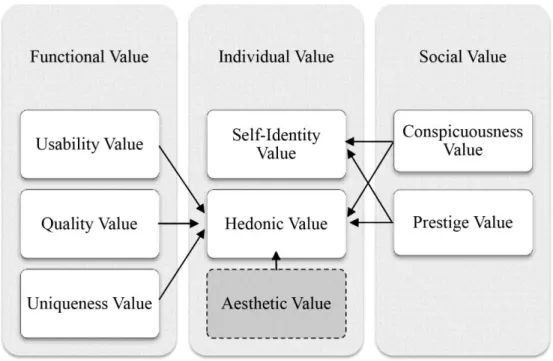
1. Value Perception of LuxuryWiedmann, Hennigs, and Siebels (2007) categorize and organize the perceived values surrounding luxury goods into four groups: financial, functional, individual, and social. Perceived values associated with the financial dimension include the luxury good’s price, exhibiting a higher price-to-quality-and-functionality ratio. This ratio is a
necessary, though not sufficient, condition for a luxury item, and is thus not the most important of the luxury goods values. The functional dimension includes the perceived values of a luxury item’s usability, quality, and uniqueness. Functional performance at a satisfactory level (usability), fine materials and high crafts(wo)manship (quality), and general scarcity and limited supplies (uniqueness) are all perceived values of a luxury item’s functional dimension. The individual dimension – important for the sustainable luxury model – includes self-identity, hedonic, and materialistic perceived values. Symbolic contributions to a person’s self-image (self-identity), positive affects and emotions (hedonic), and meaning in material possessions (materialistic) are the perceived values of a luxury item’s individual dimension. Lastly, the social dimension of perceived values contains conspicuousness and prestige. Publicly signaling (conspicuousness) one’s membership, or hope for membership, in a social status endowing group (prestige) are the perceived values of a luxury item’s social dimension.
I have previously argued (Na & Lamblin, 2013) that all the perceived values in Wiedmann et al.’s (2007) categorization are dependent on, or at least mutually dependent on, the satisfaction of two of the individual dimension’s values: self-identity and hedonic values (Figure 1). A person wishes to express themselves through conspicuousness (social dimension) to the extent that it forms their identity and gives them pleasure from the prestige sought. The functional dimension also ultimately satisfies hedonic values in the individual dimension: a luxury item’s ease of use and highly functional characteristics (usability) lends to a pleasurable experience (hedonic); fine materials, durability, and high crafts(wo)manship (quality) also lead to more pleasure through the appreciation of the luxury item’s longevity and high quality; and the limited supply, relative scarcity, and exclusivity (uniqueness) of the luxury item is also information that can bring pleasure to the possessor. The individual dimension’s self-identity and hedonic values, then, are pivotal and stabilizing values that bind all the perceived values of luxury items together. The functional and social values are valued only in as much as they satisfy individual values – only to the extent they
increase one’s meaningful experiences of pleasure and ground one’s self-identity. Another important value not mentioned in Wiedmann et al.’s (2007) analysis is the aesthetic value of a luxury item, which can be subsumed within the individual dimension as the subjective question of whether one finds an item beautiful or not is directly tied to whether the item gives one pleasure or not.
2. Shifts in Consumption Patterns
Along with the central position of the individual-based values of luxury items, there have been changes in consumption patterns and in how the individual values of self-identity formation and hedonic experiences are sought. These changes align with sustainable luxury’s main desired features, viz. its ethical concern for minimizing negative impacts on the environment, and its high quality and potential for meaningful pleasure. The Futures Company’s (2010) report shows a shift in consumers becoming more (1) responsible about the purchases they make; (2) vigilant in making well-informed purchases for higher quality products; (3) resourceful in their appreciation for making skills, which can lead to hobbies and to doing repairs; (4) able to prioritize their needs and how their needs fulfil a happy life of well-being; and in consumers seeking more (5) networks of common interests, wherein individuals can mutually reinforce the value and way to live a more responsible, vigilant, resourceful, and well-prioritized life.
As for the outward, altruistic values of championing sustainability, responsibility and vigilance attune consumers to a downshift in spending, and to a heightened thoughtfulness regarding purchases of products and their impact on the environment. Resourcefulness, i.e., learning and developing making and repairing skills, lead to appreciating the production histories, crafts(wo)manship, and durability of products, which extends to an appreciation for high-quality products. And as for the inward, hedonic values of desiring sustainable luxury products, prioritization skills guide individuals to making meaningful decisions about their needs and their ‘(not indispensable) desirables of life’ that bring pleasure and contribute to their self-identity formation. From these shifts, combined with widened networks of shared interests, a more ethical consumer emerges for whom sustainable luxury products are an ideal means to satisfy their need to live a good life and desire for meaningful pleasure.
3. Alternative Hedonism
The shift to increased prioritization of the needs in one’s life does not mean that needs must always trump desires and pleasures, i.e., the hedonic elements of one’s life. Better prioritization in life answers the question of what we really need in order to live meaningful lives of well-being – the good life. The hedonic pleasure-bringing elements in life are nothing ‘extra and above’ the good life, but rather contribute to and fill the good life with what makes it worth living. The responsibility, vigilance, resourcefulness, better prioritization and sustaining networks of the ethical consumer speak to an augmented form of hedonism: alternative hedonism (Soper, 2007, 2008). It is “a distinctively moral form of self-pleasuring or a self-interested form of altruism: that which takes pleasure in committing to a more socially accountable mode of consuming” (Soper, 2007, p. 220). An alternative hedonist seeks pleasures that also satisfy an ethical need or demand, so if the choice were among an array of equally pleasure-rewarding acts, the alternative hedonist would choose whichever act has the greater social, environmental, and ethical impact – particularly those that contribute to more sustainable modes of consuming and living. The ultimate endpoint for the alternative hedonist is when the hedonic reasons and altruistic (i.e., ethical and sustainable) reasons for doing
something become indistinguishable; when fulfilling a hedonic individual desire is the same thing as fulfilling an altruistic external demand that sustainability calls for (Soper, 2008, p. 195).
Putting things together, ‘sustainable luxury’ refers to high-quality products exhibiting good crafts(wo)manship, sustainably sourced materials, and long-lasting durability, and which contribute to meaningful self-identity formation and to a pleasurable good life that is alternative-hedonically constrained by more ethical and sustainable standards of consumption. Shifts to responsibility and resourcefulness for the alternative hedonist consumer also contribute to the greater appreciation for high-quality products, especially when the products’ materials and production histories reveal sustainably sourced materials and sustainable production processes. Resourcefulness and involvement in close networks of shared interests can also lead to a kind of nostalgia for materials ‘or objects or practices or forms of human interaction that no longer figure in everyday life as they once did’ (Soper, 2007, p. 212). Innovative solutions can incorporate these nostalgic objects and practices to the present demands of sustainability, providing some continuity with where we have come from to where we are going – as well as continuity from what we’ve accepted as traditional luxury to what we can come to accept as sustainable luxury. Sustainable luxury items can also signal (conspicuously as traditional luxury does) the alternative hedonic lifestyle. These signals can include being a member of the sustainable movement, or environmentally- and socially-conscious movements like anti-globalization, ethical financing, and fair trade (Lury, 2011, p. 173). Much more than a conspicuous symbol of high-class or elitism, sustainable luxury items are proof themselves of authentic and ethical ways of living, meaningful symbols and signifiers of the alternative hedonic lifestyle that can engender positive dialogue through closer networks about the benefits of this lifestyle and the ultimate goal for more sustainable solutions in our everyday lives.
Ⅴ. Four Dimensions of Sustainability from Case Studies
Sustainability for the fashion industry includes ‘environmental protection, social justice, economic fairness and cultural validity’ (Parker, 2011, p. 4), which map the four dimensions of sustainability. The ecological dimension refers to the materials and making methods with a minimal negative environmental impact. The economic dimension includes issues of how fashion businesses and entrepreneurs stay viable and healthy in the highly competitive and fast-changing fashion world. The cultural dimension points to the elements that sustain the traditions and values, and the social dimension means social exchanges of fashion, and social justice. Cultural sustainability in fashion focuses on keeping traditional skills and practices alive, and also on responding to changes in the needs for and expectations of fashion in our ordinary lives. While customers want more personalized and authentic experiences that satisfy the individual dimension’s hedonic and self-identity values, there is also an important social element that drives the alternative hedonist consumer: that of the ‘experience economy’. The stories and philosophies behind a sustainable luxury fashion item can bring greater satisfaction on an individual level, but they are also what sustain the traditions and practices within the fashion community.
1. Ecological Dimension of Sustainable luxury: Remake EkoDesign
Remake EkoDesign is a sustainably-minded Finnish fashion design company founded in 2007, and a supporter of the Finnish Road Map to a Circular Economy 2016-2025 (Sitra, 2017). They source materials locally from second hand textile shops in Finland and manufacture all their custom order garments and accessories by hand in their
Helsinki studio. At Remake’s Eco-design Atelier, founder Paula Malleus and three other designers perform repairs, refits, alterations, and custom designs for clothes and accessories out of old, used, and recycled materials. All products are made to last long, are tested for usability, and can be safely washed at 40 °C. For their made-to-order pieces fully designed and tailored to each customer, the company offers free consulting first: customers bring in or send inspirational pictures, which can lead to co-designing with the customers.
In addition to making custom orders, Remake has a rental service for their unique show pieces and gowns made for special events, catwalks, and photoshoots, revealing an added sustainable element to sustainable luxury fashion. Such rental opportunities for high-end garments and fashion accessories were introduced by Nopsa Fashion Library in Helsinki, where customers can rent a piece for two-week periods during their six-month membership. Unlike Nopsa which only offers a rental service as their contribution to ethical consumption, Remake’s rental service promotes their own brand as well. Remake has gained some notable exposure in Finland when a number of celebrities and politicians chose to wear their garments for high profile events; e.g., Finnish actress Laura Birn wore one of Remake’s outfits, designed and made by Outi Pyy made of secondhand leather, for the presidential reception on Finland’s Independence Day (Laura Birn juhli vanhoissa nahkatakeissa, 2012). This is an example of alternative hedonist conspicuousness that signals high fashion with a sustainable message, an important feature of sustainable luxury’s ecological and social dimensions.
2. Social and Cultural Dimensions of Sustainable Luxury: Co-crafting Workshops
An important aspect of the social and cultural dimensions of design and making endeavors is active engagement. For the alternative hedonist, this is a means to achieving human wellbeing, as Csikszentmihalyi (1996) argues that happiness ‘comes from creating new things and making discoveries. Enhancing one's creativity may therefore also enhance well-being.’ Csikszentmihalyi calls these engaging activities ‘flow experiences’, and they lead to happiness, as well as personal and cultural growth, if they are suitably complex and challenging (Hur & Beverley, 2013).
In recent years, DIY tutorials on the web have become increasingly popular, where viewers can learn to create their own clothes and fashion accessories for their personal enjoyment. These activities fulfill a personal desire for making and self-expression. Interest in DIY can also be extended in the social and cultural dimensions through co-crafting workshops, in which making activities and the skills required are sustained through cooperative gatherings. This active engagement can be best facilitated through ‘co-crafting’, ‘making together’ workshops (Na, 2012). Workshop participants learn the traditional skills of a particular craft or design approach with professional designer-makers as guides. More personalized relationships can be made with such self-made and co-crafted products when participants not only learn about the making process but engage in it. Tactile engagement with the tools, materials, and skills can lead to a further appreciation for long-lasting, durable goods, satisfying the functional values of sustainable luxury, which can socially signal one’s commitment to sustainable causes, and which ultimately satisfy the individual values of a meaningful hedonic experience. Participants from the co-crafting workshop with probes that I implemented in 2013 revealed that they held emotional and embodied memories with the jewelry they made through in-depth interviews in 2014, and in follow-up interviews in 2018, indicating they still cherished their creations as special items.
a b c
Figure 2. (a) Co-crafting workshop, Helsinki, August 17, 2013; (b) Probe - personal journals designed by the researcher; (c) Probe – completed personal journals by participants, January 15, 2014.
Another case is Design Huone, a fashion jewelry company in Finland. The company offers a variety of workshops that function as meeting points for local designers. The workshops were titled: ‘Fix Your Fashion’, ‘Trashion’ and ‘Silver Spoon Jewellery’. For ‘Fix your Fashion’, participants brought in old pieces of clothing to be remade into something new with the guidance of Design Huone owner Liisa Tervin, who also provided additional materials such as buttons and vintage clothing, along with sewing machines and other tools. There were three local professional fashion and textile designers facilitating the workshop, and they helped create an atmosphere of co-designing and hands-on experimentation, quite unlike what would be found in classroom or teaching environments. The ‘Trashion’ (trash + fashion) workshop was run by Outi Pyy, a leading designer in recycled fashion, and an influential sustainable DIY fashion blogger. The workshop had elements of upcycling, and design activism, which is about ‘motivating, activating and transforming people’ (Fuad-Luke, 2009, p. 167). In ‘Silver Spoon Jewellery’, Tervin provided for the 20 participants some vintage sterling silver spoons she had gathered from local flea markets with which we made different kinds of pendants.
After these workshops, participants mentioned the amount of fun and pleasure gained from such co-crafting experiences. In addition to the meaningful pleasure gained in creating one’s own sustainable luxury item, the cultural and social dimensions of sustainability are also met in these workshops: skills and knowledge are learned and shared, and professional designers and makers engage with local amateurs and enthusiasts through making activities. A balanced sustainable approach to the fashion industry can be maintained in the social and cultural dimensions through such co-crafting workshops, while still placing expected attention on the ecological demands and economic resources and means for sustainable luxury fashion.
3. Sustainably Balanced Landscape: Green Shoes
Green Shoes is a company in Devon, UK, which sells handcrafted shoes. Through their business and apprenticeships they have kept traditional British shoe-making skills alive since 1981. Their core philosophy is to make shoes using traditional skills with high-quality, environmentally-friendly materials (i.e., toxin-free dyes, non-animal-derived glues, vegan alternatives to leather). Green Shoes also repairs, resizes, and resoles customers’ shoes, which extends the lives of shoes. They make bespoke shoes following customers’ own outlined drawings of their feet
and mentions of any previous issues with vamp and quarter tightness around the foot, which means their shoes are in limited supply. Their characteristic design and rounded vamps are aesthetically pleasing to customers.
In addition to customization and personalization of shoe orders, Green Shoes hold shoe- and boot-making workshops. The shared and direct ‘making’ experience affords participants an appreciation for handmade clothing items. The ecological, cultural, and social dimensions of sustainable fashion can be found in Green Shoes’ workshops: an appreciation for and re-evaluation of ethical consumption arises from learning about and using sustainably sourced, and non-animal-derived, materials, all within the tradition of shoe-making that is sustained by the community of cobblers and shared with alternative hedonist minded workshop participants. Kate Dewmartin, co-founder of craftcourses.com says that ‘[t]he UK is enjoying a huge resurgence in craft courses. […] Making or doing something is such a powerful way to get back to our fundamental roots — these creative and practical skills of the heart, head and hands speak to our sense of being human’ (Dawson, 2017). The ecological dimension is also satisfied due to the low-energy requirements of Green Shoes’ making process, as well as the minimizing of packing materials and waste. The company’s collaborations with fashion designers has also led them to showcase their shoes during London Fashion Week, giving them the kind of exposure and visibility that expands sustainable fashion’s reach and influence in the social dimension. Such collaborations are also a part of the economic dimension, wherein a microbusiness like Green Shoes can fairly compete with other fashion brands, and stay viable and healthy. They also balance the economic dimension of sustainability in their use of local materials, providing jobs in their region, and with the influx of visitors from outside the region who attend workshops.
Green Shoes’ products, and particularly the co-crafted shoes from workshops, are examples of sustainable luxury goods whose value aligns with the alternative hedonist. The making process is transparent. The answers to the questions ‘Who made your shoes?’ and ‘Where were they made?’ can be answered in a satisfying way (Dixon, 2010), serving as conversation starters for the value of sustainable luxury goods which highlight ethical consumption and the meaningful pleasure found in connecting with such a good. Answering the questions might be brief, but the value and meaning in the answers run deep. The bearer and/or maker of the shoes will wear and care for them longer than they would for mass-produced ones (Mochon, Norton, & Ariely, 2012), because the shoes are more durable and, particularly if the shoes were self-made, they satisfy the hedonic and self-identity forming principles of wearing and developing a relationship with a fashion item of high quality and personal meaning. Green Shoes’ approach to balancing the four dimensions of sustainability can ensure an appreciation for and drive to make more sustainable luxury goods.
Green Shoes may not appear to be a traditional luxury brand, but they show how fashion can be sustainably luxurious from the above analysis. The alternative hedonistic perspective for sustainable luxury items is a clear motivation for Green Shoes, with the high-quality materials and finish of the products, expanded lifespans, personalized aspects and intimate relationships with designer-makers and co-crafting, which create hedonic experiences and add meaningful value to the product. Therefore, sustainable luxury can be defined as guaranteeing high quality and a long lifespan, satisfying individual values within the four dimensions of sustainability.
Ecological Dimension
• Eco-friendly materials
• Local materials
• Sustainable work methods
Economic Dimension
• Boosting local economy • Production design collaboration • Viable and healthy competition
Social Dimension
• Personalized for best fit • Customizable
• Co-crafting
• Intimate relationships
Cultural Dimension
• Apprenticeship
• Traditional skills and knowledge • Everyday uses and contemporarily stylis h
Features of Sustainable Luxury Items
• High-quality materials and finish
• Long lifespan
• High aesthetic value
• Limited supply
Figure 3. The balanced dimensions of sustainability supporting sustainable luxury items
Ⅵ. Conclusion
In this paper I analyzed the values underlying traditional luxury, and how the central individual values of self-identity and meaningful pleasure are continuous with the idea of sustainable luxury. Through the shifts in consumption patterns to greater responsibility and resourcefulness, and through an appreciation of the emerging alternative hedonist, sustainable luxury items can be seen as those items with high quality and long-lasting lifespans that satisfy the possessor’s individual values. Through a balance with the four dimensions of sustainability, particularly through the social and cultural dimensions, sustainable luxury items are the ideal signifiers of the alternative hedonist lifestyle that celebrates sustainable ways of living, and that can reconnect people with designing and making practices.
This study contributes to the theoretical understanding of sustainable luxury, broadening our notions of what luxury can be. It can also help to make more sustainable business models for the craft-based fashion industry, and related educational content concerned with sustainability. Entrepreneurial courses in fashion departments and institutes can incorporate this model of sustainable luxury to instill the spirit of alternative hedonism and of the balanced dimensions of sustainability to transform the future frontier of fashion to a more sustainablyminded and -grounded movement that doesn’t sacrifice the underlying values of luxury.
This study is limited in that it considered European perspectives and conceptions of values related to sustainable luxury. A broadened inclusion of members of different cultures and socio-economic backgrounds would greatly enhance this area of research. Further research in sustainable luxury could also include quantitative data about individuals’ preferences for and hedonic gratification in sustainable luxury goods. The features of sustainable luxury could be operationalized to make survey questionnaires that assess the more valued aspects of sustainable luxury
across different cultures and demographics, which could greatly benefit the acceptance and reach of sustainable luxury goods.
References
Bendell, J., & Kleanthous, A. (2007). Deeper luxury: Quality and style when the world matters. Retrieved from http://assets.wwf.org.uk/downloads/luxury_report.pdf
Brundtland, G. (1987). Our common future: Report of the 1987 world commission on environment and development. United Nations, Oslo, 1, 59.
Csikszentmihalyi, M. (1996). Creativity: Flow and the psychology of discovery and invention. New York: HarperCollins.
Davies, I. A., Lee, Z., & Ahonkhai, I. (2012). Do consumers care about ethical-luxury? Journal of Business Ethics, 106(1), 37-51. doi:10.1007/s10551-011-1071-y
Dawson, A. (2017, December 10). Artisan holidays are set to boom in 2018. We hotfoot it to Devon…. Metro Newspaper UK. Retrieved from https://www.metro.news/artisan-holidays-are-set-to-boom-in-2018-we-hotfoot-it-to-devon/853521/
Dissanayake, D. G. K., Perera, S., & Wanniarachchi, T. (2017). Sustainable and ethical manufacturing: a case study from handloom industry. Textiles and Clothing Sustainability, 3(1), 2. doi:10.1186/s40689-016-0024-3
Dixon, R. (2010, August 25). A crash course in shoemaking. The Guardian. Retrieved from https://www.theguardian.com/ lifeandstyle/2010/aug/25/ethical-shoemaking-workshop- devon
Dresner, S. (2002). The principles of sustainability. London, England: Earthscan.
Fuad-Luke, A. (2009). Design activism: Beautiful strangeness for a sustainable world. London, England: Earthscan. Gardetti, M., & Torres, A. (Eds.). (2013). Sustainability in fashion and textiles. London, England: Routledge. Hur, E. S., & Beverley, K. J. (2013). The role of craft in a co-design system for sustainable fashion. In M. Ferris
(Ed.), Making futures: The crafts in the context of emerging global sustainability agendas (pp. 40-54). Leeds, England: University of Leeds.
Joy, A., Sherry Jr, J. F., Venkatesh, A., Wang J., & Chan, R. (2012). Fast fashion, sustainability, and the ethical appeal of luxury brands. Fashion Theory, 16(3), 273-295. doi:10.2752/175174112X13340749707123
Kiem, M. (2011). Theorising a transformative agenda for craft. Craft+Design Enquiry, 3, 1-21.
Laura Birn juhli vanhoissa nahkatakeissa. (2012, December 6). Iltalehti. Retrieved from https://www.iltalehti.fi/ linnanjuhlat/a/201212061641937
Lury, C. (2011). Consumer culture (2nd ed.). Cambridge: Polity Press.
Luxury. (n.d.). In OED Online. June 2013. Retrieved November 2, 2013, from http://www.oed.com/view/Entry/ 111515?redirectedFrom=luxury
Luxury brands can no longer ignore sustainability. (2016, April). ADEC Innovations. Retrieved from https://esg.adec- innovations.com/resources/newsletters/april-2016-what-is-impact-investing/luxury-brands-can-no-longer-ignore-sustainability/
Malleus, P. (2007). Paula Malleus master seamstress / bosslady. Remake. Retrieved from http://remake.fi/paula-malleus-designer/
McKinsey & Company. (2016). The state of fashion 2017. Retrieved from https://www.mckinsey.com/~/media/ mckinsey/industries/retail/our%20insights/the%20state%20of%20fashion/the-state-of-fashion-mck-bof-2017-report.ashx
Mochon, D., Norton, M. I., & Ariely, D. (2012). Bolstering and restoring feelings of competence via the IKEA effect. International Journal of Research in Marketing 29(4), 363-369. doi:10.1016/j.ijresmar.2012.05.001
Na, Y. (2012). Craftology: Redefining contemporary craft in culture, people, and sustainability (doctoral dissertation). Aalto University, Helsinki, Finland.
Na, Y., & Lamblin, M. (2013). Sustainable luxury: Sustainable crafts in a redefined concept of luxury from contextual approach to case study. In M. Ferris (Ed.), Making futures: Interfaces between craft knowledge and design: New opportunities for social innovation and sustainable practice. Leeds, England: University of Leeds. Parker, E. (2011). Steps towards sustainability in fashion: snapshot Bangladesh (Project Report). Retrieved from:
http://ualresearchonline.arts.ac.uk/2754/
Silverstone, R., Hirsch, E., & Morley, D. (1992). Information and communication technologies and the moral economy of the household. In R. Silverstone & E. Hirsch (Eds.) Consuming technologies: Media and information in domestic space (pp. 13-28). London, England: Routledge.
Sitra. (2017). A mass-produced clothing line from recycled clothes. Retrieved from: https://www.sitra.fi/en/cases/ mass-produced-clothing-line-recycled-clothes/
Soper, K. (2007). Re-thinking the ‘good life’: The citizenship dimension of consumer disaffection with consumerism. Journal of Consumer Consumption 7(2), 205-29. doi:10.1177/1469540507077681
Soper, K. (2008). ‘Alternative hedonism’ and the citizen-consumer. In K. Soper & F. Trentmann (Eds.), Citizenship and consumption (pp.191-234). New York, NY: Palgrave Macmillan.
The Futures Company. (2010). A darwinian gale: The recovery consumer marketplace in the era of consequences. Retrieved from http://lm.reddion.com/mindshare/newsletter/122009/Artikel%204_%20A_Darwinian_Gale.pdf Vigneron, F., & Johnson, L. W. (2004). Measuring perceptions of brand luxury. Journal of Brand Management 11(6),
484-506. doi:10.1057/palgrave.bm.2540194
‘We can’t go on as we are’: Why sustainability is the big issue of our time. (2015, December 1). The Guardian. from https://www.theguardian.com/sustainable-business/2015/dec/01/we-cant-go-on-as-we-are-why-sustainability-is-the-big-issue-of-our-time
Wiedmann, K-P., Hennigs, N., & Siebels, A. (2007). Measuring consumer’s luxury value perception: A cross-cultural framework. Academy of Marketing Science Review, 1, 1-21.