Meta-analysis of the Effects of Untact Convergence Exercise
Programs on Balance, Gait, and Falls Efficacy of Parkinson's
Disease Patients
Hyo-Lyun Roh
1, Se-Hyun Jang
2*1Professor, Department of Physical Therapy, Kangwon National University
2Master Course, Department of Emergency Medical Rehabilitation, Kangwon National University
비대면 방식을 융합한 운동 프로그램이 파킨슨 환자의
균형, 보행, 낙상 효능감에 미치는 효과에 관한 메타분석
노효련
1, 장세현
2*1강원대학교 물리치료학과 교수, 2강원대학교 응급의료재활학과 석사과정
Abstract In this study, a meta-analysis was conducted to find out the effects of convergent “untact”
exercise programs on the balance, gait, and falls efficacy of Parkinson’s patients. In this study, the PICO were Parkinson's disease, virtual reality program and an e-exercise program intervention, a comparative intervention with the contact interventions applied, and without any interventions applied, outcomes were balance, gait, and fall efficacy. The survey period was between January and February 2021, and five papers were selected and subjected to meta-analysis. Risk of bias, a tool commonly used for randomized control trial studies, was used. Furthermore, RevMan program was used to investigate effect size of untact exercise programs. The result of the meta-analysis showed that the effect size of balance of the untact exercise program group was 1.27 (SMD=1.27; 95% CI 0.72 to 1.83) (Z=4.51, p<0.001), the effect size of fall efficacy was 0.52 (SMD=0.52; 95% CI -0.000 to 1.03) (Z=1.96, p=0.05), and the effect size of gait was -0.40 (SMD=-0.40; 95% CI -1.00 to 0.10)(Z=1.32, p>0.05). A total of 5 literature analysis showed that untact exercise program is more effective in improving balance and falls efficacy than contact exercise program, but no difference in effectiveness was shown on gait.
Key Words : Convergence, Parkinson’s disease, Untact exercise program, Balance, Fall efficacy. 요 약 본 연구는 융합적 비대면 방식의 운동 프로그램이 파킨슨 환자의 균형, 보행, 낙상효능감에 미치는 효과크기를 알아보고자 메타분석을 실시하였다. PICO 방식에 의해 대상자는 파킨슨환자, 중재는 가상 현실과 e-운동 프로그램, 대조군은 대면 환경에서의 운동 프로그램 적용이나 중재를 적용하지 않은 그룹, 결과는 균형, 보행, 낙상효능감으로 하였다. 조사기간은 2021년 1월부터 2월사이로 2달간이었으며, 최종 5편을 선정하여 메타분석을 실시하였다. 질 평가 도구로 무작위 대조군 연구에 사용되는 ‘비뚤림 위험’ 도구를 사용하였다. RevMan프로그램을 사용하여 비대면 운동프 로그램에 대한 효과 크기를 알아보았다. 메타분석 결과, 균형에 대한 효과 크기는 1.27(SMD=1.27; 95% CI 0.72 to 1.83)(Z=4.51, p<0.001), 낙상감에 대한 효과 크기는 0.52 (SMD=0.52; 95% CI -0.000 to 1.03) (Z=1.96, p=0.05), 보행에 대한 효과크기는 -0.40 (SMD=0.40; 95% CI -1.00 to 0.10)(Z=1.32, p>0.05) 이었다. 5편의 분석 문헌에서 파킨슨 환자에게 비대면 운동프로그램을 적용시 대면 운동프로그램에서 보다 균형과 낙상효능감 향상에 효과 가 있었고 보행에는 효과의 차이가 나타나지 않았다. 주제어 : 융합, 파킨슨, 비대면 운동 프로그램, 균형, 낙상 효능감.
*Corresponding Author : Se-Hyun Jang([email protected]) Received March 14, 2021
1. Introduction
1.1 Introduction
Parkinson's disease, which is a senile and chronic disease, has non-motor symptoms such as cognitive impairment, mental symptoms, sleep disorders, autonomic nervous system and sensory symptoms, slow movement, stiffness, postural instability, balance, and gait disorder [1]. Treatments for Parkinson's patients include drug therapy and non-drug therapy such as surgery, therapeutic exercise, and cognitive therapy. Drug therapy is effective, but studies suggest that the side effects of long-term drug use have led to an integrated approach to drug therapy and non-drug therapy, and that patients have improved when drug therapy and non-drug therapy are combined [2].
Among the intervention methods of non-drug therapy, therapeutic exercise and cognitive therapy to alleviate non-motor symptoms are effective in improving physical and mental functions of patients in various ways. However, there are time and space constraints and inconveniences for patients who have to go to specific places such as a hospital or medical center to exercise or participate in programs [3]. In particular, recent outbreaks of infectious diseases such as the Covid-19 pandemic adds time and space restrictions, making it difficult for treatment to continue, so alternative measures are needed [3].
“Untact” (non-contact) virtual reality programs and e-exercise programs can be seen as alternatives to reducing temporal and spatial constraints, and can be used in untact simulations to solve problems by interacting with a screen [4]. In addition, e-exercise programs can be implemented anywhere and at any time by using a computer or smart application [5]. Kim et al. (2012) mentioned an e-exercise program that is voluntarily carried out by patients while playing exercise program videos
on a computer [2].
Recently, Covid-19 group infection in nursing hospitals has become a major social problem. According to the Association of Nursing Hospitals, a total of 1,745 people, including workers and patients, were confirmed infected due to the coronavirus outbreak in more than 60 nursing hospitals nationwide as of January 2021 [6]. In particular, patients in nursing hospitals include elderly patients, chronic patients, post-surgery or post-injury patients, and elderly dementia patients who can be easily affected by Covid-19 [7]. Therefore, smart healthcare methods in untact conditions are areas of continuous interest in that they can continue to treat Parkinson's patients while maintaining a distance. As the untact trend rapidly expands throughout society, new countermeasures and solutions such as new demands for digital healthcare and for online platforms are also required in the healthcare sector. Non-drug interventions such as exercise therapy are being carried out to people with Parkinson’s disease in Korea[2], and a number of studies have been reported showing the positive effects of virtual reality exercise programs on cerebral palsy, stroke and Parkinson's disease[8,9]. However, the difference in effectiveness between virtual reality and classical exercise programs is not clear.
Therefore, in this study, we analyzed papers on interventions with untact methods, i.e., virtual reality and e-exercise programs applied to Parkinson's patients, in order to find out the characteristics and effectiveness of untact exercise programs.
1.2 Purpose
In this study, we analyzed papers on the intervention of exercise programs applied to Parkinson's patients in a converged untact method using e-exercise programs, virtual reality, etc. Specific research objectives are as follows.
1) We want to find out the characteristics of research methods and programs used in convergent untact exercise programs applied to Parkinson's patients.
2) Through the convergent untact exercise program applied to Parkinson's patients, we want to find out the effectiveness of untact exercise programs based on figure of balance, gait, and falls efficacy.
2. Research subject and methods
2.1 Study design
This study is a meta-analysis study to find out the characteristics and effectiveness of exercise programs applied to Parkinson's patients through convergent untact exercise program methods.
2.2 Definition
In this study, e-exercise programs and virtual reality programs are defined as untact exercise programs.
2.3 Key questions
A literature search and the overall process of this study was conducted by referring to the PRISMA’s guidance for undertaking systematic reviews and meta-analysis [10].
The key questions are specifically based on PICO analysis and are as follows:
It included interventions that applied exercise programs to participants with Parkinson's disease, while comparative interventions included applications of different interventions.
2.4 Search strategy
2.4.1 Data search
The literature search was conducted only on domestic papers published from 2001 to 2020 using databases (KISS, RISS, KMBASE, NDSL, DBPia, National Assembly Library and National
Library of Korea). The main terms used for the literature search were “Parkinson”, “Virtual reality”, “Parkinson and balance”, “Parkinson and gait”, and “Parkinson and balance”
2.4.2 Data collection and selection
As for the selection criteria for literature, (1) studies using augmented reality, virtual reality, or e-exercise programs, (2) domestic studies involving Parkinson's disease, and (3) studies published in South Korea were included. In cases where a research report and the relevant academic paper overlapped, the academic paper was included. In addition, in the case of studies with the same study method and purpose conducted by the same author, preliminary studies were excluded and studies with the later publication date were included. As for the exclusion criteria, (1) non-experimental studies such as observation and review studies, (2) drug intervention studies, (3) preclinical studies, studies conducted with animals, (4) studies using human derivatives, (5) dissertations, and (6) papers presented at conferences were excluded.
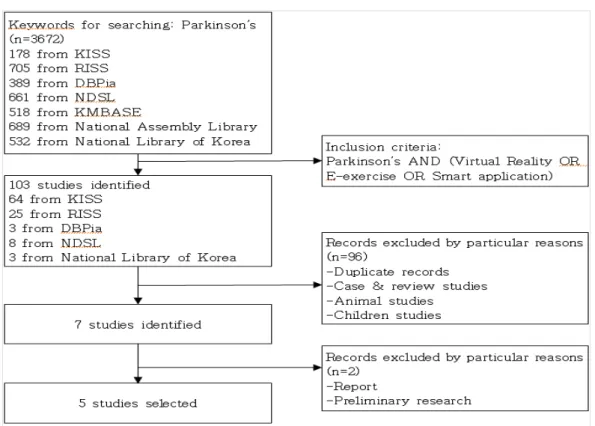
In this study, the literature was selected according to the core questions and inclusion and exclusion criteria, and the literature selection processes by stages were described using a flow chart of the Preferred Reporting Items for Systematic Review and Meta-Analysis (PRISMA). A total of 3672 papers were retrieved from the database, and after removing 3665 papers that did not satisfy the inclusion criteria or fell under the exclusion criteria, the remaining seven papers were reviewed by two researchers centering on the titles and abstracts of the studies. In the case of papers with ambiguous titles, abstracts and contents were reviewed. As a result of review of the papers according to the same criteria and processes, a total of five papers were finally selected. The entire processes of selecting the retrieved papers were independently carried out by the two
Fig. 1. Flow diagram of search process
researchers, and in cases where there was any disagreement, the final papers were selected through discussion.
As shown in Fig. 1, 3672 papers were retrieved in the first search, 103 articles were retrieved with mixed keywords in the second search, and a total of seven papers were selected, excluding 96 papers that fell under duplicate papers and the exclusion criteria. Of the seven papers, five were finally selected, excluding preliminary studies and papers of which the reports and journal papers overlapped.
2.5 Assessment of the quality of literature
The literature was critically reviewed in seven areas using Cochrane's risk of bias assessment tool, and the results of the risk assessment were presented by entering them into RevMan 5.4. The quality of the selected studies was assessed independently by two researchers, and the items
on which the two researchers’ opinions did not match were reviewed jointly by the two researchers until they reached an agreement to draw conclusions.
The RoB used for the randomized study in this study is a combination of the area assessment method and the checklist method and makes assessments in seven areas, which are 1) random sequence generation, 2) allocation concealment, 3) blinding of participants and personnel, 4) blinding of outcome assessment, 5) incomplete outcome data, 6) selective reporting, and 7) other potential risks of bias that threaten validity. As shown in Fig. 2 and Fig. 3, two researchers independently assessed the finally selected papers, and in cases where there were disagreements of opinions, consensus results were derived through discussion.
Fig. 3. Risk of bias graph: review authors’ judgements about each risk of bias item presented as percentages across all included studies
Fig. 2. Risk of bias summary: review authors’ judgements about each risk of bias item for each included study
2.6 Data extraction
In this study, the characteristics of the studies included in the systematic literature review were analyzed to extract data such as the year of publication, author, study design and number of samples, intervention methods for experimental
and control groups, measurement tools, outcome variables, differences between groups, and authors' conclusions. Data analysis was also conducted independently by two researchers to maintain accuracy. The results were integrated before being presented through agreement and a narrative analysis was performed.
2.7 Data analysis
In cases where a quantitative synthesis of studies among the selected studies was possible, meta-analysis was performed using RevMan software 5.4. To calculate the effect sizes, since the outcome variables of each of the synthesized studies were continuous variables, the variables were analyzed with means and standard deviations. In addition, since various measurement tools were used in each study, the standardized mean difference (SMD) was used. The effects of the outcome variables and the 95% confidence interval (CI) of each of the studies were analyzed with inverse variance. To determine the heterogeneity between studies, common parts between the confidence interval and the effect estimates were identified with a forest plot of meta-analysis, which is a visual method, and heterogeneity was quantitatively assessed using Higgins' I2 statistics. As a result,
the common part of the confidence interval and the effect estimate was confirmed, and the
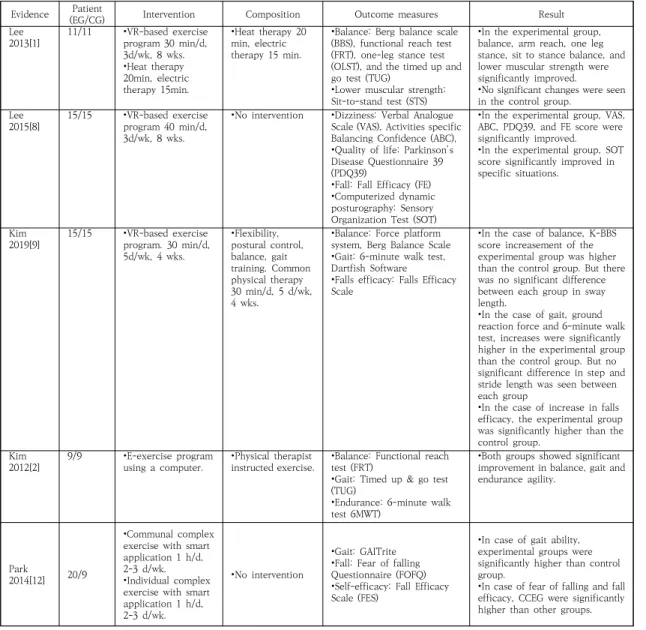
Table 1. PICOS analysis of included studies
Evidence (EG/CG)Patient Intervention Composition Outcome measures Result
Lee
2013[1] 11/11 •VR-based exercise program 30 min/d, 3d/wk, 8 wks. •Heat therapy 20min, electric therapy 15min. •Heat therapy 20 min, electric therapy 15 min.
•Balance: Berg balance scale (BBS), functional reach test (FRT), one-leg stance test (OLST), and the timed up and go test (TUG)
•Lower muscular strength: Sit-to-stand test (STS)
•In the experimental group, balance, arm reach, one leg stance, sit to stance balance, and lower muscular strength were significantly improved.
•No significant changes were seen in the control group.
Lee
2015[8] 15/15 •VR-based exercise program 40 min/d, 3d/wk, 8 wks.
•No intervention •Dizziness: Verbal Analogue Scale (VAS), Activities specific Balancing Confidence (ABC), •Quality of life: Parkinson’s Disease Questionnaire 39 (PDQ39)
•Fall: Fall Efficacy (FE) •Computerized dynamic posturography: Sensory Organization Test (SOT)
•In the experimental group, VAS, ABC, PDQ39, and FE score were significantly improved. •In the experimental group, SOT score significantly improved in specific situations.
Kim
2019[9] 15/15 •VR-based exercise program. 30 min/d, 5d/wk, 4 wks. •Flexibility, postural control, balance, gait training. Common physical therapy 30 min/d, 5 d/wk, 4 wks.
•Balance: Force platform system, Berg Balance Scale •Gait: 6-minute walk test, Dartfish Software
•Falls efficacy: Falls Efficacy Scale
•In the case of balance, K-BBS score increasement of the experimental group was higher than the control group. But there was no significant difference between each group in sway length.
•In the case of gait, ground reaction force and 6-minute walk test, increases were significantly higher in the experimental group than the control group. But no significant difference in step and stride length was seen between each group
•In the case of increase in falls efficacy, the experimental group was significantly higher than the control group.
Kim
2012[2] 9/9 •E-exercise program using a computer. •Physical therapist instructed exercise. •Balance: Functional reach test (FRT) •Gait: Timed up & go test (TUG)
•Endurance: 6-minute walk test 6MWT)
•Both groups showed significant improvement in balance, gait and endurance agility.
Park
2014[12] 20/9
•Communal complex exercise with smart application 1 h/d, 2-3 d/wk. •Individual complex exercise with smart application 1 h/d, 2-3 d/wk.
•No intervention
•Gait: GAITrite •Fall: Fear of falling Questionnaire (FOFQ) •Self-efficacy: Fall Efficacy Scale (FES)
•In case of gait ability, experimental groups were significantly higher than control group.
•In case of fear of falling and fall efficacy, CCEG were significantly higher than other groups.
heterogeneity was quantitatively evaluated using Higgins' I2 statistic. At this time, there were “cases where the value of I2 was 25% and were judged
to be of low heterogeneity,” “cases where the value of I2 was 50% and were judged to be of
medium heterogeneity,” and “cases where the value of I2 was 75% or higher and were judged to
be of high heterogeneity” [11]. In this study, the differences in effect sizes between subgroups were more directly verified. In the subgroup analysis, the effects of virtual reality programs on balance,
gait, and falls efficacy were analyzed separately.
3. Result
3.1 Characteristics of the analyzed literature
The five studies analyzed in this study were published between 2012 and 2019, with one in 2019, one in 2015, one in 2014, one in 2013, and one in 2012. Of the five studies, four were written in Korean and one in English.
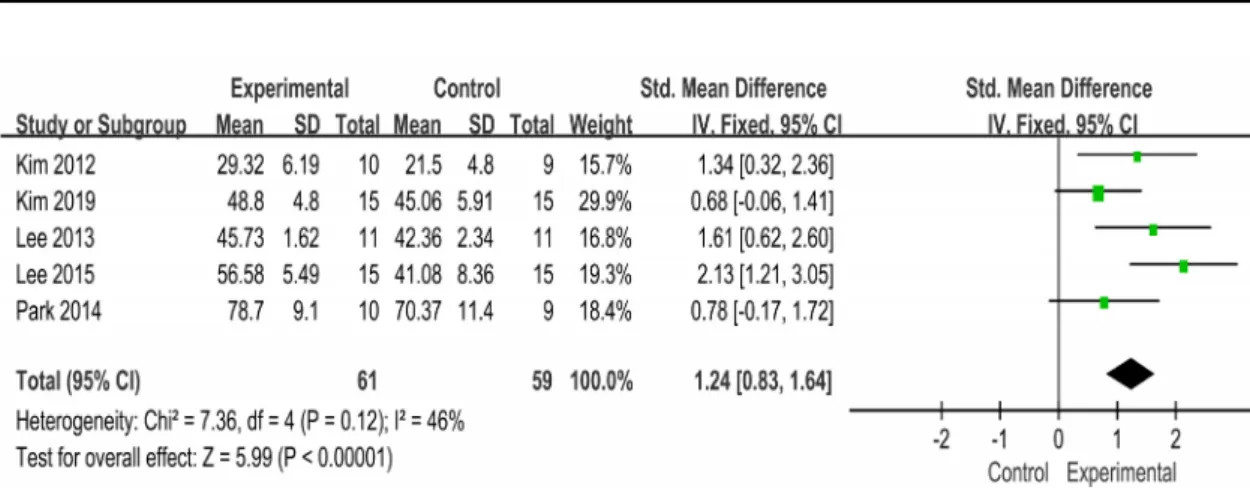
Fig. 4. Forest plot of the effects of untact on balance
Fig. 5. Forest plot of the effects of untact program on gait
The ages of the subjects included in this study were at least 40 years, and most of the subjects in the papers were the elderly at least 60 years old. In addition, four of the analyzed studies were conducted by selecting subjects in 1st to 3rd stages of Hoehn and Yahr, and one study selected subjects who can walk independently. There were at least 18 subjects and 46 at most, and they were divided into experimental groups and control groups to implement interventions.
3.2 Assessment of the quality of the
literature
As shown in Fig. 2 and Fig. 3, in the domain of random assignment generation, the ratio of “unclear risk of bias” was the highest with three papers (60.0%). In the domain of concealment of assignment order and the domain of processing incomplete results, “low risk of bias” and “high risk of bias” appeared in one paper (20.0%), and “unclear risk of bias” appeared in three papers (60%). In the domain of blinding of study participants and researchers and blinding of the assessment of results, “unclear risk of bias” appeared for all five papers (100%). In the domain of blinding in assessment, “high risk of bias” appeared for one paper (20.0%) and “unclear risk of bias” appeared for four papers (80%). In the domain of the data of incomplete results, “low risk of bias” appeared for all five papers (100%). In the domain of result reporting and in the domain of others, “unclear risk of bias” appeared for all five papers (100%).
3.3 Analyzed literature study methods and
the characteristics of the program
To review the types of untact exercise programs used in the analyzed literature shown in Table 1, three studies used virtual reality-based exercise programs, and total of two studies used e-exercise programs, one through a computer application and the other through a
smart application. The studies that used virtual reality-based exercise programs were randomized controlled experimental studies. The control groups underwent traditional rehabilitation treatment or without any intervention. In the case of the experimental groups, the virtual reality-based tool used for intervention was a Nintendo Wii with the Interactive Rehabilitation and Exercise System. In the study conducted with e-exercise programs, interventions using computers and smartphones were applied. The intervention periods ranged from 4 to 8 weeks. The contents evaluated with the measurement tool were balance, gait, falls efficacy, and lower extremity muscle strength. In the analyzed literature, balance ability, lower extremity muscle strength, gait, and falls efficacy were significantly changed in Parkinson's disease patient groups with untact programs applied.
3.4 Effects of untact exercise programs on
balance, gait, and falls efficacy
In all five analyzed papers, untact exercise programs were applied and the effect sizes were compared using balance, gait, and falls efficacy as outcome variables. These three variables were divided into three subgroups and analyzed. Among the papers, one did not apply any intervention to the control group, and two applied conventional physical therapy to the control group. In the subgroup analysis shown in Fig. 4, Fig. 5, and Fig. 6, effects of virtual reality programs on balance, gait, and falls efficacy were analyzed separately.
3.4.1 Effects of untact exercises program on balance
This result is the subgroup on balance among the effects of untact exercise program in Parkinson's patients. Since the studies were not found to be homogeneous (VR G. vs. no VR G.:
Higgins I2=46%), they were analyzed with a random effect model. According to Fig. 4, there were effects to improve balance by 1.27 (SMD=1.27; 95% CI 0.72 to 1.83), and the difference was shown to be statistically significant (Z=4.51, p<0.001).
3.4.2 Effects of untact exercises program on gait
This result is the subgroup on gait among the effects of untact exercise program in Parkinson's patients. Since the studies were not found to be homogeneous (VR G. vs. no VR G.: Higgins I2=47%), the studies were analyzed using a
random effect model in Fig. 3. As shown in Fig. 5, there were effects to improve gait by -0.40 (SMD=0.40; 95% CI -1.00 to 0.10), but the difference was not shown to be statistically significant (Z=1.32, p>0.05).
3.4.3 Effects of untact exercises program on falls efficacy
This result is the subgroup on falls efficacy of untact exercise program in Parkinson's patients. The studies were found to be homogeneous (VR G. vs. no VR G.: Higgins I2 =0%). The sizes of
effects on falls efficacy were compared between two out of the five analyzed papers. As shown in Fig. 6, falls efficacy increased by 0.52 (SMD=0.52; 95% CI -0.000 to 1.03), and the difference was shown to be statistically significant (Z=1.96, p=0.05).
4. Discussion
This study was intended to investigate the study methods used in untact exercise program interventions applied to Parkinson’s disease patients and the effects of the methods on balance, gait, and falls efficacy. The literature analyzed in this study was three virtual reality
program papers and two e-exercise program papers. Subjects were people with Parkinson’s disease who scored between 1 to 3 points on the Hoehn and Yahr scale or were able to walk more than 10 meters independently.
Virtual reality is an interactive simulation in which virtual tasks are applied as the user moves and uses virtual objects by himself/herself in a virtual environment made using a computer [4,5]. In addition, it is recognized as an effective treatment tool that adjusts the difficulty of performing tasks and enables visual and auditory feedback training [4,6]. Moreover, since it is equipped with conditions for intensive training, repetitive training, task-oriented training, and continuous training, it can have positive effects on patients [13].
In the analyzed papers, when an intervention was implemented with a virtual reality exercise program and the experimental group was compared with the control group, there were effects to improve balance and gait in general, and the studies that set falls efficacy as an outcome variable also found that the program was effective (two studies). Therefore, virtual reality exercise programs can be regarded as generally effective for the improvement of balance, gait, and fall prevention. In addition, it was reported that lower extremity muscle strength and endurance were also improved. In a virtual reality exercise program applied to stroke patients [14], it was reported that falls efficacy and daily activities were improved. Falls efficacy is a measure of the fear of falls, which can be a risk factor for falls per se. The virtual reality program improved falls efficacy and reduced the fear of falls in stroke patients. Therefore, the virtual reality program may be usefully applied to fall prevention in stroke patients. A virtual reality exercise program [15] applied to children with cerebral palsy showed improvement in balance ability and gross motor functions. These researchers suggested that since the virtual
reality exercise program induced children with cerebral palsy to actively participate in exercise, thereby enhancing their functional activity ability, activity-oriented interventions should be provided [15]. Therefore, it can be seen that virtual reality exercise programs can be used as an intervention method for the improvement of balance, fall prevention, and gait ability.
A total of five RCT studies reported after 2001 were included in this study, and meta-analysis of the studies was performed. Among the analyzed studies, ones on virtual reality programs used a Nintendo Wii (Nintendo Inc., Kyoto, Japan), a video game console that has a simple game method instead of complex equipment so that virtual reality systems can be easily implemented and has the advantages of being inexpensive and being a small device, which can be conveniently moved and stored [1]. In addition, it can immediately provide visual, auditory, and tactile feedback to arouse patients’ interest [1].
As for the effects of untact exercise programs on balance, which is an outcome variable of this study, all five studies (100%) indicated that the programs were effective, so that untact exercise programs can be regarded as generally effective for the improvement of balance (Z=4.51, p<0.001). In the studies analyzed in this study, tools used to measure balance were functional reaching test(FRT), berg balance scale(B BS), activities specific balancing confidence scale (A BC). FRT is used to measure static balance, BBS and ABC are tools to measure dynamic balance. So doing analysis without classification of dynamic and static balance is a limitation of this study. Nevertheless, it has been shown that virtual reality exercise programs can be used as an intervention method on balance of people with Parkinson’s disease.
On the other hand, for gait, there was no difference in effect sizes in the four studies than contact exercises program, indicating that untact exercise programs were not effective for
gait(Z=1.32, p>0.05). However, since the number of studies analyzed is small, it seems that the results should be generalized carefully. Walking is a complex action with three basic conditions: progression, adaptation, and posture control. Among these, posture control should be a prerequisite for balancing to provide dynamic stability of the body while moving forward. The results of the literature analysis showed an improvement in balance, but it seems that the degree of improvement in balance did not lead to walking[16]. Lee et al. [17] reported that when a virtual reality program was applied to the elderly, there were effects on balance and gait. The difference in these results is thought to be the difference between an elderly person without neurological problems and a Parkinson's patient. Meta-analysis was conducted in this study, and based on the results in Fig. 6, untact exercise programs can be regarded as generally effective for the improvement of falls efficacy (Z=1.96, p=0.05). Falls are a serious problem that threatens the health of the elderly, and in severe cases, they can lead to death [18]. Fall risk factors of the elderly can be largely divided into internal factors due to a decline in physical functions and external factors related to the environment. The internal factors include age, sex, visual impairment, weakening of lower extremity muscle strength, declines in the sense of balance and gait ability, cognitive impairment, and taking three or four or more kinds of drugs [19]. Kim et al. [20] reported that falls efficacy improved as a result of applying a virtual reality exercise program to the elderly, and in a study conducted by An et al. [21], it was reported that no increase in falls efficacy occurred when a virtual reality exercise program was applied to stroke patients. Therefore, it seems possible to use virtual reality programs to enhance falls efficacy in Parkinson's patients.
Since virtual reality programs are being studied for dementia, brain tumors, cerebral
palsy, the elderly without any particular disease, smokers, and people with kidney disease [22], the scope of application is quite extensive. In addition, with the spread of untact services due to the COVID-19 pandemic, the transition to untact digital services is being accelerated in all industries and social life areas [2]. As this trend of untact services is rapidly expanding throughout society, completely new countermeasures and solutions, such online platforms, are being demanded in the healthcare field [2]. Since these social demands increase the need for untact exercise programs, related studies should be continued and expanded.
5. Conclusion
In conclusion, this study performed meta-analysis to investigate the effects of the untact exercise program intervention applied to Parkinson's disease patients on balance, gait, and falls efficacy. Untact exercise programs were divided into virtual reality programs and e-exercise programs. The untact exercise programs had effects on the balance and falls efficacy of Parkinson's disease patients, but not on gait.
REFERENCES
[1] D. K. Lee, E. K. Kim, Y. N. Kim, Y. S. Kim & T. Y. Hwang. (2013). Effects of a virtual reality training program on balance and lower muscular strength of Parkinson’s disease patients. The Journal of Korean Society of Physical Therapy, 25(2), 96-102. [2] S. Y. Kim, J. T. Han, M. O. Choi, H. S. Min & H. R.
Sung. (2012). The effect of e-exercise program on balance, gait, and endurance in patients with Parkinson’s disease. Journal of the Korean Society of Physical Medicine, 7(3), 259-265.
[3] The Federation of Korean Information Industries. (2020). Trends and implications of non-face-to-face services in the Corona 19 situation. FKII Issue Report 2020-01. https://www.fkii.org
[4] Z. Tong. (2016). Virtual reality in neurorehabilitation.
International Journal of Neurorehabilitation, 3(1), 1-2. DOI: https://doi.org/10.4172/2376-0281.1000e117 [5] D. Rand, P. L. Weiss & N. Katz. (2009). Training
multitasking in a virtual supermarket: a novel intervention after stroke. American Journal of Occupational Therapy, 63(5), 535-542.
DOI: https://doi.org/10.5014/ajot.63.5.535
[6] Dementia News. (2021). http://www. dementiane ws.co.kr [7] National law information center. (2021).
https://www.law.go.kr/
[8] G. H. Lee. (2015). Effects of virtual reality exercise program on balance and quality of life among patients with Parkinson’s disease. The Asian Journal of Kinesiology, 17(1), 49-61.
DOI: https://dx.doi.org/10.15758/jkak.2015.17.1.49 [9] Y. G. Kim & S. H. Kang. (2019). The effect of virtual
reality-based exercise program on balance, gait, and falls efficacy in patients with Parkinson’s disease.
Journal of the Korean Society of Physical Medicine, 14(4), 103-113.
DOI: https://doi.org/10.13066/kspm.2019.14.4.103 [10] S. Y. Kim et al. (2011). NECA’s guidance for
undertaking systematic reviews and meta-analyses for intervention. National Evidence-based Healthcare Collaborating Agency. https://www.neca.re.kr [11] J. P. T. Higgins & S. Green. (2011). Cochrane
handbook for systematic reviews of interventions.
Chichester, West Sussex : Wiley-Blackwell.
[12] Y. J. Park. (2014). Effects of communal exercise with visual and auditory feedback provided by a smart application on gait ability and fear of falling in Parkinson`s disease patients. Journal of Exercise Rehabilitation, 10(5), 286-290.
DOI: https://doi.org/10.12965/jer.140148
[13] M. Guidali, A. Duschau-Wicke, S. Broggi, V. Klamroth-Marganska, T. Nef & R. Riener. (2011). A robotic system to train activities of daily living in a virtual environment. Medical & Biological Engineering & Computing, 49(10), 1213-1223.
DOI: https://doi.org/10.1007/s11517-011-0809-0 [14] J. M. Lee, D. H. Kim & S. I. Song. (2012). Effects of
virtual reality program on fall efficacy and activities of daily living for patients with stroke. Journal of Korean Society of Community-Based Occupational Therapy, 2(2), 25-35.
[15] H. J. Lee & J. E. Go. (2016). Effects of virtual reality based exercise program on gross motor function and balance of children with spastic cerebral palsy.
Journal of The Korean Society of Integrative Medicine, 4(4), 53-65.
DOI: https://doi.org/10.15268/ksim.2016.4.4.053 [16] A, Shumway-Cook & M. H. Woollacott. (2012). Motor
control. Lippincott Willams & Wilkins.
The effects of 4 weeks training using virtual reality game on balance and gait ability, depression of elderly people. Journal of the Korean Proprioceptive Neuromuscular Facilitation Association, 10(2), 41-46. [18] C. A. Miller. (2002). The connection between drugs and falls in elders. Geriatric Nursing, 23(2), 109-110. DOI: https://doi.org/10.1067/mgn.2002.123794 [19] K. C. Moylan & E. F. Binder. (2007). Falls in older
adults: risk assessment, management and prevention.
The American Journal of Medicine, 120(6),
493.e1-493.e6.
DOI: https://doi.org/10.1016/j.amjmed.2006.07.022 [20] E. J. Kim, M. S. Kim & B. Y. Hwang. (2010). The effect
of a virtual reality program on static balance control and fall efficacy of elderly people. Journal of the Korean Gerontological Society, 30(4), 1107-1116. [21] T. G. An, H. C. Kwon, S. M. Lee & H. Kim. (2019).
The effects of transcranial direct current stimulation on balance, fall efficiency, and fall-related fitness in stroke patient’s through a virtual reality rehabilitation program. Journal of the Korean Society of Integrative Medicine. 7(1), 9-17.
DOI: https://doi.org/10.15268/ksim.2019.7.1.009 [22] H. G. Kim, M. Y. Lee & Y. A. Yang. (2018). Literature
research on the clinical effect of the virtual reality-based rehabilitation program. The Journal of Occupational Therapy for the Aged and Dementia, 12(1), 1-11. 노 효 련(Hyo-Lyun Roh) [정회원] ․ 2002년 8월 : 대구대학교 재활의학과 (이학석사) ․ 2008년 2월 : 대구대학교 물리치료학 과(이학박사) ․ 2010년 3월 ~ 현재 : 강원대학교 물리 치료학과 교수 ․ 관심분야 : 운동치료, 아동 물리치료 ․ E-Mail : [email protected] 장 세 현(Se-Hyun Jang) [학생회원] · 2021년 2월 : 연세대학교 작업치료학 과(보건학사) · 2021년 3월 ~ 현재 : 강원대학교 응 급의료재활학과 (석사과정중) · 관심분야 : 물리치료, 작업치료 · E-Mail : [email protected]