저작자표시-비영리-변경금지 2.0 대한민국 이용자는 아래의 조건을 따르는 경우에 한하여 자유롭게 l 이 저작물을 복제, 배포, 전송, 전시, 공연 및 방송할 수 있습니다. 다음과 같은 조건을 따라야 합니다: l 귀하는, 이 저작물의 재이용이나 배포의 경우, 이 저작물에 적용된 이용허락조건 을 명확하게 나타내어야 합니다. l 저작권자로부터 별도의 허가를 받으면 이러한 조건들은 적용되지 않습니다. 저작권법에 따른 이용자의 권리는 위의 내용에 의하여 영향을 받지 않습니다. 이것은 이용허락규약(Legal Code)을 이해하기 쉽게 요약한 것입니다. Disclaimer 저작자표시. 귀하는 원저작자를 표시하여야 합니다. 비영리. 귀하는 이 저작물을 영리 목적으로 이용할 수 없습니다. 변경금지. 귀하는 이 저작물을 개작, 변형 또는 가공할 수 없습니다.
A Dissertation
for the Degree of Doctor of Philosophy
Effect of Energy Levels and Sources on
Physiological Responses and Reproductive
Performance in Sows
사료
내 에너지 수준과 공급원이 모돈의 생리적
변화와
번식성적에 미치는 영향
August, 2016
By
Jin, Song Shan
School of Agricultural Biotechnology
Graduate School, Seoul National University
Effect of Energy Levels and Sources on
Physiological Responses and Reproductive
Performance in Sows
사료
내 에너지 수준과 공급원이 모돈의 생리적
변화와
번식성적에 미치는 영향
지도교수 김 유 용 이 논문을 농학박사 학위논문으로 제출함 2016년 8월 서울대학교 대학원 농생명공학부 김 송 산 김송산의 농학박사 학위논문을 인준함 2016년 8월 위 원 장 (인) 부위원장 (인) 위 원 (인) 위 원 (인) 위 원 (인)
Summary
The objectives of the three experiments were 1) to evaluate the effect of different dietary energy levels for gestating gilts on physiological responses, reproductive performance and growth of their progeny, 2) to investigate the effect of dietary energy levels on sow reproductivity and growth of their progeny over three consecutive parities and 3) to investigate the effects of Tenebrio molitor larva as a dietary energy source on reproductivity of sows and growth of their progeny.
Experiment 1. Effect of Dietary Energy Levels on Physiological Parameters and Reproductive Performance in Gestating Gilts
The experiment was to investigate the effects of dietary energy levels on the physiological parameters and reproductive performance of gestating first parity sows. A total of 52 F1 gilts (Yorkshire×Landrace) were allocated to 4 dietary treatments using a completely randomized design (CRD). Each treatment contained diets with 3,100, 3,200, 3,300 or 3,400 kcal of ME/kg. Subsequently, the daily energy intake of gestating gilts in each treatment were 6,200, 6,400, 6,600 or 6,800 kcal of ME/kg, respectively. During gestation, the body weight (p=0.04) and weight gain (p=0.01) of gilts increased linearly with increasing dietary energy levels. Backfat thickness at d 110 of gestation was not affected by dietary treatments. There were no significant differences in litter size or litter birth weight. During lactation, the voluntary feed intake of sows tended (p=0.08) to decrease when the dietary energy levels were high during gestation. No difference was observed in the backfat thicknees of sows within treatments but higher energy treatment resulted in decreasing body weight of sows at d 21 of lactation (p<0.05) and body weight gain during lactation (p<0.01). The 3,400 kcal of ME/kg treatment showed the highest number of weaning piglets among treatments (p<0.05). The culling rate was higher
in 3,100 (38%) and 3,400 (15%) kcal of ME/kg treatments. No significant differences were observed in the chemical compositions of colostrum and milk. Consequently, the adequate energy intake for gestating gilts should be 6,400 or 6,600 kcal of ME/d.
Experiment 2. Effect of Dietary Energy Levels on Physiological Parameters and Reproductive Performance in Gestating Sows over Three Consecutive Parities
This experiment was to evaluate the effects of the dietary energy levels on the physiological parameters and reproductive performance during gestation over three parities in sows. A total of 52 F1 gilts (Yorkshire×Landrace) were allotted to one of four dietary treatments using a CRD. The treatments contained 3,100, 3,200, 3,300 or 3,400 kcal of ME/kg diet but feed was provided at 2.0, 2.2 and 2.4kg/day in the first, second and third parity, respectively. Experimental diets and treatment of sows were not changed during the whole experiment period. The body weight and body weight gain during gestation increased as the dietary energy level increased (p<0.05, and p<0.01) in the first parity. In the second parity, the body weight of sows was the lowest (p<0.05) when 3,100 kcal of ME/kg treatment diet was provided. The body weight was higher as the dietary energy level increased (p<0.05) during the gestation period in the third parity. During lactation, the voluntary feed intake of lactating sows tended to decrease when gilts were fed higher energy treatment diet (p=0.08) and the body weight, body weight gain were increased by dietary energy level during gestation (p<0.05). Backfat thickness was not affected by dietary treatment during the gestation period in over three parity, interestingly backfat change from breeding to d 110 of gestation was higher as the dietary energy level increased at the first parity (p<0.05). When gilts were fed 3,400 kcal of ME/kg treatment diet, higher number of weaning piglet was observed in the first parity (p<0.05). The highest culling rate (69%) was seen when gestating sows were fed
3,100 kcal/kg ME treatment diet during three parities. No significant differences were observed in the chemical compositions of colostrum and milk. In conclusion, the adequate energy intake of gestating sows should be 6,400 or 6,600 kcal of ME/d, 7,040 or 7,260 kcal of ME/d, and 7,680 or 7,920 kcal of ME/d for parity 1, 2 and 3, respectively.
Experiment 3. Effect of Tenebrio molitor Larva as an Energy Source on Reproductivity of Sows and Growth of their Progeny
This experiment was conducted to evaluate the effect of Tenebrio molitor larva as a dietary energy source on reproductivity and growth performance of their progeny in lactating sows. A total of 25 F1 sows (Yorkshire×Landrace) were allotted to one of five dietary treatments using a CRD. Various levels of Tenebrio molitor larva were supplemented and treatments were 1) CON (tallow 2%), 2) F1 (tallow 3%), 3) F2 (tallow 4%), 4) L1 (tallow 2% + Tenebrio molitor larva 1%) and 5) L2 (tallow 2% + Tenebrio molitor larva 2%). The body weight, backfat thickness and weaning to estrus interval were not affected by dietary treatments. There were no differences in litter weight and litter weight gain in lactation period among dietary treatments. Lower blood urine nitrogen concentrations were observed in L2 treatment in sows (p<0.01). In nursing pigs, higher triglyceride (p<0.01) and very low density protein (p<0.01) were observed in L1 treatment. In alanine aminotransferase concentration, L1 treatment showed higher concentration than other treatments (p<0.05). Consequently, Tenebrio molitor larva is available energy source instead of tallow in lactating diet and addition of Tenebrio molitor larva as an energy source up to 2% in lactating sow diet did not show detrimental influences on sow’s performance and growth performance of their progeny.
Contents
Summary
...iContents
... ivList of Tables
...viiiList of Figures
... xiList of Abbreviations
... xiiChapter I. General Introduction ... 1
Chapter II. Review of Literature ... 3
1. Saving feed cost and improving productivity ... 3
1.1 General approaches ... 3
1.1.1 Nutrient requirement... 3
1.1.2 Feed ingredients ... 3
1.1.3 Management techniques ... 4
1.1.4 Effects of environments ... 5
1.2 Nutritional approaches for sows ... 6
1.2.1 Energy ... 6
1.2.2 Protein ... 7
1.2.3 Lipid ... 8
1.2.4 Feed intake ... 8
1.2.5 Feed additives ... 9
2. Energy levels in gestating sows ... 10
2.1 Dietary energy levels in gestation period ... 10
2.2 Energy requirements of gestating sows ... 11
2.5 Effect of dietary energy levels on sow colostrum and progeny ... 14
2.6 Effect of dietary energy levels on sow longevity ... 15
3
. Effect of Tenebrio molitor larva in lactation sows ... 153.1 General characteristics of Tenebrio molitor ... 15
3.2 Nutritional values of Tenebrio molitor ... 16
3.2.1 Protein and amino acid ... 16
3.2.2 Fat ... 18
3.2.3 Other nutritional values ... 19
3.3 Tenebrio molitor larva as feed ingredients in swine diets... 20
4. Literature cited ... 21
Chapter III. Effect of Dietary Energy Levels on Physiological
Parameters and Reproductive Performance in Gestating
Gilts
Abstract ... 41Introduction ... 42
Materials and Methods ... 42
Results ... 45
Discussion ... 47
Implications ... 51
References ... 52
and Reproductive Performance in Gestating Sows over
Three Consecutive Parities
Abstract ... 65
Introduction ... 67
Materials and Methods ... 67
Results ... 71
Discussion ... 72
Implications ... 77
References ... 78
Chapter V. Effect of Tenebrio molitor Larva as an Energy Source on
Reproductivity of Sows and Growth of their Progeny
Abstract ... 99Introduction ... 100
Materials and Methods ... 100
Results ... 102
Discussion ... 103
Implications ... 106
References ... 107
List of Tables
Chapter II.
Table 2-1.Percentage nutritional composition of Tenebrio Molitor larva, adult, exuvium and excreta ... 16 Table 2-2. Amino acid content of Tenebrio molitor larva, adult, exuvium and excreta ... 17 Table 2-3. Fatty acid composition of Tenebrio molitor larva pupa and adult ... 18 Table 2-4.Mineral composition of Tenebrio molitor larva, adult, exuvium and excreta (mg/kg) ... 19
Chapter III.
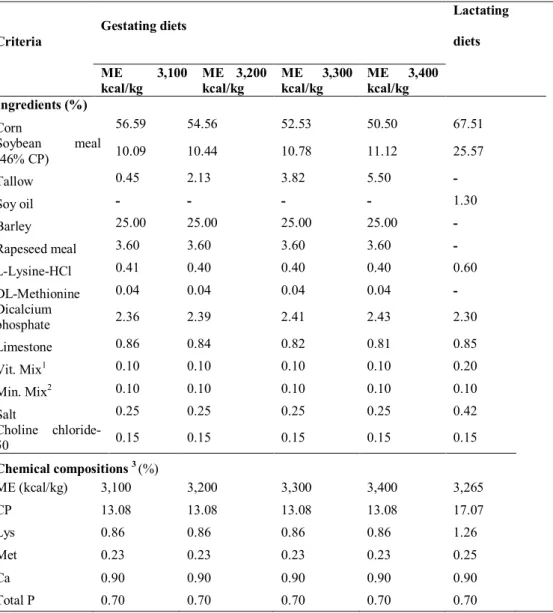
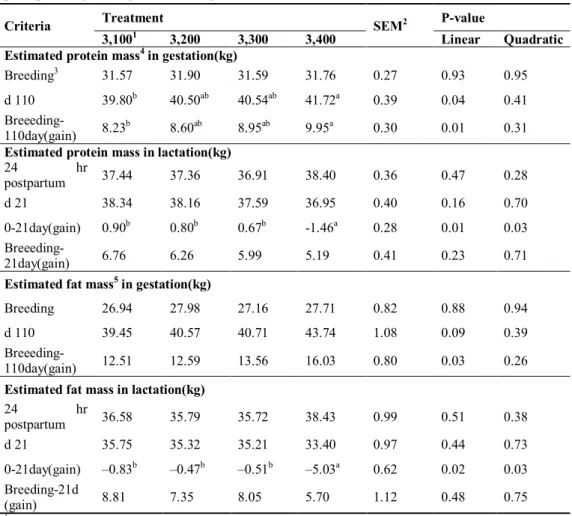
Table 3-1. Formula and chemical composition of gestating and lactating diets ... 57 Table 3-2. Effects of the dietary energy levels on the body weight, backfat thickness, body length, feed intake and weaning to estrus interval of primiparous gestating and lactating sows ... 58 Table 3-3. Effects of the dietary energy level on the estimated protein, fat mass and its gain of primiparous gestating and lactating sows ... 59 Table 3-4. Effects of the dietary energy level on the reproductive performance and growth of progeny of primiparous sows ... 60 Table 3-5. Effects of the dietary energy level in gestating sows on the components of colostrum and milk in primiparous lactating sows ... 61 Table3-6.Effects of dietary energy level in gestating sows on the fatty acids composition of colostrum in primiparous lactating sows... 62 Table 3-7. Effects of the dietary energy level on the blood urine nitrogen, glucose and free fatty acid concentrations in the primiparous sows ... 63
Table 3-8.Effects of the dietary energy level in gestating sows on immune
parameters of colostrum in primiparous lactating sows ... 64
Chapter IV.
Table 4-1. Formula and chemical composition of gestating and lactating diets ... 85 Table4-2.Effects of the dietary energy levels on the body weight of gestating and lactating sows ... 86 Table4-3.Effects of the dietary energy level on the back-fat of gestating and lactating sows ... 87 Table 4-4.Effects of the dietary energy level on the estimated fat, protein mass of gestating sows ... 88 Table 4-5.Effects of energy levels on estimated fat and protein mass of lactating sows ... 89 Table 4-6. Effects of dietary energy levels on lactation feed intake, weaning to estrus interval and culling rate of sows ... 90 Table 4-7. Effects of dietary energy levels on the reproductive performance of sows
... 91 Table 4-8. Effects of dietary energy levels on the progeny growth performance ... 92 Table4-9.Effects of dietary energy levels in gestating sows on fat content in colostrum and milk of lactating sows ... 93 Table4-10. Effects of dietary energy levels in gestating sows on fatty acids compositions of sows ... 94 Table4-11. Effects of dietary energy levels on immune parameters of colostrum inlactating sows ... 95
Table 5-1. Formula and chemical composition of lactating diets... 113 Table 5-2. Effect of Tenebrio molitor larva as energy source on the body weight, back-fat, feed intake and weaing to estrus interval of sows ... 114 Table 5-3. Effect of Tenebrio molitor larva as enrgy source on growth performance of piglets ... 115 Table 5-4. Effect of Tenebrio molitor larva as enrgy source on milk composition of sows ... 116 Table5-5. Effect of Tenebrio molitor larva as energy source on blood profiles of sows. ... 117 Table5-6. Effect of Tenebrio molitor larva as energy source on blood profiles of piglets ... 118
List of Figures
Chapter IV.
Figure6-1. Effects of the dietary energy level on the blood urine nitrogen concentration in the serum of sows... 96 Figure 6-2. Effects of the dietary energy level on the glucose concentrations in the plasma of sows ... 97 Figure 6-3. Effects of the dietary energy level on the free fatty acid concentrations in the plasma of sows ... 98
List of Abbreviations
ADFI Average daily feed intake
AI Artificial insemination
AST ADG ALT
Aspartate aminotransferase Average daily gain
Alanine aminotransferase
BW Body weight
BFC Backfat change
BUN Blood urine nitrogen
CRD DE
Completely randomized design Digestible energy
FI Feed intake
FFA Free fatty acid
HDL IgG IgA
High density lipoprotein Immunoglobulin G Immunoglobulin A LDL
LCT MUFA
Low density liprotein Lower critical temperature Monounsaturated fatty acid
ME Metabolizable energy
NE Net energy
PUFA Polyunsaturated fatty acid
SFA Saturated fatty acid
SEM Standard error of the means
SNF Solid not fat
VLDL Very low density protein WEI Weaning to estrus interval
Chapter I. General Introduction
In general, feed cost, weaning pigs per sow per year (PSY) and longevity are the most important three factors in sow’s productivity. Weaning pigs per sow per year in Korea was approximately 22.54 (Korea pork producers association, 2014), but this in Denmark was 29.6 (Agriculture and Horticulture Development Board, 2014). The reason of low productivity may be caused by application of dietary nutrirents and fram management technique without the verification in Korea environment.
Nutrient requirement is the most important factors because of immediately influenced the sows body condition, reproductive performance and feed cost, which from 70% costs in fram prodution. Sow productivity has developed incredibly during last decades due to the improvement of high genetic potential of modern sows. Gestation diets of the gilts and sows are of central importance to swine industry, because it is related closely to the reproductive productivity and longevity of the entire system. Sows must be carefully kept to provide adequate energy during gestation because of maintaining body maturation, growth of fetus and body reservation (Jang et al., 2014). However, previous results in supplementing more energy in the diet are still controversial. Almeida (2000) reported that high dietary energy level at ovulation period can increase ovulation rate and promote progesterone secretion to increase the fetal survival. There is sufficiency body weight and backfatthickness when fed higher energy during gerstation and increase the conception rate (Kongsted, 2005). Besides, Moehn (2011) suggested the need for parity-segregated phase feeding of pregnant sows. NRC (2012) also suggested that higher energy intake have positive affect on fetus growth and development, corresponding tissues (placenta, uterus and mammary tissue) and deposition of
maternal lipid and protein. The energy requirement of the gestation gilt and sow should be between 6,678 and 8,182 kcal of ME/d, which is 1,650 kcal higher than its previous version (NRC, 1998). Therefor, adequate energy supply could be one of the nutritional methods for improving sow productivity.
The properties of animal fats are related to their source and quality and their qualities are determined by fatty acid composition, hardness, color, stability and so on (Sharma et al., 2013). Dietary insect called Tenebrio molitor larva has been used as feed ingredients as an energy source, because the nutritional values of Tenebrio
molitor larva contains high fat level in dry matter (Ravzanaadii et al., 2012). Some
studies had reported Tenebrio molitor larva had high degree of fat up to 32.7%, which used as an energy source with high digestibility (Ramos-Elorduy et al., 2002). Huang (2006) reported Tenebrio molitor larva contains high level of oleic and linoleic acid in total un-saturated fatty acid content and the amount of un-saturated fatty acids had high ratio to 72% in total fatty acid composition. Some researchers reported that Tenebrio molitor larva is used to alternative protein source in pig and poultry feed (Ramos-Elordoy et al., 2002; Deng et al., 2008; Chen et al., 2012). However, litter information was known to be used Tenebrio molitor larva as fat source in sow diet.
Concenquently, for increasing sow productivity and decreasing production cost, three experiments were 1) to evaluated the effect of different energy levels for gestating gilts on physiological response, reproductive performance and growth of their progeny, 2) to investigate the effect of energy levels on sow reproductivity and growth of their progeny of sows over three consecutive parities and 3) to investigate the effects of Tenebrio molitor larva as an energy source on reproductivity of sows and growth of their progeny.
Chapter II. Review of Literatures
1. Saving feed cost and improving productivity
1.1. General approaches
1.1.1 Nutrient requirement
Many researches had been conducted to examin the nutrition requirement, maxium reproductive performance and growth rate in animal to save the feed cost. Nutrition was a material that should be provided from outside to keep animals. The purpose of nutrient supply is to maxium genetic potential providing all suitable necessary nutrirent in feed. Also, physiological feature of animal and nutrition demand across stages of growth should be considered. Diets containing excess level of nutrients could increase the feed cost, also have negative effcts on animal production, such as icrease toxicants substance, harmful bacterial formation, environmental pollution (Porter and Kenworthy, 1969; Ball and Aherne,1987; Hobbs et al., 1996).Sow productivity has advanced at an incredible rate in the past decades because of high-producing genetic sows. However, little information had been conducted to evaluate the requirement of some nutrients despite of genetic changes. Therefore, the experiments to evaluate the requirements of some nutrients and ingredients of feed by treatments in order to improve sow productivity and decrease feed cost.
1.1.2 Feed ingredients
Corn and soybean meal is the most widely used ingredients in the swine feed industry in Korea (Feed association of Korea, 2012). So many researches were conducted to find new feed ingredients with cheaper price, steady supply and have similar growth performance for pig industry. Rapseed meal (RSM), palm kernel
meal (PKM) and copra meal (CM) have been widely used as feed ingredients in South Korea. But those ingredients include high fiber, low palatability and some anti-nutritional factors such as glucosinolates (Gls) and erucic acid, mannan, galactomannan, xylan and arabinoxylan (Thorne et al., 1990; Dale, 1997). PKM and CM include the mannan which is non-starch polysaccharides (NSP), mainly composed of manose, and lack of several essential amino acids (Thorne et al., 1989). The NSP is mainly composed of pure mannan and galactomannan, but lack of enzyme in mono-gastric animals to deconposition these nutrients (Dale, 1997). So ß-mannanase must be added as an enzyme when PKM and CM used in feed formulate of pigs (Sundu et al., 2006). The erucic acid has reduces growth rate, digestibility (Food Standards Australia New Zealand, 2003) in RSM and Gls hydrolysis products are mainly toxic because of products such as thiocyanates, oxazolidinethiones which have negative affects on swine production ( European Food Safety Authority, 2008; Quiniou et al ., 2012). So it is very imporotant to controlling the anti-nutritional and supplementation levels. Recently some other competitive feed ingredients have been used in pig diets such as cassava residue, wheat and rice.
1.1.3 Management techniques
Pig management techniques are very important in pig productivity and directly affect profit of fram. Many management techniques have been carried out on pig productivity. There was various feeding method in gestation period used in Korea for improving the sow productivity. Rduced feed intake in early gestation will increase embryo survival (Dyck et al., 1980) and the mammary gland was develop between 75 to 90 d, therefore, cell numbers of mammary gland decreased when increase feed intake in this period and decreased milk production in subsequent lactation period (Weldon et al., 1991). During late gestation (90-110 d), increased feed intake could be increased fetus growth and piglet birth weight (NRC, 1998). However, our previous studies suggested that flat feeding in getation period did not
affect litter size, litter weight and litter growth, aslo increased longevity due to decreased culling rate (Piao et al., 2010).
In Korea the utilization rate of artificial insemination was more than 98% and the most important in sow’s productivity (Kim et al., 2005). The duration of estrus interval was 48~72 h and ovalution at 30~40 h after set to the estrus (Bartol et al., 2008). Ovalution time have a relation with WEI and duration of estrus will decrease as WEI increase (Knox and Rodriguez-Zas, 2001). Kemp and Soede (1996) reported that there was the highest conception rate in sows when insemination at 24h before ovalution. So if could be exactly catch the beginning of estrus and ovalution time in fram, a lot of expense could be saved by incermination less times.
1.1.4 Effect of enviroment
Feeding environments will immediately influce the swine productivity such as tempreture, floor space and lighting.
At a higher temperature than the optimal range, ADG decreases primarily as a result of the severe decline in feed intake (Massabie et al., 1997). The exposure to high ambient temperatures has negative effects on pig performance, especially in lactating sows, could decrease the voluntary feed intake and increase the body weight and back fat loss (Prunier et al., 1997). In the finishing pigs and lactating sows, it is important to decrease heat stress in high ambient temperatures by increased evaporative heat loss or manipulation of diet to unhold performance.
In recent decades, pigs generally have been breeding from weaning to market weight in groups of 10 to 50 animals. Now, however, group sizes of 50 to 100 or even more are being advocated as a management strategy to minimize housing cost, maximize housing use, and improve overall profitability. But, confinement floor space can reduce piglet growth (Hyun et al., 1998; 2005), increase plasma cortisol (Arnone and Dantzer, 1980) and decrease immunity (McGlone and Curtis, 1985). Space allocation for maximizing growth performance and immune response of
weaning pigs until 15 kg BW is between 0.30 and 0.43 m2/pig (Oh et al., 2010) and 0.6, 0.9 m2/pig in growing, finishing pigs respectly in South Korea (Livestock
Research Institute of Korea, 2002).
Photoperiods could affect the reproductive performance of sow, because it can affect the LH secretion, promote ovarian and uterine growth in gilts (Surmubin et al., 1970; Ntunde, 1979b). Ntunde (1979b) reported that gilts photoperiods of 9 h in daily or greater daily will have positive effct to attain the puberty. There had heavier uterine and ovarian weights when gilts exposed to photoperiods of 12-14 h of light from 3.5 to 9.0 mo of age than exposed to 8 h of light (Surmuhin et al. 1970). Terefore, the aforementioned results indicted the intensity of light cycle could stimulate the hormonal secretion, and subsequently affect the reproductivity.
1.2 Nutritional approaches for sows
1.2.1 Energy
Sow productivity has developed extensively in recent decades due to the improvement of the high genetic potential in modern sows. Efforts to meet the nutrient requirements of high-producing sows have been undertaken by supplementing nutrients to support both the normal reproductivity and body maturement (Boyd et al., 2000). High energy level could increase the body weight and backfat thickness in gestation period but decrease the feed intake during lactation (Long et al., 2010). Low feed intake during lactation could result in higher BW loss and subsequently lead to several common reproductive problems, such as an increased WEI (Reese et al., 1982; Kirkwood and Thaeker, 1988; Baidoo et al., 1992), increased anestrus incidence after weaning, and decreased conception rate (Kirkwood and Thacker, 1988). However, high dietary energy levels during the ovulation period can increase the ovulation rate and promote progesterone secretion to increase fetal survival (Almeida et al., 2000). Kongsted (2005) demonstrated that higher energy intake during gestation may increase the conception rate and reduce
the culling rate due to sufficient body weight gain and backfat deposition. Recently, NRC (2012) suggested that higher energy intake have positive affect on the fetus development and growth, corresponding tissues (placenta, uterus and mammary tissue) and deposition of maternal lipids and proteins. The energy requirement of gestating gilts and sows should be between 6,678 and 8,182 kcal of ME/d, which is 1,650 kcal higher than previous recommendations (NRC, 1998).
More research is needed to understand the precise energy requirements of gestating gilts and sows in domestic environment for determine the optimal dietary energy level for reproductive performance and decreased feed cost.
1.2.2 Protein
Modern prolific sow have leaner but less fat and large litter size (NRC, 2012). Reproductive performance immediately influenced by protein and amino acids in sows (Kim et al., 2009). High protein supply could be increased BW, milk production at farrowing and improved the reproductive performance in lactation period (Belstra et al., 1998; Mahan, 1998; Kusina et al., 1999b). Previous research reported that decresed birth weight, litter weight gain, milk production and increased the body weight loss when protein intake was insufficient in sows (Schoknecht et al., 1993; Manhan, 1977; Manhan and Grifo, 1975). Sow body reserves increased as dietary protein level increased during gestation period and improved litter growth but not have difference in litter size and birth weight (Jang et al., 2014). Sows fed higher levels of protein in gestation (16 vs. 13%) could be decreased the backfat thickness with parity, but litter performance is similar (Mahan, 1998). Jang (2014) reported that more than 13% protein could be maximize the piglet growth in geatating gilts. Kusina et al., (1995) reported that enhanced CP (lysine 16 g/day) improved milk production and litter weight gain in primiparous sow.
Dietary fat is considered as the lipid component of the diet. Most fat used in swine diets will be made with either vegetable oils or fats from animal species such as poultry fat and tallow.
Emphasis on sow nutrition is the greatest interest in the use of fat in swine diets. Fat feeding in late gestation and lactation could affect the fat level in colostrum and milk (Seerley et al., 1974; Pettigrew, 1981). Moreover, the study reported that by supplying fat to sows before farrowing could be increase piglets survival (Drochner, 1989), as well as increase in piglet weight gain (Tilton et al., 1999). Energy intake during gestation which can either increase energy density (added fat) or simply intake is generally related with reduced intake during lactation (Weldon et al., 1994). Increased sow weight loss and days to estrus happens while reduced energy intake is given during lactation. Contrarily, fat feeding during laction is related with three things such as reduced sow body weight, backfat losses and decreased the WEI (Pettigrew and Moser, 1991). High nutrient density could not be improved the (Coffey et al., 1994; Dove and Haydon, 1994) survival rates when considering the effect of increased lactation diet nutrient density. Recent work shows that an increase in carcass fat of the pigs can be explained by weaning pigs weight from sows which fed fat during gestation (Tilton et al., 1999).
1.2.4 Feed intake
There are various feeding method usually used in gestating sows, because of maximum litter size and body condition (Boyd et al., 2000; Trottier and Johnston, 2001). Rduced feed intake in early gestation will increase embryo survival (Dyck et al., 1980) and the mammary gland was developed between 75 to 90 d, so increasing feed intake in this period could decreased cell numbers of mammary gland and decreased milk production in lactation period (Weldon et al., 1991). During late gestation (90-110 d), increased feed intake could increase fetus growth and piglet birth weight (NRC, 1998). However, there was not have positive effects
by increasing feed intake at last 25 days of gestation on born litter weight and piglet weight (Ju et al., 2010). Also, flat feeding in getation period did not affect litter size, litter weight and litter growth (Piao et al., 2010). Previous researches also reported that feed intake decreased during lactation when increased body weight at farrowing (Dourmad, 1991; Xue et al; 1997; Revell et al., 1998; Young et al., 2004) and concequently several common reproductive problems, such as increased WEI (Reese et al., 1982; Kirkwood and Thaeker, 1988; Baidoo et al., 1992), an increased anoestrus after weaning, and decreased conception rate (Kirkwood and Thacker, 1988). Therefore, it is very important to supply the nutrirent sufficient for the best body condition and reproductive of sows, but nutrient provide during gestation could be influenced the pergormance of lactation and subsequent flowing parity.
1.2.5 Feed additives
There are many feed additives used in diets such as probiotics, oligosaccharides and enzymes and theses additives were increased because of the ban of antoboitics in South Korea. The probiotic is refered to a microorganism which have positive affects on the host animal by improving the microbial balance of intestinal, body condition and reproductive performance in sows (Stamati et al., 2006; Kim et al., 2008; Maxwell et al., 2003). Many previous studies reported the effects of yeast in sows such as improve body condition, increase liiter weight, and piglet survival rate (Kim et al., 2008). However, Zhang et al. (2011) reported that the yeast supplementation not have effect on sows body condition, litter size, and litter weight, but could be decreased the WEI and increased the IgG concentration of colostrum.
Mannan-oligosaccharide (MOS) is the one type of oligosaccharides and play a role in gastrointestinal tract (GI) tract and supplying MOS can alter the microbial flora and modulate immufunction in swine (Davis et al., 2004). Supply the MOS in
sow diets could increase the IgG, IgA, and IgM concentrations in colostrum (O’Quinn et al., 2001) and Newman and Newman (2001) demonstraded that IgM concentration was increased but not IgG and IgA. Funderburg (2002) reported that adding MOS could be decrased the WEI and improved the piglet weight gain (Pettigrew et al., 2005).
Soybean meal were mainly used in swine diets, but price of these are highly increase in recently and containing a lot of anti-nutritional which pigs do not fully utilize due to lack of secretion of enzymes (Ji and Kim, 2004). So increase nutrients utilization is an indirectly method to decrease feed cost. In lactation period supply carbohydrase can decrease the BW loss and WEI (Ji and Kim, 2004). Supply the multi-enzyme which derived from Aspergills nige to feed restriction sows could reduced the feed cost and have higher litter performance than ad libitum sows without muti-enzyme during lactation (Lee et al., 2010). Concenquently, feed additives positively affect the in nutrients utilization and improved sows productivity.
2. Energy levels in gestating sows
2.1 Dietray energy levels in gestation period
Energy is required for the maintenance, growth and development of the conceptus (fetus and maternal tissue). The conceptus development takes firstly, then develop the expense of maternal tissue when deficiency of nutrirents (Walach-Janiak et al., 1986). During gestation period, the maternal bodyweight of sows should be gained 25 kg per parity over three or four parities (Aherne and Kirkwood., 1985). Beyer et al. (1986) also suggested that total weight gain of the uterus, uterine fluids, products of conception, and mammary tissue was 22.8 kg and was not affected by energy level or parity.Body weight was increased when sows were consumed high dietary energy in gestation period (Averette Gatlin et al., 2002) and attributed to the high dietary energy in gestation period could be increased backfat
thickness (BFT) (Long et al., 2010), but fed high energy in gestation period decresed feed intake in lactation (Young et al., 1989). Negative effect was often observed duing following parity after lactation when loss the accumulated nutrition in the boday severely (Clowes et al., 1998; 2003) , such as increased WEI (Baidoo et al., 1992) and decreased reproductive performance (Kirwood and Thacker, 1998). The number of fetuses 60 days after mating tend to be increased in the sows fed the high energy intake (Cox et al., 1987), but litter size in primiparous sows was not affected by feed intake of lactation (25 MJ/d ME or ad libitum), also weaning to breeding (19.3 or 50.1 MJ/d ME) (King and Williams, 1984). The embryos number and litter size was not affected by fed high energy level at mating after 3 days or instantly after mating (Toplis et al., 1983; Sbrensen, 1994; Sbrensen and Thorup, 2003). Increased energy intake during late gestation can positively affect fetal growth (NRC, 2012). However, Long et al. (2010) demonstrated that the average piglet body weight at farrowing was not affected by different energy levels in gestation diet.The total lipis and lactose content were increased when sows with fat supply in late gestation (Heo et al., 2008). However, there was no difference in clostrum composition when energy level increased from 13.7 to 14.2 MJ of ME/kg in gestation diet (Yang et al., 2008), Which is also the same in terms of chemical composition of colostrum and milk during gestation because sow could mobilize their body reserves to compensate the deficient nutrients (Willams et al., 1985).
2.2 Energy requirements of gestating sows
Eenergy system was well developed from TDN (NRC, 1971) to ME, NE for determining the energy requirements of swine. ME system have been used frequently last several decades in research. Net energy (NE) is the subtract heat increment (HI) form ME and HI is not utilizing for productive, however in cold environments can be utilized for maintain body temperature (NRC, 1998). Animals use net energy for maintenance (NEm) and production (NEp) (NRC, 1998).
Rencently, progressing recerch of NE system in laboratory, also the portion of feed companies already used in swine diets due to decreased saved energy value, protein content and decreased pollution souce. NE usually inference form DE and ME. NRC (2012) reported that energy requirements of gestating sows was 2,518 kcal/kg NE and 3,300 kcal/kg ME, which is 35 kcal/kg ME higher than previous recommendations (NRC, 1998). There were few recerch to determine the NE requirement. Despite insufficient recent information, it is still available on the nutrient content, total tract nutrient digestibility coefficients or empirical energy values for many ingredients in the current feed database (NRC, 2012). Therefore, priorities should be decided to assemble the chemical composition of feedstuffs determining availability of nutrients. This will be used to measure their NE content and subsequent validation with growth performance and body composition indexes which will be estimated from ideal and total tract energy and nutrient digestibility, and development of standardized or reference procedures (NRC, 2012). Birkett and Lange (2001) reported that measured heat production can be varied due to limited experiment environment and challenges quantifying fasting heat production.
Further study is needed to demonstrate the inference the prediction equations of NE system.
2.3 Effect of dietary energy levels on BW and BFT
During gestation period, the maternal body weight of sows should be gained 25 kg per parity over three or four parities (Aherne and Kirkwood., 1985). In gestation period for a total 45 kg of weight gain by the sow, 20 kg is the weight of the placenta and other products of conception out of the total weight (Verstegen et al., 1987). The reproductive frequency was decreased when backfat thickness of sows below 14 mm and have negatively affect on ovulation rate and reproductive performance in following parity (Young et al., 1990; Tantasuparuk et al., 2001). Protein and fat accumulation in the body during gestation for mik production and
body condition in sows have a relation with body weight and backfat thickness. Boday protein affects a lot in reproductive performance (Sinclair et al., 1998) and N retention was increased by high energy level (Walach-Janiack et al., 1986; King and Brown, 1993).
Sow productivity has been developed extensively in recent decades due to the improvement of the high genetic potential and less fat but more lean tissues in modern sows. The body weight was increased when sows consumed high dietary energy in gestation period (Averette Gatlin et al., 2002). This result may be attributed to the high dietary energy in gestation period could be increased backfat thickness (BFT) (Long et al., 2010), but feeding too much feed (energy) in gestation period reduced the voluntary feed intake, increased body weight and backfat loss in lactation (Young et al., 1990). Also providing high energy feed during gestation showed increased body weight and backfat thickness (BFT) loss in lactation period (Long et al., 2010). There was negative effect following parity after lactation when loss the accumulated nutrition in the body severely (Clowes et al., 1998; 2003). Yang et al. (1989) reported that loss the body fat severely would has negative affect in following parity. Thus, energy level in gestating sows should be controlled for adequate body reserves and subsequent lactation period.
2.4 Effect of dietary energy levels on reproductive performance
The litter size and piglet birth weight are very important to improved sow productivity. The numbers of fetuses 60 days after mating tend to be increased in sows fed the high energy intake (Cox et al., 1987). There was no treatment effect on number of embryos or embryo survival when increasing the energy intake from moderate (28 MJ ME/d) to high (37 MJ ME/d) during early gestation (Prunier et al., 1999). The embryos number and litter size was not affected by fed high energy level at mating after 3 days or instantly after mating (Toplis et al., 1983; Sbrensen, 1994; Sbrensen and Thorup, 2003). King and Williams (1984) reported litter size in
primiparous sows was not affected by feed intake of lactation (25 MJ/d ME or ad
libitum).
There are many of scientific results assessing the effects of increased feed intake or energy intake in gestation sows on piglet birth weight (NRC, 1998). Increased energy intake during late gestation can positively affect fetal growth (NRC, 2012). However, Long et al. (2010) demonstrated that the average piglet body weight at farrowing was not affected by different energy levels in gestation diet. Also, increased feed intake in gestation period did not increase litter weight or individual piglet weight (Piao et al., 2010). Concenquently, more precisive recerch need to determine the relation between the litter size, piglet birth weight and energy level.
2.5 Effects of dietary energy levels on sow colostrum and progeny
Sows colostrum composition and milk yield were manily factors affecting the litter performance. The main affect of colostrum is to provide the piglet with energy and passive immunity (Le Dividich et al., 2005). Colostrum is a rich source of high nutrients digestibility and relation to the survival of the new born piglets (Pigsite, 2008). The chemical composition of colostrums and milk of sows is variable due to the dietary regimens (Jackson et al., 1995) and body condition of sows (Klaver et al., 1981). Yang et al. (2008) reported that there was no change in colostrum composition when energy level increased from 13.7 to 14.2 MJ of ME/kg in the gestation diet. Willams et al. (1985) confirmed that the chemical composition of colostrum and milk was not affected by dietary energy levels in gestation period because sows mobilized their body reserves to compensate the deficient nutrients. The fatty acid composition of colostrum is affected by the dietary fat level (Christon et al., 1999) and type of fat provided in dietary (King’ ori, 2012). Passive immunity of colostrum immunoglobulins by piglets plays an important role in their life (Corino et al., 2009) and greater colostrum intake of immunoglobulins may increase
the immune function. There was no difference in colostrum yield with diffrernces litter size, litter birth weight (Quensel, 2011). Addition of fat in sow diets during late gestation or lactation could be increased the milk production, but addition fat to sows before farrowing not affect the survival of piglets, piglet weight gain and body loss of the sows duting lactation (Drochner, 1989; Tilton et al., 1999; Kornblum et al., 1991). Thus, it’s very important of the sow’s clostrum and milk on survival, immunity and growth performance of piglets.
2.6 Effects of dietary energy levels on sow longevity
Sow longevity is one of the most important indicators in sow productivity and immediately influence the profitability of the farm. Many fators can influence the sow longevity, such as nutrient and management technique. The culling rate of sows completing three parity tend to be lower in both the lowest (3.0 Mcal ME/d) and the highest (7.5 Mcal ME/d) energy levels during gestation (Frobish et al., 1973). Low energy intake during gestation period may increased culling rate (Kongsted, 2004) and the rate of return to estrus after weaning tended to be lower in sows , which restricted during gestation although voluntary feed intake was increased in lactation (Dourmad, 1991). Young et al. (1990) observed that fewer sows completed three parities when intake the lowest energy (22 MJ ME.d) level in gestation period. Thus, too high or low energy level could be decreased the sows longevity and much importance to supply the suitable energy level during gestation for longevity.
3. Effect of Tenebrio molitor larva in lactation sows
3.1 General characteristics of Tenebrio molitor
Tenebrio molitor is a species of insect, darking beetle. In world, many countries
used Tenebrio molitor to replace other protein sources for human and animal food. In physiology, Tenebrio molitor has four life stages including egg, larva, pupa and adult. Generally, Tenebrio molitor as a protein source is used in animal feed because
of its high protein. Tenebrio molitor has many advantages including high nutritional value, survival rate, growing fast and anti disease ability (Veldkainp et al., 2012). These can bring more profits to human and animal feed as a sustainable low cost protein source.
3.2 Nutritional values of Tenebrio molitor
Tenebrio molitor as an alternative animal protein source has high level of protein
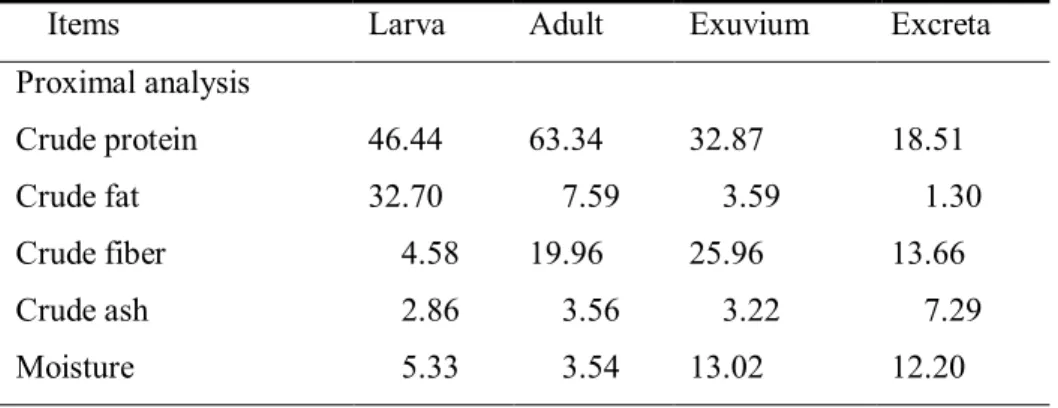
and the range of protein may be from 18% to 65% in dry matter basis (Table 1).
Tenebrio molitor larva has a lower level of protein compared with adult, but
contained the lowest crude fiber than other types of Tenebrio molitor larva. Also, it has a highest fat content than adult and excreta (Table 1). So, larva can be used as protein source as same using as energy source.
Table 1. Percentage nutritional composition of Tenebrio molitor larva, Adult, Exuvium and Excreta
Items Larva Adult Exuvium Excreta Proximal analysis Crude protein 46.44 63.34 32.87 18.51 Crude fat 32.70 7.59 3.59 1.30 Crude fiber 4.58 19.96 25.96 13.66 Crude ash 2.86 3.56 3.22 7.29 Moisture 5.33 3.54 13.02 12.20
Sources: Nergui Ravzanaadii, 2012
3.2.1 Protein and amino acid
Protein quality depends on balance of amino acid, especially the contents of essential animal acid like lysine and methionine and total amino acid compositions.
a good source to supply lysine and other amino acid (Ravzanaadii et al., 2012).
Tenebrio molitor larva and adult have higher lysine in amino acid composition than
other types (Table 2). In diet formulation, this advantage in high lysine can reduce the supplementation of artificial-lysine. In corn-soybean meal basis diet, lysine was the first limited essential amino acid (Kerr et al., 1993). Tenebrio molitor larva has many types of amino acids and excellent amino acid composition (Table 2). FAO (2001) reported that there are two conditions to estimate high-quality protein source, one was essential amino acid was accounted for 40% of total amino acid and another one was essential amino acid was occupied 60% of non-essential amino acid (Pellett and Yong, 1980). Defoliart (1992) gave the report, who said using insects as protein source had low content of methionine in diet formulation. So using Tenebrio
molitor larva in swine feed should pay more attention to its limiting amino acids. In
summary, Tenebrio molitor has been used as an alternative protein source and could be supplemented in swine diet.
Table 2. Amino acid content of Tenebrio molitor larva, Adult, Exuvium and Excreta Amino acid Larva1 Adult1 Exuvium1 Excreta1 Larva2
Isoleucine 3.556 3.918 1.90 0.330 2.6 Leucine 3.405 5.165 1.981 0.368 4.6 Lysine 2.906 2.227 1.009 0.193 1.6 Cysteine+Methionine 1.189 1.134 0.426 0.251 1.6 Phenylalanine +Tyrosine 5.219 3.173 3.016 0.366 7.5 Threonine 1.807 2.153 1.124 0.276 2.7 Valine 2.439 3.368 2.423 0.253 3.8 Histidine 1.527 1.71 1.236 0.438 2.1
3.2.2 Fat
Tenebrio molitor could be used as an energy source has high content of fat in
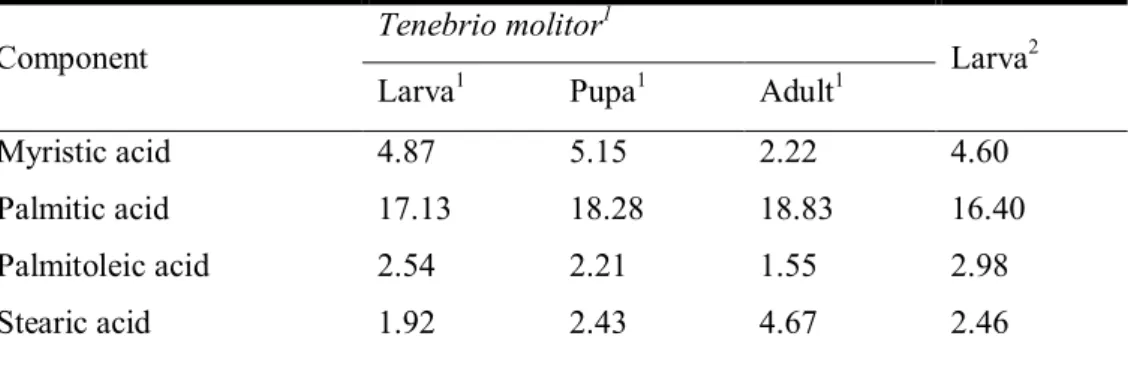
dry matter basis. Ramos-Eloruy et al. (2002) reported energy value was higher than the house fly (554 kcal) more to 252kcal in Tenebrio molitor (806 kcal). Fatty acid composition was relative to fat digestibility (Freeman et al., 1968; Stahly, 1984). Braude and Newport (1973) reported the availability of fatty acid had an interaction with main carbon length and shorter chain fatty acid has more digestibility than long chain fatty acid. The optimal U: S ratio was 5.71, value of which maximized fat digestibility in weaning pigs (Powles, et al., 1994). According to these factors are relative to fat digestion, Tenebrio molitor has higher composition in the degree of un-saturated fatty acid and optimal unsaturated: saturated fatty acid (Table 3).
Tenebrio molitor contains high content of palmitic acid in total saturated fatty acid
composition (Table 3). Also, Tenebrio molitor also has high level in oleic acid and linoleic acid (Table 3). Linoleic acid was an essential limited fatty acid which can not be synthesized by itself, so it should be supplied from the diet (Cunnane, 1984). In animal body, linoleic acid can decrease cholesterol concentration and increase high density lipoprotein content (Huang et al., 1984).
In some insects, linolenic and linoleic acids which are essential fatty acids were even higher than their contents of fish and poultry (Defoliart, 19922).
Table 3. Fatty acid composition of Tenebrio molitor larva pupa and adult Component Tenebrio molitor
1
Larva2
Larva1 Pupa1 Adult1
Myristic acid 4.87 5.15 2.22 4.60 Palmitic acid 17.13 18.28 18.83 16.40 Palmitoleic acid 2.54 2.21 1.55 2.98 Stearic acid 1.92 2.43 4.67 2.46
Oleic acid 43.85 43.74 40.03 42.19 Linoleic acid 25.31 24.10 27.63 28.92 Linolenic acid 0.68 0.56 0.56 1.13 Saturated fatty acids 23.92 25.86 25.72 23.46 Un-saturated fatty acids 72.38 70.61 69.77 75.22
U/S 3.03 2.73 2.71 3.21
Sources: 1Huang,2010,2Dai,2009.
3.2.3 Other nutritional values
The studies about vitamins was to show and the mineral composition of
Tenebrio molitor was published (Huang et al., 2006). The exuvium and excreta had
higher levels in Ca and K compared with larva and adult (Table 4). Ca is the most normal mineral in the body relative very important to the growth of bone. Exuvium and excreta as the wastes also are used in animal food. Tenebrio molitor larva contained low level of Ca, but high level of P and contents of many minerals in mealworm were increased as increasing age (Table 2).
Table 4. Mineral composition of Tenebrio molitor larva, adult and exuvium, and excreta (mg of mineral/kg of sample)
Criteria Larva Adult Exuvium Excreta Mineral Calcium (Ca) 432.59 484.39 801.14 1,537.97 Phosphorus (P) 7,060.7 8,087.07 5,252.29 14,552.01 Potassium (K) 9,479.73 10,459.8 14,725.66 21,171.75 Iron (Fe) 66.87 78.71 55.86 127.75 Natrium (Na) 3,644.84 4,302.73 6,343.16 3,954.33 Magnesium (Mg) 2,026.88 1,932 1,388.09 7,135.14 Zinc (Zn) 104.28 108.98 265.18 101.31
Copper (Cu) 13.27 18.01 10.04 10.73
Sources: Nergui Ravzanaadii, 2012
3.3 Tenebrio molitor larva as feed ingredients in swine diets
Generally, addition of insects as protein source pays more attention to poultry diet and little informations about Tenebrio molitor larve were found in swine diets. For poultry nutrition, maggots always were used in poultry. Teguia and Mpoame (2002) reported fish meal can be replaced by maggot and decrease the cost of feed. This meaned the nutrition value of insect was available as same as fish meal. Replacing fish meal up to 25% maggot meal used, performance was improved and increased protein digestibility (Awonyi et al., 2003). Hwangbo et al. (2009) reported that improve the performance in broiler chickers fed diet containing 10 to 15% maggots. The result also indicated increased body weight, feed intake, and feed efficiency when addition Tenebrio molitor meal in broiler (Shen et al., 2006). Ramos-Elorduy et al. (2002) demonstraded that using Tenebrio molitor to replace fish meal in pig diet was available. Newton et al. (1977) reported that larva meal had similar digestibility of crude protein and higher fat digestibility for the larva meal compared to soybean meal in growing pigs, because black soldier fly had ideal composition of fatty acid which easy to digest and utilize. In summary, Tenebrio
molitor larva could be considered available as protein and energy source for
replacing other expensive protein and fat sources.
4. Literature Cited
Aherne, F. X. and R. N. Kirkwood. 1985. Nutrition and sow prolificacy. J. Reprod. Fertil. 33:169. Annual Carolina Swine Nutr. Conf. Nov. 11.
Almeida, F. R. C. L., R. N. Kirkwood, F. X. Aherne, and G. R. Foxcroft. 2000. Consequences of different patterns of feed intake during estrous cycle in gilts on subsequent fertility. J. Anim. Sci., 78: 1566-1563.
Arnone, M. and R. Dantzer. 1980. Does frustration induce aggression in pigs? Appl. Anim. Ethol. 6, 351–362.
Averette Gatlin, L., M. T. See, J. A. Hansen, D. Sutton, and J. Odle. 2002. The effects of dietary fat sources, levels, and feeding intervals on pork fatty acid composition. J. Anim. Sci. 80:1606-1615.
Awoniyi, T. A. M., V. A. Aletor, and J. M. Aina. 2003. Performance of broiler-chickens fed on maggot meal in place of fishmeal. International Journal of Poultry Science 2(4): 271-274.
Baidoo, S. K., F. X. Aherne, R. N. Kirkwood, and G. R. Foxcroft. 1992. Effect of feed intake during lactation and after weaning on sow reproductive performance. Can. J. Anim. Sci. 72: 911-917.
Ball, R. O. and F. X. Aherne. 1987. Influence of dietary nutrient density, level of feed intake and weaning age on young pigs. II. Apparent nutrient digestibility and incidence and severity of diarrhea. Can. J. Anim. Sci. 67: 1105-1115.
Bartol, F. F., A. A. Wiley, and C. A. Bagnell. 2008. Epigenetic programming of porcine endometrial development. Rprod Dom Anim 43 (Suppl. 2), 273-279.
Belstra, B. A., B. T. Richert, and J. W. Frank. 1998. Effect of gestation dietary crude protein level on the gestation and lactation performance of primiparous sows. Purdue University 1998 Swine Day Reports. pp. 60-64.
Beyer, M. 1986. Untersuchungen zum energie-und stoffumsatz von graviden und laktierenden sauen sowie saugferkelnein beitrag zur pra¨zisierung des energieund proteinbedarfes. Promotionsarbeit. Forschungszentrum fu¨ r Tierproduktion, Rostock, East Germany.
Birkett, S. and K. DE, Lange. 2001. Limitations of conventional models and a conceptual framework for a nutrient flow representation of energy utilization by animals. British J. Nutr. 86: 647-659.
Boyd, R. D., K. J. Touchette, G. C. Castro, M. E. Johnston, K. U. Lee, and In K. Han. 2000. Recent advances in amino acid and energy nutrition of prolific sows. Asian-Aus. J. Anim. Sci. 13: 1638-1652.
Braude, R, and M. J. Newport. 1973. Artificial rearing pigs. Br. J. Nutr., 29:447.
Chen, Z. B. 2012. Analysis for nutritional value of four kinds of insects and use of
Tenebrio molitor power in weaning pig production. [D]. Shandong
agricultural university, China. China Knowledge Resource Integrated Database (CNKI).
alter food intake, performance of lactating sows and their litters and fatty acid composition of milk. Anim. Sci., 69:353–365.
Clowes, E. J., F. X. Aherne, G. R. Foxcroft, and V. E. Baracos. 2003. Selective protein loss in lactating sows is associated with reduced litter growth and ovarian function. J. Anim. Sci. 81:753–764.
Clowes, E. J., I. H. Williams, V. E. Baracos, J. R. Pluske, A. C. Cegielski, L. J. Zak, and F. X. Aherne. 1998. Feeding lactating primiparous sows to establish three divergent metabolic states: II. Effect of nitrogen partitioning and skeletal muscle composition. J. Anim. Sci. 76:1154–1164.
Coffey, M. T., B. G. Diggs, D. L. Handlin, D. A. Knabe, C. V. Maxwell, P. R. Noland, T. J. Prince, and G. L. Cromwell. 1994. Effects of dietary energy during gestation and lactation on reproductive performance of sows: a cooperative study, J. Anim. Sci., 72:4.
Corino, C., G. Pastorelli, F. Rosi, V. Bontempo, and R. Rossi. 2009. Effect of dietary conjugated linoleic acid supplementation in sows on performance and immunoglobulin concentration in piglets. J. Anim. Sci. 2009. 87:2299-2305.
Cox, N. M., M. J Stuart, T. G Althen, W. A Bennett, and W. Miller. 1987. Enhancement of ovulation rate in gilts by increasing dietary energy and administering insulin during follicular growth. J. Anim. Sci., 64, 507– 516.
Cunnane, S. C. 1984. Essential fatty-acid/mineral interactions with reference to the pig. Pp. 167–183 in Fats in Animal Nutrition, J. Wiseman, ed. London: Butterworth.
Dai, C. H., H. L. Ma, X. K. Shen, Z. Jiang, X. H. Gu, and J. Tang. 2009. Analysis on the nutrient conposition in the larva and pupa of Tenebrio molitor Science and Technology of Food Industry Vol.30, No.04, 2009.
Dale, N. 1997. Current status of feed enzymes for swine. Hemicell, Poultry and Swine Feed Enzyme. ChemGen Crop. Gaithersburg, MD.
Davis, M. E., C. V. Maxwell, G. F. Erf, D. C. Brown, and T. J. Wistuba. 2004. Dietary supplementation with function of weaning pigs. J. Anim. Sci. 82:1882-1891.
Defoliart, G. R. 1992. Insects as human food. Gene defoliart discusses some nutritional and economic aspects. Crop protection 11, 395-399.
Deng, Q. Y., Y. Q. Jiang, and G. Y. Li. 2008. The laying effect of insect protein fodder on layer. Livestock and poultry industry. 10.3969/ j. issn. 1008-0414.
Dourmad, J. Y. 1991. Effect of feeding level in the gilt during pregnancy on voluntary feed intake during lactation and changes in body composition during gestation and lactation. Livest. Prod. Sci. 27:309.
Dove, C. R, and K. D. Haydon. 1994. The effect of various diet nutrient densities and electrolyte balances on sow and litter performance during two seasons of the year, J. Anim. Sci., 72:1101.
Drochner, W. 1989. Einflqsse von fettzulagen an sauernauf aufzuchtleistung and fruchtbarkeit. Ubers. Tierern7hr. 17:99-138.
Dyck, G. W., W. M. Palmer, and S. Simarks. 1980. Progesterone and luteinzing hormone concentration in serum of pregnant gilts on different levels of feed consumption. Can. J. Anim. Sci. 63:579.
European Food Safety Authority. 2008. Glucosinolates as undesirable substances in animal feed glucosinolates as undesirable substances in animal feed. EFSA Journal. 590: 1-76.
FAO/WHO. 2001. Report of the FAO/WHO working group on analytical issues related to food composition and protein quality. Rome: FAO.
Food Standards Australia New Zealand. 2003. Erucic acid in food: A toxicological review and risk assessment Tech. Report Series. 21:1448-3017.
Freeman, C. P., D. W. Holme, and E. F. Annison. 1968. The determination of the true digestibilities of interesterified fats in young pigs. Br. J. Nutr. 22:651-660.
Frobish, L. T., N. C. Steele, and R. J. Davey. 1973. Long term effect of energy intake on reproductive performance of swine. J. Anim. Sci, 36:293.
Funderburg, D. W. 2002. Effects of dietary supplementation with MOS on performance of commercial sows and their litters. Pages 407-410 in Nutritional Biotechnology in the Feed and Food Industries, Proc. Alltech’s 18th Annu. Symp. T. P.. Lyons, and K. A. Jacques, ed.
Nottingham University Press, Nottingham, UK.
Heo, S., Y. X. Yang, Z. Jin, M. S. Park, B. K. Yang, and B. J. Chae. 2008. Effects of dietary energy and lysine intake during late gestation and lactation on blood metabolites, hormones, milk composition and reproductive performance in primiparous sows. Can. J. Anim. Sci. 88:247–255.
Hobbs, P. J., B. F. Pain, R. M. Kay, and P. A. Lee. 1996. Reduction of odorous compounds in fresh pig slurry by dietary control of crude protein. J. Sci. Food Agric. 71: 508-514.
Huang, Q., Z. J. Zhou, D. G. Zhou, J. Hu, W. Yang, and C. P. Yang. 2006. Analysis of nutritional component of Tenebrio molitor (L.) Pupa. Sichuan Journal of Zoology Vol.25 No.4 2006.
Huang, Y. S., M. S. Manku, and D. F. Horrobin.1984. The effects of dietary cholesterol on blood and liver polyunsaturated fatty acids and on plasma cholesterol in rats fed various types of fatty acid diet. LIPIDS, VOL. 19, NO. 9.
Hwangbo, J., E. C. Hong, A. Jang, H.K. Kang, J.S. Oh, B.W. Kim, and B.S. Park. 2009. Utilization of house fly-maggots, a feed supplement in the production of broiler chickens. J Environ Biol. 30(4): 609-614.
Hyun, Y., M. Ellis, G. Riskowski, and R.W. Johnson. 1998. Growth performance of pigs subjected to multiple concurrent environmental stressors. J. Anim. Sci. 76, 721–727.
Hyun, Y., M. Ellis, S.E. Curtis, and R.W. Johnson. 2005. Environmental temperature, space allowance, and regrouping: additive effects of multiple concurrent stressors in growing pigs. J. Swine Health Prod. 13, 131– 138.
Jackson, J. R., W. L. Hurley, R. A. Easter, A. H. Jensen, and J. Odle. 1995. Effects of induced or delayed parturition and supplemental dietary fat on colostrums and milk composition in sows. J. Anim. Sci. 73:1906-1913.
Jang, Y. D., S. K. Jang, D. H. Kim, H. K. Oh, and Y. Y. Kim. 2014. Effect of dietary protein levels of gestating gilts on reproductive performance, blood metabolites and milk composition. Asian-Aust. J. Anim. Sci. Vol. 27, No. 1: 83-92. August 2014.
Ji, F. and S. W. Kim. 2004. Effects of carbohydrase supplement on lactation performance of primiparous sows fed corn-soybean meal based lactation diet. Asian-Aust. J. Anim. Sci. 17(4): 533-537.
Ju, W. S. 2010. Effects of alternative nutritional manipulation on physiology and productivity of weaning pigs and sows. In PHD. Thesis. Seoul National Univerisity. Seoul, Korea.
Kemp, B. and N. M. Soede. 1996. Relationship of weaning-to-estrus interval to timing of ovulation and fertilization in sows. J.Anim. Sci. 74:944-949.
Kerr, B. J. 1993. Optimizing lean tissue deposition in swine. BioKyowa Tech. Rev. Vol. 6. Nutri-Quest, Inc., Chesterfield, MO.
Kim, S. W., M. Brandherm, M. Freeland, B. Newton, D. Cook, and I. Yoon. 2008. Effects of yeast culture supplementation to gestation and lactation diets on growth of nursing piglets. Asian- Aust. J. Anim. Sci. 87 (Suppl. 1): 546.
Kim, S. W., W. L. Hurley, G. Wu, and F. Ji. 2009. Ideal amino acid balance for sows during gestation and lactation. J. Anim. Sci. 87:E123-E132.
Kim, Y. C. 2005. The presence and improvement artificial insemination of swine. National Instiute of Animal Science.
King, R. H. and I. H. Williams. 1984. The effect of nutrition on the reproductive performance of first-litter sows: 1. Feeding level during lactation, and between weaning and mating. Anim. Prod., 38, 241– 247.
King’ ori, A. M. 2012. Sow Lactation: Colostrum and milk yield: a Review. J. Anim. Sci. Adv., 2012 2(6):525-533.
King, R. H. and W. G. Brown. 1993. Interrelationships between dietary protein level, energy intake, and nitrogen retention in pregnant sows. J. Anim. Sci.
71:2450.
Kirkwood, R. N. and P. A. Thacker. 1998. Induced estrus and breeding during lactation: Effects on sow and litter performance. Swine Health and Production. 6(3):95–98.
Kirkwood, R. N. and P. A. Thacker. 1988. Nutritional factors affecting embryonic mortality in pigs. Pig News Info. 9:15-21.
Klaver, J., G. J. M. vanKempen, P. G. B. de Lange, M. W. A. Verstegen, and H. Boer. 1981. Milk composition and daily yield of different milk composition as affected by sow condition and lactation feeding regimen. J. Anim. Sci. 52:1091-1097.
Knox, R. V. and S. L. Rodriguez-Zas. 2001. Factors influencing estrus and ovulation in weaned sows as determined by transrectal ultrasound. J. Anim. Sci. 79:2957–-2963.
Kongsted, A. G. 2005. A review of the effect of energy intake on pregnancy rate and litter size–discussed in relation to group-housed non-lactating sows Livestock Production Science 14 97 13–26.
Kornblum, V. E., S. Molnar, and K. D. Gqnther. 1991. Auswirkungen underschiedlicher fqtterung von laktierenden sauen sowie ferkelaufzuchtleistung. Zqchtungskunde 63 (2): 146-155.
Kusina, J., J. E. Pettigres, A. F. Sower, B. A. Crooker, M. E. White, M. R. Hathaway, and G. D. Dial. 1995. The effect of protein intake during gestation and lactation on lactational performance of the primiparous sow. J. Anim. Sci. 73:85.
Kusina, J., J. E. Pettigrew, A. F. Sower, M. E. White, B. A. Crooker, and M. R. Hathaway. 1999b. Effect of protein intake during gestation and lactation on the lactational performance of primiparous sows. J. Anim. Sci. 77:931-941.
Le Dividich, J., J. A. Rooke, and P. Herpin. 2005. Review: Nutritional and immunological importance of colostrum for the newborn pig. J. Agric. Sci. 143:469–485.
Lee, S. H., Y. J. Ha, and S. C. Kwack. 2010. Effects of Aspergillus niger-derived multi-enzyme complex on performance, milk yield, blood metabolites, and manure output in multiparous lactating sows. Journal of Animal Science and Technology 52(4):271-280.
Long, H. F., W. S. Ju, L. G. Piao, and Y. Y. Kim. 2010. Effect of dietary energy levels of gestating sows on physiological parameters and reproductive performance. Asian-Aust. J. Anim. Sci. Vol. 23, No. 8: 1080-1088.
Mahan, D. C. 1977. Effect of feeding various gestation and lactation dietary protein sequences on long-term reproductive performance in swine. J. Anim. Sci. 45:1061-1072.
Mahan, D. C. 1998. Relationship of gestation protein and feed intake level over a five-parity period using a high-producing sow genotype. J. Anim. Sci. 76: 533-541.
Mahan, D. C. and A. P. Grifo. 1975. Effects of dietary protein levels during lactation to first litter sows fed a fortified corn gestation diet. J. Anim. Sci. 41:1362.
Massabie, P., R. Granier, and J. Le Dividich. 1997. Effects of environmental conditions on the performance of growing-finishing pigs, In Proceedings of the 5th International Livestock Environment Symposium, Bloomington, MN, 1010–1016.
Maxwell, C. V., K. Ferrell, R. A. Dvorak, Z. B. Johnson, and M. E. Davis. 2003. Efficacy of mannan oligosaccharide supplementation through lae gestation and lactation on sow and litter performance. J. Anim. Sci. 81(Suppl. 2):69.
McGlone, J. J. and S. E. Curtis. 1985. Behavior and performance of weanling pigs in pens equipped with hide areas. J. Anim. Sci. 60, 20–24.
Moehn, S., D. Franco, R. S. Crystal Levesque, O. Ronald, and Ball. 2011. Phase feeding for pregnant sows.Swine Research and Technology Centre, 4-10 Agriculture/Forestry Centre, University of Alberta, Edmonton, AB T6G 2P5.