Platelet to lymphocyte ratio (PLR) retains independent prognostic
significance in advanced stage marginal zone lymphoma patients
treated with rituximab, cyclophosphamide, vincristine, and
prednisone combination chemotherapy (R-CVP): Consortium for
Improving Survival of Lymphoma trial
Jeongkuk Seo
1, Won Seog Kim
2, Jin Seok Kim
3, Seok Jin Kim
2, Jae Hoon Lee
4, Jun Shik Hong
4,
Gyeong-Won Lee
5, Sung Yong Oh
1, Ji-Hyun Lee
1, Dok Hyun Yoon
6, Won-Sik Lee
7, Hyo Jung Kim
8,
Jae-Yong Kwak
9, Hye Jin Kang
10, Jae-Cheol Jo
11, Yong Park
12, Ho Sup Lee
13, Hyo-Jin Kim
1, Cheolwon Suh
61
Department of Internal Medicine, Dong-A University Hospital, Busan, 2Department of Medicine, Samsung Medical Center, Sunkyunkwan University School of Medicine, 3Division of Hematology, Department of Internal Medicine, Yonsei University College of Medicine, Seoul, 4Division of Hematology and Oncology, Department of Internal Medicine, Gachon University Gil Hospital, Incheon, 5Division of Hematology-Oncology, Department of Internal Medicine, Gyeongsang National University Hospital, Gyeongsang National University College of Medicine, Jinju, 6Department of Oncology, Asan Medical Center, University of Ulsan College of Medicine, Seoul, 7Department of Hemato/Oncology, Busan Paik Hospital, College of Medicine, Inje University, Busan, 8
Department of Internal Medicine, Hallym Medical Center, Hallym University College of Medicine, Anyang, 9Division of Hematology, Department of Internal Medicine, Chonbuk National University Medical School, Jeonju, 10Division of
Hematology/Oncology, Department of Internal Medicine, Korea Cancer Center Hospital, Korea Institute of Radiological and Medical Sciences, Seoul, 11Department of Hematology and Oncology, Ulsan University Hospital, University of Ulsan College of Medicine, Ulsan, 12Department of Internal Medicine, Korea University College of Medicine, Seoul, 13Department of Internal Medicine, Kosin University College of Medicine, Busan, Korea
p-ISSN 2287-979X / e-ISSN 2288-0011 https://doi.org/10.5045/br.2017.52.3.200 Blood Res 2017;52:200-6. Received on April 29, 2017 Revised on May 28, 2017 Accepted on July 7, 2017 Background
Rituximab plus cyclophosphamide, vincristine, and prednisone (R-CVP) is one of the ef-fective chemotherapeutic regimens for patients with advanced stage marginal zone lym-phoma (MZL). However, prognostic factors that affect the outcome of treatment for MZL are not well understood.
Methods
Between August 2006 and June 2013, patients with newly diagnosed stage III and IV MZL treated with R-CVP as a first-line therapy from 15 institutions were retrospectively analyzed. Patients’ clinical and laboratory data at diagnosis were collected by review of medical records.
Results
A total of 80 patients were analyzed. Bone marrow involvement was observed in 30% cases. Twelve patients (15%) had nodal MZL, and 41.3% patients exhibited multiple mu-cosa-associated lymphoma tissue sites. Overall response rate was 91.3%, including 73.8% achieving complete response. Advanced MZL patients treated with R-CVP showed a 3-year progression-free survival (PFS) rate of 69.6%. Prognostic markers significantly affecting PFS in univariate analysis were platelet to lymphocyte ratio (PLR, <95 vs. ≥95,
P=0.014), serum albumin (≤3.9 vs. >3.9 g/dL, P=0.008), and the International Prognostic Index (IPI) score (1 vs. 2‒4, P=0.032). In multivariate analysis, only PLR (<95 vs. ≥95, HR 0.367, 95% CI, 0.139‒0.971, P=0.043) was an independent risk factor for PFS.
Conclusion
PLR ≥95 at diagnosis is an independent prognostic marker for PFS in advanced stage MZL patients treated with R-CVP. This marker may aid clinicians in predicting the response to R-CVP chemotherapy in stage III and IV MZL patients.
Key Words Marginal zone lymphoma, R-CVP, Prognosis, PLR *This work was supported by the Dong-A
University Research Fund. Correspondence to Cheolwon Suh, M.D., Ph.D. Sung Yong Oh, M.D., Ph.D.
Department of Oncology, Asan Medical Center, University of Ulsan College of Medicine, 88 Olympic-ro 43-gil, Songpa-gu, Seoul 05505, Korea (C.S.) Department of Internal Medicine, Dong-A University College of Medicine, Daeshin Park road 26, Seo-gu, Busan 49201, Korea (S.Y.O.)
E-mail: C.S., [email protected] S.Y.O., [email protected] Ⓒ 2017 Korean Society of Hematology
INTRODUCTION
Marginal zone lymphoma (MZL) is a distinct subgroup of non-Hodgkin's lymphoma (NHL) that typically follows an indolent clinical course and has a long survival period [1]. In Korea, MZL accounts for 20.4% of all NHL, and is the second most frequent histological subtype after diffuse large B-cell lymphoma (DLBCL) [2].
For MZL with localized stage, regardless of subtype, it is well known that local modalities (such as radiotherapy or surgery) can be used to achieve good disease control. However, local therapy is inadequate in disseminated disease, which comprises at least a quarter of cases, leading to inves-tigations for effective chemotherapy regimens [3].
After the introduction of rituximab, a chimeric monoclonal antibody directed against the B-cell-specific antigen CD20, into regimens targeted against MZL, rituximab in combina-tion with other chemotherapeutic agents has shown promis-ing results compared to conventional chemotherapy alone [4, 5]. Among the studied regimens, chemotherapy comprised of rituximab plus cyclophosphamide, vincristine, and pdnisone (R-CVP) has demonstrated comparable overall re-sponse rates (ORR), complete remission (CR) rates, and sur-vival compared to other regimens containing rituximab [6]. The International Prognostic Index (IPI), although origi-nally intended for use in patients with aggressive lymphoma [7], has been extensively applied, even in indolent lymphomas. However, it appears to have limited discriminat-ing power, as the majority of patients are allocated to the favorable risk group [8]. Other prognostic indexes, such as the Follicular Lymphoma International Prognostic Index (FLIPI); Glasgow Prognostic Score (GPS), an inflammation- based prognostic score; or Marginal Zone Lymphoma Prognostic Index (MZLPI), have been proposed by different international groups that have mainly focused on in-dolent-nature lymphomas [9-11].
Still, the prognostic factors that affect the outcome of MZL patients are not well understood. And after the in-troduction of rituximab, the relevance of previously recog-nized prognostic factors in other hematologic cancers has undergone reassessment [12]. Studies in various cancers have demonstrated that an elevation of neutrophils, platelets, monocytes, neutrophil to lymphocyte ratio (NLR), or platelet to lymphocyte ratio (PLR), or the decrease of serum albumin (SA) was associated with some unfavorable clinico-patho-logic features [13-15]. The relationship of poor prognosis and the elevation of white blood cells, platelets, or associated ratios may be explained through an inflammatory process elicited by cancer cells [10, 16, 17]. Studies on platelets have shown that they might play an essential role in tumor spreading and growth [18]. Protective effects of lymphocytes as part of the immune surveillance system have also been investigated [19].
In this study, we aim to demonstrate whether the pretreat-ment levels of various inflammatory markers and/or conven-tional prognostic markers, can be prognostic indicators in
patients treated with R-CVP for MZL.
MATERIALS AND METHODS
After obtaining approval from the Institutional Review Board (IRB) of Dong-A University Hospital, patients with the diagnosis of advanced stage MZL from 15 different in-stitutions in Korea between August 2006 and June 2013 were retrospectively evaluated. The IRB granted a waiver of informed consent based on the design of the study (retrospective data analysis study only, with no interactions with subjects/patients). Inclusion criteria comprised biop-sy-confirmed diagnosis of MZL with advanced stage (Ann Arbor stage III/IV) and treatment with at least one cycle of R-CVP therapy with curative intent. Patients were ex-cluded if they had prior chemotherapy other than R-CVP, were on rituximab maintenance therapy after R-CVP, or if they had incomplete clinical data.
Demographic and clinical data
Patient demographics, including age and sex, were col-lected from medical records. Clinical data included initial laboratory data within 7 days before the start of first cycle of chemotherapy, including complete blood count (CBC), NLR, PLR, absolute neutrophil count (ANC), absolute lym-phocyte count (ALC), absolute monocyte count (AMC), SA, serum lactate dehydrogenase (LDH), date of diagnosis, nodal involvement, bone marrow (BM) findings, presence of B symptoms, Eastern Cooperative Oncology Group (ECOG) performance status, presence of bulky disease, Ann Arbor stage, and IPI. Each component of CBC was counted per microliter, and PLR was calculated by the ratio of platelet count (per microliter) divided by absolute lymphocyte count (per microliter).
Treatment data
Treatment consisted of rituximab (375 mg/m2), cyclo-phosphamide (750 mg/m2) and vincristine (1.4 mg/m2; max-imum 2.0 mg), given intravenously on day 1, and oral pre-dnisone 100 mg on days 1–5. The treatment was repeated every 3 weeks and continued for six or eight cycles. Primary clinical outcome variables
The response evaluation was in accordance with the International Workshop for the Standardized Response Criteria for NHL. Overall survival (OS) was defined as date of diagnosis to date of death or date of last contact for those censored. Progression-free survival (PFS) was defined as the time from the date of diagnosis to the date of relapse, pro-gression, or death from any cause.
Statistical analysis
For the numerical variables, a receiver operating character-istic (ROC) curve was performed to estimate the optimal point for sensitivity/specificity towards the progression of MZL. Time-to-event data was estimated using the Kaplan-
Table 1. Demographic and clinical characteristics. Characteristic N of patients(N=80) % Gender Male/female 44/36 55/45 Age (yr) Median (range) 55 (16–81) ≥60/<60 27/53 33.7/66.3
ECOG performance status
0–1/2–3 70/10 87.5/12.5
Ann Arbor stage
III/IV 19/61 23.8/76.2 LDH Normal/elevated 59/12 83.1/16.9 Unchecked 9 B symptom Absent/present 72/8 90/10 BM involvement Absent/present 56/24 70/30 IPI 1/2/3/4 23/35/16/6 28.8/43.8/ 20.0/7.5 Site of involvement Nodal MZL 12 15 MZL of MALT type Stomach 5 6.3 Orbit 7 8.8 Lung 8 10 Small intestine 2 2.5 Large intestine 2 2.5 Parotid gland 2 2.5 Other sitea) 9 11.3
Multiple MALTs involvement 33 41.3
a)Bone, bronchus, esophagus, nasopharynx, paranasal sinus,
peritoneum, soft tissue, thymus, thyroid (1 case of each). Abbreviations: BM, bone marrow; ECOG, Eastern Cooperative Oncology Group; IPI, international prognostic index; LDH, lactate dehydrogenase; MALT, mucosa associated lymphoid tissue; MZL,
marginal zone lymphoma. Fig. 1.patients with advanced stage marginal zone lymphoma (MZL) treated Kaplan-Meier graph depicting progression-free survival (PFS) of with R-CVP chemotherapy (PFS at 3 years was 69.6%).
Meier method, and the groups were compared using the log-rank test. The Cox proportional hazards model was used to estimate the hazard ratio (HR) and the corresponding 95% confidence interval (95% CI) in regard to the low risk group. Significant variables from univariate models at an alpha level of 5% were included in the multivariable Cox proportional hazards model. All reported P-values were two-sided, and a P-value <0.05 was considered significant. All analyses were conducted using Statistical Package for Social Sciences (SPSS) Version 20.0 for Windows.
RESULTS
In total, 80 patients who met the inclusion criteria were evaluated. Table 1 shows the clinical characteristics of the patients included in this analysis. The median age of the evaluated 80 patients (44 males and 36 females) was 55 (range,
16–81) years. All patients were diagnosed with advanced clinical stage (Ann Arbor stage III or IV) lymphoma with 19 (23.8%) at stage III and 61 (76.2%) at stage IV. Ten (12.5%) patients had a performance status of ≥2. Elevated LDH was identified in 12 (16.9%) patients. B symptoms (fever, night sweats, and weight loss) were observed in 8 (10%) patients. The distributions of IPI were: 1 in 23 (28.8%); 2 in 35 (43.8%); 3 in 16 (20%), and 4 in 6 (7.5%) patients. Twelve (15%) of the 80 patients had nodal MZL and 68 (85%) had MALT lymphoma. Among patients with MALT lymphoma, 33 (41.3%) patients had multiple MALT site involvement. BM involvement was observed in 24 (30%) patients.
Response and survival
Fifty-nine patients (73.8%) achieved a complete remission (CR) and 14 (17.5%) a partial remission (PR), while stable disease (SD) was observed in 4 (5%) patients and progressive disease in 2 (2.5%) patients. One patient was not evaluable for response, making the ORR 91.3% (95% CI, 85.0–96.3%). At a median follow-up of 24.9 months (range, 0.8–75.4), 17 patients (21.3%) had progression or relapse, and none died during the investigation period. Information regarding the treatment after disease relapse or progression was avail-able for 15 patients. Thirteen patients received chemotherapy alone after relapse or progression, and two received chemo-therapy followed with hematopoietic progenitor stem-cell transplantation (HPSCT). There was one patient who was lost to follow-up after only 1 cycle of R-CVP chemotherapy; therefore her data on treatment and response was not available. Median OS and PFS were not reached at the last follow-up, and PFS at 3 years was 69.6%, with the 3-year OS rate at 100% (Fig. 1).
Analysis of potential prognostic markers
To identify the optimal prognostic marker according to its sensitivity and specificity towards the relapse of MZL,
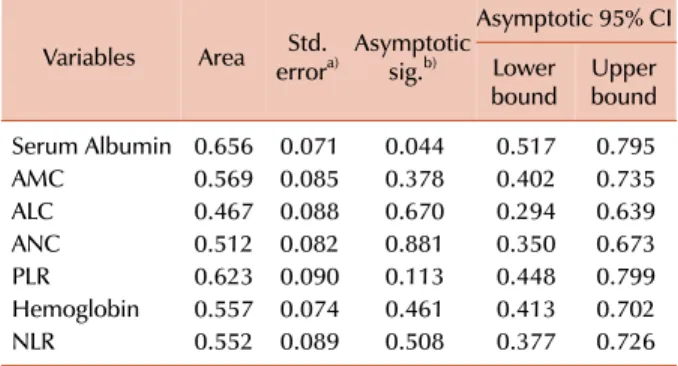
Table 2. Area under the curve values of prognostic marker candi-dates.
Variables Area errorStd. a) Asymptotic sig.b)
Asymptotic 95% CI Lower
bound boundUpper Serum Albumin 0.656 0.071 0.044 0.517 0.795 AMC 0.569 0.085 0.378 0.402 0.735 ALC 0.467 0.088 0.670 0.294 0.639 ANC 0.512 0.082 0.881 0.350 0.673 PLR 0.623 0.090 0.113 0.448 0.799 Hemoglobin 0.557 0.074 0.461 0.413 0.702 NLR 0.552 0.089 0.508 0.377 0.726
a)Under the nonparametric assumption. b)Null hypothesis: true
area=0.5.
Abbreviations: ALC, absolute lymphocyte count; AMC, absolute monocyte count; ANC, absolute neutrophil count; CI, confidence interval; NLR, neutrophil to lymphocyte count; PLR, platelet to lymphocyte count.
Table 3. Univariate analysis of prognostic factors for
time-to-pro-gression. Variables Number PFS HR 95% CI Pa) SA (≥3.9 vs. <3.9 g/dL) 50/30 0.243 0.086–0.691 0.008 PLR (<95 vs. ≥95) 20/60 0.298 0.114–0.779 0.014 Age (<60 vs. ≥60) 53/27 0.679 0.420–1.097 0.114 Performance status (0–1 vs. 2–3) 70/10 0.629 0.297–1.331 0.225 Ann Arbor stage
(III vs. IV) 19/61 1.013 0.578–1.776 0.963 Elevated LDH (yes vs. no)b) 12/59 1.387 0.600–3.211 0.444 B symptoms (absent vs. present) 72/8 0.041 0.000–31.720 0.145 IPI (1 vs. 2–4) 23/57 0.444 0.211–0.933 0.032 Extranodal MZL (yes vs. no) 68/12 0.696 0.397–1.220 0.206
a)P-value by log rank test. b)Number of patients initially evaluated
with LDH were 71.
Abbreviations: CI, confidence interval; HR, hazard ratio; IPI, international prognostic index; LDH, lactate dehydrogenase; MZL, marginal zone lymphoma; PFS, progression free survival; PLR, platelet to lymphocyte ratio; SA, serum albumin.
a Receiver Operation Characteristic (ROC) curve analysis was performed for numerical variables (Table 2). Among the potential prognostic markers, only SA and PLR showed enough sensitivity/specificity to be put to survival rate analysis. For the SA, a cut-off value of 3.9 g/dL was generated according to the ROC analysis (sensitivity 71.0% and specific-ity 66.6%; AUC values 0.656, 95% CI 0.517–0.795, P=0.044). From the ROC curve, PLR value of 95 yielded the most optimal value to predict the relapse or recurrence of MZL (sensitivity 82.3% and specificity 55.6%; AUC values 0.623, 95% CI 0.448–0.799, P=0.113).
Univariate analysis of potential prognostic markers is shown in Table 3. An SA level ≥3.9 g/dL was shown to be a significant predictor of PFS (HR=0.243, 95% CI 0.086– 0.691, P=0.004) (Fig. 2A). PLR was also significantly prog-nostic for PFS when evaluated for values <95 (HR=0.298, 95% CI 0.114–0.779, P=0.009) (Fig. 2B). Additionally, IPI, when categorized by a score of 1 versus 2–4, had prognostic significance for PFS (HR=0.444, 95% CI 0.211–0.933,
P=0.017) (Fig. 2C). Other candidate factors, such as age, performance status, Ann Arbor stage, elevation of LDH, pres-ence of B symptoms, extranodal MZL, and BM involvement were not prognostic in our population.
Multivariable analysis results for PFS are shown in Table 4. PLR continued to be an independent prognostic marker, with the hazard of progression for patients with PLR <95 shown to be about 36.7% (95% CI 13.9–97.1) of the hazard for those patients with PLR ≥95, when controlling for SA and IPI. The SA and IPI were not prognostic for PFS in our multivariate analysis.
DISCUSSION
In our review of 80 patients with advanced stage MZL, we found that a PLR value of ≥95 may have prognostic
significance in those treated with R-CVP. Among other can-didates for prognostic markers of MZL, a serum albumin lower than 3.9 g/dL and an IPI of 2 or higher had prognostic value when analyzed with univariate analysis, but did not have enough statistical significance when applied to multi-variate analyses.
In 1993, the International Prognostic Index (IPI) was pub-lished [7]. Since then, IPI has been widely applied for the prediction of prognosis of NHLs. However, as IPI is designed for aggressive lymphoma and cases of indolent lymphoma such as MZL, as well as taking into account that the addition of rituximab to conventional chemotherapy has led to sig-nificant improvements in OS and PFS in patients with MZL, previously studied prognostic algorithms for such patients, including the IPI, had to be reconstructed [9].
Other prognostic indexes, such as FLIPI used for follicular lymphomas, or GPS, an inflammation-based prognostic in-dex, or MZLPI, have been proposed as alternatives for more indolent lymphomas [9-11]. But as our concern was focused on advanced stage MZL (which usually had disseminated disease, and hence, was a prerequisite for systemic chemo-therapy), we did not consider prognostic indexes with Ann Arbor staging as a constituent.
The measurement of serum markers, such as CBC or serum albumin, is a simple step that could easily be employed in regular practice. Along with the serum markers, associa-tion of systemic inflammatory components with tumor sur-vival, or the pathogenesis of neoplasm itself, has been pro-posed [20, 21]. The inflammatory parameters, namely, the ANC, AMC, ALC, platelet counts, NLR, PLR, CRP, serum albumin, and so forth are studied in many cancers for their
Fig. 2. Kaplan-Meier survival plots; (A) Serum albumin level ≥3.9 g/dL was shown to be a significant predictor of progression free survival (PFS) (HR=0.243, 95% CI 0.086–0.691, P=0.004); (B) PLR was also signi-ficantly prognostic for PFS when evaluated for values of <95 (HR= 0.298, 95% CI 0.114–0.779, P=0.009); (C) IPI, when categorized by a score of 1 versus 2–4, had prognostic significance for PFS (HR=0.444, 95% CI 0.211–0.933, P=0.017).
Table 4. Multivariate analysis of prognostic factors for progression free survival. Variables PFS HR 95% CI Pa) SA (≥3.9 vs. <3.9 g/dL) 0.579 0.333–1.005 0.052 PLR (<95 vs. ≥95) 0.367 0.139–0.971 0.043 IPI (1 vs. 2–4) 0.643 0.291–1.417 0.273 a)
P-value by Cox regression.
Abbreviations: CI, confidence interval; HR, hazard ratio; IPI, international prognostic index; PFS, progression free survival; PLR, platelet to lymphocyte ratio; SA, serum albumin.
correlation with prognosis [13-16, 22, 23]. For solid tumors, a positive relationship between high PLR with worse prog-nosis of epithelial ovarian cancer was identified [13, 16]. For the hematologic malignancies, similar investigations on the connection of inflammatory markers and the outcome of disease have been carried out. For patients with non-Hodgkin’s lymphoma, prognosis of DLBCL has been correlated with hypoalbuminemia, low ALC, AMC, increased NLR and PLR, AMC/ALC score, and GPS [15, 24-28]. Extranodal natural killer/T-cell lymphoma, nasal type, has
also been shown to be related with GPS and PLR [10]. Outcomes of other hematologic malignancies, such as pri-mary mediastinal large B-cell lymphoma, myelodysplastic syndromes, multiple myeloma, and acute myelogenous leu-kemia have also been related to systemic inflammatory mark-ers [29-31].
Studies regarding the correlation of inflammatory markers with the outcome of MZL were difficult to obtain. Four retrospective studies have been made regarding the prog-nostic factors of MZL. Two studies, during their research, commonly deduced the result that the discriminating powers of formerly used prognostic scoring systems, the IPI and the FLIPI, are limited, if not misleading [32]. One of those studies by Oh et al. [9] analyzed 205 patients with nongastric MZL with presumed prognostic factors, PFS and OS. The MZLPI was constructed via the summation of speculated prognostic factors: nodal MZL, ECOG performance ≥2, and advanced stage. The PFS and OS curves were both more discriminating than those of IPI or FLIPI. Another study on the prognostic factors of nongastric MZL by Arcaini et al. [33] demonstrated that disease dissemination to lymph nodes and BM is associated with a poorer outcome. Arcaini
et al. [34] also showed that in splenic MZL patients, low hemoglobin levels (<12 g/dL), LDH levels higher than
nor-mal, and albumin levels less than 3.5 g/dL were predictors of higher risk.
A study by Mazloom et al. [32] analyzed 275 patients with MZL by dividing them into three groups based on three types: extranodal, nodal, and splenic. The results showed that an elevated serum β2-microglobulin level, B symptoms, and male gender were found to be correlated with decreased recurrence-free survival (RFS). Using these three variables, they formulated a 3-tier prognostic scoring system for extranodal MZL, which had statistically reason-able discriminating power (P=0.01 for RFS, P<0.0001 for OS). Their study also showed that IPI and FLIPI did not have statistical significance regarding OS of MZL.
None of the above-mentioned studies regarding the prog-nosis of MZL considered the previously emphasized role of inflammatory markers on malignancy development and progression. Groundwork investigations on the roles of plate-lets in tumor spreading and growth have shown that plateplate-lets mediate tumor cell growth, dissemination, and angiogenesis [18]. Investigators have suggested that platelets play a role in the homing of circulating tumor cells to distant organs and that platelet interactions with tumor cells lead to rolling and tethering of tumor cell aggregates, resulting in ex-travasation through the endothelial wall and immune pro-tection [35]. Platelets have also been shown to promote the spread of tumors through multiple mechanisms, including selectin and integrin interactions with tumor cells [36]. In addition to their function in hemostasis, platelets are also involved in inflammatory disease and cancer [37].
In contrast to platelets, lymphocytes are considered a sig-nificant blood parameter related to immune surveillance. High lymphocytic infiltrate is associated with improved sur-vival and superior response to systemic therapy [38], whereas low peripheral blood lymphocyte counts are related to poor cancer prognoses [39].
Our findings provide a new approach in predicting out-comes in MZL patients. Prediction of disease progression not only utilizing clinical or histopathological factors (e.g., tumor grade, tumor size, and tumor site), but also with host-response factors, such as systemic inflammatory mark-ers, may have more clinical significance. Furthermore, the PLR can easily be assessed from peripheral blood tests that are available without additional expenditure, thus providing lower cost and greater convenience for predicting prognosis.
However, this study has some limitations, including the few deaths caused by MZL, the relatively small size of the analysis group, and the inherent bias that exists in a retro-spective study. To verify the results of this study, a collective effort by way of a multi-institutional prospective study with longer follow-up will be needed. However, given the lack of prospective data, this retrospective study provides evi-dence to support the role of these prognostic factors and provides novel insight into predicting outcomes in MZL patients.
In conclusion, our study is the first to show that PLR is an independent prognostic marker in patients with MZL treated with R-CVP chemo-immunotherapy.
AuthorsÊ Disclosures of Potential Conflicts of Interest
No potential conflicts of interest relevant to this article were reported.
REFERENCES
1. Oh SY, Ryoo BY, Kim WS, et al. Nongastric marginal zone B-cell lymphoma: analysis of 247 cases. Am J Hematol 2007;82:446-52. 2. Kim JM, Ko YH, Lee SS, et al. WHO classification of malignant
lymphomas in Korea: report of the third nationwide study. Korean J Pathol 2011;45:254-60.
3. Conconi A, Martinelli G, Thiéblemont C, et al. Clinical activity of rituximab in extranodal marginal zone B-cell lymphoma of MALT type. Blood 2003;102:2741-5.
4. Oh SY, Kim WS, Kim JS, et al. Stage IV marginal zone B-cell lymphoma--prognostic factors and the role of rituximab: Consortium for Improving Survival of Lymphoma (CISL) study. Cancer Sci 2010;101:2443-7.
5. Zucca E, Conconi A, Laszlo D, et al. Addition of rituximab to chlorambucil produces superior event-free survival in the treatment of patients with extranodal marginal-zone B-cell lymphoma: 5-year analysis of the IELSG-19 Randomized Study. J Clin Oncol 2013;31:565-72.
6. Kang HJ, Kim WS, Kim SJ, et al. Phase II trial of rituximab plus CVP combination chemotherapy for advanced stage marginal zone lymphoma as a first-line therapy: Consortium for Improving Survival of Lymphoma (CISL) study. Ann Hematol 2012;91: 543-51.
7. International Non-Hodgkin's Lymphoma Prognostic Factors Project. A predictive model for aggressive non-Hodgkin's lymphoma. N Engl J Med 1993;329:987-94.
8. López-Guillermo A, Montserrat E, Bosch F, Terol MJ, Campo E, Rozman C. Applicability of the International Index for aggressive lymphomas to patients with low-grade lymphoma. J Clin Oncol 1994;12:1343-8.
9. Oh SY, Kwon HC, Kim WS, et al. Nongastric marginal zone B-cell lymphoma: a prognostic model from a retrospective multicenter study. Cancer Lett 2007;258:90-7.
10. Li YJ, Jiang WQ, Huang JJ, Xia ZJ, Huang HQ, Li ZM. The Glasgow Prognostic Score (GPS) as a novel and significant predictor of extranodal natural killer/T-cell lymphoma, nasal type. Am J Hematol 2013;88:394-9.
11. Heilgeist A, McClanahan F, Ho AD, Witzens-Harig M. Prognostic value of the Follicular Lymphoma International Prognostic Index score in marginal zone lymphoma: an analysis of clinical presentation and outcome in 144 patients. Cancer 2013;119: 99-106.
12. Ngo L, Hee SW, Lim LC, et al. Prognostic factors in patients with diffuse large B cell lymphoma: Before and after the introduction of rituximab. Leuk Lymphoma 2008;49:462-9.
13. Kokcu A, Kurtoglu E, Celik H, Tosun M, Malatyalıoglu E, Ozdemir AZ. May the platelet to lymphocyte ratio be a prognostic factor for epithelial ovarian cancer? Asian Pac J Cancer Prev 2014;15: 9781-4.
14. Sun W, Zhang L, Luo M, et al. Pretreatment hematologic markers as prognostic factors in patients with nasopharyngeal carcinoma: Neutrophil-lymphocyte ratio and platelet-lymphocyte ratio. Head Neck 2016;38(Suppl 1):E1332-40.
15. Dalia S, Chavez J, Little B, et al. Serum albumin retains independent prognostic significance in diffuse large B-cell lymphoma in the post-rituximab era. Ann Hematol 2014;93:1305- 12.
16. Raungkaewmanee S, Tangjitgamol S, Manusirivithaya S, Srijaipracharoen S, Thavaramara T. Platelet to lymphocyte ratio as a prognostic factor for epithelial ovarian cancer. J Gynecol Oncol 2012;23:265-73.
17. Grivennikov SI, Greten FR, Karin M. Immunity, inflammation, and cancer. Cell 2010;140:883-99.
18. Sharma D, Brummel-Ziedins KE, Bouchard BA, Holmes CE. Platelets in tumor progression: a host factor that offers multiple potential targets in the treatment of cancer. J Cell Physiol 2014;229:1005-15.
19. Ray-Coquard I, Cropet C, Van Glabbeke M, et al. Lymphopenia as a prognostic factor for overall survival in advanced carcinomas, sarcomas, and lymphomas. Cancer Res 2009;69:5383-91. 20. Coussens LM, Werb Z. Inflammation and cancer. Nature
2002;420:860-7.
21. Gupta D, Lis CG. Pretreatment serum albumin as a predictor of cancer survival: a systematic review of the epidemiological literature. Nutr J 2010;9:69.
22. Cannon NA, Meyer J, Iyengar P, et al. Neutrophil-lymphocyte and platelet-lymphocyte ratios as prognostic factors after stereotactic radiation therapy for early-stage non-small-cell lung cancer. J Thorac Oncol 2015;10:280-5.
23. Chua W, Charles KA, Baracos VE, Clarke SJ. Neutrophil/ lymphocyte ratio predicts chemotherapy outcomes in patients with advanced colorectal cancer. Br J Cancer 2011;104:1288-95. 24. Porrata LF, Ristow K, Habermann TM, et al. Absolute monocyte/ lymphocyte count prognostic score is independent of immuno-histochemically determined cell of origin in predicting survival in diffuse large B-cell lymphoma. Leuk Lymphoma 2012;53: 2159-65.
25. Porrata LF, Ristow K, Habermann TM, Witzig TE, Inwards DJ, Markovic SN. Absolute lymphocyte count at the time of first relapse predicts survival in patients with diffuse large B-cell lymphoma. Am J Hematol 2009;84:93-7.
26. Chae YS, Shin H, Sohn SK, et al. Absolute lymphocyte count at day + 21 predicts survival in patients with early-stage diffuse large B-cell lymphoma treated with rituximab, cyclophosphamide, adriamycin, vincristine and prednisone. Leuk Lymphoma 2012;
53:1757-63.
27. Aoki K, Tabata S, Yonetani N, Matsushita A, Ishikawa T. The prognostic impact of absolute lymphocyte and monocyte counts at diagnosis of diffuse large B-cell lymphoma in the rituximab era. Acta Haematol 2013;130:242-6.
28. Ho CL, Lu CS, Chen JH, Chen YG, Huang TC, Wu YY. Neutrophil/ lymphocyte ratio, lymphocyte/monocyte ratio, and absolute lymphocyte count/absolute monocyte count prognostic score in diffuse large b-cell lymphoma: useful prognostic tools in the rituximab era. Medicine (Baltimore) 2015;94:e993.
29. Romano A, Parrinello NL, Consoli ML, et al. Neutrophil to lymphocyte ratio (NLR) improves the risk assessment of ISS staging in newly diagnosed MM patients treated upfront with novel agents. Ann Hematol 2015;94:1875-83.
30. Kharfan-Dabaja MA, Chavez JC, Yu D, et al. Severe hypoalbu-minemia at day 90 predicts worse nonrelapse mortality and overall survival after allogeneic hematopoietic stem cell transplantation for acute myelogenous leukemia and myelodysplastic syndrome. Biol Blood Marrow Transplant 2011;17:384-93.
31. Komrokji RS, Corrales-Yepez M, Kharfan-Dabaja MA, et al. Hypoalbuminemia is an independent prognostic factor for overall survival in myelodysplastic syndromes. Am J Hematol 2012;87: 1006-9.
32. Mazloom A, Medeiros LJ, McLaughlin PW, et al. Marginal zone lymphomas: factors that affect the final outcome. Cancer 2010; 116:4291-8.
33. Arcaini L, Burcheri S, Rossi A, et al. Nongastric marginal-zone B-cell MALT lymphoma: prognostic value of disease dissemi-nation. Oncologist 2006;11:285-91.
34. Arcaini L, Lazzarino M, Colombo N, et al. Splenic marginal zone lymphoma: a prognostic model for clinical use. Blood 2006; 107:4643-9.
35. Bambace NM, Holmes CE. The platelet contribution to cancer progression. J Thromb Haemost 2011;9:237-49.
36. Trikha M, Zhou Z, Timar J, et al. Multiple roles for platelet GPIIb/IIIa and alphavbeta3 integrins in tumor growth, angiogenesis, and metastasis. Cancer Res 2002;62:2824-33. 37. Leslie M. Cell biology. Beyond clotting: the powers of platelets.
Science 2010;328:562-4.
38. Seo AN, Lee HJ, Kim EJ, et al. Tumour-infiltrating CD8+ lymphocytes as an independent predictive factor for pathological complete response to primary systemic therapy in breast cancer. Br J Cancer 2013;109:2705-13.
39. Fogar P, Sperti C, Basso D, et al. Decreased total lymphocyte counts in pancreatic cancer: an index of adverse outcome. Pancreas 2006;32:22-8.