ORIGINAL INVESTIGATION
Influence of preprocedural glycemic control
on clinical outcomes of endovascular therapy
in diabetic patients with lower extremity artery
disease: an analysis from a Korean multicenter
retrospective registry cohort
Jung‑Joon Cha
1,4, Hyoeun Kim
1,10, Young‑Guk Ko
1, Donghoon Choi
1, Jae‑Hwan Lee
2, Chang‑Hwan Yoon
3,
In‑Ho Chae
3, Cheol Woong Yu
4, Seung Whan Lee
5, Sang‑Rok Lee
6, Seung Hyuk Choi
7, Yoon Seok Koh
8,11and Pil‑Ki Min
9*on behalf of K‑VIS (Korean Vascular Intervention Society) investigators
Abstract
Background: The influence of intensive glucose control in diabetic patients on the macrovascular outcomes is controversial. Thus, this study aimed to elucidate the effect of preprocedural hemoglobin A1c (HbA1c) on clinical outcomes after endovascular therapy for lower extremity artery disease (LEAD) in diabetic patients.
Methods: Diabetic patients were enrolled from the retrospective cohorts of a Korean multicenter endovascular therapy registry and were divided according to the HbA1c level during index admission into the optimal (< 7.0%) or suboptimal (≥ 7.0%) glycemic control groups. The primary endpoints were major adverse limb events (MALE, a com‑ posite of major amputation, minor amputation, and reintervention).
Results: Of the 1103 patients enrolled (897 men, mean age 68.2 ± 8.9 years), 432 (39.2%) were classified into the optimal glycemic control group and 671 (60.8%) into the suboptimal glycemic control group. In‑hospital events and immediate procedural complications were not different between the two groups. The suboptimal group showed a trend towards a higher incidence of MALE than the optimal group (log‑rank p = 0.072). Although no significant differ‑ ences were found between the two groups in terms of overall survival or amputation, the risk of reintervention was significantly higher in the suboptimal group (log‑rank p = 0.048). In the multivariate Cox regression model, suboptimal glycemic control was one of the independent predictors for reintervention. When our data were analyzed according to the initial presentation, suboptimal preprocedural HbA1c significantly increased the incidence of MALE compared with optimal preprocedural HbA1c only in patients with intermittent claudication.
Conclusion: In diabetic patients undergoing endovascular therapy for LEAD, suboptimal preprocedural HbA1c is associated with an increased risk of adverse limb events, especially in patients with intermittent claudication. Further
© The Author(s) 2020. This article is licensed under a Creative Commons Attribution 4.0 International License, which permits use, sharing, adaptation, distribution and reproduction in any medium or format, as long as you give appropriate credit to the original author(s) and the source, provide a link to the Creative Commons licence, and indicate if changes were made. The images or other third party material in this article are included in the article’s Creative Commons licence, unless indicated otherwise in a credit line to the material. If material is not included in the article’s Creative Commons licence and your intended use is not permitted by statutory regulation or exceeds the permitted use, you will need to obtain permission directly from the copyright holder. To view a copy of this licence, visit http://creat iveco mmons .org/licen ses/by/4.0/. The Creative Commons Public Domain Dedication waiver (http://creat iveco mmons .org/publi cdoma in/ zero/1.0/) applies to the data made available in this article, unless otherwise stated in a credit line to the data.
Open Access
*Correspondence: [email protected]
9 Division of Cardiology, Department of Internal Medicine, Gangnam Severance Hospital, Yonsei University College of Medicine, 20, Eonju‑ro 63‑gil, Gangnam‑gu, Seoul 06229, South Korea
Background
Diabetes mellitus (DM) is associated with the devel-opment of peripheral artery disease (PAD) [1]. Both the duration and severity of DM are associated with increased risk of PAD [2, 3]. The prognosis of PAD is worse in DM patients than in non-DM patients. Infra-popliteal arterial involvement is more common and the need for a major amputation is higher in DM patients than in non-DM patients [4, 5].
The cardiovascular effect of intensive glucose control on the macrovascular events among DM patients is con-troversial. In randomized trials, intensive glucose control in DM patients did not reduced major cardiovascular events compared with standard glucose management [6–8]. However, several studies suggested that poor gly-cemic control at the time of peripheral angioplasty was associated with worse clinical outcomes in patients with critical limb ischemia (CLI) [9, 10]. In a recent retrospec-tive analysis of US veterans undergoing lower extremity revascularization, patients with lower extremity artery disease (LEAD) and poor glycemic control were at higher risk of amputation and modified major adverse limb events than were those with good glycemic control [11].
The present study aimed to investigate the effect of suboptimal preprocedural hemoglobin A1c (HbA1c) on clinical outcomes of endovascular therapy in LEAD patients with DM using a nationwide, multicenter, real-world registry.
Methods
Study population
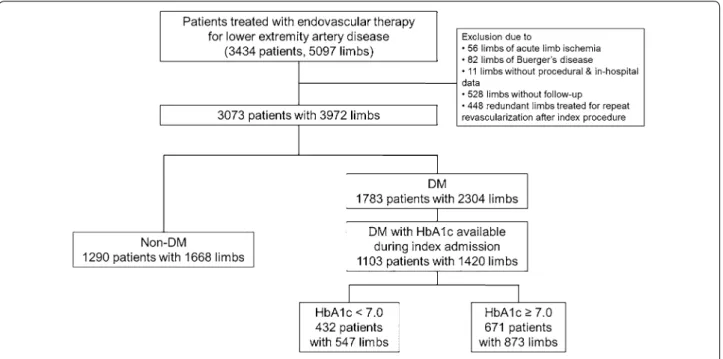
The Korean Vascular Intervention Society Endovascular therapy in Lower Limb Artery diseases (K-VIS ELLA) registry is a multicenter observational study with retro-spective and proretro-spective cohorts of patients with lower extremity artery disease treated with endovascular ther-apy (ClinicalTrials.gov NCT02748226). The retrospec-tive patient cohort consisted of 3434 patients with 5097 affected limbs treated between January 2006 and July 2015 in 31 Korean hospitals. The K-VIS ELLA registry study design and results have been described in detail previously [12]. A total of 3073 patients with 3972 target limbs were finally analyzed after exclusion of 56 limbs with acute limb ischemia, 82 limbs with Buerger’s dis-ease, 11 limbs lacking procedural or in-hospital data, 528 limbs lacking follow-up data after hospital discharge, and
448 limbs treated for repeat revascularization following the index procedure.
From this registry population, 1103 DM patients (1420 limbs) who had HbA1c levels available during index admission were finally included in the current analysis (Fig. 1). HbA1c levels were dichotomized into optimal (< 7.0%) and suboptimal (≥ 7.0%) according to American Diabetes Association recommendations [13]. Data on patient demographics, baseline clinical and lesion char-acteristics, medication history, clinical presentation, lab-oratory test results, treatments, and follow-up outcomes were collected from electronic medical records.
The study protocol was approved by the institutional review board of each hospital and was conducted accord-ing to the principles of the Declaration of Helsinki. The institutional review boards of the participating hospitals waived the requirement of informed consent due to the retrospective nature of the study.
Definitions and study endpoints
LEAD was defined as the presence of ≥ 50% narrowing of a lower extremity artery. Claudication was defined as Rutherford category 1, 2, or 3 disease and CLI was defined as Rutherford category 4, 5, or 6 disease [14]. The presence of diabetes was identified by history and medi-cal records including outpatient clinics and prescriptions of oral hypoglycemic agents or insulin. Definitions of hypercholesterolemia, smoking, congestive heart failure, anemia, and chronic kidney disease were described in a previous report [12].
Technical success was defined as successful revascu-larization with residual stenosis < 30% and absence of flow-limiting dissection or a hemodynamically significant translesion pressure gradient. Major amputation was defined as any lower extremity amputation at the level of or above the ankle, and a minor amputation was defined as any lower extremity amputation below the ankle, including the foot or toe(s).
The primary endpoints of this study were major adverse limb events (MALE; a composite of major ampu-tation, minor ampuampu-tation, and reintervention). Second-ary endpoints were all-cause mortality, any amputation, and reintervention. These outcomes were compared between optimal glycemic control and suboptimal glyce-mic control groups according to the HbA1c level during the index admission.
prospective research will be required to validate the role of more intensive glycemic control on the reduction of adverse limb events in diabetic patients undergoing endovascular therapy for LEAD.
Keywords: Peripheral artery disease, Endovascular treatment, Diabetes mellitus, Glycated hemoglobin A, Glucose control, Clinical outcomes
Statistical analysis
Continuous variables were expressed as mean ± standard deviation and were compared using the Student’s t-test for parametric data and the Mann–Whitney test for non-parametric data. Categorical variables were expressed as number (percentage) and were compared using the Chi square test or Fisher’s exact test. Data were analyzed on a per-patient basis for clinical characteristics and on a per-lesion basis for the limb, lesion, or procedural char-acteristics. Cumulative incidences of clinical events were presented as Kaplan–Meier estimates and were com-pared using the log-rank test. Univariate Cox propor-tional hazards regression analyses using baseline clinical, lesion, and procedural variables were performed to iden-tify factors associated with clinical events. The variables achieving P-values < 0.20 in the univariate analysis were evaluated in the multivariate analysis model to determine the independent predictors of clinical events. All statis-tical analyses were performed using SPSS (version 23.0; IBM Corp., Armonk, NY, USA). All tests were two-sided, and P < 0.05 was considered statistically significant.
Results
Baseline characteristics
Baseline clinical characteristics of patients according to HbA1c levels during index admission are summarized in Table 1. Of the 1103 patients enrolled, 432 (39.2%) were categorized into the optimal glycemic control group (HbA1c < 7.0) and 671 (60.8%) were placed into the sub-optimal glycemic control group (HbA1c ≥ 7.0). The mean
age of the entire cohort was 68.2 ± 8.9 years, and 897 (81.3%) patients were men. Compared with the patients in the suboptimal group, those in the optimal group were older, were predominantly male, and had a higher preva-lence of chronic kidney disease and congestive heart fail-ure. Patients in the suboptimal group were more likely to be on insulin therapy for glycemic control. Initial clinical presentations based on the Rutherford classification were not different between the two groups.
Procedural characteristics and complications
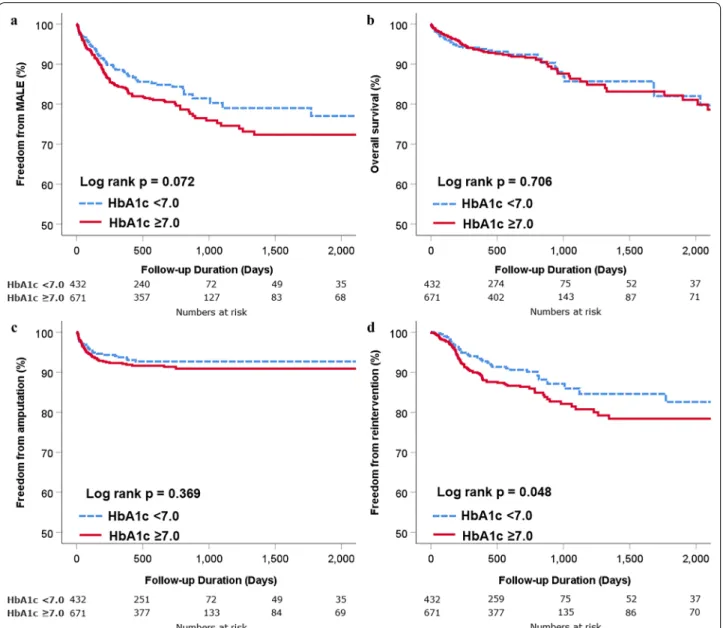
Table 2 demonstrates baseline lesion and procedural characteristics according to HbA1c levels during the index admission. No significant differences were found between the groups except that there were slightly more targeted blood vessels in the suboptimal group. Total in-hospital events and immediate procedural complications were not different between the two groups (Fig. 2). Follow‑up clinical outcomes and independent predictors The median follow-up duration was 724 days (inter-quartile range 326–782 days). The Kaplan–Meier curves in Fig. 3 illustrate freedom from MALE, death, ampu-tation, and reintervention stratified by initial HbA1c status. The suboptimal group showed a trend toward higher incidence of MALE than the optimal group (log-rank p = 0.072, Fig. 3a). No significant differences were observed between the two groups in terms of overall sur-vival (Fig. 3b) or amputation (Fig. 3c) during the follow-up period. However, the suboptimal grofollow-up demonstrated
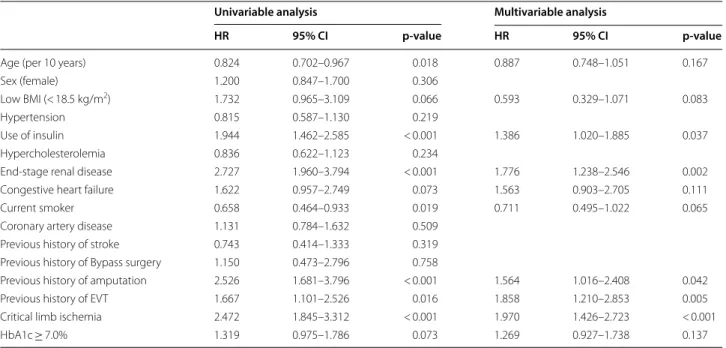
a significant disadvantage with regard to reintervention (log-rank p = 0.048, Fig. 3d). In the multivariate Cox regression model, the use of insulin for glycemic control, end-stage renal disease, previous history of amputation, previous history of endovascular therapy, and CLI were independent predictors of MALE (Table 3). Independ-ent predictors for reintervIndepend-ention during follow-up were end-stage renal disease, previous history of endovascu-lar therapy, and suboptimal glycemic control defined as HbA1c ≥ 7.0% (Table 4).
Influence of preprocedural HbA1c levels on clinical outcomes according to the initial presentation
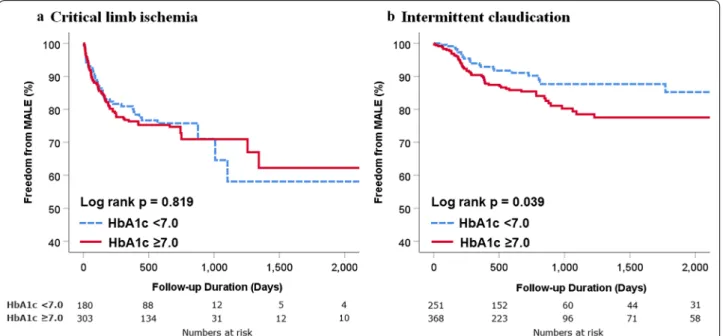
To assess the influence of preprocedural HbA1c levels on clinical outcomes according to the initial clinical presen-tation, we analyzed data separately in patients with inter-mittent claudication or CLI (Fig. 4). Among CLI patients, no difference was found in the incidence of MALE between the optimal and suboptimal groups (Fig. 4a). However, among patients who presented with claudica-tion, the suboptimal group showed a higher incidence
of MALE than the optimal group (log rank p = 0.039, Fig. 4b).
Discussion
Main findings
We reported the association between the preproce-dural glycemic control based on HbA1c during index admission and clinical outcomes in DM patients undergoing endovascular therapy for LEAD. Although not statistically significant, the suboptimal glyce-mic control group (HbA1c ≥ 7.0) showed a tendency towards higher incidence of MALE than in the opti-mal glycemic control group (HbA1c < 7.0). Elevated preprocedural HbA1c was associated with higher risk of reintervention. Suboptimal glycemic control was an independent predictor of reintervention during the follow-up period after endovascular therapy in DM patients with LEAD. Because CLI was one of the independent predictors for MALE, we further ana-lyzed our data by dividing it into the presence of clau-dication and CLI according to the initial presentation. Table 1 Baseline clinical characteristics
Values are presented as mean ± standard deviation or number (%) unless otherwise stated
BMI body mass index, EVT endovascular therapy
Total (n = 1103) HbA1c < 7.0 (n = 432) HbA1c ≥ 7.0 (n = 671) p
Age (years) 68.2 ± 8.9 69.4 ± 8.9 67.5 ± 8.7 0.001
Old age (≥ 80 years) 96 (8.7%) 48 (11.1%) 48 (7.2%) 0.028
Male 897 (81.3%) 365 (84.5%) 532 (79.3%) 0.033 Hemoglobin A1c (%) 7.6 ± 1.6 6.3 ± 0.5 8.5 ± 1.4 < 0.001 BMI (kg/m2) 24.1 ± 3.8 24.0 ± 3.9 24.2 ± 3.7 0.607 Low BMI (< 18.5 kg/m2) 46 (4.4%) 19 (4.7%) 27 (4.2%) 0.757 Hypertension 870 (78.9%) 347 (80.3%) 523 (77.9%) 0.365 Use of Insulin 361 (32.7%) 109 (25.2%) 252 (37.6%) < 0.001 Hypercholesterolemia 426 (38.6%) 176 (40.7%) 250 (37.3%) 0.255 Current smoker 288 (26.1%) 101 (23.4%) 187 (27.9%) 0.106
Chronic kidney disease 279 (25.3%) 124 (28.7%) 155 (23.1%) 0.040
End‑stage renal disease 166 (15.0%) 72 (16.7%) 94 (14.0%) 0.262
Coronary artery disease 653 (59.2%) 263 (60.9%) 390 (58.1%) 0.380
Congestive heart failure 57 (5.2%) 30 (6.9%) 27 (4.0%) 0.037
Previous history of stroke 185 (16.8%) 81 (18.8%) 104 (15.5%) 0.161
Previous history of EVT 99 (9.0%) 46 (10.6%) 53 (7.9%) 0.131
Previous history of bypass surgery 28 (2.5%) 10 (2.3%) 18 (2.7%) 0.845
Previous history of amputation 81 (7.3%) 33 (7.6%) 48 (7.2%) 0.813
Rutherford classification 0.201 1 89 (8.1%) 40 (9.3%) 49 (7.3%) 2 259 (23.5%) 106 (24.5%) 153 (22.8%) 3 272 (24.7%) 106 (24.5%) 166 (24.7%) 4 80 (7.3%) 33 (7.6%) 47 (7.0%) 5 236 (21.4%) 80 (18.5%) 156 (23.2%) 6 167 (15.1%) 67 (15.5%) 100 (14.9%)
Suboptimal preprocedural HbA1c did not affect the outcome in CLI patients; however, among those with intermittent claudication, suboptimal preprocedural HbA1c significantly increased the incidence of MALE compared with optimal glycemic control.
Role of glycemic control on vascular outcomes
The role of intensive glucose control on the macrovascu-lar outcomes in DM patients is unclear. Although macrovascu-large randomized controlled trials failed to demonstrate the benefits of intensive glucose control in reducing major Table 2 Baseline lesion and procedural characteristics
Values are presented as mean ± standard deviation or number (%) unless otherwise stated
TASC II Trans-Atlantic Inter-Society Consensus Document on Management of Peripheral Arterial Disease II Classifications
Total (n = 1420 limbs) HbA1c < 7.0 (n = 547 limbs) HbA1c ≥ 7.0 (n = 873 limbs) p
Ankle brachial index 0.7 ± 0.3 0.7 ± 0.3 0.7 ± 0.3 0.777
TASC II classification 0.543
A 224 (15.8%) 95 (17.4%) 129 (14.8%)
B 310 (21.8%) 122 (22.3%) 188 (21.5%)
C 304 (21.4%) 114 (20.8%) 190 (21.8%)
D 582 (41.0%) 216 (39.5%) 366 (41.9%)
Number of target vessels 1.5 ± 0.7 1.4 ± 0.6 1.5 ± 0.8 0.006
Target vessels 0.058 Aortoiliac 461 (32.5%) 192 (35.1%) 269 (30.8%) Femoropopliteal 666 (46.9%) 253 (46.3%) 413 (47.3%) Infrapopliteal 293 (20.6%) 102 (18.6%) 191 (21.9%) Total occlusion 592 (41.7%) 235 (43.0%) 357 (40.9%) 0.472 In‑stent restenosis 45 (3.2%) 20 (3.7%) 25 (2.9%) 0.438 Treatment modality 0.918 Balloon only 582 (41.0%) 219 (40.0%) 363 (41.6%) Stent 810 (57.0%) 321 (58.7%) 489 (56.0%) Others 28 (2.0%) 7 (1.3%) 21 (2.4%) Lesion length (mm) 111.7 ± 97.6 111.1 ± 96.1 112.1 ± 98.6 0.856 Diameter stenosis (%) 88.0 ± 14.1 88.4 ± 14.4 87.9 ± 14.0 0.553
Fig. 2 In‑hospital outcomes and procedural complication rates according to HbA1c level during index admission. Crude incidence of death,
reintervention, amputation, bleeding complication, access site complication, distal embolization, and vascular rupture for optimal (blue) and suboptimal (red) glucose control groups. HbA1c hemoglobin A1c
cardiovascular events [6–8], recent post hoc analyses of several randomized trials demonstrated that higher HbA1c was associated with increased risk of major car-diovascular events [15, 16] and lower extremity amputa-tion [17].
For the management of LEAD, recent practice guide-lines recommended adequate glycemic control in DM patients [18–20], and several retrospective observa-tional studies suggested that poor glycemic control may be associated with worse clinical outcomes of vascular procedure in DM patients with LEAD. In a single-center study of 278 CLI patients undergoing balloon angioplasty, Takahara et al. reported that the presence of diabetes was
independently associated with major amputation and, in the DM subgroup, poor glycemic control was associated with higher amputation rates [9]. Similarly, in another single-center study, Singh et al. analyzed the effect of pre-procedural fasting blood glucose on primary patency and limb outcomes following infrapopliteal balloon angio-plasty in 149 DM patients with CLI [10]. They found that fasting blood glucose above the median value at the time of the procedure was associated with lower primary patency at 1 year [10]. However, these were single-center studies with relatively small sample size and only CLI patients were enrolled. Therefore, the results cannot be generalized to all LEAD patients.
Fig. 3 Comparison of clinical outcomes according to HbA1c level during index admission. Kaplan–Meier curves for comparison of freedom from
Recently, Arya et al. reported a large retrospective study using Veterans Health Administration data to eval-uate the influence of elevated perioperative HbA1c on outcomes in LEAD patients undergoing surgical or endo-vascular reendo-vascularization procedures [11]. In that study, high HbA1c level was incrementally associated with higher risk of amputation and MALE regardless of the
preoperative diagnosis of DM [11]. In the present study, we found no significant differences between the two groups in terms of risk of amputation or MALE, although the suboptimal group showed a trend toward higher incidence of MALE than the optimal group. Compared with the aforementioned studies, the relatively lower incidence of amputation in our study groups may be one Table 3 Independent predictors of major adverse limb events
BMI body mass index, CI confidence interval, EVT endovascular therapy, HbA1c hemoglobin A1c, HR hazard ratio
Univariable analysis Multivariable analysis
HR 95% CI p‑value HR 95% CI p‑value
Age (per 10 years) 0.824 0.702–0.967 0.018 0.887 0.748–1.051 0.167
Sex (female) 1.200 0.847–1.700 0.306
Low BMI (< 18.5 kg/m2) 1.732 0.965–3.109 0.066 0.593 0.329–1.071 0.083
Hypertension 0.815 0.587–1.130 0.219
Use of insulin 1.944 1.462–2.585 < 0.001 1.386 1.020–1.885 0.037
Hypercholesterolemia 0.836 0.622–1.123 0.234
End‑stage renal disease 2.727 1.960–3.794 < 0.001 1.776 1.238–2.546 0.002 Congestive heart failure 1.622 0.957–2.749 0.073 1.563 0.903–2.705 0.111
Current smoker 0.658 0.464–0.933 0.019 0.711 0.495–1.022 0.065
Coronary artery disease 1.131 0.784–1.632 0.509 Previous history of stroke 0.743 0.414–1.333 0.319 Previous history of Bypass surgery 1.150 0.473–2.796 0.758
Previous history of amputation 2.526 1.681–3.796 < 0.001 1.564 1.016–2.408 0.042
Previous history of EVT 1.667 1.101–2.526 0.016 1.858 1.210–2.853 0.005
Critical limb ischemia 2.472 1.845–3.312 < 0.001 1.970 1.426–2.723 < 0.001
HbA1c ≥ 7.0% 1.319 0.975–1.786 0.073 1.269 0.927–1.738 0.137
Table 4 Independent predictors of reintervention
BMI body mass index, CI confidence interval, EVT endovascular therapy, HbA1c hemoglobin A1c, HR hazard ratio
Univariable analysis Multivariable analysis
HR 95% CI P‑value HR 95% CI P‑value
Age (per 10 years) 0.963 0.790–1.174 0.709
Sex (female) 1.018 0.816–1.271 0.872
Low BMI (< 18.5 kg/m2) 1.445 0.674–3.098 0.344
Hypertension 0.740 0.502–1.091 0.128 0.767 0.516–1.140 0.189
Use of insulin 1.394 0.978–1.987 0.066 1.147 0.789–1.668 0.472
Hypercholesterolemia 1.182 0.834–1.675 0.346
End‑stage renal disease 1.725 1.095–2.718 0.019 1.719 1.074–2.753 0.024
Congestive heart failure 1.225 0.598–2.506 0.579
Current smoker 0.899 0.607–1.330 0.593
Coronary artery disease 0.699 0.495–0.987 0.042 0.863 0.584–1.274 0.458
Previous history of stroke 1.023 0.646–1.618 0.924
Previous history of bypass surgery 1.846 0.754–4.518 0.180 1.598 0.637–4.009 0.318 Previous history of amputation 1.547 0.872–2.745 0.136 1.172 0.649–2.118 0.598 Previous history of EVT 2.230 1.406–3.537 0.001 2.333 1.455–3.740 < 0.001 Critical limb ischemia 1.194 0.839–1.700 0.325
of the reasons for the differences. Furthermore, the sub-jects of Arya et al.’s study were veterans, most of whom were male, and approximately 40% of the subjects were not diagnosed with DM preoperatively. Furthermore, LEAD severity was not specified in more than a third of the enrolled patients. These might be possible reasons for the discrepancies between our results and those of Arya et al. Recent studies in patients undergoing open vas-cular surgery demonstrated that poor glycemic control was associated with earlier postoperative outcomes such as in-hospital limb events [21] or 30-day mortality [22,
23]. Compared with the results from studies in patients undergoing endovascular therapy, earlier effect of poor glycemic control on postoperative outcomes observed in patients undergoing vascular surgery may be attributed to surgery-related complications such as wound compli-cations or postoperative infections.
When our data were analyzed separately in two groups according to initial presentation, the benefit of opti-mal glycemic control in reducing the risk of MALE was observed only in patients presenting with claudication. Considering the seriousness of the CLI as an independ-ent risk factor for MALE, intensive glucose control pos-sibly did not significantly reduce the incidence of MALE in CLI patients. Relatively lower incidence of amputation in our study may also have affected the results. A recent study evaluated the association between preoperative HbA1c levels and clinical outcomes after lower extrem-ity bypass surgery and found that poor preoperative glycemic control increased the risk of in-hospital limb
events [21]. Similar to our findings, the increased risk for adverse limb events in patients with high preoperative HbA1c level was only observed in patients without CLI [21].
Other factors related to PAD outcomes
In addition to HbA1c, various biomarkers have been sug-gested to be related to clinical outcomes of PAD in DM patients. Zhao et al. investigated the association of vas-cular damage with the triglyceride-glucose index as a simple surrogate marker of insulin resistance [24]. They demonstrated that an increased triglyceride-glucose index was significantly associated with a higher risk of arterial stiffness and renal microvascular damage, but not with PAD [24]. Biscetti et al. demonstrated that circulat-ing sortilin levels were associated with the presence and severity of LEAD in statin-naïve DM patients [25]. Bis-cetti et al. found that omentin-1 serum levels were sig-nificantly lower in DM patients with PAD than in DM patients without PAD, and omentin-1 levels were related to disease severity [26]. Elevated levels of various inflam-matory cytokines such as osteoprotegerin, tumor necro-sis factor-a, interleukin-6, and C-reactive protein were also reported to be related with worse vascular outcomes in DM patients with LEAD undergoing infrapopliteal endovascular therapy [27]. These potential surrogate bio-markers may be helpful to better stratify PAD risk in DM patients. Their usefulness should be confirmed in future studies.
Fig. 4 Comparison of MALE according to HbA1c level during index admission. Kaplan–Meier curves for comparison of freedom from MALE in
In addition to molecular biomarkers, several clinical confounding factors may influence on clinical outcomes of LEAD in DM patients. It has been shown that women with LEAD have more functional impairment and worse outcomes than men [28]. Although these gender differ-ences were not observed in the present study population, in a previous study performed on the entire cohort from our registry, women had higher rates of major adverse cardiovascular events and MALE [29]. Frailty is also associated with poor clinical outcomes after vascular interventions for LEAD [30], although increasing num-bers of peripheral vascular intervention for older patients was shown to correlate with decreasing major amputa-tion rates [31].
Limitations
This study has several limitations. First, given the ret-rospective nature of the study, the causal relationships could not be determined. Therefore, prospective rand-omized trials will be required to validate the role of more intensive glycemic control on the reduction of adverse limb events in DM patients with LEAD undergoing endo-vascular therapy. Second, the HbA1c level that we used as the basis of glycemic control was measured once before the procedure, and data on changes in glycemic control during the follow-up period were not available. There-fore, dramatic changes in blood glucose levels during follow-up may have affected the clinical outcomes. How-ever, HbA1c reflects the average blood glycemic level over approximately 3 months [13], and the measurement of HbA1c was performed during the index admission in all cases. At least our data highlight the importance of glycemic control during preprocedural period. Third, the strategy for hyperglycemia management was not stand-ardized. Recent studies have shown that novel glucose-lowering agents can reduce the risk of cardiovascular events in patients with atherosclerotic cardiovascular dis-ease [32]. However, increased risk of lower limb ampu-tation has been reported for certain sodium-glucose cotransporter type-2 inhibitors in patients with LEAD [33]. For these reasons, the optimal method of glycemic control is an important topic to be addressed in future studies.
Conclusion
In DM patients undergoing endovascular therapy for LEAD, suboptimal preprocedural HbA1c is associated with increased risk of adverse limb events, especially in patients with intermittent claudication. Future research will have to determine whether more intensive glycemic control can improve clinical outcomes after endovascular therapy in DM patients with LEAD.
Abbreviations
CLI: Critical limb ischemia; DM: Diabetes mellitus; HbA1c: Hemoglobin A1c; LEAD: Lower extremity artery disease; MALE: Major adverse limb events; PAD: Peripheral artery disease.
Acknowledgements
The K‑VIS (Korean Vascular Intervention Society) investigators include Woong Chol Kang, Gachon University Gil Medical Center, Incheon, Korea; Sung‑Ho Her, The Catholic University of Korea Daejon St. Mary’s Hospital, Daejon, Korea; Yoon Seok Koh, The Catholic University of Korea Seoul St. Mary’s Hospital, Seoul, Korea; Byung‑Hee Hwang, The Catholic University of Korea St. Paul’s Hospital, Seoul, Korea; Ae‑Young Her, Kangwon National University Hospital, Chuncheon, Korea; Weon Kim, Kyung Hee University Hospital, Seoul, Korea; Cheol Woong Yu, Korea University Anam Hospital, Seoul, Korea; Sang Cheol Jo, Gwangju Veterans Hospital, Gwangju, Korea; Sanghoon Shin, National Health Insurance Service Ilsan Hospital, Goyang, Korea; Yun Hyeong Cho, Myongi Hospital, Goyang, Korea; Woo‑Young Chung, Seoul National University Boramae Medical Center, Seoul, Korea; In‑Ho Chae, Chang‑Hwan Yoon, Seoul National University Bundang Hospital, Seongnam, Korea; Jung Kyu Han, Seoul National University Hospital, Seoul, Korea; Seung Whan Lee, Asan Medical Center, University of Ulsan, Seoul, Korea; Seung Hyuk Choi, Samsung Medical Center, Sungkyunkwan University School of Medicine, Seoul, Korea; Young Jin Choi, Sejong General Hospital, Bucheon, Korea; Su Hyun Kim, St. Carollo Hos‑ pital, Suncheon, Korea; Sang Ho Park, Soon Chun Hyang University Cheonan Hospital, Cheonan, Korea; Pil‑Ki Min, Gangnam Severance Hospital, Yonsei University, Seoul, Korea; Donghoon Choi, Young‑Guk Ko, Chul‑Min Ahn, Sever‑ ance Cardiovascular Hospital, Yonsei University, Seoul, Korea; Young Jin Yoon, Wonju Severance Christian Hospital, Yonsei University, Wonju, Korea; Jung‑ Hee Lee, Yeungnam University Hospital, Daegu, Korea; Yu Jeong Choi, Eulji University Hospital, Daejon, Korea; Sung Kee Ryu, Eulji General Hospital, Seoul, Korea; Ju Han Kim, Chonnam National University Hospital, Gwangju, Korea; Sang‑Rok Lee, Chonbuk National University Hospital, Jeonju, Korea; Hoyoun Won, Chung‑Ang University Hospital, Seoul, Korea; Ju Yeol Baek, Cheongju St. Mary’s Hospital, Cheongju, Korea; Jae‑Hwan Lee, Chungnam National Univer‑ sity Hospital, Daejon, Korea; Jang‑Hwan Bae, Chungbuk National University Hospital, Cheongju, Korea; Hyun‑Sook Kim, Hallym University Sacred Heart Hospital, Seoul, Korea.
Authors’ contributions
JC, HK, and PM conceived and designed the study; YK, DC, JL, CY, IC, CWY, SWL, SL, SHC, YSK, and PM contributed to data acquisition; JC, HK, and PM analyzed the data; JC and PM wrote the manuscript; YK, DC, JL, CY, IC, CWY, SWL, SL, SHC, YSK, and PM critically revised the manuscript. All authors read and approved the final manuscript.
Competing interests
The authors declare that they have no competing interests.
Author details
1 Division of Cardiology, Department of Internal Medicine, Severance Cardiovascular Hospital, Yonsei University College of Medicine, Seoul, South Korea. 2 Division of Cardiology, Department of Internal Medicine, Chungnam National University Hospital, Daejeon, South Korea. 3 Division of Cardiol‑ ogy, Seoul National University Bundang Hospital, Seoungnam, South Korea. 4 Present Address: Division of Cardiology, Department of Internal Medicine, Korea University Anam Hospital, Seoul, South Korea. 5 Division of Cardiology, Department of Internal Medicine, Asan Medical Center, University of Ulsan College of Medicine, Seoul, South Korea. 6 Division of Cardiology, Department of Internal Medicine, Chonbuk National University Hospital, Jeonju, South Korea. 7 Division of Cardiology, Department of Medicine, Samsung Medical Center, Sungkyunkwan University School of Medicine, Seoul, South Korea. 8 Division of Cardiology, Department of Internal Medicine, Seoul St. Mary’s Hospital, College of Medicine, The Catholic University of Korea, Seoul, South Korea. 9 Division of Cardiology, Department of Internal Medicine, Gangnam Severance Hospital, Yonsei University College of Medicine, 20, Eonju‑ro 63‑gil, Gangnam‑gu, Seoul 06229, South Korea. 10 Present Address: Department of Health Promotion, Health Promotion Center, Severance Hospital, Yonsei University Health System, Seoul, South Korea. 11 Present Address: Division of Cardiology, Hallym University Sacred Heart Hospital, Anyang, South Korea.
Received: 4 April 2020 Accepted: 16 June 2020
References
1. Fowkes FG, Aboyans V, Fowkes FJ, McDermott MM, Sampson UK, Criqui MH. Peripheral artery disease: epidemiology and global perspectives. Nat Rev Cardiol. 2017;14(3):156–70.
2. Selvin E, Marinopoulos S, Berkenblit G, Rami T, Brancati FL, Powe NR, Golden SH. Meta‑analysis: glycosylated hemoglobin and cardiovascular disease in diabetes mellitus. Ann Intern Med. 2004;141(6):421–31.
3. Kallio M, Forsblom C, Groop PH, Groop L, Lepantalo M. Development of new peripheral arterial occlusive disease in patients with type 2 diabetes during a mean follow‑up of 11 years. Diabetes Care. 2003;26(4):1241–5.
4. Jude EB, Oyibo SO, Chalmers N, Boulton AJ. Peripheral arterial disease in diabetic and nondiabetic patients: a comparison of severity and outcome. Diabetes Care. 2001;24(8):1433–7.
5. Haltmayer M, Mueller T, Horvath W, Luft C, Poelz W, Haidinger D. Impact of atherosclerotic risk factors on the anatomical distribution of peripheral arte‑ rial disease. Int Angiol. 2001;20(3):200–7.
6. Action to Control Cardiovascular Risk in Diabetes Study G, Gerstein HC, Miller ME, Byington RP, Goff DC Jr, Bigger JT, Buse JB, Cushman WC, Genuth S, Ismail‑Beigi F, et al. Effects of intensive glucose lowering in type 2 diabe‑ tes. N Engl J Med. 2008;358(24):2545–59.
7. Group AC, Patel A, MacMahon S, Chalmers J, Neal B, Billot L, Woodward M, Marre M, Cooper M, Glasziou P, et al. Intensive blood glucose control and vascular outcomes in patients with type 2 diabetes. N Engl J Med. 2008;358(24):2560–72.
8. Duckworth W, Abraira C, Moritz T, Reda D, Emanuele N, Reaven PD, Zieve FJ, Marks J, Davis SN, Hayward R, et al. Glucose control and vascular complica‑ tions in veterans with type 2 diabetes. N Engl J Med. 2009;360(2):129–39. 9. Takahara M, Kaneto H, Iida O, Gorogawa S, Katakami N, Matsuoka TA, Ikeda
M, Shimomura I. The influence of glycemic control on the prognosis of Japanese patients undergoing percutaneous transluminal angioplasty for critical limb ischemia. Diabetes Care. 2010;33(12):2538–42.
10. Singh S, Armstrong EJ, Sherif W, Alvandi B, Westin GG, Singh GD, Amsterdam EA, Laird JR. Association of elevated fasting glucose with lower patency and increased major adverse limb events among patients with diabetes undergoing infrapopliteal balloon angioplasty. Vasc Med. 2014;19(4):307–14. 11. Arya S, Binney ZO, Khakharia A, Long CA, Brewster LP, Wilson PW, Jordan WD Jr, Duwayri Y. High hemoglobin A1c associated with increased adverse limb events in peripheral arterial disease patients undergoing revascularization. J Vasc Surg. 2018;67(1):217–228.e211.
12. Ko Y‑G, Ahn C‑M, Min P‑K, Lee J‑H, Yoon C‑H, Yu CW, Lee SW, Lee S‑R, Choi SH, Koh YS, et al. Baseline characteristics of a retrospective patient cohort in the korean vascular intervention society endovascular therapy in lower limb artery diseases (K‑VIS ELLA) registry. Korean Circ J. 2017;47(4):469–76. 13. Glycemic Targets: Standards of medical care in diabetes‑2019. Diabetes
Care. 2019, 42(Suppl 1):S61–S70.
14. Rutherford RB, Baker JD, Ernst C, Johnston KW, Porter JM, Ahn S, Jones DN. Recommended standards for reports dealing with lower extremity ischemia: revised version. J Vasc Surg. 1997;26(3):517–38.
15. Cavender MA, Scirica BM, Raz I, Steg PG, McGuire DK, Leiter LA, Hirshberg B, Davidson J, Cahn A, Mosenzon O, et al. Cardiovascular outcomes of patients in SAVOR‑TIMI 53 by baseline hemoglobin A1c. Am J Med. 2016;129(3):340 e341–8.
16. Low Wang CC, Blomster JI, Heizer G, Berger JS, Baumgartner I, Fowkes FGR, Held P, Katona BG, Norgren L, Jones WS, et al. Cardiovascular and limb out‑ comes in patients with diabetes and peripheral artery disease: the EUCLID trial. J Am Coll Cardiol. 2018;72(25):3274–84.
17. Goldman MP, Clark CJ, Craven TE, Davis RP, Williams TK, Velazquez‑Ramirez G, Hurie JB, Edwards MS. Effect of intensive glycemic control on risk of lower extremity amputation. J Am Coll Surg. 2018;227(6):596–604.
18. Hingorani A, LaMuraglia GM, Henke P, Meissner MH, Loretz L, Zinszer KM, Driver VR, Frykberg R, Carman TL, Marston W, et al. The management of diabetic foot: a clinical practice guideline by the Society for Vascular Surgery in collaboration with the American Podiatric Medical Association and the Society for Vascular Medicine. J Vasc Surg. 2016;63(2 Suppl):3S–21S. 19. Society for Vascular Surgery Lower Extremity Guidelines Writing G, Conte
MS, Pomposelli FB, Clair DG, Geraghty PJ, McKinsey JF, Mills JL, Moneta GL,
Murad MH, Powell RJ, et al. Society for Vascular Surgery practice guidelines for atherosclerotic occlusive disease of the lower extremities: manage‑ ment of asymptomatic disease and claudication. J Vasc Surg. 2015;61(3 Suppl):2S–41S.
20. Gerhard‑Herman MD, Gornik HL, Barrett C, Barshes NR, Corriere MA, Drachman DE, Fleisher LA, Fowkes FGR, Hamburg NM, Kinlay S, et al. 2016 AHA/ACC Guideline on the management of patients with lower extremity peripheral artery disease: a report of the American College of Cardiology/ American Heart Association task force on clinical practice guidelines. J Am Coll Cardiol. 2017;69(11):e71–126.
21. Singh N, Zeng C, Lewinger JP, Wolfson AM, Shavelle D, Weaver F, Garg PK. Preoperative hemoglobin A1c levels and increased risk of adverse limb events in diabetic patients undergoing infrainguinal lower extremity bypass surgery in the Vascular Quality Initiative. J Vasc Surg. 2019;70(4):1225–34 e1221.
22. Long CA, Fang ZB, Hu FY, Arya S, Brewster LP, Duggan E, Duwayri Y. Poor gly‑ cemic control is a strong predictor of postoperative morbidity and mortality in patients undergoing vascular surgery. J Vasc Surg. 2019;69(4):1219–26. 23. McGinigle KL, Kindell DG, Strassle PD, Crowner JR, Pascarella L, Farber MA,
Marston WA, Arya S, Kalbaugh CA. Poor glycemic control is associated with significant increase in major limb amputation and adverse events in the 30‑day postoperative period after infrainguinal bypass. J Vasc Surg. 2020. https ://doi.org/10.1016/j.jvs.2019.11.048.
24. Zhao S, Yu S, Chi C, Fan X, Tang J, Ji H, Teliewubai J, Zhang Y, Xu Y. Association between macro‑ and microvascular damage and the triglyceride glucose index in community‑dwelling elderly individuals: the Northern Shanghai Study. Cardiovasc Diabetol. 2019;18(1):95.
25. Biscetti F, Bonadia N, Santini F, Angelini F, Nardella E, Pitocco D, Santoliquido A, Filipponi M, Landolfi R, Flex A. Sortilin levels are associated with peripheral arterial disease in type 2 diabetic subjects. Cardiovasc Diabetol. 2019;18(1):5. 26. Biscetti F, Nardella E, Bonadia N, Angelini F, Pitocco D, Santoliquido A, Filip‑
poni M, Landolfi R, Flex A. Association between plasma omentin‑1 levels in type 2 diabetic patients and peripheral artery disease. Cardiovasc Diabetol. 2019;18(1):74.
27. Biscetti F, Ferraro PM, Hiatt WR, Angelini F, Nardella E, Cecchini AL, Santoliquido A, Pitocco D, Landolfi R, Flex A. Inflammatory cytokines associated with failure of lower‑extremity endovascular revascularization (ler): a prospective study of a population with diabetes. Diabetes Care. 2019;42(10):1939–45.
28. Patel T, Baydoun H, Patel NK, Tripathi B, Nanavaty S, Savani S, Mojadidi MK, Agarwal N, Patel G, Patel S, et al. Peripheral arterial disease in women: the gender effect. Cardiovasc Revasc Med. 2020;21(3):404–8.
29. Choi KH, Park TK, Kim J, Ko YG, Yu CW, Yoon CH, Lee JH, Min PK, Koh YS, Chae IH, et al. Sex Differences in outcomes following endovascular treatment for symptomatic peripheral artery disease: an analysis from the K‑ VIS ELLA registry. J Am Heart Assoc. 2019;8(2):e010849.
30. Drudi LM, Ades M, Mancini R, Boudrias C, Obrand DI, Steinmetz OK, Afilalo J. Frailty assessment in older adults undergoing interventions for peripheral arterial disease. J Vasc Surg. 2019;70(5):1594–1602.e1591.
31. Kreutzburg T, Peters F, Riess HC, Hischke S, Marschall U, Kriston L, L’Hoest H, Sedrakyan A, Debus ES, Behrendt CA. Editor’s Choice—comorbidity pat‑ terns among patients with peripheral arterial occlusive disease in Germany: a trend analysis of health insurance claims data. Eur J Vasc Endovasc Surg. 2020;59(1):59–66.
32. Das SR, Everett BM, Birtcher KK, Brown JM, Cefalu WT, Januzzi JL Jr, Kalyani RR, Kosiborod M, Magwire ML, Morris PB, et al. 2018 ACC Expert consensus decision pathway on novel therapies for cardiovascular risk reduction in patients with type 2 diabetes and atherosclerotic cardiovascular disease: a report of the american college of cardiology task force on expert consensus decision pathways. J Am Coll Cardiol. 2018;72(24):3200–23.
33. Chatterjee S, Bandyopadhyay D, Ghosh RK, Majumdar U, Aneja A, Lavie CJ, Deedwania P. SGLT‑2 inhibitors and peripheral artery disease: a statistical hoax or reality? Curr Probl Cardiol. 2019;44(7):207–22.
Publisher’s Note
Springer Nature remains neutral with regard to jurisdictional claims in pub‑ lished maps and institutional affiliations.