Abstract. – OBJECTIVE: Although some pre-vious meta-analyses have demonstrated a rela-tionship between statin therapy and all-cause mortality in patients with chronic kidney dis-ease (CKD), conflicting results have been re-ported. Thus, we performed an umbrella review to understand the strength of evidence and va-lidity of the claimed associations between sta-tin use and all cause and cardiovascular mor-tality in CKD patients, including patients on di-alysis (CKD stage 5D) and transplant recipients.
MATERIALS AND METHODS: We compre-hensively re-analyzed the data of 14 meta-anal-yses of observational studies and randomized controlled trials on associations between sta-tin use and different CKD groups – CKD, CKD stage 5D, and kidney transplant recipients. We also assessed the strength of evidence of the re-analyzed outcomes, which were determined from the criteria, including the statistical signif-icance of the p-value of random-effects, as well as fixed-effects meta-analyses, small-study ef-fects, between-study heterogeneity, and a 95% prediction interval.
RESULTS: For CKD patients, statin use showed suggestive evidence for an
associa-tion with reduced all-cause mortality [relative risk (RR) 0.77, 95% confidence interval (0.69-0.87)]. For kidney transplant recipients, statin use showed suggestive evidence for an associ-ation with reduced cardiovascular mortality [RR 0.67, 95% CI (0.50-0.90)]. However, for patients on dialysis, statins showed neither cardiovas-cular [RR 0.93, 95% CI (0.86-1.01)] nor all-cause mortality [RR 0.98, 95% CI (0.89-1.08)] benefits.
CONCLUSIONS: Our finding indicates that statin could improve all-cause and cardiovascu-lar mortality in patients with non-dialysis CKD.
Key Words:
CKD, Mortality, Statin, Umbrella review.
Introduction
Chronic kidney disease (CKD) affects up to 16% of the world’s population1. It is often asso-ciated with debilitating morbidity and mortality, including but not limited to leading
non-com-European Review for Medical and Pharmacological Sciences 2021; 25: 2696-2710
R.A. GHAYDA
1, J.Y. LEE
2,3, J.W. YANG
3, C.H. HAN
4, G.H. JEONG
5,
S. YOON
6, S.H. HONG
6,7, K.H. LEE
4, P. GAUCKLER
7, A. KRONBICHLER
7,
W. KANG
8, J.I. SHIN
41Urology Institute, University Hospitals, Case Western Reserve University, Cleveland, OH, USA 2Center of Evidence Based Medicine, Institute of Convergence Science, Yonsei University, Seoul, Republic of Korea
3Department of Nephrology, Yonsei University Wonju College of Medicine, Wonju, Kangwon, Korea 4Department of Pediatrics, Yonsei University College of Medicine, Seodaemun-gu, Seoul, Republic of Korea
5College of Medicine, Gyeongsang National University, Jinju, Republic of Korea 6Yonsei University College of Medicine, Seoul, Republic of Korea
7Department of Internal Medicine IV (Nephrology and Hypertension), Medical University Innsbruck, Innsbruck, Austria
8Department of Internal Medicine, University of Illinois College of Medicine at Peoria, Peoria, IL, USA
Ramy Abou Ghayda, Jun Young Lee, Jae Won Yang, Chang Hoon Han, Gwang Hun Jeong, and So Jung Yoon contributed equally to this work
The effect of statins on all-cause and
cardiovascular mortality in patients with
non-dialysis chronic kidney disease, patients
on dialysis, and kidney transplanted recipients:
an umbrella review of meta-analyses
Statins for CKD, dialysis patients, and kidney transplant recipients
municable diseases, such as cardiovascular dis-eases and kidney failure. CKD contributes to the dreadful economic burden: its ever-increasing in-cidence, the economic burden it creates on society, and the financial strain it puts on healthcare sys-tems have led CKD to be recognized as one of the most crucial public health emergencies of the 21st century2,3. Globally, it represents the 16th leading disease cause of the most years-of-life-lost and was responsible for a 33.7% increase in all-age deaths between 2007 and 20171,4. CKD is defined as an alteration in either the renal structure, function, or both for a period of at least three months with implications on the person’s health. This alteration usually leads to a fall in the glomerular filtration rate, below 60 mL/min/1.73 m2, or albuminuria of more than 30 mg per day5. The causes of CKD are often diverse, but obesity, hypertension, and/ or diabetes mellitus are major risk factors for both cardiovascular disease and CKD6.
With the aging of the global population and the projected increase in the incidence of non-com-municable diseases, such as obesity and diabetes, the prevalence of CKD is expected to increase even further7-9. The mortality rate among CKD patients is estimated to be 1.4 to 3.7-fold that in patients without CKD10.
Statins are a group of inhibitors of 3-hy-droxy-3-methylglutaryl coenzyme A (HMG-CoA) reductase used in preventing coronary heart disease by lowering plasma cholesterol11. Statin-based regimens have long been consid-ered a component of the mainstay treatment for CKD patients. Most meta-analyses and post-hoc analyses have reported a benefit in using statin in decreasing all-cause mortality among people living with CKD12-14. However, recent prospective studies on statins challenged this anticipated beneficial effect on mortality among CKD patients10.
To determine and assess the strength of the evidence of the effect of statins on the reduction of mortality in patients with CKD, we carried out an umbrella review and comprehensively re-analyzed the data of meta-analyses of random-ized controlled trials (RCTs) and observational studies.
Materials and Methods
We conducted an umbrella review of me-ta-analyses and systematic reviews studying the effects and associations between statin use and
the all-cause mortality in patients with CKD across the different stages of the disease. We performed this umbrella review per the Preferred Reporting Items for Systematic Reviews and Me-ta-Analyses (PRISMA) guidelines.
Literature Search
We performed our search using the following keywords: ‘(hydroxymethyl glutaryl-coa reduc-tase inhibitor OR statin) AND (mortality OR chronic kidney disease) AND (meta-analysis OR systematic review)’. We limited our search to articles written in English. We performed the search in January 2020. We sought for me-ta-analyses of either RCTs or observational stud-ies in our search strategy. Each retrieved article was reviewed in detail, from the title, through the abstract, to the full texts. Subsequently, we used inclusion and exclusion criteria in the decision to include the articles or not. We also conducted a supplementary EMBASE database search for completion. Eligible meta-analyses that did not overlap with the PubMed search were included.
Eligibility Criteria and Data Extraction Meta-analyses and systematic reviews of both RCTs and observational studies (cohort and case-control studies) investigating the association between statin use and mortality rates of CKD patients were included. We added articles con-taining multiple meta-analyses and independent-ly assessed each separate meta-anaindependent-lysis for inclu-sion. Review articles, in-vitro studies, and genetic studies were excluded.
Two of our investigators (G.H.J. and J.I.S) individually performed data search and ex-traction. Discrepancies were resolved via con-sensus. We gathered information regarding the articles’ first author, year of publication, CKD stages, study design, number of included stud-ies, mortality rates, total number of partici-pants, and the random-effects with a 95% con-fidence interval (CI). We analyzed the raw data of each study considering all data on mortality rates of CKD patients, statins use, and study design. We reported the results of articles con-taining both RCTs and observational studies separately.
Statistical Analysis
We analyzed each meta-analysis that satisfied the inclusion criteria and reported the association between statin use and mortality among CKD
R.A. Ghayda, J.Y. Lee, J.W. Yang, C.H. Han, G.H. Jeong, et al
patients. In the case of overlapping meta-analy-ses, we combined the individuals according to mortality, CKD, and study design. In this case, we conducted a re-meta-analysis after eliminat-ing overlappeliminat-ing studies. The summary effect size was reported with a 95% CI and p-value with both random-effects and fixed-effects. All re-analyses in this study were performed using the Com-prehensive Meta-Analysis software ver.3.3.070 (Borenstein, NH, USA).
Estimation of Summary Effects and Estimation of Prediction Interval
All individual studies were re-examined for each meta-analysis. We assessed the summary effects and 95% CI using both random- and fixed-effects methods. We also reported the 95% prediction interval (PI), which tackles the disper-sion of effects and additionally takes into account the in-between-study heterogeneity. Our CI re-flected the accuracy of the mean.
Evaluation of Between-Study
Heterogeneity and Small-Study Effects We used the I2 metric of inconsistency and the p-value of the X2-based Cochrane Q test to assess heterogeneity across the studies. I2 val-ues of <50% (low), 50%-75% (moderate), and >75% (high) were used to describe heterogeneity. Egger’s regression test was used to interpret the publication biases. Small-study effects were used for detecting publication and reporting bias. We considered an article to have a small-study when Egger’s test had a p-value < 0.10 in random-ef-fects meta-analyses.
Determination of the Level of Evidence The level of the evidence of the association between statin use and mortality among CKD patients was determined for each meta-analysis and re-analyzed based on the pooled meta-anal-ysis. The criteria were based on several factors, including: the statistical significance by random and fixed-effects p-values, 95% PI, small-study effects, between-study heterogeneity, and con-cordance between the effect estimate of the most extensive study and a summary estimate of the meta-analysis.
The Criteria Were Stratified as Follows: Convincing evidence: (1) Statistical signifi-cance for the random effect and fixed effect p-values at p < 0.001, (2) no small-study effects
or large between-study heterogeneity, (3) the 95% PI rejected the null hypothesis, (4) concordance between the effect estimate of the largest study and the summary effect of the random effects meta-analysis.
Suggestive evidence: (1) Statistical significance
of random effects at p < 0.05, (2) the 95% PI in-cluded the null hypothesis, (3) no small-study effects or large between-study heterogeneity.
Weak evidence: (1) Statistical significance of
random effects at p < 0.05, (2) small-study effects, or large between-study heterogeneity found.
Non-significant association: there was no
statis-tical significance by random effect meta-anal-ysis (p > 0.05).
When significant heterogeneities were en-countered, the results were reassessed to re-solve whether heterogeneities were secondary to differences in the direction of the effect or if it could be due to differences in the size of the association (level of evidence recalculated in the latter case).
Results
Search Strategy and Selected Studies for Reanalysis
136 potentially eligible articles were retrieved by the literature search. After that, a stepwise screening was performed. Forty-eight articles were excluded (35 were duplicates and 13 were not meta-analysis) after assessing the titles, and forty-four articles were screened by the abstracts (23 were not investigating statin therapy, 7 were not including kidney disease patients, and 1 was high intensity statin therapy). Finally, after re-viewing another 57 full-text articles for eligibil-ity, 43 were excluded because they did not have a mortality outcome. The eligible 14 articles de-scribing the associations or relationships between statin use and mortality or survival of CKD pa-tients were finally included15-28.
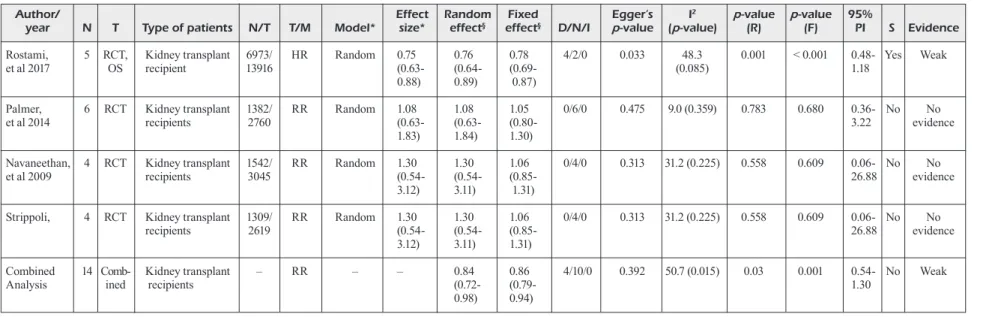
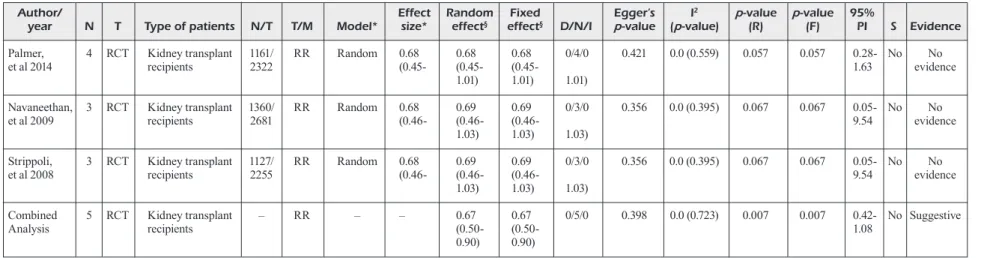
The outcomes evaluated in the meta-analyses included all-cause mortality and cardiovascular mortality of CKD patients (defined as ‘not on dialysis’), CKD 5D (defined as ‘on dialysis’), and of kidney transplant recipients (Tables I-VI). Eight (57%) of the 14 meta-analyses examined all-cause mortality, five (36%) examined cardio-vascular mortality in CKD patients not receiving dialysis, seven (50%) studied all-cause mortality,
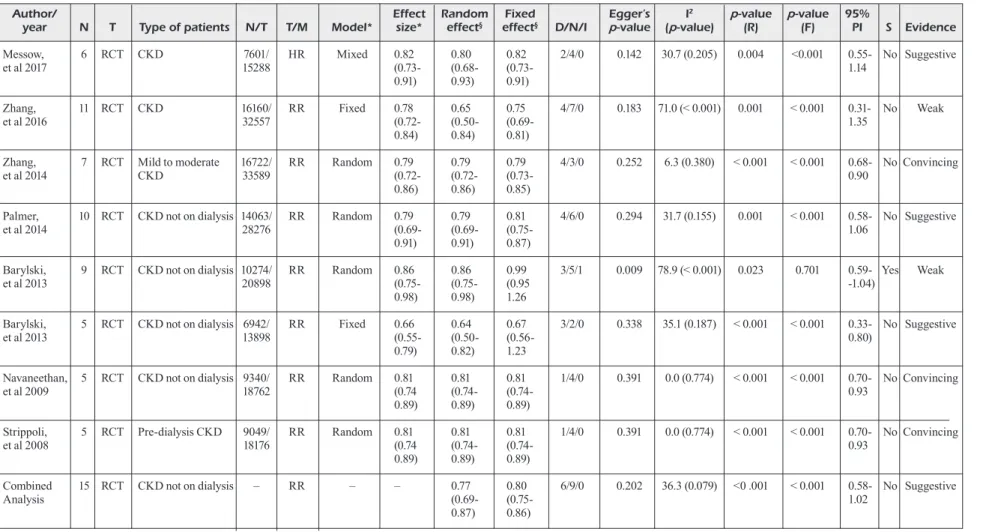
Table I. Effects of statin therapy in CKD patients (all-cause mortality).
Author/ Effect Random Fixed Egger’s I2 p-value p-value 95%
year N T Type of patients N/T T/M Model* size* effect§ effect§ D/N/I p-value (p-value) (R) (F) PI S Evidence
Messow, 6 RCT CKD 7601/ HR Mixed 0.82 0.80 0.82 2/4/0 0.142 30.7 (0.205) 0.004 <0.001 0.55- No Suggestive
et al 2017 15288 (0.73- (0.68- (0.73- 1.14
0.91) 0.93) 0.91)
Zhang, 11 RCT CKD 16160/ RR Fixed 0.78 0.65 0.75 4/7/0 0.183 71.0 (< 0.001) 0.001 < 0.001 0.31- No Weak
et al 2016 32557 (0.72- (0.50- (0.69- 1.35
0.84) 0.84) 0.81)
Zhang, 7 RCT Mild to moderate 16722/ RR Random 0.79 0.79 0.79 4/3/0 0.252 6.3 (0.380) < 0.001 < 0.001 0.68- No Convincing
et al 2014 CKD 33589 (0.72- (0.72- (0.73- 0.90
0.86) 0.86) 0.85)
Palmer, 10 RCT CKD not on dialysis 14063/ RR Random 0.79 0.79 0.81 4/6/0 0.294 31.7 (0.155) 0.001 < 0.001 0.58- No Suggestive
et al 2014 28276 (0.69- (0.69- (0.75- 1.06
0.91) 0.91) 0.87)
Barylski, 9 RCT CKD not on dialysis 10274/ RR Random 0.86 0.86 0.99 3/5/1 0.009 78.9 (< 0.001) 0.023 0.701 0.59- Yes Weak
et al 2013 20898 (0.75- (0.75- (0.95 -1.04)
0.98) 0.98) 1.26
Barylski, 5 RCT CKD not on dialysis 6942/ RR Fixed 0.66 0.64 0.67 3/2/0 0.338 35.1 (0.187) < 0.001 < 0.001 0.33- No Suggestive
et al 2013 13898 (0.55- (0.50- (0.56- 0.80)
0.79) 0.82) 1.23
Navaneethan, 5 RCT CKD not on dialysis 9340/ RR Random 0.81 0.81 0.81 1/4/0 0.391 0.0 (0.774) < 0.001 < 0.001 0.70- No Convincing
et al 2009 18762 (0.74 (0.74- (0.74- 0.93
0.89) 0.89) 0.89)
Strippoli, 5 RCT Pre-dialysis CKD 9049/ RR Random 0.81 0.81 0.81 1/4/0 0.391 0.0 (0.774) < 0.001 < 0.001 0.70- No Convincing
et al 2008 18176 (0.74 (0.74- (0.74- 0.93
0.89) 0.89) 0.89)
Combined 15 RCT CKD not on dialysis – RR – – 0.77 0.80 6/9/0 0.202 36.3 (0.079) <0 .001 < 0.001 0.58- No Suggestive
Analysis (0.69- (0.75- 1.02
0.87) 0.86)
CKD, chronic kidney disease; D/N/I, decreasing risk/No difference/Increasing risk; F, fixed effect; HR, hazard ratio; N, number of studies; N/T, number of intervention/total; PI, prediction intervals; R, random effect; RCT, randomized controlled study; RR, risk ratio; S, small-study effect; T, type of studies; T/M, Type of metrics; *Value reported in the original article of the meta-analysis; §Value obtained from re-analysis of the original meta-analysis.
2700
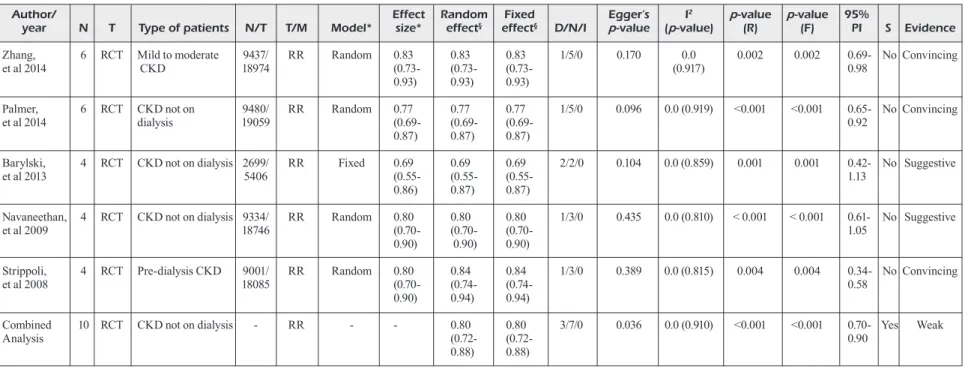
Table II. Effects of statin therapy in CKD patients (cardiovascular mortality).
Author/ Effect Random Fixed Egger’s I2 p-value p-value 95%
year N T Type of patients N/T T/M Model* size* effect§ effect§ D/N/I p-value (p-value) (R) (F) PI S Evidence
Zhang, 6 RCT Mild to moderate 9437/ RR Random 0.83 0.83 0.83 1/5/0 0.170 0.0 0.002 0.002 0.69- No Convincing
et al 2014 CKD 18974 (0.73- (0.73- (0.73- (0.917) 0.98
0.93) 0.93) 0.93)
Palmer, 6 RCT CKD not on 9480/ RR Random 0.77 0.77 0.77 1/5/0 0.096 0.0 (0.919) <0.001 <0.001 0.65- No Convincing
et al 2014 dialysis 19059 (0.69- (0.69- (0.69- 0.92
0.87) 0.87) 0.87)
Barylski, 4 RCT CKD not on dialysis 2699/ RR Fixed 0.69 0.69 0.69 2/2/0 0.104 0.0 (0.859) 0.001 0.001 0.42- No Suggestive
et al 2013 5406 (0.55- (0.55- (0.55- 1.13
0.86) 0.87) 0.87)
Navaneethan, 4 RCT CKD not on dialysis 9334/ RR Random 0.80 0.80 0.80 1/3/0 0.435 0.0 (0.810) < 0.001 < 0.001 0.61- No Suggestive
et al 2009 18746 (0.70- (0.70- (0.70- 1.05
0.90) 0.90) 0.90)
Strippoli, 4 RCT Pre-dialysis CKD 9001/ RR Random 0.80 0.84 0.84 1/3/0 0.389 0.0 (0.815) 0.004 0.004 0.34- No Convincing
et al 2008 18085 (0.70- (0.74- (0.74- 0.58
0.90) 0.94) 0.94)
Combined 10 RCT CKD not on dialysis - RR - - 0.80 0.80 3/7/0 0.036 0.0 (0.910) <0.001 <0.001 0.70- Yes Weak
Analysis (0.72- (0.72- 0.90
0.88) 0.88)
CKD, chronic kidney disease; D/N/I, decreasing risk/No difference/Increasing risk; F, fixed effect; N, number of studies; N/T, number of intervention/total; PI, prediction intervals; R, random effect; RCT, randomized controlled study; RR, risk ratio; S, small-study effect; T, type of studies; T/M, Type of metrics; *Value reported in the original article of the meta-analysis;
2701
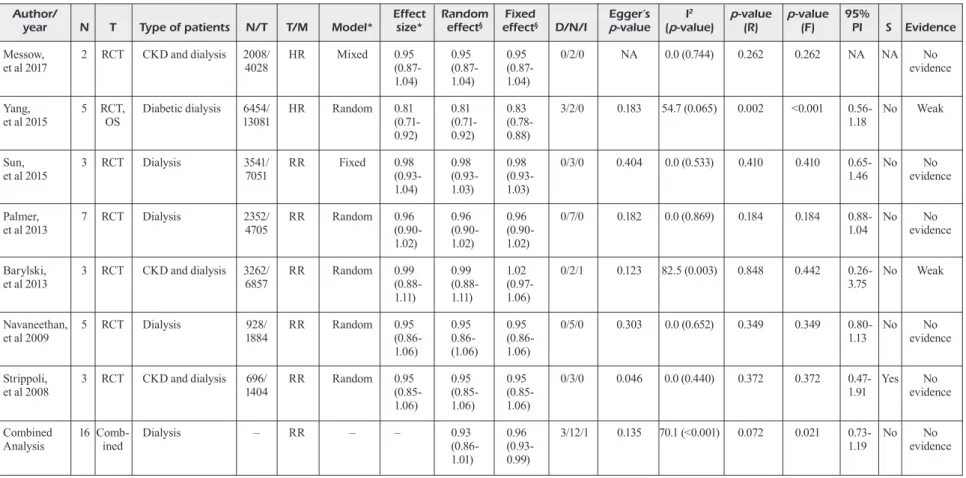
Table III. Effects of statin therapy in CKD 5D patients (all-cause mortality).
Author/ Effect Random Fixed Egger’s I2 p-value p-value 95%
year N T Type of patients N/T T/M Model* size* effect§ effect§ D/N/I p-value (p-value) (R) (F) PI S Evidence
Messow, 2 RCT CKD and dialysis 2008/ HR Mixed 0.95 0.95 0.95 0/2/0 NA 0.0 (0.744) 0.262 0.262 NA NA No
et al 2017 4028 (0.87- (0.87- (0.87- evidence
1.04) 1.04) 1.04)
Yang, 5 RCT, Diabetic dialysis 6454/ HR Random 0.81 0.81 0.83 3/2/0 0.183 54.7 (0.065) 0.002 <0.001 0.56- No Weak
et al 2015 OS 13081 (0.71- (0.71- (0.78- 1.18
0.92) 0.92) 0.88)
Sun, 3 RCT Dialysis 3541/ RR Fixed 0.98 0.98 0.98 0/3/0 0.404 0.0 (0.533) 0.410 0.410 0.65- No No
et al 2015 7051 (0.93- (0.93- (0.93- 1.46 evidence
1.04) 1.03) 1.03)
Palmer, 7 RCT Dialysis 2352/ RR Random 0.96 0.96 0.96 0/7/0 0.182 0.0 (0.869) 0.184 0.184 0.88- No No
et al 2013 4705 (0.90- (0.90- (0.90- 1.04 evidence
1.02) 1.02) 1.02)
Barylski, 3 RCT CKD and dialysis 3262/ RR Random 0.99 0.99 1.02 0/2/1 0.123 82.5 (0.003) 0.848 0.442 0.26- No Weak
et al 2013 6857 (0.88- (0.88- (0.97- 3.75
1.11) 1.11) 1.06)
Navaneethan, 5 RCT Dialysis 928/ RR Random 0.95 0.95 0.95 0/5/0 0.303 0.0 (0.652) 0.349 0.349 0.80- No No
et al 2009 1884 (0.86- 0.86- (0.86- 1.13 evidence
1.06) (1.06) 1.06)
Strippoli, 3 RCT CKD and dialysis 696/ RR Random 0.95 0.95 0.95 0/3/0 0.046 0.0 (0.440) 0.372 0.372 0.47- Yes No
et al 2008 1404 (0.85- (0.85- (0.85- 1.91 evidence
1.06) 1.06) 1.06)
Combined 16 Comb- Dialysis – RR – – 0.93 0.96 3/12/1 0.135 70.1 (<0.001) 0.072 0.021 0.73- No No
Analysis ined (0.86- (0.93- 1.19 evidence
1.01) 0.99)
CKD, chronic kidney disease; D/N/I, decreasing risk/No difference/Increasing risk; F, fixed effect; HR, hazard ratio; N, number of studies; NA, not applicable; N/T, number of intervention/ total; OS; observational study; PI, prediction intervals; R, random effect; RCT, randomized controlled study; RR, risk ratio; S, small-study effect; T, type of studies; T/M, Type of metrics; *Value reported in the original article of the meta-analysis; §Value obtained from re-analysis of the original meta-analysis.
2702
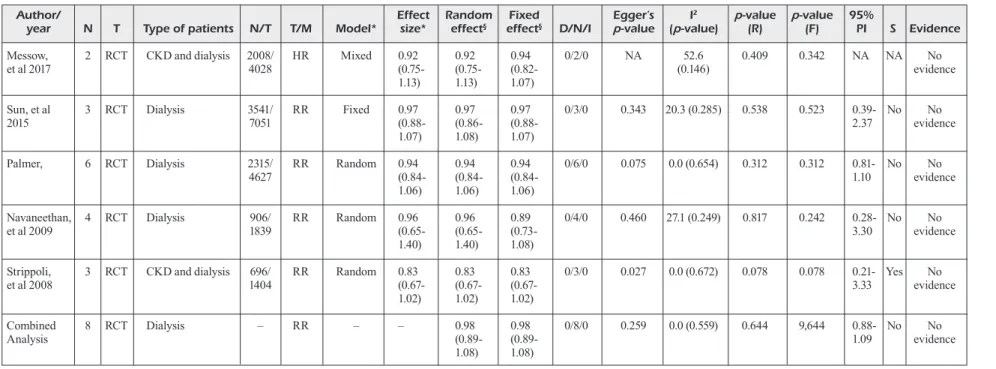
Table IV. Effects of statin therapy in CKD 5D patients (cardiovascular mortality).
Author/ Effect Random Fixed Egger’s I2 p-value p-value 95%
year N T Type of patients N/T T/M Model* size* effect§ effect§ D/N/I p-value (p-value) (R) (F) PI S Evidence
Messow, 2 RCT CKD and dialysis 2008/ HR Mixed 0.92 0.92 0.94 0/2/0 NA 52.6 0.409 0.342 NA NA No
et al 2017 4028 (0.75- (0.75- (0.82- (0.146) evidence
1.13) 1.13) 1.07)
Sun, et al 3 RCT Dialysis 3541/ RR Fixed 0.97 0.97 0.97 0/3/0 0.343 20.3 (0.285) 0.538 0.523 0.39- No No
2015 7051 (0.88- (0.86- (0.88- 2.37 evidence
1.07) 1.08) 1.07)
Palmer, 6 RCT Dialysis 2315/ RR Random 0.94 0.94 0.94 0/6/0 0.075 0.0 (0.654) 0.312 0.312 0.81- No No
4627 (0.84- (0.84- (0.84- 1.10 evidence
1.06) 1.06) 1.06)
Navaneethan, 4 RCT Dialysis 906/ RR Random 0.96 0.96 0.89 0/4/0 0.460 27.1 (0.249) 0.817 0.242 0.28- No No
et al 2009 1839 (0.65- (0.65- (0.73- 3.30 evidence
1.40) 1.40) 1.08)
Strippoli, 3 RCT CKD and dialysis 696/ RR Random 0.83 0.83 0.83 0/3/0 0.027 0.0 (0.672) 0.078 0.078 0.21- Yes No
et al 2008 1404 (0.67- (0.67- (0.67- 3.33 evidence
1.02) 1.02) 1.02)
Combined 8 RCT Dialysis – RR – – 0.98 0.98 0/8/0 0.259 0.0 (0.559) 0.644 9,644 0.88- No No
Analysis (0.89- (0.89- 1.09 evidence
1.08) 1.08)
CKD, chronic kidney disease; D/N/I, Decreasing risk/No difference/Increasing risk; F, fixed effect; HR, hazard ratio; N, number of studies; NA, not applicable; N/T, number of intervention/ total; PI, prediction intervals; R, random effect; RCT, randomized controlled study; RR, risk ratio; S, small-study effect; T, type of studies; T/M, Type of metrics; *Value reported in original article of the meta-analysis; §Value obtained from re-analysis of original meta-analysis.
2703
Table V. Effects of statin therapy among kidney transplant recipients (all-cause mortality).
Author/ Effect Random Fixed Egger’s I2 p-value p-value 95%
year N T Type of patients N/T T/M Model* size* effect§ effect§ D/N/I p-value (p-value) (R) (F) PI S Evidence
Rostami, 5 RCT, Kidney transplant 6973/ HR Random 0.75 0.76 0.78 4/2/0 0.033 48.3 0.001 < 0.001 0.48- Yes Weak
et al 2017 OS recipient 13916 (0.63- (0.64- (0.69- (0.085) 1.18
0.88) 0.89) 0.87)
Palmer, 6 RCT Kidney transplant 1382/ RR Random 1.08 1.08 1.05 0/6/0 0.475 9.0 (0.359) 0.783 0.680 0.36- No No
et al 2014 recipients 2760 (0.63- (0.63- (0.80- 3.22 evidence
1.83) 1.84) 1.30)
Navaneethan, 4 RCT Kidney transplant 1542/ RR Random 1.30 1.30 1.06 0/4/0 0.313 31.2 (0.225) 0.558 0.609 0.06- No No
et al 2009 recipients 3045 (0.54- (0.54- (0.85- 26.88 evidence
3.12) 3.11) 1.31)
Strippoli, 4 RCT Kidney transplant 1309/ RR Random 1.30 1.30 1.06 0/4/0 0.313 31.2 (0.225) 0.558 0.609 0.06- No No
recipients 2619 (0.54- (0.54- (0.85- 26.88 evidence
3.12) 3.11) 1.31)
Combined 14 Comb- Kidney transplant – RR – – 0.84 0.86 4/10/0 0.392 50.7 (0.015) 0.03 0.001 0.54- No Weak
Analysis ined recipients (0.72- (0.79- 1.30
0.98) 0.94)
D/N/I, decreasing risk/No difference/Increasing risk; F, fixed effect; HR, hazard ratio; N, number of studies; NA, not applicable; N/T, number of intervention/total; OS; observational study; PI, prediction intervals; R, random effect; RCT, randomized controlled study; RR, risk ratio; S, small-study effect; T, type of studies; T/M, Type of metrics; *Value reported in the original article of the meta-analysis; §Value obtained from re-analysis of the original meta-analysis.
2704
Table VI. Effects of statin therapy among kidney transplant recipients (cardiovascular mortality).
Author/ Effect Random Fixed Egger’s I2 p-value p-value 95%
year N T Type of patients N/T T/M Model* size* effect§ effect§ D/N/I p-value (p-value) (R) (F) PI S Evidence
Palmer, 4 RCT Kidney transplant 1161/ RR Random 0.68 0.68 0.68 0/4/0 0.421 0.0 (0.559) 0.057 0.057 0.28- No No
et al 2014 recipients 2322 (0.45- (0.45- (0.45- 1.63 evidence
1.01) 1.01) 1.01)
Navaneethan, 3 RCT Kidney transplant 1360/ RR Random 0.68 0.69 0.69 0/3/0 0.356 0.0 (0.395) 0.067 0.067 0.05- No No
et al 2009 recipients 2681 (0.46- (0.46- (0.46- 9.54 evidence
1.03) 1.03) 1.03)
Strippoli, 3 RCT Kidney transplant 1127/ RR Random 0.68 0.69 0.69 0/3/0 0.356 0.0 (0.395) 0.067 0.067 0.05- No No
et al 2008 recipients 2255 (0.46- (0.46- (0.46- 9.54 evidence
1.03) 1.03) 1.03)
Combined 5 RCT Kidney transplant – RR – – 0.67 0.67 0/5/0 0.398 0.0 (0.723) 0.007 0.007 0.42- No Suggestive
Analysis recipients (0.50- (0.50- 1.08
0.90) 0.90)
D/N/I, decreasing risk/No difference/Increasing risk; F, fixed effect; N, number of studies; NA, not applicable; N/T, number of intervention/total; OS; observational study; PI, prediction intervals; R, random effect; RCT, randomized controlled study; RR, risk ratio; S, small-study effect; T, type of studies; T/M, Type of metrics; *Value reported in original article of the meta-analysis; §Value obtained from re-analysis of original meta-analysis.
Statins for CKD, dialysis patients, and kidney transplant recipients
and five (36%) studied cardiovascular mortality in CKD%D patients. Also, the number of me-ta-analyses that examined the effect of statin therapy on all-cause mortality was four (29%) and cardiovascular mortality was three (21%) in kidney-transplant recipients.
The Effect of Statin on Mortality and of CKD Patients
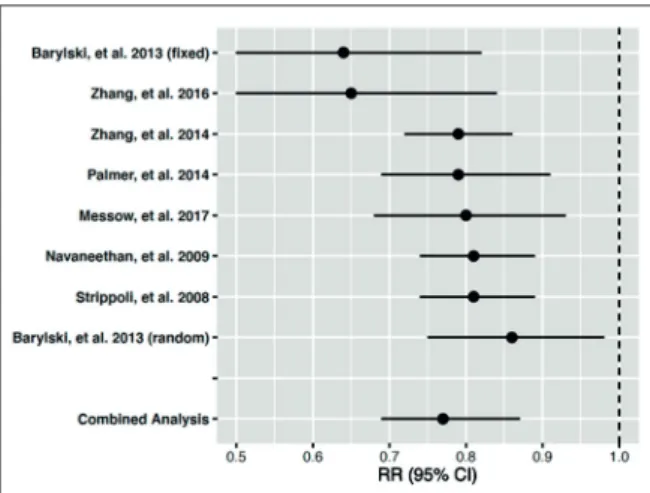
The individual meta-analysis and pooled me-ta-analysis results of the association between statin use and mortality among CKD patients are summarized in Table I, II, Figure 1, and Figure 2. All meta-analyses revealed the beneficial ef-fects of statins with convincing evidence in three meta-analyses, suggestive evidence in three me-ta-analyses, and weak evidence in two meta-anal-yses due to moderate-to-high heterogeneity and small-study effects. In the overall pooled analysis (n = 8), there was suggestive evidence of statin use on all-cause mortality of non-dialysis CKD patients (Table I and Figure 1).
When we assessed cardiovascular mortality, there were three meta-analyses with convinc-ing evidence, and two with suggestive evidence in favor of the benefit of statins. However, the pooled meta-analysis of five articles resulted in weak evidence for the use of statins in preventing cardiovascular mortality in patients with CKD not on dialysis due to small-study effects (Table II and Figure 2).
The Effect of Statin on Mortality of CKD Patients on Dialysis
The individual meta-analysis and pooled me-ta-analysis results of the association between statin
use and mortality among CKD 5D patients are summarized in Table III, IV, Figure 3, and Figure 4. When all-cause mortality was measured as an out-come of interest, two meta-analyses indicated weak evidence due to large heterogeneity, and no associ-ations were found in five of them. In the combined analysis (n=7), there was no supporting evidence of a beneficial effect of statins on all-cause mortality in CKD 5D (Table III and Figure 3).
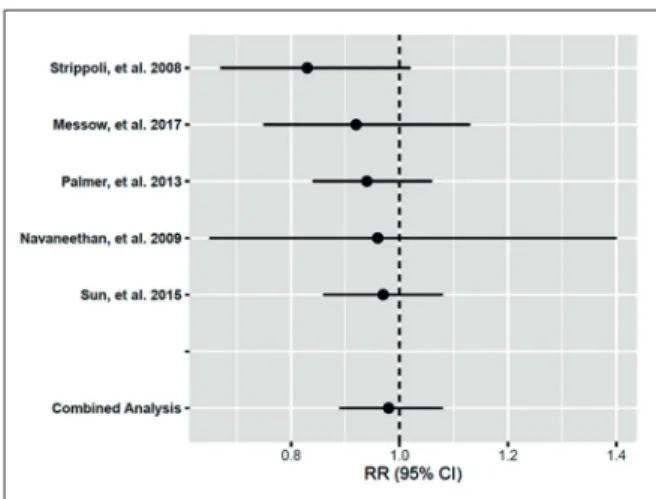
None of the five meta-analyses showed a sig-nificant effect of statin use on cardiovascular mortality in CKD 5D patients. This was observed by pooled analysis (Table IV and Figure 4). The Effect of Statin on Mortality Among Kidney Transplant Recipients
The individual meta-analysis and pooled me-ta-analysis results of the association between statin
Figure 1. Effects of statin therapy in CKD patients (all-cause mortality).
Figure 2. Effects of statin therapy in CKD patients (cardio-vascular mortality).
Figure 3. Effects of statin therapy in CKD 5D patients (all-cause mortality).
R.A. Ghayda, J.Y. Lee, J.W. Yang, C.H. Han, G.H. Jeong, et al
use and kidney transplant recipients’ mortality are summarized in Table V, Table VI, Figure 5, and Figure 6. When all-cause mortality was analyzed, only one meta-analysis with the type of RCTs and cohort studies showed weak evidence supporting the effect of statins. The validity is still limited due to a small-study effect. The other three meta-anal-yses of RCTs showed no significant association between statin use and all-cause mortality. In the overall pooled analysis (n = 4), there was weak evi-dence supporting the beneficial effects of statin use on all-cause mortality among kidney transplant recipients (Table V and Figure 5).
The cardiovascular mortality of kidney trans-plant recipients and statin therapy included three meta-analyses, and they all showed no evidence of the preventive role of statins. Combined
anal-ysis (n = 3) revealed suggestive evidence for the effect of statin treatment in preventing cardiovas-cular mortality in patients who had undergone kidney transplantation (Table VI and Figure 6).
Discussion
We identified and comprehensively analyzed 32 meta-analyses from 14 articles. While 24 as-sociations were statistically significant, only 11 of them were corroborated by convincing evidence from RCTs. In meta-analyses, statin showed sug-gestive and weak evidence for an association with beneficial effects on all-cause and cardiovascular mortality in CKD patients, respectively. For kid-ney-transplant patients, statins showed weak and suggestive evidence for reduced all-cause and cardiovascular mortality, respectively. However, in dialyzed patients, combined analyses showed no beneficial effects of statins on all-cause and cardiovascular mortality.
Patients with CKD are considered to be at high or very high risk of atherosclerotic cardiovascular disease according to 2019 ESC guidelines, and the use of statins or the statin/ezetimibe combination is recommended in non-dialyzed CKD patients with a high level of evidence29. However, two major RCTs (the Die Deutsche Diabetes Dialyse Studies (4D) trial and a study to evaluate the use of rosuvastatin in subjects on regular hemodialy-sis an assessment of survival and cardiovascular events (AURORA) trial) fail to show a significant reduction in cardiovascular mortality in patients on hemodialysis30,31. There are no RCTs on peri-toneal dialysis patients. Some observational stud-Figure 4. Effects of statin therapy in CKD 5D patients
(cardiovascular mortality).
Figure 5. Effects of statin therapy among kidney
Statins for CKD, dialysis patients, and kidney transplant recipients
ies showed that statin therapy reduced all-cause mortality in hemodialysis patients32,33. However, meta-analyses and guidelines do not recommend statins or statin/ezetimibe combination initiation in dialysis-dependent CKD patients14,21,29,34. Our study confirmed that in patients, on hemodialysis, statin use was correlated with neither a reduction in all-cause nor cardiovascular mortality19,21,24-26,35. However, further evidence is required to establish a protective correlation between these specific effects of patients on hemodialysis.
It is well proven in the scientific and medical community that dyslipidemia contributes to the development of cardiovascular disease in CKD patients36. Cardiovascular disease is the leading cause of mortality in patients with CKD, with a majority of these patients also suffering from hypertension and type 2 diabetes mellitus37. The mechanism of action of statins, in princi-ple, consists of reducing endothelial dysfunction and decreases abnormal permeability to plasma proteins38. Interestingly, although not the sub-ject of this study, we did not observe a signif-icant increase in the adverse or side effects of statins, such as rhabdomyolysis, hepatotoxicity, and cancer, among CKD patients20,24. Therefore, our findings are in conformance with the current Kidney Disease: Improving Global Outcomes (KDIGO) Guideline for Lipid Management in Chronic kidney disease (2013). The following guidelines recommend statin treatment for all CKD patients aged ≥ 50 years and not on dial-ysis or going for kidney transplantation (GFR categories G1-5). Our data provide further evi-dence in support of these recommendations. For CKD patients aged 18-49 years, statin treatment is suggested only for those with additional risk factors, such as coronary artery disease, diabe-tes mellitus, previous ischemic stroke, estimated 10-year incidence of coronary death, or more than 10% risk of non-fatal myocardial infarc-tion34. In the recently published guidelines by the European Society of Cardiology (2019) and American College of Cardiology (2018), patients with CKD were considered to be at high (CKD G3) or very-high (CKD G4-5) risk of atheroscle-rotic cardiovascular disease29,39.
As a result, ambitious and aggressive treatment goals were set. Such recommendations includ-ed using statin regimens to achieves more than 50% reductions in low-density lipoprotein (LDL) cholesterol from baseline for all patients with CKD and an LDL cholesterol goal of <55 mg/dL for very-high risk and <70 mg/dL for high-risk
patients. Hence, the use of statins or the statin/ ezetimibe combination was recommended in all CKD patients with a Class I recommendation and an A level of evidence. In transplant recipients, statin treatment may be considered with a Class IIa recommendation and a B level of evidence29.
Although evidence supporting the use of statins in kidney transplant recipients is generally weak, statins had positive and protective effects. These findings are supported by the general medical community recommendation of statin use among patients with a transplanted kidney. In kidney transplant recipients, cardiovascular diseases are the major cause of mortality. Dyslipidemia is thus a common causal pathway leading to cardiovas-cular mortality, similarly to patients with CKD40. This commonality may explain the protective cor-relation of statins used in transplanted patients. However, the role of statins in kidney transplant recipients is multidimensional and affected by several factors. In contrast to patients with CKD, kidney transplant recipients are under continuous immunosuppressive therapy, including corticoste-roids and calcineurin inhibitors (CNIs). Long-term corticosteroid and CNI use are well proven to increase LDL cholesterol, total cholesterol, and triglycerides in a dose-dependent manner41,42, ex-plaining in part the beneficial effects of statins on CV mortality among these patients. Pharma-cokinetic interaction between CNIs and statins should be deliberated. The Assessment of Lescol in Renal Transplant (ALERT) study is the major RCT that assessed cyclosporine interaction and fluvastatin43. Unlike most other statins, fluvastatin is not metabolized by the cytochrome P450 3A4 (CYP3A4) enzyme. CYP3A4 is inhibited by CNIs, potentially leading to an increase in the bioavail-ability of fluvastatin10,29. Therefore, when patients on long term immune suppression are prescribed statins, pharmacokinetic interactions between the two drugs should always be considered. Further pharmacologic research is necessary to establish safe and practical guidelines in the case of dual immunosuppressant regimen and statin therapy.
Our study has several limitations. We only in-cluded meta-analyses that could be re-analyzed, potentially limiting our ability to control con-founding variables that differed across the indi-vidual studies. Additionally, indiindi-vidual observa-tional studies themselves have biases, possibly transferring these biases into the meta-analysis that included those different studies. The dose-ef-fect of statins was beyond the scope of our anal-ysis and such was not reported in our results or
R.A. Ghayda, J.Y. Lee, J.W. Yang, C.H. Han, G.H. Jeong, et al
discussion. Similarly, combination therapies such as statins with ezetimibe were also beyond our re-search and so were not performed due to a lack of studies and robust analysis. However, this is the first performed umbrella review of meta-analyses about statin use in CKD patients made through the recently published data.
Conclusions
Our umbrella review extensively re-analyzed the meta-analyses in search of the association between statin use and all-cause mortality and cardiovascu-lar mortality, which was not analyzed in the other recently published umbrella review14. 6 of 15 stud-ies showed a significantly reduced mortality among CKD patients. Five of eleven studies on statins and cardiovascular mortality were significant. The ben-eficial effects of statin were shown in CKD patients not on dialysis for both all-cause mortality and car-diovascular mortality and in kidney transplant recipi-ents for cardiovascular mortality but not for all-cause mortality. For patients on dialysis, the beneficial effects of statin treatment could not be confirmed, neither for all-cause mortality nor for cardiovascular mortality. These results help to understanding the real effects of statins on CKD patients.
Conflict of Interest
The Authors declare that they have no conflict of interests.
Acknowledgements
The authors’ responsibilities were as follows- R.A.G. and J.I.S designed this study, G.H.J, S.Y, and C.H.H. collect-ed data. G.H.J, C.H.H., and S.Y. did the analyses. R.A.G., J.Y.L., K.H.L., J.W.Y., P.G., A.K., and J.I.S wrote the first draft of the manuscript and gave critical comments on the manuscript draft. All authors had full access to all the study data. All authors reviewed, wrote, and approved the final version. The corresponding author had the ultimate respon-sibility for the decision to submit for publication.
Funding Information
Neither financial support nor any sort of sponsorship was received for this study.
References
1) Chen TK, Knicely DH, Grams ME. Chronic kidney disease diagnosis and management: a review. JAMA 2019; 322: 1294-1304.
2) Hsu CY, Vittinghoff E, Lin F, Shlipak MG. The in-cidence of end-stage renal disease is increasing faster than the prevalence of chronic renal insuf-ficiency. Ann Intern Med 2004; 141: 95-101. 3) Coresh J, Selvin E, Stevens LA, Manzi J, Kusek
JW, Eggers P, Van Lente F, Levey AS. Prevalence of chronic kidney disease in the United States. JAMA 2007; 298: 2038-2047.
4) GBD 2017 Causes of Death Collaborators. Glob-al, regionGlob-al, and national age-sex-specific mortal-ity for 282 causes of death in 195 countries and territories, 1980-2017: a systematic analysis for the Global Burden of Disease Study 2017. Lancet 2018; 392: 1736-1788.
5) Andrassy KM. Comments on ‘KDIGO 2012 clini-cal practice guideline for the evaluation and man-agement of chronic kidney disease’. Kidney Int 2013; 84: 622-623.
6) Jha V, Garcia-Garcia G, Iseki K, Li Z, Naicker S, Plattner B, Saran R, Wang AYM, Yang CW. Chronic kidney disease: global dimension and perspectives. Lancet 2013; 382: 260-272.
7) GBD 2016 Disease and Injury Incidence and Prevalence Collaborators. Global, regional, and national incidence, prevalence, and years lived with disability for 328 diseases and injuries for 195 countries, 1990-2016: a systematic analy-sis for the Global Burden of Disease Study 2016. Lancet 2017; 390: 1211-1259.
8) GBD 2017 Causes of Death Collaborators. Glob-al, regionGlob-al, and national age-sex specific mor-tality for 264 causes of death, 1980-2016: a sys-tematic analysis for the Global Burden of Disease Study 2016. Lancet 2017; 390: 1151-1210. 9) Schlackow I, Kent S, Herrington W, Emberson J,
Haynes R, Reith C, Collins R, Landray MJ, Gray A, Baigent C, Mihaylova B, Group SC. Cost-ef-fectiveness of lipid lowering with statins and eze-timibe in chronic kidney disease. Kidney Int 2019; 96: 170-179.
10) Baigent C, Landray MJ, Reith C, Emberson J, Wheeler DC, Tomson C, Wanner C, Krane V, Cass A, Craig J, Neal B, Jiang L, Hooi LS, Levin A, Agodoa L, Gaziano M, Kasiske B, Walker R, Massy ZA, Feldt-Rasmussen B, Krairittichai U, Ophascharoensuk V, Fellström B, Holdaas H, Te-sar V, Wiecek A, Grobbee D, de Zeeuw D, Grön-hagen-Riska C, Dasgupta T, Lewis D, Herrington W, Mafham M, Majoni W, Wallendszus K, Grimm R, Pedersen T, Tobert J, Armitage J, Baxter A, Bray C, Chen Y, Chen Z, Hill M, Knott C, Parish S, Simpson D, Sleight P, Young A, Collins R, Inves-tigators S. The effects of lowering LDL cholester-ol with simvastatin plus ezetimibe in patients with chronic kidney disease (Study of Heart and Renal Protection): a randomised placebo-controlled tri-al. Lancet 2011; 377: 2181-2192.
11) Sacks FM, Pfeffer MA, Moye LA, Rouleau JL, Rutherford JD, Cole TG, Brown L, Warnica JW, Arnold JM, Wun CC, Davis BR, Braunwald E. The effect of pravastatin on coronary events af-ter myocardial infarction in patients with
aver-Statins for CKD, dialysis patients, and kidney transplant recipients
age cholesterol levels. Cholesterol and recurrent events trial investigators. N Engl J Med 1996; 335: 1001-1009.
12) Seliger SL, Weiss NS, Gillen DL, Kestenbaum B, Ball A, Sherrard DJ, Stehman-Breen CO. HMG-CoA reductase inhibitors are associated with re-duced mortality in ESRD patients. Kidney Int 2002; 61: 297-304.
13) Tonelli M, Moyé L, Sacks FM, Kiberd B, Curhan G. For the cholesterol and recurrent events trial investigators. Pravastatin for secondary preven-tion of cardiovascular events in persons with mild chronic renal insufficiency. Ann Intern Med 2003; 138: 98-104.
14) He Y, Li X, Gasevic D, Brunt E, McLachlan F, Mil-lenson M, Timofeeva M, Ioannidis JPA, Camp-bell H, Theodoratou E. Statins and multiple non-cardiovascular outcomes: umbrella review of me-ta-analyses of observational studies and random-ized controlled trials. Ann Intern Med 2018; 169: 543-553.
15) Barylski M, Nikfar S, Mikhailidis DP, Toth PP, Sal-ari P, Ray KK, Pencina MJ, Rizzo M, Rysz J, Ab-dollahi M, Nicholls SJ, Banach M. Statins de-crease all-cause mortality only in CKD patients not requiring dialysis therapy--a meta-analysis of 11 randomized controlled trials involving 21,295 participants. Pharmacol Res 2013; 72: 35-44. 16) Messow CM, Isles C. Meta-analysis of statins in
chronic kidney disease: who benefits? QJM 2017; 110: 493-500.
17) Navaneethan SD, Pansini F, Perkovic V, Manno C, Pellegrini F, Johnson DW, Craig JC, Strippoli GFM. HMG CoA reductase inhibitors (statins) for people with chronic kidney disease not requiring dialysis. Cochrane Database Syst Rev 2009; 2: CD007784. 18) Navaneethan SD, Perkovic V, Johnson DW, Nig-wekar SU, Craig JC, Strippoli GF. HMG CoA re-ductase inhibitors (statins) for kidney transplant recipients. Cochrane Database Syst Rev 2009; 2: CD005019.
19) Navaneethan SD, Shrivastava R. HMG CoA re-ductase inhibitors (statins) for dialysis patients. Cochrane Database Syst Rev 2004; 4: CD004289. 20) Palmer SC, Navaneethan SD, Craig JC, Johnson
DW, Perkovic V, Hegbrant J, Strippoli GFM. HMG CoA reductase inhibitors (statins) for people with chronic kidney disease not requiring dialysis. Co-chrane Database Syst Rev 2014; 5: CD007784. 21) Palmer SC, Navaneethan SD, Craig JC, Johnson
DW, Perkovic V, Nigwekar SU, Hegbrant J, Strip-poli GFM. HMG CoA reductase inhibitors (statins) for dialysis patients. Cochrane Database Syst Rev 2013; 9: CD004289.
22) Palmer SC, Navaneethan SD, Craig JC, Perkovic V, Johnson DW, Nigwekar SU, Hegbrant J, Strip-poli GF. HMG CoA reductase inhibitors (statins) for kidney transplant recipients. Cochrane Data-base Syst Rev 2014; 1: CD005019.
23) Rostami Z, Moteshaker Arani M, Salesi M, Safia-badi M, Einollahi B. Effect of statins on patients and graft survival in kidney transplant recipients:
a survival meta-analysis. Iran J Kidney Dis 2017; 11: 329-338.
24) Strippoli GFM, Navaneethan SD, Johnson DW, Perkovic V, Pellegrini F, Nicolucci A, Craig JC. Ef-fects of statins in patients with chronic kidney dis-ease: meta-analysis and meta-regression of ran-domised controlled trials. BMJ 2008; 336: 645-651. 25) Sun L, Zou L, Chen M, Liu B. Meta-analysis of
statin therapy in maintenance dialysis patients. Ren Fail 2015; 37: 1149-1156.
26) Yang M, Xie XS, Yuan WJ. A meta-analysis of the effects of statin treatment on cardiovascular events and all-cause mortality in diabetic dialysis patients. Int J Clin Exp Med 2015; 8: 8415-8424. 27) Zhang X, Xiang C, Zhou YH, Jiang A, Qin YY, He
J. Effect of statins on cardiovascular events in pa-tients with mild to moderate chronic kidney dis-ease: a systematic review and meta-analysis of randomized clinical trials. BMC Cardiovasc Dis-ord 2014; 14: 19-19.
28) Zhang Z, Wu P, Zhang J, Wang S, Zhang G. The effect of statins on microalbuminuria, proteinuria, progression of kidney function, and all-cause mortality in patients with non-end stage chronic kidney disease: a meta-analysis. Pharmacol Res 2016; 105: 74-83.
29) Mach F, Baigent C, Catapano AL, Koskinas KC, Casula M, Badimon L, Chapman MJ, De Back-er GG, Delgado V, FBack-erence BA, Graham IM, Halliday A, Landmesser U, Mihaylova B, Ped-ersen TR, Riccardi G, Richter DJ, Sabatine MS, Taskinen MR, Tokgozoglu L, Wiklund O, Group ESCSD. 2019 ESC/EAS Guidelines for the man-agement of dyslipidaemias: lipid modification to reduce cardiovascular risk. Eur Heart J 2020; 41: 111-188.
30) Fellström BC, Jardine AG, Schmieder RE, Holdaas H, Bannister K, Beutler J, Chae DW, Chevaile A, Cobbe SM, Grönhagen-Riska C, De Lima JJ, Lins R, Mayer G, McMahon AW, Parving HH, Remuzzi G, Samuelsson O, Sonkodi S, Sci D, Süleymanlar G, Tsakiris D, Tesar V, Todorov V, Wiecek A, Wüthrich RP, Gottlow M, Johnsson E, Zannad F, Group AS. Rosuvastatin and cardio-vascular events in patients undergoing hemodial-ysis. N Engl J Med 2009; 360: 1395-1407. 31) Wanner C, Krane V, März W, Olschewski M,
Mann JF, Ruf G, Ritz E. Atorvastatin in patients with type 2 diabetes mellitus undergoing hemodi-alysis. N Engl J Med 2005; 353: 238-248. 32) Mason NA, Bailie GR, Satayathum S,
Bragg-Gresh-am JL, Akiba T, Akizawa T, Combe C, Rayner HC, Saito A, Gillespie BW, Young EW. HMG-coen-zyme a reductase inhibitor use is associated with mortality reduction in hemodialysis patients. Am J Kidney Dis 2005; 45: 119-126.
33) Jung J, Bae GH, Kang M, Kim SW, Lee DH. Statins and all-cause mortality in patients under-going hemodialysis. J Am Heart Assoc 2020; 9: e014840.
34) Tonelli M, Wanner C; Kidney Disease: Improv-ing Global Outcomes Lipid Guideline
Devel-R.A. Ghayda, J.Y. Lee, J.W. Yang, C.H. Han, G.H. Jeong, et al
opment Work Group M. Lipid management in chronic kidney disease: synopsis of the kidney disease: improving global outcomes 2013 clin-ical practice guideline. Ann Intern Med 2014; 160: 182-182.
35) Gluba A, Rysz J, Banach M. Statins in patients with chronic kidney disease: why, who and when? Expert Opin Pharmacother 2010; 11: 2665-2674. 36) Drüeke TB, Nguyen Khoa T, Massy ZA,
Witko-Sar-sat V, Lacour B, Descamps-Latscha B. Role of oxi-dized low-density lipoprotein in the atherosclerosis of uremia. Kidney Int Suppl 2001; 78: S114-S119. 37) Banach M, Mikhailidis DP, Kjeldsen SE, Rysz
J. Time for new indications for statins? Med Sci Monit 2009; 15: MS1-MS5.
38) O’Driscoll G, Green D, Taylor RR. Simvastatin, an HMG-coenzyme A reductase inhibitor, improves endothelial function within 1 month. Circulation 1997; 95: 1126-1131.
39) Grundy SM, Stone NJ, Bailey AL, Beam C, Birt-cher KK, Blumenthal RS, Braun LT, de Ferran-ti S, Faiella-Tommasino J, Forman DE, Goldberg R, Heidenreich PA, Hlatky MA, Jones DW, Lloyd-Jones D, Lopez-Pajares N, Ndumele CE, Orrin-ger CE, Peralta CA, Saseen JJ, Smith SC, Jr, Sperling L, Virani SS, Yeboah J. 2018 AHA/ACC/ AACVPR/AAPA/ABC/ACPM/ADA/AGS/APhA/AS-PC/NLA/PCNA Guideline on the Management of
Blood Cholesterol: a report of the American Col-lege of Cardiology/American Heart Association Task Force on Clinical Practice Guidelines. Cir-culation 2019; 139: e1082-e1143.
40) Jardine AG, Gaston RS, Fellstrom BC, Holdaas H. Prevention of cardiovascular disease in adult recipients of kidney transplants. Lancet 2011; 378: 1419-1427.
41) Vaziri ND. Dyslipidemia of chronic renal failure: the nature, mechanisms, and potential conse-quences. Am J Physiol Renal Physiol 2006; 290: F262-F272.
42) Holdaas H, Fellström B, Jardine AG, Nyberg G, Grönhagen-Riska C, Madsen S, Neumayer HH, Cole E, Maes B, Ambühl P, Logan JO, Staffler B, Gimpelewicz C, Group AS. Beneficial effect of early initiation of lipid-lowering therapy follow-ing renal transplantation. Nephrol Dial Transplant 2005; 20: 974-980.
43) Fellström B, Holdaas H, Jardine AG, Holme I, Ny-berg G, Fauchald P, Grönhagen-Riska C, Mad-sen S, Neumayer H-H, Cole E, Maes B, Ambühl P, Olsson AG, Hartmann A, Logan JO, Peder-sen TR, Assessment of Lescol in Renal Trans-plantation Study I. Effect of fluvastatin on renal end points in the Assessment of Lescol in Re-nal Transplant (ALERT) trial. Kidney Int 2004; 66: 1549-1555.