R E S E A R C H
Open Access
Combining deep-inspiration breath hold
and intensity-modulated radiotherapy for
gastric mucosa-associated lymphoid tissue
lymphoma: Dosimetric evaluation using
comprehensive plan quality indices
Seo Hee Choi
1†, So Hyun Park
2†, Jason Joon Bock Lee
1, Jong Geol Baek
1, Jin Sung Kim
1*and Hong In Yoon
1*Abstract
Background: Although there have been many attempts to increase the therapeutic ratio of radiotherapy for gastric mucosa-associated lymphoid tissue lymphoma (MALToma), only a few planning studies have reported the efficacy of the modern radiotherapy technique till date. Therefore, we performed the dosimetric comparison among 3-dimensional conformal radiotherapy (3D-CRT) and intensity-modulated radiotherapy (IMRT) plans, using deep-inspiration breath hold (DIBH) or free-breathing (FB) techniques, to determine the most optimal plan for gastric MALToma.
Methods: We evaluated 9 patients with gastric MALToma for whom 3D-CRT, step-and-shoot IMRT (SIMRT), volumetric-modulated arc therapy (VMAT), and tomotherapy plans with identical prescribed doses were generated using DIBH or FB computed tomography (CT). Planning target volume (PTV) coverage and non-target doses were calculated for each plan and compared with plan quality metric (PQM) scores.
Results: All 72 plans of 9 patients satisfied our dosimetric goals, and the IMRT plans and 3D-CRT plans had similarly good conformity index values with no differences related to respiratory movement. IMRT plans yielded significantly better doses to the organs-at-risk, and DIBH plans yielded significantly lower liver, heart, and lung Dmeanand spinal cord Dmaxwith smaller irradiated volumes compared to FB plans. For the mean PQM scores, VMAT-DIBH andS IMRT-DIBH yielded the best scores, whereas 3D plans provided reduced beam monitor unit values.
Conclusion: Our findings demonstrate that modern RT technologies (DIBH with VMAT orSIMRT) could potentially provide excellent target coverage for gastric MALToma while reducing doses to organs-at-risk. However, the relevance of the most optimal plan considering clinical outcomes should be confirmed further in a larger patient cohort.
Keywords: Mucosa-associated lymphoid tissue lymphoma, Radiotherapy, Planning study, Deep inspiration breath hold, Intensity modulated radiotherapy
© The Author(s). 2019 Open Access This article is distributed under the terms of the Creative Commons Attribution 4.0 International License (http://creativecommons.org/licenses/by/4.0/), which permits unrestricted use, distribution, and reproduction in any medium, provided you give appropriate credit to the original author(s) and the source, provide a link to the Creative Commons license, and indicate if changes were made. The Creative Commons Public Domain Dedication waiver (http://creativecommons.org/publicdomain/zero/1.0/) applies to the data made available in this article, unless otherwise stated.
* Correspondence:[email protected];[email protected]
†Seo Hee Choi and So Hyun Park contributed equally to this work. 1Department of Radiation Oncology, Yonsei Cancer Center, Yonsei University
College of Medicine, 50-1 Yonsei-ro, Seodaemun-gu, Seoul 03722, South Korea
Background
Mucosa-associated lymphoid tissue lymphoma (MAL-Toma) accounts for approximately 19% of all non-Hodgkin lymphomas and can arise at any extrano-dal site. In Korea, however, at least half of all MALTo-mas present as primary gastric lymphoMALTo-mas [1, 2]. Several institutions have reported excellent disease con-trol with radiation therapy alone, supporting the use of modest doses in field radiotherapy (30–40 Gy) for pa-tients with stage I–II gastric MALToma [3–8], although systemic therapy may also be needed in cases involving unsuccessfulHelicobacter pylori eradication or H. pylor-i-negative disease, depending on the disease stage.
The recent National Comprehensive Cancer Network (NCCN) guidelines recommend 30 Gy involved-site radi-ation therapy for gastric MALToma [9]; this generally involves the entire stomach and adjacent perigastric lymph nodes (if involved). Although this involved-site radiation therapy uses low doses, the doses to the organs-at-risk (OARs) near the stomach, such as the kid-neys, small bowel, or liver, must be considered. To date, several planning techniques involving anterior-posterior/ posterior-anterior fields (AP/PA) and 3-dimensional conformal radiotherapy (3D-CRT) have been used to re-duce radiation exposure to the OARs to within tolerance limits, and intensity-modulated radiotherapy (IMRT) techniques for gastric MALToma have recently been in-troduced [10–15]. Despite the dosimetric advantages of these modalities in terms of the doses to the OARs, con-cerns regarding higher scattered doses have not been re-solved [16]. Additionally, the effect of respiratory motion on the accuracy of the treatment has raised concerns, thus limiting the widespread use of IMRT.
Some institutions have implemented the deep-inspiration breath hold (DIBH) technique to address these concerns. However, only a few planning studies have included mod-ern radiotherapy techniques when evaluating the efficacy of this technique [11–13,17]. Therefore, in the present study, we performed a dosimetric comparison of 3D-CRT and IMRT plans using DIBH or free-breathing (FB) techniques to determine the most optimal treatment plan for gastric MALToma. We additionally compared IMRT plans using various techniques (step-and-shoot IMRT [SIMRT], volumetric-modulated arc therapy [VMAT], and tomother-apy) to identify the most dosimetrically optimal plan, using the plan quality metric (PQM) to ensure an objective assessment.
Materials and methods Patient selection
Among 20 patients who received definitive radiotherapy for gastric MALToma at our institution between 2016 and 2017, we selected only patients who underwent computed tomography (CT) simulation scans using both
FB and DIBH, to make 4 different plans (3D CRT, SIMRT, VMAT, and tomotherapy) per CT scan type (FB or DIBH) of each patient. A total of 9 patients who re-ceived definitive radiotherapy for localized gastric MAL-Toma were selected consecutively for this planning study. All cases were eitherH. pylori-positive but unre-sponsive to H. pylori irradiation or H. pylori-negative. Before the start of radiotherapy, each patient underwent CT simulation scans (Aquilion LB; Toshiba Medical System, Tokyo, Japan) using both FB and DIBH, per our institutional protocol after at least 4 h of fasting. The pa-tients received intravenous contrast agents and were immobilized in a supine position with both arms raised above the head. The range for CT scan was determined to include all the OARs (such as the lungs, heart, kid-neys, and bowel) that should be considered in planning. In our institution, patients were scanned from approxi-mately the level of the 7th thoracic vertebral body infer-iorly to the level of the 4th lumbar vertebral body. Care was taken to include the base of the heart and both kid-neys. DIBH CT scans were performed while the patient held his/her breath using the abdomen and chest motion self-control (Abches) system, as described in our previ-ous report [18].
In all patients, the gross tumor volume (GTV) was de-fined as the whole stomach. However, different clinical target volumes (CTVs) were set for FB and DIBH CT, as the former must incorporate the concept of an internal target volume (ITV) to account for respiratory move-ment during treatmove-ment. The CTV was defined as the GTV plus a 1.5-cm margin for FB CT, and GTV plus a 1.0-cm margin for DIBH CT. To account for set-up er-rors, the planning target volume (PTV) was defined as the CTV plus a 0.5-cm margin for all CT scans. For all plans, the prescribed dose was equal to 30 Gy in 20 fractions.
Four different plans, including one 3D-CRT plan and three IMRT plans (SIMRT, VMAT, and tomotherapy), were generated per CT scan type (FB or DIBH) to yield 8 plans per case. Therefore, we compared 72 plans for 9 patients based on the planning modality and respiration control methods. This study was approved by the insti-tutional review board (IRB) of the Yonsei University Health System (4–2017-1035).
Planning techniques
The FB and DIBH CT images and all datasets were transferred to treatment planning systems. The 3D-CRT, SIMRT, and VMAT plans were created with the RaySta-tion (RayStaRaySta-tion 5.0; RaySearch Laboratories, Stockholm, Sweden), and tomotherapy plans were generated with a TomoTherapy Hi-Art System (Accuray Inc., Madison, WI, USA). The 3D-CRT plans comprised four 10-MV energy beams, arranged as anterior-posterior opposed
beams and two lateral beams. The SIMRT plans were created using 7 angles (0°, 50°, 100°, 150°, 210°, 260°, and 315°) and a collimator angle of 90°, according to clinical experience. The VMAT plans used 2 full 6-MV arcs. The tomotherapy plans comprised helical beams optimized using a field width of 1.05°, modulation factor of 2.4, and pitch of 0.3. Each plan aimed to ensure 95% coverage of the PTV to the prescribed dose, with critical organ dose limits of 12.5 Gy and 10.0 Gy for the mean doses (Dmean) to the liver and kidneys, respectively.
Dosimetric parameters for plan evaluation
A radiation oncologist following the Radiation Therapy Oncology Group (RTOG) contouring atlases defined each OAR contour. Each OAR contour was contoured, and the body contour was automatically segmented using the “Whole Body” contouring tool with the MIM software (Cleveland, Ohio) in all patients. The dose distributions for each plan were analyzed using dose-volume
histograms and dose distributions, and doses to the OARs were evaluated using the following criteria:
1) Dmeanto each kidney, liver, and heart
2) Maximum dose (Dmax) to the bowel and spinal cord 3) Dmeanto both lungs, volume of both lungs receiving
≥5 Gy (V5), and volume of both lungs receiving ≥20 Gy (V20)
The PTV doses were evaluated using the following pa-rameters to evaluate target coverage and homogeneity:
1) Percent volume of the PTV receiving at least 95% of the prescription dose (TV95)
2) Homogeneity index (HI): HI = D5/D95
Where D5and D95represent the minimum doses to 5 and 95% of the PTV, respectively [19].
3) Conformity index (CI): CI = BV95/PTV
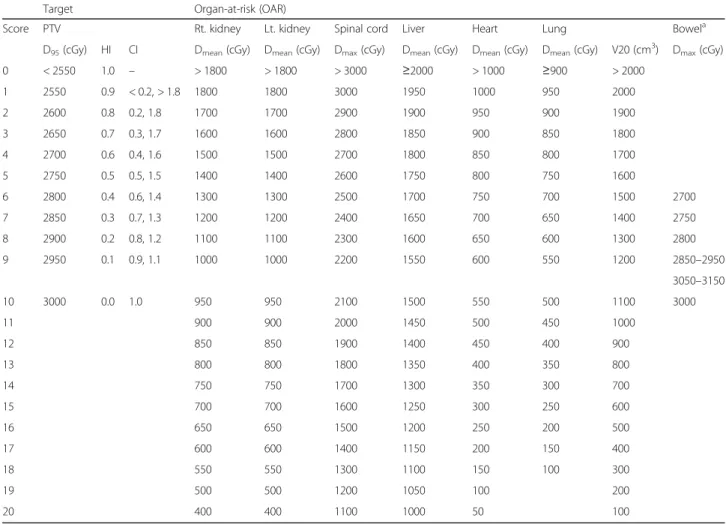
Table 1 Quality scores for each objective
Target Organ-at-risk (OAR)
Score PTV Rt. kidney Lt. kidney Spinal cord Liver Heart Lung Bowela
D95(cGy) HI CI Dmean(cGy) Dmean(cGy) Dmax(cGy) Dmean(cGy) Dmean(cGy) Dmean(cGy) V20 (cm3) Dmax(cGy)
0 < 2550 1.0 – > 1800 > 1800 > 3000 ≥2000 > 1000 ≥900 > 2000 1 2550 0.9 < 0.2, > 1.8 1800 1800 3000 1950 1000 950 2000 2 2600 0.8 0.2, 1.8 1700 1700 2900 1900 950 900 1900 3 2650 0.7 0.3, 1.7 1600 1600 2800 1850 900 850 1800 4 2700 0.6 0.4, 1.6 1500 1500 2700 1800 850 800 1700 5 2750 0.5 0.5, 1.5 1400 1400 2600 1750 800 750 1600 6 2800 0.4 0.6, 1.4 1300 1300 2500 1700 750 700 1500 2700 7 2850 0.3 0.7, 1.3 1200 1200 2400 1650 700 650 1400 2750 8 2900 0.2 0.8, 1.2 1100 1100 2300 1600 650 600 1300 2800 9 2950 0.1 0.9, 1.1 1000 1000 2200 1550 600 550 1200 2850–2950 3050–3150 10 3000 0.0 1.0 950 950 2100 1500 550 500 1100 3000 11 900 900 2000 1450 500 450 1000 12 850 850 1900 1400 450 400 900 13 800 800 1800 1350 400 350 800 14 750 750 1700 1300 350 300 700 15 700 700 1600 1250 300 250 600 16 650 650 1500 1200 250 200 500 17 600 600 1400 1150 200 150 400 18 550 550 1300 1100 150 100 300 19 500 500 1200 1050 100 200 20 400 400 1100 1000 50 100
The sum of scores for each objective is defined as the“raw plan quality metric (PQM)”. The maximum score was set to 178, and the PQM (%) was determined as the percent of the Raw PQM to Max PQM for each plan
a
Bowel scoring was conducted differently because part of the bowel is included in the PTV, and therefore, the bowel dose partly reflects the PTV coverage Abbreviations: PTV planning target volume, HI homogeneity index, CI conformity index
Where BV95represents the volume of the body receiv-ing 95% of the prescribed dose [20].
In our practice, we used a radiotherapy plan analysis program (Plan IQ™, Sun Nuclear co, Melbourne, FL, USA) to generate scores for these dosimetric goals ac-cording to the PQM. The scores were based on the con-straints and dose-volume histograms of the planning results and assigned to each evaluation object according to the calculated dose [21, 22]. The quality scores for each objective are shown in Table 1. The PQM (%) rep-resents the ratio of the raw PQM to the maximum PQM. The raw PQM is the evaluation score of each treatment plan in the score template. The maximum PQM is the highest score that the treatment plan can achieve and is the sum of the highest scores for each ob-jective set by the user of plan IQ (set to 178). By using plan IQ, it is possible to create the score template for each objective that users want to evaluate. Depending on the treatment sites and prescribed dose, it is rated at a higher score compared to other scores for significant ob-jectives. Because higher scores can be assigned to im-portant OARs, dosimetric weighting is determined by clinical importance. To explain the score template, the score template for the kidney and lung Dmean (Gy) is shown in Additional file1: Figure S1.
Statistical analysis
The Wilcoxon signed-rank test and Friedman test were used for the group-wise statistical comparison of the 8 planning techniques (3D-DIBH, 3D-FB, SIMRT-DIBH, SIMRT-FB, VMAT-DIBH, VMAT-FB, Tomo-DIBH, and Tomo-FB). Ap-value of < 0.05 was considered statistically significant. Statistical analyses were performed using SPSS software (Ver. 23.0; SPSS Inc., Chicago, IL, USA).
Results
Target coverage, conformity, and homogeneity
All plans satisfied the criteria for good PTV coverage, conformity, and homogeneity. Accordingly, the group-wise comparison of PTV dose distribution in-volved the TV95 and D95 values of the 8 techniques. Although all D95 values were larger than 95% of the prescribed dose, the tomotherapy plans yielded the best result, followed by SIMRT, VMAT, and 3D-plans, with no differences between the DIBH and FB plans. Statistically, the IMRT plans were significantly better than 3D-CRT plans, SIMRT plans were significantly better than VMAT plans, and tomotherapy plans were significantly better than SIMRT plans. The mean D95 values of the 3D-DIBH, 3D-FB, SIMRT-DIBH, SIMRT-FB, VMAT-DIBH, VMAT-FB, Tomo-DIBH, and Tomo-FB plans are shown in Table2 and Fig. 1(a) (p < 0.001). The detailed results of statistical analyses
are presented in Additional file 2: Supplementary text 1.
Regarding the TV95, significantly larger irradiated vol-umes were observed with FB plans than with DIBH plans (mean: 1721 cc for FB > 1372 cc for DIBH, p < 0.001), indicating the need to compensate for respiratory movement. The mean TV95 values of the 3D-DIBH, 3D-FB, SIMRT-DIBH, SIMRT-FB, VMAT-DIBH, VMAT-FB, Tomo-DIBH, and Tomo-FB plans are shown in Table 2 and Fig. 1(b) (p < 0.001). On statistical ana-lyses, 3D plans yielded significantly higher TV95 values than IMRT plans, whereas VMAT plans had the lowest TV95 when plans using the same respiration modality were compared. The results of statistical analyses are presented in Additional file2: Supplementary text 2.
Regarding homogeneity, the 3D, SIMRT, and VMAT plans yielded similar HI values, regardless of respiratory movement. Although plans showed favorable homogen-eity, the tomotherapy plans were the most superior, re-gardless of respiratory movement. The mean HI values of the 3D-DIBH, 3D-FB, SIMRT-DIBH, SIMRT-FB, VMAT-DIBH, VMAT-FB, Tomo-DIBH, and Tomo-FB plans are shown in Table2 and Fig.1(c) (p < 0.001). The
detailed results of statistical analyses are presented in Additional file2: Supplementary text 3.
Regarding dose conformity, the 3D plans yielded the worst CI values, followed by IMRT plans (which had similar CI values). Among the IMRT plans, SIMRT and VMAT yielded the best CI values. As shown in Fig. 2, which demonstrates the isodose lines, 3D-DIBH and 3D-FB were the least conformal plans, followed by Tomo-DIBH and Tomo-FB. No differences were observed according to respiratory movement. The mean CI values of the 3D-DIBH, 3D-FB, SIMRT-DIBH, SIMRT-FB, VMAT-DIBH, VMAT-FB, Tomo-DIBH, and Tomo-FB plans are shown in Table 2 and Fig.1(d) (p <
0.001). The detailed results of statistical analyses are pre-sented in Additional file 2: Supplementary text 4, and differences in homogeneity and conformity among the plans are demonstrated in an example of the plans with isodose lines (Fig.2).
OAR doses
The DIBH plans, which involved smaller irradiated volumes, yielded lower kidney Dmean values on both sides relative to the FB plans. The Dmean values were the highest for the 3D-CRT plans, followed by tomotherapy, SIMRT, and VMAT, although these dif-ferences were not significant. Similarly, the DIBH plans yielded significantly lower Dmean values for the liver, heart, and lungs, compared to FB plans. For these OARs, the VMAT-DIBH and SIMRT-DIBH plans were significantly superior to the others,
Table 2 Comparison of the 8 plans (mean ± stand ard deviation of 9 patients) Variables (mean ± SD) Plan TV95 (cc) D95 (cGy) HI CI Rt. Kidney Dmea n (cGy) Lt. kidney Dmea n (cGy) Spinal cord Dmax (cGy) Liver Dm ean (cGy) Heart Dmea n (cGy) Lung Dmean (cGy) Bowel Dmax (cGy) PQM (%) MU All 1546.53 ± 55.12 2919.06 ± 5.72 1.07 ± 0.00 1.19 ± 0.03 665 ± 36 743 ± 56 2194 ± 52 1482 ± 24 559 ± 31 331 ± 10 3118 ± 4 66.2 ± 1.2 2110.13 ± 382.92 3D- DIBH 1810.27 ± 162.59 2881.44 ± 9.95 1.09 ± 0.01 1.55 ± 0.04 741 ± 139 847 ± 219 2545 ± 117 1558 ± 50 446 ± 46 321 ± 22 3103 ± 12 60.6 ± 2.4 178.11 ± 2.03 3D-FB 2257.54 ± 136.08 2890.44 ± 9.56 1.08 ± 0.01 1.54 ± 0.03 845 ± 141 1069 ± 217 2869 ± 64 1715 ± 42 854 ± 84 404 ± 33 3110 ± 7 50.9 ± 2.1 176.13 ± 1.55 sIMRT- DIBH 1230.34 ± 100.57 2914.89 ± 7.36 1.08 ± 0.00 1.06 ± 0.01 602 ± 80 551 ± 105 1787 ± 70 1288 ± 41 363 ± 41 281 ± 16 3146 ± 4 75.6 ± 1.7 355.91 ± 12.74 sIMRT- FB 1525.70 ± 106.21 2906.00 ± 7.17 1.09 ± 0.00 1.03 ± 0.01 697 ± 93 716 ± 109 2061 ± 91 1426 ± 33 697 ± 82 344 ± 27 3148 ± 11 66.6 ± 2.2 385.92 ± 20.04 VMAT- DIBH 1178.59 ± 95.73 2886.67 ± 9.19 1.09 ± 0.00 1.02 ± 0.01 504 ± 79 515 ± 100 1756 ± 80 1264 ± 31 342 ± 47 260 ± 18 3138 ± 9 76.8 ± 2.0 310.89 ± 10.56 VMAT- FB 1478.46 ± 103.17 2890.22 ± 9.37 1.09 ± 0.00 1.00 ± 0.01 618 ± 80 612 ± 101 1979 ± 81 1391 ± 47 683 ± 82 325 ± 27 3134 ± 9 69.3 ± 1.9 339.82 ± 12.33 Tomo- DIBH 1269.43 ± 64.38 2989.44 ± 1.990 1.02 ± 0.00 1.19 ± 0.00 598 ± 75 755 ± 156 2134 ± 81 1565 ± 53 380 ± 39 330 ± 20 3083 ± 3 69.2 ± 2.3 7567.89 ± 451.12 Tomo- FB 1621.90 ± 114.87 2993.33 ± 0.93 1.02 ± 0.00 1.10 ± 0.04 717 ± 93 879 ± 180 2418 ± 108 1652 ± 59 706 ± 70 381 ± 28 3082 ± 4 62.1 ± 2.8 7566.33 ± 524.30 p value* < 0.001 < 0.001 < 0.001 < 0.001 0.575 0.460 < 0.001 < 0.001 < 0.001 0.002 < 0.001 < 0.001 < 0.001 Data are presented as means over the 9 investigated patients, and errors indicate inter-patient variability at the level of 1 standard deviation. *P values came from the comparisons among 8 plans by each dosimetric parameter Abbreviations: SD standard deviation, DIBH deep-inspiration breath hold, FB , free-breathing, IMRT intensity-modulated radiotherapy, VMAT volumetric-modulated arc therapy, TV the volume of the body receiving 95% of the prescribed dose, HI , homogeneity index; CI conformity index, PQM plan quality metric, MU motor unit
whereas the Tomo-FB and 3D-FB plans yielded the worst outcomes. As shown in Fig. 2, the DIBH plans yielded smaller irradiated volumes for the liver and kidneys, compared to the corresponding FB plans.
For the spinal cord, DIBH plans yielded significantly lower Dmaxvalues, compared to FB plans. 3D-CRT plans yielded the highest values, followed by tomotherapy, SIMRT and VMAT plans. The values and results of stat-istical analyses are presented in Fig.1(e) and Additional file2: Supplementary text 5. In contrast, the Dmaxvalues for the small bowel did not differ significantly among the plans (Fig. 1(f )), although the SIMRT plans and VMAT plans yielded the highest values, followed by the 3D plans and Tomo plans. Respiratory movement also had no effect on the small bowel Dmax values. The
results of statistical analyses are presented in Additional file 2: Supplementary text 6, and the mean values for each OAR with each plan are shown in Table2.
PQM
As shown in Table 1, the PQM score (%) of each plan was determined after weighting each dosimetric factor according to clinical importance. The VMAT-DIBH plan and SIMRT-DIBH plan acquired the best mean PQM scores (%) of 76.8 and 75.6, respectively. The VMAT-FB, Tomo-DIBH, SIMRT-FB, and Tomo-FB plans acquired mean PQM scores of 69.3, 69.2, 66.6, and 62.1, respect-ively. Both 3D-DIBH and FB plans acquired the lowest PQM scores (%) of 60.6 and 50.9, respectively (Table2). All DIBH plans yielded significantly superior PQM
Fig. 1 Boxplots of (a) the doses to 95% of the PTV (D95), (b) percent volume of the PTV receiving at least 95% of the prescription dose (TV95),
(c) homogeneity index (HI), (d) conformity index (CI), (e) Dmaxof the spinal cord, and (f) Dmaxof the small bowel of the 8 different plan groups. *The
Fig. 2 Treatment plans for 1 patient; (a) isodose lines in the image showing the curvature of the stomach, (b) isodose lines in the image showing the irradiation dose to both the kidneys. In Fig.2(a), the difference in D95, TV95, HI, and CI values among treatment plans can be compared
visually to some extent. In Fig.2(b), the difference between the right and left kidney Dmean, liver Dmean, and bowel Dmaxdoses among treatment
plans can be compared visually to some extent
Fig. 3 Boxplots of (a) plan quality metric (PQM) scores and (b) motor units (MU) of the 8 different plan groups. DIBH, deep-inspiration breath hold; FB, free-breathing; 3D, 3-dimensional conformal radiotherapy; IMRT, intensity-modulated radiotherapy; VMAT, volumetric-modulated arc therapy; Tomo, tomotherapy
scores to the corresponding FB plans (Fig. 3(a)). Although VMAT-DIBH and SIMRT-DIBH were signifi-cantly better than most other plans, these two plans were not significantly different (p = 0.066). The VMAT-FB andSIMRT-FB plans were significantly better than 3D-CRT plans (DIBH or FB), but significantly worse than those obtained using the DIBH technique (VMAT-DIBH or SIMRT-DIBH). When we further scored the plans by summing all items at a 1:1 ratio (not weighting each dosimetric factor according to clinical importance), the same plan quality rankings as PQM (weighting each dosimetric factor by users according to clinical importance) were achieved. As shown in Table3, the VMAT-DIBH,SIMRT-DIBH, and Tomo-DIBH plans yielded the best results, and all were superior to the cor-responding FB plans. The 3D-DIBH and 3D-FB plans yielded the most inferior scores for almost all factors. Motor unit and clinical meaning
The IMRT plans yielded significantly higher monitor unit (MU) values, whereas the 3D-CRT plans yielded significantly lower MU values relative to the other mo-dalities. Although the VMAT and SIMRT plans did not yield significantly different MU values, all were signifi-cantly lower than those of tomotherapy plans. The Tomo-DIBH and Tomo-FB plans required substantially high mean MU values (7567 and 7566, respectively; Table 2), and the MU values did not significantly differ between the DIBH and corresponding FB plans (Fig.
3(b)).
We note that when performing actual treatments using the DIBH technique, beam irradiation can be per-formed only when the patient is holding his/her breath (intervals of ~ 15 to 20 s). As free breathing must be allowed between the periods of breath holding, the total
treatment time in an actual clinic setting may be longer than expected. In addition, patient training time, DIBH device set-up time, and accurate monitoring in the treat-ment room are required. Therefore, the time required for actual treatment could be significantly increased if the IMRT and DIBH techniques are combined.
Discussion
In this study, modern radiotherapy plans combining IMRT and DIBH (VMAT-DIBH, SIMRT-DIBH) were found to be significantly superior to 3D plans for gastric MALToma. We further observed that tomotherapy plans had exceptionally high MU values and yielded no not-able benefits in this context. Although it remains unclear whether DIBH or IMRT is more useful in a clinical set-ting, VMAT-FB seems to yield better dosimetric out-comes when compared to 3D-DIBH. One of the strengths of this study is that we performed a dosimetric comparison among various modern radiotherapy tech-niques combining DIBH and IMRT and suggested the most appropriate treatment combination strategy re-garding target coverage, OAR doses, and comprehensive evaluation for gastric MALToma.
Since the Memorial Sloan-Kettering Cancer Center (MSKCC) first described the treatment of gastric MAL-Toma with RT alone [3], subsequent studies have shown favorable results in various populations, including pa-tients with H. pylori-independent disease [4–8]. How-ever, significant variations in stomach size and shape, digestive movement, and respiratory motion are known to cause uncertainty during the simulation and delivery of treatment to the stomach, and a safe, efficient irradi-ation technique that can optimally overcome these un-certainties with adequate margins has not been well established. The simplest approach to this issue involves Table 3 The ranking of each dosimetric variable (mean value) and scores generated by summing all rankings of the 8 plans
Variables 3D-DIBH 3D-FB sIMRT-DIBH sIMRT-FB VMAT-DIBH VMAT-FB Tomo-DIBH Tomo-FB
TV95 7 8 3 5 1 4 2 6
D95 7 4 3 4 6 5 2 1
HI 7 4 3 5 6 8 1 2
CI 8 7 4 3 2 1 6 5
Kidney Dmean 7 8 3 5 1 4 2 6
Spinal cord Dmax 8 6 2 4 1 3 5 7
Liver Dmean 5 8 2 4 1 3 6 7 Heart Dmean 4 8 2 6 1 5 3 7 Lung Dmean 3 8 2 6 1 4 5 7 Bowel Dmax 3 4 7 8 6 5 1 2 MU 2 1 5 6 3 4 8 7 Sum 61 66 36 56 29 46 41 57
Abbreviations: DIBH deep-inspiration breath hold, FB free-breathing, IMRT intensity-modulated radiotherapy, VMAT volumetric-modulated arc therapy, TV the volume of the body receiving 95% of the prescribed dose, HI homogeneity index, CI conformity index, MU motor unit
the addition of an adequate margin to the CTV. Previ-ous studies of RT planning techniques for gastric lymph-oma have recommended a PTV comprising the CTV plus a 1.5–2-cm margin in all directions [10,12] for the delivery of radiation in a FB state. Other studies have used respiratory synchronized 4D-CT images to provide information about respiratory-induced organ motion during treatment planning and minimize motion uncer-tainties [13, 23]. Specifically, Matoma et al. [17] com-pared the usefulness of 4D-CT vs. a uniform margin for the treatment planning of gastric MALToma, and found that the former yielded a significantly smaller mean PTV volume, with significantly lower mean doses to the liver and heart. According to the International Lymphoma Radiation Oncology Group (ILROG) guidelines for the CTV [24], the entire stomach should be considered to harbor disease even if the tumor appears confined to one area, and abnormal or suggestive perigastric lymph nodes can be included in the CTV. Respiratory motion-induced changes in stomach position should be detected using 4D-CT simulation or fluoroscopy when determining the ITV, and an additional margin of approximately 1 cm is often added to the CTV for this purpose. The PTV (normally ~ 1 cm) should account for setup variations. Moreover, radiotherapy planning based on 4D-positron-emission tomography (PET)-CT/4D-CT together with online cone-beam CT might be helpful to define PTV margins used for optimizing individual tar-get coverage and estimating interfractional or intrafrac-tional gastric movement [25].
DIBH has become a standard cardiac-sparing tech-nique during the treatment of left-sided breast cancer [26–29], and several experts in lymphoma treatment centers have recently reported the use of DIBH for me-diastinal lymphoma [30–33]. In most patients, DIBH reduces heart and lung doses by elongating the heart, resulting in greater separation from the target volume and increasing the lung volume. In DIBH, smaller PTV margins could be applied to further accentuate the organ-sparing benefit. Therefore, this respiratory tech-nique is being considered for use during the treatment of other organs (i.e., liver and stomach) at various spe-cialized institutions, including ours. More recently, Wang et al. demonstrated that there could exist substan-tial interfractional variation in stomach volume despite treatment with breath-hold and restriction of oral intake, and daily CT image guidance RT (CT-IGRT), in combin-ation with a DIBH, enabled better target coverage with even smaller PTV margins (0.5–1.0 cm) while treating gastric MALToma [34].
Several investigators have also described the use of IMRT for the treatment of mediastinal lymphoma [32,
35, 36]. As expected, IMRT improves target conformity and reduces OAR doses. However, this technique also
increases the volume of low-dose exposure in tissues such as the lungs, heart, and breasts. Notably, the use of the IMRT or DIBH technique in the treatment of Hodg-kin lymphoma results in better protection of the heart and lungs [30, 31, 37]. Therefore, the combination of IMRT and DIBH would be expected to further reduce the doses to the OARs. In addition to the information on the breath-hold technique included in the ILROG guidelines [38], more number of clinical attempts is ongoing to combine IMRT and DIBH effectively for Hodgkin lymphoma.
In contrast to the situation with Hodgkin lymphoma, only a few studies have evaluated the use of modern radiotherapy techniques for gastric MALToma. In the first planning study for gastric MALToma, conducted by the MSKCC to determine the most advantageous tech-nique [10], the PTV was defined as the CTV plus a 2-cm margin to account for respiratory-induced move-ment of the stomach during FB. In a comparison of AP/ PA, 3D-CRT, and IMRT plans, 4-field 3D-CRT markedly decreased the dose to the kidneys when this organ over-lapped with the PTV, and the findings with IMRT plans suggested that the kidney and liver doses could be incre-mentally improved in selected patients. Two relevant studies were also reported by Korean researchers. Lim et al. [12] retrospectively compared 2 different planning techniques (2D and 3D-CRT) for gastric MALToma based on CT with a FB status; the PTV was defined as the CTV plus a 1–1.5-cm margin, and an additional 1-cm margin was added in the craniocaudal direction to compensate for respiratory-induced stomach motion. For 3D-CRT plans, AP/PA or 3–4 non-coplanar fields were used according to the physician’s preference. Although that retrospective study compared treatment outcomes rather than dosimetric planning, the 3D-CRT plans yielded significantly better PTV coverage, con-formity, and kidney doses on both sides when compared to 2D-RT plans, without compromising the oncologic outcomes. Furthermore, Bae at al. [13] compared 5 planning techniques (AP/PA, 4-field, 3D-CRT, IMRT with only coplanar beams, and IMRT with a few non-coplanar beams). 4D-CT was conducted under a FB status, ITV was defined as the sum total of the entire stomach at every respiratory stage, and CTV was defined as the ITV plus a 1-cm margin. The authors observed the highest mean kidney and liver doses with the AP/PA plan and a 4-field plan, respectively. As observed in our study, Bae and colleagues observed better conformity and hepatic toxicity with IMRT plans, but found no significant difference between the coplanar and non-coplanar IMRT plans. Unlike our study, however, these previous studies were limited by a lack of compari-son with the DIBH technique and with more recent IMRT plans (e.g., VMAT and tomotherapy). In our
institution, we defined CTVs as the GTV plus a 1.5-cm margin for FB plans, and GTV plus a 1.0-cm margin for DIBH plans, without 4D-CT scans. There was only a small difference in CTV margins compared to that in other planning studies. Moreover, considering that this study was a dosimetric study for comparing optimal radiotherapy planning techniques in patients, the con-clusion would not change and this seems reasonable compared to other studies.
Similar planning studies have been conducted abroad, although neither modern DIBH nor various IMRT plan-ning techniques have been evaluated. A similar planplan-ning study that compared four-field 3D-CRT, half-field RT, and IMRT was performed by Japanese researchers [11]. In that study, planning CT was performed during shal-low exhale and inhale phases; the CTVs from both phases were fused, peristalsis margins were added to ob-tain the ITV, and the PTV was generated by expanding the ITV by 1 cm in all directions. The IMRT and half-beam methods were found to reduce the doses to the kidneys and liver, compared to 3D-CRT. In a retro-spective Chinese study [23], the dosimetric superiority and efficacy, toxicity, and quality of life were investigated in patients with gastric diffuse large B-cell lymphoma who received IMRT. IMRT was performed with a FB status, and the PTV was defined as the CTV plus 1–2 cm in all directions. The 5-year overall survival, progression-free survival, and locoregional control rates were 80, 75, and 93%, respectively, with excellent target coverage and long-term global and functional quality of life scores.
The application of DIBH to gastric lymphoma might differ significantly with respect to the dose and target lo-cation. The use of DIBH requires 10–20 min of coaching during the treatment simulation and prior to administra-tion of the first fracadministra-tion. A patient is expected to hold their breath for 10–20 s per respiratory cycle, during which radiation must be delivered. This limitation pro-longs the daily treatment time by a few minutes, and the addition of IMRT can further affect the treatment time. Additionally, each treatment requires a very sophisti-cated protocol. However, patients with gastric lymphoma account for only a small proportion of departmental workloads, and therefore, these limitations may be out-weighed by the improved treatment accuracy and reduc-tion in late adverse events.
This study had a few limitations. First, the relatively small sample size might have limited our ability to make firm recommendations regarding the usefulness of DIBH. Second, as this was a treatment planning study, we could not demonstrate the oncologic outcomes or prevalence of secondary malignancies after long-term follow-up in the same cohort. Still, we note that almost 2 years have passed since our institution actually used
this technique, and no treatment failures have been reported, although a long follow-up duration would be needed given the late disease recurrence of this disease entity. Third, the plan IQ-based scoring method only calculates the target and OAR doses using CT density, but does not consider the delivery modality. In fact, no precise radiotherapy plan scoring system uses subjective criteria to evaluate each objective item. In other words, it would not be possible to define an absolute score for each treatment plan, although relative comparisons among different plans are possible. Our results should be interpreted in consideration of the aforementioned points, and they need to be verified through further clin-ical studies.
Conclusions
Our findings demonstrate that modern radiotherapy plans combining DIBH with VMAT or SIMRT were sig-nificantly more beneficial than 3D plans for gastric MALToma by saving the OARs and enhancing conform-ity, regardless of concerns about increased MUs. Al-though whether DIBH, VMAT, orSIMRT is more useful in the clinical setting is unclear, VMAT-FB seems to be better than 3D-DIBH regardless of target margins. Fur-ther studies are needed to confirm the relevance of the most practical plan considering clinical outcomes. Additional Files
Additional file 1:Figure S1. An example of the score template for the kidney and lung Dmean(Gy). Lower doses to the kidneys or lungs indicate
better dosimetric distribution. Thus, a higher (superior) score can be acquired when the kidneys or lungs could be saved more, as the user set the template. (TIF 24 kb)
Additional file 2:Supplementary text 1. Significant results of statistical analyses using the Wilcoxon signed-rank test (D95). Supplementary text 2. Significant results of statistical analyses using the Wilcoxon signed-rank test (TV95). Supplementary text 3. Significant results of statistical ana-lyses using the Wilcoxon signed-rank test (HI). Supplementary text 4. Significant results of statistical analyses using the Wilcoxon signed-rank test (CI). Supplementary text 5. Significant results of statistical analyses using the Wilcoxon signed-rank test (Dmax of the spinal cord).
Supplementary text 6. Significant results of statistical analyses using the Wilcoxon signed-rank test (Dmaxof the small bowel) (DOCX 16 kb)
Abbreviations
3D-CRT:3-dimensional conformal radiotherapy; AP/PA: Anterior-posterior/ posterior-anterior fields; CT: Computed tomography; CTV: Clinical target volume; DIBH: Deep-inspiration breath hold; FB: Free-breathing; GTV: Gross tumor volume; IMRT: Intensity-modulated radiotherapy; ITV: Internal target volume; MALToma: Mucosa-associated lymphoid tissue lymphoma; MSKCC: Memorial Sloan-Kettering Cancer Center; MU: Monitor unit; NCCN: National Comprehensive Cancer Network; OAR: Organ-at-risk; PQM: Plan quality metric; PTV: Planning target volume;SIMRT: step-and-shoot
IMRT; VMAT: Volumetric-modulated arc therapy
Acknowledgements
This study was presented at the 37th Annual Meeting of the European SocieTy for Radiotherapy & Oncology (ESTRO), Barcelona, Spain, April 2018.
Funding
This work was supported by Ministry of Science, Korea through the R&D program of NRF-2017M3A9E8029717.
Availability of data and materials
The datasets used and/or analyzed during the current study are available from the corresponding author on reasonable request.
Authors’ contributions
SHC, SHP, JSK, and HIY conceived this study. SHC, SHP, JJBL, JGB, and HIY reviewed and checked the data of radiotherapy and dosimetric outcome. SHC, SHP, JSK, and HIY collected and organized the data. SHC and SHP analyzed the data and wrote the paper. All authors reviewed the manuscript. All authors read and approved the final manuscript.
Ethics approval and consent to participate
This study was approved by Institutional review board (IRB) of Yonsei University Health System (4–2017-1035). The patient records/information was anonymized and de-identified prior to analysis, and informed consent was not obtained from each participants.
Consent for publication Not applicable. Competing interests
The authors declare that they have no competing interests.
Publisher’s Note
Springer Nature remains neutral with regard to jurisdictional claims in published maps and institutional affiliations.
Author details
1
Department of Radiation Oncology, Yonsei Cancer Center, Yonsei University College of Medicine, 50-1 Yonsei-ro, Seodaemun-gu, Seoul 03722, South Korea.2Department of Radiation Oncology, Jeju National University Hospital, Jeju University College of Medicine, Jeju, South Korea.
Received: 30 April 2018 Accepted: 27 March 2019
References
1. Park HJ, Park EH, Jung KW, et al. Statistics of hematologic malignancies in Korea: incidence, prevalence and survival rates from 1999 to 2008. Korean J Hematol. 2012;47(1):28–38.
2. Hahn JS, Kim YS, Lee YC, et al. Eleven-year experience of low grade lymphoma in Korea (based on REAL classification). Yonsei Med J. 2003;44(5): 757–70.
3. Schechter NR, Portlock CS, Yahalom J. Treatment of mucosa-associated lymphoid tissue lymphoma of the stomach with radiation alone. J Clin Oncol. 1998;16(5):1916–21.
4. Tsang RW, Gospodarowicz MK, Pintilie M, et al. Localized mucosa-associated lymphoid tissue lymphoma treated with radiation therapy has excellent clinical outcome. J Clin Oncol. 2003;21(22):4157–64.
5. Vrieling C, de Jong D, Boot H, et al. Long-term results of stomach-conserving therapy in gastric MALT lymphoma. Radiother Oncol. 2008; 87(3):405–11.
6. Goda JS, Gospodarowicz M, Pintilie M, et al. Long-term outcome in localized extranodal mucosa-associated lymphoid tissue lymphomas treated with radiotherapy. Cancer. 2010;116(16):3815–24.
7. Wirth A, Gospodarowicz M, Aleman BM, et al. Long-term outcome for gastric marginal zone lymphoma treated with radiotherapy: a retrospective, multi-Centre, international Extranodal lymphoma study group study. Ann Oncol. 2013;24(5):1344–51.
8. Gobbi PG, Corbella F, Valentino F, et al. Complete long-term response to radiotherapy of gastric early-stage marginal zone lymphoma resistant to both anti-helicobacter pylori antibiotics and chemotherapy. Ann Oncol. 2009;20(3):465–8.
9. Horwitz SM, Zelenetz AD, Gordon LI, et al. NCCN guidelines insights: non-Hodgkin's lymphomas, version 3.2016. J Natl Compr Cancer Netw. 2016; 14(9):1067–79.
10. Della Biancia C, Hunt M, Furhang E, et al. Radiation treatment planning techniques for lymphoma of the stomach. Int J Radiat Oncol Biol Phys. 2005;62(3):745–51.
11. Inaba K, Okamoto H, Wakita A, et al. Radiotherapy for gastric lymphoma: a planning study of 3D conformal radiotherapy, the half-beam method, and intensity-modulated radiotherapy. J Radiat Res. 2014;55(6):1141–5.
12. Lim HW, Kim TH, Choi IJ, et al. Radiation therapy for gastric mucosa-associated lymphoid tissue lymphoma: dose-volumetric analysis and its clinical implications. Radiat Oncol J. 2016;34(3):193–201.
13. Bae SH, Kim DW, Kim MS, et al. Radiotherapy for gastric mucosa-associated lymphoid tissue lymphoma: dosimetric comparison and risk assessment of solid secondary cancer. Radiat Oncol J. 2017;35(1):78–89. 14. Nour AA, Alaradi A, Mohamed A, et al. Intensity modulated radiotherapy of upper abdominal malignancies: dosimetric comparison with 3D conformal radiotherapy and acute toxicity. Radiat Oncol. 2013;8:207.
15. Chung JH, Na K, Kim IH. Benefit of volumetric-modulated arc therapy over three-dimensional conformal radiotherapy for stage I-II extranodal marginal zone B-cell lymphoma of mucosa-associated lymphoid tissue in the stomach: a dosimetric comparison. Radiat Oncol J. 2018;36(4): 332–40.
16. Ruben JD, Lancaster CM, Jones P, et al. A comparison of out-of-field dose and its constituent components for intensity-modulated radiation therapy versus conformal radiation therapy: implications for carcinogenesis. Int J Radiat Oncol Biol Phys. 2011;81(5):1458–64.
17. Matoba M, Oota K, Toyoda I, et al. Usefulness of 4D-CT for radiation treatment planning of gastric MZBCL/MALT. J Radiat Res. 2012;53(2):333–7. 18. Lee HY, Chang JS, Lee IJ, et al. The deep inspiration breath hold technique using Abches reduces cardiac dose in patients undergoing left-sided breast irradiation. Radiat Oncol J. 2013;31(4):239–46.
19. Gong Y, Wang S, Zhou L, et al. Dosimetric comparison using different multileaf collimeters in intensity-modulated radiotherapy for upper thoracic esophageal cancer. Radiat Oncol. 2010;5:65.
20. Feuvret L, Noel G, Mazeron JJ, et al. Conformity index: a review. Int J Radiat Oncol Biol Phys. 2006;64(2):333–42.
21. Clarke S, Goodworth J, Westhuyzen J, et al. Software-based evaluation of a class solution for prostate IMRT planning. Rep Pract Oncol Radiother. 2017; 22(6):441–9.
22. Fried DV, Chera BS, Das SK. Assessment of PlanIQ feasibility DVH for head and neck treatment planning. J Appl Clin Med Phys. 2017;18(5):245–50. 23. Liu X, Fang H, Tian Y, et al. Intensity modulated radiation therapy for
early-stage primary gastric diffuse large B-cell lymphoma: Dosimetric analysis, clinical outcome, and quality of life. Int J Radiat Oncol Biol Phys. 2016;95(2): 712–20.
24. Yahalom J, Illidge T, Specht L, et al. Modern radiation therapy for extranodal lymphomas: field and dose guidelines from the international lymphoma radiation oncology group. Int J Radiat Oncol Biol Phys. 2015;92(1):11–31. 25. Reinartz G, Haverkamp U, Wullenkord R, et al. Listmode-PET-CT and
4D-CT for optimizing PTV margins in gastric lymphoma : determination of intra-and interfractional gastric motion. Strahlenther Onkol. 2016;192(5):322–32. 26. Nissen HD, Appelt AL. Improved heart, lung and target dose with deep
inspiration breath hold in a large clinical series of breast cancer patients. Radiother Oncol. 2013;106(1):28–32.
27. Borst GR, Sonke JJ, den Hollander S, et al. Clinical results of image-guided deep inspiration breath hold breast irradiation. Int J Radiat Oncol Biol Phys. 2010;78(5):1345–51.
28. Remouchamps VM, Letts N, Vicini FA, et al. Initial clinical experience with moderate deep-inspiration breath hold using an active breathing control device in the treatment of patients with left-sided breast cancer using external beam radiation therapy. Int J Radiat Oncol Biol Phys. 2003;56(3): 704–15.
29. Lawler G, Leech M. Dose sparing potential of deep inspiration breath-hold technique for left breast Cancer radiotherapy organs-at-risk. Anticancer Res. 2017;37(2):883–90.
30. Aznar MC, Maraldo MV, Schut DA, et al. Minimizing late effects for patients with mediastinal Hodgkin lymphoma: deep inspiration breath-hold, IMRT, or both? Int J Radiat Oncol Biol Phys. 2015;92(1):169–74.
31. Paumier A, Ghalibafian M, Gilmore J, et al. Dosimetric benefits of intensity-modulated radiotherapy combined with the deep-inspiration breath-hold technique in patients with mediastinal Hodgkin's lymphoma. Int J Radiat Oncol Biol Phys. 2012;82(4):1522–7.
32. Paumier A, Ghalibafian M, Beaudre A, et al. Involved-node radiotherapy and modern radiation treatment techniques in patients with Hodgkin lymphoma. Int J Radiat Oncol Biol Phys. 2011;80(1):199–205.
33. Petersen PM, Aznar MC, Berthelsen AK, et al. Prospective phase II trial of image-guided radiotherapy in Hodgkin lymphoma: benefit of deep inspiration breath-hold. Acta Oncol. 2015;54(1):60–6.
34. Wang H, Milgrom SA, Dabaja BS, et al. Daily CT guidance improves target coverage during definitive radiation therapy for gastric MALT lymphoma. Pract Radiat Oncol. 2017;7(6):e471–e8.
35. Goodman KA, Toner S, Hunt M, et al. Intensity-modulated radiotherapy for lymphoma involving the mediastinum. Int J Radiat Oncol Biol Phys. 2005; 62(1):198–206.
36. Parikh RR, Grossbard ML, Harrison LB, et al. Association of intensity-modulated radiation therapy on overall survival for patients with Hodgkin lymphoma. Radiother Oncol. 2016;118(1):52–9.
37. Voong KR, McSpadden K, Pinnix CC, et al. Dosimetric advantages of a“butterfly” technique for intensity-modulated radiation therapy for young female patients with mediastinal Hodgkin's lymphoma. Radiat Oncol. 2014;9:94.
38. Illidge T, Specht L, Yahalom J, et al. Modern radiation therapy for nodal non-Hodgkin lymphoma-target definition and dose guidelines from the international lymphoma radiation oncology group. Int J Radiat Oncol Biol Phys. 2014;89(1):49–58.