저작자표시-비영리-변경금지 2.0 대한민국 이용자는 아래의 조건을 따르는 경우에 한하여 자유롭게 l 이 저작물을 복제, 배포, 전송, 전시, 공연 및 방송할 수 있습니다. 다음과 같은 조건을 따라야 합니다: l 귀하는, 이 저작물의 재이용이나 배포의 경우, 이 저작물에 적용된 이용허락조건 을 명확하게 나타내어야 합니다. l 저작권자로부터 별도의 허가를 받으면 이러한 조건들은 적용되지 않습니다. 저작권법에 따른 이용자의 권리는 위의 내용에 의하여 영향을 받지 않습니다. 이것은 이용허락규약(Legal Code)을 이해하기 쉽게 요약한 것입니다. Disclaimer 저작자표시. 귀하는 원저작자를 표시하여야 합니다. 비영리. 귀하는 이 저작물을 영리 목적으로 이용할 수 없습니다. 변경금지. 귀하는 이 저작물을 개작, 변형 또는 가공할 수 없습니다.
i
Self-care Activities and Depression among
Cambodian patients with Type 2 Diabetes
by
Lov Sothon
Major in Nursing
Department of Nursing Science
The Graduate School, Ajou University
ii Se lf c a re a ct iv it ie s a nd de pr es sio n a m o ng C a m bo d ia n t y pe 2 di a be te s pa tie nt s L o v So tho n Yea r 2 0 1 3
iii
Self-care Activities and Depression among
Cambodian patients with Type 2 Diabetes
by
Lov Sothon
A Thesis Submitted to The Graduate School of
Ajou University in Partial Fulfillment of
The Requirements for
The Degree of Master of Science in Nursing
Supervised by
Chun-Ja Kim. Ph.D, RN.
Major in Nursing
Department of Nursing Science
The Graduate School, Ajou University
iv
This Certifies that the Dissertation
of Lov Sothon is Approved.
SUPERVISORY COMMITTEE
_____________________________________
Chun-Ja Kim, Ph.D, RN, Chair
_______________________________
Hyung Ran Park, Ph.D, RN.
_______________________________
Yoo Moon Sook, Ph,D RN.
Major in Nursing
Department of Nursing Science
The Graduate School, Ajou University
v
Acknowledgement
First I would like to appreciate to my Former President Dr. Kim Cho Ja of Life University, and Former Dean of Nursing Department. Dr. Kim Yong Soon who have been working very hard to process me to studied in Korea of my Master Degree. But I also cannot forget one person that really working very hard in all my process of study, She is Professor Change Soon Book, that I have so much of thank to her for her spent much energy and care to us.
Actually, I so thankful to my President of Life University; Dr. Rev David Koo the founder of Life University, the place where I yield my knowledge in nursing science field, Through him I have learned a lot about life.
I would like to express from the bottom of my heart to appreciate to Dean of Nursing Department. Dr . Park Jee Won, and Vice Dean Dr. Yoo Moon Sook who had been helping and supporting to our study, I have million of thanks to her.
Foremost, I would like to express my sincere gratitude to my advisor Professor. Dr. Chun-Ja Kim for the continue support of my Master study and research, for her patience, motivation, enthusiasm and immense knowledge. Her guidance helped me in all the time of research and writing in this thesis. I could not have imagined having a very good adviser and mentor for my master study like her.
And I also thank to the rest of my thesis committee: Professor. Dr. Yoo Mun Sook,
Professor. Dr. Park Hyung Ran for their encouragement, insight full comment and helping to fulfill my thesis.
Beside of my advisor , I would like thank to other special person, respect and appreciation person, such as President of (WCNF), Lee Song Hee who support me the living expanse and Vice president . Dr. Yang Kang Yoong and his wife; Professor. Yang Myong Sok who guide me, kindness and created me big dream in future life.
My sincere thanks also goes to teacher Beak Soon Hee and all staffs who working in position in Nursing Department.
Last but not the least; I would like to thank my family: my parents Mam Chuern and Pant Nhor, for giving birth to me at the first place, supporting me and spiritually throughout my life
i
- ABSTRACT -
Self-Care Activities and Depression among Cambodian Patients with
Type 2 Diabetes
This study examined self-care activities and depression among Cambodian patients with type 2 diabetes. A cross-sectional design was conducted using a convenient sample. Two hundred and twelve Cambodian patients with type 2 diabetes were recruited in 3 hospitals. Self-care activities and depression were measured by self-reported questionnaires. Descriptive statistics were used to analyze demographic and diabetes-related characteristics, while Pearson correlation coefficient was used to examine the relationship between self-care activities and depression. The mean scores of the self-care activities and depression were 4.17 days a week and 1.87 out of 3, respectively. The self-care activities such as diet, exercise and foot care in Cambodian patients with type 2 diabetes indicated a significantly negative correlation to depression (r = -.667, p < .001). These results indicate that depression among patients with type 2 diabetes was a moderate level and negative correlated to self-care activities. Identifying and managing depression among diabetic patients may help improve their self-care activities.
ii
Table of Contents
ABSTRACT ··· i
TABLE OF CONTENTS ··· ii
LIST OF TABLES ··· iii
I. INTRODUCTION ··· 1
A. PURPOSE OF STUDY ··· 3
B. DEFINITION OF TERMS ··· 3
II. LITERATURE REVIEW ··· 4
A. SELF-CARE ACTIVITIES ··· 4
B. DEPRESSION ··· 5
C. THE RELATIONSHIP OF SELF-CARE ACTIVITIES AND DEPRESSION WITH TYPE 2 DIABETES PATIENTS ··· 6
III. METHOD ··· 7
A. DESIGN AND SAMPLE ··· 7
B. INSTRUMENTS ··· 8
C. DATA COLLECTION ··· 8
D. DATA ANALYSIS ··· 8
IV. RESULTS ··· 9
A. GENERAL CHARACTERISTIC OF CAMBODIAN PATIENTS WITH TYPE 2 DIABETES ··· 10
B. SELF-CARE ACTIVITES AND DEPRESSION OF CAMBODIAN PATIENTS WITH TYPE 2 DIABETES ··· 11
C. THE RELATIONSHIP BETWEEN SELF-CARE ACTIVITIES AND DEPRESSION OF CAMBODIAN WITH TYPE 2 DIABETES ··· 12
V. DISCUSSION ··· 13
VI. CONCLUSTION AND SUGGESTIONS ··· 15
A. CONCLUSION ··· 15
B. SUGGESTIONS ··· 15
REFERENCES ··· 17
APPENDIX A ··· 19
iii
ABSTRACT (Korean) ··· 31
List of table
Table 1. General characteristics of Cambodian patients with type 2 diabetes ··· 10 Table 2. Self-care activities and depression of Cambodian patient with type 2 diabetes ··· 11 Table 3. Relationship between self-care activities and depression of Cambodian patients with type 2 diabetes ··· 12
1
I.
Introduction
Type 2 diabetes is one of the high prevalent chronic diseases in the world. According to the worldwide diabetes statistics 2004, there were 347 million people with diabetes disease because of which 3.4 million people died. The World Health Organization [WHO] reported that death from consequences of diabetes would increase by two thirds between 2008 and 2030. And of the people aged 20-79 years old the number with diabetes is expected to increase up to 439 million by 2030, representing 7.7% of total adult population in world (Diabetes Atlas, 2009). Millions of Americans also have a very high prevalence of diabetes through diagnosis and many more are aware they are at risk (American Diabetes Association [ADA], 2012).
Cambodia is the one of the countries which have high prevalence of diabetes. The statistic showed that in 2010 among 14 million population, there were approximately 254,000 persons living with type 2 diabetes and the number is expected to rise more than one million by the year 2030 (Cambodian Diabetes Association [CDA], 2012). One study conducted in 2010 shown that 2.3 % of the rural Cambodians aged between 25 and 60 had diabetes (Men, 2011). That is probably because people do not have healthy life-style such as a balance diet, regular physical activities, a normal body weight maintenance, and tobacco avoidance all of which can prevent and delay the onset of type 2 diabetes and its complications (WHO, 2012; CDA, 2012). Diabetes is one of Cambodia’s silence killers with a large majority undiagnosed according to the report of Cambodian Diabetes Association 2010 (Men,2011, the peer education network).
Self-care activities such as healthy diet, regular exercises and non-smoking are the foundation of diabetes care and can about better result in glycemic control by decreasing the level of HbA1C and improving insulin sensitivities (ADA, 2012). It is particularly important for overweight people to promote weight loss through a proper diet (CDA, 2010). More attention should be paid to both foot care and depression among people with type 2 diabetes as well, because these two things can affect patient more seriously with self-care quality. Once the patients adhere to the foot care guideline and depression treatment, they can low the glycemic level (CDA, 2012).
2
Anti diabetic medications for glycemic control shouldn’t be overlooked; some types of anti diabetic agent such Metformin are generally recommended as a first treatment choice for type 2 diabetes, with evidence that it decrease mortality rate (ADA, 2012).
Depression is the common but serious medical condition among people around the world. It should receive emphasis because it can affect every part of the patients’ daily life; for example, it can changing the appetite, sleep pattern, interest in everyday activities, work productivities, and the relationship with others (American Psychiatric Association, 2010). Patients with diabetes have a high risks of developing depression and among patients with diabetes, depression is associated with more diabetic complications and poor self-care activities. The diabetic patients have twice higher risk of developing depression than general population (World Federation for Mental health, [WFMH] 2012). Poor of self-care activities and smoking were highly correlated with depression. Diabetic patients with depression exhibited the lower level of self-care activities and they had more difficulty in controlling the blood glucose level (WFMH, 2012). That is why depression is one of the most important factors that cause type 2 diabetes with more difficulty in controlling the blood glucose level, according to the result of other studies showing that one third of diabetes patients have depression(WFMH, 2012).
There was a study on Cambodian patients with type 2 diabetes showing that 2.3 % rural Cambodians aged between 25 to 60 had diabetes (Men, et al, 2011).
The study examine the prevalence of diabetes and hypertension together but it did not address self-care activities and depression in type 2 diabetes patients. Another study with 4,000 diabetes patients in Cambodia showing that the improvement in key biological markers could be obtained in large amount of each person treated in a low-resource setting. Despite its focusing on the treatment, it should have studied the self-care activities and depression in people with type 2 diabetes. A study conducted on Cambodian American with type 2 in 2004 produced result as below: the number of participants were 2246 with 25 years and older in two province in rural province. The prevalence of diabetes was 5% in Seam Reap (province name), 11% in Kampong Cham; the percentage of impaired glucose tolerance was 10 % in Seam Reap and 15 % in Kampong Cham. About two-thirds of all cases of diabetes patients were undiagnosed before the survey. The authors’ interpretation of these findings is that diabetes and hypertension are common in Cambodia (CDA, 2012). The limitations of the studies mentioned above were that they did not address depression.
3
Thus the present study is interested in self-care activities and depression among Cambodian patients with type 2 diabetes and describes the relationship between self-care activities and depression.
A. Purpose of study
The purpose of this study was to examine self-care activities and depression among Cambodian patients with type 2 diabetes. The specific aims were to: describe self-care activities and depression and examine the relationship between self-care activities and depression.
B. Definition of Terms
1. Self-care activities
The conceptual definition of self-care activities is a set of health maintenance activities by an individual, a family or a community (Merriam-Webster online Dictionary, 2012). The operational definition of self-care activities is a score using self-care activities scale with intent to improve health, treat and prevent disease through diet and foot care in a week (Toobert and Glasgow, 2000).
2. Depression
The conceptual definition of depression is the state of low mood and adhesion to activities that can have a negative effect on a person’s thoughts, behavior, feelings, world view, physical well-being, and feeling such as sadness, anxiety, emptiness, hopelessness, worry, helplessness, worthlessness, irritability and hurt or restlessness. It also include loses of interest in activities that once were pleasurable, experiencing with loss of appetite or overeating, having problems with concentrating, remembering details, or making decisions thus leading to contemplate or attempt suicide (Merriam-Webster online Dictionary, 2012). The operational definition of depression is a score using Center for Epidemiologic Studies Depressing (CES-D) scale (Radloff, 1977)
4
II. Literature Review
A. Self-care activitiesSelf-care activities in type 2 diabetes such as healthy diet, regular exercise, foot care, and blood sugar testing are very important to manage the disease as well as to keep the appropriate blood sugar level. Patients should learn the basic steps of self-care activities stay healthy as much as possible, while Some people will need medication for their diabetes (ADA, 2012). A study on self management education showed that less than half of sample performed self care of daily blood glucose test (40%) adhered strictly to special diet recommendation (44%) or attended a diabetes self-management education class ( 48%). Participants advised on personal foot inspection were three times more likely to perform self-care activities. The outcome with blood glucose control was good by increasing emphasis on enrollment in diabetes self-management classes (Saman et al, 2011).
In addition, self-care activities are more related with insulin function and decrease blood sugar level (ADA, 2012). Self-care activities do not always make it possible to achieve proper blood glucose level because in some cases, medication is required to control the blood glucose level along with self-care activities, (Anderson et at, 20110). The glycemic control can be achieve via a combination of medication, self-care activities, and depression control. Self-care activities can stimulate the function of insulin with help from anti-diabetes medication and stress releasing method. For example, a patient with high level of depression may lose any interest in activities and/ or relationships and have decrease or increase appetites, which in turn make it harder to control blood glucose level. That is why the
diabetes patients need the combined regime of self-care activities, medication, and depression releasing methods for better managing their illness.
In general, common sources of self-care activities are from healthy diet (diet with high fiber, more vegetable, no fatty meat, not sugar), regular exercise (running 30mn a day, bicycle riding), foot care (looking inside shoes, wearing shocks and drying between toes), and testing blood glucose( by machine or finger tip). However, in patients with type 2 diabetes self-care activities can be done with house work, going somewhere around home, and doing exercise in everyday life (CDA, 2012). Some researches indicate that self-care activities can be good for both physical and psychological health (American Psychiatric Association, 2010). Therefore self-care activities are strongly advised for the type 2 diabetes
5
patients to maintain physical and psychological health as well as to control their blood sugar level.
In other study where type 2 diabetes patients were talked more about self-care activities to control the blood glucose level, many patients still had problems with glycemic control because they did not properly practiced self-care activities (World Federation for Mental Health [WFMH] 2012). Some studies came to that when patients have more complicated type 2 diabetes, they tend to be more emotionally unstable. When patients are emotionally unstable, they can’t control their illness properly, unable to maintain regular exercise or healthy diet (WFMH, 2012).
Another study found that in most of the patients with poor control of glucose, Hyperglycemia was significantly associated with factors that were not under patient control such as having diabetes for a long time, having a first-degree relative with diabetes, and being prescribed anti-diabetic medications, e.g. insulin. After controlling of these variables, the only self-manageable variable that reduces the likelihood of hyperglycemia was following a special diet. Furthermore depression had an important effect on self management, as those with lower level of depression symptom were more likely to follow a diet and exercise (Gross R et al, 2005).
B. Depression
Depression is also a common and serious medical condition all around the world; it is more than just feeling the “blue” or having a “down” day. Depression matters because it can affect all parts of the patients’ life, including changing the appetite, sleep patterns, interest in everyday activities, work productivity, and the relationships with others. If the patients have diabetes they have an increased risk of developing depression (Anderson et al, 2011). The patients with depression have greater chances of developing type 2 diabetes’s complication and inadequate glucose control. There is evidence that the prevalence of depression together with diabetes is increasing (WFMH, 2012). Over the past decades researchers have gained grounds in their efforts to more clearly elucidate the links between diabetes and depression and a current research suggests that each disease is a risk factor for developing the other and that the two disorders may share similar patho-physiological mechanism (Ajilore et al., 2006). Depression may indicate particular severe underlying diabetes illness (Black et al, 2003).
6
Researchers continue to study why those with diabetes are at least twice as likely to have depression as those without diabetes (Anderson et al, 2011) and why the presence of depression appears to significantly increase the likelihood of later developing type 2 diabetes (Carnethon et al, 2003). Until now there have been many studies conducted. Such as in India, which is one of the developing countries with only a few studies published on co-morbid depression, nearly one third of those with diabetes in these studies reported clinically significant levels of depression (Zahid et al, 2008).A study in Spain showed that prevalence rate of depression with diabetes patient was high in older people than patients without Diabetes (de Jonge et al ,2006). Other report showed that the patients diagnose with diabetes have higher level of stress (Pouwer et al, 2005). And also in Indigenous American Indian have higher rate of diabetes and depression compared to general population (Singh PK et al, 2004). in Iran, depression had more effect on persons who were diagnosed as diabetic patients (Larijani et al.,2004). Older Chinese patients with type 2 diabetes in Hong Kong had higher rate of depression than those with type 2 diabetes (Chou et al, 2005).
However all of the above studies do not indicate how much the self-care activities are related with depression and type 2 diabetes. Each study showed that the rate of depression were higher in type 2 diabetes patients than in general persons. Depression effective more type 2 diabetes patients when they do not know how to take care of themselves. These studies concluded that all of type 2 diabetes patients had higher depression than general popular, so self-care activities were important to help patient with less depression.
C. The relationship with Self-care activities and depression among Cambodian with type 2 diabetes
In some studies on self-care activities with regards to depression among type 2 diabetes patients, participants report that major depression was associated with more diabetes complication, poor self-care activities. The prevalence of depression in diabetes patients was roughly twice as high as that in general population. For physical activities, poor nutrition, and smoking are highly correlated with depression, while self-monitoring of blood glucose was similar in patients with and without depression. The clear association between depression, inadequate self-care, and adverse outcomes has led to advocate for better identification and treatment of depression among diabetic patients. Base on the studies’ results mentioned above, it is conclude that; when the patients have a higher level of
self-7
care activities, they are more likely to decrease depression ad to achieve normal level of blood glucose.
Other researchers showed that depression in all 286 participants aged between 31 and 60 were significantly higher. In another study, about 234 diabetes patients with depression had a lower level of self-care activities poorer glycemic control and reported more diabetes-related complication than non-depression patients, Moreover patients with depression were less likely to take dose as advised, to follow dietary restriction, or to perform foot care compare with non-depression patients (WFMH, 2012).
Literature reviews providing the knowledge of self-care activities and depression of type 2 diabetes in many studies showed the correlation between self-care activities and depression; patients exhibited lower level of self-care activities with higher level of depression. However, in Cambodia there have been few studies conduct about self-care activities and depression of type 2 diabetes patients.
III. Method
A. Research Design and SampleThis study was conducted in two hospitals and one clinic in Cambodia using cross-sectional study design. 212 participants were diagnosed as type 2 diabetes’s patients for 2year and over.
This research consisted of two instruments, self-care activities (Toobert et al; 2000), depression (CES-D) and an additional questionnaires about general characteristics. All the instruments were translated from English into the Cambodian language and then backward-translated from Cambodian language into English by two Professors very good at English in Cambodia. With comparison of versions with the new English ones, the instruments with the Cambodian language were finally revised. The instruments were used after being tested on a small pilot study with 25 participants, on the condition that the instruments had reliability and validity based on the given responses. Reliability of the instruments in this pilot study was tested by Cronbach’s alpha coefficient. The participant understood questions very well. B. Instrument
8
Self-care activities scale in this study consisted 11 items: 4 items for diet, 2 items for exercise, 1 item for blood sugar test (excluded) 2 items for foot care, 1 item for medication 1item and 1 item for smoking. Score was range 1 to 7. (Toobert et al, 2000).
For depression, the CES-D scale was used to assess the individual frequency of each of 20 items experienced during the past 7 days (Radloff, 1977). Items were scored using a 4-point Likert scale ranging from “rarely or none of the time” to “most or all of the time.” Each subscale uses a 0- to 3-point response scale except for the 4 positive questions, in which a higher score indicates greater depression.
Zero for answer in the first column, 1 for answer in the second column, 2 for answer in the third, 3 for answer in the fourth column.
C. Data collection
After contacted the hospital in Cambodia, researcher met patients with type 2 diabetes, explained to them the purpose of the study, and interviewed them. All participants in this study were willing to answer all questions. Data were collected from June 25th to August 18th, 2012.
D. Data analysis
The data were analyzed using statistical package for the social science (SPSS, version 17). Descriptive statistic was used to describe the general characteristics, self-care activities and depression of participants. Pearson correlation coefficient, Cronbach’s alpha were used to identify the correlation between self-care activities and depression.
9
IV. Results
A. General characteristics of Cambodian patients with type 2 diabetes A. General characteristics of Cambodian patients with type 2 diabetes
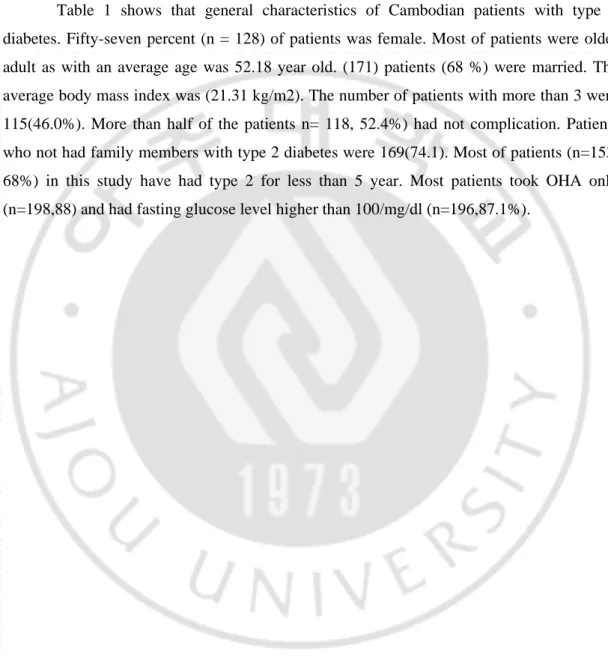
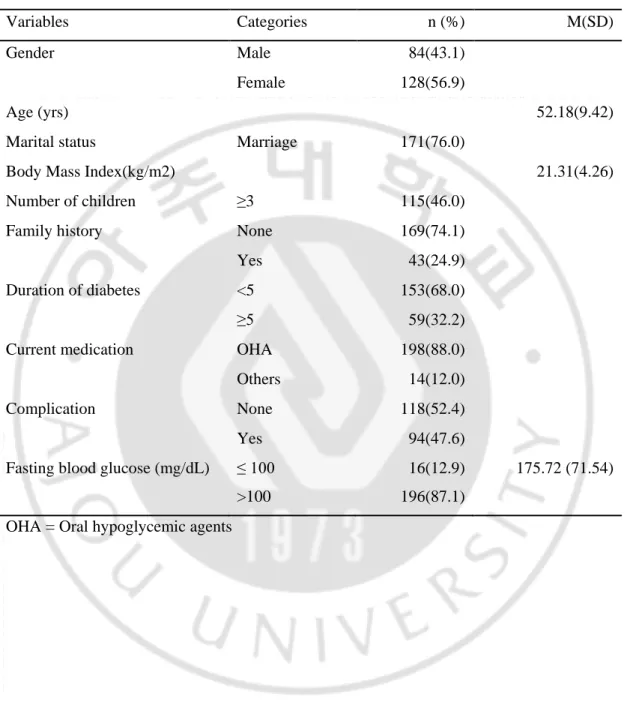
Table 1 shows that general characteristics of Cambodian patients with type 2 diabetes. Fifty-seven percent (n = 128) of patients was female. Most of patients were older adult as with an average age was 52.18 year old. (171) patients (68 %) were married. The average body mass index was (21.31 kg/m2). The number of patients with more than 3 were 115(46.0%). More than half of the patients n= 118, 52.4%) had not complication. Patients who not had family members with type 2 diabetes were 169(74.1). Most of patients (n=153, 68%) in this study have had type 2 for less than 5 year. Most patients took OHA only (n=198,88) and had fasting glucose level higher than 100/mg/dl (n=196,87.1%).
10
Table 1. General characteristic of Cambodian patients with type 2 diabetes
N =212
Variables Categories n (%) M(SD)
Gender Male 84(43.1)
Female 128(56.9)
Age (yrs) 52.18(9.42)
Marital status Marriage 171(76.0)
Body Mass Index(kg/m2) 21.31(4.26)
Number of children ≥3 115(46.0)
Family history None 169(74.1)
Yes 43(24.9)
Duration of diabetes <5 153(68.0)
≥5 59(32.2)
Current medication OHA 198(88.0) Others 14(12.0)
Complication None 118(52.4)
Yes 94(47.6)
Fasting blood glucose (mg/dL) ≤ 100 >100
16(12.9) 196(87.1)
175.72 (71.54)
11
B. Self-care activities and depression of Cambodian patients with type 2 diabetes
Table 2 shows self-care activities and depression of Cambodian patients with type 2 diabetes. The mean scores of the self-care activities and depression were 4.17 days a week and 1.87 out of 3, respectively. The self-care activities for healthy diet, exercise, and foot care were 4.83 days, 4.86 days, and 2.80 days a week. Only 12% (n = 12) of patients were reported that they were smokers.
Table 2. Self care activities and depression of Cambodians patients with type 2 diabetes N =212 Variable Categories M (SD) n (%) Range
Self care activities (days/week)
Total 4.17( 0.97) 1.3-6.7 Diet 4.83 (4.53) 1-7 Exercise 4.86 (2.48) 1-7 Foot care 2.75 (1.03) 0-7 Smoking None Yes 198(88.0) 14(12.0) Depression (score) 1.87 (0.80) 1-3
12
C. Relationship between self-care activities and depression of Cambodian patients with type 2 diabetes.Table 3 shows that relationship between self-care activities and depression. The self-care activities such as diet, exercise and foot care in Cambodian patients with type 2 diabetes indicated a significantly negative correlation to depression (r = -.667, p < .001). Table 3. The relationship between self-care activities and depression
N =212 Self-care activities, r (p)
Total score Diet Exercise Foot care
13
V. Discussion
A high percentage of Cambodian patients with type 2 diabetes reported that high incidence of self-care activities such as healthy diet, regular exercise, and foot care would produce a good glycemic control(CDA, 2012). And other research also showed that if the patients have diabetes, they have an increasing risk of developing depression (Anderson et al, 2011). A research on type 2 shown that 43.5 % of type 2 diabetes patients had depression, and those who had low self-care activities appeared to have more depression (WFMH,2011).
However, this study indicated all of the study participants who were lacking in self-care activities, know that the lacking of self-self-care activities would generate poorer glycemic control and increase the incidence of depression. Type 2 diabetes patients should maintain self-care activities on a regular basis and follow the depression releasing method. But it seems that nowadays Cambodian patients with type 2 diabetes are not much aware of or interested in depression releasing method yet. Thus type 2 diabetes educators in all health-care service sectors should be encouraged to put their effort particularly on educating diabetes patients about how to pursue self-care activities in a proper way and how to deal with depression. With regard to characteristics related to Cambodian patients with type 2 diabetes, the patients were engaged most with exercise, followed by diet and by foot care. And half of them had depression. In Cambodian were few clinical specially for type 2 diabetes. Cambodian are not only provide with insufficient patients’ education but also rural residents mostly illiterate with depression . The facts listed above can together act as a big disadvantage for Cambodian patient with type 2 diabetes in receiving health education, understanding self-care activities, and depression, and practicing recommended self-care activities, resulting in an undesirable healthcare outcome to solve these problems the educators in healthcare delivery systems should be aware of patients’ depression and how much patient can understand what the educators want them to know and to do.
The incidence of depression in Cambodian patients with type 2 diabetes in other study(WFMH, 2012). Was more related to diabetic complications such as renal, cerebrovascular, cardiac, and neuropathic disease. Such a result was also reported in Diabetes and Psycho Center, 2012. In the presents study patients were asked about depression using the CES-D scale with a tallied score of 1 to 3 in 20 question. Most of the
14
patients had around 1.87 score. Patients with good self-care activities appeared to have a lower score in depression, which was similar to the results of other studies.
This study indicated that the significance of depression was very closely related to type 2 diabetes. Patients with low in self-care activities do not keep healthy diet, regular exercise, proper foot care, or blood glucose test. They were lack of knowledge on self-care activities and type 2 diabetes. in addition, the patients only counted on the healthcare providers working in hospital settings. When patients came back home they did not know how to do self-care. Overall depression was much higher in patients with a lower level of self-care activities, which is the same as seen in other study (WFMH, 2012).
This study display that self-care activities were correlated with depression among Cambodian patients with type 2 diabetes. These results did not coincide with result from other studies (CDA,2012) on Cambodian patients with type 2 diabetes. The correlation between self-care activities and depression among Cambodians patients with type 2 diabetes was significantly higher in the patients with a lower level of self-care activities. Because of the existence of few studies on the similar subject conduct in Cambodian. It is hard to compare the study result, but there are some studies in other country such Pakistan, USA, UK showing that self-care activities are correlated with depression patients with type 2 diabetes (WFMH, 2012). Even though these correlations were found in studied from other countries, there are still limited number of articles to conducted. The result from the present study gave more evidence for the correlation of the problem. The results increase the value and the right of these finding.
15
VI. Conclusion and Suggestions
A. ConclusionThis study examined self-care activities and depression among Cambodian patients with type 2 diabetes. A cross-sectional design was conducted using a convenient sample. Two hundred and twelve Cambodian patients with type 2 diabetes were recruited in 3 hospitals. Self-care activities and depression were measured by self-reported questionnaires. Descriptive statistics were used to analyze demographic and diabetes-related characteristics, while Pearson correlation coefficient was used to examine the relationship between self-care activities and depression. The mean scores of the self-care activities and depression were 4.17 days a week and 1.87 out of 3, respectively. The self-care activities such as diet, exercise and foot care in Cambodian patients with type 2 diabetes indicated a significantly negative correlation to depression (r = -.667, p < .001). These results indicate that depression among patients with type 2 diabetes was a moderate level and negative correlated self-care activities. Identifying and managing depression among diabetic patients may help improve their self-care activities.
These results could provide more information on the self-care and depression among type 2 diabetes, thus helping health care providers to educate and provide care to the Cambodian patient with type 2 diabetes more effectively. However, convenience sampling at two hospitals and one clinic has limited the generalize ability of this study.
B. Suggestions
According to the results, the following suggestions are made for healthcare providers to educate their patients with type 2 diabetes on adherence to regular self-care activities and depression management:
1. Healthy diet, regular exercise, foot care, and blood test were the four major self-care activities effective on Cambodians type 2 diabetes. Therefore, health care providers should focus on and provide effective education for their type 2 diabetes patient to maintain proper self-care activities. Self care activities are essential to care of type 2 diabetes patients and healthcare provide patients the education in a simple and effectively manner to promote desirable self-care activities and to achieve the target blood glucose level.
16
2. Healthcare providers should be more closely monitor their patients with self-care activities. Nurses or doctors tending patients with type 2 diabetes should support patients to be more engaged with self-care. Moreover patients should be taught the negative correlation between self-care activities and depression.
The sample size of this study was small compared with that of the whole population. It strongly suggests that the future studies should be conducted in wider areas, with bigger sample sizes, and with the wide range of education level and economic status to generalize the result to Cambodian patients with type 2 diabetes. Longitudinal studies should be conducted to monitor the type 2 diabetes patients with self-care activities over the years. The qualitative research on self-care activities in Cambodian patients with type 2 diabetes is also suggested to clearly understand how to practice proper self-care activities.
1. Self-care activities and depression of type 2 diabetes all together play a very important role in patients’ daily lives; it is also necessary to understand the effect of self-care activities and depression on patients and the course of their illness. Moderate self-care activities and less depression allow patients to remain focused on maintain their health and blood glucose level instead of counting on medication only. it is helpful to understand factors which enable patients to successfully control their blood glucose level and develop methods which patients can translate knowledge on self-care activities into everyday life.
17
References
Ajilore O, Haroon E, Kumaran S, Darwin C, Binesh N, Mintz J, Miller J, Thomas MA, Kumar A. (2007) Measurement of brain metabolites in patients with Type 2 diabetes and major depression using proton magnetic resonance spectroscopy.
Neuropsychopharmacology, 32(6):1224-31. Epub 2006 Dec 20.
Anderson et al : Private complementary medicine and older people: service use and user empowerment, Ageing and society 2011.
American Diabetes Association . Standards of Medical Care in Diabetes-2012. Diabetes Care.2012.
American Psychiatric Association. Practice guideline for the treatment of patient with major depression disorder 2nd ed. September 2007, Accessed January 22, 2010
Black SA, Markkides KS, Ray LA: Depression predicts increase incident of adverse health outcomes in older person with type 2 diabetes. Diabetes Care 2003.
Cambodia Diabetes Association 2012. Retrieed from http://www.idf.org/cambodian-diabetes-association.
Carnethon MR, Kinder LS, Fair JM, Stafford RS, Fortmann SP (2003). Symptoms of depression as a risk factor for incident type 2 diabetes: findings from the National Health and Nutrition Examination Epidemiological Follow up Study, 1971 –1991. American Journal of Epidemiology, 158:416–423.
Chou Kee-Lee, Chi Iris (2005). Prevalence of depression among elderly Chinese with diabetes. International Journal of Geriatric Psychiatry, 20 (6), pp. 570-575. Center for Epidemiologic studied Depression scale (CES-D) by Radloff 1977.
Diabetes Atlas (2009). Retrieved Feburary 2 2010 from diabetesatlas.org/content/some-millions-people-worldwidewill-live-diabetes-2010).
de Jonge, P., Roy, J., Saz, P., Marcos, G., Lobo, A. & ZARADEMP Investigators (2006). Prevalent and incident depression in community-dwelling elderly persons with
diabetes mellitus: results from the ZARADEMP project. Diabetologia, 49, 2627-2633. Gross R, Olfson M, Gameroff MJ, Carasquillo O, Shea S, Feder A, Lantigua R, Fuentes M,
Weissman MM. Depression and Glycemic Control in Hispanic Primary Care Patients with Diabetes. J Gen Intern Med. 2005.
18
Larijani B, Khoram-Shahi Bayan M, Khalili Gorgani M, Bandarian F, Akhondzadeh S (2004). Association Of Depression And Diabetes In The Doctor Shariati Diabetes Clinic And Iranian Diabetes Association. Iranian Journal of Diabetes And Lipid Disorders, 3:62.
Men, C. 2011. The Peer Educator Network: An Intervention to Reduce Health Care Costs
and Improve Health Outcomes of Patients with Diabetes . A Baseline Study of the
Thmar Pouk Partnership Project. ICCO and KiA.
Merriam-webster.com/dictionary/consent, Definition of consent from the Merriam-Webster Online Dictionary with audio pronunciations, thesaurus, Word of the Day, and word games.2012.
Pouwer, F., Skinner, T., Pibernik-Okanovic, M., Beekman, A., Cradock, S., Szabo, S., Metelko, Z. & Snoek, F. (2005). Serious diabetes-specific emotional problems and depression in a Croatian-Dutch-English survey from the European Depression in Diabetes (EDID) Research Consortium. Diabetes Research & Clinical Practice, 70, 166-173.
Saman, BMC psychiatry, Aga Kan University Hospital Karachi, Pakistan 2011. Singh PK, Looker HC, Hanson RL, Krakoff J, Bennett PH & Knowler WC. (2004).
Depression, Diabetes, and Glycemic Control in Pima Indians. Diabetes Care, 27(2), 618-619.
Toobert D, Glasgow Assessing Diabetes self-management: the summary of diabetes self-care activities questionnaire. In Handbook of psychology and Diabetes. Bradly C Ed. Chur, Switzerland, Harwood Academic, 2000.
World health organization 2012. Retrieved from www.who.int/mediacentre/ factsheets/fs312/en/index.html
World Federation for mental Health (2012) mental health: depression . retrieved from www.wfmh.org/2010docs/deprssion_and-awareness_packet_final_2_22_10.psf Zahid N, Asghar S, Claussen B, Hussain A (2008). Depression and diabetes in a rural
19
Appendix A
- Inform consent form - Hello
I am Lov Sothon , I am doing my master of Adult health science at college of nursing in Ajou University. I encourage you to participate my study because all of you are Cambodian type 2 diabetes who live in Cambodia. Your participated in my study in a kind of willing activities.
The purpose of this study is to describe the self care activities and depressing of type 2 diabetes patients. All the information you give will be kept as privacy for you. And used only for the purpose of the study only. All your privacy information will close to public. You can even joint or reject in any time you feel discomfort. We will cancel your information. If you have any miss understand or not sure about this study you can ask me or send me sms by my email: [email protected].
I really thank to you for participate my study please sign here --- (or click it) Yes ……….No……….
2012.6. 25 Sincerely, Lov Sothon Graduate student
Ajou University College of nursing
Appendix B
(part 1) General characteristic 1: sex 0.(m) 1(f).
2: age ( ) 3: marital status,
0. 1 married, 1. Others
20 4: number of children
0. not have 1. 1-3 2. >3
5: Body mass index
6: duration of diabetes (years) (……..) 7: current medication
1. One OHA(oral hypoglycemic agent) 2. others
8: complications 1. None 2. Yes
9: family history of diabetes 1. None
2. Yes
(part 2) Diet
1. how many of your last sent days have you follow a healthy eating plan? 0 1 2 3 4 5 6 7
2. on average, over the past month, how many days per week have you followed your eating plan?
0 1 2 3 4 5 6 7
3. on how many of last seven days did you eat five or more serving of fruit and vegetables? 0 1 2 3 4 5 6 7
4. on how many of your last seven days did you eat high fat foods such as red meat of full-fate dirty products?
0 1 2 3 4 5 6 7
0 1 2 3 4 5 6 7 Exercise
5. on how many of your last seven days did you participate in at least 30 minutes of physical activity?( Total minutes of continues activity, including walking)?
21
6. on how many of your last seven days did you participate in a specific exercise session (such as swimming. Walking, biking ) other than what you do around the house or as part of your work?
0 1 2 3 4 5 6 7 Blood sugar testing
7. on how many of the last seven days did you test your blood sugar? 0 1 2 3 4 5 6 7
Foot care
8. On how nay of the last seven day did you check your feet? 0 1 2 3 4 5 6 7
9. On how many of the last seven days did you inspect the inside of your shoes? 0 1 2 3 4 5 6 7
Smoking
10 Have you smoked a cigarette even one puff during the past seven days ? 0, no 1, yes. If yes how many cigarette did you smoke on an average day? Number of cigarette.
o 0 points Rarely or none of the time (< 1 day)
Medication
11. on last seven days how many day did you take medication 1 2 3 4 5 6 7 12.a.How much your last test of : according you medical record
Center for Epidemiologic studies Depression Scale (CES-D), NIMH
Below is a list of the ways you might have left or behaved . please tell me how often you have felt this way during the past week
o 1 point Some or a little of the time (1-2 days)
o 2 points Occasionally or a moderate amount of the time (3-4 days) o 3 points Most or all of the time (5-7 days)
1. I was bothered by things that don’t usually bother me.
o Rarely or none of the time (<1 day) o Some or a little of the time (1-2 days)
22
o Occasionally or a moderate amount of the time (3-4 days) o Most or all of the time (5-7 days)
2. I did not feel like eating; my appetite was poor.
o Rarely or none of the time (<1 day) o Some or a little of the time (1-2 days)
o Occasionally or a moderate amount of the time (3-4 days) o Most or all of the time (5-7 days)
3. I felt that I could not shake off the blues even with the help of my family or friends.
o Rarely or none of the time (<1 day) o Some or a little of the time (1-2 days)
o Occasionally or a moderate amount of the time (3-4 days) o Most or all of the time (5-7 days)
4. I felt that I was just as good as other people.
o Rarely or none of the time (<1 day) o Some or a little of the time (1-2 days)
o Occasionally or a moderate amount of the time (3-4 days) o Most or all of the time (5-7 days)
5. I had trouble keeping my mind on what I was doing.
o Rarely or none of the time (<1 day) o Some or a little of the time (1-2 days)
23
o Most or all of the time (5-7 days)
6. I felt depressed.
o Rarely or none of the time (<1 day) o Some or a little of the time (1-2 days)
o Occasionally or a moderate amount of the time (3-4 days) o Most or all of the time (5-7 days)
7. I felt everything I did was an effort.
o Rarely or none of the time (<1 day) o Some or a little of the time (1-2 days)
o Occasionally or a moderate amount of the time (3-4 days) o Most or all of the time (5-7 days)
8. I felt hopeful about the future.
o Rarely or none of the time (<1 day) o Some or a little of the time (1-2 days)
o Occasionally or a moderate amount of the time (3-4 days) o Most or all of the time (5-7 days)
9. I thought my life had been a failure.
o Rarely or none of the time (<1 day) o Some or a little of the time (1-2 days)
o Occasionally or a moderate amount of the time (3-4 days) o Most or all of the time (5-7 days)
24
o Rarely or none of the time (<1 day) o Some or a little of the time (1-2 days)
o Occasionally or a moderate amount of the time (3-4 days) o Most or all of the time (5-7 days)
11. My sleep was restless.
o Rarely or none of the time (<1 day) o Some or a little of the time (1-2 days)
o Occasionally or a moderate amount of the time (3-4 days) o Most or all of the time (5-7 days)
12. I was happy.
o Rarely or none of the time (<1 day) o Some or a little of the time (1-2 days)
o Occasionally or a moderate amount of the time (3-4 days) o Most or all of the time (5-7 days)
13. I talked less than usual.
o Rarely or none of the time (<1 day) o Some or a little of the time (1-2 days)
o Occasionally or a moderate amount of the time (3-4 days) o Most or all of the time (5-7 days)
14. I felt lonely.
25
o Some or a little of the time (1-2 days)
o Occasionally or a moderate amount of the time (3-4 days) o Most or all of the time (5-7 days)
15. People were unfriendly.
o Rarely or none of the time (<1 day) o Some or a little of the time (1-2 days)
o Occasionally or a moderate amount of the time (3-4 days) o Most or all of the time (5-7 days)
16. I enjoyed life.
o Rarely or none of the time (<1 day) o Some or a little of the time (1-2 days)
o Occasionally or a moderate amount of the time (3-4 days) o Most or all of the time (5-7 days)
17. I had crying spells.
o Rarely or none of the time (<1 day) o Some or a little of the time (1-2 days)
o Occasionally or a moderate amount of the time (3-4 days) o Most or all of the time (5-7 days)
18. I felt sad.
o Rarely or none of the time (<1 day) o Some or a little of the time (1-2 days)
26
o Occasionally or a moderate amount of the time (3-4 days) o Most or all of the time (5-7 days)
19. I felt that people disliked me.
o Rarely or none of the time (<1 day) o Some or a little of the time (1-2 days)
o Occasionally or a moderate amount of the time (3-4 days) o Most or all of the time (5-7 days)
20. I could not get “going”.
o Rarely or none of the time (<1 day) o Some or a little of the time (1-2 days)
o Occasionally or a moderate amount of the time (3-4 days) o Most or all of the time (5-7 days)
Scoring: zero for answer in the first circle, 1 for answer in the second circle, 2 for answer in the third circle, 3 for answer in the fourth circle. The scoring of positive items is reversed . possible range of score in 1 to 3 , with the higher score indicating the presence of more symptomatology.
27 សកលវិទកយោល័យ ♦ខ�ុំបិទេឈទះ សុធន់ជនវសសវសទតសកលវិទកយោល័យលនសអូៃនយទូ ែៃកំពុងនឹងសវ្សោ់�នុអុវស�ទិសែទោទល័េសជសសសុខ�ព មនុសសលយោកស ក�ទ។េោខ�ុំបនទធនេធូសវ្ែទោ័ំងផិឹទងមែទកម� ♦ទដោទេងទងទងមទអទិសមបយជទោេងជទអទិសមជោែៃកំពុែសនឹង័ជអទអិ ធូទេនទេេងលន័ំងផិឹទងមែទកមៃយដជទអទិសមជោដំនជនទតទកេពវេពទពែៃូ� ♦ធូសវ្ូអស់ខ�ុំមជោទននឹងទសងលបនទបពុមបជទពយលធូ �ំពីធូែែថំខពជន�ងទៃេមីធស់អនសោជសវសជូទតោុងេម� ♦ទ។េោវកជមាជុទិសសំសអ់ៃក់�ោទេស័ំងផិឹទងមែទកមថំង�ស់ទៃេមីូស់ទតទអអ ទដោសុខ�ពកក ♦សយម�ុំពយមីង័ជោទឆពេោទតសំនជូរងទទធមទនទដោ�ស់ពីដវសសទៃេមីទលោពសកេន ូផកទសៀលទភមជោទនបនកកលសទរេទ។េោវកជទអទេ័កសំសអ់ទអជ័នែខឈូនឹង�ោទេស ័ំងផិឹទងមែទកមថំង�ស់ទតទកេសកទពបនិិយកទតទកទអទេ័កពីទសៀលទភមជ ោទនថំង�ស់ ុំូងសុំនយេនៃយដជ ១.លោុ: ២.ទេិ: 1 - អុូស 2 - ជសសី 3.សន�ពលពពវព។ក 1.ទតកីល, 2.ទូៀអធូទ។េោ, 3.ែកងកគោ, 4.ូស់ទតែអគោ, 5.ទពេោ ូផកទមេោ 4.ដំនយនយនូស់ទត
28 1.េន០ង់, 2.១ទង៣ង់, 3.ទទដេនជងអីង់ 5.ិំងន់នឹងំពស់ 1.ាីេយទធម( ), ំពស់ ( ) 6. ូោទពកែនធូេន័ំងផិឹទងមែទកម 1.១ឆោំ, 2.2ទង4 ឆោំ, 3.5ទង10 ឆោំ 7.សោំំពុងទទអេទបស់ទអទេិសោំទអឆំងនឹង័ំងផិឹទងមែទកម. 1.ទទអេែសទអទេិសោំទកអទអឆំង័ំងផិឹទងមែទកមែសមជោមុខាស. 2.ទទអេទអទេិសោំទកអទអឆំងនឹង័ំងផិឹទងមែទកមទទដេនជងមជោមុខ. 3.ទទអេទអទេិសោំទកអទអឆំងនឹង័ំងផិឹទងមែទកមអយជមជោធូជ់�ីនសយកី. 8.ទកលវបែនធូេន័ំងផិឹទងមែទកម. ០.គឈនទកលវប. 1.េនលធូសបឹលៃូផសបឹទ័េង. 2.េនលូរសវំងែេឈ 3.េនអប�័ំងផសូលសូំទអៃយង. 4.េនៃំទេទ័េង. 5.័ំងផទខ្ោសំូង់ទងម. 6.េនធូអងបទសា(ទកេែសនឹងទពយលៃទ។�េម). 7.័ំងផសូលសខជូ្ក 9.ទអលសសទាងសូ 0= គឈន�ោទេស័ំងផិឹទងមែទកម. 1 = ឪពុូផេសោេនទេស័ំងផិឹទងមែទកម 2= អងអកយនេនទេស័ំងផិឹទងមែទកម. 3 = ័ីៃយន័ីេនទេសិឹទងមែទកម 4 = េសោមីងូផពយេនទេស័ំងផិឹទងមែទកម សទង�អនយលសមឈ�ពមជោដំនជនលនធូែែថំ័ំងផិឹទងមែទកមទដោខពជន�ង
29 សំនជូមជោដំនជនទតរងទទធមទននឹងសជូ�ោ�ំពីសមឈ�ពមជោដំនជនូអស់�ោថ់ិងោុ ងធូែែថំ័ំងផិឹទងមែទកមទដោខពជន�ងោុងូោុទពក៧លែ�នពងទង�ទអសវនទអេ�ោេន លធូមវនរស�កខពជនោុងូោុទពក៧លែ�ទន, U ដំីលូ 1.ោុង៧លែ�មុន ទសេេនអបុងឈនលែ�ែៃកិិជកកថនមូអអលូ? ០ ១ ២ ៣ ៤ ៥ ៦ ៧. 2.ជមធធម,១ែខនពងទង,ទសេេនអបុងឈនលែ�ោុងមជោសបស។ាែៃក�ោបន�នុលសសនាមូអអ លូ ? ០ ១ ២ ៣ ៤ ៥ ៦ ៧ 3.ោុង៧លែ�មុន ទសេេនអបុងឈនលែ�ែៃក�ោបនិិជកថនែទពទែេ នវងអែនព? ០ ១ ២ ៣ ៤ ៥ ៦ ៧ 4.ោុង៧លែ�មុនទសេេនអបុងឈនលែ�ែៃក�ោបនិិជកថនលូែៃកេនជសវរពា់ទទដេន ៃយដជុ សដ់ទ។ម ,សដ់អីជន់ ឫក ទកវសទកែៃកេនជសវរពា់? ០ ១ ២ ៣ ៤ ៥ ៦ ៧ U កំស់ទប 5.៧លែ�មុនទសេេនអបុងឈនលែ�ែៃ�ោបនដយកូជមោុងធូទធនេកំស់ទបូោុទពក៣០ងិី ?ូជមេនៃយដជ ធូទៃេូ... ០ ១ ២ ៣ ៤ ៥ ៦ ៧ 6.៧លែ�មុនទសេេនអបុងឈនលែ�ែៃ�ោបនដយកូជមសមឈ�ពកំស់ទបពវទសស)ៃយដជ
30 ែ។កិឹ,ទៃេូ,័វង់(ឫកសមឈ�ពទកេសពីធូូទត័ុំលវាទវនវងធូូល័ីពូអស់�ោ ? ០ ១ ២ ៣ ៤ ៥ ៦ ៧ U ធូទធនេទសសសជសវសបូោុងេម 7.៧លែ�មុនទសេេនអបុងឈនលែ�ែៃក�ោបនទធនេទសសសជសវសបូទតោុងេមូអស់�ោ? ០ ១ ២ ៣ ៤ ៥ ៦ ៧ U ធូែែថំទ័េង 8.៧លែ�មុនទសេេនអបុងឈនលែ�ែៃក�ោបនពវនវសធទ័េងូអស់�ោ? ០ ១ ២ ៣ ៤ ៥ ៦ ៧ 9.៧លែ�មុនទសេេនអបុងឈនលែ�ែៃក�ោបនពវនវសធទមេកទងរងោុងែសទ័េងអយកូអស់�ោ ? ០ ១ ២ ៣ ៤ ៥ ៦ ៧ U ធូពវសូបូី 10.៧លែ�មុន ទសេ�ោអពអ់ពវសូបូីែៃកូផទិ សយមីែសមជោ។ផសកទដោ ? ០.ទិ ១.បិ,ជសស ទអេសវនជពវសូ,ទសេជមធធមពវសូអបុងឈនៃ់មោុងមជោលែ� សយម័ជោអំទពាដំនជនទៃេមោុង(... ..) 11.កិនទកដុងទទធោលនធូពវនវសធេមូអស់�ោទសេ(ជសវសបូូោទពក២ទេបង)អបុងោន %? (ទដោទេងទងមកិនទកពវនវសធេមទតមនវីពវទសធក( (………)
31 -국문요약-