저작자표시-비영리-변경금지 2.0 대한민국 이용자는 아래의 조건을 따르는 경우에 한하여 자유롭게 l 이 저작물을 복제, 배포, 전송, 전시, 공연 및 방송할 수 있습니다. 다음과 같은 조건을 따라야 합니다: l 귀하는, 이 저작물의 재이용이나 배포의 경우, 이 저작물에 적용된 이용허락조건 을 명확하게 나타내어야 합니다. l 저작권자로부터 별도의 허가를 받으면 이러한 조건들은 적용되지 않습니다. 저작권법에 따른 이용자의 권리는 위의 내용에 의하여 영향을 받지 않습니다. 이것은 이용허락규약(Legal Code)을 이해하기 쉽게 요약한 것입니다. Disclaimer 저작자표시. 귀하는 원저작자를 표시하여야 합니다. 비영리. 귀하는 이 저작물을 영리 목적으로 이용할 수 없습니다. 변경금지. 귀하는 이 저작물을 개작, 변형 또는 가공할 수 없습니다.
경제학 석사 학위논문
The Effect of Electronic Word of Mouth
Information on Consumer Attitudes
toward Nutricosmetics and Health
Functional Food
- Focus on the Role of Consumer’s Self-Regulatory Focus -
2017년 2월
서울대학교 대학원
농경제사회학부 지역정보전공
The Effect of Electronic Word of Mouth
Information on Consumer Attitudes toward
Nutricosmetics and Health Functional Food
- Focus on the Role of Consumer
’
s SelfRegulatory Focus
-지도교수문정 훈
이 논문올 경제학 석사학위논문으로 제출함
2017년 2월
서울대학교 대학원
농경제사회학부 지역정보전콩
황서영
황서영의 석사학위논문올 인준함
Chair
Vic
e
Chair
Examiner
2017년 2월
i
Abstract
The Effect of Electronic Word of Mouth Information
on Consumer Attitudes toward Nutricosmetics
and Health Functional Food
- Focus on the Role of Consumer’s Self-Regulatory Focus -
Seoyoung Hwang
Program in Regional Information
Department of Agricultural Economics and Rural Development Seoul National University
This thesis seeks to classify the lifestyle of consumers preferring nutricosmetics or health functional food and to understand the factors of marketing communication affecting consumer attitudes toward nutricosmetics or health functional foods under Higgins's regulatory focus theory. Study 1 examines the effects of the lifestyle characteristics of female consumers affecting the purchase intention toward each of nutricosmetics and health functional foods. According to the results of multiple regression model with lifestyle and regulatory focus variables on purchase intentions, the consumers who pursue a good appearance have higher purchase intentions toward both products. Unlike health functional foods, nutricosmetic products are preferred by the consumers who actively participate in leisure and pursue wealth. Also, the higher their promotion focus, the higher their purchase intention toward nutricosmetics. Study 2 determines the most preferred platform type and description type of e-WoM according to a product’s perceived regulatory value. It was discovered that individuals who have high purchase intention toward health functional food prefer e-WoM messages to brand official
ii
webpage when seeking information about the products. Several implications and suggestions for future studies are also provided.
Keyword : Functional food, Nutricosmetic, Health functional food, regulatory focus theory, consumer lifestyle, e-WoM
iii
Table of Contents
Ⅰ. Introduction ... 1
1. Research Background... 1
2. Research Objectives ... 3
Ⅱ. S tud y 1 : Wha t the d i f fe rence s o f con sume r
characteristics buying nutricosmentics or health functional
foods? ... 6
1. Introduction ... 6
2. Theoretical Background & Hypotheses ... 8
2.1. Regulatory Focus Theory ... 8
2.2. Consumer’s Lifestyle on Purchase Behavior .. 14
2.3. Research Model & Hypotheses Development . 17
3. Methodology ... 19
3.1. Data Collection ... 19
3.2. Measurements Development ... 21
3.3. Method Description & Analysis Model ... 24
4. Results ... 27
4.1. Measurement Model Validation ... 27
4.2. Hypotheses Testing ... 31
5. Discussion ... 39
5.1. Summary of Findings ... 39
5.2. Contributions and Limitations ... 41
Ⅲ. Study 2 : How e-WOM of nutricosmetics and health
functional foods affect consumer’s purchase intention? ... 45
1. Introduction ... 45
2. Theoretical Background & Hypotheses ... 47
2.1. Attribution Theory and the Impacts of e-WoM
... 47
2.2. Effects of Regulatory Focus on Advertisement
... 53
2.3. Framing Effects on Product Attribute ... 54
2.4. Research Model & Hypotheses Development . 57
3. Methodology ... 60
3.1. Data Collection ... 60
3.2. Measurements & Stimuli Development ... 61
3.3. Method Description & Analysis Model ... 64
4. Results ... 66
iv
4.2. Hypotheses Testing ... 68
5. Discussion ... 75
5.1. Summary of Findings ... 75
5.2. Contributions and Limitations ... 77
Ⅳ. Conclusions ... 82
Reference ... 84
Appendix A: Survey Questionnaires of Study 1 ... 94
Appendix B: Survey Questionnaires of Study 2 ... 103
Appendix C: Stimulus Material of Study 2 ... 109
Abstract in Korean ... 118
List of Figures
Figure 1. Overview of states evoking regulatory fit and mismatch (Otto et al., 2010)... 11 Figure 2. Study 1: Research Model of Nutricosmetics ... 18 Figure 3. Study 1: Research Model of Health functional foods ... 18 Figure 4. Regression models of Female consumer’s lifestyle and regulatory focus ... 25 Figure 5. Mediating Model Using Multiple Regression ... 26 Figure 6. Study 2: Research Model ... 58 Figure 7. Interaction between platform and message type on Purchase Intention toward Nutricosmetics ... 70 Figure 8. Interaction between platform and message type on Purchase Intention toward Health functional foods ... 71
List of Tables
Table 1. Study 1: Hypotheses ... 18 Table 2. Study 1: Demographic Characteristics of Participants ... 20 Table 3. Study 1: Operationalization of Variables ... 21 Table 4. Study 1: Loadings of Survey Items ... 29 Table 5. Study 1: Correlation among Constructs ... 30 Table 6. Products' Regulatory values ... 31 Table 7. Participants' Regulatory Focus Orientations ... 32 Table 8. Multiple Regression of Indicators for Purchase Intentions of Two
v
Products ... 34 Table 9. Testing Mediator Effects for Purchase Intention toward (A) Nutricosmetics and (B) Health functional foods ... 37 Table 10. The results of hypothesis testing ... 38 Table 11. Hypotheses in Study 2 ... 58 Table 12. Study 2: Demographic Characteristics of Participants ... 60 Table 13. Study 2: Experimental design ... 61 Table 14. Study 2: Operationalization of Variables ... 62 Table 15. Study 2: Loadings of Survey Items ... 67 Table 16. Study 2: Correlation among Constructs ... 67 Table 17. Products' Perceived Regulatory values ... 68 Table 18. Standardized path coefficients, t value and coefficient of determination (R2) for product subgroups ... 74 Table 19. Results of Smith–Satterthwaite t-test for product subgroups74 Table 20. The results of hypothesis testing ... 75
1
Ⅰ. Introduction
1. Research Backgrounds
Today’s vast amount of available information allows consumers to explore and to learn as active shoppers. Consumers accept technology and innovation in the advent of advanced biologically active ingredients claimed by cosmetic brands (Meng and Pan, 2012). Unsurprisingly, the level of sophistication of today’s female individuals has increased: They are skilled and well-educated consumers (Meng and Pan, 2012; Penning, 2011).
As consumers continue to seek out the most effective beauty products, “nutricosmetics products (so-called ‘inner-beauty products’ in the Korean market)” are maintaining a strong, significant presence in the global beauty marketplace (Barel et al., 2014). Nutricosmetics is the portmanteau of “nutrition” and “cosmetics” can be defined as ingestible foods and dietary supplements (pills or capsules, tablets, liquids, granulates, or foods) that benefit the health and beauty of the skin by directly affecting bodily mechanisms and metabolism (Barel et al., 2014; Tabor and Blair, 2009).
Many female consumers pursue the most effective beauty products and skincare therapies. Nutricosmetics appeal to a wide range of female groups as a method to obtain and enhance young-looking skin because they are formulated and marketed specifically
2
for beauty purposes(Penning, 2011). The aging population especially spends billions of dollars annually on vitamins, minerals, botanical extracts, and antioxidants in an effort to maintain the youthful appearance of their skin and promote overall well-being(Patel et al., 2015).
Along with this trend, the nutricosmetics market was valued at $1.5 billion in 2007 but was projected to reach $4 billion by 2015, with Europe as the most important market followed by Japan and the United States. According to statistical data from the Korean Ministry of Food and Drug Safety, the Korean market for nutricosmetics has experienced significant annual growth, from 1.16 trillion won in 2009 to 1.79 trillion won in 2013 (Jin, 2015).
Likewise, the market for food supplements and nutricosmetics is characterized by substantial annual growth, and nutricosmetics can be described as a recent result of a global convergence phenomenon between the cosmetics and food industries (Barel et al., 2014; Mellage, 2008). Notwithstanding its development, only a few researchers have explored the nutricosmetics market and related consumer behaviors in the marketplace (Meng and Pan, 2012).
In Korea, nutricosmetics are regarded as health functional food by Korean food safety law, and both products share similar ingredients and personal care purposes(Barel et al., 2014). But the
3
relevant industries have promoted the nutricosmetics and health functional food differently in terms of marketing and mentions, and consumers recognize these differences: Nutricosmetics are specifically used for beauty purposes, while health functional foods contribute to disease prevention or general health care.
Therefore, this thesis seeks to classify the lifestyles of consumers who prefer nutricosmetics or health functional foods and to understand the marketing communication factors that affect consumer attitudes toward nutricosmetics and health functional foods.
2. Research Objectives and Questions
This paper attempts to investigate the consumer lifestyle characteristics and marketing communications that influence Korean female individuals’ attitudes and purchase intentions toward nutricosmetics and health functional foods, under Higgins’ regulatory focus theory, with two experiments.
The purpose of Study 1 was to determine the relationship between female consumer lifestyles and the evaluative criteria used in the purchase of nutricosmetics and health functional foods. Taking regulatory focus theory into account, Study 1 attempted to verify differences between the lifestyle characteristics of consumers buying either nutricosmetics or health functional foods. For this
4
purpose, the author manipulated regulatory motivation as either promotion- or prevention-focused. The research questions for Study 1 are as follows:
𝑅𝑅𝑅𝑅1−1: Which of the products, nutricosmetics or health functional foods, do consumers tend to purchase according to their regulatory focus?
𝑅𝑅𝑅𝑅1−2: What is the difference in lifestyle characteristics between consumers of nutricosmetics or health functional food products?
𝑅𝑅𝑅𝑅1−3: What is the effect of the regulatory motivation of nutricosmetics and health functional foods on consumers’
purchase intentions?
Secondly, Study 2 sought to determine the e-WoM communications factors that influence the purchase of nutricosmetics and functional food products. Under the mediating role of regulatory focus, the author investigated how e-WoM message factors affect consumers’ purchase intentions toward nutricosmetics and health functional foods. The second study’s research questions are as follows:
𝑅𝑅𝑅𝑅2−1: What the effect of the platform types of e-WOM on purchase intentions toward nutricosmetics and health functional foods?
5
𝑅𝑅𝑅𝑅2−2: What the effect of the message types of e-WOM on purchase intentions toward nutricosmetics and health functional foods?
𝑅𝑅𝑅𝑅2−3: Under the products’ regulatory motivations, what the difference in the effect of e-WoM on purchase intentions toward nutricosmetics and health functional foods?
To sum up, this study investigates the effect of positioning differences between nutricosmetic and health functional foods on consumers’ purchase intentions under the regulatory focus of individuals and the perceived regulatory value toward the products themselves. Using definitions of consumers’ regulatory focus and products’ regulatory motivation in the minds of consumers based on previous studies, two survey-based experiments ware designed to identify the effect of each product, nutricosmetics versus health functional foods, on consumer behavior.
6
Ⅱ. Study 1 : What the difference of consumer
characteristics buying nutricosmetics or health
functional food products?
1.
Introduction
The purpose of Study 1 was to determine the relationship between female consumer lifestyles and the evaluative criteria used in the purchase of nutricosmetics and health functional foods. Taking regulatory focus theory into account, Study 1 attempted to verify the differences between the lifestyle characteristics of consumers who buy nutricosmetics or health functional foods.
In Korea, nutricosmetics are included as health functional foods in light of Korean food safety law, and both products share similar ingredients and personal care purposes(Barel et al., 2014). But the functional food industries have promoted and advertised the two products differently, and consumers recognize these differences: Nutricosmetics are specifically used for beauty purposes, while health functional foods contribute to disease prevention or general health care.
Therefore, the author investigated the relationship between female consumer lifestyles and the evaluative criteria used in the purchase of nutricosmetics and health functional foods. Taking
7
regulatory focus theory into account, Study 1 attempted to verify the differences between the lifestyle characteristics of consumers who buy nutricosmetics or health functional foods.
For this purpose, the author manipulated regulatory motivation as either promotion- or prevention-focused. The author assumed that the regulatory value of nutricosmetics is associated with a promotion focus (goal), while the corresponding value of health functional foods is associated with a prevention focus, according to their applications and purchase situations. Taking regulatory focus theory into account, Study 1 thus attempted to verify the differences between the lifestyle characteristics of consumers who buy nutricosmetics or health functional foods using analytical methods, including a multiple regression model and mediator effect analysis.
Data from 403 female participants were collected through online surveys on consumers’ lifestyle attributes, regulatory focus, and purchase intentions toward nutricosmetics versus health functional foods. This study therefore tried to reveal the differences between the two products, nutricosmetics versus health functional foods, as presented by the product preferences and purchase intentions of their consumer segments.
8
2.
Theroretical Background & Hypotheses
2.1. Regulatory Focus Theory
2.1.1. Higgins’s Regulatory Focus theory & Regulatory fit
The basic concept of the regulatory orientation is based on the general notion that people are motivated to approach pleasure and avoid pain (Higgins, 1997; Higgins, 1998). Based on the nature of the approach–avoidance motivation, consumer goals are theorized in terms of Higgins (1997)’s regulatory focus theory, which classifies them into two broad categories: ideals and oughts (Higgins, 1997; Mourali et al., 2007). Ideals indicate people’s desires, hopes, and wishes, whereas oughts represent people’s responsibilities, obligations, and duties (Higgins, 1997; Higgins, 1998). Higgins (1998)’s regulatory focus theory postulates that ideals and oughts involve two different regulatory orientations: a promotion focus versus a prevention focus.
In particular, the regulation of behavior in relation to ideals involves a promotion focus, which is a regulatory state concerned with advancement and accomplishment. In contrast, the regulation of behavior in relation to oughts involves a prevention focus, which is a regulatory state concerned with protection and safety.
9
outcomes by maximizing their likelihood and minimizing their absence (Higgins, 1997; Higgins, 1998; Zhang et al., 2010). On the other hand, a prevention focus stresses the avoidance of negative outcomes by minimizing their likelihood and maximizing their absence (Brockner et al., 2002; Higgins, 1997; Higgins, 1998; Zhang et al., 2010).
Regulatory focus theory (Higgins, 1997; Higgins, 1998) assumes that self-regulation operates differently when serving these two different orientations fundamentally. Two self-regulatory strategies are associated with distinct strategic predispositions, whereby the promotion focus is concerned with strategic eagerness, while the prevention focus is concerned with strategic vigilance (Higgins, 2000; Lee and Aaker, 2004). Namely, individuals with a promotion orientation are more inclined toward eagerness (approach) means than vigilance (avoidance) means, whereas individuals with a prevention orientation are more inclined toward vigilance means than eagerness means (Crowe and Higgins, 1997; Higgins, 2000).
The outcome of a goal pursuit diverges in value depending on the relevance of the goal to an individual’s general orientation (Higgins et al., 2003). The value of an activity to people increases (and they feel better) when they pursue specific target goals relevant to their motivational orientations (Brunstein et al., 1998; Clary et al., 1994; Higgins et al., 2003; Isaac et al., 1999).
10
Higgins (2000) and Higgins (2002) proposed that people experience a “regulatory fit” when they pursue a goal that sustains their regulatory orientation. When this regulatory fit occurs or its degree is higher, individuals will feel right about what they are doing, and this value experience can translate to a successive evaluation of an activity or object (Cesario et al., 2004; Higgins, 2000, 2002; Higgins et al., 2003). Shah et al. (1998).
A recent study by Maddox et al. (2006) suggested that the influence of regulatory focus on cognition depends on its interaction with the reward structure of the environment (gains or losses caused by an individual’s actions)(Higgins, 2000; Maddox et al., 2006; Otto et al., 2010). Figure 1 presents an overview of states evoking regulatory fit and mismatch in Otto et al. (2010). As Figure 1 shows, when one’s situational regulatory focus matches the reward structure of the environment, a regulatory fit results. In contrast, when one’s situational regulatory focus does not match the reward structure of the environment, a regulatory mismatch results (Otto et al., 2010).
11
Figure 1. Overview of states evoking regulatory fit and mismatch (Otto et al., 2010)
2.1.2. Regulatory Focus in Consumers’ choice
In the process of making purchase decisions, consumers evaluate product information and pursue the consumption of certain products in order to fulfill their consumption goals (Zhang et al., 2010). Individuals are more concerned with information that is related to their activated regulatory focus and thus consider attributes compatible with this focus (Chernev, 2004; Florack and Scarabis, 2006; Higgins, 1998; Higgins, 2002). Also, earlier studies had revealed the implication of regulatory focus theory on consumer choice. Such studies have suggested that an association exists between regulatory orientations and attribute evaluations: People prefer and choose products when their attributes are superior along the dimensions of higher relevance toward their regulatory focus
12
(Chernev, 2004; Higgins, 2002).
Higgins (2002) proposed examples of valued dimensions relevant to promotion and prevention orientations: Valued dimensions for individuals with a promotion orientation would include luxury, reflecting accomplishment; and technical innovation, reflecting advancement. However, valued dimensions for individuals with a prevention orientation would include protection/warning, reflecting safety; and reliability/service, reflecting security. Chernev (2004) and Chernev (2014) conducted the consumer behavior experiment and found that promotion-focused participants were more likely to consider hedonic, performance-related, and attractive attributes, whereas prevention-focused participants gave more weight to utilitarian and reliability-related attributes (Chernev, 2004, 2014; Florack and Scarabis, 2006).
It has been considered that regulatory focus is not fixed and that individuals’ regulatory focus can vary according to different situations (Wang, 2016). A regulatory focus can be either chronically accessible or temporarily primed by situations. According to Shah and Higgins (2001), the difference between a promotion focus and a prevention focus can be observed both as a chronic individual difference and as a situational difference encouraged by experimental manipulations and situational cues. Specifically, a chronical
13
regulatory focus is shaped by the persistent influence from early childhood (Higgins, 1997) and cultural environments (Lee et al., 2000). A regulatory focus can also be generated temporarily by situational cues—in other words, “regulatory motivations” (Himanshu Mishra et al., 2010). In this vein, the products or brands that frame target goals (Freitas et al., 2002) or situational forces (Gino and Margolis, 2011) in terms of prevention or promotion can induce a promotion or prevention focus in individuals. Along with dispositional and situational sources, Adilson Borges and Gomez (2015) suggested that exposure to the product type itself can trigger consumers’ different regulatory orientations; this is because products are always associated with consumers’ goals (Fishbach and Ferguson, 2007; Wang, 2016). The concept of a goal contains both end states and the means by which desired end states can be achieved, such as via objects and behaviors (Fishbach and Ferguson, 2007; Wang, 2016). Products, behaviors, and brands are used by consumers to achieve their goals, and consumers’ choice is determined by a collection of one or more means from a larger series of obtainable means, in accordance with the associated purpose of a behavior, product, or brand (van Osselaer and Janiszewski, 2012). For example, when an individual purchases a product, doing so is associated with his or her goals. Since the product and the goals are associated, simple
14
exposure to such consumption objects (e.g., products or brands) can prompt consumers toward these goals (Bargh, 1990; Wang, 2016).
In the context of earlier studies relating to regulatory focus on consumer choice, the author focused specifically on product means and their manipulated regulatory orientations.
Accordingly, the author hypothesized that a product having a specific regulatory value (promotion- or prevention-focused) associated with an individual consumer’s goals can cause the self-regulatory focus situation, and that the individual would achieve the desired regulatory value by choosing that product.
2.2. Consumer Lifestyle on Purchase Behavior
The dictionary definition of “lifestyle” refers to the living conditions, behaviors, and habits that are typical of and chosen by a particular person or group of people (Cobuild, 2009). Lifestyle is a field of interest in different areas of science, such as sociology, psychology, geography, economics, and marketing, with various definitions. The sociologist Georg Simmel first used the term in 1900 to discuss social differentiation (Simmel, 1900). Another important aspect of lifestyle was introduced by Max Weber in 1922 for distinguishing between classes and status groups in societies. Classes are defined by economic factors, while status groups are
15
defined by the conduct of life (Weber, 1922).
In marketing, the lifestyle concept was introduced by William Lazer in 1963. Lazer (1963) considered lifestyle to be the result of cultures, values, assets, and restrictions. He also insisted that studying consumer lifestyles was important for understanding and predicting the consumer behavior of specific groups because this type of behavior reflects their lifestyle. Lifestyle also refers to life patterns built from environmental variables, such as social status, culture, reference group, family, etc., and psychological variables like value, personality, and self-concept (Engel et al., 1978; Levy, 1963). Likewise, lifestyle relates to how people live, how they spend their money, and how they allocate their time among different types of activities (Kaynak and Kara, 2001). One can propose that there will be differences as well as similarities among nations/cultures since, this time, many methods for measuring lifestyle were developed.
Lifestyle is an important determinant of evaluative criteria—the attributes of specifications used in the selection of a product—and is a predictor of consumer behavior (Bartos, 1982; Engel and Blackwell, 1982; Sproles, 1979; Stemm, 1980). If we are able to identify consumer lifestyle groups with common attitudinal and behavioral characteristics and tendencies in an unfamiliar environment, we may also be able to develop more specific/targeted marketing plans and
16
strategies. Therefore, consumer lifestyle information may be of crucial use to consumer behavior studies insofar as it improves understanding about how consumers live, what types of activities they engage in, and how these activities affect their purchasing- and consumption-related behavior.
Especially, women have been recognized by marketers as the primary purchasing agents for many consumer products (Cassill and Drake, 1987). In precedent studies on female consumers’ lifestyles, Plummer (1974) conducted a survey of housewives and husbands on lifestyles and credit card uses, while Green and Cunningham (1975) determined the relationship between lifestyles and family purchase decision processes aimed at married women. Reynolds et al. (1977) defined the dietary and culinary shopping patterns of women using survey items about their activities, interests, and opinions. Douglas and Urban (1977) compared the fashion shopping patterns and lifestyles of female consumers in three nations: the US, the UK, and France. Also, Cosmas (1982) examined the relationship between lifestyle segments and product assortment decisions with female sample groups.
Considering the importance of consumer lifestyles in previous studies, Study 1 investigated the relationship between female consumer lifestyles and the evaluative criteria used in the purchase
17
of nutricosmetics and health functional foods.
2.3. Research Model & Hypotheses Development
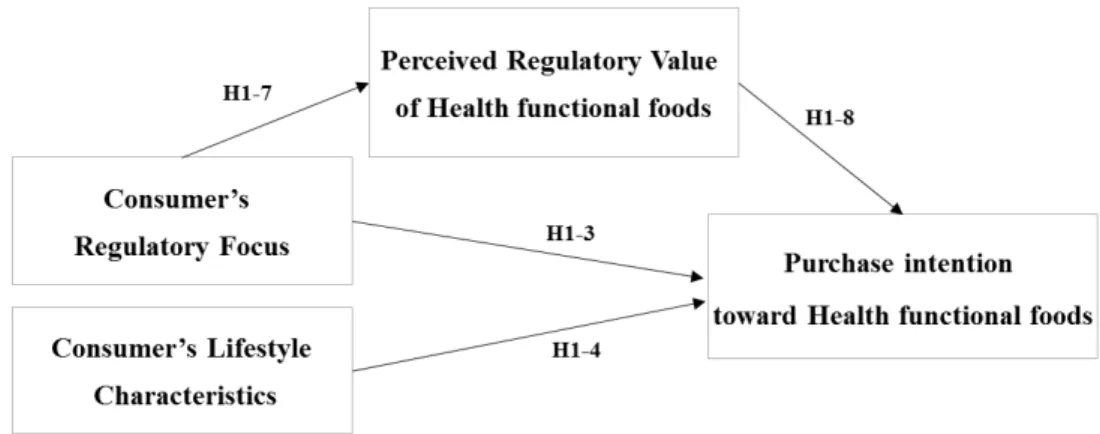
Based on Higgins’s (1997) regulatory focus theory, this study assumes that consumers’ regulatory focus affects the perceived regulatory value of products and purchase intentions; for example, individuals having a promotion focus may think of nutricosmetics as products focused on promotion values, and thus their purchase intentions toward nutricosmetics will be higher than those of individuals having a prevention focus. Likewise, individuals having a prevention focus may think of health functional foods as products focused on prevention values, and therefore their purchase intentions toward health functional foods will be higher than those of individuals having a promotion focus. Derived from this assumption, this work proposes two research models of each products as indicated in Figure 2 and 3.
To examine the effect of consumer lifestyles and regulatory focus on consumer product choice between nutricosmetics and health functional foods, this study intended to observe purchase intentions toward nutricosmetics and health functional foods. This research also aimed to investigate the mediating effect of a perceived product’s
18
regulatory value and its influence over the relationship between a consumer’s regulatory focus and product purchase intentions. Thereby, the following hypotheses were drawn (Table 1):
Figure 2. Study 1: Research Model of Nutricosmetics
Figure 3. Study 1: Research Model of Health functional foods
Table 1. Study 1: Hypotheses
No. Hypothesis
H1−1 Consumer’s regulatory focus affects on purchase intention of nutricosmetics
H1−2 Consumer’s lifestyle characteristics affects on purchase intention of nutricosmetics.
H1−2a The degree of active-leisure type affects on purchase intention of nutricosmetics.
19
H1−2b The degree of appearance-oriented type affects on purchase intention of nutricosmetics.
H1−2c The degree of conservative lifestyle type e affects on purchase intention of nutricosmetics
H1−2d The degree of frugal lifestyle type affects on purchase intention of nutricosmetics.
H1−2e The degree of material-oriented type affects on purchase intention of nutricosmetics.
H1−3 Consumer’s regulatory focus affects on purchase intention of Health functional food.
H1−4 Consumer’s lifestyle characteristics affects on purchase intention of Health functional food.
H1−4a The degree of active-leisure type affects on purchase intention of health functional food.
H1−4b The degree of appearance-oriented type affects on purchase intention of health functional food.
H1−4c The degree of conservative lifestyle type e affects on purchase intention of health functional food.
H1−4d The degree of frugal lifestyle type affects on purchase intention of health functional food.
H1−4e The degree of material-oriented type affects on purchase intention of health functional food.
H1−5~6
The effect of consumer’s regulatory focus on purchase intention is mediated by nutricosmetics’s regulatory values.
H1−7~8
The effect of consumer’s regulatory focus on purchase intention is mediated by health functional food’s regulatory values.
3. Methodology
3.1. Data Collection
Data were collected using a web-based survey system. The survey was conducted by Embrain Online Research Company (Embrain Co., Ltd, Seoul, Korea) between October 26 and October
20
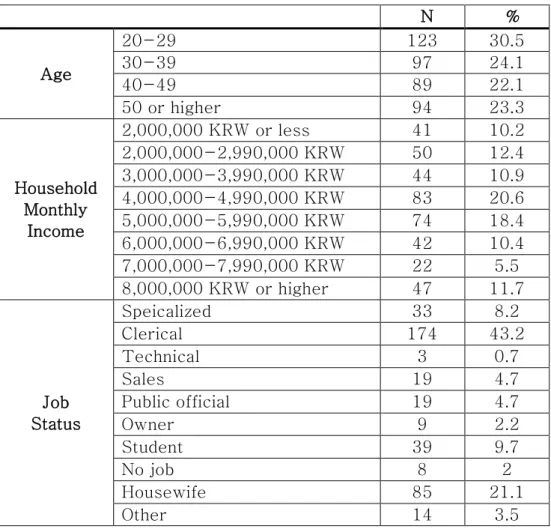
28, 2016. Our candidate participants were female members of Embrain Research Co.; potential respondents were invited to take part in the survey, and a sample was drawn based on who knew about nutricosmetics and health functional foods and who had experience using them. A total of 403 responses were collected, all of which were usable. The demographics of the sample are summarized in Table 2. All of the subjects were female, and the majority were between 20 and 29 years of age (30.5%).
Table 2. Study 1: Demographic Characteristics of Participants
N % Age 20-29 123 30.5 30-39 97 24.1 40-49 89 22.1 50 or higher 94 23.3 Household Monthly Income 2,000,000 KRW or less 41 10.2 2,000,000-2,990,000 KRW 50 12.4 3,000,000-3,990,000 KRW 44 10.9 4,000,000-4,990,000 KRW 83 20.6 5,000,000-5,990,000 KRW 74 18.4 6,000,000-6,990,000 KRW 42 10.4 7,000,000-7,990,000 KRW 22 5.5 8,000,000 KRW or higher 47 11.7 Job Status Speicalized 33 8.2 Clerical 174 43.2 Technical 3 0.7 Sales 19 4.7 Public official 19 4.7 Owner 9 2.2 Student 39 9.7 No job 8 2 Housewife 85 21.1 Other 14 3.5
21
3.2. Measurement Development
The scales used to measure the various constructs central to this study are summarized in Table 3. All measures were adapted and modified from previous studies. The author adapted and applied a questionnaire from previous studies, translating it into Korean. The questionnaire was pilot-tested on a group of 50 consumers, data from which were included in the main survey afterward.
The questions categorizing female consumers’ lifestyle characteristics were measured using a seven-point Likert scale, from “strongly disagree” to “strongly agree.” The questions measuring consumers’ regulatory focus in a shopping context and products’ perceived regulatory value were measured using a six- and seven-point Likert scale. Zhang et al. (2010)’s questionnaire was modified and employed as the questions applied the opposite descriptions in both ends. And, each question measuring the participants’ purchase intentions toward the two products was measured using a five-point Likert scale.
Table 3. Study 1: Operationalization of Variables 1. Female consumer’s lifestyle variables
(Cassill and Drake, 1987; Cho, 1996; Jeong, 2011; Kim, 2004; Kim and Rhee, 1992; Oh and Rhee, 2004)
Active-leisure type
Hob1 I enjoy watching plays or movies frequently. Hob2 I enjoy going to music concerts or art exhibitions. Hob3 I actively participate in cultural activities.
22
Hob4 My family frequently goes on a picnic or eats out. Hob5 I enjoy sports (swimming, balling, tennis, etc.).
Hob6 I love to listen to music or read a book when I get free time.
Hob7 I want to have free time more than making more money.
Appearance-oriented type
Face1 It is an important part of my life to make my appearance better.
Face2 I have a lot of interest in beauty care.
Face3 Wearing good clothes is one of the ways to respect myself.
Face4 Women's makeup means the creation of beauty. Face5 I think I'm stylish.
Face6 I usually read fashion magazines. Face7 I think I have an artistic sense.
Achievement-oriented type
Conf1 I have more independence than most people. Conf2 I have more confidence than most people. Conf3 I can handle the given tasks confidently. Conf4 I think I'm a capable person.
Conf5 Once I decide to do something, I somehow get it done. Conf6 I have a desire to achieve something.
Conf7 I actively participate in cultural activities.
Conservative lifestyle type
Trad1 It is ideal that the husband has to work in the office and the wife has to be at home.
Trad2 Women can achieve their goals through their husband’s or children's successful lives.
Trad3 I think that the breadwinner has to decide important family matters.
Trad4
Housewives at work can maintain a warm and stable relationship with their children as well as housewives at home.
Trad5 The husband should return home and take care of housework with his wife.
Trad6 In any case, I won't get divorced.
Trad7 Getting married is not a duty but a choice.
23
Save1 I can’t do anything special to extend my fortune, but I live with my sincerity.
Save2 I check out the prices even if it is a nominal price. Save3 I spend only under a budget.
Save4 Good housekeeping is very valuable in life. Save5 I usually look for the price-down promotions.
Save6 I gather and compare the information before I purchase the product.
Save7 If possible, I think it is better to employ a maid or a housekeeper.
Material-oriented type
Money1 I am interested in stocks, real estate, and business. Money2 It is good to move frequently if it is necessary for
property growth.
Money3 I want a pleasant and wealthy life.
Money4 I want to be a successful businesswoman more than being a successful scholar.
Money5 I care about the evaluation of others about me. Money6 I often talk to people about what brand to buy. 2. Consumer’s Regulatory Focus in a shopping context
(Higgins et al., 1997; Liberman et al., 1999; Na and Choi, 2005; Park et al., 2010; Yeo and Park, 2006; Zhang et al., 2010)
Focus1 I don’t buy when the product has a bad aspect (1) – I buy when the product has a good aspect (6).
Focus2
When evaluating this product, I consider preventing negative consequences from using it (1) – I consider generating positive consequences from using it (6). Focus3
When evaluating this product, I first consider aspects of using it that I dislike (1) – I first consider aspects of this product that I like (6).
3. Product’s perceived regulatory value
(Zhang et al., 2010)
Regulatory value of Nutricosmetics
Inner_ val
Nutricosmetics are things you need to have in order to avoid negative consequences (-3) – Nutricosmetics are things you like to have in order to generate positive consequences (3).
Regulatory value of Health functional foods
Health _val
Health functional foods are things you need to have in order to avoid negative consequences (-3) – Health
24
functional foods are things you like to have in order to generate positive consequences (3)
4. Purchase intention toward two products (Davis, 1989; Gefen et al., 2003)
Purchase intention toward Nutricosmetic products
Inner_pi1 I intend to purchase nutricosmetics in the future. Inner_pi2 I plan to purchase nutricosmetics.
Inner_pi3 I am willing to invest time in purchasing nutricosmetics. Inner_pi4 I would recommend purchasing nutricosmetics to others.
Purchase intention toward Health functional food products
Health_pi1 I intend to purchase health functional foods in the future. Health_pi2 I plan to purchase health functional foods.
Health_pi3 I am willing to invest time in purchasing health functional foods.
Health_pi4 I would recommend purchasing health functional foods to others.
3.3. Method Description & Analysis Model
The purpose of the study was to examine (1) the effect of female consumer lifestyle characteristics and regulatory focus on purchase intentions toward nutricosmetics and health functional foods, and (2) the mediating effects of the products’ perceived regulatory value.
The analysis consists of two parts (Figure 4 and 5). The first part uses regression models of female consumers’ lifestyles and regulatory focus on purchase intentions toward nutricosmetics and health functional products. Using multiple regression models of both products, we can determine which characteristic factors impact purchase intentions toward nutricosmetics and health functional foods.
25
Figure 4. Regression models of Female consumer’s lifestyle and regulatory focus
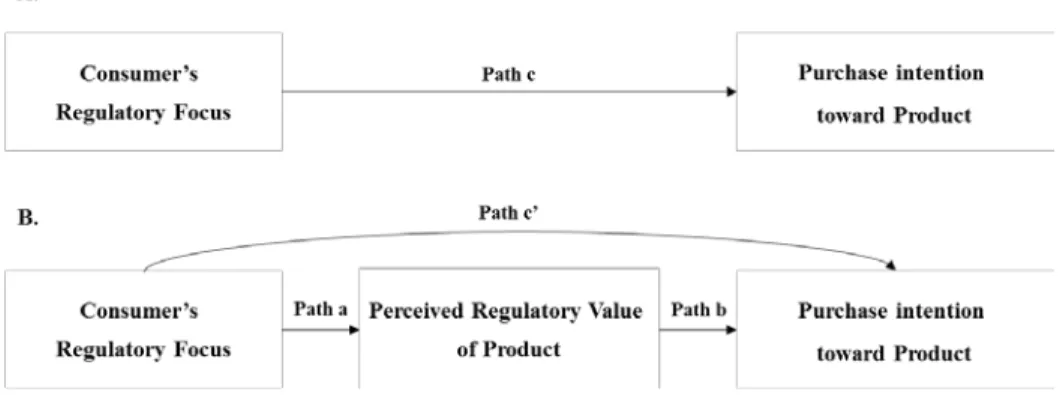
The second part of the analysis focuses on the mediating effects of the perceived regulatory values of nutricosmetics/health functional foods on the relation between consumers’ regulatory focus and purchase intentions toward the products.
Mediational analyses can be performed with either multiple regression or SEM (Frazier et al., 2004). The logic of the analyses is the same in both cases. In this study, the author used multiple regression for mediational analysis. The method outlined by Kenny (Baron and Kenny, 1986; Bolger, 1998) is the most commonly used approach in the psychological literature. Using multiple regression, this approach involves testing three equations (Frazier et al., 2004). First, the dependent variable (outcome, “purchase intention toward product”) is regressed on the predictor variable (“consumer’s regulatory focus”) to establish whether there is an effect to mediate
26
(see Path c in Figure 5A). Second, the mediator (“perceived regulatory value of product”) is regressed on the predictor to establish Path a (see Figure 5B). In the third equation, the outcome is regressed on both the predictor and the mediator. This provides a test of whether the mediator is related to the outcome (Path b) as well as an estimate of the relation between the predictor and the outcome controlling for the mediator (Path c’).
If the relation between the predictor and the outcome controlling for the mediator is zero, then the data are consistent with a “complete mediation model.” If the relation between the predictor and the outcome is significantly smaller when the mediator is in the equation than when it is not, yet still greater than zero, then the data suggest “partial mediational relationship.” However, it is not enough to show that the relation between the predictor and the outcome is smaller or no longer significant when the mediator is added to the model.
27
4. Results
4.1. Measurement Model Validation
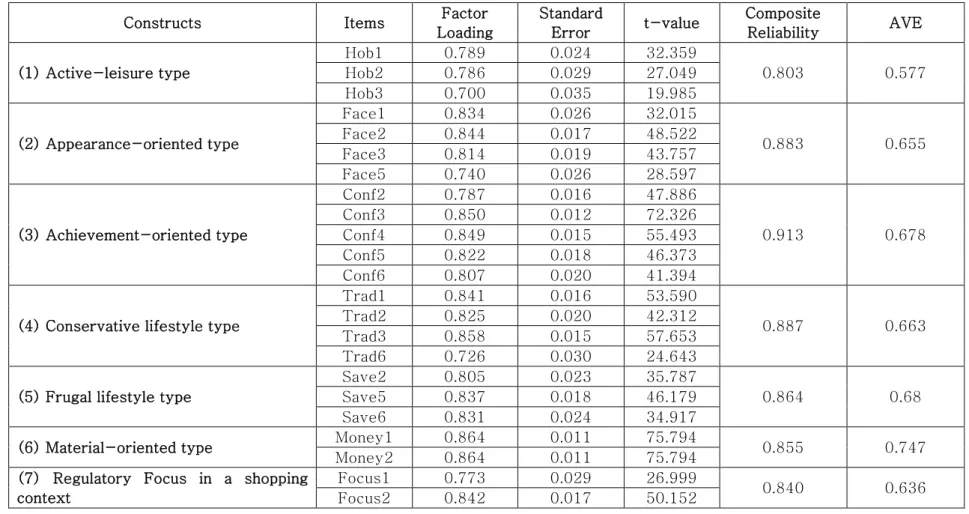
Before testing the various structural models, we examined the measurement model to assess its validity using the PLS-Graph software. To validate the measurement model, we tested its convergent and discriminant validities following the method by Chin (1998), Fornell and Larcker (1981). According to Chin (1998), the convergent validity is assessed by the reliability of each survey item and construct. If all of the items’ factor loadings are greater than 0.7, the reliability of each survey item is confirmed. To confirm construct reliability, the composite reliability of each construct should be greater than 0.7, and the average variance extracted (AVE) of each construct should be higher than 0.5 (Fornell and Larcker, 1981).
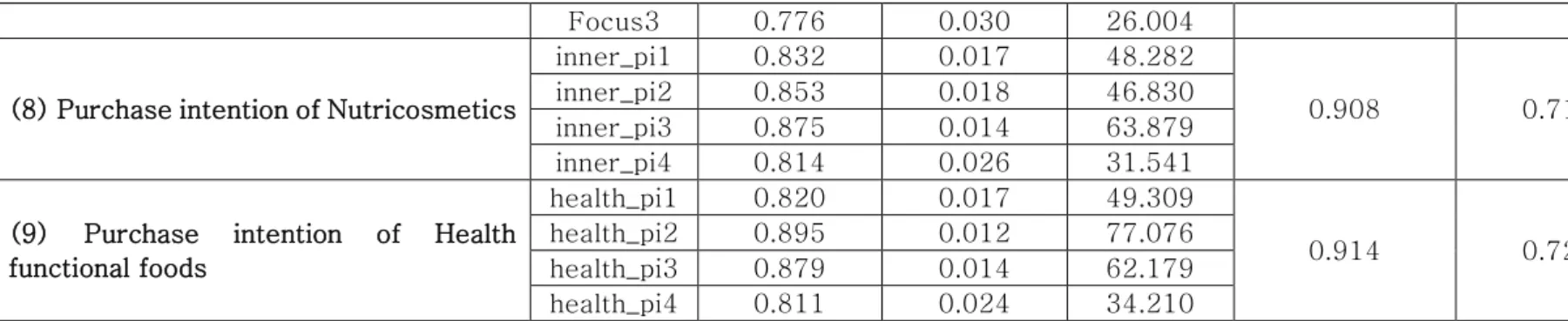
The results of the convergent validity assessment with descriptions of the constructs are shown in Table 4. All of the items’ factor loadings and AVEs of the constructs showed sufficient reliability.
The author also assessed the discriminant validity of survey items (refer to Table 5). The square root of the AVE of each construct was higher than its correlations with the other constructs
28
(Chin, 1998). Therefore, all of the survey items in this study demonstrated acceptable convergent and discriminant validity.
29
Table 4. Study 1: Loadings of Survey Items
Constructs Items Loading Factor Standard Error t-value Composite Reliability AVE
(1) Active-leisure type Hob1 0.789 0.024 32.359 0.803 0.577 Hob2 0.786 0.029 27.049 Hob3 0.700 0.035 19.985 (2) Appearance-oriented type Face1 0.834 0.026 32.015 0.883 0.655 Face2 0.844 0.017 48.522 Face3 0.814 0.019 43.757 Face5 0.740 0.026 28.597 (3) Achievement-oriented type Conf2 0.787 0.016 47.886 0.913 0.678 Conf3 0.850 0.012 72.326 Conf4 0.849 0.015 55.493 Conf5 0.822 0.018 46.373 Conf6 0.807 0.020 41.394
(4) Conservative lifestyle type
Trad1 0.841 0.016 53.590
0.887 0.663
Trad2 0.825 0.020 42.312
Trad3 0.858 0.015 57.653
Trad6 0.726 0.030 24.643
(5) Frugal lifestyle type
Save2 0.805 0.023 35.787
0.864 0.68
Save5 0.837 0.018 46.179
Save6 0.831 0.024 34.917
(6) Material-oriented type Money1 0.864 0.011 75.794 0.855 0.747
Money2 0.864 0.011 75.794
(7) Regulatory Focus in a shopping context
Focus1 0.773 0.029 26.999
0.840 0.636
30
Focus3 0.776 0.030 26.004
(8) Purchase intention of Nutricosmetics
inner_pi1 0.832 0.017 48.282
0.908 0.712
inner_pi2 0.853 0.018 46.830 inner_pi3 0.875 0.014 63.879 inner_pi4 0.814 0.026 31.541 (9) Purchase intention of Health
functional foods health_pi1 0.820 0.017 49.309 0.914 0.726 health_pi2 0.895 0.012 77.076 health_pi3 0.879 0.014 62.179 health_pi4 0.811 0.024 34.210
Table 5. Study 1: Correlation among Constructs
(1) (2) (3) (4) (5) (6) (7) (8) (9)
(1) Active-leisure type 0.760
(2) Appearance-oriented type 0.449 0.809
(3) Achievement-oriented type 0.321 0.351 0.823
(4) Conservative lifestyle type 0.057 0.104 -0.003 0.814
(5) Frugal lifestyle type 0.207 0.162 0.182 -0.025 0.825
(6) Material-oriented type 0.180 0.146 0.235 0.175 0.107 0.864
(7) Regulatory Focus in a shopping context 0.131 0.102 -0.022 0.108 -0.046 0.110 0.797
(8) Purchase intention of Nutricosmetics 0.291 0.367 0.212 0.161 0.145 0.265 0.177 0.844
(9) Purchase intention of Health functional foods 0.235 0.276 0.223 -0.018 0.157 0.146 0.122 0.504 0.852 Note: The diagonal elements are squared roots of AVEs
31
4.2. Hypotheses Testing
4.2.1. Verifying the Regulatory focus of Nutricosmetics and Health functional foods
Before applying the analytical models, the author identified the perceived regulatory values of nutricosmetics and health functional foods: promotion value or prevention value. An independent sample
t-test analysis was used to statistically compare the means of regulatory values for the two products. The results (refer to Table 6) show that the average regulatory values of nutricosmetics and health functional foods are significantly different. The mean of the perceived regulatory value of nutricosmetics is 1.610, while the mean of health functional foods is 1.340. This shows that nutricosmetics have more promotion value than health functional foods. From this result, it is reasonable to assume that nutricosmetics can be manipulated as promotion-focused stimuli and health functional foods as prevention-focused stimuli for the purpose of this study. Table 6. Products' Regulatory values
Nutricosmetics Health functional foods t 95% CI p Product’s regulatory value 1.610 1.340 2.672 - 0.469 - 0.072 - 0.008** Note: ᆞp<.1, * p<.05, ** p<.01, *** p<.000
32
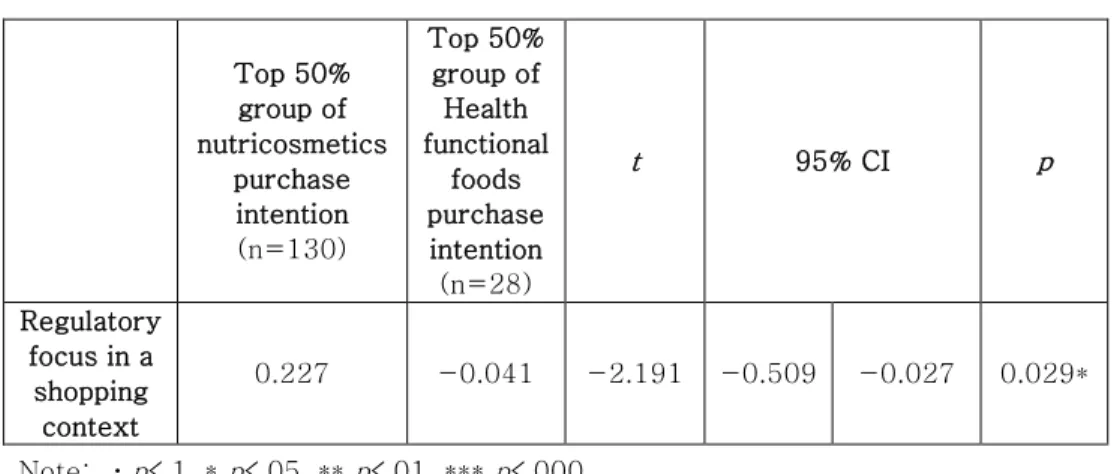
analysis to statistically compare the means of regulatory focus orientations for the top 50% of consumer groups that have higher purchase intentions toward the two products. The results (refer to Table 7) show that the average regulatory focus orientations of the two consumer groups are significantly different. The mean of the regulatory focus orientation of the consumer group with the higher purchase intention toward nutricosmetics is 0.227, while the corresponding mean for health functional foods is -0.041. This demonstrates that the nutricosmetics consumer group is more promotion-focused than the health functional foods group.
Table 7. Participants' Regulatory Focus Orientations
Top 50% group of nutricosmetics purchase intention (n=130) Top 50% group of Health functional foods purchase intention (n=28) t 95% CI p Regulatory focus in a shopping context 0.227 -0.041 -2.191 -0.509 -0.027 0.029* Note: ᆞp<.1, * p<.05, ** p<.01, *** p<.000
4.2.2. Regression models of consumer’s lifestyle and regulatory-focus on Purchase intentions
In order to assess the relative contributions of lifestyle variables and the degree of regulatory focus to purchase intentions toward nutricosmetics and health functional foods, multiple regression
33
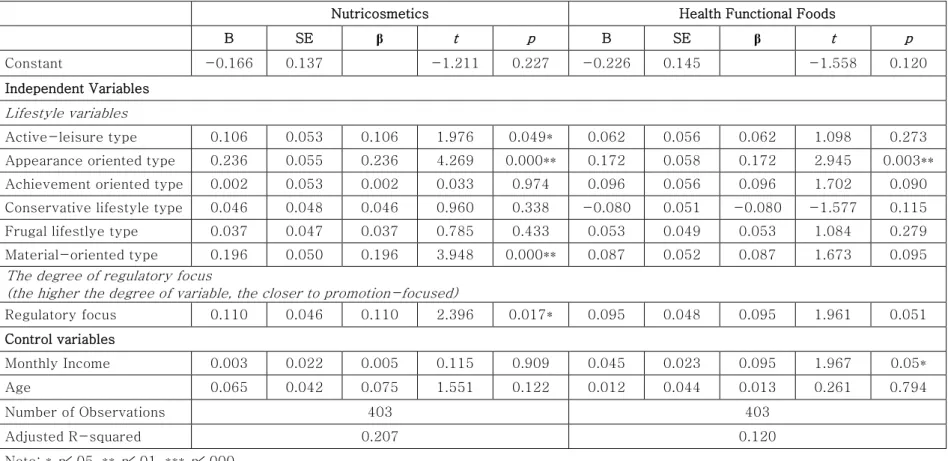
models were applied. The six lifestyle variables and the degree of regulatory focus (the higher the degree of the variable, the closer to being promotion-focused) were introduced separately into the model together as independent variables with age and monthly income as control variables. The specified model was applied to the two product categories: nutricosmetics and health functional foods. The results are listed in Table 8.
The adjusted 𝑅𝑅2 for consumers’ purchase intentions toward nutricosmetics is approximately 0.207; for health functional foods, it is 0.120.
The results show that among the six lifestyle constructs, the “appearance oriented-type” (β= .236, p = .000) is the common factor influencing consumers’ purchase intentions toward both products. However, the other lifestyle variables do not contribute to the purchase intentions toward health functional foods.
In the model for nutricosmetics, the results show that the “active-leisure type” (β= .106, p = .049) and “material-oriented type” (β= .196, p = .000) are the factors influencing the purchase intentions toward nutricosmetics. Also, the degree of regulatory focus (β= .110, p = .017) significantly influences the purchase intentions toward nutricosmetics.
34
Table 8. Multiple Regression of Indicators for Purchase Intentions of Two Products
Nutricosmetics Health Functional Foods
B SE β t p B SE β t p
Constant -0.166 0.137 -1.211 0.227 -0.226 0.145 -1.558 0.120 Independent Variables
Lifestyle variables
Active-leisure type 0.106 0.053 0.106 1.976 0.049* 0.062 0.056 0.062 1.098 0.273 Appearance oriented type 0.236 0.055 0.236 4.269 0.000** 0.172 0.058 0.172 2.945 0.003** Achievement oriented type 0.002 0.053 0.002 0.033 0.974 0.096 0.056 0.096 1.702 0.090 Conservative lifestyle type 0.046 0.048 0.046 0.960 0.338 -0.080 0.051 -0.080 -1.577 0.115 Frugal lifestlye type 0.037 0.047 0.037 0.785 0.433 0.053 0.049 0.053 1.084 0.279 Material-oriented type 0.196 0.050 0.196 3.948 0.000** 0.087 0.052 0.087 1.673 0.095
The degree of regulatory focus
(the higher the degree of variable, the closer to promotion-focused)
Regulatory focus 0.110 0.046 0.110 2.396 0.017* 0.095 0.048 0.095 1.961 0.051 Control variables Monthly Income 0.003 0.022 0.005 0.115 0.909 0.045 0.023 0.095 1.967 0.05* Age 0.065 0.042 0.075 1.551 0.122 0.012 0.044 0.013 0.261 0.794 Number of Observations 403 403 Adjusted R-squared 0.207 0.120 Note: * p<.05, ** p<.01, *** p<.000
35
4.2.3. Testing Mediator Effect Using Multiple Regression
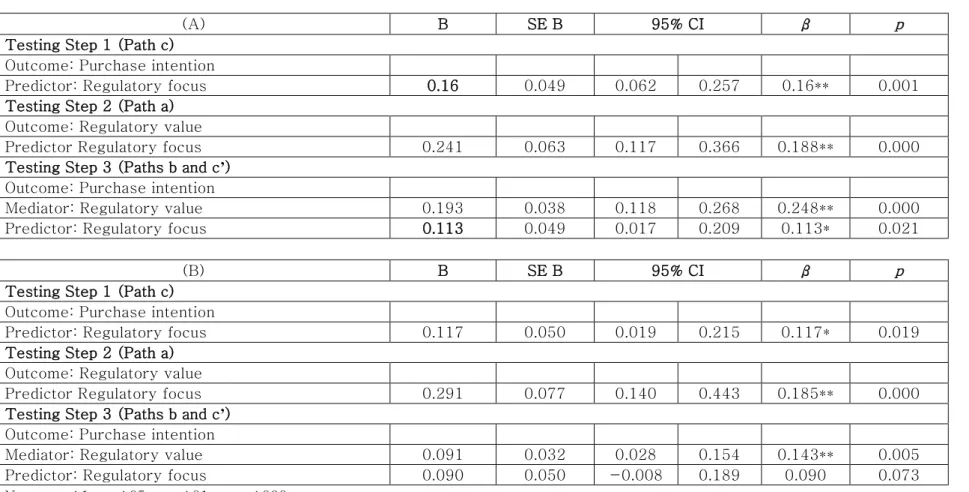
Table 9A and B contain the analyses necessary to examine the mediational hypothesis. Following the method mentioned earlier for testing mediation (Frazier et al., 2004), we first established that consumers’ regulatory focus (the predictor) was related to purchase intentions toward nutricosmetics (the outcome) by regressing purchase intentions on the regulatory focus variable (Step 1). The unstandardized regression coefficient (B = 0.16) associated with the effect of regulatory focus on the degree of purchase intention was significant (p < .05). Thus, Path c was significant, and the requirement for mediation in Step 1 was met. To establish that regulatory focus was related to perceived regulatory value of nutricosmetics (the hypothesized mediator), we regressed perceived regulatory value on the regulatory focus variable (Step 2). The unstandardized regression coefficient (B = 0.241) associated with this relation was also significant at the p < .05 level, and thus the condition for Step 2 was met (Path a was significant).
To test whether perceived regulatory value was related to purchase intention, we regressed purchase intention on both the perceived regulatory value and regulatory focus variable simultaneously (Step 3). The coefficient associated with the relation between perceived regulatory value and purchase intention
36
(controlling for regulatory focus) was also significant (B = 0.193, p
< .01). Thus, the condition for Step 3 was met (Path b was significant). This third regression equation also provided an estimate of Path c, the relation between regulatory focus and purchase intention, controlling for perceived regulatory value. When that path is zero, there is complete mediation. However, Path c’ was 0.113 and still significant (p < .05), although it was smaller than Path c (which was 0.16). Therefore, the perceived regulatory value of nutricosmetics is a partial mediator on the relation between regulatory focus and purchase intention toward nutricosmetics.
In the same way as the mediation test using the nutricosmetics model, the mediator effect of the perceived regulatory value of health functional foods in the relation between regulatory focus and purchase intention toward health functional foods was also tested. Unlike the nutricosmetics model, Path c’ in the health functional foods model was not significant. The results show that there is no mediator effect of the perceived regulatory value in the relation between regulatory focus and purchase intention toward health functional foods.
37
Table 9. Testing Mediator Effects for Purchase Intention toward (A) Nutricosmetics and (B) Health functional foods
(A) B SE B 95% CI β p
Testing Step 1 (Path c) Outcome: Purchase intention
Predictor: Regulatory focus 0.16 0.049 0.062 0.257 0.16** 0.001
Testing Step 2 (Path a) Outcome: Regulatory value
Predictor Regulatory focus 0.241 0.063 0.117 0.366 0.188** 0.000
Testing Step 3 (Paths b and c’) Outcome: Purchase intention
Mediator: Regulatory value 0.193 0.038 0.118 0.268 0.248** 0.000
Predictor: Regulatory focus 0.113 0.049 0.017 0.209 0.113* 0.021
(B) B SE B 95% CI β p
Testing Step 1 (Path c) Outcome: Purchase intention
Predictor: Regulatory focus 0.117 0.050 0.019 0.215 0.117* 0.019 Testing Step 2 (Path a)
Outcome: Regulatory value
Predictor Regulatory focus 0.291 0.077 0.140 0.443 0.185** 0.000 Testing Step 3 (Paths b and c’)
Outcome: Purchase intention
Mediator: Regulatory value 0.091 0.032 0.028 0.154 0.143** 0.005 Predictor: Regulatory focus 0.090 0.050 -0.008 0.189 0.090 0.073
38
4.2.4. The Results of Hypothesis Testing
The first aim of Study 1 was to examine the effect of consumer lifestyles and regulatory focus on purchase intentions toward nutricosmetics and health functional foods. The first aim of Study 1 was to examine the effect of consumer lifestyles and regulatory focus on purchase intentions toward nutricosmetics and health functional foods. The results of the hypothesis testing are shown in Table 10. Table 10. The results of hypothesis testing
Hypothesis Support H1−1 Consumer’s regulatory focus affects on
purchase intention of nutricosmetics Support H1−2 Consumer’s affects on lifestyle purchase characteristics intention of
nutricosmetics.
-
H1−2a The degree of active-leisure type affects on
purchase intention of nutricosmetics. Support H1−2b The degree of appearance-oriented type affects on purchase intention of
nutricosmetics.
Support H1−2c The degree of conservative lifestyle type e
affects on purchase intention of nutricosmetics Not Support H1−2d The degree of frugal lifestyle type affects on
purchase intention of nutricosmetics. Not Support H1−2e The degree of material-oriented type affects
on purchase intention of nutricosmetics. Support
H1−3 Consumer’s regulatory focus affects on purchase intention of Health functional food.
Not Support H1−4 Consumer’s affects on purchase intention of Health lifestyle characteristics
functional food.
-
H1−4a The degree of active-leisure type affects on
purchase intention of health functional food. Not Support H1−4b The degree of appearance-oriented type affects on purchase intention of health
functional food.
39
H1−4c The degree of conservative lifestyle type e affects on purchase intention of health functional food.
Not Support H1−4d The degree of frugal lifestyle type affects on
purchase intention of health functional food. Not Support H1−4e The degree of material-oriented type affects
on purchase intention of health functional food. Not Support
H1−5~6
The effect of consumer’s regulatory focus on purchase intention is mediated by nutricosmetics’s regulatory values.
Support
H1−7~8
The effect of consumer’s regulatory focus on purchase intention is mediated by health functional food’s regulatory values.
Not Support
5.
Discussion
5.1. Summary of Findings
This study identified the lifestyle characteristics of female consumers that affect their purchase intentions toward nutricosmetics and health functional foods. Even though the products have similar effects, the results of Study 1 suggest that they may have different consumer groups with different lifestyles.
According to the results of the multiple regression model with lifestyle and regulatory focus variables on purchase intentions, consumers who pursue a good appearance have higher purchase intentions toward both products: nutricosmetics and health functional foods. Unlike health functional foods, however, nutricosmetic products are preferred by consumer groups that actively participate
40
in leisure and pursue the good wealth.
From these results, it can be assumed that consumers who are active in their social and business lives have higher purchase intentions toward nutricosmetic products than those who do not. To target a specific consumer lifestyle group, nutricosmetics marketing campaigns can be arranged by active and attractive consumer images in social and business lives.
Also, the regulatory focus variable appears to significantly affect purchase intentions toward nutricosmetic products: the higher the score of the variable, the closer it is to being a promotion-focused value. Thus, the higher the promotion focus, the higher the purchase intention toward nutricosmetics.
These results can be concreted by testing the mediator effect of consumer’s regulatory focus. As the result shows, the consumers having promotion focus have higher purchase intention toward nutricosmetics because the consumers perceived more promotion-focused regulatory value than health functional foods. In other words, its promotion-focused regulatory value mediates the relation between consumers’ regulatory focus and purchase intentions.
Put another way, when consumers purchase nutricosmetics, they expect them to be associated primarily with promotion goals as compared to health functional foods. This means that nutricosmetics
41
are categorized as health functional foods but, when comparing the two products, their primary goals are different, as are the targeted consumers.
5.2. Contributions and Limitations
In this study, the author investigated the effect of female consumers’ lifestyle attributes and regulatory focus on purchase intentions toward nutricosmetics and health functional food products. Although these products have been categorized in the same product category by Korean food safety law, the results of this study indicate that consumers who purchase nutricosmetics or health functional foods have different lifestyle characteristics and goals for using these two products.
This study contributed to some academic achievements. First, the author both designed the experiment for investigating the effect of lifestyle attributes on purchase intentions toward nutricosmetics or health functional foods and discovering differences in lifestyle attributes between consumers who have higher purchase intentions toward either of the two products. “Lifestyle segmentation” has been a useful concept for marketing and advertising planning purposes (Wells and Tigert, 1971). The concept of lifestyle represents a sets of ideas quite distinct from their personality. Lifestyle relates to the
42
economic level at which people live, how they spend their money, and how they allocate their time (Anderson Jr and Golden, 1984). In this study, the author measured and compared the degree of consumers’ lifestyle attributes for determining, from empirical findings, that the two products were similar but differently recognized among consumers belonging to different consumer groups with different lifestyles.
Secondly, this study attempted to empirically explicate Higgins’ regulatory focus theory and the regulatory fit effect in consumers’ purchase decisions by investigating the mediation effect of a product’s regulatory value (associated with either a promotion or prevention goal) on the relation between regulatory goal orientation and purchase intention. The results of this study theoretically suggest that consumers’ regulatory focus and goal orientation can be reflected in the perceived regulatory value of a product, and that a product’s perceived regulatory value can directly affect consumers’ purchase intentions toward it. Higgins et al. (2003) stated that value from regulatory fit is derived from the relation between the manner of goal pursuit and the goal orientation of the person pursuing the goal. There are many studies that explore the basis of the relations among variables and their valued experience caused by regulatory fit as identified in Higgins’ regulatory focus theory (Crowe and Higgins
43
(1997); Higgins (1998)). The results of Study 1 show that the regulatory fit between consumers’ goal orientations and goal pursuit process can be differentiated by their purchase behaviors and self-motivated regulatory value of the products.
This study also makes some practical contributions to the current health functional food market. First, marketing campaigns should be compartmentalized into two products: nutricosmetics and health functional foods, despite having similar ingredients or beauty purposes. The results indicate that nutricosmetics and health functional foods are in the same category of “functional foods,” but do not share the same regulatory value in consumers’ minds; therefore, they need different marketing approaches and targeted consumer segmentations. Especially, nutricosmetics have promotion regulatory value (associated with a promotion goal) and attract consumers who are socially active and material-oriented; thus, marketers should set up marketing campaigns specifically for them.
Nonetheless, the study demonstrated some limitations that can provide guidance for future studies. First, to provide empirical insights into how female consumers’ lifestyle attributes differ regarding product preference, the author targeted female participants in the experimental design. The purchase and adoption of cosmeceutical products and related beauty products claiming to
44
satisfy female consumers’ desires, such as being more youthful looking or having a healthier lifestyle, is experiencing strong market growth (Meng and Pan, 2012). However, considering that contemporary perceptions of men’s grooming and personal products are becoming more prevalent, their purchase behavior and lifestyles should also be analyzed (Hong, 2013). In future studies, other segments of potential consumers who are underrepresented in this study, such as male consumers, could be developed, and their more desirable lifestyle attributes could be explored.
Secondly, the participants in this study were gathered from Korean female consumer segments. Although the worldwide nutricosmetic market is estimated to be the fastest growing market compared with other personal care products (Barel et al., 2014), nutricosmetic products in Korea—so-called “inner-beauty products”—are still quite unfamiliar, and have experienced only slight growth since 2011 (Shin, 2015). By comparison, the history of the health functional food market is longer and more familiar to Korean consumers since Korean legislation of health functional products in 2001. Although the author controlled the usage experience of both products in the experiment, controlling the level of consumer knowledge of or familiarity with the products should be pursued in future studies.
45
Ⅲ. Study 2 : How e-WOM of nutricosmetics and
health functional foods affect consumer’s purchase
intention?
1.
Introduction
An increasing number of consumers are using Web 2.0 tools (e.g., online discussion forums, consumer review sites, weblogs, social network sites, etc.) to communicate their opinions and exchange product information (Cheung and Thadani, 2012).
In the e-WoM (electronic Word of Mouth) literature, researchers basically agree that an e-WoM review can be perceived as diagnostic if it facilitates consumers' product evaluations prior to purchase (Lee and Youn, 2009). For this reason, and due to the rise of new media channels in recent years, e-WoM has undoubtedly become a powerful marketing force (Cheung and Thadani, 2012; Gupta and Harris, 2010).
Especially, industry research reports (Beauty Trend Report, 2016, IDINCU Co.) have shown that when making beauty product purchase decisions, Internet users trust online reviews posted by unknown consumers more than advertisements from traditional media (Cheung and Thadani, 2012). For this reason, the impact of e-WoM on functional foods and the personal care industry casts a long
46
shadow on current markets and industries.
In Study 2, the author sought to reveal the e-WoM communication factors that influence the purchase of nutricosmetics and health functional food products. With the moderating role of products’ regulatory values, the author investigated how e-WoM communication factors affect consumers’ purchase intentions toward nutricosmetics and health functional foods.
This research attempted to determine the effects of the two products’ recognized regulatory values on purchase intentions using e-WoM communications and proposed specific marketing points for the advertisement and promotion of the two products using e-WoM messages.
The author developed online experiments using the experimental stimuli of e-WoM messages about nutricosmetics and health functional foods; data from 447 female participants were used. Using analytical methods, such as multi-group analysis with partial least-square (PLS) models, the author attempted to determine the appropriate marketing strategies for both experimental products according to their recognized regulatory values and associated regulatory focus.