304 INTRODUCTION
Human papillomaviruses (HPV-16 and -18) infection has been commonly identified in cervical carcinomas (1). Generally, after a high-risk HPV infection, the E6 and E7 oncoproteins are consistently expressed, and essential for the immortalization and transformation of human squamous epithelial cells (2,3). Although a number of cervical cancer-related genes and cellular processes have been studied, many of the molecular events involved in the cervical cancer pathway are still unclear, as a gene can be involved in multiple independently regulated cancer-specific pathways. Moreover, many studies on cervical cancer lack physiological relevance because those were
per-formed by using the small number of genes and established only in cell lines.
While it is becoming increasingly clear that there are wide variations in the efficiency of cancer therapy among different cell types, there is still relatively little known regarding the mechanism by which genes or gene complexes are directly cancer-specific. Here, to quantitatively understand the possible multiple relationships between differentially expressed profiles of a gene and the cervical cancer-specific pathway, the an-notation project, directed by the Gene Ontology (GO) Con-sortium (http://www.geneontology.org), was used (4). Despite the significance of functional analysis in cancer research, the GO analysis has not been widely used in carcinogenesis, mainly due to its complexity and rapidly evolving property. With the GO analysis, the regulated genes are organized into three separated ontologies comprised of; biological process, cellular component and molecular function, and defines a set of well-defined terms and relationships by which the role of a particular gene, gene product or gene-product group can be interpreted. Thus, an advanced strategy for the identification of preferential tumor-specific pathways would be needed by using the GO analysis. As of March 12, 2003, GO contained 6959 processes, 5339 functions and 1199 component terms, with a
New Approaches to Functional Process Discovery in HPV
16-Associated Cervical Cancer Cells by Gene Ontology
Yong-Wan Kim, Ph.D.
1, Min-Je Suh, M.S.
1, Jin-Sik Bae, M.S.
1, Su Mi Bae, M.S.
1, Joo Hee Yoon, M.D.
2,
Soo Young Hur, M.D.
2, Jae Hoon Kim, M.D.
2, Duck Young Ro, M.D.
2, Joon Mo Lee, M.D.
2, Sung Eun
Namkoong, M.D.
2, Chong Kook Kim, Ph.D.
3and Woong Shick Ahn, M.D.
21
Catholic Research Institutes of Medical Science,
2Department of Obstetrics and Gynecology, College of Medicine, The
Catholic University of Korea, Seoul;
3College of Pharmacy, Seoul National University, Seoul, Korea
Purpose: This study utilized both mRNA differential display and the Gene Ontology (GO) analysis to char-acterize the multiple interactions of a number of genes with gene expression profiles involved in the HPV-16- induced cervical carcinogenesis.
Materials and Methods: mRNA differential displays, with HPV-16 positive cervical cancer cell line (SiHa), and normal human keratinocyte cell line (HaCaT) as a con-trol, were used. Each human gene has several biological functions in the Gene Ontology; therefore, several func-tions of each gene were chosen to establish a powerful cervical carcinogenesis pathway. The specific functions assigned to these genes were then correlated with the gene expression patterns.
Results: The results showed that 157 genes were up- or down-regulated at least 2-fold and organized into reciprocally dependent sub-function sets, depending on their cervical cancer pathway, suggesting the potentially
significant genes of unknown function affected by the HPV-16-derived pathway. The GO analysis suggested that the cervical cancer cells underwent repression of the cancer-specific cell adhesive properties. Also, genes belonging to DNA metabolism, such as DNA repair and replication, were strongly down-regulated, whereas sig-nificant increases were shown in the protein degradation and synthesis.
Conclusion: The GO analysis can overcome the com -plexity of the gene expression profile of the HPV-16- associated pathway, identify several cancer-specific cel-lular processes and genes of unknown function. It could also become a major competing platform for the genomw ide characterization of carcinogenesis. (C ancer R e-search and Treatment 2003;35:304-313)
ꠏꠏꠏꠏꠏꠏꠏꠏꠏꠏꠏꠏꠏꠏꠏꠏꠏꠏꠏꠏꠏꠏꠏꠏꠏꠏꠏꠏꠏꠏꠏꠏꠏꠏꠏꠏꠏꠏꠏꠏꠏꠏꠏꠏꠏꠏꠏꠏꠏꠏꠏꠏꠏꠏꠏ
Key Words: Cervix neoplasia, mRNA differential display, Gene ontology
Correspondence: Woong Shick Ahn, Department of Obstetrics and Gynecology, College of Medicine, The Catholic University of Korea, 505 Banpo-dong, Seocho-gu, Seoul 137-701, Korea. (Tel) 02-590-2409, (Fax) 02-599-4120, (Email) [email protected] Received April 15, 2003, Accepted June 2, 2003
This research was supported by the grant from Ministry of Health and Welfare (02-PJ1-PG3-20801-0010).
total of 9791 GO term definitions.
In this study, mRNA differential displays were used to investigate the expression patterns of genes related to the cervical cancer pathway, where the biological functions were primarily affected by the HPV-16-derived gene regulation. These functional profiles are cervical cancer-dependent, clearly differentiated and resulted in finding a large subset of cellular functional changes that could be described as tending to increase, or decrease, with the number of cervical cancer cells. The GO analysis was identified as being descriptive of cervical carcinogenesis, suggesting that several previously unreported functions were cervical cancer-dependent. This report has shown that the GO analysis is a valuable tool for diagnostic and therapeutic interventions in cancer research.
MATERIALS AND METHODS
1) Cell lines and cell culture
The human cervical cancer cell line, HPV-16 positive SiHa, and human keratinocyte cell line, HaCaT (5), which has similar properties to normal keratinocytes, were used for the exper-iment. The cells were cultured in a 5% CO2 incubator at 37oC. 2) mRNA differential display
The total RNA was isolated from cultured cells using TRIzol (Gibco-BRL). The differential display was carried out as previously described (6). Briefly, RT-PCR was performed using RNAimage kits (GenHunter, Brookline, MA), according to the manufacturer's instructions. 0.2μg of total RNA was used for the PCR amplification, and the amplified cDNA fragments were cloned into the pGEM-T easy vector (Promega, Madison, WI). Plasmid DNA was prepared using the Wizard Miniprep Purification System (Promega). The sequencing reactions were performed with an Applied Biosystems sequencer, model 3,100, with T7 and SP6 primers. The homology of the cDNA se-quences to other nucleic acids was determined using the National Center for Biotechnology Information BLAST data-base search algorithms.
3) Northern blotting
20μg of total RNA was electrophoresed, and transferred to nylon membranes (Hybond-N+; Amersham, Uppsala, Sweden). The insert into the pGEM-T easy vector was amplified using T7 and SP6 primers, and then gel-eluted. The probes were then [α-32P]-dCTP-labeled with a Random primer labeling kit (TaKaRa, Shiga, Japan). The hybridization was carried out overnight, at 68oC, in Rapid Hyb-buffer (Amersham). After hybridization, the membrane was radiophotographed at -70oC for 24∼48 hr.
3) Analysis
The ImaGene v5.0 (Biodiscovery, Marina Del Rey, CA) was used to analyze the image data. Genes were excluded from the analyses if their expressions were negative or too smeared, with those showing differences of at least 2 fold in their expression levels being selected for the function analysis. To classify the gene expression profiles, functional analyses were carried out as previously described (7). Each gene was annotated by
integrating the information (as of March 12, 2003) on the Gene Ontology website (http://www.geneontology.org). All the files, including the BLAST database search results for the transcripts from differential displays, and those of the Gene Ontology analysis were downloaded from our anonymous FTP site: ftp://160.1.9.42/work/ddpcr.
RESULTS
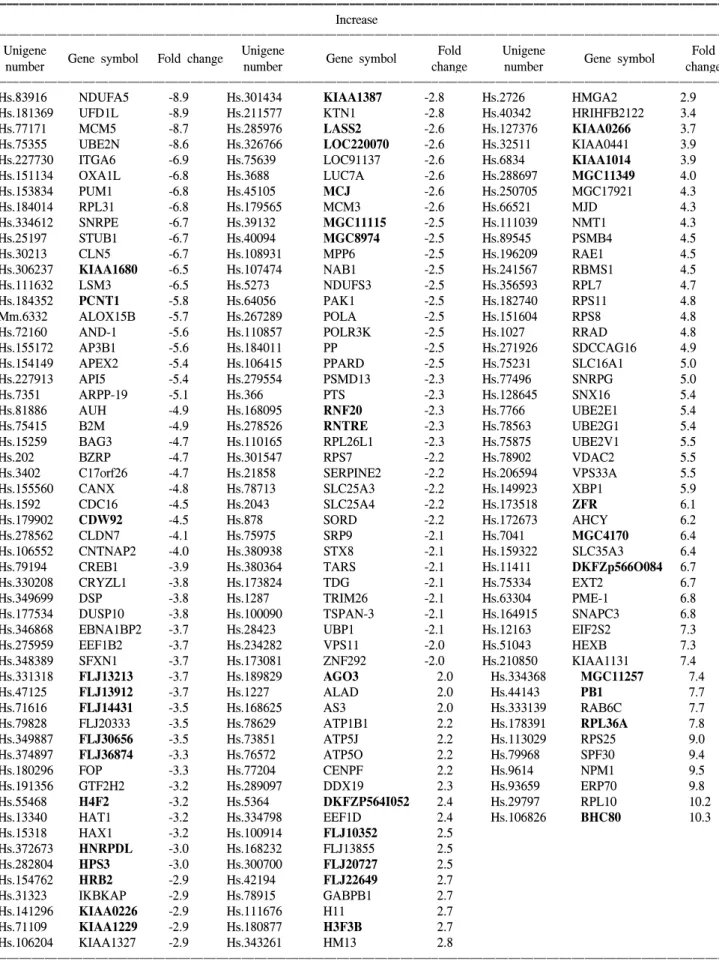
As shown in Fig. 1, after the mRNA differential display and gel electrophoresis, approximately 640 bands were identified. After the exclusion of the poor bands, 349 of the 640 bands remained. From the sequencing and BLAST database search, 157 transcripts showing at least a 2-fold increased change were identified.
Table 1 shows a description of the transcripts, with new cervical cancer-related genes differentially up- or down-regulated in SiHa cells. The expression profiling for the down-regulation was different from that for the up-regulation, indicating that repression of the gene expression may have an important impact on the HPV-16-derived cellular processes. Northern
Fig. 1. Differential display of mRNA expression between HaCAT
and SiHa cells. Representative mRNA DD results were obtained using different H-T primers for reverse trans-cription and H-AP random primer pairs for PCR. 1. H-AP17; 2. H-AP18; 3. H-AP19; 4. H-AP20; 5. H-AP21; 6. H-AP22; 7. H-AP24. Each number consists of two lanes of HaCaT and SiHa cell lines.
H-T11C 1 2 3 4 5 6 7 8 H-T11A H-T11G H-T11C 1 2 3 4 5 6 7 8 H-T11A H-T11G
Table 1. Summary of gene expression changes. The genes are adversely ranked by fold change, i.e., from down-regulation to upregulation
ꠚꠚꠚꠚꠚꠚꠚꠚꠚꠚꠚꠚꠚꠚꠚꠚꠚꠚꠚꠚꠚꠚꠚꠚꠚꠚꠚꠚꠚꠚꠚꠚꠚꠚꠚꠚꠚꠚꠚꠚꠚꠚꠚꠚꠚꠚꠚꠚꠚꠚꠚꠚꠚꠚꠚꠚꠚꠚꠚꠚꠚꠚꠚꠚꠚꠚꠚꠚꠚꠚꠚꠚꠚꠚꠚꠚꠚꠚꠚꠚꠚꠚꠚꠚꠚꠚꠚꠚꠚꠚꠚꠚꠚꠚꠚꠚꠚꠚꠚꠚꠚꠚꠚꠚꠚꠚꠚꠚꠚꠚꠚꠚꠚꠚꠚ Increase
ꠏꠏꠏꠏꠏꠏꠏꠏꠏꠏꠏꠏꠏꠏꠏꠏꠏꠏꠏꠏꠏꠏꠏꠏꠏꠏꠏꠏꠏꠏꠏꠏꠏꠏꠏꠏꠏꠏꠏꠏꠏꠏꠏꠏꠏꠏꠏꠏꠏꠏꠏꠏꠏꠏꠏꠏꠏꠏꠏꠏꠏꠏꠏꠏꠏꠏꠏꠏꠏꠏꠏꠏꠏꠏꠏꠏꠏꠏꠏꠏꠏꠏꠏꠏꠏꠏꠏꠏꠏꠏꠏꠏꠏꠏꠏꠏꠏꠏꠏꠏꠏꠏꠏꠏꠏꠏꠏꠏꠏꠏꠏꠏꠏꠏꠏ
Unigene Unigene Fold Unigene Fold
Gene symbol Fold change Gene symbol Gene symbol
number number change number change
ꠏꠏꠏꠏꠏꠏꠏꠏꠏꠏꠏꠏꠏꠏꠏꠏꠏꠏꠏꠏꠏꠏꠏꠏꠏꠏꠏꠏꠏꠏꠏꠏꠏꠏꠏꠏꠏꠏꠏꠏꠏꠏꠏꠏꠏꠏꠏꠏꠏꠏꠏꠏꠏꠏꠏꠏꠏꠏꠏꠏꠏꠏꠏꠏꠏꠏꠏꠏꠏꠏꠏꠏꠏꠏꠏꠏꠏꠏꠏꠏꠏꠏꠏꠏꠏꠏꠏꠏꠏꠏꠏꠏꠏꠏꠏꠏꠏꠏꠏꠏꠏꠏꠏꠏꠏꠏꠏꠏꠏꠏꠏꠏꠏꠏꠏ
Hs.83916 NDUFA5 -8.9 Hs.301434 KIAA1387 -2.8 Hs.2726 HMGA2 2.9
Hs.181369 UFD1L -8.9 Hs.211577 KTN1 -2.8 Hs.40342 HRIHFB2122 3.4
Hs.77171 MCM5 -8.7 Hs.285976 LASS2 -2.6 Hs.127376 KIAA0266 3.7
Hs.75355 UBE2N -8.6 Hs.326766 LOC220070 -2.6 Hs.32511 KIAA0441 3.9
Hs.227730 ITGA6 -6.9 Hs.75639 LOC91137 -2.6 Hs.6834 KIAA1014 3.9
Hs.151134 OXA1L -6.8 Hs.3688 LUC7A -2.6 Hs.288697 MGC11349 4.0 Hs.153834 PUM1 -6.8 Hs.45105 MCJ -2.6 Hs.250705 MGC17921 4.3 Hs.184014 RPL31 -6.8 Hs.179565 MCM3 -2.6 Hs.66521 MJD 4.3 Hs.334612 SNRPE -6.7 Hs.39132 MGC11115 -2.5 Hs.111039 NMT1 4.3 Hs.25197 STUB1 -6.7 Hs.40094 MGC8974 -2.5 Hs.89545 PSMB4 4.5 Hs.30213 CLN5 -6.7 Hs.108931 MPP6 -2.5 Hs.196209 RAE1 4.5 Hs.306237 KIAA1680 -6.5 Hs.107474 NAB1 -2.5 Hs.241567 RBMS1 4.5 Hs.111632 LSM3 -6.5 Hs.5273 NDUFS3 -2.5 Hs.356593 RPL7 4.7 Hs.184352 PCNT1 -5.8 Hs.64056 PAK1 -2.5 Hs.182740 RPS11 4.8 Mm.6332 ALOX15B -5.7 Hs.267289 POLA -2.5 Hs.151604 RPS8 4.8
Hs.72160 AND-1 -5.6 Hs.110857 POLR3K -2.5 Hs.1027 RRAD 4.8
Hs.155172 AP3B1 -5.6 Hs.184011 PP -2.5 Hs.271926 SDCCAG16 4.9
Hs.154149 APEX2 -5.4 Hs.106415 PPARD -2.5 Hs.75231 SLC16A1 5.0
Hs.227913 API5 -5.4 Hs.279554 PSMD13 -2.3 Hs.77496 SNRPG 5.0 Hs.7351 ARPP-19 -5.1 Hs.366 PTS -2.3 Hs.128645 SNX16 5.4 Hs.81886 AUH -4.9 Hs.168095 RNF20 -2.3 Hs.7766 UBE2E1 5.4 Hs.75415 B2M -4.9 Hs.278526 RNTRE -2.3 Hs.78563 UBE2G1 5.4 Hs.15259 BAG3 -4.7 Hs.110165 RPL26L1 -2.3 Hs.75875 UBE2V1 5.5 Hs.202 BZRP -4.7 Hs.301547 RPS7 -2.2 Hs.78902 VDAC2 5.5
Hs.3402 C17orf26 -4.7 Hs.21858 SERPINE2 -2.2 Hs.206594 VPS33A 5.5
Hs.155560 CANX -4.8 Hs.78713 SLC25A3 -2.2 Hs.149923 XBP1 5.9
Hs.1592 CDC16 -4.5 Hs.2043 SLC25A4 -2.2 Hs.173518 ZFR 6.1
Hs.179902 CDW92 -4.5 Hs.878 SORD -2.2 Hs.172673 AHCY 6.2
Hs.278562 CLDN7 -4.1 Hs.75975 SRP9 -2.1 Hs.7041 MGC4170 6.4
Hs.106552 CNTNAP2 -4.0 Hs.380938 STX8 -2.1 Hs.159322 SLC35A3 6.4
Hs.79194 CREB1 -3.9 Hs.380364 TARS -2.1 Hs.11411 DKFZp566O084 6.7
Hs.330208 CRYZL1 -3.8 Hs.173824 TDG -2.1 Hs.75334 EXT2 6.7
Hs.349699 DSP -3.8 Hs.1287 TRIM26 -2.1 Hs.63304 PME-1 6.8
Hs.177534 DUSP10 -3.8 Hs.100090 TSPAN-3 -2.1 Hs.164915 SNAPC3 6.8
Hs.346868 EBNA1BP2 -3.7 Hs.28423 UBP1 -2.1 Hs.12163 EIF2S2 7.3
Hs.275959 EEF1B2 -3.7 Hs.234282 VPS11 -2.0 Hs.51043 HEXB 7.3 Hs.348389 SFXN1 -3.7 Hs.173081 ZNF292 -2.0 Hs.210850 KIAA1131 7.4 Hs.331318 FLJ13213 -3.7 Hs.189829 AGO3 2.0 Hs.334368 MGC11257 7.4 Hs.47125 FLJ13912 -3.7 Hs.1227 ALAD 2.0 Hs.44143 PB1 7.7 Hs.71616 FLJ14431 -3.5 Hs.168625 AS3 2.0 Hs.333139 RAB6C 7.7 Hs.79828 FLJ20333 -3.5 Hs.78629 ATP1B1 2.2 Hs.178391 RPL36A 7.8 Hs.349887 FLJ30656 -3.5 Hs.73851 ATP5J 2.2 Hs.113029 RPS25 9.0 Hs.374897 FLJ36874 -3.3 Hs.76572 ATP5O 2.2 Hs.79968 SPF30 9.4 Hs.180296 FOP -3.3 Hs.77204 CENPF 2.2 Hs.9614 NPM1 9.5 Hs.191356 GTF2H2 -3.2 Hs.289097 DDX19 2.3 Hs.93659 ERP70 9.8 Hs.55468 H4F2 -3.2 Hs.5364 DKFZP564I052 2.4 Hs.29797 RPL10 10.2 Hs.13340 HAT1 -3.2 Hs.334798 EEF1D 2.4 Hs.106826 BHC80 10.3 Hs.15318 HAX1 -3.2 Hs.100914 FLJ10352 2.5 Hs.372673 HNRPDL -3.0 Hs.168232 FLJ13855 2.5 Hs.282804 HPS3 -3.0 Hs.300700 FLJ20727 2.5 Hs.154762 HRB2 -2.9 Hs.42194 FLJ22649 2.7 Hs.31323 IKBKAP -2.9 Hs.78915 GABPB1 2.7 Hs.141296 KIAA0226 -2.9 Hs.111676 H11 2.7 Hs.71109 KIAA1229 -2.9 Hs.180877 H3F3B 2.7 Hs.106204 KIAA1327 -2.9 Hs.343261 HM13 2.8 ꠏꠏꠏꠏꠏꠏꠏꠏꠏꠏꠏꠏꠏꠏꠏꠏꠏꠏꠏꠏꠏꠏꠏꠏꠏꠏꠏꠏꠏꠏꠏꠏꠏꠏꠏꠏꠏꠏꠏꠏꠏꠏꠏꠏꠏꠏꠏꠏꠏꠏꠏꠏꠏꠏꠏꠏꠏꠏꠏꠏꠏꠏꠏꠏꠏꠏꠏꠏꠏꠏꠏꠏꠏꠏꠏꠏꠏꠏꠏꠏꠏꠏꠏꠏꠏꠏꠏꠏꠏꠏꠏꠏꠏꠏꠏꠏꠏꠏꠏꠏꠏꠏꠏꠏꠏꠏꠏꠏꠏꠏꠏꠏꠏꠏꠏ
blots were performed to confirm the results of the differential displays. As shown in Fig. 2, several up- and down-regulated transcripts confirmed the patterns obtained from the differential displays, showing the consistency of the experimental re-peatability.
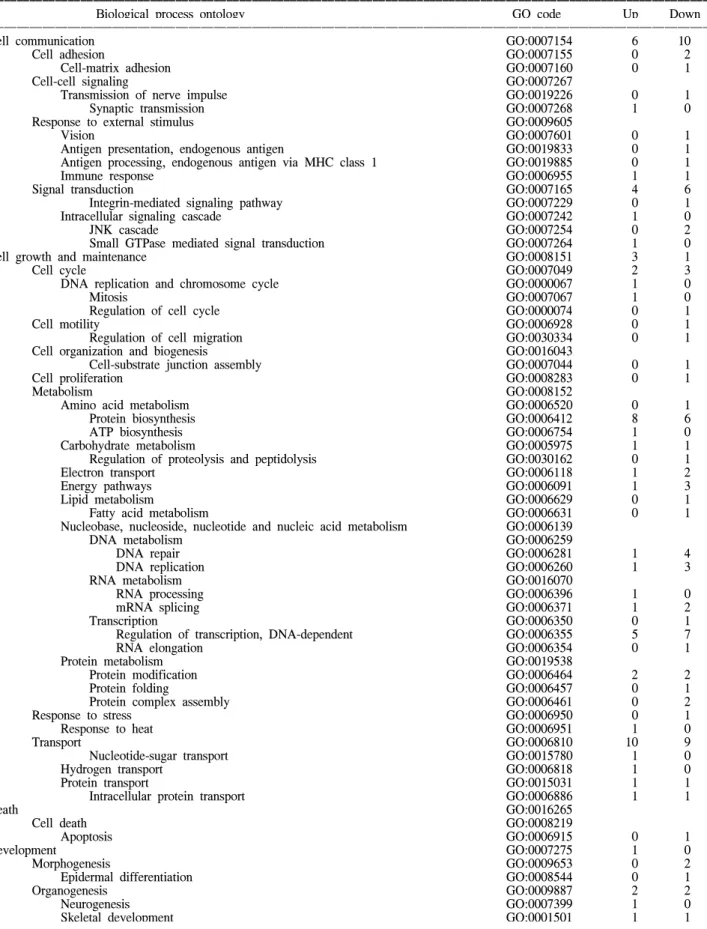
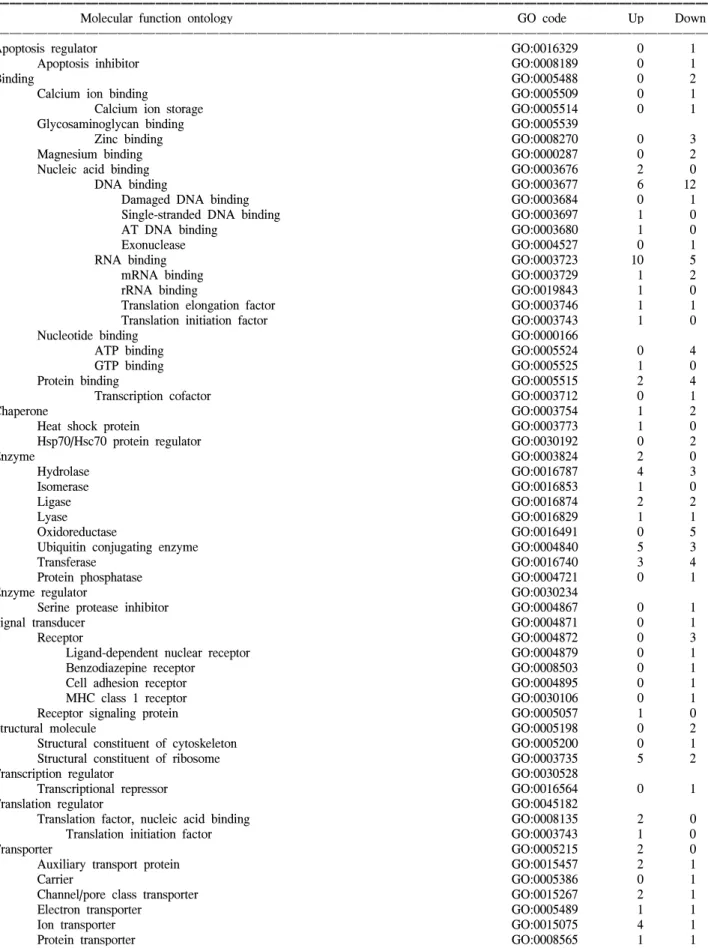
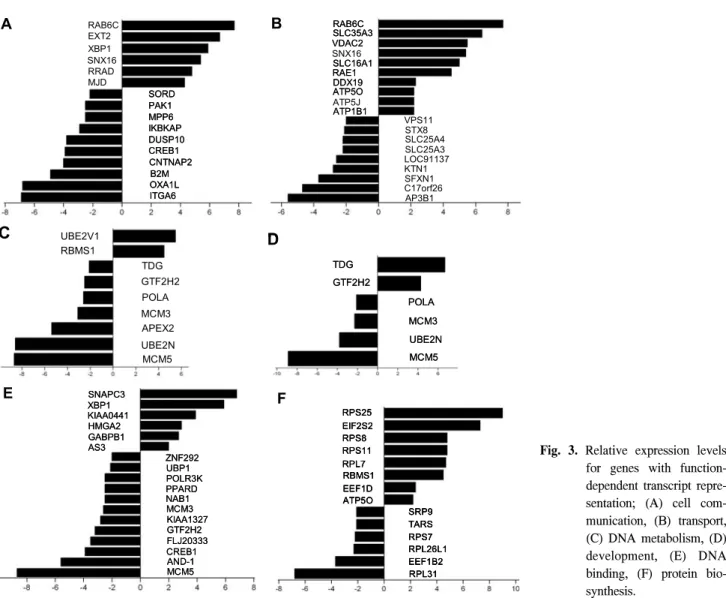
As shown in Tables 2, 3 and 4, the significantly up- and down-regulated functional activities, as diverse as cell com-munication, cell growth and maintenance, cell death, de-velopment, apoptosis regulation, nucleic acid binding, chaperon and enzymes, etc., were analyzed according to the biological processes, cellular components and molecular function ontol-ogies. Of the HPV-16-derived biological functions, over 50% of the functions were included in the biological processes, with half of these being in the cell growth and maintenance. As shown in Table 2 and Fig. 3A, the transcripts involved in the cell communication (6/10, i.e., up-regulation of RAB6C, EXT2, XBP1, SNX16, RRAD and MJD, or the down-re-gulation of ITGA6, OXA1L, B2M, CNTNAP2, CREB1, DUSP10, IKBKAP, PAK1, MPP6 and SORD) were relatively repressed in the SiHa cells as compared to the normal cells. The transcripts in the signal transduction (4/6: RAB6C, EXT2, SNX16, RRAD/ITGA6, OXA1L, CREB1, DUSP10, PAK1, MPP6) showed relatively repressed expression profiles. The cell adhesion function (0/2) was likely to be affected by the HPV 16-associated cellular process. For instance, alpha-6 integrin (ITGA6) and contactin-associated protein 2 (CNTNAP2), an-other cell-to-matrix attachment-related components, were highly down-regulated.
As shown in Table 2, the transcripts involved in the cell cycle (2/3: UBE2V1, CENPF/MCM5, MCM3, CDC16) were repressed in the SiHa cells. As shown in Fig. 3B, the transcripts in the transport (10/9: RAB6C, SLC35A3, SNX16, SLC16A1, RAE1, ATP5O, ATP5J, VDAC2, ATP1B1, DDX19/LOC91137, STX8, SLC25A4, SLC25A3, SFXN1, AP3B1, C17orf26, KTN1,
VPS11) were relatively balanced.
As shown in the metabolism process, a number of transcripts were repressed in the SiHa cells. The transcripts involved in the DNA metabolism, such as DNA repair (1/4: UBE2V1/ GTF2H2, TDG, UBE2N, APEX2) and DNA replication (1/3: RBMS1/POLA, MCM3, MCM5), were down-regulated. In the lipid and carbohydrate metabolism, the HEXB, associated with HPV 16-derived cervical cancer, was highly up-regulated. Also, the NADH dehydrogenase subunit 4, as a mitochondrial en-zyme, was the highly over-expressed clone involved in the metabolic pathway.
In the development function, several transcripts involved in the morphogenesis (0/2: TSPAN-3, DSP) were down-regulated, whereas those in the organogenesis (2/2: MJD, EXT2/PTS, UFD1L) were maintained at relatively constant levels, as shown in Table 2 and Fig. 3D.
As shown in Table 3, the apoptosis function, the transcripts involved in heat-shock proteins, such as H11, the eighth known human small Hsp, named HspB8 described as a serine- threonine protein kinase, were up-regulated in the SiHa cells. It is well known that cervical carcinomas produce DNA damage in cancer cells, where tumor suppressor-related genes, such as EXT2, were highly induced, as shown in this study. In contrast, down-regulation of the genes related to DNA repair, such as UBE2N and TDG, were also apparent in the SiHa cells. Conversely, there was a down-regulated change in the antiapo-ptotic transcripts, BAG3 and API5. The molecular function ontology includes transcripts with an apoptosis regulator and chaperone. The transcripts in chaperone (1/2: H11/BAG3, CANX) were shown in the SiHa cells.
The DNA binding function includes several transcripts, which were down-regulated (6/12: SNAPC3, XBP1, KIAA0441, HMGA2, GABPB1, AS3/MCM5, PPARD, CREB1, GTF2H2, MCM3, NAB1, POLR3K, UBP1, ZNF292, KIAA1327, FLJ20333, AND-1), as shown in Table 3 and Fig. 3E. Note that the GABPB1, involved in the expression of the adenovirus E4 gene, was up-regulated. Several transcripts were involved in protein translation, where the generally down-regulated genes were translation elongation factors, such as EEF1B2 and SRP9, compared to highly up-regulated genes, such as EEF1D, EIF2S2 and RBMS1. The E2F family of transcription factors, which have a central role in the regulation of cell proliferation, were not shown in this study.
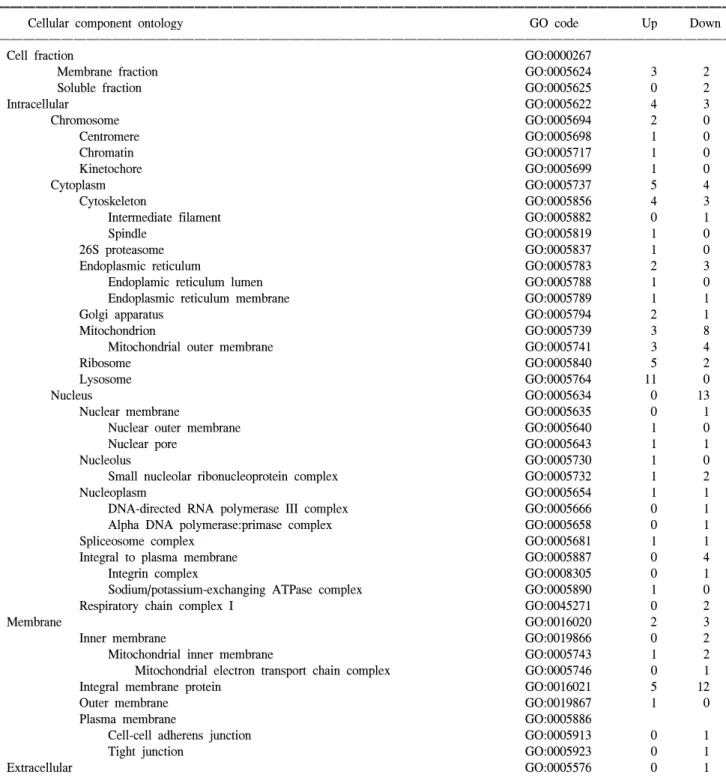
As shown in Table 4, the transcripts in the cytoskeleton (4/3: HRIHFB212, RAE1, MGC17921, CENPF/DSP, CLDN7, CDC16) were balanced, whereas a clone on chromosome Xq25-26.3, which is remarkably similar to that of the human molecule beta-tubulin, with 98% homology, was highly down-regulated in the SiHa cells. No nuclear structural proteins were expressed in this assay.
Transcripts in the proteasome and ubiquitin degradation pathways, such as UBE2E1, UBE2G1, KIAA1131, FLJ13855 and PSMB4, were up-regulated 2-fold, but in contrast, the UBE2N, FLJ20333 and UFD1L, involved in the degradation of ubiquitin fusion proteins, were down-regulated. On the other hand, as shown in Table 2 and Fig. 3F, the protein biosynthesis activity in the metabolism was relatively up-regulated (8/6: RPS25, EIF2S2, RPS8, RPS11, RPL7, EEF1D, RBMS1, ATP5O/RPL31 EEF1B2, RPS7, TARS, RPL26L1, SRP9).
Fig. 2. Results of Northern blot. Total RNA obtained from HaCAT
cells (lane 1) and SiHa cells (lane 2) was subjected to Northern analysis as described in materials and methods.
β-actin 2 1 RPL10 RAB6C NPM1 PME-1 HEXB CLN 5 LSM3 SNRPE 2 1 ERP70 β-actin 2 1 RPL10 RAB6C NPM1 PME-1 HEXB CLN 5 LSM3 SNRPE 2 1 ERP70
Table 2. Summarized biological process ontology of up- and down-regulated transcripts. The GO code and the number of up-/
down-regulated genes were shown
ꠚꠚꠚꠚꠚꠚꠚꠚꠚꠚꠚꠚꠚꠚꠚꠚꠚꠚꠚꠚꠚꠚꠚꠚꠚꠚꠚꠚꠚꠚꠚꠚꠚꠚꠚꠚꠚꠚꠚꠚꠚꠚꠚꠚꠚꠚꠚꠚꠚꠚꠚꠚꠚꠚꠚꠚꠚꠚꠚꠚꠚꠚꠚꠚꠚꠚꠚꠚꠚꠚꠚꠚꠚꠚꠚꠚꠚꠚꠚꠚꠚꠚꠚꠚꠚꠚꠚꠚꠚꠚꠚꠚꠚꠚꠚꠚꠚꠚꠚꠚꠚꠚꠚꠚꠚꠚꠚꠚꠚꠚꠚꠚꠚꠚꠚ
Biological process ontology GO code Up Down
ꠏꠏꠏꠏꠏꠏꠏꠏꠏꠏꠏꠏꠏꠏꠏꠏꠏꠏꠏꠏꠏꠏꠏꠏꠏꠏꠏꠏꠏꠏꠏꠏꠏꠏꠏꠏꠏꠏꠏꠏꠏꠏꠏꠏꠏꠏꠏꠏꠏꠏꠏꠏꠏꠏꠏꠏꠏꠏꠏꠏꠏꠏꠏꠏꠏꠏꠏꠏꠏꠏꠏꠏꠏꠏꠏꠏꠏꠏꠏꠏꠏꠏꠏꠏꠏꠏꠏꠏꠏꠏꠏꠏꠏꠏꠏꠏꠏꠏꠏꠏꠏꠏꠏꠏꠏꠏꠏꠏꠏꠏꠏꠏꠏꠏꠏ
Cell communication GO:0007154 6 10
Cell adhesion GO:0007155 0 2
Cell-matrix adhesion GO:0007160 0 1
Cell-cell signaling GO:0007267
Transmission of nerve impulse GO:0019226 0 1
Synaptic transmission GO:0007268 1 0
Response to external stimulus GO:0009605
Vision GO:0007601 0 1
Antigen presentation, endogenous antigen GO:0019833 0 1
Antigen processing, endogenous antigen via MHC class 1 GO:0019885 0 1
Immune response GO:0006955 1 1
Signal transduction GO:0007165 4 6
Integrin-mediated signaling pathway GO:0007229 0 1
Intracellular signaling cascade GO:0007242 1 0
JNK cascade GO:0007254 0 2
Small GTPase mediated signal transduction GO:0007264 1 0
Cell growth and maintenance GO:0008151 3 1
Cell cycle GO:0007049 2 3
DNA replication and chromosome cycle GO:0000067 1 0
Mitosis GO:0007067 1 0
Regulation of cell cycle GO:0000074 0 1
Cell motility GO:0006928 0 1
Regulation of cell migration GO:0030334 0 1
Cell organization and biogenesis GO:0016043
Cell-substrate junction assembly GO:0007044 0 1
Cell proliferation GO:0008283 0 1
Metabolism GO:0008152
Amino acid metabolism GO:0006520 0 1
Protein biosynthesis GO:0006412 8 6
ATP biosynthesis GO:0006754 1 0
Carbohydrate metabolism GO:0005975 1 1
Regulation of proteolysis and peptidolysis GO:0030162 0 1
Electron transport GO:0006118 1 2
Energy pathways GO:0006091 1 3
Lipid metabolism GO:0006629 0 1
Fatty acid metabolism GO:0006631 0 1
Nucleobase, nucleoside, nucleotide and nucleic acid metabolism GO:0006139
DNA metabolism GO:0006259
DNA repair GO:0006281 1 4
DNA replication GO:0006260 1 3
RNA metabolism GO:0016070
RNA processing GO:0006396 1 0
mRNA splicing GO:0006371 1 2
Transcription GO:0006350 0 1
Regulation of transcription, DNA-dependent GO:0006355 5 7
RNA elongation GO:0006354 0 1
Protein metabolism GO:0019538
Protein modification GO:0006464 2 2
Protein folding GO:0006457 0 1
Protein complex assembly GO:0006461 0 2
Response to stress GO:0006950 0 1
Response to heat GO:0006951 1 0
Transport GO:0006810 10 9
Nucleotide-sugar transport GO:0015780 1 0
Hydrogen transport GO:0006818 1 0
Protein transport GO:0015031 1 1
Intracellular protein transport GO:0006886 1 1
Death GO:0016265
Cell death GO:0008219
Apoptosis GO:0006915 0 1
Development GO:0007275 1 0
Morphogenesis GO:0009653 0 2
Epidermal differentiation GO:0008544 0 1
Organogenesis GO:0009887 2 2
Neurogenesis GO:0007399 1 0
Skeletal development GO:0001501 1 1
Table 3. Summarized molecular function ontology of up- and down-regulated transcripts
ꠚꠚꠚꠚꠚꠚꠚꠚꠚꠚꠚꠚꠚꠚꠚꠚꠚꠚꠚꠚꠚꠚꠚꠚꠚꠚꠚꠚꠚꠚꠚꠚꠚꠚꠚꠚꠚꠚꠚꠚꠚꠚꠚꠚꠚꠚꠚꠚꠚꠚꠚꠚꠚꠚꠚꠚꠚꠚꠚꠚꠚꠚꠚꠚꠚꠚꠚꠚꠚꠚꠚꠚꠚꠚꠚꠚꠚꠚꠚꠚꠚꠚꠚꠚꠚꠚꠚꠚꠚꠚꠚꠚꠚꠚꠚꠚꠚꠚꠚꠚꠚꠚꠚꠚꠚꠚꠚꠚꠚꠚꠚꠚꠚꠚꠚ
Molecular function ontology GO code Up Down
ꠏꠏꠏꠏꠏꠏꠏꠏꠏꠏꠏꠏꠏꠏꠏꠏꠏꠏꠏꠏꠏꠏꠏꠏꠏꠏꠏꠏꠏꠏꠏꠏꠏꠏꠏꠏꠏꠏꠏꠏꠏꠏꠏꠏꠏꠏꠏꠏꠏꠏꠏꠏꠏꠏꠏꠏꠏꠏꠏꠏꠏꠏꠏꠏꠏꠏꠏꠏꠏꠏꠏꠏꠏꠏꠏꠏꠏꠏꠏꠏꠏꠏꠏꠏꠏꠏꠏꠏꠏꠏꠏꠏꠏꠏꠏꠏꠏꠏꠏꠏꠏꠏꠏꠏꠏꠏꠏꠏꠏꠏꠏꠏꠏꠏꠏ
Apoptosis regulator GO:0016329 0 1
Apoptosis inhibitor GO:0008189 0 1
Binding GO:0005488 0 2
Calcium ion binding GO:0005509 0 1
Calcium ion storage GO:0005514 0 1
Glycosaminoglycan binding GO:0005539
Zinc binding GO:0008270 0 3
Magnesium binding GO:0000287 0 2
Nucleic acid binding GO:0003676 2 0
DNA binding GO:0003677 6 12
Damaged DNA binding GO:0003684 0 1
Single-stranded DNA binding GO:0003697 1 0
AT DNA binding GO:0003680 1 0
Exonuclease GO:0004527 0 1
RNA binding GO:0003723 10 5
mRNA binding GO:0003729 1 2
rRNA binding GO:0019843 1 0
Translation elongation factor GO:0003746 1 1
Translation initiation factor GO:0003743 1 0
Nucleotide binding GO:0000166
ATP binding GO:0005524 0 4
GTP binding GO:0005525 1 0
Protein binding GO:0005515 2 4
Transcription cofactor GO:0003712 0 1
Chaperone GO:0003754 1 2
Heat shock protein GO:0003773 1 0
Hsp70/Hsc70 protein regulator GO:0030192 0 2
Enzyme GO:0003824 2 0 Hydrolase GO:0016787 4 3 Isomerase GO:0016853 1 0 Ligase GO:0016874 2 2 Lyase GO:0016829 1 1 Oxidoreductase GO:0016491 0 5
Ubiquitin conjugating enzyme GO:0004840 5 3
Transferase GO:0016740 3 4
Protein phosphatase GO:0004721 0 1
Enzyme regulator GO:0030234
Serine protease inhibitor GO:0004867 0 1
Signal transducer GO:0004871 0 1
Receptor GO:0004872 0 3
Ligand-dependent nuclear receptor GO:0004879 0 1
Benzodiazepine receptor GO:0008503 0 1
Cell adhesion receptor GO:0004895 0 1
MHC class 1 receptor GO:0030106 0 1
Receptor signaling protein GO:0005057 1 0
Structural molecule GO:0005198 0 2
Structural constituent of cytoskeleton GO:0005200 0 1
Structural constituent of ribosome GO:0003735 5 2
Transcription regulator GO:0030528
Transcriptional repressor GO:0016564 0 1
Translation regulator GO:0045182
Translation factor, nucleic acid binding GO:0008135 2 0
Translation initiation factor GO:0003743 1 0
Transporter GO:0005215 2 0
Auxiliary transport protein GO:0015457 2 1
Carrier GO:0005386 0 1
Channel/pore class transporter GO:0015267 2 1
Electron transporter GO:0005489 1 1
Ion transporter GO:0015075 4 1
Protein transporter GO:0008565 1 1
DISCUSSION
Most of clones and transcripts with less than a 2-fold change were not used in this assay, indicating that the transcriptional regulation of many transcripts was actively maintained at certain levels, regardless of the HPV-16-derived cellular
pro-cess. Several of the up-regulated transcripts, such as 16S ribosomal RNA, casein kinase 2 subunit beta and NADH dehydrogenase subunit 4, were previously reported to be over-expressed in squamous cell cervical carcinomas (8). Also, a number of genes, known as being differentially up- or down- regulated compared to normal, such as XBP1, CENPF, RPS25, HEXB, ITGA6, CNTNAP2, MCM5, MCM3 and IKBKAP, were identified. Reliable gene expression data shows the
Table 4. Summarized cellular component ontology of up- and down-regulated transcripts
ꠚꠚꠚꠚꠚꠚꠚꠚꠚꠚꠚꠚꠚꠚꠚꠚꠚꠚꠚꠚꠚꠚꠚꠚꠚꠚꠚꠚꠚꠚꠚꠚꠚꠚꠚꠚꠚꠚꠚꠚꠚꠚꠚꠚꠚꠚꠚꠚꠚꠚꠚꠚꠚꠚꠚꠚꠚꠚꠚꠚꠚꠚꠚꠚꠚꠚꠚꠚꠚꠚꠚꠚꠚꠚꠚꠚꠚꠚꠚꠚꠚꠚꠚꠚꠚꠚꠚꠚꠚꠚꠚꠚꠚꠚꠚꠚꠚꠚꠚꠚꠚꠚꠚꠚꠚꠚꠚꠚꠚꠚꠚꠚꠚꠚꠚ
Cellular component ontology GO code Up Down
ꠏꠏꠏꠏꠏꠏꠏꠏꠏꠏꠏꠏꠏꠏꠏꠏꠏꠏꠏꠏꠏꠏꠏꠏꠏꠏꠏꠏꠏꠏꠏꠏꠏꠏꠏꠏꠏꠏꠏꠏꠏꠏꠏꠏꠏꠏꠏꠏꠏꠏꠏꠏꠏꠏꠏꠏꠏꠏꠏꠏꠏꠏꠏꠏꠏꠏꠏꠏꠏꠏꠏꠏꠏꠏꠏꠏꠏꠏꠏꠏꠏꠏꠏꠏꠏꠏꠏꠏꠏꠏꠏꠏꠏꠏꠏꠏꠏꠏꠏꠏꠏꠏꠏꠏꠏꠏꠏꠏꠏꠏꠏꠏꠏꠏꠏ
Cell fraction GO:0000267
Membrane fraction GO:0005624 3 2
Soluble fraction GO:0005625 0 2
Intracellular GO:0005622 4 3 Chromosome GO:0005694 2 0 Centromere GO:0005698 1 0 Chromatin GO:0005717 1 0 Kinetochore GO:0005699 1 0 Cytoplasm GO:0005737 5 4 Cytoskeleton GO:0005856 4 3
Intermediate filament GO:0005882 0 1
Spindle GO:0005819 1 0
26S proteasome GO:0005837 1 0
Endoplasmic reticulum GO:0005783 2 3
Endoplamic reticulum lumen GO:0005788 1 0
Endoplasmic reticulum membrane GO:0005789 1 1
Golgi apparatus GO:0005794 2 1
Mitochondrion GO:0005739 3 8
Mitochondrial outer membrane GO:0005741 3 4
Ribosome GO:0005840 5 2
Lysosome GO:0005764 11 0
Nucleus GO:0005634 0 13
Nuclear membrane GO:0005635 0 1
Nuclear outer membrane GO:0005640 1 0
Nuclear pore GO:0005643 1 1
Nucleolus GO:0005730 1 0
Small nucleolar ribonucleoprotein complex GO:0005732 1 2
Nucleoplasm GO:0005654 1 1
DNA-directed RNA polymerase III complex GO:0005666 0 1
Alpha DNA polymerase:primase complex GO:0005658 0 1
Spliceosome complex GO:0005681 1 1
Integral to plasma membrane GO:0005887 0 4
Integrin complex GO:0008305 0 1
Sodium/potassium-exchanging ATPase complex GO:0005890 1 0
Respiratory chain complex I GO:0045271 0 2
Membrane GO:0016020 2 3
Inner membrane GO:0019866 0 2
Mitochondrial inner membrane GO:0005743 1 2
Mitochondrial electron transport chain complex GO:0005746 0 1
Integral membrane protein GO:0016021 5 12
Outer membrane GO:0019867 1 0
Plasma membrane GO:0005886
Cell-cell adherens junction GO:0005913 0 1
Tight junction GO:0005923 0 1
Extracellular GO:0005576 0 1
consistency of the above-regulated transcripts to those of the previously reported results, and validates the profiling method for the study of the cervical cancer-specific pathway. As usual, the gene expression profiles have been classified into reasonable groups using statistical data mining methods, such as the hierarchical clustering and K-Means clustering. These are, however, based on the statistical relationships between the genes, resulting in a biological description limit, as well as an analytical reproducibility problem. Thus, in order to obtain the biological interconnectivity between the gene expression patterns, the differentially regulated genes should be categorized using the Gene Ontology. Correlations are sought between the genes in cellular process groups and their expression patterns. The changes observed in this analysis provide important insights into the more specific cancer-related gene activity and HPV-16-derived functional change patterns. Closer examination of the 157 genes resulted in a number of reciprocally dependent cellular processes, revealing that the expression patterns are not randomly distributed with respect to their function.
On the other hand, as shown in Table 1, the potentially significant genes with unknown functions are shown in bold
type. The reported genes can be noted as new putative cervical cancer-related genes, as there were no matches between the genes and any other known functional activities in the GO database search. Of these genes, for instance, the down- regulation of LASS2 in hepatocellular carcinoma cell lines was only reported to lead to the progression of cancer cell growth. Also, MPP6, a member of the p55-like membrane-associated guanylate kinase (MAGUK) subfamily, which functions in tumor suppression and receptor clustering by forming multi-protein complexes, contains distinct sets of transmembrane, cytoskeletal and cytoplasmic signaling proteins (9). The MPP6 was down-regulated in this study. Future studies will be required to clarify these genes regulatory mechanisms and their role in cervical carcinogenesis.
With cell communication, the down-regulated cell adhesion activity was likely to be affected by the HPV 16-associated cellular pathway, indicating a decrease in the adhesive pro-perties of cervical carcinogenesis. For instance, the alpha-6 integrin (ITGA6) and contactin-associated protein 2 (CNTNAP2), two other cell-to-matrix attachment-related components, were highly down-regulated. It was also reported that mice deficient in alpha-6 integrin, through a targeted disruption, died with
Fig. 3. Relative expression levels
for genes with function- dependent transcript repre-sentation; (A) cell com-munication, (B) transport, (C) DNA metabolism, (D) development, (E) DNA binding, (F) protein bio-synthesis. EXT2 XBP1 SNX16 RRAD MJD RAB6C SORD PAK1 IKBKAP DUSP10 CREB1 CNTNAP2 B2M OXA1L ITGA6 MPP6 A EXT2 XBP1 SNX16 RRAD MJD RAB6C SORD PAK1 IKBKAP DUSP10 CREB1 CNTNAP2 B2M OXA1L ITGA6 MPP6 SORD PAK1 IKBKAP DUSP10 CREB1 CNTNAP2 B2M OXA1L ITGA6 MPP6 A SNX16 ATP5J VDAC2 SLC16A1 DDX19 ATP5O ATP1B1 SLC35A3 RAB6C RAE1 STX8 SLC25A3 SFXN1 AP3B1 SLC25A4 VPS11 LOC91137 KTN1 C17orf26 SNX16 ATP5J B SNX16 ATP5J VDAC2 SLC16A1 DDX19 ATP5O ATP1B1 SLC35A3 RAB6C RAE1 VDAC2 SLC16A1 DDX19 ATP5O ATP1B1 SLC35A3 RAB6C RAE1 STX8 SLC25A3 SFXN1 AP3B1 SLC25A4 VPS11 LOC91137 KTN1 C17orf26 SNX16 ATP5J B TDG GTF2H2 POLA MCM3 UBE2N MCM5 RBMS1 UBE2V1 APEX2
C
TDG GTF2H2 POLA MCM3 UBE2N MCM5 RBMS1 UBE2V1 APEX2 TDG GTF2H2 POLA MCM3 UBE2N MCM5 RBMS1 UBE2V1 APEX2C
TDG GTF2H2 POLA MCM3 UBE2N MCM5D
TDG GTF2H2 POLA MCM3 UBE2N MCM5 TDG GTF2H2 TDG GTF2H2 POLA MCM3 UBE2N MCM5 POLA MCM3 UBE2N MCM5D
SNAPC3 XBP1 KIAA0441 HMGA2 GABPB1 AS3 MCM5 POLR3K PPARD NAB1 MCM3 CREB1 AND-1 FLJ20333 GTF2H2 KIAA1327 UBP1 ZNF292 E SNAPC3 XBP1 KIAA0441 HMGA2 GABPB1 AS3 MCM5 POLR3K PPARD NAB1 MCM3 CREB1 AND-1 FLJ20333 GTF2H2 KIAA1327 UBP1 ZNF292 SNAPC3 XBP1 KIAA0441 HMGA2 GABPB1 AS3 SNAPC3 XBP1 KIAA0441 HMGA2 GABPB1 AS3 MCM5 POLR3K PPARD NAB1 MCM3 CREB1 AND-1 FLJ20333 GTF2H2 KIAA1327 UBP1 ZNF292 MCM5 POLR3K PPARD NAB1 MCM3 CREB1 AND-1 FLJ20333 GTF2H2 KIAA1327 UBP1 ZNF292 E RPS25 EIF2S2 RPS8 RPS11 RPL7 RBMS1 EEF1D ATP5O SRP9 TARS RPS7 EEF1B2 RPL31 RPL26L1 F RPS25 EIF2S2 RPS8 RPS11 RPL7 RBMS1 EEF1D ATP5O SRP9 TARS RPS7 EEF1B2 RPL31 RPL26L1 RPS25 EIF2S2 RPS8 RPS11 RPL7 RBMS1 EEF1D ATP5O SRP9 TARS RPS7 EEF1B2 RPL31 RPL26L1 RPS25 EIF2S2 RPS8 RPS11 RPL7 RBMS1 EEF1D ATP5O RPS25 EIF2S2 RPS8 RPS11 RPL7 RBMS1 EEF1D ATP5O SRP9 TARS RPS7 EEF1B2 RPL31 RPL26L1 SRP9 TARS RPS7 EEF1B2 RPL31 RPL26L1 Fsevere blistering of the skin and other epithelia (10). The phenotype was reminiscent of human epidermolysis bullosa. Transcripts in the immune response (1/1: XBP1/IKBKAP) contained only two genes, but a previous study reported that inflammatory and chemotactic-related transcripts were not detected in cervical cancer cells compared to normal cells (11). Especially, the up-regulated XBP1, involved in B-cell biology, was reported to be able to differentiate myeloma from non myeloma cell lines (12). Recent studies have shown that two mutations in the IKBKAP gene are responsible for a developmental disorder of the sensory and autonomic nervous system (13). One of the highly up-regulated genes in normal uterus tissue (14), CREB1, was down-regulated in the cell communication function.
With cell growth and maintenance, many cell cycle checkpoints are deregulated in oncogenesis, which results from interference with the cell cycle regulation of the oncoproteins by destruction of the p53 and pRb tumor suppressors. Their inactivation leads to alteration in the cellular gene expression. It was reported that CENPF, which is involved in DNA replication and mitosis, was induced by E6 and/or E7 retro-viruses, after immortalization, thus confirming the consistency of our study. Also, the MCM3 protein is down-regulated in cells that have not ceased to proliferate. As shown in our study, the transcription level of VDAC2 in the malignant tumor cell line was significantly higher than that in normal cells (15). There are several notable gene expression patterns in response to stress function. Nearly all the stress response genes, in-cluding those involved in the response to pathogens and bacteria, were not expressed, regardless of HPV 16. Only H11, the eighth known human small Hsp, described as a serine- threonine protein kinase (16), was up-regulated, whereas the DUSP10 in the stress response was down-regulated.
With the metabolism, HEXB has not been fully described in the context of cervical cancer. Recently, it was represented, in the GenBank (accession number: AF378118.1), to be up- regulated in human cervical cancer, as a proto-oncogene. Its role in cervical carcinogenesis is being investigated further. For example, the question is to test if the HEXB gene maps to the cervical cancer susceptibility locus, which would support a potential link in the malfunctioned metabolism related to disease development, and could be regarded as being res-ponsible for an increased susceptibility to the HPV 16 in cervical cancer. A highly over-expressed clone, NADH dehydro-genase subunit 4, as a mitochondrial enzyme, is involved in the metabolic pathway. It has been suggested that metabolic transformation is likely to occur during the early malignant stage of carcinogenesis (17). Also, the level of NADH dehydro-genase subunits expression in pre-malignant colon adenomas was up regulated, indicating that the tumorigenicity of cells was associated with the overexpression of the NADH dehydro-genase subunit 4 (18). All these evidence suggest the NADH dehydrogenase subunit 4 serves an important role in cervical carcinogenesis.
With the development, an overexpressed clone, the Mus musculus casein kinase 2 beta subunit, is highly homologous to that of the human casein kinase 2 subunit beta, an enzyme that is involved in the transcription, signaling and proliferation, and in various stages of the development. More significantly,
it has been reported that the phosphorylation of HPV E7, by casein kinase 2, enhances the disruption of the G1/S transition by HPV E7, suggesting that the human casein kinase 2 subunit beta plays an important role in human cervical neoplasia (19). With apoptosis, a gene involved with the Hsp70/Hsc70 protein regulator, BAG3, which binds with high affinity to the ATPase domain of the Hsc70, inhibiting its chaperone activity in a Hip-repressible manner, allows opportunities for the speci-fication and diversispeci-fication of the Hsp70/Hsc70 chaperone functions (20). CANX (calnexin) functions as a chaperone, regulating the transit of proteins through the ER. Comparisons of the sequences from cDNA clones of human, mouse and rat CANXs have demonstrated a high level of conservation in the sequence identity, suggesting that CANX performs important cellular functions (21). The gene expression profiles showed that SiHa cells do not induce significant levels of apoptosis, as the rate of protein synthesis (nearly up-regulated) was promoted at the polypeptide chain initiation level.
Transcription is a complex category that can lead to global alterations in the whole network of gene expressions. It has been reported that transcriptional modification was accom-plished by SNAPC3 proteins, which acted at a specific promotor, as well as by regional activation (CENPF, HMGA2) of the chromosomal domain. Some of these transcriptional regulators are expected to be highly relevant in the cervical cancer pathway, and their regulation may affect different cellular functions. The HMGA2 gene has been considered, for several reasons, to be an especially good candidate for in-volvement in lipomas. Firstly, its location, 12q15, is involved in a variety of malignant and benign solid tumors, such as lipomas, pleomorphic salivary adenomas and uterine leiomyo-mas. Secondly, the chromosomal abnormalities of the 12q13- q15 region, frequently found in human benign tumors, are the critical events in the genesis of the tumors (22). Conversely, the transcriptional repressor, NAB1, was down-regulated, and whose aberrant expression may serve to activate other down-stream pathways that further contribute to the development of a tumor. One of the highly expressed clones is homologous to the human 16S ribosomal RNA required for the translation of mitochondrial subunits.
Several genes, coding for cellular structure proteins, changed their expression in the pathway to that of the HPV-16- dependent transcription. Transcripts in this category can be subdivided into two groups: cytoskeletal and nuclear-related genes. The cytoskeleton integrity is known to play an important role in cell cycle progression, cell death and cell differentiation. An abnormal cytoskeleton is often observed in cancer cells. In this study, however, the gene expression profiles involved in the cytoskeleton were balanced, whereas a clone, similar to the human molecule, showing 98% homology on beta-tubulin, was highly down-regulated in the SiHa cells, which was consistent with a previous study (23).
Genes involved in the proteasome and ubiquitin degradation pathways form another important group. For protein degra-dation arrest, the repression of the ubiquitin-conjugating enzyme, UBE2E1, which is involved in the selective protein destruction by a specific protease complex, and the 26S proteasome, PSMB4, may be required in a dominant negative form for these proteins to prevent the recognition into
degradation (24). However, the transcripts in this category were up-regulated 2-fold, whereas, the degradation of ubiquitin fusion proteins were down-regulated. On the other hand, the protein biosynthesis function in the metabolism was relatively up-regulated. The over-expression of RPS25 especially, can result in significant effects on protein synthesis and SRP9, which leads to an inhibition of polypeptide elongation, known as translation arrest, were down-regulated, indicating that they are essential for overcoming the translation arrest.
Taken together, the expression behaviors of genes in protein degradation suggests that SiHa cells may increase the turnover of many proteins, which could be due to either the replacement of damaged molecules, or to the need to significantly change the proteome of the cell, probably to obtain new molecules that are involved in the cervical carcinogenesis or the replacement of damaged proteins.
CONCLUSIONS
Our results have shown that GO analysis can describe the cellular processes that occur in HPV 16-positive cervical cancer cells, and overcomes the complexity of gene expression profiles, and can be an alternative to the hierarchical or K-Means clustering. Further systematic approaches, including cervical cancer lesions at various stages and genome-wide analyses, using the GO, can certainly elucidate new connections between gene expression profiles and the cellular pathways of cervical carcinogenesis, in order to identify valuable prognostic candidate genes.
REFERENCES
1. Münger K, Howley PM. Human papillomavirus immortalization and transformation functions. Vir Res 2002;89:213-228. 2. Lee SJ, Namkoong SE, Lee WC, Sul JW, Jee SH, You YK,
Lee JE, Park JS. Polymorphisms of p53, p21 and IRF-1 and cervical cancer susceptibility in Korean women. Cancer Res Treat 2002;34:357-364.
3. Ponnazhagan S, Curiel DT, Shaw DR, Alvarez RD, Gene PS. Adeno-associated virus for cancer gene therapy. Cancer Re-search 2001;61:6313-6321
4. Ashburner M, Ball CA, Blake JA, Botstein D, Butler H, Cherry JM, Davis AP, Dolinski K, Dwight SS, Eppig JT, Harris MA, Hill DP, Issel-Tarver L, Kasarskis A, Lewis S, Matese JC, Richardson JE, Ringwald M, Rubin GM, Sherlock G. Gene ontology: tool for the unification of biology. Nat Genet 2000;25:25-29.
5. Boukamp P, Petrussevska RT, Breitkreutz D, Hornung J, Markham A, Fusenig NE. Normal keratinization in a spon-taneously immortalized aneuploid human keratinocyte cell line. J Cell Biol 1988;106:761-771.
6. Liang P, Pardee AB. Differential display of eukaryotic mes-senger RNA by means of polymerase chain reaction. Science 1992;257:967-971.
7. Pletcher SD, Macdonald SJ, Marguerie R, Certa U, Stearns SC, Goldstein DB, Partridge L. Genome-wide transcript profiles in aging and calorically restricted Drosophila melanogaster. Curr Biol 2002;12:712-723.
8. Cheng Q, Lau WM, Tay SK, Chew SH, Ho TH, Hui KM. Identification and characterization of genes involved in the
carcinogenesis of human squamous cell cervical carcinoma. Int J Cancer 2002;98:419-426.
9. Tseng TC, Marfatia SM, Bryant PJ, Pack S, Zhuang A, O'Brien JE, Lin L, Hanada T, Chishti AH. VAM-1: a new member of the MAGUK family binds to human Veli-1 through a conserved domain. Biochim Biophys Acta 2001;1518:249- 259.
10. Georges-Labouesse E, Messaddeq N, Yehia G, Cadalbert L, Dierich A, Le Meur M. Absence of integrin alpha-6 leads to epidermolysis bullosa and neonatal death in mice. Nat Genet 1996;13:370-373.
11. Hazelbag S, Fleuren GJ, Baelde JJ, Schuuring E, Kenter GG, Gorter A. Cytokine profile of cervical cancer cells. Gyne Oncol 2001;83:235-243.
12. Claudio JO, Masih-Khan K, Tang H, Goncalves J, Voralia M, Li ZH, Nadeem V, Cukerman E, Francisco-Pabalan O, Liew CC, Woodgett JR, Stewart AK. A molecular compendium of genes expressed in multiple myeloma. Blood 2002;100:2175- 2186.
13. Coli R, Anderson SL, Volpi SA, Rubin BY. Genomic organi-zation and chromosomal localiorgani-zation of the mouse IKBKAP gene. Gene 2001;279:81-89.
14. Su AI, Cooke MP, Ching KA, Hakak Y, Walker JR, Wiltshire T, Orth AP, Vega RG, Sapinoso LM, Moqrich A, Patapoutian A, Hampton GM, Schultz PG, Hogenesch JB. Large-scale analysis of the human and mouse transcriptomes. Proc Natl Acad Sci USA 2002;99:4465-4470
15. Shinohara Y, Ishida T, Hino M, Yamazaki N, Baba Y, Terada H. Characterization of porin isoforms expressed in tumor cells. Eur J Biochem 2000;267:6067-6073.
16. Kappe G, Verschuure P, Philipsen RL, Staalduinen AA, Van de Boogaart P, Boelens WC, De Jong WW. Characterization of two novel human small heat shock proteins: protein kinase- related HspB8 and testis-specific HspB9. Biochim Biophys Acta 2001;1520:1-6.
17. Costello LC, Franklin RB. Bioenergetic theory of prostate malignancy. Prostate 1994;25:162-166.
18. Mills KI, Woodgate LJ, Gilkes AF, Walsh V, Sweeney MC, Brown G, Burnett AK. Inhibition of mitochondrial function in HL60 cells is associated with an increased apoptosis and expression of CD14. Biochem Biophys Res Commun 1999; 263:294-300.
19. Massimi P, Pim D, Storey A, Banks L. HPV-16 E7 and adenovirus E1a complex formation with TATA box binding protein is enhanced by casein kinase 2 phosphorylation. Oncogene 1996;12:2325-2330.
20. Takayama S, Xie Z, Reed JC: An evolutionarily conserved family of Hsp70/Hsc70 molecular chaperone regulators. J Biol Chem 1999;274:781-786.
21. Tjoelker LW, Seyfried CE, Eddy RL, Byers MG, Shows TB, Calderon J, Schreiber RB, Gray PW. Human, mouse, and rat calnexin cDNA cloning: identification of potential calcium binding motifs and gene localization to human chromosome 5. Biochemistry 1994;33:3229-3236.
22. Schoenmakers EPPM, Wanschura S, Mols R, Bullerdiek J, Van den Berghe H, Van de Ven WJM. Recurrent rearrangements in the high mobility group protein gene, HMGI-C, in benign mesenchymal tumours. Nat Genet 1995;10:436-444.
23. Alazawi W, Pett M, Arch B, Scott L, Freeman T, Stanley MA, Coleman N. Changes in cervical keratinocyte gene expression associated with integration of human papillomavirus 16. Cancer Res 2002;62:6959-6965.
24. Nuber U, Schwarz S, Kaiser P, Schneider R, Scheffner M. Cloning of human ubiquitin-conjugating enzymes UbcH6 and UbcH7 (E2-F1) and characterization of their interaction with E6-AP and RSP5. J Biol Chem 1996;271:2795-2800.