© Korean Powder Metallurgy Institute 1142 -Cermet Ceramic Coating (C3)
Although DLC is an ideal chemical barrier that may protect the metal matrix from corrosion, it suffers several drawbacks that may offset its advantage for coating diamond dressers. Firstly, DLC, in addition to deposit on the metal matrix, it will also adhere onto diamond grits. The DLC will wrap around diamond grits so their sharp cutting tips become blunt. The dull diamond tip can no longer penetrate the pad effectively, as a result, pad dress rates decline substantially. However, the wafer polish rate can still be maintained, although it may not be sustained as long as that for uncoated diamond.
Moreover, the adhered DLC on diamond grits may flake off during pad dressing. The separated DLC shreds may mix with the polishing debris that may scratch the expensive wafer. As a result the wafer defect count may increase. Furthermore, because DLC is very different from metal in physical characteristics (e.g. thermal expansion) and chemical properties (e.g. reaction compatibility), their interface is highly stressed. As a result, the poorly adhered DLC may also flake off the metal matrix. The detached DLC could scratch the wafer being polished. Worse still, the exposed metal matrix in the region where DLC is lost is now vulnerable to etching by the corrosive slurry.
In order to improve the adherence of the coating material on the metal matrix and prevent it from coating onto diamond grits, a new coating technology is developed. This time, a metal film (e.g. stainless steel) is deposited first so it can form metallurgical (diffusion) bonding with the metal matrix. The metal film cannot adhere to diamond grits, however. While the metal atoms are showering onto the diamond dresser, a plasma of ceramic material (e.g. Al2O3) is also introduced in the atmosphere. Moreover, the concentrations of metal and ceramic are adjusted in such a
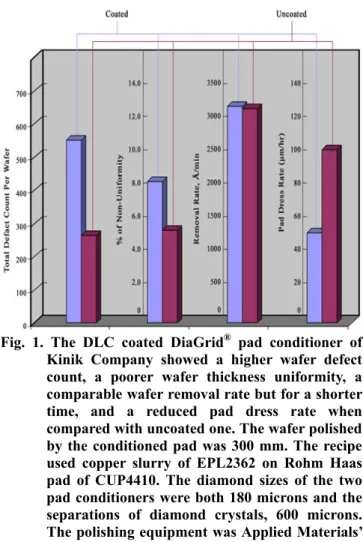
Fig. 1. The DLC coated DiaGrid® pad conditioner of
Kinik Company showed a higher wafer defect count, a poorer wafer thickness uniformity, a comparable wafer removal rate but for a shorter time, and a reduced pad dress rate when compared with uncoated one. The wafer polished by the conditioned pad was 300 mm. The recipe used copper slurry of EPL2362 on Rohm Haas pad of CUP4410. The diamond sizes of the two pad conditioners were both 180 microns and the separations of diamond crystals, 600 microns. The polishing equipment was Applied Materials’ Reflexion.
way that metal underlayer can grade into ceramic top surface.
2006 POWDER METALLURGY World Congress
PC06-W-10
The In-situ Dressing of CMP Pad Conditioners with Novel Coating Protection
James C. Sung*,1,2,3,a, Ming-Chi Kan1,b1
KINIK Company, 64, Chung-San Rd., Ying-Kuo, Taipei Hsien 239, Taiwan, R.O.C. 2
National Taiwan University, Taipei 106, Taiwan, R.O.C. 3
National Taipei University of Technology, Taipei 106, Taiwan, R.O.C. a
[email protected], [email protected] Abstract
Kinik Company pioneered diamond pad conditioners protected by DLC barrier (DiaShield® Coating) back in 1999 (Sung & Lin, US Patent 6,368,198). Kink also evaluated Cermet Composite Coating (CCC or C3, patent pending) with a composition that grades from a metallic (e.g. stainless steel) interlayer to a ceramic (e.g. Al2O3 or SiC) exterior. The metallic interlayer can form metallurgical bond with metallic matrix on the diamond pad conditioner. The ceramic exterior is both wear and corrosion resistant. The gradational design of C3 coating will assure its strong adherence to the substrate because there is no weak boundary between coating and substrate.
© Korean Powder Metallurgy Institute 1143
-The above described cermet (ceramic-metal) composite coating (CCC or C3) has several advantages. Firstly, its base is metal so it can adhere firm to the metal matrix of the diamond dresser. Secondly, because the metal grades into ceramic, there is no boundary in the coating. In other words, the vulnerable weak interface is eliminated. Thirdly, the ceramic is acid proof and it is corrosion resistant. Moreover, the composition of the ceramic as well as metal can be changed to suit specialty requirements (e.g. silicon carbide may be used instead of alumina as the top surface).
The CCC has been applied to diamond dressers and the effect is apparent. The metal underlayer does not adhere to diamond grits so the risk due to the loss of CCC there is minimized. Moreover, because the sharp edges of the diamond are exposed, their dressing ability is maximized. Hence, the pad dressing can be effective, and the CMP polishing may be efficient.
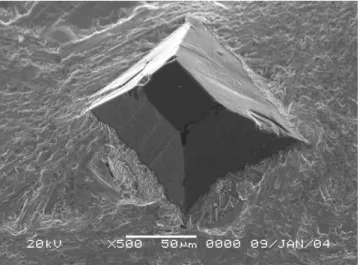
Fig. 2. The diamond grit on the dresser that is coated with CCC is free from over coating after being rubbed against a pad. The exposure of the fresh diamond can also penetrate the pad top easily and hence it can create the optimal texture for efficient polishing of wafer.
The CCC can adhere firm on the metal matrix so the used diamond dresser shows no sign of coating loss. Because the metal matrix is covered during entire period of CMP operation, it is not etched.
In summary, the CCC is more preferred over DLC coating for protecting diamond disks. The advantage of CCC is in its selective ability to adhere metal matrix and not diamond grits. Moreover, CCC is versatile as its geometry (e.g. thickness) and composition can be engineered. It can be specifically designed to meet the in-situ dressing in caustic environment (e.g. copper CMP).
Fig. 3. The intact appearance of CCC after a diamond dresser went through a CMP process (left diagram). In contrast, the peeling is serious with a DLC coated diamond dresser (right diagram).
Fig. 4. The contrast of CCC and DLC coating on diamond dresser. The CCC can adhere firm on metal matrix but it can be removed from diamond grits (left diagram). DLC coating is just the opposite, it will flake off from both metal matrix and diamond grits (right diagram).
References
1. Chien-Min Sung, U. S. Patents 6,039,641. (2000) 2. Chien-Min Sung, U. S. Patents 6,286,498. (2001) 3. Chien-Min Sung and Frank S. Lin, U. S. Patent
6,368,198. (2002)