Differences in Utilization Patterns among Medications in
Children and Adolescents with Attention-Deficit/Hyperactivity
Disorder: a 36-Month Retrospective Study Using the Korean
Health Insurance Review and Assessment Claims Database
We evaluated the differences in utilization patterns including persistence and adherence among medications in children and adolescents with attention deficit hyperactivity disorder (ADHD). The current study was performed using data from the Korean Health Insurance Review and Assessment claims database from January 1, 2009 to December 31, 2013. Our study sample consisted of 10,343 children and adolescents with ADHD who were not given their newly prescribed medication in 360 days before the initial claim in 2010. Data were followed up from the initiation of treatment with ADHD medications in 2010 to December 31, 2013. Discontinuation rates for 4 ADHD medications in our sample ranged from 97.7% for immediate-release methylphenidate to 99.4% for atomoxetine using refill gap more than 30 days and from 56.7% for immediate-release methylphenidate to 62.3% for extended-release methylphenidate using refill gap more than 60 days. In the number of discontinued, we found significant differences among medications using refill gap more than 30 days. Among 4 ADHD medications, extended-release methylphenidate and atomoxetine had more days than immediate-release methylphenidate and osmotic-controlled oral delivery system methylphenidate. In logistic regression analyses, extended-release methylphenidate, osmotic-controlled oral delivery system methylphenidate, and atomoxetine showed less discontinuation compared to immediate-release methylphenidate group when a refill gap more than 30 days was used. In logistic regression analysis of adherence, we could not find any differences among 4 medication types. We suggest that the utilization patterns should be assessed regularly in order to improve future outcomes in children and adolescents with ADHD.
Keywords: Attention Deficit Hyperactivity Disorder; Medication Adherence; Methylphenidate; Atomoxetine
Soo-Young Bhang,1 Jun-Won Hwang,2
Young-Sook Kwack,3 Yoo Sook Joung,4
Soyoung Lee,5 Bongseog Kim,6
Seok Han Sohn,7 Un Sun Chung,8
Jaewon Yang,9 Minha Hong,10
Geon Ho Bahn,11 Hyung Yun Choi,12
In-Hwan Oh,13 and Yeon Jung Lee14
1Department of Psychiatry, Eulji University School of
Medicine, Eulji General Hospital, Seoul, Korea;
2Department of Psychiatry, Kangwon National
University School of Medicine, Chuncheon, Korea;
3Department of Psychiatry, Jeju National University
College of Medicine, Jeju, Korea; 4Department of
Psychiatry, Sungkyunkwan University School of Medicine, Seoul, Korea; 5Department of Psychiatry,
Soonchunhyang University College of Medicine, Bucheon Hospital, Bucheon, Korea; 6Department of
Psychiatry, Inje University School of Medicine, Sanggyepaik Hospital, Seoul, Korea; 7Yonsei Clinic of
Psychiatry, Seoul, Korea; 8Department of Psychiatry,
Kyungpook National University School of Medicine, Daegu, Korea; 9Department of Psychiatry, KAIST
Clinic, Daejeon, Korea; 10Department of Psychiatry,
Myungji General Hospital, Goyang, Korea;
11Department of Psychiatry, Kyung Hee University
School of Medicine, Seoul, Korea; 12Korean Centers
for Disease Control and Prevention, Cheongju, Korea; 13Department of Preventive Medicine, Kyung
Hee University School of Medicine, Seoul, Korea;
14Department of Psychiatry, Soonchunhyang
University College of Medicine, Seoul Hospital, Seoul, Korea
Received: 12 October 2015 Accepted: 30 April 2016 Address for Correspondence: Jun-Won Hwang, MD
Department of Psychiatry, Kangwon National University Hospital, 156 Baengnyeong-ro, Chuncheon 24289, Korea E-mail: [email protected]
Funding: This study was supported by a 2013 Grant from the Korean Academy of Medical Sciences. We also thank the HIRA for access to the claims database.
http://dx.doi.org/10.3346/jkms.2016.31.8.1284 • J Korean Med Sci 2016; 31: 1284-1291
INTRODUCTION
Attention-deficit/hyperactivity disorder (ADHD) is the most common childhood dis-order in psychiatric outpatient clinics and affects 3%-8% of the pediatric population worldwide (1). On contrary to previous notion as a condition of childhood, it has been known that ADHD continues and causes significant psychosocial impairment across life span (2). It has been reported that children and adolescents with ADHD have in-creased risks for challenging behaviors, school drop-out, earlier substance use associ-ated with conduct problem, and problem gambling, as well as mood and anxiety dis-orders (3-6). Adults with ADHD had high risk for a wide range of adverse psychosocial outcomes including low academic achievement, low socioeconomic status, low rates of professional employment, and difficulty in maintaining occupational status and so-cial relationships as well as increased rates of psychopathology including antisoso-cial, addictive, mood and anxiety disorders (7).
and better adherence to treatment seem to be important throu-ghout treatment period. Along with behavioral treatment and educational intervention, medication leads to not only the re-duction of core symptoms but also the improvement of acade-mic difficulties, behaviors problems, and psychiatric comor-bidities in children and adolescents with ADHD (8-10). Stimu-lants were considered as the first-line therapy for children with ADHD. While shorter half-life of immediate-release methyl-phenidate hindered children and adolescents with ADHD from adhering to their medication, the extended-release or osmotic-controlled release oral delivery system methylphenidate im-proved adherence and efficacy (11,12). In addition, nonstimu-lants including atomoxetine have been used alternatively for the treatment of ADHD in children and adolescents (13). How-ever, suboptimal treatment and poor medication compliance were not uncommon even for 12 months of treatment (14,15). In addition, the debates on the overdiagnosis of ADHD and mis-use of medications have been continued, which seemed to af-fect the compliance to medications negatively (16).
A better understanding of the utilization patterns of ADHD medication would be beneficial for clinicians and public health care professionals to determine treatments which can provide effective care with minimal adjustment of health care resourc-es. In order to measure the adherence to long-term drug thera-py retrospectively, analysis of prescription claims data has been used as a fairly reliable method. However, until now, the adher-ence to ADHD medication in several countries has been report-ed using the prescription claims data from either only selectreport-ed populations or national representative samples with 1 year of less observation period (15,17-20).
In Korea, the National Health Insurance (NHI) system exists, which is mandatory by Korean law since 1989 (21). The Korean Health Insurance Review and Assessment (HIRA) claims data-base of NHI system had information regarding prescription pat-terns and diagnosis in the International Classification of Diseas-es and Related Health Problems, 10th Revision (ICD-10). There-fore, it can be used as a nationwide source of information regard-ing the use of health care resources durregard-ing ADHD treatment. In the current study, we evaluated the associations between ADHD medication groups and the measures of utilization pat-terns including persistence and adherence in children and ad-olescents with ADHD using information on the Korean HIRA database. The null hypothesis in the current study was that there are no differences among 4 different ADHD medications avail-able in Korea for children and adolescents in persistence and adherence.
MATERIALS AND METHODS
Study population
The current study was performed using data from the Korean
HIRA claims database from January 1, 2009 to December 31, 2013. We selected the information from children and adoles-cents between 6 and 18 years of age who had the diagnosis of ADHD (ICD-10 code F90.0) and newly received their medica-tion at least twice from between January 1, 2010 and December 31, 2010. To be eligible for the current study, subjects were con-sidered as new to ADHD medication if no ADHD medications had been dispensed for at least 360 days before the index date that was defined as the date of the first fill.
Procedures and assessment
The socio-demographic factors including age, sex, the type of insurance, and the hospital level were obtained from the Kore-an HIRA database. According to their initial ADHD medications, we categorized the data of children and adolescents with the ADHD into 4 groups as follows: 1) immediate-release methyl-phenidate (IR-MPH), 2) extended-release methylmethyl-phenidate (ER-MPH), 3) osmotic-controlled release oral delivery system methylphenidate (OROS-MPH), and 4) atomoxetine (ATX). If different medications were used in their initial 2 visits in 2010, the medication prescribed more frequently and/or at a higher dosage in the first 2 visits was selected as an initial one. In addi-tion, the change of initial drug was regarded as a discontinua-tion. In 2010, clonidine was withdrawn from market and not available in Korea. Atomoxetine was only covered from the Ko-rean NHI system when specific comorbid conditions, such as a severe anxiety and Tourette syndrome, were present in children and adolescents with ADHD. The combination of these medi-cations was typically not covered by Korean National Insurance. Data of the subjects were followed up from the initiation of treat-ment with ADHD medications in 2010 (index event) to Decem-ber 31, 2013.
In the current study, persistence was defined as the number of days of continuous treatment with medication during the post-index period (from the index date to the last date of medi-cation prescription). Considering frequent drug holiday during either vacation or weekend in the treatment of children and ad-olescents with ADHD, we defined the refill gap longer than 60 days (GAP60) as well as the conventional 30 days or more refill gap (GAP30) as discontinuation of a treatment. In addition, for sensitivity analysis, 15 days or more refill gap was used in order to check the robustness of the results. Adherence was calculat-ed using the Mcalculat-edication Possession Ratio (MPR) which reflects the proportion of days that patients were in possession of their prescribed medication. In the current study, the MPR was cal-culated by summing days being supplied and dividing by days being treated (i.e., the day intervals between the last date of med-ication prescription and index date). We evaluated the adher-ence using the MPR with the conventional 70% and 80% cut-offs. Sensitivity analysis was also conducted at 90% cut-off. Uti-lization parameters during post-index period including
persis-tence and adherence were measured for 36 months or more. Along with sex, children and adolescents with ADHD were divided into 2 age groups as follows: 6-12 and 13-18 years of age. The insurance type was classified into two categories: Na-tional Health Insurance and Medical Aid. The hospital level was stratified into two groups: general hospitals and private clinics.
Statistical analysis
Differences among ADHD medications in the number of those who discontinued and remained adherence were analyzed us-ing χ2 test. Mean days before discontinuation were compared
us-ing ANOVA with post-hoc comparison. To assess the association between medications and persistence and adherence, a multi-variate logistic regression analysis was employed, controlling for age, sex, and hospital level. SAS 9.3 (SAS Institute, Inc., Cary, NC, USA) was used to analyze the data. An a priori significance level of P < 0.05 was used throughout all statistical analyses.
Ethics statement
The current study was approved by the institutional review board of Eulji University, Eulji General Hospital, Seoul, Korea (IRB No. 2015-01-012). Informed consent was exempted by the board.
RESULTS
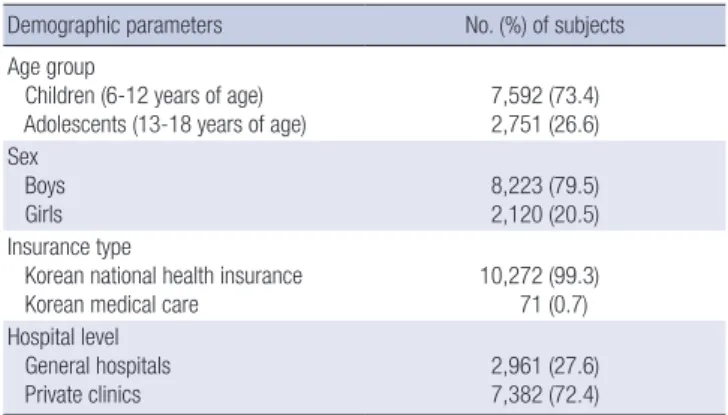
In 2010 Korean HIRA claims database, the total number of new-ly diagnosed children and adolescents with ADHD was 28,436. Our study sample consisted of 10,343 children and adolescents with ADHD who were not given their newly prescribed medica-tion in 360 days before the initial claim in 2010. They were large-ly 6-12 years of age (n = 7,592, 73.4%), boys (n = 8,223, 79.5%), those who had Korean National Health Insurance (n = 10,272, 99.3%), and those who were treated in private clinics (n = 7,382, 72.4%). The most frequently prescribed drug was OROS-MPH (n = 5,739, 55.5%), followed by ER-MPH (n = 2,323, 22.5%), ATX (n = 1,597, 15.4%), and IR-MPH (n = 684, 6.6%) (Table 1). Comparisons of persistence and adherence among 4 ADHD medication groups are presented in Tables 2 and 3. Among 4 ADHD medication groups, significant difference was found in number of children and adolescents who had more than GAP30 (χ2= 17.917, P < 0.001) during their individual follow-up
peri-od. The lowest mean days before GAP30 were 175.2 ± 202.1 in OROS-MPH group, followed by 181.1 ± 225.0 in IR-MPH group, 187.2 ± 221.1 in ER-MPH group, and 192.3 ± 227.3 in ATX group (ANOVA: F = 3.604, P = 0.013, IR-MPH, OROS-MPH < ER-MPH, ATX in post hoc Tukey test). There were a trend toward signifi-cance when we used GAP60 (Chi-square test: χ2= 7.224, P = 0.065).
The mean days before GAP60 was 367.0 ± 274.1 in IR-MPH group, 403.1 ± 291.2 in ER-MPH group, 394.0 ± 292.1 in OROS-MPH
Table 1. Characteristics of 10,343 eligible children and adolescents in the current study
Demographic parameters No. (%) of subjects Age group
Children (6-12 years of age)
Adolescents (13-18 years of age) 7,592 (73.4)2,751 (26.6) Sex
Boys
Girls 8,223 (79.5)2,120 (20.5) Insurance type
Korean national health insurance
Korean medical care 10,272 (99.3)71 (0.7) Hospital level
General hospitals
Private clinics 2,961 (27.6)7,382 (72.4)
ADHD, attention-deficit/hyperactivity disorder; IR-MPH, immediate-release methyl-phenidate; ER-MPH, extended-release methylmethyl-phenidate; OROS-MPH, osmotic-con-trolled release oral delivery system methylphenidate; ATX, atomoxetine.
Table 2. Persistence of ADHD medications
Medications Frequency, No. (%) before GAP30 (Mean ± SD)Duration of persistence Discontinuation using GAP30, No. (%) before GAP60 (Mean ± SD)Duration of persistence Discontinuation using GAP60, No. (%)
IR-MPHa 684 (6.6) 181.1 ± 225.0 668 (97.7) 367.0 ± 274.1 388 (56.7) ER-MPHb 2,323 (22.5) 187.2 ± 221.1 2,297 (98.9) 403.1 ± 291.2 1,448 (62.3) OROS-MPHc 5,739 (55.5) 175.2 ± 202.1 5,691 (99.2) 394.0 ± 292.1 3,510 (61.2) ATXd 1,597 (15.4) 192.3 ± 227.3 1,588 (99.4) 405.2 ± 274.0 986 (61.7) F or χ2 - F = 3.604 χ2= 17.917 F = 3.418 χ2= 7.224 P value - 0.013 0.001 0.017 0.065
Post hoc Tukey test - a,c < b,d - a < c < b,d
-ADHD, attention-deficit/hyperactivity disorder; GAP30, 30 days refill gap; GAP60, 60 days refill gap; IR-MPH, immediate-release methylphenidate; ER-MPH, extended-release methylphenidate; OROS-MPH, osmotic-controlled release oral delivery system methylphenidate; ATX, atomoxetine.
Table 3. Adherence of ADHD medications
Medications Frequency, No. (%) Adherent, MPR ≥ 80, No. (%) Adherent, MPR ≥ 70, No. (%) IR-MPH 684 (6.6) 188 (27.5) 231 (33.8) ER-MPH 2,323 (22.5) 708 (30.5) 861 (37.1) OROS-MPH 5,739 (55.5) 1,610 (28.1) 1,988 (34.6) ATX 1,597 (15.4) 349 (26.7) 537 (33.6) χ2 - 7.884 6.455 P value - 0.048 0.091
ADHD, attention-deficit/hyperactivity disorder; MPR, medication possession ratio; IR-MPH, immediate-release methylphenidate; ER-IR-MPH, extended-release methylpheni-date; OROS-MPH, osmotic-controlled release oral delivery system methylphenimethylpheni-date; ATX, atomoxetine.
group, 405.2 ± 274.0 in ATX group, respectively (F = 3.418, P = 0.017, IR-MPH < OROS-MPH < ER-MPH, ATX in post hoc Tukey test) (Table 2).
Using 80% cut-off of the MPR, 188 (27.5%) in IR-MPH group, 708 (30.5%) in ER-MPH group, 1,610 (28.1%) in OROS-MPH group, and 349 (26.7%) in ATX group achieved the adherence, which was significantly different (χ2= 7.884, P = 0.048). There
was a trend of significance in the MPR using 70% cut-off (χ2=
6.455, P = 0.091) (Table 3).
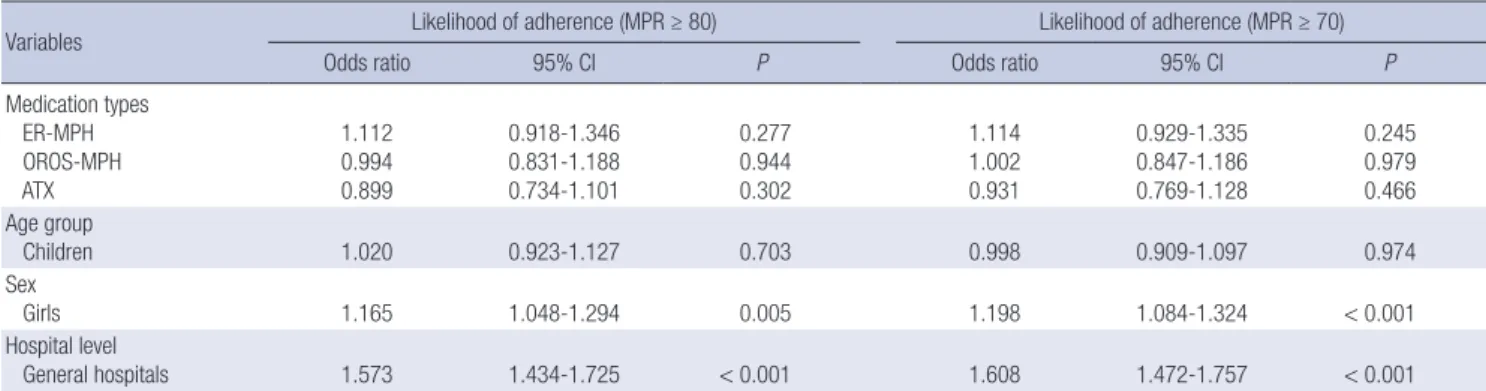
Results from the multivariate logistic regression analyses of persistence (30 and 60 days refill gap), adherence (MPR 70% and 80%), and 4 ADHD medications controlling for age, sex, and the hospital level were presented in Tables 4 and 5. When we used GAP30, ER-MPH, OROS-MPH, and ATX groups showed less discontinuation compared to IR-MPH group [odds ratio (OR) = 0.528, 95% CI: 0.279-0.996, P = 0.049; OR = 0.360, 95% CI: 0.203-0.639, P < 0.001; OR = 0.270, 95% CI: 0.118-0.618, P = 0.002]. Using GAP60, multivariate logistic regression showed OROS-MPH group had a statistical tendency toward more per-sistent than IR-MPH (OR = 0.859, 95% CI: 0.731-1.011, P = 0.068). In addition, no significant differences were observed with other
2 ADHD medications compared to IR-MPH. Regarding covari-ates, general hospitals had a tendency toward more persistence compared to private clinics when we used GAP30 (OR = 0.597, 95% CI: 0.357-1.000, P = 0.050). In addition, when we used GAP60, children (6-12 years of age) discontinued less than adolescents (13-18 years of age) (OR = 0.693; 95% CI: 0.632-0.759, P < 0.001), while general hospitals were associated with less discontinua-tion compared to private clinics (OR = 0.526; 95% CI: 0.479-0.577, P < 0.001), respectively. In sensitivity analysis, results were sim-ilar those for GAP30 in the association between persistence and ADHD medications. However, sex was rather significant covari-ate than hospital level in that case (OR = 1.602, 95% CI: 1.021-2.513, P = 0.040) (Table 4).
Logistic regression analysis of adherence showed no differ-ences among 4 medication types. Regarding covariates, girls were more adherent compared to boys (80% cut-off applied, OR = 1.165, 95% CI: 1.048-1.294, P = 0.005; 70% cut-off applied, OR = 1.198; 95% CI: 1.084-1.324, P < 0.001) and general hospi-tals were significantly more adherent than private clinics (80% cut-off applied, OR = 1.573; 95% CI: 1.434-1.725, P < 0.001; 70% cut-off applied, OR = 1.608; 95% CI: 1.472-1.757, P < 0.001),
re-Table 4. Logistic regression analysis of ADHD medication types and likelihood of discontinuation*
Variables Likelihood of discontinuation (GAP30) Likelihood of discontinuation (GAP60)
Odds ratio 95% CI P Odds ratio 95% CI P
Medication types ER-MPH OROS-MPH ATX 0.528 0.360 0.270 0.279-0.996 0.203-0.639 0.118-0.618 0.049 < 0.001 0.002 0.886 0.859 0.927 0.743-1.056 0.731-1.011 0.771-1.115 0.175 0.068 0.421 Age group Children 0.710 0.462-1.092 0.119 0.693 0.632-0.759 < 0.001 Sex Girls 1.444 0.927-2.251 0.104 1.061 0.961-1.171 0.245 Hospital level General hospitals 0.597 0.357-1.000 0.050 0.526 0.479-0.577 < 0.001
ADHD, attention-deficit/hyperactivity disorder; GAP30, 30 days refill gap; GAP60, 60 days refill gap; IR-MPH, immediate-release methylphenidate; ER-MPH, extended-release methylphenidate; OROS-MPH, osmotic-controlled release oral delivery system methylphenidate; ATX, atomoxetine.
*Reference categories: IR-MPH, adolescents, boys, and private clinics.
Table 5. Logistic regression analysis of ADHD medication types and likelihood of adherence*
Variables Likelihood of adherence (MPR ≥ 80) Likelihood of adherence (MPR ≥ 70)
Odds ratio 95% CI P Odds ratio 95% CI P
Medication types ER-MPH OROS-MPH ATX 1.112 0.994 0.899 0.918-1.346 0.831-1.188 0.734-1.101 0.277 0.944 0.302 1.114 1.002 0.931 0.929-1.335 0.847-1.186 0.769-1.128 0.245 0.979 0.466 Age group Children 1.020 0.923-1.127 0.703 0.998 0.909-1.097 0.974 Sex Girls 1.165 1.048-1.294 0.005 1.198 1.084-1.324 < 0.001 Hospital level General hospitals 1.573 1.434-1.725 < 0.001 1.608 1.472-1.757 < 0.001 ADHD, attention-deficit/hyperactivity disorder; IR-MPH, immediate-release methylphenidate; ER-MPH, extended-release methylphenidate; OROS-MPH, osmotic-controlled re-lease oral delivery system methylphenidate; ATX, atomoxetine.
spectively. In sensitivity analyses using 90% cut-off, similar re-sults were found for both 70% and 80% adherence cut-off level (Table 5).
DISCUSSION
The aim of the current study was to investigate differences in ADHD medication utilization patterns across a follow-up peri-od. In the present study, we retrospectively explored the associ-ations between 4 available medicassoci-ations in Korea and persis-tence and adherence in children and adolescents with ADHD. To our best of knowledge, this is the first study comparing both persistence and adherence among ADHD medications directly in children and adolescents in Korea. In addition, the follow-up period in the current study, at least 36 months, was the longest observation period for adherence in treatment of ADHD until now. In previous studies, most had observation period up to 1 year (22). Until the current study, the longest treatment dura-tion was 6 years for treatment discontinuadura-tion and 2 years for adherence (23,24).
Discontinuation rates for 4 ADHD medications in our sam-ple ranged from 97.7% for IR-MPH to 99.4% for ATX using GAP30 and from 56.7% for IR-MPH to 62.3% for ER-MPH using GAP60. In the number of discontinued, we found significant differenc-es among medications using GAP30. Among 4 ADHD medica-tions, ER-MPH and ATX had more days before both GAP30 and GAP60 than IR-MPH and OROS-MPH. In logistic regression analyses, ER-MPH, OROS-MPH, and ATX showed less discon-tinuation compared to IR-MPH group when GAP30 was used. Our results partially concurred with findings from previous stu-dies, which suggested that there would be differences in ADHD medication discontinuation rates according to medication class-es and action time in children and adolclass-escents (15,17-20,25,26). The present results suggested that children and adolescents, who were treated by IR-MPH that has shorter action time and needs multiple daily doses, discontinued earlier and more than those treated by other 3 ADHD medications available in Korea. In previous studies, the discontinuation rates within 1 year for stimulants ranged from 19.1% for long-acting stimulants in 15,838 subjects of all age in Quebec, Canada to 99% for short-acting MPH in 10,153 newly diagnosed children and adolescents with ADHD under 18 years of age in Taiwan (18,25). In addition, in Italian sample of children and adolescents, the discontinua-tion rate for ATX was 26.0% for 1 year (26). Similar to the current study, Barner et al. (15) enrolled 62,789 children and adoles-cents (3-18 years of age) in Texas Medicaid and compared dif-ferences in persistence using GAP30 among medication types including ATX. In their 1-year follow-up, ATX users persisted most, followed by ER-MPH, prodrug stimulant. In IR-MPH us-ers, there was the lowest persistence. In the current study, we followed up data from the Korean HIRA claims database up to
3 years or more, which might explain partly higher discontinu-ation rate in our sample than previous results in other countries. Although the effectiveness of ADHD medications has been demonstrated, treatment discontinuation is fairly common phe-nomenon. In previous studies, the discontinuation of ADHD medications has been associated with suboptimal control of symptoms, increasing the likelihood of harmful and serious be-haviors including social adversity, academic difficulties, behav-ioral problems, and poor economic, social, and emotional well-being (28-30). In addition, family and associated community members can be influenced by these adverse consequences as well (31,32), which could not be measured in the current study because the data from the Korean HIRA claims database were not allowed to link with any information of their family mem-bers. In previous studies, changes in parenting stress and pa-rental quality of life were measured during the 8-week treatment with OROS-MPH in children and adolescents with ADHD. Hwang et al. (31) found significant decreases in score of the Parenting Stress Index, Short Form from baseline to week 4 and from week 4 to 8, respectively in 495 parents whose children or adolescents with ADHD were treated. In addition, a significant improvement in parental World Health Organization Quality of Life, Brief Scale (WHOQOL-BREF) score was observed in 75 parents of children and adolescents with ADHD during treatment.
As was the case in persistence, there was a significant differ-ence among medications in the number of those who were ad-herent when we used 80% cut-off of the MPR. The rate of sub-jects who had a MPR greater than 80%ranged from 26.7% for ATX to 30.5% for ER-MPH. In previous studies, it has been sug-gested that adherence to ADHD medications would be compa-rable with estimates for psychiatric disorders in adults includ-ing schizophrenia and bipolar disorder as well as chronic medi-cal conditions with low adherence including hyperlipidemia, diabetes, hypertension, etc. (33-35). In previous studies using an 80% cut-off of the MPR, the rate of adherence for 12 months ranged from 9.8% for short-acting stimulants to 64% for long-acting stimulants including dexmethylphenidate, methylphe-nidate, and mixed amphetamine salts and 67% for nonstimu-lants (15,36). According to a recent meta-analysis (22), the pooled MPR in 12 months for children and adolescents ranged from 0.56 for long-acting stimulants to 0.67 for a nonstimulant (ATX). The rate of adherence in the current study was lower than those in previous studies. As the adherence levels can be changed due to study periods as well as medication classes and action time (22), results from previous studies should be interpreted cautiously.
In logistic regression analysis of adherence, we could not find any differences among 4 medication types in both 80% and 70% cut-off, which suggest that the adherence in long-term follow-up would be associated with other factors than medication. In logistic regression analyses of our samples, instead of
medica-tions, covariates including girls and general hospitals were as-sociated with increased adherence. In addition, older age and private clinics would predict medication discontinuation. Re-cently, Charach and Fernandez (37) suggested that the adher-ence of ADHD medications could be decreased by several fac-tors. Medication factors including medication ineffectiveness, adverse effects, multiple daily doses, and difficulties in adjust-ing the dose regimen could decrease the adherence. In addi-tion, for the parent and family factors, older parents, increased parent-child conflict, bad belief or stigma (e.g., “ADHD symp-toms are not a disorder”, “drugs are not safe”, “I cannot believe medical system”, and so on), and burden of the medication regi-men were associated with decreased adherence. The Health-care system and professional factors included the cost of medi-cation and the lack of providers in the community. For the child factors, older age at diagnosis, family history of ADHD, severe behavior problems at home, and unwillingness were listed. At last, for the adolescent factors, negative attitudes toward medi-cation, stigma, concerns about treatment dependence, and ex-perience of social withdrawal seemed to decrease the adherence. In the current study, while there was no difference in discon-tinuation between sex, girls with ADHD were more adherent than boys, as was contrary to the previousnotion of low medi-cation adherence in female sex (38). Generally, as comorbidi-ties were associated with low medication adherence (38), we speculated that the result of higher adherence in girls with ADHD may result from differences in comorbidity pattern. Girls with ADHD tend to have lower self-efficacy and internalize their symp-toms while they show less hyperactivity-impulsivity sympsymp-toms and externalizing behaviors including physical aggression which may cause an increase of parent-child conflict and severe be-havior problems at home, and unwillingness toward medica-tion (37,39).
The current study has several strengths. First, the use of HIRA data enabled us to evaluate the patterns of medication use in nearly entire population of children and adolescent in Korea. Second, we were able to assess persistence and adherence with data of 36 consecutive months or more according to the types of medications used to treat ADHD. Third, using the prescrip-tion claims data, we could analyze the utilizaprescrip-tion pattern of ato-moxetine which has relatively limited data compared to stimu-lants.
However, the current study also has several limitations. First, although Korean NHI system covers almost all population, some individuals worry about their privacy and will pay all the cost without the coverage of national insurance. This phenomenon is common in psychiatric field in Korea, which may cause the omission of some data. Second, in Korea, atomoxetine was in-troduced in 2009 and had indications only when specific co-morbid conditions, such as a severe anxiety and Tourette syn-drome, were present in children and adolescents with ADHD.
Therefore, it was possible for atomoxetine users to have distinct utilization pattern compare to stimulants users. Third, because the change of initial drug was regarded as a discontinuation, mainly used medication could be different from the initial one. Fourth, the Korean HIRA claims database of NHI system per-mits only 5-year data because of the administrative reasons. Therefore we could not report the utilization patterns beyond 36 months. Finally, the influences of other factors that have been known to be associated with the utilization of ADHD medica-tion (e.g., ADHD symptom level, general adaptamedica-tion, stigma, concerns, and family factors) could not be considered in the current study. It has been known that patients as well as and their family members have negative attitudes to psychiatry as they fear of being mentally ill because of a stigma (40). They concern about negative outcomes of the unwanted revelation of their medical record. Some patients may pay in full without making claims to HIRA. Patients also choose other treatment including cognitive behavioral therapy (CBT), play therapy, or learning therapy, rather than pharmacological treatment. In addition, because the diagnosis related group system has been applied in all psychiatric patients with Korean Medical Care, there was a possibility that detailed diagnostic information might be omitted in the Korean HIRA database.
Better understanding of the influences of ADHD medication on the utilization pattern may lead to effective clinical interven-tion strategies for children and adolescents with ADHD and their parents. The results of the current study may contribute to add some evidence for effective adjustment of health care re-sources. Among Korean NHI system, persistence and adher-ence varied depending on medication types, with IR-MPH hav-ing the lowest values. Overall adherence and persistence of ADHD medications in Korea are suboptimal. We suggest thera-peutic strategy that should be assessed regularly in order to im-prove future outcomes in children and adolescents with ADHD.
DISCLOSURE
The authors have no potential conflicts of interest to disclose.
AUTHOR CONTRIBUTION
Study design: Bhang SY, Hwang JW, Kwack YS, Joung YS, Lee S, Kim B, Sohn SH, Chung US, Yang J, Hong M, Bahn GH, Choi HY, Oh IH, Lee YJ. Acquisition of data: Bhang SY, Hwang JW, Kwack YS, Joung YS, Lee S, Kim B, Sohn SH, Chung US, Yang J, Hong M, Bahn GH, Choi HY, Oh IH, Lee YJ. Statistical analysis and interpretation of data: Choi HY. Writing the draft: Bhang SY. Revision of manuscript: Bhang SY, Hwang JW, Hong M, Lee YJ. Approval of the final version: all authors.
ORCID
Soo-Young Bhang http://orcid.org/0000-0001-5254-0314 Jun-Won Hwang http://orcid.org/0000-0001-5407-8514 Young-Sook Kwack http://orcid.org/0000-0002-6071-238X Yoo Sook Joung http://orcid.org/0000-0002-9225-4643 Soyoung Lee http://orcid.org/0000-0003-2473-2954 Bongseog Kim http://orcid.org/0000-0002-2534-6986 Seok Han Sohn http://orcid.org/0000-0001-6130-9317 Un Sun Chung http://orcid.org/0000-0003-3871-1425 Jaewon Yang http://orcid.org/0000-0001-5064-5948 Minha Hong http://orcid.org/0000-0003-4924-1107 Geon Ho Bahn http://orcid.org/0000-0002-3550-0422 Hyung Yun Choi http://orcid.org/0000-0002-6134-3504 In-Hwan Oh http://orcid.org/0000-0002-5450-9887 Yeon Jung Lee http://orcid.org/0000-0002-5624-0447
REFERENCES
1. Faraone SV, Sergeant J, Gillberg C, Biederman J. The worldwide preva-lence of ADHD: is it an American condition? World Psychiatry 2003; 2: 104-13.
2. Greenhill LL, Pliszka S, Dulcan MK, Bernet W, Arnold V, Beitchman J, Benson RS, Bukstein O, Kinlan J, McClellan J, et al. Practice parameter for the use of stimulant medications in the treatment of children, adoles-cents, and adults. J Am Acad Child Adolesc Psychiatry 2002; 41: 26S-49S. 3. Barkley RA, Fischer M, Smallish L, Fletcher K. Young adult outcome of
hyperactive children: adaptive functioning in major life activities. J Am Acad Child Adolesc Psychiatry 2006; 45: 192-202.
4. Reimer B, Mehler B, D’Ambrosio LA, Fried R. The impact of distractions on young adult drivers with attention deficit hyperactivity disorder (ADHD). Accid Anal Prev 2010; 42: 842-51.
5. Gupta R, Nower L, Derevensky JL, Blaszczynski A, Faregh N, Temcheff C. Problem gambling in adolescents: an examination of the pathways mod-el. J Gambl Stud 2013; 29: 575-88.
6. Biederman J, Ball SW, Monuteaux MC, Mick E, Spencer TJ, McCreary M, Cote M, Faraone SV. New insights into the comorbidity between ADHD and major depression in adolescent and young adult females. J Am Acad Child Adolesc Psychiatry 2008; 47: 426-34.
7. Biederman J, Faraone SV, Spencer TJ, Mick E, Monuteaux MC, Aleardi M. Functional impairments in adults with self-reports of diagnosed ADHD: a controlled study of 1001 adults in the community. J Clin Psychiatry 2006; 67: 524-40.
8. Barbaresi WJ, Katusic SK, Colligan RC, Weaver AL, Jacobsen SJ. Modifiers of long-term school outcomes for children with attention-deficit/hyper-activity disorder: does treatment with stimulant medication make a dif-ference? Results from a population-based study. J Dev Behav Pediatr 2007; 28: 274-87.
9. Biederman J, Monuteaux MC, Spencer T, Wilens TE, Faraone SV. Do stim-ulants protect against psychiatric disorders in youth with ADHD? A 10-year follow-up study. Pediatrics 2009; 124: 71-8.
10. Wilens TE, Adamson J, Monuteaux MC, Faraone SV, Schillinger M, West-erberg D, Biederman J. Effect of prior stimulant treatment for
attention-deficit/hyperactivity disorder on subsequent risk for cigarette smoking and alcohol and drug use disorders in adolescents. Arch Pediatr Adolesc Med 2008; 162: 916-21.
11. Faraone SV, Biederman J, Zimmerman B. An analysis of patient adher-ence to treatment during a 1-year, open-label study of OROS methylphe-nidate in children with ADHD. J Atten Disord 2007; 11: 157-66.
12. Gau SS, Chen SJ, Chou WJ, Cheng H, Tang CS, Chang HL, Tzang RF, Wu YY, Huang YF, Chou MC, et al. National survey of adherence, efficacy, and side effects of methylphenidate in children with attention-deficit/ hyperactivity disorder in Taiwan. J Clin Psychiatry 2008; 69: 131-40. 13. Brown RT, Amler RW, Freeman WS, Perrin JM, Stein MT, Feldman HM,
Pierce K, Wolraich ML; American Academy of Pediatrics Committee on Quality Improvement; American Academy of Pediatrics Subcommittee on Attention-Deficit/Hyperactivity Disorder. Treatment of attention-def-icit/hyperactivity disorder: overview of the evidence. Pediatrics 2005; 115: e749-57.
14. Hwang JW. Major lessons from the MTA in treatment of attention-deficit hyperactivity disorder. J Korean Acad Child Adolesc Psychiatry 2010; 21: 3-10.
15. Barner JC, Khoza S, Oladapo A. ADHD medication use, adherence, per-sistence and cost among Texas Medicaid children. Curr Med Res Opin 2011; 27 Suppl 2: 13-22.
16. Jensen PS, Kettle L, Roper MT, Sloan MT, Dulcan MK, Hoven C, Bird HR, Bauermeister JJ, Payne JD. Are stimulants overprescribed? Treatment of ADHD in four U.S. communities. J Am Acad Child Adolesc Psychiatry 1999; 38: 797-804.
17. Perwien A, Hall J, Swensen A, Swindle R. Stimulant treatment patterns and compliance in children and adults with newly treated attention-defi-cit/hyperactivity disorder. J Manag Care Pharm 2004; 10: 122-9. 18. Lachaine J, Beauchemin C, Sasane R, Hodgkins PS. Treatment patterns,
adherence, and persistence in ADHD: a Canadian perspective. Postgrad Med 2012; 124: 139-48.
19. McCarthy S, Wilton L, Murray ML, Hodgkins P, Asherson P, Wong IC. Per-sistence of pharmacological treatment into adulthood, in UK primary care, for ADHD patients who started treatment in childhood or adoles-cence. BMC Psychiatry 2012; 12: 219.
20. Pottegård A, Bjerregaard BK, Glintborg D, Kortegaard LS, Hallas J, More-no SI. The use of medication against attention deficit/hyperactivity disor-der in Denmark: a drug use study from a patient perspective. Eur J Clin Pharmacol 2013; 69: 589-98.
21. Kim JS. The Operation of Nationwide Health Insurance and Its Implica-tions. Seoul: Korea Development Institute School of Public Policy and Management, 2012.
22. Gajria K, Lu M, Sikirica V, Greven P, Zhong Y, Qin P, Xie J. Adherence, per-sistence, and medication discontinuation in patients with attention-defi-cit/hyperactivity disorder - a systematic literature review. Neuropsychiatr Dis Treat 2014; 10: 1543-69.
23. Bokhari FA, Heiland F, Levine P, Ray GT. Risk factors for discontinuing drug therapy among children with ADHD. Health Serv Outcomes Res Methodol 2008; 8: 134-58.
24. Saloner B, Fullerton C, McGuire T. The impact of long-acting medications on attention-deficit/hyperactivity disorder treatment disparities. J Child Adolesc Psychopharmacol 2013; 23: 401-9.
25. Chen CY, Yeh HH, Chen KH, Chang IS, Wu EC, Lin KM. Differential ef-fects of predictors on methylphenidate initiation and discontinuation
among young people with newly diagnosed attention-deficit/hyperactiv-ity disorder. J Child Adolesc Psychopharmacol 2011; 21: 265-73. 26. Didoni A, Sequi M, Panei P, Bonati M; Lombardy ADHD Registry Group.
One-year prospective follow-up of pharmacological treatment in chil-dren with attention-deficit/hyperactivity disorder. Eur J Clin Pharmacol 2011; 67: 1061-7.
27. Palli SR, Kamble PS, Chen H, Aparasu RR. Persistence of stimulants in children and adolescents with attention-deficit/hyperactivity disorder. J Child Adolesc Psychopharmacol 2012; 22: 139-48.
28. Mannuzza S, Klein RG, Bessler A, Malloy P, LaPadula M. Adult outcome of hyperactive boys. Educational achievement, occupational rank, and psychiatric status. Arch Gen Psychiatry 1993; 50: 565-76.
29. Shaw M, Hodgkins P, Caci H, Young S, Kahle J, Woods AG, Arnold LE. A systematic review and analysis of long-term outcomes in attention deficit hyperactivity disorder: effects of treatment and non-treatment. BMC Med 2012; 10: 99.
30. Klein RG, Mannuzza S, Olazagasti MA, Roizen E, Hutchison JA, Lashua EC, Castellanos FX. Clinical and functional outcome of childhood atten-tion-deficit/hyperactivity disorder 33 years later. Arch Gen Psychiatry 2012; 69: 1295-303.
31. Hwang JW, Kim B, Kim Y, Kim TH, Seo WS, Shin DW, Woo YJ, Yoo H, Lee JS, Lee JH, et al. Methylphenidate-osmotic-controlled release oral deliv-ery system treatment reduces parenting stress in parents of children and adolescents with attention-deficit/hyperactivity disorder. Hum
Psycho-pharmacol 2013; 28: 600-7.
32. Kim Y, Kim B, Chang JS, Kim BN, Cho SC, Hwang JW. Parental quality of life and depressive mood following methylphenidate treatment of chil-dren with attention-deficit hyperactivity disorder. Psychiatry Clin Neuro-sci 2014; 68: 506-14.
33. Cramer JA, Rosenheck R. Compliance with medication regimens for men-tal and physical disorders. Psychiatr Serv 1998; 49: 196-201.
34. Chapman SC, Horne R. Medication nonadherence and psychiatry. Curr Opin Psychiatry 2013; 26: 446-52.
35. Dunbar-Jacob J, Mortimer-Stephens MK. Treatment adherence in chron-ic disease. J Clin Epidemiol 2001; 54 Suppl 1: S57-60.
36. Hodgkins P, Sasané R, Meijer WM. Pharmacologic treatment of attention-deficit/hyperactivity disorder in children: incidence, prevalence, and treat-ment patterns in the Netherlands. Clin Ther 2011; 33: 188-203.
37. Charach A, Fernandez R. Enhancing ADHD medication adherence: chal-lenges and opportunities. Curr Psychiatry Rep 2013; 15: 371.
38. Rolnick SJ, Pawloski PA, Hedblom BD, Asche SE, Bruzek RJ. Patient char-acteristics associated with medication adherence. Clin Med Res 2013; 11: 54-65.
39. Rucklidge JJ. Gender differences in ADHD: implications for psychosocial treatments. Expert Rev Neurother 2008; 8: 643-55.
40. Park JE, Cho SJ, Lee JY, Sohn JH, Seong SJ, Suk HW, Cho MJ. Impact of stigma on use of mental health services by elderly Koreans. Soc Psychia-try Psychiatr Epidemiol 2015; 50: 757-66.