서
론
방사선은 촉매 없이도 고체, 액체, 기체상태의 어떤 온
도에서도 화학반응을 유발할 수 있고 이러한 독특한 특
성으로 인해 방사선을 이용하는 기술은 여러 분야에서
널리 이용되고 있었다 (Machi 1995). 특히, 전리방사선에
조사된 재료는 물리적, 화학적, 생물학적 성질을 개선시
킬 수 있고, 이러한 특성은 X-ray가 발견된 1895년 이후
매우 빨리 발전되어서 1910년 Kernbaum가 “물의 방사
선 분해에 관한 논문”을 발표한 이후로 방사선화학분야
가 시작되었다 (Kernbaum 1910).
자연 방사성 동위원소 이외에 인공 방사성 동위원소
가 사이클로트론 또는 원자로를 이용하여 생산되기 시
작한 후 다양한 방사선이용기술이 발전하게 되었고
(Chmielewski et al. 2004),
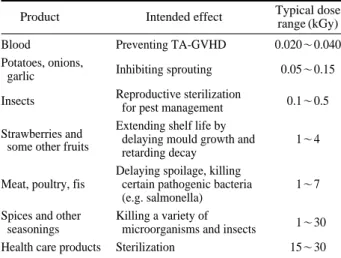
이러한 분야의 전형적인 기술
로는 방사선멸균, 재료개질, 해충박멸 등이 있다 (Table
1).
특히
60Co
가 생산되면서 이 기술들이 매우 보편적으
로 활용 되었다. 방사선원을 이용한 멸균 기술은 방사선
발견 이후부터 관심을 보이다가 1950년대 후반부터는
본격적으로 연구하기 시작되어서 최근에는 아주 보편적
인 기술이 되었다 (ACSH 1988).
1995
년 일본의 Machi박사의 연구로 방사선 기술의
이용현황이 발표 된 이후로 방사선 조사시설 및 전자선
가속기 사용이 증가하고 있고 (Chmielewski et al. 2004)
IAEA
를 중심으로 방사선이용기술에 대한 여러 편의 자
료들이 발간되고 있다. 따라서, 방사선처리기술은 현재
멸균, 폴리머가교, 식품조사, 생고무가황 등 산업적으로
─ ─ 43 ──방사선처리기술 최근 동향
이윤종∙이병헌∙임돈순∙김재호∙노영창*
한국원자력연구원 방사선과학연구소Recent Status and Progress of Radiation Processing
in the World
Yun Jong Lee, Byoung Hun Lee, Don-Sun Im, Jae-Ho Kim and Young-Chang Nho*
Advanced Radiation Technology Institute, Korea Atomic Energy Research Institute,
Jeongeup 580-185, Korea
Abstract
-
- Radiation technology is currently used in a number of industrial processes such as
sterili-zation, cross linking of polymer, food irradiation, rubber vulcanization in the tire manufacturing,
contaminated medical waste, etc. Gamma ray and electron beam are the key examples of
well-estab-lished economical applications of radiation processes. The purpose of this paper is to review the
recent technological trends and activities for radiation processes in order for the industrial end
users to better understand, and obtain useful information about the technology. It is clear that the
radiation processing technology has potential for a variety of the industrial applications.
Key words : Radiation industry, Irradiation facilities, Radiation processing
* Corresponding author: Young-Chang Nho, Tel. +82-63-570-3069, Fax. +82-63-570-3068, E-mail. [email protected]
많은 곳에서 이용되고 있어 최근의 방사성 동위원소를
이용한 방사선이용기술에 대한 현황을 조사하고자 한다.
결과 및 고찰
1. 재료의 개질
일반적으로 화학공학이나 재료공학에서는 높은 온도
나 압력 하에 재료의 성질을 변화시킬 수 있다. 그러나
방사선은 촉매 없이도 어떠한 성상 (액체, 기체, 고체), 어
떠한 압력 및 온도에서도 화학반응을 유발시키는 독특
한 특성을 가지고 있다.
고분자는 플라스틱이나 고무 등에 이용되고 있으며
유기재료로 분류된다. 고분자에 감마선이나 전자선을 조
사하면 분자 사슬 사이를 결합하는 반응 (가교)이나 분
자 사슬이 끊어져 작은 분자로 되는 반응 (절단)이 일어
난다. 가교를 이용하면 역학적 특성과 내열성이 향상되
거나 발포 (
)
재료로 가공하거나 열수축성의 기능특
성을 부여할 수가 있다. 또 절단을 이용하면 분쇄처리를
쉽게 할 수 있다. 이러한 특징을 이용해서 전자선 가속
기를 사용하는 공업 이용이 널리 시도되고 있다.
도장, 인쇄, 접착 등에 사용되는 액상수지의 경화에 종
래의 열, 촉매 등을 대신하는 방법으로서 방사선 조사에
의한 경화법이 있다. 선원으로는 표면, 박층의 가공에 적
합한 300 keV 이하의 저에너지 전자선 (EB)이 이용된다.
EB
경화법의 이점은 실온에서 더욱이 짧은 시간에 반응
한다는 것, 열에 약한 기초 재료에의 적용이 가능하다는
것, 에너지 이용효율이 좋다는 것 등을 들 수 있다.
Pre-coat
강판, 시멘트 기와, 석고 타일 등의 도장, 플라스틱
필름, 종이 용기 등의 인쇄, 기타 자기 ( 氣)재료,
lami-nate
가공, 박리 (
)
처리제, 감열 (感 ) 기록체 등에 폭
넓게 실용화되어 있다.
방사선환경에서 사용하는 고분자계 재료를 선택한다
는 관점에서도 또 방사선에 의해 재료특성을 개질한다
는 관점에서도 방사선조사에 의해 역학적 특성이 어떻
게 변하는가는 최대의 관심사의 하나이다. 역학특성의
변화는 주로 가교와 절단이 가져오는 분자구조의 변화
와 그것에 기인하는 고체구조변화에 의한다. 고분자는
실용적인 강도를 가지며 동시에 끈질긴 성질을 나타낸
다. 이것은 점성적인 성질과 탄성적인 성질을 겸비한 점
탄성체이기 때문이다. 플라스틱으로서 포장, 용기, 기계부
품 등에 사용되는 경우는 주로 탄성적 성질이 이용되고,
고무재료의 경우는 주로 점성적인 성질이 이용되고 있
Table 1. Typical radiation processing applications (IAEA 2005)
Typical dose Product Intended effect
range (kGy) Blood Preventing TA-GVHD 0.020~0.040 Potatoes, onions, Inhibiting sprouting 0.05~0.15
garlic
Insects Reproductive sterilizationfor pest management 0.1~0.5 Strawberries and Extending shelf life by
some other fruits delaying mould growth andretarding decay 1~4 Delaying spoilage, killing
Meat, poultry, fis certain pathogenic bacteria 1~7 (e.g. salmonella)
Spices and other Killing a variety of 1~30 seasonings microorganisms and insects
Health care products Sterilization 15~30
Table 2. Food irradiation: some major milestones (ACSH 1988)
Year
1895 Von Roentgen discovers x-rays.
Becquerel discovers radioactivity. Minsch publishes proposal to use ionizing radiation to preserve food by 1896
destroying microorganisms.
1904 Prescott publishes studies at MIT on bactericidal effects of ionizing radiation. 1905 U.S. and British patents issued for use of ionizing radiation to kill bacteria in foods.
1905 to 1920 Much research conducted on the physical, chemical, and biological effects of ionizing radiation.
1921 USDA researcher Schwartz publishes studies on the lethal effect of x-rays on Trichinella spiralis in raw pork. 1923 First published results of animal feeding studies to evaluate the wholesomeness of irradiated foods.
1930 French patent issued for the use of ionizing radiation to preserve foods.
1943 MIT group, under U.S. Army contract, demonstrates the feasibility of preserving ground beef by x-rays. Late 1940s and Beginning of era of food irradiation development by U.S. Government (among Atomic Energy Commission,
early 1950s industry, universities, and private institutions) including long-term animal feeding studies by U.S. Army and Swift and Company
다. 방서선조사에 의한 역학적 성질의 변화가운데 탄성
이 관여하고 있는 성질은 크게 변하지 않으나 점성이
관여하고 있는 성질의 변화는 매우 크다.
생분해성 폴리머 (biodegradable polymer)의 폴리 (
ε
-
카
프롤락톤) (PCL)의 내열성과 가공성을 방사선 가교기술
에 의해 개선했다. PCL을 과냉각상에서 200 kGy 조사하
면 100�
C
에 견디는 필름을 얻을 수 있다. 30 kGy의 저선
량에서는 용융점도가 올라가 필름가공이 가능하게 되었
다. 용도로서는 농업용 필름, 포장재, 발포체 제조가 기대
된다.
방사선 가교 하이드로겔(hydrogel)은
상처피복재(wou-nd dressing)
에 응용할 수 있다. 거즈 (gauze)로 된 상처
피복재에 비해 (1) 치유가 빠르다, (2) 교환시 신생피부에
손상을 주지 않고 떼어낼 수가 있으며 아프지가 않다
(3)
피복재가 상처부위에 남지 않는다는 특징이 있다.
2. 방사선 식품 조사
방사선 조사의 역사는 한 세기를 거슬러 올라가 약
1896
년 방사성 물질이 발견되면서 방사선 조사로 식품
중의 미생물을 사멸시킬 수 있다는 가능성이 제시되었
고, 1921년 방사선 조사가 육류의 기생충 오염 문제해결
을 위해 미국에서 특허를 얻은 후 최초로 이용하게 되
었다. 1930년에는 프랑스에서 식품의 장기 안전보관을
위해 이용되었고, 세계 제2차대전 동안에 네델란드에서
는 긴급 구호물자인 분유와 채소류의 안전성과 저장을
위해 방사선 조사를 이용하였다. 이것이 바로 60년 전의
일로서 그 당시의 방사성 물질이 상대적으로 가격이 비
쌌으므로 경제적 방사선 조사를 위한 공장 설비가 매우
제한되어 있었기 때문에 실용화는 상당히 어려운 여건
이었다. 그러나 1950년대에 방사성 물질의 대량 생산과
이용이 가능해지면서 본격적인 연구가 수행되었고, 그
결과 방사선 조사기술은 1980년대에 접어들면서 현재까
지 안전성에 대한 과학적 뒷받침과 WHO (세계보건기
구), IAEA (국제원자력기구), FAO (국제농업식량기구) 등
의 국제기구와 미국 FDA (식품의약품 안전청) 등 선진
국의 보건당국의 주도에 의해 실용화 기반을 마련하기
시작하였다.
최근에는 수확한 농작물, 과일, 저장식품에 대해 멸균
등을 통해 제품의 저장기간을 연장하기 위해 전세계에
Table 4. Regional distribution of irradiation units in 2002 (IAEA 2004a)
Region (the number of
Member States of IAEA) Participating Member States Regional total Rate
Africa (3) Egypt (1), Ghana (1), South Africa (3) 5 4.0
Australia (2), Bangladesh (2), China (21), India (3), Indonesia (1),
East Asia and the Pacific (12) Japan (2), Korea (Republic of) (1), Malaysia (4), Philippines (1), 44 35.8 Taiwan (2), Thailand (4), Vietnam (1)
Austria (1), Belgium (2), Bulgaria (1), Croatia (1), Germany (3), Europe (18) Greece (1), Hungary (3), Ireland (1), Italy (2), Portugal (1),
Romania (1), Serbia & Montenegro (1), Sweden (1), Switzerland (1), 31 25.2 Netherlands (3), Turkey (2), Ukraine (1), United Kingdom (5)
Latin America (5) Argentina (1), Brazil (4), Chile (1), Mexico (2), Peru (1) 9 7.3
North America (2) Canada (1), United States of America (28) 29 23.6
West Asia (5) Iran, Islamic Republic of (1), Israel (1), Jordan (1), Saudi Arabia (1), 5 4.0 Syria (1)
Table 3. Regional distribution of design capacity and currently installed activity of radiation source amongst 165 commercial gamma
facilities in 2002 (IAEA 2005)
Activity of cobalt-60 (kCi) All regions Africa East Asia Latin North
and Pacific Europe America America West Asia
Un-available* 28 3 9 12 0 1 3 Design capacity 15~500 47 1 41 2 2 1 0 500~1,000 37 0 23 9 3 0 2 ¤1,000 53 1 13 8 4 27 0 Un-available* 70 0 44 11 1 14 0 15~500 53 4 28 12 4 1 4 Current 500~1,000 14 1 5 3 3 1 1 ¤1,000 28 0 9 5 1 13 0
서 보편적으로 사용되는 기술이다. 감마선 조사시설 또
는 X-ray조사시설 또는 전자선 가속기를 이용하고 있으
나 감마선 조사시설의 비용이 다른 시설의 비용과 차이
가 많이 나는 관계로 감마선 조사시설이 널리 이용되고
있다.
미국에서는 1963년에 소맥의 조사가 처음으로 허가되
었으나 당시 식품조사는 실용화 되지 않고, 1983년의 향
신료 허가, 1986년의 관계법령 정비 후 본격적으로 실
용화가 시작됐다. 주요 조사품목은 향신료, 식조육 (
),
썰은 쇠고기, 열대과일이다. 향신료의 조사는 세균포
자의 살균을 주요한 목적으로 하고 있다. 식조육과 썰은
쇠고기는 각각 살모넬라균과 대장균 O-157을 비롯한 병
원균의 살균에 의한 식품위생 향상을 목적으로 하고 있
다. 열대과일은 오존층 파괴의 위험성이 있는 브롬화메
틸에 대체되는 살충기술로서 활용되고 있다 (Smith et al.
2004).
식품조사의 허가국은 1997년 시점에서 41개국에 달하
며 100품목 이상의 식품류가 허가되어 있다. 식품조사를
어떤 분야에서든지 실용화하고 있는 나라는 35개국이
며, 많은 나라에서 가장 많이 실용화되고 있는 것은 향
신료류 (
)
이다. 세계보건기구 (WHO)는 식품위
생의 관점에서 멸균을 중심으로 한 식품조사추진에 가
장 열심이며, UN식량농업기구 (FAO)와 국제원자력기구
(IAEA)
도 수확 후 손실의 저감, 원자력평화이용의 관점
에서 식품조사실용화추진에 열심이다. 미국정부는 식품
위생 및 검역처리의 수단으로서 식품조사를 추진하고
있다.
3. 환경 응용기술
방사선처리기술을 이용한 식품조사, 의료용구의 멸균,
식품저장 등은 전 세계적으로 보편적인 기술로 이용되
Fig. 1. Schematic showing the build-up of a typical cobalt source
rack from slugs, pencils and modules (courtesy of MDS Nordion, Canada).
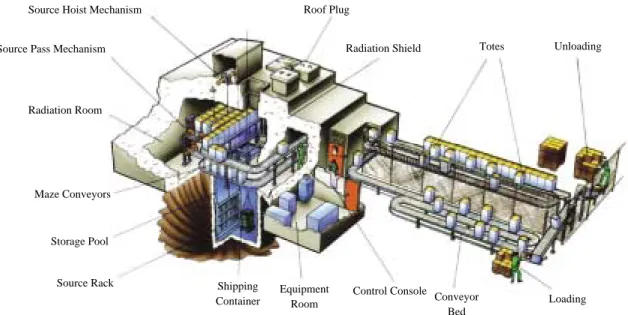
Fig. 2. Schematic diagram of a typical panoramic, wet storage gamma irradiation facility (courtesy of MDS Nordion, Canada).
Source Hoist Mechanism
Source Pass Mechanism
Radiation Room
Maze Conveyors
Storage Pool
Source Rack Shipping Container Equipment Room Control Console Conveyor Bed Loading Totes Radiation Shield Roof Plug Unloading
고 있다. 최근에는 환경문제 등으로 인하여 대량의 유체
를 신속하게 처리하기 위해 고용량 (고전류 및 고전압)
의 방사선기기의 활용이 개선되고 있으며(IAEA 2004b),
최근 염색공장의 폐수를 처리하는 시설이 한국의 대구
염색공단에 설치되어 하루에 10,000 m
3용량의 염색폐수
를 처리하고 있다. 이 시설의 용량은 1 MeV 400 kW의
전자선 가속기이다 (IAEA 2004c).
전자선조사에 의하여 연소배연중의 유황산화물과 질
소산화물을 제거하는 기술이 산성비 등의 환경오염방지
의 관점에서 주목되고 있다. 이 방법은 (1) 연소배연중의
유황산화물과 질소산화물을 동시에 제거할 수 있다, (2)
부산물인 유안, 초안을 비료로서 효과적으로 이용할 수
있다, (3) 폐수처리를 필요로 하지 않는 건식법이다, (4)
Process
의 구성이 단순하다, (5) 경제성이 뛰어나다는 등
특징을 가지고 있다. 이미 기초연구가 완료되었으며 현
재 일본을 비롯 외국에서는 실용규모시험장치의 건설∙
시험계획이 추진되고 있다 (IAEA 2004c).
배기가스를 전자선으로 조사하면 공기 중의 N2
, O
2,
H
2O, CO
2등의 분자가 여기 되거나 분해되어 생성되는
활성기단들이 배기가스 중에 함유된 SO
x및 NO
x와 반
응하여 각각 황산과 질산으로 변환시키는데 여기에 암
모니아를 부가하면 분말상의 (NH4
)
2SO
4또는 (NH4
)
2SO
4∙2NH4
NO
3로 변환할 수 있는데 이들은 비료로 사용될수 있다. 연구 결과에 의하면 SOx와 NOx를 동시에 제거
할 경우 다른 제거공정에 비해 경제적인 기술로 평가되
었다.
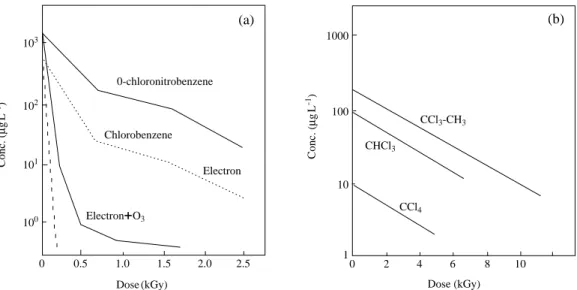
폐수를 전자선으로 처리하면 폐수 중의 유기화합물의
분해, 박테리아 등 병원체의 살균, 입자들의 응집 등을
유발하여 효과적인 정화가 가능함이 시범시설의 운영
경험들에서 밝혀졌다. 같은 원리가 상수원의 정화에도
이용될 수 있다. 오늘날 비료나 농약의 사용 증대와 산
업폐수의 관리 소홀로 인해 지하수나 지표수 오염이 우
려할 수준에 이르고 있음을 고려하면 발전시켜야 할 분
야임이 분명하다.
4. 방사선 조사시설 현황
방사선원은 사용하려는 목적이 산업, 의료, 생물, 식품,
환경에 따라 방사선원의 종류와 에너지가 달라질 수 있
다. 현재 가장 많이 이용되는 방사선원으로는 감마선을
방출하는 동위원소 (
60Co,
137Cs), X-
선을 발생시키는 장
치 및 E-Beam (전자가 가속된 방사선)이다.
현재 전 세계적으로 운용되고 있는 방사선조사시설은
60Co (
반감기: 5.27년, 방출
γ
선 에너지: 1.17 MeV와 1.33
MeV)
선원을 대부분 이용하고 있다.
60Co
선원은 방사성
West Asia 4.07% North America 23.58% Latin America 7.32% Europe 25.2%East Asia and the Pacific
35.77%
Africa 4.07%
Fig. 3. Regional distribution of irradiation units in 2002.
Conc. ( µ g L -1) Conc. ( µ g L -1) 103 102 101 100 0 0.5 1.0 1.5 2.0 2.5 Electron O3 Chlorobenzene 0-chloronitrobenzene
(a)
(b)
Electron CCl3-CH3 CHCl3 CCl4 0 2 4 6 8 10Dose (kGy) Dose (kGy)
1000
100
10
1
Fig. 4. Decomposition of (a) chlorobenzene and (b) chlorinated alkanes by electron beam irradiation. Synergy effects with ozone are
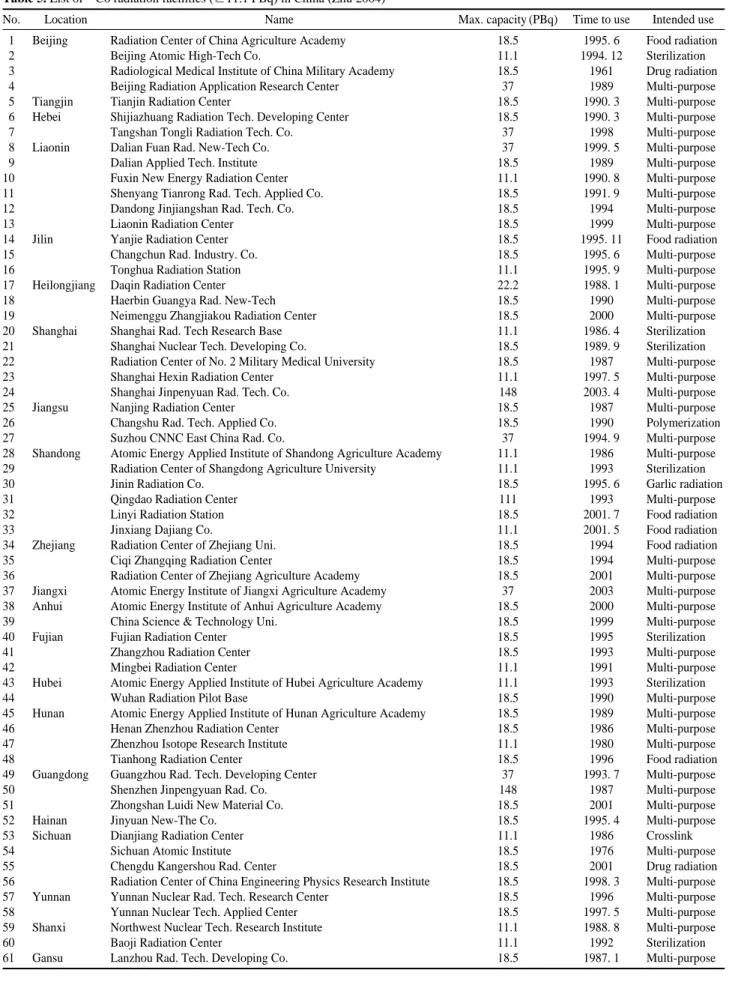
Table 5. List of60Co radiation facilities (›11.1 PBq) in China (Zhu 2004)
No. Location Name Max. capacity (PBq) Time to use Intended use
1 Beijing Radiation Center of China Agriculture Academy 18.5 1995. 6 Food radiation
2 Beijing Atomic High-Tech Co. 11.1 1994. 12 Sterilization
3 Radiological Medical Institute of China Military Academy 18.5 1961 Drug radiation 4 Beijing Radiation Application Research Center 37 1989 Multi-purpose
5 Tiangjin Tianjin Radiation Center 18.5 1990. 3 Multi-purpose
6 Hebei Shijiazhuang Radiation Tech. Developing Center 18.5 1990. 3 Multi-purpose
7 Tangshan Tongli Radiation Tech. Co. 37 1998 Multi-purpose
8 Liaonin Dalian Fuan Rad. New-Tech Co. 37 1999. 5 Multi-purpose
9 Dalian Applied Tech. Institute 18.5 1989 Multi-purpose
10 Fuxin New Energy Radiation Center 11.1 1990. 8 Multi-purpose
11 Shenyang Tianrong Rad. Tech. Applied Co. 18.5 1991. 9 Multi-purpose
12 Dandong Jinjiangshan Rad. Tech. Co. 18.5 1994 Multi-purpose
13 Liaonin Radiation Center 18.5 1999 Multi-purpose
14 Jilin Yanjie Radiation Center 18.5 1995. 11 Food radiation
15 Changchun Rad. Industry. Co. 18.5 1995. 6 Multi-purpose
16 Tonghua Radiation Station 11.1 1995. 9 Multi-purpose
17 Heilongjiang Daqin Radiation Center 22.2 1988. 1 Multi-purpose
18 Haerbin Guangya Rad. New-Tech 18.5 1990 Multi-purpose
19 Neimenggu Zhangjiakou Radiation Center 18.5 2000 Multi-purpose
20 Shanghai Shanghai Rad. Tech Research Base 11.1 1986. 4 Sterilization
21 Shanghai Nuclear Tech. Developing Co. 18.5 1989. 9 Sterilization
22 Radiation Center of No. 2 Military Medical University 18.5 1987 Multi-purpose
23 Shanghai Hexin Radiation Center 11.1 1997. 5 Multi-purpose
24 Shanghai Jinpenyuan Rad. Tech. Co. 148 2003. 4 Multi-purpose
25 Jiangsu Nanjing Radiation Center 18.5 1987 Multi-purpose
26 Changshu Rad. Tech. Applied Co. 18.5 1990 Polymerization
27 Suzhou CNNC East China Rad. Co. 37 1994. 9 Multi-purpose
28 Shandong Atomic Energy Applied Institute of Shandong Agriculture Academy 11.1 1986 Multi-purpose 29 Radiation Center of Shangdong Agriculture University 11.1 1993 Sterilization
30 Jinin Radiation Co. 18.5 1995. 6 Garlic radiation
31 Qingdao Radiation Center 111 1993 Multi-purpose
32 Linyi Radiation Station 18.5 2001. 7 Food radiation
33 Jinxiang Dajiang Co. 11.1 2001. 5 Food radiation
34 Zhejiang Radiation Center of Zhejiang Uni. 18.5 1994 Food radiation
35 Ciqi Zhangqing Radiation Center 18.5 1994 Multi-purpose
36 Radiation Center of Zhejiang Agriculture Academy 18.5 2001 Multi-purpose 37 Jiangxi Atomic Energy Institute of Jiangxi Agriculture Academy 37 2003 Multi-purpose 38 Anhui Atomic Energy Institute of Anhui Agriculture Academy 18.5 2000 Multi-purpose
39 China Science & Technology Uni. 18.5 1999 Multi-purpose
40 Fujian Fujian Radiation Center 18.5 1995 Sterilization
41 Zhangzhou Radiation Center 18.5 1993 Multi-purpose
42 Mingbei Radiation Center 11.1 1991 Multi-purpose
43 Hubei Atomic Energy Applied Institute of Hubei Agriculture Academy 11.1 1993 Sterilization
44 Wuhan Radiation Pilot Base 18.5 1990 Multi-purpose
45 Hunan Atomic Energy Applied Institute of Hunan Agriculture Academy 18.5 1989 Multi-purpose
46 Henan Zhenzhou Radiation Center 18.5 1986 Multi-purpose
47 Zhenzhou Isotope Research Institute 11.1 1980 Multi-purpose
48 Tianhong Radiation Center 18.5 1996 Food radiation
49 Guangdong Guangzhou Rad. Tech. Developing Center 37 1993. 7 Multi-purpose
50 Shenzhen Jinpengyuan Rad. Co. 148 1987 Multi-purpose
51 Zhongshan Luidi New Material Co. 18.5 2001 Multi-purpose
52 Hainan Jinyuan New-The Co. 18.5 1995. 4 Multi-purpose
53 Sichuan Dianjiang Radiation Center 11.1 1986 Crosslink
54 Sichuan Atomic Institute 18.5 1976 Multi-purpose
55 Chengdu Kangershou Rad. Center 18.5 2001 Drug radiation
56 Radiation Center of China Engineering Physics Research Institute 18.5 1998. 3 Multi-purpose 57 Yunnan Yunnan Nuclear Rad. Tech. Research Center 18.5 1996 Multi-purpose
58 Yunnan Nuclear Tech. Applied Center 18.5 1997. 5 Multi-purpose
59 Shanxi Northwest Nuclear Tech. Research Institute 11.1 1988. 8 Multi-purpose
60 Baoji Radiation Center 11.1 1992 Sterilization
동위원소를 스테인리스강 (SUS 316L)제의 캡슐에 2중으
로 용접밀봉해서 밀봉선원으로 만든다 (Fig. 1).
137Cs
에
비하면 반감기가 약 6분의 1로 짧지만 에너지가 높고
제조법도 금속 코발트
59Co
를 원자로 속에서 중성자 조
사하고 이후 화학적 분리 등의 과정이 불필요하기 때문
에 방사선조사용선원으로서 개발 초기부터 크게 이용되
고 있다.
대용량
60Co
조사장치는 선원 저장용 수조를 설치하고,
조사실 벽면은 콘크리트 차폐벽으로 방사선을 차폐한다.
조사실 내부와는 컨베이어 라인을 설치해서 조사대상물
이 이동하는 사이에 판 ( )모양 또는 원통 모양으로 선
원 집합체를 두어 조사대상물이 이동하면서 방사선 조
사가 이루어지도록 설계되어 있다 (Fig. 2).
60Co
은 국내
에서 제조되고 있지 않기 때문에 전적으로 수입에 의존
하고 있다. 선원은 밀봉되어 있기 때문에 방사성 오염의
걱정은 전혀 없다. 단지 방사선을 충분히 차폐해서 시설
내외의 사람들이 체외로부터의 피폭을 받지 않도록 하
면 된다. 대선량의 선원으로 사용하는 경우는 잘못해서
피폭되는 일이 없도록 안전설비 등을 마련한다. 감마선
을 이용하는 것으로는
60Co
를 사용하는 것이 일반적이
고, 전자선을 이용하는 것은 고에너지의 전자를 3 MeV
에서 10 MeV 범위에서 가속시켜 조사시키는 전자선 가
속기를 많이 사용한다.
2003
년에 IAEA가 조사한 전 세계 방사선 조사시설은
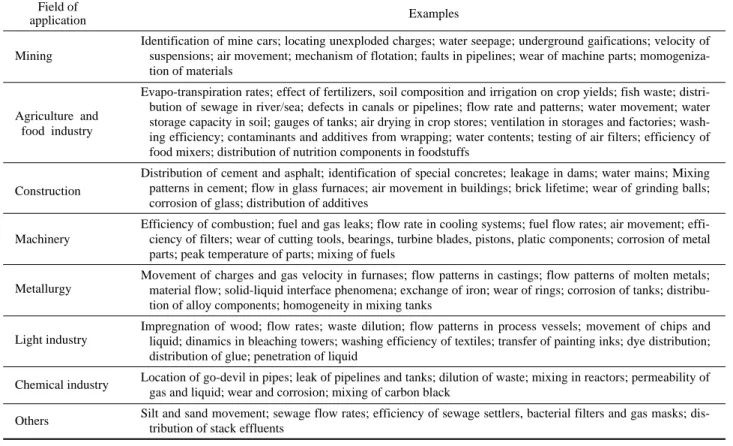
Table 6. Examples of application of radioisotopes in industry (방사선조사기술 2006) Field of
application Examples
Identification of mine cars; locating unexploded charges; water seepage; underground gaifications; velocity of suspensions; air movement; mechanism of flotation; faults in pipelines; wear of machine parts; momogeniza-tion of materials
Evapo-transpiration rates; effect of fertilizers, soil composition and irrigation on crop yields; fish waste; distri-bution of sewage in river/sea; defects in canals or pipelines; flow rate and patterns; water movement; water storage capacity in soil; gauges of tanks; air drying in crop stores; ventilation in storages and factories; wash-ing efficiency; contaminants and additives from wrappwash-ing; water contents; testwash-ing of air filters; efficiency of food mixers; distribution of nutrition components in foodstuffs
Distribution of cement and asphalt; identification of special concretes; leakage in dams; water mains; Mixing patterns in cement; flow in glass furnaces; air movement in buildings; brick lifetime; wear of grinding balls; corrosion of glass; distribution of additives
Efficiency of combustion; fuel and gas leaks; flow rate in cooling systems; fuel flow rates; air movement; effi-ciency of filters; wear of cutting tools, bearings, turbine blades, pistons, platic components; corrosion of metal parts; peak temperature of parts; mixing of fuels
Movement of charges and gas velocity in furnases; flow patterns in castings; flow patterns of molten metals; material flow; solid-liquid interface phenomena; exchange of iron; wear of rings; corrosion of tanks; distribu-tion of alloy components; homogeneity in mixing tanks
Impregnation of wood; flow rates; waste dilution; flow patterns in process vessels; movement of chips and liquid; dinamics in bleaching towers; washing efficiency of textiles; transfer of painting inks; dye distribution; distribution of glue; penetration of liquid
Location of go-devil in pipes; leak of pipelines and tanks; dilution of waste; mixing in reactors; permeability of gas and liquid; wear and corrosion; mixing of carbon black
Silt and sand movement; sewage flow rates; efficiency of sewage settlers, bacterial filters and gas masks; dis-tribution of stack effluents
Mining Agriculture and food industry Construction Machinery Metallurgy Light industry Chemical industry Others
Table 7. Dose required to achieve biological effects with β/γ radia-tion (방사선조사기술 2006)
Effects Dose required (Gy) Stimulation of plants/animals 0.01~10 Plant breeding by mutation 10~500 Destruction of insects by sterile male 50~200 Sprouting inhibition (potato, chess nut, onion) 50~400 Destruction of insects and eggs 250~1000 Disinfection (radicidation) 1000~10000
Pasteurization of food 1000~10000
Sterilization of pharmaceuticals and
medical equipment 15000~50000
Table 8. Some of radiation processing applications and dose
re-quired (Sarma 2004)
Application Dose required (kGy)
Medical sterilization 20~30 Curing of coatings 20~50 Polymerisation 50~100 Crosslinking of polymers 100~300 Depolymerisation of PTFE 800~2000 Coloration of diamonds ¤¤¤2000
약 200여 개가 운영되는 것으로 알려지고 있고 상업용
으로 운전되고 있는 것은 123개로 보고하고 있다 (IAEA
2004a).
주로 아시아와 태평양 연안 국가에 가장 많은
36%
가 설치되어 운영되고 있고 다음으로 유럽 25.2%,
북아메리카 23.6% 순이다 (Fig. 3).
괄목할 만한 것은 중국의 조사시설이 매우 급속한 속
도로 증가한다는 것이다. 중국은 1950년부터 방사선기술
을 연구하기 시작하여 1980년대에 들어서 방사선 멸균
을 체계적으로 연구하기 시작했다. 최초로 일회용 의료
기구 멸균에 대한 기술요구조항을 1987년에 제정했다
(Zhu et al. 1996). 2003
년 4월 통계로 11.1 PBq이 넘는
방사선조사시설이 총 61개가 있다고 보고하고 있다(Zhu
et al. 2004).
5. 경제규모
1997
년 일본의 경우를 살펴보면 총 원자력관련 경제
규모는 990억 달러로 이중 방사성 동위원소를 이용하는
분야는 48% 원자력발전 분야는 52%로 보고되었으며,
미국의 경우는 방사선이용분야가 1,190억 달러, 원자력
발전분야가 390억 달러로, 비발전분야가 약 75%, 발전분
야가 25%로 보고되었으며, 이는 TMI사고 이후 원자력
발전의 신규 투자가 없었기 때문이다 (IAEA 2004b;
Ma-chi 2004).
2007
년도 NEI자료에 따르면 미국의 경우, 매년 방사
성물질로 인해 4.2조 달러의 경제규모를 가지고 있으며
4
백4십만개의 일자리와 778억 달러의 지방세 수입이 정
부재정에 충족된다고 보고하고 있다 (Qian et al. 2001;
N.E.I. 2007).
결
론
최초 식품의 멸균으로부터 시작된 방사선조사기술은
현재 매우 다양하게 발전하고 있고, 1995년 이후 방사선
을 이용한 기술에 대한 체계적인 현황 조사가 이루어지
면서 방사선이용기술이 전 세계적으로 성장을 하고 있
음을 알았다. 또한, 이 기술은 이용에 따라 제품의 다양
성을 줄 수 있다는 것을 알 수 있다. 최근 동향을 조사
중에 중국이 방사선이용기술에 대하여 매우 많은 시설
및 설비를 투자하고 있어 향후 방사선이용기술이 매우
발전할 것으로 전망된다. 추후, 방사선이용산업의 활성화
및 국제 교류 측면에서 동남아시아 주변 국가의 현황도
각 나라별로 검토할 필요가 있다고 생각된다. 또한, 방사
성동위원소 조사시설뿐만 아닌 방사선발생장치에 대한
국제적 통계도 최근 IAEA를 중심으로 조사 중이다.
요
약
방사선처리기술은 현재 멸균, 폴리머가교, 식품조사, 생
고무가황 등 산업적으로 많은 곳에서 이용되고 있다. 현
재 감마선과 전자선을 이용한 것은 방사선처리기술의
대표적인 기술이다. 이 논문의 목적은 최근의 방사선 기
술을 이해하기 위해 외국의 방사선기술 동향을 살펴보
고 산업현장 작업자가 방사선 관련 기술이 친숙해지기
를 목적으로 그들에게 유용한 정보를 제공하기 위함이
다. 본 조사를 통해 방사선이용기술이 지속적으로 성장
함을 알 수 있었고, 또한 이 기술을 이용하면 제품의 다
양성을 줄 수 있다는 사실도 알아냈다.
참 고 문 헌
방사선조사기술. 2006. 한양대학교 원자력시스템공학 전공 Homepage. http://nuclear.hanyang.ac.kr/.2008.ACSH. 1988. Irradiated Food (Third edition). American Coun-cil on Science and Health.
Chmielewski AG and Haji-Saeid M. 2004. Radiation techno-logies past, present and future. Radiat. Phys. Chem. 71:16-20.
Foodandwaterwatch Homepage. 2008. 2. 3. Status of Food Irra-diation Around the World. www. foodandwaterwatch.org. IAEA. 2004a. Directory of Gamma Processing Facilities in
Member States . IAEA-DGPF/CD.
IAEA. 2004b. Emerging applications of radiation processing. IAEA-TECDOC-1386.
IAEA. 2004c. Status of industrial scale radiation treatment of wastewater and its future. September.
IAEA. 2005. Gamma irradiators for radiation processing. IAEA Brochure.
Kernbaum M. 1910. Sur la decomposition de l’eau par divers rayonnementes. Le Radium 7:242.
Machi S. 1992. Radiation technology in the 1990s. Radiat.
Phys. Chem. 42:13.
Machi S. 1995. Radiation technology for sustainable develop-ment. Radiat. Phys. Chem. 46:399-410.
Machi S. 2004. Role of radiation processing for sustainable development. [Proceedings of a technical meeting held in Vienna, 28-30 April 2003].
Mehta K and Chmielewski AG. 2003. Gamma Irradiators for radiation processing. IAEA.
Nu-clear Energy Institute.
Qian J and Burkar W. 2001. Serving human needs-Nuclear technologies in the Marketplace. IAEA Bullutin 43(3):5-11. Sarma KSS. 2004. Prospects and development of radiation technologies in developing countries. IAEA-TECDOC-1386 (14-20).
Smith JS and Pillai S. 2004. Irradiation and food safety. Food
Technology, 58(11):48-55.
Tagawa S, Kashiwagi M, Kamada T, Sekiguchi M, Hosobuchi
K, Tominaga H, Ooka N and Makuuchi K. 2002. Econo-mic scale of utilization of radiation (I): industry comparison between Japan and the U.S.A. J. Nucl. Sci. Technol. 39(9): 1002-1007.
Zhu N, Wang C and Teng W. 2004. Status of radiation sterili-zation of healthcare products in China. Radiat. Phys. Chem. 71:589-593.
Manuscript Received: January 19, 2008 Revision Accepted: March 12, 2008