Table 3. Characteristics of coronavirus disease-19 (COVID-19) patients by severity (oxygen therapy/ventilator/hospital
stay by severity) (N=175)
Characteristics Mild (%)(n=138) Moderate, Severe (%) (n=37) p-value OR
95% CI
Lower limit Upper limit
Oxygen therapy Yes 6 (4.3) 9 (24.3) <0.001 7.07 2.01 5.84 No 132 (95.7) 28 (75.7) Ref. Ventilator Yes 0 (0.0) 1 (2.7) 0.05 - - -No 138 (100) 36 (97.3)
-Hospital stay by severity (Mean±SD)
- 19.06 day
(±9.26)
24.32 day
(±11.48) <0.01⁺ *p-value was calculated by χ2-test, †T-test
*Questions with no response were excluded.
동물에서의 코로나19 감염 사례 보고
질병관리청 중앙방역대책본부 역학조사분석단 정보관리팀, 위기분석담당관 정라경, 이효숙, 권동혁* *교신저자 : [email protected], 043-719-7730 SARS CoV-2와 같은 동물 기원의 새로운 바이러스가 어떻게 인간에게 유입되어 영향을 미치고 있는지를 이해하기는 어려움이 있으며, 이러한 감염병이 어떻게 동물과 사람에게서 나타나는지를 밝히는 것 또한 중요하다. 사람으로부터 동물로의 코로나19 전파는 드문 것으로 여겨지지만, 코로나19 대유행 상황에서 동물에서의 감염사례가 꾸준히 보고되고 있고, 최근 네덜란드에서 밍크에서 사람으로 감염이 의심되는 사례가 발생함에 따라 사람과 동물 간 전파에 대한 문헌을 검토하였다. 2020년 11월 20일 기준 일본, 영국, 미국, 남아프리카공화국 등 4개 대륙 19개국에서 개, 고양이, 호랑이, 사자, 퓨마, 밍크 총 6종 135건, 321개 밍크농장에서의 감염사례가 보고되었다. 주요 감염 경로는 개와 고양이의 경우 대부분 주인의 코로나19 양성 판정 이후 반려동물 검사에서 양성 판정을 받았고, 밍크농장에 있는 개와 고양이의 경우 감염된 밍크로부터 전파가 의심되는 사례도 있었다. 호랑이, 사자, 퓨마의 경우는 감염된 동물원 직원과의 접촉 후 감염되었을 것으로 추정되며, 밍크는 확진된 사람으로부터의 감염이 의심된다. 이에, 코로나19에 감염되는 동물의 종류, 동물 간 전파 형태, 동물로부터 사람으로의 전파양상 등을 이해하기 위한 지속적인 모니터링이 필요하다. 주요 검색어 : 코로나19, 동물, 밍크, 개, 고양이초 록
들어가는 말
코로나19는 2019년 12월 31일 중국에서 원인불명 폐렴
집단발생이 보고되었으며, 2020년 1월 13일 중국 외 국가(태국)에서
첫 환자 발생이 보고되었고, 중동 1월 29일(UAE), 유럽 1월
25일(프랑스) 그리고 우리나라에서도 1월 20일 첫 확진자가
발생하였다. 2020년 12월 23일 기준 188개국 등에서 국외 누적
확진자 76,806,027명, 누적 사망자 1,710,760명 발생, 국내 누적
확진자 51,460명, 누적 사망자 722명이 발생하였다. 이런 코로나19
세계 대유행 상황에서 개, 고양이 등 동물에서의 감염사례도
보고되고 있다. 국제수역사무국(World Organization for Animal
Health, OIE)은 동물에서의 SARS-CoV-2 바이러스 감염을
보고하도록 하고 있고, 이에 따라 세계 각국에서 발생하 는
동물에서의 감염사례에 대한 많은 정보들이 공유되고 있다. 최근
네덜란드에서는 밍크에서 사람으로 감염이 의심되는 사례가
확인되었으며, 덴마크에서 밍크가 사람에 의해 감염된 후 다시
사람에게 전파 가능하며 그 과정에서 바이러스의 유전적 변이가
발생할 수도 있음이 보고되었다. 이에, 전 세계에서 발생하고 있는
동물에서의 코로나19 감염사례를 조사하여 관련 정보를 제공하고자
하였다.
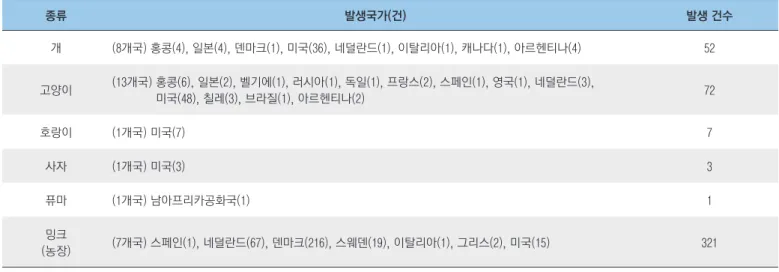
표 1. 동물 종류별 코로나19 발생 국가 현황 및 건수(2020년 11월 20일 기준)
종류 발생국가(건) 발생 건수 개 (8개국) 홍콩(4), 일본(4), 덴마크(1), 미국(36), 네덜란드(1), 이탈리아(1), 캐나다(1), 아르헨티나(4) 52 고양이 (13개국) 홍콩(6), 일본(2), 벨기에(1), 러시아(1), 독일(1), 프랑스(2), 스페인(1), 영국(1), 네덜란드(3), 미국(48), 칠레(3), 브라질(1), 아르헨티나(2) 72 호랑이 (1개국) 미국(7) 7 사자 (1개국) 미국(3) 3 퓨마 (1개국) 남아프리카공화국(1) 1 밍크 (농장) (7개국) 스페인(1), 네덜란드(67), 덴마크(216), 스웨덴(19), 이탈리아(1), 그리스(2), 미국(15) 321그림 1. 동물에서의 코로나19 발생 지역(출처: OIE, 2020년 11월 19일)
몸 말
동 물에서의 코 로나19 감염사례를 조 사하기 위해 OIE,
ProMED Mail, 미국 CDC, WHO 등에서 발표하는 자료를 수집하여
분석하였다. 그 결과, 동물에서의 코로나19 감염은 2020년 11월
20일 기준으로 개, 고양이, 호랑이, 밍크 등 총 6종 135건, 321개
농장(밍크)에서 발생하였다. 동물 종류별로 개는 8개국에서 52건,
고양이는 13개국에서 72건, 호랑이는 1개국에서 7건, 사자는
1개국에서 3건 그리고 퓨마는 1개국에서 1건이 보고되었다. 밍크의
경우 모두 농장에서 집단 발생이 확인되었는데, 7개국의 321개
농장에서 발생이 보고되었다. 발생 국가로는 아시아 2개국(홍콩,
일본), 유럽 11개국(벨기에, 러시아, 독일, 프랑스, 스페인, 영국,
네덜란드, 덴마크, 이탈리아, 스웨덴, 그리스), 아메리카 5개국(미국,
칠레, 브라질, 캐나다, 아르헨티나) 그리고 남아프리카공화국 총
표 1. 동물 종류별 코로나19 발생 국가 현황 및 건수(2020년 11월 20일 기준)
종류 발생국가(건) 발생 건수 개 (8개국) 홍콩(4), 일본(4), 덴마크(1), 미국(36), 네덜란드(1), 이탈리아(1), 캐나다(1), 아르헨티나(4) 52 고양이 (13개국) 홍콩(6), 일본(2), 벨기에(1), 러시아(1), 독일(1), 프랑스(2), 스페인(1), 영국(1), 네덜란드(3), 미국(48), 칠레(3), 브라질(1), 아르헨티나(2) 72 호랑이 (1개국) 미국(7) 7 사자 (1개국) 미국(3) 3 퓨마 (1개국) 남아프리카공화국(1) 1 밍크 (농장) (7개국) 스페인(1), 네덜란드(67), 덴마크(216), 스웨덴(19), 이탈리아(1), 그리스(2), 미국(15) 321그림 1. 동물에서의 코로나19 발생 지역(출처: OIE, 2020년 11월 19일)
몸 말
동 물에서의 코 로나19 감염사례를 조 사하기 위해 OIE,
ProMED Mail, 미국 CDC, WHO 등에서 발표하는 자료를 수집하여
분석하였다. 그 결과, 동물에서의 코로나19 감염은 2020년 11월
20일 기준으로 개, 고양이, 호랑이, 밍크 등 총 6종 135건, 321개
농장(밍크)에서 발생하였다. 동물 종류별로 개는 8개국에서 52건,
고양이는 13개국에서 72건, 호랑이는 1개국에서 7건, 사자는
1개국에서 3건 그리고 퓨마는 1개국에서 1건이 보고되었다. 밍크의
경우 모두 농장에서 집단 발생이 확인되었는데, 7개국의 321개
농장에서 발생이 보고되었다. 발생 국가로는 아시아 2개국(홍콩,
일본), 유럽 11개국(벨기에, 러시아, 독일, 프랑스, 스페인, 영국,
네덜란드, 덴마크, 이탈리아, 스웨덴, 그리스), 아메리카 5개국(미국,
칠레, 브라질, 캐나다, 아르헨티나) 그리고 남아프리카공화국 총
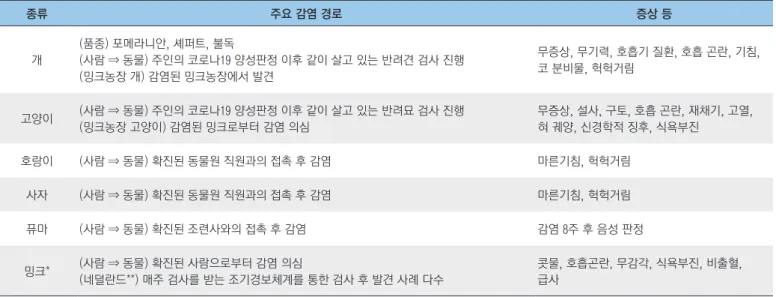
표 2. 동물 종류별 코로나19 주요 감염경로 및 증상(2020.11.20. 기준)
종류 주요 감염 경로 증상 등 개 (품종) 포메라니안, 셰퍼트, 불독 (사람 ⇒ 동물) 주인의 코로나19 양성판정 이후 같이 살고 있는 반려견 검사 진행 (밍크농장 개) 감염된 밍크농장에서 발견 무증상, 무기력, 호흡기 질환, 호흡 곤란, 기침, 코 분비물, 헉헉거림 고양이 (사람 ⇒ 동물) 주인의 코로나19 양성판정 이후 같이 살고 있는 반려묘 검사 진행 (밍크농장 고양이) 감염된 밍크로부터 감염 의심 무증상, 설사, 구토, 호흡 곤란, 재채기, 고열, 혀 궤양, 신경학적 징후, 식욕부진 호랑이 (사람 ⇒ 동물) 확진된 동물원 직원과의 접촉 후 감염 마른기침, 헉헉거림 사자 (사람 ⇒ 동물) 확진된 동물원 직원과의 접촉 후 감염 마른기침, 헉헉거림 퓨마 (사람 ⇒ 동물) 확진된 조련사와의 접촉 후 감염 감염 8주 후 음성 판정 밍크* (사람 ⇒ 동물) 확진된 사람으로부터 감염 의심 (네덜란드**) 매주 검사를 받는 조기경보체계를 통한 검사 후 발견 사례 다수 콧물, 호흡곤란, 무감각, 식욕부진, 비출혈, 급사 * 네덜란드 : SARS-CoV-2 감염성 동물 질병으로 공식 지정(2020.5.19.) ** 밍크로부터 사람 전파 추정사례 발생19개국에서 발생하였다(표 1, 그림 1).
동물에서의 코로나19 감염경로 및 증상은 종류별로 다양하게
조사되었다. 개는 주인의 코로나19 양성 판정 이후 같이 살고
있는 반려견 검사에서 확인된 경우가 많았고, 밍크농장의 개는
감염된 밍크로부터의 감염이 추정된다. 증상으로는 무증상, 무기력,
호흡곤란, 기침, 코 분비물, 헉헉거림 등이 있었다. 고양이 또한
주인의 코로나19 양성판정 이후 같이 살고 있는 반려묘에 대한
검사에서 확인된 경우가 많았으며, 밍크농장의 고양이는 감염된
밍크로부터의 감염이 의심된다. 증상으로는 무증상, 설사, 구토,
호흡곤란, 재채기, 고열, 혀 궤양, 신경학적 징후, 식욕부진 등이
있었으며 증상 악화로 안락사 된 경우도 있었다. 호랑이와 사자는
동물원에서, 감염된 동물원 직원(사육사)과의 접촉 후 감염된 것으로
추정되며, 마른 기침, 약간의 호흡곤란, 헉헉거림의 증상이 있었다.
퓨마 또한 동물원에서, 감염된 조련사와의 접촉 후 감염되었고,
감염 8주 후 음성판정을 받았다. 밍크는 코로나19에 감염된
사람으로부터의 감염이 의심되며, 네덜란드에서는 매주 밍크농장에
대한 검사를 실시하는 조기경보체계를 통해 다수 발견되었다.
증상으로는 콧물, 호흡곤란, 무감각 등이 있었으며, 증상 악화로
급사하는 사례도 보고되었다(표 2).
코로나19 동물 감염사례를 대륙·국가별로 분석한 결과,
아시아의 홍콩과 일본은 개와 고양이에서 발생했으며, 코로나19
감염자 가정의 동물이었다. 유럽은 벨기에, 러시아, 독일 등 11개
국가에서 고양이, 개, 밍크에서 발생하였고, 개와 고양이는 대부분
코로나19 감염자 가정에서 발생하였다. 또한, 밍크 농장의 개와
고양이에서의 감염이 발생함에 따라 밍크로부터의 감염 가능성이
추정되는 사례도 있었다. 밍크의 최대 생산국들 중 하나인 덴마크와
네덜란드에서 밍크 감염사례가 두드러졌으며, 네덜란드는 2020년
5월 19일 SARS-CoV-2를 감염성 동물 질병으로 공식 지정하고
매주 바이러스 검사를 받도록 하는 조기경보체계를 통해 감염
농장들을 많이 발견하였다. 아메리카에서는 미국, 칠레, 브라질
등 5개국에서 개, 고양이, 밍크, 호랑이, 사자와 같이 다양한
종의 감염사례가 확인되었다. 개와 고양이는 대부분 코로나19
감염자 가정에서 발생하였고, 호랑이, 사자는 미국의 동물원에서,
밍크는 미국 내 밍크 다량 생산지인 유타주에서 많이 발생하였다.
남 아프리카 공화 국의 동 물 원에서는 퓨 마가 감 염된 것으 로
보고되었다(표 3).
맺는 말
2020년 11월 20일 기준 4개 대륙 19개 국가에서, 6종의
동물에서의 코로나19 감염 사례가 보고되었다. 대부분의 경우
코로나19 감염자로부터 동물로 전파된 사례이고, 2020년 5월
네덜란드 밍크농장에서 근로자가 밍크로부터 감염이 의심되는 첫
사례가 보고되었다. 현재까지 알려진 제한된 정보에 따르면 동물이
사람에게 코로나19를 전파할 가능성은 낮은 것으로 판단하고
있다(미국 CDC). 그러나 WHO에 따르면 최근 덴마크에서 2020년
6월 이후 밍크로부터 감염된 사람이 214명이고 이중 12명에게서
특수 변종(8명은 밍크 농장 관련자, 4명은 지역사회 전파를 통한
감염) 바이러스가 발견되었다고 한 만큼 전 세계적인 바이러스
표 3. 대륙·국가별 동물의 코로나19 발생 현황(2020.11.20. 기준)
대륙 국가 종류 건수 검사방법 특이사항 아시아 홍콩 개 4 PCR, VNT 코로나19 감염자 가정 고양이 6 일본 개 4 PCR, VNT 코로나19 감염자 가정 고양이 2 유럽 벨기에 고양이 1 - 주인의 코로나19 증상 발현 1주일 후 증상 보임 러시아 고양이 1 PCR -독일 고양이 1 - 주인의 코로나19 사망으로 검사 진행 프랑스 고양이 2 PCR 코로나19 감염자 가정 스페인 고양이 1 - 코로나19 감염자 가정 밍크 1(농장) - 사육중인 93,000마리 살처분 영국 고양이 1 PCR, VNT 코로나19 감염자 가정 네덜란드 개 1 - 코로나19 감염자 가정, 증상 악화로 안락사 고양이 3 - 밍크농장의 고양이 밍크 67(농장) - 근로자의 밍크로부터의 감염가능 사례 발견 덴마크 개 1 - 밍크농장의 개 밍크 216(농장) - 감염농장 밍크 살처분 이탈리아 개 1 PCR 코로나19 감염자 가정 밍크 1(농장) - -스웨덴 밍크 19(농장) PCR -그리스 밍크 2(농장) - 농장주 코로나19 감염 아메리카 미국 개 36 PCR, VNT 대부분 가정견 고양이 48 PCR, VNT 대부분 가정묘 호랑이 7 PCR 동물원 사자 3 PCR 동물원 밍크 15(농장) - 주로 유타주에서 발생 칠레 고양이 3 PCR 코로나19 감염자 가정 브라질 고양이 1 PCR 코로나19 감염자 가정 캐나다 개 1 PCR 코로나19 감염자 가정 아르헨티나 개 4 PCR 코로나19 감염자 가정의 반려동물 진단 프로젝트 고양이 2 PCR 아프리카 남아프리카공화국 퓨마 1 PCR 동물원맺는 말
2020년 11월 20일 기준 4개 대륙 19개 국가에서, 6종의
동물에서의 코로나19 감염 사례가 보고되었다. 대부분의 경우
코로나19 감염자로부터 동물로 전파된 사례이고, 2020년 5월
네덜란드 밍크농장에서 근로자가 밍크로부터 감염이 의심되는 첫
사례가 보고되었다. 현재까지 알려진 제한된 정보에 따르면 동물이
사람에게 코로나19를 전파할 가능성은 낮은 것으로 판단하고
있다(미국 CDC). 그러나 WHO에 따르면 최근 덴마크에서 2020년
6월 이후 밍크로부터 감염된 사람이 214명이고 이중 12명에게서
특수 변종(8명은 밍크 농장 관련자, 4명은 지역사회 전파를 통한
감염) 바이러스가 발견되었다고 한 만큼 전 세계적인 바이러스
표 3. 대륙·국가별 동물의 코로나19 발생 현황(2020.11.20. 기준)
대륙 국가 종류 건수 검사방법 특이사항 아시아 홍콩 개 4 PCR, VNT 코로나19 감염자 가정 고양이 6 일본 개 4 PCR, VNT 코로나19 감염자 가정 고양이 2 유럽 벨기에 고양이 1 - 주인의 코로나19 증상 발현 1주일 후 증상 보임 러시아 고양이 1 PCR -독일 고양이 1 - 주인의 코로나19 사망으로 검사 진행 프랑스 고양이 2 PCR 코로나19 감염자 가정 스페인 고양이 1 - 코로나19 감염자 가정 밍크 1(농장) - 사육중인 93,000마리 살처분 영국 고양이 1 PCR, VNT 코로나19 감염자 가정 네덜란드 개 1 - 코로나19 감염자 가정, 증상 악화로 안락사 고양이 3 - 밍크농장의 고양이 밍크 67(농장) - 근로자의 밍크로부터의 감염가능 사례 발견 덴마크 개 1 - 밍크농장의 개 밍크 216(농장) - 감염농장 밍크 살처분 이탈리아 개 1 PCR 코로나19 감염자 가정 밍크 1(농장) - -스웨덴 밍크 19(농장) PCR -그리스 밍크 2(농장) - 농장주 코로나19 감염 아메리카 미국 개 36 PCR, VNT 대부분 가정견 고양이 48 PCR, VNT 대부분 가정묘 호랑이 7 PCR 동물원 사자 3 PCR 동물원 밍크 15(농장) - 주로 유타주에서 발생 칠레 고양이 3 PCR 코로나19 감염자 가정 브라질 고양이 1 PCR 코로나19 감염자 가정 캐나다 개 1 PCR 코로나19 감염자 가정 아르헨티나 개 4 PCR 코로나19 감염자 가정의 반려동물 진단 프로젝트 고양이 2 PCR 아프리카 남아프리카공화국 퓨마 1 PCR 동물원정보 공유 및 연구 수행이 필요할 것으로 보인다. 또한, 코로나19에
감염되는 동물의 종류, 동물 간 전파형태, 동물로부터 사람으로의
전파양상 등을 이해하기 위한 지속적인 모니터링이 필요하다.
① 이전에 알려진 내용은?
코 로나 1 9 는 2 0 1 9 .1 2 . 3 1 . 중 국 에 서 원인 불 명 폐렴
집단발생보고를 시작으로 전 세계로 전파되어 대유행을 일으킨
신종 감염병이다. 코로나19 바이러스가 박쥐와 관련 있다고
여겨지고 있으나, 바이러스의 기원과 중간 숙주는 확인되지
않았다.
② 새로이 알게 된 내용은?
2020.2월 홍콩에서 동물 감염 첫 사례가 보고된 후
최근까지(2020.11.20. 기준) 4개 대륙, 19개 국가, 총 6종(개,
고양이, 호랑이, 사자, 퓨마, 밍크)의 동물에서 코로나19
감염사례가 보고되었다.
③ 시사점은?
코로나19 바이러스가 사람과 동물에게서 모두 발견된 만큼,
동물 간 전파 형태, 동물로부터 사람으로의 전파양상 등을
이해하기 위한 지속적인 모니터링이 필요하다.
참고 문헌
1. ProMED-mail: Latest on COVID-19
2. OIE (World Organization for Animal Health)_Weekly Disease Information
3. USDA APHIS (United States Department of Agriculture Animal and Plant Health Inspection Serve)
4. CDC (Centers for Disease Control and Prevention)_Coronavirus D i s e a s e 2 0 1 9 _ C O V I D -1 9 a n d A n i m a l s : w w w. c d c . g o v/ coronavirus/2019-ncov/daily-life-coping/animals.html
5. WHO (World Health Organization)_SARS-CoV-2 mink-associated variant strain-Denmark
6. Letter to parliament on status of the research into COVID-19 at mink farms 25 May 2020: www.government.nl/ministries/ministry-of-health-wealfare-and-sport/documents
SARS-CoV-2 infections in animals
Jung Rakyoung, Lee Hyosuk, Kwon Donghyok
Data Management Team, Epidemiological Investigation and Analysis Task Force, Central Disease Control Headquarters, Korea Disease Control and Prevention Agency (KDCA)
Director for Risk Assessment, Korea Disease Control and Prevention Agency (KDCA)
Epidemiologists face the daunting task of understanding what leads to the introduction of a new virus of animal origin, such as SARS CoV-2 the virus that caused coronavirus 19 (COVID-19), to the human population. Furthermore, unravelling how an infectious disease crosses the animal-human barrier, and vice-versa, is a major challenge. Although the risk of humans spreading COVID-19 to animals is considered rare, animals have been infected and more studies are needed on how different animals are affected by the virus. The aim of this study was to investigate reported cases of COVID-19 in animals. Although it is widely accepted that cats, dogs and other animals can be infected, scientist do not yet know the full range of animals that can be infected. Reports of animals being infected with the virus come from around the globe and multiple countries have reported that the virus has spread to animals and humans on mink farms. For example, there was a suspected case of mink to human transmission in the Netherlands. This study found that, as of November 20, 2020, there were 135 reported animal infection cases from 6 species, including dogs, cats, tigers, lions, puma and minks from 321 mink farms. In addition, 19 countries across 4 continents including Japan, the United Kingdom, the United States of America and South Africa reported COVID-19 animal infections. This study concluded that the main transmission routes were from human-to-animal infection where pets tested positive after a household was confirmed as COVID-19 positive. The dogs and cats on the mink farms were assumed to be infected from the minks. For tigers, lions and puma, it was assumed that the animals were infected by zoo personnel, and that minks were infected by humans. Due to the multiple cases of suspected human-to-animal transmission, continuous monitoring is needed to understand the types of animals that are infected with COVID-19, the forms of inter-animal transmission, and the patterns of transmission from animals to human. This study concluded that continued investigation and monitoring is critical to establishing a more complete understanding of human-to-animal virus transmission.
SARS-CoV-2 infections in animals
Jung Rakyoung, Lee Hyosuk, Kwon Donghyok
Data Management Team, Epidemiological Investigation and Analysis Task Force, Central Disease Control Headquarters, Korea Disease Control and Prevention Agency (KDCA)
Director for Risk Assessment, Korea Disease Control and Prevention Agency (KDCA)
Epidemiologists face the daunting task of understanding what leads to the introduction of a new virus of animal origin, such as SARS CoV-2 the virus that caused coronavirus 19 (COVID-19), to the human population. Furthermore, unravelling how an infectious disease crosses the animal-human barrier, and vice-versa, is a major challenge. Although the risk of humans spreading COVID-19 to animals is considered rare, animals have been infected and more studies are needed on how different animals are affected by the virus. The aim of this study was to investigate reported cases of COVID-19 in animals. Although it is widely accepted that cats, dogs and other animals can be infected, scientist do not yet know the full range of animals that can be infected. Reports of animals being infected with the virus come from around the globe and multiple countries have reported that the virus has spread to animals and humans on mink farms. For example, there was a suspected case of mink to human transmission in the Netherlands. This study found that, as of November 20, 2020, there were 135 reported animal infection cases from 6 species, including dogs, cats, tigers, lions, puma and minks from 321 mink farms. In addition, 19 countries across 4 continents including Japan, the United Kingdom, the United States of America and South Africa reported COVID-19 animal infections. This study concluded that the main transmission routes were from human-to-animal infection where pets tested positive after a household was confirmed as COVID-19 positive. The dogs and cats on the mink farms were assumed to be infected from the minks. For tigers, lions and puma, it was assumed that the animals were infected by zoo personnel, and that minks were infected by humans. Due to the multiple cases of suspected human-to-animal transmission, continuous monitoring is needed to understand the types of animals that are infected with COVID-19, the forms of inter-animal transmission, and the patterns of transmission from animals to human. This study concluded that continued investigation and monitoring is critical to establishing a more complete understanding of human-to-animal virus transmission.
Keywords: COVID-19, animal, mink, dog, cat
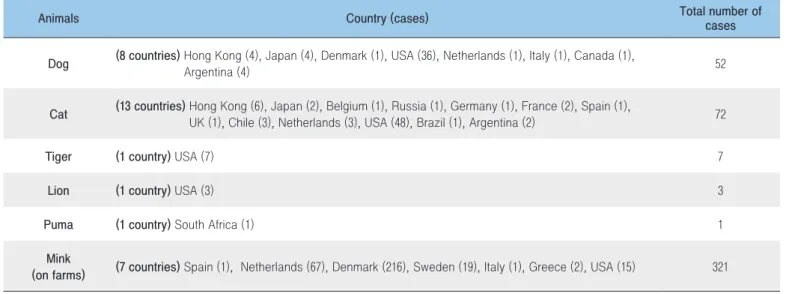
Table 1. Country and case of COVID-19 by animal type (as of November 20, 2020)
Animals Country (cases) Total number of cases
Dog (8 countries) Hong Kong (4), Japan (4), Denmark (1), USA (36), Netherlands (1), Italy (1), Canada (1),
Argentina (4) 52
Cat (13 countries) Hong Kong (6), Japan (2), Belgium (1), Russia (1), Germany (1), France (2), Spain (1),
UK (1), Chile (3), Netherlands (3), USA (48), Brazil (1), Argentina (2) 72
Tiger (1 country) USA (7) 7
Lion (1 country) USA (3) 3
Puma (1 country) South Africa (1) 1
Mink
(on farms) (7 countries) Spain (1), Netherlands (67), Denmark (216), Sweden (19), Italy (1), Greece (2), USA (15) 321
Table 2. Major transmission route and symptoms in animals (as of November 20, 2020)
Animals Source of the outbreaks (paths of infection) Clinical symptoms
Dog
- (Breed) Pomeranian, Shepherd, bulldog
- (Human ⇒ animal) The dogs tested positive after the households was confirmed. - (Mink farm’s dog) The dogs were assumed to be infected from the minks.
- No clinical signs, lethargy, respiratory signs, difficulty breathing, coughing, nasal secretion, wheezing
Cat - (Human ⇒ animal) The cats tested positive after the households were confirmed. - (Mink farm’s cat) The cats were assumed to be infected from the minks.
- No clinical signs, diarrhea, vomiting, difficulty breathing, wheezing, fever, oral lesions and ulcerations on the tongue, neurologic signs, inappetence
Tiger - (Human ⇒ animal) Being exposed to a zoo employee who was actively shedding
the virus - Dry cough, wheezing
Lion - (Human ⇒ animal) Being exposed to a zoo employee who was actively shedding
the virus - Dry cough, wheezing
Puma - (Human ⇒ animal) It was assumed that there was contact with infected handlers. - Tested negative on a PCR test 8 weeks after infection
Mink*
- (Human ⇒ animal) It was assumed that there was contact with infected humans. - (Netherlands**) The infection was notified through the early warning monitoring
system in which animals are tested for the virus every week.
- Runny noses, difficulty breathing, numbness, inappetence, epistaxis, sudden death * SARS-CoV-2 was officially designated in the Netherlands as an infectious animal disease (May 19, 2020)
Table 2. Major transmission route and symptoms in animals (as of November 20, 2020)
Animals Source of the outbreaks (paths of infection) Clinical symptoms
Dog
- (Breed) Pomeranian, Shepherd, bulldog
- (Human ⇒ animal) The dogs tested positive after the households was confirmed. - (Mink farm’s dog) The dogs were assumed to be infected from the minks.
- No clinical signs, lethargy, respiratory signs, difficulty breathing, coughing, nasal secretion, wheezing
Cat - (Human ⇒ animal) The cats tested positive after the households were confirmed. - (Mink farm’s cat) The cats were assumed to be infected from the minks.
- No clinical signs, diarrhea, vomiting, difficulty breathing, wheezing, fever, oral lesions and ulcerations on the tongue, neurologic signs, inappetence
Tiger - (Human ⇒ animal) Being exposed to a zoo employee who was actively shedding
the virus - Dry cough, wheezing
Lion - (Human ⇒ animal) Being exposed to a zoo employee who was actively shedding
the virus - Dry cough, wheezing
Puma - (Human ⇒ animal) It was assumed that there was contact with infected handlers. - Tested negative on a PCR test 8 weeks after infection
Mink*
- (Human ⇒ animal) It was assumed that there was contact with infected humans. - (Netherlands**) The infection was notified through the early warning monitoring
system in which animals are tested for the virus every week.
- Runny noses, difficulty breathing, numbness, inappetence, epistaxis, sudden death * SARS-CoV-2 was officially designated in the Netherlands as an infectious animal disease (May 19, 2020)
** Suspected cases of mink to human infection have occurred
Table 3. Current status of COVID-19 animal infection in countries (as of November 20, 2020)
Continent Country Animals Total number of cases Method of diagnosis Other informations
Asia
Hongkong Dog 4 PCR, VNT A household with COVID-19
Cat 6
Japan Dog 4 PCR, VNT A household with COVID-19
Cat 2
Europe
Belgium Cat 1 - A week after its owner was confirmed, the
cat presented symptoms
Russia Cat 1 PCR
-Germany Cat 1 - The owner died due to COVID-19
France Cat 2 PCR A household with COVID-19
Spain Cat 1 - A household with COVID-19
Mink 1 (farm) - 93,000 farmed mink were slaughtered
UK Cat 1 PCR, VNT A household with COVID-19
Netherlands
Dog 1 - A household with COVID-19, the dog had
breathing problems and was euthanized
Cat 3 - Mink farm
Mink 67 (farm) - Infection from mink to human
Denmark
Dog 1 - Mink farm
Mink 216 (farm) - The farm was infected and all the mink were slaughtered
Italy Dog 1 PCR A household with COVID-19
Mink 1 (farm) -
-Sweden Mink 19 (farm) PCR
-Greece Mink 2 (farm) - COVID-19 infection of farm owner
Americas
USA
Dog 36 PCR, VNT Mostly household infection
Cat 48 PCR, VNT Mostly household infection
Tiger 7 PCR Zoo
Lion 3 PCR Zoo
Mink 15 (farm) - Mainly in the stare of Utah
Chile Cat 3 PCR A household with COVID-19
Brazil Cat 1 PCR A household with COVID-19
Canada Dog 1 PCR A household with COVID-19
Argentina Dog 4 PCR Project of the diagnosis of pets living with
people affected by COVID-19
Cat 2 PCR