Risk of Stroke in Elderly Dialysis Patients
Despite the current knowledge about the risk of stroke and its related factors in general population, this issue in elderly patients receiving dialysis remains unresolved. Firstly, to compare the risk of stroke between hemodialysis (HD) and peritoneal dialysis (PD), data on 13,065 incident dialysis patients (aged ≥ 65 years; 10,675 in HD and 2,390 in PD) were retrieved from the Korean Health Insurance dataset. Secondly, to identify the risk factors of stroke amongst various clinical and laboratory parameters in HD, 980 elderly patients were retrospectively analyzed using an independent prospective cohort from 31 dialysis centers. For a mean duration of 1.8 years (maximum of 5 years), the risk of all
cardiovascular diseases (ischemic heart disease and stroke) did not differ between HD and PD. However, when analyses were conducted separately by subtype, the risk of stroke, not ischemic heart disease, was significantly higher in HD patients than in PD patients. When the risk factors of stroke were probed after HD for a mean duration of 2.6 years (maximum of 7 years), the absolute dependence on social support, a previous history of cardiovascular disease, high levels of low-density lipoprotein cholesterol, and the use of a high number of anti-hypertensive drugs were identified as being significant. Based on the discrepancy of stroke risk between modalities and the HD-tailored risk factors of stroke, the monitoring and management of these factors may be a key strategy to reduce the risk of stroke in elderly patients receiving dialysis.
Keywords: Cardiovascular Diseases; Aged; Kidney Failure, Chronic; Renal Dialysis; Stroke Seung Seok Han,1 Dong-Ryeol Ryu,2
Kwon Wook Joo,1 Chun Soo Lim,3
Yong-Lim Kim,4 Shin-Wook Kang,5
Yon Su Kim,1 and Dong Ki Kim1 1Department of Internal Medicine, Seoul National
University College of Medicine, Seoul, Korea;
2Department of Internal Medicine, School of
Medicine, Ewha Womans University, Seoul, Korea;
3Department of Internal Medicine, Seoul
Metropolitan Government-Seoul National University Boramae Medical Center, Seoul, Korea; 4Department
of Internal Medicine, School of Medicine, Kyungpook National University, Daegu, Korea;
5Department of Internal Medicine, College of
Medicine, Yonsei University, Seoul, Korea Received: 23 February 2017
Accepted: 17 June 2017 Address for Correspondence: Dong Ki Kim, MD, PhD
Department of Internal Medicine, Seoul National University College of Medicine, 103 Daehak-ro, Jongno-gu, Seoul 03080, Korea
E-mail: [email protected]
Funding: This work was supported by a grant of the Korea Healthcare Technology R & D Project, Ministry of Health and Welfare, Republic of Korea (HI10C2020).
https://doi.org/10.3346/jkms.2017.32.9.1460 • J Korean Med Sci 2017; 32: 1460-1467
INTRODUCTION
Stroke is an important health issue in global health care because it is a major cause of morbidity and mortality, and it imposes a significant economic burden on patients (1,2). The risk of stroke varies with a number of factors. Regarding this issue, aging is the most important risk factor for stroke (3). The elderly’s vul-nerability to stroke is mainly attributable to the increasing inci-dences of comorbidities such as hypertension and correspond-ing vascular damage of other organs (4). Chronic kidney dis-ease is also regarded as vascular damage and serves as a major cause of stroke (5). Specifically, end-stage renal disease (ESRD), the worst stage of kidney function, presents a risk of stroke ap-proximately 5 to 10 times greater than normal kidney function (6). In accordance with the relationship between aging, kidney function, and stroke, elderly patients with ESRD deserve to re-ceive the most attention, as the prevalence of both old age and ESRD has continued to increase (7). However, no active strategy to recover kidney function is circumscribed in elderly patients because they are less well suited to kidney transplantation than
their younger counterparts due to their overall poor health sta-tus and several comorbidities. In this regard, it is necessary to identify and modify risk factors for stroke in this population be-fore and after the initiation of dialysis, but studies that focus on this important concern are scarce.
Regarding elderly patients with ESRD, our previous work re-vealed that there was a discrepancy in length of survival between 2 dialysis modalities, hemodialysis (HD) and peritoneal dialysis (PD) (8). Both a meta-analysis and Korean results suggest a high-er risk of death in eldhigh-erly patients receiving PD than in those re-ceiving HD. However, no information on the comparison of cardiovascular morbidities between the 2 modalities was pro-vided. Because the dialysis modality acts as an interaction with the patient outcome, we first compared the risks of cardiovas-cular diseases, including ischemic heart disease and stroke, be-tween HD and PD in elderly Korean patients. Accordingly, HD was a risk factor of stroke compared with PD. Subsequently, we traced factors predicting stroke occurrence using an indepen-dent prospective HD cohort from 31 dialysis centers and found 4 factors related with the stroke risk.
ORIGINAL ARTICLE
Nephrology 2017-03-16
MATERIALS AND METHODS
Data collection from the Korean Health Insurance database
The data on elderly Koreans undergoing dialysis were obtained from the Korean Health Insurance database. The data from all elderly Koreans could be reviewed because Koreans are obliged to register with the national insurance system, which is com-posed of National Health Insurance and Medical Aid. In total, 35,422 patients with ESRD initiated dialysis between January 2005 and December 2008. From this group, 13,065 elderly pa-tients aged 65 years or older (36.9%) were included in the pres-ent analysis.
Baseline parameters, including age, sex, type of insurance, and scale of the hospital (i.e., clinic, hospital or general hospi-tal) were collected after assigning a unique de-identified num-ber to each patient. Comorbidities, such as diabetes mellitus, myocardial infarction, congestive heart failure, peripheral vas-cular disease, cerebrovasvas-cular disease, dementia, chronic pul-monary disease, connective tissue disease, peptic ulcer disease, liver disease, hemiplegia, and cancer, were identified by screen-ing the medical history data from the year leadscreen-ing up to the ini-tiation of dialysis therapy based on the International Classifica-tion of Diseases 10th revision (ICD-10) (9). Using these covari-ates, the Charlson comorbidity index (CCI) score for each pa-tient was calculated (10). All papa-tients were divided into 2 groups (HD vs. PD). If patients switched from one modality to the other within 1 month of initiating dialysis, those patients were classi-fied and followed as a changed-modality group as long as no death event occurred within that month. There were no miss-ing data in the variables of the Korean Health Insurance data-base, but the dataset did not provide detailed information, in-cluding biochemical and socioeconomic parameters.
Study patients were followed until kidney transplantation, death, or December 2009. If the dialysis modality changed, the patient was censored. The mortality data were obtained from the Certificate Database (i.e., listing of reasons for changes in eligibility for National Health Insurance or Medical Aid, includ-ing death or emigration) as well as through the National Health Insurance Claims Database. The primary outcome was the de-velopment of cardiovascular diseases, such as ischemic heart disease and stroke. These conditions were determined using insurance claims recorded in the Korean Health Insurance da-tabase.
Data collection from the multicenter cohort of patients with ESRD
To identify the risk factor of stroke in HD, we retrospectively an-alyzed the Clinical Research Center (CRC) registry for the ESRD cohort, an observational prospective cohort study conducted in Korea. The cohort was established in April 2009 and patients
were enrolled from 31 dialysis centers. A total of 2,208 incidents and 2,991 prevalent patients were recruited until March 2015. Among them, 1,082 patients were 65 years old or older with chro-nic HD (≥ 3 months). We excluded patients for whom selected information, including laboratory and other parameters, were not available (n = 102). Finally, 980 elderly patients receiving chronic HD were analyzed. All of the patients who participated in the study provided informed consent and agreed with exam-inations in adherence with the study protocol.
Baseline clinical parameters, such as age, sex, dialysis dura-tion, cause of ESRD, body mass index (BMI), systolic blood pres-sure (SBP) and diastolic blood prespres-sure (DBP) before HD, co-morbidities (e.g., diabetes mellitus, cardiovascular disease in-cluding ischemic heart disease, chronic heart failure, stroke, peripheral vascular disease, arrhythmia, chronic lung disease, connective tissue disease, peptic ulcer disease, liver disease, and malignancy), the use of anti-hypertensive drugs (e.g., an-giotensin converting enzyme inhibitor, anan-giotensin receptor blocker, diuretics, beta blocker, and calcium channel blocker), anti-coagulant drugs (e.g., aspirin, warfarin, ticlopidine, and clopidogrel), vitamin D, iron supplements, and erythropoietin-stimulating agents, and the type of vascular access. Using the comorbidity parameters, the CCI score and the Davies index were calculated (10,11). In accordance with the study question-naire, patients reported the status of the following factors: smok-ing, current worksmok-ing, presence of spouse, absolute dependence on family or social support (which included both emotional and economic support), educational level, ambulation, visual acu-ity, and feeding. Laboratory parameters included whole blood cell counts, hemoglobin, calcium, phosphorus, uric acid, albu-min, blood urea nitrogen (BUN), creatinine, sodium, potassi-um, total cholesterol, triglyceride, high-density lipoprotein (HDL) and low-density lipoprotein (LDL) cholesterols, intact parathy-roid hormone, ferritin, iron, transferrin saturation, hepatitis B surface antigen, and anti-hepatitis C antibody. The single-pool Kt/V was determined by 2-point urea modeling based on the intradialytic reduction in blood urea and intradialytic weight loss (12).
Elderly patients with HD were followed until dropouts, death, or December 2015. The causes of dropouts included refusal to participate in the study during follow-up, kidney transplanta-tion, and the loss to follow-up. If there were hospitalizations or death, the date and causes were registered at the given institu-tions. Based on these registrations, we identified the develop-ment of stroke-related hospitalizations or deaths as a primary outcome.
Statistical analysis
The data are presented as the means ± standard deviation for continuous variables and as proportions for categorical variables.
cate-gorical variables and continuous variables, respectively. Surviv-al curves were drawn using the Kaplan-Meier method. To com-pare the survival curves between the groups, the log-rank test was initially applied. To calculate the hazard ratios (HRs) of the outcomes, the Cox proportional hazard model was used, with and without adjustments for the covariates. To identify the risk factors of stroke in the CRC registry, we included age, sex, and parameters with P < 0.1 in the univariate analysis in the multi-variate model. To prevent co-linearity among significant risk
factors, the backward stepwise selection method was used. A P value of less than 0.05 was considered significant for the estimat-ed HRs. All of the analyses and calculations were performestimat-ed us-ing SPSS (SPSS version 21.0; IBM, Armonk, NY, USA) and STA-TA (SSTA-TASTA-TA version 12.0; StataCorp LP, College Station, TX, USA).
Ethics statement
The current study protocol complies with the Declaration of Helsinki and received full approval from the Institutional Re-view Board at the Seoul National University Hospital (No. 1601-008-729). The CRC registry from a multicenter cohort was ap-proved by the Institutional Review Boards at each center. The Institutional Review Boards are described in the Supplementa-ry 1. All of the patients in the CRC registSupplementa-ry provided written in-formed consent and agreed with the study protocol.
RESULTS
Baseline characteristics of elderly Korean patients receiving dialysis
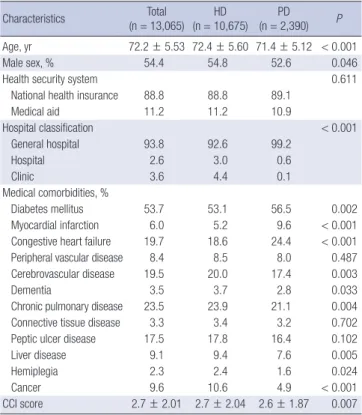
Table 1 shows the baseline characteristics of elderly Korean pa-tients who began dialysis between January 2005 and December 2008. The mean age was 72.2 years. The number (proportion) of participants in each age category was as follows: 65–69 years, Table 1. Baseline characteristics of elderly Korean patients undergoing dialysis
Characteristics Total (n = 13,065) HD (n = 10,675) PD (n = 2,390) P Age, yr 72.2 ± 5.53 72.4 ± 5.60 71.4 ± 5.12 < 0.001 Male sex, % 54.4 54.8 52.6 0.046
Health security system 0.611
National health insurance 88.8 88.8 89.1
Medical aid 11.2 11.2 10.9 Hospital classification < 0.001 General hospital 93.8 92.6 99.2 Hospital 2.6 3.0 0.6 Clinic 3.6 4.4 0.1 Medical comorbidities, % Diabetes mellitus 53.7 53.1 56.5 0.002 Myocardial infarction 6.0 5.2 9.6 < 0.001 Congestive heart failure 19.7 18.6 24.4 < 0.001 Peripheral vascular disease 8.4 8.5 8.0 0.487 Cerebrovascular disease 19.5 20.0 17.4 0.003
Dementia 3.5 3.7 2.8 0.033
Chronic pulmonary disease 23.5 23.9 21.1 0.004 Connective tissue disease 3.3 3.4 3.2 0.702 Peptic ulcer disease 17.5 17.8 16.4 0.102
Liver disease 9.1 9.4 7.6 0.005
Hemiplegia 2.3 2.4 1.6 0.024
Cancer 9.6 10.6 4.9 < 0.001
CCI score 2.7 ± 2.01 2.7 ± 2.04 2.6 ± 1.87 0.007 Statistical differences between dialysis modalities were calculated.
HD = hemodialysis, PD = peritoneal dialysis, CCI = Charlson comorbidity index.
Table 2. Case number and incidence rate (1,000 patient-year) of cardiovascular dis-ease according to the dialysis modality
Outcomes
HD PD
Case Incidence rate Case Incidence rate Composite cardiovascular disease 2,807 (26.3) 180.4 575 (24.1) 170.7 Ischemic heart disease 1,058 (9.9) 59.3 249 (10.4) 67.1 Stroke 1,994 (18.7) 120.1 381 (15.9) 107.1 Values are presented as number (%).
HD = hemodialysis, PD = peritoneal dialysis.
Fig. 1. Cumulative risk of cardiovascular disease according to the dialysis modalities. (A) Composite cardiovascular disease; (B) ischemic heart disease; and (C) stroke. Black and gray lines represent HD and PD, respectively.
HD = hemodialysis, PD = peritoneal dialysis.
Figure 1
Cumula
tive risk of composite outcome (%)
Duration (year) 1 2 3 4 5 50 40 30 20 10 0 P = 0.090
Figure 1
Cumulative risk of stroke (%)
Duration (year) 1 2 3 4 5 50 40 30 20 10 0 P = 0.007
Figure 1
Cumulative risk of ischemic heart disease (%)
Duration (year) 1 2 3 4 5 50 40 30 20 10 0 P = 0.308 A B C
Table 3. HRs of cardiovascular outcomes in the HD group compared with the PD group
Outcomes Univariate Multivariate*
HR (95% CI) P HR (95% CI) P
Composite cardiovascular disease 1.08 (0.988–1.182) 0.090 1.16 (1.055–1.266) 0.002
Ischemic heart disease 0.93 (0.811–1.069) 0.308 1.13 (0.983–1.302) 0.085
Stroke 1.16 (1.042–1.297) 0.007 1.16 (1.034–1.292) 0.011
HD = hemodialysis, PD = peritoneal dialysis, HR = hazard ratio, CI = confidence interval, CCI = Charlson comorbidity index.
*Adjusted for age, sex, health security system, hospital classification, comorbidities including diabetes mellitus, myocardial infarction, congestive heart failure, peripheral vascu-lar disease, cerebrovascuvascu-lar disease, dementia, chronic pulmonary disease, connective tissue disease, peptic ulcer disease, liver disease, hemiplegia, cancer, and CCI score.
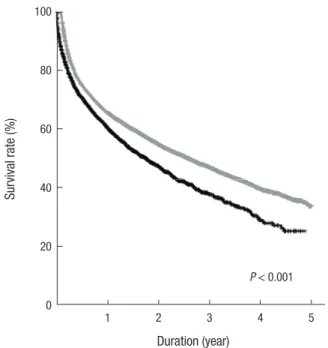
Fig. 2. Survival curves according to the development of stroke events. Black and gray lines represent stroke and non-stroke groups, respectively.
Figure 2
Sur vival ra te (%) Duration (year) 1 2 3 4 5 100 80 60 40 20 0 P < 0.001 4,939 (37.8%); 70–79 years, 6,650 (50.9%); 80–89 years, 1,418(10.9%); and ≥ 90 years, 58 (0.4%). Comorbidities, such as dia-betes mellitus, myocardial infarction, and congestive heart fail-ure, were more frequent in PD than in HD; but, other comor-bidities, such as cerebrovascular disease, dementia, chronic pul-monary disease, liver disease, hemiplegia, and cancer, were more common in HD than in PD. The patients were followed for a mean duration of 1.8 ± 1.3 years and a maximum of 5 years.
Cardiovascular disease according to the dialysis modalities
During the follow-up period, cardiovascular disease events oc-curred in 3,382 patients (25.9%): ischemic heart disease, in 1,307 (10.0%); stroke, in 2,375 (18.2%); and both, in 300 (2.3%). Inci-dence rates (1,000 patient-year) of cardiovascular disease, isch-emic heart disease, and stroke events were 178.7, 60.6, and 117.8, respectively.
Table 2 shows the cardiovascular event number and rates ac-cording to the dialysis modality. Fig. 1 shows the crude cumula-tive rates of cardiovascular diseases in HD and PD patients. The overall rates of cardiovascular diseases did not differ between 2 modalities (P = 0.090) (Fig. 1A). When the analysis was conducted separately by the subtype of disease, the rates of ischemic heart disease were similar between 2 modalities (P = 0.308) (Fig. 1B), but the rates of stroke differed, as high risk was conferred to HD patients (P = 0.007). Subsequently, we adjusted all the covari-ates (as shown in Table 1) in the comparison analyses (Table 3), and the difference between the 2 modalities remained also sig-nificant in terms of stroke, but not ischemic heart disease.
Stroke and subsequent all-cause mortality outcome
Fig. 2 shows the survival curves between the groups with and without stroke. The crude mortality rates of 2 groups were sig-nificantly different (P < 0.001). When all the variables were ad-justed, the HR in the stroke group was 1.24 (1.165–1.327) com-pared with the non-stroke group (P < 0.001). When the analy-ses were separately conducted by dialysis modality, mortality rates (1,000 patient-year) were 288.3 in HD without stroke, 541.6 in HD with stroke, 314.4 in PD without stroke, and 710.3 in PD with stroke. Compared with the groups without stroke, the ad-justed HRs of mortality were 1.19 (1.109–1.282) and 1.63 (1.394–
1.894) in HD and PD with stroke, respectively (P < 0.001). These data indicated that the subsequent development of stroke was linked to poor survival of elderly dialysis patients.
Risk factor of stroke in HD
Based on the above relationship between HD and stroke risk of elderly patients, we sought to address which factors were re-sponsible for the high risk of stroke in HD. Because the various clinical and laboratory parameters were not available in the Health Insurance database, we reviewed and analyzed 980 el-derly patients with HD, all of whom were recruited between April 2009 and March 2015 from 31 dialysis centers. Their base-line characteristics (e.g., socioeconomic parameters, laboratory findings, and the use of medications) are shown in Table 4. The mean age was 72.0 years. The patients were followed for a mean duration of 2.6 ± 2.1 years and a maximum of 7 years. During the following period, 42 patients (4.3%) had stroke events. Supplementary Table 1 shows the baseline difference between the stroke and non-stroke groups irrespective of the timeframe
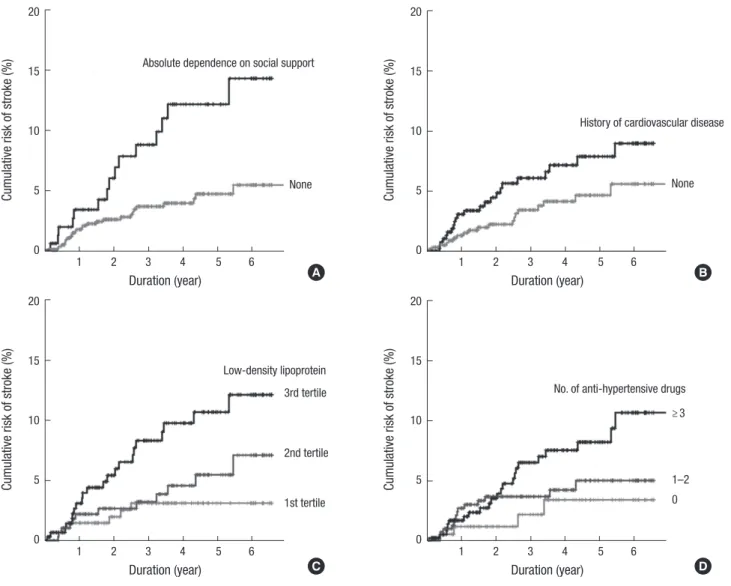
of stroke. Compared with non-stroke patients, the patients with stroke had the following characteristics: longer dialysis dura-tion (P = 0.021); higher absolute dependence on social support (P = 0.001); high LDL cholesterol levels (P = 0.013); and use of high number of anti-hypertensive drugs (P = 0.027). We addi-tionally grouped the continuous variables according to the ter-tiles or commonly-used criteria, and determined the relation-ship with stroke (Supplementary Table 2). As a result, the ter-tiles of LDL cholesterol significantly discriminated the stroke events (P = 0.012), but other continuous variables did not. Subsequently, we considered the stroke timeframe by applying Cox proportional hazard models to the parameters with P < 0.100 in the above analyses (Table 4). Univariate analyses were simi-lar to the previous results shown in Supplementary Tables 1 and 2. However, the multivariate analysis finally determined the in-dependent risk factors of stroke as follows: absolute dependence on social support; a previous history of cardiovascular disease; high LDL cholesterol levels; and the use of a high number of anti-hypertensive drugs. Their corresponding risk curves are shown in Fig. 3.
DISCUSSION
The cardiovascular morbidity and mortality of elderly dialysis patients are important issues due to the high incidence of dis-ease with older age, but older patients’ choices for active
man-agement are limited compared with their younger counterparts. The present study firstly addressed the relationship between modality and cardiovascular risk in a subset of elderly Korean ESRD patients. Accordingly, patients who started with HD had a higher risk of subsequent cardiovascular diseases than those who started with PD. In particular, the risk discrepancy was pro-minent in stroke events, and these events significantly aggra-vated all-cause mortality of patients. We additionally addressed the risk factors related to stroke in an HD cohort. The results for certain factors (e.g., history of cardiovascular diseases, hyper-cholesterolemia, and severe hypertensive state) supported pre-vious findings in the literature, while other results (e.g., absolute dependence on social support) provide new information to the knowledge base in this field.
Regarding which modality may be most suitable for elderly patients, a randomized trial that controls for all possible con-founders is not feasible (13). The current knowledge is obtained from several observational studies, and there were controver-sial results regarding the survival benefits between 2 modalities. One meta-analysis of 8 studies published before the year 2000 reported similar mortality results for both modalities (14). Our recent meta-analysis from 15 cohort studies published after the year 2000 preferred HD to PD, particularly in subgroups that had diabetes mellitus, had long dialysis durations (> 1 year), or contained cohorts that began dialysis in the 1990s (8). Never-theless, studies that have focused on the risk of cardiovascular Table 4. Risk factors for the risk of stroke in 980 HD patients from 31 dialysis centers
Risk factors Univariate Multivariate
HR (95% CI) P HR (95% CI) P
Age (per 1 yr) 0.99 (0.938–1.053) 0.834 -
-Male (vs. female) 0.91 (0.496–1.673) 0.764 - -Dialysis duration, yr - < 1 1 (reference) ≥ 1 to < 3 0.52 (0.174–1.525) 0.231 ≥ 3 to < 8 1.60 (0.792–3.245) 0.189 ≥ 8 1.73 (0.684–4.372) 0.247
Dependence on family support (vs. other) 1.78 (0.956–3.325) 0.069 -
-Dependence on social support (vs. other) 2.63 (1.400–4.952) 0.003 3.03 (1.572–5.830) 0.001
BMI (per 1 kg/m2) 0.91 (0.818–1.006) 0.064 -
-Cardiovascular disease (vs. none) 1.73 (0.943–3.181) 0.077 2.05 (1.069–3.912) 0.031
Visual acuity -
Normal or with glasses 1 (reference)
Mild difficulty 0.64 (0.280–1.444) 0.280
The blind 2.99 (0.914–9.796) 0.070
Total cholesterol (per 1 mg/dL) 1.01 (1.000–1.014) 0.044 -
-LDL cholesterol (per 1 mg/dL) 1.01 (1.003–1.019) 0.006 1.01 (1.004–1.020) 0.003
Calcium channel blocker (vs. none) 1.69 (0.912–3.129) 0.095 -
-No. of anti-hypertensive drugs (per 1) 1.19 (0.998–1.420) 0.053 1.20 (1.006–1.435) 0.043
Davies index -
0 1 (reference)
1 1.36 (0.491–3.788) 0.551
≥ 2 2.41 (0.911–6.359) 0.076
Fig. 3. Risk of stroke depending on the following factors: (A) Absolute dependence on social support; (B) a history of cardiovascular disease; (C) the tertiles of LDL cholesterol levels; and (D) the number of anti-hypertensive drugs used.
LDL = low-density lipoprotein.
Cumula
tive risk of stroke (%)
Duration (year) 1 2 3 4 5 6 20 15 10 5 0
Absolute dependence on social support
None
Cumula
tive risk of stroke (%)
Duration (year) 1 2 3 4 5 6 20 15 10 5 0
History of cardiovascular disease
None
Cumula
tive risk of stroke (%)
Duration (year) 1 2 3 4 5 6 20 15 10 5 0 Low-density lipoprotein 3rd tertile 2nd tertile 1st tertile Cumula
tive risk of stroke (%)
Duration (year) 1 2 3 4 5 6 20 15 10 5 0
No. of anti-hypertensive drugs ≥ 3
1–2 0
A B
C D
disease, not all-cause mortality, in the 2 modalities are scarce (15-18). Some studies definitely preferred PD (16,18), but oth-ers favored HD (17). Additionally, a study including elderly pa-tients showed that the HD group exhibited worsened cardio-vascular parameters (e.g., left ventricular mass index, left ven-tricular wall thickness, intima media thickness, and intima me-dia area) after 4 years compared with the PD group (16). The present study revealed that the discrepancy of risk was depen-dent on the type of disease: stroke, not ischemic heart disease, was more common in the HD group than the PD group. Possi-ble mechanisms for the higher presentation of cardiovascular disease in HD include the nature of dialysis regarding rapid loss of residual kidney function and hemodynamic instability com-pared with PD (19,20). We acknowledge that all of these obser-vational results cannot provide clues regarding the preference between HD and PD. However, these studies, including the pres-ent results, may be helpful to raise the awareness of modality
selection, particularly in terms of the characteristics of each mo-dality.
Several traditional and non-traditional factors are responsi-ble for stroke events in dialysis patients (21,22). We identified severe hypertension (i.e., indicated by high number of the anti-hypertensive drugs used) and a previous history of cardiovas-cular disease as risk factors for stroke in elderly patients receiv-ing HD. In addition to the general mechanism on the relation-ship between hypertension and stroke (23), HD and hyperten-sion can synergistically increase the stroke risk throughout dial-ysis-induced ischemia and hemodynamic instability due to ul-trafiltration in a short time period (20). Uremic conditions dur-ing the non-HD period can further mediate the development of stroke (24). A previous history of cardiovascular disease indicates remnant vascular sequelae and calcification; these vulnerable vessels are also common in the dialysis state or in the elderly population compared with the counterparts (25,26). Thus, the
cardiovascular history can aggravate the risk of stroke in this subset.
Findings on the relationship between hypercholesterolemia and stroke risk supports the current knowledge (27). However, this positive relationship is applied only to the case of ischemic stroke, not hemorrhagic stroke, wherein high cholesterol levels seem to protect the hemorrhagic stroke (28). The higher inci-dence of ischemic stroke relative to hemorrhagic stroke might be why hypercholesterolemia was selected as a risk factor (29). Unfortunately, the current CRC-ESRD registry did not provide the subtype of stroke; therefore, this limitation may hamper the conclusions about hypercholesterolemia. Particularly, the great concern about lipid-lowering therapy in dialysis patients has not been fully established (30,31).
We found that absolute dependence on social support was strongly associated with stroke risk. This parameter included both emotional and economic supports; thus, the patients who gave a positive answer might have low self-management or low income status. Although subsequent studies will validate our results and their clinical implications, the present results from elderly patients supports the previous concept about the rela-tionship between psychosocial or economic status and the risk of cardiovascular disease (32).
Although the present results are informative, this study has some limitations. The observational study design limits the es-tablishment of any conclusions of causality or underlying mech-anisms. Because we primarily considered elderly Korean pati-ents with ESRD, the application of our results to other clinical settings should be performed carefully. Furthermore, other miss-ing or unidentified parameters (e.g., the severity of stroke or the purpose of drug use) could act as confounding factors in the present correlations.
The present study addresses a high risk of stroke in HD and its responsible risk factors in elderly Korean patients with ESRD. Elderly patients with dialysis exhibit a high risk of stroke and subsequent disability or mortality. In this regard, the present study will enrich the present awareness of the elderly patients’ vulnerability and form the basis of the future studies to address whether the monitoring and management of factors confirmed here can constitute a strategy to reduce the stroke risk in elderly patients receiving dialysis.
DISCLOSURE
The authors have no potential conflicts of interest to disclose. AUTHOR CONTRIBUTION
Conceptualization: Han SS. Data curation: Han SS, Ryu DR. For-mal analysis: Joo KW, Lim CS, Kim YL, Kang SW, Kim YS, Kim DK. Investigation: Han SS, Joo KW, Lim CS, Kim YL, Kang SW,
Kim YS, Kim DK. Writing - original draft: Kim DK. ORCID
Seung Seok Han https://orcid.org/0000-0003-0137-5261 Dong-Ryeol Ryu https://orcid.org/0000-0002-5309-7606 Kwon Wook Joo https://orcid.org/0000-0001-9941-7858 Chun Soo Lim https://orcid.org/0000-0001-9123-6542 Yong-Lim Kim https://orcid.org/0000-0002-1344-3455 Shin-Wook Kang https://orcid.org/0000-0002-5677-4756 Yon Su Kim https://orcid.org/0000-0003-3091-2388 Dong Ki Kim https://orcid.org/0000-0002-5195-7852 REFERENCES
1. Brønnum-Hansen H, Davidsen M, Thorvaldsen P; Danish MONICA Study Group. Long-term survival and causes of death after stroke. Stroke 2001; 32: 2131-6.
2. Di Carlo A. Human and economic burden of stroke. Age Ageing 2009; 38: 4-5.
3. Redón J, Cea-Calvo L, Lozano JV, Martí-Canales JC, Llisterri JL, Aznar J, González-Esteban J; Investigators of the PREV-ICTUS study. Blood pres-sure and estimated risk of stroke in the elderly population of Spain: the PREV-ICTUS study. Stroke 2007; 38: 1167-73.
4. Chen X, Zhou L, Zhang Y, Yi D, Liu L, Rao W, Wu Y, Ma D, Liu X, Zhou XH, et al. Risk factors of stroke in Western and Asian countries: a systematic review and meta-analysis of prospective cohort studies. BMC Public Health 2014; 14: 776.
5. Schiffrin EL, Lipman ML, Mann JF. Chronic kidney disease: effects on the cardiovascular system. Circulation 2007; 116: 85-97.
6. Seliger SL, Gillen DL, Longstreth WT Jr, Kestenbaum B, Stehman-Breen CO. Elevated risk of stroke among patients with end-stage renal disease. Kidney Int 2003; 64: 603-9.
7. Stevens LA, Viswanathan G, Weiner DE. Chronic kidney disease and end-stage renal disease in the elderly population: current prevalence, future projections, and clinical significance. Adv Chronic Kidney Dis 2010; 17: 293-301.
8. Han SS, Park JY, Kang S, Kim KH, Ryu DR, Kim H, Joo KW, Lim CS, Kim YS, Kim DK. Dialysis modality and mortality in the elderly: a meta-analy-sis. Clin J Am Soc Nephrol 2015; 10: 983-93.
9. Quan H, Sundararajan V, Halfon P, Fong A, Burnand B, Luthi JC, Saunders LD, Beck CA, Feasby TE, Ghali WA. Coding algorithms for defining comor-bidities in ICD-9-CM and ICD-10 administrative data. Med Care 2005; 43: 1130-9.
10. Hemmelgarn BR, Manns BJ, Quan H, Ghali WA. Adapting the Charlson Comorbidity Index for use in patients with ESRD. Am J Kidney Dis 2003; 42: 125-32.
11. Davies SJ, Russell L, Bryan J, Phillips L, Russell GI. Comorbidity, urea ki-netics, and appetite in continuous ambulatory peritoneal dialysis patients: their interrelationship and prediction of survival. Am J Kidney Dis 1995; 26: 353-61.
12. Hemodialysis Adequacy 2006 Work Group. Clinical practice guidelines for hemodialysis adequacy, update 2006. Am J Kidney Dis 2006; 48 Suppl 1: S2-90.
13. Korevaar JC, Feith GW, Dekker FW, van Manen JG, Boeschoten EW, Bos-suyt PM, Krediet RT; NECOSAD Study Group. Effect of starting with he-modialysis compared with peritoneal dialysis in patients new on dialysis treatment: a randomized controlled trial. Kidney Int 2003; 64: 2222-8. 14. Selgas R, Cirugeda A, Fernandez-Perpén A, Sánchez-Tomero JA, Barril G,
Alvarez V, Bajo MA. Comparisons of hemodialysis and CAPD in patients over 65 years of age: a meta-analysis. Int Urol Nephrol 2001; 33: 259-64. 15. Locatelli F, Marcelli D, Conte F, D’Amico M, Del Vecchio L, Limido A,
Mal-berti F, Spotti D. Survival and development of cardiovascular disease by modality of treatment in patients with end-stage renal disease. J Am Soc Nephrol 2001; 12: 2411-7.
16. Hiramatsu T, Furuta S, Kakuta H. Impact of dialysis modality on ultraso-nographic cardiovascular parameters in elderly patients. Adv Perit Dial 2007; 23: 94-7.
17. Johnson DW, Dent H, Hawley CM, McDonald SP, Rosman JB, Brown FG, Bannister K, Wiggins KJ. Association of dialysis modality and cardiovas-cular mortality in incident dialysis patients. Clin J Am Soc Nephrol 2009; 4: 1620-8.
18. Chavarria LA, Aguilar-Kitsu A, Rosas P, Fajardo A, Mendoza-Guevara L, Sanchez L, Zepeda C, Ibarra P, Luna A, Lindholm B, et al. Intima media thickness in children undergoing dialysis. Pediatr Nephrol 2012; 27: 1557-64.
19. Marrón B, Remón C, Pérez-Fontán M, Quirós P, Ortíz A. Benefits of pre-serving residual renal function in peritoneal dialysis. Kidney Int Suppl 2008: S42-51.
20. McIntyre CW. Effects of hemodialysis on cardiac function. Kidney Int 2009; 76: 371-5.
21. Seliger SL, Gillen DL, Tirschwell D, Wasse H, Kestenbaum BR, Stehman-Breen CO. Risk factors for incident stroke among patients with end-stage renal disease. J Am Soc Nephrol 2003; 14: 2623-31.
22. Meschia JF, Bushnell C, Boden-Albala B, Braun LT, Bravata DM, Chaturve-di S, Creager MA, Eckel RH, Elkind MS, Fornage M, et al. Guidelines for the primary prevention of stroke: a statement for healthcare profession-als from the American Heart Association/American Stroke Association.
Stroke 2014; 45: 3754-832.
23. Phillips SJ. Pathophysiology and management of hypertension in acute ischemic stroke. Hypertension 1994; 23: 131-6.
24. Power A. Stroke in dialysis and chronic kidney disease. Blood Purif 2013; 36: 179-83.
25. Shroff RC, McNair R, Figg N, Skepper JN, Schurgers L, Gupta A, Hiorns M, Donald AE, Deanfield J, Rees L, et al. Dialysis accelerates medial vascular calcification in part by triggering smooth muscle cell apoptosis. Circula-tion 2008; 118: 1748-57.
26. Demer LL, Tintut Y. Vascular calcification: pathobiology of a multifaceted disease. Circulation 2008; 117: 2938-48.
27. Zhang X, Patel A, Horibe H, Wu Z, Barzi F, Rodgers A, MacMahon S, Wood-ward M; Asia Pacific Cohort Studies Collaboration. Cholesterol, coronary heart disease, and stroke in the Asia Pacific region. Int J Epidemiol 2003; 32: 563-72.
28. Iso H, Jacobs DR Jr, Wentworth D, Neaton JD, Cohen JD. Serum choles-terol levels and six-year mortality from stroke in 350,977 men screened for the multiple risk factor intervention trial. N Engl J Med 1989; 320: 904-10.
29. Russo T, Felzani G, Marini C. Stroke in the very old: a systematic review of studies on incidence, outcome, and resource use. J Aging Res 2011; 2011: 108785.
30. Fellström BC, Jardine AG, Schmieder RE, Holdaas H, Bannister K, Beutler J, Chae DW, Chevaile A, Cobbe SM, Grönhagen-Riska C, et al. Rosuvas-tatin and cardiovascular events in patients undergoing hemodialysis. N Engl J Med 2009; 360: 1395-407.
31. Baigent C, Landray MJ, Reith C, Emberson J, Wheeler DC, Tomson C, Wan-ner C, Krane V, Cass A, Craig J, et al. The effects of lowering LDL choles-terol with simvastatin plus ezetimibe in patients with chronic kidney dis-ease (Study of Heart and Renal Protection): a randomised placebo-con-trolled trial. Lancet 2011; 377: 2181-92.
32. Clark AM, DesMeules M, Luo W, Duncan AS, Wielgosz A. Socioeconom-ic status and cardiovascular disease: risks and implSocioeconom-ications for care. Nat Rev Cardiol 2009; 6: 712-22.
SUPPLEMENTARY MATERIALS Supplementary 1. Institutional Review Boards
Catholic University of Korea, Bucheon St. Mary’s Hospital; Catholic University of Korea, Incheon St. Mary’s Hospital; Catholic University of Korea, Seoul St. Mary’s Hospital; Cath-olic University of Korea, St. Mary’s Hospital; CathCath-olic University of Korea, St. Vincent’s Hospital; CathCath-olic University of Korea, Uijeongbu St. Mary’s Hospital; Cheju Halla General Hospital; Chonbuk National University Hospital; Chonnam National University Hospital; Chung-Ang University Medical Center; Chungbuk National University Hospital; Chungnam National University Hospital; Dong-A University Medical Center; Ewha Womans University Medical Center; Fatima Hospital, Daegu; Gachon University Gil Medical Center; Inje University Pusan Paik Hospital; Kyungpook National University Hospital; Kwandong University College of Medicine, Myongji Hospital; National Health Insurance Corporation Ilsan Hospital; National Medical Center; Pusan National University Hospital; Samsung Medical Center, Seoul; Seoul Metropolitan Government, Seoul National University, Boramae Med-ical Center; Seoul National University Hospital; Seoul National University, Bundang Hospital; Yeungnam University MedMed-ical Center; Yonsei University, Severance Hospital; Yonsei University, Gangnam Severance Hospital; Ulsan University Hospital; and Wonju Christian Hospital (listed in alphabetical order).
Supplementary Table 1. Baseline characteristics of HD patients in the CRC-ESRD cohort
Characteristics Total (n = 980) No stroke (n = 938) Stroke (n = 42) P
Age, yr 72.0 ± 5.47 72.0 ± 5.49 71.6 ± 5.05 0.625 Male sex, % 58.4 58.5 54.8 0.628 Dialysis duration, % 0.021 < 1 yr 55.3 55.9 42.9 ≥ 1 to < 3 yr 17.7 18.0 9.5 ≥ 3 to < 8 yr 18.9 18.2 33.3 ≥ 8 yr 8.2 7.9 14.3
Underlying renal disease, % 0.783
Diabetes 53.2 53.1 54.8 Hypertension 21.9 22.0 21.4 Primary glomerulonephritis 6.3 6.4 4.8 Others 10.0 9.8 14.3 Unknown 8.6 8.7 4.8 Smoking status, % 0.275 Never smoker 62.0 61.5 73.2 Past smoker 31.7 32.1 24.4 Current smoker 6.2 6.4 2.4 Work, % 7.1 7.1 7.1 0.997 Spouse, % 80.3 80.4 78.6 0.776
Dependence on family support, % 25.7 25.1 38.1 0.060
Dependence on social support, % 16.4 15.5 35.7 0.001
Education level, % 0.215
Less than high school 52.4 52.9 42.9
High school 25.0 25.1 23.8
College and more 22.5 22.0 33.3
BMI, kg/m2 22.5 ± 3.22 22.5 ± 3.25 21.7 ± 2.31 0.025 SBP, mmHg 139.7 ± 19.83 139.6 ± 19.67 140.5 ± 23.29 0.785 DBP, mmHg 72.1 ± 12.10 72.1 ± 12.16 71.4 ± 10.65 0.702 Diabetes mellitus, % 59.9 60.0 58.5 0.854 Comorbidities, % Cardiovascular disease 41.1 40.5 54.8 0.066
Ischemic heart disease 23.4 23.4 24.4 0.883
Chronic heart failure 11.4 11.1 17.1 0.241
Stroke 13.8 13.5 22.0 0.123
Peripheral vascular disease 8.4 8.1 14.6 0.142
Arrhythmia, % 5.9 5.9 7.3 0.702
Chronic lung disease, % 8.5 8.3 12.2 0.387
Connective tissue disease, % 10.1 10.1 10.0 0.976
Peptic ulcer disease, % 7.0 6.9 9.8 0.478
Liver disease, % 7.0 7.1 4.9 0.592
Malignancy, % 11.0 11.2 4.9 0.202
Ambulation, % 0.737
Normal 74.5 74.4 78.0
Walk with assistance 17.4 17.5 17.1
By wheelchair or bed-ridden 8.0 8.2 4.9
Visual acuity, % 0.079
Normal or with glasses 71.6 71.4 75.6
Mild difficulty 25.8 26.2 17.1
The blind 2.6 2.4 7.3
Feeding, % 0.746
Normal 95.0 94.9 97.6
Feeding with assistance 4.9 5.0 2.4
Feeding by tube 0.1 0.1 0
Modified CCI 6.9 ± 1.98 6.9 ± 1.98 6.9 ± 1.87 0.986
Davies index 1.3 ± 1.00 1.3 ± 1.01 1.5 ± 0.81 0.274
Characteristics Total (n = 980) No stroke (n = 938) Stroke (n = 42) P Laboratory finding
Whole blood cell, × /mm3 6.5 ± 2.45 6.5 ± 2.46 6.5 ± 2.34 0.933
Hemoglobin, g/dL 10.7 ± 1.39 10.7 ± 1.40 11.0 ± 1.11 0.215 Calcium, mg/dL 8.6 ± 0.84 8.7 ± 0.84 8.5 ± 0.77 0.413 Phosphorus, mg/dL 4.4 ± 1.35 4.4 ± 1.34 4.3 ± 1.46 0.617 Uric acid, mg/dL 6.9 ± 1.76 6.9 ± 1.76 6.7 ± 1.90 0.452 Albumin, g/dL 3.7 ± 0.46 3.7 ± 0.46 3.8 ± 0.40 0.164 BUN, mg/dL 57.4 ± 20.78 57.5 ± 20.81 56.5 ± 20.24 0.761 Creatinine, mg/dL 7.6 ± 2.62 7.6 ± 2.61 8.0 ± 2.93 0.282 Sodium, mEq/L 137.9 ± 3.61 137.9 ± 3.62 138.0 ± 3.53 0.803 Potassium, mEq/L 4.8 ± 0.80 4.8 ± 0.80 4.9 ± 0.79 0.712 Total cholesterol, mg/dL 153.2 ± 37.38 152.7 ± 37.63 163.5 ± 29.87 0.071 Triglyceride, mg/dL 117.9 ± 75.12 118.3 ± 75.81 109.9 ± 59.05 0.486 HDL cholesterol, mg/dL 42.4 ± 14.60 42.4 ± 14.58 42.7 ± 15.25 0.892 LDL cholesterol, mg/dL 86.9 ± 31.64 86.3 ± 31.78 98.8 ± 26.16 0.013
Intact parathyroid hormone, pg/mL 161.3 ± 179.21 161.4 ± 182.00 159.8 ± 102.39 0.957
Ferritin, ng/mL 299.1 ± 364.39 297.1 ± 366.61 340.4 ± 315.16 0.464 Iron, μg/dL 66.9 ± 34.72 67.0 ± 34.93 65.6 ± 30.43 0.810 Transferrin saturation, % 32.1 ± 24.28 32.1 ± 24.58 32.2 ± 17.19 0.986 Positive HBs Ag, % 3.1 3.1 2.4 0.794 Positive HCV Ab, % 3.0 3.0 2.4 0.821 Medications, % ACEi or ARB 45.7 45.4 52.4 0.375 Diuretics 39.2 39.3 35.7 0.638 Beta blocker 38.6 38.1 50.0 0.120
Calcium channel blocker 45.6 45.0 59.5 0.064
Aspirin 41.2 41.0 45.2 0.589 Warfarin 2.8 2.7 4.8 0.417 Ticlopidine 5.4 5.2 9.5 0.228 Clopidogrel 14.4 14.1 21.4 0.184 Vitamin D 11.7 11.7 11.9 0.972 Iron 66.1 65.9 71.4 0.458 Erythropoietin-stimulating agent 71.7 71.4 78.6 0.315
No. of anti-hypertensive drugs 2.1 ± 1.57 2.1 ± 1.56 2.6 ± 1.64 0.027
No. of anti-coagulant agents 0.7 ± 0.75 0.7 ± 0.75 0.9 ± 0.65 0.260
Vascular access, % 0.874
Native fistula 65.2 65.2 65.9
Synthetic graft 19.7 19.9 17.1
Catheter 15.1 15.0 17.1
Single-pool Kt/V 1.5 ± 0.44 1.5 ± 0.44 1.5 ± 0.31 0.530
HD = hemodialysis, CRC = Clinical Research Center, ESRD = end-stage renal disease, BMI = body mass index, SBP = systolic blood pressure, DBP = diastolic blood pressure, CCI = Charlson comorbidity index, BUN = blood urea nitrogen, HDL = high-density lipoprotein, LDL = low-density lipoprotein, HBs Ag = surface antigen of the hepatitis B virus, HCV Ab = anti-hepatitis C virus antibody, ACEi = angiotensin converting enzyme inhibitor, ARB = angiotensin receptor blocker, K = dialyzer clearance, t = time, V = volume of water a patient's body contains.
Supplementary Table 2. Relationship with the risk of stroke according to the categories of continuous variables
Variables Categories Mean value Stroke, % P
Age 1st tertile 66.5 ± 1.12 4.5 0.594 2nd tertile 71.0 ± 1.41 5.0 3rd tertile 78.4 ± 3.97 3.4 BMI, kg/m2 < 18.5 17.2 ± 1.19 5.1 0.278 ≥ 18.5 to < 25.0 21.8 ± 1.73 4.9 ≥ 25.0 to < 30.0 26.8 ± 1.33 1.9 ≥ 30.0 32.5 ± 2.15 0 BMI 1st tertile 19.2 ± 1.45 5.1 0.454 2nd tertile 22.2 ± 0.75 4.7 3rd tertile 26.0 ± 2.28 3.2 SBP, mmHg < 120 109.1 ± 7.17 6.0 0.634 ≥ 120 to < 140 130.9 ± 6.79 3.9 ≥ 140 158.1 ± 13.06 4.5 SBP 1st tertile 120.6 ± 9.55 3.9 0.757 2nd tertile 139.5 ± 4.38 4.5 3rd tertile 161.7 ± 12.31 5.0 DBP, mmHg < 80 65.3 ± 8.32 4.9 0.337 ≥ 80 to < 90 83.1 ± 4.20 4.2 ≥ 90 97.6 ± 4.58 0 DBP 1st tertile 59.1 ± 6.70 4.6 0.663 2nd tertile 72.1 ± 2.90 5.1 3rd tertile 84.9 ± 6.34 3.6
Modified CCI 1st tertile 4.5 ± 0.63 3.8 0.556
2nd tertile 6.5 ± 0.50 5.0
3rd tertile 9.1 ± 1.36 3.5
Davies index 0 0 2.5 0.081
1 1 3.5
≥ 2 2.4 ± 0.63 6.0
Whole blood cell 1st tertile 4.3 ± 0.88 4.0 0.938
2nd tertile 6.2 ± 0.50 4.2 3rd tertile 9.1 ± 2.34 4.6 Hemoglobin 1st tertile 9.3 ± 1.05 3.4 0.139 2nd tertile 10.7 ± 0.25 3.4 3rd tertile 12.1 ± 0.87 6.1 Calcium 1st tertile 7.8 ± 0.46 4.7 0.856 2nd tertile 8.5 ± 0.17 4.5 3rd tertile 9.5 ± 0.62 3.8 Phosphorus 1st tertile 3.0 ± 0.57 5.2 0.463 2nd tertile 4.3 ± 0.29 3.2 3rd tertile 5.8 ± 1.02 4.5
Uric acid 1st tertile 5.1 ± 0.97 5.4 0.370
2nd tertile 7.0 ± 0.38 3.1 3rd tertile 8.8 ± 1.07 4.4 Albumin 1st tertile 3.3 ± 0.36 4.0 0.517 2nd tertile 3.8 ± 0.08 3.5 3rd tertile 4.2 ± 0.24 5.3 BUN 1st tertile 35.6 ± 9.56 3.7 0.747 2nd tertile 56.1 ± 5.04 4.9 3rd tertile 80.5 ± 12.93 4.3 Creatinine 1st tertile 4.9 ± 1.06 3.7 0.741 2nd tertile 7.4 ± 0.62 4.3 3rd tertile 10.5 ± 1.77 4.9 Sodium 1st tertile 133.7 ± 2.62 3.7 0.664 2nd tertile 138.1 ± 0.80 5.1 3rd tertile 141.6 ± 1.59 4.0
Variables Categories Mean value Stroke, % P
Potassium 1st tertile 4.0 ± 0.36 3.4 0.293
2nd tertile 4.8 ± 0.19 5.7
3rd tertile 5.7 ± 0.51 3.8
Total cholesterol 1st tertile 116.4 ± 14.83 3.2 0.098
2nd tertile 149.7 ± 8.05 3.5 3rd tertile 193.4 ± 30.33 6.3 Triglyceride 1st tertile 56.6 ± 15.04 4.7 0.642 2nd tertile 102.5 ± 13.62 5.3 3rd tertile 195.7 ± 81.12 3.7 HDL cholesterol 1st tertile 29.2 ± 4.98 5.1 0.860 2nd tertile 40.2 ± 2.89 4.4 3rd tertile 58.0 ± 12.74 4.3 LDL cholesterol 1st tertile 56.1 ± 14.04 2.4 0.012 2nd tertile 83.8 ± 6.57 4.1 3rd tertile 120.7 ± 25.55 7.4
Intact parathyroid hormone 1st tertile 40.5 ± 21.16 3.5 0.593
2nd tertile 119.6 ± 25.62 4.5 3rd tertile 323.9 ± 229.45 5.2 Ferritin 1st tertile 76.3 ± 30.20 3.4 0.520 2nd tertile 205.9 ± 51.84 5.1 3rd tertile 615.0 ± 486.79 5.1 Iron 1st tertile 37.0 ± 9.91 4.2 0.329 2nd tertile 61.2 ± 6.76 5.9 3rd tertile 102.5 ± 36.51 3.4
Transferrin saturation 1st tertile 17.4 ± 4.64 5.1 0.831
2nd tertile 28.4 ± 2.93 4.1
3rd tertile 50.6 ± 34.22 4.8
No. of anti-hypertensive drugs 0 0 2.1 0.055
1–2 1.6 ± 0.50 3.6
≥ 3 3.7 ± 0.98 6.1
No. of anti-coagulant agents 0 0 2.9 0.177
1 1 5.5
≥ 2 2.1 ± 0.40 4.3
Single-pool Kt/V 1st tertile 1.1 ± 0.38 4.7 0.817
2nd tertile 1.5 ± 0.05 4.5
3rd tertile 1.8 ± 0.38 5.7
BMI = body mass index, SBP = systolic blood pressure, DBP = diastolic blood pressure, CCI = Charlson comorbidity index, BUN = blood urea nitrogen, HDL = high-density li-poprotein, LDL = low-density lili-poprotein, K = dialyzer clearance, t = time, V = volume of water a patient's body contains.