1
VISION 2050 Part 1: Energy Systems for European Society
VISION 2050
Integrating Smart Networks for the Energy Transition:
Serving Society and Protecting the Environment
PLAN.
INNOVATE.
ENGAGE.
PLAN.
INNOVATE.
ENGAGE.
VISION 2050
Integrating Smart Networks for the Energy Transition:
Serving Society and Protecting the Environment
Editors | ETIP SNET Vision 2050 Core Team:
•
Rainer Bacher (INTENSYS4EU, BACHER ENERGIE AG)•
Michele de Nigris (INTENSYS4EU, RSE)•
Eric Peirano (INTENSYS4EU, TECHNOFI/DOWEL Management)Acknowledgements
The editors would like to acknowledge the valuable inputs from the experts and stakeholders of the ETIP SNET, all ETIPs and associations who participated in the workshops, roundtables and other meetings as well as members of the INTENSYS4EU project team that were an integral part of formulating this ETIP SNET Vision 2050.
European Commission
•
Rémy DENOS (EC) – Policy Officer, DG Energy – European CommissionETIP SNET Chairs Vice-chairs and Working Groups (WG) chairs and co-chairs:
•
Carlos Arsuaga (WG “Storage technologies and sector interfaces” Co-chair, CIRCE)•
Mathilde Bieber (Former WG “Storage technologies and sector interfaces” Co-chair, GE)•
Maher Chebbo (ETIP SNET Vice-Chair, WG “Digitisation of the electricity system and Customer participation” Chair, ESMIG / GE)•
Venizelos Efthymiou (WG “Innovation implementation in the business environment” Co-chair, Eurelectric / FOSS)•
Pascal Fontaine (WG “Flexible Generation” Co-chair, CMI Energy)•
Pepijn Fluks (WG “Innovation implementation in the business environment” Co-chair, Alliander)•
Werner Friedl (WG “Reliable, economic and efficient smart grid system” Co-chair, EUREC / AIT)•
Esther Hardy (WG “Digitisation of the electricity system and Customer participation” Co-chair, Alliander)•
Nikos Hatziargyriou (ETIP SNET Chair, EDSO / HEDNO / NTUA)•
Miguel Garagorri Miota (WG “Flexible Generation” Co-chair, Iberdrola)•
Jesus García Martín (Former WG “Flexible Generation” Co- chair, Iberdrola)•
Cristina Gómez (WG “Storage technologies and sector interfaces” Co-chair, ENTSO-E)•
Vicente González López (Former WG “Reliable, economic and efficient smart grid system” Chair, ENTSO-E / REE)•
Antonio Iliceto (WG “Reliable, economic and efficient smart grid system” Chair, ENTSO-E / TERNA)•
Emmanouil Kakaras (ETIP SNET Vice-chair, WG “Innovation implementation in the business environment” Chair, EPPSA / MHPSE)•
Michael Ladwig (WG “Flexible Generation” Chair, EU Turbines / GE)•
Cristiana La Marca (WG “Storage technologies and sector interfaces” Co-chair, ENEL)•
Thierry Le Boucher (ETIP SNET Vice-chair, EASE / EDF)•
Raphaël Rinaldi (WG “Reliable, economic and efficient smart grid system” Co-chair, ENEL)•
Miguel Ángel Sánchez Fornié (WG “Digitisation of the electricity system and Customer participation” Co-chair, Comillas)•
Konstantin Staschus (Past ETIP SNET Chair, ENTSO-E)Disclaimer
INTENSYS4EU (INTegratedENergySYStem, a pathway for EUrope) project is a Coordination and Support Action (CSA) supporting the ETIP SNET (European Technology and Innovation Platform for Smart Networks for the Energy Transition) under EU Horizon 2020 programme with Grant Agreement No. 731220. ETIP SNET includes 5 expert working groups, and national coordination group of stakeholders from ministry representatives, funding agencies, regulators, and national platforms.
The INTENSYS4EU Project supports ETIP SNET activities and has received funding from the European Union’s Horizon 2020 research and innovation programme under grant agreement No 731220.
List of Figures
•
Figure 1. The three goals for the EU energy policy•
Figure 2. From the past quasi-linear to the circular economy in 2050•
Figure 3. Outcomes of the daily electricity market•
Figure 4. Outcomes of integrated energy markets across multiple energy carriers•
Figure 5. ETIP SNET Vision 2050 of integrated smart energy systems•
Figure 6. The future integrated energy systems with conversion and storage devices•
Figure 7. The 4 layers of integrated energy systems•
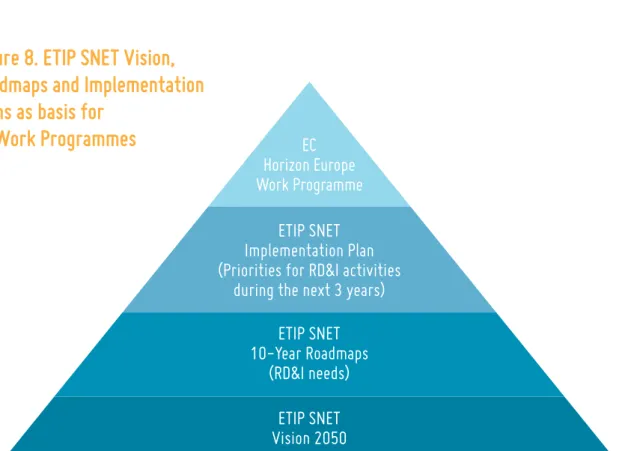
Figure 8. ETIP SNET Vision, Roadmaps andImplementation Plans as basis for EC Work Programmes
Glossary
•
Energy systems: electricity, gas, heating and cooling, liquid fuel systems, and other energy carriers (any system or substance that contains energy for conversion as usable energy later) are all considered ‘energy systems’.•
Carbon-neutral: situations where the energy system consumes as much CO2 as it emits; the CO2 balance is equal to zero.•
Contingency: an event (such as an emergency) that may but is not certain to occur. In power systems, a contingency is when an element such as a transmission line or a generator, of the electric grid fails.•
Low-carbon: situation where the CO2 balance (i.e. emissions vs. sinks) is almost zero.•
Prosumers: consumers of all types (households, tertiary, industry, transport and agriculture sectors) who also produce energy.Prosumers can be active market participants by engaging in the real-time control of their energy-consuming and producing devices.
•
Power-to-Gas (PtG): conversion of electrical power to a gas fuel.As an example of such conversion, electricity is used to split water into hydrogen and oxygen using the electrolysis principle, where hydrogen can then be converted to methane with CO2 as input.
•
Power-to-Heat (PtH): conversion of electrical power into heat/cooling. The conversion can be done for example by using conventional electric heaters or heat pump systems.
•
Power-to-Liquid (PtL): conversion of synthetic gas (CO and H2) into a mix of raw products, suitable for further processing at refineries or in the chemicals industry in view of the transformation into industrial products.•
Gas-to-Power-and-Heat (GtP&H): combustion of gases to generate at the same time and with high efficiency electricity and heat.•
Gas-to-Heat (GtH): combustion of gases to generate heat.•
Adequacy: A measure of the ability of a power system to meet the electric power and energy requirements of its customers within acceptable technical limits, taking into account scheduled and unscheduled outages of system components.•
Resilience: ability of the system with generating sources, transmission and distribution, conversion – to withstand high- impact, low-frequency events. This includes events that are natural, such as hurricanes or ice storms, as well as man-made, such as cyber or physical attacks on e.g. grid infrastructure.•
Reliability: all the measures of the ability of the system, generally given as numerical indices, to deliver electricity to all points of utilisation within acceptable standards and in the amounts desired.•
Low voltage (LV): usually refers to AC voltages from 50 to 1,000 volts.•
Medium voltage (MV): usually refers to AC voltages between 1,000 volts to 35,000 volts.•
High voltage (HV): usually considered any AC voltage over approximately 35,000 volts. This is a classification based on the design of apparatus and insulation.•
Alternating current (AC): an electric current which periodically reverses direction.•
Direct current (DC): is the unidirectional flow of electric charge.•
Flexible AC Transmission Systems (FACTS): is a system composed of static equipment used for the AC transmission of electrical energy. It is meant to enhance controllability and increase power transfer capability of the network. It is generally a power electronics-based system.•
Digital twin: refers to a digital replica of physical assets, processes and systems that can be used for various purposes.The digital representation provides both the elements and the dynamics of how an Industrial Internet of Things device operates and lives throughout its life cycle including continuous digital predictions through machine learning and artificial intelligence.
Printed by
Design by
8 VISION 2050 Foreword
FOREWORD
Miguel Arias Cañete
EU Commissioner for Climate Action & Energy (2014-2019)
It is in everyone’s long-term interest to have a rapid and
orderly transition towards a cleaner, more sustainable and
less carbon intensive energy future.
9
VISION 2050 Foreword
Since 2014, the strategy of the European Union has been clear: we need to drive a clean, secure and ef- ficient energy transition to face climate and energy challenges. This strategy has been reinforced by the strong commitment of the European Union towards the signature of the landmark 2015 Paris Agreement.
This is also why the Commission proposed in November 2016 an ambitious “Clean Energy for All Europeans” package.
All relevant meetings, summits and measures started from a simple observation: “It is in everyone’s long- term interest to have a rapid and orderly transition to- wards a cleaner, more sustainable and less carbon intensive energy future.”
However, this simple observation requires us to look at a multifaceted challenge:
•
Moving towards a low carbon energy sector•
Maintaining and extending global industrial leadership•
Creating a pan European integrated energy system•
Mobilising public and private sector towards the same objectives to finance the changes The European Commission is working on a long- term decarbonisation strategy where these different thoughts will come together into one coherent strategy.Therefore, by supporting the long-term decarboni- sation strategy for the EU, this Vision 2050 elaborat- ed and presented by the European Technology and Innovation Platform of Smart Networks for Energy Transition (ETIP SNET) is a useful tool to address these challenges and to achieve these common goals.
Thanks to the commitment of the research and in- dustry experts, European and national public author- ities, European associations and others, the platform has accomplished an exemplary job in gathering all actors from the energy sector to tackle the key aspects of a very complex issue. Indeed, the ETIP SNET Vision 2050 is an effective instrument that demonstrates to all in Europe and elsewhere that we have technical insights into our challenges, that our investments in human and financial capital will have an impact and an effective life-span well beyond 2050 for Europe to create a secure, sustainable and
competitive energy system. It is also a remarkable reference publication for all actors having an interest in the energy sector.
The European Commission would like to pay tribute to all efforts made by the stakeholders of the platform to produce this Vision 2050 that advances a more unified Europe based on a:
low-carbon, secure, reliable, resilient, accessible, cost-efficient, and market-based pan-European integrated energy system supplying the whole economy and paving the way for a fully CO2- neutral and circular economy by the year 2050, while maintaining and extending global industrial leadership in energy systems during the energy transition.
Vision 2050 is a document of crucial importance to ac- company the ambitious objectives of a clean, secure and efficient energy transition.
I am confident that Vision 2050 will be taken up by all relevant entities and encourage the ETIP SNET to con- tinue its research and innovation development efforts by contributing with its expert knowledge and scientific experience to making the energy transition a reality.
10 VISION 2050 Introduction
INTRODUCTION
Nikos Hatziargyriou
Chairperson of the European Technology and Innovation Platform of Smart Networks for Energy Transition (ETIP SNET) Chairman & CEO of the Hellenic Electricity Distribution Network Operator (HEDNO S.A.)
In this document, the ETIP SNET stakeholders present their
vision of a longer time horizon (2050) with a particular
focus on low-carbon energy systems’ integration needs for
all involved users.
11
VISION 2050 Introduction
European citizens are central actors in the transition from the present single-carrier, fossil-based energy systems towards an integrated, low-carbon, secure, reliable, resilient, accessible, cost-efficient and mar- ket-based energy system by the year 2050. This sys- tem will pave the way for a fully CO2 neutral and circu- lar economy, while maintaining and extending global European industrial leadership in energy systems dur- ing the energy transition.
In 2006, the European Technology Platform (ETP) for Smart Grids (SG) presented its Vision for 2020 and beyond. In 2017, the European Technology and Innovation Platform for Smart Networks for the Energy Transition (ETIP SNET) was established with the support of the European Commission, building on the previous activities of the ETP SG and the EEGI (European Electricity Grid Initiative), while expand- ing its scope to the entire energy system, integrat- ing and optimising all sources and vectors. With this document, the ETIP SNET stakeholders present their vision of a longer time horizon (2050) with a particu- lar focus on low-carbon energy systems’ integration needs for all involved users.
Distribution System (DSOs) and Transmission System (TSOs) operators, storage technology and services providers, energy and information system equipment manufacturers and suppliers, information and com- munication technology and software providers, re- search centres and academia are core stakeholders of the ETIP SNET. Representatives from renewable energy sources, flexible thermal generation, and from other energy carrier networks interfacing with the electricity networks, such as gas, heating and cooling and the transport sector are active participants of the Platform. Regulators and national representatives are also key contributors to the ETIP SNET, ensuring full coordination between European and national energy system policies.
Members of this very wide stakeholder group see electricity distribution and transmission grids as the
“backbone” of the future low-carbon energy systems with a high level of integration among all energy car- rier networks, by coupling electricity networks with gas, heating and cooling networks, supported by energy storage and power conversion processes.
Such energy systems will be fully-digitalised, with a high level of automation. Efficient markets support- ed by digital platforms, from wholesale to retail, will allow all stakeholders of the energy system to trade energy, including prosumers selling their excess
energy to the neighborhood in peer-to-peer transac- tions. Digital solutions will be interoperable, certified and cyber-secure.
The ETIP SNET Vision 2050 presents consolidated and qualitative ETIP SNET stakeholders’ views for the energy system of 2050 and the associated high-level research, development and innovation (RD&I) chal- lenges. It also indicates the framework in which RD&I efforts should be pursued in the decades to come.
Within this framework, the upcoming ETIP SNET roadmaps and ETIP SNET implementation plans will elaborate further on the necessary steps, and actions to be taken.
The content of this document accumulates the views and knowledge of many experts. I would like to thank all contributors, more specifically the members of the ETIP SNET Governing Board whose intensive dis- cussions led to this consensually-agreed vision docu- ment. More than 200 dedicated experts from five ETIP SNET working groups and the National Stakeholder Coordination Group have contributed to this work by providing valuable inputs in several workshops, inter- active discussions and webinars.
I would also like to thank all stakeholders and indi- viduals who commented upon the various versions of this vision through ETIP SNET internal and pub- lic consultation processes. The ETIP SNET support team (Horizon 2020 project INTENSYS4EU) and in particular the Vision 2050 Core Team who took the responsibility for editing and laying out this document and figures deserve the highest acknowledgement.
Finally, and most importantly, special thanks to the representatives of the European Commission for their advice and facilitation.
On behalf of the ETIP SNET, I hope that this Vision 2050 will provide the essential inspiration and will contribute to a more robust and faster transition to a sustainable future.
12 VISION 2050 Executive Summary
EXECUTIVE SUMMARY
A low-carbon, secure, reliable, resilient, accessible, cost-efficient,
and market-based pan-European integrated energy system
supplying all of society and paving the way for a fully carbon-
neutral circular economy by the year 2050, while maintaining and
extending global industrial leadership in energy systems during
the energy transition.
13
VISION 2050 Executive Summary
Vision 2050 by ETIP SNET
A low-carbon, secure, reliable, resilient, accessi- ble, cost-efficient, and market-based pan-Europe- an integrated energy system supplying all of soci- ety and paving the way for a fully carbon-neutral circular economy by the year 2050, while main- taining and extending global industrial leadership in energy systems during the energy transition.
All emerging and developed economies around the world will decarbonise their energy systems. Europe will have to consider the strategic nature of low-car- bon energy systems and support its industries and re- search to advance innovation accordingly, thus main- taining and enhancing competitiveness at all levels.
The electrification of Europe’s energy systems will be the backbone of its societies and markets. This will require the incremental coupling of electricity and gas networks, via the production of carbon-neutral syn- thetic gases (methane), to ensure long-term security of supply (seasonal storage), for an electricity system powered by renewable energy sources. A low-car- bon European economy will also include the coupling of electricity and heating and cooling systems, and of electricity and liquid fuels, supplemented with bi- ofuels, for heavy-duty vehicles, maritime transport and aviation.
While using all available local energy sources and associated infrastructures for all types of needs, the massive electrification of the European economy (res- idential, tertiary, industry, agriculture and transport sectors) will embody full digitalisation and flexible electricity interconnections. All system flexibility solu- tions, including those for prosumers and consumers, will be adopted to optimise the grid capacity uses from different generation and consumption centres that are very distant and/or very near to one another.
The implementation of the energy transition will be market-based: the investments in energy system
technologies will be catalysts for innovation and spill-over into other economic and technological sec- tors, thus contributing to the growth of the European economy. Implementing Vision 2050 will require ma- jor investments for the large-scale development and deployment of power conversion and storage devic- es, the upgrade and extension of the pan-European transmission (electricity and gas) and local distribu- tion (electricity, gas, heating and cooling) energy net- works and the use of digital solutions. Additionally, competitive retail markets will ensure consum- er-based aggregation to be valued in local markets.
In comparison to 2018, the additional investments will be offset by increased social welfare and environmen- tal benefits, including the avoided costs of adapta- tion to climate change and mitigation of effects. The costs of not acting now could be worth several times the cost of such investments against climate change;
such costs are estimated for electricity transmission networks in the Ten-Year Network Development Plan (TYNDP) 2018 of ENTSO-E. Evidently, Europe must invest now, massively, in the energy transition.
The investments in local and pan-European infra- structures and flexibility solutions must be support- ed by adequate funding of innovative research vali- dated in large-scale demonstrations to manage risks and to test the integration of Europe’s digitalised energy systems.
This ETIP SNET Vision 2050 is the basis for defining the specifications for further research and innovation needs in the transition from today towards Europe’s energy systems of the future. Its purpose is to inspire readers, to let them discover the RD&I challenges as- sociated with a 2050 low-carbon, fully-integrated, and circular pan-European energy system with the elec- tricity system as its backbone.
14 VISION 2050 Table of Contents
TABLE OF CONTENTS
Foreword . . . 8
Introduction. . . 10
Executive Summary. . . 12
Part 1: Energy Systems for European Society . . . 16
Three objectives for 2050 energy systems . . . 17
Protecting the environment . . . 17
Creating efficient energy markets . . . 20
Ensuring security of energy supply . . . 24
Part 2: Towards integrated energy systems in 2050 . . . 28
Today’s achievements . . . 29
Challenges and opportunities to move to low-carbon energy systems . . . 29
A storage and power conversion transition towards integrated energy systems . . . 32
15
VISION 2050 Table of Contents
Part 3: The Building Blocks of Vision 2050 . . . 34
The Efficient Organisation of Energy Systems . . . 35
Cooperation between system operators . . . 35
High levels of automation for energy systems. . . 37
Application of the subsidiarity principle. . . 37
Markets as key enablers of the energy transition . . . 38
Higher volumes exchanged on energy markets . . . 38
Wholesale markets enabling cross-border exchanges of renewable energy across Europe. . . 38
Local markets enabling citizen involvement . . . 38
Digitalisation enables new services for integrated energy systems. . . 39
Data privacy and ownership . . . 40
Cybersecurity . . . 40
Infrastructure for integrated energy systems. . . 40
Upgraded electricity networks. . . 40
Large-scale roll-out of conversion and storage technologies. . . 41
Efficient energy use. . . 41
Part 4: The Framework for Vision 2050. . . 44
A European industry able to serve the energy transition . . . 45
Managing economic disruption and job creation. . . 45
Prioritising research and innovation . . . 46
Shared research, demonstration and validation infrastructures . . . 46
Governance, funding and financing conditions. . . 46
ETIP SNET Call for Action . . . 48
References. . . 50
16 VISION 2050 Part 1: Energy Systems for European Society
01 ENERGY SYSTEMS FOR EUROPEAN SOCIETY
The pan-European energy system comprises energy systems
that are connected at cross-border and local levels.
17
VISION 2050 Part 1: Energy Systems for European Society
Addressing climate change is a major driver for nation- al energy policies around the world which converge on the urgent need to decarbonise energy systems in a context of moving towards circular economy mod- els. In 2015, the United Nations (UN) adopted the 17 Sustainable Development Goals (SDGs) of the 2030 Agenda for Sustainable Development to ensure great- er environmental sustainability. The SDGs most relat- ed to this ETIP SNET Vision 2050 emphasise the role of energy and more specifically of clean energy sys- tems to meet citizen needs: SDG 7 calls for access to affordable, reliable, sustainable and modern en- ergy for all; SDG 9 requests to build resilient infra- structure, promote sustainable industrialisation and foster innovation; and SDG 11 asks to make cities inclusive, safe, resilient and sustainable.
Also in 2015, in the UN Framework Convention on Climate Change (UNFCCC), member countries adopt- ed the Paris Agreement at the 21st Conference of Parties (CoP) to limit global temperature rise to “well below 2 degrees Celsius” and to pursue efforts to limit the temperature increase even further to 1.5 degrees Celsius. This is in line with the most challenging en- ergy future scenario advanced by the International Energy Agency (IEA) called “Beyond [meaning below]
2 Degrees Scenario” (B2DS).
Three objectives for 2050 energy systems
Energy systems are vital infrastructures that meet essential societal needs and without which our mod- ern life would be impossible. They drive industrial processes, help exploit natural resources, make agri- culture more efficient, enable most services, the dis- tribution of goods and the movement of people, treat and pump water, keep us comfortable with heating and cooling. They are the basis for all industrial revo- lutions, including the Internet, which is also an exam- ple of the increasingly crucial role of electricity. They are a central foundation for prosperity, and by making
life comfortable and productive for all, they support societal cohesion. By connecting all of Europe and providing mutual support during emergencies, they support European integration. There are multiple en- ergy systems, including the electricity systems, the gas systems, the heating and cooling systems, the liquid fuel systems, as well as any other systems of energy carriers (any system or substance that con- tains energy for conversion as usable energy later or somewhere else).
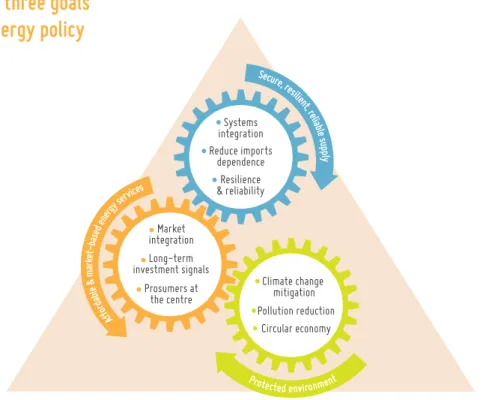
European Union energy policy stipulates that energy systems should help implement three objectives that are crucial for the well-being of society:
1.
Protecting the environment2.
Creating affordable and market-based energy services3.
Ensuring security, reliability and resilience of energy supplyProtecting the environment
Mitigating environmental impacts of energy systems has several dimensions, including:
•
Decrease greenhouse gases (GHG) emissions for climate change mitigation•
Control all sources of pollution originating from activities directly or indirectly linked to energy systems•
Minimise impacts on biodiversity and natural ecosystems•
Promote a circular economy (ideally all non- energy outputs are re-used) [see Figure 2]Addressing these dimensions of environmental pro- tection provides European citizens above all with a more stable climate, a clean environment, better air quality, and better human health and comfort.
18 VISION 2050 Part 1: Energy Systems for European Society
Figure 1. The three goals for the EU energy policy
In 2050, the impact of European energy systems on the climate is reduced drastically. A combination of measures, including energy efficiency, renewable tech- nology deployment for energy generation, new storage and power conversion technologies, and improved operational and market procedures, all help mitigate global and local environmental impacts, offsetting the effects of energy systems’ increasing complexity.
This is achievable because long before 2050, inno- vative public policies enable more choice and more conscious participation by all stakeholders, includ- ing citizens, in the energy systems. This includes energy savings and energy efficiency measures, supported by the latest communication technologies.
Based on coherent price signals and increased public awareness, users and prosumers contribute to the en- ergy transition being efficient while mitigating environ- mental impacts and satisfying societal needs.
In 2050, carbon-neutral and especially renewable energy alternatives to fossil fuels are implement- ed for all energy needs. The use of crude oil for all domestic, industrial and mobility needs is marginal thanks to the substitution of crude-oil with biomass, biofuels and other renewable energy sources, such as CO2-free electricity for cars, trains, and urban buses and delivery trucks. This results in low-carbon energy
systems with carbon-neutral electricity systems and liquid fuels (this goes beyond the most ambitious scenario – high RES Scenario – in the EC Energy Roadmap 2050 (2012) for which fossil fuels account for under 10% of electricity generation and the share of renewables in transportation is 73% in 2050). A low-carbon pan-European energy system paves the way for a fully decarbonised and circular European economy beyond 2050 (this also goes beyond the high-RES scenario in which oil, natural gas, and solids account for 36% in the total gross inland consumption).
In 2050, the energy system is thus (almost) fully de- carbonised, in line with the EC Energy Roadmap 2050 (2012) targeting greenhouse gas emissions reduction to 80-95% below 1990 levels by 2050. Low-carbon energy systems have been facilitated by the advent of sustainable supply chains (including the supply of raw materials like ‘rare earths’) with the support of coherent research strategies, regulatory frameworks, stream- lined standardisation and interoperable processes.
Electricity, mobility, heating and cooling needs, includ- ing storage from hours of a day to weeks and seasons, are provided by renewable energy sources (RES). In line with the assumptions of the most challenging sce- narios developed, such as the IEA B2DS, ETIP SNET estimates that energy systems can be carbon-neutral by 2050 and carbon-negative beyond 2060.
Market integration Long-term investment signals
Prosumers at the centre ord Aff
arm& le ab
ket-based energy services
Protected environment Pollution reduction Circular economy Climate change
mitigation Secure, resilient, reliable supply Systems
integration Reduce imports
dependence Resilience
& reliability
19
VISION 2050 Part 1: Energy Systems for European Society
Figure 2. From the past quasi-linear to the circular economy in 2050
In 2050, power conversion and flexible energy storage plays a key role in energy systems. All key energy system components are fully monitored and controlled in real-time in an integrated way. Large parts of any remaining greenhouse gas emissions are captured, stored and converted into energy sources, contributing to an almost fully circular energy system.
Coal, as major carbon emission polluter, is completely phased out from European energy systems by 2050 (this is more ambitious than the high-RES scenario for which solid fuels have a 2.1% share in the gross inland consumption).
Citizens should be able to participate actively
in the energy transition.
Seen from today, although there are many kinds of renewable energy sources (RES), wind and solar electricity generation have experienced the strongest cost decreases and are available in large quantity in Europe. While solar and wind have the greatest poten- tial at EU level, all renewables e.g. hydro power, geo- thermal energy, ocean energy or biomass/gas will be developed taking in consideration their potential, cost and their added value to the regional systems and to grid stability. The 2050 energy system will use overall less energy than today, due to energy efficiency for instance in industry and in buildings. But still, the dai- ly and seasonal differences between energy demand and especially wind and solar availability will require a very flexible system:
•
Coordinated by coherent market price signals that lead, for example, to lower demand in response to high prices during low wind and sunshine, and with the different energy choices a customer faces prices cost-reflectively.2010 2050
ENERGY SYSTEMS
Inefficient conversion and use
• High CO
2emissions
• High waste generation
• Fossil fuels
• Raw materials Little Renewable
energy sources Renewable
energy sources
LOW CIRCULARITY:
• Recycling
• Small-scale CO2 capture
INTEGRATED, DIGITALIZED ENERGY
SYSTEMS Efficient conversion
and use • Little waste generation
• Little CO
2emissions
ALMOST FULL CIRCULARITY:• Recycled materials
• CO
2capture and use
20 VISION 2050 Part 1: Energy Systems for European Society
•
With strong and smart, local and continental electric and carbon-neutral, synthetic gas networks, dimensioned such that the diversity of renewable resources, weather and demand across Europe is used optimally.•
With as much biomass and synthetic gas as can be integrated efficiently, together with hydro and ocean energy and nuclear (possibly fusion beyond 2050) being used when the value of their use is high for embedding biomass or gas-fired flexible thermal generation and gas for certain industrial processes or for aviation, shipping and long- distance trucking.•
With injections in daily or seasonal energy storage such as pumped hydro, batteries, hot water reservoir thermal storage, or Power-to- Gas (PtG) conversion, whenever the value of energy in storage is higher than the value from additional energy use at the time of generation – such as in summer at times of very high electricity generation from PV.•
With provisions from daily or seasonal energy storage when the value of the use of the stored energy is higher than of the energy remaining in storage, for example during a windless, cloudy and cold winter week.In 2050, the mitigation of environmental impacts from energy systems is supported by:
•
Technologies and market-based incentives allowing for fossil-free EU energy systems.•
Energy generation, storage, power conversion, and consumption equipment, grids and Information and Communications Technology (ICT) equipment, monitoring and control (automation) devices, all designed and manufactured to be almost fully recyclable.•
Europe as a global leader for carbon- neutral energy systems, based on an integrated energy systems’ policy harmonised across European countries.From now on and beyond 2050, Europe is at the fore- front of climate change research and takes the in- ternational lead on environmental action plans and the establishment of global environmental standards.
Creating efficient energy markets
For the energy transition to be driven by people and their choices, and to reward innovation and drive en- ergy conversions and storage, the energy transition requires efficient energy markets that provide a level playing field for all stakeholders involved, non-discrim- inatory open access, and preclude cross-subsidies.
Long before 2050, energy markets provide coher- ent price signals for required investments. This ensures appropriate amounts, location and grid-host- ing capacity for renewable energy generation as well as for the integration of different energy systems (electricity, gas, heat/cooling and liquid fuels). This means that energy systems are connected thanks to power conversion and storage devices, including their monitoring and control devices and software systems.
Long before 2050, citizens are empowered, active consumers and prosumers, using user-friendly lo- cal, regional and continental energy exchanges as well as peer-to-peer trading, for a wide choice of ser- vices and with energy prices at an economic optimum.
In 2050, flexible energy storage, power conversion and demand flexibility play a key role as products and services in energy markets: these services and products allow the storage, conversion and shifting of excess power from renewable generation in hydro res- ervoirs, gas storage, batteries or thermal storage. The needed flexibility is offered largely by active grid users being generators, (active) consumers or prosumers, or aggregators, all combined with controllable storage.
Flexible storage is also used by electricity grid oper- ators for managing very short-term balancing needs including for nominal frequency, for handling grid con- gestion and respecting other system constraints, like for standardised upper and lower voltage limits. In addi- tion, investments into storage capacity, their associated
21
VISION 2050 Part 1: Energy Systems for European Society
conversion processes and their optimal operational use allows to find the optimisation of grid development.
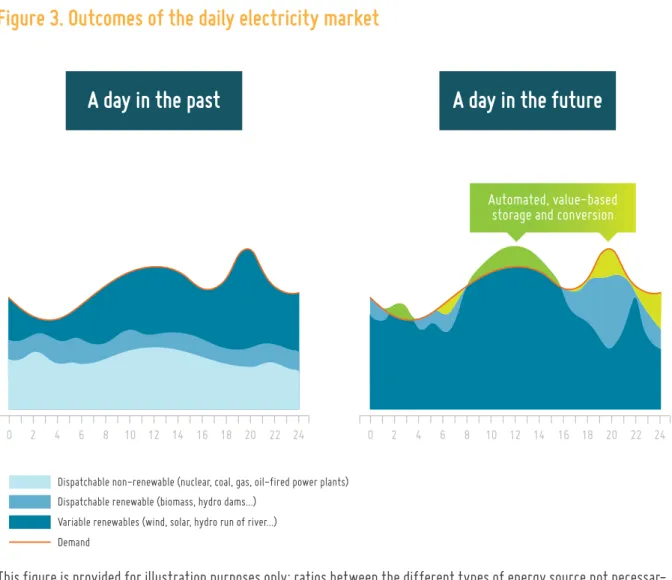
Figure 3 shows an example the excess electricity from wind from 02:00-04:00am in the morning and from 09:00-15:00 is stored and then reused during those times (06:00-08:00 and 16:00-20:00) where demand is higher than generation from renewable sources.
Energy can be stored seasonally in the form of gas (like methane and hydrogen), liquids or other energy carriers; or in non-battery massive storage (such as large hydro reservoirs, compressed air or hot wa- ter), to essentially shift otherwise excess renewable energy production to those periods where more end- use energy is needed, for instance in many parts of Europe during winter.
Figure 4 shows an example of the monthly total demand for all uses over a calendar year, superimposed by the injection, withdrawal and energy content of seasonal storage. Today’s (natural) gas grid infrastructures and connected gas storages can be used for this purpose and can be a cost-effective enabler of a circular en- ergy system with significant amounts of biogas and Power to Gas (using CO2 and renewable electricity).
An additional aspect for the future integrated ener- gy system is the low-cost and efficient balance of thermal energy supply and demand in heating sys- tems of buildings (assuming optimised insulation), for industrial processes and for all combined pow- er-(electricity) to-gas (PtG) and Power-to-Heat (PtH) conversion processes.
Figure 3. Outcomes of the daily electricity market
This figure is provided for illustration purposes only: ratios between the different types of energy source not necessar- ily corresponding to the EU case; the demand profile should also be different in the future because of demand response measures that should be broadly implemented and possibly the massive roll-out of electric vehicles (EVs).
A day in the past A day in the future
0 2 4 6 8 10 12 14 16 18 20 22 24 0 2 4 6 8 10 12 14 16 18 20 22 24
Automated, value-based storage and conversion
Dispatchable non-renewable (nuclear, coal, gas, oil-fired power plants) Dispatchable renewable (biomass, hydro dams...)
Variable renewables (wind, solar, hydro run of river...) Demand
22 VISION 2050 Part 1: Energy Systems for European Society
In 2050, competitive and efficient retail markets provide citizens – which can be active consumers and prosumers – with a favourable environment to choose their energy suppliers and to control their self- and grid-supplied energy consumptions with the neces- sary framework (data protection and privacy, interop- erable smart solutions). Retailers propose service-ori- ented, customised, easy-to-access offers, focusing on top quality service at any time and location, with market-price-based rescheduling if a citizen’s energy needs change in the short-term.
A citizen’s willingness to provide flexibility is achieved by adequate price signals and innovative services guaranteeing high-level comfort with high electricity supply and quality both in terms of satisfying norms
(such as voltage and frequency within upper and lower limits) and over time to avoid blackouts and provide fast restoration.
In 2050, consumers of any size can access di- rectly or indirectly energy markets to sell (as pro- sumers) and buy energy, power capacity and flex- ibility services to satisfy their needs via low-cost, cyber-secure communication and Internet services.
These ICT-based services can be integrated with other information services, not directly related to energy (weather conditions and forecast, air qual- ity, mobility); they also provide dynamic information (price, quality, state of the system, incentives for en- ergy systems-friendly actions) for any energy relat- ed needs, be it for selling or buying energy.
Figure 4. Outcomes of integrated energy markets across multiple energy carriers
Total energy supply Total energy demand
Energy in seasonal storage (incl. biogas, synthetic gas, heat and hydro storage)
Jan Fev Mar Apr May Jun Jul Aug Sep Oct Nov Dec
This figure is provided for illustration of the principles of seasonal storage only, not based on real data or modelling.
23
VISION 2050 Part 1: Energy Systems for European Society
In 2050, energy network operators work within a legal framework to ensure overall security, relia- bility, resilience and quality of supply to satisfy citizen and business needs at affordable costs.
To realise the energy transition, network operators design and operate robust and smart electricity, gas, and heat and cooling grids, to become more active players, for example by purchasing flexibility from pro- sumers in order to adapt consumption and generation behaviours depending on local needs.
The Goal of Efficient Markets
•
Informed choices: citizens can make informed choices about any energy-related need.•
Tailored information services and infrastructures: citizens can use continuous, secure and robust high- speed communication technologies for energy-related applications and all information purposes.•
Procurement of any energy-related needs: prosumers can sell and purchase anytime their energy.•
An integrated infrastructure for all energy carriers with the electricity system as the backbone:it includes adapted storage (storage capacity size, loading and unloading power related ramp rates, and conversion losses) and power conversion capacities, able to supply all consumers’ and prosumers’
needs at any space – from local to pan-European – and any time scales – from seconds to months.
•
Balancing of unplanned, sudden deviations between planned and real-time residual load: im- balances between electricity generation and demand are handled automatically using market-based mechanisms which consider forecasted weather conditions and system operational states and available energy from storages.•
Smoothly interacting, resilient and reliable grid-based energy management systems: such ser- vice-based systems are operational at all network levels to handle energy-related needs for all types of grid users, from small prosumers (consumption) to large-scale wind and PV power plants (generation), at all time-scales, from fractions of seconds to months. This includes the provision of redundant or back- up-energy if there are deviations from the planned as well as the resilient and reliable handling of any operational grid issues.24 VISION 2050 Part 1: Energy Systems for European Society
Ensuring security of energy supply
From 2018 towards 2050, energy availability remains an important issue for European citizens who experi- ence fluctuating prices for basic energy-related needs, such as heating, cooling and mobility. Improving the security of energy supply through energy savings, en- ergy efficiency and renewable energy sources, lowers European dependence on imported fuels. Security of supply is also linked to the delivery of energy through different types of energy networks which enable the overall energy system to be more secure, reliable and resilient.
In 2050, Europe has strongly reduced its energy import dependence by using carbon-neutral en- ergy sources, mainly located within Europe, and storage capacities. This is achieved by a system de- sign that does not heavily depend on imported prima- ry fuels such as gases and liquid fuels from outside of Europe. Ultimately, a fully circular, carbon-free econo- my operates on European energy systems relying on energy sources available in Europe. The development of technologies, relative costs and reliably functioning global markets will determine how much low-carbon electricity, biogas or PtG might be imported from out- side Europe or exported elsewhere.
In 2050, locally available energy resources are used to their full economic potential, partly defer- ring needs for upgrades of the electricity transmis- sion and distribution networks and helping maxim- ise the resilience of supply channels for heating and cooling needs.
In 2050, energy systems’ planning and operation processes ensure high overall system reliability.
At any time and location and under contingencies, these processes enable a level of quality of energy supply adequate to the needs of the different users and at acceptable average prices over the year – price spikes during scarcities are balanced by low prices over the many periods of high renewable resource availability. For electricity grids, this requires robust and flexible electricity interconnections, of sizeable capacity to optimise the time-variable power flows between distant generation and consumption centres, or between regions of temporary surpluses and defi- cits of renewable energy generation. By 2050, power transmission highways have been developed to foster
the internal electricity market, to increase shared re- serves and therefore security of supply, and to further strengthen system stability (frequency and voltage);
they link all EU regions and some neighbouring coun- tries. Local grids and markets are managed under the subsidiarity principle. System balancing for electricity grids as well as mid-term security of supply (e.g. ad- equacy studies) are ensured by transmission system operators (TSOs).
A low-carbon pan-
European energy system paves the way for a fully decarbonised and circular European economy
beyond 2050.
In 2050, a holistic approach to system security of supply is applied across all energy systems with a focus on resilient operation, efficient control and optimal redundancy, to support systems’ operational reliability in cases of usual disturbances or deviations from planned energy consumption and planned ener- gy infeed into the various energy networks. A resilient energy system is designed and operated to be able to adapt automatically and dynamically to ride through any individual disturbance or multiple contingencies and to operate in a partly isolated, degraded mode to safeguard essential energy services. This applies in case of extreme climate conditions, such as heavy snowfalls, flooding, droughts, forest fires, storms as well as for intentional human-incited events like acts of terrorism or cyberattacks.
In 2050, the reliability and resilience of energy systems are part of an integrated strategy for all modes of energy systems use. Risk monitoring, as- sessment and prevention regarding energy systems’
security are integrated for all types of users.
25
VISION 2050 Part 1: Energy Systems for European Society
Part 1 Summary
Europe’s security of energy supply is ensured mainly by minimising fossil-fuel imports thanks to en- ergy efficiency policies, the production of low-carbon fuels within Europe as well as the increase of wind, solar, hydro, and biomass as the main sources of renewable electricity production.
Reliability and resilience for the pan-European, regional and local systems are ensured by:
•
Integrated energy systems, with the electricity systems as the backbone, designed and operated to prevent or minimise the effects of contingencies, with local/regional black-start capabilities activated within a few minutes.•
Risk (weather and other hazards) assessment and mitigation measures, considered in system planning and operation.•
Seamless (strongly automated) operation through fully interoperable and networked sub-systems allowing the coupling of all energy carriers in an optimal, integrated way.•
Peer-to-peer transactions integrated with centrally- and locally-controlled electricity networks, supported by automated local grids together with network operator actions.Next page: Figure 5. ETIP SNET Vision 2050 of integrated smart energy systems
26 VISION 2050 Part 1: Energy Systems for European Society
Wind farm
Pumped Hydro Storage Electrolyzer
Methanation
Power to gas
Hybrid bus
Electric/Hydrogen
Vehicle-to-grid Peer-to-peer
energy trading
Solar PV plant
grid-forming inverter
Positive energy house
100% RES community Air/air Heat pump small scale
battery
H
2Gas Electricity
Heating & Cooling
NETWORKS
Data
Solar thermal
Waste heat
Biomass CHP plant Industry
park Demand
Response
Geothermal Heat pump
Combined Cycle Gas Turbine Electric substation
Large scale battery
Biogas productionFarm
Biogas cleaning
Liquid fuel Airport
Harbour
Air/water Heat pump small scale
storage
Hydrogen station Fast charging
station
Electric tram
Carbon capture
& use
Liquid fuel station Compressor
station
Micro CHP
Zero energy
building
Underground gas storage
Gas to Power Gas to Heat
Off-shore wind farm DC network AC/DC
Converter station
Nuclear power plant HV/MV
substation
Peer-to-peer energy trading ICT network for
digitalization of energy system
Cross-border connections
Gas substation
27
VISION 2050 Part 1: Energy Systems for European Society
Wind farm
Pumped Hydro Storage Electrolyzer
Methanation
Power to gas
Hybrid bus
Electric/Hydrogen
Vehicle-to-grid Peer-to-peer
energy trading
Solar PV plant
grid-forming inverter
Positive energy house
100% RES community Air/air Heat pump small scale
battery
H
2Gas Electricity
Heating & Cooling
NETWORKS
Data
Solar thermal
Waste heat
Biomass CHP plant Industry
park Demand
Response
Geothermal Heat pump
Combined Cycle Gas Turbine Electric substation
Large scale battery
Biogas productionFarm
Biogas cleaning
Liquid fuel Airport
Harbour
Air/water Heat pump small scale
storage
Hydrogen station Fast charging
station
Electric tram
Carbon capture
& use
Liquid fuel station Compressor
station
Micro CHP
Zero energy
building
Underground gas storage
Gas to Power Gas to Heat
Off-shore wind farm DC network AC/DC
Converter station
Nuclear power plant HV/MV
substation
Peer-to-peer energy trading ICT network for
digitalization of energy system
Cross-border connections
Gas substation A SYSTEM OF SYSTEMS
28 VISION 2050 Part 2: Towards integrated energy systems in 2050
02 TOWARDS INTEGRATED
ENERGY SYSTEMS
IN 2050
29
VISION 2050 Part 2: Towards integrated energy systems in 2050
Today’s achievements
Over the past decades, the energy systems in Europe (in particular European electricity sys- tems) have fostered the emergence of world-lead- ing industries. This outstanding achievement was ob- tained through collective efforts encompassing public and private entities, major companies, thousands of small and medium enterprises (SMEs), academia and research centres. Today, European low-carbon ener- gy excellence includes all kinds of renewable energy generators and energy network components, monitor- ing, control and automation devices and ICT.
Most of today’s energy network infrastructures (electricity, gas, heating and cooling, liquid fuels) will still be in operation in 2050. However, they will be used in different ways. Capacity expansion and transition policies, and tariffs for infrastructure uses will need to be redesigned and adapted to the en- hanced features of the fully integrated energy systems and markets.
Energy system technologies and markets are catalysts for innovation and spill- over into the industrial and technological sectors, thus contributing to the growth of the European economy.
The unbundling of the European electricity and gas sectors during the 1990s has led to today’s more efficient grid-coupled wholesale markets, but more efforts to integrate service markets are re- quired: they need to be accompanied by the contin- ued roll-out of remote metering, intelligent monitoring and control as well as smart operations and innovative
services empowering citizens to support the evo- lution of today’s energy systems towards low-car- bon European energy systems. Transmission and Distribution System Operators (TSO/DSO) coopera- tion and joint electricity and gas network planning are examples of needed improvements.
Energy system technologies and markets are cata- lysts for innovation and spill-over into other industri- al and technological sectors, thus contributing to the growth of the European economy.
Challenges and opportunities to
move to low-carbon energy systems
Moving towards an integrated, low- or even car- bon-neutral pan-European energy system brings many challenges and opportunities. Significant pro- gress is necessary so that today’s energy systems change towards satisfying the needs of society and the economy by:
•
Becoming as environmentally sustainable and as circular as possible•
Supplying energy for all citizens, businesses and industries in Europe in a fullydigitalised economy
•
Generating wealth, economic growth (jobs), and global competitiveness•
Promoting Europe’s innovation economy with more R&D investment•
Contributing to global prosperity, security and self-reliance30 VISION 2050 Part 2: Towards integrated energy systems in 2050
While ensuring security of supply and mitigating en- ergy poverty from today towards 2050, Europe must maintain its long-lasting leadership in technology and environmental protection, despite increasing competi- tion in the world economy.
Sustainable, integrated energy systems in the short- and mid-term will require much more initial invest- ments than continuing to use fossil fuel in non-inte- grated, compartmented energy sub-systems and markets. These higher investment costs will be offset by reduced operational and external costs. To do so, four key challenges must be addressed:
1.
Increase the level of technology investment, including break-through integrationtechnologies via intensified research and innovation.
2.
Enhance global competitiveness in all types of pan-European low-carbon energy markets.3.
Foster local energy markets and their design implementation.4.
Foster the circular economy to mitigate environmental impacts and maximise energy efficiency by minimising energy losses and anticipating possible raw material shortages such as ‘rare earths’.From 2018 towards 2050, Europe must seize the opportunity of the expanding low-carbon ener- gy system markets and preserve Europe’s lead- ing position on the global arena. All emerging and developed economies will decarbonise their energy systems. European-based industries will face fierce industrial competition from other world economies.
European authorities must consider the strategic nature of low-carbon energy systems and support European industries accordingly, enhancing compet- itiveness at all levels.
With today’s knowledge and integration capa- bilities, European energy system industries can define and shape a sustainable future. Remaining competitive is also about the timely delivery of prod- ucts and services. Advancing competition is linked to a common playing field with government support, which requires policy action to redress distortions and facilitate a favourable environment for innovation to flourish.
All emerging and developed economies will decarbonise their
energy systems. European authorities must consider the
strategic nature of low-carbon energy systems and support
European industries accordingly, enhancing competitiveness
at all levels.
31
VISION 2050 Part 2: Towards integrated energy systems in 2050
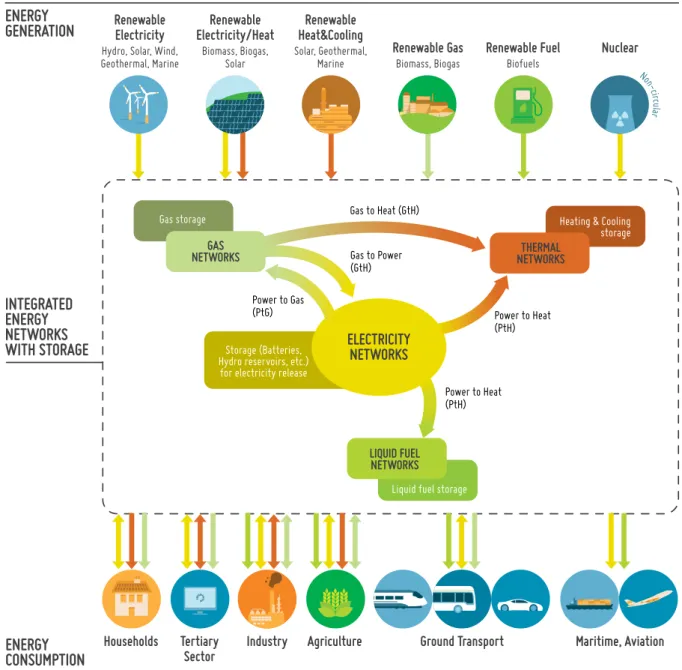
Figure 6. The future integrated energy systems with conversion and storage devices
Renewable Electricity
Hydro, Solar, Wind, Geothermal, Marine
ENERGY GENERATION
ENERGY CONSUMPTION INTEGRATED ENERGY NETWORKS WITH STORAGE
Renewable Electricity/Heat
Biomass, Biogas, Solar
Renewable Heat&Cooling
Solar, Geothermal,
Marine Renewable Gas
Biomass, Biogas Renewable Fuel
Biofuels Nuclear
Households Tertiary
Sector Industry Agriculture Ground Transport Maritime, Aviation
ELECTRICITY
NETWORKS
Storage (Batteries, Hydro reservoirs, etc.) for electricity release
Liquid fuel storage Gas storage
NETWORKSGAS
Heating & Cooling storage THERMAL
NETWORKS
LIQUID FUEL NETWORKS
Non-cir
cular
Power to Heat (PtH)
Power to Heat (PtH) Gas to Heat (GtH)
Gas to Power (GtH) Power to Gas
(PtG)
32 VISION 2050 Part 2: Towards integrated energy systems in 2050
A storage and power conversion transition towards integrated energy systems
Achieving the IEA (2017) “Beyond 2 Degrees Scenario” (B2DS) in 2050 will require moving toward a low-carbon economy with major inno- vations and deployments in energy efficiency, renewable energies, fuel switching, and Carbon Capture and Use (CCU). This will require fundamen- tal changes to energy systems with all available tech- nologies in order to reach the goal of a carbon-neutral power sector by 2050. Major changes are necessary for mobility and for heating and cooling; many of them imply intensified electrification with the integration of renewables.
Low-carbon energy systems will require a high level of integration to supply all sectors of the economy. This high level of integration will be achieved through the deployment of power conversion units enabling the coupling among all energy carriers and the installation of storage units for each energy carrier, thus enabling higher security of supply.
Ultimately, the energy transition will be facilitat- ed by integrating storage and power conversion with the various energy carrier grids using the elec- tricity system as its “backbone”: electricity enables for a switch of energy carriers through Power-to-Gas (PtG), Power-to-Heat (PtH), and Power-to-Liquid (PtL) technologies and to transport large amounts of energy all over Europe, between distant and strategically in- terconnected hubs in the energy systems. In contrast to heat or gases such as hydrogen or (carbon-neutral) methane, electricity is not directly storable: this leads to high complexity and challenges for permanent bal- ancing and congestion management within the elec- tricity network as well as with the integration and pow- er conversion of other energy carriers.
European energy systems will rely on electricity stored in significant quantities by conversion of PtG, PtH and PtL. [See Figure 6] Other examples of energy storage include centralised and distributed sta- tionary batteries as well as a plethora of batteries on board electric vehicles (EVs) that can deliver services to the network. Moving towards a low-carbon econo- my will require fully integrated energy systems able to supply at all times low-carbon energy for all sectors (households, tertiary sector, industry, agriculture and transport) from the different energy sources (hydro- power, solar, wind, geothermal energy, marine energy, biomass, biogas, biofuels, and nuclear – as the only remaining non-circular electricity generation source), as well as integrating surplus heating and cooling from industrial and commercial processes.
The energy transition integrates energy storage and power conversion within the various energy carrier grids using the electricity system as its “backbone”.
Besides hydropower providing seasonal and short- term storage capabilities in some mountainous re- gions of Europe, the storage capacity of gas systems will be a crucial element for the adequacy of 2050 low-carbon energy systems. Several tens of terrawatt hours (TWh) of electricity can be stored in the gas grid via PtG during periods of excess wind and solar pro- duction and used later, especially during times where end-use demand exceeds renewable generation. PtL will also be pivotal to decarbonise the transport sector since liquid fuels will remain necessary, especially for heavy duty vehicles and airplanes.
33
VISION 2050 Part 2: Towards integrated energy systems in 2050
Besides these longer-term balancing needs, conver- sion between energy carriers will occur to meet short- term (minute, hourly and daily) energy system needs.
Energy will need to be stored within the gas networks, in heating and cooling units, and in storage devices connected to them, thus supporting the optimal elec- tricity network capacity use; each involved energy net- work will transmit and distribute its share of the needed energy thereby using the various conversion possibili- ties and available storage units.
Part 2: Summary
Key characteristics to achieve the energy transition in 2050:
•
Make significant progress towards satisfying the needs of society and the economy in terms of environment, circularity, security of energy supply, affordable costs, resilience, reliability, and quality.•
Maintain a long-lasting leadership in technology and environment protection in light of increasing competition in the world economy.•
Increase market-based investments within different areas: technology (intensification of research and innovation) and circular economy.•
Deploy power conversion units enabling the optimal coupling (integration) among all energy carriers: connect each energy carrier and storage devices to enable a higher security of supply.The storage capacity of
gas systems together with
power-to-gas technologies
will be a crucial element
for the adequacy of the
2050 low-carbon energy
systems.
34 VISION 2050 Part 3: The Building Blocks of Vision 2050
03 THE BUILDING BLOCKS OF VISION 2050
35
VISION 2050 Part 3: The Building Blocks of Vision 2050
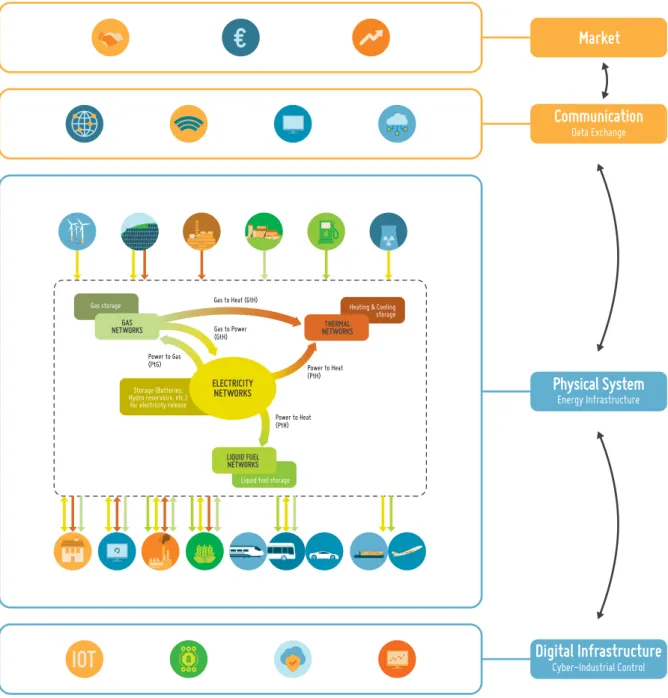
In 2050, integrated energy systems (IES) consist of four inter-connected and inter-related layers that drive economic growth and global competi- tiveness for Europe:
•
The market layer allows for exchanges between market players (generators, retailers, aggregators, consumers, grid operators, conversion and storage managers, and any other player).•
The communication layer supports the vertical and horizontal integration of energy systems and the relaying of information with the market.•
The physical system layer consists of automated energy infrastructures (generation, power conversion, storage and networks) designed to meet citizen needs.•
The digital infrastructure layer supports network operations to manage the integrated energy systems with higher levels ofautomation.
In 2050, European transmission and
distribution networks operations have dynamic cooperation of their respective operators.
The Efficient Organisation of Energy Systems
Cooperation between system operators
In 2050, European transmission and distribution networks operations leverage the dynamic coop- eration of their respective operators. This implies a more efficient management of energy networks, their use, the associated conversion processes, and ulti- mately connecting market users in an integrated, opti- mal way to exploit all sources of coordinated flexibility.
In 2050, electricity system operation is based on the highly automated optimisation of the grid, power gen- eration and of all types of energy consumption. This is combined with the best location, size and opera- tional conditions for storage and power conversion to minimise energy losses and to avoid other undesira- ble contingencies leading to power outages. Coupling different energy networks occurs on all scales accord- ing to the most cost-effective way (from integrated electricity, gas and heat infrastructures for buildings and mobility in cities with storage facilities, towards large-scale pan-European gas transmission and stor- age with conversion from and to electricity) as well as through new infrastructures for mobility (charging sta- tions a