The OECD became aware of the importance of skills development and has already begun to pursue the project. The OECD presented the framework for the analysis of post-secondary vocational education and skills development in the OECD countries.
Introduction
This is based on the information about the skills demanded by the labor market and offered by the VET market. If this information is imperfect or limited, it may widen the skills mismatch in the labor market and weaken the labor supply system.
Trends and New Challenges in Skills Development
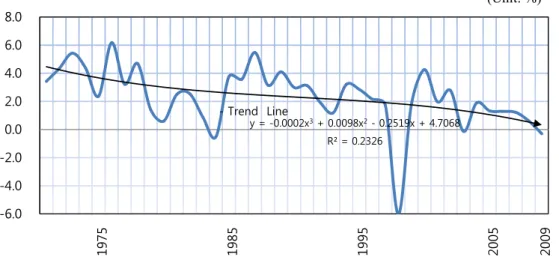
- New Phase of Economic Growth and Human Capital Development
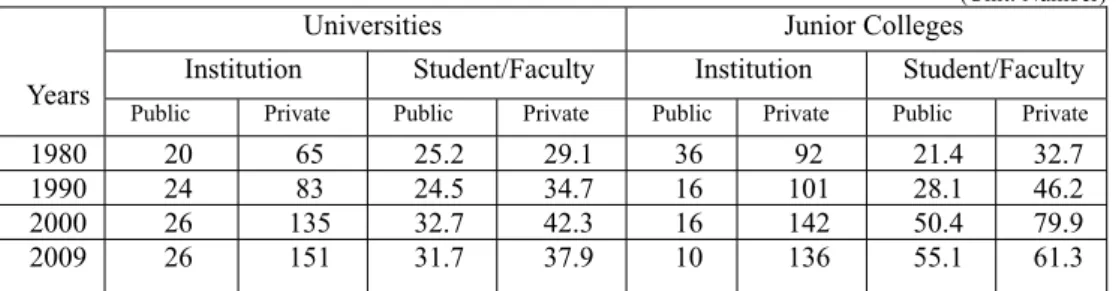
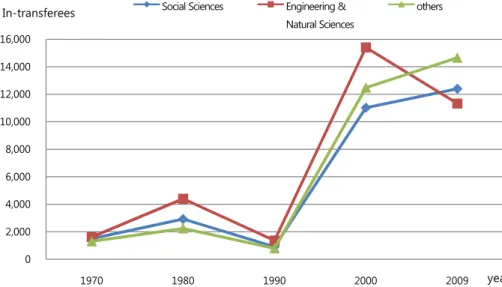
- Expansion of Higher Education amid Youth High Unemployment
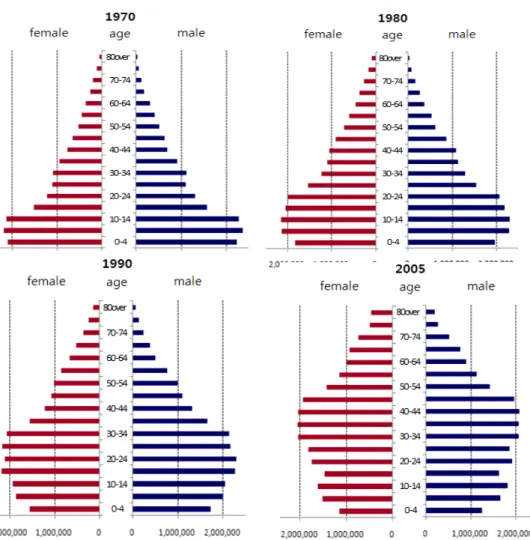
- Low Birth Rates and Aging Society
- Coping with Both Demand and Supply for Skills
The rapid expansion of higher education has adversely affected investment in human capital, resulting in structural unemployment and a large skills gap or skills mismatch in the labor market. Furthermore, the declining number of enrollments in higher education is expected to worsen in the future.
Skill Formation beyond School
Structure of Post-secondary VET
There are three types of vocational training programs: vocational training for the unemployed, employer-sponsored training, and training for a specific sector where specialized skills are in high demand. In other cases, companies conduct their own education and training programs through on-the-job training.
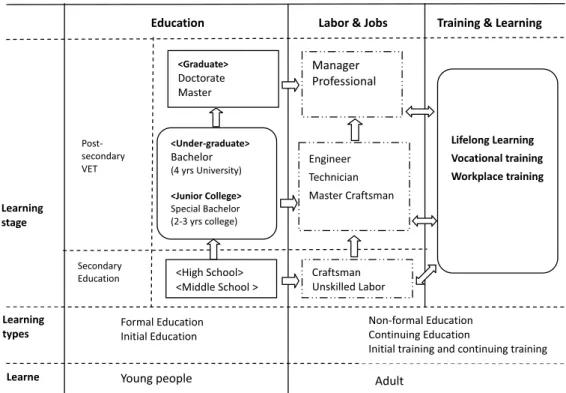
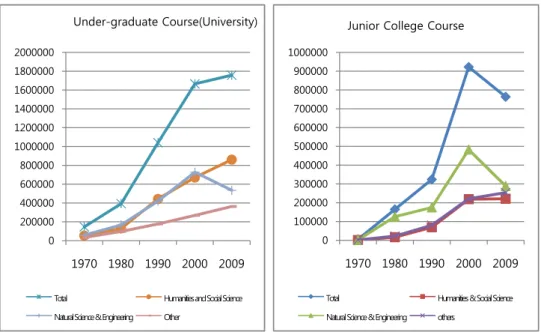
Skills Formation for Young People
Recently, the number of students enrolling in tertiary education has been declining sharply due to the low birth rate in Korea. The burden of funding tertiary education costs lies with students and parents.
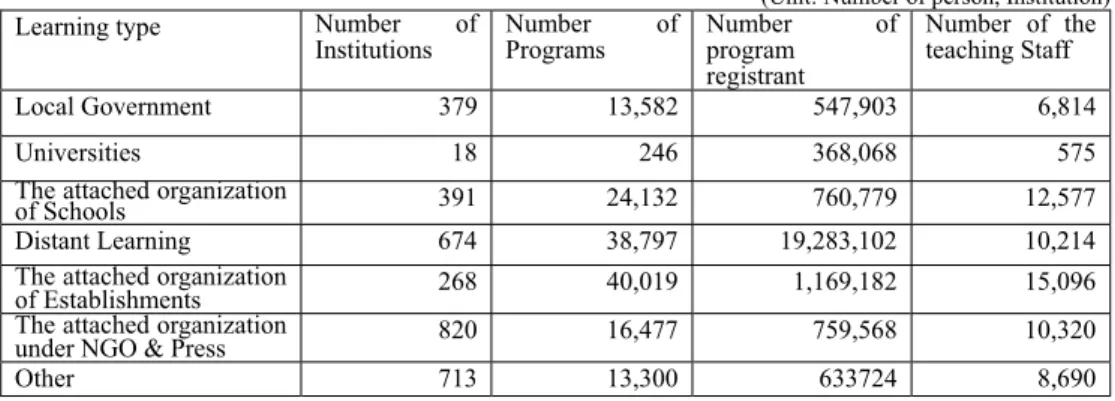
Skills Formation for Adults
According to Korea's medium-term fiscal expenditure plans, the share of the education budget for lifelong learning and vocational training is relatively low. This shows that most of the costs of lifelong learning are borne by the same participants.
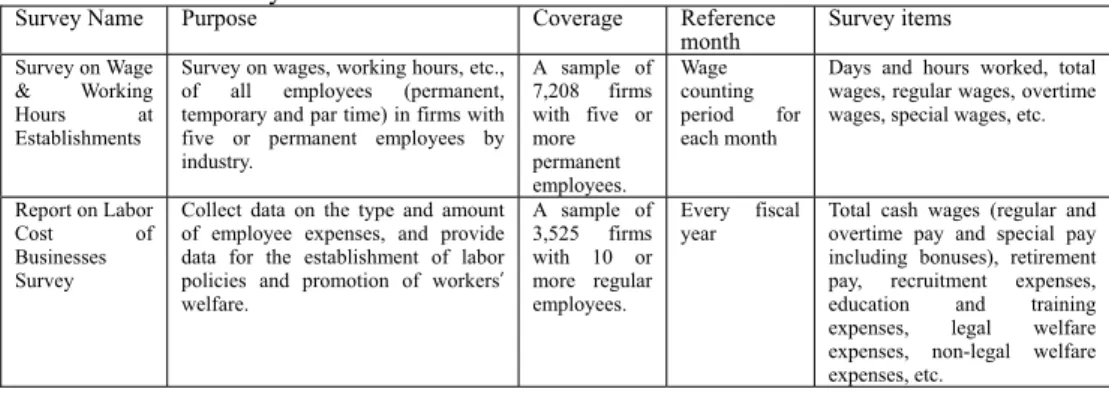
The New Type of Skills Formation
Increasing women's participation will require expanding childcare services in the public sector. SET plays the role of a provider of skills needed in the social service industry (or profession).
Signals and Matching Labor Market Needs
Information and Quality Assurance
VET providers are therefore able to meet the demands of the labor market with LMI. The economic activity participation rate is estimated based on the projection of the working age population.
The Qualification
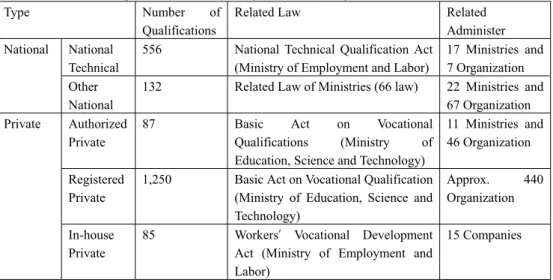
As a result, the link between qualification and skill needs in the labor market is very low. To this end, the skill associated with the national qualification should be standardized according to the needs of the labor market.
The Delivery of Labor Market Needs
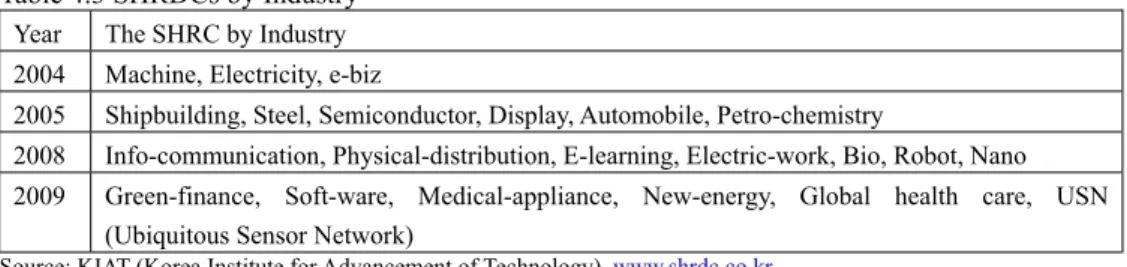
Through program development by SHRDC, labor market skills needs are directly reflected in post-secondary vocational education and training and linked to the qualifications system and skills standards. Thus, SHRDCs can only send a partial market signal about industry needs. Standardization of skills is a key part of the market signal that reflects labor market needs for vocational education and training programs and the qualifications system.
The NCS would ensure that the type and level of skills are based on the needs of the labor market. The aim of the new NCS is to strengthen market signals so that vocational education and training can meet the skills needs of the labor market. According to the Based Act on Qualification, SHRDCs can contribute to the development of the NCS.
Cooperation and exchange between VET institutions and businesses can reflect the skills needs of the labor market, which can be integrated into VET.
Career Guidance
Vocational guidance is an important link in the link between VETs and the labor market. Vocational guidance plays a role in both the supply and demand sides of skills circulation. In Korea, the career guidance service system still falls short of meeting the new challenges.
MOEST is in charge of vocational guidance in schools, while MOEL is in charge of public employment services for adults. As a result, most of the people working in employment information centers do not have the necessary skills to provide quality career guidance. Most of the career guidance centers in tertiary education receive support from employment information and career guidance provided by private companies.
In Korea, it is too early to discuss the privatization of career guidance services because it is an ongoing process with a limited scope.
Conclusion
In the labor market, the wage gap between high school and college graduates with a completed vocational education has narrowed, but the gap between high school graduates and university graduates remains large. In addition, the funding situation of private tertiary education institutions in local regions, as the proportion of private institutions there is very high, is likely to deteriorate due to the decline in the student population. As a result, the match between certified skills and the skills needed in the labor market is very low, so the vocational education and training system does not meet the needs of the industry.
The qualification system has not met the competence needs that a flexible labor market, technological development and changes in the industrial structure require. The purpose of the qualification system and the NCS is to use the funds relating to credit participants of lifelong learning in the recognition system. EDU/EDPC(2010)21, SKILLS BEYOND SCHOOL: Proposed Post-secondary Vocational Education, Project Plan Review, OECD. 2004), Effective Measures of School-to-Work Transaction in the Vocational Education and Training System.
Lee, Young-Hyun (2007), Workforce Development in the Republic of Korea; Policies and Practices, Asian Development Bank Institute.
Supply and Demand in Post-secondary VET of OECD Countries
Overall, 64% of students were enrolled in the former institutions with 36% attending the latter (OECD, 2008). Ɣ In 1992/3, the French community in Belgium accounted for 19% of total student enrollments in non-university higher education institutions compared to 21.5% in 2005/6. Ɣ In the 2008/2009 academic year, 90% of students were enrolled in higher education institutions (university and non-university types), while only 10%.
Ɣ There were 62 higher education institutions in Israel in the 2005/2006 academic year, including 8 universities, 27 non-university academic institutions, and 27 teacher training institutions (Council for Higher Education, 2008). Ɣ There were 461 higher education institutions (VŠU) in Slovenia, including 131 public institutions, of which 36 were non-university higher education institutions and 18 technical universities. In 2006, 100,299 students were enrolled at non-university institutions, which represented 5.1% of the higher education student population (OECD, 2008).
Ɣ Higher Vocational Education (HVE) was established as part of the formal education and training system in July 2009. Ɣ In 1995, a total of 20,900 qualifications were awarded in the higher vocational education sector in Switzerland (OPET, 2010). The remaining student population in 2006 was enrolled either in universities of applied sciences in education (5.3%) or in the Federal Institute of Technology (9.2%) (OECD, 2008).
Career Guidance
The second is the policy rationale for attention to career guidance as a public as well as a private good. For career guidance to fulfill its role in supporting informed student demand, it must be supported by high-quality information. However, there are two major aspects in which consideration of vocational guidance within the 'Skills Beyond School' must differ substantially from that accepted in the 'Learning for Jobs' review.
Another distinctive element is that the range of institutions to be considered in relation to the provision of vocational guidance within the vocational education and training programs themselves is quite different. For example, the discussion of vocational guidance in tertiary education in the OECD (2004) review was limited mainly to universities with only brief reference to post-secondary vocational institutions. In general, formal and explicit attention to career guidance appears to be less strong in vocational institutions than in universities.
In carrying out the country reviews in the 'Skills Beyond School' review, it is recommended that attention be paid to both the five general elements from the 'Learning for Jobs' review and to the two distinctive elements outlined above.
Access and Dropout
The minimum age requirement for alternative access routes can play an important role in the access and representation of mature students in post-secondary education. In practice, disadvantaged students are more likely to underestimate the benefits of a postsecondary education and overestimate the costs. In the context of this report, dropping out of school is understood as not completing a post-secondary VET qualification.
The high dropout rates at community colleges in the United States can be largely explained by the country's unlimited admissions policy. As such, Australian tertiary VET completion rates range from 48.3% in Education to 13.3% in mixed field programs (NCVER, 2010). In many Anglophone countries - such as Australia, England and the United States - post-secondary institutions are playing an increasingly active role in recruiting top talent.
Concerted efforts in New Zealand to promote lifelong learning – particularly through the accreditation of non-certified experience and universal access to financial aid – have led to an increase in the average age of tertiary students by approximately three years to 30.9 years in 2003.
OECD- KRIVET Joint Seminar Proceeding
Objectives of the OECD-KRIVET project The OECD – under the auspices of the OECD Education Policy Committee – is embarking on a new thematic review on post-secondary vocational education and training, Skills beyond School. The OECD work is led by Simon Field of the OECD Secretariat [email protected]. This joint seminar is part of the OECD-KRIVET project on post-secondary vocational education in the OECD and Korea.
Deborah Roseveare was appointed Head of the Education and Training Policy Division of the Education Directorate in June 2007. He is currently responsible for the OECD's thematic review of policies to improve labor market outcomes for older workers. Head of the Labor Market Policy Department at the Federal Office for Economic Development and Labour, Bern (1998-1999).
Secretariat of the Permanent Conference of Ministers of Education and Culture of the Federal Republic of Germany (KMK).
OECD-KRIVET Joint Meetings
Many countries have organized internal conferences or sent copies of the Learning for Jobs report to key VET players in their country. The scope of the project will initially be left open and narrowed as the project progresses. There was a fear from the representatives that the scope of the project could lead to fragmented results.
Field suggested that the answer to these questions would be discovered during the course of the project. This focus will keep Skills Beyond School relevant and will help guide the scope of the project. Results of the Leipzig conference at the end of September (Kevin) - Renewed interest in Learning for Jobs - Opened a dialogue for Skills Beyond School - The OECD/KRIVET relationship has been strengthened.
4) 5-8 page Policy brief OECD (can be combined or separate) 5) 5-8 page Policy brief KRIVET (can be combined or separate) 6) 3 working documents (+1 review) of the company KRIVET.
OECD Meetings