POTENTIAL FOR LOW TEMPERATURE DISTRICT HEATING SYSTEM
Integrating 4
thgeneration district heating system with existing technology
MAJD KAMALSchool of Business, Society and Engineering Course: Degree Project in Energy Engineering Course Code: ERA403
Subject: Energy Technology Credits: 30 hp
Program: Degree of Master Science in
Supervisor: Avelin Anders
Examiner: Kypriandis Konstantinos Company supervisor: Sundqvist Joacim, Mälarenergi AB
Date: 2017-06-09 Email:
ABSTRACT
This project presents a feasibility study and an investigation of the potential for low temperature district heating system in Västerås. The investigation treats integrations possibilities for 4GDH (4th Generation District Heating) in Kungsängens area in Västerås, which is undergoing a large-scale building-up and construction. The study is conducted for the company Mälarenergi AB. The advantages of 4GDH technology are identified and analyzed, where energy effectiveness and economic benefits aspects were concluded. Problems with existing technology and higher cooling demand expectations drive 4GDH to be an interesting and necessary technology in the future. Four Different integration solutions between old and new networks are presented, analyzed and discussed. Quantitative analysis conducted where initial cost for the four technical solutions were estimated and compared. The results show that low temperature district heating could lead to reduction in the initial cost for the network by using PEX instead of steel as pipe material. The results show also that one solution using heat exchanger as exchange stations has the lowest cost between the four solutions. The results show that the cost for the retention flow that is linked with 4GDH stands for 20%-30% of the total cost. The importance of the retention flow pipe is investigated using two physical models in OpenModelica and Excel, where simulations were conducted. It is concluded that it is possible to provide Kungsängen area with low temperature district heating without having the retention flow pipe. Three parameters were identified to be critical which are, geographical placement of the consumers, pattern variation for the heat demand and heat systems installed inside consumer’s buildings. The results show also that it might be critical to have a variate and optimized supply temperature for the area, depending on the demand. The simulations of a fictive area that could present a future heat demand for Kungsängen area shows that a temperature of 55°C is satisfying during winter season where the demand is high and a temperature between 60-65°C must be available during spring/autumn seasons and specially during summer. The variation depends directly on the temperature drop through the supply pipes to the consumers. The temperature drop is directly linked with water velocity inside the pipes. The losses increase during summer nights when the heat demand is low which lead to low water velocities.
KEYWORDS
Model, OpenModelica, retention flow, 4GDH, DHC, district cooling, combined heat and power
PREFACE
This research work presents master thesis in the degree projects energy engineering course at Mälardalens Högskola in Västerås. The report consists of a feasibility study about the possibilities of a modern district heating technology to be introduced in the city Västerås in Sweden. The project is a collaboration with the company Mälarenergi AB.
I would like to express my profound gratitude to my supervisors Anders Avelin, phD and Nathan Zimmerman and my examiner prof. Konstantinos Kyprianidis at the university for the supporting during the thesis work. I´m very thankful to my classmates Kristoffer Hermansson, Oskar Andersson and Rickard Hallström for their support and enjoyable time we spent during 5 years’ education.
I would like to thank Mälarenergi AB for this opportunity and continues support in form of data, ideas and motivation. Special thank to the personal in the departments of Business Area Heat & Distribution, Plant Development and Plant Development Optimization & Analysis for their support and interesting discussions.
Special thank to my family and friends for their support and motivation during the research work.
Majd Kamal 2017-, June Västerås
SAMMANFATTNING
Fjärrvärmesystemet har en mycket viktig roll i det svenska energisystemet. Fjärrvärme står för cirka 50% av värmeförbrukningen, där fjärrvärme finns i nästan alla kommuner i hela landet.
Värme står för stor energiförbrukning i Europa med cirka 50% av hela energiförbrukningen.
Fjärrvärme dominerar värmeförsörjningen för bostadshus och lokaler medan elvärme dominerar för villor. Fjärrvärmesystem som finns idag är resultatet av en konstant utveckling av denna teknik i mer än 100 år. Fjärrvärme utveckling under den tiden har varit mot lägre temperatur och högre effektivitet. Tekniken har vuxit från generation till annan där varje generation innehåller många lösningar och tillvägagångssätt. Olika moderna lösningar och tekniker utvecklas och växer fortfarande för att göra stadsvärmen bättre och mer föredragen i alla aspekter. Nuvarande fjärrvärme- och kylteknik måste utvecklas vidare till ytterligare och en ny generation. Utvecklingen måste ske för att garantera en viktig roll för tekniken i framtida hållbara energisystem. Den nya fjärrvärmeproduktionen måste möta dom nya utmaningar jämfört med de äldre generationerna. Mer energieffektiva byggnader och integration av smart energisystem är mycket stora utmaningar som fjärde generationens värmesystem måste anpassa sig till. Konkurrenskraft till annan teknik är en annan drivkraft, som har växt betydligt de senaste åren och hotar fjärrvärmesystemet i allmänhet, som t.ex. värmepumpar.
Detta projekt presenterar en förstudie och en undersökning för potentialen för fjärde generationens fjärrvärmesystem. Undersökningen behandlar integrationsmöjligheter för 4GDH i Kungsängens område i Västerås, som genomgår en storskalig uppbyggnad och konstruktion. Studien utförs för företaget Mälarenergi AB som kategoriseras som ett kommersiellt företag i staden som levererar el, fjärrvärme, vatten, kyla och kommunikationsmöjligheter.
Syftet med detta projekt är att undersöka potentialen för 4GDH och att lyfta fram de tekniska och ekonomiska aspekterna i det nya byggområdet Kungsängen i Västerås. Ett annat syfte är att undersöka de tekniska möjligheterna att integrera fjärrkyla nät med låg tempererad fjärrvärme. För-och nackdelar för den nya fjärrvärme generationen har identifierad samtidigt som fyra olika integrationslösningar mellan gamla och nya fjärrvärmenät presenteras, analyseras och diskuteras. Den första lösningen består av integration av primära och sekundära nätverk med värmeväxlare. Den andra lösningens koncept byggdes på blandning shunt teknik, med hjälp av tryckväxlare. Den tredje lösningen är en blandning mellan de två första, där värmeväxlare används. Den fjärde lösningen består av att använda värmepumpsteknik som värme och kall producent för regionen. Kvantitativ analys utförd där initialkostnaden för de fyra tekniska lösningarna uppskattades och jämfördes. Det Legionella problemet i tappvarmvattnet har undersökts och resultaten visar att uppväxten av bakterien beror inte bara på temperaturen, utan på volymen av vattencirkulationsledningarna. Detta leder till att de värmesystem som används hos värmekonsumenterna bör ta hänsyn till problemet om ett låg temperat nät byggs för området.
Resultaten av kvantitativa analys visar att fjärrvärme med låg temperatur kan leda till minskning av investeringskostnaden för fjärrvärmenätet genom att använda PEX istället för stål som rörmaterial. Resultaten visar också att den första lösningen med värmeväxlare som har den lägsta kostnaden mellan de fyra lösningarna. Resultaten visar att kostnaden för
varmhållningsflödet som är kopplat till 4GDH står för 20%-30% av den totala kostnaden.
Betydelsen av varmhållningsflödet undersöks med hjälp av två fysikaliska modeller i programvarorna OpenModelica och Excel, där simuleringar genomfördes. Slutsatsen visar att det är möjligt att tillhandahålla Kungsängenområdet med fjärrvärme med låg temperatur utan att ha varmhållning. Tre kritiska parametrar identifierades som är geografisk placering av byggnaderna, mönstervariation för värmebehovet och värmesystemen installerade i konsumentens byggnader. Resultaten visar också att det kan vara kritiskt att ha en varierande och optimerad framledning temperaturen för området, beroende på förbrukningen.
Simuleringarna av ett fiktivt område som kan presentera ett framtida värmebehov för Kungsängenområdet visar att temperaturen 55 ° C är tillfredsställande under vintersäsongen där efterfrågan efter värme är hög och en temperatur mellan 60°C-65°C måste vara tillgänglig under våren / hösten och speciellt under sommaren. Variationen beror direkt på temperaturfallet genom tillförselledningarna till konsumenterna. Temperaturfallet är direkt kopplat till vattenhastigheten inuti rören. Förlusterna ökar under sommarnätter när värmebehovet är låg vilket leder till låga vattenhastigheter.
Specifika konsumtionsmönster av värmeförbrukningen för framtida konsumenterna i Kungsängen var ett stort hinder under denna avhandling. Byggnader, placering och värmesystem kan beräkna värmebehovet med hjälp av indikatorer som presenteras i regelverk och nyckeltal. Byggnadstyp kan användas för undersökning av värmelagring och används i modellen. Värmeförvaringen i byggnaderna kan användas för att eliminera toppar vilket kan leda till ekonomisk vinst för Mälarenergi AB. Samlade data från befintliga värmenätverk med lågtemperaturssystem kan senare användas för att validera resultaten från en sådan modell och för att identifiera viktiga parametrar som kan undersökas i högre grad. Genom att ha realitetsdata och information om byggnadsområde, placering, och värmesystem för uppvärmning och varmvatten kan leda till mer realistiska modeller och simuleringar. Detta kommer att ge mer specifika slutsatser om lågt tempererat fjärrvärmenät för området Kungsängen.
NYCELORD
Lågtempererad fjärrvärme, fjärde generationen fjärrvärme, modellering, simulering, fjärrkyla, varmhållning
TABLE OF CONTENT
1 INTRODUCTION ...1
1.1 Background ... 1
1.1.1 District heating and cooling systems ... 1
1.1.2 4th generation district heating system ... 2
1.2 Problems definition ... 3
1.3 Purpose and research questions ... 3
1.4 Scope and delimitations ... 3
1.5 Thesis structure ... 4
2 LITERATURE STUDY ...5
2.1 Future district heating systems ... 5
2.2 Technical concept of 4th generation district heating system ... 7
2.3 Integration district heating and cooling systems ... 8
2.4 Legionella issues ... 9
2.5 Theoretical benefits of 4th generation district heating ...10
2.5.1 Utilization of renewable and recycled heat form low temperature sources ...11
2.5.2 Heat pumps ...12
2.5.3 Combined heat and power plants ...12
2.6 Projects and studies linked with low temperature district heating ...13
3 DISTRICT HEATING IN VÄSTERÅS ... 15
3.1 Kungsängen area ...17
4 METHODOLOGY ... 19
4.1 Process of research ...19
4.2 Process of design and construction ...19
4.2.1 Simplification and dimensioning of the area ...20
4.2.2 Exchange station ...22
4.3 Process of quantitative analysis ...22
4.3.1 3GDH ...23
4.3.2 4GDH ...23
4.4 Process of modelling and simulation ...25
4.4.1 OpenModelica model ...25
4.4.2 Excel model ...28
5 RESULTS AND DISCUSSION ... 30
5.1 Technical solutions ...30
5.1.1 Two heat exchangers solution ...30
5.1.2 Mixing shunt solution...32
5.1.3 Replenishing solution ...33
5.1.4 Heat pump solution ...34
5.2 Economic analysis ...36
5.2.1 3GDH case ...36
5.2.2 Two heat exchangers case ...36
5.2.3 Shunt case ...37
5.2.4 Replenishing case ...37
5.2.5 Heat pump case ...38
5.2.6 Disparity between solutions...38
5.3 District heating network OME model ...39
5.3.1 Residential buildings area/street ...39
5.3.2 Office buildings area/street...40
5.3.3 Exchange station (heat exchanger) ...41
5.3.4 Heat losses and optimization of supply temperature ...43
5.4 Retention flow ...44
6 CONCLUSIONS ... 46
7 FUTURE WORK ... 48 APPENDIX 1 DATA AND ASSUMPTIONS
APPENDIX 2 MISSION STATEMENT
APPENDIX 3 EVOLUTION OF DISTRICT HEATING
LIST OF TABLE AND FIGURES
Table 1 Buildings assumption data ... 22
Table 2 Parameters and constants for heat demand components ... 26
Table 3 Costs for 3GDH case ... 36
Table 4 Costs for two HE solution ... 37
Table 5 Costs for mixing shunt solution ... 37
Table 6 Costs for replenishing solution ... 38
Table 7 Costs for heat pump solution ... 38
Table 8 Economic disparity between solutions ... 38
Table 9 Service pipes economical calculation 3GDH ... 54
Table 10 Main pipe economical calculations 3GDH ... 54
Table 11 Service pipes economical calculations 4GDH ... 54
Table 12 Distribution pipe economical estimation 4GDH ... 55
Table 13 Retention flow pipes economical estimations ... 55
Table 14 Parameters and constants for heat exchange station component ... 55
Table 15 Parameters and constants for supply pipes components ... 55
Figure 1 Potential of low-temperature district heating system ... 5
Figure 2 District heating network in Västerås ... 15
Figure 3 Primary and secondary district heating networks ...16
Figure 4 District heating network with controller ...16
Figure 5 Kungsängen area in Västerås ... 17
Figure 6 Station area and its surroundings ... 17
Figure 7 Methodology schematic ...19
Figure 8 Simplification of Kungsängen area ... 20
Figure 9 Pipe segment ... 23
Figure 10 OpenModelica model for the fictitious district heating network ... 25
Figure 11 Heat demand for the area/street of residential buildings ... 26
Figure 12 Heat demand for area/street of office buildings ... 26
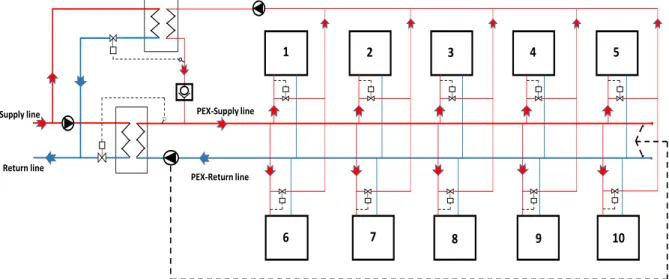
Figure 13 Simplified sketch over Kungsängen area with coupling principle ... 28
Figure 14 Two pressure system solution with two heat exchangers ... 30
Figure 15 Mixing shunt solution using shunt valve ... 32
Figure 16 Replenishing solution... 33
Figure 17 Heat pump solution ... 34
Figure 18 Mass flow variation for hot water and cold sides for residential buildings area ... 39
Figure 19 Temperature variations through the hot water side for residential buildings area . 40 Figure 20 Mass flow variation for hot water and cold sides for office buildings area ... 40
Figure 21 Temperature variations through the hot water side for office buildings area ...41
Figure 22 Mass flow variation for hot water and cold sides for exchange station ...41
Figure 23 Temperature variations through the hot water side for exchange station ... 42
Figure 24 Inlet temperature from the network into exchange station ... 42
Figure 25 Temperature variation during simulation year ... 43
Figure 26 Temperature losses through supply pipes ... 43
Figure 27 Accumulated mass flow ... 44
Figure 28 Temperature drop under autumn/spring season ... 44
Figure 29 Temperature drop under winter season ... 45
Figure 30 Temperature drop under summer season ... 45
Figure 31 District heating demand for office building ... 56
Figure 32 District heating demand for residential building ... 56
Figure 33 1st generation district heating system ... 60
Figure 34 2nd generation district heating system ...61
Figure 35 Duct with in-fill insulation which was to the third generation of district heating ...61
Figure 36 Directly buried pipes solution with internal gap ... 62
Figure 37 3rd generation district heating system ... 62
Figure 38 Technical concept for 4th generation district heating system ... 63
Figure 39 1-pipe system principle ... 64
Figure 40 1-2 pipe system principle ... 64
Figure 41 2-pipe system principle ... 65
Figure 42 3-pipe system principle ... 65
Figure 43 4-pipe system principle... 66
ABBREVIATIONS AND ACRONYMS
DH District Heating system DHC District Heating and Cooling
4GDH 4th Generation District Heating system CHP Combined Heat and Power
COP Coefficient Of Performance OME OpenModelica connection Editor CEO Chief Executive Officer
EU European Union
NTU Number of Transfer Unit
BBR Boveket´s Building Regulations Atemp Heated area of the building RES Renewable Energy Sources OB Office Building
RB Residential Building
NOMENCLATURE
Name Sign Unit
Temperature T °C
Pressure p Pa
Mass flow 𝒎̇ 𝒌𝒈 ⋅ 𝒔−𝟏
Heat flux 𝒒̇ W
Volumetric flow 𝑽̇ 𝒎𝟑⋅ 𝒔−𝟏
Velocity 𝒗 𝒎 ⋅ 𝒔−𝟏
Specific heat 𝒄𝒑 𝒌𝑱 ⋅ 𝒌𝒈−𝟏∗ 𝑲−𝟏
Diameter d m
Length L m
Area A 𝒎𝟐
Density ρ 𝒎𝟑⋅ 𝒌𝒈−𝟏
Overall heat transfer coefficient U 𝑾 ⋅ 𝒎−𝟐⋅ 𝑲−𝟏
Pressure ratio r -
Heat q Wh
1 INTRODUCTION
1.1 Background
District heating system has a very important role in the Swedish energy system. Around 50%
of the heat consumption comes from district heating, which exists in almost every municipality in the country. Heat stands for huge energy consumption in Europe with around 50% of the entire energy consumption. District heating dominates the heat supply for apartment buildings and premises while electrical heating is dominating for detached houses (Ottosson, Lauenburg, Wollestrand, Brand, & Zinko, 2013).
Pernilla Winnhed, CEO for the association (Energiföretagen), who describes the oscillation in the Swedish energy sector (Värmerapporten, 2016). These challenges according to Winnhed are urbanization, digitization and higher features of small scale and dispersed productions.
The described challenges have a big role to create the sustainable and environmentally friendly cities which is critical for future of our planet. District heating system has contributed to that Sweden will manage climate targets for 2020. This is because of carbon dioxide emissions from district heat producers has significantly decreased because of the increasing from renewable and recycled energy sources.
1.1.1 District heating and cooling systems
Conventional district heating system is based on water or steam flows through pipes which are usually placed under the ground or above in some cases. Water is used as heat carrier medium which has many fetching characteristics. Water is relatively cheap, accessible and not special corrosive or toxic (Swedish district heating association, 2017).
The first generation of district heating were introduced in USA in the 1880s where scalding steam at 300 °C was used as heat carrier. The establishing of this technology extends until 1930s where almost all district heating systems was installed in USA and Europe using this principle (Lund et al., 2014). This technology is considered as outdated since high steam temperatures generates substantial losses in term of heat and can lead to steam explosions which could cause dangerous accidents. Another factor that has deceived into outdating of this technology is the condensate return pipes have often corroded which lead to that less condensate flows in the return flow and lower efficiencies (Lauenburg, 2017).
The second generation of district heating characteristic is the transition from steam into hot, pressurized water with temperature often higher than 100°C. This technology dominated the installations of district heating systems until 1970s. Remains of this technology can be found
in the current based water district heating systems especially in Sweden (Frederiksen &
Werner, 2013).
The third generation of district heating systems was introduced in the 1970s but it took a large share of extensions until 1980s. The different in this generation is the temperatures in the supply lines are below 100 °C, which provides more efficient and lean material to be used for these systems (Frederiksen & Werner, 2013).
Besides district heating, a new cooling demand is growing strongly together with the new building and renovation standards in Sweden and entire Europe (Lund et al., 2014). The European building space cooling demand is growing to reach a comfortable indoor climate during warm and hot summer periods. By 2050, the European space heating is likely to increase by 50%-60% than it was in 2010 (Werner, 2016).
1.1.2 4th generation district heating system
Current district heating and cooling technologies must be developed further into additional and a new generation. The development must be done to guarantee an important role for the technologies in future sustainable energy systems. The new district heating generation should meet new challenges compared to the older generations. More energy efficient buildings and integration of operation of smart energy system are very big challenges that 4th generation district heat system must adapt to. Competitiveness to other technologies, such as heat pumps, is another stickler, which has grown significantly last years and threats district heating system in general (Lund et al., 2014). One key to successfully managing the development of future district heat technology is not to have infrastructures that is designed for present energy system (Enerbäck & Nalin Nilsson, 2013).
The design of future sustainable energy systems including 100% renewable systems can be seen as a big challenge (Lund et al., 2014). Many reports, studies and scenarios has been presented that considers strategies and possibilities for regions, countries, continents and even global perspective. These strategies includes typically three considerable technological changes which are energy saving on the demand side, higher efficiency in the energy production and replacement of fossil fuels by fluctuating renewable energy sources (RES) such as wind, geothermal and solar power together with more residual energy sources such as waste and biomass for instance (Lund, 2007).
District heating system has been constructed to a large extension but the expansion has decreased and higher focus has been built on the maintenance and optimization together with scenarios of how district heating will be integrating in the entire energy system in the future (Lund et al., 2014).
Since 1950s, Mälarenergi has been supplying heat through district heating system which is produced in a CHP plant in Västerås. Mälarenergi own the fourth largest district heating network in Sweden with 820 km lines, around 98% of urban Västerås areas are heated by district heat. The company is undergoing a major change. The company are about to go from being a traditional energy company into future infrastructure servicers company. Potential of
low temperature district heating is a part of the strategy journey that Mälarenergi are going on with (malarenergi, 2017).
1.2 Problems definition
The concept of 4th generation district heating does exist, and has been discussed for the past years. Integration concepts between the new generation of district heating and existing technology are limited or/and missed, which leads to that integrations concepts could vary between district heating network to another.
1.3 Purpose and research questions
The purpose of this project is to investigate the potential of a low-temperature district heating network 4GDH, and to highlight both the technical and economic aspects in the new build area Kungsägen in Västerås. Another purpose is to investigate the technical possibilities to integrate district cooling network with low temperature district heating.
1. What are the advantages of using the 4GDH system technology instead of 3GDH?
2. What technical solutions could be used to implement 4GDH in Västerås?
3. How could a low temperature district heating network in term of number of pipes be built in the area and meet the requirements?
1.4 Scope and delimitations
The delimitations for this study can be related to the purpose and research objectives of the project. The aim of the project is to investigate the potential of 4th generation district heating for the specific area in Västerås, which gives a geographical limitation. The modelling part will include several delimitations in the form of simplifications, due shortage of data and time.
The economic analysis of four suggested solutions that integrates existing DH network with new generation of district heating included initial costs only. The solutions are adapted specifically for Kungsängen area.
The modelling and simulation part focus only on district heating systems. District cooling is treated within the literature study and literature review of the state of the art.
The focus of the modelling and simulation part is to investigate the importance of the third pipe using a fictive area simulated by different scenarios.
1.5 Thesis structure
This section presents a short guideline for the reader that describes the thesis structure. A short presentation for each chapter is presented:
Chapter 1: Chapter 1 consists of a broad presentation about the project. Background information, problem definition, purpose and research objectives together with scope and delimitations are described in the first chapter.
Chapter 2: Chapter 2 presents the empirical study conducted for the project where literature study is used to fulfil the purpose and answer the objectives of this work. The literature review is used as one inspiration source used later to conduct four technical solutions used to answer research objectives 2 and 3.
Chapter 3: Chapter 3 consists of a short presentation about district heating network in Västerås and Kungsängen area.
Chapter 4: Chapter 4 consists of the methodology behind the thesis. The methodology is subdivided into four different processes that were used to conduct the results and conclusion for this work.
Chapter 5: Chapter 5 consists of result and discussions conducted by the research, economic analysis and modelling/simulation parts.
Chapter 6: Chapter 6 includes the conclusions from this project and focus on answering the research questions.
Chapter 7: Chapter 7 includes the future work part, consisting of discussions about future work possibilities of this project.
Appendix 1: presents data and assumptions calculated and assumed during calculations and modelling.
Appendix 2: Appendix 2 presents the missions statement handled by Mälarenergi AB where several questions linked with low temperature district heating and 4GDH are presented.
Appendix 3: Appendix 2 includes a wide presentation of district heating systems development.
Appendix 4: Appendix 3 describes different common coupling technical solution for district heating networks.
2 LITERATURE STUDY
Lund et al. (2014) describes the main goals in the development of new distributions technologies which has been a reduction of investment costs, lower space heating demand, installation time and running costs. Some reduction goals can be se interrelated with each other and some of them can be broken down into additional elements. Reducing space demand and installation time can be strong linked with costs for instance.
Another aspect than just the economic one which is the general acceptance for district heat among people. Having shorter time for installations will reduce the inconvenience to the public which is very important for district heating and district cooling systems to gain general acceptance. Reducing the operational costs for the district heating can be divided into several goals. These goals are to reduce the pumping energy demand, heat losses in general, and heat losses in the heat carrier medium and to reduce the need for maintenance which is linked with the cost (Werner & Frederiksen, 1993).
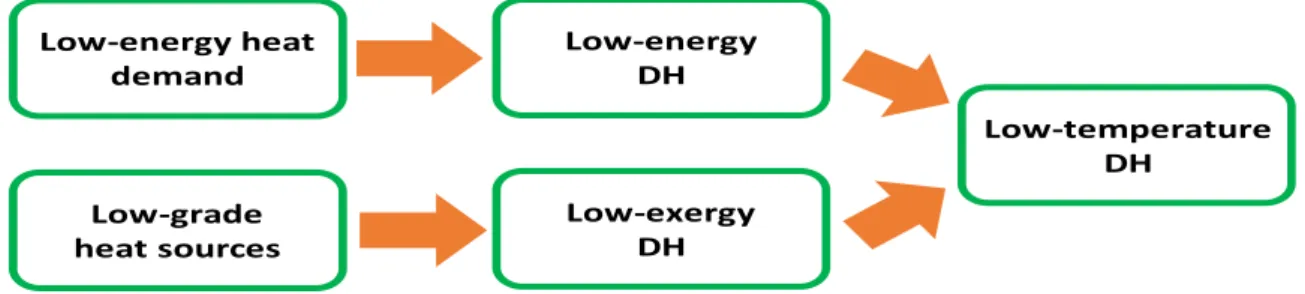
Dalla Rosa et al (2014) is a part of IEA (International Energy Agency) district heating and cooling program. The report covers the technical aspect of low temperature district heating systems using existing technologies. Different technical concepts for an entire district heating system from production to consumption are described. Figure 1 illustrates the path to reach low temperature district heating goes through low energy and exergy district systems. Low- energy district heating can fulfil the low heat demand in a sustainable and efficient way. Low grade heat source would have a higher utilization grade if they are integrated with low exergy district heating network with lower temperatures. Both these aspects lead to one solution, namely, low temperature district heating network.
Figure 1 Potential of low-temperature district heating system
2.1 Future district heating systems
Many studies treats district heating role in the future agrees to that if district heating as technology desire to maintain the competitiveness, changes in form of technology development has to be done (Lund et al., 2014).
The development points is to keep the path that district heating has always followed from the start until this day which is going to lower temperatures and higher possibilities of integration in the energy system (Lund, 2007). The main purpose of district heating has always relied on utilization heat sources that are utilized otherwise (Frederiksen & Werner, 2013).
Low-energy heat demand
Low-energy DH
Low-grade heat sources
Low-exergy DH
Low-temperature DH
Lower temperatures in the distribution temperatures is the major denominator for future generation of district heating system. Higher efficiency is another character where heat supply becomes more efficient with respect to CHP, flue gas condensation where return temperature for district heating got a big role, heat pumps, geothermal extraction, low temperatures sources and heat storage (Averfalk & Werner, 2016).
The efficiency for distribution network will also see improvement with lower distribution losses, less pipe expansion, lower scalding risks on the pipe and opportunity of increase the appliance of plastic pipes. 4GDH concept is defined including the relations to district cooling and concepts of smart energy and smart thermal grids (Lund et al., 2014). According to article, the future conditions for heat demand and supply will change. Heat demands are expected to be lower within new built building in the European Union which have quite high energy performance requirement (Official Journal of the European Union, 2010). Lower heat demands in buildings entails major opportunities for low temperature district heating systems to take an important role in future energy system.
Another aspect that is important to be analysed is that the heat distribution costs increase with low heat demand energy systems. This is a concern for the feasibility of future district heating systems (Averfalk & Werner, 2016). Ottosson et al. (2013) conclude that future estimated capital costs for district heat distribution is rather low for dense cities that are included in the study. But in low density areas, local heating alternatives were expected to dominate.
The report (Energy Roadmap 2050, 2011) describes six different strategies for the European Union to achieve the goal of reducing greenhouse gas emissions with 80% to 2050 comparing to the emissions in 1990. None of these strategies involved large-scale implementation of district heating. Instead, the proposed strategies focused on the electrification of heat sector in Europe using heat pumps and/or large implementations of electricity and heat savings.
Connolly et al. (2014) describes the potential for district heating technology in the EU is identified together with extensive and mapping of the EU heat demand and various supply options. The results from the paper indicated that EU with district heating in the energy system will be able to achieve the same reductions in both primary energy supply and carbon dioxide emissions as the existing strategies proposed with electrifying the heat sector. Not only that, district heating will achieve these goals with lower cost with reduction of approximately 15%
with heating and cooling costs.
Other studies and theories consensus that district heating is going to have an important role in the energy system to achieve future sustainable energy systems with the climate goals that are set for EU (Averfalk & Werner, 2016).
District heating must conform to the changes that has occurred and is occurring on the energy system. Construction industries, legislations and the competition with other technologies such as heat pumps and renewable energy sources that has seen a significant development in the past few years (Ottosson et al., 2013). 4GDH idea is to develop already existing district heating system (3rd generation) and get rid of undesirable factors and to adapt the new generation of district heating into an efficient and sustainable energy system that treats different challenges and complexity in future energy system (Lund et al., 2014).
Gong & Werner (2015) describes three important conclusions using exergy analysis of existing district heating systems which is has an essential importance to engineering in the design energy systems and to sustain and meet environmental constraints. An interesting conclusion conducted from the study is that future exergy factor in future district heating systems can be forecasted to be reduced by 9% from the actual exergy factors today which have annual average around 15-18%. That gives a higher competitiveness of geothermal and solar heat in future low- exergy district heating systems. Another conclusion is the levelling of adequate temperature requirements between heat supplies, distribution and consumption create a better match between supply and demand together with increased performance in the entire system.
2.2 Technical concept of 4
thgeneration district heating system
4GDH is undergoing a development where all information is not there yet to be able practically build new system (Werner ,2017). This means that the technical guidelines for the future technology is not really set or completely defined.
Today´s district heating systems is not satisfying, neither technically or according to EU: s energy standards. One problem in the current district heating generations is frequents errors in temperatures causes by temperatures drops in the supply line. These errors are transmitted further to consumer’s substations. The errors are solved by so-called “short circuits”, which is basically a pipe link between supply and return lines. Having this link usually cause higher temperatures in the return pipe. These phenomena can be eliminated by using third pipe, which function is to keep warm the primary supply line when it is needed (Ottosson et al., 2013).
Using mentioned design with three pipes gives the possibility to temperature decreasing in both supply and return temperatures and eliminate domestic hot water circulation which usually exists in the district heating substations for residential buildings. Eliminating domestic hot water circulation leads to minimize the risk for legionella. By having lower temperatures in the district heating water as property requires new heat exchangers with longer thermal length (NTU). Current heat exchanger in residential buildings has a thermal length of around 4. The new design could include compact district heat substations with an individual heat exchanger for each apartment. This will get rid of huge and special adapted substations. The new thermal length for the heat exchangers is in between 6-8 (NTU). Another possibility is to have every stairwell substation that several apartments/premises could utilize.
(Fjärrvärmetidningen, 2016).
It is possible to build and integrate a low temperature systems in today’s used district heating generation but this solution is considered to be usually expensive, unpractical and in some cases complex. Having low supply temperature and fulfil the demand for houses that are not built to handle low temperatures with usually has high heat consumption is challenging (Ottosson et al., 2013).
The biggest restriction that puts limits to pushing down the temperatures lower than 62-65 °C is the property owner’s requirements for domestic hot water and space heating when the out
temperature is low. Fourth generation district heating expected temperatures is 50-55 °C for supply and 30 °C at the highest for the return (Lund et al., 2014).
Olsen et al. (2014) presents different ideas and recommendation for district heating systems to enable low supply temperature. The goal is to provide the consumers with 50 °C district heating. Different technical solutions are presented within the work together with identified critical components in district heating system. One conclusion shows that it is possible to guarantee an efficient operation but it is very critical to obtain the proper functions in each substation. Otherwise, unacceptable return temperatures could be reached. Another conclusion is that there is no superior substation concept, but the best system should be adapting to the specific characteristic of the site and heat demand. The presented concepts could be used for a range of supply temperatures from 50°C -55°C up to 60°C -70°C. Lower temperatures in the supply pushes the equipment’s and installations specifications to the limits according to the report.
More detailed technical explanation of fourth generation district heating is illustrated in Figure 38 in Appendix 3.
2.3 Integration district heating and cooling systems
It is not only heat that is required in premises and houses, cooling could have high demand also. Offices, hospitals, restaurants, hotels and data centres are demanding cooling continuously during the year. Using district cooling has shown positive impact on the environment and energy efficiency comparing to local cooling systems (Rydegran, 2017).
District cooling has a very similar concept to district heating. Instead of hot water, cold water is distributed in a network of pipes. The provided temperature is around 6°C, the return temperature for the water is around 16°C (Frederiksen & Werner, 2013; Sjöström, 2017).
Free-cooling is the most common type of cooling in Sweden. The idea is to retrieve cold from a cold source which can be a lake for instance. Cold water is pumped up from the lake into a plant where the cold of the lake water is transferred to the water in the district cooling network Another possibility is to use district heating to rendering district cooling creating a heat driven cooling, absorption cooling for instance. The water in the chiller is subjected to a powerful vacuum creating negative pressure. The negative pressure causes boiling of the water and evaporate, at temperature of 3°C. The water with 3°C as temperature is used to cool district cooling water on the other side. Desiccant cooling is another method used to produce cooling.
The idea behind this method is air dried by district heating. The concept can be used for each district heating user with enough space. Compressor and environmentally harmful refrigerants are avoided with this technology (Rydegran, 2017).
One of the Prerequisites of low temperature district heating is the utilization of heat pumps.
Having heat pump that provides heat at winter and cooling at summer to residential, offices and industrial facilities. But heat pumps could be used to produce district cooling in summer where the cooling demand does increase (Lund et al., 2014).
Different methods presented in the report (Foster, Love, Walker, & Crane, 2016) to integrate heat pump into heat networks. Economic and environmental aspects were the focus in this study in a UK context. Four different scenarios were conducted, depending on network temperature, scale and heat pump important in the system where adjusted.
Bach et al. (2016) shows the integration of large-scale heat pumps into Copenhagen district heating systems which is classified as a state-of-the-art district heating system. The network includes many consumers and suppliers. Two aspects where the major points for the study, technical and private economic aspects of integrating a large capacity, electrical driven heat pump into relatively large district heating network. Operational data have been implemented in Balmorel which is a partial equilibrium model for analysing the electricity and combined heat and power sector. One intersecting results from the simulation of the model is that COP seasonal variation doesn´t have significant impact on the overall result. This is directly linked with the COPs seasonal variation for a water based heat pump doesn´t vary much through the year.
2.4 Legionella issues
Legionella bacterium is considered to be a concern in the domestic hot water preparation (Averfalk & Werner, 2016). The bacteria proliferate between 20 and 45 °C especially between 35 and 40°C According to the Swedish National Housing Board (Boverket) (Legionella och dricksvatten, 2014).
The board continue with the elimination of the bacteria must be within temperatures >40°C.
The time is a very important factor for both proliferation and elimination of Legionella.
According to the board, it takes between 5-10 hours to eliminate 90% of bacteria’s at 50°C, but less than 10 minutes at 60°C and less than 10 seconds at 70°C.
Legionella bacterium are very small and can be distributed within water mist that can be cultivated when water jet is busted into showers for instance. The bacteria are dangerous when it entries the lung. Studies shows that the bacteria exhibit stagnation in growth at 46°C and the concentration of the bacteria in the water decrease significantly with higher temperatures (Averfalk & Werner, 2016). The Legionella issue can be directly related to slow domestic hot water preparation with long residence time with hot water circulations and storage and in general. The article (Leoni et al., 2005) presents an investigation and evaluation of the prevalence of Legionella spices in hot water distribution system in Italy. An interesting conclusion was reached was that the water recirculation system used by centralized boilers has a positive impact of the spreading of legionella throughout the entire network.
Averfalk and Werner (2016) present a key to solve this issue, namely, water volumes at the secondary side. The idea is to have instantaneous water discharge by the heat exchanger, which gives a short residence time. District heating substations can provide this key. Having individual apartment substations may avoid the requirement of large domestic water circulation which further relieve the issue of Legionella.
The same article refers to the German regulation for domestic hot water where it is stated that
domestic hot water may occur without any specific safety problems with the bacteria, if the total pipes volume doesn´t exceed three litres. A recommended temperature of 60°C is suggested in the standard while the suggestion is that temperatures below 50°C, should be avoided in the domestic hot water at all time.
District heating substations-design and installation, which is a technical regulation report presented by the Swedish district heating Association takes Legionella issue into consideration (Baldefors, 2016). The report points out the high risks in the domestic hot water which are towel dryers and floor heating coils which are driven/connected with DH. The risk occurs when the devices are turned off, which could create colonies of Legionaries’´ disease bacteria can be established in them. This disease bacteria can infect the entire system later one. This problem can be solved by running the devices with separate circuits from the original DHW system. The technical regulation recommends a temperature of 60°C to maintain hot water storage or buffer tanks.
2.5 Theoretical benefits of 4
thgeneration district heating
A number of demonstration projects have demonstrated that a supply temperature of 50°C is enough to fulfil end-user´s heat demand (Hesaraki, Ploskic, & Holmberg, 2015).
By having lower distribution temperature leads to several theoretical advantages. These advantages can be reached in production, distribution and consumptions (Dalla Rosa et al., 2014).
Low temperature district heating systems in general complies with two main requirements for the district heating as technology and also for the entire energy system, namely, high energy efficiency and higher share of renewable energy together with higher recovery opportunity of waste heat (Olsen et al., 2014).
The energy requirements for new building and renovated buildings is set liberally lower limits on energy consumption for space heating, which results a substantial increase in the energy efficiency on the consumption side (Joelsson & Gustavsson, 2009). However, decreasing demand in the consumption side has relatively a negative effect of the energy efficiency for the distribution of traditional networks, which makes low temperature district heating possible (Lund et al., 2014). The losses in distribution of district heating is connected directly with supply temperatures, which makes low temperature district heating even more attractive to achieve higher efficiency and decrease distribution losses.
Reaching higher efficiency in the consumption and distribution gives the opportunity to reach higher effectivity in the supply side. This will increase the competitiveness of district heating system to supply low temperatures to low energy buildings in low energy density areas. The 4th generation district heating vision temperatures will cut the actual temperatures of third generation by a factor 2. This will reduce the peak flow and the pipe dimensions in turn.
Achieving lower distribution temperatures and lower pipe dimensions will reduce the heat losses compared to existing networks by a factor 4. A problem that will follows the use of
smaller pipes is the pressure requirements, but this issue can be solved by using local pumps.
(Lund et al., 2014)
2.5.1 Utilization of renewable and recycled heat form low temperature sources
One important factor that always considered is the enhancements of renewable and low temperature sources is utilization possibility to existing energy systems. The possibilities to integrate renewable and recycled low temperature sources increases significantly with low temperature district heating systems (Lund et al., 2014).
Several scientific studies show that having temperature 50/20 °C will have a significant growth of the potential for utilize waste heat Different industrial process and cooling processes (in supermarkets for instance) produce waste heat. Having low temperatures in distribution networks will allow higher amount and cheaper possibility to utilize the waste heat (Lund et al., 2014; Persson & Werner, 2012).
Heat from waste incineration facilities is considered to be very useful for district heating systems because it can supply all year round. Recycling should however come first in a sustainable society and the heat produced from waste must be utilized by optimal way (Lund et al., 2014). From a general sustainable energy system solution, the optimal way of utilization should be by producing as much electricity as possible.
One technology that is associated with great potential is geothermal heating (IEA District Heating and Cooling, 2017). The advantages of using this technology to produce heat is linked with low emissions of climate gases. Usable hot water is available in most areas in Europe’s ground. The potential around the world is huge but it stands for a very small part of energy supply. This depends one two factors mainly. Large investments costs and uncertainty of the flow variation in bore hole. The water-filled porous together with temperature levels extends the ability of utilizing geothermal heating plants in a district heating system, which gives a higher reachability of heat the lower temperature in the district network. Another possibility which is investigate in several projects around the world is integration possibilities between absorption heat pumps and geothermal heat, which may be operate in an efficient way together with e.g. CHP plants (Lund et al., 2014). This may create a higher flexibility and efficiency in the district heating systems. Not only district heat is essential, electricity supply may be integrated with geothermal heating by using compressor heat pumps.
The trend of solar heating as technology is expected to be more attractive the lower temperatures reached in district heating networks thus higher efficiency is obtained. Efficiency is not the only factor that is regarded. The seasonal mismatch between solar availability and higher space heating demand is another factor is considered, this issue can be solved by integrating solar thermal plants with existing district heating network (Lund et al., 2014).
Large-long term and small-short term heat storage is coupled with solar heating systems, where heat can be provided into the distribution lines to maintain the granted temperature in the outer part of the network (Ottosson et al., 2013).
2.5.2 Heat pumps
In many years has district heating and heat pumps set one against each other as heating producers. The fact that very high competitiveness does exist between these two technologies.
This view may have changed in the last couple of years. One important reason for the change is low supply temperature in distribution networks (IEA District Heating and Cooling, 2017).
The high growth rate of renewable electricity producers e.g. solar and wind power enlightens heat pumps (Lund et al., 2014). High surplus of electricity from solar and wind make utilization of big heat pumps not only economically interesting, but also necessary to assimilate surplus electricity and produce heat/cold depends on the demand.
Possibility to use wastewater or other waste heat source is interesting. Another interesting solution is the possibility to connect the heat pump with return-return. This solution considered to control the temperature lift but another heat supply system is needed to reach the desired temperature in the supply line (Ottosson et al., 2013).
Another factor that pushes the usage of heat pumps in modern low temperature DH, is that new build/renovated houses are very efficient. This is very good when it is cold outside but what about when it is warm instead? Warm summer day pushes the use of cooling instead of heat. Heat pumps can be operated as cooling machines in the summer which can provide district cooling network with cooling (Ottosson et al., 2013).
2.5.3 Combined heat and power plants
One very successful technical combination is heat and power plants and district heating.
Converting to low temperature district heating network will have directly positive impact on combined heat and power plants. Two important of these impacts are handled below (Lund et al., 2014). Reaching lower temperatures in the supply and return could peruse large economical profits for energy producers. The report (Lauenburg, 2017) presents an estimation of 1.5 SEK/MWh gain by decreasing the return by 1 °C. The report (Petersson & Dahlberg Larsson, 2013) presents the average return flow temperature in Swedish district heating systems is 47 °C. This temperature can be decreased to 34°C by using existing technologies.
This gives a huge profit ability.
The principal of electricity production in a CHP is that steam processes transmit energy as pressure from the steam into kinetic energy which expand inside the turbine that drift a generator where the electricity is produced. What decides steam expansions is the supply temperature for the district heating. It is possible to obtain higher electrical power (power to heat ratio=α) from the process if lower supply temperature is reached for the district heat distribution (Baldvinsson & Nakata, 2016; Lund et al., 2014).
The article (Starfelt, Tomás Aparicio, Thorin, & Ericson, 2012) presents an integration between two modelling approaches where combined into one model. One of the models included the production side with important components e.g. boiler, turbine, condenser. This model was
steady-state model. The second model is a dynamic model presenting the district heating network to capture the dynamic behaviour for the network.
Results from one simulation shows that reduction of the supply temperature to the district heating network gives lower condensation pressure, and thus increased electricity production.
The same situation was conducted by reducing the return temperature, but the increasing in the electricity production wasn´t as large as with supply temperature reduction.
Results from the second simulations using ProDis as simulator gave increase of electricity production by 0.40% in the steady state model and 0.42% by decreasing the supply temperature by 1°C. Increasing by 0.17% in electricity production by reducing the return temperature with 1°C.
How much heat utilization and recycling in the flue gas condenser depends directly on the moisture content in the fuel. The energy in the steam that follows the flue gases can be recycled by using flue gas condenser. The heat is transformed from the flue gases into the return line in district heating network. Lower temperatures in the return line, leads to higher condensation in the heat exchanger which may result increasing in the total efficiency for the facility (Lund et al., 2014).
2.6 Projects and studies linked with low temperature district heating
Østergaard & Svendsen (2016) presents simulations models that can provides good calculation for low-temperature heating together with assumption on indoor climate that could have a major effect on the result.
The technical report (Ottosson et al., 2013) focuses on the consequences on building and district heating nets of lower system temperatures and the decreasing in the heat demand. This decreasing is based on 20-20-20 EU policy which leads to significant change in new building heat systems that are likely to keep lower temperatures than older buildings. One challenge that was mentioned in the report is these new well isolated and effective building will be mixed with older ones.
Simulations has been conducted within the study using software like IDA, ICE, VIP-Energy and Netsim. The purpose of the simulation was to evaluate the consequences of lower distribution temperatures and heat demand has on district heating substations and distribution network. Three different types of internal heating systems have been simulated (radiator, floor heating and air heating). The results showed that the three solutions could work with low system temperatures. The calculations demonstrated profitability by having bigger radiator systems, with lower return temperature. One interesting question that has been taken up and discussed in the report is the entitled of setting the supply temperature by outside temperature. The writers mean that heat addition from the sun, humans and electrical devices
has a higher considerable in low energy houses.
An assumption that was assumed in the simulation is the supply temperature to the radiators are set t0 55 °C and flow regulation using radiator´s thermostatic valve. The report carries on
with future view of district heating as a technology where gradual transition is happening toward well insulated, low temperature distribution networks. Lower losses in the distribution and better conditions will be reached in power and heat production facilities. Lower system temperature will open for higher utilization of waste heat and other renewable energy sources.
The report presents an advice is the cooperation between municipalities, local real estate owners and district heating companies has to be established, for implementation of studies and lessons learned from different studies around the subject (Ottosson et al., 2013).
The experience and potential of low-temperature district heating are presented widely in the report (Dalla Rosa et al., 2014). One results from the study is linked with the planning of district heating. The writers mention two important parameters to have a succeeded transition from current DH system into next generation. The two parameters are coordinated efforts and wide exploitation of low-grade heat and renewable energy sources. This will lead to profit for district heating utilities by savings in peak-load facility investments according to the report.
Another important conclusion presented by the work is linked with heat distribution costs where capital cost and distribution heat loss are proportional to the inverse of the heat density.
A conclusion presented in the project by analysing a case study shows acceptable distribution capital costs and heat losses for low-energy buildings with low specific heat demand. This is concluded if the buildings are concentrated, which means high distribution costs will be reached in areas with low plot ratios.
Several interesting and elucidative reports presented by the Swedish energy research centre, such as (Eriksson & Hörndahl, 2013) and (Wahlström, Göransson, & Wennerhag, 2013). The reports go deeply into district heating importance in existing and future energy system in Sweden and the development force in the current district heating technologies.
Another report presented by the Swedish energy research centre is (Göransson et al., 2013), Where the focus is on the existing and future building rules (BBR). The report highlights the relationship between low energy houses and low temperature district heating. Main results of existing regulation presented by the Swedish building regulations and proposes some changes in the regulation. The change focuses on the regulation of both energy to a household using district heating versus electrical heat source.
Frederiksen, Tvärne, Wollestrand, & Rubenhag (2016) focuses on the integration possibilities between district heating and cooling. Low temperature district heating is included in the study and classified as one of the main focuses of the study.
Electrical driven HPs can be used to provide heat and/or cooling to DHC networks. The study (Bach et al., 2016) analyses the technical and economic aspects of integrating a large capacity of electric driver heat pump into Copenhagen district heating system. The conclusion from this study can be summarized, connecting heat pump into a district heating network will cause a higher COP (coefficient of performance) ratio than if the HP was connected to the transmission network. The results show an increasing of COP ration from 2,5 to 3 by connecting it to DH network.
Studies has been conducted that analyse the cooperation possibility between electrical and district heating markets. Sköldberg, Unger, & Holmström (2017) presents a project that had
future electrical system could affect the interaction between electrical and district heating markets. The reports light up the variability in future electrical production and focuses of analysing of several scenarios of electrical production. Two main scenarios have been analysed with different conditions but with same amount of renewable electricity production year 2055 with 55 TWh (exclusive hydropower). The expansion of renewables between 2015 until 2030 is the main different between the scenarios. The results show how the electrical price has a major effect on district heating production and price. The study doesn´t take the district heating development scenarios/possibility into accounts. This could change the entire model with different and more complex scenarios. One example could be the interaction between district heating and electrical driven heat pumps which might gave even higher anaclitic
between electrical and district heating markets.
3 DISTRICT HEATING IN VÄSTERÅS
A district heating network can be complex. The one in Västerås was build many years ago, and it is classified as one of the oldest and biggest networks in the country (Fjärrvärme - Mälarenergi, 2015). The network has undergone big changes in form of extensions that has result one of the biggest district heating networks, not only in Sweden but in Europe.
Figure 2 below shows the disseminated of Västerås´s district heating network. The network provides several regions with heat, such as Skultuna, Hallstahammar and Surahammar. The picture shows the complexity and diffusion of the network. The lines drawn in the pictures helps to encircle the different areas in and around Västerås.
Figure 2 District heating network in Västerås source: Mälardalens högskola
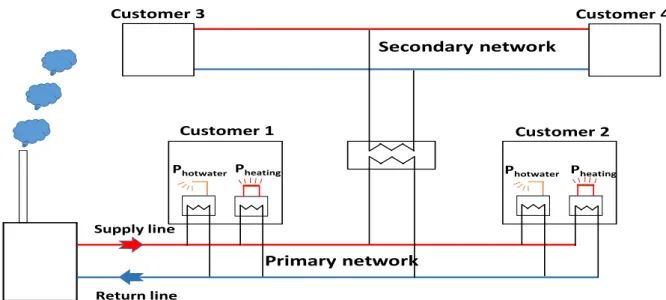
Figure 3 & Figure 4 presents a simplified district heating network in Sweden. The first illustration below shows a district network with primary and secondary networks. The main supply line extends from heat producer facility and provides three “stations” with heat. These stations are presented and two customers and a big heat exchanger. Each one of the first two consumers has two heat exchangers, one for the domestic hot water and the second for space
heating. The big heat exchanger will provide a secondary network with heat. The heat from the facility will flow back where it is heated to the endeavour temperature, through the return.
Figure 3 Primary and secondary district heating networks
Figure 4 includes more components that has important purposes for production and distribution. One important factor is the ambient temperature, where heat production and consumption are directly linked with the temperature factor. Two control valves after both heat exchangers for the house are shown in the figure. The control valves will control the district heating flow through the heat exchangers, which depends on the demand. The space heating demand is directly linked with the ambient temperature, but the domestic water is more linked with behaviour and human presence in the dwelling. A pump is placed in the network to keep the distribution and the pressure to right level. Pump receives a signal from a pressure difference saturation that is placed farthest form the pump. This is to ensure that the pressure is enough at probably the point with lowest pressure in the network.
Figure 4 District heating network with controller Customer 1
Photwater Pheating Photwater Pheating
Customer 2
Supply line
Return line
Primary network
Secondary network
Customer 4 Customer 3
Δpmin=constant tvv=constant
~
~
tf trf
ta
ta
ta trf
ta
3.1 Kungsängen area
Kungsängen is an old industrial district located in the middle of the city where the railway latches the area from the water with an area of 50 hectares. The district is going to change from a desolated area into a vibrant neighborhood with new travel center as central midpoint. The area is a natural connection to the lake Mälaren and the center of Västerås. The size of the area is around 50 hectares. The challenges for Mälarenergi is to supply the various premises such as offices, homes, shops, travel center, hotels and industrial facilities and which probably will be low-energy consumers with heat (Kungsängen, 2017).
Figure 5 Kungsängen area in Västerås source with permission: Mälarenergi
According to (City council, 2013) which is a detailed comprehensive plan for the region, many of the old heavy industries has moved or ended their operation in the area. But several industries and facilities does exist today. Concrete factory, Lantmännen´s silo storage facilities and the wastewater treatment plant that is owned by the municipality. This means that there might be potential for industrial waste heat.
One of the six objectives for the planning work on this region goes hand in hand with the main purpose of 4GDH. The objective number 6 presented in the comprehensive is to create a sustainable, flexible and robust structures that can withstand development. This goal can be reached by using modern technology for the regions resources and energy use, recycling and buildings materials (City council, 2013).
Figure 6 Station area and its surroundings source with permission: (City council, 2013)
Figure 6 illustrates the area and the environment around. Kungsängen street is the main street that extends in the middle of the region and has a length of around 2 km. The distance from heat and power facility to the region is measured to be around 3 km (“eniro.se,” 2017). The geographical characteristic of the region is used for simplification and the dimensioning of the region in the next part of the report.
4 METHODOLOGY
Literature study, discussions, quantitative analyses and modelling were used in this project to fulfil the purpose. The methodology path has been used to answer the research questions and to produce technical solutions that can be used to solve the problem definition in this thesis.
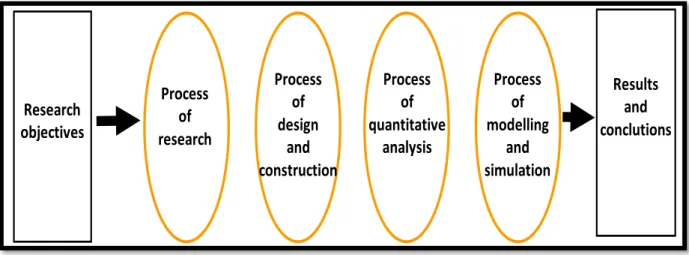
Figure 7 presents a schematic presentation of the project and the methodology. The goal was to reach the results and conclusions through the four different steps. Literature study, discussions and two program software’s (OpenModelica and Excel) were the main features used in each process.
Figure 7 Methodology schematic
4.1 Process of research
Process of research included the literature study and discussions conducted to acquire a wide understanding of district heating in general and low temperature district heating specifically.
The research process is included in every part of the project.
4.2 Process of design and construction
The design and construction process results four solutions that integrate the old and new district heating technologies for the region. It is important to understand existing district heating system to be able to conduct the solutions. One condition is steel pipes extends just outside the area, which makes the spot a connection station between old and new system. Four different technical solution adapted to the region are designed and explained through this process description.
Research objectives
Process of research
Process of design
and construction
Process of quantitative
analysis
Process of modelling
and simulation
Results and conclutions
4.2.1 Simplification and dimensioning of the area
The investigated area was simplified. This is done to make the process easier and less complex to conduct. The region will be dimensioned as a single straight street region with 2 km as a total length. Ten termination points will be designed which be fictive customers. The area for the buildings will vary, which gives a variation in the total heat demand. According to team leader at Mälarenergi Henrik Näsström, a possible allocation for the area in the future could be 30% office building and 70% residential buildings (Personal communication,