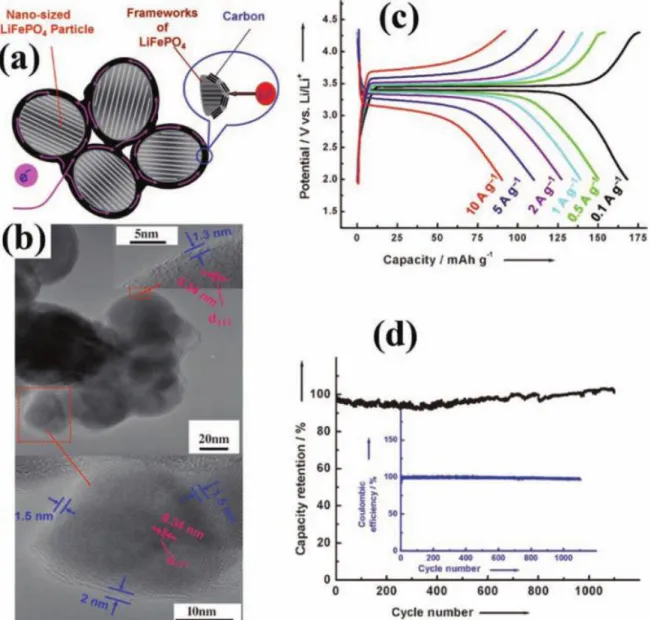
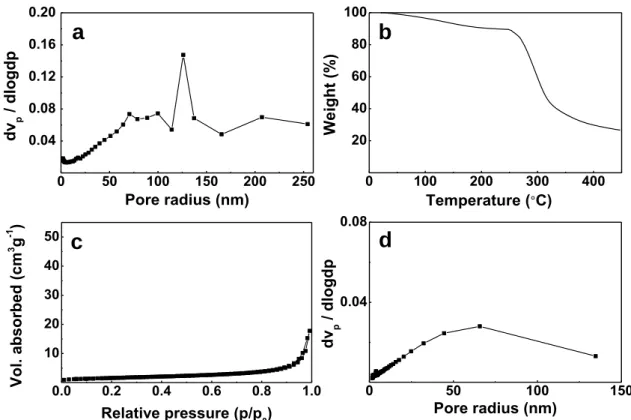
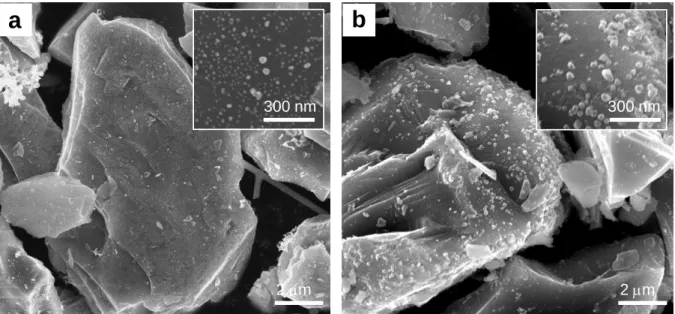
The SEM image of pristine electrodes of a) the HC/n-Si electrodes and b) the magnified HC/n-Si electrodes. Electrochemical performance of the LiCoO2/HC@c-Si@a-Si and the LiCoO2/HC/c-Si full cells.
INTRODUCTION
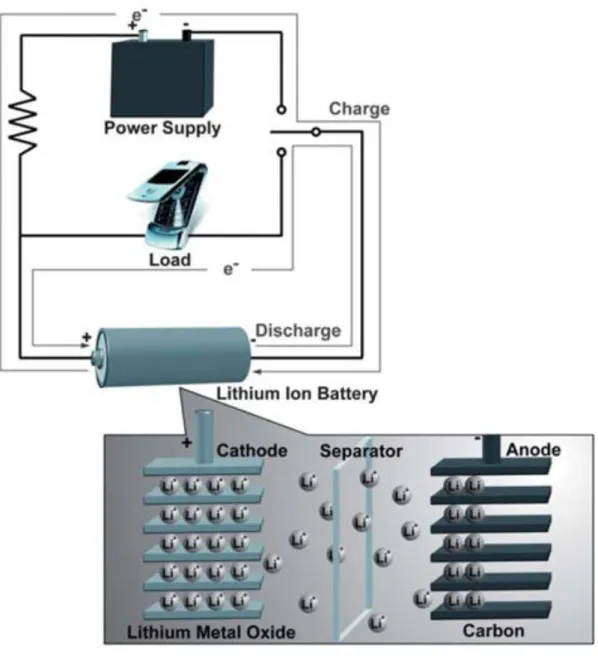
Principle of lithium ion batteries
Components in lithium ion batteries
- Anode materials
- Cathode materials
- Separators
- Electrolytes
To this end, separators should play an important role in the security of LIBs. A schematic representation of the electrochemical windows of different families of solvents with tetraalkyl ammonium (TAA) salts.

Xu, Y.; Zhu, Y.; Liu, Y.; Wang, C., Electrochemical performance of porous carbon/tin composite anodes for sodium-ion and lithium-ion batteries. Etacheri, V.; Marom, R.; Elazari, R.; Salitra, G.; Aurbach, D., Challenges in the development of advanced Li-ion batteries: an overview. Derrien, G.; Hassoun, J.; Panero, S.; Scrosati, B., Nanostructured Sn-C composite as advanced anode material in high-performance lithium-ion batteries.
Ji, L.; Lin, Z.; Alcoutlabi, M.; Zhang, X., Recent developments in nanostructured anode materials for rechargeable lithium-ion batteries. P.; Came.; Kim, G.; Park, S.; Cho, J., Etched Graphite with Internally Grown Si Nanowires from Pores as an Anode for High-Density Li-Ion Batteries. Lee, J.-I.; Lee, E.-H.; Park, J.-H.; Park, S.; Lee, S.-Y., Ultrahigh-Energy-Density Lithium-Ion Batteries Based on a High-Capacity Anode and a High-Voltage Cathode with an Electroconductive Nanoparticle Shell.
Lee, J.; Lee, C.-L.; Park, K.; Kim, I.-D., Synthesis of an Al2O3-coated polyimide nanofiber mat and its electrochemical properties as a separator for lithium-ion batteries. Leung, K., Electronic structure modeling of electrochemical reactions at electrode/electrolyte interfaces in lithium-ion batteries.
NATURAL POLYSACCHARIDE BINDER FOR HIGH
Introduction
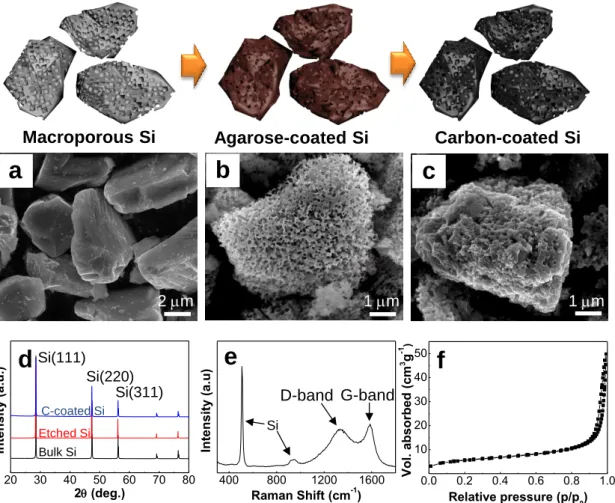
Magasinski et al reported that carbon-coated Si anodes with a poly(acrylic acid) (PAA) binder showed better long-term cycling performance and fairly high coulombic efficiency than Si anodes with a CMC binder.[29] Kovalenko et al. Here, we demonstrate the versatility of the natural polysaccharide, agarose, as a binder and carbon coating source for micron-sized macroporous Si active materials. Wrapping the silica particles with agarose hydrogel and subsequent low-temperature carbonization (~400 oC) results in the formation of carbon-coated silica particles.
When the agarose hydrogel is used as a binder of the carbon-coated Si electrodes, highly porous electrodes are produced when dried. The combination of macroporous Si and microporous binder makes it possible to minimize a volume expansion of the electrodes, leading to a significant improvement of electrochemical properties, including a high specific capacity (2010 mAh g-1) and a stable cycle (80 cycles).
Experimental
- Synthesis of the 3D Porous Silicon
- Characterization of the 3D macroporous Si particles and electrodes
- Electrochemical tests
Results and discussion
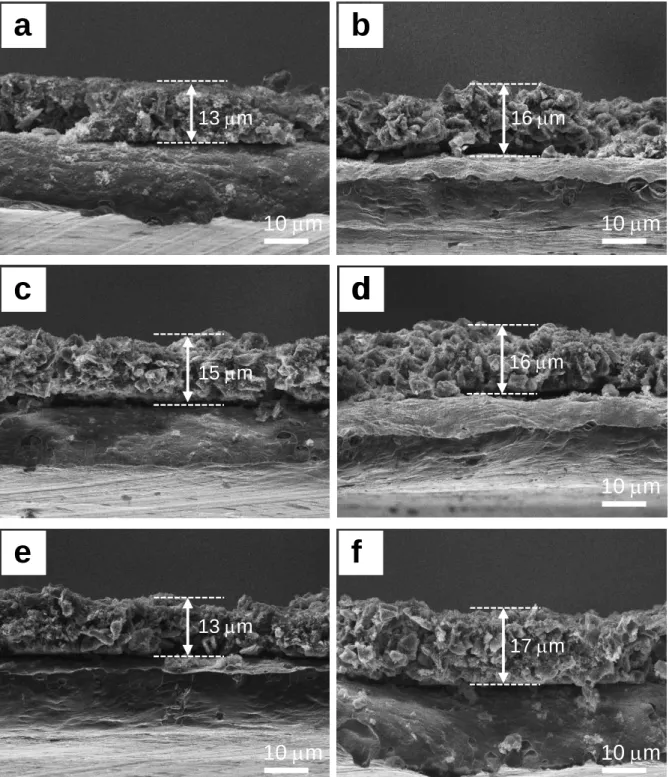
SEM images of (a) the Ag and (b) the Cu-deposited bulk Si particles at the same deposition condition. Thickness changes of the electrodes with 40 wt% agarose and 60 wt% PAA binder (denoted as A40) were the smallest compared to a pure agarose binder (denoted as A100) and pure PAA binder (denoted as A0) (Figure 2.5 and Table 2.1 ). Thickness change of the electrodes with different binders before and after swelling test in the electrolyte.
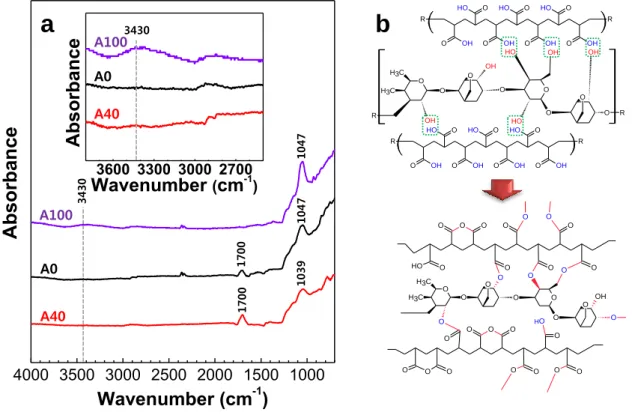
Electrodes Agarose (wt%) PAA (wt%). a) FT-IR spectra of the electrodes prepared with three different binders. To better understand the resistance of the SEI layer of electrodes with different binders, electrochemical impedance spectroscopy (EIS) was performed in the fully lithiated state of the electrodes. All measurements were performed at the same charge state when the open-circuit potentials of the electrodes reached a value of 1.1 V.
Another reason for capacity drops of the A0 electrodes is low adhesion between electrodes and current collector foil. During the Li insertion, an extremely high voltage of the micrometer-sized Si particles is applied to electrodes, which leads to delamination at.
Conclusion
Chen, L.; Wang, K.; Xie, X.; Xie, J., Effect of vinylene carbonate (VC) as an electrolyte additive on the electrochemical performance of Si film anode for lithium-ion batteries. C.; Fasching R.; Aurbach, D., Effect of fluoroethylene carbonate (FEC) on the performance and surface chemistry of si-nanowire lithium-ion battery anodes. Evanoff, K.; Benson, J.; Schauer, M.; Kovalenko, I.; Lashmore, D.; Prepared by W.J.; Yushin, G., Ultra-strength silicon-coated carbon nanotube non-woven fabric as a multifunctional lithium-ion battery anode.
M.; Kim, H.; Sang, H.-K.; Cho J.; Park, S., Scalable approach to multidimensional bulk Si anodes via metal-assisted chemical etching. M.; Lee, J.-I.; Kim H.; Cho J.; Park, S., High performance macroporous silicon anodes synthesized by template-free chemical etching. T.; Choi N.-S.; Cho, J., A highly cross-linked polymer binder for high performance silicon negative electrodes in lithium ion batteries.
Gaberscek, M.; Moskon, J.; Erjavec, B.; Dominko R.; Jamnik, J., The importance of interphase contacts in Li Ion electrodes: The significance of the high-frequency impedance arc. Guo, J.; Suna, A.; Chena, X.; Wang, C.; Manivannan, A., Cyclability study of silicon-carbon composite anodes for lithium-ion batteries using electrochemical impedance spectroscopy.
Introduction
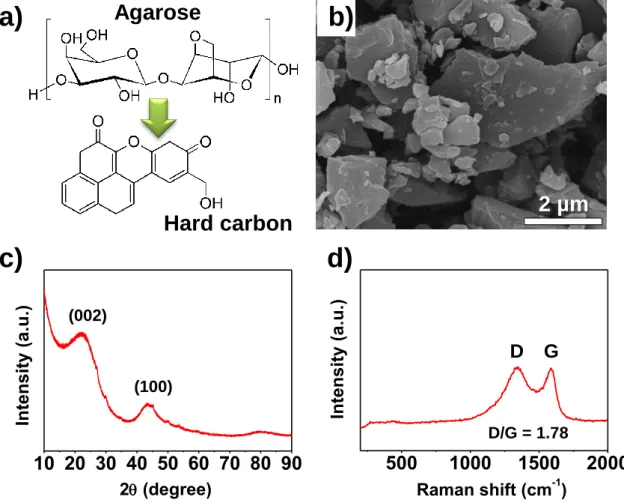
Si and confirmed that a-Si has distinct pathways with relatively lower energy barriers (<0.5 eV) for lithium diffusion than c-Si. Therefore, using a-Si may be a more reasonable choice for the following LIBs. Herein, we demonstrate a novel design of Si/C composite material consisting of the c-Si nanodomains dispersed in a-Si encapsulating hard carbon (HC). We have successfully synthesized hard carbon by a simple carbonization process of natural polysaccharide, agarose, and demonstrate the superior electrochemical performance of HC, compared to natural graphite anodes.
Next, we adopt a thin layer of a-Si on the surface of HC using silane gas by a CVD process, followed by a carbon coating on the surface of the HC/a-Si composite. During carbon deposition, a-Si was partially converted into nano-sized domains of c-Si, which were uniformly dispersed in a-Si. This HC@c-Si@a-Si core-shell structure provides a specific capacity of ~54% even at a high discharge/charge rate of 5 C compared to a reversible capacity at 0.2 C and maintains a long-term cycle stability of 97.8% ( compared to the first cycle) of capacity retention after 200 cycles at a rate of 1 C discharge/charge.
Furthermore, capacity of the LiCoO2/HC@c-Si@a-Si full cell at a high rate of 10 C discharge/charge is about half (50.8%) of its capacity at a rate of 1 C discharge/charge and shows more stable cycle retention of 80 % after 160 cycles at a rate of 1 C discharge/charge.
Experimental
- Synthesis of hard carbon
- Synthesis of HC@c-Si@a-Si
- Synthesis of HC/n-Si composite
- Physical characterization
- Electrochemical measurements
To characterize the morphologies of carbon-coated HC@n-Si@a-Si and n-Si, high-resolution transmission electron microscopy (HR-TEM, JEOL, JEM-2100F) operating at 200 kV. The electrochemical test was performed using half and full coin-type cells (2016 type R) mounted in an argon-filled glove box. The resulting slurry was coated on a Cu current collector and dried under vacuum at 150 °C for 2 h.
LiCoO2 cathodes were prepared by coating a N-methyl-2-pyrrolidone (NMP, Aldirch) based slurry consisting of 95 wt% LiCoO2, 3 wt% PVDF binder and 2 wt% super P carbon black on an aluminum current collector. and the mass loading of LiCoO2 was ~9 mg cm-2. The coin-type half-cells consisted of lithium metal as a counter electrode, a polyethylene separator, and 1.3 M LiPF6 in ethylene carbonate/diethyl carbonate (EC/DEC, 3/7 v/v) with 10 wt% fluoroethylene carbonate (FEC) as the electrolytes. The coin-type full cells consisted of synthesized anodes, LCO cathodes, and the same electrolytes and half-cell separator.
Results and discussion
- Synthesis of the hard carbon from natural polysaccharide
- Electrochemical performances of the HC
- Synthesis and characterization of the HC@c-Si@a-Si
- Electrochemical performances of the HC@c-Si@a-Si
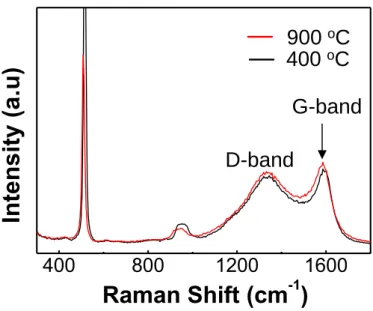
HR-TEM images of (a) the HC@c-Si@a-Si after carbon coating; (b) the TEM image enlarged from the red box seen in (a) (inset: the Fast Fourier-Transform (FFT) image showing polycrystalline Si); (c) XRD patterns of the HC@Si before and after carbon coating, (d) Raman spectra of the HC@a-Si before and after carbon coating. The electrochemical properties of the HC@c-Si@a-Si were comparatively tested against HC/carbon-coated nanosized (~100 nm) crystalline Si composite (denoted as HC/n-Si). The HC@c-Si@a-Si electrodes exhibit superior rate performance at different speeds (same discharge/charge rate) without significant capacitance fade at each speed section and especially maintain a much improved capacitance than the HC@n-Si electrodes under very high rates (10 C-20 C).
First, most parts of the Si shell in the HC@c-Si@a-Si were composed of the deformable a-Si. In our experiments, the thickness of the a-Si layer of the HC@c-Si@a-Si is only about 50 nm. The Si layer of the HC@c-Si@a-Si is therefore well maintained without significant pulverization during cycling.
As expected, HC@c-Si@a-Si electrodes show significantly reduced volume expansion (53%) compared to HC/n-Si electrodes (100%). As a result, the volume expansion of HC@c-Si@a-Si electrodes is much smaller than that of HC/n-Si electrodes. Electrochemical impedance spectroscopy (EIS) was performed to further investigate the superior rate performance of the HC@c-Si@a-Si electrodes.
Therefore, the structure of HC@c-Si@a-Si is more suitable for Li+ diffusion.
Conclusion
먼저, 지난 2년 동안 저에게 많은 기회와 아낌없는 강의를 제공해주신 박수진 교수님께 감사의 말씀을 전하고 싶습니다. 저 역시 그 열정을 마음속에 간직하고 꿈을 향해 쉼 없이 달려가겠습니다. 교수님이 계셨기에 꿈을 꿀 수 있었고, 그 꿈을 위해 노력할 수 있었습니다.
교수님 뜻대로 국민에게 희망을 주는 과학자가 되겠습니다. 형이 있다는 게 연구실 생활에 큰 도움이 됐어요. 연구소교회 민형제님, 항상 잘 보살펴주셔서 감사합니다.
이것이 나에게 힘들 때 큰 힘이 되었고, 기쁠 때 기쁨이 두 배로 커졌습니다. 나의 마지막 대학원 시절은 이러한 믿음을 더욱 확고히 할 수 있었던 시기였습니다.