Print ISSN: 2288-4637 / Online ISSN 2288-4645 doi:10.13106/jafeb.2020.vol7.no10.875
Determination of Factors in Cultural Dimensions and SERVQUAL Model Affecting the Corporate Image of Pharmacy Retail Stores*
Worasak KLONGTHONG
1, Jakkrit THAVORN
2,
Suntaree WATCHARADAMRONGKUN
3, Chittipa NGAMKROECKJOTI
4Received: August 01, 2020 Revised: September 06, 2020 Accepted: September 10, 2020
Abstract
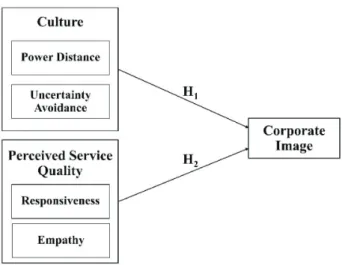
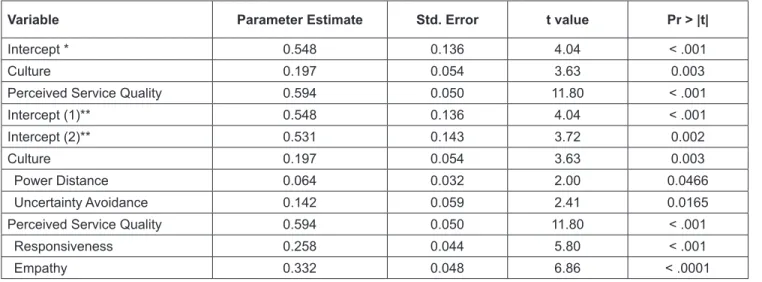
Thailand has a rapidly growing pharmaceutical sector, which is the eighth largest in the Asia-Pacific region and one of the largest and most developed among the Association of Southeast Asian Nations (ASEAN) countries. This study examines how to provide the most appropriate approach to enhance Thailand’s pharmaceutical services to dispense medicine to end consumers. The main objective is to determine the most appropriate corporate image for Thai Pharmacy Retail Stores (PRSs) for entering the ASEAN market community. An exploratory mixed-method design characterized by qualitative and quantitative phases of data collection and analysis and the linking of data from these two separate data strands was adopted to conduct an in-depth interview with pharmacists and the owner of pharmacy retail stores as well as 405 respondents who had visited a pharmacy retail store and interacted with pharmacists during the previous year. The multiple linear regression (MLR) was applied to analyze the relative influences of perceived service quality and the cultural dimension on the corporate image. Findings reveal that the perceived service quality and cultural dimension contribute 50% towards the corporate image, and the perceived service quality had more effect than cultural dimension. This study mainly focuses on PRSs in Thailand, while the findings show other analyses concerning how to successfully create and promote an effective PRS image for ASEAN markets.
Keywords: Perceived Service Quality, Cultural Dimensions, Pharmacy Retail Stores, Corporate Image, ASEAN Community JEL Classification Code: F20, M10, M14
1. Introduction
As part of its Thailand 4.0 initiative, the Thai government aims to establish the country as a leading destination for medical devices and medical and pharmaceutical care (Thailand Board of Investment [BOI], 2018; Ngamsangchaikit, 2016). From 2003–2017, Thailand’s healthcare sector grew from USD $ 8.9 billion to $17 billion (Knoema, 2020), and it is expected to increase to $47.9 billion by 2026, reflecting a ten-year compound annual growth rate (CAGR) of 6.6% (Kingdom of the Netherlands, 2018). As the country’s “Medical Hub” policy has gained traction, the value of the Thailand medical device market rose to 70% from 2009 to reach to 176 billion baht (US$6 billion) in 2019 (BOI, 2020), and Thailand is currently the top importer and exporter of such products in the Associations of Southeast Asian Nations (ASEAN). The Thailand Board of Investment (BOI, 2019) estimates that medical tourism in Thailand has been growing at an annual rate of 8.5% in recent years, and from 2010–2018, the country experienced a 92%
increase in medical tourism from 1.78 million to 3.42 million.
*Acknowledgements:
This research was supported by the Graduate School of Business, Assumption University and the Department of Social and Administrative Pharmacy, Faculty of Pharmaceutical Sciences, Chulalongkorn University. This research was supported by the Graduate School of Business, Assumption University and the Department of Social and Administrative Pharmacy, Faculty of Pharmaceutical Sciences, Chulalongkorn University.
1
First Author and Corresponding Author. Graduate School of Business, Assumption University, Thailand [Postal Address:
92/3 Ramkhamhaeng 24, Hua-Mak, Bangkapi, Bangkok, 10240, Thailand] Email: [email protected]
2
Graduate School of Business, Assumption University, Thailand.
Email: [email protected]
3
Assistant Professor, Department of Social and Administrative Pharmacy, Faculty of Pharmaceutical Sciences, Chulalongkorn University, Thailand. Email: [email protected]
4
Assistant Professor, Graduate School of Business, Assumption University, Thailand. Email: [email protected]
© Copyright: The Author(s)
This is an Open Access article distributed under the terms of the Creative Commons Attribution Non-Commercial License (https://creativecommons.org/licenses/by-nc/4.0/) which permits unrestricted non-commercial use, distribution, and reproduction in any medium, provided the original work is properly cited.