• 검색 결과가 없습니다.

Global technologies for the removal of water scaling & water recovery - Department of Energy (DOE) USA

N/A
N/A
Protected

Academic year: 2021

Share "Global technologies for the removal of water scaling & water recovery - Department of Energy (DOE) USA"

Copied!
12
0
0

로드 중.... (전체 텍스트 보기)

전체 글

(1)

To whom corresponding should be addressed.

Tel : +82-42-868-3573 E-mail : [email protected]

https://doi.org/10.5855/ENERGY.2018.27.1.021

Global technologies for the removal of water scaling & water recovery - Department of Energy (DOE) USA

Chilakala Ramakrishna

1

, Thenepalli Thriveni

2

and Ahn Ji Whan

3†

1&2

Department of Research and Development Team, Hanil Cement Co ltd., Korea.

3
Carbon Mineralization Center, Korea Institute of Geosciences and Mineral Resources (KIGAM), 124, Gwahagno, Yuseong gu, Daejeon-305350, South Korea.

(Received 28 December 2017, Revised 19 February 2018, Accepted 21 February 2018) Abstract

In this paper, we reported the current technologies of water scaling removal and also water recovery from the flue gases, which are funded by Department of Energy (DOE), USA. Globally, water resources are limited due to the climate change. The potential impacts of climate change is food and water shortages.

In the 21

st

century, water shortages and pollution are expected to become more acute as populations grow and concentrate in cities. At present, the water stress increases over 62.0 ~ 75.8% of total water basin area and decreases over 19.7 ~ 29.0%. Many renewable energy sources demand secure water resources.

Water is critical for successful climate change mitigation, as many efforts to reduce greenhouse gas emissions depend on reliable access to water resources. Water hardness is one of the major challenge to coal power plants. Department of energy (DOE) funded and encouraged for the development of advanced technologies for the removal of hardness of water (scaling) and also water recovery from the flue gases from coal power plants.

Key words : Water scaling, water recovery, coal-fired power plant, Waste water.

1. Introduction

Currently, 600 million people faces water scarcity.

In future population growth rates up to 2.7 billion people may be living in either water scarce or water stressed conditions by 2025. Population growth, eco- nomy, energy and water all are interrelated and more significant to the sustainable society [1]. In the 21

st

century, the world faces a water crisis, both of qual- ity and quantity, because by continuous population growth, industrialization, food production practices, increased living standards and poor water use stra- tegies.

There are several sources for ground water pollu- tion. The largest single use of water by industry is

for cooling in thermal power generation. The heavy metals released into the atmosphere along with flue gases from coal power plants and then fall to earth as rain or snow. It affects the surface water and un- derground water quality.

Water is essential to thermoelectric power plants, used primarily for cooling. Using impaired water in place of fresh water is a potentially attractive sol- ution to the problems of water scarcity and compet- ing demands. As the population increases, good fresh quality water is much more needed for human use including growing food. Tertiary sewage treated wa- ter has been successfully used in many industrial applications.

Water usually falls as rain onto a land mass and

then percolates through the layers of soil and rock,

it gains hardness. This hardness is due to the rain

passed over the rocks and Ca, Mg minerals dissolved

(2)

in the water. The purity of makeup water is critical in maintaining steam quality and in limiting boiler blow down. Silica, iron oxide, calcium carbonate, and calcium sulphates can deposit on airfoils or blades and drastically reduce the power plant efficiency [2].

Water discharging from mines represents a large untapped resource for power plant cooling. Large power plants use thousands of gallons of water per minute for evaporative cooling to maintain their operations. This consumptive use often competes with other water uses such as navigation, drinking water and other industrial uses. Increased fresh water resource demand and environmental concerns related to power plant water use are driving the consid- eration of using alternate sources of water for ther- moelectric generation. Suitable alternate water sour- ces must be capable of providing large dependable quantities of flow; be thermally stable on a seasonal basis; and not cause different, but equally serious, environmental concerns compared to river water.

The use of impaired water is currently not very practical and cost effective, as the inferior water quality results in additional treatment requirements to address the high propensities of scaling, corrosion, and biofouling and to avoid adverse impacts to the environment. Depending on the impairment the treat- ment cost is prohibitively high because 1) the current separation technologies are inefficient, and 2) the scaling potential of the impaired waters is generally high and severely limits the number of cycles that can be achieved with current scale control techno- logies. Finally, any alternative water source must be legally developable and be economically competitive with traditional water sources. DOE focused more advanced cooling technologies in coal power plants to reduce use fresh water. Advanced cooling tech- nologies are beneficial to improve performance and cost reduce cooling water blow down. Other option is recovery and reuse of flue gas water [3].

2. Strategy of Cooling and water recovery in coal-fired power plant and Scaling Removal Technologies-DOE Funding Projects:

2.1. The DOE project of Nalco Company is partnering with Argonne National Labora- tory (ANL):

In this project to jointly develop advanced scale control technologies that will provide cost-effective solutions for coal based power plants to operate re- circulating cooling water systems at high cycles us- ing impaired waters. The overall approach is to use combinations of novel membrane separations and scale inhibitor technologies that will work synergisti- cally, with membrane separations reducing the scal- ing potential of the cooling water and scale inhibitors extending the safe operating range of the cooling wa- ter system. The main objectives of this study to es- tablish quantitative technical targets and develop cal- cite and silica scale inhibitor chemistries for high stress conditions including bench-scale testing to de- termine the feasibility of two membrane separation technologies (electrodialysis ED and electro deion- ization EDI) for scale minimization in additional novel scale inhibitor chemistries, develop selected separation processes, and optimize the integration of the technology components at the laboratory scale.

Municipal wastewater effluents have calcite and silica/silicate are two common minerals for using im- paired waters. For reclaimed municipal wastewater effluents, calcium phosphate scaling can be an issue, especially in the co-presence of high silica. Coal fired power plants showed that the limited use and reuse of impaired waters is due to the formation of deposit caused by the presence of iron, high hard- ness, high silica and high alkalinity in the water.

Appropriate and cost-effective inhibitors were identi-

fied and developed LL99B0 for calcite and gypsum

inhibition and TX-15060 for silica inhibition. Nalco’s

existing dispersants HSP-1 and HSP-2 has excellent

efficacy for dispersing Fe and Mn. ED and EDI

(3)

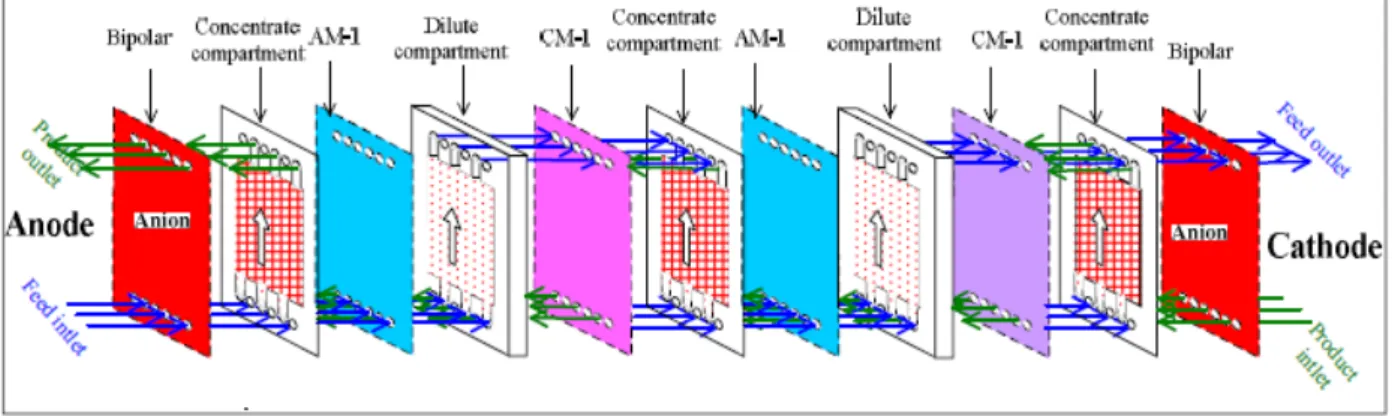
Figure 1: Schematic of the EDI system used for scaling ions removal were bench-scale tested by the CRADA partner

Argonne National Laboratory for hardness, alkalinity and silica removal from synthetic make-up water and then cycled cooling water. Both systems showed low power consumption and 98-99% salt removal, how- ever, the EDI system required 25-30% less power for silica removal.

The EDI system’s performance was optimized and the length of time between clean-in-place (CIP) in- creased by varying the wafer composition and mem- brane configuration. The enhanced EDI system could remove 88% of the hardness and 99% of the alkalin- ity with a processing flux of 19.2 gal/hr/m2 and a power consumption of 0.54 kWh/100 gal water. The silica/silicate control approaches using chemical in- hibitors include inhibition of silicic acid polymer- ization and dispersion of silica/silicate crystals. Long- term test of the EDI system and scale inhibitors was done at Nalco’s cooling tower water testing facility, producing 850 gallons of high purity water (90+%

salt removal) at a rate of 220 L/day and cooling tow- er runs were successfully completed by partially re- moving scaling ions (carbonate, hardness, and silica) and controlling fouling by using low level of scale inhibitors.

Electrodialysis (ED) and electro deionization (EDI) technology using for removing of bicarbonates, the optimization of cost and maximum reuse of water is to blend the two technologies. In the next section of the report developmental and work is reported, where some of the ions are partially removed from the im-

paired water and recycled to determine the scaling tendencies and maximize the impaired water reuse at the lowest cost.

One of the membrane systems being tested by Argonne for the removal of scaling components is resin wafer electro deionization (RW-EDI). EDI is an industrial process that incorporates ion exchange (IX) resin beads into an electro dialysis (ED) stack.

ED is an electrically-driven membrane-based separa- tions process. Commercial EDI systems are con- structed by filling the diluate channel in an ED stack with loose ion exchange resin beads. Argonne has immobilized the loose IX resin beads with poly- ethylene resins to form a porous resin wafer (RW) material. A typical EDI system schematic is shown in Figure 1.

The RW-EDI platform enables in-situ pH control by using the water splitting reaction which eliminates or minimizes the need for acid or base additives. The RW-EDI platform provides flexibility in terms of membranes used and their configuration. Additio- nally, the wafer resin composition can be varied (anion excess, cation excess or equal amounts of anions and cations) to facilitate the removal of scal- ing components [4].

2.2. Scaling Control for Municipal Wastewater Used for Cooling:

Treated Mmunicipal secondary wastewater shows

potential alternative to fresh water for power plant

cooling tower makeup water, especially in arid regions.

(4)

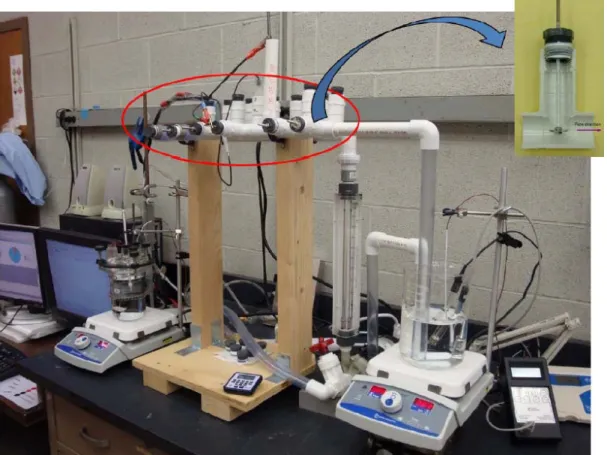
Figure 2. Bench-scale water recirculating system with inserted stainless steel circular discs for scale collection and subsequent mass gain measurement.

This study conducted theoretical, laboratory, and field testing to evaluate the scaling potentials of sec- ondary treated municipal wastewater in cooling sys- tems and test different scaling control strategies based on solution chemistry modifications. It was deter- mined that orthophosphate, which is abundant in sec- ondary treated municipal wastewater, contributed to scale formation and to phosphorous removal via pre- cipitation. The scaling inhibitor polymaleic acid (PMA) worked effectively to reduce scaling in both bench- scale and pilot-scale experiments. The biocide mono- chloramine was found to be less aggressive than free chlorine in attacking PMA to reduce its effectiveness and longevity as antiscalant. In addition, although scal- ing was found be to a challenge in use of municipal wastewater (MWW) for cooling, scale layers formed on metal surfaces provided a certain degree of corro- sion protection for the metal alloys was tested.

The chemistry of MWW cooling water at different

cycles of concentration (CoC) was modeled using MINEQL+ version 4.5 [5,6], to gain insight into the effects of CoC. The primary objective for this effort was to estimate the amount and composition of miner- al solids that would precipitate and the water chem- ical composition that would occur in the pilot cool- ing units as a function of CoC, as well as to inter- pret and understand the chemistries observed in the pilot tests. The major constituents and their chemical speciation were assessed and the dominant scale-pro- ducing reactions were identified.

In this study a method to study scale formation

tendency and kinetics for MWW and other impaired

waters was developed in this study. Bench-scale wa-

ter circulating systems similar to those employed in

the corrosion studies were constructed and dedicated

to investigate scaling phenomena. Circular discs made

with stainless steel were inserted through sampling

ports into the recirculating water to provide collect-

(5)

ing surfaces for scaling/deposition, as shown in Figure 2, A mass gain method, similar to the mass loss method for corrosion, was used as a straightforward means to record the scale forming quantities at dif- ferent water chemistries and scaling control condi- tions. Scaling kinetics of the MWW was studied at varying cycles of concentration (CoC) in the bench- scale water recirculating systems. Water temperature was fixed at 104°F (40°C) and the flow rate was 3 GPM. The system was open to air so that the alka- linity may approach equilibrium with the atmospheric CO

2

, a condition similar to actual cooling tower operation.

To obtain a good understanding of the influence of key cooling tower operational factors on scaling, bench recirculating tests were conducted with both actual and synthetic MWW under different conditions.

The operational variables examined included CoC, flow rate, temperature and scaling inhibitors. A syn- thetic MWW representative of typical treated munici- pal wastewaters concentrated at CoC 4 (SMW) was used together with an actual MWW from the FTMSA site that was pre-concentrated to CoC 4 by evapo- ration at room temperature (FTMW). The recirculat- ing flow rate and water temperature were both con- trolled at the values to be used in pilot-scale testing, i.e., flow rate of 3 GPM and temperature of 40°C.

Inhibitors included for testing in this study were tet- ra-potassium pyrophosphate (TKPP, a corrosion and scaling inhibitor), 2-phosphonobutane-1,2,4-tricarbox- ylic acid, (PBTC, a scaling inhibitor), Polymaleic acid (PMA, scaling inhibitor), as well as Tolyltriazole (TTA, a copper corrosion inhibitor).

In addition to scaling and corrosion controls, an- other important consideration is the simultaneous control of biofilm growth for municipal wastewater effluent. Since chlorine was selected as our primary biocontrol chemical, its potential interference with the antiscalants had to be determined. PBTC and TKPP were tested intensively in the presence and absence of chlorine. A combination of PMA and PBTC, which was recommended by industrial practi- tioners, was tested with a simultaneous addition of

chlorine to the water.

Ammonia and phosphate are major constituents found in municipal wastewaters after secondary treat- ment and their influence on the scaling control by PBTC and TKPP was also evaluated. Since ammonia was present in the municipal wastewater, it readily reacted with added chlorine (in the form of NaOCl) to form chloramines. Therefore, the chlorine interfer- ence with antiscaling agents in municipal wastewater can be more accurately expressed as the interference by chloramines. For the experiment particularly in- tended to study the effect of chlorine, the ammonia was removed from water before chlorine addition to prevent chloramine formation [7].

2.3. Cooling and water recovery in coal-fired power plant:

This project deals with an innovative water treat- ment technology that utilizes spark discharges in wa- ter for scale prevention. The key issue is how to pre- cipitate and remove dissolved Ca ions in recirculating cooling water so that the calcium carbonate (CaCO3) scales can be avoided and COC can be increased.

This study to develop technologies to reduce fresh- water consumption in a cooling tower of coal-based power plant so that one could significantly reduce the need of make-up water. The specific goal was to develop a scale prevention technology based an in- tegrated system of physical water treatment (PWT) and a novel filtration method so that one could re- duce for the water blow down, which relation 30%

of water losses approximately in a cooling tower. In

this study investigated if a pulsed spark discharge in

water could be used to remove deposits from the fil-

ter membrane. In this process included a pulsed

power system and circulating water loop. The pres-

ent experiments used artificially hardened water with

hardness of 1,000 mg/L of CaCO

3

made from a mix-

ture of calcium chloride (CaCl

2

) and sodium carbo-

nate (Na

2

CO

3

) in order to produce calcium carbonate

deposits on the filter membrane. In the water spark

was discharge and found to produce strong shock-

waves in water, and the efficiency of the spark dis-

(6)

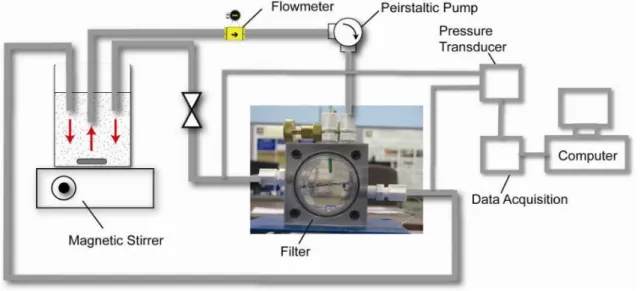
Figure 3. Schematic diagram of the self-cleaning filter system charge in cleaning filter surface was evaluated by

measuring the pressure drop across the filter over time.

The results showed that the pressure drop could be reduced to the value corresponding to the initial clean state and after that the filter could be main- tained at the initial state almost indefinitely, confirm- ing the validity of the present concept of pulsed spark discharge in water to clean dirty filter. The present study also investigated the effect of a plas- ma-assisted self-cleaning filter on the performance of physical water treatment (PWT) solenoid coil for the mitigation of mineral fouling in a concentric counter flow heat exchanger. The shockwaves produced by pulse-spark discharges in water to continuously re- move scale deposits from the surface of the filter by using self-cleaning filters, thus keeping the pressure drop across the filter at a relatively low value.

Artificial hard water was used in the present fouling experiments for three different cases: no treatment, PWT coil only, and PWT coil plus self-cleaning filter. Stinking resistances decreased by 59% to 72%

for the combined case of physical water treatment coil plus filter compared with the values for without treatment cases.

The project will utilize spark discharges in water to precipitate dissolved mineral ions in circulating

cooling water in a simulated laboratory cooling tow- er and continuously remove precipitated mineral salts using a self-cleaning filter. The system was con- structed to examine the validity of pulsed electric fields for self-cleaning filters. The present system consisted of five parts: power supply, water filter, water tank with magnetic stirrer, peristaltic pump, and pressure-measuring unit. The schematic diagram of the self-cleaning system is shown in Fig. 3.

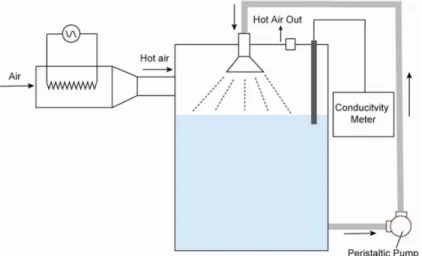
The spark discharged effectively to remove the

calcium carbonate particles from a filter medium, an-

other flow system was constructed to generate super-

saturated water in calcium ions on a controlled labo-

ratory set up. The test setup was a simulated cooling

tower system as shown in Fig. 4. The setup had an

approximately 1 ft-high cooling tower. The cooling

tower system purpose was to circulate city-tap water

and produce evaporating pure supersaturated water

by using heated air. The tap water from the City of

Philadelphia had an electric conductivity of 430 μ

mho/cm and was circulated through a peristaltic

pump and back to the tower. In cooling tower, hot

air was constantly flowing for stimulate the vapor-

ization of pure water. A conductivity controller

monitored the conductivity of the circulating water

until the water conductivity reached a supersaturated

state [8].

(7)

Figure 4. Sketch of a new test setup (a simulated cooling tower) to produce supersaturated water

2.3. Use of treated municipal waste water as power plant cooling system:

Treated municipal wastewater is a common, wide- ly available alternative source of cooling water for thermoelectric power plants across the U.S. The bio- degradable organic matter, carbonates, phosphates and ammonia-nitrogen in the treated wastewater pose challenges with respect to enhanced biofouling, cor- rosion, and scaling, respectively. The overall objective of this study was to evaluate the benefits and life cy- cle costs of implementing tertiary treatment of secon- dary treated municipal wastewater prior to use in re- circulating cooling systems. The study comprised bench- and pilot-scale experimental studies with three different tertiary treated municipal wastewaters, and life cycle costing and environmental analyses of various tertiary treatment schemes. Sustainability fac- tors and metrics for reuse of treated wastewater in power plant cooling systems were also evaluated [9].

The three tertiary treated wastewaters studied were:

secondary treated municipal wastewater subjected to acid addition for pH control (MWW-pH); secondary treated municipal wastewater subjected to nitrificati- on and sand filtration (MWW-NF); and treated sec- ondary municipal wastewater subjected nitrification, sand filtration, and GAC adsorption (MWW-NFG).

Tertiary treatment was determined to be essential to achieve appropriate corrosion, scaling, and bio-

fouling control for use of secondary treated munici- pal wastewater in power plant cooling systems. The ability to control scaling was significantly enhanced with tertiary treated wastewater compared to secon- dary treated wastewater. MWW-pH treated water (adjustment to pH 7.8) was effective in reducing scale formation, but increased corrosion and the amount of biocide required to achieve appropriate biofouling control. Corrosion could be adequately controlled with tolytriazole addition (4-5 ppm TTA), however, which was the case for all of the tertiary treated waters. For MWW-NF treated water, the removal of ammonia by nitrification helped to reduce the corro- sivity and biocide demand. Also, the lower pH and alkalinity resulting from nitrification reduced the scaling to an acceptable level, without the addition of anti-scalant chemicals. Additional GAC adsorption treatment, MWW-NFG, yielded no net benefit.

Removal of organic matter resulted in pitting corro- sion in copper and cupronickel alloys. Negligible im- provement was observed in scaling control and bio- fouling control. For all of the tertiary treatments, bio- fouling control was achievable, and most effectively with pre-formed monochloramine (2-3 ppm) in com- parison with NaOCl and ClO2.

Life cycle cost (LCC) analyses were performed for

the tertiary treatment systems studied experimentally

and for several other treatment options. A public do-

(8)

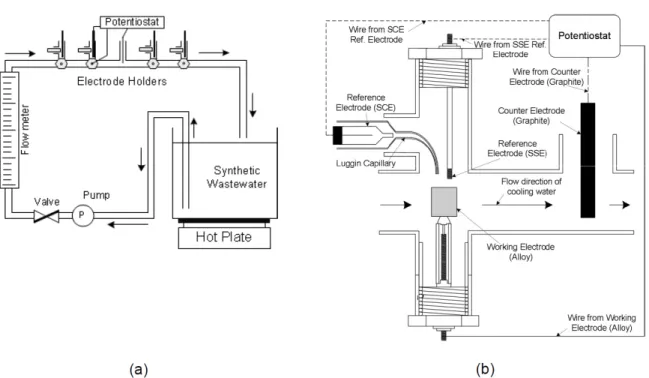
Figure 5. Schematic diagrams of (a) bench-scale recirculating system, (b) metal alloy specimen holder and ports for counter electrode and reference electrodes in the bench scale recirculating system.

main conceptual costing tool (LC3 model) was de- veloped for this purpose. MWW-SF (lime softening and sand filtration) and MWW-NF were the most cost-effective treatment options among the tertiary treatment alternatives considered because of the higher effluent quality with moderate infrastructure costs and the relatively low doses of conditioning chemicals required.

Life cycle inventory (LCI) analysis along with in- tegration of external costs of emissions with direct costs was performed to evaluate relative emissions to the environment and external costs associated with construction and operation of tertiary treatment alternatives. Integrated LCI and LCC analysis in- dicated that three-tiered treatment alternatives such as MWW-NSF and MWW-NFG, with regular chem- ical addition for treatment and conditioning and/or regeneration, tend to increase the impact costs and in turn the overall costs of tertiary treatment. River wa- ter supply and MWW-F alternatives with a single step of tertiary treatment were associated with lower impact costs, but the contribution of impact costs to overall annual costs was higher than all other treat-

ment alternatives. MWW-NF and MWW_SF alter- natives exhibited moderate external impact costs with moderate infrastructure and chemical conditioner dos- ing, which makes them (especially MWW-NF) better treatment alternatives from the environmental sus- tainability perspective since they exhibited minimal contribution to environmental damage from emissions.

The study employed bench-scale recirculation wa- ter systems and for testing of various chemical con- trol schemes for corrosion, scaling, and biofouling in systems using different tertiary treated municipal wastewaters. Initial bench-scale experiments included batch-reactor experiments for performance evaluation of different scaling inhibitors and biocides. An ex- perimental setup was prepared for scaling studies on a heated surface. A synthetic wastewater recipe was formulated for different types of tertiary treated mu- nicipal wastewaters having constituent concentrations similar to that at four cycles of concentration, a usu- al concentration of recirculating cooling waters in power plant cooling systems.

The bench-scale recirculating water system con-

sisted of a centrifugal pump, a water bath on hot-

(9)

Figure 6. Project location.

plate (to control the water temperature) and a 1.91 cm (0.75 in) nominal diameter PVC pipe circulation system with a pipe rack to hold different electrodes.

Design of the pipe rack holder was modified to ac- commodate two different reference electrodes shown in Figure. 5a. The pipe rack system included four tee-sections into which alloy specimen holders were mounted. Each tee-section was connected to another tee section, which accommodated two different refer- ence electrodes in Figure. 5b, for side by side polar- ization resistance measurement. Temperature of the recirculating water was maintained at 40

o

C in the bench scale system to simulate the temperature of cooling water in the pilot-scale recirculating cooling water systems [10]. Flow rate through the system was maintained at 11.4 L/min (3 gpm) to achieve flow velocity of 0.66 m/s (2.18 ft/s) and Reynolds number of 1.9x10^4.

The bench-scale recirculating systems to in- corporate a heated cartridge, which will be used to simulate the heat exchanger tubing surface in mineral scaling investigation. The design principle for the new system is taken from ASTM Standard Test Method for Determination of Corrosion and Fouling Tendency of Cooling Water under Heat Transfer Conditions (ASTM D 4778-05)

2.4. Assessing the Efficacy of Using Mine Water for Thermoelectric Power Generation:

Thermoelectric power plants use large volumes of water for condenser cooling and other plant opera- tions. Traditionally, this water has been withdrawn from the cleanest water available in streams and rivers. However, as demand for electrical power in- creases it places increasing demands on freshwater resources resulting in conflicts with other off stream water users. The main objectives of this project were to develop and demonstrate a user friendly computer based design aid for assessing the costs, technical and regulatory aspects and potential environmental benefits for using mine water for thermoelectric generation. The framework provides a systematic process for evaluating the hydrologic, chemical, en- gineering and environmental factors to be considered in using mine water as an alternative to traditional freshwater supply [11].

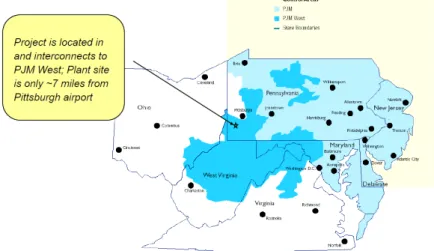
A field investigation and case study was con-

ducted for the proposed 300 MW Beech Hollow

Power Plant located in Champion, Pennsylvania

shown in Fig. 6. The field study based on previous

research conducted by NMLRC identified mine water

sources sufficient to reliably supply the 2-3,000gpm

water supply requirement of Beech Hollow. A water

collection, transportation and treatment system was

designed around this facility. Using this case study a

computer based design aid applicable to large in-

(10)

Figure 7. (a) H-Flume at the Primrose discharge, (b) H-Flume at the Hopper discharge dustrial water users was developed utilizing water

collection and handling principals derived in the field investigation and during previous studies of mine water and power plant cooling.

This study evaluates the potential economic and environmental benefits of using mine water at the proposed Beech Hollow Power Project. As originally proposed this study was intended to be developed and integrated into the engineering and construction of the power plant. However, due to the recession and resulting difficulty with financing development of the Beech Hollow project has been delayed. As proposed, Beech Hollow consists of the design, con- struction, and operation of an approximately 320 MW coal waste-fired power generation facility to be lo- cated in Robinson Township, Washington County, Pennsylvania. The project will generate approx- imately 288 MW of electrical energy for sale into the grid. Project fuel will consist of approximately 37.5 million tons of bituminous waste coal material (“gob”) in place on 600 acres adjacent to the project site. The bituminous coal waste material represents the waste product from coal cleaning and processing operations conducted at the site for a period of in excess of 50 years. Coal Combustion Byproducts (CCB) generated from the combustion of the waste coal will be beneficially used in the reclamation of the permitted area adjacent to the project site and other unreclaimed mine lands in the area. Numerous

mine water sources exist within, or just outside of a five mine radius of the proposed Beech Hollow Power Plant.

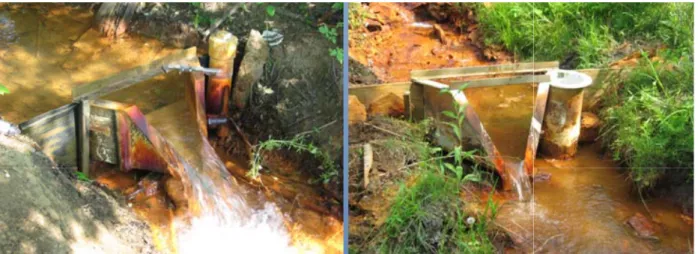
The locations of these discharges were identified using published reports on mine discharges in the area, combined with field reconnaissance. Of the 49 discharges identified in the study, six were selected for in depth study. Four of these discharges, JB-1, Primrose, McDonald, and Hopper are classified as high volume discharges as shown in Fig. 7. These two discharges were monitored that are low volume sources. These discharges are North Branch and Seabright. Because power plants require large vol- umes of cooling water, the focus of this investigation is on the larger discharges.

The framework will facilitate the use of mine wa-

ter for thermoelectric generation, reduce demand on

freshwater resources and result in environmental ben-

efits from reduced emissions and abated mine dis-

charges. Using mine water from the five mines in

the example problem the amount of additional elec-

tricity generated is calculated to be 10,003,508.48

Kwh/yr which is equal to $630,221.03 based on an

electricity rate of $0.063 /kwh. The avoided emis-

sions from this site are 10,210 t/yr of carbon diox-

ide, 357 t/yr of sulfur dioxide, 143 t/yr of NOx and

3.48 lb/yr of mercury. The cost of building the water

collection and treatment system is $11,110,189.51

with an estimate cost of operation of $618,829.32.

(11)

This translates into a water acquisition cost of $518.93/

million gallons compared to a cost of $3,000.00 per million gallons from the municipal water supply.

The use of constant cool makeup water to a power plant has numerous advantages. The principle ad- vantage is that the power plant is able to generate more electricity without increasing its burn rate or derating the unit during hot humid summer days.

This also has a number of secondary advantages in- cluding reduced coal consumption resulting in re- duced emissions of CO

2

, SOX, NOx, and mercury.

3. Conclusions:

The Department of Energy (DOE) has been con- tinuously focused on the energy-water nexus. The DOE’s National Laboratories funded to the develop- ment of water hardness removal technologies partic- ularly in the coal power plants. DOE’s laboratories are considered innovative, highly-effective and acces- sible techniques for removing the water hardness lev- els and also the research and development (R&D) solutions that will help to resolve water security issues. As the population grows and demand elec- tricity and water increase, power plants located in some parts of the country will find it increasingly difficult to obtain the large quantities of water need- ed to maintain operations. Most of the water used in a coal power plants are used for cooling, and depart- ment of energy (DOE) has been focusing on possible technologies to control the amount of fresh water consumed for cooling purpose. The department of energy (DOE) is also evaluated the technologies on the recovery of usable water, such as, water pro- duced from oil and gas extractions, mine water, and water contained in boiler flue gases.

Acknowledgements

This study was supported by a grant from the R&D Center for Valuable Recycling (Global-Top R&BD Program) of the Ministry of Environment (Project

No.: 2016002230004) of the Korean government.

References

1. Nuclear Energy Agency (NEA); Nuclear Energy Today, Nuclear Development, Second Edition, 2012, ISBN 978-92-64-99204-7, 1-123.

2. Hach company, Application note, Steam genera- tion in power plants, 2014, 1-9.

3. Jared Ciferno, Water and Energy: Integrated chal- lenges, integrated solutions, Ground water pro- tection council, September 2009, 1-21.

4. Jasbir S. Gill, A Synergistic Combination of Ad- vanced Separation and Chemical Scale Inhibitor Technologies for Efficient Use of Impaired Water As Cooling Water in Coal-based Power Plants, December 2010, DOE Award Number: DE-FC26- 06NT42721.

5. Schecher, W. D. & McAvoy, D. C., 1992, MINEQL+:

a software environment for chemical equilibrium modeling. Computers, Environment and Urban Sys- tems, 16(1): 65-76.

6. Schecher, W. D. & McAvoy, D. C., 1999, MINEQL+

chemical equilibrium modeling system, version 4 for Windows. Environmental Research Software, Hallowell, ME.

7. Radisav D. Vidic and David A. Dzombak. Reuse of Treated Internal or External Wastewaters in the Cooling Systems of CoalBased Thermoelectric Power Plants., September 2009, DE-FC26-06NT42722.

8. Y. Cho, A. Fridman, and A. Gutsol. Application of pulsed electrical fields for advanced cooling in coal-fired power plant., June 2009, DOE Award No: DE-FC26-06NT42724.

9. David A. Dzombak, Radisav D. Vidic and Amy E. Landis. Use of Treated Municipal Wastewater as Power Plant Cooling System Makeup Water:

Tertiary Treatment versus Expanded Chemical Re- gimen for Recirculating Water Quality Manage- ment, September 2012, DE-NT0006550.

10. Hsieh, M.K.; Dzombak, D.A.; Vidic, R.D., 2010,

Bridging Gravimetric and Electrochemical App-

roaches to Determine the Corrosion Rate of

(12)

Metals and Metal Alloys in Cooling Systems:

Bench Scale Evaluation Method, Ind. Eng. Chem.

Res., 49(19): 9117-9123.

11. National Mine Land Reclamation Center, West

Virginia University. Development and Demon-

stration of a Modeling Framework for Assessing

the Efficacy of Using Mine Water for Thermo-

electric Power Generation., June 2010, DE-FC26-

06NT42723

수치

Figure 1: Schematic of the EDI system used for scaling ions removalwere bench-scale tested by the CRADA partner
Figure 2. Bench-scale water recirculating system with inserted stainless steel circular discs for scale collection  and subsequent mass gain measurement.
Figure 3. Schematic diagram of the self-cleaning filter systemcharge in cleaning filter surface was evaluated by
Figure 4. Sketch of a new test setup (a simulated cooling tower) to  produce supersaturated water
+4

참조

관련 문서