Conceptualizing Safety Systems Human Performance improvement using Augmented Reality
Mwongeera Murungi
1)
, J. C. Jung
2)*
1,2)
KEPCO International Nuclear Graduate School (KINGS)
1456-1 Shinam-ri, Seosang-myeon, Ulju-gun, Ulsan 689-882, Republic of Korea
Abstract : The system performance of Engineered Safety Features is of utmost importance in a nuclear power plant. The human performance is identified as most critical to assurance of the optimal operability of safety systems during an emergency. The aim of this study is to determine how the performance of safety system could be evaluated using Augmented Reality technology. The paper presents a description of how a systems engineered approach could be used to develop the necessary operating conditions needed to conduct this measurement. Augmented Virtual Reality (AVR) interface technology is achieving ease of availability and widespread use in many applications today as illustrated by the launch of several AR and VR devices aimed at media consumption. As such, environments that incorporate such AVR hardware have become invaluable tools in designing human interface systems because of the high fidelity and intuitive response to natural human interaction that can be achieved [2]. The outcome of the measurement undertaken is to determine whether 1.) Operator(s) performance can be enhanced by introducing an improved cognitive method of monitoring plant information during an Emergency Operating Procedures (EOP) and 2.) In correlation, inform the performance of the diverse safety systems on the basis of human factors.
Key Words : Augmented Reality (AR), Augmented Virtual Reality (AVR), human performance
Received: September 25, 2016 / Revised: September 27, 2016 / Accepted: December 14, 2016
This is an Open-Access article distributed under the terms of the Creative Commons Attribution Non-Commercial
License(http://creativecommons.org/licenses/by-nc/3.0) which permits unrestricted non-commercial use, distribution,
and reproduction in any medium, provided the original work is properly cited.
(2)
[Figure 1] Vee Model detailing the SE approach to the study (Scope of this paper in red)
1. Introduction
A conceptualized Augmented Reality procedure support system was developed to be used as a tool for the measurement of the safety per- formance of the ESF-CCS from a HFE point of view.
The EOP-LOCA was chosen as the scenario for testing because it is the one of the critical plant conditions that requires human intervention.
Moreover, it represents (one of the more) conservative approaches to the test scenarios that are possible. The system is expected to realize an improvement in the level of Situ- ational Awareness and Mental Workload (which have been demonstrated by previous studies to be directly linked with the system response
to an emergency situation [5].) in control rooms.
The planning and design of the project relied on Systems Engineering principles to provide an optimized framework for ensuring the suc- cessful implementation of the system design.
[1, 4]
2. System Engineering Approach to the design
A multiple level V-model, was chosen and tailored to eliminate unnecessary ambiguity and complexity while allowing for better performance measurement. Figure 1 shows how V-model that used in the study.
The mode of conducting the design was
based on processes outlined in the v-model
(3)
<Table 1> Result of Elicitation to identify needs
Question posed Responses
Do we really need this system Yes; The direct application to the alleviation of the workload from human SRO and operator together with the presentation of improved procedural method of conduction accident scenario simulation will likely lead to identification of the human factor need-to-improve area,
What would the consequences be if we didn’t develop this system?
Minimal to the existing system because minimum licensing requirements would still be met whether the proposed system were to be implemented or not. However, owing to emergent and inevitable future applicability of VR technology to the field, this work is meant to explore and lay important ground work for future studies and application of VR to Control processes so that stakeholders may exceed the licensing requirements and thereby, hopefully, assure a future proof design.
In what direct and indirect ways would the system contribute to the NPP safety, performance and/or business objectives?
Directly: Safety – improved reaction to fast changing plant conditions would be a major benefit of this system.
Indirectly: Plant performance/business –improved operator and STA operability of the system can lead to improved human performance.
Business opportunities may exist if the system can be commercialized.
What Critical Processes must
the system support? The critical process that is supported by the system designed is the Emergency Operating Procedure performed by the Operator and Shift technical Advisor.
What Critical processes need not be supported by this system?
This system does not need to support operating procedures during normal plant operations and extremely severe accident situation as in both these cases, other methods of controlling the plant may constrain the effectiveness of the proposed system.
How will the system affect other systems which are already installed?
The system will be designed so that it can integrate seamlessly and with no interference with the system already installed.
What likely technological
limitations may be faced? VR development is still in its infancy and since this work is exploring the possibility of its expanded applicability in this sector, the best infrastructure choice may not have been employed in this study. Only research like the one being carried out in this document will inform future designers.
approach. Section 2 describes how the system requirements and operational concept were formulated while the detailed design describes how the system was designed. The testing and verification methodology is introduced to provide planning for the unit test and performance evaluation of the design. The left part of the Vee model is discussed because the scope of the work only deals with the conceptualization up to configuration of the system.
2.1 Needs Identification and Concept Exploration Needs identification method was used to elicit requirements via wide consultation with industry professionals and experienced plant operators and engineers. Table 1 shows the results of the needs identification exercise.
2.2 Concept of operations
The concept proposes that an augmented
virtual reality based tool can be used by an
operator to monitor/confirm/advise the reactor
(4)
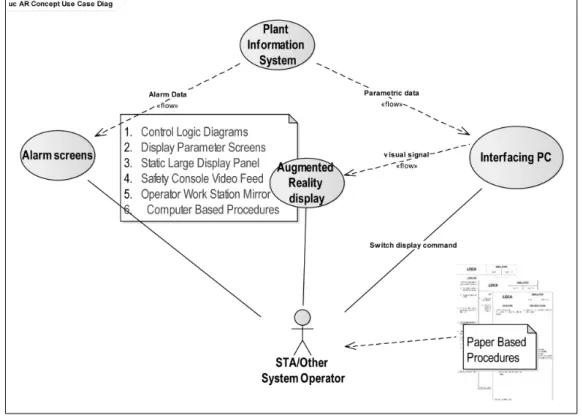
[Figure 2] Use Case diagram describing the Operational Concept of required system
and turbine operators during specific emergency operating procedures. The (Senior Reactor Operator) SRO who is charged with checking system parameters and guiding other operators relies on a procedure guidance system to confirm step by step progression of the EOPs.
The purpose of a guidance system is to inform the user of important or critical information that is needed to perform a stated task. The CPS (Computerized Procedure System) is implemented in the KHNP APR1400 as a computerized operator support system which covers all operating procedures and provides information through workstations using flowcharts and tree structures with the capability of checking steps logically.
The primary goal of the designed system is to leverage the existing infrastructure and
system data sources to implement a method that can reliably measure the efficacy and performance level of the emergency response system.
The pilot system will do this by simply rendering existing data from CPS and other plant parameters in an augmented reality display to be worn by a Supervising MCR Operator in order to innately avail critical plant information.
Figure 2 shows the proposed user interaction with the system. It demonstrates how the augmented reality capable display device could be used to render and display images upon selection and interaction with a dedicated interfacing PC.
In order to develop the improved system
described in figure 2, it was necessary to
(5)
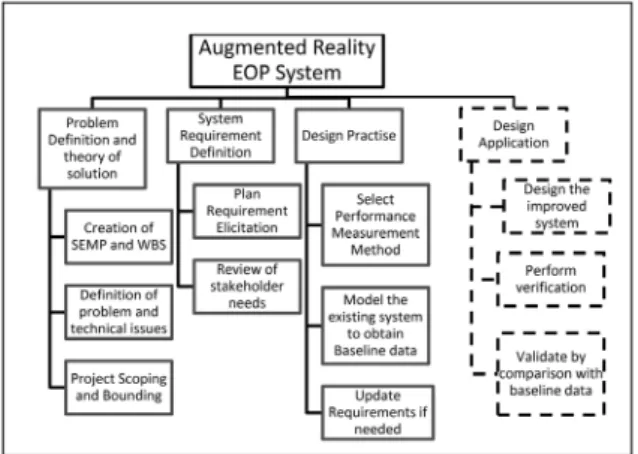
[Figure 3] Work Breakdown Structure developed at ConOps Stage
*
perform planning by incorporation of System Engineering tools such as Work Breakdown Structures (WBS) and the System Engineering Management Plan.
A WBS shown in figure 3 was devised to provide scheduling planning. Further, hardware and software tools and other constraints were identified and elaborated at this stage.
2.3 System Requirements Definition
A view point oriented approach of system need identification was chosen because of its practicality and ease of use. View point approach is a novel method of eliciting needs because it ensures that the different stakeholders’ per- spectives are taken into consideration. The activities involved in the requirements definition involved an iterative elicitation, analysis and negotiation process that eventually yielded a complete and consistent set of requirements.
Not all viewpoints could be considered in order to keep the scope of study focused [3].
2.3.1 Concern Identification and Elaboration Elicitation was conducted by interviews, con-
versations and consultations with stakeholders.
Experts consulted included; authorities in the field of human factor engineering; professionals with experience in operating nuclear power plants;
and other industry professionals with proven track records and a wealth of experience in the Nuclear Power Generation. Further, consultation was conducted by examining books, journal papers, case studies and system manuals in order to understand and discover any shortcomings in the systems in question. Table 2 shows the result of the consultancy.
Negotiation was conducted by use of trade- offs to eliminate redundancies iteratively. Once no conflicting requirements were seen, the requirements could be clearly established as detailed by the Venn diagram in figure 3.
Figure 4: Summary of the relationship be- tween viewpoints and system concerns.
The human related component of performance of ESF-CCS input is considered as the measure of performance in this study partly because the measure must be sufficiently demonstrable in the worst case situation and partly because human interactions with emergency carry the risk of being unpredictable and inconsistent.
2.4 Detailed Design
2.4.1 Modelling the system structure.
The existing computer based procedure system as described in figure 5 illustrates the pro- gression of EOPs as perceived and/or per- formed by the operator during a LOCA (Loss of Coolant Accident) in the APR1400 simulator.
The representation in figure 5 shows the procedural flow of actions and indicate where the process needs to break off to perform a contingency
* Scope of work described in this paper in red boundary
(6)
<Table 2> Result of Concern Identification exercise
Concern Elaboration = System Requirement definition Measure of performance Safety S1. The AVR system shall be used during EOP-LOCA
along with the CPS.
Procedure execution time measurement
S2. The AVR system shall provide critical information/data needed by an operator (SRO) during an EOP for his monitoring/ checking/advisory tasks.
S3. The AVR system shall assure that the correct transition of plant procedures
S4. The AVR system shall validate the Entry conditions for emergency operation.
S5. The AVR system shall not affect the normal execution of the current system
Compatibility C1. The AVR system software shall be integrated with
existing system without requiring down time Zero down time Practicality P1. The AVR system shall reduce/release work burden to
the operator (SRO) during the EOP Mental Workload measurement
Situational Awareness measurement
P2. The AVR system shall, by introduction of improved situational awareness, be more intuitive to the operator (SRO) than existing system.
P3. The AVR system shall reduce the amount of navigation required by operator (SRO) during EOP execution.
P4. The AVR system shall seek to find a means of reducing the human factor related operator performance degradation during safety critical operations (EOP)–
stemming from human errors, and reduced readability.
P5. The AVR system shall provide more comprehensive plant status information to the operator (SRO) to enable him to more effectively keep track of the changing plant conditions
[Figure 4] Summary of the relationship between viewpoints and system concerns
action before proceeding (where Cont. Represents the Contingency Actions). High mental workload is expected to be placed on the user at these points because of the need to consult separate screens. The decision diamonds depict a re- quirement for the system user to consult and confirm procedure steps with outside input action.
They therefore represent the highest awareness
loss areas.
(7)
[Figure 5] Improved situational awareness implementable by the AVR system
3. Testing, verification and validation methods
In order to investigate the effect of the modelled system on the operator’s mental workload and situational awareness, two scenarios described in the next section, were run on the APR1400 simulator with the subject being a trained plant operator (SRO).
The conceptualized design was performed as
an experiment whose goal was to achieve the stated objective of the study. It comprised of two major component design further explained in figure 6 as : 1.) The experimental augmented reality hardware and software and 2.) An analysis and inference made.
3.1 Performance testing
Scenario 1 was conducted as detailed by fig.
6 in the APR1400 simulator training environment.
(8)
[Figure 6] Simplified Summary of the testing, verification and validation
to obtain the initial (control) data. During the experiment the operator executed the EOP LOCA as detailed by the plant operations procedure documentation and the CPS. Only the first eleven (11) procedures of EOP-LOCA were carried out because they represented a diverse operation of at least one ESF-CCS function during the LOCA scenario.
Scenario 2 was conducted similar to the first scenario but incorporating additional AVR data interface. Figure 5 shows targeted parameters that were incorporated into the AVR data interface in order to improve the situational awareness and mental workload.
3.2 Verification and Validation Methods Two variables; mental workload and situational awareness could be gathered from the outcome of the experiment were used to measure the human performance [6]. These variables were measured by conducting questionnaire based tests on the participants to evaluate the workload and
situational awareness after performance of each procedure.
1) The NASA Task Load Index (NASA TLX):
a subjective multidimensional assessment tool that rates perceived workload on six different subscales; Mental Demand, Physical demand, Temporal demand, Performance, Effort and Frustration. Using the formula: [9]
Workload (WL) = ∑
ξ × / (1)
Where ξ = Mental Workload scales score- board value
SP(i) = Scale rating
2) Situational Awareness assessment using
SART; an experimentally validated, retrospective
measure which requires participants to rate
themselves on dimensions that include attentional
demands (D), attentional supply (S), and under-
standing (U) immediately following task per-
formance. The ratings on each of the three
(9)
[Figure 7] Comparison of workload and SA scenario results
dimensions are combined into a single SART value according to a formula:
Situation Awareness (SA) = U − (D − S).) (2) Where U = Understanding
S = attentional Supply D = Attentional Demand
3.3 Intermediate Results
Experiments that were carried out in order to analyze eleven (11) EOP-LOCA procedures were performed by a RO using a simulated sys- tem verified by standard CPS (computer Based Procedure System) used in the APR1400 MCR.
Data collected from the workload and Situ- ational Awareness survey tests was used to show the effect of the workload on situational awareness as well as perform comparisons to establish whether or not an improvement was achievable.
From the results obtained shown in Fig. 7, workload reduction and Situational Awareness increase could be realized by implementation of the AVR system. An Analysis of Variance, (ANOVA) conducted on the data revealed that Situational Awareness was influenced by the mental workload and on the type of procedure
being conducted, (F = 3. 079, P<.05) on workload and (F = 3.3056, P<.05) for Situational Awareness.
3. Conclusion and Further study
Previous study and research into this topic has emphasized the importance of situational aware- ness in determining the human factor performance issues in the nuclear power plant Control Room operations. Although techniques such as NASATLX for mental workload and SART have been intro- duced as important quantifying measures of Sit- uational Awareness, there has not been a method that can relate the human factor performance measurement to the evaluation of Instrumentation and Control systems such as the ESF-CCS. In this study a systems engineered approach was taken to develop the conceptualized safety sys- tems performance improvement platform. Further the paper elaborated how such a system can be employed to perform a quantifiable and verifiable measurement of the human performance. Most notably the study has demonstrated how an in- clusive and participatory requirements elicitation process could be employed to define well scoped and relevant system needs. It is expected that future development work in this study will yield the actualized Augmented Reality system and possibly be implemented in the system validation of other I&C systems.
Acknowledgements
This work was supported by the 2016 Research
fund of the KEPCO International Nuclear Graduate
School (KINGS), Republic of Korea.
(10)
References
1. Haskins, C., ed. 2010. Systems Engineering Handbook: A Guide for System Life Cycle Processes and Activities. San Diego, CA (US): INCOSE.
2. Lanyi, C.S. (2012). Applications of Virtual Reality. Croatia: InTech.
3. Sommerville, I. and Sawyer, P. (1997). Re- quirements Engineering: A Good Practice Guide. West Sussex, England: John Wiley
& Sons.
4. Sage, A.P. and Rouse, W. B. (1999) Hand- book of Systems Engineering Management.
George Mason University: John Wiley and Sons.
5. Salmon, P. et al. (2009). Distributed Situation Awareness: theory, Measurement and Ap- plication to teamwork. Surrey, England:
Ashgate.
6. Yang C.W et al., (2012). Assessing mental workload and situational awareness in the evaluation of computerized procedures in the MCR, Nuclear Engineering and Design, Vol 250 713-719.
7. OH, I.S et al. (1999). Development of Human Factors Evaluation Techniques for Nuclear Power Plants. Korea Atomic Energy Research Institute.
8. Kim, S.T et al. (2006. May). New Design of Engineered Safety Features-Component Control System to Improve the Performance
and Reliability. Transactions of the Korean Nuclear Society Spring Meeting Chuncheon, Korea.
9. Seker, A. (2014). Using Outputs of NASA- TLX for Building a Mental Workload Expert System. The Scientific and Technological Research Council of TURKEY, Kavakhdere 221 06100, Ankara Turkey.
10. Gatto, L.B.S et al. (2012. November). Virtual simulation of a nuclear power plant’s control room as a tool for ergonomic evaluation.
Progress in Nuclear Energy 64 (2013), 8-15.
11. Hong, J.H et al (2008). Computerized Pro- cedure System for the APR1400 Simulator.
Korea Electric Power Research Institute.
12. Attwood, D et al, edited by Crowl, D. (2007).
Human Factors Methods for Improving Per- formance in the Process Industries. (New Jersey: Wiley).
13. Naser, J. (2007). Computerized Procedures:
Design and Implementation Guidance for Pro- cedures, Associated Automation and Soft Controls. Draft Report. EPRI 1015313.
14. Gilmore, W. E., Gertman, D. I. and Black- man, H. S. (1989). The User-Computer Interface in Process Control: A Human Factors Engineering Handbook, (New York: Academic Press).
15. U.S Department of Energy. (2009). Human Performance Improvement handbook: Volume 1: Concepts and Principles. (Washington D.C: