• 검색 결과가 없습니다.

Effects of Nutrient Composition on Yield and Quality of Mushroom in Lentinula edodes Cultivation Using Softwood Sawdust

N/A
N/A
Protected

Academic year: 2021

Share "Effects of Nutrient Composition on Yield and Quality of Mushroom in Lentinula edodes Cultivation Using Softwood Sawdust"

Copied!
11
0
0

로드 중.... (전체 텍스트 보기)

전체 글

(1)

*1 Received on June 21, 2009; accepted on December 10, 2009

*2 Division of Environmental Forest Science and Institute of Agriculture & Life Science, Gyeongsang National University, Jinju 660-701, Korea

*3 Department of Plant Agriculture, University of Guelph, Vineland Station, Ontario, Canada LOR 2EO

*4 Division of Applied Life Science (BK21), Gyeongsang National University, Jinju 660-701, Korea

Corresponding author : Jae-Kyung Yang (e-mail: [email protected])

Effects of Nutrient Composition on Yield and Quality of Mushroom in Lentinula edodes Cultivation Using

Softwood Sawdust* 1

Ji Young Jung*

2

, Seong-Cheol Hong*

2

, Danny Lee Rinker*

3

, Myung Suk Choi*

2

, Byung Hyun Lee*

4

, and Jae-Kyung Yang*

2†

ABSTRACT

This study was performed to evaluate the efficiency of using softwood as the sawdust medium for Lentinula edodes cultivation, effect of nutrient on the mycelial growth, spawning, the mushroom yield, and quality. The nitrogen nutrition significantly enhanced the mycelial growth of L. edodes. The glutamic acid in the L. leptolepis and P. koraiensis, and asparagine in the P. densiflora were appeared to slight increase in the mycelial growth. The vegetable oil showed very effective on the mycelial growth in the P. kor- aiensis sawdust medium. Carbon/nitrogen ratio of all the test was reduced after mycelial growth. The my- celial growth was exclusively dependent on reduction of carbon. The mushroom yield (32.7%) of the P.

densiflora sawdust medium (carbon source: 3% active carbon, nitrogen source: 0.4% asparagines) was the best in mushroom production of L. edodes, followed by the Q. variabilis sawdust (35.4%) of the control medium. The diameter of mushroom cap was obtained from the P. densiflora sawdust (carbon source: 3%

sucrose, nitrogen source: 0.4% potassium nitrate) and P. koraiensis sawdust (carbon source: 3% sucrose, nitrogen source: 0.4% potassium nitrate), and the P. koraiensis sawdust (carbon source: 3% xylose, nitrogen source: 0.4% glutamic acid, supplement: 0.05% amino acid), with values 71.5 mm, 71.5 mm and 72.1 mm, respectively. In the polypropylene bag cultivation, the weight losses of the block medium gradually in- creased for 80 days in the dark (13.8∼16.8%) and then became stable in the range of 20.7∼25.8%.

Keywords : Lentinula edodes, mycelial, Quercus variabilis, Larix leptolepis, Pinus densiflora, Pinus kor- aiensis, polypropylene bag, cultivation, mushroom yield

1. INTRODUCTION

Mushrooms are known for their nutritional

and medicinal value (Breene, 1990) and for containing a variety of bioactive compounds.

Lentinula edodes (Shiitake), which is the second

(2)

most popular edible mushrooms worldwide due- to its delicious flavour, great nutritional value and immunity-enhancing components (Jong and Nirmingham, 1993), belongs in the group of white rot basidiomycetes.

L. edodes mushroom is important in Asian countries including China, Japan, Taiwan, and Korea. This is attributed to its nutritional value and the possibility of its medical application (Jong and Nirmingham, 1993). In Korea, the L.

edodes mushroom is mostly produced by log and sawdust cultivation. The cultivation of L.

edodes in Korea has increased annually since the early 1970s. In 2000, the yields of dried and fresh L. edodes mushrooms were 2,278 tones and 17,454 tones, respectively, with the yield of dried and fresh L. edodes mushrooms increasing 10% and 3%, respectively in 2001.

Logs of broad-leaved trees have been used for cultivating some edible mushrooms. For ex- ample, Luo (1989) and Quimio et al. (1990) utilized the logs of oak trees to cultivate Auri- cularia in China and the Philippines. A similar work, the cultivation of L. edodes using oak family trees, was reported in the literature by Kuo and Kuo (1983), Singer and Harris (1987) and Miles and Chang (1997). These studies were embarked upon in order to evaluate the cultivability of L. subnuduson logs of selected Nigerian hardwoods and the effects of chemical treatments of the logs on fructification. The L.

edodes mushrooms are cultivated on natural logs or sterilized sawdust. Recently, instead of log cultivation, which requires a long term to form fruiting bodies, a method of sawdust-based cultivation has been gradually extended. The cultivation of L. edodes on sawdust medium has become more popular in recent years than on logs in Korea. In Korea in 1995, cultivation techniques using the sawdust succeeded and these cultivation techniques were transmitted to commercial mushroom farms. Most of the culti-

vation process and processing of lumber re- sources can be mechanized extensively. Because the method of the sawdust cultivation is con- ducted under controlled temperature and humid- ity conditions inside the cultivation rooms, it has some advantages. For example, the yield of fruiting bodies is almost independent of climatic conditions throughout the year. Simply due to the mechanization of every process of culti- vation, the cultivation period is shortened to one-third or one-sixth of that of the log cul- tivation. A shortage of the logs occurred and sawdust of the commonly used oak trees be- came limited, and their purchase price increased with time because of the increase of mushroom farming. Softwood species have been inves- tigated for the cultivation of L. edodes but the L. edodes mushroom has grown poorly on the softwood such as P. densiflora, where both the fruit body production and quality of the mush- room decreased (Kim et al., 2002; Yang et al., 2003). Some components of the softwood that are inhibitory to mycelial growth must be re- moved in order to utilize the softwood for the cultivation of L. edodes, and the removal meth- od should be duly considered.

Sawdust-based cultivation at present is con- ducted exclusively using heat-resistant poly- ethylene bags, which cannot drain excess water formed by the mycelial from the cultures. The sawdust is the most popular basal ingredient used in synthetic formulations of substrate for producing L. edodes in the United States (Royse, 1997; Royse, 2001), but other basal ingredients may include straw, corncobs, or both. Starch-based supplements such as wheat bran, ricebran, mil- let, rye and maize may be added to the sawdust medium for the production of oak mushrooms.

These supplements serve as major nutrients to optimize growth conditions (Royse, 1997; Royse, 2001).

Softwood sawdust is not used for L. edodes

(3)

Fig. 1. Measurement method of mycelial growth in the sawdust medium. (A) Test tube : Mea- surement of mycelial growth length of verti- cal direction on the basis of inoculation sur- face (mm), (B) Petridish : Measurement of mycelial growth length of horizontal direction on the basis of inoculation surface (mm).

cultivation in Korean commercial mushroom farms. This study used a mix of sawdust and different nutrients as growth media for the culti- vation of L. edodes mushroom by the mycelial growth and polyethylene bag method. This study was performed to evaluate the efficiency of using softwood as the sawdust medium for L. edodes cultivation, the effect of nutrient on the myce- lial growth, change of carbon/nitrogen ratio in the sawdust medium and the effects of the addi- tion of nutrients on the weight loss of the block sawdust media from spawning, the time of the first harvest, the mushroom yield, and the size of mushroom.

2. MATERIALS and METHODS

2.1. Substrates and Fungal Strain The sawdusts of Quercus variabilis, Larix leptolepis, Pinus densiflora and Pinus koraiensis, which contained bark, were obtained from the Forest Research Institute, in Seoul, Korea. The sawdust of each species was collected in the spring of 2007 and was stored in an enclosed building until it was used. The moisture content of all air-dried sawdustwas approximately 10∼

13% by weight. All the sawdust was screened to a 10∼60 mesh size. Three hundred gram of the L. leptolepis, P. densiflora and P. koraiensis sawdustswere used after hot water extraction in 3 ℓ of distilled water for 3 h by a soxhlet appa- ratus, washed and used as mushroom media. At this time, control sample was used as sawdust of Q. variabilis.

The strain of Lentinula edodes (Berk.) used in this study was FRI-Sanlim No. 5, a stock culture of the Forest Research Institute, Seoul, Korea.

The stock culture was maintained on potato dex- trose agar (PDA) medium at 4ºC. Mycelium of L. edodes was sub-cultured on the PDA me- dium for 2 weeks at 25ºC.

2.2. Determination of Nutrient on My- celial Growth

Sawdust medium was prepared with nutrients on the hot water extracted sawdust for the mycelial growth of L. edodes. Mixingrate of saw- dust medium contained the following on the ba- sis of air-dried weight (%): sawdust, 76%; rice bran, 20%; carbon nutrition (glucose, active car- bonand xylose, respectively), 3%; nitrogen nu- trition (potassium nitrate, ammonium chloride, asparagine and glutamic acid, respectively), 0.4%;

and calcium carbonate, 0.6%. Vegetable oil (Sajo Haepyo Co. Korea) was applied to rice bran oil.

Prepared sawdust was packed in the test tube and petridish, and then inoculated to mycelial of L. edodes, respectively. A five mm diameter my- celial plug was cut from the margin of an ac- tively growing fungal culture and placed fungus side down at the edge of the agar on the test tube medium and petridish medium.

Mycelial growth was measured to mycelial growth length in the two conditions (Fig. 1).

Test tube was measured to mycelial growth

length of vertical direction on the basis of in-

oculation surface, and petridish was measured

to mycelial growth length of horizontal direc-

(4)

tion on the basis of inoculation surface. And each result was the average of five replicates.

2.3. Determination of Sawdust Medium Weight and C/N Ratio

The weight loss of the sawdust medium was used to calculate the percentage of weight loss (1 - [weight of the sawdust medium after incubation, g / fresh weight of the sawdust medium before incubation, g] × 100). The medium yield of the sawdust medium was used to calculate the per- centage ([weight of the sawdust medium after incubation, g / fresh weight of the sawdust me- dium before incubation, g] × 100). Subsamples of sawdust medium for analysis of elemental were oven-dried at 105ºC for 24∼48 h and were ground in a Wiley Mill to pass a 40 mesh screen. Total elemental composition of samples was analyzed by CHNS-932 Analyzer (Leco).

2.4. Preparation of Sawdust Block Me- dium for Mushroom

Three hundred grams of the resulting sawdust mixture werebagged in a polypropylene bag with a hole 4 cm in diameter covered with a 0.44 µm filter and closed with a plastic cap with an additional 0.44 µm paper filter.

The sawdusts medium were formed into blocks of 300 g in the polypropylene bag by a square mold (150 W × 60 L × 100 H mm). The apparent gravities of the sawdust medium bagged were 0.96 of Q. variabilis, 0.75 of L. leptolepis, 0.70 of P. densiflora and 0.67 of P. koraiensis.

Experiments were conducted in a completely randomized design with ten treatments and seven replicates. The sawdust medium in the poly- propylene bags were sterilized at 121ºC for 90 minutes, and then cooled to 25ºC. Sawdust me- dium in the test tube and petridish was inoculated on with four mycelial plugs (diameter 10 mm)

from the PDA medium with mycelial of L. edodes.

2.5. Determination of Nutrient Com- position in Sawdust Block Me- dium Cultivation

The block medium was adjusted to about 65

± 2% based on the fresh weight of the mixture of solid materials with nutrients (300 g). The block medium was made to a block of 300 g in the polypropylene bag by a square mold (150 W

× 60 L × 100 H mm).

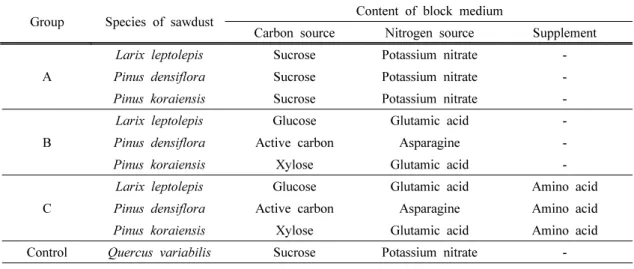
Carbon nutrition 3%, nitrogen nutrition 0.4%

and supplement 0.05% were added on the basis of air-dried weight of sawdust 80% and rice bran 20% (Table 1).

2.6. Spawn Run, Cultivation and Har- vesting Mushroom

Valuation of spawn run (mycelial growth) from the block medium was measured bytheir weight loss. The block medium were incubated at 24 ± 2ºC for 80 days in the dark, and then they were transferred to 24 ± 2ºC for 40 days in the light. At the end of dark and light in- cubation, the weight of the block media were used to calculate the percentage of weight loss (1 - [weight of the block medium after incubation, g/fresh weight of the block medium before in- cubation, g] × 100). After incubation for 120 days, all block medium were taken out of the polypropylene bags, washed with tap water to induce fruiting, and soaked in cool water (13 ± 2ºC) for 24 h. The block medium was incubated for fruiting bodies in chamber (Ilshin Lab Co., CC0150, Korea) at 15∼18ºC and 90∼98% rel- ative humidity until fruiting bodies developed.

The room was ventilated with fresh air moving

at 2 m/s and illuminated 9∼12 h/day. This ex-

periment was performed by the method shown

in Fig. 2.

(5)

Table 1. Preparation of sawdust medium for L. edodes based on the different nutrient content

Group Species of sawdust Content of block medium

Carbon source Nitrogen source Supplement

A

Larix leptolepis Sucrose Potassium nitrate -

Pinus densiflora Sucrose Potassium nitrate -

Pinus koraiensis Sucrose Potassium nitrate -

B

Larix leptolepis Glucose Glutamic acid -

Pinus densiflora Active carbon Asparagine -

Pinus koraiensis Xylose Glutamic acid -

C

Larix leptolepis Glucose Glutamic acid Amino acid

Pinus densiflora Active carbon Asparagine Amino acid

Pinus koraiensis Xylose Glutamic acid Amino acid

Control Quercus variabilis Sucrose Potassium nitrate -

Preparation of

block medium - Weight 300 g

Pasteurization

& inoculation

- Temp.: 121°C - Time: 90 min

Incubation in the dark

- Relative humidity: 60%

- Room temp.: 20∼23°C - Period: 80 days

Incubation in the light

- Relative humidity: 60%

- Room temp.: 20∼23°C - Period: 40 days

Stimulation

for fruiting - Soaking time in water: 24 hours

Mushroom harvest

- Relative humidity: 90%

- Room temp.: 15∼18°C - Resoaking time: 24 hours Fig. 2. Scheme of mushroom cultivation on sawdust

medium in polypropylene bags for L. edodes.

The L. edodes mushrooms were harvested from the block medium at same time each day when in-rolled 80∼90% of fruiting body gills began to flatten. The block medium clinging to the stipe werecut away and then the fresh mushrooms harvested at maturity were weighed, and the size of the cap and stipe of the mush- rooms were measured. The diameter and thick- ness of the cap, and the length and diameter of the stipe from produced fresh fruiting bodies of the mushrooms were measured for the estimation of the mushroom quality. Seven replicateswere used for the mushroom product from each block medium. The data concerning spawn running were recorded after complete colonization of the block medium. The fresh mushroom yield was g fresh mushrooms harvested at maturity per g fresh block medium before incubation and ex- pressed as a percentage.

2.7. Statistics of Data

Data was transformed to arcsin of square root

of the value and analyzed using Proc Glm of

SAS (Statistical Analysis System, ver.6.12). Means

were separated using Duncan's new multiple

range test at the P < 0.05.

(6)

Fig. 3. Effect of vegetable oil for mycelial growth of L. edodesin the softwood sawdust me- dium of L. leptolepis, P. densiflora and P.

koraiensis (11 days incubation at the 25ºC).

Table 2. Influence of nitrogen nutrition in the weight loss of sawdust medium Species

Weight loss of sawdust medium (%) Potassium

nitrate

Ammonium

chloride Asparagine Glutamic acid L. leptolepis 6.68 a * 6.26 a 6.67 a 6.77 a P. densiflora 6.23 a 5.52 b 6.74 a 6.39 a P. koraiensis 5.42 a 4.78 b 5.41 a 5.71 a

* Means followed by the same letters within each columnare not significantly different by Ducan’s multiple range test (P > 0.01 in the L. leptolepis, P = 0.01 in the P. densiflora, P < 0.01 in the P.

koraiensis)

3. RESULTS and DISCUSSION

3.1. Effect of Nutrient on the Mycelial Growth

All of the tested nitrogen nutritions sig- nificantly enhanced the mycelial growth of L. edodes (P > 0.01 in the L. leptolepis, P = 0.01 in the P. densiflora, P < 0.01 in the P.

koraiensis) and glutamic acid in the L. leptolepis and P. koraiensis, asparagine in the P. densi- flora were appeared to slight increase in the mycelial growth (Table 2).

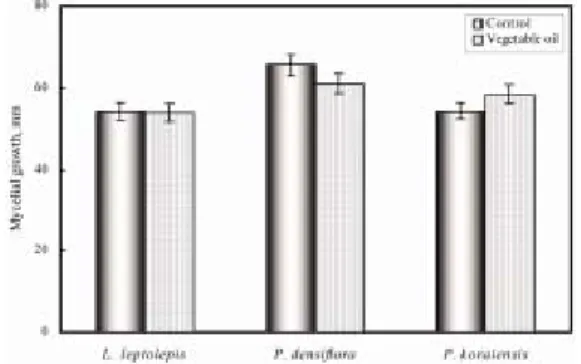
Fig. 3 showedthe mycelial growth following the addition of vegetable oil in the L. leptolepis, P. densiflora and P. koraiensis sawdust medium.

Mycelial growth in the L. leptolepis and P. den- siflora sawdust medium was decreased in the mycelial growth of addition after than before.

However mycelial growth in the P. koraiensis sawdust medium was somewhat increased.

Mycelial growth length was calculated after 11 days incubation at the 25ºC.

3.2. Change of Carbon/Nitrogen Ratio in the Sawdust Medium

Earlier work showed the mycelial growth ef- fects on the carbon/nitrogen ratios (Jonathan

and Fasidi, 2001; Fasidi and Olorunmaiye, 1994;

Chandra and Purkayastha, 1997). Jonathan et al.

reported the fungus grew best on a medium with ratio 2:3 followed by 3:4 while the least growth was obtained with the ratio 5:1 (Jonathan and Fasidi, 2001).

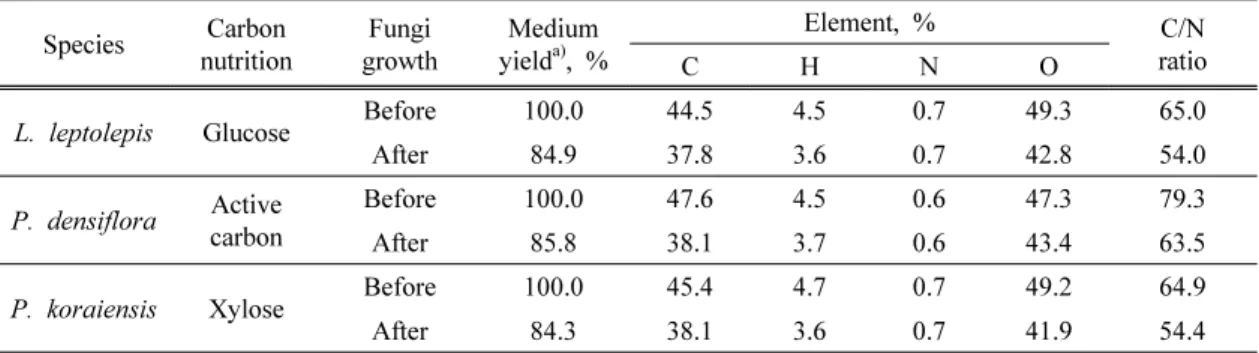
Table 3 showed the change of element con- tent and carbon/nitrogen ratio. Analysis of ele- ment content in the softwood sawdust medium was compared before and after of incubation in the mycelial growth of L. edodes. Carbon/nitro- gen ratio of all the tests were reduced after my- cerial growth. This result was found that the mycelial growth was exclusively dependent on reduction of carbon. These results suggested that the mycelial nutrient of L. edodes utilize carbohydrates in the sawdust at the early growth stage.

3.3. Weight Loss of Sawdust Block Medium

The weight losses of the block medium in the

polypropylene bags were measured to estimate

spawn growth. The weight loss of the block

media incubated in the polypropylene bags at

the 80

th

day in the dark and 120

th

day in the

light after inoculations wereshown in Table 4.

(7)

Table 3. Changes of element composition and carbon/nitrogen ratio in the sawdust medium Species Carbon

nutrition

Fungi growth

Medium yield

a)

, %

Element, % C/N

ratio

C H N O

L. leptolepis Glucose Before 100.0 44.5 4.5 0.7 49.3 65.0

After 84.9 37.8 3.6 0.7 42.8 54.0

P. densiflora Active carbon

Before 100.0 47.6 4.5 0.6 47.3 79.3

After 85.8 38.1 3.7 0.6 43.4 63.5

P. koraiensis Xylose Before 100.0 45.4 4.7 0.7 49.2 64.9

After 84.3 38.1 3.6 0.7 41.9 54.4

a) Yield, based on the dry weight of sawdust medium

Table 4. Weight loss of block medium during incubation of the dark and light Group

a)

Species Weight loss of sawdust block medium

b)

, %

Incubation in the dark

c)

Incubation in the light

d)

A

L. leptolepis 15.0 ± 2.94 a * 23.2 ± 2.99 abc

P. densiflora 14.8 ± 2.37 a 21.7 ± 2.18 abc

P. koraiensis 13.9 ± 1.63 a 20.7 ± 1.72 c

B

L. leptolepis 15.1 ± 2.67 a 23.4 ± 2.64 abc

P. densiflora 16.6 ± 2.89 a 25.8 ± 3.12 a

P. koraiensis 13.8 ± 2.28 a 21.2 ± 2.51 bc

C

L. leptolepis 15.5 ± 2.83 a 24.1 ± 1.93 abc

P. densiflora 16.8 ± 3.01 a 25.3 ± 2.05 ab

P. koraiensis 13.8 ± 2.82 a 22.4 ± 2.38 abc

Control Q. variabilis 16.8 ± 1.66

e)

a 25.7 ± 1.96 a

Note: See Table 1 (Nutrients of control, A, B and C groups: sawdust 80% + rice bran 20% + carbon source 3% + nitrogen source 0.4% + calcium carbonate 0.6% + amino acid 0.05%)

a) Group divided according to nutrient content of block media.

b) Moisture content of the block medium was adjusted to about 65 ± 2% based on the fresh weight of the mixture of solid materials with nutrients (300 g). The block medium was made from a block of 300 g in the polypropylene bag by a square mold (150 W × 60 L × 100 H mm).

c) Media were incubated for 80 days in the dark.

d) Media were incubated for 40 days in the light after in the dark incubation.

e) Values are mean ± S.D.(g) of seven separate experiments.

* Mean values followed by the same letter within the same column are not significantly different at the 5%

level according to Duncan’s New Multiple-Range Test.

In the polypropylene bag cultivation, the weight losses of the block mediumgradually in- creased for the 80 days in the dark (13.8∼

16.8%) and then became stable in the range of

20.7∼25.8%. On the 80

th

day, the percentages

of the weight losses for spawn growth of L. ed-

odes were not significantly different in the dark

incubation, nor was there a significant differ-

(8)

Table 5. First harvest day and yield of fruiting body according to sawdust block medium

Group

a)

Species First harvest, days

b)

Yield

c)

, %

A

L. leptolepis 143.6 ± 2.8 d * 22.8 ± 2.3 de

P. densiflora 143.2 ± 3.9 d 20.5 ± 1.3 ef

P. koraiensis 151.4 ± 6.0 c 19.0 ± 1.3 f

B

L. leptolepis 139.5 ± 1.2 d 24.7 ± 1.4 cd

P. densiflora 169.4 ± 1.7 a 32.7 ± 2.2 a

P. koraiensis 138.6 ± 1.0 d 17.2 ± 1.2 f

C

L. leptolepis 140.7 ± 5.6 d 25.9 ± 2.2 cd

P. densiflora 169.9 ± 3.1 a 27.7 ± 2.9 c

P. koraiensis 141.8 ± 4.6 d 31.5 ± 2.5 b

Control Q. variabilis 162.9 ± 2.73

d)

b 35.4 ± 3.6 a

Note: See Table 1 (Nutrients of control, A, B and C groups: sawdust 80% + rice bran 20% + carbon source 3% + nitrogen source 0.4% + calcium carbonate 0.6% + amino acid 0.05%)

a) Group divided according to nutrient content of blockmedia.

b) Mushrooms were harvested from the block medium at the same time each day when in-rolled 80 ∼90%

offruiting body gills began to flatten.

c) Yield, % = ratio of g fresh mushrooms harvested at maturity per g fresh block media before incubation.

Media were incubated for 80 days in the dark.

d) Values are mean ± S.D.(g) of seven separate experiments.

* Mean values followed by the same letter with in the same column are not significantly different at the 5%

level according to Duncan’s New Multiple-Range Test.

ence between medium with different species of sawdust.

The P. densiflora sawdust medium in the light incubation of the B group had the highest weight loss (25.8%), followed by the Q. varia- bilis sawdust medium (25.7%) and the P. densi- flora sawdust medium of the C group (25.3%).

These results suggested that the nutrients of the B group and C group added to the P. densiflora sawdust medium were effective for L. edodes spawn growth. After 120 day the incubation in the dark and light, the weight loss of block me- dium in the A, B and C groups was greater than 81% of the Q. variabilis sawdust that was the control.

3.4. Effect of Nutrient Composition in Sawdust Block Medium Cultivation After having inoculated the mycelium of L.

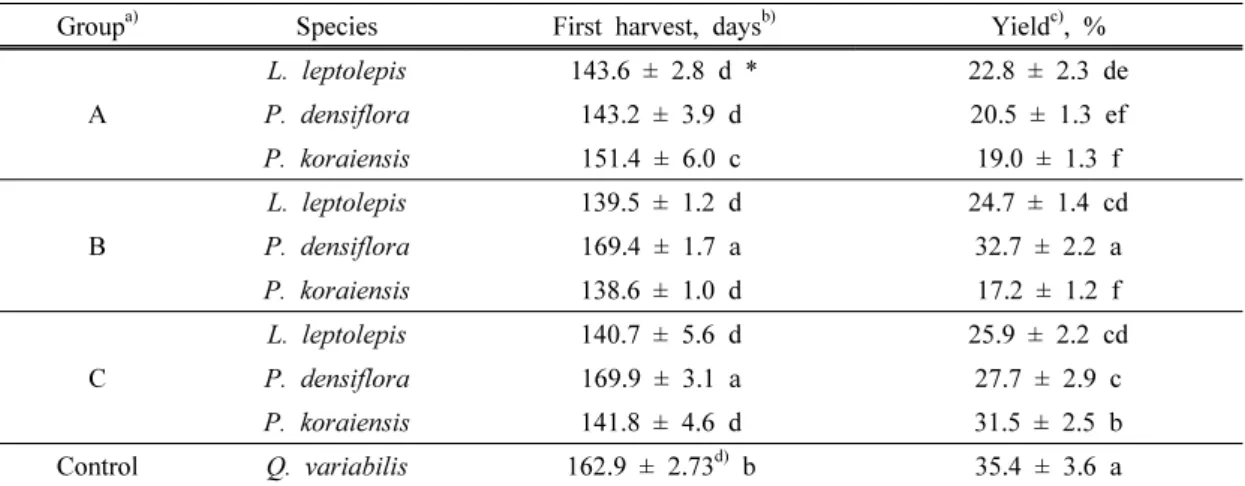
edodes on the block medium, the P. densiflora sawdust of the B and C groups were the slow- est of their respective groups on day 169.4 and day 169.9 harvesting times. The first harvest of the fruiting body from the Q. variabilis sawdust of the control medium was obtained on day 162.9 (Table 5).

The mushroom yield of the P. densiflora saw-

dust medium (32.7%) in the B group was the

best in mushroom production of L. edodes, fol-

lowed by the Q. variabilis sawdust (35.4%)

of the control medium. The mushroom yields

of the L. leptolepis (22.8%) and P. densiflora

(20.5%) media each increased about 2% in the

A group and 12% in the B group, respectively.

(9)

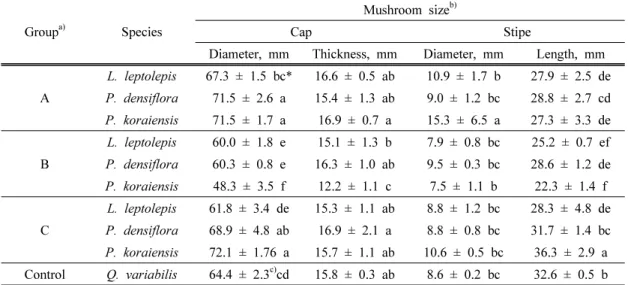
Table 6. Measurement of mushroom size for the quality of L. edodes Group

a)

Species

Mushroom size

b)

Cap Stipe

Diameter, mm Thickness, mm Diameter, mm Length, mm

A

L. leptolepis 67.3 ± 1.5 bc* 16.6 ± 0.5 ab 10.9 ± 1.7 b 27.9 ± 2.5 de P. densiflora 71.5 ± 2.6 a 15.4 ± 1.3 ab 9.0 ± 1.2 bc 28.8 ± 2.7 cd P. koraiensis 71.5 ± 1.7 a 16.9 ± 0.7 a 15.3 ± 6.5 a 27.3 ± 3.3 de

B

L. leptolepis 60.0 ± 1.8 e 15.1 ± 1.3 b 7.9 ± 0.8 bc 25.2 ± 0.7 ef P. densiflora 60.3 ± 0.8 e 16.3 ± 1.0 ab 9.5 ± 0.3 bc 28.6 ± 1.2 de P. koraiensis 48.3 ± 3.5 f 12.2 ± 1.1 c 7.5 ± 1.1 b 22.3 ± 1.4 f

C

L. leptolepis 61.8 ± 3.4 de 15.3 ± 1.1 ab 8.8 ± 1.2 bc 28.3 ± 4.8 de P. densiflora 68.9 ± 4.8 ab 16.9 ± 2.1 a 8.8 ± 0.8 bc 31.7 ± 1.4 bc P. koraiensis 72.1 ± 1.76 a 15.7 ± 1.1 ab 10.6 ± 0.5 bc 36.3 ± 2.9 a Control Q. variabilis 64.4 ± 2.3

c)

cd 15.8 ± 0.3 ab 8.6 ± 0.2 bc 32.6 ± 0.5 b Note: See Table 1 (Nutrients of control, A, B and C groups: sawdust 80% + rice bran 20% + carbon source

3% + nitrogen source 0.4% + calcium carbonate 0.6% + amino acid 0.05%) a) Group divided according to nutrient content of block media.

b) Diameter and thickness of the cap and length and diameter of the stipe from produced fresh fruiting bodies were measured by digimatic caliper (mm).

c) Values are mean ± S.D.(g) of seven separate experiments.

* Mean values followed by the same letter within the same column are not significantly different at the 5%

level according to Duncan’s New Multiple-Range Test.

However, the yield of the P. koraiensis medium in the A group decreased about 2% in the B group, but increased about 12% in the C group.

The first harvesting time of mushrooms from the P. densiflora sawdust of the B group hap- pened on day 169.4, but from the P. densiflora sawdust of the B group was obtained the cumu- lative yield of 32.7%. The mushroom yield of the P. densiflora sawdust medium in the C group (27.7%) with 0.05% amino acid was de- creased.

For the cumulative yields during 150 days of spawning, there was a statistically significant difference among L. leptolepis, P. densiflora and P. koraiensis sawdust medium. However, there was not a significantly difference between the yields of the L. leptolepis sawdust in the B group (24.7%) and the L. leptolepis sawdust in the C group (25.9%), and also, there was not a

significant difference between the yields of the P. koraiensis sawdust in the A (19.0%) and B (17.2%) groups. There was a significant differ- ence between the yields of the P. koraiensis saw- dust in the A, B groups and the P. koraiensis sawdust in the C group (31.5%). The yield of the P. densiflora sawdust in the C group (27.7%) with 0.05% amino acid was decreased contrary to the expectation.

The mushroom yields in all block medium of the C group were higher than that of the A group. Significant sources of variation in the analysis of variance for the yields for groups A, B and C included the sawdust species, nutrients and supplement. The best results for the diame- ter of mushroom cap were obtained from the P.

densiflora sawdust and P. koraiensis sawdust of

the A group, and the P. koraiensis sawdust of

the C group. The values obtained were 71.5 mm,

(10)

71.5 mm and 72.1 mm, respectively. These were significant difference between any of the other groups and the control medium (Table 6).

The thickness of the mushroom cap of the P.

koraiensis sawdust of the B group was the lowest at 12.2 mm, but that of the P. koraiensis saw- dust in the A (16.9 mm) and C (15.7 mm) groups were thicker, than the P. koraiensis sawdust of the B group. There was no significant differ- ence between the thickness of the mushroom cap of the other block medium and that of the control medium. P. koraiensis (15.3 mm) of the A group gave the widest diameter of stipe but the diameters of the other stipes were not sig- nificantly different from that of the control me- dium (8.6 mm). The stipe length of all block mediumin the A, B and C group obtained vari- ous values. Regarding the mushroom quality from P. koraiensis of the B group, the diameter and thickness of the cap and the diameter and length of the stipe were 48.3 mm, 12.2 mm, 7.5 mm and 22.3 mm, respectively, while the corre- sponding values of the C group were 72.1 mm 15.7 mm, 10.6 and 36.3 mm, respectively. In all block medium, P. koraiensis of the B group grew the shortest length of stipe at 22.3 mm, and P. koraiensis of the C group grew the lon- gest length of stipe at 36.3 mm. Comparing the B and C groups, the mushroom quality from the block medium of the C group with 0.05% amino acid improved. Especially, the mushroom qual- ity of P. koraiensis medium in the B group im- proved by adding 0.05% amino acid.

4. CONCLUSION

In this study, softwood sawdusts of L. lep- tolepis, P. densiflora and P. koraiensis which the inhibitory compound for L. edodes were re- moved studied for the possible utilization in the cultivation of L. edodes mushroom and inves- tigated the effect that nutrients and supplements

had on the yield and quality of mushroom grown on block medium in polypropylene bags.

Nitrogen nutrition significantly enhanced the mycelial growth of L. edodes and glutamic acid in the L. leptolepis and P. koraiensis, asparagine in the P. densiflora were appeared to slight in- crease in the mycelial growth.

Mycelial growth was exclusively dependent on reduction of carbon. These results suggested that the mycelial nutrient of L. edodes utilize carbohydrates in the sawdust at the early growth stage.

The first harvest period of mushrooms grown on the P. densiflora medium (carbon source: 3%

active carbon, nitrogen source: 0.4% aspara- gines) and P. densiflora medium (carbon source:

3% xylose, nitrogen source: 0.4% glutamic acid) were the slowest at about 169 days, the same day that the mushroom grown on the Q. varia- bilis control medium (carbon source: 3% su- crose, nitrogen source: 0.4% potassium nitrate) was obtained. There was no observable relation- ship between the first harvest period and the yield of mushroom. However, except the P. kor- aiensis medium (carbon source: 3% xylose, ni- trogen source: 0.4% glutamic acid), the mush- room yields produced on the nutrients of the B (glucose, active carbon, xylose, glutamic acid, and asparagines) and C (glucose, active carbon, xylose, glutamic acid, asparagines, and amino acid) groups were higher than that cultivated on the nutrients of the A (sucrose, potassium ni- trate) group.

The diameter and thickness of the mushroom

cap produced from the A (sucrose, and potas-

sium nitrate) group were better than that of the

B (glucose, active carbon, xylose, glutamic acid,

and asparagines) and C (glucose, active carbon,

xylose, glutamic acid, asparagines, and amino

acid) groups. However, in comparison of the B

(glucose, active carbon, xylose, glutamic acid,

and asparagines) and the C (glucose, active car-

bon, xylose, glutamic acid, asparagines, and

(11)

amino acid) groups, the mushroom quality pro- duced on the block medium with 0.05% amino acid of the C (glucose, active carbon, xylose, glutamic acid, asparagines, and amino acid) group was higher than that of the block medium of the B (glucose, active carbon, xylose, gluta- mic acid, and asparagines) group.

Q. variabilis medium (carbon source: 3% su- crose, nitrogen source: 0.4% potassium nitrate) and P. densiflora medium (carbon source: 3%

active carbon, nitrogen source: 0.4% aspara- gines) and P. densiflora medium (carbon source:

3% xylose, nitrogen source: 0.4% glutamic acid) in dark incubation showed the highest weight loss at 16.8%, 16.6% and 16.8% and also, these medium showed the highest weight loss at 25.7%, 25.8% and 25.3% in light incubation, respectively. The results of the weight loss on the block medium in the polypropylene bags were not significantly different between the dif- ferent nutrients of A, B and C groups.

Softwood sawdust was practicable as a block medium for production of the L. edodes mushroom.

This study demonstrated that the substrates con- taining carbon sources (glucose, active carbon, and xylose) and nitrogen sources (glutamic acid, and asparagine) were more productive than the substrates containing sucrose as a carbon source and potassium nitrate as a nitrogen source and that the substrates with 0.05% amino acid to the sawdust medium of L. leptolepis and P. kor- aiensis were more productive than the substrates without additional amino acid.

REFERENCES

1. Breene W. M. 1990. Nutritional and medicinal value of specialty mushrooms. J. Food Protect, 53: 883∼894.

2. Chandra, A. and R. P. Purkayastha. 1977. Phy- siological studies on Indian mushrooms. trans.

Br. Mycol. Soc., 69: 6370.

3. Fasidi, I. O. and S. K. Olorunmaiye. 1994. Studies on the requirements for vegetative growth of Pleurotus tuber-regium (fr) Singer, a Nigerian mushroom. Food Chemistry, 50: 397∼401.

4. Jong, S. C. and J. M. Nirmingham. 1993. Medicinal and therapeutic value of the Shiitake mushroom.

Adv. Appl. Microbiol., 39: 153∼184.

5. Jonathan, S. G. and I. O. Fasidi. 2001. Effect of carbon, nitrogen and mineral sources on growth of Psathyerella atroumbonata (Pegler), a Nigerian edible mushroom. Food Chemistry, 72: 479∼483.

6. Kuo, D. D. and M. H. Kuo. 1983. How to grow forest mushroom (Shitake). The Te Mushroom Technology Corp., Napervile, Illinois, pp. 95∼108.

7. Kim, T. H., B. K. Lim, J. P. Chang, K. H. Yoon, J. Y. Lee, and J. K. Yang. 2002. Pretreatment of softwood sawdust for mycerial growth of Lentinus edodes. Mokchae Konghak 30(3): 109∼115.

8. Luo, L. H. 1989. Cultivation of Auricularia on logs in China. In: Chang, S. T., Quimio, T. H.

(Eds.), Tropical Mushrooms, Biological Nature and Cultivation Methods. The Chinese University press of Hon Kong, pp. 437∼441.

9. Miles, G. P. and S. T. Chang. 1997. Mushroom Biology, Concise Basic and Current Developments.

World Scientific Publishing Co., London, pp.

130 ∼140.

10. Quimio, T. H., S. T. Chang, and D. J. Royse.

1990. Technical guidelines for mushroom grow- ing in the tropics. FAO plant production and protection paper 106, FAO, Rome, pp. 73∼80.

11. Royse, D. J. 1997. Specialty mushrooms and theircultivation. Hort. Rev., 19: 59∼97.

12. Royse, D. J. 2001. Cultivation of Shiitake on Synthetic and Natural Logs. College of Agricultural Sciences, Cooperative Extesion, Pennsylvania State University, University Park, PA, USA, p.12.

13. Singer, R. and B. Harris. 1987. Mushrooms and truffles, second ed. Koeltz scientific books, koe- nigsteinm, Federal Republic of Germany, pp. 350

∼370.

14. Yang, J. K., T. H. Kim, and B. K. Lim. 2003.

Effect of supplement nutrition on the mycelial

growth of Lentinus edodes. Mokchae Konghak

31(6): 60∼66.

수치

Fig. 1. Measurement method of mycelial growth in  the sawdust medium. (A) Test tube : Mea-  surement of mycelial growth length of  verti-cal direction on the basis of inoculation  sur-face (mm), (B) Petridish : Measurement of  mycelial growth length of hor
Table 1. Preparation of sawdust medium for L. edodes based on the different nutrient content
Fig. 3. Effect of vegetable oil for mycelial growth  of  L. edodesin the softwood sawdust  me-dium of L
Table 3. Changes of element composition and carbon/nitrogen ratio in the sawdust medium Species Carbon nutrition Fungi growth Mediumyielda) , % Element, % C/N ratio C H N O
+3

참조

관련 문서