한국 남성에서 흡연에 따른 폐기능과 신기능의 연관성:
2011년도 국민건강영양조사를 이용하여
정하지, 최창진, 최한나, 윤현수, 여의향, 은영미
가톨릭대학교 의과대학 서울성모병원 가정의학과
Association between Respiratory Function and Albuminuria among Korean Male according to Smoking Status: The 2011 Korea National Health and Nutrition Examination Survey (KNHANES)
Ha Ji Jung, Chang Jin Choi, Han na Choi, Hyun Su Youn, Ui Hyang Yeo, Young Mi Uen
Department of Family Medicine, Seoul St. Mary's Hospital, College of Medicine, The Catholic University of Korea, Seoul, Korea
Background: Several studies have found an association between decreased respiratory function and renal im- pairment in those with chronic kidney disease. The relationship has not been investigated for healthy smokers.
The aim of this study was to examine the association between respiratory function and renal function according to smoking status in Korean male population.
Methods: From the 5th Korean National Health and Nutrition Examination Survey (KNHANES), we enrolled 1246 male participants who were 40 years or older. As a cross‐sectional study, the association between respira- tory function and renal function were analysed depending on the ’ smoking status. Pearson correlation analysis was used to find the association between respiratory function and renal impairment. Covariance Analysis al- lowed to compare renal function (albuminuria, eGFR) with respiratory function (FEV
1, FVC) according to smok- ing status.
Results: Regardless of smoking status, there was a negative correlation between respiratory function (FEV
1and FVC) and urinary albumin to creatinine ratio (LogUACR), and positive correlation between respiratory func- tion (FEV
1and FVC) and estimated glomerular filtration rate (eGFR). Smokers have lower FEV
1and FVC in case they have albuminuria, after adjusting for covariant (P=0.012, P=0.010, respectively).
Conclusions: Respiratory function was significantly lower in male smokers with albuminuria. Primary care physicians need to recognize that albuminuria may accompany with decreased respiratory function and to de- tect renal function impairment earlier in male smokers.
Korean J Health Promot 2015;15(4):161-167
Keywords: Smoking, Respiratory function, Renal function, NHANES
■ Received:January 30, 2015 ■ Accepted:September 14, 2015
■ Corresponding author:Chang Jin Choi, MD, PhD
Department of Family Medicine, Seoul St. Mary's Hospital, College of Medicine, The Catholic University of Korea, 222 Banpo-daero, Seocho-gu, Seoul 06591, Korea
Tel: +82-2-2258-2894, Fax: +82-2-2258-2907 E-mail: [email protected]
서 론
흡연은 전세계적으로 문제가 되는 건강행태 중 하나로,1) 2010년 국민건강영양조사자료2)에 의하면 19세 이상 성인 남성 흡연율은 48.3%로 여전히 높다. 흡연은 폐기능 저하 뿐 아니라 허혈성 심질환, 중풍, 암 등과 같은 중요한 질병 을 야기하며 국내 남성 흡연자에서 흡연의 만성질환에 대 한 기여 위험도는 약 30% 내외이다.3) 흡연이 신장 혈류량
을 감소시키고 신장의 혈역학적 변화를 일으켜 신장 손상 을 일으킨다는 근거가 제시되고 있으나4) 기존 연구는 당 뇨, 혈관질환, 동맥경화 경향을 보이는 환자에서 연구를 진 행한 결과만을 제시하고 있다. 또한 흡연자에서 비흡연자 에 비해 알부민뇨와 단백뇨가 더 높은 비율로 관찰된다는 연구가 있으나, 해당 연구에서는 아직까지 일반인구에서 흡연이 신장에 미치는 영향에 대해서는 명확하게 제시하 지 못하고 있다.5)
신기능 감소는 주요 공중 보건 문제이다. 신기능 감소의 초기단계는 무증상인 경우가 많아 진단이 늦어지며 이로 인해 합병증이 증가하고 생존기간을 감소시킬 수 있어6) 미 리 인지하고 조기 진단하는 것이 중요하다. 2012년 국제신 장질환단체(Kidney disease: Improving Global Outcomes, KDIGO)의 진료지침7)에는 만성신질환의 조기 진단을 위 해 미세알부민뇨를 추가하여 분류하였으며 최근 일반인구 에서도 신기능 평가시 알부민뇨가 초기 신장질환의 지표 로서 중요성이 대두되고 있다.8)
폐기능과 신기능의 직접적인 연관성을 조사한 단면 연 구는 신기능에 따라 폐활량이 감소함을 보여주었으나9) 중 증의 신기능 저하자만을 대상으로 하였다는 한계가 있다.
일반인구를 대상으로 한 국내 한 단면 연구에 따르면 폐기 능 저하는 신기능 저하로 대표되는 알부민뇨 발생의 증가 와 관련 있으나10) 이는 흡연유무에 따른 구분이 아닌 일반 인구를 대상으로 한 결과이다. 일반인구를 대상으로 한 다 른 연구에서는 만성폐쇄성폐질환 환자에서 저산소증과 알 부민뇨의 발생이 관련성이 있다는 연구가 있으며11) 이는 흡 연력을 보이는 폐기능 저하자만을 대상으로 한 연구결과로 연구 대상자에 남녀 구성 비율의 차를 고려하지 않은 연구 였다. 따라서 흡연율이 높은 일반 남성 인구에서 폐기능과 신기능의 서로 관련이 있는지 연구가 필요한 상태이다.
따라서 본 연구는 국민건강영양조사를 통해 한국인 남 성 인구에서 흡연여부에 따라 폐기능과 신기능의 관련성 이 있는지 확인하고자 하였다.
방 법
1. 연구 대상
본 연구는 보건복지부가 주최하고 한국 보건사회연구원 이 주관하여 2011년 1월부터 2011년 12월까지 실시한 제 5 기 2차 국민건강영양조사의 원시자료를 이용하였다. 연구 대상자는 폐기능 검사를 실시한 만 40세 이상 성인 남성 2,012명 중 암을 진단받은 41명과 결측치가 있는 725명을 제외한 1,246명을 대상으로 하였다. 대상자는 흡연상태에 따라 비흡연자군과 흡연자군으로 분류하였고, 비흡연자군
은 흡연한 적이 없거나 평생 담배를 5갑(100개피) 미만으 로 흡연한 자, 흡연자군은 평생 담배를 5갑(100개피) 이상 흡연한 자로 정의하였다.
2. 연구 방법
1) 폐기능 검사
폐기능 검사는 미국흉부학회/유럽호흡기학회(American Thoracic Society/European Respiratory Society, ATS/ERS)12) 에서 2005년에 개정한 적합성과 재현성 기준에 맞추어 실 시하였다. 1초간 노력성호기량(Forced expiratory volume in 1 second, FEV1)과 노력성폐활량(Forced vital capacity, FVC)의 절대 값을 얻었으며, 폐활량의 추정 정상치는 한 국인을 대상으로 제시한 식으로 계산하였다.13) 폐쇄성 환 기장애는 FEV1/FVC<0.7, 제한성 환기장애는 FEV1/FVC
≥0.7이면서 FVC<80% (예측치)로 정의하였다. 사용한 폐 활량계는 Rolling dry‐seal spirometry (Model 2130; Sensor Medics, Yorba Linda, CA, USA)이다.
2) 신체계측 및 채혈
신체 계측을 통해 체질량지수(체중[kg]/신장[m]2)를 수 집하였고, 혈압은 5분 이상의 휴식을 취한 후 30초 간격으 로 3회 측정하고 두 번째와 세 번째 측정된 혈압의 평균을 사용하였다. 혈액검사에서 혈당, 당화혈색소, 크레아티닌 수치를 이용하였고 임의뇨 소변검사에서 요알부민, 요크 레아티닌 수치를 포함하였다. 추정 사구체 여과율(estimated glomerular filtration rate, eGFR)은 Modification of Diet in Renal Disease 공식에 대입하여 산출하였으며,14) 알부민뇨 는 소변 알부민 크레아티닌 비(Urine Albumin Creatinine Ratio, UACR)로 구하였다.
3) 변수의 정의 (1) 신기능 감소
신기능 감소는 알부민뇨의 동반과 eGFR의 감소로 평가 하였다. 2002년 미국국립신장재단(National Kidney Foun- dation, NKF)의 신질환 질관리진료지침(Kidney Disease Outcomes Quality Initiative, K/DOQI)15)에 따라 신질환 의 종류와 관계없이 eGFR이 60 mL/min/1.73 m2 미만인 경우에 신기능이 감소하였다고 판단하였다. 알부민뇨는 소변 알부민 크레아티닌 비가 17 mg/g을 초과하는 경우로 정의하였다.16)
(2) 기타 변수
음주행태는 술을 전혀 마시지 않는 경우, 하루에 에탄올 복용량이 30 g 이하인 경우, 30 g 초과하는 경우로 나누었
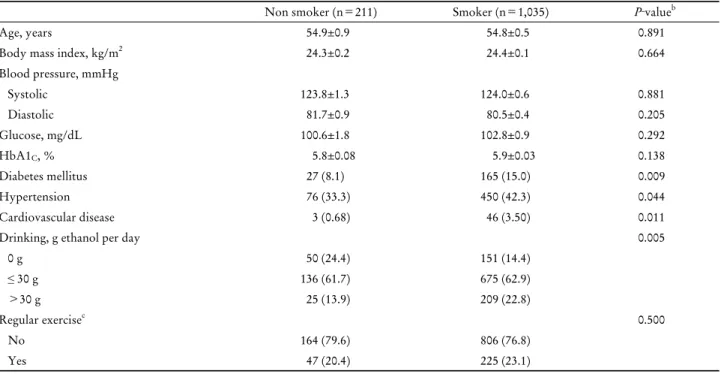
Table 1. Basic characteristics of the study subjects
aNon smoker (n=211) Smoker (n=1,035) P‐valueb
Age, years 54.9±0.9 54.8±0.5 0.891
Body mass index, kg/m2 24.3±0.2 24.4±0.1 0.664
Blood pressure, mmHg
Systolic 123.8±1.3 124.0±0.6 0.881
Diastolic 81.7±0.9 80.5±0.4 0.205
Glucose, mg/dL 100.6±1.8 102.8±0.9 0.292
HbA1C, % 5.8±0.08 5.9±0.03 0.138
Diabetes mellitus 27 (8.1) 165 (15.0) 0.009
Hypertension 76 (33.3) 450 (42.3) 0.044
Cardiovascular disease 3 (0.68) 46 (3.50) 0.011
Drinking, g ethanol per day 0.005
0 g 50 (24.4) 151 (14.4)
≤ 30 g 136 (61.7) 675 (62.9)
>30 g 25 (13.9) 209 (22.8)
Regular exercisec 0.500
No 164 (79.6) 806 (76.8)
Yes 47 (20.4) 225 (23.1)
aData are presented as Mean±SE, Number (%) unless otherwise indicated.
bCalculated by t‐test or chi‐square test.
cRegular exercise was indicated when the subject moderate exercise on a regular basis for more than 30 minutes at a time and more than five days per week, or severe exercise for more than 20 minutes at a time and more than three times per week.
다. 규칙적 운동은 중등도 신체활동(몸이 조금 힘들거나 숨이 약간 가쁜 정도의 강도)을 1회 30분 이상 주 5일 이상 하는 경우나, 격렬한 신체활동(평소보다 몸이 매우 힘들거 나 숨이 많이 가쁜 정도)을 1회 20분 이상 주 3일 이상 하 는 경우로 정의하였다.
고혈압은 고혈압약을 복용하거나 수축기 혈압이 140 mmHg 이상 또는 이완기 혈압이 90 mmHg 이상인 경우, 당뇨는 의사에게 진단받은 자, 당뇨병약 복용 또는 인슐린 주사를 투여하거나 공복 혈당이 126 mg/dL 이상인 경우로 하였 다. 심뇌혈관질환은 중풍, 급성심근경색, 또는 협심증을 의 사에게 진단받은 경우로 정의하였다.
3. 통계 분석
국민건강영양조사 대상자들은 지역층화별 비례배분법 (Proportional allocation)을 적용해 추출하여 표준화되었다.
대상자들을 비흡연자와 흡연자로 나누어 분석하였으며 각 군 간의 변수들의 차이가 있는지 연속변수의 경우 T 검 정, 명목변수의 경우 카이제곱검정으로 분석하였다. 소변 알부민 크레아티닌 비(UACR)는 정규분포를 따르지 않아 log 값으로 변환하여 분석하였다.
폐기능과 신기능의 관련성은 Pearson correlation analy- sis로 확인하였다. 비흡연자군와 흡연자군에서 알부민뇨
동반유무, eGFR감소에 따른 FEV1과 FVC의 차이는 나이, 체질량지수, 당뇨, 고혈압의 유무, 운동, 음주인자로 보정 하여 공분산분석을 시행하였다. 통계 분석 프로그램은 SAS version 9.2 (SAS Institute Inc., Chicago, IL, USA)를 사용 하였고, 유의 수준은 P‐value 0.05 미만으로 하였다.
결 과
1. 연구 대상자들의 특성
1) 인구사회학적 변수
총 1,246명 중 비흡연자군은 211명, 흡연자군은 1,035명 이었다. 평균연령은 비흡연자군이 54.9세, 흡연자군이 54.8 세로 차이가 없었고, 두 군 간의 체질량지수와 규칙적 운 동행태 역시 차이가 없었다. 음주의 경우 흡연자에서 빈도 가 높았으며, 알코올 섭취량 역시 흡연자에서 더 많았다(P
=0.005) (Table 1).
2) 동반질환
흡연자군과 비흡연자군 사이의 혈압, 당화 혈색소의 차 이는 관찰되지 않았으며, 고혈압 환자의 유병률, 당뇨 및 심혈관질환 유병률은 모두 흡연자군에서 높았다(각각 P=
0.044, P=0.009, P=0.011) (Table 1).
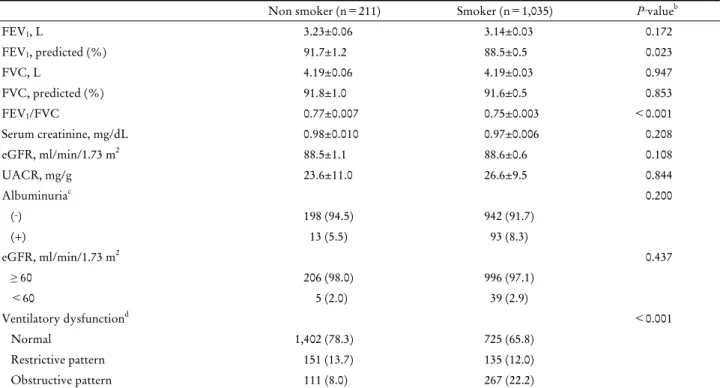
Table 2. Respiratory and kidney function of the study subjects
aNon smoker (n=211) Smoker (n=1,035) P‐valueb
FEV1, L 3.23±0.06 3.14±0.03 0.172
FEV1, predicted (%) 91.7±1.2 88.5±0.5 0.023
FVC, L 4.19±0.06 4.19±0.03 0.947
FVC, predicted (%) 91.8±1.0 91.6±0.5 0.853
FEV1/FVC 0.77±0.007 0.75±0.003 <0.001
Serum creatinine, mg/dL 0.98±0.010 0.97±0.006 0.208
eGFR, ml/min/1.73 m2 88.5±1.1 88.6±0.6 0.108
UACR, mg/g 23.6±11.0 26.6±9.5 0.844
Albuminuriac 0.200
(‐) 198 (94.5) 942 (91.7)
(+) 13 (5.5) 93 (8.3)
eGFR, ml/min/1.73 m2 0.437
≥ 60 206 (98.0) 996 (97.1)
<60 5 (2.0) 39 (2.9)
Ventilatory dysfunctiond <0.001
Normal 1,402 (78.3) 725 (65.8)
Restrictive pattern 151 (13.7) 135 (12.0)
Obstructive pattern 111 (8.0) 267 (22.2)
Abbreviations: FEV1, forced expiratory volume in 1 second; FVC, forced vital capacity; eGFR: estimated glomerular filtration rate; UACR, urine albumin creatinine ratio.
aData are presented as Mean±SE, Number (%) unless otherwise indicated.
bCalculated by t‐test or chi‐square test.
cAlbuminuria: Urine Albumin Creatinine ratio >17 mg/g.
dRestrictive pattern: FEV1/FVC ≥ 0.7 and FEV1<80% (predicted), Obstructive pattern: FEV1/FVC<0.7.
Table 3. Linear correlation between respiratory function and kidney function
aNon‐smoker (n=211) Smoker (n=1,035)
FEV1, L FVC, L FEV1, L FVC, L
LogUACR, mg/g ‐0.156 ‐0.180 ‐0.132 ‐0.136
P‐valueb 0.067 0.020 <0.001 <0.001
eGFR, ml/min/1.73 m2 0.233 0.203 0.096 0.072
P‐valueb 0.004 0.018 0.026 0.067
Abbreviations: FEV1, forced expiratory volume in 1 second; FVC, forced vital capacity; UACR, urine albumin creatinine ratio; eGFR, esti- mated glomerular filtration rate.
aData are presented as correlation coefficient r.
bCalculated by Pearson correlation analysis.
3) 폐기능 검사
FEV1 예측치는 비흡연자군이 91.7%, 흡연자군이 88.5%
로(P=0.023) 비흡연자군에서 높았고, FVC 예측치는 두 군 간 차이가 없었다. FEV1/FVC는 흡연자군이 0.75, 비흡 연자군이 0.77로 비흡연자군에서 더 높았다(P<0.001). 제 한성 패턴과 폐쇄성 패턴을 포함한 폐의 환기장애 빈도는 흡연자군에서 더 높았다(P<0.001) (Table 2).
4) 신기능 검사
eGFR은 비흡연자군과 흡연자군 사이에 차이가 없었고,
소변 알부민 크레아티닌 비도 비흡연자군 23.6 mg/g, 흡연 자군 26.6 mg/g로 유의한 차이가 없었다. 혈청 크레아티닌 과 알부민뇨가 동반된 빈도, eGFR이 60 mL/min/1.73 m2 미만인 군의 빈도 차이 역시 관찰되지 않았다(Table 2).
2. 폐기능과 신기능
1) 폐기능과 신기능 간의 연관성
비흡연자군에서는 FVC와 LogUACR 및 FEV1, FVC와 eGFR에서, 흡연자군에서는 FEV1, FVC와 LogUACR 및
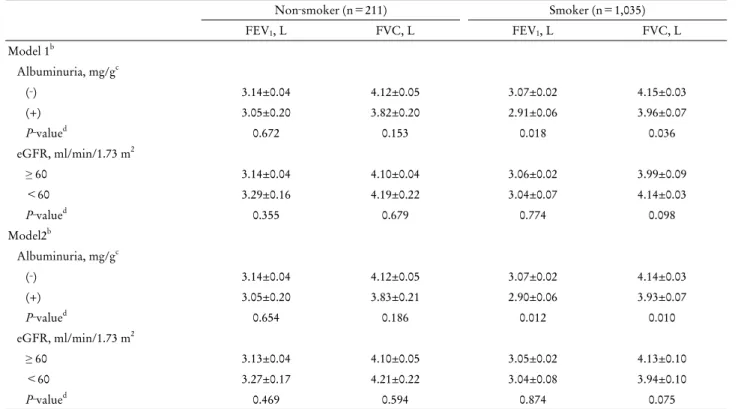
Table 4. Mean difference in FEV
1, and FVC according to kidney function
aNon‐smoker (n=211) Smoker (n=1,035)
FEV1, L FVC, L FEV1, L FVC, L
Model 1b
Albuminuria, mg/gc
(‐) 3.14±0.04 4.12±0.05 3.07±0.02 4.15±0.03
(+) 3.05±0.20 3.82±0.20 2.91±0.06 3.96±0.07
P‐valued 0.672 0.153 0.018 0.036
eGFR, ml/min/1.73 m2
≥ 60 3.14±0.04 4.10±0.04 3.06±0.02 3.99±0.09
<60 3.29±0.16 4.19±0.22 3.04±0.07 4.14±0.03
P‐valued 0.355 0.679 0.774 0.098
Model2b
Albuminuria, mg/gc
(‐) 3.14±0.04 4.12±0.05 3.07±0.02 4.14±0.03
(+) 3.05±0.20 3.83±0.21 2.90±0.06 3.93±0.07
P‐valued 0.654 0.186 0.012 0.010
eGFR, ml/min/1.73 m2
≥ 60 3.13±0.04 4.10±0.05 3.05±0.02 4.13±0.10
<60 3.27±0.17 4.21±0.22 3.04±0.08 3.94±0.10
P‐valued 0.469 0.594 0.874 0.075
Abbreviations: FEV1, forced expiratory volume in 1 second; FVC, forced vital capacity; eGFR, estimated glomerular filtration rate.
aData are presented as Mean±SE, unless otherwise indicated.
bModel 1 was adjusted for age and BMI; Model 2 as Model 1, with additional adjustment for hypertension, diabetes, exercises and drinking status.
cAlbuminuira: Urine Albumin Creatinine ratio>17 mg/g
dCalculated by analysis of covariance comparing lung function with renal function according to smoking status.
FEV1과 eGFR에서 폐기능과 신기능 간의 유의한 선형 상관 관계를 보였다. FEV1과 FVC는 LogUACR과 음의 상관관 계를 보였으며, eGFR과 양의 상관관계를 보였다(Table 3).
2) 신기능 감소에 따른 폐기능 차이
나이와 체질량지수를 보정하여 분석하였을 때(Model 1), 흡연자군에서 알부민뇨가 동반된 경우에 유의하게 FEV1
과 FVC가 낮았다(각각 P=0.018, P=0.036). 또한 당뇨, 혈 압, 운동, 음주를 보정했을 시에도(Model 2) 흡연자군에서 만 알부민뇨가 동반된 경우에 유의하게 FEV1과 FVC가 낮 았다(각각 P=0.012, P=0.010). eGFR이 60 mL/min/1.73 m2 미만인 경우에는 Model 1, Model 2 모두에서 흡연 여 부와 FVC, FEV1의 차이는 관찰되지 않았다(Table 4).
고 찰
본 연구는 비흡연자군, 흡연자군 모두에서 폐기능과 신 기능 간의 유의한 선형 상관관계가 있음을 확인할 수 있었 다. 또한 흡연자군에서는 신기능에 영향을 줄 수 있는 인 자들을 보정한 후에도 알부민뇨가 동반된 경우 알부민뇨
가 없는 군에 비해 폐기능이 감소하는 소견을 보였다. 선행 연구 대부분은 흡연이 단백뇨, 알부민뇨의 위험도 를 증가시키는 것과 관련이 있다고 발표하였다.5) 당뇨가 없는 사람을 대상으로 한 단면연구에서 현재 흡연자군이 비흡연자군에 비하여 미세알부민뇨의 빈도가 약 2배 높았 다고 보고하였으며,17) 일본 건강한 중년 남성을 대상으로 한 6년간의 관찰연구에서는 3.3%에서 단백뇨가 새롭게 발 생하였고 비흡연자군에 비해 현재 흡연자군에서 단백뇨의 발생위험도가 1.51배 높았다.18) 그러나 본 연구에서는 비 흡연자군과 흡연자 군에서 알부민뇨의 동반빈도는 차이가 없었다.
흡연과 eGFR의 연관성에 대한 연구 결과는 아직 논란 이 많다. 몇 개의 연구는 일반인구에서 흡연이 만성신질환 즉, eGFR의 감소와 연관성이 있다고 보고하였다.19,20) 미국 일반 인구를 대상으로 한 종단연구에서는 5년간 추적관찰 하였을 때 현재 흡연자인 경우 비흡연자에 비해 만성신질 환 발생률이 2배 정도 높았다.20) 또 다른 건강한 일반인구 를 대상으로 한 단면연구에서는 남자에서 현재 흡연자군이 비흡연자군보다 eGFR이 60 mL/min/1.73 m2 미만으로 감 소한 경우가 3.6배 높았으나, 여자에서는 관계가 없었다.21)
그러나 오히려 흡연이 eGFR의 증가와 관련있다는 연구도
있다.22,23) 국내의 한 개의 대학병원 검진센터에 내원한 수
검자를 대상으로 한 단면 연구에서 흡연이 사구체 과여과 (glomerular hyperfiltration)를 일으켜 흡연자군에서 비흡연 자군보다 eGFR감소의 비율이 더 적었으며, 흡연양이 증가 할수록 eGFR이 감소되는 빈도가 더 적었다고 보고하였다.24) 또 다른 결과로 중국 일반 인구를 대상으로 만성신질환의 위험인자를 규명한 단면연구에서는 알부민뇨와 eGFR의 감소는 흡연상태와 관계가 없다고 발표하였다.25)
본 연구는 앞선 연구와는 다르게 폐활량계로 측정한 FEV1
과 FVC를 이용하여 신기능의 관련성을 직접적으로 평가 하였고, 흡연자군에서 알부민뇨의 동반에 따라 폐기능이 함께 저하됨을 확인하였다. 흡연이 어떤 기전으로 신장에 영향을 주는 지 확실하게 밝혀지지 않았지만, 흡연자체가 폐기능과 신기능간에 부가적 역할을 하는 것으로 생각할 수 있다. 이는 흡연이 직접적인 폐손상뿐 아니라 전신적인 염증을 야기하여 다른 장기의 만성 질환 발생에 영향을 줄 수 있다는 연구 결과가 뒷받침한다. 제3차 미국 국민보건 영양조사(Third National Health and Nutrition Survey, NHANES III)를 이용한 연구에서는 18세 이상의 건강 성 인에서 흡연이 C‐reactive protein, fibrinogen과 같은 급성 기 반응 물질을 증가시킨다고 보고하였으며,26) 40세 이상 을 대상으로 한 또 다른 연구에서는 흡연이 폐기능의 감소 와 전신적 염증에 모두 영향을 주는 것을 보고하였다.27) 만 성폐쇄성폐질환, 만성신질환을 가진 흡연자를 대상으로 한 연구에서도 비흡연자에 비해 흡연자가 높은 전신적 염증 수 치를 보였다는 것28,29)을 고려했을 때, 흡연으로 인한 전신적 염증이 폐와 신질환의 병태생리에 영향을 주었을 것이라 추측할 수 있다. 또한 흡연은 내피세포 기능장애(endothelial dysfunction)를 일으켜 죽상동맥경화를 발생시킨다는 연구 결과가 있어,30) 이로 인해서도 폐기능 저하, 신장기능 저하 에 영향을 미쳤을 가능성이 있다.
본 연구에서는 흡연자군에서 알부민뇨의 동반시 FEV1과 FVC가 모두 감소하였으나 eGFR에 따라서는 유의한 차이 를 보이지 못하였다. 이는 eGFR보다 알부민뇨가 폐기능 과 더 밀접하게 관계가 있을 가능성이 있으며, 알부민뇨가 초기 신기능 저하를 더 잘 반영하는 것과 관련이 있다고 생각할 수 있다.
이 연구의 제한점은 다음과 같다. 첫째, 단면연구이므로 폐기능과 신기능의 연관성 사이의 인과관계를 유추하기 어 려운 제한점이 있다. 둘째, 일부 변수는 설문을 바탕으로 하 였으므로 기억의 오류 및 주관적 판단이 개입되었을 가능성 이 있다. 셋째, 2002년 미국국립신장재단(National Kidney Foundation, NKF)의 신질환질관리(Kidney Disease Outcomes Quality Initiative, K/DOQI) 진료지침8)에 따르면 신기능
의 감소, 즉 만성 신질환의 기준은 3개월 이상 지속되는 신 손상 또는 eGFR이 60 mL/min/1.73 m2 미만인 경우를 기 준으로 하여야 하나, 국민건강영양조사에서는 한 차례밖에 채혈을 시행하지 않아 급성 신기능 저하가 포함되었을 가 능성이 있다. 흡연에 따라 폐기능과 신기능이 서로에게 미 치는 영향에 대한 정확한 기전과 관련인자는 알려지지 않 았으며 추후 원인 규명을 위해 대규모 전향적 코호트 연구 가 필요할 것으로 생각된다.
결론적으로 본 연구는 일반 인구집단에 대한 대표성이 보장된 자료를 바탕으로 한국 남성 인구의 흡연자에서 알 부민뇨의 발생에 따라 폐기능의 저하가 관찰됨을 확인하 였다. 일차 진료 현장에서는 흡연자의 관리에 있어 폐기능 뿐 아니라 신기능이 함께 저하될 수 있음을 알고 신기능 저하를 조기 진단할 필요성이 있음을 인지해야 할 것이다.
요 약
연구배경: 만성 신부전 환자에서 폐기능 저하와 신기능 감소가 관련이 있다는 근거들이 제시되고 있다. 그러나 신 기능 저하 환자가 아닌 일반 흡연자를 대상으로 폐기능과 신기능 감소의 연관성을 평가한 연구는 아직 없는 상태이 다. 본 연구는 한국 남성에서 흡연 여부에 따라 폐기능과 신기능의 관련성이 있는지 확인하고자 하였다.
방법: 제 5기 2차 국민건강영양조사 자료를 이용하여 암 을 진단받은 자를 제외한 40세 이상 성인 남성 1,246명을 대상으로 폐기능의 지표와 신기능의 연관성을 흡연상태에 따라 나누어 조사한 단면연구이다. 폐기능과 신기능의 관 련성은 Pearson correlation analysis로 확인하였고, 비흡연 자군와 흡연자군에서 알부민뇨 동반유무, 추정 사구체 여 과율(estimated glomerular filtration rate, eGFR)에 따른 1 초간 노력성호기량(Forced expiratory volume in 1 second, FEV1)과 노력성폐활량(Forced vital capacity, FVC)의 차이 는 공분산분석을 시행하였다.
결과: 흡연자군과 비흡연자군 모두에서 FEV1과 FVC는 소변 알부민 크레아티닌 비와 음의 상관관계를 보였으며 eGFR과 양의 상관관계를 보였다. 흡연자군에서는 나이, 성별, 체질량지수, 당뇨, 고혈압의 유무, 운동, 음주인자를 보정한 후에도 알부민뇨에 따라 유의하게 FEV1과 FVC가 감소하였다(각각 P=0.012, P=0.001).
결론: 한국 남성 흡연자에서 알부민뇨가 동반되는 경우 폐기능의 저하가 관찰되었다. 일차 진료 현장에서는 흡연 자의 관리에 있어 폐기능뿐 아니라 신기능이 함께 저하될 수 있음을 인지하고 신기능 저하를 조기 진단할 필요성이 있음을 인지해야 할 것이다.
중심 단어: 흡연, 폐기능, 신기능, 국민건강영양조사
REFERENCES
1. Edwards R. The problem of tobacco smoking. BMJ 2004;328 (7433):217‐9.
2. Korea health statistics 2010. The 5th Korea National Health and Nutrition Examination Survey (KNHANESV‐1). Cheongju:
Korea Centers for Disease Control and Prevention; 2010 [Accessed July 15, 2013]. https://knhanes.cdc.go.kr/knhanes/
index.do.
3. Song HR, Kim CH. Epidemiology of the smoking‐related dis- eases in Korea. J Korean Acad Fam Med 2008;29(8):563‐71.
4. Gambaro G, Verlato F, Budakovic A, Casara D, Saladini G, Del Prete D, et al. Renal impairment in chronic cigarette smokers. J Am Soc Nephrol 1998;9(4):562‐7.
5. Noborisaka Y. Smoking and chronic kidney disease in healthy populations. Nephrourol Mon 2013;5(1):655‐67.
6. Locatelli F, Vecchio LD, Pozzoni P. The importance of early detection of chronic kidney disease. Nephrol Dial Transplant 2002;17 Suppl 11:2‐7.
7. Stevens PE, Levin A; Kidney Disease: Improving Global Out- comes Chronic Kidney Disease Guideline Development Work Group Members. Evaluation and management of chronic kid- ney disease: synopsis of the kidney disease: improving global outcomes 2012 clinical practice guideline. Ann Intern Med 2013;
158(11):825‐30.
8. Jafar TH, Chaturvedi N, Hatcher J, Levey AS. Use of albumin creatinine ratio and urine albumin concentration as a screening test for albuminuria in an Indo‐Asian population. Nephrol Dial Transplant 2007;22(8):2194‐200.
9. Tkácová R, Tkác I, Podracký J, Moscovic P, Roland R, Hildebrand T. Spirometric alterations in patients with reduced renal function. Wien Klin Wochenschr 1993;105(1):21‐4.
10. Yoon JH, Won JU, Ahn YS, Roh J. Poor lung function has in- verse relationship with microalbuminuria, an early surrogate marker of kidney damage and atherosclerosis: the 5th Korea National Health and Nutrition Examination Survey. PLoS One 2014;9(4):e94125.
11. Casanova C, de Torres JP, Navarro J, Aguirre‐Jaíme A, Toledo P, Cordoba E, et al. Microalbuminuria and hypoxemia in patients with chronic obstructive pulmonary disease. Am J Respir Crit Care Med 2010;182(8):1004‐10
12. Miller MR, Hankinson J, Brusasco V, Burgos F, Casaburi R, Coates A, et al. Standardisation of spirometry. Eur Respir J 2005;26(2):319‐38.
13. Choi JK, Paek D, Lee JO. Normal predictive values of Spirometry in Korean population. Tuberc Respir Dis 2005;58(3):230‐42.
14. Levey AS, Bosch JP, Lewis JB, Greene T, Rogers N, Roth D. A more accurate method to estimate glomerular filtration rate from serum creatinine: a new prediction equation. Ann Intern Med 1999;130(6):461‐70.
15. National Kidney Foundation. K/DOQI clinical practice guide- lines for chronic kidney disease: evaluation, classification, and stratification. Am J Kidney Dis 2002;39(2 Suppl 1):S1‐266.
16. Anand S, Khanam MA, Saquib J, Saquib N, Ahmed T, Alam DS, et al. High prevalence of chronic kidney disease in a com- munity survey of urban Bangladeshis: a cross‐sectional study.
Global Health 2014;10:9.
17. Pinto‐Sietsma SJ, Mulder J, Janssen WM, Hillege HL, de Zeeuw D, de Jong PE. Smoking is related to albuminuria and abnormal renal function in nondiabetic persons. Ann Intern Med 2000;
133:585‐91.
18. Maeda I, Hayashi T, Sato KK, Koh H, Harita N, Nakamura Y, et al. Cigarette smoking and the association with glomerular hy- perfiltration and proteinuria in healthy middle‐aged men. Clin J Am Soc Nephrol 2011;6(10):2462‐9.
19. Shankar A, Klein R, Klein BE. The association among smoking, heavy drinking, and chronic kidney disease. Am J Epidemiol 2006;164(3):263‐71.
20. Yamagata K, Ishida K, Sairenchi T, Takahashi H, Ohba S, Shiigai T, et al. Risk factors for chronic kidney disease in a com- munity‐based population: a 10‐year follow‐up study. Kidney Int 2007;71(2):159‐66.
21. Briganti EM, Branley P, Chadban SJ, Shaw JE, McNeil JJ, Welborn TA, et al. Smoking is associated with renal impairment and proteinuria in the normal population: the AusDiab kidney study. Am J Kidney Dis 2002;40(4):704‐12.
22. Halimi JM, Giraudeau B, Vol S, Cacès E, Nivet H, Lebranchu Y, et al. Effects of current smoking and smoking discontinuation on renal function and proteinuria in the general population.
Kidney Int 2000;58(3):1285‐92.
23. Noborisaka Y, Honda R, Ishizaki M, Nakata M, Yamada Y.
Alcohol and cigarette consumption, renal function and blood pressure in middle‐aged healthy men. J Hum Hypertens 2007;21 (12):966‐8.
24. Yoon HJ, Park M, Yoon H, Son KY, Cho B, Kim S. The differ- ential effect of cigarette smoking on glomerular filtration rate and proteinuria in an apparently healthy population. Hypertens Res 2009;32(3):214‐9.
25. Zhang L, Zhang P, Wang F, Zuo L, Zhou Y, Shi Y, et al. Preva- lence and factors associated with CKD: a population study from Beijing. Am J Kidney Dis 2008;51(3):373‐84.
26. Bazzano LA, He J, Muntner P, Vupputuri S, Whelton PK.
Relationship between cigarette smoking and novel risk factors for cardiovascular disease in the United States. Ann Intern Med 2003;138(11):891‐7.
27. Gan WQ, Man SF, Sin DD. The interactions between cigarette smoking and reduced lung function on systemic inflammation.
Chest 2005;127(2):558‐64.
28. Eagan TM, Ueland T, Wagner PD, Hardie JA, Mollnes TE, Damås JK, et al. Systemic inflammatory markers in COPD: re- sults from the Bergen COPD Cohort Study. Eur Respir J 2010;
35(5):540‐8.
29. Arici M, Walls J. End‐stage renal disease, atherosclerosis, and cardiovascular mortality: is C‐reactive protein the missing link?
Kidney Int 2001;59(2):407‐14.
30. Yanbaeva DG, Dentener MA, Creutzberg EC, Wesseling G, Wouters EF. Systemic effects of smoking. Chest 2007;131(5):
1557‐66.