호기성 그래뉼 슬러지를 이용한 하수고도처리기술(AGS-SBR)
최한나
a,†⋅ 모우종
b(주)태영건설 기술연구팀
Advanced Wastewater Treatment Process Using Aerobic Granular Sludge (AGS-SBR)
Han Na Choi
a,†⋅ Woo Jong Mo
bR&D Team, Taeyoung E&C
(Received 11 November 2020, Revised 31 December 2020, Accepted 4 January 2021)
Abstract
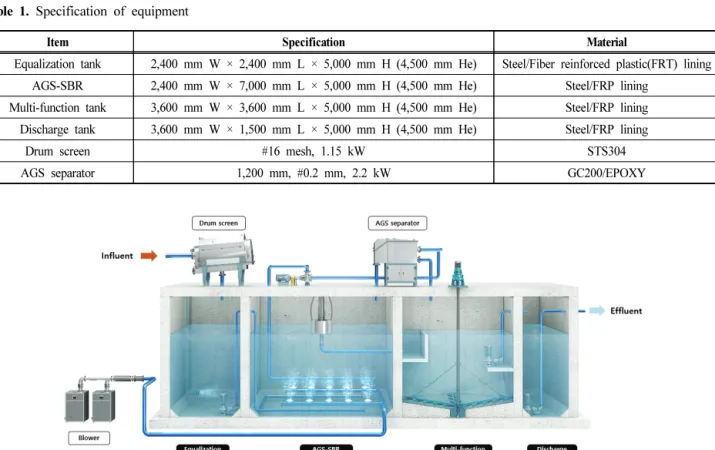
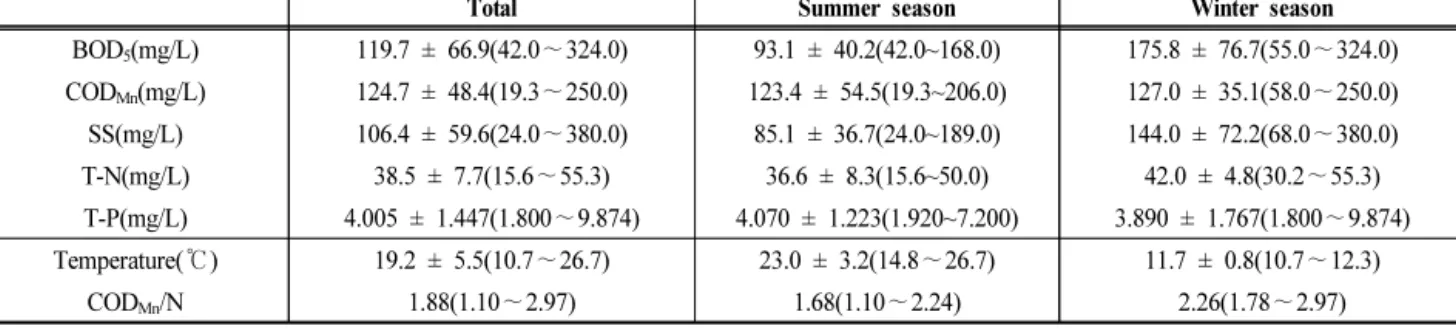
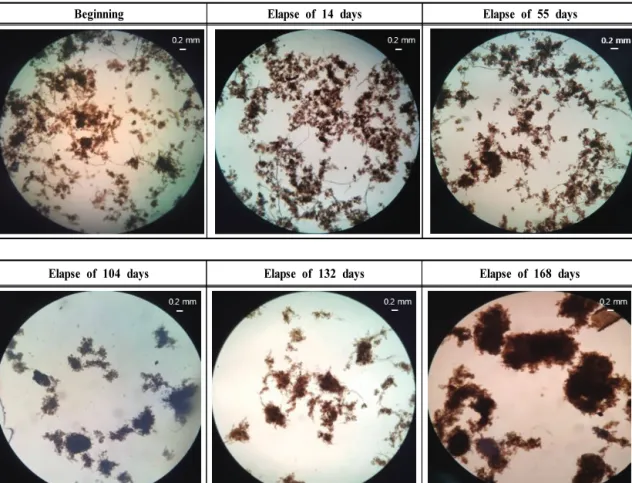
Aerobic granular sludge (AGS) can be classified as a type of self-immobilized microbial aggregates measuring more than 0.2 mm. It offers the option to simultaneously remove COD, N, and P that occur in different zones inside a granule. Also, AGS is characterized by high precipitability, treatability with high organic loading, and high tolerance to low temperature. In this study, a sequencing batch reactor inoculated with AGS (AGS-SBR) is a new advanced wastewater treatment process that was proven to grow AGS with integrated nutrient removal and low C/N ratio. A pilot plant, AGS-SBR with a capacity of 225 m
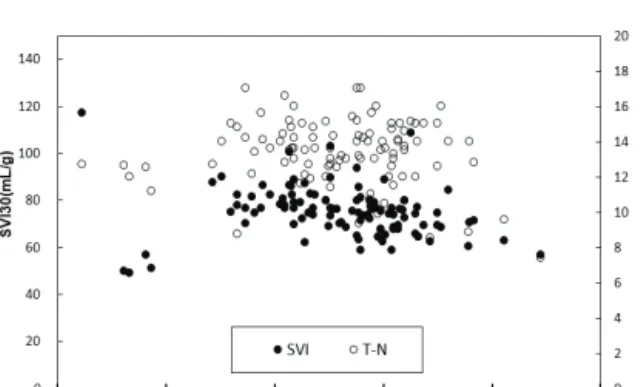
3/d was installed at an S sewage treatment plant in Gyeonggi-do. The results of the operation showed that the water quality of the effluent indicated that the value of BOD5 was 1.5 mg/L, COD
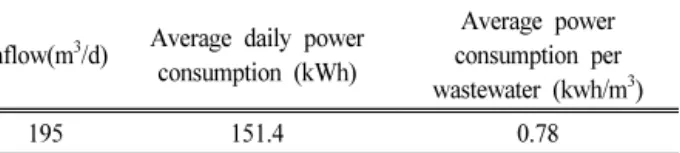
Mnwas 11.4 mg/L, SS was 6.2 mg/L, T-N was 13.2 mg/L, and T-P was 0.197 mg/L, and all of these values reliably satisfied an effluent standard (I Area). In winter, the T-N treatment efficiency at a lower temperature of less than 11℃ also showed reliability to meet the effluent standard of the I Area (20 mg/L or less). Analysis of microbial community in AGS showed a higher preponderance of beneficial microorganisms involved in denitrification and phosphorus accumulation compared with activated sludge. The power consumption and sludge disposal cost were reduced by 34.7% and 54.9%, respectively, compared to the domestic SBR type sewage treatment plant with a processing capacity of 1,000 m
3/d or less.
Key words : Advanced wastewater treatment, Aerobic granular sludge(AGS), Energy saving, Sequencing batch reactor(SBR)
a,†
Corresponding author,
선임사원(Senior Researcher), [email protected], https://orcid.org/0000-0002-0641-383Xb 선임사원(Senior Researcher), [email protected], https://orcid.org/0000-0001-7135-9318