논문 2009-4-9
방향성 다해상도 변환을 사용한 새로운 다중초점 이미지 융합 기법
A Novel Multi-focus Image Fusion Technique Using Directional Multiresolution Transform
박대철*, 론넬 아톨레
**
Dae-Chul Park, Ronnel R. Atole
요 약 본 논문은 최근 소개된 curvelet 변환 구성을 사용하여 하잇브리드 다초점 이미지 융합 기법을 다룬다. 하잇 브리화는 MS 융합 규칙을 새로운 “복제” 방법과 결합시킴으로써 얻어진다. 제안된 기법은 MS 규칙을 사용하여 각 분해 레벨 이미지의 스펙트럼내에 m개의 가장 두드러진 항들만을 융합시킨다. 이 기법은 이미지의 어떠한 스케일과 방향, 이동에서 변환 집합의 MSC에 충실하여 m-항 융합으로 합성이 이루어진다. 제안한 방법을 평가하기 위하여 Xydeas 와 Petrovic이 제안한 경계선에 민감한 객관적 품질 척도를 적용하였다. 실험 결과는 제안한 기법이 잉여, 쉬 프트-불변 Dual-Tree 복소수 웨이블릿 변환에 대한 대안으로서의 가능성을 보여주었다. 특히, 50%의 m-항 융합은 어 떤 시각적인 품질 저하를 갖지 않는 결과를 주는 것이 확인되었다.
Abstract
This paper addresses a hybrid multi-focus image fusion scheme using the recent curvelet transform constructions. Hybridization is obtained by combining the MS fusion rule with a novel “copy” method. The proposed scheme use MS rule to fuse the m most significant terms in spectrum of an image at each decomposition level. The scheme is dubbed in this work as m-term fusion in adherence to its use of the MSC (most significant coefficients) in the transform set at any given scale, orientation, and translation. We applied the edge-sensitive objective quality measure proposed by Xydeas and Petrovic to evaluate the method.Experimental results show that the proposed scheme is a potential alternative to the redundant, shift-invariant Dual-Tree Complex Wavelet transforms. In particular, it was confirmed that a 50% m-term fusion produces outputs with no visible quality degradation.
Key Words :
multi-focus, image fusion, curvelt transform, directional multiresolution transform, fusion ruleⅠ. INTRODUCTION
1. Overview of the Study
In the last decades, the breadth of image fusion theories has grown to encompass advanced principles in such fields as signal processing, applied
*정회원, 한남대학교 정보통신공학과
**정회원, Dept. of CS, Partido State University, Philippines 접수일자 2009.06.18, 수정완료.2009.07.25
mathematics, and various engineering domains. Indeed, the technological breakthroughs and developments explain its large active research community. But a large room for further improvements let alone issues and challenges, remain. Some of these technological gaps are addressed in this work.
As mathematical tools, such as transforms continue
to evolve into more powerful and efficient techniques,
so too should the underlying algorithms of image fusion
systems. For an immediate example, consider image fusion via Dual-Tree Complex Wavelet Transforms (DT-CWT). While this method produces excellent, shift-invariant results, the approach generally expands a d-dimensional signal by a factor of 2d. For applications such as image fusion and compression, this expansive representation entails a running-time complexity proportional to the redundancy of the transform.
Hence, in this work, we exploit the efficiency of signal representation in the curvelet domain, and implement a novel image fusion decision rule. In particular, this work proposes a method for multi-focus input images using hybrid partial fusion – that is, with the m-term curvelet approximants, or most significant coefficients (MSC).
2. Background of Image Fusion
We define image fusion as an image processing task that systematically collects and extracts, from two or more input images, based on a designed fusion method or technique, the pixels, regions, or objects, that form a single composite image of improved context and details.
The basic requirement to image fusion has been for the fused image to be “visually pleasing” [1]. The result of fusion should preserve all relevant information of the input image, eliminating redundancy and noise [2].
Image fusion can also be defined as combination of images from different sources with the aim to obtain new or more precise knowledge about the scene [3]. A more general definition can be found in [4]: Image fusion is the process by which several images coming from different sensors or modalities, or some of their features, are combined together to form a single fused image.
There are many specific applications of image fusion: geographic information systems (GIS) and remote sensing, noise cancellation, image restoration, animation (“inbetweening”), illumination adjustment,
and exposure enhancement, to name a few. A wealth of materials can also be found in the literature of image fusion on remote sensing and medical imaging applications, mostly dealing with spectral-rich but spatial resolution-poor image data at one end, and spatial resolution-rich but spectral-poor image data in the visible bands at the other. In these cases, the goal of fusion is to create a context-rich composite image that contains both spectral and spatial content.
In some cases, images may have been acquired with out-of-focus regions and the real-time scenario prevents the human observer from recapturing the scene. One obvious solution is, thus, to employ tools for enhancing the captured image’s context. In concealed-weapon detection (CWD) [5], and surveillance, post-processing a region-of-interest may be needed in a time-critical situation in order for the human observer to make a timely decision. Often, improving the would-be image by physically altering and interfering with the scene or literally removing physical occlusions is not practical and possible. Or, in poor weather conditions, the pilot may be presented with a clear, “context-enhanced” image of the navigation environment, but the weather “occlusions”
are beyond human control.
3. Original Contributions
An important prerequisite to image fusion is the registration of input images which brings the images to acceptable levels of spatial alignments. In this study, it is assumed that input images to the system proposed have been pre-registered. Image registration is itself an interesting and complex image processing field that is beyond the scope of this study.
The novelty of the image fusion method proposed in
this study is primarily two-fold. First is the
implementation of an image fusion scheme utilizing
multiscale, multidirectional image analysis techniques
– the curvelet transform. Secondly, the main
contribution of this study is the development of a novel
hybrid fusion decision scheme known as m-term
approximants or most significant coefficients (MSC) fusion scheme. This construction is treated in detail in Section 4.
We then provide characterization of curvelet-based image fusion in terms of quality using the Xydeas and Petrovic measure[6].
4. Organization of the Paper
The next section, Section 2, builds on the relevant multiresolution signal processing concepts that fueled the researcher’s desire for an alternative scheme such as the one proposed in this study. It equips this work a self-containing background on the principles of multiresolution image representation techniques.
In Section 3 we briefly introduce the curvelet transform. Section 4 is devoted to the proposed method, the marriage of multiresolution principles, and modern geometrically-rich curvelet transform, while in Section 5 are the results of implementing the proposed technique along with evaluation of the outputs using the objective measure of Xydeas and Petrovic. Section 6 is the concluding part.
Ⅱ. MULTIRESOLUTION IMAGE ANALYSIS AND SYNTHESIS
The basic idea behind wavelet transforms is to exploit the correlation structure present in most real life signals to build a sparse approximation. The correlation structure is typically localized in space (time) and frequency; neighboring samples and frequencies are more correlated than ones that are far apart [7].
Due to the Gibbs phenomenon, many Fourier transform coefficients are required to reconstruct a discontinuity to achieve acceptable accuracy. Wavelets outperform the Fourier series on this respect because they are localized and multiscaled.
The importance of detecting singularities has been recognized long ago (i.e. 1992). For example, Mallat, et.
al. [8] proposed singularity detection with wavelets by
chaining adjacent wavelet coefficients and then thresholding them over edges and contours.
1. Classical Wavelets
By wavelet decomposition (iterated or recursive multiresolution expansion, i.e. all scale levels and time locations), any function or signal ∈ can be expressed in terms of orthonormal wavelet ()and scaling () functions:
∞
∞
∞ ∞
∞ (1)
where ,and are known as scaling, and wavelet coefficients, respectively, and are calculated by:
∞ ∞
∞ ∞
Because the decomposition measures the frequency content of a signal at different levels j and at different times (time shift n), a time-scale analysis is obtained giving the multiresolution view of a signal. Wavelets do provide sparse representation of 1-D and 2-D data, more efficiently than the Fourier transform, but are only as efficient at point discontinuities. Wavelets are less effective in dealing with edge discontinuities which characterize images, and due to their poor orientation selectivity wavelets also do not represent higher-dimensional singularities effectively[9]. Other relevant negative issues on critically-sampled classical wavelets are: oscillations, shift-variance, aliasing, and poor directionality.
2. New-Generation Wavelets
This subsection highlights some of the most notable schemes based on their uses in areas such as compression, image processing, fusion, denoising, and approximation.
Dual-tree complex wavelet transforms (DT-CWT),
for instance, are at twice the redundancy of classical
decimated wavelets in 1-D, and times redundant for signals of d-dimensions, but effectively wipes out all the limitations of wavelets. It combines multiresolution benefits with the attractive features of the Fourier transform.
The dual-tree CWT employs two real DWTs – one for the real part of the transform; and another for the imaginary part, thus jointly forming complex-valued coefficients. The filters are designed so that the two real wavelets associated to each of the DWTs are approximately analytic forming Hilbert transform of each other (i.e. ≈ where H is the Hilbert transform operator).
Undecimated Stationary Wavelet Transforms or Frames [10], on the other hand, provides a computational complexity of , but its expansive signal representation makes them shift-invariant and ideal for edge-detection, denoising, and image fusion.
They are basically similar to classical DWT except that no decimation is applied but rather the lowpass and highpass filters are upsampled at each level of decomposition.
Another notable wavelet construction is widely explored by Selesnick [11-12] as an alternative to DT-CWT and frames in providing an expansive yet approximately shift-invariant transform. Selesnick’s frames [11] are compactly supported and have vanishing moments. The fundamental idea is for these schemes to have a compromise between critically sampled and fully undecimated transforms thereby reducing the redundancy while achieving shift-invariance. HDDWT exhibit twice the complexity of critically sampled DWT (i.e. 2N, for an N-sample signal) regardless of the number of scales calculated, which is lower than DT-CWT (i.e. half the DT-CWT complexity in 2-D signals).
The literature on lifting wavelets is itself a vast subject matter under wavelet-based signal constructions. Lifting wavelets, created by Sweldens [13] are often called the “second generation” wavelets drawing interests and motivations as new extensions to
multi-resolution decomposition which eliminates dependence on Fourier transform theories.
Ⅲ. THE CURVELET TRANSFORM
In a nutshell, curvelets are bandpass-filtered, multiscaled ridgelet transforms obeying the parabolic scaling property such that the area A of a support for the oriented ridgelet at a scale j satisfies
≈ × . Let be the m-term curvelet approximation (m most significant coefficients in the curvelet series) of ∈ For purposes in this study, we define a coefficient a as more significant than b if . It is shown [14] that an
approximation achieves
∥ ∥ ≤ · log →∞
(2)The continuous curvelet transform is defined as [15]:
(3)
where are the coefficients taken from the inner product between the input signal f(x) and the curvelet basis defined as a function of ∈ at scale 2
-j ,orientation l, and location :
(4)In equation (4) , may be interpreted as the
“mother” curvelet function, and its argument represents the scaled oriented, and translated ∈ .
constitutes a translation at scale
2-j,and orientation radians to the counter-clockwise direction. Through the rotation matrix
cos sin
sin cos
R
qq q
q q
= -
é ù
ê ú
ë û
(5)which defines a clockwise motion, can be written as
· ·
where . Figure 1 provides the
geometrical perspectives. Note in the figure that is
a rotation angle defined at equi-spaced intervals also dependent on the scale, that is, · ⌊⌋ · for l=0,1,…such that ≤ ≤ .
Figure 1. The mechanism for transporting a vector x at an angle
in the clockwise direction, at a position defined by ∈
.Following the multiresolution property, both k and
depends on the current scale
.The discussions above together with the Plancherel theorem give rise to the tiling of frequency space shown in the figure below. Equation can then be expressed in terms of an integral over the frequency plane:
(6)Figure 2. The divisions of the frequency plane brought about by the definition of curvelet directionality, scaling, and translation properties. Each partition (shaded region) is a parabolic-sized wedge that serves as support of a curvelet basis function.
1. Image Fusion via m-term Curvelet Approximants
The general schematics of the m-term curvelet-based method proposed areas shown below.
First, (numbered (①) in the figure below) two registered input images are transformed via discrete curvelet implementations. The results are directional, multiscale coefficients. The second step (②) is the m-term fusion scheme, which, in a nutshell, extracts m most significant coefficients from the two image transforms. These m coefficients are fused via MS (Maximum Selection) scheme. The last step is the inverse curvelet transform that produces the fused image in (③) of the figure.
Figure 3. The main components of the image fusion algorithm proposed.
가. Definitions
(i) Let and be the sets of curvelet coefficients
for the first and second input image, respectively. We index each coefficient as
for ∈ . j denotes the scaling levels from the coarsest (j=1) upto the finest; k refers to the angular directions and are the location information, which are dependent on j
(ii) For each level j, and for each orientation k in the current level j
(iii) Order the coefficients from the most significant to the least significant terms. We define significance of terms to be directly proportional to its magnitude (i.e.
a is more significant than b if |a|>|b|). Let
and , by definition, denote the ordered m most
significant coefficients for input image 1 and 2,
respectively; and let and be a 2xM array that
records the locations of each∈ in matrix
such that ( , ) is a coefficient c located at the row and column positions in determined by and , respectively.
(iv) Let and be the mean magnitudes of
and , respectively, such that
(7)where ∉ . We will call these coefficients the least significant coefficients (LSC) as opposed to the m-term or MSC.
나. Fusing the Coarsest (j=1) and the Detail (j=2…maxlevel-1) Coefficients
If ≤
(i) Z{j}{k} = ∈ ∉ (ii) For each column in IX 2
1) ;
2) if ≥ then
else else (i.e. )
(iii) Z{j}{k} = ∈ ∉ (iv) For each column in IX 1
1) ;
2) if ≥ then
else
Only the m MSC at the coarsest and detail levels are fused. This introduces significant reduction into the processing time of the algorithm and provides a reasonable compromise between fusion quality and
running time. m is to be provided as a fusion parameter determined by the user or the application. For example, the system may be asked to fuse r =.2 (i.e. 20%) of the coefficients, and therefore, m in this case is the number of the most significant coefficients in the upper 20% of the set.
As to the other members of the coefficients set not included in the m-term (LSC), a simple heuristic is introduced. Observe that in steps (i) and (iii) of the algorithm above, we are effectively copying the LSC of the k-th orientation at the j-th level of the input image’s curvelet transform. This follows the conditional statement (i.e. if ≤ , and else part, respectively).
With these developments, a generalization of the resulting fusion rule can be related to the Weighted Averaging (WA) scheme [1]. In the case of our method, however, a weight , when ≤ ≠ . That is, ≠ always becomes 0 in the general equation for WA given below
(8)
where is the new fused coefficient. A hybridization of the MS and WA schemes are thus achieved, where the MS fusion rule is applied only to the m-term MSC.
다. Fusing the Finest-scale (j=maxlevel) Coefficients
For each orientation k in the current scale j (i) For each coefficients ∈ and
∈
(ii) if ≥ then
else
A slightly different approach is taken with the
coefficients at the finest level, as stated in the above
algorithm. In this case, all (100%) coefficients are
always fused through the MS fusion rule (step (vi)).
Ⅳ. RESULTS
1. Objective Quality Metric
The fusion quality metric employed in this work measures the amount of preserved edge information from the input images. Xydeas and Petrovic’s objective quality measure quantifies the ability of the fusion process to transfer as accurately as possible the salient edge information in the input images into the output image.
Given two input images, A, and B, and the fused image F, the quality metric of Xydeas and Petrovic first applies the Sobel edge operator to calculate the edge strength and orientation information
for each pixel , of an NxM image (i.e.
≤ ≤ ≤ ≤ ). Thus, denoting by
,and the horizontal and vertical Sobel templates, respectively, centered on pixel
and convolved with the corresponding pixels of image A, we have the following:
tan
Given the above expressions, the relative strength
and orientation of an input image A with respect to fused image F is then formed as
i f
Using the preceding equations, the following expressions model the perceptual preservation of information in F:
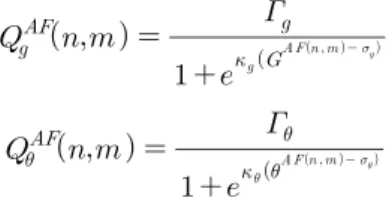
are constants that determine the exact shape of the sigmoid functions used to form the edge strength and orientation preservation values. The Edge information preservation values are then calculated as the product of edge strength and orientation perceptual information preservation functions, . The range of is [0,1] where a value of 0 indicates the complete loss (nothing preserved) of edge information, at location (n,m), whereas a value of 1 indicates a fusion process without loss of salient edge information. And finally, for a fusion process P, with 2 (NxM) inputs A and B, the next expression gives the normalized weighted performance metric:
(9)
2. Comparison with Other Wavelet-based Methods
Table 1 presents a summary of the objective quality
measures taken from the output of the curvelet-based
fusion method. For comparison purposes, other
prominent wavelet-based fusion techniques are tested
and documented as shown in the table. In all the tests
conducted and discussed in this section, 5 sets of
grayscale multi-focus images of varying resolutions
were used: sphere (128x128); indian (256x256); pepsi
(512x512); toys (512x512); toys (512x512); and clocks
(512x512). The clocks tes timage have inherent spatial
shifts in the inputs and are used to test shift-invariance
of the curvelet transform. Note that in order for the
comparison to be sensible, the curvelet method was
first applied to all (100%) coefficients.
Table 1. Comparison of other Wavelet based
fusion methods with
them-termschemeproposed.
Test Image/
Fusion
Method Sphere Indian Pepsi Toys Clocks Classical
DWT 0.65 0.64 0.66 0.59 0.63 DT-DWT 0.66 0.66 0.68 0.60 0.66 Lifting
Wavelet 0.64 0.65 0.66 0.58 0.63 Curvelet
Fusion 0.65 0.65 0.67 0.60 0.65
It is interesting to observe that the curvelet-based fusion results exhibited superior quality than the outputs of classical DWT, and Lifting schemes.
However, this variation may be attributed to the herein used objective quality measure.
3. Varying the length of MSC
The major component of our tests is on the characterization of the effect of applying the m-term fusion rule proposed, into the image quality.
The goal in this test is to see whether reducing the number of coefficients involved in fusion (MSC) affects the output quality, and by how much. Table 2 presents a summary of this test.
Table 2. Image fusion Quality when only (MSC=10%) of the coefficients fused.
Test Image/
Fusion
Method Sphere Indian Pepsi Toys Clocks Quality 0.58 0.41 0.42 0.51 0.41
It is evident that by only using 10% of the curvelet coefficients, a significant amount of time is saved. As to the quality of output, by comparing the last row of Table 1 with the values in the first row of Table 2 above, we can say that the reduction in quality measure is still surprisingly reasonable even after 90% of the coefficients are ignored. This can be attributed to the fact that most of the energies in the image spectrum
are represented in the 10% MSC – the low frequency components.
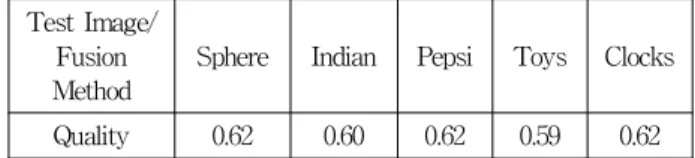
Table 3 shown below summarizes the performance of the proposed algorithm when 50% of the terms were fused. It can be concluded that 50% MSC achieves a reasonable quality that is not decreased significantly
Table 3. Image fusion Quality, and Elapsed Time when only (MSC=50%) of the coefficients fused.
Test Image/
Fusion
Method Sphere Indian Pepsi Toys Clocks Quality 0.62 0.60 0.62 0.59 0.62
ⅤI. CONCLUSION
We proposed in this paper a fusion scheme based on the directionally-rich, multiresolution curvelet transforms. Specifically, we implemented a novel fusion rule that only involves the m most significant coefficients of the transform. To quantify the fusion results, we used the objective quality measure proposed by Xydeas, and Petrovic. Our tests reveal interesting properties of the proposed method.
The first major finding is that curvelets are indeed a potential shift-invariant tool that can take the place of DT-CWT. In our tests, we found out that curvelet-based fusion achieves superior quality both in terms of objective criterion and visual inspection compared with the lifting and classical wavelets.
Curvelet-based fusion is also more robust than the latter two in handling shifts in the input images.
Compared with the DT-CWT, results indicate that curvelet-based fusion is equally superior.
We found out that 50% of the coefficients are
enough to be fused with the MS rule, while the
remaining least significant terms can be fused using
our proposed rule. Together, this gives a hybrid
scheme that achieves a compromise between time
consumption and quality. This is obtained without
※ Acknowledgment
This paper has been supported by the 2009 Hannam University Research Fund.
considerable amount of degradation in the quality of the output.
References
[1] Raskar, R., Ilie, A., and Yu, J., “Image Fusion for Context Enhancement and Video Surrealism”, Proc
3rd International Symposium on
Non-Photorealistic Animation and Rendering (NPAR) 2004, Annecy, France
[2] Rockinger, O. “Pixel-Level Fusion of Image Sequences Using Wavelet Frames”, In Mardia, K.V., Gill, C.A., and Dryden, I.L., eds., Proc 16th Leeds Applied Share Research Workshop. Leeds University Press, pp. 149-154, 1996
[3] Heizmann, M., “Image Fusion Tutorial”, Lecture Notes in IEEE Int’l Conference on Multisensor Fusion and Integration for Intelligent Systems (MFI 2006), Heidelberg, Germany, Sept 3, 2006 [4] Nikolov, S. G., Lewis, J.J., O’Callaghan, R.J., Bull,
D.R., and Canagarajah, C.N., “Hybrid Fused Displays: Between Pixel and Region-based Image Fusion”, Proc 7th International Conference on Information Fusion, Stockholm, Sweden, pp.
1072-1079, June 2004
[5] Ramac, L. C., Uner, M. K., Varshney, P. K.,
“Morphological filters and wavelet based image fusion for concealed weapon detection,”
Proceedings of SPIE, vol. 3376, 1998
[6] Xydeas, C., and Petrovic, V., “Objective image fusion performance measure”, Electronic Letters, 36(4):308-309, February 2000
[7] Daubechies, I., and Sweldens, W., “Factoring Wavelet Transforms into Lifting Steps”, J.
Fourier Anal. Appl., Vol. 4, No. 3, pp. 247-269, 1998
[8] Mallat, S., and Hwang, W.L., “Singularity detection and processing with wavelets”, IEEE Transactions on Information Theory, Special Issue on Wavelet Transforms and Multiresolution Signal Analysis, vol. 38, no.2, pp. 617-643, March 1992
[9] Candes, E., “What is a Curvelet”, Notice of the AMS, vol.50, number 11, pp. 1402-1403, Dec. 2003 [10] Gyaourova, A., Kamath, C., and Fodor, I.K.,
“Undecimated wavelet transforms for image de-nosing”, Center for Applied Sci. Computing, Lawrence Livermore Natl. Lab. [online], Available from www.llnl.gov/casc/sapphire/pubs/150931.pdf [Accessed June 10, 2008].
[11] Selesnick, I. W., “A Higher-Density Discrete Wavelet Transform”, IEEE Transactions on Signal Processing, vol 54, issue 8, pp 3039-3048, Aug.
2006
[12] Selesnick, I. W., The double-density dual-tree DWT. “IEEE Trans. on Signal Processing”, 52(5):1304-1314, May 2004
[13] Sweldens, W., “The Lifting Scheme: A new philosophy in biorthogonal wavelet constructions”, In A. F. Laine and M. Unser, editors, Wavelet Applications in Signal and Image Processing III, pp. 68-79, Proc. SPIE 2569, 1995
[14] Candes, E.J., and Donoho, D.L., “Curvelets--a surprisingly effective nonadaptive representation for objects with edges”, in: C.R.A. Cohen, L.
Schumaker (Eds.), Curve and Surface Fitting:
Saint Malo 1999, Vanderbilt University Press, Nashville, TN, 2000
[15] Candes, E.J., Demanet, L., Donoho, D.L., and Ying,
L., “Fast Discrete Curvelet Transforms”, Multiscale
Modeling & Simulation, vol 5, issue 3, pp. 861-899,
2006
저자 소개 Daechul Park(정회원)
He received the B.S. degree in Electronics Engineering from Sogang University, Korea, in 1977, the M.S.
Degree and the Ph.D. degree in Electrical and Computer Engineering from the University of New Mexico, Albuquerque, NM, USA, in 1985 and 1989, respectively. He had worked in ETRI, Korea as a member of senior technical staff from 1989 until 1993. Since 1993, he has been with the Department of Information and Communication Engineering, Hannam University, Daejeon, where he is a currently a professor. His research interests include image processing, mobile multimedia communication and signal processing algorithm development.
Ronnel R. Atole (정회원)
He earned a B.S. in Computer Science degree at the Ateneo de Naga University, Naga City, Philippines, in 1999.In 2005, he received M.S. in Information Technology degree from the Hannam University, Daejeon, Korea where he obtained Ph.D. in Information Technology 4 years later in February, 2009. He works as a professor at Partido State University, Philippines where he also serves as Director of Center for ICT R&D. His interests include genetic algorithms, neural networks, image processing, data mining, system development, and databases.