ORIGINAL ARTICLE
Effect of Operational Parameters on the Removal of Microcystis aeruginosa in Electro-flotation Process
Arpon Lucero Jr, Dong-Seog Kim, Young-Seek Park
1)*Department of Environmental Science, Catholic University of Daegu, Gyeongsan 38430, Korea
1)DU University College, Daegu University, Gyeongsan 38453, Korea
Abstract
Despite the low removal efficiencies reported by previous studies, electro-flotation still stands out among other microalgae removal methods for its economical and environmental benefits. To enhance removal efficiency, the important factors that limit the performance of this method must be investigated. In this study, the possible ways of increasing the removal efficiency of microalgae have been explored by investigating the effects of several important variables in electro-flotation. Eight parameters, namely flotation time, rising time, current density, pH, conductivity, electrode distance, temperature and initial concentration were evaluated using a one-parameter-at-a-time approach. Results revealed that the operational parameters that greatly affected the removal efficiency of microalgae were electro-flotation time, current density, pH, and initial concentration. The effect of conductivity, electrode distance, and temperature on removal efficiency were insignificant. However, they exhibited positive an indirect positive effect on power demand, which is nowadays considered an equally important aspect in the running of a feasible and economically efficient electro-flotation process.
Key words : Electro-flotation, Microalgae, Power consumption, Removal efficiency, Stainless steel mesh
1. Introduction
1)Microalgae are photosynthetic organisms usually found in freshwater and marine water especially in countries with tropical and subtropical climate. Aside from their important role in the environment through oxygen supply and carbon fixation, these microscopic organisms have gained so much popularity because of their contributions in research especially in food, soil and water fertility, and biofuels (Rai, 1990; Skulberg, 1995). However, despite all the benefits, the presence of microalgae in bodies of water may pose serious risks to human and to the environment. Excessive
growth of microalgae in water reservoirs are caused by increased levels of nutrients such as nitrogen and phosphorus, which, mostly come from industries and farms’ runoffs. Their presence in such places creates problems not only in water supplies but also in water quality (Chorus and Bartram, 1999; Dittmann and Weigand, 2006) that could adversely affect human beings and aquatic organisms.
Microcystis aeruginosa (M.aeruginosa), a photoautotrophic gram – negative microalgae is the most common and well-known toxic cyanobacteria in eutrophic freshwater. It produces neurotoxins and hepatotoxins such as microcystin and cyanopeptolin (Chen et al.,
Received 18 October, 2016; Revised 19 October, 2016;
Accepted 21 October, 2016
*Corresponding author : Young-Seek Park, DU University College, Daegu University, Gyeongsan 38453, Korea
Phone : +82-53-850-4571 E-mail : [email protected]
ⓒ The Korean Environmental Sciences Society. All rights reserved.
This is an Open-Access article distributed under the terms of the Creative Commons Attribution Non-Commercial License (http://
creativecommons.org/licenses/by-nc/3.0) which permits unrestricted non-commercial use, distribution, and reproduction in any medium, provided the original work is properly cited.
2016; Tooming-Klunderud, 2007) which cause serious damage to liver and nerve tissues. In an effort to eliminate these toxic microalgae, several methods of microalgae removal have been established by many different researchers. The most widely used methods are the removal by flocculation and by electro -chemical process specifically electro-coagulation (EC). Flocculation is already a well-established method especially in water treatment processes for removing colloidal particles (Bratby, 2006) but underdeveloped for microalgae removal (Chatsungnoen and Chisti, 2016). By using different types of flocculants, numerous studies on flocculation were reported to have promising results (Chatsungnoen and Chisti, 2016; Gerde et al., 2014; Gorin et al., 2015;
Wu et al., 2015). Just recently flocculation by pH modulation (Ummalyma et al., 2016) has also been studied which turned out to be a convincing alternative to microalgae removal. Another alternative method is by electro-coagulation (EC). This newer technology, which, has been very successful in solid – liquid separation processes (Baierle et al., 2015;
Keshmirizadeh et al., 2011; Vandamme et al., 2011) was reported to have excellent removal potentials by using either aluminum or iron electrodes. All the above methods exhibited relatively high removal efficiencies, however, they have disadvantages. The main disadvantage of flocculation is that it requires so much time in coagulation and sedimentation stages.
Like any other processes, time is always a critical factor as far as removal rate is concerned. On the other hand, EC, an exceptional method for microalgae removal, requires frequent replacement of electrodes due to dissolution which could increase the overall operational cost and cause intermittent interruptions delaying the operation. Moreover, water contamination in EC is inevitable since aluminum and iron are sacrificial metals when used as electrodes in an electrochemical process.
Electro-flotation (EF) is also an encouraging
alternative in microalgae removal. It uses non-sacrificial electrodes such as carbon, graphite, stainless steel (Sus), dimensionally stable anode (DSA), and many others. These types of electrode materials do not dissolve in the solution especially under lower applied current which is good when considering a continuous operation. However, previous studies of electro-flotation revealed a relatively low removal efficiency of different microalgal strains using carbon and graphite electrodes (Misra et al., 2014; Zhou et al., 2016).
Hence, this study aims to explore the possibilities of increasing the removal efficiency of using EF as a method for removal of microalgae in water.
Moreover, investigate the effects of many important variables on the removal of microalgae specifically Microcystis aeruginosa by using EF method.
2. Materials and Methods
2.1. Cultivation of microalgae
Microcystis aeruginosa from KMMCC (Korean marine microalgae culture center, AG10159) was mass cultivated in a 120 L photobioreactor using JM (Jaworski’s medium) as growth media. 100 mL of all nine JM components were diluted with 100 L of water to make the final medium. White LED lamps were placed around the inner wall of the reactor which served as the light source. Heaters were also placed along with the lamps to minimize temperature variations. The selected microalgal strain was grown with light and dark cycle of 16h:8h, temperature of 25°C, and a photon flux of approximately 200 µmol/m
2s. The microalgal culture was continuously aerated for 24 h with CO
2enriched air (1.5% v/v) at 0.1 vvm.
2.2. Electro-flotation set-up
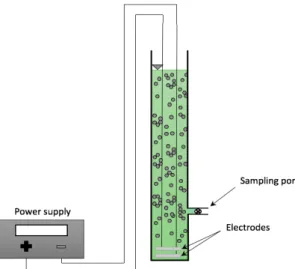
Fig. 1 shows the experimental set-up of microalgae
removal by electro-flotation. A reactor made of
plexiglas (thickness = 0.5 cm) with dimensions of 5.5
cm x 6.0 cm x 60 cm (1980 cm
3) was used in the experiment. A valve was installed 15 cm from the base of the reactor to serve as the sampling port. The electrodes used in the experiment were made of stainless steel mesh type (Woven Sus mesh, 12 mesh 1.61 mm; wire thickness, 0.5 mm) with a 24.75 cm
2effective surface area (5.5 cm x 4.5 cm). Stainless steel was chosen as the electrode because it is relatively cheap compared to other types of electrode that are commonly used in electro-flotation process. A pair of the fabricated electrode panels was then fixed into an electrode holder with slits (3 mm in between gaps) and placed horizontally at the bottom of the chamber with an initial distance of 6 mm between each electrode. The distance between the electrodes was adjusted manually using the slits embedded in the electrode holder. In the configuration of the electrodes, since the cathode produces twice as many bubbles as the anode, it is important to note that the cathode should be placed on top to prevent severe coalescence of microbubbles in the middle of the two electrodes. Both electrodes were then connected to a DC power supply (GW GPR-11H30D).
Fig. 1. Schematic diagram of microalgae removal by electro flotation.
2.3. Experimental procedure
Eight parameters namely flotation time, rising time, current density, pH, conductivity, electrode distance, temperature, and initial concentration were evaluated in this study using a one – parameter – at – a – time approach (Vandamme et al., 2011). Original values of pH (8.5±0.4), temperature (25±0.5°C), and electrical conductivity (0.375±0.010 ms/cm) of the culture medium and presumed parameters such as current (0.5 A) and electrode distance (6 mm) were used as initial parameters values.
Initial pH adjustments were done using pH meter (SP2300, Suntex) and 0.1 mole of NaOH and HCl solutions. For the conductivity experiment, the conductivity of the medium was increased gradually from its original value of 0.375±0.010 ms/cm by using Na
2SO
4. To evaluate the effect of initial concentration of microalgae on electro-flotation efficiency, subsequent experiments were performed within the exponential phase and early stage of stationary phase of growth. Prior to this part, a linear relationship between optical density and chlorophyll a (mg/m
3) has already been established. For the temperature experiment, lower temperatures were attained by using a 1,000 mL beaker instead of the fabricated plexiglas reactor shown in Fig. 1. The temperature of the microalgal culture was decreased by submerging the beaker into a refrigerated batch circulator (WCR-P22, Daihan Scientific Co., Ltd.) until the temperature of the culture is equal to the desired temperature before performing electro-flotation. With this type of set-up, the samples were collected by pipetting the desired amount of microalgal culture at the center approximately 5 cm from the surface the suspension.
2.4. Analyses
All electro-flotation experiments except for the
initial concentration were performed in triplicates
which, in every run, 1 L of microalgal suspension
were collected within the stationary phase of microalgal growth. Each parameter has an ideal value which was selected exclusively based on microalgal removal efficiency (MRE) which was calculated by the equation (Vandamme et al., 2011):
% MRE = [(OD
i– OD
f) / OD
i] (1)
where, OD
iis the initial optical density of microalgal suspension and OD
fis the final optical density of the microalgal suspension both measured at 680 nm.
The optical density (OD) was measured using UV-VIS spectrophotometer (UV-1601, Shimadzu).
Power consumption was also calculated by multiplying the current applied (I) and the measured voltage (V) all throughout the circuit.
All % MRE data shown in every graph were mean values with standard deviation errors in which all results were tested for significance (p = 0.05) among treatments using SPSS.
3. Results and discussion
3.1. Effect of electro-flotation time and rising time Electro-flotation is a flotation process based on electrolysis. It splits water molecules in the medium into H
2and O
2gas in the form of microbubbles by undergoing reduction and oxidation reactions on the anode and the cathode, respectively. Over time, these microbubbles slowly rise on top of the medium in which, prior to this point, suspended microalgal cells collide and eventually attach to the microbubbles carrying them onto the surface. The longer the electrolysis time, the more microbubbles are produced and therefore more collision and attachment between the microbubbles and microalgal cells take place. In other words, higher removal efficiency should be attained at longer electro-flotation time.
In Fig. 2(a), results showed increasing removal
efficiency with time as expected. The findings also revealed that it is possible to achieve removal efficiencies higher than 90% at either 30 minutes of electro-flotation or longer using stainless steel mesh electrodes. These results were significantly higher compared to previous studies that adopted the same process. Zhou et al.(2016) reported an insignificant separation of Chlorella sp. from the culture medium using graphite electrodes (%Eff < 20%). Misra et al.(2014) also reported a relatively low recovery efficiencies of Chlorella sorokiniana and Scenedesmus obliquus at 79% and 57%, respectively, after an hour of electro-flotation using carbon electrodes. One possible reason why higher efficiencies were obtained in this study might be due to the use of mesh type electrode. All mesh type electrodes of any material have higher surface area compared to flat sheets (Zhang et al., 2010). Aside from their intrinsic catalytic nature, materials with higher surface area are usually more electrochemically active (Savinell et al., 1990) and thus produce higher volume of microbubbles. This is also the main reason why in this study mesh type electrode was preferred over plate type. Additionally, according to Bennett et al.(1958), flotation rate in electro-flotation process can be increased not only by reducing the bubble size but also by generating more bubbles. The higher number of bubbles distributed over a given area, the higher the opportunity for interaction between microbubbles and microalgal cells which result in higher removal efficiencies. These individual findings from different studies suggest that the extent of microalgae removal by electro-flotation is not only dependent on the operational parameters but on type of strain and electrode material as well.
The results shown in Fig. 2(a) also tell us that
flotation time between 30 ~ 40 minutes with % MRE
of 91.04 % ~ 93.52 %, is the range where the ideal
value should be taken. But instead, we decided to
select 15 minutes (82.62%) as ideal value to make
(a)
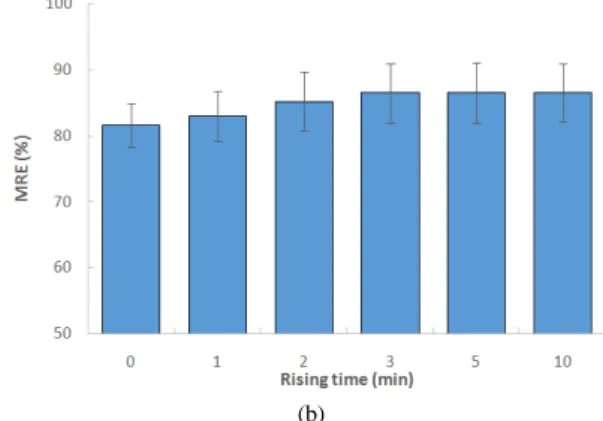
(Rising time = 0 min; Current density = 20.2 mA/cm2; pH = 8.5±0.4; Conductivity = 0.375±0.010 ms/cm; Electrode distance
= 6 mm; Temperature = 25±0.5ºC; Initial concentration 2100±100 mg/m3)
(b)
(Electro-flotation time = 15 min; Current density = 20.2 mA/cm2; pH = 8.5±0.4; Conductivity = 0.375±0.010 ms/cm; Electrode distance = 6 mm; Temperature = 25±0.5ºC; Initial concentration 2100±100 mg/m3)
Fig. 2. Effect of electro-flotation time (a) and rising time (b) on microalgal removal efficiency.
room for efficiency variations in other parameters.
One purpose of this experiment is to evaluate the effect of each parameter on microalgae removal using electro-flotation. In that case, the use of a flotation time longer than 15 minutes as ideal may not be a wise choice because at longer flotation time in which, higher efficiencies are obtained (greater than 85%), fewer microalgal cells will remain suspended in the medium. Within these times, the opportunity of each succeeding parameter to possibly increase the removal efficiency would be limited due to the insufficiency of the subject microalgae in the medium.
Fig. 2(b) shows the mean recovery efficiencies at different rising time. The graph indicates that an increase in removal efficiency of 5% is possible from 0 to 3 minutes. In this study, rising time is the time required for the generated microbubbles to rise above the sampling port. As mentioned previously, generated microbubbles attach with the microalgal cells and float them to the liquid’s surface. Hence, when collecting samples, a certain amount of time is needed right after the power supply has been switched off to make sure the area near the sampling port is free from microbubbles. Based on observations, the rising time
needed in this particular experiment is 2 minutes thus selected as the ideal rising time all throughout the experiment.
3.2. Effect of Current density and pH
It is well-known that electro-flotation produces smaller and more uniform bubbles comparing to other flotation methods such as dissolved air flotation and induced air flotation. Faraday’s law states that the mass of substance altered at an electrode’s surface during electrolysis is directly proportional to the quantity of electricity transferred to that electrode which means that increasing the applied current will cause more rapid generation of microbubbles of oxygen and hydrogen at the cathode and anode, respectively, that help carry microalgal cells to the surface of the liquid (Opu, 2015). Likewise, increasing the current also increases the active nucleation sites where microbubbles are generated. The more microbubbles produced, the higher opportunities of collision and attachment efficiencies, the higher the removal efficiency should be.
In this study, Fig. 3(a) shows increasing removal
efficiency with increasing current density from 0
(a)
(Electro-flotation time = 15 min; Rising time = 2 mim; pH = 8.5±0.4; Conductivity = 0.375±0.010 ms/cm; Electrode distance
= 6 mm; Temperature = 25±0.5ºC; Initial concentration 2100±100 mg/m3)
(b)
(Electro-flotation time = 15 min; Rising time = 2 min; Current density = 20.2 mA/cm2; Conductivity = 0.375±0.010 ms/cm;
Electrode distance = 6 mm; Temperature = 25±0.5ºC; Initial concentration 2100±100 mg/m3)
Fig. 3. Effect of (a) current and (b) pH on microalgal removal efficiency.
mA/cm
2to 20.20 mA/cm
2which confirms the above statement. However, beyond 20.20 mA/cm
2, a plateau is reached which means that further increase in current density will not have any significant effect as far as removal efficiency is concerned. Increasing the current density from this point, will only increase the power consumption but not the removal efficiency and therefore not a sensible option. The possible reason for the deceleration of microalgae removal beyond 20.20 mA/cm
2might be because of microbubble coalescence. An applied current of 20.20 mA/cm
2produces just enough microbubbles to actually do an effective flotation. However, increasing the current further produces excessive amount of microbubbles which results in congestion and somehow forces free moving microbubbles as well as the nucleating microbubbles coalesce with their own and produce larger ones. These larger bubbles promote lower bubble – particle collision and attachment efficiencies that could lead to poor microalgae removal (Lee and Lee, 2002; Li and Tsuge, 2006). Taking all the above points into consideration, we therefore select 20.20 mA/cm
2as our optimum value.
Fig. 3(b) shows the removal efficiency at different
levels of pH. At pH 7.0, the removal efficiency is the lowest at around 85%. However, both pH 3 and pH 11 exhibited excellent removal efficiencies greater than 95% and could potentially be an efficient way of microalgae removal. High efficiency obtained at extreme levels of pH is due to the overall surface charge of microalgae. Microalgal cells usually carry functional groups (carboxyl –COOH, and amine – NH
2) on their surface which stabilize cell suspension (Liu et al., 2013; Vandamme et al., 2013). The overall charge of microalgae surface above pH 4 is negative due to the deprotonation of the carboxylic group whilst the amine group remains neutral at this pH (Vandamme et al., 2013). As pH is decreased (pH <
4), carboxylic group undergoes protonation which increases the overall charge of the cell to 0 (Eq. (3)) (Liu et al., 2013).
–
OOC – cell – NH
2+ H
+HOOC – cell – NH
2(3)
At this point, both carboxyl and amine group
becomes neutral causing instability within the
suspension by overcoming electrostatic forces
(a)
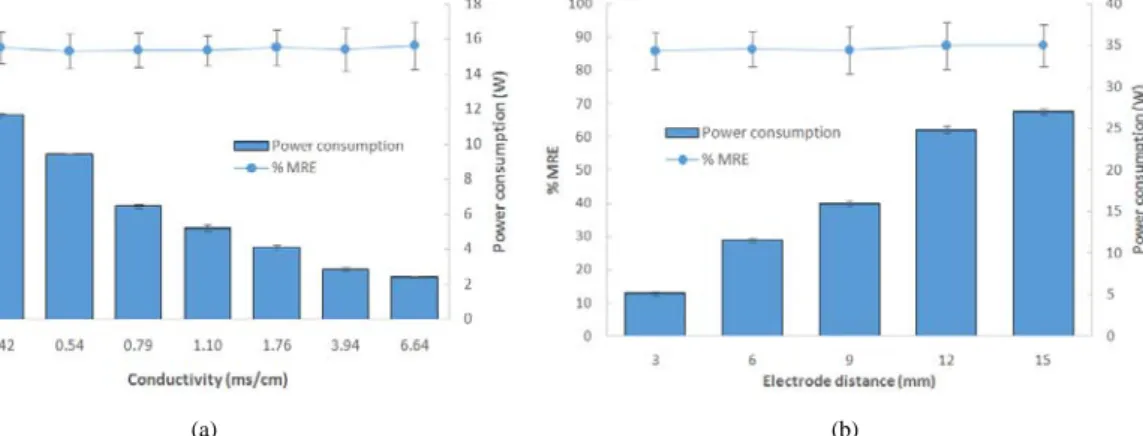
(Electro-flotation time = 15 min; Rising time = 2 min; Current density = 20.2 mA/cm2; pH = 8.5±0.4; Electrode distance = 6 mm; Temperature = 25±0.5ºC; Initial concentration 2100±100 mg/m3)
(b)
(Electro-flotation time = 15 min; Rising time = 2 min; Current density = 20.2 mA/cm2; pH = 8.5±0.4; Conductivity = 0.375±0.010 ms/cm; Temperature = 25±0.5ºC; Initial concentration 2100±100 mg/m3)
Fig. 4. Effect of (a) conductivity and electrode (b) distance on microalgal removal efficiency.
between cells and result in forming larger particles.
Increased removal efficiency at high pH level on the other hand, might be because of the formation of metallic hydroxide precipitates via hydrolysis of multivalence metallic ions present in the growth medium such as Mg
2+and Ca
2+. Although the net surface charge of microalgal cells is negative at this pH level, the metallic precipitates formed acted as coagulants destabilizing negatively charged microalgal cells and caused flocculation forming large cell clusters (Liu et al., 2013).
Even though pH 3 and pH 11 showed encouraging results on removal efficiency, pH adjustment of microalgal suspension to the extreme levels could be expensive and time consuming especially when considering larger scale operations. Given this possibility, the original pH of the growth media (8.5±0.4) was therefore maintained in the succeeding experiments.
3.3. Effect of conductivity and electrode distance Previously, we found that conductivity and electrode distance have no significant effects on the volume of microbubbles produced by electrolysis
(data not shown). The amount of microbubbles produced is one factor that enhances the rate of flotation (Bennet et al., 1958). In other words, it is highly unlikely that increasing the conductivity and adjusting electrode distance will have a substantial effect on microalgae removal assuming that there is homogeneity in microbubble sizes. To prove this hypothesis, we performed series of experiments that would expose possible influences of conductivity and electrode distance on microalgae removal.
Based on the results shown in Fig. 4(a) and (b), the
two parameters mentioned above indeed showed no
significant effects on removal efficiency of
microalgae. But despite the negligible effect, these
two parameters showed noticeable impact in terms of
power consumption. An increase in conductivity from
0.42 ms/cm to 6.64 ms/cm decreases the power
consumption by almost five times from 11.65 watts to
just 2.4 watts (Fig. 4(a)). Likewise, narrowing the
electrode distance from 15 mm to 3 mm decreases the
power consumption by similar folds as the previous
(Fig. 4(b)). The reason for this is that when
conductivity is increased, the electron flow within the
(a)
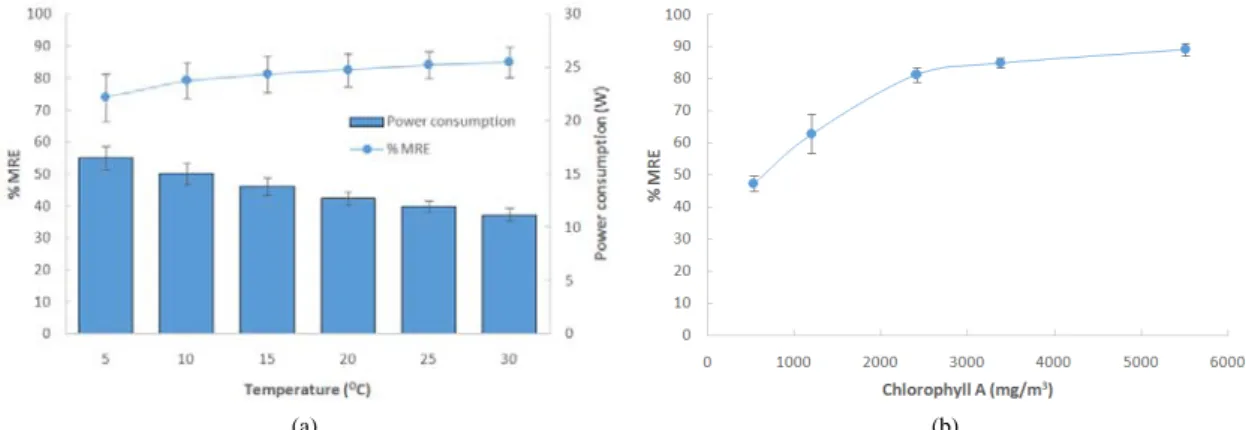
(Electro-flotation time = 15 min; Rising time = 2 min; Current density = 20.2 mA/cm2; pH = 8.5±0.4; Conductivity = 0.375±0.010 ms/cm; Electrode distance = 6 mm; Initial concentration 2600±100 mg/m3)
(b)
(Electro-flotation time = 15 min; Rising time = 2 min; Current density = 20.2 mA/cm2; pH = 8.5±0.4; Conductivity = 0.375±0.010 ms/cm; Electrode distance = 6 mm; Temperature = 25±0.5ºC)
Fig. 5. Effect of (a) temperature and (b) initial concentration on microalgal removal efficiency.