
Effects of a Group Play Therapy of Social Skills in Children with Developmental Disorders
11
0
0
전체 글
(2) Journal of Korean Clinical Health Science. Vol. 2, No. 1, March 2014. only children with developmental disabilities but also social skills of them. Key Words: Development disorder, Group play therapy, Play therapy,. Social adaptation,. Social skill. 고 아동들의 인지적, 사회적 발달에 있어 결정. 1. 서 론. 4). 적인 영향을 미친다 . 건강한 사회성 발달을 위한 치료 중재 중 하. 1.1. 연구의 필요성. 나인 놀이치료의 경우에는 아동의 사회 정서적 발달장애는 발달시기에 나타나는 발달상의. 문제를 해결하는데 효과가 있는 것으로 알려져. 진행을 방해하는 상태로 운동기능장애, 감각장. 왔다. 놀이치료는 훈련된 치료자가 심리적 문제. 애, 지적장애, 언어장애, 인지기능장애, 행동장. 를 지닌 내담자를 돕기 위해 체계적으로 놀이. 애 등을 포함하는 한 가지 이상의 기능적인 손. 의 치료적 힘을 적용시키는 대인관계과정으로. 5),. 상을 보이는 것이라고 정의할 수 있다 . 또한. 아동에게 있어 놀이는 생활 그 자체이며 놀이. DSM-Ⅳ(APA, 1994)에 의하면 지적장애, 학습. 를 통해 구체적이고 살아있는 행동과 경험을. 장애, 운동기능장애, 의사소통장애, 광범위성. 하며 놀이 속에서 여러 가지를 학습하고, 사회. 발달장애, 주의력결핍 및 과잉행동장애 등이 포. 적 능력을 신장시킨다. 또한 발달상의 두려움을. 함되어 있으며, 일반적으로 발달장애의 범주에. 극복하게 해주고, 긍정적인 정서 발달에 도움이. 흔히 포함되는 질환에는 지적장애인, 뇌성마비,. 된다 . 놀이는 특별히 가르치지 않아도 지적 능. 자폐장애, 발달성 언어장애, 시각 및 청각 등의. 력이 높고 낮음에 상관없이 발달수준에 맞는. 1). 6). 놀이를 찾기만 하면 어떤 아동에게나 실시할. 2). 특수 감각기능장애 등이 있다 .. 7). 발달장애아동의 경우에는 아동기 발달단계에. 수 있는 장점이 있고 , 놀이 활동에 참여하는. 따른 적절한 사회기술의 습득이 이루어지지 않. 것은 친구를 사귀게 하며, 또한 타인과 어울릴. 고 운동능력 및 의사소통의 장애로 인해 또래. 수 있게 해주고, 역할과 경쟁심, 협동심과 자신. 들과의 어울릴 기회도 없으므로 대인관계 시. 감을 배우게 한다. 그리고 놀이를 함으로써 많. 위축되는 모습을 많이 보이게 된다. 또한 일상. 은 것을 경험하고 인간세계에서는 물론 자연세. 생활능력 부족으로 독립적인 생활유지가 어렵. 계에서 일어나는 여러 가지 사건들에 적절히. 고, 과제수행능력 부족으로 사회에서의 적절하. 반응하는 것을 배울 수 있게 된다 .. 8). 고 효과적인 상호작용 즉, 문제해결을 저해하. 놀이치료가 사회적 기술 증진에 효과가 있다. 며, 학교 적응력도 떨어뜨리는 등 사회적 부적. 는 선행연구들을 살펴보면 정서장애 아동과 발. 응으로 인한 고통을 경험하게 된다. 이것은 결. 달장애 아동 등 다양한 아동 등 다양한 아동들. 국 발달장애 아동을 더욱 더 고립된 아동으로. 에게 서회성에 대한 효과가 보고되었다. 한편 O’connor는 적응문제, 심각한 정신병리 등과. 3). 만드는 원인이 된다 . 발달장애 아동의 일반적인 치료 목표는 인지. 같은 다양한 문제를 가진 아동에게 놀이치료가. 능력, 사회성, 신체능력 등을 고르게 발달시키. 효과적임을 말하면서 구조화된 집단놀이치료를. 는 것이다. 발달장애 아동은 다른 사람과의 사. 강조 하였다9).. 회적 상호작용에서 한 가지 언어만을 사용한. 구조화된 집단놀이치료는 또래들과 구조화된. 상호작용이 불가능하다. 그러므로 사회적 영역. 놀이를 통해 서로에게 집중하게 되고 서로의 행동. 을 강화하기 위해 사회성 기능의 보조적 매개. 특성을 이해하게 된다10). 이처럼 구조화된 집단놀. 체인 게임이나 놀이를 사용하는 것이 효과적이. 이 치료는 아동의 사회성 기술의 발달과 새로운 문제해결 방식을 시도하는데 도움이 된다11).. - 48 -.
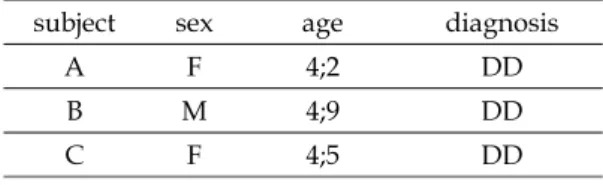
(3) Effects of a Group Play Therapy of Social Skills in Children with Developmental Disorders … So-Young Kim, Min-Ji Kim, etc.. 2. 연구대상 및 방법. 또한 Sweeny와 Homeyer에 의하면 집단놀 이치료는 아동의 자발성을 촉진시키고, 집단 구 성원 사이에서의 내적정신과정과 치료자와 집. 2.1. 연구대상 및 기간. 단 구성원 사이에서의 정서적인 문제를 다룰 수 있으며, 관찰 학습과 카타르시스가 되며, 구. 본 연구의 대상은 발달장애 진단을 받고 이. 성원들의 피드백을 통해 자기성장과 자기 탐색. 천시에 소재하고 있는 장애인 복지관에서 놀이. 의 기회를 갖게 해준다고 하였다. 이에 아동은. 치료 프로그램을 신청한 아동을 대상으로 실시. 현실세계를 검정할 기회를 제공받게 되며, 사회. 하였다. 대상자들은 발달장애를 진단받고 한국. 의 축소판으로 일상생활에서의 통찰감을 얻을. 유아사회성기술검사(K-SSRSP) 점수가 80이하. 12). 수 있는 장점이 있다고 하였다 .. 인 아동을 선별하였다. 본 연구에 참가한 피험. 이와 같이 놀이치료 중에서 집단적 놀이치료 가 사회적 기술 부족 아동에게 효과적인 방법. 자는 보호자의 자발적 참여의사와 동의를 받은 발달장애 아동을 대상으로 실시하였다.. 임을 알 수 있다.. 본 연구의 기간은 2013년 3월부터 6월까지. 놀이치료 프로그램을 적용하여 사회성을 증. 매주 월요일 4시 50분부터 5시 40분까지 1회기. 진시킨 선행연구를 살펴보면 아동을 대상으로. 당 40분씩, 총 16회기를 진행하였다. 연구 대상. 프로그램과 관련된 연구들은 초등아동의 자아. 자의 일반적 특성은 Table 1과 같다.. 존중감과 사회성 연구와 결손아동의 성취감과 자기획신, 긍정적인 자기 이미지 형성에 대한. Table 1. General characteristics of the study. 13). 연구들로 , 발달장애아동의 놀이치료 프로그램. subject. sex. age. diagnosis. A. F. 4;2. DD. 이에 본 연구는 만 4세의 발달장애아동을 대. B. M. 4;9. DD. 상으로 16주간의 집단 놀이치료 프로그램을 실. C. F. 4;5. DD. 에 대한 연구는 미흡한 실정이다.. 시하여 사회성 기술에 미치는 효과를 알아보고 자 한다.. 2.2. 연구도구 및 방법. 1.2. 연구문제. 2.2.1. 연구도구. 위에 제시한 연구 필요성에 따라 다음과 같. 1) 한국 유아사회성 기술검사(K-SSRSP). 은 연구문제를 제시하였다. 사회성 기술 검사는 Gresham과. 15). Elliot ,. 첫째, 집단놀이치료프로그램은 발달장애아동. 태영16), 김향지17) 등의 연구를 기초로 하여 사. 의 사회성 기술에 미치는 영향에 대해 알아보. 회성 기술과 관련된 문항을 한국 실정에 맞도. 고자 한다.. 록 수정한 윤치연 의 도구를 사용하였다.. 18). 둘째, 집단놀이치료 프로그램은 발달장애아. 아동의 사회성 기술은 네 개의 하위요인 ‘문. 동의 사회성 기술의 하위영역인 문제해결, 정서. 제 해결’, ‘정서 표현’, ‘질서의식’, ‘자신감’을. 표현, 질서의식, 자신감 영역에 미치는 영향에. 측정하였다.. 대해 알아보고자 한다.. 문제해결은 사회적 상황을 이해하고 적절한 대응행동을 할 수 있는 능력, 정서표현은 상대 방이나 주어진 상황에 적절하게 감정을 표현하 고 조절할 수 있는 능력, 질서의식은 자신이 속 한 사회나 집단의 규칙을 자발적으로 따르거나 누군가의 지시에 순응하며 따르려는 것, 자신감. - 49 -.
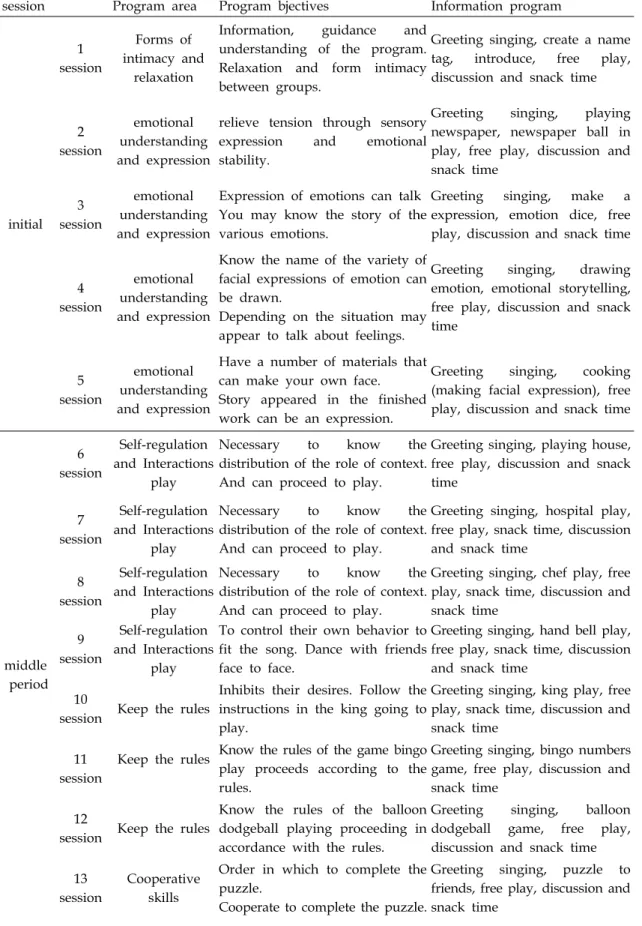
(4) Journal of Korean Clinical Health Science. Vol. 2, No. 1, March 2014. 은 낯설거나 익숙한 다양한 상황에서 자신을. 2.2.2. 연구방법. 표현하는데 주저함이 없는 지에 관한 것을 나 본 연구에서 사용한 집단놀이치료 프로그램. 타낸다. 이 검사는 여러 학자들이 사회성 기술의 정. 은 김수정의 사회성을 위한 보육성 증진 프로. 의에 포함시킨 또래/대인관계, 책임감, 규칙의. 그램19), 오윤아의 집단-치료놀이 프로그램20), 하. 준수, 상황에 맞는 행동, 정서표현, 의사소통,. 영례의 집단놀이치료를 활용한 아동 사회정서. 협동놀이, 자기주장 등을 측정하기 위한 부모/. 적 유능감 프로그램 개발 및 효과의 놀이치료. 교사용 질문지로 40개의 문항으로 구성되어 있. 프로그램21)을 참조하여 프로그램의 목적에 맞. 다. 이 검사의 평가 방식은 평소 아동 행동의. 게 본 연구자가 재구성한 것이다. 본 프로그램. 관찰내용을 발생 빈도에 따라, ‘전혀 아니다’(1),. 은 매 회 40분 정도 소요되며, 총 16회기로 구. ‘약간 그렇다’(2), ‘보통이다(3)’, ‘대체로 그렇다. 성되어 있다. 프로그램의 회기별 내용은 Table. (4)’, ‘항상 그렇다’(5)의 5점 척도로 평정하도록. 4와 같다.. 하였다.. 2.2.3. 자료분석. 사회성 기술 측정도구의 하위요인과 문항수 는 Table 2와 같다.. 본 연구에서는 집단적 놀이치료 프로그램을 재구성하여 집단놀이치료를 발달장애 아동에게. Table 2. The contents of the child's social skills measurement tool. 적용함으로써 발달장애아동의 사회성 기술 향 상에 대한 영향을 알아보기 위해 단일 집단 사. social skills. contents. problem solving. 18, 22, 25, 27, 29, 30, 31, 32, 33, 34, 35, 36, 39. emotional expression. 1, 2, 4, 5, 9, 11, 13, 14, 15, 21, 23, 24, 26, 28, 38. 사(K-SSRSP)의 향상 정도를 파악함으로써 검. sense of order. 10, 16, 17, 20, 37, 40. 만 4세 아동을 대상으로 K-SSRSP를 검사하여. self-confidence. 3, 6, 7, 8, 12, 19. 점수가 80이하인 아동 3명을 대상을 선정하였. 례연구를 실시하였다. 프로그램의 효과는 프로 그램에 참여한 아동의 한국 유아사회성 기술검 증하였다. 사전검사로는 발달장애로 진단받은. 으며, 집단놀이치료 프로그램 실시 후 사전검사 점수의 결과는 사회성 기술 지수(SSQ)의 평. 에서 실시했던 동일한 방법으로 사후검사를 실. 균점수가 100이며, 90~110사이면 평균정도의. 시하였다. 수집된 자료는 SPSS 12.0 program. 사회성을 가진다고 볼 수 있다(Table 3).. 을 이용하여, 발달장애아동의 일반적 특성과 문 제해결, 정서표현, 질서의식, 자신감의 정도를. Table 3. Children's social skills according to the Social Skills Quotient. 평균과 표준편차로 분석하였다.. 3. 결과. Social Skills Quotient (SSQ). Level. More than 120. superior. 110~120. high average. 90~110. average. 80~90. mild retarded. 알아보기 위하여 연구를 진행하였다. 집단적 놀이. 60~80. severe retarded. 치료 프로그램을 진행한 아동들을 대상으로 사전. 60이하. profound retarded. 평가와 사후평가를 진행하여 수집된 자료를 바탕. 본 연구는 집단적 놀이치료 프로그램이 발달장 애아동의 사회성 기술의 증진에 미치는 효과를. 으로 사회성 기술 및 하위요인인 문제해결, 정서 표현, 질서의식, 자신감 영역에서의 변화를 비교 하였다. 본 연구의 결과는 다음과 같다.. - 50 -.
(5) Effects of a Group Play Therapy of Social Skills in Children with Developmental Disorders … So-Young Kim, Min-Ji Kim, etc.. Table 4. Contents of program session. Program area 1 session. initial. Forms of intimacy and relaxation. Program bjectives. Information program. Information, guidance and Greeting singing, create a name understanding of the program. tag, introduce, free play, Relaxation and form intimacy discussion and snack time between groups.. 2 session. Greeting singing, playing emotional relieve tension through sensory newspaper, newspaper ball in understanding expression and emotional play, free play, discussion and and expression stability. snack time. 3 session. emotional Expression of emotions can talk Greeting singing, make a understanding You may know the story of the expression, emotion dice, free and expression various emotions. play, discussion and snack time. 4 session. Know the name of the variety of emotional facial expressions of emotion can understanding be drawn. and expression Depending on the situation may appear to talk about feelings.. 5 session. Have a number of materials that Greeting singing, cooking emotional can make your own face. (making facial expression), free understanding Story appeared in the finished play, discussion and snack time and expression work can be an expression.. Greeting singing, drawing emotion, emotional storytelling, free play, discussion and snack time. Self-regulation Necessary to know the Greeting singing, playing house, 6 and Interactions distribution of the role of context. free play, discussion and snack session play And can proceed to play. time Self-regulation Necessary to know the Greeting singing, hospital play, 7 and Interactions distribution of the role of context. free play, snack time, discussion session play And can proceed to play. and snack time Self-regulation 8 and Interactions session play Self-regulation 9 and Interactions session middle play period 10 Keep the rules session 11 session 12 session 13 session. Keep the rules. Necessary to know the Greeting singing, chef play, free distribution of the role of context. play, snack time, discussion and And can proceed to play. snack time To control their own behavior to Greeting singing, hand bell play, fit the song. Dance with friends free play, snack time, discussion face to face. and snack time Inhibits their desires. Follow the Greeting singing, king play, free instructions in the king going to play, snack time, discussion and play. snack time Know the rules of the game bingo Greeting singing, bingo numbers play proceeds according to the game, free play, discussion and rules. snack time. Know the rules of the balloon Greeting singing, balloon Keep the rules dodgeball playing proceeding in dodgeball game, free play, accordance with the rules. discussion and snack time Cooperative skills. Order in which to complete the Greeting singing, puzzle to puzzle. friends, free play, discussion and Cooperate to complete the puzzle. snack time. - 51 -.
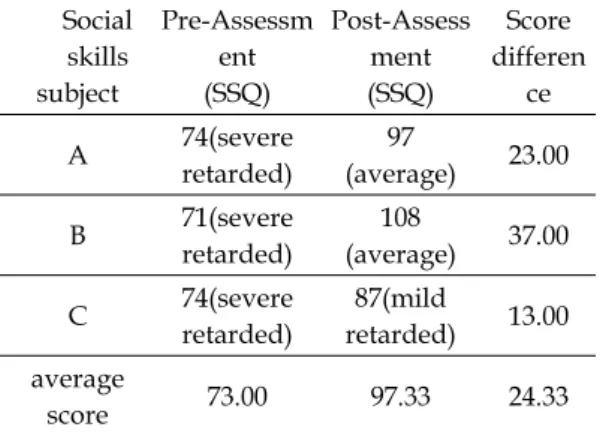
(6) Journal of Korean Clinical Health Science. Vol. 2, No. 1, March 2014. 14 session. 15 session. closing. Cooperative skills. Greeting singing, painting Draw a picture with the subject. sculpture, free play, discussion To complete the work. and snack time. Cooperative skills. Be able to shake the hand bell sounds. Greeting singing, create family Wave properly you know the dolls, free play, discussion and sound of his own. Shake snack time handbells can be completed song.. Form a positive image, Greeting singing, Drawing 16 Put arrange and Pass judgment and mine on the friend, photo album stories, session feeling split other side. Closing party. 3.1. 집단적 놀이치료 프로그램이 발달장애. 120. 아동의 사회성 기술에 미치는 영향. 100 80 60. 집단적 놀이치료 프로그램이 발달장애아동의. 40. 사회성 기술 증진에 효과가 있는지 알아보기. 20. 위한 사전검사와 사후검사 점수를 분석한 결과. 0 A. 는 Table 5와 같다. 집단적 놀이치료 프로그램을 적용한 결과, 한국 유아사회성 기술검사(K-SSRSP)의 사회적 기술 지수 점수가 평균 73.00점에서 97.33점으 로 24.33점으로 사회성 기술 지수가 향상된 것. B. C. Social skills Pre-Assesment. Post-Assesment. Figure 1. Difference score of a Small group on play therapy of social skills in children with Developmental Disorders. 으로 나타났다. 3.2. 집단적 놀이치료 프로그램이 발달장애. 아동의 문제 해결에 미치는 효과. Table 5. Effects of a Small group on play therapy of social skills in children with Developmental Disorders Social skills subject. 집단적 놀이치료 프로그램이 발달장애아동의. Pre-Assessm Post-Assess Score ent ment differen (SSQ) (SSQ) ce. A. 74(severe retarded). 97 (average). 23.00. B. 71(severe retarded). 108 (average). 37.00. C. 74(severe retarded). 87(mild retarded). 13.00. average score. 73.00. 97.33. 24.33. 문제해결에 효과가 있는지 알아보기 위한 사전 검사와 사후검사 점수를 분석한 결과는 Table 6과 같다.. 집단적 놀이치료 프로그램을 적용한 결과 문 제해결 점수가 평균 7.00점에서 10.33점으로 나 타났으며, 평균 3.33점으로 문제해결 점수가 향 상된 것으로 나타났다.. 즉, 집단적 놀이치료 프로그램이 발달장애아 동의 사회성 기술 향상에 효과가 있음을 알 수 있었다(Figure 1).. - 52 -.
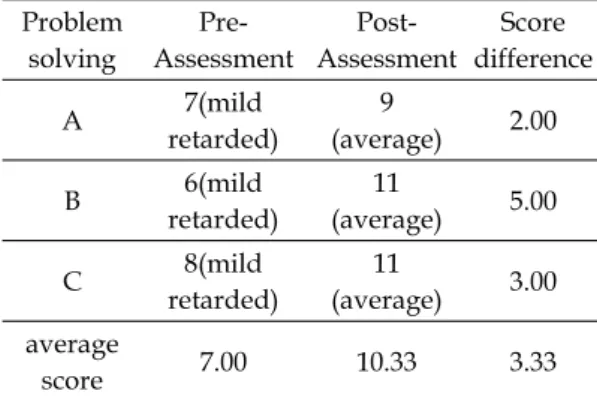
(7) Effects of a Group Play Therapy of Social Skills in Children with Developmental Disorders … So-Young Kim, Min-Ji Kim, etc.. Table 6. Effects of a Small group on play therapy of problem solving in children with Developmental Disorders Problem solving. Table 7. Effects of a Small group on play therapy of emotional expression in children with Developmental Disorders. PrePostScore Assessment Assessment difference. Emotional PrePostScore expression Assessment Assessment difference. A. 7(mild retarded). 9 (average). 2.00. A. 7(mild retarded). 11 (average). 4.00. B. 6(mild retarded). 11 (average). 5.00. B. 6(mild retarded). 13(high average). 7.00. C. 8(mild retarded). 11 (average). 3.00. C. 5(severe retarded). 7(mild retarded). 2.00. average score. 7.00. 10.33. 3.33. average score. 6.00. 11.00. 4.33. 즉, 집단적 놀이치료 프로그램이 발달장애. 즉, 집단적 놀이치료 프로그램이 발달장애. 아동의 사회성 기술의 하위요인인 문제 해결. 아동의 사회성 기술의 하위요인인 정서 표현. 증진에 효과가 있음을 알 수 있었다(Figure 2).. 증진에 효과가 있음을 알 수 있었다(Figure 3).. 12. 14. 10. 12 10. 8. 8. 6. 6. 4. 4. 2. 2 0. 0 A. B. A. C. Pre-Assesment. B. C. Emotional expression. Problem solving. Pre-Assesment. Post-Assesment. Post-Assesment. Figure 2. Difference score of a Small group on play therapy of problem solving in children with Developmental Disorders. Figure 3. Difference score of a Small group on play therapy of emotional expression in children with Developmental Disorders. 3.3. 집단적 놀이치료 프로그램이 발달장애. 3.4. 집단적 놀이치료 프로그램이 발달장애. 아동의 정서 표현에 미치는 효과. 아동의 질서 의식에 미치는 효과. 집단적 놀이치료 프로그램이 발달장애아동의. 집단적 놀이치료 프로그램이 발달장애아동의. 정서 표현에 효과가 있는지 알아보기 위한 사전. 질서 의식에 미치는 효과가 있는지 알아보기. 검사와 사후검사 점수를 분석한 결과는 Table 7. 위한 사전검사와 사후검사 점수를 분석한 결과. 과 같다.. 는 Table 8과 같다.. 집단적 놀이치료 프로그램을 적용한 결과 아 동의 정서 표현 점수가 평균 6.00점에서 11.00 점으로 나타났으며, 평균 4.33점으로 아동의 정 서 표현 점수가 향상된 것으로 나타났다.. - 53 -.
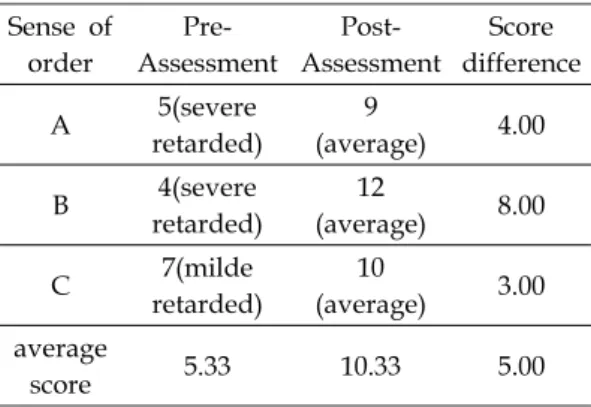
(8) Journal of Korean Clinical Health Science. Vol. 2, No. 1, March 2014. Table 9와 같다.. Table 8. Effects of a Small group on play therapy of order consciousness in children with Developmental Disorders. 집단적 놀이치료 프로그램을 적용한 결과 아 동의 자신감 점수가 평균 4.00점에서 8.33점으. Sense of PrePostScore order Assessment Assessment difference A. 5(severe retarded). 9 (average). 4.00. B. 4(severe retarded). 12 (average). 8.00. C. 7(milde retarded). 10 (average). 3.00. average score. 5.33. 10.33. 5.00. 로 나타났으며, 평균 4.33점으로 아동의 자신감 점수가 향상된 것으로 나타났다. 즉, 집단적 놀이치료 프로그램이 발달장애 아 동의 사회성 기술의 하위요인인 자신감을 향상 시키는데 효과가 있음을 알 수 있었다(Figure 5).. Table 9. Effects of a Small group on play therapy of self-confidence in children with Developmental Disorders SelfPrePostScore confidence Assessment Assessment difference. 집단적 놀이치료 프로그램을 적용한 결과 아 동의 정서 표현 점수가 평균 5.33점에서 10.33 점으로 나타났으며, 평균 5.00점으로 아동의 질 서 의식점수가 향상된 것으로 나타났다.. A. 4(severe retarded). 11 (average). 7.00. B. 5(severe retarded). 10 (average). 5.00. C. 3 (profound retarded). 4(severe retarded). 1.00. average score. 4.00. 8.33. 4.33. 즉, 집단적 놀이치료 프로그램이 발달장애 아동의 사회성 기술의 하위요인인 질서 의식을 향상시키는데 효과가 있음을 알 수 있었다 (Figure 4). 14 12. 12. 10. 10 8. 8. 6. 6. 4. 4. 2. 2. 0 A. 0 A. B Order consciousness Pre-Assesment. B. C. Self-confidence. C. Pre-Assesment. Post-Assesment. Post-Assesment. Figure 5. Difference score of a Small group on play therapy of self-confidence in children with Developmental Disorders. Figure 4. Difference score of a Small group on play therapy of order consciousness in children with Developmental Disorders. 4. 고찰. 3.5. 집단적 놀이치료 프로그램이 발달장애. 아동의 자신감에 미치는 효과. 집단놀이치료는 집단치료와 놀이치료라는 두. 집단적 놀이치료 프로그램이 발달장애아동의 자신감에 미치는 효과가 있는지 알아보기 위한 사전검사와 사후검사 점수를 분석한 결과는. 가지의 양식을 가지고 있다. 놀이치료는 아동들 이 갖고 있는 정서적 부적응이나 발달상의 문 제를 놀이를 통해 도와주려는 가장 대표적인. - 54 -.
(9) Effects of a Group Play Therapy of Social Skills in Children with Developmental Disorders … So-Young Kim, Min-Ji Kim, etc.. 24). 심리치료 방법으로 아동 마음의 상처를 치유하. 성이 증진되었음이 나타났고 , 권정현의 연구. 고 새로운 자아상을 형성하여 건강하게 성장할. 에서는 집단놀이치료가 방임아동의 사회적 능. 22). 수 있도록 도와주는 방법이다 . 집단치료와 놀. 력에 긍정적인 영향을 주어 놀이치료에 참여한. 이치료는 몇 가지 중요한 속성을 공유하는데,. 아동이 심리, 정서적 안정감을 갖게 되어 활동. 둘 다 창의적이고 역동적인 치료 과정을 필요. 에 적극적으로 참여하고 집단 구성원간의 긍정. 로 하며, 신뢰적인 치료적 관계를 형성하고 발. 적인 상호작용을 통해 협력활동을 경험하게 되. 전시키는데 초점을. 었으며 아동이 자신의 욕구를 조절하여 타인을. 맞춘다. 이 두 가지 치료. 양식의 결합은 아동들의 자아 존중감의 수준을. 배려하는 태도로 변화되었다고 하였다25).. 높이고12), 사회 적응력과 또래 관계를 향상시키 며 집단적 접근을 자유롭고, 허용적이며, 안전. 본 연구에 얻어진 결과에 근거하여 후속연구 를 위한 제언을 하면 다음과 같다.. 한 분위기 속에서 자신이 치료적 개입에서 획. 첫째, 발달장애아동의 사회성 기술에 영향을. 득한 사회적인 기술을 집단의 상호작용 속에서. 미치는 여러 가지 변인 중 일부 변인들만 다루. 실험하고, 시연해 볼수 있게 하여 집단원들로. 어졌으므로, 다른 변인들을 고려하여 더욱 포괄. 부터의 피드백을 통해 경험적으로 확인해 보는. 적으로 연구할 필요가 있다.. 23). 절차이다 .. 둘째, 본 연구에서는 연구대상자의 표집을. 본 연구는 발달장애아동을 대상으로 집단적. 무작위로 하여 결과의 대표성을 확보하는데 무. 놀이치료를 적용하였고, 실험 기간 동안 작업치. 리가 있다. 따라서 사회·문화적 배경이 다양한. 료, 언어치료는 평소와 동일하게 그대로 적용하. 발달장애아동을 대상으로 한 연구가 필요하다.. 기로 하였다. 실험은 평가를 제외한 총 16주 16. 셋째, 실험집단 외의 비교집단의 구성에 어. 회기로 2013년 3월부터 6월까지 매주 월요일 4. 려움이 있어서 그 외의 다른 변인들의 영향으. 시 50분부터 5시 40분까지 진행하였으며, 1회. 로 인하여 사회성 기술이 증가하였음에 대한. 기당 40분으로 진행되어졌다. 연구의 효과를. 객관적인 비교대상이 없어 어려움이 있었다.. 증명할 수 있는 실험 전, 후 검사도구로는 한국 유아사회성 기술검사(K-SSRSP)를 사용하였다.. 넷째, 집단적 놀이치료 프로그램을 연구자 보다 장시간 동안 연구하여 문화적, 환경적으로. 집단적 놀이치료 프로그램을 통해 다음과 같 은 결과를 얻었다.. 어떠한 영향을 받는지에 대한 변화과정과 효과 성에 관한 연구도 필요하다.. 첫째, 집단적 놀이치료 프로그램이 사회성. 5. 결론. 기술의 증진에 미치는 효과를 살펴보았을 때 사전평가와 비교하여 사후평가에서 전반적인 상승을 나타낸 것으로 보아 효과적인 것으로 나타났다.. 본 연구는 집단적 놀이치료가 발달장애아동 의 사회성 기술 향상에 미치는 효과를 알아보. 둘째, 사회성 기술의 하위요인에 대해서는. 고자 하였다. 집단적 놀이치료를 발달장애 아동. 문제해결력, 정서표현, 질서의식, 자신감에서. 에게 적용한 후 사회성 기술 즉, 문제해결, 정. 집단적 놀이치료가 효과가 있음이 나타났다.. 서표현, 질서의식, 자신감 의 효과가 있는 것으. 이상의 결론을 종합하면, 집단적 놀이치료 프. 로 나타났다.. 로그램이 발달장애아동의 사회성 기술과 그 하 위요인의 증진에 효과적임을 알 수 있다.. 본 연구의 결과에 따라 앞으로 집단적 놀이 치료 프로그램에 대한 좀 더 구체적인 연구가. 이와 같은 결과는 유영순의 연구에서도 알. 이루어져 다른 통합 프로그램에도 반영을 한다. 수 있는데 집단놀이치료를 불안정 애착아동에. 면, 발달장애아동 뿐만 아니라 장애아동의 사회. 게 실시한 결과 불안했던 애착이 안정적으로. 성 기술 증진에 있어서 더 큰 시너지 효과가. 변화되었고, 자아존중감이 상승되었으며, 사회. 이뤄질 것으로 예상된다.. - 55 -.
(10) Journal of Korean Clinical Health Science. Vol. 2, No. 1, March 2014. References. 12. Sweeny DS, Homeyer LE. The handbook of group play therapy:. 1.. Rhee. SH.. Early. Childhood. how to. do it, how it works, whom it's best for.. Special. California Jossey-Bass Inc. 1999.. Education, Seoul, HJS Books. 2003. 2. Jung HJ. Develomental Disorder of. 13. Shin SJ. Promotion of children's self-. pediatric. The Korean pediatric society,. esteem and sociality through group. 2004;47(2):131-142.. theraplay. university, 2003.. relationship of the mainstramed handiJournal. of. special. education. Unpublished. mater's thesis, Sookmyeng women's. 3. Jin JH, Hwang DS. A study on peer capped chilren in regular classrooms.. program.. 14. Rhee HH. The effect of group theraplay program on of broken home children's. and. self-esteem improvement. Unpublished. rehabilitation, 1999;4(1):43-90. Effects of aquatic activity a. mater's thesis, Myougji university, 2003.. therapeutic recreation on motor ability. 15. Gresham FM, Elliot SN. Manual or the. and social ability in chilren with autism.. social skills rating system. American. Unpublished. Guidance Service, 1990.. 4. Rhee EK.. mater's. thesis,. Ewha. 16. Rhee TY. A study on the construction. Womans University, 2001.. and effectiveness of the developmenta. 5. O'connor, K. The Play Therapy Primer: An Integration of theories and. -l program for social competences of. techniques,. young children. Unpublished mater's. John Wiley & Sons, Inc. 1991. 6. Schaefer. C. E. Meaning of the concept of. thesis, Seoul women's university, 2000.. play therapy. languages Hearing Centre. 17. Kim HJ. Validation of the Social Skill of Rating Scale(SSRS). Unpublished mater's. of Ewha Womans University, 1995.. thesis, Daegu university, 1996.. 7. Kim SL. Effects of structured group play therapy on the social skills of mentally retarded. adolescents.. 18. Yoon Korean. Unpublished. therapy on the peer modelings of retared mater's. Social. training. thesis,. for. program. on. sociability. of. hed mater's thesis, KyungBuk university, 2009.. International Journal of Play Therapy. 20. Oh YA. The effects of group theraplay. 2001;10(2):33-44.. on. 10. Choi KH. A case study through the. social. interaction. structured group therapy using reading. children. with. activities : focused on the self-esteem of. mater's. thesis,. the children of divorced. Unpublished. university, 2004. 21. Ha. mater's thesis, Daegu university, 2001. Yoo. Inventory. of. elementary school students. Unpublis-. 9. O'connor K. Ecosystemic playtherapy.. KW,. Skill. Study. 19. Kim SJ. The effects of a social-skills. Daegu university, 2001.. 11. Kim. Normative. behavior disorders, 2008;24(2):157-173.. 8. Son HC. Effects of structured group play Unpublished. A. Preschoolers. Journal of emotion &. mater's thesis, Daegu university, 2000.. infants.. CY.. MS,. Yoo. JR.. Play. YR.. Effects. behaviors. autism.. Unpublished. Duksung of. of. women. social-emotional. competence program utilizing group play therapy for young children on. therapy, Seoul, HJS Books. 2004.. - 56 -.
(11) Effects of a Group Play Therapy of Social Skills in Children with Developmental Disorders … So-Young Kim, Min-Ji Kim, etc.. prosociality, teacher-child relation and. group play therapy on the unstably. peer competence. Korean association of. attached children’s attachment stability,. child studies, 2009;30(5):57-72.. self-esteem,. 22. Rhee SY, et al. Elementary school. the. sociality. pro-. motion. Unpublished mater's thesis,. guidance and counseling, Seoul, KY Books. 2003.. and. Seoul venture university, 2009. 25. Kwon JH. A study on the propensity to. 23. Rhee SM. Effect of group play therapy. interpersonal relations and the strategies. on adaptive level to school and peer. of conflict resolutions of adolescents with. acceptance. maladjustment. community estrange-ment. Unpublished. children. Unpublished mater's thesis,. mater's thesis, Seoul women university,. Myougji university, 2009.. 2004.. of. school. 24. Yoo YS. A Study of the effect of the. - 57 -.
(12)
수치

+3
관련 문서
The study on psycho and social adaptation of children in divorced family by group play therapy: Focusing on self-esteem, emotional maladjustment, and recognition
This study analyzed of the themes (wounding and healing); concerning the Sandplay therapy process applied to children with emotional instability and attention deficit
Effects of Class-based Group Art Therapy Program on Child’s Emotional Regulation and School Adjustment Improvement.. 김미희 *
This study used meta-analysis to compare analyze data regarding the effects of music therapy on children and adolescent.. The study examined 96 ESs using means and
In this study, a change in the gross motor function (4.67 ± 3.93), measured by GMFM-88 was observed after 8 weeks of intensive rehabilitation therapy in children with
The purpose of this study was to examine the effects of integrated art therapy program on emotional stability and self-expression in adults with developmental
Therefore, the Brotherhood Group Sensory integration intervention can be effectively applicable as being a therapy to improve Social interaction toward Children with
Objective : The aim of this study is to verify the effects of group sensory integrative intervention for sen- sory motor ability, behaviors in children with developmental delay.
