Introduction
Acute myeloid leukemia (AML), the most common type of leukemia in adults, is characterized by an uncontrolled proliferation of immature progenitor cells which results in the rapid increase of abnormal cells in blood as well as the bone marrow
1). Although AML is a fairly rare disorder, accounting for around 0.9% of all cancers diagnosed in the USA during 2012
2), its crude incidence rate keeps increasing in USA (from 3.4 (per 100,000) in 2004 to 5.1 in 2013)
3)and South Korea (from 1.87 in 1999 to 2.50 in 2012)
4). With its increasing incidence with ages, AML steadily raise medical awareness due to its high relapse and poor prognosis. Specifically, approximately 75% of patients with AML relapse after primary therapy without achieving complete remission
5), and AML patients showed the shortest 5-year survival rate of 24% among acute leukemia
6). In particular, 97% of older AML patients aged 70–79 years will die in the subsequent five years
7). However, the underlying pathophysiology of poor survival and frequent
⋅Received:18 September 2020 ⋅Revised:16 November 2020 ⋅Accepted:17 November 2020
⋅Correspondence to:Youngchul Kim
Department of Hepato-hemopoietic System, Kyung Hee University Korean Medicine Hospital Te:+82-2-958-9118, Fax:+82-2-958-9258, E-mail:[email protected]
Objectives: The aim of this study is to investigate the mechanisms involved in the anti-inflammatory and anti-tumor effects of Rhus verniciflua Stokes (RVS) on PMA-differentiated human monocytic leukemia THP-1 cells.
Methods: Cells were treated with various concentrations of RVS decoction (0-300μg/ml) for 24, 48, and 72h. Cell viability was evaluated by MTS/PMS assay. The expressions of MMP-2, MMP-9, TIMP-1, TIMP-2, iNOS and COX-2 mRNA and proteins were measured using RT-PCR and western blotting, respectively.
Results: RVS suppressed expression of MMP-2 and MMP-9 mRNA. It also down-regulated iNOS and COX-2 mRNA and protein expression. RVS inhibited NF-κB p65 activity and the phosphorylation of Akt and MAPK (ERK and p38 MAPK). Instead, the phosphorylation of JNK is increased at a very low concentration but decreased at higher concentrations.
Conclusion: RVS is regarded to inhibit the expression of MMP and TIMP as well as iNOS and COX-2 gene expression via directly inhibiting the activation of NF-κB and phosphorylation of MAPK pathway in THP-1 cells.
This suggests RVS have potential to be used as a therapeutic agent for acute myeloid leukemia (AML).
Key Words : Rhus verniciflua Stokes; MMP; iNOS; COX-2; NF-κB; MAPK
relapse of AML still remains elusive. Although multifaceted therapeutic options including active treatment and supportive care are used to treat AML patients, complete recovery rates seem to be low in a majority of cases, particularly elderly patients
8).
Upon approaching the devastating cancer of AML, tumor invasion and metastasis are considered important targets for treating aggressive malignancies. Extracellular matrix (ECM) degradation by matrix metalloproteinases (MMPs) are known to increase tumor invasion and thus leading to cancer progression. Among the MMPs family, MMP2 and MMP9 are major proteolytic enzymes in the development of AML due to their increased concentrations in malignant tumor. In particular, MMP2, a significant indicator in response to acute myeloid blast development, is closely associated with tumor invasiveness and relapse
9). Tissue inhibitors of metalloproteinases (TIMPs) are important intrinsic factors that regulate MMPs activity in tissues, and have various biological functions as well as inhibiting cell invasion, cancer procession, metastasis and angiogenesis
10). The progress of AML is also dependent on the regulation of inflammatory mediators, such as inducible NO synthase (iNOS) and cyclooxygenase-2 (COX-2)
11), transcriptional activation of nuclear factor kappa-light-chain -enhancer of activated B cells (NF-κB) and interaction of the mitogen-activated protein kinases (MAPK) with transcriptional factors
12). Therefore, targeting these factors can be promising as a therapeutic approach against hematological cancers.
Rhus verniciflua Stokes (RVS) has long been used for food supplement and traditional herbal medicine in Korea, China, and Japan. Previous
researches reported that the RVS has anticancer activity and efficacy on arthritis, etc
13, 14). A recent study indicated that the water extract of RVS inhibited the cellular growth of human chronic myelogenous leukemia K562 cells by inducing apoptosis and regulating the NF-κB and MAPK pathways
15). However, to date, there is no study investigating the pharmacological effects of RVS against AML cells.
Therefore, the present study aimed to investigate whether RVS extract reverses the levels of MMPs, TIMP, iNOS, and COX-2 expression in THP-1 cells and how it is involved in NF-κB and MAPK signaling pathway.
Materials and methods
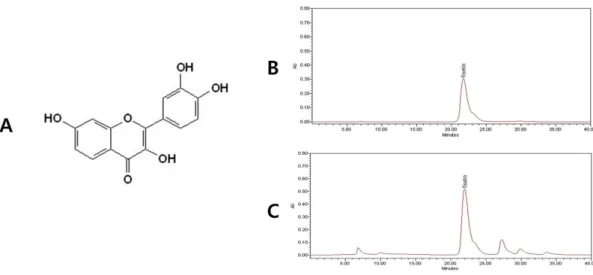
1. Rhus verniciflua Stokes (RVS) extract The bark of RVS (produced in Yeosu, Korea) was obtained from Kyung Hee Parm (Wonju, Korea). The herb sample (200 g) was roasted at 180°C for 1 h to remove urushiol that can cause an allergic response (data not shown here) and then boiled twice with 2 liters of distilled water for 3 h, each. The supernatant was collected, evaporated and freeze-dried, yielding 8.6 g of extracted powder (yield, 4.3%). The high -performance liquid chromatography (HPLC) was done to confirm fisetin, an important ingredient of it (Figure 1).
2. Cell culture
THP-1 (Human monocytic leukemia) cells were purchased from the Korean Cell Line Bank.
RPMI 1640 (Corning, Manassas, VA, USA)
supplemented with 10% fetal bovine serum and
antibiotics was used as culture medium for this
study. Cells were incubated in a humidified
atmosphere of 5% CO
2at 37°C in 95% air.
THP-1 cells were differentiated into macrophages with 100 nM of phorbol myristate acetate (PMA, Sigma-Aldrich Co., St, Louis, MO, USA) treatment for 72 h. After differentiation, floating cells were discarded, and the attached cells were washed 3 times with culture medium and then incubated.
3. Cell viability
Cell proliferation was assayed with CellTiter 96 Aqueous One Solution (Promega, Madison, WI, USA). Cells were seeded at a concentration of 2 × cells/well in 96-well plates and incubated for 72 h with PMA treatment. The supernatants were removed, and the plated cells were washed with cell culture medium 3 times. And then the cells were incubated in RPMI 1640 medium with different concentrations of RVS for 24, 48 and 72 h, respectively. Cell viability was measured by an assay method using PMS/MTS solution.
The absorbance was measured at 490 nm and the
background was subtracted at 650 nm.
4. Treatment with RVS extract
THP-1 cells were differentiated with PMA treatment for 72 h. After differentiation, floating cells were discarded, and the attached cells were washed with cell culture medium. THP-1 cells were incubated with RVS (0, 10, 25 and 50 µg/ml) for 24 h in medium containing no serum in it. After incubation with RVS samples, total RNA and protein from the RVS treated THP-1 cells were isolated for analysis.
5. RNA isolation and real-time PCR procedures
Total RNA was separated from the sample treated cells using the Trizol solution according to the manufacturer’s guidance (Invitrogen, Carlsbad, CA, USA). First-strand cDNA was synthesized using 1 μg of total RNA and it was transcribed to cDNA using a reverse transcription system with random hexamers (Promega, Madison,
Fig. 1. Fisetin chemical structure and high-performance liquid chromatographic profile A) Chemical structure of fisetin, B) fisetin standard, C) water extract R. verniciflua Stokes.
WI, USA) following the manufacturer’s guidance.
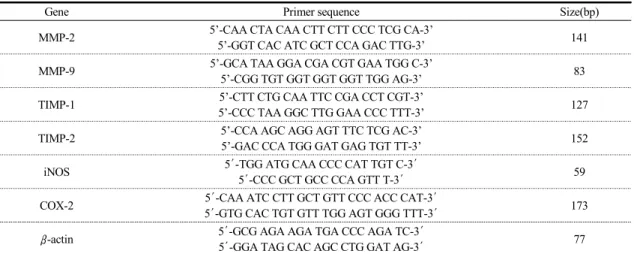
Primer sequences for this study were as follows (Table 1).
Real-time PCR reaction was performed with StepOneplus real-time PCR systems using Power SYBR Green PCR Master Mix (Applied Biosystems, Foster, CA, USA). RT-PCR was performed with 1 μl cDNA in 20 μl reaction mixtures. The reaction mixture consists of 10 μl Power SYBR Green PCR Master Mix, 2 μl primers, and 7 μl PCR-grade water. The denaturation reaction was performed at 95°C for 10 min, and then followed by 40 cycles of 95°C for 15 sec, and 60°C for 1 min. The crossing point of target genes with β -actin was calculated using the formula 2
–(target gene –ß actin), and the relative amounts of the target genes were quantified accordingly.
6. Western blot analysis
Cells were harvested and washed with ice-cold PBS then subjected to lysis buffer [20 mM Tris-HCl (pH 7.5), 150 mM NaCl, 1 mM
Na2EDTA, 1 mM EGTA, 1% Triton, 2.5 mM sodium pyrophosphate, 1 mM β-glycerophosphate, 1 mM Na3VO4, and 1 µg/ml leupeptin] containing 1 mM PMSF (Cell Signaling Technology Inc., Boston, MA, USA) to obtain protein lysate. The protein concentration was calculated by a BCA protein assay following the manufacturer’s guidance. Thirty micrograms of protein samples were loaded onto 12% SDS-PAGE for protein resolution and transferred to nitrocellulose membranes. The membranes were blocked with 5% nonfat dry milk for 1 h at room temperature.
And the membrane was incubated overnight with primary antibodies against iNOS (Chemicon), COX-2 (Santa Cruz Biotechnology, Santa Cruz, CA, USA), NF-κB p65, Akt, C-Jun N-terminal kinases (JNK), extracellular signal-regulated kinase (ERK), p38 MAPK (Cell Signaling Technology), and β-actin (Sigma-Aldrich Co.).
These primary antibodies were diluted 1:1,000 with Tris-buffered saline containing 0.05%
Tween 20 (TBS-T). After hybridization with the
Table 1. Primer Sequences for Real-Time PCR
Gene Primer sequence Size(bp)
MMP-2 5’-CAA CTA CAA CTT CTT CCC TCG CA-3’
5’-GGT CAC ATC GCT CCA GAC TTG-3’ 141
MMP-9 5’-GCA TAA GGA CGA CGT GAA TGG C-3’
5’-CGG TGT GGT GGT GGT TGG AG-3’ 83
TIMP-1 5’-CTT CTG CAA TTC CGA CCT CGT-3’
5’-CCC TAA GGC TTG GAA CCC TTT-3’ 127
TIMP-2 5’-CCA AGC AGG AGT TTC TCG AC-3’
5’-GAC CCA TGG GAT GAG TGT TT-3’ 152
iNOS 5′-TGG ATG CAA CCC CAT TGT C-3′
5′-CCC GCT GCC CCA GTT T-3′ 59
COX-2 5′-CAA ATC CTT GCT GTT CCC ACC CAT-3′
5′-GTG CAC TGT GTT TGG AGT GGG TTT-3′ 173
β-actin 5′-GCG AGA AGA TGA CCC AGA TC-3′
5′-GGA TAG CAC AGC CTG GAT AG-3′ 77
MMP-2: matrix metalloproteinases-2; MMP-9: matrix metalloproteinases-2; TIMP-1: tissue inhibitors of metalloproteinases-1; TIMP-2: tissue inhibitors of metalloproteinases-2; iNOS: inducible NO; COX-2: cyclooxygenase-2
primary antibodies, the membrane was washed with TBS-T for 1 h, and then incubated for 1 h at room temperature with horseradish peroxidase -conjugated secondary antibodies diluted 1:2,500 in TBS-T. The membranes were washed with TBS-T for another 1 hour and reactions were developed with Amersham ECL Prime reagent (GE Healthcare Life Sciences, Little Chalfont, UK). Obtained protein band densities were quantified for analysis using ImageJ software (NIH, Bethesda, MD, USA).
7. Statistical analysis
Values are represented as the means ± SD.
Data comparison was done by one-way ANOVA (analysis of variance) and Tukey test. The GraphPad Prism 5 software (GraphPad Software Inc., San Diego, USA) was used for statistical analysis. P-values, *p<0.05 and **p<0.01, were accepted as statistically significant.
Results
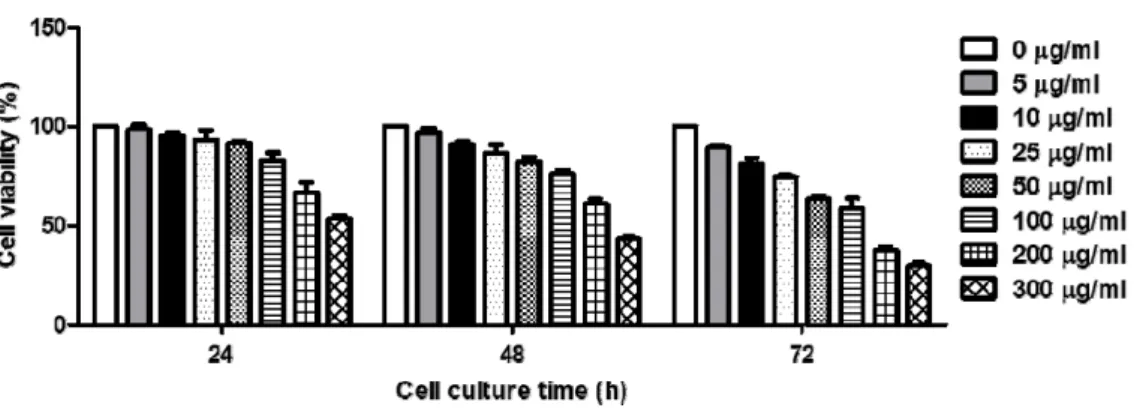
1. RVS extract inhibits cell proliferation THP-1 cells were exposed to RVS for 24, 48,
72 h each. Cell viability was measured by MTT assay method using MTS/PMS solution. RVS suppressed THP-1 cell proliferation in a dose- and time-dependent manner. When the treatment concentrations of RVS are 50 ug/ml or less for 24 h, there was no cytotoxicity observed (Figure 2).
2. RVS inhibited MMP and TIMP mRNA expressions
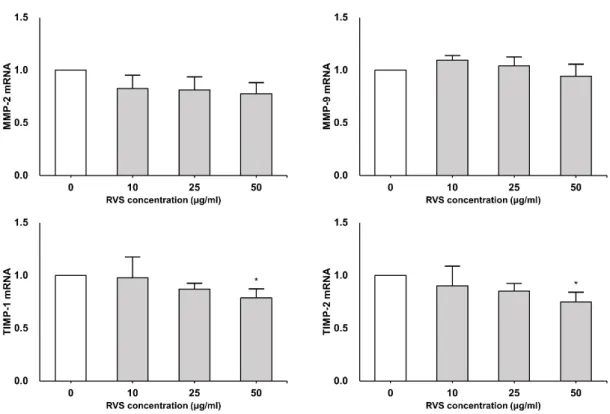
THP-1 cells were exposed to RVS (10, 25 and 50 µg/ml) for 24 h. The expressions of MMPs and TIMPs mRNA were measured by real-time PCR. MMP-2 and MMP-9 mRNA levels tended to decrease as RVS concentration increased (Figure 3). TIMP-1 and TIMP-2 also tended to decrease depending on the treatment concentration and showed statistically significant difference at 50 µg/ml (Figure 3).
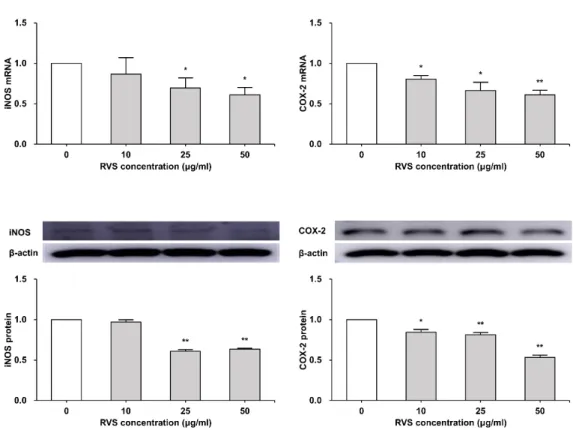
3. RVS inhibited the expression of iNOS and COX-2 mRNA genes and proteins THP-1 cells were exposed to RVS (10, 25 and 50 µg/ml) for 24 h. The expressions of mRNA and protein were measured by real-time PCR and
Fig. 2. Cell viability of RVS extract in THP-1 cells
The cells were treated with RVS extract for 24, 48 and 72 h. Cell viability was measured by MTT assay using MTS/PMS solution. Calculation of the cell viability was done from three independent experiments.
western blot. RVS suppressed the expression of iNOS and COX-2 mRNA and protein compared to the control (Figure 4).
4. RVS inhibited NF- κ B p65 protein expression
THP-1 cells were exposed to RVS (10, 25, and 50 µg/ml) for 24 h. The expression of NF-κ B p65 protein was determined by western blot analysis. NF-κB p65 total protein was decreased depending on the concentration of RVS. The phosphorylation of NF-κB p65 protein level was increased at a low concentration but it showed decreasing tendency as RVS concentration increased (Figure 5).
5. RVS inhibited phosphorylation of Akt protein
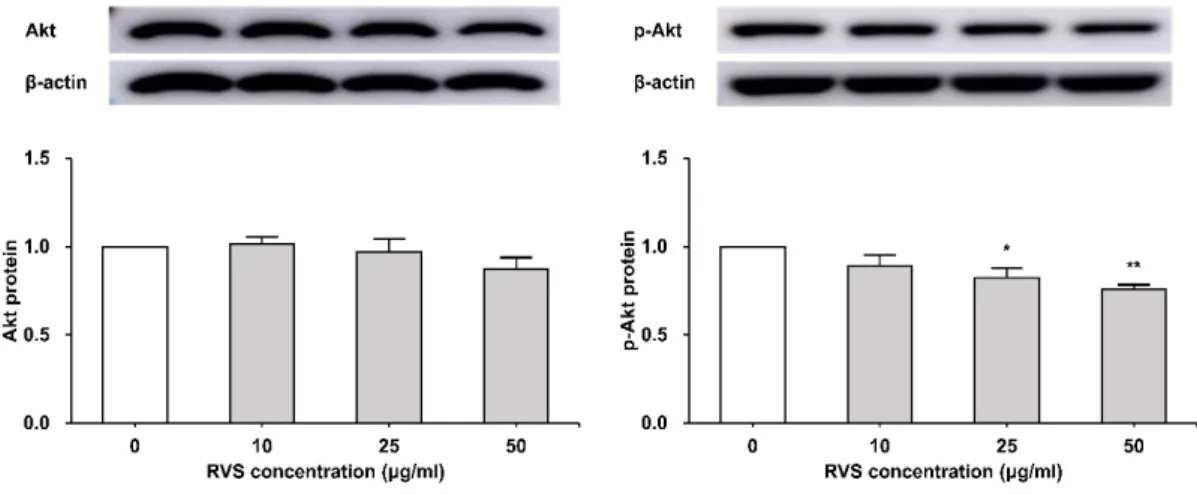
THP-1 cells were exposed to RVS (10, 25, and 50 µg/ml) for 24 h. The expression of Akt protein was examined by western blot analysis.
The expression of total Akt protein tended to decrease as RVS concentration increased, but statistically significant. The phosphorylation of Akt protein showed a statistically significant decrease compared to the control as RVS concentration increased (Figure 6).
6. RVS inhibited phosphorylation of JNK protein
THP-1 cells were exposed to RVS (10, 25,
Fig. 3. Expression of MMP and TIMP mRNAs in THP-1 cells
Expression of mRNA was measured using real-time PCR. The relationships of MMPs and TIMPs with β-actin were calculated using the formula, 2−(target gene − β-actin) and the relative quantities of transcripts were analyzed. The data are shown as means ± SD of three independent experiments. (*P<0.05, **P<0.01; compared to control.)
Fig. 4. Expression of iNOS and COX-2 mRNAs and protein in THP-1 cells
Expression of mRNA was measured using real-time PCR. (A) The relationships of iNOS and COX-2 with β-actin were determined using the formula, 2−(target gene − β-actin) and the relative quantities of transcripts were measured. Expression of protein was examined by western blot. (B) Densitometric analysis is presented as the relative rations of iNOS and COX-2 to β-actin. The data are shown as means ± SD of three independent samples. (*P<0.05, **P<0.01 compared to control.)
Fig. 5. Expression of NF-kB protein in THP-1 cells
Expression of protein was examined by western blot. Densitometric analysis is presented as the relative rations of NF-kB to β-actin. The data are shown as means ± SD of three independent samples. (*P<0.05, **P<0.01 compared to control.)
and 50 µg/ml) for 24 h. The expression of JNK protein was examined by western blot analysis.
Total JNK protein was slightly increased at 10 µg/ml, but it was decreased as RVS concentration increased. Moreover, it was confirmed that the expression of JNK protein showed a statistically significant decrease at 50 µg/ml (p<0.05). The phosphorylated JNK showed a statistically significant increase at 10 µg/ml but p-JNK decreased as RVS concentration increased, and a statistically significant decrease was shown at 50 µg/ml (Figure 7).
7. RVS inhibited phosphorylation of ERK protein
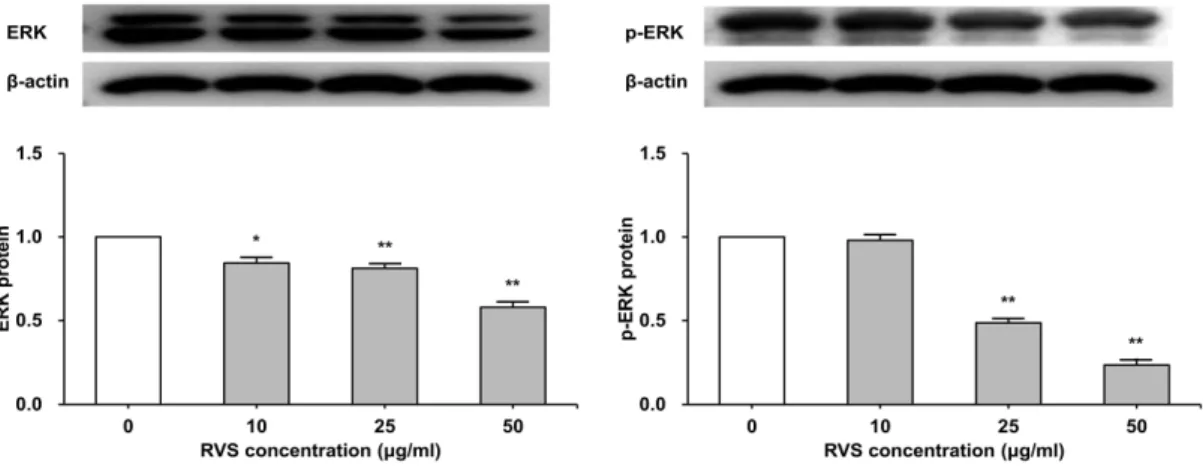
THP-1 cells were exposed to RVS (10, 25, and 50 µg/ml) for 24 h. The expression of ERK protein was examined by western blot. The expression of total ERK decreased significantly as RVS concentration increased, and the phosphorylated ERK protein showed statistically significant decrease compared to the control at
25 and 50 µg/ml (Figure 8).
8. RVS inhibited phosphorylation of p38 protein
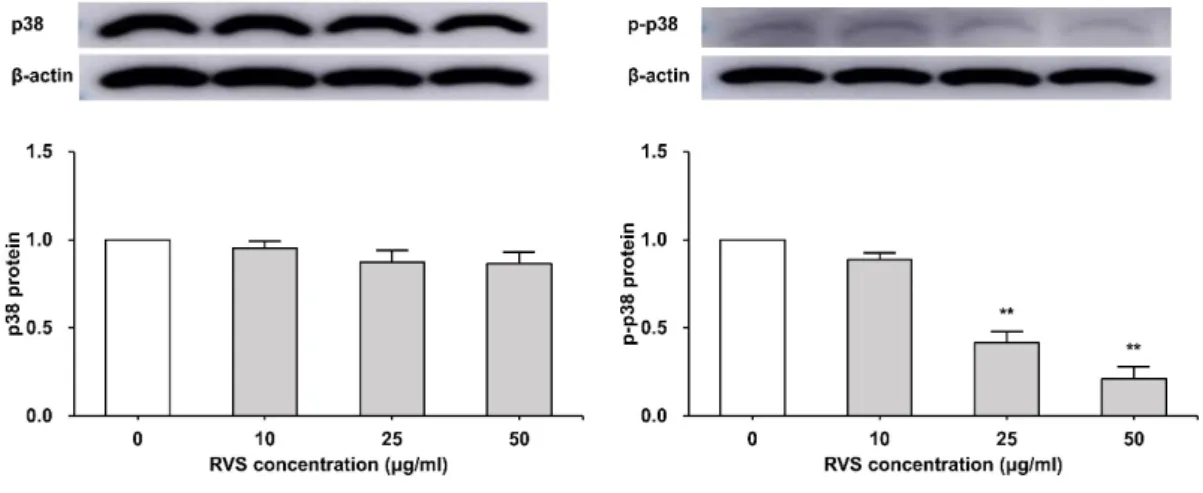
THP-1 cells were exposed to RVS (10, 25, and 50 µg/ml) for 24 h. The expression of p38 protein was examined by western blot. The expression of total p38 protein tended to decrease as RVS concentration increased, and the phosphorylated p38 protein showed a statistically significant decrease compared to the control at 25 and 50 µg/ml (Figure 9).
Discussion
Despite years of innumerable researches in the field of biomedicine to understand the mechanisms of tumorigenesis and pathogenesis of cancers, conventional treatments including surgery, radiation therapy, and chemotherapy are still the main options, though each has its own limitations.
Recently, there are growing global interests in
Fig. 6. Expression of Akt protein in THP-1 cells
Expression of protein was examined by western blot. Densitometric analyses are presented as the relative rations of Akt to β-actin. The data are shown as means ± SD of three independent samples. *P<0.05, **P<0.01 compared to control.
natural medicines derived from natural resources owing to less adverse reaction and better tolerance as compared to conventional synthetic medicines
16). Emerging evidences have revealed that herbal remedies can inhibit proliferation, adhesion and migration of cancer cells while inducing apoptosis of them. In addition to this direct anticancer effect, several herbal remedies
exhibited suppressing effect on angiogenesis and thus reducing tumor growth
17).
Acute myeloid leukemia (AML), the most common type of leukemia in adults, results in the rapid increase of abnormal cells in blood as well as the bone marrow. According to research of AML, tumor invasion and metastasis are considered important targets for treating aggressive
Fig. 7. Expression of JNK protein in THP-1 cells
Expression of protein was examined by western blot. Densitometric analyses are presented as the relative rations of JNK to β-actin. The data are shown as means ± SD of three independent samples. (*P<0.05, **P<0.01 compared to control.)
Fig. 8. Expression of ERK protein in THP-1 cells
Expression of protein was examined by western blot. Densitometric analysis is presented as the relative rations of ERK to β-actin. The data are shown as means ± SD of three independent samples. *P<0.05, **P<0.01 compared to control.
malignancies. In the treatment of AML, there is a need for research on anti-cancer effects of various herbal medicines.
Many herbs contain substances such as terpenes, phenols and polyphenols with anti-tumor activity. Plant polyphenols can be divided into flavonoids and nonflavonoids
16). Plant polyphenols, in many researches, showed much properties of preventing cancer development. Which includes antioxidant activity, radical scavenging activity, carcinogen inactivation, inhibition of cell proliferation and angiogenesis, cell cycle arrest, pro-apoptotic activity, modulation of tumor suppression genes, etc
18). Some studies have shown that various herbs such as Ginseng root, Allium sativum and Typhonium flagelliforme are effective for treatment of leukemia
19).
Rhus verniciflua Stokes (RVS) is used as traditional herbal medicine as well as a food ingredient in Korea. RVS also contains various flavonoids having anti-inflammatory and anti-tumor activity, and many related studies have
been reported. RVS extract has been used for cancer treatment in traditional medicine in Korea and is beneficial to some patients with advanced cancer though it is not a single compound but a herbal extract showing low cytotoxic in vitro experiments
20).
In this study, cell viability assay was done in the THP-1 cells exposed to RVS with different concentrations and time points. The cell count number was barely decreased at a dose of 50 μ g/ml or lower for 24 h treatment. The maximum dose of RVS was set at 50 μg/ml and treated for 24 h to evaluate possible mechanisms of its action. It is to focus on anti-inflammatory effect of RVS with least cytotoxic concentration and exposure time.
This study was done to have an insight on the effect of RVS on THP-1 cells which is derived from human monocytic leukemia. In the present study, the expressions of MMP-2 and MMP-9 mRNA tended to decrease as RVS concentration was increased. These results suggest that RVS
Fig. 9. Expression of p38 protein in THP-1 cells
Expression of protein was examined by western blot. Densitometric analysis is presented as the relative rations of p38 to β-actin. The data are shown as means ± SD of three independent samples. *P<0.05, **P<0.01 compared to control.