Received: March 20, 2015, Revised: May 13, 2015, Accepted: May 13, 2015 ISSN 1598-4478 (Print) / ISSN 2233-7679 (Online)
†Correspondence to: Do-Seon Lim
Department of Dental Hygiene, Graduate School of Public Health Science, Eulji University, 533 Sanseong-daero, Sujeong-gu, Seongnam 461-713, Korea Tel: +82-31-740-7229, Fax: +82-31-740-7352, E-mail: [email protected]
Copyright © 2015 by the Korean Society of Dental Hygiene Science
Antimicrobial Effect of Commercially Available
Mouth Rinsing Solutions and Natural Herbal Extracts on Streptococcus mutans
Sung-Im Kim, Moon-Jin Jeong
1, Yong-Soon Ahn, A-Reum Kim, Mi-Na Kim, and Do-Seon Lim
†Department of Dental Hygiene, Graduate School of Public Health Science, Eulji University, Seongnam 461-713,
1Department of Oral Histology and Developmental Biology, School of Dentistry, Chosun University, Gwangju 501-759, Korea
시판되는 구강양치액과 천연한방 추출물의
Streptococcus mutans
에 대한 항균효과 비교김성임ㆍ정문진1ㆍ안용순ㆍ김아름ㆍ김미나ㆍ임도선†
을지대학교 보건대학원 치위생학과, 1조선대학교 치과대학 구강조직발생학교실
This study attempted to identify the possibility of natural herbal extracts as an alternative, preventive agent of caries by comparing antimicrobial activities between natural herbal extracts and mouth rinsing solutions against Streptococcus mutans. Natural herbal plants were extracted with distilled water and ethanol, respectively, to measure the minimum growth inhibitory concentration of S. mutans depending on concentration, and among which, solvents showing high antimicrobial activity were selected to compare their antibiotic effects with those of mouth rinsing solutions.
Also, to determine the concentration of natural medicinal herbs that can be used safely in the oral cavity, the extracts were treated to the normal gingival fibroblast cells depending on concentration in order to determine its cytotoxicity using MTT. In terms of the minimum growth inhibition concentration, the growth inhibition of S. mutans was more excellent in the ethanol extract than in the distilled water. When the minimum growth inhibition concentration was compared, Psoralea corylifolia of natural herbal ethanol extracts, and Hexamedine (Bukwang Pharm., Korea) of mouth rinsing solutions inhibited growth of S. mutans at the lowest concentration. When the minimum bactericidal concentration was compared, P.
corylifolia of natural herbal extracts, and Hexamedine and Garglin (Dong-A Pharm., Korea) of mouth rinsing solutions eliminated S. mutans at a low concentration. The human gingival fibroblast was treated with natural herbal ethanol extracts at the minimum growth inhibition concentration of 10, 39, and 78 g/ml. As the result, no cytotoxicity was found. When this was treated at different minimum bactericidal concentrations, natural herbal ethanol extracts showed cytotoxicity except P. corylifolia.
Key Words: Antimicrobial effect, Mouth rinsing solutions, Natural herbal extracts, Streptococcus mutans
Introduction
Dental caries is a bacterial infectious disease accom- panied by the demineralization process and a multi- factorial disease caused by an interaction among bacteria
in the plaque, food and saliva1). The plaque is composed of bacteria, protein and polysaccharides when streptococci are accumulated in the mouth after bacteria adhere to the initial acquired pellicle. Then this creates acids, forming a cluster solidly and causes demineralization2). Therefore,
the reduction of bacteria in the plague can prevent diseases caused by the plague and proper management is extremely important.
For preventing dental caries, several physical methods including toothbrushing are used. In addition to this, a variety of oral rinses are used as auxiliary tools to prevent dental caries. In general, oral rinses are used to feel refre- shingness from toothbrushing and remove bad breath3) and known to reduce the numerical value of oral bacteria, especially, Streptococcus mutans4-6). Among various oral rinses, chlorhexidine is coupled to hydroxyapatite, brown pellicle and the plague and inhibits growth of bacteria by being activated by gradation for 12 to 24 hours when coupled to hydroxyapatite7). Weitz et al.8) argued that using 0.12% of chlorhexidine for toothbrushing reduced the plague and Brecx et al.9) reported that chlorhexidine and meridol were most effective in inhibiting the plague after comparing the inhibitory effects of listerine, a phe- nolic substance and meridol and chlorhexidine, solutions containing fluorinated amines. However, the long-term use leads to side effects such as tolerance10). For this rea- son, there are active studies on natural substances with higher stability and less harmful effects on tissues, re- cently. Namba et al.11) conducted a growth inhibitory experiment using 60 kinds of extracts from Chinese and Japanese medicinal plants and reported that the minimum growth inhibitory concentration of magnolol and hinokiol, component of Magnoliae cortices, was 6.25 g/ml and thus they had strong antimicrobial effects on S. mutans.
Also, Lee12) reported that the Curcuma aromatica extract had a high antimicrobial effect on S. mutans. These studies imply that strong substances for a selective inhibition of dental caries-causing bacteria are required to prevent di- seases caused by oral microorganisms.
Glycyrrhiza uralensis is a plant called Gamcho and the part of root and stem with skin or the skinless part is used, mainly. Gafner et al.13) said that licoricidin and licoriso- flavan A contained in Gamcho inhibited bacteria causing dental caries and gum diseases.
Psoralea corylifolia is a leguminous plant called Bogolji which is spicy and little bitter. Systemically, this plant is reported to be effective in expanding the coronary arteries, increasing blood flow and the number of white blood cells,
exciting smooth muscles, increasing the blood and forming an antimicrobial effect14).
Asa rum siebodii Miquel is a plant called Saeshin that has thin roots and is very spicy. Yu et al.15) reported that this inhibited adhesion of S. mutans to the tooth surface and insoluble glucan synthesis.
Erythrina variegata is a leguminous plant called Hae- dongpi and in Korea, this refers to the bark of E. variegata.
This is known to be effective for gastritis, arthritis, neuralgia, rhinitis, stroke, cough and sputum and so on16).
The effects of these natural herbal plants vary de- pending on the extraction or refinement method. Jang et al.17) reported that no antimicrobial effect was observed in the hot water and ethanol extracts, but a strong antimi- crobial effect was observed in the sugar extract when the antimicrobial effects of Citrus unshiu peel were compared depending on the extraction methods of hot water, ethanol and sugar. Likewise, Jung18) reported that there was an increase in the antimicrobial effect when the ethanol extract was used rather than the water extract after com- paring the antimicrobial effects of Opuntia ficus-indica var. saboten Makino.
Therefore, this research aimed to identify the possibility of natural herbal extracts as alternative preventing agents of dental caries by comparing the antimicrobial effects of natural herbal extracts on S. mutans with the existing oral rinses, based on the minimum growth inhibitory concentration and minimum and minimum bactericidal concentration and analyzing toxicity using human gingival fibroblasts.
Materials and Methods
1. Materials of the study and method for extraction
1) Selection of the natural herbal
The four natural herbal used in this study were selected based on their low price and accessibility and purchases from kyeongdong market, seoul and stored at refrigiator (Table 1).
2) Extraction and concentration of the natural herbal extract
The four natural herbal extract were extracted using
Scientific name Medicinal part Korean name
Glycyrrhiza uralensis Root Gamcho
Psoralea corylifolia Seed Bogorji
Asa rum siebodii Miquel Root Saeshin
Erythrina variegata Trunk of tree Haedongpi Table 1. The List of Medicinal Plants Used for This Study
Group Manufacturers Component
Garglin Dong-A Pharm., Seoul, Korea
Cetylpyridium chloride
Hexamedine Bukwang Pharm., Seoul, Korea
Chlorhexidine digluconate
Listerine Johnson &
Johnson, New brunswick, NJ, USA
Eucalyptol, thymol, menthol Table 2. The List of Mouth Rinsing Solution Used for This Study
distilled water and ethanol as solvent. The distilled water extraction were performed as follows: 50 g of the four herbs were allowed to settle and deposit in 500 ml of distilled water for four days, filtered, pressure concen- trated and frozen at -70oC deep freezer (DF8510; IlShin BioBase Co. Ltd., Namyangju, Korea) for 12 hours after which dried using freeze dryer (FD8508; IlShin BioBase Co. Ltd.). The freeze dried extracts were weighted, and dissolved in distilled water and dimehylsulfoxide (DMSO;
Sigma, San Jose, CA, USA) at 10 mg/ml, sterilized using 0.22 m polyvinylidene difluoride (PVDF) filter (BIOFIL, Ashland, VA, USA).
3) Selection of mouth rinsing solutions
The mouth rinsing solutions used in this study were selected based in their diversity of ingredients and market share, and sterilized using 0.22 m PVDF. Description of each medicine are in Table 2.
2. Strain and culture method
The bacteria used in this study is S. mutans ATCC 25175 provided by Department of Oral Microbiology, College of Dentistry, Dankook University. The bacteria was inoculated in liquid trypticase soy broth (TSB; BD Biosciences, San Jose, CA, USA) and cultured for 12 hours in 37oC incubator (IB-11E; Jeiotech, Daejeon, Korea).
3. Measuring minimum inhibitory concentration (MIC) of natural herbal extract and mouth rinsing solution The cultured bacteria were counted using Petroff Hausser counting chamber (Hausser Scientific, Horsham, PA, USA) and diluted to 1×10⁶ cells/ml at TSB. 180 l of liquid TSB was dispensed to each well of 96-micro well plate and 180 l of the four herbs and mouth rinsing solutions were dispensed to each well serially diluted with 20 l bacterial culture and incubated for 12 hours. Cell
growth were measured using spectrophotometer (precision microplate reader, Emax precision; Molecular Device Corp., San Diego, CA, USA) by measuring absorbance at 660 nm.
4. Measuring minimal bactericidal concentration of natural herbal extract and the mouth rinsing solution
To study minimal bactericidal concentration, live cell were counted at lower and higher concentration than MIC.
Bacteria cultured at ethanol extract of the natural herbal extract were 1/10 diluted in phosphate buffered saline (PBS). The diluted cell were serially diluted to 106 factor.
100 l of diluted bacteria culture were inoculated at brain heart infusion (BD Biosciences) agar plate using triangle spreader (SPL Life Science, Pocheon, Korea) and cultured for 36 hours. The plate with 200 colonies were selected and the total cell in 100 l were calculated based on their dilution factor.
5. Disk diffusion method of natural herbal extract and the mouth rinsing solution
To measure antibacterial activity against S. mutans using disk diffusion method, trypticase soy agar (TSA) agar plate were used. Sterilized cotton tips were used to equally spread bacteria culture in the TSA agar plate.
Sterilized paper disk with 0.4, 0.8, 5 mg/disk of each herb extract and the mg/disk paper disk were placed on the agar plate after drying for 10 minutes. After incubating for 48 hours in 37oC incubator, clear zone around the disk were analyzed to determine antibacterial activity.
6. Measuring cytotoxicity
To observe the presence of cytotoxicity in the ethanol
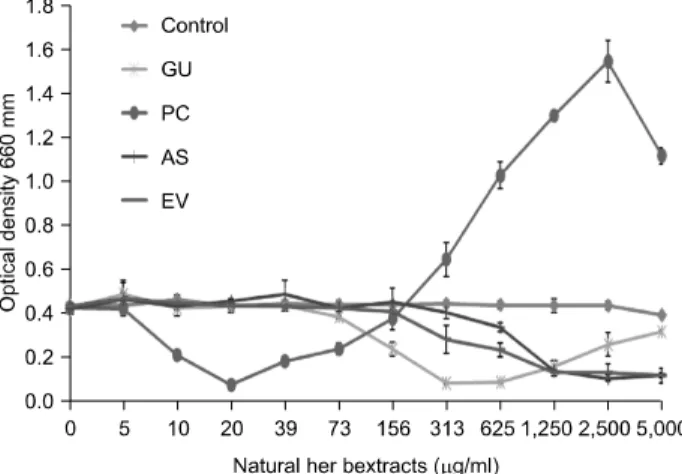
Fig. 2. Antimicrobial effect of natural herbal extract by ethanol solvent on Streptococcus mutans. GU: Glycyrrhiza uralensis, PC:
Psoralea corylifolia, AS: Asa rum sibodii Miquel, EV: Erythrina variegata.
Fig. 1. Antimicrobial effect of natural herbal extract by distilled water solvent on Streptococcus mutans. GU: Glycyrrhiza ur- alensis, PC: Psoralea corylifolia, AS: Asa rum siebodii Miquel, EV:
Erythrina variegata.
extract of the natural herbal extract, the activity of normal gingival fibroblast were measured using MTT (Thiazoly Blue Tetrazolium Bromide 98%; Sigma). Bacteria were inoculated at 1×10⁵ cells/ml in 96-micro well plate with different concentration of the herb extract and cultured for 24 hours. Then the cultured supernatant were eliminated and 100 l of 4 mg/ml MTT solution in PBS (Gibco BRL, Grand Island, NY, USA), sterilized with 0.22 m PVDF filter, were carefully dispensed and mixed gently while setting the plate in the ground. Then the plates were cultured in CO2 incubator (MCO-18AC; Sanyo Electric Co. Ltd., Gunma-ken, Japan) for 4 hours, removed the reaction solution, eluted formazan using 200 l of DMSO, and shook 30 minutes using shaker (SH 30; Finepcr, Seoul, Korea) after covering with aluminum foil. After 30 minutes of shaking, 100 l of the elution were transferred to new 96-micro well plate and measured the absorbance at 570 nm using spectrophotometer. All experiments were triplicated.
Results
1. Measurement of the minimum growth inhibition concentration of natural herbal extracts by solvent
1) Minimum growth inhibition concentration of natural herbal distilled-water extracts against S. mutans As a result of measuring the minimum growth inhibition
concentration against S. mutans, it was found that all na- tural herbal distilled-water extracts did not have anti- microbial effects similarly to the control group (Fig. 1).
2) Minimum growth inhibition concentration of natural herbal ethanol extracts against S. mutans As a result of measuring the minimum growth inhibition concentration of natural herbal ethanol extracts, the bac- terial growth did not happen at 20 g/ml for P. corylifolia, at 313 g/ml for G. uralensis, and at 1,250 g/ml for E.
variegata and A. rum siebodii Miquel (Fig. 2).
2. Measurement of basic optical density of natural herbal ethanol extracts
To determine if the results of the minimum growth inhibition concentration of natural herbal ethanol extracts stem from S. mutans, the basic optical density was mea- sured without adding S. mutans (Fig. 3). As a result, the natural herbal extracts except P. corylifolia and G.
uralensis obtained an optical density value which showed a similar pattern to the control group.
3. Measurement of minimum growth inhibition con- centration of natural herbal ethanol extracts and mouth rinsing solutions
As a result of measuring the minimum growth inhibition concentration against S. mutans, the bacterial growth of natural herbal ethanol extracts was suppressed at 20 g/ml
Fig. 3. Absorbance of natural herbal extract by ethanol solvent.
GU: Glycyrrhiza uralensis, PC: Psoralea corylifolia, AS: Asa rum sibodii Miquel, EV: Erythrina variegata.
Concentration (%)
Inhibition of growth Concentration (g/ml)
Inhibition of growth
Hexamedine Garglin Listerine GU PC AS EV
50 - - - 5,000 - - - -
25 - - + 2,500 - - - -
12.50 - - + 1,250 - - + -
6.25 - - + 625 + - + +
3.13 - - + 313 + - + +
1.56 - - + 156 + - + +
0.78 - - + 78 + - + +
0.39 + + + 39 + - + +
0.20 + + + 20 + - + +
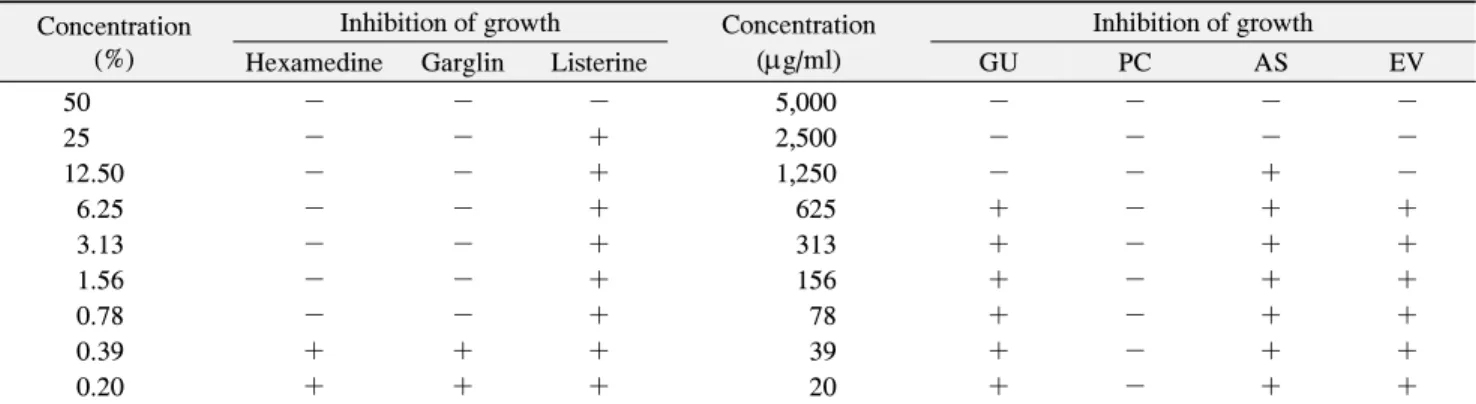
+: no inhibition of growth, GU: Glycyrrhiza uralensis, PC: Psoralea corylifolia, AS: Asa rum sibodii Miquel, EV: Erythrina variegata.
Table 3. Effect of Various Concentration of Several Natural Herbal Extracts by Ethanol and Three Mouth Rinsing Solutions on Streptococcus mutans
Fig. 4. Minimum inhibitory concentration of natural herbal ex- tracts by ethanol and three mouth rinsing solutions against Streptococcus mutans. He: Hexamedine, Ga: Garglin, Li: Lister- ine, GU: Glycyrrhiza uralensis, PC: Psoralea corylifolia, AS: Asa rum sibodii Miquel, EV: Erythrina variegata.
for P. corylifolia, 313 g/ml for G. uralensis, and 1,250
g/ml for E. variegata and A. rum siebodii Miquel. In addition, the bacterial growth of mouth rinsing solutions was suppressed at the concentration of 0.39% for hexa- medine, at the concentration of 0.78% for palate cleanser, and at the concentration of 50% for listerine (Fig. 4).
4. Measurement of minimal bactericidal concentra- tion of natural herbal ethanol extracts and mouth rinsing solutions
As a result of measuring the minimal bactericidal con- centration against S. mutans, the bacterial death of natural herbal ethanol extracts occurred at 20 g/ml for P. corylifolia, at 1,250 g/ml for G. uralensis and E. variegata, and at 2,500 g/ml for A. rum siebodii Miquel. In addition, the
bacterial death of mouth rinsing solutions occurred at the concentration of 0.78% for hexamedine and palate clean- ser and at the concentration of 50% for listerine (Table 3).
5. Measurement of bacterial growth inhibition zone with disc diffusion method
As a result of measuring the bacterial growth inhibition to compare the antimicrobial activity against S. mutans, the bacterial growth inhibition zone of both natural herbal extracts and mouth rinsing solutions was increased when the concentration got higher (Fig. 5A, B), and at 5 mg/
disk, the inhibition zone was overlapped and the bacterial growth was suppressed in the entire medium (Fig. 5C).
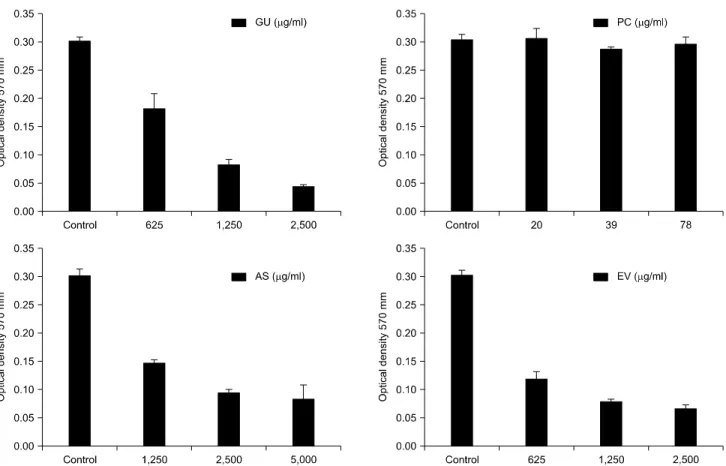
Fig. 6. The cytotoxicity of natural herbal extracts by ethanol in accordance with concentration. GU: Glycyrrhiza uralensis, PC:
Psoralea corylifolia, AS: Asa rum sibodii Miquel, EV: Erythrina variegata.
Fig. 5. Antimicrobial activity of the ethanol extract of natural herbal and mouth rinsing solutions against the growth of Streptococcus mutans by agar diffusion assay. (A) 0.4 mg/disk, (B) 0.8 mg/disk, (C) 5 mg/disk. He: Hexamedine, Ga: Garglin, Li: Listerine, GU:
Glycyrrhiza uralensis, PC: Psoralea corylifolia, AS: Asa rum sibodii Miquel, EV: Erythrina variegata.
6. Measurement of MTT cytotoxicity of natural herbal ethanol extracts
As a result of treatment at 10, 39, and 78 g/ml minimum growth inhibition concentration, to determine if the natural herbal ethanol extracts are toxic to the normal gingival fibroblasts, the optical density value showed a similar pattern to the control group that has no extracts added (Fig. 6). In addition, as a result of treatment by differing the concentration of each extract based on the measurement values of the minimal bactericidal concen- tration, the other extracts except P. corylifolia were cyto- toxic when the concentration got higher (Fig. 7).
Discussion
Dental caries is a disease caused by the interactions bet- ween bacteria, foods, and saliva within the dental plaque and its major causative germ is known as S. mutans, among the germs present in the dental plaques19). S. mutans, as gram-positive and facultative anaerobic bacteria, gene- rates acid and acidifies the environment within the dental plaque since it is acid-resistant20). Moreover, S. mutans produces glucan, extracellular polysaccharide21) to rein- force the formation of the dental plaques within the oral cavity and makes them grow as mature ones22). So mana- ging the S. mutans present within the dental plaques is paramount.
To manage the dental plaques, many people are using various preventive auxiliary devices. Among which, mou- th rinsing solutions is being used for the purpose of pre- venting gum disease, removing dental plaque and mouth odor, and preventing dental caries. The mouth rinsing solutions includes various ingredients, which have diffe- rent effects. Therefore, ongoing studies on the various in- gredients of the mouth rinsing solutions have been made.
Shin and Lee23) reported that the mouth rinsing solutions containing NaF, cetylpyridinium chloride (CPC), and ursodeoxycholic acid suppresses the generation of dental plaques. Choi et al.24) demonstrated that the mouth rinsing solutions containing CPC and triclosan has gingivitis in- dex-reducing effect, dental plaque-suppressing effect, and
Fig. 7. The cytotoxicity of natural herbal extracts by ethanol in the concentration which have antimicrobial activity against Streptococcus Mutans. GU: Glycyrrhiza uralensis, PC: Psoralea corylifolia, AS: Asa rum sibodii Miquel, EV: Erythrina variegata.
mouth odour-suppressing effect. But such synthesized chemical materials are resistant to antibiotics although they suppress the growth of microorganisms residing in the oral cavity10). For this reason, researchers are putting more interest in natural materials like medicinal herbs, as more effective and stable alternate products.
Accordingly, this study selected G. uralensis, P.
corylifolia, A. rum siebodii Miquel, and E. variegata, which are less expensive and easily available, as new materials that can be used as mouth rinsing solutions.
Natural herbal plants were extracted with distilled water and ethanol, respectively, to measure the minimum growth inhibitory concentration of S. mutans depending on con- centration, and among which, solvents showing high anti- microbial activity were selected to compare their anti- biotic effects with those of mouth rinsing solutions.
Also, to determine the concentration of natural medi- cinal herbs that can be used safely in the oral cavity, the extracts were treated to the normal gingival fibroblast cells
depending on concentration in order to determine its cyto- toxicity using MTT.
As a result, the natural herbal plants extracted with ethanol solvent showed that the higher the concentration, the better its growth-suppressing effects against S. mutans and the natural herbal plants extracted with distilled water showed a similar tendency in the changes by concentration to the control group. This was consistent with the findings that every solvent shows its different effects depending on the extracted effective ingredients17). Jung18) reported that ethyl acetate is the most effective, in his study on the anti- microbial activity of opuntia ficus-indica var. saboten Ma- kino in oral cavity depending on solvent. Park et al.25) extracted sophora root with three kinds of solvent (water, methanol, ethanol) and compared its antimicrobial effects in oral cavity. As a result, they reported that the extraction with methanol or ethanol showed antimicrobial effect and among which, ethanol was more effective, which was con- sisted with this study.
As a result of comparing the minimum growth inhibi- tion concentration against S. mutans, it was found that the bacterial growth inhibition of natural herbal ethanol ex- tracts was at 20 g/ml for P. corylifolia, at 313 g/ml for G. uralensis, and at 1,250 g/ml for A. rum siebodii Miquel and E. variegata and that of mouth rinsing solu- tions was at the concentration of 0.39% for hexamedine, at the concentration of 0.78% for palate cleanser, and at the concentration of 50% for listerine. Lee26), who compared antimicrobial effects against S. mutans, mouth rinsing solutions in nutrient-rich environment and biofilm envi- ronment, reported that palate cleanser and hexamedine are the most effective and listerine is the least effective, which appears consistent with the findings of this study. On the other hand, P. corylifolia showed that the higher the concentration is, the higher the optical density is in the minimum growth inhibition concentration. This is attri- butable to the fact that P. corylifolia has at least 35 ingredients and among which, organic materials are stig- masterol, essential oil, fatty oil, and resin27) and thus they are not mixed with the medium. To clarify this, the minimal bactericidal concentration was measured. As a result, the bacterial death of natural herbal ethanol extracts occurred at 20 g/ml for P. corylifolia, 1,250 g/ml for G.
uralensis and E. variegata, and 2,500 g/ml for A. rum siebodii Miquel, and that of mouth rinsing solutions was at the concentration of 0.78% for hexamedine and palate cleanser and at the concentration of 50% for listerine.
Thus, it is found that the higher the concentration is, the higher the optical density is due to the presence of organic matters in P. corylifolia. To identify whether they are antimicrobial, disc diffusion method was used and the bacterial growth inhibition was measured at 0.4, 0.8, or 5 mg/disk. As a result, it is found that the higher the concentration is, the higher the antimicrobial activity is. In particular, at 0.8 mg/disk or higher, the growth inhibition began to be overlapped between natural herbal extracts and mouth rinsing solutions. At 5 mg/disk, the growth inhibition was overlapped and the bacteria did not pro- liferate in the entire medium.
To identify the cytotoxicity of natural herbal ethanol extracts, extracts were treated to the normal gingival fibro- blast cells by concentration. Based on the minimum
growth inhibition concentration, extracts were treated at 10, 39, or 78 g/ml as the concentration when antimicr- obial effects began to be shown. As a result, the group treated with extracts showed a similar pattern to the con- trol group, which suggested that the group treated with extracts is nontoxic. Further, based on the minimal bac- tericidal concentration, extracts were treated depending on concentration. As a result, the extracts other than P.
corylifolia showed that the higher the concentration was, the higher the cytotoxicity was. Cho et al.28) reported that G. uralensis extracts were not influential to the cell sur- vival rate at 10 g/ml, 50 g/ml, and 100 g/ml, as a result of the experiment that used CCD-986sk cell strain, fibri- noblast of human skin, using G. uralensis extracts. Chung and Seo29) reported that the cell survival rate by concentration was reduced, as a result of measuring the cy- totoxicity of B16 melanoma cell using P. corylifolia extracts through crystal violet. Jung et al.30) reported that there was little cytotoxicity in macrophage, as a result of treating A. rum siebodii Miquel extracts to peritoneal macrophage activated with lipopolysaccharide, and Hwang et al.31) reported that the higher the concentration was, the survival rate went down, as a result of examining the survival rate of E. variegata extracts using AGS cell.
Similarly, this study showed that there was no cyto- toxicity at 10, 39, or 78 g/ml which was based on the minimum growth inhibition concentration, but the findings from the experiment that treated extracts depen- ding on concentration based on the minimal bactericidal concentration showed that the higher the concentration was, the higher the cytotoxicity was. This suggested that the natural herbal ethanol extracts would be used safely at the concentration of 78 g/ml or less.
Taken together, 4 kinds of natural herbal extract showed a similar antimicrobial effect when compared with the mouth rinsing solutions, synthesized chemical substance.
Therefore, the natural herbal extracts are expected to be used as an alternative preventive agent for dental caries if using them at an appropriate concentration.
Summary
In this study, the antibacterial effects of mouth rinsing
solutions and natural herbal extracts on S. mutans were measured to evaluate the possibility of using natural herbal extracts as dental caries preventive agents, and the toxicity to normal human gingival fibroblast was observed. The study findings are as follows: Natural herbal extracts showed a more excellent growth inhibitory effect on S. mutans in the ethanol extract than in distilled water. When comparing the minimal growth inhibitory concentration of each extract in S. mutans, Psoralea corylifolia of natural herbal ethanol extracts and Hexamedine of mouth rinsing solutions had a growth inhibitory effect at the lowest concentration, and when comparing the minimal bactericidal concentration of each extract, Psoralea corylifolia of natural herbal ethanol extracts and Hexamedine and Garglin of mouth rinsing solutions had a killing effect at a low concentration. Also, the toxicity of natural herbal ethanol extracts to normal human gingival fibroblast was measured at a minimal growth inhibitory concentration of 10, 39, and 78 g/ml, no cytotoxicity was found. However, cytotoxicity was found in other extracts excepting Psoralea corylifolia at a high concentration, when the concentration of each extract was changed, based on the minimal bactericidal concent- ration values.
These results demonstrate that the antibacterial effect of the four kinds of natural herbal extracts was similar to the effect of mouth rinsing solutions, which are synthetic chemicals. Therefore, it is thought that natural herbal extracts can be commercialized as alternative dental caries preventive agents by adding proper concentration.
요 약
본 연구는 천연한방 식물 추출물의 치아우식 예방제제로 서 가능성을 평가하고자 구강 양치용액과 함께 S. mutans에 대한 항균활성을 측정하고, 정상인 치은섬유모세포에 대한 독성 유무를 평가하여 다음과 같은 결과를 얻었다. 용매별 천연한방 추출물의 S. mutans에 대한 최소성장억제농도는 증류수보다 에탄올 추출물에서 우수한 성장억제 효과를 보 였다. S. mutans에 대한 최소성장억제농도를 비교한 결과, 천연한방 에탄올 추출물은 보골지가, 구강양치액은 헥사메 딘이 가장 낮은 농도에서 성장억제 효과를 보였다. S.
mutans에 대한 최소살균농도를 비교한 결과, 천연한방 에
탄올 추출물은 보골지가, 구강양치액은 헥사메딘과 가그린 이 낮은 농도에서 사멸효과를 나타냈다. 정상인의 치은섬유 모세포에 천연한방 에탄올 추출물을 최소성장억제농인 10, 39, 78 g/ml로 처리하여 독성 유무를 측정한 결과 세포독 성이 없었다. 그러나 최소살균농도 값을 토대로 각 추출물 별 농도를 달리하여 처리한 결과, 보골지를 제외하고는 다 른 추출물은 농도가 높아짐에 따라 세포독성이 있는 것으로 나타났다. 이상의 결과를 종합하면, 4종의 천연한방 추출물 은 합성 화학물질인 구강양치액과 비교 시 유사한 항균효과 가 있었다. 따라서 천연한방 추출물은 적정 농도를 첨가함 으로써 치아우식 대체 예방제제로 실용화할 수 있을 것으로 생각된다.
References
1. Hamada S, Koga T, Ooshia T: Virulence factors of Strep- tococcus mutans and dental caries prevention. JDR March 63:407-411, 1984.
2. Preventive Dentistry Research Group: Modern preventive dentistry. Koonja, Seoul, 2010.
3. Herrera D, Roldan S, Santacruz I, Santos S, Masdevall M, Sanz M: Differences in antimicrobial activity of four co- mmercial 0.12% chlorhexidine mouthrinse formulation: an in vitro contact test and salivary bacterial counts study. J Clin Periodontol 30: 307-314, 2003.
4. Autio-Gold J: The role of chlorhexidine in caries prevention.
Oper Dent 33: 710-716, 2008.
5. Htta H, Tsuda K, Ozeki M, et al.: Passive immunization against dental plaque formation in humans: effect of a mouth rinse containing egg yolk antibodies (lgY) specific to Streptococcus mutans. Caries Res 31: 268-274, 1997.
6. Menendez A, Li F, Michalek SM, et al.: Comparative analysis of the antibacterial effects of combined mouthrinses on Streptococcus mutans. Oral Microbiol Immunol 20: 31- 34, 2005.
7. Kim JB, Paik DI, Shin SC, et al.: Clinical preventive den- tistry. Komoonsa, Seoul, 2005.
8. Weitz M, Brownstein C, Deasy M: Effect of a twice daily 0.12% chlorhexidine rinse on the oral health of a geriatric population. Clin Prev Dent 14: 9-13, 1992.
9. Brecx M, Brownstane E, MacDonald L, Gelskey S, Cheang M: Efficacy of listerine, meridol and chlorhexidine mouth- rinses as supplements to regular tooth-cleaning measures. J
Clin Periodontol 19: 202-207, 1992.
10. Kwak DJ: Antibacterial activities of phellodendri cortex on the Streptococcus mutans. J Korean Soc Hyg Sci 10: 99-107, 2004.
11. Namba T, Hattori M, Tsunezuka M, Yamagishi T, Konishi K:
Studies on dental caries prevention by traditional chinese medicines. Part III: in vitro susceptibility of a variety of bac- teria to magnolol and honokiol, the components of magnoliae cortex. Jpn Soc Pharmacogn 36: 222-227, 1982.
12. Lee KW: Antibacterial activity of the zingiberaceae plant extract against oral microorganisms. Unpublished master’s thesis, Yonsei University, Seoul, 2005.
13. Gafner S, Bergeron C, Jacquelyn R, et al.: Isoflavonoids and coumarins from Glycyrrhiza uralensis: antibacterial activity against oral pathogens and conversion of isoflavans into iso- flavan-quinones during purification. J Nat Prod 74: 2514- 2519, 2011.
14. Lee HJ: Studies on the bioactive compounds isolated from Psoralea corylifolia. Unpublished master’s thesis, Hanbat National University, Daejeon, 2007.
15. Yu HH, Seo SJ, Kim YH, et al.: Effect of Asarum sieboldii extracts on the growth, acid production, adhesion, and insolu- ble glucan synthesis of Streptococcus mutans. Korean J Orient Phys Pathol 17: 666-671, 2003.
16. Hong SS: Chemical constituents, quantitative determination and biological activitieso Kalopanacis cortex. Unpublished master’s thesis, Chungbuk National University, Cheongju, 2002.
17. Jang SY, Choi HK, Ha NY, Kim OM, Jeong YJ: Study on the antimicrobial effects of citrus peel by different extract methods. Korean J Food Preserv 11: 319-324, 2004.
18. Jung EJ: Effect of prickly pear of Qpuntia ficus-indica var.
saboten makino extract on dental caries prevention. Unpu- blished doctoral dissertation, Chonnam National University, Gwangju, 2013.
19. Mosci F, Perito S, Bassa S, Capuano A, Marconi PF: The role of Streptococcus mutans in human caries. Minerva Stomatol 39: 413-429, 1990.
20. Koo H, Duarte S, Murata RM, et al.: Influence of cranberry proanthocyanidins on formation of biofilms by Streptococcus
mutans on saliva-coated apatitic surface and on dental caries development in vivo. Caries Res 44: 116-126, 2010.
21. Koo H, Xiao J, Klein MI, Jeon JG: Exopolysaccharides produced by Streptococcus mutans glucosyltransferases mo- dulate the establishment of microcolonies within multispecies biofilms. J Bacteriol 192: 3024-3032, 2010.
22. Marsh PD, Bradshaw DJ: Dental plaque as a biofilm. J Ind Microbiol 15: 169-175, 1995.
23. Shin SC, Lee H: Clinical study of mouth rinse containing sodium fluoride, cetylpyridinium chloride and urusodesoxy- cholinic acid on dental plaque and gingivitis. J Korean Acad Dent Health 22: 121-134, 1998.
24. Choi JM, Choi JY, Hwang KS, Park YD: Improvement effect of oral environment after using mouthwash containing cetyl- pyridinium chloride or triclosan. J Korean Acad Dent Health 31: 330-339, 2007.
25. Park SJ, Kim SC, Lee JR: Antimicrobial effects of sophorae radix extracts against oral microorganisms. Korean J Herbol 25: 81-88, 2010.
26. Lee CK: Comparison of bactericidal activity of mouthrinses between biofilm and planktonic Streptococcus mutans.
Unpublished doctoral dissertation, Dankook University, Cheonan, 2013.
27. Jung JH, Seo HS: One case report of vitiligo. J Korean Med Ophthalmol Otolaryngol Dermatol 18: 121-126, 2005.
28. Cho HS, Kang SW, Kim JH, et al.: Antioxidant and anti- microbial activities of combined extracts of Galla rhois, Achyranthes japonica nakai, Terminalia chebula retz and Glycyrrhiza uralensis. Biotechnol Bioprocess Eng 29: 29-35, 2004.
29. Chung JH, Seo HS: The effect of Psoraleae fructus extract on melanin synthesis of B16 melanoma cells. J Korean Oriental Med 26: 55-65, 2005.
30. Jung WS, Yoo HM, Seo SW, et al.: Anti-inflammatory effect of extract of Asarum sieboldii in LPS-stimulated murine peritoneal macrophage. Korean J Herbol 21: 189-195, 2006.
31. Hwang IY, Hwang SA, Jeong CS: Effects of Erythrina variegata pictus extracts and their related origin on gastric lesions. J Fd Hyg Safety 28: 367-375, 2013.