
Low Cholesterol is Associated with Mortality from Cardiovascular Diseases: A Dynamic Cohort Study in Korean Adults
This study was conducted to evaluate the association of single serum total cholesterol (TC) measurement with cardiovascular diseases (CVD) deaths in Korean adults. The study subjects were taken from the multi-site collaborative dynamic prospective cohort for epidemiologic investigation on cancer risk in residents nearby nuclear power plants in Korea. A total of 12,740 adults aged 40 to 69 yr who underwent a mass screening examination were followed up from 1993 to 2008. Occurring CVD deaths were confirmed by the death certificates in the National Statistical Office, Korea. Groups with the lowest group having TC < 160 mg/dL as well as the highest group having >= 240 mg/dL were associated with higher CVD mortality in Cox proportional hazards analysis adjusting for age, sex, smoking and drinking status, body mass index, level of blood pressure, triglyceride and high density lipoprotein cholesterol. The distribution of adjusted hazard ratios showed the U-shaped curve. Based on the results of this study, caution should be taken in prescribing statins for primary prevention among people at low cardiovascular risk in Korean adults.
Key Words: Cholesterol; Cardiovascular Diseases; Mortality; Stroke; Cohort Studies Jong-Myon Bae1, Yeong-Ja Yang1,
Zhong-Min Li2, and Yoon-Ok Ahn2,3
1Department of Preventive Medicine, Jeju National University School of Medicine, Jeju; 2Institute of Radiation Effect & Epidemiology, 3Department of Preventive Medicine, Seoul National University College of Medicine, Seoul, Korea
Received: 8 August 2011 Accepted: 4 November 2011 Address for Correspondence:
Yoon-Ok Ahn, MD
Department of Preventive Medicine, Seoul National University College of Medicine, 103 Daehak-ro, Jongno-gu, Seoul 110-799, Korea
Tel: +82.2-740-8322, Fax: +82.2-747-4830 E-mail: [email protected]
This study was funded by a grant from Ministry of Education, Science and Technology (MEST No. 2010-0000986), Republic of Korea.
http://dx.doi.org/10.3346/jkms.2012.27.1.58 • J Korean Med Sci 2012; 27: 58-63 Cardiovascular Disorders
INTRODUCTION
Cardiovascular diseases (CVD) are the world’s largest killers, claiming 17.1 million lives a year (1). As a paradigm shift was needed into the management of comprehensive CVD risk, WHO (2) has recommended total cholesterol (TC) as the only lipid parameter for CVD risk assessment of individuals detected to have hypertension, diabetes or smoking behavior in low and medium resource settings where it is both time-consuming and costly to measure TC, TG, LDL-C and HDL-C altogether. A single measurement of TC in middle aged retains its information in being associated with coronary heart disease (CHD) events and predicts them with similar or only slightly decreasing, strength for a long period of time (3, 4), it is confirmed that the magni- tude of multivariate coefficients for serum cholesterol in predict- ing coronary events is similar across different populations, char- acterized by different cholesterol levels and different death rates from CHD (5). Thus, reducing high blood cholesterol, a risk fac- tor for CVD events in people with and without a past history of CHD is an important goal of pharmacotherapy (6).
However, the relation of cholesterol to total mortality and non- CVD mortality varied by country and gender in contrast to CHD mortality (7). The shape of the relationship between total cho- lesterol and non-CHD mortality has been inconsistent (8). In
addition, a Japanese study concluded that high cholesterol was not a risk factor for CVD mortality while low cholesterol was re- lated to high mortality (9). The purpose was to study the associa- tion of a single serum cholesterol measurement with CVD deaths in Korean adults by a prospective cohort study.
MATERIALS AND METHODS Cohort construction
The study participants were taken from the cohort for epidemi- ologic investigation on cancer risk in residents nearby nuclear power plants in Korea (10). Subjects were residents in Youngk- wang, Wolsung, Kori, Uljin, Chungju, Yangpyong, and Haman County. This multi-sites collaborative dynamic prospective co- hort was constructed between 1992 and 2005 with a total follow- up of 303,542 person-years in 36,176 subjects. Because nuclear power plants in Korea were mainly located in countryside, the enrollee of this cohort was represented in a population of rural district rather than of urban. All subjects provided written in- formed consent. And this study has approved by the institutional review board of Seoul National University College of Medicine (IRB No. C-0611-012-188).
The three exclusion criteria from the cohort were applied to construct the study participants: first, members without mea-
surement of total cholesterol (TC) levels (n = 16,330); second, members aged under 40- or over 70 yr old (n = 5,718); last, mem- bers having previous history of cardiovascular diseases on entry (n = 1,388). Finally 12,740 subjects were selected as the study subjects.
Baseline demographic and clinical data were obtained from interviewer-administrated questionnaires. Weight and height were measured in wearing light clothing. Subjects were seated for blood-pressure measurement. Non-fasting blood specimens were drawn in order to determine total cholesterol (TC), triglyc- eride (TG), and high-density lipoprotein (HDL) cholesterol. Qual- ity-control procedures were achieved in agreement with the Ko- rean Association of Laboratory Quality Control.
Follow-up and Outcome Ascertainment
Deaths among study participants through December 31, 2008, were confirmed by linking the information to the death certifi- cates in the Statistics Korea (11). The death from cardiovascular diseases was confirmed from abstractors’ coded causes of death by the ‘I00’ to ‘I69’ in Korea Standard Classification of Cause of Death (KCD), 6th Revision (12). To conduct the subgroup anal-
ysis, deaths from heart diseases and stroke were defined by a combination of KCD codes ‘I00’ to ‘I52’, and ‘I60’ to ‘I69’, respec- tively.
Total person-years were calculated by determining the num- ber of days from the entry, until the date of death from CVD, or the end of follow-up, 31 December 2008, after which the num- ber of days was converted into years.
Data analysis
Subjects were divided into 4 groups based on the cutoff value of 160, 200, 240 mg/dL in TC level. The cutoff value of TC used was selected on the basis of past research (9) for comparing results, while the cut-points of TG and HDL were obtained from 25th, 50th, and 75th percentile in distribution. The second lowest group (160-199 mg/dL) in TC and TG was used as the reference group.
A potential confounder among the variables of the baseline information was defined as a variable showing a statistical signif- icance based on the crude hazard ratios (cHR) of deaths from CVD. By this definition, the following eight potential confound- ers were chosen: age, sex, current smoking/drinking habit on entry, body mass index and distribution of blood pressure, as Table 1. The crude hazard ratio (cHR) with 95% confidence intervals (CIs) of baseline characteristics in death by cardiovascular diseases in the study participants (n = 12,740)*
Variables Deaths No. cHR 95% CI P value (χ2 trend)
Age (yr) 40-49 50-59 60-69
9 37 127
3,277 4,204 5,259
1.00 3.27 3.14
[1.58, 6.78]
[4.65, 17.97]
< 0.001
Sex Male Female
98 75
4,882 7,858
1.00
0.46 [0.34, 0.62]
< 0.001
Smoking history No Quit Yes
73 22 72
8,179 1,479 2,893
1.00 1.59 2.76
[0.99, 2.56]
[2.00, 3.79]
< 0.001
Drinking history No Quit Yes
71 14 81
6,938 749 4,842
1.00 1.77 1.56
[1.00, 3.13]
[1.14, 2.13]
< 0.001
Body mass index Normal Thin Overweight Obesity
71 51 29 5
4,973 1,733 3,543 545
1.00 2.42 0.64 0.72
[1.71, 3.42]
[0.42, 0.97]
[0.29, 1.77]
< 0.001
Level of blood pressure Normal
Prehypertension Hypertension
17 39 117
2,332 4,151 6,257
1.00 1.29 2.59
[0.73, 2.28]
[1.56, 4.31]
< 0.001
Triglyceride (mg/dL) < 90
90-127 128-188 189-
22 95 28 28
2,217 5,854 2,283 2,386
1.68 1.00 1.23 1.18
[1.06, 2.67]
[0.71, 2.16]
[0.68, 2.07]
< 0.001
High density lipoprotein (mg/dL) 59-
50-58 42-49 < 41
17 25 25 106
2,193 2,284 2,391 5,872
1.00 1.41 1.34 2.39
[0.76, 2.61]
[0.73, 2.49]
[1.43, 3.99]
< 0.001
*Excluding missing values.
well as level of TG and HDL cholesterol (Table 1). Because TG and HDL cholesterol are highly correlated to TC, another mod- el excluding TG and HDL was applied in multivariable analysis for considering over-adjustment.
Age at entry was categorized into 10-yr groups of 40-49, 50-59, and 60-69 yr old. The other confounding factors were catego- rized such as current smoking/drinking habit on entry (no/quit/
yes), body mass index (BMI; thin, normal, overweight, and obe- sity) and distribution of blood pressure (normal, pre-hyperten- sion, and hypertension). The BMI was categorized as less than 20.0, 20.0 to 24.9, 25.0 to 29.9, and 30.0 or more. The blood pres- sure was grouped by the classification in the seventh report of the Joint National Committee, 2003 (13).
To control the confounders, Cox’s proportional-hazards re- gression was used to evaluate the association between the base- line cholesterol and death from CVD. Confidence intervals were obtained by the Wald method and all reported P values are two sided. The chi-square test for trend was used to evaluate linear trends. Analyses were conducted using SAS version 9 (14).
RESULTS
Baseline characteristics are presented in Table 1. In total 12,740 study participants, the average of age and BMI are 56.2 yr-old and 24.2 (kg/m2) for both sexes, respectively (SD 8.38 in age, 18.49 in BMI). During a follow-up of totally 73,064,487 person-years, 98 men and 75 women died from CVD. Smoking history, drink-
ing history, high blood pressure, and HDL cholesterol have a lin- ear trend with statistical significance. BMI and TC cholesterol show the U-shaped curve in the risk of death from CVD (Table 1).
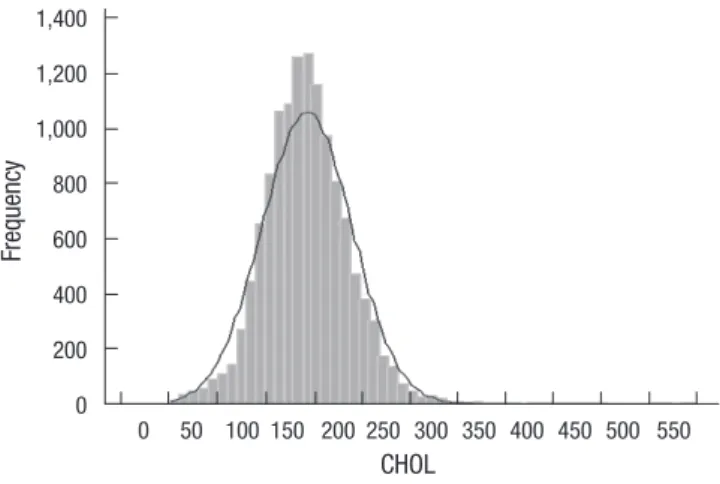
Fig. 1 displays the distribution of TC with 194 mg/dL in mean and 47.2 in SD. Table 2 indicates that the lowest group having TC < 160 mg/dL as well as the highest group having > = 240 mg/
dL are associated with higher CVD mortality in Cox proportional hazards analysis adjusting for age, sex, smoking and drinking status, body mass index, level of blood pressure, TG and HDL cholesterol. Even if excluding TG and HDL cholesterol for con- sidering over-adjustment (model 2 in Table 2), the trends as well as statistical significances were sustained.
Table 3 shows HRs and 95% CIs for CVD mortality by choles- terol category. The crude and multivariate-adjusted HRs are grouped by sex. While the distribution of adjusted HRs shows the U-shaped curve, the adjusted HRs of the lowest cholesterol group (< 160 mg/mL) in a risk of CVD death are 1.55 (95% CI, 0.93-2.59) for men and 1.31 (0.57-3.03) for women. In the high- est cholesterol group (≥ 240 mg/dL), the adjusted HR in men only has the statistical significance (aHR 2.01, 95% CI 1.04-3.87).
When a subgroup analysis in mortality from heart disease and stroke has conducted, all adjusted HRs by cholesterol groups and both sexes do not show a statistical significance, in spite of keeping the U-shaped distribution.
DISCUSSION
CVD encompasses a wide range of disease including ischemic heart disease, coronary heart disease (e.g. heart attack), cerebro- vascular disease (e.g. stroke), raised blood pressure, hyperten- sion, rheumatic heart disease and heart failure (6). As CVD is ranked as the number one cause of mortality and is a major cause of morbidity world wide (1), CVD imposes high social costs, in- cluding impaired quality of life and reduced economic activity, and accounts for a large share of health service resources (15).
In the general population, the relationship between hyperlip- idemia (dyslipidemia) and CVD (predominantly CAD) is well established (16) and there are proven benefits of lipid-lowering with statins (6). While this study has several strengths, including a prospective design, large sample size, prolonged duration of follow-up, a large number of deaths, and actually complete mor- Table 2. The crude and adjusted hazard ratios (cHR, aHR) with 95% confidence intervals (CIs) of total cholesterol in death by cardiovascular diseases in the study participants (n = 12,740)
Total Cholesterol (mg/dL) Deaths No. cHR
[95% CI]
aHR by model 1 [95% CI]
aHR by model 2 [95% CI]
P value (χ2 trend)
< 160 54 4,793 1.60 [1.08, 2.37] 1.80 [1.08, 3.01] 1.92 [1.15, 3.20] < 0.001
160-199 46 2,596 1.00 - 1.00 - 1.00 -
200-239 46 3,614 1.12 [0.76, 1.66] 1.30 [0.76, 2.20] 1.23 [0.72, 2.07]
≥ 240 27 1,737 1.37 [0.86, 2.17] 2.02 [1.13, 3.62] 1.85 [1.04, 3.29]
*model 1 (adjusted for age, sex, smoking and drinking history, body mass index, level of blood pressure, triglyceride, high density lipoprotein) and model 2 (adjusted for age, sex, smoking and drinking history, body mass index, and level of blood pressure).
Frequency
CHOL
0 50 100 150 200 250 300 350 400 450 500 550 1,400
1,200 1,000 800 600 400 200 0
Fig. 1. Distribution of total cholesterol levels in study participants.
tality follow-up, the distribution of multivariable-adjusted HRs shows the U-shaped curve in Korean adults. Especially, the fact that low cholesterol was related to high mortality of CVD is as same as that of a Japanese study (9) in Table 4.
Similar inverse, ‘J’ or ‘U’-shaped relationships between lipid levels and all cause mortality have been reported in other pop- ulations and are thought to reflect a high prevalence of co-mor- bid disease in patients with low cholesterol levels (16, 17). In the
Honolulu Heart Study of Japanese-Americans (18), low serum cholesterol was associated with increased mortality, but only among individuals with the risk factors of smoking, high alcohol consumption, and untreated hypertension. In other words, the association is not invariant, but appears to vary across popula- tions of different social or lifestyle characteristics (7).
Although the increase in mortality at low levels of TC was ex- plained by chance, regression dilution bias, competing risks, Table 3. The crude and adjusted* hazard ratios (cHR, aHR) of total cholesterol level in the cardiovascualr mortalities by sex
Sex
Baseline Total Cholesterol level (mg/dL)
< 160 160-199 200-239 ≥ 240
Hazard ratio (95% CI) Men
Cardiovascualr diseases, total mortality Crude
Adjusted
Heart diseases mortality Crude
Adjusted Stroke mortality Crude Adjusted
1.52 [0.99, 2.32]
1.55 [0.93, 2.59]
1.30 [0.60, 2.85]
1.55 [0.60, 3.96]
1.63 [0.98, 2.70]
1.54 [0.84, 2.85]
1.00 1.00 1.00 1.00 1.00 1.00
0.78 [0.47, 1.27]
0.84 [0.45, 1.55]
0.90 [0.39, 2.09]
0.79 [0.26, 2.37]
0.72 [0.39, 1.33]
0.86 [0.41, 1.80]
1.21 [0.66, 2.22]
2.01 [1.04, 3.87]
1.30 [0.46, 3.74]
2.27 [0.75, 6.92]
1.17 [0.56, 2.45]
1.89 [0.83, 4.29]
Women
Cardiovascualr diseases, total mortality Crude
Adjusted
Heart diseases mortality Crude
Adjusted Stroke mortality Crude Adjusted
1.12 [0.63, 2.00]
1.31 [0.57, 3.03]
1.00 [0.38, 2.62]
1.69 [0.47, 6.12]
1.20 [0.58, 2.49]
1.11 [0.37, 3.32]
1.00 1.00 1.00 1.00 1.00 1.00
1.09 [0.67, 1.78]
0.97 [0.51, 1.86]
1.85 [0.89, 3.85]
2.08 [0.80, 5.44]
0.74 [0.37, 1.46]
0.51 [0.19, 1.36]
1.37 [0.78, 2.42]
1.12 [0.53, 2.38]
1.12 [0.43, 2.95]
0.47 [0.10, 2.09]
1.54 [0.76, 3.11]
1.76 [0.72, 4.29]
*adjusted for age, smoking and drinking history, body mass index, level of blood pressure, high density lipoprotein cholesterol, and triglyceride.
Table 4. Comparison of adjusted* hazard ratios (aRR) of total cholesterol level in the cardiovascualr mortalities by sex between Korean and Japanese people [Ref: 9]
Sex
Baseline Total Cholesterol level (mg/dL)
< 160 160-199 200-239 ≥ 240
Hazard ratio (95% CI) Male
Cardiovascualr diseases, total mortality Adjusted in Korean
Adjusted in Japanese Heart diseases mortality Adjusted in Korean Adjusted in Japanese Stroke mortality Adjusted in Korean Adjusted in Japanese
1.55 [0.93, 2.59]
1.38 [1.13, 1.66]
1.49 [0.59, 3.78]
1.36 [0.76, 2.46]
1.58 [0.86, 2.91]
1.21 [0.66, 2.21]
1.00
0.83 [0.45. 1.53]
1.09 [0.88, 1.34]
0.80 [0.27, 2.42]
1.04 [0.54, 2.01]
0.85 [0.41, 1.77]
0.99 [0.53, 1.82]
1.97 [1.02, 3.78]
1.21 [0.82, 1.78]
2.34 [0.78, 7.06]
2.14 [0.81, 5.65]
1.81 [0.80, 4.08]
0.98 [0.29, 3.23]
Female
Cardiovascualr diseases, total mortality Adjusted in Korean
Adjusted in Japanese Heart diseases mortality Adjusted in Korean Adjusted in Japanese Stroke mortality Adjusted in Korean Adjusted in Japanese
1.29 [0.56, 2.95]
1.42 [1.02, 2.00]
1.66 [0.46, 5.94]
1.34 [0.54, 3.35]
1.08 [0.36, 3.21]
1.84 [0.71, 4.76]
1.00
0.98 [0.51, 1.87]
0.93 [0.73, 1.17]
2.08 [0.80, 5.42]
0.78 [0.42, 1.42]
0.51 [0.19, 1.37]
1.29 [0.68, 2.44]
1.13 [0.54, 2.39]
0.93 [0.67, 1.30]
0.47 [0.11, 2.10]
0.39 [0.11, 1.30]
1.78 [0.73, 4.30]
1.52 [0.66, 3.48]
*adjusted for age, smoking and drinking history, body mass index, level of blood pressure, and high density lipoprotein cholesterol.
cause-effect, effect-cause, and residual confounding such as smoking (17), the terms of ‘reverse epidemiology’ and ‘obesity paradox’ (19, 20) in marked contrast to the effects of TC or obe- sity on mortality in the general population, especially the Fram- ingham paradigm (21), have been proposed. Associations com- patible with the concept of “reverse epidemiology” have been described in several other chronic conditions such as end-stage renal disease, malignancies, chronic obstructive lung disease, AIDS as well as in the elderly (22). As same as the results of this study, Casiglia et al. (23) reported that the higher the TC levels, the lower mortality in the elderly. In addition, Strandberg et al.
(24) suggested that low serum cholesterol level in midlife pre- dicted not only better survival but also better physical function and quality of life (QOL) in old age.
Interestingly, Table 3 showed that the adjusted HR of heart disease mortality was in the opposite direction between men and women, especially in TC over 240 mg/dL (2.27 in men vs 0.47 in women). Japanese in the same level of TC in Table 4 also showed the same fact (2.14 in men vs 0.39 in women). While the CVD mortality in men are generally higher than in women, fur- ther studies for explaining this phenomenon will be needed.
The fact that only the multivariable-adjusted HR in men has the statistical significance should be interpreted carefully because this study has a number of limitations. First limitation is that re- sults were based on a one-time measurement of serum lipids.
In longitudinal studies the use of baseline measurements only may underestimate the associations between usual risk factors and CVD mortality due to regression dilution effects (25). Second limitation is that TC levels in this study were measured in the non-fasting state. Although similar results were obtained when analyses were repeated with non-fasting serum (26), subjects would be grouped into higher TC level. Based on this fact, cal- culated HRs would be assumed as under-estimated with toward the null. Third limitation is the issue of reverse-causality because some underlying diseases could influence the level of lipid. To controlling this bias, authors applied to exclude members having previous history of cardiovascular disease on entry. Last limita- tion is that the “healthy peopler” would have a higher chance to register as a cohort participant in general population (27). The effect on mortality might have been slightly underestimated by the increased level of TC during follow-up.
CVD is multi-factorial in its causation and lifestyle changes are the basis of any treatment strategy, with patients often requir- ing behavioral counseling (6). Considering reductions in CVD mortality with statins, there have still been controversies regard- ing the truly long-term prognostic value of low cholesterol on CVD mortality, especially in older individuals (5, 28). Based on the results of this study, caution should be taken in prescribing statins for primary prevention among people at low cardiovas- cular risk.
ACKNOWLEDGMENTS
The authors thank the investigators of the report titled as “Epi- demiological Investigation on Cancer Risk among Radiation Workers in Nuclear Power Plants and Residents nearby Nuclear Power Plants in Korea”.
REFERENCES
1. WHO. Cardiovascular disease. Available at http://www.who.int/cardio- vascular_diseases/en/ [accessed on 31 July 2011].
2. WHO. Integrated management of cardiovascular risk. Available at http:
//www.who.int/cardiovascular_diseases/media/en/635.pdf [accessed on 31 July 2011].
3. Menotti A, Lanti M. Coronary risk factors predicting early and late coro- nary deaths. Heart 2003; 89: 19-24.
4. Menotti A, Giampaoli S. A single risk factor measurement predicts 35-year mortality from cardiovascular disease. G Ital Cardiol 1998; 28: 1354-62.
5. Menotti A, Lanti M, Kromhout D, Kafatos A, Nedeljkovic S, Nissinen A.
Short and long term association of a single serum cholesterol measure- ment in middle-aged men in prediction of fatal coronary and other car- diovascular events: a cross-cultural comparison through Europe. Eur J Epidemiol 2005; 20: 597-604.
6. Taylor F, Ward K, Moore TH, Burke M, Davey Smith G, Casas JP, Ebrahim S. Statins for the primary prevention of cardiovascular disease. Cochrane Database Syst Rev 2011; (1): CD004816.
7. Cai J, Pajak A, Li Y, Shestov D, Davis CE, Rywik S, Li Y, Deev A, Tyroler HA. Total cholesterol and mortality in China, Poland, Russia, and the US. Ann Epidemiol 2004; 14: 399-408.
8. Simes RJ. Low cholesterol and risk of non-coronary mortality. Aust N Z J Med 1994; 24: 113-9.
9. Nago N, Ishikawa S, Goto T, Kayaba K. Low cholesterol is associated with mortality from stroke, heart disease, and cancer: the Jichi Medical School Cohort Study. J Epidemiol 2011; 21: 67-74.
10. Ahn YO, Lee MC, Yoo KY, Chung JK, Park BJ, Li ZM, Choi JS, Lee CE, Lee DH, Lim HS, Choi BY, Chang SH, Oh JK, Cha CY, Chung HW. Epide- miological Investigation on Cancer Risk among Radiation Workers in Nuclear Power Plants and Residents nearby Nuclear Power Plants in Korea. 2007.3-2011.2. Ministry of Education, Science and Technology (MEST No. 2010-0000986)
11. The Statistics Korea. Korean Statistical Information Service. Available at http://www.kosis.kr/ [accessed on 31 July 2011].
12. The Statistics Korea. Korea Standard Classification of Cause of Death.
Available at http://www.kostat.go.kr/portal/english/news/1/8/index.
board?bmode=read&aSeq=67396 [accessed on 31 July 2011].
13. National Heart Lung and Blood Institute. The Eighth Report of the Joint National Committee on Prevention, Detection, Evaluation, and Treat- ment of High Blood Pressure (JNC 8). Available at http://www.nhlbi.nih.
gov/guidelines/hypertension/jnc8/index.htm [accessed on 31 July 2011].
14. SAS software. Available at http://www.sas.com/[accessed on 31 July 2011].
15. Gaziano TA. Reducing the growing burden of cardiovascular disease in the developing world. Health Aff (Millwood) 2007; 26: 13-24.
16. Wan RK, Mark PB, Jardine AG. The cholesterol paradox is flawed: choles- terol must be lowered in dialysis patients. Semin Dial 2007; 20: 504-9.
17. Jacobs D, Blackburn H, Higgins M, Reed D, Iso H, McMillan G, Neaton J, Nelson J, Potter J, Rifkind B. Report of the Conference on Low Blood Cho- lesterol: Mortality Associations. Circulation 1992; 86: 1046-60.
18. Iribarren C, Reed DM, Burchfiel CM, Dwyer JH. Serum total cholesterol and mortality. Confounding factors and risk modification in Japanese- American men. JAMA 1995; 273: 1926-32.
19. Speakman JR, Westerterp KR. Reverse epidemiology, obesity and mor- tality in chronic kidney disease: modelling mortality expectations using energetics. Blood Purif 2010; 29: 150-7.
20. Arena R, Lavie CJ. The obesity paradox and outcome in heart failure: is excess bodyweight truly protective? Future Cardiol 2010; 6: 1-6.
21. Kalantar-Zadeh K. What is so bad about reverse epidemiology anyway?
Semin Dial 2007; 20: 593-601.
22. Güder G, Frantz S, Bauersachs J, Allolio B, Wanner C, Koller MT, Ertl G, Angermann CE, Störk S. Reverse epidemiology in systolic and nonsystol- ic heart failure: cumulative prognostic benefit of classical cardiovascular risk factors. Circ Heart Fail 2009; 2: 563-71.
23. Casiglia E, Mazza A, Tikhonoff V, Scarpa R, Schiavon L, Pessina AC. Total
cholesterol and mortality in the elderly. J Intern Med 2003; 254: 353-62.
24. Strandberg TE, Strandberg A, Rantanen K, Salomaa VV, Pitkälä K, Miet- tinen TA. Low cholesterol, mortality, and quality of life in old age during a 39-year follow-up. J Am Coll Cardiol 2004; 44: 1002-8.
25. Clarke R, Lewington S, Youngman L, Sherliker P, Peto R, Collins R. Under- estimation of the importance of blood pressure and cholesterol for coro- nary heart disease mortality in old age. Eur Heart J 2002; 23: 286-93.
26. Liu Y, Coresh J, Eustace JA, Longenecker JC, Jaar B, Fink NE, Tracy RP, Powe NR, Klag MJ. Association between cholesterol level and mortality in dialysis patients: role of inflammation and malnutrition. JAMA 2004;
291: 451-9.
27. Clarke R, Emberson J, Fletcher A, Breeze E, Marmot M, Shipley MJ. Life expectancy in relation to cardiovascular risk factors: 38 year follow-up of 19,000 men in the Whitehall study. BMJ 2009; 339: b3513.
28. Manolio TA, Pearson TA, Wenger NK, Barrett-Connor E, Payne GH, Har- lan WR. Cholesterol and heart disease in older persons and women. Review of an NHLBI workshop. Ann Epidemiol 1992; 2: 161-76.
![Table 4. Comparison of adjusted* hazard ratios (aRR) of total cholesterol level in the cardiovascualr mortalities by sex between Korean and Japanese people [Ref: 9]](https://thumb-ap.123doks.com/thumbv2/123dokinfo/5135261.91310/4.892.77.824.127.483/table-comparison-adjusted-cholesterol-cardiovascualr-mortalities-korean-japanese.webp)
