․투고일: 2018.03.16, 심사일: 2018.05.26, 게재확정일: 2018.05.21
․교신저자: 정우상 서울시 동대문구 회기동 1번지 경희대학교 한방병원 순환신경내과학교실 TEL: 02-958-9275 FAX: 02-958-9132
우하지 소력감을 호소하는 대상포진 후 대퇴신경마비 환자 치험 1례
양정윤1, 박민정1, 김수현1, 조기호1,2, 문상관1,2, 권승원1,2, 정우상1,2
1경희대학교 대학원 임상한의학과, 2경희대학교 한의과대학 순환신경내과학교실
A Case of a Postzoster Femoral Nerve Palsy Patient with Weakness of the Right Lower Limb Treated with Korean Medicine
Jung-yun Yang1, Min-jeong Park1, Soo-hyun Kim1, Ki-ho Cho1,2, Sang-kwan Mun1,2, Seung-won Kwon1,2, Woo-sang Jung1,2
1Dept. of Clinical Korean Medicine, Graduate School, Kyung Hee University
2Dept. of Cardiology and Neurology, College of Korean Medicine, Kyung Hee University
ABSTRACT
Objective: The purpose of this clinical study is to report the case of a 79-year-old man with weakness of the right lower limb due to postzoster femoral nerve palsy.
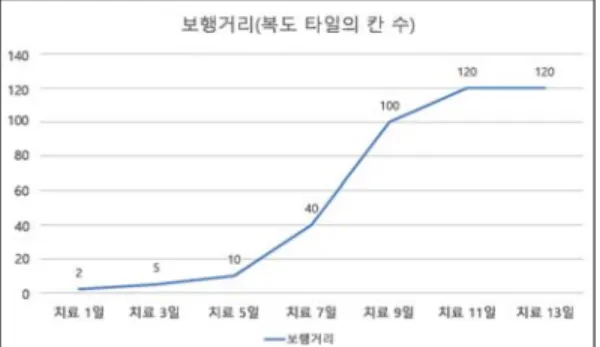
Methods: A patient was treated with Korean medicine, including herbal medication, acupuncture, electro-acupuncture, and bee-venom, during 17 days of hospitalization. We evaluated the improvements of symptoms using manual muscle testing (MMT) and measuring the change in walking distance.
Results: After 17 days of Korean medicine treatment, there was improvement in the patient’s symptoms. MMT improved from 3- to 5, and walking distance improved from 2 spaces to 120 spaces.
Conclusions: This study suggested that Korean medical treatment might be effective in the patient’s recovery from postzoster femoral nerve palsy.
Key words: postzoster paresis, Sokyoungwhalhyul-tang, Goshajinkigan, bee-venom