INTRODUCTION
Stevens-Johnson syndrome (SJS) and toxic epidermal necrol- ysis (TEN) are rare but very serious forms of drug-induced cu-
taneous adverse reaction. The incidence of SJS/TEN was esti- mated to be about 1–2 per one million inhabitants per year.1 SJS and TEN are usually induced by specific drug and are char- acterized by erythematous skin lesion with extensive detach- ment of epidermis or mucous membrane.2 They are differenti- ated according to the extent of skin detachment: less than 10%
of body surface area (BSA) in SJS, 10–30% in overlap, more than 30% in TEN.3 Although actual reason for death in SJS/TEN is not well defined, mortality rates of SJS/TEN are 5–49%.2,4
Not all medicines usually lead to SJS/TEN. There are some medicines with high risk to induce SJS/TEN, including allopu- rinol, carbamazepine, co-trimoxazole, lamotrigine, nevirapine, oxicam-nonsteroidal anti-inflammatory drugs (NSAIDs), phe- nobarbital and phenytoin.5 Many studies revealed there are some association between development of SJS/TEN induced
HLA Allele Frequencies in 5802 Koreans:
Varied Allele Types Associated with SJS/TEN According to Culprit Drugs
Hye Jung Park*, Young Joo Kim*, Dong Hyun Kim, Junho Kim, Kyung Hee Park, Jung-Won Park, and Jae-Hyun Lee
Division of Allergy and Immunology, Department of Internal Medicine, Institute of Allergy, Yonsei University College of Medicine, Seoul, Korea.
Purpose: Stevens-Johnson syndrome (SJS) and toxic epidermal necrolysis (TEN) are very serious forms of drug-induced cutane- ous adverse reaction. SJS/TEN induced by certain drug is well known to be associated with some human leukocyte antigen (HLA) gene type. We aimed to explore HLA allele frequencies and their association with SJS/TEN according to culprit drugs in Korea.
Materials and Methods: We enrolled 5802 subjects who had results of HLA typing test from August 2005 to July 2014. Total 28 SJS/TEN patients were categorized based on culprit drugs (allopurinol, lamotrigine, carbamazepine) and identified the presence of HLA-B*58:01, HLA-B*44:03, HLA-B*15:02, and HLA-A*31:01.
Results: HLA-A*24:02 (20.5%), HLA-B*44:03 (10.0%), and HLA-Cw*01:02 (17.1%) were the most frequent type in HLA-A, -B, and -C genes, respectively. Allele frequencies of HLA-B*58:01, HLA-B*44:03, HLA-A*31:01, and HLA-B*15:02 were 7.0%, 10.0%, 5.0%, and 0.3%, respectively. In 958 allopurinol users, 9 subjects (0.9%) were diagnosed with SJS/TEN. Among them, 8 subjects pos- sessed HLA-B*58:01 allele. SJS/TEN induced by allopurinol was more frequently developed in subjects with HLA-B*58:01 than in subjects without it [odds ratio: 57.4; confidence interval (CI) 7.12–463.50; p<0.001]. Allopurinol treatment, based on screening by HLA-B*58:01 genotyping, could be more cost-effective than that not based on screening. HLA-B*44:03 may be associated with la- motrigine-induced SJS/TEN (odds ratio: 12.75; CI 1.03–157.14; p=0.053). Among carbamazepine users, only two patients experi- enced SJS/TEN and possessed neither HLA-B*15:02 nor HLA-A*31:03.
Conclusion: HLA gene frequencies varied in Korea. Screening of HLA-B*58:01 before the use of allopurinol might be needed to anticipate probability of SJS/TEN.
Key Words: Allopurinol, human leukocyte antigen, HLA-B*58:01, Stevens-Johnson syndrome, toxic epidermal necrolysis Yonsei Med J 2016 Jan;57(1):118-126
http://dx.doi.org/10.3349/ymj.2016.57.1.118 pISSN: 0513-5796 · eISSN: 1976-2437
Received: May 11, 2015 Revised: June 30, 2015 Accepted: July 2, 2015
Corresponding author: Dr. Jae-Hyun Lee, Division of Allergy and Immunology, Department of Internal Medicine, Yonsei University College of Medicine, 50-1 Yon- sei-ro, Seodaemun-gu, Seoul 03722, Korea.
Tel: 82-2-2228-1987, Fax: 82-2-393-6884, E-mail: [email protected]
*Hye Jung Park and Young Joo Kim contributed equally to this work.
•The authors have no financial conflicts of interest.
© Copyright: Yonsei University College of Medicine 2016
This is an Open Access article distributed under the terms of the Creative Com- mons Attribution Non-Commercial License (http://creativecommons.org/ licenses/
by-nc/3.0) which permits unrestricted non-commercial use, distribution, and repro- duction in any medium, provided the original work is properly cited.
by certain drug and specific human leukocyte antigen (HLA) allele. HLA molecules, which are located within major histo- compatibility complex, are involved in improper activation of T-cells which finally causes SJS/TEN. Altered peptide reper- toire theory, hapten/prohapten theory and direct interaction between HLA and drug are suggested to explain this mecha- nism.6,7
Allopurinol, drug used primarily to treat hyperuricemia, is known to frequently lead to SJS/TEN in subjects possessing HLA-B*58:01.8-10 Carbamazepine, drug used primarily to treat seizures and neurologic pain, often causes SJS/TEN in subjects possessing HLA-B*15:02.11 However, in Japan, carbamaze- pine-induced SJS/TEN is associated with HLA-A*31:01, not HLA-B*15:02.12 Lamotrigine, new generation of anticonvul- sants as carbamazepine, is considered relatively safe, but can lead to SJS/TEN in subjects possessing HLA-B*15:02 or HLA- B*44:03.13,14 Therefore, researches on the relationship between varied allele types associated SJS/TEN which was induced by certain drug and ethnicity and geographical region might be needed to anticipate and prevent SJS/TEN in each area. How- ever, there are few studies on the association between HLA- types and SJS/TEN induced by certain drugs in Korea.15-17
Although basic data about HLA gene frequency is needed to figure out distribution and characteristics of Korean genotype, there are few studies on HLA gene frequency.18,19 HLA gene fre- quency varied according to ethnicity and country. HLA gene frequency data including medical and clinical records is need- ed nowadays when HLA genotyping has been highlighted as predisposition of SJS/TEN induced certain drugs.
In the present study, we aimed to calculate HLA allele fre- quencies and evaluate their association with SJS/TEN accord- ing to culprit drugs such as allopurinol, lamotrigine and carba- mazepine in Korea.
MATERIALS AND METHODS
Participants
We retrospectively reviewed electronic medical and clinical records and the test results of 5802 subjects admitted to Sever- ance Hospital and the results of HLA typing test from August 2005 to July 2014. All subjects had already conducted HLA typ- ing test to prepare organ or stem cell transplantation in patients with hepatic failure, renal failure and hematologic malignancy.
Other reasons were to diagnosis specific diseases associated with HLA-typing, such as Behcet’s disease, ankylosing spon- dylitis and SJS/TEN.
This study protocol was approved by the Institutional Re- view Board of the Yonsei University Health System (4-2014- 1086), Seoul, Korea, and conducted in accordance with the Declaration of Helsinki.
The HLA typing test
The HLA typing test was performed with low resolution or high resolution DNA typing. A LIFECODES antibody detection sys- tem (Luminex® platform, San Diego, CA, USA) with flow cyto- metric sensitivity was used to screen and identify the expres- sion of low resolution of DNA typing. The LIFECODES DNA typing system utilizes sequence specific oligonucleotide (SSO) methodology in its HLA assays.20 AlleleSEQR® HLA PCR kits (Celera Co., Alameda, CA, USA) was used for high resolution DNA typing.
Definition of SJS/TEN
All patients with SJS/TEN were diagnosed by allergy special- ists in Severance Hospital. SJS, SJS/TEN overlap, and TEN were diagnosed based on the percentage of skin area exhibiting epi- dermal detachment (SJS, <10%; SJS/TEN overlap, 10–30%; TEN,
>30% of total BSA).3 Total 28 SJS/TEN subjects were catego- rized based on culprit drug, including allopurinol, lamotrigine, and carbamazepine.
Identification of culprit drug
Culprit drugs were identified based on the recommended guideline, ALDEN (algorithm for assessment of drug causality in SJS/TEN), for identifying causal medications.21 For exam- ple, in case of subjects taking medicine allopurinol, cephalo- sporins and beta-blockers, allopurinol was identified culprit drug based on the recommended guideline, because allopuri- nol is a high risk drug. In case of subjects taking more than two high risk drugs, allergy specialist identified culprit drug based on the duration of drug uses, changes of clinical manifestation after stopping or reusing of drugs. Duration of latency is defined from the date of drug start to the date of symptom start.
Statistical analysis
HLA gene frequency was calculated using a direct counting method. We defined samples containing one allele as a homo- zygous. In case of homozygous, we calculated twice in the anal- ysis. All statistical analyses were performed using SPSS (ver- sion 18.0; SPSS Inc., Chicago, IL, USA). Values are expressed as mean±standard deviation. Comparisons of variables were made with the chi-square, Fischer’s exact, Student’s t, and Mann-Whitney tests as appropriate. A p value of less than 0.05 was set as the level of statistical significance.
RESULTS
Demographic and clinical characteristics of study population
Of total 5802 subjects, male comprised 43.0%. The mean age of subjects was 44.5±13.7 years. Renal failure patients, includ- ing renal transplantation recipients, chronic renal failure and end-stage renal disease, made up 19.2%. Hematologic malig-
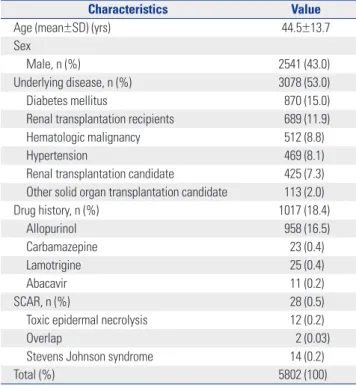
nancy patients, including peripheral stem cell transplantation recipients due to acute leukemia, and myelodysplastic syn- drome, occupied 8.8%. Total number of SJS/TEN patients was 28 (0.5%). The number of SJS, overlap and TEN patients was 14, 2, and 12, respectively. Among certain drugs which are known to develop SJS/TEN and be associated with specific HLA-al- lele, allopurinol, was the most commonly described and used drug (16.5%), followed by carbamazepine (0.4%), lamotrigine (0.4%), and abacavir (0.2%) (Table 1). However, among abaca- vir users, no one developed SJS/TEN.
HLA allele frequencies
We analyzed the HLA gene results of 5802 subjects. There are 12 allele types in HLA-A gene in Korea. The most frequent al- lele type of HLA-A genes were HLA-A*02 (26.4%) followed by A*24 (20.4%) and A*33 (15.0%). Among 26 allele types in HLA- B gene, HLA-B*15 (13.4%), and B*44 (10.3%) was frequent allele types. HLA-Cw gene showed 16 allele types and HLA-Cw*03 (26.8%) was the most frequent allele type followed by Cw*01 (17.2%), Cw*14 (13.3%), and Cw*07 (12.1%). HLA-DRB1 and HLA-DQB1 had 13 and 7 allele types, respectively. HLA- DRB1*04 (19.9%), DRB1*15 (10.4%), DRB1*13 (10.3%), DRB1*09 (10.3%), and HLA-DQB1*03 (35.3%), DQB1*06 Table 1. Demographic and Clinical Characteristics of Study Population
Characteristics Value
Age (mean±SD) (yrs) 44.5±13.7
Sex
Male, n (%) 2541 (43.0)
Underlying disease, n (%) 3078 (53.0)
Diabetes mellitus 870 (15.0)
Renal transplantation recipients 689 (11.9)
Hematologic malignancy 512 (8.8)
Hypertension 469 (8.1)
Renal transplantation candidate 425 (7.3) Other solid organ transplantation candidate 113 (2.0)
Drug history, n (%) 1017 (18.4)
Allopurinol 958 (16.5)
Carbamazepine 23 (0.4)
Lamotrigine 25 (0.4)
Abacavir 11 (0.2)
SCAR, n (%) 28 (0.5)
Toxic epidermal necrolysis 12 (0.2)
Overlap 2 (0.03)
Stevens Johnson syndrome 14 (0.2)
Total (%) 5802 (100)
SD, standard deviation; SCAR, severe cutaneous adverse reaction.
Table 2. HLA Allele Frequencies
HLA-A HLA-B HLA-Cw HLA-DR HLA-DQB1
Genotype Frequency (%) Genotype Frequency (%) Genotype Frequency (%) Genotype Frequency (%) Genotype Frequency (%)
01 1.722 07 4.222 01 17.433 01 6.090 01 0.186
02 29.533 08 0.259 02 0.520 03 2.094 02 9.497
03 1.731 13 4.956 03 27.537 04 20.635 03 39.665
11 10.671 14 1.286 04 6.158 07 7.062 04 11.732
24 22.389 15 13.934 05 1.735 08 9.386 05 18.063
26 6.506 18 0.043 06 4.814 09 10.328 06 20.670
29 0.565 27 3.030 07 12.446 10 1.723 09 0.186
30 4.292 35 5.793 08 9.237 11 4.728
31 5.768 37 1.425 12 3.166 12 7.863
32 0.583 38 1.226 14 13.530 13 10.227
33 16.083 39 1.278 15 3.296 14 8.474
68 0.155 40 12.829 16 0.043 15 10.388
44 10.749 16 0.992
46 4.679
47 0.112
48 3.505
50 0.138
51 10.196
52 2.478
54 6.181
55 1.943
56 0.432
57 0.371
58 5.750
59 1.951
67 1.217
HLA, human leukocyte antigen.
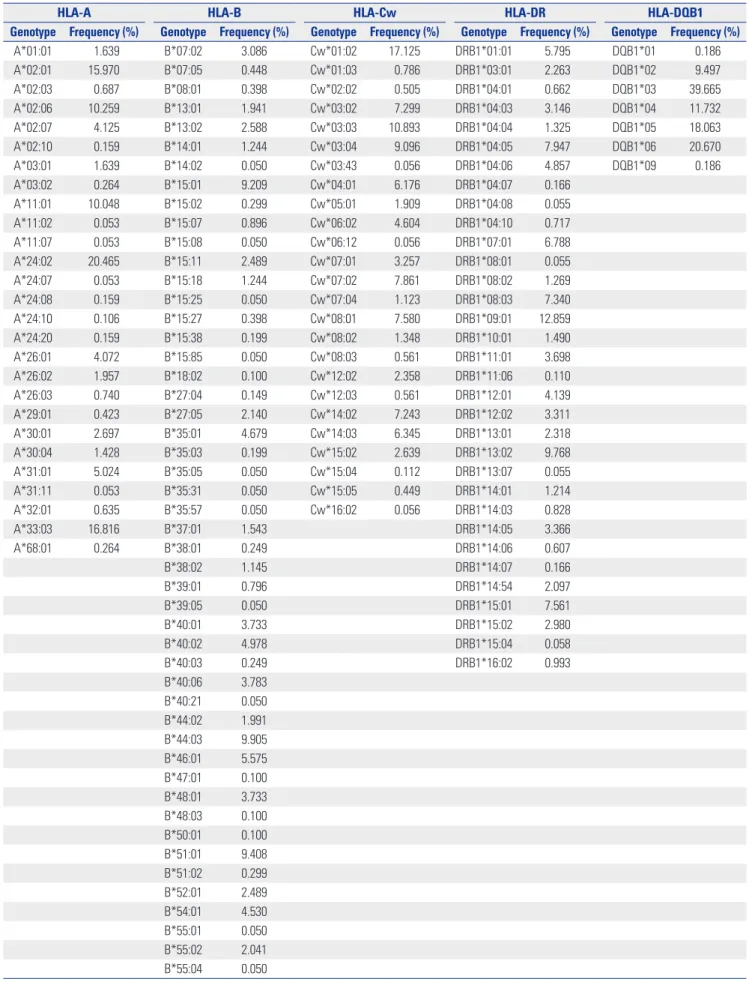
Table 3. High Resolution HLA Allele Frequencies
HLA-A HLA-B HLA-Cw HLA-DR HLA-DQB1
Genotype Frequency (%) Genotype Frequency (%) Genotype Frequency (%) Genotype Frequency (%) Genotype Frequency (%)
A*01:01 1.639 B*07:02 3.086 Cw*01:02 17.125 DRB1*01:01 5.795 DQB1*01 0.186
A*02:01 15.970 B*07:05 0.448 Cw*01:03 0.786 DRB1*03:01 2.263 DQB1*02 9.497
A*02:03 0.687 B*08:01 0.398 Cw*02:02 0.505 DRB1*04:01 0.662 DQB1*03 39.665
A*02:06 10.259 B*13:01 1.941 Cw*03:02 7.299 DRB1*04:03 3.146 DQB1*04 11.732
A*02:07 4.125 B*13:02 2.588 Cw*03:03 10.893 DRB1*04:04 1.325 DQB1*05 18.063
A*02:10 0.159 B*14:01 1.244 Cw*03:04 9.096 DRB1*04:05 7.947 DQB1*06 20.670
A*03:01 1.639 B*14:02 0.050 Cw*03:43 0.056 DRB1*04:06 4.857 DQB1*09 0.186
A*03:02 0.264 B*15:01 9.209 Cw*04:01 6.176 DRB1*04:07 0.166
A*11:01 10.048 B*15:02 0.299 Cw*05:01 1.909 DRB1*04:08 0.055
A*11:02 0.053 B*15:07 0.896 Cw*06:02 4.604 DRB1*04:10 0.717
A*11:07 0.053 B*15:08 0.050 Cw*06:12 0.056 DRB1*07:01 6.788
A*24:02 20.465 B*15:11 2.489 Cw*07:01 3.257 DRB1*08:01 0.055
A*24:07 0.053 B*15:18 1.244 Cw*07:02 7.861 DRB1*08:02 1.269
A*24:08 0.159 B*15:25 0.050 Cw*07:04 1.123 DRB1*08:03 7.340
A*24:10 0.106 B*15:27 0.398 Cw*08:01 7.580 DRB1*09:01 12.859
A*24:20 0.159 B*15:38 0.199 Cw*08:02 1.348 DRB1*10:01 1.490
A*26:01 4.072 B*15:85 0.050 Cw*08:03 0.561 DRB1*11:01 3.698
A*26:02 1.957 B*18:02 0.100 Cw*12:02 2.358 DRB1*11:06 0.110
A*26:03 0.740 B*27:04 0.149 Cw*12:03 0.561 DRB1*12:01 4.139
A*29:01 0.423 B*27:05 2.140 Cw*14:02 7.243 DRB1*12:02 3.311
A*30:01 2.697 B*35:01 4.679 Cw*14:03 6.345 DRB1*13:01 2.318
A*30:04 1.428 B*35:03 0.199 Cw*15:02 2.639 DRB1*13:02 9.768
A*31:01 5.024 B*35:05 0.050 Cw*15:04 0.112 DRB1*13:07 0.055
A*31:11 0.053 B*35:31 0.050 Cw*15:05 0.449 DRB1*14:01 1.214
A*32:01 0.635 B*35:57 0.050 Cw*16:02 0.056 DRB1*14:03 0.828
A*33:03 16.816 B*37:01 1.543 DRB1*14:05 3.366
A*68:01 0.264 B*38:01 0.249 DRB1*14:06 0.607
B*38:02 1.145 DRB1*14:07 0.166
B*39:01 0.796 DRB1*14:54 2.097
B*39:05 0.050 DRB1*15:01 7.561
B*40:01 3.733 DRB1*15:02 2.980
B*40:02 4.978 DRB1*15:04 0.058
B*40:03 0.249 DRB1*16:02 0.993
B*40:06 3.783 B*40:21 0.050 B*44:02 1.991 B*44:03 9.905 B*46:01 5.575 B*47:01 0.100 B*48:01 3.733 B*48:03 0.100 B*50:01 0.100 B*51:01 9.408 B*51:02 0.299 B*52:01 2.489 B*54:01 4.530 B*55:01 0.050 B*55:02 2.041 B*55:04 0.050
(20.1%), DQB1*05 (15.8%), and DQB1*04 (11.1%) were fre- quent allele types (Table 2).
High resolution HLA allele frequencies
Not all 5802 subjects underwent high resolution study. The number of subjects was 1891, 2009, 1768, 1788, and 500 in HLA- A, HLA-B, HLA-Cw, HLA-DRB1, and HLA-DRQ1, respective- ly. Among HLA-A genes, the most frequent allele was HLA- A*24:02 (20.5%) followed by HLA-A*33:03 (16.8%) and HLA- A*02:01 (16.0%). Among HLA-B genes, HLA-B*44:03 (10.0%), HLA-B*51:01 (9.4%), and HLA-B*15:01 (9.2%) were frequent allele. Among HLA-C genes, HLA-Cw*01:02 (17.125%), and HLA-CW*03:03 (10.9%) were frequent allele. HLA-DRB1*09:01 (12.9%) and HLA-DRQ1*03 (39.7%) were the most frequent allele in each HLA-DR types. Allele frequencies of HLA-B*58:01, HLA-B*44:03, HLA-A*31:01, and HLA-B*15:02 were 7.0%, 10.0%, 5.0%, and 0.3%, respectively. All of 332 subjects with HLA-B*58 have HLA-B*58:01 (100%). Among 808 subjects with HLA-B*15, only 6 subjects have HLA-B*15:02 (Table 3).
Clinical characteristics of SJS/TEN patients according to culprit drugs
The most common culprit drug inducing SJS/TEN was allopu- rinol (n=9, 32.1%) and anticonvulsants (n=9, 32.1%), followed by antibiotics, acetazolamide, NSAIDs and herbals. In two cases (etc. cases), patients could not remember the names of medication taken. Mean latency of SJS/TEN varied according to culprit drugs and ranged between 20.5–34.3 days. Mean
age of subjects ranged between 37.0–67.7 years (Table 4).
Association between allopurinol induced SJS/TEN and HLA-B*58:01 allele
In 958 allopurinol users, 9 subjects (0.9%) were diagnosed with SJS/TEN. Among them, 8 subjects (88.9%) had HLA-B*58:01 allele. Among 949 allopurinol tolerant subjects, only 116 sub- jects (12.2%) had HLA-B*58:01 allele. SJS/TEN induced by al- lopurinol more frequently developed in subjects with HLA- B*58:01 than in subjects without it [odds ratio: 57.4; confidence interval (CI) 7.12–463.50; p<0.001] (Table 5).
Cost-effectiveness of allopurinol treatment based on screening by HLA-B*58:01 genotyping
The cost of HLA-B*58:01 genotyping, a service that is commer- cially available in Korea, is 70000 Korean won (KRW) (approxi- mately $62). The average total medical cost for SJS/TEN in- cluding admission fee, charges for the test, and treatment was 10394667 KRW ($9227), which was estimated by reviewing the medical records of 9 patients who experienced allopurinol-in- duced SJS/TEN in this study. Additional costs incurred when allopurinol was used without screening by HLA-B*58:01 geno- typing totaled to 93552003 KRW ($83395). If we screened the patients by HLA-B*58:01 genotyping before administering al- lopurinol and prohibited HLA-B*58:01 (+) patients from using allopurinol, we could save 83157336 KRW ($74129), which can then be used for SJS/TEN management. However, in this case, the genotyping fee, totaling to 67060000 KRW ($59779) for the Table 3. High Resolution HLA Allele Frequencies (Continued)
HLA-A HLA-B HLA-Cw HLA-DR HLA-DQB1
Genotype Frequency (%) Genotype Frequency (%) Genotype Frequency (%) Genotype Frequency (%) Genotype Frequency (%) B*55:07 0.050
B*56:01 0.199 B*57:01 0.398 B*58:01 7.018 B*59:01 2.190 B*67:01 1.145 HLA, human leukocyte antigen.
Table 4. Clinical Characteristics of SJS/TEN Patients According to Culprit Drugs
Culprits Case (n) Frequency (%) Mean latency±SD (day) Mean age±SD (yr)
Anticonvulsants* 9 32.1 34.3±15.3 52.9±17.4
Allopurinol 9 32.1 28.9±16.0† 67.7±10.9
Antibiotics 2 7.1 20.5±5.0 66.0±2.9
Acetazolamide 2 7.1 20.5±5.0 66.0±11.3
NSAIDs 2 7.1 21† 42.0±18.4
Herbs 1 3.6 † 37.0±0.0
Etc. 3 10.7 † 43.0±24.0
Total 28 100 57.9±16.2
SJS/TEN, Stevens-Johnson syndrome/toxic epidermal necrolysis; SD, standard deviation; NSAIDs, nonsteroidal anti-inflammatory drugs.
*Anticonvulsants contain carbamazepine, lamotrigine, zonisamide (excegran), †Some data was excluded because mean latency was uncertain due to lack of re- cords.
screening of 958 allopurinol users, will be added. Thus, the to- tal expected medical costs with and without screening by HLA- B*58:01 genotyping prior to allopurinol use were 77454667 KRW ($69034) and 93552003 KRW ($83395), respectively.
Association between lamotrigine induced SJS/TEN and HLA-B*44:03 allele
In 25 lamotrigine users, 7 subjects (28.0%) developed SJS/TEN.
Among them, 3 patients (42.9%) had HLA-B*44:03. Among 18 lamotrigine tolerant subjects, only one subject (5.6%) showed HLA-B*44:03. HLA-B*44:03 may be associated with lamotrigi- ne-induced SJS/TEN (odds ratio: 12.75; CI 1.03–157.14; p=0.053) (Table 6).
Association between carbamazepine-induced SJS/
TEN and HLA-B*15:02 allele
Although data is not shown, only two patients who had taken carbamazepine experienced SJS/TEN and possessed neither HLA-B*15:02 nor HLA-A*31:03.
DISCUSSION
HLA system is the locus of genes that encode for proteins on the surface of cells that are responsible for regulation of the im- mune system. This group of genes resides on chromosome 6, and encodes cell-surface antigen-presenting proteins and has many other functions. HLA gene affects the development of various diseases associated with immunity, including autoim- mune disease, infection and cancer.22,23 Many genetic associa- tion studies have shown strong linkage between specific HLA alleles and drug hypersensitivity reaction, especially T-cell mediated reaction, including SJS/TEN.24,25 Because distribu- tion and characteristics of HLA type are different according to ethnicity, these associations also vary, depending on different ethnic populations.26
SJS/TEN are very serious form of adverse cutaneous reac- tions induced by drug and can cause systemic symptoms in- cluding conjunctivitis, gastrointestinal inflammation, and bron-
chiolitis obliterans.27 Specific HLA-alleles according to several SJS/TEN-causing culprit drugs have been adequately studied.
Allopurinol, a well-known xanthine oxidase inhibitor, reduces the production of uric acid and is widely used to treat hyper- uricemia, gout and kidney stones. Because the incidence of hyperuricemia and gout is 15–20% and <1%, respectively, the number of patients using allopurinol is assumed to be very large.28 Allopurinol hypersensitivity develops in 0.4% of sub- jects during allopurinol use.29 Therefore, potential number of patients experiencing SJS/TEN is nothing to sneeze at. The most frequently identified culprit drug of SJS/TEN is allopuri- nol, accounting for 17.4% of all cases of drug-induced SJS/
TEN.30 Fortunately, many studies revealed that SJS/TEN in- duced by allopurinol is associated with HLA-B*58:01 allele. Allo- purinol users with HLA-B*58:01 develop SJS/TEN much more frequently than those without it. Some countries realizing the seriousness of this risk factor for SJS/TEN in allopurinol users recommend that the HLA-B*58:01 should be determined be- fore the use of allopurinol.31 In addition, many other studies have tried to demonstrate the association between HLA- B*58:01 and allopurinol induced SJS/TEN in their countries.8
Many studies suggest that screening by HLA-B*58:01 geno- typing prior to allopurinol use could be cost-effective. We also found that the cost incurred with screening by HLA-B*58:01 genotyping prior to allopurinol use, which prevents SJS/TEN in patients with HLA-B*58:01 (+), is lower than the total treat- ment fees of 9 patients with allopurinol-induced SJS/TEN. In contrast to others studies, we did not calculate the cost of allo- purinol and febuxostat (considered a substitute for allopuri- nol for the treatment of patients with gout who are contraindi- cated to allopurinol) because not all allopurinol users, in this study, were using another urate-lowering agent, febuxostat, to treat gout. Although this calculation is limited to the present study alone, we would like to conclude by saying that the find- ings in this study are in accordance with previous studies that demonstrated that allopurinol treatment based on screening by HLA-B*58:01 genotyping could be more cost-effective than that not based on screening.
The frequency of subjects with HLA-B*58:01 vary consider-
Table 6. The Risk of Lamotrigine-Induced SJS/TEN Occurrence According to Existence of HLA-B*44:03
HLA-B*44:03 (+) HLA-B*44:03 (-) Total OR (95% CI) p value
SJS/TEN (+) 3 4 7
12.75
(1.03–157.14) 0.053
SJS/TEN (-) 1 17 18
Total 4 21 25
OR, odds ratio; CI, confidence interval; SJS/TEN, Stevens-Johnson syndrome/toxic epidermal necrolysis; HLA, human leukocyte antigen.
Table 5. The Risk of Allopurinol Induced SJS/TEN Occurrence According to Existence of HLA-B*58:01
HLA-B*58:01 (+) HLA-B*58:01 (-) Total OR (95% CI) p value
SJS/TEN (+) 8 1 9
57.4
(7.12–463.50) <0.001
SJS/TEN (-) 116 833 949
Total 124 834 958
OR, odds ratio; CI, confidence interval; SJS/TEN, Stevens-Johnson syndrome/toxic epidermal necrolysis; HLA, human leukocyte antigen.
ably according to ethnicity. The frequency is reported to be 2–4% in Africans, 1–6% in Europeans, 3–15% in Asian Indians, and 8–11% in Chinese.32 In Korea, frequency of HLA-B*58:01 is known to be about 6% in general population.18,19 In the coun- tries with higher frequency of HLA-B*58:01, including Han Chinese and Southeast Asian, the association between HLA- B*58:01 and allopurinol inducing SJS/TEN is noted to be more strong.10,33 Because HLA-B*58:01 is common allele type in Ko- rea, considerable fraction of allopurinol users in Korea may possess HLA-B*58:01. These patients in danger of SJS/TEN are recommended to stop using allopurinol or get to know the risk. Although there are two studies on the risk of HLA-B*58:01 in allopurinol users who has oriental ethnicity, the screening for HLA-B*58:01 before use of allopurinol is not yet recom- mended in Korea.15,17 In this study, we also demonstrated the risk of HLA-B*58:01 in developing SJS/TEN (odds ratio: 57.4;
CI 7.12–463.50; p<0.001).
Carbamazepine is widely used to control certain types of sei- zures or neuralgia. This medicine may cause side effects includ- ing drowsiness, dizziness, nausea, vomiting, and drug hyper- sensitivity. HLA-B*15:02 and HLA-A*31:01 alleles have been suggested to be a risk factors for development of SJS/TEN in- duced by carbamazepine. In Japan and Korea, only HLA-A*
31:01, but not HLA-B*15:02, was found to be associated with carbamazepine-induced SJS/TEN.16,34 In this study, we in- cluded only two patients with SJS/TEN induced by carbam- azepine. They had neither HLA-A*31:01 or HLA-B*15:02.
These differences are most likely due to gene frequency of HLA- B*15:02. In Malay, Han Chinese showed strong association between HLA-B*15:02 and SJS/TEN induced by carbamaze- pine; frequency was 0.12–0.16% and 0.06–0.15%, respectively.
However, frequency of HLA-B*15:02 is lower in Japanese (0.002%) and Korean (0.004%).35 Although frequency of HLA- B*15:02 (0.299%) in this study is relatively higher than those of previous studies, facts that no one possessed HLA-B*15:02 in carbamazepine-induced SJS/TEN in this study may indicate that HLA-B*15:02 is not associated with carbamazepine-in- ducing SJS/TEN in Korea. However, too small number of car- bamazepine users in the study limit the strength. Further study including many more carbamazepine users is needed to assure the irrelevance between them.
Lamotrigine, phenyltriazine derivative, is also well-known new generation antiepileptic drug. Until now, no single HLA- allele has been definitely identified for lamotrigine-induced SJS/TEN. HLA-B*58:01, HLA-A*68:01, HLA-A*31:01, and HLA- B*15:02 were reported to be weakly associated with lamotrigi- ne-induced SJS/TEN.36-39 In Korea, the only one study concern- ing HLA-allele associated with lamotrigine-induced SJS/TEN revealed that HLA-B*44:03 may be associated with lamotrigi- ne-induced SJS/TEN. In this study, no one had HLA-A*68:01, HLA-A*31:01, or HLA-B*15:02, which have been suggested as a risk factor for lamotrigine-induced SJS/TEN. The only two patients possessed HLA-B*58:01. However, HLA-B*58:01
showed no statistically significant meanings in development of lamotrigine-induced SJS/TEN. Recently, lamotrigine usage is increasing. Further study for lamotirigine-induced SJS/TEN to determine the real association with HLA-B*44:03 allele in Korea is in need.
This study includes basic data with gene frequency of Kore- an. These results will be helpful to research various immune- associated diseases, especially drug hypersensitivity associat- ed with specific HLA-allele type. Furthermore, this is the largest study containing largest number of allopurinol users and allopurinol-induced SJS/TEN in Korea. This study showed strong association between allopurinol-induced SJS/TEN and HLA-B*58:01. Because this study covers various drug-induced SJS/TEN, this study will be useful to doctors and patients who prescribed or use these medicines, including allopurinol, la- motrigine and carbamazepine.
The limitation of this study is selection bias which occurred while selecting subjects; limited to patients who undergone HLA-typing test to prepare organ or stem cell transplantation or to diagnose specific disease associated with HLA typing.
Therefore, subjects in this study are neither general popula- tions nor certain disease populations. Nevertheless, this study enrolled 5802 patients, therefore, this selection bias may be corrected and improved. Another limitation is that HLA typing was done by two methods: low resolution and high resolution.
We thought that HLA-B*58 is identical with HLA-B*58:01 be- cause a previous study showed a 100% coincidence of HLA- B*58:01 in serologic-type HLA-B*58 in Korean population.40
In this study, HLA-B*58:01 gene frequencies was 7.0%, in concordance with previous studies on general population.18,19 However, HLA-B*58:01 gene frequencies in 949 allopurinol us- ers was 12.9%. This result is also concordant with previous stud- ies targeted at renal failure subjects.15 Although the fact that HLA-B*58:01 is a risk factor for development of renal failure is not yet known, we suggest that there may be significant correla- tion between HLA-B*58:01 and renal failure. Further study on the effects of HLA-B*58:01 on renal function will be needed.
We defined drug-users as subjects who ever took certain drugs. Because this is a retrospective study based on medical records, we cannot assure if these subjects really take this medi- cine. Because we fully rely on the medical records, but not di- rect interview and medical examination, we cannot fully con- firm the culprit drug. In the same vein, we cannot conclude that three drugs, such as allopurinol, carbamazepine and la- motrigine, are the major causative drugs for SJS/TEN. Further- more, we included all subjects who ever prescribed certain drug. We defined drug-users regardless of duration of certain drug uses. Usually, almost all the doctors in this institute, ter- tiary teaching hospital, prescribe medicines for more than 1 week. Furthermore, some medicines sometimes can cause SJS/
TEN despite of short duration usage of certain drug, even less than 7 days. Therefore, we didn’t exclude the subject who took certain drug for short term period.
This study showed the variety of gene frequencies in Kore- an. Furthermore, we demonstrated the risk of possessing spe- cific HLA-allele in certain drug users. We suggest that screen- ing of HLA-B*58:01 before the use of allopurinol might be needed to anticipate the probability of SJS/TEN. Further study on HLA gene associated lamotrigine or carbamazepine-in- duced SJS/TEN should be conducted.
ACKNOWLEDGEMENTS
This research was supported by a grant from Ministry of Food and Drug Safety to the regional pharmacovigilance center in 2015.
REFERENCES
1. Mockenhaupt M. Epidemiology of cutaneous adverse drug reac- tions. Chem Immunol Allergy 2012;97:1-17.
2. Struck MF, Hilbert P, Mockenhaupt M, Reichelt B, Steen M. Severe cutaneous adverse reactions: emergency approach to non-burn epidermolytic syndromes. Intensive Care Med 2010;36:22-32.
3. Bastuji-Garin S, Rzany B, Stern RS, Shear NH, Naldi L, Roujeau JC. Clinical classification of cases of toxic epidermal necrolysis, Stevens-Johnson syndrome, and erythema multiforme. Arch Der- matol 1993;129:92-6.
4. Sekula P, Dunant A, Mockenhaupt M, Naldi L, Bouwes Bavinck JN, Halevy S, et al. Comprehensive survival analysis of a cohort of patients with Stevens-Johnson syndrome and toxic epidermal necrolysis. J Invest Dermatol 2013;133:1197-204.
5. Mockenhaupt M, Viboud C, Dunant A, Naldi L, Halevy S, Bouwes Bavinck JN, et al. Stevens-Johnson syndrome and toxic epidermal necrolysis: assessment of medication risks with emphasis on re- cently marketed drugs. The EuroSCAR-study. J Invest Dermatol 2008;128:35-44.
6. Wei CY, Chung WH, Huang HW, Chen YT, Hung SI. Direct inter- action between HLA-B and carbamazepine activates T cells in patients with Stevens-Johnson syndrome. J Allergy Clin Immunol 2012;129:1562-9.
7. Illing PT, Vivian JP, Dudek NL, Kostenko L, Chen Z, Bharadwaj M, et al. Immune self-reactivity triggered by drug-modified HLA- peptide repertoire. Nature 2012;486:554-8.
8. Cao ZH, Wei ZY, Zhu QY, Zhang JY, Yang L, Qin SY, et al. HLA- B*58:01 allele is associated with augmented risk for both mild and severe cutaneous adverse reactions induced by allopurinol in Han Chinese. Pharmacogenomics 2012;13:1193-201.
9. Chiu ML, Hu M, Ng MH, Yeung CK, Chan JC, Chang MM, et al.
Association between HLA-B*58:01 allele and severe cutaneous adverse reactions with allopurinol in Han Chinese in Hong Kong.
Br J Dermatol 2012;167:44-9.
10. Lonjou C, Borot N, Sekula P, Ledger N, Thomas L, Halevy S, et al.
A European study of HLA-B in Stevens-Johnson syndrome and toxic epidermal necrolysis related to five high-risk drugs. Phar- macogenet Genomics 2008;18:99-107.
11. Ganesan S, Hussain N. Question 2 Should phenytoin and carba- mazepine be avoided in Asian populations with the HLA-B*1502 positive genetic variant? Arch Dis Child 2011;96:104-6.
12. Genin E, Chen DP, Hung SI, Sekula P, Schumacher M, Chang PY, et al. HLA-A*31:01 and different types of carbamazepine-induced severe cutaneous adverse reactions: an international study and meta-analysis. Pharmacogenomics J 2014;14:281-8.
13. Park HJ, Kim SR, Leem DW, Moon IJ, Koh BS, Park KH, et al. Clini- cal features of and genetic predisposition to drug-induced Ste- vens-Johnson syndrome and toxic epidermal necrolysis in a sin- gle Korean tertiary institution patients-investigating the relation between the HLA -B*4403 allele and lamotrigine. Eur J Clin Phar- macol 2015;71:35-41.
14. Hung SI, Chung WH, Liu ZS, Chen CH, Hsih MS, Hui RC, et al.
Common risk allele in aromatic antiepileptic-drug induced Ste- vens-Johnson syndrome and toxic epidermal necrolysis in Han Chinese. Pharmacogenomics 2010;11:349-56.
15. Jung JW, Song WJ, Kim YS, Joo KW, Lee KW, Kim SH, et al. HLA- B58 can help the clinical decision on starting allopurinol in pa- tients with chronic renal insufficiency. Nephrol Dial Transplant 2011;26:3567-72.
16. Kim SH, Lee KW, Song WJ, Kim SH, Jee YK, Lee SM, et al. Carba- mazepine-induced severe cutaneous adverse reactions and HLA genotypes in Koreans. Epilepsy Res 2011;97:190-7.
17. Kang HR, Jee YK, Kim YS, Lee CH, Jung JW, Kim SH, et al. Positive and negative associations of HLA class I alleles with allopurinol- induced SCARs in Koreans. Pharmacogenet Genomics 2011;21:
303-7.
18. Huh JY, Yi DY, Eo SH, Cho H, Park MH, Kang MS. HLA-A, -B and -DRB1 polymorphism in Koreans defined by sequence-based typ- ing of 4128 cord blood units. Int J Immunogenet 2013;40:515-23.
19. Chung HY, Yoon JA, Han BY, Song EY, Park MH. [Allelic and hap- lotypic diversity of HLA-A, -B, -C, and -DRB1 genes in Koreans defined by high-resolution DNA typing]. Korean J Lab Med 2010;30:685-96.
20. Trajanoski D, Fidler SJ. HLA typing using bead-based methods.
Methods Mol Biol 2012;882:47-65.
21. Mockenhaupt M. Stevens-Johnson syndrome and toxic epidermal necrolysis: clinical patterns, diagnostic considerations, etiology, and therapeutic management. Semin Cutan Med Surg 2014;33:10-6.
22. Balnyte R, Rastenyte D, Vaitkus A, Mickeviciene D, Skrodeniene E, Vitkauskiene A, et al. The importance of HLA DRB1 gene allele to clinical features and disability in patients with multiple sclerosis in Lithuania. BMC Neurol 2013;13:77.
23. Dong DD, Yie SM, Li K, Li F, Xu Y, Xu G, et al. Importance of HLA- G expression and tumor infiltrating lymphocytes in molecular subtypes of breast cancer. Hum Immunol 2012;73:998-1004.
24. Phillips EJ, Mallal SA. HLA and drug-induced toxicity. Curr Opin Mol Ther 2009;11:231-42.
25. Phillips EJ, Mallal SA. Pharmacogenetics of drug hypersensitivity.
Pharmacogenomics 2010;11:973-87.
26. Aihara M. Pharmacogenetics of cutaneous adverse drug reac- tions. J Dermatol 2011;38:246-54.
27. Park H, Ko YB, Kwon HS, Lim CM. Bronchiolitis obliterans associ- ated with Stevens-Johnson syndrome: a case report. Yonsei Med J 2015;56:578-81.
28. Mikuls TR, Saag KG. New insights into gout epidemiology. Curr Opin Rheumatol 2006;18:199-203.
29. Pluim HJ, van Deuren M, Wetzels JF. The allopurinol hypersensi- tivity syndrome. Neth J Med 1998;52:107-10.
30. Halevy S, Ghislain PD, Mockenhaupt M, Fagot JP, Bouwes Bavinck JN, Sidoroff A, et al. Allopurinol is the most common cause of Ste- vens-Johnson syndrome and toxic epidermal necrolysis in Eu- rope and Israel. J Am Acad Dermatol 2008;58:25-32.
31. Khanna D, Fitzgerald JD, Khanna PP, Bae S, Singh MK, Neogi T, et al. 2012 American College of Rheumatology guidelines for man- agement of gout. Part 1: systematic nonpharmacologic and phar- macologic therapeutic approaches to hyperuricemia. Arthritis Care Res (Hoboken) 2012;64:1431-46.
32. Chung WH, Hung SI, Chen YT. Human leukocyte antigens and drug
hypersensitivity. Curr Opin Allergy Clin Immunol 2007;7:317-23.
33. Tassaneeyakul W, Jantararoungtong T, Chen P, Lin PY, Tiamkao S, Khunarkornsiri U, et al. Strong association between HLA-B*5801 and allopurinol-induced Stevens-Johnson syndrome and toxic epi- dermal necrolysis in a Thai population. Pharmacogenet Genomics 2009;19:704-9.
34. Ozeki T, Mushiroda T, Yowang A, Takahashi A, Kubo M, Shirakata Y, et al. Genome-wide association study identifies HLA-A*3101 allele as a genetic risk factor for carbamazepine-induced cutaneous ad- verse drug reactions in Japanese population. Hum Mol Genet 2011;20:1034-41.
35. Yip VL, Marson AG, Jorgensen AL, Pirmohamed M, Alfirevic A.
HLA genotype and carbamazepine-induced cutaneous adverse drug reactions: a systematic review. Clin Pharmacol Ther 2012;92:
757-65.
36. Kazeem GR, Cox C, Aponte J, Messenheimer J, Brazell C, Nelsen AC, et al. High-resolution HLA genotyping and severe cutaneous
adverse reactions in lamotrigine-treated patients. Pharmacogenet Genomics 2009;19:661-5.
37. McCormack M, Urban TJ, Shianna KV, Walley N, Pandolfo M, De- pondt C, et al. Genome-wide mapping for clinically relevant pre- dictors of lamotrigine- and phenytoin-induced hypersensitivity reactions. Pharmacogenomics 2012;13:399-405.
38. Shi YW, Min FL, Liu XR, Zan LX, Gao MM, Yu MJ, et al. Hla-B al- leles and lamotrigine-induced cutaneous adverse drug reactions in the Han Chinese population. Basic Clin Pharmacol Toxicol 2011;109:42-6.
39. An DM, Wu XT, Hu FY, Yan B, Stefan H, Zhou D. Association study of lamotrigine-induced cutaneous adverse reactions and HLA- B*1502 in a Han Chinese population. Epilepsy Res 2010;92:226-30.
40. Lee KW, Oh DH, Lee C, Yang SY. Allelic and haplotypic diversity of HLA-A, -B, -C, -DRB1, and -DQB1 genes in the Korean popula- tion. Tissue Antigens 2005;65:437-47.