고속도로 비탈면 녹화 시험시공지 조사 연구
- 당진대전선 서세종 IC 비탈면 녹화 시험시공지에 대한 시공 4년 후 시점의 추적조사 -
전 기 성
한국도로공사 도로교통연구원
Study on Experimental Construction Monitoring for Revegetation on the Slope of an Expressway
- Follow-up Study on the Experimental Area of Revegetation, the Slope of Dangjin Daejeon Expressway (Seosejong IC), Four Years after the Construction -
Jeon, Gi-Seong
Korea Expressway Corporation Research Institute
ABSTRACT
The study was to introduce the revegetation measures for the improvement of the landscape in October, 2012 on the slope; two and four years after the introduction, the slope was examined to see the status of the revegetation. The result is as follows.
The result from examining the soil on the slope, the soil was Loamy sand; which infers that the soil is in a poor condition for improving the scenery.
Examining the characteristics of the vegetation-base materials, the soil acidity was pH 6.4 to 6.7;
and the soil hardness was 21 to 24mm (hardness quotient of soil), this can be considered a favourable condition, which has no effect on the growth and development of plants.
When it comes to the discovery of the species in the area, Lotus corniculatus var., Silene armeria L., Papaver rhoeas, Trifolium pratense L. developed and grew in spring after two years. And in the
First author:Jeon, Gi-Seong, Expressway & Transportation Research Institute, Korea, Expressway Corporation, 18489,
Korea,Tel : +82-31-8098-6383, E-mail : [email protected]
Corresponding author:Jeon, Gi-Seong, Expressway & Transportation Research Institute, Korea, Expressway Corporat-
ion, 18489, Korea,Tel : +82-31-8098-6383, E-mail : [email protected]
Received:24 November, 2016. Revised:29 December, 2016. Accepted:27 December, 2016.
- 123 -
summer, Lotus corniculatus var., Dianthus chinensis L., Cosmos bipinnatus, Coreopsis drummondii L.,
Trifolium pratense were founded. And there were Lotus corniculatus var., Dianthus chinensis L., Aster yomena, Coreopsis tinctoria, Trifolium pratense L. in the autumn.
According to the examination conducting after four years, Lotus corniculatus var., Dianthus chinensis L., Silene armeria, Cosmos bipinnatus, Coreopsis drummondii L., Papaver rhoeas, Trifolium pratense L. were founded in the spring, and Lotus corniculatus var., Dianthus chinensis L., Cosmos bipinnatus,
Coreopsis drummondii L., Trifolium pratense grew in the summer. Lotus corniculatus var., Dianthus chinensis L., Astragalus sinicus, Aster yomena, Coreopsis tinctoria, Trifolium pratense L. were
discovered in the autumn. Among the exotic species founded in the area, were Festuca arundinacea,Lolium perenne, Festuca rubra.
When it comes to the protection of vegetation and dominance, Lotus corniculatus var., Metaplexis
japonica, Coreopsis drummondii L. are the dominant species among the spring plants; and Lotus corniculatus var., Trifolium repens L., Erigeron annuus (L.) Pers. were the dominant plants in the
summer. In the autumn, Lotus corniculatus var., Coreopsis drummondii L., Poa pratensis appear to be the dominant plants.The colonies of Pinus densiflora and Castanea crenata var. were formed around the South Sejong IC. Part of the area is occupied by the colony of Alnus hirsuta Turcz. ex Rupr. In terms of shrub, there were Indigofera pseudo-tinctoria, Robinia pseudoacacia, and Rosa polyantha var. genuina NAKA.
As ground cover plants, Sasa borealis, Rubus crataegifolius Bunge were founded.
Key Words:revegetation method, soil slope, vegetation materials
I. 서 론
고속도로의 건설은 대규모의 산지를 절개하 여 인위적인 깎기 비탈면을 조성하게 되는데 이 에 대한 다양한 녹화 방법이 개발되어 있다. 녹 화 공법의 개발은 1970년대 고속도로의 건설과 함께 시작되었는데 새로운 다양한 녹화 공법의 개발은 1980년대∼1990년대에 활성화 되었다 (Korea expressway corporation, 1999).
2000년대에 들어서는 생태 복원에 대한 관심 이 높아지면서 생태 복원에 중점을 둔 녹화 공법 의 개발이 많았다. 특히, 비탈면 녹화 공법은 녹 화 식물을 이용한 식물 생태계를 복원하는 것으 로 이에 대한 심도 있는 연구와 깎기 비탈면을 녹화할 뿐만 아니라 경관적으로 우수한 비탈면
을 만드는 방법에 대한 다양한 시험적 연구가 필 요 하였다(Korea expressway corporation, 2013;
Cho et al, 2015).
서세종 IC 깎기 비탈면은 토사 비탈면과 암반 비탈면이 혼재 된 비탈면으로 기존에 Seedspray가 시공되어 있으나 녹화 상태가 불량하고, 토사가 일부 세굴이나 유실이 되어 있었다. 토양의 토성은 양질 토사로 분석되어 유실우려가 높아 일반적인 Seedspray로는 녹화가 어려울 것으로 생각 되었다 (Korea expressway corporation, 2015). 또한, 주변 산림 상태는 우수하게 조사되어 깎기 비탈면의 녹화에는 양호한 영향을 미칠 것으로 생각 되었다.
서세종 IC 깎기 비탈면의 주변 환경은 다양하 게 산지와 농경지가 혼재되어 있는 특징을 보이 고 있으나 세종 신도시가 있는 관문으로 역할을
하고 있어 비탈면에 대한 경관개선의 필요성이 있다 (Park et al, 2014).
그러므로, 이 연구에서는 2012년 10월에 서세 종 IC 깎기 비탈면에 경관 개선을 위해 꽃이 피 는 녹화 식물을 이용하여 시험시공을 한 2년, 4 년 후 식물의 출현 상태를 조사․분석하여 향후 에 고속도로 생태 복원에 대한 기초 자료로 활용 하고자 하였다.
Ⅱ. 재료 및 방법
1. 연구 대상지 선정
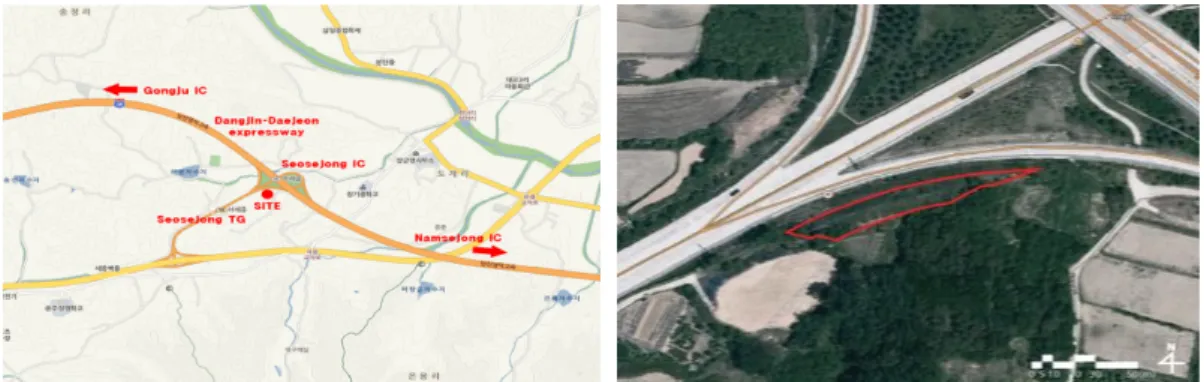
이 연구의 대상지는 Figure 1에서와 같이 당진 대전선 서세종 IC 깎기 비탈면에 경관개선을 위한 시험시공을 2012년 10월에 시공하였다. 적용공법 은 얇은 식생 기반재 뿜어 붙이기를 실시하였다.
서세종 IC 비탈면의 경우 종자 배합별로 3가 지 타입으로 얇은 식생 기반재 뿜어 붙이기를 실 시하여 경관을 향상 시키고자 하였다(Kim and Lee, 2006; Howell et al, 2012).
2014년 7월과 2016년 7월에 모니터링을 실시 하였으며 대상지의 시험시공 2년 후, 4년 후의 지난 시점에서 식생의 변화를 조사 하였다.
2. 토양분석
비탈면 녹화 시험시공지에서 2014년과 2016년 7월에 토양 2kg내외를 채취하여 한국임업진흥원 에 토성 등 토양 분석을 의뢰하여 분석 하였다.
입도 분석은 Hydro-meter법, 산도는 Ph-meter 법, 유기물(OM), 전질소(TN)는 건식산화법, 유효 인산은 Lancaster법, 양이온 치환용량(C.E.C)은 1N-초산암모니움 침출법, K+, Na+, Ca2+, Mg2+는 원자 흡광 광도법, 전기 전도도(EC)는 EC-meter 법, 염분(NaCl)은 모르법으로 분석 하였다.
3. 식생 기반재 특성 분석
대상지의 식생 기반재로 취부한 면적에 대한 토양 경도 및 토양 산습도를 2014년 7월과 2016 년 7월에 측정 하였다. 토양경도의 경우 야마나 카 산중식 경도계와 토양 산습도계를 사용하여 측정 하였으며 각 방형구 별 10회 이상 측정 후 평균 값을 기록 하였다.
4. 녹화공법 설계
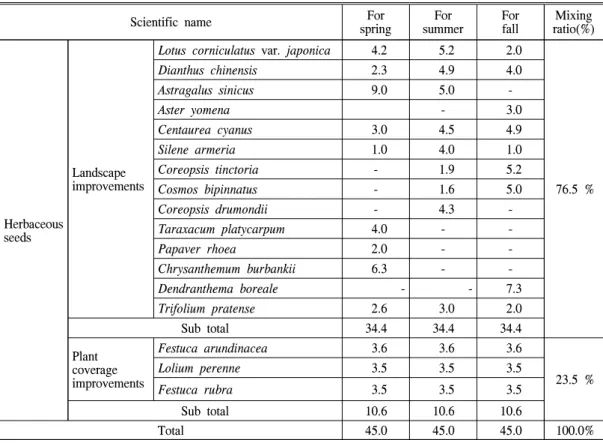
서세종 IC 깎기 비탈면의 녹화 공사는 얇은 식생 기반재 뿜어 붙이기를 실시하였으며, Table 1은 녹화 공법을 나타낸다. Table 2는 시험시공 에 사용된 종자는 봄, 여름, 가을에 순차적으로 필수 있도록 구역을 분배 하여 파종 하였으며, 위치별로 발아율과 발아 식물을 모니터링 하였 다(Kim et al, 2006; Kim, 2010).
5. 조사 및 분석
비탈면 녹화 시험시공지인 서세종 IC의 시험 시공지를 시공 2년 후와 4년 후에 모니터링을 실시하였는데, 관련 전문가 2인 1조로 하여 팀을
Figure 1. Location map of test construction in Seosejong IC
구성하여 현장 조사를 수행 하였다. 현장조사 시 식물 동정이 가능한 식물은 야장에 기록 하고, 식물 동정이 불가능한 식물은 채취 하여 실내로 운반 후 한국식물도감(Lee, 2007)을 이용하여 식 물을 재동정 하였다. 또한, 식생 투영도와 우점 도를 분석하여 녹화 식물의 분포 현황을 분석 하 고자 하였다.
IV. 결과 및 고찰
1. 토양 분석
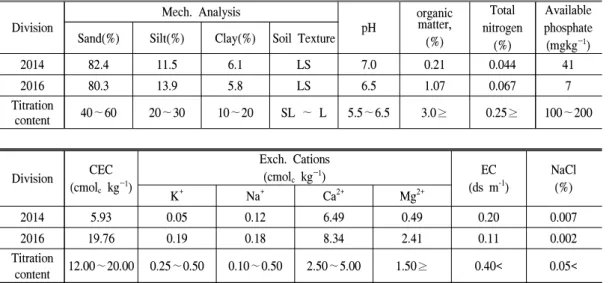
Table 3에서와 같이 토양 분석 결과, 양질 토 사(LS)로써 유기물 OM, 전질소 TN 및 유효 인
산이 적정 함량 보다 낮게 분석되어 대상지가 척 박한 환경으로 분석 되었으며, 전기전도도(EC) 와 치환성 양이온(K+)도 낮게 분석 되었다(Jeon, 2013). 2014년 분석한 토양과 2016년 분석한 토 양에서 Sand비율이 적어지고, Silt비율이 증가 했으며, OM이 다소 향상 되었고, pH는 낮아 졌 으며, CEC는 향상 되었다. Sand와 Silt, Clay와 OM 등이 Table 3에서와 같이, 한국 임업 진흥원 의 기준에는 미흡 하지만 시간이 지나면서 점차 토양 상태가 향상 되는 것으로 판단된다. 또한, 식물에 필요한 유기물 상태가 낮게 분석 되었지 만 향후에 녹화의 진행이 계속 되면 함유량이 높 아질 것으로 생각 된다.
Division Method Standard Unit Quantity
Soil seeding Fertilizer soil hydro-seeding T=2cm ㎡ 1,000
Table 1. Design of revegetation mesures in Seosejong IC
Scientific name For
spring For
summer For
fall Mixing ratio(%)
Herbaceous seeds
Landscape improvements
Lotus corniculatus var. japonica 4.2 5.2 2.0
76.5 %
Dianthus chinensis 2.3 4.9 4.0
Astragalus sinicus 9.0 5.0 -
Aster yomena - 3.0
Centaurea cyanus 3.0 4.5 4.9
Silene armeria 1.0 4.0 1.0
Coreopsis tinctoria - 1.9 5.2
Cosmos bipinnatus - 1.6 5.0
Coreopsis drumondii - 4.3 -
Taraxacum platycarpum 4.0 - -
Papaver rhoea 2.0 - -
Chrysanthemum burbankii 6.3 - -
Dendranthema boreale - - 7.3
Trifolium pratense 2.6 3.0 2.0
Sub total 34.4 34.4 34.4
Plant coverage improvements
Festuca arundinacea 3.6 3.6 3.6
23.5 %
Lolium perenne 3.5 3.5 3.5
Festuca rubra 3.5 3.5 3.5
Sub total 10.6 10.6 10.6
Total 45.0 45.0 45.0 100.0%
Table 2. Seed mixing ratio of the test in Seosejong IC(Unit : g/㎡)
2. 식생 기반재 특성
현재 얇은 식생 기반재로 취부한 면적에 대한 물리․화학적 특성은 아래 Table 4와 같다. 토양 산도는 pH 6.2∼6.7로 중성을 나타 냈으며, 토양 경도는 19∼24mm(토양경도지수)로 식물 생육에 영향이 없는 양호한 조건인 것으로 측정 되었다.
토양 습도는 전체적으로 우수한 토양 습도를 나 타내는 것으로 분석 되었다(Korea expressway corporation, 2015). 또한 시험시공 한 녹화 공법이 기존 연구(Park et al, 2014)와 비교하여 양호 한
식생 기반재 특성을 보이는 것으로 분석 되었다.
3. 출현 식물 현황
벌노랑이, 패랭이꽃, 자운영, 쑥부쟁이, 붉은 토끼풀 등이 생육하고 있었으며, 파종한 종자의 벌노랑이가 우점하고 있는 것으로 조사 되었다.
조사 시점이 벌노랑이의 생육이 왕성한 시기이 기 때문에 우점종으로 나타난 것으로 판단된다.
시공 2년 후의 식생 현황은 Table 5에서와 같 이 봄의 경우 벌노랑이, 끈끈이대나물, 꽃양귀
Division
Mech. Analysis
pH
organic matter,
(%)
Total nitrogen
(%)
Available phosphate (mgkg⁻¹) Sand(%) Silt(%) Clay(%) Soil Texture
2014 82.4 11.5 6.1 LS 7.0 0.21 0.044 41
2016 80.3 13.9 5.8 LS 6.5 1.07 0.067 7
Titration
content 40∼60 20∼30 10∼20 SL ∼ L 5.5∼6.5 3.0≥ 0.25≥ 100∼200
Division CEC (cmol
ckg⁻¹)
Exch. Cations
(cmol
ckg⁻¹) EC
(ds m
-1)
NaCl
K
+Na
+Ca
2+Mg
2+(%)
2014 5.93 0.05 0.12 6.49 0.49 0.20 0.007
2016 19.76 0.19 0.18 8.34 2.41 0.11 0.002
Titration
content 12.00∼20.00 0.25∼0.50 0.10∼0.50 2.50∼5.00 1.50≥ 0.40< 0.05<
※ Titration content : Standard of Korea forestry promotion institute Table 3. Soil properties of test construction in Seosejong IC
Division Soil acidity (pH)
Soil hardness (mm)
Soil moisture
(%) Picture
2014
Spring
6.4 20 55
2016 6.5 23 65
2014
Summer
6.2 19 45
2016 6.4 24 50
2014
Fall
6.5 23 60
2016 6.7 21 70
Table 4. General characteristics of soils used in test in Seosejong IC
Division Scientific name
thin layer soil seed spray
Spring Summer Fall
Used Emerged Used Emerged Used Emerged
Landscape improvement
Lotus corniculatus var ◯ ◉ ◯ ◉ ◯ ◉
Dianthus chinensis L. ◯ ◯ ◉ ◯ ◉
Astragalus
sinicus ◯ ◯
Aster yomena ◯ ◉
Centaurea cyanus ◯ ◯ ◯
Silene armeria L. ◯ ◉ ◯ ◯
Coreopsis tinctoria ◯ ◯ ◉
Cosmos bipinnatus ◉ ◯ ◉ ◯
Coreopsis drummondii ◯ ◉
Taraxacum platycarpum ◯
Papaver rhoeas ◯ ◉
Chrysanthemum burbankii ◯
Trifolium pratense ◯ ◉ ◯ ◉ ◯ ◉
Sub total 9 4/7 9 5 9 5/6
Pant coverage improvement
Festuca arundinacea ◯ ◉ ◯ ◉ ◯ ◉
Lolium perenne ◯ ◉ ◯ ◉ ◯ ◉
Festuca rubra ◯ ◉ ◯ ◉ ◯ ◉
Sub total 3 3 3 3 3 3
Total 12 7 12 8 12 8
Invasive species Metaplexis japonica, Rumex crispus, Lespedeza cuneata, Erageron annuus, Lactuca indica var, Robinia pseudo-acacia, Chysanthemum zawadskii var.
Table 5. Species diversity of the grasses and tree species in Seosejong IC(2014)
Division Scientific name
thin layer soil seed spray
Spring Summer Fall
Used Emerged Used Emerged Used Emerged
Landscape improvement
Lotus corniculatus var ◯ ◉ ◯ ◉ ◯ ◉
Dianthus chinensis L. ◯ ◉ ◯ ◉ ◯ ◉
Astragalus
sinicus ◯ ◯ ◉
Aster yomena ◯ ◉
Centaurea cyanus ◯ ◯ ◯
Silene armeria L. ◯ ◉ ◯ ◯
Coreopsis tinctoria ◯ ◯ ◉
Cosmos bipinnatus ◉ ◯ ◉ ◯
Coreopsis drummondii ◉ ◯ ◉
Taraxacum platycarpum ◯
Papaver rhoeas ◯ ◉
Chrysanthemum burbankii ◯
Trifolium pratense ◯ ◉ ◯ ◉ ◯ ◉
Sub total 9 5/7 9 5 9 5/6
Pant coverage improvement
Festuca arundinacea ◯ ◉ ◯ ◉ ◯ ◉
Lolium perenne ◯ ◉ ◯ ◉ ◯ ◉
Festuca rubra ◯ ◉ ◯ ◉ ◯ ◉
Sub total 3 3 3 3 3 3
Total 12 8 12 8 12 8
Invasive species Metaplexis japonica, Rumex crispus, Lespedeza cuneata, Erageron annuus, Lactuca indica var, Robinia pseudo-acacia, Chysanthemum zawadskii var.
Table 6. Species diversity of the grasses and tree species in Seosejong IC(2016)
비, 붉은토끼풀 등이 생육하고, 여름의 경우는 벌노랑이, 패랭이꽃, 코스모스, 금계국, 붉은토 끼풀 등이 생육 하고 있었다. 가을에는 벌노랑 이, 패랭이꽃, 쑥부쟁이, 기생초, 붉은토끼풀 등 이 생육 하고 있었다. 외래종으로는 Tall fescue, Perennial ryegrass, Creeping red fescue 등이 생 육 하고 있었다.
시공 4년 후에는 Table 6에서와 같이 봄의 경 우 벌노랑이, 패랭이꽃, 끈끈이대나물, 코스모 스, 금계국, 꽃양귀비, 붉은토끼풀 등이 생육 하 였고, 여름에는 벌노랑이, 패랭이꽃, 코스모스, 금계국, 붉은토끼풀 등이 생육 하고 있었다. 가 을에는 벌노랑이, 패랭이꽃, 자운영, 쑥부쟁이, 기생초, 붉은토끼풀 등이 생육 하고 있었다. 외
래종으로는 2014년과 같은 녹화 식물이 생육 하 고 있었다(Park et al, 2014).
선행 연구에서는 쑥, 산딸기나무, 싸리나무, 아 까시나무, 패랭이꽃, 벌노랑이, 쑥부쟁이, 기생 초, 칡, 가죽나무, 명아주, 낭아초, 왕고들빼기, 달 맞이꽃, 족제비싸리, 은사시나무, 서양민들레, 강 아지풀, 망초, 며느리밑씻개, 비수리 등이 깎기 비탈면에 출현하는 것으로 분석 되었는데(Korea expressway corporation, 2007), 향후에는 이들 수 종들이 점차 많이 생육할 것으로 생각 된다.
시공 2년 후와 4년 후의 출현 식물이 거의 비 슷 하게 나타나고 있는데 이것은 같은 달 7월에 식물 조사를 하여 출현 식물이 동일 식물이 많이 나타나는 것으로 판단된다.
Scientific name D S C
(%) H
(m)
Lotus corniculatus 4 1 70 0.8
Lolium perenne 1 1 10 0.5
Coreopsis drummondii 1 1 8 0.9
※ D: Dominance / S: Sociability / C: Cover degree H: Height
Spring seed mixing vegetation structure
Scientific name D S C
(%) H
(m)
Lotus corniculatus 4 1 70 0.9
Trifolium repens L. 2 2 15 0.7
Artemisia princeps var.
orientalis 1 1 10 0.8
※ D: Dominance / S: Sociability / C: Cover degree H: Height
Summer seed mixing vegetation structure
Scientific name D S C
(%) H
(m)
Lotus corniculatus 5 4 80 0.8
Coreopsis drummondii 1 1 10 0.9
Festuca arundinacea
/ Lolium perenne 1 1 7 0.4
※ D: Dominance / S: Sociability / C: Cover degree H: Height
Fall seed mixing vegetation structure
Figure 2. Vegetation projection of main quadrate in Seosejong IC(2014)
4. 식생 투영도 및 우점도
각 배합별로 대표적인 방형구의 식물 투영도 와 우점 하는 식물은 봄에 피는 꽃 종자 배합구 에서 벌노랑이, 박주가리, 금계국이 우점 이었 고, 여름철에 피는 꽃 종자 배합구에서는 벌노랑 이, 크로바, 개망초가 출현 하였다. 가을에 피는 꽃 종자 배합구에서는 벌노랑이, 금계국, 외래종 으로는 Tall fescue, Perennial ryegrass가 우점하 고 있었다.
전체적으로 벌노랑이가 우점하여 생육 하고 있 었고, 비탈면에서 피복도면에서도 우수 하게 분 석 되었다. 또한, 시간이 경과 하면서, 점차 다양 한 식물이 출현하는 것으로 분석 되었다(Korea expressway corporation, 2013).
5. 주변 산림식생
서세종 IC 현장 주변으로 소나무-밤나무 군락 이 혼생 하여 분포 하고 있으며 일부 산오리나무 가 생육 하고 있었다. 관목으로는 낭아초, 아까 시나무, 찔레나무가 혼생 하고 있으며, 지피 식 물로는 조릿대, 산딸기나무가 조사 되었다.
경관 생태학적 관점에서 깎기 비탈면의 인접 부에 나타나는 수종은 싸리나무, 쑥, 아까시나 무, 산딸기나무, 칡, 가죽나무, 명아주, 왕고들빼 기, 달맞이꽃, 족제비싸리, 리기다소나무, 은사 시나무, 조팝나무, 서양민들레, 강아지풀, 망초, 며느리밑씻개, 비수리, 낭아초 등으로 조사 되었 다(Korea expressway corporation, 2007). 서세종 IC의 깎기 비탈면에서는 초기에 침입한 수종은
Scientific name D S C
(%) H
(m)
Lotus corniculatus 4 1 70 0.8
Metaplexis japonica 1 1 10 0.5
Coreopsis drummondii 1 1 8 0.9
※ D: Dominance / S: Sociability / C: Cover degree H: Height
Spring seed mixing vegetation structure
Scientific name D S C
(%) H
(m)
Lotus corniculatus 4 1 70 0.9
Trifolium repens L. 2 2 15 0.7
Erageron annuus 1 1 10 0.8
※ D: Dominance / S: Sociability / C: Cover degree H: Height
Summer seed mixing vegetation structure
Scientific name D S C
(%) H
(m)
Lotus corniculatus 5 4 80 0.8
Coreopsis drummondii 1 1 10 0.9
Festuca arundinacea
/ Lolium perenne 1 1 7 0.4
※ D: Dominance / S: Sociability / C: Cover degree H: Height
Fall seed mixing vegetation structure
Figure 3. Vegetation projection of main quadrate in Seosejong IC(2016)
낭아초, 아까시나무, 산딸기나무가 침입 하였으 나 향후에 지속적으로 많은 주변 식생이 침입할 것으로 판단된다(Park et al, 2014).
Figure 4는 서세종 IC 깎기 비탈면의 주변의 대표적인 산림식생을 나타내고 있으며, 장기적 으로 보면 이들 수종이 깎기 비탈면에 침입할 것 으로 생각 된다.
V. 결 론
이 연구는 2012년 10월에 비탈면의 경관개선 을 위해 시험시공을 실시하고, 시공 2년, 4년 후 의 비탈면의 녹화 현황을 분석하였으며, 그 결과 는 다음과 같다.
1. 비탈면의 경관 개선을 위해 시험 시공 한 비 탈면의 토양을 분석한 결과 양질토사(LS)로 써 유기물 OM, 전질소 TN와 유효인산이 적 정 함량 보다 낮게 분석되어 대상지가 척박한 환경으로 분석 되었다. 전기전도도(EC)와 치 환성 양이온(K+)도 낮게 분석 되었다.
2. 식생기반재 특성을 보면 토양 산도는 pH 6.2
∼6.7로 중성을 나타 냈으며, 토양경도는 19
∼24mm(토양경도지수)로 식물 생육에 영향 이 없는 양호한 조건인 것으로 분석 되었다.
3. 출현 식물 현황을 보면 시공 2년 후의 식생
현황은 봄의 경우 벌노랑이, 끈끈이대나물, 꽃 양귀비, 붉은토끼풀 등이 생육하고, 여름의 경 우는 벌노랑이, 패랭이꽃, 코스모스, 금계국, 붉은토끼풀 등이 생육 하고 있었다. 가을에는 벌노랑이, 패랭이꽃, 쑥부쟁이, 기생초, 붉은 토끼풀 등이 생육 하고 있었다.
시공 4년 후에는 봄의 경우 벌노랑이, 패랭이 꽃, 끈끈이대나물, 코스모스, 금계국, 꽃양귀 비, 붉은토끼풀 등이 생육 하였고, 여름에는 벌노랑이, 패랭이꽃, 코스모스, 금계국, 붉은 토끼풀 등이 생육 하고 있었다. 가을에는 벌 노랑이, 패랭이꽃, 자운영, 쑥부쟁이, 기생초, 붉은토끼풀 등이 생육 하고 있었다. 외래종으 로는 Tall fescue, Perennial ryegrass, Creeping red fescue 등이 생육 하고 있었다.
4. 식생 투영도와 우점도를 보면 봄에 피는 꽃 종자 배합구에서 벌노랑이, 박주가리, 금계국 이 우점이었고, 여름철에 피는 꽃 종자 배합 구에서는 벌노랑이, 크로바, 개망초가 출현하 였다. 가을에 피는 꽃 종자 배합구에서는 벌 노랑이, 금계국, 양잔디가 출현하였다. 전체적 으로 벌노랑이가 우점하여 생육 하고 있었다.
5. 서세종 IC 현장 주변으로 소나무-밤나무 군락 이 혼생 하여 분포 하고 있으며 일부 산오리나 무가 생육 하고 있었다. 관목으로는 낭아초, 아 까시나무, 찔레나무가 혼생 하고 있으며, 지피 식물로는 조릿대, 산딸기나무가 조사 되었다.
6. 서세종 IC 깎기비탈면의 시험시공 2년, 4년 후의 결과, 초기에는 녹화식물의 발아 생육이 우수하게 분석되었으며, 시간이 지나면서, 주 변 산림에서 식물이 점차 침입하여 녹화식물 과 생육하고 있는 것으로 분석되었다.
References
Cho, DG · Jeon, GS · Sim, YJ · Kim, DH · Do, JN and Park, MY. 2015. A study on the mixing ratio of food waste on slope re-vegetation
Figure 4. Forest cross-section around improved
slope in Seosejong IC
base materials. Journal of the Korean Society of Environmental Restoration Technology. 18 (6): 215-226. (in Korean with English sum- mary)
Howell EA., J. A. Harring and SB. Glass. 2012.
Restoration ecology. Washington, D.C.: Is- land Press.
Mitch, W.J. and S.E. Jorgenson. 2004. Ecological engineering and ecosystem restoration. New York: Wiley Press.
Jeon, GS. 2013. A Study on the plant succession structural analysis in expressway slopeⅠ.
Journal of the Korean Society of Environ- mental Restoration Technology. 16(4): 41-52.
(in Korean with English summary) Korea expressway corporation. 1999. A Study on
revegetation method of cutting-Rock slopes.
(in Korean)
Korea expressway corporation, expressway &
transportation research institute. 2007. Envi- ronmental revegetation standard design of highway cutting and banking slope. (in Korean)
Korea expressway corporation, expressway & tran- sportation research institute. 2013. A study of imporvement of ecologic environment of
slope on expressway. (in Korean)
Korea expressway corporation, expressway & tra- nsportation research institute. 2015. Deve- lopment of lightweight foamed soil stabilizer and revegetation measures for rehabilitation of losing to the waves topsoil layer in express- way cut slope. (in Korean)
Kim, JW and Lee, YG. 2006. Vegetation survey and evaluation methods. Seoul: World Scie- nce.
Kim, JG․Park, JH․Choi, BJ․Sim, JH․Gwon, GJ․Lee, BA․Lee, YW and Joo, YJ. 2006.
Ecological research methodology. Seoul: Bo- mundang. (in Korean)
Kim, NC. 2010. Natural regeneration; Ecological engineering approach. Seoul: Munundang. (in Korean)
Lee, YN. 2007. New flora of Korea. Seoul: Kyo- haksa. (in Korean)
Park, JH․Jeon, GS and Kim, KH. 2014. Effect analysis of the revegetation in accordance with the conditions of the lower base on slope of expressway. Journal of the Korean Society of Environmental Restoration Technology.
17(5): 79-89. (in Korean with English sum- mary)