치과기공(학)과 학생의 정서지능이 대인관계와 심리적 행복감에 미치는 영향
송재상, 임병철, 김경미, 임시덕 * , 김재도 * , 김병식 * , 박영대 ** , 이종화
김천대학교 치기공학과, 수성대학교 치기공과*, 대구보건대학교 치기공과**
The Effect of Emotional Intelligence on Interpersonal Relationships and the Psychological Happiness of Department of
Dental Laboratory Technology Students
Jae-Sang Song, Byung-Chul Lim, Kyoung-Mi Kim, Si-Duk Lim*, Jae-Do Kim*, Byung-Sik Kim*, Young-Dae Park**, Jong-Hwa Lee
Department of Dental Laboratory Technology, Gimcheon University Department of Dental Laboratory Technology, Suseong College*
Department of Dental Laboratory Technology, Daegu Health College**
Purpose: This research conducted by using Department of Dental Laboratory Technology students investigates
interpersonal and emotional intelligence impact on psychological happiness.
Methods: Study was conducted in the Daegu-Gyeongbuk area Department of Dental Laboratory Technology
students, based on 132 people who were enrolled college students. Data analysis, frequency analysis, factor analysis, reliability test, correlation analysis, multiple regression analysis was carried out and SPSS/WIN 18.0 was used.
Results: Interpersonal factors utilize emotions, emotional self-control and emotional awareness. Others turned
positive (+) was found to affect the psychological, emotional factors utilized in euphoria, emotional adjustment and were found to have positive effects.
Conclusion: Looking at the above results gathered from dental engineering students, improvement in
interpersonal relationships, and psychological welfare have improve more effectively through utilizing and controlling emotions, including the ability to set their own goals for the future. Motivational training programs for strengthening study habits is more important than what can be based in dental college engineering students. In conjunction with an active lifestyle, future professional dental health services for patients and clinicians care about the improvement of his own psychological happiness was inspire by the care received from home and school and the resulting map is considered to require constant attention.
[Abstract]
성 명 이 종 화 전 화 054-420-4052 E-mail [email protected]
교신저자
Key words :
Emotional Intelligence, Interpersonal Relationships, Psychological Happiness
Ⅰ. 서 론
우리나라 대학생들은 가족기능이 약화되고, 입시위주의 교육 등으로 인해 대인관계를 형성함에 있어 충분한 교육 을 받지 못한 채 대학에 입학하게 되어 동급생이나 선배, 교수 등 다른 사람들과 만족스러운 대인관계를 형성하는 데 어려움을 겪을 뿐만 아니라 이로 인한 대학생활에 있 어 타인과 쉽게 융화되지 못한다(박한샘, 2004).
이러한 대학생활에서는 개인의 합리적이고 이성적인 능 력 뿐 만 아니라 타인에 대한 이해와 조직에서의 원만한 관계형성 능력도 점차 강조되며, 이는 기존에 개인의 역 량을 언급할 때, 상대적으로 소외되어 왔던 정서적 역량 에 대한 관심으로 나타나는데 이렇게 나타나는 개인의 특 성으로 정서지능(EI, Emotional Intelligence)을 들 수 있다(이숙정, 2012).
정서지능은 급변하는 의료 환경에서 효과적인 업무수행 능력과 국민 구강 보건향상을 위한 치과의료 서비스를 제 공하는 치과기공 전문 인력을 양성하는 교육기관에서 필 수적인 역할을 하기도 한다. 또한, 자기 자신과 타인의 정 서를 이해하고 표현하며, 조절할 수 있는 능력이 치과의 료 서비스에서 중요한 의미를 가지는데, 이러한 자신의 정서 경험과 정서가 개입된 사회적 교류에 성공적으로 대 처하는 능력을 정서능력(emotional competence) (Saarni, 1990)이라고 한다.
이와 같은 정서능력을 측정하는 대표적인 개념 중 하나 를 정서지능(EI, Emotional Intelligence)이라고 하며, 이는 시사 주간지 Time지가 정서지수(Emotional Quotient: EQ)라는 용어를 사용하면서 정서지능 개념이 대중화 되었다(Ciarrochi, et al., 2001).
Goleman(2008)은 정서지능을 타고난 것이 아니라 삶 의 경험에 따라 변화 가능한 것으로 보고, 정서지능의 기 초가 되는 능력을 자기인식, 자기관리, 사회적 인식, 관계 관리로 규정하였으며, 정서지능이 자기숙달 등의 기본능 력을 학습할 수 있는 잠재력을 측정하고 이러한 잠재적 능력이 어떠한 상황에서 어떻게 발현될 수 있는지를 예측 할 수 있는 변인으로 보았다.
또한, 이러한 정서지능은 대인관계에 있어서 결정적인 역할을 수행한다고 하였고(Campos, et al., 1994), 정서
지능과 사회적 능력을 다룬 대부분의 선행 연구들에서 낮 은 정서지능이 일탈행동, 흡연 등과 같은 자기 파괴적 행 동과 관련이 있으며(Brackett와 Mayer, 2003; Rubin, 1999; Trinidad와 Johnson, 2001) 반면, 높은 정서지능 은 친 사회적 행동, 부모의 온정, 긍정적인 동료관계나 가 족관계와 같은 긍정적 결과들과 관련이 있음을 보여 주었 다(Mayer, et al., 1999; Rice, 1999; Salovey, et al., 2001). 또한, 자율적인 대학 환경 속에서 보다 다양하고 확 장된 대인관계를 하게 된다(이수미 등, 2009)고 하였다.
대인관계는 사람들이 살아감에 있어 반드시 필요한 요 소로써 발달단계마다 그 중요성이 강조되고 있으나 이것 을 키워나가는 대학생 시기는 그 어느 발달단계보다 중요 하며(권석만, 1997), 대학생 시기의 효과적인 대인관계의 경험은 개인에게 건전한 인격발달과 정체감형성에 긍정 적인 영향을 주지만 불만스럽고 비효과적인 대인관계는 정신질환 발생의 근원이 되며 절망감과 두려움이 생기고 자기 자신을 신뢰하지 못하고 자아존중감이 부족해지게 되어 모든 일을 완벽하게 처리하지 못하며 나아가 자신에 대한 열등감을 갖게 된다(김유경, 1992). 이처럼 대학생들 은 진학위주의 타율적인 교육환경에서 벗어나 자율적인 대학환경 속에서 생활하며, 동급생과 선후배관계 및 이성 교제 그리고 동아리 활동 등과 특히, 치과기공(학)과 학생 의 경우 임상실습, 향후 의료기관의 취업에서 만나는 동료 와 환자, 가족, 의료진 등과의 폭넓은 사회적 경험을 하게 되고, 미래의 사회구성원으로서의 역할을 준비하게 된다.
이런 시기에 치과기공(학)과 학생의 정서지능을 대인관 계와 관련하여 조사하고 정서지능 기술 향상을 위한 효과 적인 교육 안의 마련과 지도교수의 인성교육 시간을 비롯 한 치기공(학)과 고유의 특성이 반영된 지도교육 프로그 램 개발이 필요한 것으로 판단되며(권순석, 2013), 효과적 으로 치과의료 소비자를 돌보는 환경에 적용될 수 있고, 유지, 관리하는데 중요한 요소로 작용할 수 있다는 것으 로써 치과의료 서비스 현장 가운데 하나인 치과기공소에 서 자신의 감정을 조절하고, 관리하는 능력은 효과적인 치과의료 서비스를 제공하는데 필수적이라고 할 수 있다.
이에 본 연구는 치과기공(학)과 학생의 정서지능과 대인 관계의 관련성을 파악하고, 대학생의 정서지능 함양을 위 한 방안 모색에 도움을 주고자 하였으며, 나아가서 정서
지능과 심리적 행복감과의 관련성을 살펴봄으로써 대학 생들의 생활지도와 실제 치과기공(학)과 교육 현장에서 정서지능 기술 향상과 함양을 위한 제안을 하고자 한다.
Ⅱ. 연구 방법
본 연구는 대구∙경북에 소재한 치과기공(학)과 대학생 들을 대상으로 하였으며, 40명을 대상으로 예비조사를 시 행한 후, 2013년 6월 15일부터 6월 25일까지 설문조사를 실시하였다.
편의 표본추출방법에 의한 자기기입식 설문조사를 실시 하였으며 수집된 표본의 수는 총 150명이었다. 이 가운데 불성실한 답변을 한 18부를 제외하고, 최종분석에 132부 의 설문지를 최종 실증적 분석에 사용하였다.
본 연구에 사용된 정서지능 척도는 Wong과 Law(2002) 가 개발한 척도를 수정∙보완하여 사용하였으며, Likert 7점 척도 16문항을 사용하였다.
대인관계변화 척도는 Schlein et al.(1971)이 개발한 척 도를 문선모(1980)가 번안하고 전석균(1994)이 수정한 대 인관계변화척도(Relationship Change Scale)를 수정∙
보완하여 사용하였으며, Likert 5점 척도 25문항으로 구 성되었다.
심리적 행복감 척도는 양명환(1998)이 개발한 측정도구 를 수정∙보완하여 사용하였으며, Likert 5점 척도 20문 항을 사용하였다.
본 연구에서 설정한 가설은 다음과 같다.
가설 1. 치과기공(학)과 학생의 정서지능은 대인관계에 영향을 미칠 것이다.
1-1. 정서지능 구성요인 중 자기정서 조절은 대인관계 에 정(+)의 영향을 미칠 것이다.
1-2. 정서지능 구성요인 중 자기정서 인식은 대인관계 에 정(+)의 영향을 미칠 것이다.
1-3. 정서지능 구성요인 중 자기정서 활용은 대인관계 에 정(+)의 영향을 미칠 것이다.
1-4. 정서지능 구성요인 중 타인정서 인식은 대인관계 에 정(+)의 영향을 미칠 것이다.
가설 2. 치과기공(학)과 학생의 정서지능은 심리적 행복 감에 영향을 미칠 것이다.
2-1. 정서지능 구성요인 중 자기정서 조절은 심리적 행 복감에 정(+)의 영향을 미칠 것이다.
2-2. 정서지능 구성요인 중 자기정서 인식은 심리적 행 복감에 정(+)의 영향을 미칠 것이다.
2-3. 정서지능 구성요인 중 자기정서 활용은 심리적 행 복감에 정(+)의 영향을 미칠 것이다.
2-4. 정서지능 구성요인 중 타인정서 인식은 심리적 행 복감에 정(+)의 영향을 미칠 것이다.
분석에는 SPSS/WIN 18.0을 이용하였고, 수집된 자료 의 분석방법으로는 측정 도구의 타당성과 신뢰성을 검증 하기 위해 요인분석과 Cronbach-α계수를 이용한 신뢰도 검증을 실시하였으며 정서지능이 대인관계와 심리적 행 복감에 미치는 영향을 파악하기 위해 상관관계 분석과 다 중회귀분석을 실시하였다.
Ⅲ. 결 과
조사대상자의 일반적 특성에서 연령은 18세가 23.5%이 었으며, 출생순위는 막내가 42.4%로 조사되었다. 종교는 없음이 57.6%이었고, 학교생활 만족도는 보통이 49.2%, 만족이 35.6%이었다. 학년은 1학년이 48.5%이었으며, 여학생과 남학생이 각각 50%로 조사되었다(Table 1).
정서지능 측정 도구에 대한 타당도 검증을 위하여 문항 선택기준인 고유값(eigen value)은 1.0 이상, 요인 적재 치는 0.4 이상을 기준으로 탐색적 요인분석을 실시한 결 과 4개의 요인으로 구분되었으며, 4개 구성요인의 총 분
산 설명력은 73.89%이었다(Table 2).
정서지능의 요인분석을 통해 확인된 자기정서활용, 자 기정서조절, 타인정서인식, 자기정서인식간의 상관관계 분석결과는 <Table 3>과 같다.
자기정서활용은 자기정서조절 r=0.487(p=0.01), 타인 정서인식 r=0.406(p=0.01), 자기정서인식 r=0.590 (p=0.01)으로 상관관계가 있는 것으로 나타났으며, 자기 정서조절은 타인정서인식 r=0.383(p=0.01), 자기정서인 식 r=0.513(p=0.01)으로 상관관계가 있는 것으로 나타났 다. 타인정서인식은 r=0.564(p=0.01)로 다소 높은 상관
관계가 있는 것으로 나타났다.
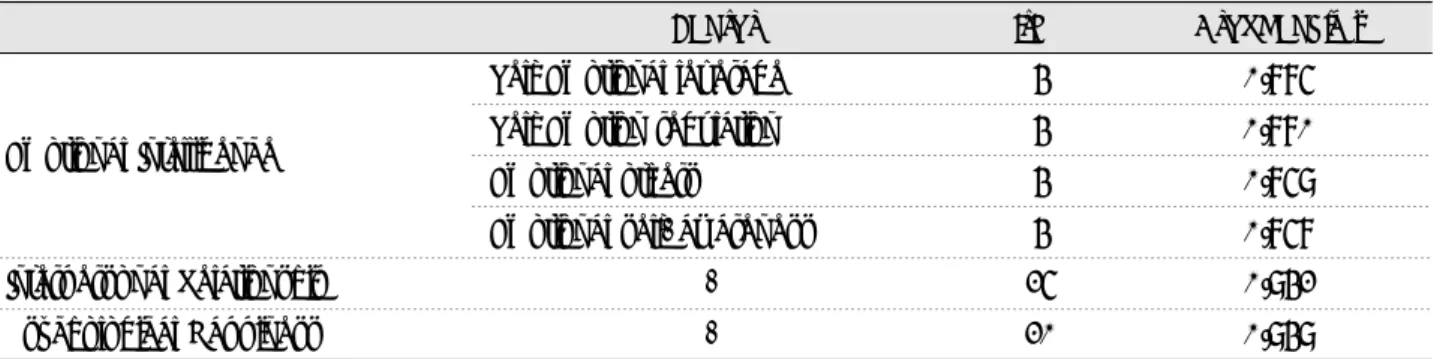
정서지능, 대인관계, 심리적 행복감에 대한 신뢰도 분석 결과는 <Table 4>와 같다. 정서지능의 구성요인에 대한 신뢰도 분석결과, Cronbach-α값이 자기정서활용 0.885, 자기정서조절 0.880, 타인정서인식 0.858, 자기 정서인 식 0.859로 4개 구성요인 모두 신뢰성 계수가 0.6 이상인 것으로 나타났으며, 대인관계의 Cronbach-α값 은 0.942, 심리적 행복감은 0.949인 것으로 나타나 문항 제거 없이 모두 사용하였다.
% N
Item Classification
23.5 22.7 18.2 14.4 11.4 9.8 39.4 16.7 42.4 1.6 42.4 57.6 3.0 6.8 49.2 35.6 5.3 48.5 24.2 1.5 25.8 50.0 50.0 100.0 31
30 24 19 15 13 52 22 56 2 56 76 4 9 65 47 7 64 32 2 34 66 66 132 Age
18 19 20 21 22
� 23 first middle youngest
alone yes
no
very unsatisfactory dissatisfaction
normal satisfaction very satisfactory
1 2 3 4 Male Female
Total Birth Rank
religion
Grade satisfaction with
school life
Gender
** p<0.01
Table 3. Inter-construct correlations of emotional intelligence
Emotional self- awareness Emotional
others Self Emotion
regulation Self Emotional
leverage Question
Factor analysis
0.793 0.789 0.701 0.679 1.074 6.710 0.841
0.792 0.769 0.754
1.606 10.038 0.897
0.859 0.749 0.650
1.892 11.822 0.828
0.826 0.804 0.752
7.251 45.321
73.892 It is the motivation
Goal setting Self encouragement Auto suggestion Excitement control(Self) Feelings control(Self) Emotional control(Self) Melting mood control(Self) Observing feelings(others) Emotion understanding(others) Emotion-sensitive(others)
Grasp the emotion and behavior(others) Emotion understanding(Self)
Understand feeling(Self) Emotion recognition(Self) Happiness awareness(Self)
eigen-value R
2(%) Total R
2(%)
Table 2. Factor analysis of emotional intelligence
4 3
2 1
Inter-Construct correlations SD
Mean
1 1
0.564**
1 0.383**
0.513**
1 0.487**
0.406**
0.590**
1.168 1.274 1.033 1.045 4.53
4.58 4.92 4.87 Self Emotional leverage
Self Emotion regulation Emotional others
Emotional self-awareness
Table 4. Reliability coefficients of scale
Cronbach’ s α Item
Factor
0.885 0.880 0.859 0.858 0.942 0.949 4
4 4 4 25 20 Emotional Intelligence
Interpersonal Relationship Psychological Happiness
Self Emotional leverage Self Emotion regulation Emotional others
Emotional self-awareness
-
-
정서지능 구성요인이 대인관계에 정(+)의 영향을 미칠 것이라는 가설 1-1, 1-2, 1-3, 1-4의 검정결과는 <Table 5>와 같다.
자기정서활용이 대인관계에 미치는 영향은 t값 3.474(p=0.001)로 나타나 가설 1-1은 채택되었으며, 자 기정서조절 역시 t값 3.452(p=0.001)로 가설 1-2도 채택 되었다.
타인정서인식도 t값 3.549(p=0.001)로 가설 1-3도 채 택되었으며, 자기정서인식은 t값 -0.906(p=0.366)으로 가설 1-4는 기각되었다.
회귀모형 전체에 대한 적합성 검정결과 F=21.894, 유 의확률 p=0.001 이므로 유의수준 5%에서 회귀모형은 적 합함을 알 수 있으며, 회귀계수들의 유의성 검정에서 비 록 자기정서인식이 유의수준 5%에서 유의하지 않으나 이 를 포함한 전체식이 유의함으로 회귀식은 다음과 같이 추 정할 수 있다. 회귀모형의 설명력은 40.8%이었다.
(대인관계)^Y = 1.832+0.144(자기정서활용)+0.124(자 기정서조절)+0.158(타인정서인식)-0.047(자기정서인식) +ε
Table 5. Multiple regression analysis of General characteristic, Emotional Intelligence and Interpersonal Relationship Research hypothesis T-value
(p-value) Regression SE
coefficient(β) Independent variable
Dependent variable
Accept Accept Accept Reject 8.693(0.001)
3.474(0.001) 3.452(0.001) 3.549(0.001) -0.906(0.366) 0.211
0.042 0.036 0.045 0.051 1.832
0.144(0.306) 0.124(0.286) 0.158(0.297) -0.047(-0.088) (constant)
Self Emotional leverage (Hypothesis 1-1) Self Emotion regulation (Hypothesis 1-2) Emotional others (Hypothesis 1-3)
Emotional self-awareness (Hypothesis 1-4) Interpersonal
Relationship
F=21.894 p=0.001 R
2=0.408 Adjusted R
2=0.389
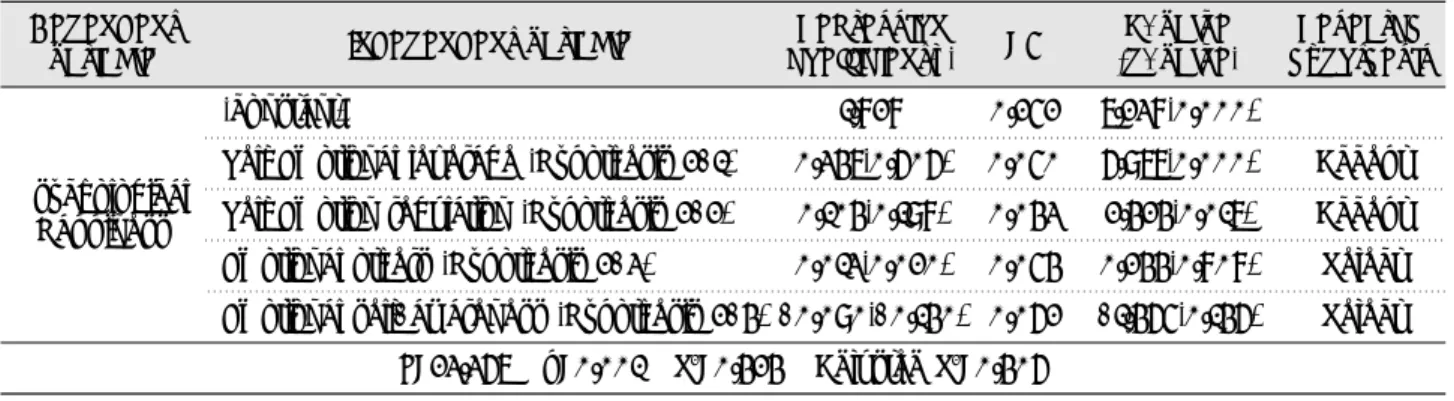
정서지능이 심리적 행복감에 정(+)의 영향을 미칠 것이 라는 가설 2-1, 2-2, 2-3, 2-4의 검정결과는 <Table 6>
과 같다.
자기정서활용이 심리적 행복감에 미치는 영향은 t값 6.977(p=0.001)로 나타나 가설 2-1은 채택되었으며, 자 기정서조절 역시 t값 2.424(p=0.017)로 가설 2-2도 채택 되었다.
타인정서인식은 t값 0.244(p=0.808), 자기정서인식은 t값 -1.465(p=0.146)로 가설 2-3, 2-4는 기각되었다.
회귀모형 전체에 대한 적합성 검정결과 F=23.367, 유 의확률 p=0.001 이므로 유의수준 5%에서 회귀모형은 적 합함을 알 수 있으며, 회귀계수들의 유의성 검정에서 비 록 자기정서인식이 유의수준 5%에서 유의하지 않으나 이 를 포함한 전체식이 유의함으로 회귀식은 다음과 같이 추 정할 수 있다. 회귀모형의 설명력은 42.4%이었다.
Table 6. Multiple regression analysis of General characteristic, Emotional Intelligence and Psychological Happiness Research hypothesis T-value
(p-value) Regression SE
coefficient(β) Independent variable
Dependent variable
Accept Accept Reject Reject 7.238(0.000)
6.977(0.000) 2.424(0.017) 0.244(0.808) -1.465(0.146) 0.252
0.050 0.043 0.054 0.062 1.828
0.347(0.606) 0.104(0.198) 0.013(0.020) -0.090(-0.140) (constant)
Self Emotional leverage (Hypothesis 2-1) Self Emotion regulation (Hypothesis 2-2) Emotional others (Hypothesis 2-3)
Emotional self-awareness (Hypothesis 2-4) Psychological
Happiness
F=23.367 p=0.001 R
2=0.424 Adjusted R
2=0.406
(심리적 행복감)^Y = 1.828+0.347(자기정서활용) +0.104(자기정서조절)+0.013(타인정서인식)-0.090(자 기정서인식)+ε
Ⅳ. 고 찰
본 연구는 치과기공(학)과 대학생들을 대상으로 정서지 능이 대인관계와 심리적 행복감에 미치는 요인을 알아보 고자 하였다.
먼저, 정서지능 구성요인과 대인관계의 회귀분석 결과 는 자기정서활용, 자기정서조절, 타인정서인식이 대인관 계에 정(+)의 영향을 미치는 것으로 나타났으며, 자기정 서인식은 유의하지 않았다.
이는 자기정서활용, 자기정서조절, 타인정서인식 등이 높을수록 신뢰할 수 있는 대인관계를 보인다고 할 수 있 으며, 이러한 연구결과는 정서능력과 사회적 능력 간의 관계를 살펴 본 이수미 등(2009), Brackett와 Mayer(2003), Brackett, et al.(2004), Campos, et al.(1994), 김연지 와 정종진(2005), Maslow(1970), Mayer, et al.(1999), Rice(1999), Rubin(1999), 심혜숙과 왕정희(2001), Trinidad와 Johnson(2001) 등의 선행연구와 일치하는 것이기도 하다.
이러한 연구결과는 대학 교육의 현장에서 자기정서활용 을 비롯한 자기정서조절, 타인정서인식을 높일 수 있는 방안을 확보하고, 자기정서조절과 자기정서활용을 통해 타인정서인식하고 표현할 수 있는 효과적인 교육프로그 램의 개발 및 기회를 필요로 한다고 볼 수 있으며, 그에 따른 국내∙외의 선행연구 이수미 등(2009), Brackett와 Mayer(2003), Campos, et al.(1994), Mayer, et al.(1999), Rice(1999), Rubin(1999), Trinidad와 Johnson(2001) 등과 일치하였다.
심리적 행복감에 영향을 미치는 요인을 분석한 결과 자 기정서활용, 자기정서조절이 심리적 행복감에 정(+)의 영 향을 미치는 것으로 나타났으며, 타인정서인식, 자기정서 인식은 유의하지 않았다.
이는 자기정서활용, 자기정서조절이 높을수록 심리적 행복감이 높다는 것을 보여주는 것으로, 정서능력과 삶의
만족 혹은 행복감과의 관계를 살펴본 선행연구인 Day, et al(2005), Furnham과 Petrides(2003) 등과 일치하는 결 과이며, 원만한 직업생활을 위해 필요한 태도, 매너, 올바 른 직업관을 가지는 것으로 .국민구강보건향상을 위하여 일하게 될 학생들에게 반드시 필요한 역량이다(황재선, 2012).
따라서 본 연구에서 치과기공(학)과 학생들의 대인관계 개선과 심리적 행복감을 보다 효과적으로 향상 시킬 수 있도록 자기정서활용과 자기정서조절 능력을 비롯한 자 기 자신의 미래에 대한 목표설정, 동기부여 강화 등을 위 한 교육프로그램 개발과 훈련에 관한 연구가 무엇보다 중 요하다 할 수 있다.
또한 치과기공(학)과 학생들이 대학생활과 향후 치과의 료 서비스 전문 인력으로써 치과 임상 환자들의 의료서비 스 제공과 자기 자신의 삶에 대한 심리적 행복감을 고취 시킬 수 있도록 가정과 학교의 적극적인 배려와 연계된 생활 지도 및 그에 따른 체계적인 프로그램 개발과 지속 적인 관심이 필요하다 여겨진다.
끝으로 본 연구의 제한점을 다음과 같이 제언하고자 한다.
첫째, 본 연구의 표집대상은 대구∙경북에 소재한 치과 기공(학)과 대학생 132명으로 제한되어 있어 그 결과를 일반화하기 어렵다. 이러한 한계를 보완하기 위하여 연구 표집대상의 확대가 필요하다.
둘째, 정서지능을 치과의료 서비스의 치과기공 접점에 서 훈련시킬 수 있는 프로그램 개발이 추후연구에서 지속 적으로 진행될 필요가 있다.
Ⅴ. 결 론
본 연구는 대구∙경북에 소재한 치과기공(학)과 대학생 들을 대상으로 2013년 6월 15일부터 6월 25일까지 설문 조사를 실시하여 최종분석에 132부의 설문지를 최종 실 증적 분석에 사용하였으며, 다음과 같은 결론을 얻을 수 있었다.
조사대상자의 일반적 특성에서 연령은 18세가 23.5%, 출생순위는 막내가 42.4%, 종교는 없음이 57.6%, 학교생 활 만족도는 보통이 49.2%, 만족이 35.6%, 학년은 1학년
이 48.5%, 여학생과 남학생이 각각 50%로 조사되었다.
정서지능 구성요인과 대인관계의 회귀분석 결과는 자기 정서활용이 t값 3.474(p=0.001), 자기정서조절 t값 3.452(p=0.001), 타인정서인식 t값 3.549(p=0.001)로 대 인관계에 정(+)의 영향을 미치는 것으로 나타났으며, 자 기정서인식 t값 -0.906(p=0.366)은 유의수준 5%에서 유 의하지 않았다. 정서지능 구성요인과 대인관계의 회귀모 형 전체에 대한 적합성 검정결과는 F=21.894, 유의확률 p=0.001 이므로 유의수준 5%에서 회귀모형은 적합함을 알 수 있으며, 회귀모형의 설명력은 40.8%이었다.
정서지능 구성요인과 심리적 행복감의 회귀분석 결과는 자기정서활용이 t값 6.977(p=0.001), 자기정서조절 t값 2.424(p=0.017)로 심리적 행복감에 정(+)의 영향을 미치 는 것으로 나타났으며, 타인정서인식 t값 0.244(p=0.808), 자기정서인식 t값 -1.465(p=0.146)는 유의수준 5%에서 유의하지 않았다.
정서지능 구성요인과 심리적 행복감의 회귀모형 전체에 대한 적합성 검정결과 F=23.367, 유의확률 p=0.001 이므 로 유의수준 5%에서 회귀모형은 적합함을 알 수 있으며, 심리적 행복감 회귀모형의 설명력은 42.4% 정도였다.
REFERENCES
Brackett MA, Mayer JD. Convergent, discriminant, and incremental validity of competing measures of emotional intelligence. Personality and Social Psychology Bulletin, 29, 1147-1158, 2003.
Brackett MA., Mayer JD, Warner RM. Emotional intelligence and its relation to everyday behavior, Personality and Individual Differences, 36⑹, 1387-1402, 2004.
Campos JJ, Mumme D, Kermorian R, Campos R. A functionalist perspective on the nature of emotion. In N. Fox (Ed.), Emotion regulation:
Behavioral and biological considerations.
Monographs of the society for Research in
child Development, 59, 284-303, 1994.
Ciarrochi J, Forgas JP, Mayer JD. Emotional Intelligence in Everyday Life. Psychology Press, 2001.
Day AL, Therrien DL, Carroll S A. Predicting psychological health: assessing the incremental validity of emotional intelligence beyond personality, Type A behaviour, and daily hassles. European Journal of personality, 19⑹, 519-536, 2005.
Furnham A, Petrides KV. Trait emotional intelligence and happiness. Social Behavior and Personality: an international Journal, 31
⑻, 815-823, 2003.
Goleman D. EQ Emotional Intelligence. Woongjin Knowledge House, 2008.
Gwon SM. Relationship Psychology, Seoul : Hakjisa, 1997.
Hwang JS. A Study of the Cognition and the Requirement on the Key Competency of Dental Technology. The Journal of Korean Academy of Dental Technology, 34⑷, 457- 469, 2012.
Jeon SG. (A)study on the effectiveness of social skills training program for rehabilitation of the schizophrenic patients. Graduate School SoongSil University, 1994.
Kim YG. Effect of the TA interpersonal communication training program to improve.
Graduate School Keimyung University, 1992.
Kwon SS. Factors affecting the dropout intention in the dental technology students of D College.
The Journal of Korean Academy of Dental Technology, 35⑶, 243-257, 2013.
Lee, SJ. The Mediating Effects of the Need for Competence and Stress on the Levels of Emotional Intelligence and Academic Achievement of Korean College Students. The
Korean Journal of the Human Development, 19⑴, 53-69, 2012.
Maslow AH. Motivation and personality. New York;
Harper and Row, 1970.
Mayer JD, Caruso DR, Salovey, P. Emotional intelligence meets traditional standards for an intelligence. Intelligence, 27, 267-298, 1999.
Mun SM. Human relations training, one study on the effects of group counseling. Journal of Gyeongsang National University, 19, 195- 204, 1980.
Park HS. The Study on the Effects of College adjustment and social competence. Student Life Research, 18, 55-83, 2004.
Rice CL. A quantitative study of emotional intelligence and its impact on team performance. Unpublished master’s thesis, Pepperdine University, Malibu, CA, 1999.
Rubin MM. Emotional intelligence and its role in mitigating aggression: a correlational study of the relationship between emotional intelligence and aggression in urban adolescents. Unpublished Dissertation, Immaculata College, Immaculata, Pennsylvania, 1999.
Saarni C. Emotional competence: How emotions and relationships become intergrated. In R.
A. Thompson (Ed.), Socioemotional development. Lincoln, NE: University of Nebraska Press, 36, 115-182, 1990.
Salovey P, Mayer, JD, Caruso, D, Lopes, PN.
Measuring emotional intelligence as a set of mental abilities with the MSCEIT. In S. J.
Lopez, & C. R. Snyder (Eds.), Handbook of positive psychology assessment. Washington DV: American Psychological Association, 2001.
Schlein S, Guerney B, Stover L. The interpersonal relationship scale. Unpublished doctoral dissertation, Pennsylvania State University, 1971.
Shim HS, Wang JH. The Relationship Among Emotional Intelligence, Social Competence and Interpersonal Cognitive Problem Solving of the Elementary School Chidren, J counseling and psychotherapy, 13⑴, 163-175, 2001.
Trinidad DR, Johnson CA. The association between emotional intelligence and early adolescent tobacco and alcohol use. Personality and Individual Differences, 32⑴, 95-105, 2001.
Wong CS, Law KS. The effect of leader and follower emotional intelligence on performance and attitude: An exploratory study. The Leadership Quarterly, 13(3), 243-274, 2002.
Yang MH. Physical Activity and Psychological Well - being : Development of Cognitive - Affective States Scale. Korean J Sport Psychol, 9⑵, 113, 1998.
Yi SM, Cho KJ, Ghim HR. The Effect of Emotional Intelligence on Interpersonal Relationships and the Life Satisfaction of University Students. The Korean Journal of the Human Development, 16⑶, 131-147, 2009.