Metabolic Gene Expression in Lipid Metabolism during Cotyledon Development in Cucumbers and the Possibility of a Secondary Transport Route of Acetyl Units
Hyeon Jeong Cha1 and Dae-Jae Kim2*
1Department of Science Education, Graduate School, Chungbuk National University, 52 Naesudong-ro, Seowon-gu, Cheongju, Chungbuk 361-763, Korea
2Department of Biology Education, College of Education, Chungbuk National University, 52 Naesudong-ro, Seowon-gu, Cheongju, Chungbuk 361-763, Korea
Received September 25, 2014 /Revised October 13, 2014 /Accepted October 14, 2014
We investigated the expression of cucumber genes involved in lipid mobilization and metabolism dur- ing cotyledon development to compare gene activity and to study the direction of carbon (acetyl unit) transport between glyoxysomes and mitochondria. The core metabolic pathway involving 10 genes was examined in four intracellular compartments: glyoxysomes (peroxisomes), mitochondria, chlor- oplasts, and cytosol. Additionally, we tested the early germination response of dark-grown seedlings and the immediate light response for a further 3 days. According to the reverse transcription polymer- ase chain reaction (RT-PCR), 3-L-ketoacyl-CoA thiolase 2 (Thio2), isocitrate lyase (ICL), and malate synthase (MS), the genes involved in storage lipid mobilization showed a similar and consistent pat- tern of gene expression in seedling development. Furthermore, coordinate expression of the A BOUT DE SOUFFLE (BOU) gene with ICL and MS during seedling emergence pointed to a possible secon- dary route of acetyl unit (acetyl-CoA) transport between peroxisomes and mitochondria in cucumber.
The expression of the BOU gene was light dependent, as shown by BOU activity in Arabidopsis, sug- gesting that the dark condition also results in weak membrane biogenesis. In addition, several genes were active throughout the development of the green cotyledon, even during senescence. In con- clusion, this study summarizes oil-seed germination and gene expression during cucumber cotyledon development and proposes an additional route for acetyl unit transport.
Key words : BOU, cucumber cotyledon, gene expression, germination, lipid
*Corresponding author
*Tel : +82-43-261-3260, Fax : +82-43-260-3361
*E-mail : [email protected]
This is an Open-Access article distributed under the terms of the Creative Commons Attribution Non-Commercial License (http://creativecommons.org/licenses/by-nc/3.0) which permits unrestricted non-commercial use, distribution, and reproduction in any medium, provided the original work is properly cited.
Journal of Life Science 2014 Vol. 24. No. 10. 1055~1062 DOI : http://dx.doi.org/10.5352/JLS.2014.24.10.1055
Introduction
Cucumber seeds contain major stores of oil in the form of triacylglycerol (TAG), which supplies energy and carbon for seed germination and post-germinative growth.
Mobilization of stored lipids is crucial for the seedling estab- lishment in the oil-seed plants, such as in Cucurbitaceae and several other crop species [10, 12, 16]. TAG is converted into sucrose and then respired in germinating seedlings. The glyoxylate cycle and gluconeogenesis are of major im- portance in the oil-seed plants during germination and post-germinative growth. The first step in stored oil degra- dation is lipolysis of TAG into fatty acids through the action of several lipases. These fatty acids are then moved into spe-
cialized microbodies called glyoxysomes (or peroxisomes) together with coenzyme A (CoA) by transporting systems, forming an acyl-CoA that proceeds through β-oxidation to produce acetyl-CoA. Fatty acid β-oxidation occurs as a serial reaction with acyl-CoA oxidase, multifunctional proteins, and 3-ketoacyl-CoA thiolase (Thio2 gene coding KAT) activity. It provides a carbon source for gluconeogenesis to synthesize sucrose in the cytosol and serves as substrates for cellular energy production in mitochondria [10]. Here, we examined cucumber Thio2 gene expression, one of the enzymes of β-oxidation, for the initial stages of the lipid mobilization.
The β-oxidation product acetyl-CoA can be provided to either the glyoxylate cycle within the glyoxysome, or trans- ported out to mitochondria for the tricarboxylic acid cycle (TCA cycle). First, two molecules of acetyl-CoA are required in the glyoxylate cycle: one molecule for the formation of malate, by malate synthase (MS), and the other molecule to form citrate, by glyoxysomal citrate synthase (Fig. 1). These components then follow a modified form of the respiratory TCA cycle and are finally routed into cytosol for gluconeo-
Fig. 1. Reactions of stored oil mobilization from the lipid body to cytosol and mitochondria in oil seed plants. Breakdown of TAG be- gins in the lipid body by an undefined pathway, with acyl-CoA moving to the glyoxysome. The specialized microbody, glyoxysome, contains both β-oxidation and glyoxylate cycle enzymes for catabolic mobilization of stored TAG. A suggested pathway by BOU may operate during cu- cumber germination for transport of the products of fatty acid β-oxidation from glyoxysomes to mitochondria. The glyox- ylate cycle and major lipid mobilization re- actions are marked with thick solid arrows. Possible transport of intermediates is marked by broken arrows.
genesis to produce sucrose. The five enzymes operating the glyoxylate cycle are glyoxysomal citrate synthase (gCSY), aconitase (ACO), isocitrate lyase (ICL), MS, and glyoxysomal malate dehydrogenase (gMDH) [8]. Except for cytosolic functional ACO, these key enzymes are located in glyoxysomes. As can be seen in Fig. 1, glyoxylate cycle oper- ation requires import and export of the major metabolic in- termediates, such as citrate, isocitrate, malate, and ox- aloacetate across the glyoxysomal membrane. Secondly, a possible export system of acetyl-CoA to mitochondria through an acylcarnitine-like shuttle mechanism, A BOUT DE SOUFFLE (BOU), was proposed in Arabidopsis [9].
However, further reports have not yet been published re- garding stored oil mobilization during seed germination.
We examined the gene expressions of glyoxylate cycle en- zymes to compare the pattern of gene expressions through- out cotyledon development and early germination stages in the dark. Furthermore, one of the cucumber acylcarnitine carrier-like protein coding genes (BOU1) was examined to determine a secondary route of acetyl-CoA transport from peroxisome to mitochondrion in cucumber. Sequences of three predicted cucumber BOU genes (BOU1–3) were avail- able in the National Center for Biotechnology Information (NCBI) database, by the recent cucumber genome sequencing.
The BOU1 gene shares 92% DNA sequence homology with BOU2 and 89% with BOU3 (data not shown). This gene pro- vides a primary target for the potential existence of a direct
shuttle system of acetyl-CoA in cucumbers. It would give additional genetic clues about whether BOU provides a pri- mary or accessory route of carbon flow from peroxisome to mitochondrion during fatty acid β-oxidation under light conditions [9].
Materials and Methods
Plant material and growth conditions
Seeds of the cucumber Cucumis sativus L. were imbibed in sterile water at 4°C for 12 hr and sown in wet vermiculite.
The resultant plants were maintained in a growth chamber (Jeio Tech, Korea) at 25°C and 70% humidity under con- tinuous illumination. For the dark experiment, a growth chamber was maintained under the same conditions as the standard experiment, but without light. Cucumber cotyle- dons were collected exactly at 24 hr interval and immedi- ately frozen in liquid nitrogen for total RNA extraction.
Total RNA preparation and estimation
An RNeasy Plant Mini Kit (Qiagen GmbH, Germany) was used to extract total RNA from cucumber cotyledon samples, and treated with deoxyribonuclease I (DNase I) (Qiagen GmBH) following the manufacturer's protocol. Three pairs of cotyledon were used in each stage of sampling for in- dividual extraction. Final elution of total RNA was carried out twice in equal volumes (50 μl) of diethylpyrocarbonate-
Fig. 2. This picture shows the dark germinating cucumber seed- ling 5 days after seed imbibition. The hypocotyl reached 15 cm in length and was 5 times longer than for the light grown seedling and cotyledon (see inset photo).
(DEPC) treated sterile H2O. The quality of total RNA was examined by 0.8% agarose gel electrophoresis in 0.5×
Tris/Borate/EDTA (TBE) buffer at 40 V for 2 hr, and the quantity was examined at 260 nm through the BioPhotometer (Eppendorf, Germany). Total RNA extraction and estimation were carried out three times in each experiment at the single cotyledon level.
Semi-quantitative RT-PCR
An equal volume (5 μl) of total RNA solution was used to produce the first-strand of complimentary DNA (cDNA) by reverse transcription (RT) reaction. The poly(A)+ RNA was primed by the oligo (dT)18 primer using an AccuPower RT PreMix (Bioneer, Korea) following standard procedure.
Polymerase chain reaction (PCR) was performed for 30 cy- cles using MyCycler (BioRad, USA) with an AccuPower PCR PreMix Kit (Bioneer, Korea) by gene-specific primers (5'-3'), as described in a previous report [6]. All primers were man- ufactured through Bioneer Co (Daejeon, Korea). An equal volume (10 μl) of RT-PCR products were fractionated on 1.0% (w/v) agarose gel in 0.5× TBE buffer for 60 min at 100 V, and the gel was digitally photographed and processed. These RT-PCR experiments were repeated at least three times independently under the same conditions.
Results
Germination of cucumber seeds in the dark Cucumber seedling establishment and specific gene ex- pression studies have been well documented under light conditions [4, 8]. In this epigeal germination, the cotyledons are brought over the ground due to fast elongation of the hypocotyl at around 60 hr after seed imbibition. During ger- mination, the hypocotyl grows actively and becomes curved to bring the seed above the soil. After coming over the sur- face of the soil, the hypocotyl straightens and the loosened seed coats fall downward, after which the cotyledon be- comes green. At this point, stored oil mobilization starts to be actively catabolized into carbohydrate through complex metabolic pathways (Fig. 1). However, cucumber seed ger- mination and stored oil mobilization-related whole gene ex- pression studies have not yet been performed under dark conditions. The beginning of cucumber seed germination did not differ between light and dark conditions, and the cotyle- don emerged at around 60 hr after seed imbibition for both (Data not shown). After this, the cotyledon itself did not
grow, and showed an intact oil reserve in the endosperm.
However, the hypocotyl extensively grew up to 15 cm in the dark conditions (Fig. 2), but only 5 cm under light. This means that stored oil break down requires the light during early seedling development, as for normal growth and de- velopment in plants.
Total RNA changes during cotyledon development The change of total RNA amount was dramatic at the sin- gle cotyledon level in the light-grown cotyledon, and sharp- ly decreased after 5-7 days of seed imbibition (Fig. 3A). From this data, we prepared a single cotyledon level semi-quanti- tative RT-PCR experiment throughout cotyledon develop- ment and dark germination experiments. On the other hand, the total RNA amount was relatively stable in the dark-grown cotyledon (Fig. 3B). Following this, one-tenth of the volume of total RNA (5 μl) was adopted into first strand cDNA synthesis in each stage of cotyledon development.
Gene expression during cotyledon development To determine the genes that express in germinating seeds and developing seedlings, gene-specific oligonucleotide pri- mers were designed so that transcripts of each gene could
A B
Fig. 3. RNeasy Plant Mini Kit extractable total RNA changes from a single cotyledon level (μg/cot) during development. Repeated three times. The black bar represents mean values. (A) Developmental changes in the light. (B) Dark germinating cotyledons with an additional 3 days light grown (7+ 3 L). DAI, days after seed imbibition; S, senescence (~50% yellow at mid-stage of senescing).
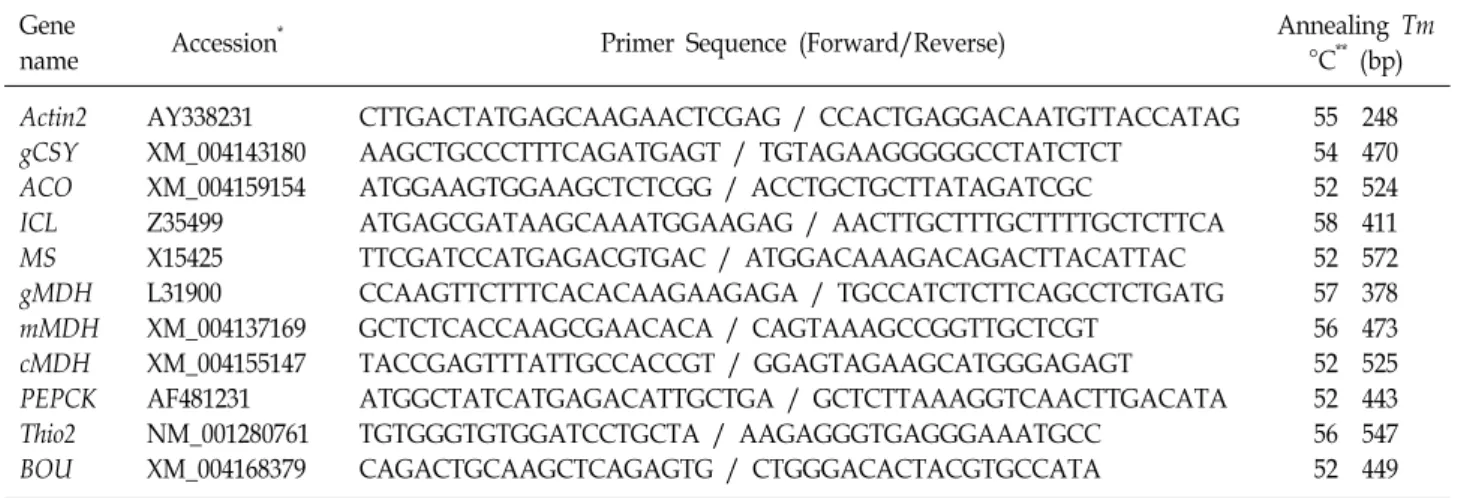
Table 1. Cucumber genes and the gene-specific oligonucleotide sequences used in PCR with annealing temperatures Gene
name Accession* Primer Sequence (Forward/Reverse) Annealing Tm
°C** (bp) Actin2
gCSY ACO ICL MS gMDH mMDH cMDH PEPCK Thio2 BOU
AY338231 XM_004143180 XM_004159154 Z35499 X15425 L31900 XM_004137169 XM_004155147 AF481231 NM_001280761 XM_004168379
CTTGACTATGAGCAAGAACTCGAG / CCACTGAGGACAATGTTACCATAG AAGCTGCCCTTTCAGATGAGT / TGTAGAAGGGGGCCTATCTCT
ATGGAAGTGGAAGCTCTCGG / ACCTGCTGCTTATAGATCGC
ATGAGCGATAAGCAAATGGAAGAG / AACTTGCTTTGCTTTTGCTCTTCA TTCGATCCATGAGACGTGAC / ATGGACAAAGACAGACTTACATTAC CCAAGTTCTTTCACACAAGAAGAGA / TGCCATCTCTTCAGCCTCTGATG GCTCTCACCAAGCGAACACA / CAGTAAAGCCGGTTGCTCGT
TACCGAGTTTATTGCCACCGT / GGAGTAGAAGCATGGGAGAGT ATGGCTATCATGAGACATTGCTGA / GCTCTTAAAGGTCAACTTGACATA TGTGGGTGTGGATCCTGCTA / AAGAGGGTGAGGGAAATGCC
CAGACTGCAAGCTCAGAGTG / CTGGGACACTACGTGCCATA
55 248 54 470 52 524 58 411 52 572 57 378 56 473 52 525 52 443 56 547 52 449
*Accession codes from NCBI sequence database.
**Tm values were calculated automatically by NCBI primer designing protocol (Pick Primer) (bp), Length of RT-PCR product.
be detected by RT-PCR (Table 1). Therefore, we examined ten expressed genes that are essential to cucumber seed oil breakdown and mobilization during seedling establishment.
The genes are Thio2 for β-oxidation, five genes for the glyox- ylate cycle, a gene for mitochondrial malate dehydrogenase (mMDH) that is responsible for the citric acid cycle, genes for cytosolic MDH and phosphoenolpyruvate carboxykinase (PEPCK) that are responsible for gluconeogenesis, and fi- nally the gene for acetyl-CoA transporting mitochondrial BOU (Table 1). DNA sequences and analysis tools were adopted from the NCBI database to obtain biochemical and genetic information that were used for PCR primer design for the tested genes (Table 1). The Actin2 gene was used as a constitutive standard from a previous report [7]. As the single cotyledon level approach, equal volume of total RNA (5 μl) was used in the reverse transcription reaction for the
developmental stages, and this was adopted throughout the experiment to compare relative changes in gene expression levels. As can be seen from the total RNA change in Fig.
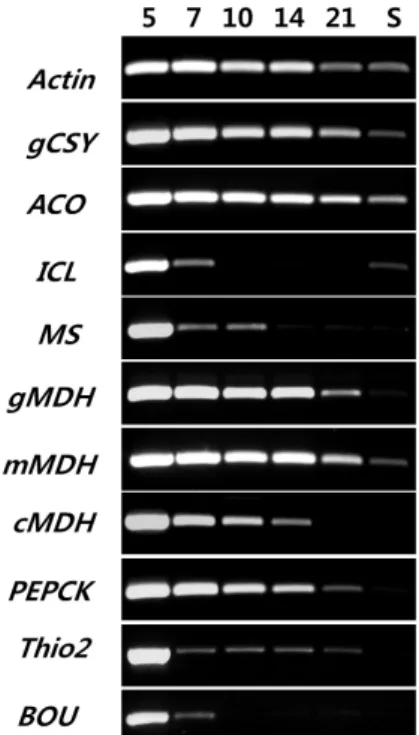
3A, the RT-PCR result for Actin2 gene expression is similar to that for the RNA changes in cotyledon development (Fig.
4). From these standard outcomes, we carried out RT-PCR for the ten of cucumber genes. Following RT-PCR results, gene expression patterns were divided into two classes.
Firstly, constitutive expression group genes, which included gCSY, ACO, gMDH, mMDH, cMDH, and PEPCK. Secondly, germination expression group genes, which included Thio2, ICL, MS, and BOU1. Nevertheless, all genes showed strong expression at day 5 in germinating cotyledons, where the genes participate in stored oil break down, carbon mobi- lization, and gluconeogenesis. Most genes in the first group were expressed throughout cotyledon development, even in
Fig. 4. Developmental changes of gene expression in the stored oil breakdown-related pathway by RT-PCR. Gene and enzyme names are as follows: gCSY, glyoxysomal citrate synthase; ACO, aconitase; ICL, isocitrate lyase; MS, ma- late synthase; gMDH, glyoxysomal malate dehydrogen- ase; mMDH, mitochondrial MDH; cMDH, cytosolic MDH; PEPCK, phosphoenolpyruvate carboxykinase; Thio2, 3-L-ketoacyl-CoA thiolase 2 (KAT2); BOU, acylcarnitine carrier-like enzyme. Numbers are DAI (days after seed imbibition) and S represents half-senescent cotyledons.
Fig. 5. RT-PCR results from dark-germinating cucumber cotyle- dons for examining gene expression changes. Cucumber seeds were imbibed in sterile water for 12 hr at 4°C, and then sown on wet vermiculite. Pots were put into the plant growth chamber in darkness at 25°C with 70%
humidity. Cotyledons were collected in the dark from seedling stage and frozen in liquid nitrogen immediately for total RNA extraction. RT-PCR was carried out on a single cotyledon basis as per a previous developmental RT-PCR experiment. Numbers are DAI, and 7 + 3 L rep- resents 7 days dark germination plus 3 days further light incubated cucumber cotyledons.
the senescence stage. However, the second group of genes showed strong expression only in the early stages (at day 5) of seed germination (Fig. 4). This reflects that they are specific and essential in stored oil breakdown and mobi- lization during cucumber seed germination. In particular, ICL and BOU gene expression patterns were almost identical throughout cotyledon development, except for a slight up- regulation of the ICL gene in the senescence stage.
Gene expression in induced seedlings in the dark To compare gene expression between light and dark con- ditions, seed germination was induced in the dark for up to 7 days. During dark germination, cotyledons were col- lected at 3, 5, and 7 days after seed imbibition. To determine the immediate light response, dark-grown seedlings were transferred to light conditions after 7 days and grown for a further 3 days. As can be seen in the dark germinated seedling at day 5 (Fig. 2), stored oils remained in the cotyledon. We tested reserved oils in crude extract from the
day 5 dark-grown cotyledon using Sudan III reaction (Data not shown).
Most of the genes encoding enzymes for lipid breakdown and mobilization were highly expressed in dark germination up to 7 days after seed imbibition (Fig. 5). Organelle MDH genes (gMDH and mMDH) showed up-regulation in light (day DD7 + LD3) that might reflect the recovery of full meta- bolic systems under light illumination. However, the cucum- ber BOU1 gene showed a different expression pattern, with the expression decreasing sharply at day 5, and barely de- tectable at day 7. Interestingly, cucumber BOU gene ex- pression was recovered in the light (Fig. 5). It has been pro- posed that BOU activity is required for seedling establish- ment in the light, but not in the dark, as proposed in an earlier report [9]. We have examined that RT-PCR for three of predicted cucumber BOU genes revealed almost identical results between them (data not shown), and this finding is
consistent with BOU gene expression under light conditions.
The possibility of a secondary or accessory transport system for acetyl units from acetyl-CoA via a carnitine shuttle is strongly implied, which is another pathway for fatty acid respiration in cucumbers. Furthermore, group 2 genes (Thio2, ICL, and MS) also showed a similar expression pat- tern in this experiment, where the genes are repressed in the light. It may also reflect that a similar gene expression regulation system can control group 2 gene activity during development.
Discussion
Cucumber seed germination and gene expression TAG is a major carbon source, and is stored in oil bodies of endosperm cells in cucumber seeds. These stored nu- trients in seeds will fuel post-germinative seedling establish- ment until photosynthesis can begin in the cotyledon.
Initially, stored oil breakdown begins hydrolysis of TAG by lipases, forming fatty acids that are transported into perox- isomes by an, as yet, unconfirmed process [10]. Fatty acids are then esterified to acyl-CoA by long chain acyl-CoA synthetase. Subsequent β-oxidation produces acetyl-CoA in the glyoxysome by three catabolic steps. Here, we also showed that the most active expression of the Thio2 gene during early seedling emergence was in the last step of β- oxidation, and this correlates well with findings from a pre- vious report [13]. This result is also consistent with the peri- od of most rapid fatty acid catabolism in cucumber cotyle- dons [10]. Thio2 gene expression was prolonged in the dark for as long as the stored lipids remained in the endosperm.
However, it also should be elucidated as to how Thio2 gene expression is regulated by darkness. A possible suggestion may be that the acetyl-CoA accumulates in peroxisomes be- cause the Thio2 gene coding enzyme 3-L-ketoacyl-CoA thio- lase (KAT) catalases the last step of fatty acid β-oxidation, which involves thiolytic cleavage of KAT to acyl-CoA (Cn-2) and acetyl-CoA (C2).
Historically, ICL and MS are known as key enzymes in the glyoxylate cycle, because their enzyme activity and cor- responding gene expression are highly specific in seed ger- mination [4, 16]. Furthermore, ICL and MS gene expression has also demonstrated a slight up-regulation in cotyledon senescence [5]. In this report, we reconfirmed specific ex- pression of ICL and MS genes during germination, but they showed a somewhat different pattern of gene expression in
senescence. In the dark experiment, ICL and MS genes also showed similarity in gene expression until day 7, but the MS gene extended its activity under light conditions, and this is quite well matched with the activity extension seen in the developmental experiment. Therefore, it is believed that ICL and MS genes share gene expression control ele- ments and factors. Three other glyoxylate cycle genes also revealed a high activity during germination, but this was more likely constitutive throughout cotyledon development.
It may imply that the genes are not only specific to seed germination for stored oil mobilization, but are also involved in other metabolic processes such as anaplerotic reactions in autotrophic growing plant organs. In the dark experiment, gCSY and ACO gene activity was much higher than gMDH until day 7, but gMDH recovered levels under light conditions. The gMDH gene expression pattern is similar to that of the mMDH gene in both developmental and dark situations. However, the function of MDH is somewhat com- plex in metabolic pathways, because MDH enzymes partic- ipate in reversible reactions. Therefore, further metabolic function of the enzymes and gene expression regulation should be elucidated in future studies.
The glyoxylate cycle produces four carbon carbohydrates (malates) using the acetyl-CoA unit that comes from β- oxidation. These can be converted into hexose sugars by glu- coneogenesis in the cytosol, and this is the final step of stor- ed lipid mobilization in oilseed germination. This will lastly be consumed as fundamental energy for growth and devel- opment of the seedling. PEPCK is a key enzyme in gluconeo- genesis, with the corresponding PEPCK gene showing not only a strong expression in germination, but it is also ex- pressed throughout cotyledon development until senescence.
Previously, we proposed that the cucumber PEPCK and ICL genes function in senescing the cotyledon for recycling of the demolished intracellular organelles and supply their nu- trients to other parts of the cell [6, 8]. However, a different mechanism was proposed for ICL and PEPCK enzyme in- volvement in senescing organs that also needs to be eluci- dated in the future [1].
BOU expression and an alternative pathway The stored oil mobilization process has been examined extensively, both genetically and biochemically, during plant germination for the last several decades. However, there is still much to be answered about the systemic functions of related enzymes and genes. The role of the glyoxylate cycle
and related enzymes have been reviewed in plant systems [2, 14]. A novel role for β-oxidation in seed dormancy is also currently proposed [3, 11].
Another possible route of acetyl-CoA has been proposed in Arabidopsis by mitochondrial BOU for postembryonic growth in the light as in yeast and animal systems [9].
Although, a purification of carnitine acetyl transferase (CAT) has also been reported from pumpkin mitochondria [15], and this was the first molecular genetic evidence of BOU in plant systems. However, no further report has since been made until the current study. Here, we report additional ge- netic evidence of BOU in plant systems through germinating cucumber cotyledons. According to our results, BOU may be the primary route of acetyl-CoA from peroxisomes to mi- tochondria during oilseed germination, because stored oil is immobilized without functional BOU in the dark, and no transport of acetyl-CoA occurs during β-oxidation. If so, the role of the glyoxylate cycle may not be the primary method of carbon transport from peroxisomes to mitochondria dur- ing germination.
Acknowledgment
This work was supported by a ChungBuk National University Research Grant in 2013.
References
1. Chen, Z. H., Walker, R. P., Acheson, R. M., Técsi, L. I., Wingler, A., Lea, P. J. and Leegood, R. C. 2000. Are isocitrate lyase and phosphoenolpyruvate carboxykinase involved in gluconeogenesis during senescence of barley leaves and cu- cumber cotyledons? Plant Cell Physiol 41, 960-967.
2. Eastmond, P. J. and Graham, I. A. 2001. Re-examining the role of the glyoxylate cycle in oilseeds. Trends Plant Sci 6, 72-78.
3. Footitt, S., Slocombe, S. P., Larner, V., Kurup, S., Wu, Y., Larson, T., Graham, I., Baker, A. and Holdsworth, M. 2002.
Control of germination and lipid mobilization by COMATOSE, the Arabidopsis homologue of human ALDP.
EMBO J 21, 2912-2922.
4. Graham, I. A., Smith, L. M., Leaver, C. J. and Smith, S. M.
1990. Developmental regulation of expression of the malate synthase gene in transgenic plants. Plant Mol Biol 15, 539-549.
5. Graham, I. A., Leaver, C. J. and Smith, S. M. 1992. Induction of malate synthase gene expression in senescent and de- tached organs of cucumber. Plant Cell 4, 349-357.
6. Kim, D. J. 2004. A study of cotyledon senescence of cucum- ber (Cucumis sativus L.) from expressed sequence tags and their gene expression. J Plant Biol 47, 244-253.
7. Kim, D. J., Do, T. K. and Yi, G. Y. 2005. Coordinate ex- pression of senescence-associated genes both cotyledon and petal development in cucumber (Cucumis sativus L.). Integr Bios 9, 127-133.
8. Kim, D. J. and Smith, S. M. 1994. Molecular cloning of cu- cumber phosphoenolpyruvate carboxykinase and devel- opmental regulation of gene expression. Plant Mol Biol 26, 423-434.
9. Lawand, S., Dorne, A. J., Long, D., Coupland, G., Mache, R. and Carol, P. 2002. Arabidopsis A BOUT DE SOUFFLE, which is homologous with mammalian carnitine acyl car- rier, is required for postembryonic growth in the light. Plant Cell 14, 2161-2173.
10. Penfield, S., Penfield-Wells, H. M. and Graham, I. A. 2006.
Storage reserve mobilization and seedling establishment in Arabidopsis. Arabidopsis Book 4, 1-17.
11. Pinfield-Wells, H., Rylott, E. L., Gilday, A. D., Graham, S., Job, K., Larson, T. R. and Graham, I. A. 2005. Sucrose res- cues seedling establishment but not germination of Arabidopsis mutants disrupted in peroxisomal fatty acid catabolism. Plant J 43, 861-872.
12. Pracharoenwattana, I., Cornah, J. E. and Smith, S. M. 2005.
Arabidopsis peroxisomal citrate synthase is required for fat- ty acid respiration and seed germination. Plant Cell 17, 2037-2048.
13. Rylott, E. L., Hooks, M. A. and Graham, I. A. 2001. Co-ordi- nate regulation of genes involved in storage lipid mobi- lization in Arabidopsis thaliana. Biochem Soc Trans 29, 283-287.
14. Smith, S. M. 2002. Does the glyoxylate cycle have an ana- plerotic function in plants? Trends Plant Sci 7, 12-13.
15. Schwadbedissen-Gerbling, H. and Gerhardt, B. 1995.
Purification and characterization of carnitine acyltransferase from higher plant mitochondria. Phytochemistry 39, 39-44.
16. Weir, E. M., Riezman, H., Grienenberger, J. M., Becker, W.
M. and Leaver, C. J. 1980. Regulation of glyoxysomal en- zymes during germination of cucumber. Temporal changes in translatable mRNAs for isocitrate lyase and malate synthase. Eur J Biochem 112, 469-477.
초록:오이 떡잎의 발달에서 지방 대사관련 유전자의 발현과 아세틸 단위체의 2차 경로 가능성
차현정1․김대재2*
(1충북대학교 대학원 과학교육과, 2충북대학교 사범대학 생물교육과)
본 연구는 떡잎의 발달 동안 지방의 유동 및 대사와 관련된 오이 유전자들의 발현을 조사하여 유전자의 활성을 비교하고자 하였으며, 글라이옥시좀과 미토콘드리아 사이의 탄소원(아세틸 단위)의 가능한 경로를 탐색하고자 하 였다. 네 곳의 세포 내 소기관인 글라이옥시좀(퍼옥시좀), 미토콘드리아, 엽록체 및 세포질에서 작동하는 중요 대 사경로의 10개 유전자들이 조사되었다. 나아가 암소에서 발아한 유식물체의 발아 초기 반응과 이후 3일간 빛을 주었을 때의 반응을 조사하였다. 역전사-중합효소연쇄반응(RT-PCR)에 따르면, 유식물체의 발달 동안에 저장지방 의 유동과 관련된 Thio2, ICL 및 MS 유전자는 항상 유사한 유전자 발현 양상을 나타냈다. 오이의 발아 초기에 BOU 유전자와 함께 ICL 및 MS 유전자의 공조된 발현은 퍼옥시좀과 미톤콘드리아 사이에 아세틸 단위의 2차 통 로의 존재 가능성에 대한 강한 증거이다. 앞서 보고된 연구에서 보여준 BOU 활성에서처럼 BOU 유전자는 빛 의 존성으로 암소에서는 세포막의 미약한 발달로 인하여 활성이 저하됨을 암시한다. 나머지의 유전자들은 떡잎이 초록색으로 발달하고 노쇠화 할 때까지 떡잎의 전 발달 기간 동안에 활성을 나타냈다. 본 연구에서는 아세틸 단위 의 운반에 대한 새로운 추가적 제안으로써 지방 저장 종자의 발아와 오이 떡잎의 발달과 관련된 유전자의 발현을 통해 처음으로 확인하였다.