Received May 24, 2018, Revised December 10, 2018, Accepted for publication December 17, 2018
Corresponding author: Sung Yul Lee, Department of Dermatology, Soon- chunhyang University Cheonan Hospital, 31 Suncheonhyang 6-gil, Dong- nam-gu, Cheonan 31151, Korea. Tel: 82-41-570-2270, Fax: 82-41-570-2271, E-mail: [email protected]
ORCID: https://orcid.org/0000-0002-6995-4561
Hyun Jung Kim, Department of Preventive Medicine, Korea University College of Medicine, 145 Anam-ro, Seongbuk-gu, Seoul 02841, Korea. Tel:
82-2-2286-1351, Fax: 82-2-927-7220, E-mail: [email protected] ORCID: https://orcid.org/0000-0003-2018-2385
This is an Open Access article distributed under the terms of the Creative Commons Attribution Non-Commercial License (http://creativecommons.
org/licenses/by-nc/4.0) which permits unrestricted non-commercial use, distribution, and reproduction in any medium, provided the original work is properly cited.
Copyright © The Korean Dermatological Association and The Korean Society for Investigative Dermatology
Ann Dermatol Vol. 31, No. 4, 2019 https://doi.org/10.5021/ad.2019.31.4.378
ORIGINAL ARTICLE
Association between Homocysteine Levels and Psoriasis:
A Meta-Analysis
Jung Eun Kim, Ho Jung Lee, Jong Suk Lee, Kyu Uang Whang1, Young Lip Park2, Sung Yul Lee, Hyun Jung Kim3
Department of Dermatology, Soonchunhyang University Cheonan Hospital, Cheonan, 1Department of Dermatology, Soonchunhyang University Seoul Hospital, Seoul, 2Department of Dermatology, Soonchunhyang University Bucheon Hospital, Bucheon, 3Department of Preventive Medicine, Korea University College of Medicine, Seoul, Korea
Background: Psoriasis is a multifactorial disease associated with an increased risk for metabolic syndrome and car- diovascular diseases. Elevated levels of homocysteine (Hcy) are a marker of cardiovascular risk. Several studies have eval- uated the associations between psoriasis and Hcy levels;
however, the results remain inconclusive. Objective: We performed a systematic review of the literature and a meta-analysis to better understand the relationship between psoriasis and Hcy. Methods: Five scientific databases (MEDLINE, Embase, Cochrane Library, Scopus, and Web of Science) were searched to identify relevant studies. A review of 307 publications identified 16 studies that directly as- sessed plasma levels of Hcy in psoriasis patients. Results: A total of 16 studies including 2,091 subjects were included in the meta-analysis. Hcy levels were significantly higher in psoriasis patients relative to healthy controls (weighted mean difference [WMD], 3.30; 95% confidence interval [CI], 1.58∼
5.02; I2=82.1%). Subgroup analyses revealed that patients
with higher mean psoriasis area severity index (PASI) scores (PASI>10) had significantly higher Hcy levels compared to healthy controls (WMD, 4.17; 95% CI, 1.18∼7.16;
I2=88.3%), whereas patients with lower mean PASI scores (PASI ≤10) had not (WMD, 0.76; 95% CI, −1.84∼3.35;
I2=72.2%). Conclusion: This meta-analysis found that psor- iasis patients, in particular those with PASI >10, had sig- nificantly higher Hcy levels compared to healthy controls.
Further research is needed to determine the association be- tween Hcy levels and psoriasis severity. (Ann Dermatol 31(4) 378∼386, 2019)
-Keywords-
Homocysteine, Meta-analysis, Psoriasis
INTRODUCTION
Psoriasis is a common chronic inflammatory disease of the skin affecting 2% to 3% of the general population, with varying prevalence among different ethnic groups1. The characteristic skin lesion is a sharply demarcated eryth- ematous scaly plaque, with evidence of abnormal epider- mal thickening and inflammatory cell infiltrates, predomi- nated by T lymphocytes. Recent advances in immunology and genetics have significantly altered our understanding of the disease, with many now regarding psoriasis as a sys- temic inflammatory disease, as opposed to a localized skin condition. Although psoriasis primarily manifests at the skin, recent studies have identified several serious comor- bidities associated with this disease, including atheroscle- rosis, chronic ischemic heart disease, diabetes mellitus, and metabolic syndrome2,3. As understanding of the patho- genesis of psoriasis has evolved, dysregulation of the im-
mune system in disease pathology has taken center stage, characterized by systemic inflammatory processes result- ing from the release of inflammatory cytokines, including tumor necrosis factor-α, interleukin (IL)-17, and IL-224. As these inflammation processes also play an important role in the pathogenesis of other diseases including athero- sclerosis, cardiovascular diseases (CVDs), and metabolic syndrome, it is not surprising that many of these con- ditions are more common in psoriatic patients than in the general population5. Moreover, cardiovascular risk factors including diabetes, hypertension, hyperlipidemia, and obe- sity have been revealed to be more strongly associated with severe psoriasis than with mild psoriasis1,6,7. Accord- ingly, recent studies have sought to assess systemic in- flammation in psoriasis using inflammatory biomarkers to measure psoriasis disease severity and to explain its co- morbidities8,9.
Homocysteine (Hcy) is a sulfur-containing amino acid that is generated as a result of the metabolism of methionine.
The metabolism of Hcy occurs through two biochemical pathways; remethylation to methionine or conversion to cysteine via coenzymes such as vitamin B6, vitamin B12 and folic acid10,11.
The plasma Hcy level can be influenced by genetic fac- tors, nutrition, chronic diseases and drugs. It was reported that hyperhomocysteinemia, an elevated plasma total Hcy concentration (the normal range is 5 to 15 μmol/L) is re- lated to the occurrence and development of many dis- eases, for example, atherosclerotic CVDs, stroke, periph- eral arterial occlusive disease, and venous thrombosis12,13, although the underlying mechanisms responsible for these associations are only partially understood. Among the pre- vailing theories, a leading hypothesis is that Hcy can in- crease oxidative stress, resulting in increased endothelial dysfunction5,14.
Several studies reported that patients with psoriasis have elevated levels of Hcy in the plasma in combination with lower levels of folate15-18. However, the correlation be- tween Hcy levels and the severity of psoriasis remains controversial, with some studies having demonstrated a direct proportional relationship between them. Additional correlations have also been seen between Hcy levels and psoriasis duration10,13,14. To address this apparent diver- gence among published studies, we performed a system- atic review of the literature and a meta-analysis to assess plasma levels of Hcy in patients with psoriasis, and their relationship to disease severity. We compared Hcy levels between psoriasis patients and controls, and tried to eval- uate the correlation between Hcy levels and severity of psoriasis.
MATERIALS AND METHODS
This study was performed according to the Preferred Re- porting Items for Systematic Reviews and Meta-Analysis (PRISMA) guidelines (Supplementary Table 1)19.
Search strategy
A systematic search of the literature was performed using five major scientific databases (MEDLINE, Embase, Cochrane Library, Scopus, and Web of Science) up to June 2017 to assess the potential association between Hcy levels and psoriasis. The search was not restricted based on language or publication year. The following keywords and medical subject headings were used for the MEDLINE search:
“psoriasis” and “homocysteine.” Search strategies for the other databases were developed based on the MEDLINE strategy (Supplementary Table 2). In addition to the initial electronic search, a manual search for additional relevant publications was also performed.
Study selection
Two reviewers independently assessed the eligible of each study for this meta-analysis using the inclusion and ex- clusion criteria. The study inclusion criteria consisted of the following: 1) studies evaluating the association be- tween plasma levels of Hcy and psoriasis; 2) Hcy levels of psoriasis were presented as means with either standard de- viations or standard errors; and 3) availability of a full-text article. Study exclusion criteria consisted of the following:
1) reviews and case reports with fewer than 10 subjects;
and 2) studies without control groups. Final 16 studies 5,12,
13,15-17,20-29 were selected for further analysis.
Data extraction
Two reviewers independently extracted data from the 16 studies using a predefined data extraction form. Disagree- ments over data extraction were resolved by consensus.
The following variables were assessed for each study: au- thors, year of publication, demographic characteristics of the study population (country, age, sex, and number), in- clusion criteria for psoriasis, the plasma levels of Hcy in both the case and control groups, and psoriasis area se- verity index (PASI) score.
Statistical analyses
Hcy levels were compared using weighted mean differ- ences (WMDs) and 95% confidence interval (CI) and are presented as μmol/L. Heterogeneity was assessed using the I2 static, which indicates the proportion of variation across trials attributable to heterogeneity, rather than sam- pling error. I2 values >50% and p-values from the χ2 test
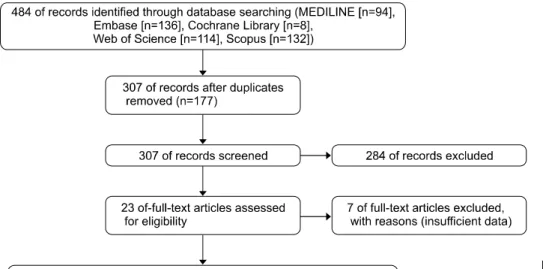
Fig. 1. Flow diagram of study iden- tification, inclusion, and exclusion.
<0.10 were considered indicative of significant hetero- geneity among the included studies. If substantial statisti- cal heterogeneity was noted (I2>50%), a more detailed assessment of individual study characteristics and sub- groups was planned to better understand the main body of evidence. The results were presented in a forest plot. In addition, potential publication bias was assessed by funnel plot and Egger test. Moreover, we also performed “trim and fill” analysis to further assess the possible influence of unpublished studies on the results of our meta-analysis.
All calculations were performed using Stata MP version 13.0 (STATA Corp., College Station, TX, USA) and a p-val- ue less than 0.05 indicated a significant difference. This study is based on Cochrane Review Methods.
Quality assessment and sensitivity analysis
The quality assessment was performed independently by two reviewer, using the Quality In Prognosis Studies (QUIPS) tool to assess the methodological quality of included stud- ies30. The following six domains were assessed and re- corded in all included studies: study participation; study attrition; prognostic factor measurement; outcome meas- urement; study confounding; and statistical analysis and reporting. Risk of bias in each of these six domains was categorized as ‘low’, ‘moderate’, or ‘high’. We considered
“study confounding” as an important bias domain in this study and thus, sensitivity analyses was done by the
“study confounding” bias domain status.
RESULTS
Identification of studies
The database search yielded 484 articles. After excluding duplicates and studies that are not eligible according to in-
clusion and exclusion criteria, 23 articles remained. Of those, seven studies were excluded after detailed assess- ment of the full text because they did not provide suffi- cient data (Fig. 1). The last remaining 16 studies were in- cluded in the meta-analysis.
Study characteristics and patients
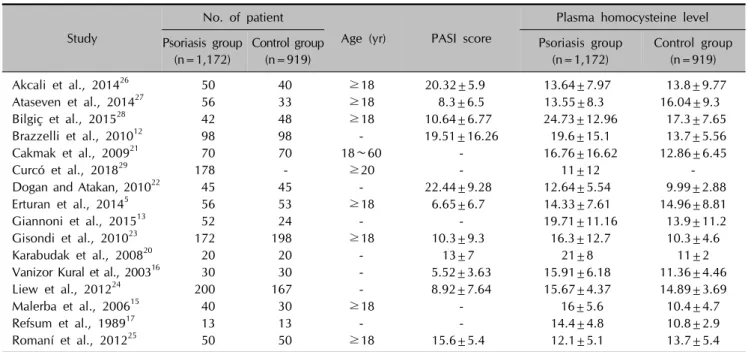
All sixteen studies finally included for the meta-analysis were cross-sectional observational studies. Sixteen studies were comprised of a total of 2,091 participants, which in- cluded 1,172 patients with psoriasis and 919 healthy or hospital-based patients with other mild skin diseases. The sample sizes ranged from 13 to 200 psoriasis patients. All studies assessed and defined psoriasis using specific tools or by measuring clinical findings. With the exception of fives studies13,15,17,21,29, all used the PASI scoring system to evaluate psoriasis severity. The range of the mean Hcy levels was 11 to 24.73 μmol/L in psoriasis patients and 9.99 to 17.3 μmol/L in controls. Of the 16 included stud- ies, 8 were carried out in Turkey, 4 in Italy, 2 in Spain, 1 in Norway, and 1 in Malaysia. The main characteristics of the studies are shown in Table 15,12,13,15-17,20-29.
Plasma levels of homocysteine and psoriasis
This meta-analysis demonstrated that Hcy levels were sig- nificantly higher in psoriasis patients relative to controls (WMD, 3.30; 95% CI, 1.58∼5.02; I2=82.1%; Fig.
2A)5,12,13,15-17,20-28. Subgroup analyses showed that patients with higher mean PASI scores (PASI>10) had significantly higher Hcy levels compared to healthy controls (WMD, 4.17; 95% CI, 1.18∼7.16; I2=88.3%), whereas patients with lower mean PASI scores (PASI≤10) had not (WMD, 0.76; 95% CI, −1.84∼3.35; I2=72.2%; Fig. 2B)5,12,16,20,22-28. In addition, there were two studies12,29 which individually
Table 1. Characteristics of the 16 studies included in the final analysis Study
No. of patient
Age (yr) PASI score
Plasma homocysteine level Psoriasis group
(n=1,172)
Control group (n=919)
Psoriasis group (n=1,172)
Control group (n=919)
Akcali et al., 201426 50 40 ≥18 20.32±5.9 13.64±7.97 13.8±9.77
Ataseven et al., 201427 56 33 ≥18 8.3±6.5 13.55±8.3 16.04±9.3
Bilgiç et al., 201528 42 48 ≥18 10.64±6.77 24.73±12.96 17.3±7.65
Brazzelli et al., 201012 98 98 - 19.51±16.26 19.6±15.1 13.7±5.56
Cakmak et al., 200921 70 70 18∼60 - 16.76±16.62 12.86±6.45
Curcó et al., 201829 178 - ≥20 - 11±12 -
Dogan and Atakan, 201022 45 45 - 22.44±9.28 12.64±5.54 9.99±2.88
Erturan et al., 20145 56 53 ≥18 6.65±6.7 14.33±7.61 14.96±8.81
Giannoni et al., 201513 52 24 - - 19.71±11.16 13.9±11.2
Gisondi et al., 201023 172 198 ≥18 10.3±9.3 16.3±12.7 10.3±4.6
Karabudak et al., 200820 20 20 - 13±7 21±8 11±2
Vanizor Kural et al., 200316 30 30 - 5.52±3.63 15.91±6.18 11.36±4.46
Liew et al., 201224 200 167 - 8.92±7.64 15.67±4.37 14.89±3.69
Malerba et al., 200615 40 30 ≥18 - 16±5.6 10.4±4.7
Refsum et al., 198917 13 13 - - 14.4±4.8 10.8±2.9
Romaní et al., 201225 50 50 ≥18 15.6±5.4 12.1±5.1 13.7±5.4
Values are presented as number only or mean±standard deviation. PASI: psoriasis area severity index, -: data not collected.
recorded Hcy levels in two groups of patients which was divided based on psoriasis severity; mild psoriasis and moderate-severe psoriasis. One study considered a moder- ate-severe psoriasis as a PASI score of 10 or more12. The other study defined it when PASI >10 and/or body sur- face area >10 or systemic treatment of psoriasis were per- formed29. Meta-analysis of these two studies showed that patients with moderate-severe psoriasis had significantly higher Hcy levels compared to that of patients with mild disease (WMD, 4.50; 95% CI, 1.30∼7.70; I2=0.0%; Fig.
2C)12,29. The characteristics of these two studies are shown in Table 212,29.
Quality assessment
The six QUIPS domains with risk of bias for each of the 16 included studies are shown in Table 35,12,13,15-17,20-29. “Study confounding” was thought to be the most important bias domain in this study. As for this domain, six studies were considered at low risk of bias, three studies at moderate risk of bias, and seven studies at high risk of bias.
Sensitivity analysis
We conducted sensitivity analysis among studies showing low risk of bias at “study confounding” QUIPS domain.
We individually analyzed studies according to the mean PASI score, thus we excluded one study15 not presenting mean PASI score. The sensitivity analysis outcomes are shown in Fig. 35,20,24,27,28. Sensitivity analysis outcomes of two studies with higher mean PASI scores (PASI>10) had
significantly higher Hcy levels (WMD, 8.99; 95% CI, 6.17
∼11.80; I2=0%; Fig. 3). However, three studies with low- er PASI scores (PASI<10) havent’ shown significantly higher Hcy levels.
Publication bias
Although visual inspection of the funnel plot suggested some asymmetry (Fig. 4), the result of Egger test did not re- veal any significant publication bias (p=0.37). Additional trim and fill analysis indicated that two more studies would be required to produce a symmetrical funnel plot. How- ever, even after adjustment of effect size for potential pub- lication bias, the corrected analysis continued to show a statistically higher serum Hcy levels in psoriasis patients relative to healthy controls (WMD, 2.56; 95% CI, 0.79∼
4.33). Thus, these results indicate there might be a pub- lication bias, but it is unlikely that publication bias poses a significant threat to the current meta-analysis.
DISCUSSION
The results of our meta-analysis demonstrated that patients with psoriasis had higher plasma levels of Hcy than heal- thy controls, which was significant only in studies with high PASI scores. So far, several studies have examined Hcy levels in psoriasis patients, with most observing hy- perhomocysteinemia in these patients. However, the role of Hcy in the pathophysiology of psoriasis and the exact mechanism causing hyperhomocysteinemia in psoriasis
Fig. 2. Forest plot of the meta-analysis for homocysteine levels. (A) Homocysteine levels in psoriasis patients and controls. (B) Subgroup analysis according to mean psoriasis area severity index (PASI) scores. (C) Meta-analysis of two studies which directly compared homocysteine levels according to psoriasis severity within studies. WMD: weighted mean difference, CI: confidence interval.
has not been fully established.
Psoriasis is a chronic inflammatory skin disease with com- plex pathophysiology. The inflammatory reactions in psor-
iasis may be associated with increased reactive oxygen species. Oxidative stress, an imbalance between oxidants and antioxidants, can disrupt redox signaling and lead mo-
Table 2. Characteristics of the 2 studies separately evaluated homocysteine (Hcy) levels based on psoriasis severity Study
No. of patient Plasma Hcy level
Mild psoriasis (n=115)
Moderate-severe psoriasis (n=161)
Mild psoriasis (n=115)
Moderate-severe psoriasis (n=161)
Brazzelli et al., 201012 16 82 19.9±20.5 19.5±13.9
Curcó et al., 201829 99 79 9±3 14±18
Values are presented as number only or mean±standard deviation.
Table 3. Quality assessment of included studies (risk of bias in six different domains according to the Quality In Prognosis Studies [QUIPS] tool [Hayden et al, 201330])
Study Study
participation Study attrition Prognostic factor measurement
Outcome measurement
Study confounding
Statistical analysis
Akcali et al., 201426 Low Low Low Low High Low
Ataseven et al., 201427 Low Low Low Low Low Low
Bilgiç et al., 201528 Low Low Low Low Low Low
Brazzelli et al., 201012 Low Low Low Low Moderate Low
Cakmak et al., 200921 Low Low Low Low Moderate Low
Curcó et al., 201829 Low Low Low Low High Low
Dogan and Atakan, 201022 Low Low Low Low High Low
Erturan et al., 20145 Low Low Low Low Low Low
Giannoni et al., 201513 Low Low Low Low High Low
Gisondi et al., 201023 Low Low Low Low Moderate Low
Karabudak et al., 200820 Low Low Low Low Low Low
Vanizor Kural et al., 200316 Low Low Low Low High Low
Liew et al., 201224 Low Low Low Low Low Low
Malerba et al., 200615 Low Low Low Low Low Low
Refsum et al., 198917 Low Low Low Low High Low
Romaní et al., 201225 Low Low Low Low High Low
Fig. 3. Forest plot of the meta-analysis for sensitivity analysis. PASI: psoriasis area severity index, WMD: weighted mean difference, CI: confidence interval.
lecular damage. This also impacts dendritic cells, T lym- phocytes, keratinocytes, angiogenesis, and inflammatory signaling31. Hcy has a highly reactive sulfhydryl group,
which easily self-oxidizes. More than 98% of Hcy is in oxidized state. Hcy acts as a pro-oxidant and has been im- plicated in decreased antioxidant capacity in patients with
Fig. 4. Funnel plot of included studies. SE: standard error, WMD:
weighted mean difference.
inflammatory bowel disease10,32,33. In addition, there is a close relationship between CVD and oxidative stress32. Patients with psoriasis have an increased prevalence of CVD compared to the general population34. This was orig- inally reported by McDonald and Calabresi35, who found that patients with psoriasis had almost twice the incidence of cardiovascular or cerebrovascular disease. Since then, several epidemiological studies have provided evidence supporting the link between psoriasis and CVD36-38 and showing increased prevalence of coronary artery calcifica- tion in psoriasis patients39. Possible factors underlying the increased risk for CVD in psoriasis patients include hyper- tension, smoking, excess alcohol intake, dyslipidemia, dia- betes mellitus, hyperhomocysteinemia, and inflammation40. Elevated levels of Hcy are an independent risk factor for the development of CVD41. Hyperhomocysteinemia (>15 μmol/L) is associated with increased aortic stiffness, a pa- rameter of the stiffness of central arteries indicative of en- dothelial dysfunction42. In a multicenter European study, Hcy levels >12 μmol/L were shown to double the risk for CVD, independent of conventional risk factors. The mag- nitude of the risk for CVD was equivalent to that of smok- ing or hyperlipidemia41. Hcy is believed to cause endothe- lial dysfunction by causing accumulation of asymmetrical dimethyl arginine, a natural inhibitor of nitric oxide synthase. This results in reduction of the vasodilator nitric oxide which helps protect vessel walls against vascular pathologies, such as atherosclerosis and thrombosis18. Keratinocyte turnover may be accelerated in patients with psoriasis, and folate, used to methylate DNA in actively dividing cells, may be consumed, leading to higher levels of Hcy43-45. Psoriasis patients often present with low levels of folic acid as a result of increased vitamin utilization in the skin and/or reduced gut absorption15,18. As dietary nu-
trients such as folic acid, vitamin B6, and vitamin B12 are all involved in Hcy metabolism in the blood, supple- mentation with these compounds is recommended in psor- iasis patients14.
In our meta-analysis, Hcy levels were significantly higher in psoriasis patients than in healthy controls. Furthermore, subgroup and sensitivity analyses revealed that patients with psoriasis showed significantly higher Hcy levels com- pared with controls only in studies with high mean PASI score (PASI>10). In addition, meta-analysis of two stud- ies12,29 which separately evaluated Hcy levels based on psoriasis severity showed that patients with moderate-severe psoriasis had significantly higher Hcy levels compared to those with mild psoriasis.
This study had several limitations that should be con- sidered. First, all studies included in this meta-analysis were retrospective studies, and did not include blinding or ran- domization, which may have resulted in bias. Second, al- though Egger’s test showed no evidence of significant pub- lication bias, but possible publication bias was still existed in our meta-analysis. There could be unpublished negative studies or incomplete raw data which might influence the results. Third, the geographic regions were limited to Turkey, Italy, Malaysia, Norway, and Spain, and thus our results may not be indicative of other populations. Fourth, the sample size was small and there was heterogeneity ex- isted in the eligible studies. Lastly, plasma levels of Hcy can be influenced by a variety of other factors including age, sex, and systemic disease, which was not controlled for in all studies. And also the positive associations of psoriasis and serum Hcy level which was shown in this study may not be due to psoriasis itself and may be due to CVDs that can concurrently occur in psoriasis. Additional well-designed longitudinal epidemiological studies with larger sample sizes representing a more diverse patient population are required. Such studies may be used to de- termine whether serum levels of Hcy can be used as a pre- dictive and prognostic marker for disease severity in psor- iasis patients.
Although our study confirmed elevated levels of Hcy are significantly associated with psoriasis, particularly in pa- tients with a mean PASI score greater than 10, the patho- physiological connections are complex and remain unclear.
It is likely that these changes involve mechanisms that un- derlie chronic inflammatory conditions of psoriasis includ- ing inflammatory cytokines, and metabolic, immune, and endocrine changes. Also, higher plasma levels of Hcy are likely an important factor underpinning increased car- diovascular comorbidities in patients with psoriasis. Future studies are needed to investigate the pathogenetic mecha- nisms of Hcy on psoriasis and association between Hcy
levels and psoriasis severity.
ACKNOWLEDGMENT
This work was supported by the National Research Foun- dation of Korea (NRF-2018R1C1B5042271) and the Soon- chunhyang University Research Fund.
SUPPLEMENTARY MATERIALS
Supplementary data can be found via http://anndermatol.
org/src/sm/ad-31-378-s001.pdf.
CONFLICTS OF INTEREST
The authors have nothing to disclose.
ORCID
Jung Eun Kim, https://orcid.org/0000-0002-8399-8456 Ho Jung Lee, https://orcid.org/0000-0001-9674-6429 Jong Suk Lee, https://orcid.org/0000-0002-6554-7598 Kyu Uang Whang, https://orcid.org/0000-0002-5483-8410 Young Lip Park, https://orcid.org/0000-0002-6532-3156 Sung Yul Lee, https://orcid.org/0000-0002-6995-4561 Hyun Jung Kim, https://orcid.org/0000-0003-2018-2385
REFERENCES
1. Neimann AL, Shin DB, Wang X, Margolis DJ, Troxel AB, Gelfand JM. Prevalence of cardiovascular risk factors in patients with psoriasis. J Am Acad Dermatol 2006;55:829- 835.
2. Arias-Santiago S, Orgaz-Molina J, Castellote-Caballero L, Arrabal-Polo MÁ, García-Rodriguez S, Perandrés-López R, et al. Atheroma plaque, metabolic syndrome and inflam- mation in patients with psoriasis. Eur J Dermatol 2012;22:
337-344.
3. Vena GA, Altomare G, Ayala F, Berardesca E, Calzavara- Pinton P, Chimenti S, et al. Incidence of psoriasis and asso- ciation with comorbidities in Italy: a 5-year observational study from a national primary care database. Eur J Dermatol 2010;20:593-598.
4. Reich K. The concept of psoriasis as a systemic inflam- mation: implications for disease management. J Eur Acad Dermatol Venereol 2012;26 Suppl 2:3-11.
5. Erturan I, Köroğlu BK, Adiloğlu A, Ceyhan AM, Akkaya VB, Tamer N, et al. Evaluation of serum sCD40L and homo- cysteine levels with subclinical atherosclerosis indicators in patients with psoriasis: a pilot study. Int J Dermatol 2014;
53:503-509.
6. Ahlehoff O, Gislason GH, Charlot M, Jørgensen CH, Lindhardsen J, Olesen JB, et al. Psoriasis is associated with
clinically significant cardiovascular risk: a Danish nation- wide cohort study. J Intern Med 2011;270:147-157.
7. Hjuler KF, Gormsen LC, Vendelbo MH, Egeberg A, Nielsen J, Iversen L. Increased global arterial and subcutaneous adipose tissue inflammation in patients with moderate-to- severe psoriasis. Br J Dermatol 2017;176:732-740.
8. Dowlatshahi EA, van der Voort EA, Arends LR, Nijsten T.
Markers of systemic inflammation in psoriasis: a systematic review and meta-analysis. Br J Dermatol 2013;169:266-282.
9. Davidovici BB, Sattar N, Prinz J, Puig L, Emery P, Barker JN, et al. Psoriasis and systemic inflammatory diseases: poten- tial mechanistic links between skin disease and co-morbid conditions. J Invest Dermatol 2010;130:1785-1796.
10. Oussalah A, Guéant JL, Peyrin-Biroulet L. Meta-analysis: hy- perhomocysteinaemia in inflammatory bowel diseases. Ali- ment Pharmacol Ther 2011;34:1173-1184.
11. Wang WM, Jin HZ. Homocysteine: a potential common route for cardiovascular risk and DNA methylation in psor- iasis. Chin Med J (Engl) 2017;130:1980-1986.
12. Brazzelli V, Grasso V, Fornara L, Moggio E, Gamba G, Villani S, et al. Homocysteine, vitamin B12 and folic acid levels in psoriatic patients and correlation with disease severity. Int J Immunopathol Pharmacol 2010;23:911-916.
13. Giannoni M, Consales V, Campanati A, Ganzetti G, Giuliodori K, Postacchini V, et al. Homocysteine plasma levels in psoriasis patients: our experience and review of the literature. J Eur Acad Dermatol Venereol 2015;29:1781- 1785.
14. Richetta AG, Mattozzi C, Macaluso L, Cantisani C, Gian- cristoforo S, D'epiro S, et al. Homocysteine plasmatic status in patients with psoriasis. Eur J Dermatol 2011;21:621-623.
15. Malerba M, Gisondi P, Radaeli A, Sala R, Calzavara Pinton PG, Girolomoni G. Plasma homocysteine and folate levels in patients with chronic plaque psoriasis. Br J Dermatol 2006;155:1165-1169.
16. Vanizor Kural B, Orem A, Cimşit G, Uydu HA, Yandi YE, Alver A. Plasma homocysteine and its relationships with atherothrombotic markers in psoriatic patients. Clin Chim Acta 2003;332:23-30.
17. Refsum H, Helland S, Ueland PM. Fasting plasma homo- cysteine as a sensitive parameter of antifolate effect: a study of psoriasis patients receiving low-dose methotrexate treat- ment. Clin Pharmacol Ther 1989;46:510-520.
18. Tobin AM, Hughes R, Hand EB, Leong T, Graham IM, Kirby B. Homocysteine status and cardiovascular risk factors in patients with psoriasis: a case-control study. Clin Exp Der- matol 2011;36:19-23.
19. Moher D, Liberati A, Tetzlaff J, Altman DG; and the PRISMA Group. Preferred reporting items for systematic reviews and meta-analysis: the PRISMA Statment. Ann Intern Med 2009;151:264-269.
20. Karabudak O, Ulusoy RE, Erikci AA, Solmazgul E, Dogan B, Harmanyeri Y. Inflammation and hypercoagulable state in adult psoriatic men. Acta Derm Venereol 2008;88:337-340.
21. Cakmak SK, Gül U, Kiliç C, Gönül M, Soylu S, Kiliç A. Homo- cysteine, vitamin B12 and folic acid levels in psoriasis patients. J Eur Acad Dermatol Venereol 2009;23:300-303.
22. Dogan S, Atakan N. Is serum amyloid A protein a better indicator of inflammation in severe psoriasis? Br J Dermatol 2010;163:895-896.
23. Gisondi P, Malerba M, Malara G, Puglisi Guerra A, Sala R, Radaeli A, et al. C-reactive protein and markers for throm- bophilia in patients with chronic plaque psoriasis. Int J Im- munopathol Pharmacol 2010;23:1195-1202.
24. Liew SC, Das-Gupta E, Wong SF, Lee N, Safdar N, Jamil A.
Association of methylentetraydrofolate reductase (MTHFR) 677 C > T gene polymorphism and homocysteine levels in psoriasis vulgaris patients from Malaysia: a case-control study. Nutr J 2012;11:1.
25. Romaní J, Caixàs A, Carrascosa JM, Ribera M, Rigla M, Luelmo J. Effect of narrowband ultraviolet B therapy on inflammatory markers and body fat composition in moder- ate to severe psoriasis. Br J Dermatol 2012;166:1237-1244.
26. Akcali C, Buyukcelik B, Kirtak N, Inaloz S. Clinical and laboratory parameters associated with metabolic syndrome in Turkish patients with psoriasis. J Int Med Res 2014;42:
386-394.
27. Ataseven A, Kesli R, Kurtipek GS, Ozturk P. Assessment of lipocalin 2, clusterin, soluble tumor necrosis factor recep- tor-1, interleukin-6, homocysteine, and uric acid levels in patients with psoriasis. Dis Markers 2014;2014:541709.
28. Bilgiç Ö, Altınyazar HC, Baran H, Ünlü A. Serum homo- cysteine, asymmetric dimethyl arginine (ADMA) and other arginine-NO pathway metabolite levels in patients with psoriasis. Arch Dermatol Res 2015;307:439-444.
29. Curcó N, Barriendos N, Barahona MJ, Arteaga C, García M, Yordanov S, et al. Factors influencing cardiometabolic risk profile in patients with psoriasis. Australas J Dermatol 2018;
59:e93-e98.
30. Hayden JA, van der Windt DA, Cartwright JL, Côté P, Bombardier C. Assessing bias in studies of prognostic factors.
Ann Intern Med 2013;158:280-286.
31. Lin X, Huang T. Oxidative stress in psoriasis and potential therapeutic use of antioxidants. Free Radic Res 2016;50:
585-595.
32. Mansoor MA, Bergmark C, Svardal AM, Lønning PE, Ueland PM. Redox status and protein binding of plasma homocysteine and other aminothiols in patients with early- onset peripheral vascular disease. Homocysteine and peri-
pheral vascular disease. Arterioscler Thromb Vasc Biol 1995;
15:232-240.
33. Koutroubakis IE, Malliaraki N, Dimoulios PD, Karmiris K, Castanas E, Kouroumalis EA. Decreased total and corrected antioxidant capacity in patients with inflammatory bowel disease. Dig Dis Sci 2004;49:1433-1437.
34. Pearce DJ, Morrison AE, Higgins KB, Crane MM, Balkrishnan R, Fleischer AB Jr, et al. The comorbid state of psoriasis patients in a university dermatology practice. J Dermatolog Treat 2005;16:319-323.
35. McDonald CJ, Calabresi P. Thromboembolic disorders asso- ciated with psoriasis. Arch Dermatol 1973;107:918.
36. Lindegård B. Diseases associated with psoriasis in a general population of 159,200 middle-aged, urban, native Swedes.
Dermatologica 1986;172:298-304.
37. Henseler T, Christophers E. Disease concomitance in psor- iasis. J Am Acad Dermatol 1995;32:982-986.
38. Gelfand JM, Neimann AL, Shin DB, Wang X, Margolis DJ, Troxel AB. Risk of myocardial infarction in patients with psoriasis. JAMA 2006;296:1735-1741.
39. Ludwig RJ, Herzog C, Rostock A, Ochsendorf FR, Zollner TM, Thaci D, et al. Psoriasis: a possible risk factor for de- velopment of coronary artery calcification. Br J Dermatol 2007;156:271-276.
40. Kremers HM, McEvoy MT, Dann FJ, Gabriel SE. Heart disease in psoriasis. J Am Acad Dermatol 2007;57:347-354.
41. Graham IM, Daly LE, Refsum HM, Robinson K, Brattström LE, Ueland PM, et al. Plasma homocysteine as a risk factor for vascular disease. The European Concerted Action Pro- ject. JAMA 1997;277:1775-1781.
42. Mayer O, Filipovský J, Dolejsová M, Cífková R, Simon J, Bolek L. Mild hyperhomocysteinaemia is associated with increased aortic stiffness in general population. J Hum Hy- pertens 2006;20:267-271.
43. Hild DH. Folate losses from the skin in exfoliative der- matitis. Arch Intern Med 1969;123:51-57.
44. Fry L, Macdonald A, Almeyda J, Griffin CJ, Hoffbrand AV.
The mechanism of folate deficiency in psoriasis. Br J Der- matol 1971;84:539-544.
45. Touraine R, Revuz J, Zittoun J, Jarret J, Tulliez M. Study of folate in psoriasis: blood levels, intestinal absorption and cutaneous loss. Br J Dermatol 1973;89:335-341.