PGHN
Original Article
Short-Term Outcome of Infliximab Therapy in Pediatric Crohn’s Disease: A Single-Center Experience
Dai Jung, Sunghee Lee, Insook Jeong, Seak Hee Oh, and Kyung Mo Kim
Department of Pediatrics, Asan Medical Center Children’s Hospital, University of Ulsan College of Medicine, Seoul, Korea
Purpose: Studies on the efficacy of infliximab (IFX) in a large population of pediatric patients with Crohn’s disease (CD) are limited, and prognostic factors are not well-known. The aim of this study was to evaluate outcomes of IFX in pediatric patients with CD and to identify factors associated with poor prognosis.
Methods: We retrospectively analyzed medical data of 594 pediatric patients with CD between 1987 and 2013 in a tertiary center. Of these, 156 children treated with IFX were enrolled and were followed up for at least a year with intact data. Outcomes of induction and maintenance, classified as failure or clinical response, were evaluated on the tenth and 54th week of IFX therapy.
Results: We treated 156 pediatric patients with CD with IFX, and the median duration of IFX therapy was 47 months.
For IFX induction therapy, 134 (85.9%) patients experienced clinical response on the 10th week. Among the 134 patients who showed response to induction, 111 (82.8%) patients maintained the clinical response on the 54th week.
In multivariate analysis, low hematocrit (p=0.046) at the time of IFX initiation was associated with the failure of IFX induction. For IFX maintenance therapy, longer duration from the initial diagnosis to IFX therapy (p=0.017) was asso- ciated with maintenance failure on the 54th week.
Conclusion: We have shown the acceptable outcomes of IFX in a large cohort of pediatric CD patients in Korea.
Hematocrit and early introduction of IFX may be prognostic factors for the outcomes of IFX.
Key Words: Crohn disease, Child, Infliximab
Received:August 9, 2017, Revised:October 1, 2017, Accepted:October 24, 2017
Corresponding author: Seak Hee Oh, Department of Pediatrics, Asan Medical Center Children’s Hospital, University of Ulsan College of Medicine, 88 Olympic-ro 43-gil, Songpa-gu, Seoul 05505, Korea. Tel: +82-2-3010-3381, Fax: +82-2-473-3725, E-mail: [email protected] Copyright ⓒ 2017 by The Korean Society of Pediatric Gastroenterology, Hepatology and Nutrition
This is an openaccess article distributed under the terms of the Creative Commons Attribution NonCommercial License (http://creativecommons.org/licenses/by-nc/4.0/) which permits unrestricted noncommercial use, distribution, and reproduction in any medium, provided the original work is properly cited.
INTRODUCTION
Crohn’s disease (CD) is an immune-mediated in- flammatory disease that can develop anywhere in the intestinal tract, and the incidence of pediatric CD is increasing worldwide during recent decades [1].
Previous studies report that the incidence of pedia- tric CD is 6.6 per 100,000/year, and 19% patients are diagnosed during the first decade of their life [2].
The annual incidence of CD in Asia is also increasing [3]. Corticosteroids, immunomodulators, and an- ti-TNF therapy have been widely used for treating
pediatric CD. Each treatment has its own strengths and weaknesses [4], and numerous studies have been published to compare their effectiveness and present guidelines for treatment [5]. Despite higher efficacy of infliximab (IFX) in the treatment of CD, most studies are still based on adult population [6]
and data on the efficacy of IFX in pediatric patients with CD are relatively less. Furthermore, there are only a few studies of IFX efficacy which are focused on Asian pediatric CD patients [7-9].
The REACH study is an important study which demonstrated the acceptable efficacy of IFX in chil- dren with CD [6]. In addition, recent studies on the in- itial induction response of IFX in pediatric patients with CD report responses were as good as those in adults [10-13]. Herein, IFX is considered to be effec- tive, showing better outcomes than conventional treatments [11]. However, the efficacy of IFX main- tenance after successful induction is still unknown because of minimally available data in children with CD. In a single-center IFX study on pediatric patients with CD, only 41% patients managed to maintain du- rable remission during a median follow-up of 29 months [14]. Herein, the aims of this study were to evaluate outcomes of IFX induction and main- tenance in a tertiary hospital with a large population of pediatric patients with CD and to determine poor prognostic factors related to IFX induction and maintenance therapy.
MATERIALS AND METHODS
Patients
Patients who were diagnosed with pediatric CD at the Seoul Asan Medical Center from January 1987 to December 2013 were retrospectively identified. The diagnosis of pediatric CD was made in children with CD, aged below 18 years, using a multidisciplinary approach based on Porto criteria [15], including clin- ical symptoms, laboratory tests, radiological images, and endoscopic and histologic evaluations.
Study variables
Patient records were based on patient interviews,
conducted at the time of initial hospital presentation.
The study was approved by the institutional review board of Asan Medical Center (IRB no. 2017-0764). We collected basic demographics, such as age and sex;
clinical characteristics, age at diagnosis, age at first injection of IFX, interval from diagnosis to first IFX injection, behavior and location of disease; and labo- ratory results when IFX was initiated. The disease behavior and involved locations of CD were defined using Paris classification [16]. Collected laboratory results were serum hematocrit (%), albumin levels (g/dL), C-reactive protein levels (mg/dL), and eryth- rocyte sedimentation rate (mm/h). Pediatric Crohn’s disease activity index (PCDAI) and Crohn’s disease activity index (CDAI) scores were calculated accord- ing to previous protocols [17,18]. Clinical severity was also judged by physician global assessment (PGA) [19].
The schedule of both IFX induction and main- tenance was based on the REACH study [6]. IFX was administered at a dose of 5 mg/kg based on the in- duction and maintenance schedule. The induction schedule involved administration of IFX at 0, 2, and 6 weeks, and the maintenance schedule was to ad- minister it every 8 weeks. The outcome was eval- uated two times, once on the 10th week of the first injection to evaluate the effects on induction and once on the 54th week of injection to evaluate the ef- fects of maintenance. Outcomes were classified by failure and clinical response; including clinical remission. Patients who failed at induction were ex- cluded from evaluation of outcomes at 54 weeks.
Clinical remission was defined as PCDAI lower than 10 or CDAI lower than 150. Clinical response was de- fined as PCDAI lower than 15 or PCDAI decreasing more than 30 or CDAI decreasing more than 70.
Otherwise, the outcome was defined as a failure.
Statistics
Baseline characteristics were described by pro- portions, means with standard deviations, and me- dians with ranges. Using logistic regression, we per- formed both univariate and multivariate analyses to determine prognostic factors related to remission in
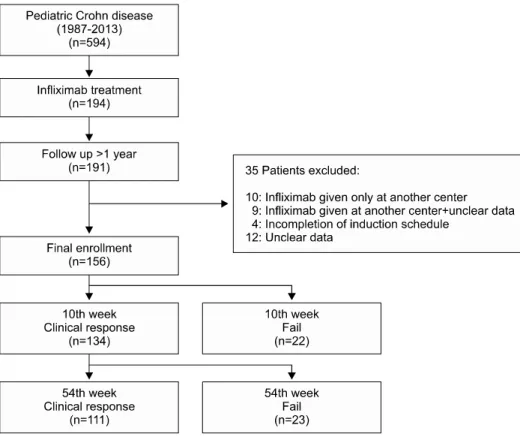
Fig. 1. Flow diagram of enrolled patients.
both IFX induction and maintenance therapy.
Significant risk factors were evaluated by calculating odds ratios (ORs). All prognostic factors with a p-val- ue of <0.2 in univariate analysis were included in the multivariate analysis. A receiver operating char- acteristic (ROC) curve analysis with the Younden in- dex was used to find the optimal cut-off point. p-val- ues of <0.05 were considered to be statistically significant. Statistical analysis was performed using IBM SPSS Statistics for Windows ver. 23.0 (IBM Co., Armonk, NY, USA).
RESULTS
Baseline characteristics
Data on 594 patients were extracted from compu- terized medical charts, and 194 patients were found to have been treated with IFX and 191 patients had follow-ups of at least 1 year. Thirty-five patients were excluded; 10 received IFX at another center, 9 received IFX at another center with unclear medical records,
4 could not complete the induction schedule, and 12 had unclear data. Finally, a total of 156 pediatric pa- tients with CD were enrolled in this study (Fig. 1).
The median age at initial diagnosis of the 156 pe- diatric patients with CD was 15 (range, 13-16) years, and the median age at the start of IFX therapy was 18 (range, 15-21.5) years. The duration from diagnosis to IFX injection was 44.5 (range, 13-92) months.
Among these patients, 94 (60.3%) were males and 62 (39.7%) were females. The median follow-up dura- tion was 116 (range, 77.5-169) months (Table 1).
Outcome of IFX induction and maintenance therapy
Twenty-two (14.1%) patients failed during the in- duction, whereas 134 (85.9%) patients experienced clinical response or remission by the 10th week (Fig.
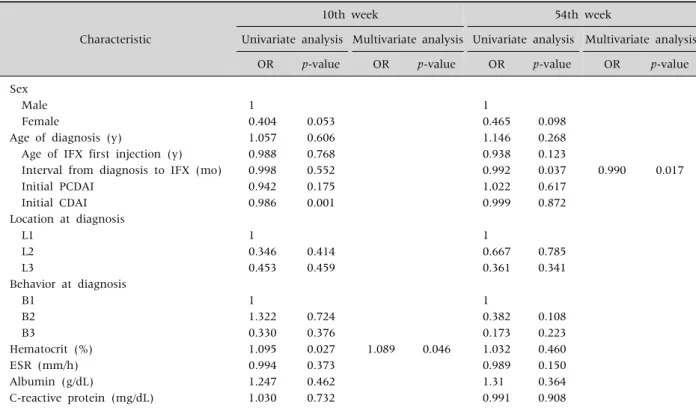
2). A univariate analysis showed that initial CDAI (p=0.001) and hematocrit (p=0.027) were asso- ciated with the response on the 10th week. A multi- variate analysis showed that only hematocrit
Table 1.Baseline Characteristics of Patients (n=156)
Characteristic Value
Sex
Male 94 (60.3)
Female 62 (39.7)
Median age at diagnosis (y) 15 (2-16) Median age of IFX first injection (y) 18 (2-34) Median interval from diagnosis to IFX
injection (mo)
44.5 (0-236)
Initial median PCDAI 40 (15-75)
Initial median CDAI 242 (66-473)
Initial PGA (n=140)
Mild 18 (12.9)
Moderate 96 (68.6)
Severe 26 (18.6)
Location at diagnosis
L1 14 (9.0)
L2 11 (7.1)
L3 131 (84.0)
Behavior at diagnosis
B1 134 (85.9)
B2 18 (11.5)
B3 4 (2.6)
Hematocrit (%) 35.9 (9.9-46.7)
ESR (mm/h) 40.0 (2-120)
Albumin (g/dL) 3.30 (0.7-5.42)
C-reactive protein (mg/dL) 1.72 (0.1-12.1) Values are presented as number (%) or median (range).
IFX: infliximab, PCDAI: pediatric Crohn’s disease activity index, CDAI: Crohn’s disease activity index, PGA: physicial global assessment, ESR: erythrocyte sedimentation rate.
Fig. 2. Efficacy of infliximab in pediatric Crohn’s disease.
(p=0.046, OR, 1.089) was associated with the re- sponse on the 10th week (Table 2).
Among the 134 patients who showed response at induction, 23 (17.2%) patients failed to maintain clinical responsiveness and 111 (82.8%) patients maintained clinical responsiveness, including re- mission, at the 54th week (Fig. 2). A multivariate analysis showed that the duration from diagnosis to IFX injection (p=0.017; OR, 0.990) was associated with the response on the 54th week (Table 2).
Early vs. late introduction of IFX
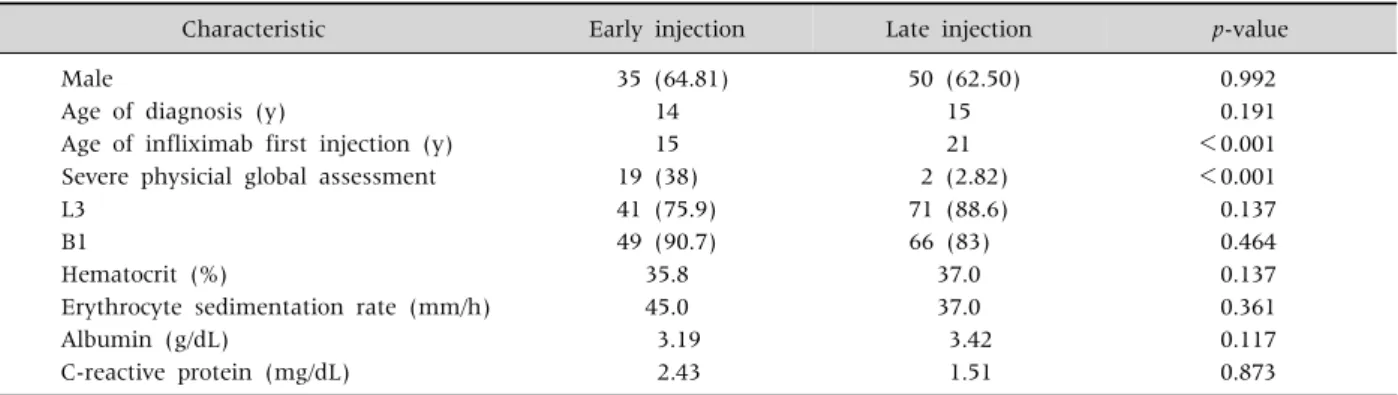
We analyzed study data to determine if there was a significant between-group difference between ear- ly and late injection of IFX (Fig. 3). The ROC curve analysis showed 29 months as a cut-off with an area under the curve of 0.86. Table 3 depicts that patients
who had received IFX within 29 months after diag- nosis were younger, with a median age of 15 years (p
<0.001) and had a higher PGA severity (38% vs.
2.82%; p<0.001).
Safety of IFX
Fifteen (9.6%) patients experienced side effects of IFX. Of these, seven (46.7%) patients had immediate infusion reactions, such as rash, tachycardia, hypo- tension, chest pain, fever, and anaphylaxis. Six (40.0%) experienced infections. Two (13.3%) had myositis and pancreatitis. Of these 15 patients, none had side effects related to malignancy and mortality.
DISCUSSION
In this study, IFX was effective in induction and maintenance in Korean pediatric patients with CD.
The proportion of patients who showed clinical re- sponses, which also included clinical remission, was 85.9% and 82.8% for the 10th and 54th week, respectively. This result is similar to previous out- comes in children with CD in Western countries, where 82-88% of study populations responded to IFX therapy [6,14,20,21].
The proportion of patients maintaining remission with IFX generally decreased over time. For exam- ple, a study on 120 pediatric patients with CD, with 89% induction rate and 82% maintenance rate at 1 year after IFX, showed a steeply decreasing re-
Table 2.Prognostic Factors of Infliximab Treatment on 10th Week and 54th Week Characteristic
10th week 54th week
Univariate analysis Multivariate analysis Univariate analysis Multivariate analysis
OR p-value OR p-value OR p-value OR p-value
Sex
Male 1 1
Female 0.404 0.053 0.465 0.098
Age of diagnosis (y) 1.057 0.606 1.146 0.268
Age of IFX first injection (y) 0.988 0.768 0.938 0.123
Interval from diagnosis to IFX (mo) 0.998 0.552 0.992 0.037 0.990 0.017
Initial PCDAI 0.942 0.175 1.022 0.617
Initial CDAI 0.986 0.001 0.999 0.872
Location at diagnosis
L1 1 1
L2 0.346 0.414 0.667 0.785
L3 0.453 0.459 0.361 0.341
Behavior at diagnosis
B1 1 1
B2 1.322 0.724 0.382 0.108
B3 0.330 0.376 0.173 0.223
Hematocrit (%) 1.095 0.027 1.089 0.046 1.032 0.460
ESR (mm/h) 0.994 0.373 0.989 0.150
Albumin (g/dL) 1.247 0.462 1.31 0.364
C-reactive protein (mg/dL) 1.030 0.732 0.991 0.908
OR: odds ratio, IFX: infliximab, PCDAI: pediatric Crohn’s disease activity index, CDAI: Crohn’s disease activity index, ESR:
erythrocyte sedimentation rate.
Fig. 3. Distribution of patients by interval from diagnosis to infliximab (IFX) injection. The median interval from diagnosis to IFX injection was 44.5 (range, 0-236) months, which is indicated by the green line. The optimal cut-off point (29 months), marked by the blue line, was derived from the receiver operating characteristic curve.
sponsiveness of 55% at three years after IFX [22]. A multicenter cohort of 202 pediatric CD patients also showed results of 93%, 78%, and 67% of patients con- tinuing IFX at 1, 2, and 3 years [13].
A recent Canadian multicenter study, between 2008 and 2012, showed a higher rate of good re- sponse to IFX in children with CD, with 95.5% and 91% showing 1- and 2-year IFX durability, re- spectively [12]. However, half of the children in that study used an optimization strategy of dose in- tensification or interval shortening. Our present study seldom used dose intensification or interval shortening because the Korean government medical coverage guidelines do not allow some modifications for optimization of clinical responses to IFX. Because of the high cost of IFX, the socioeconomic cost must be analyzed for developing a universal optimization strategy for IFX in children who do not show response.
The SONIC study may suggest an efficient and
Table 3.Characteristic Differences between Early and Late Introduction of Infliximab Injection Group (n=O)
Characteristic Early injection Late injection p-value
Male 35 (64.81) 50 (62.50) 0.992
Age of diagnosis (y) 14 15 0.191
Age of infliximab first injection (y) 15 21 <0.001
Severe physicial global assessment 19 (38) 2 (2.82) <0.001
L3 41 (75.9) 71 (88.6) 0.137
B1 49 (90.7) 66 (83) 0.464
Hematocrit (%) 35.8 37.0 0.137
Erythrocyte sedimentation rate (mm/h) 45.0 37.0 0.361
Albumin (g/dL) 3.19 3.42 0.117
C-reactive protein (mg/dL) 2.43 1.51 0.873
Values are presented as number (%) or number only.
easy method for maintaining responsiveness to IFX using combination therapy with azathioprine [23].
However, a safety issue of developing lymphoma by combination therapy is still problematic in pediatric patients. Studies of Asian pediatric CD patients are rare, so it is questionable whether the results of IFX efficacy is similar to that of western countries. A na- tionwide survey in Japan of pediatric CD patients, re- ported lower remission rates compared to previous studies [9]. Half of the study population was under remission after post-induction, and only 42% went on maintenance therapy. Another study of Korean pediatric CD patients reported that remission was 45% after one year of conventional therapy of IFX [10]. Our study reported higher remission rates of 78.3%, which were similar to previous western studies.
In our study, hematocrit showed a possible associ- ation with results by the 10th week, which evaluates the effectiveness of IFX for induction. Previous stud- ies point out that hematocrit can be used as a tool for predicting disease complications and that persistent or recurrent anemia is associated with more ag- gressive IBD [24,25]. In a recent study, hemoglobin levels were associated with significant improvement with the use of immunomodulators [26]. Bergamaschi et al. [27] showed that in vitro IFX increased eryth- roid progenitor growth in the peripheral blood of pa- tients, leading to erythropoiesis and improved anemia.
Our study suggested that the duration from diag- nosis to IFX injection is associated with maintenance
outcomes by the 54th week. The shorter the duration was, the more probable a good outcome was, where- as the OR was too small. Other studies reveal that early introduction of IFX is related with good out- comes and late IFX is associated with greater risks of early surgery [28,29]. A Korean study on 670 adults with CD showed that patients with poor prognostic factors had better outcomes with early introduction of anti-TNF drugs within two years of diagnosis [30].
In addition, a pediatric study on the top-down strat- egy showed longer remission periods in groups that had early introduction of IFX [10]. However, to date, no data shows that short-term success in the re- sponsiveness to IFX by early introduction reflects long-term outcomes. Because CD is a life-long dis- ease, further studies are needed to elucidate long-term outcomes.
This study has several limitations. First, it is a sin- gle-center retrospective study. Second, it did not re- flect the results of concomitant treatments, such as steroids and other immunomodulatory agents. Third, the median age of onset of introduction of IFX is 18 years despite the patients with CD in this study hav- ing pediatric onsets. Applying to paris classification, four patients were diagnosed CD under age ten, and only one patient started IFX under age ten. Since our patients were under conventional step-up therapy, the median time interval from diagnosis to IFX in- jection was 44 months, resulting in most of our pa- tients starting IFX at their late adolescence.
In conclusion, we have shown the efficacy of IFX
in a large cohort of pediatric patients in Korea reveal- ing that the outcomes for IFX durability do not differ from those of other studies. We also proposed that hematocrit may be a prognostic factor for outcomes of IFX induction therapy, and that early introduction of IFX may lead to better outcomes of maintenance.
REFERENCES
1. Molodecky NA, Soon IS, Rabi DM, Ghali WA, Ferris M, Chernoff G, et al. Increasing incidence and prevalence of the inflammatory bowel diseases with time, based on systematic review. Gastroenterology 2012;142:46-54.
e42; quiz e30.
2. Adamiak T, Walkiewicz-Jedrzejczak D, Fish D, Brown C, Tung J, Khan K, et al. Incidence, clinical character- istics, and natural history of pediatric IBD in Wisconsin:
a population-based epidemiological study. Inflamm Bowel Dis 2013;19:1218-23.
3. Kim BJ, Song SM, Kim KM, Lee YJ, Rhee KW, Jang JY, et al. Characteristics and trends in the incidence of in- flammatory bowel disease in Korean children: a sin- gle-center experience. Dig Dis Sci 2010;55:1989-95.
4. Grossi V, Hyams JS. The safety of treatment options for pediatric Crohn's disease. Expert Opin Drug Saf 2016;
15:1383-90.
5. Ruemmele FM, Veres G, Kolho KL, Griffiths A, Levine A, Escher JC, et al. Consensus guidelines of ECCO/
ESPGHAN on the medical management of pediatric Crohn's disease. J Crohns Colitis 2014;8:1179-207.
6. Park JJ, Yang SK, Ye BD, Kim JW, Park DI, Yoon H, et al. Second Korean guidelines for the management of Crohn's disease. Intest Res 2017;15:38-67.
7. Hosoi K, Ohtsuka Y, Fujii T, Kudo T, Matsunaga N, Tomomasa T, et al. Treatment with infliximab for pe- diatric Crohn's disease: nationwide survey of Japan. J Gastroenterol Hepatol 2017;32:114-9.
8. Lee YM, Kang B, Lee Y, Kim MJ, Choe YH. Infliximab
"top-down" strategy is superior to "step-up" in main- taining long-term remission in the treatment of pedia- tric Crohn disease. J Pediatr Gastroenterol Nutr 2015;60:737-43.
9. Luo Y, Yu J, Zhao H, Peng K, Lou J, Ma M, et al. Efficacy of infliximab in treatment of pediatric Crohn's disease in China. Zhonghua Er Ke Za Zhi 2014;52:688-92.
10. Hyams J, Crandall W, Kugathasan S, Griffiths A, Olson A, Johanns J, et al. Induction and maintenance in- fliximab therapy for the treatment of moderate-to-severe Crohn's disease in children. Gastroenterology 2007;
132:863-73; quiz 1165-6.
11. Walters TD, Kim MO, Denson LA, Griffiths AM, Dubinsky M, Markowitz J, et al. Increased effective- ness of early therapy with anti-tumor necrosis factor-α vs an immunomodulator in children with Crohn's disease. Gastroenterology 2014;146:383-91.
12. deBruyn JC, Jacobson K, El-Matary W, Carroll M, Wine E, Wrobel I, et al. Long-term outcomes of infliximab use for pediatric Crohn's disease: a canadian multicenter clinical practice experience. J Pediatr Gastroenterol Nutr 2017. doi: 10.1097/MPG.0000000000001672. [Epub ahead of print]
13. Hyams JS, Lerer T, Griffiths A, Pfefferkorn M, Kugathasan S, Evans J, et al. Long-term outcome of maintenance infliximab therapy in children with Crohn's disease. Inflamm Bowel Dis 2009;15:816-22.
14. Vahabnezhad E, Rabizadeh S, Dubinsky MC. A 10-year, single tertiary care center experience on the durability of infliximab in pediatric inflammatory bow- el disease. Inflamm Bowel Dis 2014;20:606-13.
15. IBD Working Group of the European Society for Paediatric Gastroenterology, Hepatology and Nutrition.
Inflammatory bowel disease in children and adoles- cents: recommendations for diagnosis--the Porto criteria.
J Pediatr Gastroenterol Nutr 2005;41:1-7.
16. Levine A, Griffiths A, Markowitz J, Wilson DC, Turner D, Russell RK, et al. Pediatric modification of the Montreal classification for inflammatory bowel dis- ease: the Paris classification. Inflamm Bowel Dis 2011;17:1314-21.
17. Best WR, Becktel JM, Singleton JW, Kern F Jr.
Development of a Crohn's disease activity index.
National cooperative Crohn's disease study. Gastroen- terology 1976;70:439-44.
18. Hyams JS, Ferry GD, Mandel FS, Gryboski JD, Kibort PM, Kirschner BS, et al. Development and validation of a pediatric Crohn's disease activity index. J Pediatr Gastroenterol Nutr 1991;12:439-47.
19. Hyams J, Markowitz J, Otley A, Rosh J, Mack D, Bousvaros A, et al. Evaluation of the pediatric crohn dis- ease activity index: a prospective multicenter ex- perience. J Pediatr Gastroenterol Nutr 2005;41:416-21.
20. Grossi V, Lerer T, Griffiths A, LeLeiko N, Cabrera J, Otley A, et al. Concomitant use of immunomodulators affects the durability of infliximab therapy in children with Crohn's disease. Clin Gastroenterol Hepatol 2015;13:1748-56.
21. Church PC, Guan J, Walters TD, Frost K, Assa A, Muise AM, et al. Infliximab maintains durable response and facilitates catch-up growth in luminal pediatric Crohn's disease. Inflamm Bowel Dis 2014;20:1177-86.
22. Crombé V, Salleron J, Savoye G, Dupas JL,
Vernier-Massouille G, Lerebours E, et al. Long-term outcome of treatment with infliximab in pediatric-onset Crohn’s disease: a population-based study. Inflamm Bowel Dis 2011;17:2144-52.
23. Ruffolo C, Scarpa M, Bassi N. Infliximab, azathioprine, or combination therapy for Crohn's disease. N Engl J Med 2010;363:1086-7.
24. Koutroubakis IE, Ramos-Rivers C, Regueiro M, Koutroumpakis E, Click B, Schoen RE, et al. Persistent or recurrent anemia is associated with severe and dis- abling inflammatory bowel disease. Clin Gastroenterol Hepatol 2015;13:1760-6.
25. Rieder F, Paul G, Schnoy E, Schleder S, Wolf A, Kamm F, et al. Hemoglobin and hematocrit levels in the pre- diction of complicated Crohn's disease behavior--a co- hort study. PLoS One 2014;9:e104706.
26. Koutroubakis IE, Ramos-Rivers C, Regueiro M, Koutroumpakis E, Click B, Schwartz M, et al. The influ- ence of anti-tumor necrosis factor agents on hemoglobin levels of patients with inflammatory bowel disease.
Inflamm Bowel Dis 2015;21:1587-93.
27. Bergamaschi G, Di Sabatino A, Albertini R, Ardizzone S, Biancheri P, Bonetti E, et al. Prevalence and patho- genesis of anemia in inflammatory bowel disease.
Influence of anti-tumor necrosis factor-alpha treat- ment. Haematologica 2010;95:199-205.
28. Nahon S, Lahmek P, Paupard T, Lesgourgues B, Chaussade S, Peyrin-Biroulet L, et al. Diagnostic delay is associated with a greater risk of early surgery in a French cohort of Crohn's disease patients. Dig Dis Sci 2016;61:3278-84.
29. Ma C, Beilman CL, Huang VW, Fedorak DK, Kroeker KI, Dieleman LA, et al. Anti-TNF therapy within 2 years of Crohn's disease diagnosis improves patient outcomes: a retrospective cohort study. Inflamm Bowel Dis 2016;22:870-9.
30. Oh EH, Oh K, Han M, Seo H, Chang K, Lee SH, et al.
Early anti-TNF/immunomodulator therapy is asso- ciated with better long-term clinical outcomes in Asian patients with Crohn's disease with poor prognostic factors. PLoS One 2017;12:e0177479.