Received:April 6, 2017, Revised:May 8, 2017, Accepted:May 22, 2017
Corresponding to:Young Ho Lee, Division of Rheumatology, Department of Internal Medicine, Korea University Anam Hospital, Korea University College of Medicine, 73 Inchon-ro, Seongbuk-gu, Seoul 02841, Korea. E-mail:[email protected]
Copyright ⓒ 2017 by The Korean College of Rheumatology. All rights reserved.
This is a Open Access article, which permits unrestricted non-commerical use, distribution, and reproduction in any medium, provided the original work is properly cited.
Comparative Efficacy and Safety of Secukinumab and
Adalimumab in Patients with Active Ankylosing Spondylitis:
A Bayesian Network Meta-analysis of Randomized Controlled Trials
Young Ho Lee, Gwan Gyu Song
Division of Rheumatology, Department of Internal Medicine, Korea University College of Medicine, Seoul, Korea
Objective. This study assessed the efficacy and safety of secukinumab and adalimumab in patients with active ankylosing spon- dylitis (AS). Methods. A Bayesian network meta-analysis was performed with direct and indirect data collected from random- ized controlled trials (RCTs) of efficacy and safety of secukinumab 75 mg, 150 mg and adalimumab 40 mg in patients with active AS. Results. Five RCTs (1,483 patients) met the inclusion criteria. The Assessment in Spondyloarthritis International Society re- sponse criteria of ≥20% (ASAS20) response rate was significantly higher in the adalimumab 40 mg (Odds ratio [OR], 4.26; 95%
credible interval [CrI], 2.09∼8.08), secukinumab 150 mg (OR, 3.35; 95% CrI, 1.73∼6.56), and 75 mg dose (OR, 2.44; 95%
CrI, 1.06∼5.05) than with placebo. The ranking probability based on the surface under the cumulative ranking curve (SUCRA) indicated that adalimumab 40 mg had the highest probability of being the best treatment for achieving an ASAS20 response (SUCRA=0.8753), followed by secukinumab 150 mg (SUCRA=0.7051), secukinumab 75 mg (SUCRA=0.4113), and placebo (SUCRA=0.0083). The ASAS40 response rate distribution pattern was similar to the ASAS20 response rate. However, the num- ber of serious adverse events did not differ significantly among the treatment options. Conclusion. Secukinumab and adalimu- mab were effective for the treatment of active AS without causing a significant risk of serious adverse events. (J Rheum Dis 2017;24:211-219)
Key Words. Secukinumab, Adalimumab, Ankylosing spondylitis, Network meta-analysis
INTRODUCTION
Ankylosing spondylitis (AS) is a chronic inflammatory disorder characterized by entheses and inflammation in the spinal and sacroiliac joints, which initially causes bone and joint erosion, and eventually leads to new bone formation, syndesmophytes, and ankylosis, resulting in progressive structural damage, disability, and a reduced quality of life [1,2].
Drugs used for the treatment of AS include non-ster- oidal anti-inflammatory drugs and disease-modifying an- ti-rheumatic drugs. However, these drugs are often not effective for the treatment of AS [3]. Previous studies
have shown that tumor necrosis factor (TNF) messenger RNA increases in the sacroiliac joints of AS patients. TNF plays a key role in the inflammatory activity associated with AS [4]. For patients with inadequate response de- spite conventional treatment, the anti-TNF therapy is currently recommended [3]. Studies have shown that anti-TNF therapy fails to achieve adequate disease con- trol or has unacceptable side effects in approximately 40% of patients [5]. However, there are no approved al- ternative therapies available. Therefore, there is an un- met need for new types of drugs with new mechanisms of action. Recent studies have suggested that inter- leukin-17A may play in important role in the in-
flammatory responses associated with AS. IL-17A and its receptor are expressed in target tissues in patients with AS and can mediate biological functions leading to joint and entheseal inflammation, damage, and tissue remod- eling [6]. Secukinumab is a human, high-affinity, an- ti-IL-17A monoclonal antibody [7]. Clinical trials have at- tempted to evaluate the efficacy and safety of secukinu- mab in patients with active AS [8,9]. Previous trials have shown that secukinumab may be effective in the treat- ment of active AS patients, and may have a manageable safety profile [8,9]. Conversely, adalimumab is the first human, anti-TNF monoclonal antibody of proven efficacy and safety in the treatment of active AS, and is injected subcutaneously every other week. Adalimumab is the most widely used agent, and has shown comparable effi- cacy with other TNF inhibitors in the treatment of active AS [10-12].
In order to make an informed decision on which of these therapies is more effective and safer, studies that compare their efficacy and safety profile are necessary. However, studies making direct comparisons on the safety and effi- cacy between secukinumab and adalimumab are lacking.
A network meta-analyses can combine direct and indirect data derived from relative treatment effects across a net- work of randomized controlled trials (RCTs), and thus can assess the effectiveness of multiple interventions even in the absence of studies directly comparing these therapies [13]. Recently, two network meta-analysis pa- pers on biologic agents in patients with active AS have been published [14,15]. However, one meta-analysis study did not include the latest study on secukinumab for treatment of AS [14], and the other did not consider dos- age of secukinumab as well as it did not include the latest studies [15]. In addition, there have been no comparative data on safety of biologics for treatment of AS. Using a network meta-analysis, the present study aimed to com- pare the efficacy and safety of secukinumab and adalimu- mab to a placebo in patients with active AS.
MATERIALS AND METHODS
Identification of eligible studies and data collection
We performed an exhaustive literature search using MEDLINE, EMBASE, and the Cochrane Controlled Trials Register to identify available articles (up to January 2017) on the efficacy and safety of secukinumab and adalimu- mab in patients with active AS. The key words and subject terms used in the search included “secukinumab,”“adalimumab,” and “ankylosing spondylitis.” All refer- ences in the studies were reviewed to identify additional works not included in the electronic databases. RCTs were included if (1) the study compared secukinumab or adalimumab with placebo in the treatment of patients with active AS, and (2) the study provided endpoints for the clinical efficacy and safety of secukinumab or adalimumab. The exclusion criteria included (1) dupli- cate data, and (2) the study did not contain the necessary data for inclusion. The primary endpoint for efficacy was the number of patients who achieved the Assessment in Spondyloarthritis International Society (ASAS) response criteria of ≥20% (ASAS20) or ≥40% (ASAS40). ASAS20 is defined as an improvement of ≥20% and absolute im- provement of ≥1 unit (on a 10-unit scale) in at least three of the four main ASAS domains at week 12 to 16, while the safety outcome was based on the number of patients who had experienced serious adverse effects [16]. The secondary endpoint for efficacy was the number of pa- tients who achieved ASAS40. Two independent reviewers obtained the data from original studies. Any discrepancy between the reviewers was resolved by consensus. The data obtained from each publication included the first au- thor, year of publication, country in which the study was performed, dose of secukinumab and adalimumab, time when outcomes were evaluated, and outcomes for effi- cacy and safety. We performed a network meta-analysis in accordance with the guidelines provided by the preferred reporting items for systematic reviews and meta-analyses statement [17].
Evaluation of statistical associations for network meta-analysis
For RCTs that compared multiple doses of secukinumab and adalimumab in different arms, the results were ana- lyzed simultaneously. Direct data is an estimate of head- to-head comparison, for example, direct comparison of A versus B. In contrast, indirect data is an estimate of com- parison of A versus B obtained through the common com- parator C in the network, when there are direct compar- isons of A versus C and B versus C. The efficacy and safety of secukinumab and adalimumab in different arms were ordered according to the probability of being ranked as the best performing regimen. We used a Bayesian ran- dom-effects model for network meta-analysis using NetMetaXL [18] and the WinBUGS statistical analysis program version 1.4.3 (MRC Biostatistics Unit, Cam- bridge, UK). We used the Markov Chain Monte Carlo
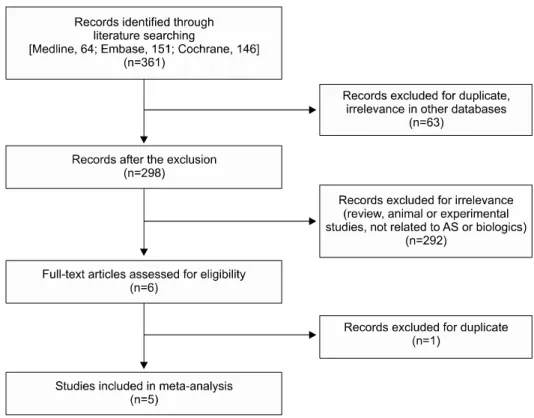
Figure 1. Flow diagram of the study selection process. AS: an- kylosing spondylitis.
method to estimate the pooled effect sizes [13]. All chains were run with 10,000 burn-in iterations followed by 10,000 monitoring iterations. Information on relative effects was converted to a probability that a treatment performed the best. The ranking of each treatment—
called the surface under the cumulative ranking curve (SUCRA) [19], which is expressed as a percentage, was also assessed. SUCRA is 100% when a treatment is cer- tain to be the best and 0% when it is certain to be the worst treatment. The league table presents summary esti- mates by ranking the treatments in order, beginning with the one with the highest impact on outcome as de- termined by SUCRA [19]. We reported the pairwise odds ratio (OR) and Bayesian credible interval (CrI) with a 95% confidence interval (CI). Trial results were adjusted for multiple treatment arms. Pooled results were consid- ered statistically significant if the confidence interval did not contain the value 1.
Test for inconsistency
Inconsistency refers to the extent of disagreement be- tween direct and indirect data [20]. Assessment of incon- sistency is important for conducting a network meta- analysis [21]. We plotted the posterior mean deviance of the individual data points in the inconsistency model against their posterior mean deviance in the consistency
model to assess the network inconsistency between di- rect and indirect estimates in each loop [22]. A sensitivity test was performed by comparing the random and fixed effects models.
RESULTS
Meta-analysis studies
A total of 361 studies were identified through an elec- tronic or manual search, and six were selected for a full-text review based on the title and abstract details.
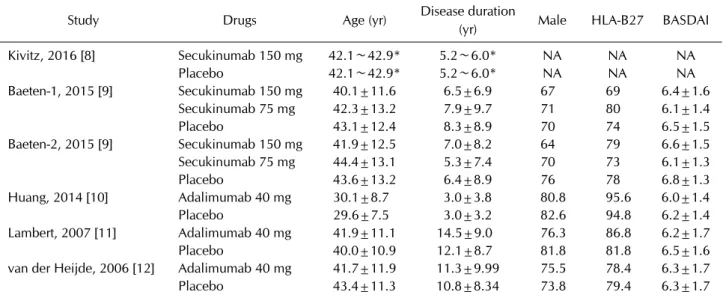
However, one of them was subsequently excluded as it had duplicate data. Therefore, five RCTs including 1,483 patients (715 efficacy-related events and 32 safety-related events) met the inclusion criteria [8-12] (Figure 1, Tables 1-3). All of the RCTs provided data related to both efficacy and safety, except for one that showed efficacy data only [11]. The evidence network diagram shows the data re- lated to the number of studies that compared the different treatments and the number of patients included in each treatment group (Figure 2). There were 6 pairwise com- parisons, including 4 direct comparisons and 4 treat- ments comprising placebo, secukinumab 75 mg, secuki- numab 150 mg, and adalimumab 40 mg (Figure 2). Patients received intravenous loading infusions of secukinumab 10 mg/kg at weeks 0, 2 and 4, or subcutaneous injections
Table 1. Characteristics of individual studies included in the network meta-analysis
Study Total Drugs Patient ASAS20 Serious adverse
event
Follow-up period for evaluation (wk)
Kivitz, 2016 [8] 150 Secukinumab 150 mg 74 43 0 16
Placebo 76 28 1
Baeten-1, 2015 [9] 371 Secukinumab 150 mg 125 76 3 16
Secukinumab 75 mg 124 74 2
Placebo 122 35 4
Baeten-2, 2015 [9] 219 Secukinumab 150 mg 72 44 4 16
Secukinumab 75 mg 73 30 4
Placebo 74 20 3
Huang, 2014 [10] 344 Adalimumab 40 mg 229 154 2 12
Placebo 115 37 0
Lambert, 2007 [11] 82 Adalimumab 40 mg 38 18 NA 12
Placebo 44 12 NA
van der Heijde, 2006 [12] 315 Adalimumab 40 mg 208 121 6 12
Placebo 107 22 3
Values are presented as number. ASAS20: Assessment of Spondyloarthritis International Society 20 response criteria (improvement of ≥20% and absolute improvement of ≥1 unit [on a 10-unit scale] in at least three of the four main ASAS domains, with no worsening by ≥20% in the remaining domain) [16], NA: not available.
Table 2. Characteristics of individual studies included in the network meta-analysis
Study Drugs Age (yr) Disease duration
(yr) Male HLA-B27 BASDAI
Kivitz, 2016 [8] Secukinumab 150 mg 42.1∼42.9* 5.2∼6.0* NA NA NA
Placebo 42.1∼42.9* 5.2∼6.0* NA NA NA
Baeten-1, 2015 [9] Secukinumab 150 mg 40.1±11.6 6.5±6.9 67 69 6.4±1.6
Secukinumab 75 mg 42.3±13.2 7.9±9.7 71 80 6.1±1.4
Placebo 43.1±12.4 8.3±8.9 70 74 6.5±1.5
Baeten-2, 2015 [9] Secukinumab 150 mg 41.9±12.5 7.0±8.2 64 79 6.6±1.5
Secukinumab 75 mg 44.4±13.1 5.3±7.4 70 73 6.1±1.3
Placebo 43.6±13.2 6.4±8.9 76 78 6.8±1.3
Huang, 2014 [10] Adalimumab 40 mg 30.1±8.7 3.0±3.8 80.8 95.6 6.0±1.4
Placebo 29.6±7.5 3.0±3.2 82.6 94.8 6.2±1.4
Lambert, 2007 [11] Adalimumab 40 mg 41.9±11.1 14.5±9.0 76.3 86.8 6.2±1.7
Placebo 40.0±10.9 12.1±8.7 81.8 81.8 6.5±1.6
van der Heijde, 2006 [12] Adalimumab 40 mg 41.7±11.9 11.3±9.99 75.5 78.4 6.3±1.7
Placebo 43.4±11.3 10.8±8.34 73.8 79.4 6.3±1.7
Values are presented as range, mean±standard deviation, number only, or percentage. HLA: human leukocyte antigen, BASDAI:
bath ankylosing spondylitis disease activity index, NA: not available. *Mean.
Table 3. Characteristics of individual studies included in the network meta-analysis
Comparison Study Patient
Placebo 6 538
Secukinumab 150 mg 3 271
Secukinumab 75 mg 2 199
Adalimumab 40 mg 3 475
Values are presented as number.
of secukinumab 75, or 150 mg at weeks 0, 1, 2, and 3. This was followed by subcutaneous secukinumab 75, or 150 mg every 4 weeks. Adalimumab (40 mg) was injected subcutaneously every other week. The relevant features of the studies included in the meta-analysis are provided in Tables 1-3.
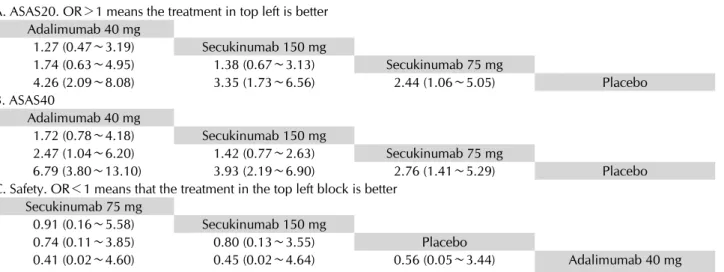
Table 4. Network meta-analyses comprising the effects for all contrasts along with ORs and 95% credible intervals A. ASAS20. OR>1 means the treatment in top left is better
Adalimumab 40 mg
1.27 (0.47∼3.19) Secukinumab 150 mg
1.74 (0.63∼4.95) 1.38 (0.67∼3.13) Secukinumab 75 mg
4.26 (2.09∼8.08) 3.35 (1.73∼6.56) 2.44 (1.06∼5.05) Placebo
B. ASAS40
Adalimumab 40 mg
1.72 (0.78∼4.18) Secukinumab 150 mg
2.47 (1.04∼6.20) 1.42 (0.77∼2.63) Secukinumab 75 mg
6.79 (3.80∼13.10) 3.93 (2.19∼6.90) 2.76 (1.41∼5.29) Placebo
C. Safety. OR<1 means that the treatment in the top left block is better Secukinumab 75 mg
0.91 (0.16∼5.58) Secukinumab 150 mg
0.74 (0.11∼3.85) 0.80 (0.13∼3.55) Placebo
0.41 (0.02∼4.60) 0.45 (0.02∼4.64) 0.56 (0.05∼3.44) Adalimumab 40 mg
ASAS: Assessment in Spondyloarthritis International Society, OR: odds ratio.
Figure 2. Evidence network diagram of comparisons for net- work meta-analysis. The width of each edge is proportional to the number of randomized controlled trials comparing each pair of treatments, and the size of each treatment node is pro- portional to the number of randomized participants (sample size). (A) Placebo. (B) Secukinumab 150 mg. (C) Secukinumab 75 mg. (D) Adalimumab 40 mg.
Network meta-analysis on the efficacy of secukinumab and adalimumab in the RCTs
Adalimumab 40 mg is listed in the top left of the diago- nal of the league table (Table 4) because it was associated with the most favorable SUCRA for the ASAS20 response rate, while placebo is listed in the bottom right of the di- agonal of the league table because it was associated with the least favorable results. For interpretation purposes, the results are read from top to bottom and left to right.
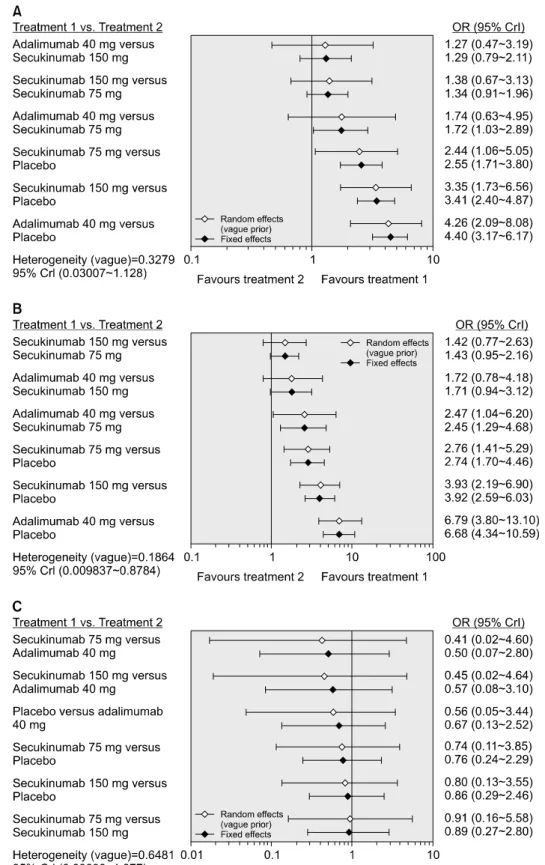
The ASAS20 response rate was significantly higher in the adalimumab group than that in the placebo group (OR, 4.26; 95% CrI, 2.09∼8.08) (Table 4, Figure 3). Similarly, the ASAS20 response rate was significantly higher with secukinumab 150 mg, and 75 mg (OR 3.35, 95% CrI 1.73∼
6.56; OR 2.44, 95% CrI 1.06∼5.05) (Table 4, Figure 3).
Both secukinumab and adalimumab achieved a sig- nificant ASAS20 response compared to placebo (Table 4).
Adalimumab 40 mg showed a numerically higher efficacy than secukinumab did. However, no statistically sig- nificant difference was found between adalimumab 40 mg and secukinumab 75 mg, and 150 mg for the ASAS20 response rate. The ASAS40 response rate showed a sim- ilar distribution pattern to the ASAS20 response rate (Table 4). The SUCRA is 1 when a treatment is certain to be the best, and 0 when a treatment is certain to be the worst. SUCRA values enable the ranking of treatments for a particular outcome. SUCRA simplifies the in- formation about the effect of each treatment into a single number. Thus, it may help to guide decision-making. The ranking probability based on SUCRA (Table 5) indicated that adalimumab at a dose of 40 mg had the highest prob- ability of being the best treatment for achieving the ASAS20 response rate (SUCRA=0.8753), followed by se- cukinumab 150 mg (SUCRA=0.7051), secukinumab 75 mg (SUCRA=0.4113), and placebo (SUCRA=0.0083).
The ASAS40 response rate showed a similar distribution pattern to the ASAS20 response rate (Table 5).
Figure 3. Results of the Baye- sian network meta-analysis of randomized controlled studies on the relative efficacy (A:
ASAS20, B: ASAS40) and safety (C) of secukinumab and adali- mumab. ASAS: Assessment in Spondyloarthritis International Society, OR: odds ratio, CrI:
credible interval.
Network meta-analysis on the safety of secukinumab and adalimumab in RCTs
We considered the number of serious adverse events as the safety outcome. The number of serious adverse
events was lower, albeit not statistically significant, in se- cukinumab at doses of 75 mg and 150 mg than in adali- mumab at 40 mg dose (OR 0.41, 95% CrI 0.02∼4.60; OR 0.45, 95% CrI 0.02∼4.54) (Table 4, Figure 3). The num-
Figure 4. Inconsistency plot for the efficacy (A: ASAS20, B: ASAS40) and safety (C) of secukinumab and adalimumab. Plot of the individual data points’ posterior mean deviance contributions for the consistency model (horizontal axis) and the unrelated mean effects model (vertical axis) along with the line of equality. ASAS: Assessment in Spondyloarthritis International Society.
Table 5. Rank probability in terms of efficacy based on the number of patients that achieved an ASAS20 or ASAS40 response, and the safety based on the number of serious adverse events
Treatment SUCRA
Efficacy: ASAS20
Adalimumab 40 mg 0.8753
Secukinumab 150 mg 0.7051
Secukinumab 75 mg 0.4113
Placebo 0.0083
Efficacy: ASAS40
Adalimumab 40 mg 0.9675
Secukinumab 150 mg 0.6571
Secukinumab 75 mg 0.3732
Placebo 0.0022
Safety
Secukinumab 75 mg 0.6560
Secukinumab 150 mg 0.6064
Placebo 0.4826
Adalimumab 40 mg 0.2550
ASAS: Assessment in Spondyloarthritis International Society, SUCRA: surface under the cumulative ranking curve.
ber of serious adverse events did not differ significantly between the five treatment options (Table 4, Figure 3).
Inconsistency and sensitivity analysis
Inconsistency plots assessing network inconsistencies between direct and indirect estimates showed a low possi- bility for inconsistencies that might significantly affect net- work meta-analysis results (Figure 4). This was confirmed via random and fixed effects, suggesting that the results of this network meta-analysis were robust (Figure 3).
DISCUSSION
We performed a network meta-analysis to compare the relative efficacy and safety of secukinumab and adalimu- mab to a placebo in patients with active AS. This analysis approach was chosen because it enables an indirect com- parison of multiple treatments, which are either lacking or have insufficient direct comparisons. Our network meta-analysis assessed the number of patients who ach- ieved an ASAS20 and ASAS40 response and the number of serious adverse effects. Our network meta-analysis shows that the ASAS20 response rate was significantly higher with adalimumab at a dose of 40 mg and with secu- kinumab dosages of 75 mg, and 150 mg. Adalimumab at a dose of 40 mg showed a numerically higher efficacy than secukinumab. However, no statistically significant differ- ence was found for the ASAS response rate between adali- mumab at 40 mg and secukinumab at 75 mg, and 150 mg.
The ASAS40 response rate showed a similar distribution pattern to the ASAS20 response rate. With respect to safety, no significant difference was observed in the num- ber of serious adverse events among the four treatment groups, suggesting a comparable safety among the secu- kinumab 75 mg, and 150 mg, adalimumab 40 mg, and the placebo group. In summary, secukinumab and adalimu- mab were effective in the treatment of patients with ac- tive AS and showed an acceptable safety profile.
IL-17A plays an important role in the pathogenesis of AS [6]. Our analysis suggest that all three doses of subcuta- neous secukinumab are effective in AS, suggesting that secukinumab is a good alternative to anti-TNF agent. Use of TNF inhibitors has improved the management of AS,
but a substantial proportion of patients show inadequate responses to such therapies. An unmet need exists for AS therapies due to drug intolerance, non-responsiveness, and therapeutic resistance. Thus, the need exists for addi- tional treatment options with novel mechanisms of action. Apremilast is a novel, oral phosphodiesterase 4 in- hibitor that regulates inflammatory mediators [23].
Apremilast, abatacept, IL-6 blockade, rituximab, and to- facitinib have shown no or mixed results for the treat- ment of AS [24]. Secukinumab is the first anti-IL-17A monoclonal antibody to provide evidence for efficacy of a non-TNF targeted therapy in AS. IL-17A and its receptor are expressed in synovial tissues and may mediate the bi- ological functions responsible for joint and entheseal inflammation. This could lead to damage and tissue remodeling. Ustekinumab is a human Immunoglobulin G 1κ monoclonal antibody that binds to the common p40 subunit shared by interleukins 12 and 23, which inhibits their binding to the interleukin 12Rβ1 receptor on the surface of T cells, natural killer cells, and antigen-present- ing cells, which prevents the subsequent receptor signal- ing and activation [25]. Interleukins 12 and 23 have an important role in psoriatic arthritis and interleukin 23 triggers IL-17A production [26]. Ustekinumab, is cur- rently in clinical trials for AS [27]. It also validates the in- hibition of IL-17A as a potential therapeutic approach.
IL-17 blocking agents are currently being explored as a therapeutic strategy for autoimmune and inflammatory diseases.
There have been two recently published network meta- analyses [14,15]. Our network meta-analysis differs from previous network meta-analyses on biologic agents in pa- tients with active AS [14,15], because in the present study the latest studies were included, and relative safety of secukinumab and adalimumab was additionally con- ducted. However, the result of this network meta-analysis regarding the relative efficacy of secukinumab 75 mg, 150 mg and adalimumab 40 mg in patients with active AS is in agreement with previous studies.
Our results should be interpreted with caution because of the following shortcomings of the present study. First, the follow-up time points were relatively short treatment periods (12 and 16 weeks). Therefore, the follow-up du- ration was too short for an evaluation of the long-term ef- fects of the treatments. Future longer comparative stud- ies are warranted. Second, the design and patient charac- teristics of the trials analyzed were heterogeneous; these inter-study differences may have affected the results of
our network meta-analysis. Third, our study did not com- prehensively address the efficacy and safety outcomes of secukinumab and adalimumab in AS. We had only fo- cused on the treatment efficacy based on the number of patients who achieved an ASAS20 or ASAS40 response and on safety according to the number of serious adverse effects, without assessing various outcomes. Specifically, the number of serious adverse events may not be suffi- cient as a safety outcome measure because of its low frequency.
CONCLUSION
By using a Bayesian network meta-analysis involving five RCTs comparing five different treatment groups, we found that secukinumab at 75 mg and 150 mg and adali- mumab at 40 mg were effective for treatment of patients with active AS. Additionally, the therapies were not asso- ciated with a significant risk for serious adverse events.
Nevertheless, long-term studies are needed to determine the relative efficacy and safety of secukinumab in a large number of patients with active AS.
CONFLICT OF INTEREST
No potential conflict of interest relevant to this article was reported.
REFERENCES
1. Brown MA, Wordsworth BP, Reveille JD. Genetics of anky- losing spondylitis. Clin Exp Rheumatol 2002;20(6 Suppl 28):S43-9.
2. Park R, Kim TH, Ji JD. Gene expression profile in patients with axial spondyloarthritis: meta-analysis of publicly ac- cessible microarray datasets. J Rheum Dis 2016;23:363-72.
3. Braun J, van den Berg R, Baraliakos X, Boehm H, Burgos- Vargas R, Collantes-Estevez E, et al. 2010 update of the ASAS/EULAR recommendations for the management of ankylosing spondylitis. Ann Rheum Dis 2011;70:896-904.
4. Braun J, Bollow M, Neure L, Seipelt E, Seyrekbasan F, Herbst H, et al. Use of immunohistologic and in situ hybrid- ization techniques in the examination of sacroiliac joint bi- opsy specimens from patients with ankylosing spondylitis.
Arthritis Rheum 1995;38:499-505.
5. Baeten D, Baraliakos X, Braun J, Sieper J, Emery P, van der Heijde D, et al. Anti-interleukin-17A monoclonal antibody secukinumab in treatment of ankylosing spondylitis: a randomised, double-blind, placebo-controlled trial. Lancet 2013;382:1705-13.
6. Shen H, Goodall JC, Hill Gaston JS. Frequency and pheno- type of peripheral blood Th17 cells in ankylosing spondylitis and rheumatoid arthritis. Arthritis Rheum 2009;60:1647-
56.
7. Langley RG, Elewski BE, Lebwohl M, Reich K, Griffiths CE, Papp K, et al. Secukinumab in plaque psoriasis--results of two phase 3 trials. N Engl J Med 2014;371:326-38.
8. Kivitz A, Blanco R, Maradiaga M, Sieper J, Tahir H, Andersson M, et al. Secukinumab provides sustained im- provement in physical, function, health-related quality of life, fatigue, and work productivity in patients with active psoriatic arthritis: 52-week results from an international phase 3 trial. J Clin Rheumatol 2016;22:142-3.
9. Baeten D, Sieper J, Braun J, Baraliakos X, Dougados M, Emery P, et al. Secukinumab, an interleukin-17A inhibitor, in ankylosing spondylitis. N Engl J Med 2015;373:2534-48.
10. Huang F, Gu J, Zhu P, Bao C, Xu J, Xu H, et al. Efficacy and safety of adalimumab in Chinese adults with active ankylos- ing spondylitis: results of a randomised, controlled trial.
Ann Rheum Dis 2014;73:587-94.
11. Lambert RG, Salonen D, Rahman P, Inman RD, Wong RL, Einstein SG, et al. Adalimumab significantly reduces both spinal and sacroiliac joint inflammation in patients with an- kylosing spondylitis: a multicenter, randomized, double- blind, placebo-controlled study. Arthritis Rheum 2007;56:
4005-14.
12. van der Heijde D, Kivitz A, Schiff MH, Sieper J, Dijkmans BA, Braun J, et al. Efficacy and safety of adalimumab in pa- tients with ankylosing spondylitis: results of a multicenter, randomized, double-blind, placebo-controlled trial. Arthritis Rheum 2006;54:2136-46.
13. Caldwell DM, Ades AE, Higgins JP. Simultaneous compar- ison of multiple treatments: combining direct and indirect evidence. BMJ 2005;331:897-900.
14. Betts KA, Griffith J, Song Y, Mittal M, Joshi A, Wu EQ, et al.
Network meta-analysis and cost per responder of tumor ne- crosis factor-α and interleukin inhibitors in the treatment of active ankylosing spondylitis. Rheumatol Ther 2016;3:
323-36.
15. Chen C, Zhang X, Xiao L, Zhang X, Ma X. Comparative ef- fectiveness of biologic therapy regimens for ankylosing spondylitis: a systematic review and a network meta- analysis. Medicine (Baltimore) 2016;95:e3060.
16. Anderson JJ, Baron G, van der Heijde D, Felson DT, Dougados M. Ankylosing spondylitis assessment group pre- liminary definition of short-term improvement in ankylos- ing spondylitis. Arthritis Rheum 2001;44:1876-86.
17. Moher D, Liberati A, Tetzlaff J, Altman DG; PRISMA Group.
Preferred reporting items for systematic reviews and meta- analyses: the PRISMA statement. Ann Intern Med 2009;
151:264-9, W64.
18. Brown S, Hutton B, Clifford T, Coyle D, Grima D, Wells G, et al. A microsoft-excel-based tool for running and critically appraising network meta-analyses--an overview and appli- cation of NetMetaXL. Syst Rev 2014;3:110.
19. Salanti G, Ades AE, Ioannidis JP. Graphical methods and nu- merical summaries for presenting results from multi- ple-treatment meta-analysis: an overview and tutorial. J Clin Epidemiol 2011;64:163-71.
20. Dias S, Welton NJ, Sutton AJ, Caldwell DM, Lu G, Ades AE.
Evidence synthesis for decision making 4: inconsistency in networks of evidence based on randomized controlled trials.
Med Decis Making 2013;33:641-56.
21. Higgins JP, Jackson D, Barrett JK, Lu G, Ades AE, White IR.
Consistency and inconsistency in network meta-analysis:
concepts and models for multi-arm studies. Res Synth Methods 2012;3:98-110.
22. van Valkenhoef G, Lu G, de Brock B, Hillege H, Ades AE, Welton NJ. Automating network meta-analysis. Res Synth Methods 2012;3:285-99.
23. Schafer P. Apremilast mechanism of action and application to psoriasis and psoriatic arthritis. Biochem Pharmacol 2012;83:1583-90.
24. Kiltz U, Heldmann F, Baraliakos X, Braun J. Treatment of ankylosing spondylitis in patients refractory to TNF-in- hibition: are there alternatives? Curr Opin Rheumatol 2012;
24:252-60.
25. Leonardi CL, Kimball AB, Papp KA, Yeilding N, Guzzo C, Wang Y, et al. Efficacy and safety of ustekinumab, a human interleukin-12/23 monoclonal antibody, in patients with psoriasis: 76-week results from a randomised, double- blind, placebo-controlled trial (PHOENIX 1). Lancet 2008;
371:1665-74.
26. Ritchlin C, Haas-Smith SA, Hicks D, Cappuccio J, Osterland CK, Looney RJ. Patterns of cytokine production in psoriatic synovium. J Rheumatol 1998;25:1544-52.
27. Poddubnyy D, Hermann KG, Callhoff J, Listing J, Sieper J.
Ustekinumab for the treatment of patients with active anky- losing spondylitis: results of a 28-week, prospective, open- label, proof-of-concept study (TOPAS). Ann Rheum Dis 2014;73:817-23.