• 검색 결과가 없습니다.

Growth Performance and Nutrient Composition in the White-spotted Flower Chafer, Protaetia brevitarsis (Coleoptera: Scarabaeidae) Fed Agricultural By-product, Soybean Curd Cake

N/A
N/A
Protected

Academic year: 2021

Share "Growth Performance and Nutrient Composition in the White-spotted Flower Chafer, Protaetia brevitarsis (Coleoptera: Scarabaeidae) Fed Agricultural By-product, Soybean Curd Cake"

Copied!
6
0
0

로드 중.... (전체 텍스트 보기)

전체 글

(1)

Growth Performance and Nutrient Composition in the White-spotted Flower Chafer, Protaetia brevitarsis (Coleoptera: Scarabaeidae) Fed Agricultural By-product, Soybean Curd Cake

Myung-Ha Song, Moon-Hee Han, Seokhyun Lee, Eun-Sun Kim, Kwan-Ho Park, Won-Tae Kim and Ji-Young Choi*

Industrial Insect Division, National Institute of Agricultural Sciences, Rural Development Association, 166 Nongsaengmyeong-ro, Wanju, Jeollabuk-do 55365, Korea

Received September 15, 2017 /Revised October 11, 2017 /Accepted October 12, 2017

Insects are gaining recognition as an alternative source of protein. As a result, more and more domes- tic farms have begun mass rearing of edible insects. In order to produce high quality insects, studies on the development of safe and nutritious feed sources are needed. Given the cost of rearing insects, agricultural and industrial by-products are good sources for feed. The efficient utilization of these by-products can help in reducing the cost of production and preventing environmental pollution. In the current study, Citrus unshiu peel (CP), soybean curd cake (SCC), soybean oil meal (SOM), and brewers dried grain (BDG) were investigated for their effects on larval growth and development of Protaetia brevitarsis. Interestingly, the feed with 10% SCC increased larval weight by 3.5 times. For the larval period, the group of 10% SCC was significantly shorter than the control. Furthermore, minerals such as Zn, Ca, K, Mg, Na, and P were recorded to be high in 10% SCC. A total of 17 amino acids were present in 10% SCC, of which tyrosine and arginine were predominant. The heavy metal con- tents were very small amounts or not detected in any of the investigated groups. These findings pro- vided a scientific basis for the utilization of soybean curd cake as a nutritional feed source to promote larval growth and produce quality insects.

Key words : Agricultural by-products, edible insect, growth, nutrition, Protaetia brevitarsis

*Corresponding author

*Tel : +82-63-238-2992, Fax : +82-63-238-3833

*E-mail : [email protected]

This is an Open-Access article distributed under the terms of the Creative Commons Attribution Non-Commercial License (http://creativecommons.org/licenses/by-nc/3.0) which permits unrestricted non-commercial use, distribution, and reproduction in any medium, provided the original work is properly cited.

Journal of Life Science 2017 Vol. 27. No. 10. 1185~1190 DOI : https://doi.org/10.5352/JLS.2017.27.10.1185

Introduction

The white-spotted flower chafer, Protaetia brevitarsis (P.

brevitarsis), are part of the family of Scarabaeidae belonging to the order Coleoptera and primarily distributed through- out Eastern Asia [7, 22]. The larvae of P. brevitarsis have been traditionally used for treatment of inflammatory disease, breast cancer, and liver-related diseases such as hepatic can- cer, liver cirrhosis, and hepatitis [13, 29]. They were listed as a general food ingredient by the Korean Ministry of Food and Drug Safety in 2016 [17, 18]. As the interest in rearing of P. brevitarsis increased, it is necessary to build a founda- tion for stable and cost-effective mass-rearing systems [26].

Especially, agricultural by-products were the best choice

with the low cost. Recently, research and development of various natural resources such as agriculture and food proc- essing by-products has been found to improve livestock use, resulting in increased utilization of by-products, decreased animal feed costs, and environmental preservation [1, 23, 25].

In the food industry, large amounts of by-products such as peel, pulp, and seeds are produced and they are some- times regarded as waste. These by-product wastes have been used as materials for animal feed and fuel production [4, 14, 16].

Soybean curd cake is surplus material when tofu is made from soybeans. Since high levels of nutrients in this tofu wastes after processing, it can be used as a material for live- stock feed or fertilizer [1, 15, 19].

Soybean oil meal is primarily the by-product of soybean oil extraction and the primary protein source in poultry rations. A variety of studies have been conducted to enhance the nutrient value and acceptability of soybean oil meal in poultry feeding [8, 9, 21].

Brewers dried grains are readily available and cheap

by-products from brewery industries [24]. When compared

with soybean protein used in poultry rations, net protein

(2)

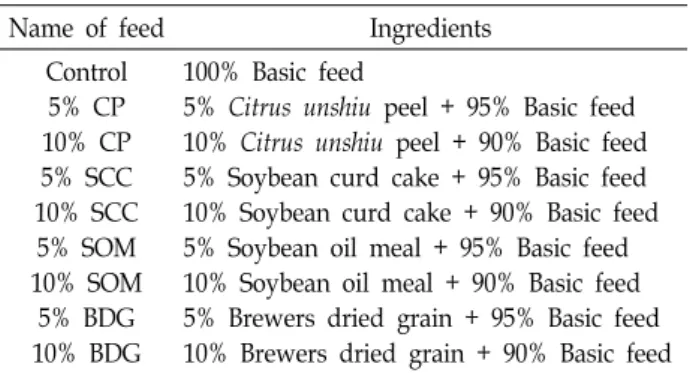
Table 1. Composition of nine different feeds with four additives

Name of feed Ingredients

Control 5% CP 10% CP 5% SCC 10% SCC 5% SOM 10% SOM

5% BDG 10% BDG

100% Basic feed

5% Citrus unshiu peel + 95% Basic feed 10% Citrus unshiu peel + 90% Basic feed 5% Soybean curd cake + 95% Basic feed 10% Soybean curd cake + 90% Basic feed 5% Soybean oil meal + 95% Basic feed 10% Soybean oil meal + 90% Basic feed 5% Brewers dried grain + 95% Basic feed 10% Brewers dried grain + 90% Basic feed ratio and protein efficiency ratio values of brewers dried grains were similar [6].

However, the agricultural and industrial by-products, having effects of reduced feed costs and pollution, are most- ly used in poultry or livestock production. Therefore, the present study was conducted to find out the effects of feed- ing four kinds of agricultural by-products, such as Citrus unshiu peel, soybean curd cake, soybean oil meal, and brew- ers dried grain, in P. brevitarsis widely rearing as edible insects.

Materials and Methods

Insects

The second instar larvae of P. brevitarsis were purchased from a private seller (Hapcheon-gun, Gyeongsangnam-do, Republic of Korea). The purchased beetles were kept in in- sect rearing facilities at National Institute of Agricultural Science at 25±1℃ with 40~60% humidity. Larvae of P. brevi- tarsis were maintained in the plastic box (30 mm long × 48 mm wide × 27 mm high) with enough fermented sawdust.

The third instar larvae were collected based on their head capsule size for this experiment.

Feed with different additives

Nine types of the feeds were formulated in different pro- portions of ingredients. To test the effects agricultural and industrial by-products, we added Citrus unshiu peel, soybean curd cake, soybean oil meal, and brewers dried grain based on Table 1. After these feed additives were mixed with fer- mented oak sawdust, they were fermented for longer than 1 month.

Rearing condition

The third instar larvae were reared in a plastic container

(200×130×130 mm) with designated feeds. For each group, 20 larvae were tested and each feed was changed once a week. The rearing room was regulated at 25±1℃ with 40~

60% humidity under 12:12(L:D) light condition. We meas- ured larval weight, larval period, and pupation rate. Each treatment was repeated three times.

Analysis of proximate, amino acids, minerals, and heavy metals composition

The proximate composition (moisture, protein, fat, fiber, and ash) of P. brevitarsis larvae fed with each feed was de- termined by following standard methods of the Association of Official Analytical Chemists (AOAC) [2]. Briefly, moisture content was determined by drying the sample at 105℃ to constant weight. The crude protein content was determined by the Kjeldahl method and calculated by multiplying the nitrogen content using a factor of 6.25. Crude fat was ex- tracted from each sample in a Soxhlet extractor with ethyl ether. The content of fiber was determined according to the AOAC enzymatic gravimetric method. The ash content was estimated by dry-ashing in furnace at 550℃ for 5 hr.

A dry ashing procedure was used to prepare the samples for mineral analysis. Copper (Cu), zinc (Zn), calcium (Ca), potassium (K), magnesium (Mg), manganese (Mn), sodium (Na), and phosphorus (P) contents of the samples were de- termined by direct current plasma emission spectrometry.

Amino acids were determined in freeze-dried samples hy- drolyzed with 6 M HCl by an automated Amino Acid Analyzer (Beckman 6300, CA, USA).

Dry sample was digested by adding HNO

3

and HF in an autodigester at 180℃ and filtered. This sample was used for analysis of heavy metals including arsenic (As), cadmium (Cd), mercury (Hg), and lead (Pb) by atomic absorption spec- troscopy and final concentrations of heavy metals were determined.

Statistical analysis

The mean and standard deviation (SD) of each experiment were compared to control. Statistical differences at p>0.05 between the groups were analyzed by one-way ANOVA analysis followed by Tukey’s multiple comparison test.

Results and Discussion

The larval weight was observed for 13 weeks with differ-

ent feeds. The groups adding agricultural and industrial

(3)

A

B

C

D

Fig. 1. Body weight changes of P. brevitarsis larvae rearing on nine different feed composition. Change in body weight of larvae fed Citrus unshiu peel (A), soybean curd cake (B), soybean oil meal (C), and brewers dried grain (D) or the control. Individual larva weight was observed over the 13 weeks of growth in each group. NS, no significant difference;

*

p<0.05;

**

p<0.01;

***

p<0.001.

Table 2. Larval period and pupation rate with different contents of by-products as a feed supplement

Name of Feeds Larval period (days)

Pupation rate (%)

NS

Control

5% CP 10% CP 5% SCC 10% SCC 5% SOM 10% SOM

5% BDG 10% BDG

121.09±5.53

NS

111.77±7.15

NS

81.32±3.05

***

76.95±6.89

***

69.44±8.16

***

83.39±8.70

**

79.2±5.27

***

78.65±9.83

**

72.05±10.24

**

84.26±13.7 86.67±2.89 89.47±5.26 100±0.00 98.33±2.89 94.81±5.01 98.25±3.04 98.33±2.89 100±0.00 Values are means ± SD. The asterisk is used to indicate the statistical differences according to one-way ANOVA and Turkey’s multiple comparison test. NS, no significance;

**

p<0.01;

***

p<0.001.

by-products showed that the weight of larvae was entirely increased compared to the control (Fig. 1). In particular, the increase rate in the group of 5%(a 170% increase; p=0.00221)

and 10% SCC (a 140% increase; p=0.00069) was found to be high in the early stage of third instar larvae (for 2 weeks after feeding). Also the group of 10% SCC (p=0.00124) was found that they reached the fastest (5 weeks after feeding) weight of 2.5 g (Fig. 1B). In general, when the weight of larvae is estimated to be 2.5 to 3 g they can be sold from the insect farms. Given this point, it is believed that feeding soybean curd cake will enable to produce insects efficiently.

Table 2 showed the total larval period from each group.

All groups had shorter larval period than the control group.

Especially, the group of 10% SCC (p=0.00082) was sig- nificantly reduced to 40% of the larval period compared to the control group. This meant that larvae fed diet with 10%

soybean curd cake grew faster and somehow it accelerated their development. It could be considered that the utilization of soybean curd cake provided the insect farms with eco- nomic benefits.

The pupation rate for all groups was more than 80%.

Especially, pupation rate of the groups adding soybean curd cake and brewers dried grain was more than 98%, though there were no significant differences (Table 2).

Proximate nutritional composition of P. brevitarsis larvae fed different feeds was given in Table 3. The analyzed sam- ples contained similar amount of each component with low variation, particularly, 10% SCC was found to contain the highest amount of protein, fibre, and ash of the nine samples.

The results demonstrated that soybean curd cake was a good nutritional source.

Table 4 showed the results of the mineral contents of 9

samples. All the mineral concentrations were determined on

a dry weight basis. Copper contents were found in similarly

(4)

Table 3. Proximate composition of P. brevitarsis with different feeds

Component Control 5% CP 10% CP 5% SCC 10% SCC 5% SOM 10% SOM 5% BDG 10% BDG

Moisture Crude protein

Crude fat Crude fibre

Crude ash

81.82 8.13 3.54 2.67 1.75

79.94 9.69 4.06 2.72 1.73

79.22 10.58 3.86 2.68 1.64

74.17 13.35 5.16 2.82 1.96

71.37 14.69 5.05 3.77 2.9

76.55 12.24 3.8 2.95 2.02

79.02 12.02 2.87 2.27 2.02

76.38 12.18 4.09 3.16 2.04

75.73 13.02 4.35 2.91 1.92

Table 4. Concentration (mg/kg) of minerals in P. brevitarsis with different feeds

Minerals Control 5% CP 10% CP 5% SCC 10% SCC 5% SOM 10% SOM 5% BDG 10% BDG

Cu Zn Ca K Mg Mn Na P

4.94 22.62 1215.1 4474.6 692.73 35.35 606.56 1640.25

4.79 21.95 1079.41 4645.81 655.77 25.77 535.41 1662.63

5.14 21.89 966.3 4811.84 619.11 25.08 523.3 1581.64

5.62 25.83 1106.82 4756.12 669.96 26.41 513.04 1556.81

4.97 43.74 1265.63 5551.66 770.34 30.33 661.61 1854.83

4.27 22.12 1037.74 4417.94 584.94 20.7 464.68 1259.07

3.93 21.15 830.82 4433.52 536.54 19.8 419.96 1081.53

4.6 21.73 1039.27 3599.44 529.67 18.31 424.46 1042.06

4.27 25.24 885.83 4441.27 574.69 17.93 458.64 1331.44

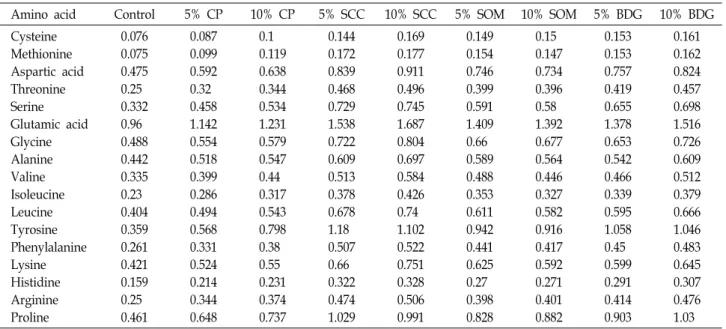
Table 5. Amino acid composition of P. brevitarsis with different feeds

Amino acid Control 5% CP 10% CP 5% SCC 10% SCC 5% SOM 10% SOM 5% BDG 10% BDG

Cysteine Methionine Aspartic acid Threonine Serine Glutamic acid Glycine Alanine Valine Isoleucine Leucine Tyrosine Phenylalanine Lysine Histidine Arginine Proline

0.076 0.075 0.475 0.25 0.332 0.96 0.488 0.442 0.335 0.23 0.404 0.359 0.261 0.421 0.159 0.25 0.461

0.087 0.099 0.592 0.32 0.458 1.142 0.554 0.518 0.399 0.286 0.494 0.568 0.331 0.524 0.214 0.344 0.648

0.1 0.119 0.638 0.344 0.534 1.231 0.579 0.547 0.44 0.317 0.543 0.798 0.38 0.55 0.231 0.374 0.737

0.144 0.172 0.839 0.468 0.729 1.538 0.722 0.609 0.513 0.378 0.678 1.18 0.507 0.66 0.322 0.474 1.029

0.169 0.177 0.911 0.496 0.745 1.687 0.804 0.697 0.584 0.426 0.74 1.102 0.522 0.751 0.328 0.506 0.991

0.149 0.154 0.746 0.399 0.591 1.409 0.66 0.589 0.488 0.353 0.611 0.942 0.441 0.625 0.27 0.398 0.828

0.15 0.147 0.734 0.396 0.58 1.392 0.677 0.564 0.446 0.327 0.582 0.916 0.417 0.592 0.271 0.401 0.882

0.153 0.153 0.757 0.419 0.655 1.378 0.653 0.542 0.466 0.339 0.595 1.058 0.45 0.599 0.291 0.414 0.903

0.161 0.162 0.824 0.457 0.698 1.516 0.726 0.609 0.512 0.379 0.666 1.046 0.483 0.645 0.307 0.476 1.03 small percentages in all the samples analyzed, ranging from

3.93 mg/kg in 10% SOM to 5.62 mg/kg in 5% SCC. The highest levels of Zn, Ca, K, Mg, Na, and P were found in the group of 10% SCC to be 43.74, 1265.63, 5551.66, 770.34, 661.61, and 1854.83 mg/kg, respectively. Of these, Zn is an essential element of nutrition and physiology in animals [20]. The amount of Zn in 10% SCC rose approximately twice as much as that in the control. This high zinc content was expected to be related to stimulating the growth of P. brevi- tarsis larvae.

In the results of amino acid analysis from Table 5, cystein,

methionine, serine, tyrosine, phenylalanine, histidine, argi-

nine, and proline were concentrated in 10% SCC. The rate

of growth and protein synthesis depends on cysteine and

methionine [28]. It is also known that cystine, oxidated dim-

er form of cysteine, paring with methionine can improve

mineral absorption, particularly zinc [5, 11]. Tyrosine and

arginine stimulate the secretion of growth hormones [10, 27],

individually showed 3.1- and 2-fold-changes in 10% SCC

compared to control. These results showed that there was

a correlation between the promotion of larval growth and

high contents of amino acids in the group of 10% SCC.

(5)

Table 6. Heavy metal contents of P. brevitarsis with different diets

Heavy metals Control 5% CP 10% CP 5% SCC 10% SCC 5% SOM 10% SOM 5% BDG 10% BDG

As Cd Hg Pb

0 0 0.02

0

0 0 0.01

0

0 0 0.01

0

0 0 0.01

0

0 0 0.01

0

0 0 0.01

0

0 0 0.01

0

0 0 0.01

0

0 0 0.01

0

Heavy metal contamination in environmental and food samples has harmful effects such as toxicity and accumu- lation and contamination in biological systems [12]. The heavy metal contents were analyzed after 48 hour starvation for each group. Hg content was very low and As, Cd, and Pb were not detected in all investigated samples (Table 6).

These results of analysis indicated that P. brevitarsis larvae fed various by-products were safe. It was also considered that the feed adding by-products could be readily available in farms rearing these beetles.

Generally, by-products that can be produced approx- imately 20% of weight after agricultural and industrial proc- essing contain diverse nutritional factors such as protein, fi- bers, minerals, and vitamins [3]. They could serve as an al- ternative energy source in animal feeds with the reduced cost. As analyzing the effects of feeds adding different by-products including Citrus unshiu peel, soybean curd cake, soybean oil meal, and brewers dried grain, a feed with 10%

soybean curd cake showed the best effect on the larval growth and nutritional values of P. brevitarsis.

Farms rearing insects have been expanded and grown for using them as additives of food as well as animal feeds.

Furthermore, Gryllus bimaculatus and the larvae of Tenebrio molitor, P. brevitarsis, and Allomyrina dichotoma were listed as general food ingredients by Korean Ministry of Food and Drug Safety last year. Accordingly, there were increasing in- terest and mass rearing facilities of those edible insects.

Thus, it is needed to investigate affordable and nutritional food sources for insects and develop mass rearing system for the continued expansion of the insect industry. In this study, four agricultural by-products with high nutrition val- ues were tested. Considering the results above, it could be stated that supplying 10% SCC (10% of soybean curd cake and 90% of basic feed) was contributed to improve the qual- ity of insects and reduce the costs of rearing.

Acknowledgement

This work was supported by a grant from the National

Institute of Agricultural Sciences, Rural Development Admi- nistration, Republic of Korea (Project No.: PJ012024032017).

References

1. Amaha, K., Sasaki Y. and Segawa, T. 1996. Utilization of tofu (soybean curd) by-products as feed for cattle. pp.8, Extention bullein, ASPAC Food & Fertilizer Technology Center, Taipei, Taiwan R.O.C.

2. AOAC. 1990. Official methods of analysis, pp. 69, 70, 79, 15th ed. Association of Official Analytical Chemists, Washington DC, USA.

3. Azevêdo, J. A. G., Valadares Filho, S. C., Pina, D. S., Detmann, E., Pereira, L. G. R., Valadares, R. F. D., Fernandes, H. J., Costa e Silva, L. F. and Benedeti, P. B.

2012. Nutritional diversity of agricultural and agro-industrial by-products for ruminant feeding. Arq. Bras.

Med. Vet. Zootec. 64, 1246-1255.

4. Bocco, A., Cuvelier, M. E., Richard, H. and Berset, C. 1998.

Antioxidant activity and phenolic composition of citrus peel and seed extracts. J. Agri.Food Chem. 46, 2123-2129.

5. Bolanle, A. O., Funmilola, A. S. and Adedayo, A. 2014.

Proximate analysis, mineral contents, amino acid com- position, anti-nutrients and phytochemical screening of brachystegia eurycoma harms and pipper guineense schum and thonn. Am. J. Food Nutr. 2, 11-17.

6. Carias, D. and Millan, N. 1996. Brewery waste as a substitute for soy protein in soy-brewer’s yeast mixtures to feed broiler chickens. Arch. Latinoam. Nut. 46, 67-70.

7. Cho, P. S. 1969. Illustrated encyclopedia of fauna & flora of Korea, pp. 686-687, Vol. 10. Insecta(II). Samhwa, Seoul, Korea.

8. Dilger, R. N., Sanders, J. S., Ragland, D. and Adiola, O. 2004.

Digestibility of nitrogen and amino acids in soybean meal with added soyhulls. J. Anim. Sci. 82, 715-724.

9. Douglas, M. W. and Parsons, C. M. 2000. Effect of pre- solvent extraction processing method on the nutritional value of soybean meal for chicks. Poult. Sci. 79, 1623-1626.

10. Ekman, R., Håkanson, R., Sundler, F. and Thorell, J. 1980.

High content of tyrosine and arginine in peptides and proteins from the growth hormone producing cells of the adenohypophysis. J. Histochem. Cytochem. 28, 401-407.

11. FAO/WHO. 1991. Protein Quality Evaluation, Report of Joint FAO/WHO Expert Consultation, FAO Food and Nutrition Paper 51, pp. 4-66, FAO/WHO, Rome, Italy.

12. Guil, J. L., Martinez, J. J. and Isasa, M. E. 1998. Mineral

(6)

초록:비지박 첨가 먹이원 급여에 따른 흰점박이꽃무지 유충의 생육과 영양성분 변화

송명하․한문희․이석현․김은선․박관호․김원태․최지영*

(농촌진흥청 국립농업과학원 곤충산업과)

세계적으로 곤충시장이 매년 성장하는 가운데 우리나라에서도 곤충산업이 미래 유망 산업으로 주목 받고 있다.

뿐만 아니라, 최근 갈색거저리와 쌍별귀뚜라미, 흰점박이꽃무지 및 장수풍뎅이가 일반식품원료로 등록됨에 따라 식용곤충에 대한 관심이 늘고 곤충의 대량사육이 전국적으로 이루어지고 있다. 이에 안전하고 고영양성분이 포함 된 식용곤충 전용 먹이원 개발 연구가 필요하다. 최근 들어 각종 부존자원의 사료화는 부존자원의 활용, 사료비 절감, 환경보존 등의 효과를 거두고 있는 것으로 나타나고 있다. 따라서 식용곤충으로 많이 사육되고 있는 흰점박 이꽃무지의 생육을 촉진하면서 경제적이고 안정적인 사육을 도모하기 위해 감귤박, 비지박, 대두박, 맥주박 등 4종의 부존자원을 이용하여 효과를 조사하였다. 10% 비지박을 급여한 유충의 무게가 대조구 대비 약 3.5배 증가하 였고, 유충기간 또한 40% 이상 단축되었다. 또한, 10% 비지박 첨가 실험구에서 일반조성분과 미네랄 및 아미노산 의 함량이 전체적으로 높은 것으로 나타났다. 중금속 함량 분석 결과, 납과 카드뮴 및 비소는 모든 실험구에서 검출되지 않았다. 본 연구결과는 흰점박이꽃무지 유충의 생육 촉진 효과를 가지는 비지박이 곤충 먹이원의 소재 로 활용될 수 있음을 보여준다.

nutrient composition of edible wild plants. J. Food Compost.

Anal. 11, 322-328.

13. Kang, I. J., Chung, C. K., Kim, S. J., Nam, S. M. and Oh, S. H. 2001. Effects of Protaetia orientalis (Gory et Perchlon) larva on the lipid metabolism in carbon tetrachloride administered rats. Appl. Microsc. 31, 9-18.

14. Li, B. B., Smith, B. and Hossain, M. M. 2006. Extraction of phenolics from citrus peels I. Solvent extraction method.

Sepa. Puri. Tech. 48, 182-188.

15. Li, S., Zhu, D., Li, K., Yang, Y., Lei, Z. and Zhang, Z. 2013.

Soybean curd residue: composition, utilization, and related limiting factors. Int. Sch. Res. Notices 2013, 1-8.

16. Manthey, J. A. and Grohmann, K. 2001. Phenols in citrus peel byproducts concentrations of hydroxycinnamates and polymethoxylated flavones in citrus peel molasses. J. Agri.

Food Chem. 49, 3268-3273.

17. Ministry of Food and Drug Safety. 2010. Guideline for safety evaluation of new food materials.

18. Ministry of Food and Drug Safety. 2016. Food Sanitation Act, revised notice (2016-18).

19. Muroyama, K., Atsumi, R. and Andoh, A. 2006. Effect of pretreatment on lactic acid fermentation of bean curd refuse with simultaneous saccharification. Stud. Surf. Sci. Catal. 159, 133-136.

20. OhioEPA. 2002. Pollution Prevention Opportunities for PBT Chemicals: Zinc and Zinc Compounds. Office of Pollution Prevention 98. http://www.epa.ohio.gov (accessed on 27 January 2010).

21. Opapeju, F. O., Golian, A., Nyachoti, C. M. and Campbell, L. D. 2006. Amino acid digestibility in dry extruded-expelled soybean meal fed to pigs and poultry. J. Anim. Sci. 84, 1130-

1137.

22. Park, H. Y., Park, S. S., Oh, H. W. and Kim, J. I. 1994.

General characteristics of the white-spotted flower chafer, Protaetia brevitarsis reared in the laboratory. Kor. J. Entomol.

24, 1-5.

23. Rijal, T. B., Nepali, D. B., Sah, R. A. and Sharma, M. P. 2009.

Economic use of Brewer’s Dried Grain (BDG) in the diet of swine. Nepal J. Sci. Tech. 10, 29-35.

24. Robertson, J. A. I., Anson, K. J. A., Treimo, J., Faulds, C.

B., Brocklehurst, T. F., Eijsink, V. G. H. and Waldron, K.

W. 2010. Profiling brewers’ spent grain for composition and microbial ecology at the site of production. LWT Food Sci.

Technol. 43, 890-896.

25. Song, M. H. 2005. Nutritional components and nutritive value of corn-DDGS about milk cow, beef cattle, pig, and fowl. Kofeed 15, 44-51.

26. Song, M. H., Han, M. H., Lee, S. H., Kim, E. S., Park, K.

H., Kim, W. T. and Choi, J. Y. 2017. A field survey on edible insect farms in Korea. J. Life Sci. 27, 702-707.

27. Souza, S. C., Frick, G. P., Wang, X., Kopchick, J. J., Lobo, R. B. and Goodman, H. M. 1995. A single arginine residue determines species specificity of the human growth hormone receptor. Proc. Natl. Acad. Sci. USA 92, 959-963.

28. Tanaka, H., Nakatomi, Y., Mori, M. and Ogura, M. 1990.

Metabolism of methionine and cysteinin growing rats at various dietary protein levels. Agri. Biol. Chem. 54, 2093- 2099.

29. Yoo, Y. C., Shin, B. H., Hong, J. H., Lee, J. L., Chee, H.

Y., Song, K. S. and Lee, K. B. 2007. Isolation of fatty acids with anticancer activity from Protaetia brevitarsis larva.

Arch. Pharm. Res. 30, 361-365.

수치

Table  1.  Composition  of  nine  different  feeds  with  four  additives
Table  2.  Larval  period  and  pupation  rate  with  different  contents  of  by-products  as  a  feed  supplement
Table  5.  Amino  acid  composition  of  P.  brevitarsis  with  different  feeds
Table  6.  Heavy  metal  contents  of  P.  brevitarsis  with  different  diets

참조

관련 문서