ISSN 2288-1069 (Online)
http://dx.doi.org/10.12925/jkocs.2020.37.5.1248
Evaluation of Physical Properties of Polyurethane Resin for Wound Covering according to PTMG, DMBA Application
Lee Joo-Youb
✝Department of Fire and Disaster Prevention Engineering, Jungwon University Chungbuk, Korea
(Received October 10, 2020; Revised October 13, 2020; Accepted October 22, 2020)
PTMG, DMBA 적용에 따른 창상피복 폴리우레탄 수지의 물리적 특성 평가
이주엽✝
중원대학교 융합과학기술대학 소방방재공학전공, 교수
(2020년 10월 10일 접수: 2020년 10월 13일 수정: 2020년 10월 22일 채택)
Abstract : In this study, the polyurethane resin was synthesized by applying PTMG and DMBA of different composition ratios for the synthesis of water-dispersible polyurethane used in wound coating resin. The varying properties of the synthesized water-dispersible polyurethane were measured through tensile strength, elongation, and abrasion resistance analysis. As for the tensile strength measurement result according to the PTMG content, the sample with the highest reaction molar ratio was measured as 1.08 kgf/mm2 and the elongation was measured as 520%. As for the tensile strength result according to the DMBA content, the sample with the highest reaction molar ratio was measured as 0.51 kgf/mm2, and the elongation was measured as 435%. The degree of surface destruction by the abrasion resistance measurement was visually confirmed through SEM.
Keywords : Wound coating, polyurethane, water dispersion, PTMG, DMBA
1. Introduction
Skin is one of the organs that protects the human body from external stimuli, prevents moisture loss, regulates body temperature, and performs important life protection functions such as preventing bacterial invasion. When
✝
Corresponding author
(E-mail: [email protected])
skin defects occur due to burns or various traumas, the protective action is lost, resulting in functional impairment, resulting in various side effects such as moisture loss and bacterial infection from the outside, making the treatment of the affected area difficult[1-6]. It causes secondary dysfunction and, in severe cases, also affects life extension. Therefore, in order to quickly heal the wound and minimize various side effects, wound treatment using an appropriate dressing is essential.
The main factors involved in wound healing can be briefly described, such as wet environment, infection, foreign body and necrotic tissue, temperature, oxygen concentration, and PH. And the ideal dressing material requirements are the ability to maintain adequate moisture on the surface in contact with the wound, the ability to absorb exudates, the ease of attachment and removal from the wound, the ability to transmit gas and water vapor to the outside, insulation from the outside, defense against the invasion of bacteria, non-toxicity to the human body, excellent mechanical properties, economic efficiency, etc. are mentioned[7-10].
Conventional gauze-type dressing materials are easy to absorb wound secretions, but do not have a protective function against bacterial infection, and delay treatment by keeping the wound dry. There is a disadvantage of having to change the dressing several times a day because there is a lot of exudate in the initial stage of healing.
Currently, various occlusive dressing materials that improve the problems of gauze-type dressing materials have been developed and used, but due to the high price and lack of controllability of hygroscopicity and moisture permeability, they are not applied to extensive wounds but are only usining specific uses. The types of dressing materials currently mainly used include a film type, a hydrocolloid type, a hydrogel type, a nonwoven fabric type using sodium alginate, and a polyurethane foam type.
In particular, polyurethane foam type is used as a material with versatility and possibility of wide wound application due to easy control of hygroscopicity and simplicity in manufacturing.
However, most polyurethane foam dressing material is harmful to the human body by using a catalyst for promoting urethane reaction, has weak mechanical properties, and has the disadvantage of causing collapse of the foam upon absorption of exudate.
In addition, since it has large pores due to
the open cell structure on the surface, there is a disadvantage in that bacteria invasion from the outside and regeneration cells from the wound surface adhere to the inside of the open cell of the polyurethane foam, causing pain to the patient when changing the dressing. In order to compensate for these shortcomings, studies are being conducted to directly apply a water-dispersible polyurethane resin to the affected area.
In this study, polyol and carboxylic acid were used for diisocyanate (IPDI) in the preparation of polyurethane prepolymers for the synthesis of water-dispersible polyurethane wound coatings. As the polyether polyols, polytetramethylene glycol (PTMG) having two or more hydroxyl groups in the molecule and having a molecular weight of 2000 is used[11].
In addition, in order to impart ionicity to the prepolymer, dimethylolbutanoic acid (DMBA) was applied to impart ionicity to the prepolymer, and the polyurethane resin for water-dispersible wound coating was synthesized through emulsification[12-15]. As for the water-dispersed polyurethane resin, samples were prepared by varying the number of moles of reaction of PTMG, IPDI, and DMBA, and the change in physical properties according to the composition change was analyzed.
2. Experiment
2.1. Reagent/analysis equipment and synthesis method
Polyether polyols used for polyurethane synthesis for this study were polytetramethylene glycol (PTMG, molecular weight 2000, Junsei chem.Co.) and isophorone diisocyanate (IPDI, Bayer), which is an aliphatic diisocyanate.
Dimethylolbutanoic acid (DMBA, GEO) was used to introduce a hydrophilic group using a carboxy group, and acetone (BASF) was used to suppress an increase in viscosity that occurs when imparting ionicity to the prepolymer. As
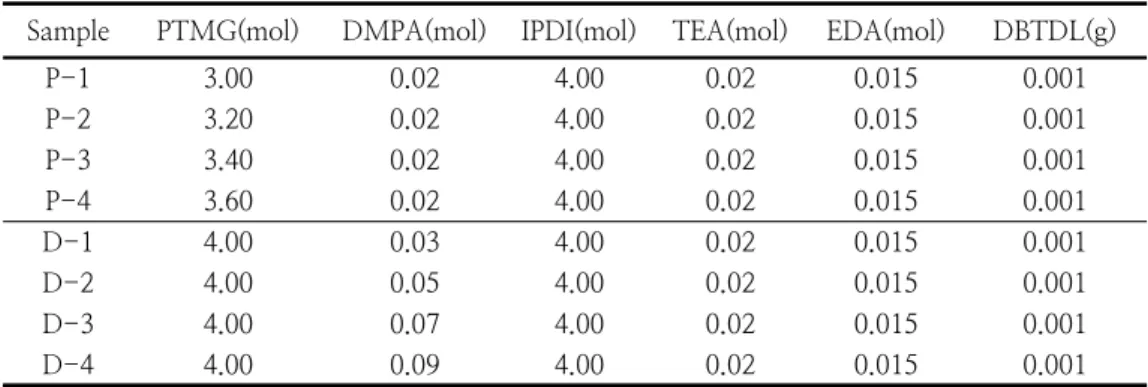
Sample PTMG(mol) DMPA(mol) IPDI(mol) TEA(mol) EDA(mol) DBTDL(g)
P-1 3.00 0.02 4.00 0.02 0.015 0.001
P-2 3.20 0.02 4.00 0.02 0.015 0.001
P-3 3.40 0.02 4.00 0.02 0.015 0.001
P-4 3.60 0.02 4.00 0.02 0.015 0.001
D-1 4.00 0.03 4.00 0.02 0.015 0.001
D-2 4.00 0.05 4.00 0.02 0.015 0.001
D-3 4.00 0.07 4.00 0.02 0.015 0.001
D-4 4.00 0.09 4.00 0.02 0.015 0.001
Table 1. Polyurethane resin composition table with different synthesis ratios of PTMG, DMBA, and IPDI
a catalyst, dibutyltin diraulate (DBTDL, Aldrich) was used. Triethylamine (TEA, Fluka) was applied to neutralize the ionic prepolymer.
Ethylenediamine (EDA, Fluka) was used for chain extension, and UTM (Universal testing machine, Instron Co., USA) was used to measure tensile strength and elongation properties to check the physical properties change of the synthesized water-dispersed urethane. Taber abrasion tester (TO 880T, Test One, Inc.) was used to measure the wear resistance, and SEM (Scaning electron microscope, Saron Tech, Korea) was used to visually check the condition of the destroyed surface.
For the synthesis of water-dispersible polyurethane, the basic composition was synthesized at 90℃. of an NCO-terminated prepolymer made of polyol and diisocyanate, and then DMBA was added to impart ionicity to the resin and reacted for 1 hour. After cooling to 40℃ or less, the neutralization reaction was completed using TEA, and the prepared distilled water was slowly added dropwise to disperse the resin through high-speed stirring. In order to increase the cohesiveness of the resin, EDA was mixed with distilled water, slowly added, and then stirred for about an hour to complete a water-dispersible polyurethane for wound covering resin(Fig. 1). However, two kinds of water-dispersible polyurethane resins were
synthesized by varying the number of moles of PTMG and DMBA in the basic experimental method described above, and the related synthetic composition is indicated in Table 1.
In addition, the film sample used in the tensile test and elongation test was weighed 20g on a 120mm glass shale and then naturally dried for 12 hours and then heat-dried at 120℃ for 1 hour to prepare a 50mm horizontal and 100mm long coating film. Samples for the abrasion resistance test were prepared in a state coated with a spray to a thickness of 0.1 mm on the surface of leather (vegitable, KDIC Corporation).
3. Results and Discussion
3.1. Analysis of mechanical properties (tensile strength, elongation, adhesive strength)
To measure the tensile strength, the prepared sample was measured for tensile by setting a tensile speed of 100 ± 20 mm/min by UTM.
To measure the elongation rate of the film, the test machine proceeded in the same method as the tensile strength when it was cut compared to the initial length of the specimen.
The change in the final length was divided by the initial length and calculated as a percentage.
Fig. 2 shows the results of measuring the
IPDI
HOCH2 - C - C2OH CH2CH3
COOH DMBA
HO OH
PTMG
TEA
Dispersion (H2O, 40℃)
Chain extension(EDA, 40℃)
Polyurethane dispersion + +
N C O
N C O
Neutralization
Fig. 1. Synthesis process of water-dispersible polyurethane.
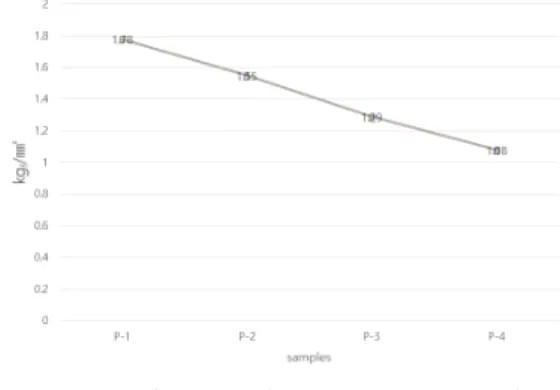
tensile strength of water-dispersed polyurethane samples with different synthesis ratios of PTMG.
Fig. 2. Tensile strength measurement result of polyurethane resin with different PTMG composition ratio.
In the presented measurement results, in the case of sample P-1 prepared with a synthesis ratio of 3.00 mol of PTMG, the tensile strength was measured as 1.78 kgf/㎟, and In the case of sample P-4 prepared with a synthesis ratio of 3.60 mol, the tensile strength
was measured to be 1.08 kgf/㎟.
As a result of this, it was confirmed that the tensile strength decreased as the synthesis ratio of the polyol increased. This is the final step of the water-dispersed polyurethane, which is the soft segment cohesion by chain extension, which increases the chain extension as the isocyanate bond ratio to the polyol increases. It can be inferred that the reaction of the NCO group at the end of the chain involved in the reaction is small and affects the tensile strength of the film.
It can be inferred that the soft segment cohesion by chain extension, the final step of the water-dispersible polyurethane, affects the tensile strength of the film as the reaction of the NCO group of the chain end group involved in the chain extension becomes less as the isocyanate binding ratio to the polyol increases.
Fig. 3 shows the results of measuring the tensile strength of samples with different DMBA synthesis ratios. In the presented measurement results, in the case of sample D-1 prepared with a synthesis ratio of 0.03
mol of DMBA, the tensile strength was measured as 0.97 kgf/㎟, and in the case of sample D-4 prepared with a synthesis ratio of 0.09 mol, the tensile strength was 0.51 kgf/㎟
As the synthesis ratio of DMBA increases, the tensile strength decreases. This is due to the result that the molecular weight decreases as the content of DMBA increases, so that the particle size between average particles decreases, and the average particle size increases as the chain extension reaction between adjacent particles progresses.
Fig. 3. Tensile strength measurement result of polyurethane resin with different DMBA composition ratio.
Fig. 4 shows the results of measuring the elongation of the samples with different synthesis ratios of PTMG. In the presented measurement results, the elongation value of Sample P-1 prepared with a synthesis ratio of 3.00 mol of PTMG was measured to be 422%, and in the case of Sample P-4 prepared with a synthesis ratio of 3.60 mol, the elongation value was measured as 520%.
These results confirmed that the elongation increased as the synthesis ratio of the polyol increased. It can be confirmed that the soft segment cohesiveness due to chain extension of the water-dispersed polyurethane decreased the ratio of isocyanate bonding to the polyol, so that the reaction of the NCO group of the chain end groups involved in the chain extension was reduced, and the elongation increased by softening the film.
Fig. 4. Elongation measurement result of polyurethane resin with different PTMG composition ratio.
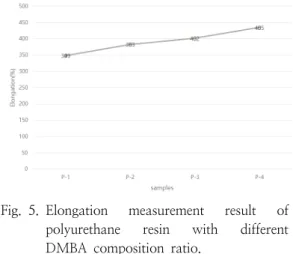
Fig. 5 shows the result of measuring the elongation of the samples with different synthesis ratios of DMBA.
Fig. 5. Elongation measurement result of polyurethane resin with different DMBA composition ratio.
In the presented measurement results, the elongation value of Sample D-1 prepared with a synthesis ratio of 0.03 mol of DMBA was measured to be 349%, and in the case of Sample D-4 prepared with a synthesis ratio of 0.09 mol, the elongation value was measured as 435%. In this way, it was confirmed that the elongation increased as the synthesis ratio of DMBA increased. This is because the molecular weight decreases as the DMBA content increases, and the chain extension reaction between adjacent particles proceeds as
P-1 P-2
P-3 P-4
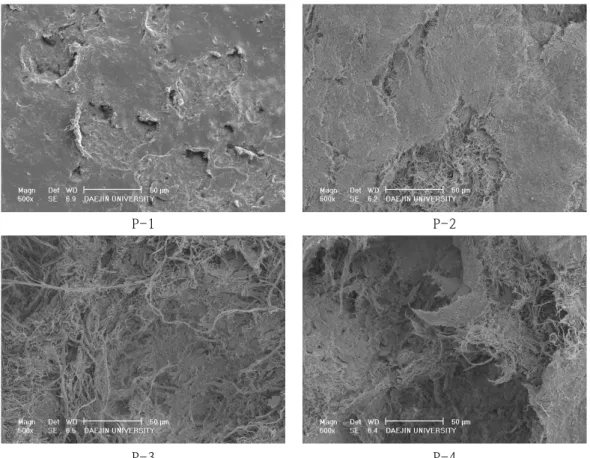
Fig. 6. Abration resistance measurement result of polyurethane resin with different PTMG composition ratio by SEM.
the particle size between the average particles decreases. The particle size is due to the fact that it becomes larger.
Fig. 5 shows the results of abrasion resistance measurement to measure the surface strength of a water-dispersed polyurethane sample with different synthesis ratios of PTMG.
According to ASTM 1175 test method, after measuring the weight of the test piece using a taber abrasion tester (TO 880T, Test One, Inc.), make 1,000 rotations with the wheel number CS-10, and then visually check the fracture state of the worn surface. To do this, SEM (Scaning electron microscope, Saron tech, Korea) was used. s can be seen with the naked eye, it can be seen that the P-4 sample, which has a high synthesis ratio of PTMG,
has the highest degree of surface destruction.
This is similar to the tensile strength, the more OH groups of PTMG involved in the synthesis of the prepolymer, the greater the interaction with amines for chain extension. It is interpreted as a result of low cohesion because there are relatively few reactors that will act on the bonding.
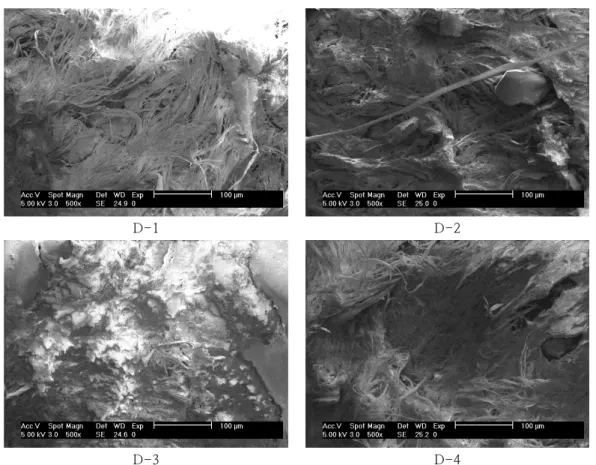
In Fig. 7, the abrasion resistance measurement result of the water-dispersed polyurethane according to the DMBA synthesis ratio was visually confirmed using SEM in the same manner as in Fig. 5. As a result of checking the photographed surface, the higher the proportion of OH groups of DMBA involved in the synthesis, the less reactive groups that will act on binding to amines for chain extension are distributed, which is inferred as
D-1 D-2
D-3 D-4
Fig. 7. Abration resistance measurement result of polyurethane resin with different DMBA composition ratio by SEM.
a result of lower chain cohesion.
4. Conclusion
For this study. Basically, polyurethane resin was synthesized by poly tetramethylene ether glycol (PTMG), isophrone diisocynate (IPDI), dimethylol butanoicc acid (DMBA) were reacted as starting synthetic materials, neutralized with TEA, dispersed in water, and dispersed through chain extension reaction.
Two kinds of urethane resins for wound coating were prepared by reacting PTMG and DMBA in different proportions to the above basic composition.
The prepared resin was prepared as a film
to determine the tensile strength and elongation, and the abrasion resistance was measured by spray coating on the leather surface, and the following results were obtained.
As a result of the tensile strength test, the polyurethane film containing a small amount of PTMG (3.00 mol) was measured as 1.78 kgf/㎟, and the tensile strength of the urethane film containing a large amount of PTMG (3.60 mol) was measured as 1.08 kgf/㎟. As the ratio of the NCO groups of the isocyanate reacting to the OH group of the polyol increased, the number of reactors involved in chain extension decreased, tensile strength decreases due to lower cohesion. In addition, as a result of measuring the elongation, as the
amount of PTMG increased, the elongation increased from 422% to 522%, which was resulting in the opposite result of the tensile strength.
Next, as for the change in tensile strength according to the content of DMBA, in the case of Sample D-1 prepared with a synthesis ratio of DMBA of 0.03 mol, the tensile strength was measured as 0.97 kgf/㎟, and Sample D-4 prepared with a synthesis ratio of 0.09 mol. In the case of, the tensile strength was measured to be 0.51 kgf/㎟. This is because the molecular weight decreases as the synthesis ratio of DMBA, which is a carboxylic acid used as an emulsifier of water-dispersible polyurethane, increases, and the particle size between the average particles decreases. As the concentration of is increased, the final particle size increases, and it is interpreted that the cohesiveness due to the chain extension reaction decreases. Therefore, in the case of the same elongation, it was found that the elongation was increased from 394% to 495%. As for the surface strength of the resin according to the content ratio of PTMG and DMBA, as the amount of PTMG and DMBA increased, the cohesiveness due to chain extension decreased, and the result was confirmed that the surface strength decreased.
As a result of the above, if physical changes and structural analysis of each composition are made in the future, it is considered that it can be used as a synthesis of resins corresponding to environmental influences by applying the physical properties of the wound coating.
References
1. Z. Ma, H. Ji, D. Tan, “Silver nanoparticles decorated, flexible SiO2 nanofibers with long-term antibacterial effect as reusable wound cover”,
Colloids and Surfaces A:
Physicochemical and Engineering Aspects
, Vol.378 Issues 1-3, pp. 57-64, (2011).2. I. Díez-García, M. R. C. Lemma, H.S.
Barud, A. Eceiza, “Hydrogels based on waterborne poly(urethane-urea)s by physicallycross-linking with sodium alginate and calcium chloride“,
Carbohydrate Polymers
, Vol.250, Article 116940, (2020).3. C. Viezzera, R. Mazzucad, D. C.
Machadod, M. M. C. Fortea, J. L. G.
Ribelles, “A new waterborne chitosan- based polyurethane hydrogel as a vehicle to transplant bone marrow mesenchymal cells improved wound healing of ulcers in a diabetic rat model”,
Carbohydrate Polymers
, Vol.231, Article 115734, (2019).4. M. F. Jonkman, P. Bruin, A. J. Pennings, H. J. Klasen, “Poly(ether urethane) wound covering with high water vapour permeability compared with conventional tulle gras on split-skin donor sites”,
Burns
, Vol.15, Issue. 4, pp.211-216, (1989).5. A. Eskandarinia, A. Kefayat, M.
Gharakhloo, H. Salehi, “A propolis enriched polyurethane-hyaluronic acid nanofibrous wound dressing with remarkable antibacterial and wound healing activities”,
International Journal of Biological Macromolecules
, Vol.149, pp.467-476, (2020).6. H. Lu, P. Sun, Z. Zheng, F. C. Chang,
“Reduction-sensitive rapid degradable poly(urethane-urea)s based on cystine”,
Polymer Degradation and Stability
, Vol.97, Issue.4, pp.661-669, (2012).7. R. D. Elegbede, M. O. Ilomuanya, A. A.
Sowemimo, M. Vente, “Effect of fermented and green Aspalathus linearis extract loaded hydrogel on surgical wound healing in Sprague Dawley rats”,
Wound Medicine
, Vol.29, Article.100186, (2020).8. N. Namviriyachote, P. Muangman, K.
C h i n a r o o n c h a i , G . C . R i t t h i d e j ,
“Polyurethane-biomacromolecule combined foam dressing containing asiaticoside:
fabrication, characterization and clinical efficacy for traumatic dermal wound treatment”,
International Journal of
Biological Macromolecules
, Vol.143, pp.510-520, (2019).9. S. A. A. Najafabadi, A. Mohammadi, A.
Z. Kharazi, “Polyurethane nanocomposite impregnated with chitosan-modified graphene oxide as a potential antibacterial wound dressing”,
Materials Science and Engineering: C
, Vol.115, Article.110899, (2020).10. D. Khodabakhshi, A. Eskandarinia, A.
Kefayat, J. Moshtaghian, “In vitro and in vivo performance of a propolis-coated polyurethane wound dressing with high porosity and antibacterial efficacy”,
Colloids and Surfaces B: Biointerfaces
, Vol.178 pp.177-184, (2019).11. U. Dorn, S. Enders, “Heat of mixing and liquideliquid-equilibrium of water + polypropylene glycol (PPG) with different molecular weights and water + propylene glycol dimethyl ether“,
Fluid Phase Equilibria
, Vol..424, pp.58-67, (2016).12. S. k. Gaddam, A. Palanisamy, “Anionic waterborne polyurethane-imide dispersions from cottonseed oil based ionic polyol”,
Industrial Crops and Products
, Vol 96, pp 132-139, (2017).13. M. Tielemans, P. Roose, C. Ngo, R.
Lazzaroni, P. Leclère, “Multiphase coatings from complex radiation curable polyurethane dispersions”,
Progress in Organic Coatings,
Vol.75, pp.560-568, (2012).14. V. García-Pacios, J. A. Jofre-Reche, V.
Costa, M. Colera, J. M. Martín-Martínez, Coatings prepared from waterborne polyurethane dispersions obtained with polycarbonates of 1,6-hexanediol of different molecular weights,
Progress in Organic Coatings
, Vol.76, pp. 484-1493, (2013).15. Y. Li, B. A. J. Noordover, R. A. T. M.
van Benthem, C. E. Koning, “Property profile of poly(urethane urea) dispersions containing dimer fatty acid-, sugar- and amino acid-based building blocks”,