• 검색 결과가 없습니다.

Role of the Neutrophil-to-Lymphocyte Ratio at the Time of Arrival at the Emergency Room as a Predictor of Rhabdomyolysis in Severe Trauma Patients

N/A
N/A
Protected

Academic year: 2021

Share "Role of the Neutrophil-to-Lymphocyte Ratio at the Time of Arrival at the Emergency Room as a Predictor of Rhabdomyolysis in Severe Trauma Patients"

Copied!
8
0
0

로드 중.... (전체 텍스트 보기)

전체 글

(1)

Received: March 31, 2020 Revised: May 25, 2020 Accepted: June 2, 2020 Trauma and InJury

Correspondence to

Kyung Hoon Sun, M.D., Ph.D.

Department of Emergency Medicine, Chosun University Hospital, 365 Philmun-daero, Dong-gu, Gwangju 61453, Korea

Tel: +82-62-220-3285 Fax: +82-62-224-3501 E-mail: [email protected]

role of the neutrophil-to-lymphocyte ratio at the Time of arrival at the

Emergency room as a Predictor of rhabdomyolysis in Severe Trauma Patients

Jin Chul Bae, M.D., Kyung Hoon Sun, M.D., Ph.D., Yong Jin Park, M.D., Ph.D.

Department of Emergency Medicine, College of Medicine, Chosun University, Gwangju, Korea

Purpose: In patients with trauma, rhabdomyolysis (RM) can lead to fatal complications resulting from muscle damage. Thus, RM must be immediately diagnosed and treated to prevent complications. Creatine kinase (CK) is the most sensitive marker for diag- nosing RM. However, relying on CK tests may result in delayed treatment, as it takes approximately 1 hour to obtain CK blood test results. Hence, this study investigated whether the neutrophil-to-lymphocyte ratio (NLR) could predict RM at an earlier time point in patients with trauma, since NLR results can be obtained within 10 minutes.

methods: This retrospective study included 130 patients with severe trauma who were admitted to the emergency room of a tertiary institution between January 2017 and April 2020. RM was defined as a CK level ≥1,000 U/L at the time of arrival. Patients with severe trauma were categorized into non-RM and RM groups, and their charac- teristics and blood test results were analyzed. Statistical analysis was performed using SPSS version 26.0 for Windows.

results: Of the 130 patients with severe trauma, 50 presented with RM. In the multi- variate analysis, the NLR (odds ratio [OR], 1.252; 95% confidence interval [CI], 1.130–

1.386), pH level (OR, 0.006; 95% CI, 0.000–0.198), presence of acute kidney injury (OR, 3.009; 95% CI, 1.140–7.941), and extremity Abbreviated Injury Scale score (OR, 1.819;

95% CI, 1.111–2.980) significantly differed between the non-RM and RM groups. A re- ceiver operating characteristic analysis revealed that a cut-off NLR value of 3.64 was the best for predicting RM.

Conclusions: In patients with trauma, the NLR at the time of arrival at the hospital is a useful biochemical marker for predicting RM.

Keywords: Rhabdomyolysis; Multiple trauma; Neutrophils; Lymphocytes; Acute

kidney injury

(2)

role of the neutrophil-to-lymphocyte ratio at the Time of arrival at the

Emergency room as a Predictor of rhabdomyolysis in Severe Trauma Patients

Jin Chul Bae, M.D., Kyung Hoon Sun, M.D., Ph.D., Yong Jin Park, M.D., Ph.D.

Department of Emergency Medicine, College of Medicine, Chosun University, Gwangju, Korea

Purpose: In patients with trauma, rhabdomyolysis (RM) can lead to fatal complications resulting from muscle damage. Thus, RM must be immediately diagnosed and treated to prevent complications. Creatine kinase (CK) is the most sensitive marker for diag- nosing RM. However, relying on CK tests may result in delayed treatment, as it takes approximately 1 hour to obtain CK blood test results. Hence, this study investigated whether the neutrophil-to-lymphocyte ratio (NLR) could predict RM at an earlier time point in patients with trauma, since NLR results can be obtained within 10 minutes.

methods: This retrospective study included 130 patients with severe trauma who were admitted to the emergency room of a tertiary institution between January 2017 and April 2020. RM was defined as a CK level ≥1,000 U/L at the time of arrival. Patients with severe trauma were categorized into non-RM and RM groups, and their charac- teristics and blood test results were analyzed. Statistical analysis was performed using SPSS version 26.0 for Windows.

results: Of the 130 patients with severe trauma, 50 presented with RM. In the multi- variate analysis, the NLR (odds ratio [OR], 1.252; 95% confidence interval [CI], 1.130–

1.386), pH level (OR, 0.006; 95% CI, 0.000–0.198), presence of acute kidney injury (OR, 3.009; 95% CI, 1.140–7.941), and extremity Abbreviated Injury Scale score (OR, 1.819;

95% CI, 1.111–2.980) significantly differed between the non-RM and RM groups. A re- ceiver operating characteristic analysis revealed that a cut-off NLR value of 3.64 was the best for predicting RM.

Conclusions: In patients with trauma, the NLR at the time of arrival at the hospital is a useful biochemical marker for predicting RM.

Keywords: Rhabdomyolysis; Multiple trauma; Neutrophils; Lymphocytes; Acute kidney injury

INTRODUCTION

Rhabdomyolysis (RM) is caused by the breakdown of skeletal muscle and subsequent leakage of its contents into the blood circulation [1]. Common causes of this condi- tion are trauma, overexertion, and drug use, and it can lead to acute kidney injury (AKI), hyperkalemia, cardiac arrhythmia, compartment syndrome, and disseminated intravascular coagulation [1,2]. The clinical features of RM include muscle pain, swelling, weakness, tea-colored urine, nausea, and malaise [1]. Creatine kinase (CK) is the most sensitive biomarker of muscle injury, and a baseline CK value ≥1,000 U/L, which is five times the normal up- per limit of CK in the blood, is used to diagnose RM [3].

The treatment of RM aims to minimize muscle damage, prevent AKI, and immediately correct life-threatening complications. In particular, proper renal perfusion must be maintained with early and aggressive fluid resuscitation to prevent AKI [3]. A peak CK value ≥5,000 U/L (severe RM) indicates severe muscle injury and an elevated risk of developing AKI. However, since CK can reach its peak level within 1–3 days, relying on peak CK levels can result in delays in providing proper treatment [4]. A previous study showed that when the initial CK value was below 900 U/L, the peak CK value did not exceed 5,000 U/L [5].

Therefore, the initial CK value is effective for predicting the peak CK value. It takes approximately 1 hour to ob- tain CK values from a blood test. Hence, if RM can be predicted before obtaining the CK test result, appropriate treatment can be provided immediately.

The neutrophil-to-lymphocyte ratio (NLR) can be ob-

tained within 10 minutes via a complete blood count ex- amination, and it is used as an indicator of the inflamma- tory response [6]. The NLR has been used as a predictor of poor prognosis in various conditions, such as infection, infarction, and tumors [7,8]. According to Sugama et al.

[9], muscle damage leads to neutrophil recruitment and decreased lymphocyte levels during the acute phase. Based on the abovementioned findings, this study aimed to determine whether the NLR could be utilized as an early predictor of RM in patients with acute trauma.

METHODS

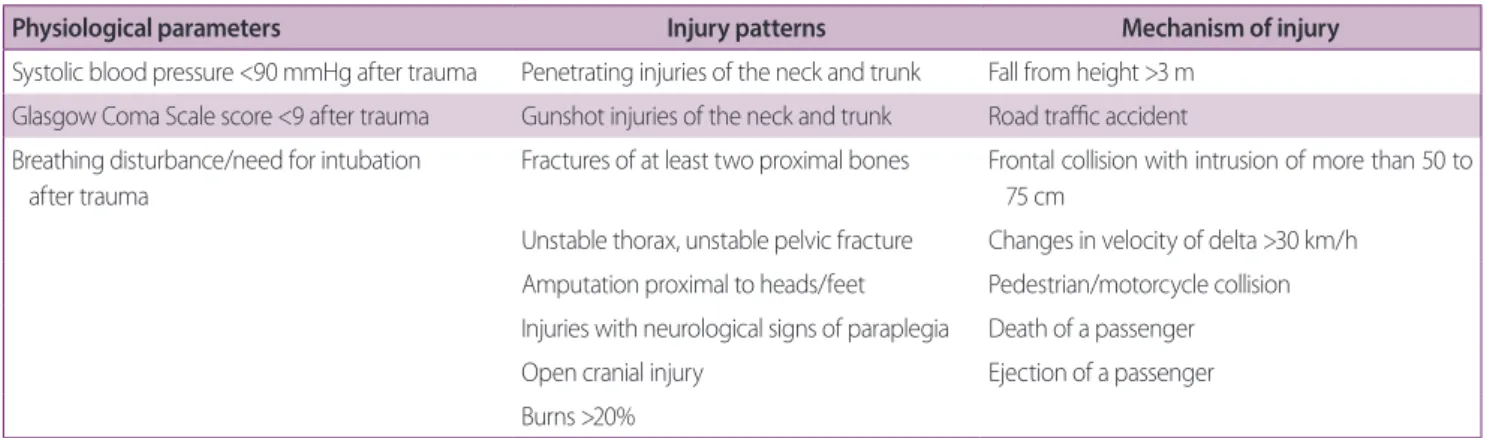
In this retrospective study, the data of patients with trauma who were admitted to the emergency room of a tertiary institution in South Korea between January 2017 and April 2020 were collected. This study was approved by the Institutional Review Board of Chosun University Hospital (IRB No. CHOSUN 2020-03-004). All data were extracted from the electronic medical records of Chosun University Hospital. This study was conducted on injured patients aged ≥18 years who met Chosun University Hospital's criteria for severe trauma team activation, as shown in Table 1, and the severe trauma team was ac- tivated when one or more of the criteria were met [10].

The exclusion criteria were patients aged <18 years, those for whom excessive time had passed after the accident because of transfer from another hospital, those who died within 24 hours of presenting to the hospital, those with known chronic kidney disease, and those with incomplete

Table 1. Criteria for severe trauma team activation

Physiological parameters Injury patterns Mechanism of injury

Systolic blood pressure <90 mmHg after trauma Penetrating injuries of the neck and trunk Fall from height >3 m Glasgow Coma Scale score <9 after trauma Gunshot injuries of the neck and trunk Road traffic accident Breathing disturbance/need for intubation

after trauma

Fractures of at least two proximal bones Frontal collision with intrusion of more than 50 to 75 cm

Unstable thorax, unstable pelvic fracture Changes in velocity of delta >30 km/h Amputation proximal to heads/feet Pedestrian/motorcycle collision Injuries with neurological signs of paraplegia Death of a passenger

Open cranial injury Ejection of a passenger

Burns >20%

(3)

medical records, including blood test results. A total of 228 patients who met the criteria for severe trauma team activation were admitted to Chosun University Hospital emergency room during the study period. Finally, 130 pa- tients were enrolled and 98 were excluded. According to the blood test results performed immediately upon arrival at the hospital, patients with CK levels ≥1,000 U/L were diagnosed with RM. Data were analyzed for a wide range

of parameters, including age, sex, Glasgow Coma Scale (GCS) score, blood pressure, heart rate, Acute Physiology and Chronic Health Evaluation II (APACHE II) score, Injury Severity Score (ISS), Abbreviated Injury Scale (AIS) score, trauma mechanism, the presence of acute kidney injury (AKI), continuous renal replacement therapy (CRRT), emergency surgery, mortality, and laboratory values (complete blood count, electrolyte, lactate, blood

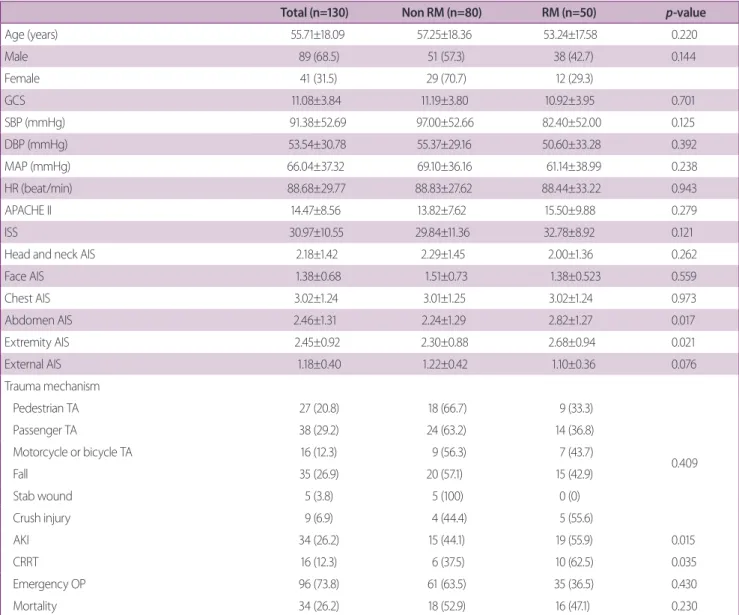
Table 2. Patients’ characteristics according to RM

Total (n=130) Non RM (n=80) RM (n=50) p-value

Age (years) 55.71±18.09 57.25±18.36 53.24±17.58 0.220

Male 89 (68.5) 51 (57.3) 38 (42.7) 0.144

Female 41 (31.5) 29 (70.7) 12 (29.3)

GCS 11.08±3.84 11.19±3.80 10.92±3.95 0.701

SBP (mmHg) 91.38±52.69 97.00±52.66 82.40±52.00 0.125

DBP (mmHg) 53.54±30.78 55.37±29.16 50.60±33.28 0.392

MAP (mmHg) 66.04±37.32 69.10±36.16 61.14±38.99 0.238

HR (beat/min) 88.68±29.77 88.83±27.62 88.44±33.22 0.943

APACHE II 14.47±8.56 13.82±7.62 15.50±9.88 0.279

ISS 30.97±10.55 29.84±11.36 32.78±8.92 0.121

Head and neck AIS 2.18±1.42 2.29±1.45 2.00±1.36 0.262

Face AIS 1.38±0.68 1.51±0.73 1.38±0.523 0.559

Chest AIS 3.02±1.24 3.01±1.25 3.02±1.24 0.973

Abdomen AIS 2.46±1.31 2.24±1.29 2.82±1.27 0.017

Extremity AIS 2.45±0.92 2.30±0.88 2.68±0.94 0.021

External AIS 1.18±0.40 1.22±0.42 1.10±0.36 0.076

Trauma mechanism

Pedestrian TA 27 (20.8) 18 (66.7) 9 (33.3)

0.409

Passenger TA 38 (29.2) 24 (63.2) 14 (36.8)

Motorcycle or bicycle TA 16 (12.3) 9 (56.3) 7 (43.7)

Fall 35 (26.9) 20 (57.1) 15 (42.9)

Stab wound 5 (3.8) 5 (100) 0 (0)

Crush injury 9 (6.9) 4 (44.4) 5 (55.6)

AKI 34 (26.2) 15 (44.1) 19 (55.9) 0.015

CRRT 16 (12.3) 6 (37.5) 10 (62.5) 0.035

Emergency OP 96 (73.8) 61 (63.5) 35 (36.5) 0.430

Mortality 34 (26.2) 18 (52.9) 16 (47.1) 0.230

Values are presented as mean±standard deviation or number (%)

RM: rhabdomyolysis, GCS: Glasgow Coma Scale, SBP: systolic blood pressure, DBP: diastolic blood pressure, MAP: mean arterial pressure, HR: heart rate,

ISS: Injury Severity Score, APACHE II: Acute Physiology and Chronic Health Evaluation II, AIS: Abbreviated Injury Scale, TA: traffic accident, AKI: acute kidney

injury, CRRT: continuous renal replacement therapy, OP: operation.

(4)

urea nitrogen, and creatinine levels, arterial blood gas analysis findings, and NLR) (Tables 2, 3). Emergency sur- gery was performed according to the surgeon’s discretion.

AKI was defined as an increase in serum creatinine level of >0.3 mg/dL within 48 hours, a 1.5-fold elevation from the baseline, or urine output <0.5 mL/kg/h for 6 hours according to the Kidney Disease Improving Global Out- comes (KDIGO) guidelines. CRRT was provided in cases of kidney injury (a greater than twofold increase in the serum creatinine level, a >50% decrease in the glomer- ular filtration rate, or urine output <0.5 mL/kg/h for 12 hours) or renal failure (a greater than threefold in- crease in the serum creatinine level, a >75% decrease in the glomerular filtration rate, a serum creatinine level

>4 mg/dL, urine output <0.3 mL/kg/h for 24 hours, or anuria for ≥12 hours) based on the risk, injury, failure, loss, end-stage kidney disease (RIFLE) criteria or in cases of refractory acidosis or hyperkalemia.

Statistical analysis was performed using SPSS version 26.0 (SPSS, IBM Corp., Armonk, NY, USA). Continuous variables were presented as mean±standard deviation,

and categorical variables were reported as the frequency and percentage of each item. To evaluate statistical signif- icance, the student’s t-test was used for continuous vari- ables, and the chi-square test was utilized for categorical variables. Logistic regression analysis was performed using variables that were significant in the univariate analysis.

A receiver operating characteristic (ROC) curve was used to determine the appropriate NLR cut-off value for pre- dicting RM. A p-value <0.05 was considered to indicate statistical significance.

RESULTS

During the study period (from January 2017 to April 2020), 130 patients with severe trauma who met the cri- teria were included in the analysis. Based on the initial blood test, 50 patients (38.5%) were diagnosed with RM (Fig. 1). Significant differences between the patients in the non-RM and RM groups were observed in the abdomen AIS score (2.24±1.29 vs. 2.82±1.27; p=0.017), extremity

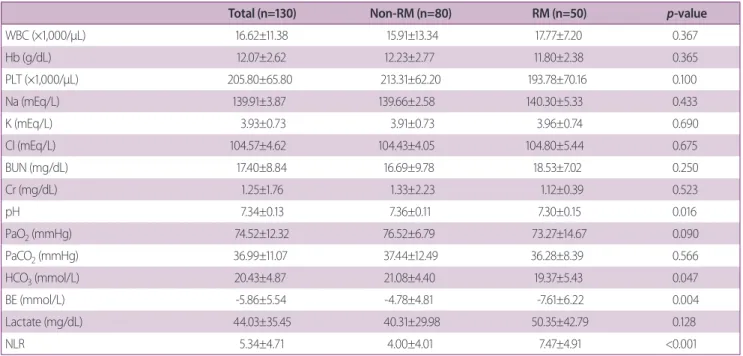
Table 3. Univariable analysis of laboratory values

Total (n=130) Non-RM (n=80) RM (n=50) p-value

WBC (×1,000/μL) 16.62±11.38 15.91±13.34 17.77±7.20 0.367

Hb (g/dL) 12.07±2.62 12.23±2.77 11.80±2.38 0.365

PLT (×1,000/μL) 205.80±65.80 213.31±62.20 193.78±70.16 0.100

Na (mEq/L) 139.91±3.87 139.66±2.58 140.30±5.33 0.433

K (mEq/L) 3.93±0.73 3.91±0.73 3.96±0.74 0.690

Cl (mEq/L) 104.57±4.62 104.43±4.05 104.80±5.44 0.675

BUN (mg/dL) 17.40±8.84 16.69±9.78 18.53±7.02 0.250

Cr (mg/dL) 1.25±1.76 1.33±2.23 1.12±0.39 0.523

pH 7.34±0.13 7.36±0.11 7.30±0.15 0.016

PaO

2

(mmHg) 74.52±12.32 76.52±6.79 73.27±14.67 0.090

PaCO

2

(mmHg) 36.99±11.07 37.44±12.49 36.28±8.39 0.566

HCO

3

(mmol/L) 20.43±4.87 21.08±4.40 19.37±5.43 0.047

BE (mmol/L) -5.86±5.54 -4.78±4.81 -7.61±6.22 0.004

Lactate (mg/dL) 44.03±35.45 40.31±29.98 50.35±42.79 0.128

NLR 5.34±4.71 4.00±4.01 7.47±4.91 <0.001

Values are presented as mean±standard deviation.

RM: rhabdomyolysis, WBC: white blood cell, Hb: hemoglobin, PLT: platelet, BUN: blood urea nitrogen, Cr: creatinine, BE: base excess, NLR: neutro-

phil-to-lymphocyte ratio.

(5)

AIS score (2.30±0.88 vs. 2.68±0.94; p=0.021), the presence of AKI (15 [44.1%] vs. 19 [55.9%]; p=0.015), and CRRT (6 [37.5%] vs. 10 [62.5%]; p=0.035) (Table 2). However, the two groups did not significantly differ according to age, sex, GCS score, blood pressure, heart rate, APACHE II score, ISS score, AIS score (head and neck, face, chest, and external), trauma mechanism, emergency surgery sta- tus, and mortality (Table 2). Based on the initial blood test results, the two groups significantly differed in terms of pH level (p=0.016), bicarbonate level (p=0.047), base ex- cess (p=0.004), and NLR (p<0.001) (Table 3). A multivar- iate logistic regression analysis was performed using vari- ables with significant differences in the univariate analysis

(Tables 2, 3). The results showed significant be- tween-group differences in NLR (odds ratio [OR], 1.252;

95% confidence interval [CI], 1.130–1.386; p<0.001), pH level (OR, 0.006; 95% CI, 0.000–0.198; p=0.004), presence of AKI (OR, 3.009; 95% CI, 1.140–7.941; p=0.026), and extremity AIS score (OR, 1.819; 95% CI, 1.111–2.980;

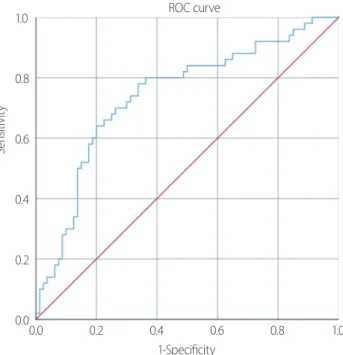
p=0.017) (Table 4). A ROC analysis was performed to de- termine the most appropriate cutoff value of the NLR for diagnosing RM. The best cutoff value was found to be 3.64 (sensitivity, 0.780; specificity, 0.662), and the area under the curve was 0.741 (Fig. 2). Using the chi-square test, an analysis of the non-RM and RM groups based on an NLR value of 3.64 (p<0.001) revealed that the NLR was a sig-

Table 4. Association of rhabdomyolysis with clinical variables by multivariable logistic regression analysis

Variables OR 95% CI p-value

NLR 1.252 1.130–1.386 <0.001

pH 0.006 0.000–0.198 0.004

AKI 3.009 1.140–7.941 0.026

Extremity AIS 1.819 1.111–2.980 0.017

OR: odds ratio, CI: confidence interval, NLR: neutrophil-to-lymphocyte ratio, AKI: acute kidney injury, AIS: Abbreviated Injury Scale.

Table 5. Correlations between NLR and rhabdomyolysis

Non-RM RM Total p-value

Low NLR (<3.63) 53 (40.7) 11 (8.5) 64 (49.2)

<0.001 High NLR (>3.64) 27 (20.8) 39 (30.0) 66 (50.8)

80 (61.5) 50 (38.5) 130 (100) Variables are presented as number (%).

RM: rhabdomyolysis, NLR: neutrophil-to-lymphocyte ratio.

Fig. 1. Flow diagram of patient enrollment. RM; rhabdomyolysis, CK;

creatine kinase.

Total n=228

Enrolled patients n=130

RM CK >=1000 U/L

n=50

Non-RM CK <1000 U/L

n=80

Exclusion patients

1. <18 years old 16 2. Transfer from other hospital 36 3. Died within 24 hours 26 4. Known chronic kidney disease 8 5. Insufficient medical records 12

Fig. 2. Receiver operating characteristic curve for the neutro- phil-to-lymphocyte ratio in predicting rhabdomyolysis in patients with severe trauma (area under the curve=0.741).

Se ns iti vit y

ROC curve

0.0 0.2 0.4 0.6 0.8 1.0

1-Specificity 1.0

0.8

0.6

0.4

0.2

0.0

(6)

nificant biomarker for predicting RM (Table 5).

DISCUSSION

In this study, patients with trauma who visited the emergency room of Chosun University Hospital were diagnosed with RM based on their initial CK values. We assessed whether other initial blood test values could be used to predict RM. Result showed that the NLR value and pH level significantly differed between the RM and non-RM groups. When muscle damage occurs, leukocytes (particularly neutrophils) are activated, and they move to the site of damage and act as early responders [11,12]. In a previous study, the blood neutrophil count significantly increased within 6 hours after muscle damage in patients with a CK value ≥1,000 U/L compared with patients with a CK value <1,000 U/L [11]. In another study, the neu- trophil count increased within 3 hours of muscle damage, while the lymphocyte count decreased [9]. The NLR only increases when the neutrophil count increases and/or the lymphocyte count decreases. An elevated NLR is caused by an increase in serum cortisol levels, which is a stress response that can be used as a biochemical index to de- termine the balance between the body’s immune system and immune suppression during inflammation [6]. An elevated NLR is an indirect and simple indicator of the imbalance between these two responses, and it is caused by a combination of increased neutrophil production and lymphocyte cell death due to stresses (e.g., infection and trauma) [13]. Taken together, if RM occurs due to muscle damage, the NLR will increase with an initial elevation in the neutrophil count and reduction in the lymphocyte count due to an inflammatory reaction. In accordance with the aforementioned studies, the results of this study confirm that there is an increase in the initial NLR in pa- tients with RM who present with significant muscle dam- age.

Metabolic acidosis, which is caused by oxygen depletion in the involved tissue or organ, is an important complica- tion of RM [14]. In patients with RM, when muscles are destroyed and toxic substances are released from the cells, local edema and ischemia occur, and ischemia results in energy depletion and metabolic acidosis [15]. In this

study, the pH level was significantly lower (reflecting aci- dosis) in the RM group with more severe muscle damage than in the non-RM group.

This study showed that abdominal AIS and extremity AIS scores significantly differed according to initial RM status in the univariate analysis; however, the abdominal AIS score did show a significant relationship with RM in the multivariate analysis. According to the results of a re- cent study, the ISS, chest AIS, abdominal AIS, and extrem- ity AIS scores significantly differed in a univariate analysis performed according to severe RM (peak CK value ≥5,000 U/L). However, the only significant relationship identified in the multivariate analysis was the extremity AIS score [16]. Moreover, that previous study targeted only patients with blunt trauma, whereas this study included all severe trauma patients, and the previous study used a different cutoff value for CK (1,000 vs. 5,000 U/L). These factors may have caused the discrepancies in the findings of the univariate analysis between the two studies. However, the multivariate analysis revealed similar results, and the con- sistent relationship of the extremity AIS score with RM may be less affected by other variables because there are numerous skeletal muscles in the extremities. To predict the long-term complications and risk factors of RM, a previous study used the peak CK level as a cutoff value to diagnose RM, and found this value to be more accurate than other predictors. However, CK levels take 1–3 days to reach their peak, which can result in a delay in provid- ing proper treatment. Therefore, this study is meaningful in that it identified a factor that can predict RM at its early stages and can facilitate the immediate provision of appropriate treatment.

AKI is a potentially fatal complication that can occur in

patients with RM due to trauma. AKI is a complex syn-

drome characterized by a decrease in renal function that

is defined based on the RIFLE and Acute Kidney Injury

Network classifications. Moreover, the KDIGO classifica-

tion is often used [17]. In this study, AKI was diagnosed

based on the KDIGO classification. The incidence of AKI

due to RM varies between 13% and 50% according to

previous studies, and 19 of 50 patients (38%) had AKI due

to RM in our study. In this condition, when muscle injury

occurs, myoglobin accumulates in the kidney, leading to

intrarenal vasoconstriction, direct and ischemic tubule

(7)

injury, and tubular obstruction, which result in AKI [18].

When AKI occurs, volume overload, electrolyte disorders, uremic complications, and drug toxicity may develop [19], and the incidence of AKI increases with elevated blood CK values [20]. According to Arulselvi et al. [21], there was a significant difference in the relationship between the CK level and the incidence of RM on the first, third, and fifth days after trauma. This result was consistent with the finding of our study that the CK value in the early stage of trauma was significantly correlated with the occurrence of AKI. Based on these results, if RM caused by trauma is immediately diagnosed after a patient presents to the hospital, treatment can be immediately started and the occurrence of AKI will then be prevented. The treatment of RM patients in the acute phase should aim to preserve renal function and restore metabolic derangements. The early administration of large volumes of normal saline is the most important intervention to prevent AKI. Volume expansion increases renal blood flow and glomerular filtration [22]. However, in older patients with cardio- pulmonary risk factors, cautious observation is necessary because high-volume fluid therapy can exacerbate con- gestive heart failure and cause pulmonary edema [22]. In relation to this, the risk of RM should be predicted upon arrival at the hospital should be predicted to provide ade- quate fluid therapy to patients with trauma.

This study had several limitations that should be ac- knowledged. Specifically, it was conducted at a single cen- ter, the number of participants was small, and peak CK values could not be analyzed, as several patients did not undergo serial testing for CK values after the initial as- sessment. Therefore, factors associated with the peak CK value and whether it predicted complications could not be evaluated. In addition, other factors that could cause acidosis (hypovolemia and drug use) were not consid- ered. Hence, a prospective study considering these factors should be conducted in the future.

CONCLUSION

In patients with trauma, RM can cause fatal complica- tions. Hence, immediate diagnosis and treatment are important. However, the most sensitive CK value for

RM diagnosis can be only obtained after approximately 1 hour. In contrast, since NLR results can be obtained within 10 minutes via a complete blood count, the NLR can help predict RM at an earlier time point in patients with trauma. Then, appropriate treatment can be provid- ed. Therefore, the NLR is a predictive factor of RM in pa- tients with trauma, and immediate treatment of RM can reduce complications, including AKI.

REFERENCES

1. Sauret JM, Marinides G, Wang GK. Rhabdomyolysis. Am Fam Physician 2002;65:907-12.

2. Rodríguez E, Soler MJ, Rap O, Barrios C, Orfila MA, Pascual J.

Risk factors for acute kidney injury in severe rhabdomyolysis.

PLoS One 2013;8:e82992.

3. Zimmerman JL, Shen MC. Rhabdomyolysis. Chest 2013;144:1058-65.

4. Huerta-Alardín AL, Varon J, Marik PE. Bench-to-bedside re- view: rhabdomyolysis -- an overview for clinicians. Crit Care 2005;9:158-69.

5. Assanangkornchai N, Akaraborworn O, Kongkamol C, Kaew- saengrueang K. Characteristics of trauma patients with creatine kinase elevation. Crit Care 2015;19(Suppl 1):P282.

6. Zahorec R. Ratio of neutrophil to lymphocyte counts--rapid and simple parameter of systemic inflammation and stress in critically ill. Bratisl Lek Listy 2001;102:5-14.

7. Hwang SY, Shin TG, Jo IJ, Jeon K, Suh GY, Lee TR, et al. Neutro- phil-to-lymphocyte ratio as a prognostic marker in critically-ill septic patients. Am J Emerg Med 2017;35:234-9.

8. Lee JB, Lee SH, Yung SJ, Ryu SY, Choi SW. Kim HJ, et al. Neu- trophil-to-lymphocyte ratio as a predictor of aspiration pneu- monia in drug intoxication patients. J Korean Soc Clin Toxicol 2018;16:61-7.

9. Sugama K, Suzuki K, Yoshitani K, Shiraishi K, Kometani T. IL- 17, neutrophil activation and muscle damage following endur- ance exercise. Exerc Immunol Rev 2012;18:116-27.

10. Frink M, Lechler P, Debus F, Ruchholtz S. Multiple trauma and emergency room management. Dtsch Arztebl Int 2017;114:497- 503.

11. Isaacs AW, Macaluso F, Smith C, Myburgh KH. C-reactive pro-

tein is elevated only in high creatine kinase responders to mus-

cle damaging exercise. Front Physiol 2019;10:86.

(8)

12. Paulsen G, Crameri R, Benestad HB, Fjeld JG, Mørkrid L, Hallén J, et al. Time course of leukocyte accumulation in human mus- cle after eccentric exercise. Med Sci Sports Exerc 2010;42:75-85.

13. Taneja R, Parodo J, Jia SH, Kapus A, Rotstein OD, Marshall JC. Delayed neutrophil apoptosis in sepsis is associated with maintenance of mitochondrial transmembrane potential and reduced caspase-9 activity. Crit Care Med 2004;32:1460-9.

14. Zhang MH. Rhabdomyolosis and its pathogenesis. World J Emerg Med 2012;3:11-5.

15. Keltz E, Khan FY, Mann G. Rhabdomyolysis. The role of diag- nostic and prognostic factors. Muscles Ligaments Tendons J 2014;3:303-12.

16. Park JY, Kim MJ, Lee JG. Early predictive values for severe rhab- domyolysis in blunt trauma. J Trauma Inj 2019;32:26-31.

17. Gameiro J, Agapito Fonseca J, Jorge S, Lopes JA. Acute kidney injury definition and diagnosis: a narrative review. J Clin Med

2018;7:307.

18. Bosch X, Poch E, Grau JM. Rhabdomyolysis and acute kidney injury. N Eng J Med 2009;361:62-72.

19. Levey AS, James MT. Acute kidney injury. Ann Intern Med 2017;167:ITC66-80.

20. Nawaporn A, Osaree A, Chanon K, Khanitta K. Characteristics of creatine kinase elevation in trauma patients and predictors of acute kidney injury. JACME 2017;7:54-60.

21. Arulselvi S, Deepti S, Vivek T, Arbind KP, Venencia A, Ravindra MP. Evaluation of serum creatine kinase and urinary myoglo- bin as markers in detecting development of acute renal failure in severely injured trauma patients. ISRN Emergency Medicine 2013;2013:1-8.

22. Zutt R, van der Kooi AJ, Linthorst GE, Wanders RJ, de Visser M.

Rhabdomyolysis: review of the literature. Neuromuscul Disord

2014;24:651-9.

수치

Table 1. Criteria for severe trauma team activation
Table 2. Patients’ characteristics according to RM
Table 3. Univariable analysis of laboratory values
Table 4. Association of rhabdomyolysis with clinical variables  by multivariable logistic regression analysis

참조

관련 문서