Prevalences and Management of Diabetes and Pre-diabetes among Korean Teenagers and Young Adults: Results from the Korea National Health and Nutrition Examination Survey 2005–
2014
The rapid increases in childhood obesity and physical inactivity are linked to the incidence of diabetes among young individuals. However, few studies have evaluated the prevalence of diabetes among this population. Therefore, we used Korea National Health and Nutrition Examination Survey (KNHANES) data to evaluate the prevalence and
management of diabetes and pre-diabetes among young Koreans. We evaluated KNHANES data (2005–2014) from 10–29-year-old individuals. Individuals were considered eligible if they had completed the health examination and the health interview survey, and we excluded individuals with missing data regarding fasting glucose or glycated haemoglobin levels. Among the 100,101 potentially eligible individuals who participated in KNHANES (2005–2014), we included 83,577 (37,677 male and 45,900 female) individuals. The overall prevalences of diabetes and pre-diabetes among 10–19-year-old individuals were 0.2% and 11.9%, respectively. Among 20–29-year-old individuals, the prevalences of diabetes and pre-diabetes were 0.9% and 9.6%, respectively. The overall rates of diabetes awareness during the study period were 36.6% for 10–19-year-old individuals and 50.8%
for 20–29-year-old individuals. However, the prevalence of diabetes and pre-diabetes had noticeably increased at the 2013–2014 KNHANES: 0.6% and 25.9% among 10–19-year- old individuals, and 0.8% and 19.2% among 20–29-year-old individuals. The prevalence of diabetes and pre-diabetes is rapidly increasing among Korean teenagers and young adults. Pre-emptive interventions to diagnose and treat diabetes and pre-diabetes are needed to improve glycaemic control among this population.
Keywords: Diabetes Mellitus; Prediabetic State; Epidemiology; Health Care Surveys Eun-Hee Cho,1 Dayeon Shin,2,3
Keun-Hyok Cho,1 and Junguk Hur4
1Department of Internal Medicine, Kangwon National University, Chuncheon, Korea; 2Department of Nutrition & Dietetics, University of North Dakota, Grand Forks, ND, USA; 3Department of Public Health, Food Studies and Nutrition, Syracuse University, Syracuse, NY, USA; 4Department of Biomedical Sciences, University of North Dakota School of Medicine and Health Sciences, Grand Forks, ND, USA
Received: 1 May 2017 Accepted: 10 September 2017 Address for Correspondence:
Junguk Hur, PhD
Department of Biomedical Sciences, University of North Dakota School of Medicine and Health Sciences, 1301 North Columbia Road Stop 9037, Room W130, Grand Forks, ND 58202-9037, USA
E-mail: [email protected]
Funding: This study was supported by a 2015 Research Grant from Kangwon National University (No. 520150352) and a Korean National Research Foundation research grant (NRF- 2016R1C1B2011968). Junguk Hur was partially supported by the NIDDK Diabetic Complications Consortium (DiaComp, www.
diacomp.org), grant DK076169.
https://doi.org/10.3346/jkms.2017.32.12.1984 • J Korean Med Sci 2017; 32: 1984-1990
INTRODUCTION
Type 1 diabetes is the most common form of diabetes among young people (1), although the incidence of type 2 diabetes is rapidly increasing because of the soaring trajectory of childhood obesity (2). Among teenagers and young adults, diabetes melli- tus is considered as a relatively heterogeneous disease with com- plex etiologies, pathophysiology, clinical features, and compli- cations (3). Based on the accelerating rates of obesity, children with type 1 diabetes are more likely to be overweight or obese, which makes it difficult to distinguish between type 2 diabetes and obese type 1 diabetes at the initial clinical visit (4,5). For ex- ample, one report found that the initial classification of diabe- tes was changed during the follow-up for 10% of childhood cas- es (6). Therefore, the rapid increases in childhood obesity and physical inactivity are linked to the incidence of diabetes among young people (7). One study reported that among the Korean
children and adolescents aged 6–18 years old the prevalence of obesity increased from 6.8% in 1998 to 10.0% in 2013 (8). An- other study showed that the prevalence of metabolic syndrome in Korean adolescents aged 12–19 years old was 2.5% in 2005 according to a national survey (9). However, few studies have evaluated the prevalence of diabetes among teenagers and young adults in Korea or many other countries.
Several studies have recently demonstrated that young peo- ple with type 2 diabetes exhibit more rapid deterioration in β-cell function (10), earlier presentation with complications (11-13), and greater mortality (13), compared to young people with type 1 diabetes and adults with type 2 diabetes (14). Furthermore, given the aggressive clinical course and much longer life expec- tancy in cases of early-onset diabetes, studies are urgently needed to evaluate the prevalence and management of diabetes among teenagers and young adults. Moreover, recognizing the present barriers to controlling glycaemic status, and optimizing β-cell Endocrinology, Nutrition & Metabolism
2017-03-16 https://crossmark-cdn.crossref.org/widget/v2.0/logos/CROSSMARK_Color_square.svg
preservation techniques, are crucial steps towards reducing morbidity and mortality among young people with diabetes (4).
Therefore, the present study aimed to evaluate the prevalence and management of diabetes and pre-diabetes among young Koreans (10–29 years old).
MATERIALS AND METHODS Data source and study sample
The Korea National Health and Nutrition Examination Survey (KNHANES) is a nationally-representative, population-based, cross-sectional survey of health and nutritional status among the Korean population. This survey is administered by the Ko- rean Ministry of Health and Welfare, and consists of three dis- tinct surveys: a health interview survey, a health examination survey, and a nutrition survey. Data from the Korea National Statistical Office are used to define the standard population, and sampling weights are used to account for the complex sampling to represent the entire non-institutionalized Korean population.
The sample weights included three components: the probabili- ty of selection; an adjustment for non-response; and a post-strat- ification factor according to district, age, and sex category ap- proximately equal to the total population of Korea (15,16). Fur- thermore, to avoid bias from longitudinal changes in the age and sex distributions, these factors were adjusted to reflect the Korean population distributions each year. All participants par- ticipate voluntarily and provide their informed consent for the data collection. The KNHANES protocol is approved by the Ko- rean Ministry of Health and Welfare, and the study is performed in accordance with the guidelines of the Declaration of Helsinki.
In the present study, we collected data for individuals who were 10–30 years old and participated in four KNHANES cycles (2005, 2007–2009, 2010–2012, and 2013–2014). All individuals had completed both the health examination survey and the health interview survey, and we excluded any individuals with missing data regarding their fasting glucose or glycated haemo- globin (HbA1c) levels. All anthropometric measurements were performed by well-trained examiners, who used a standard pro- tocol for all four KNHANES cycles.
Blood samples were collected at the mobile examination cen- ters in the morning after fasting for at least 8 hours. Total choles- terol, fasting plasma glucose, triglyceride, low-density lipopro- tein cholesterol, high-density lipoprotein cholesterol, and se- rum creatinine levels were measured by Hitachi Automatic An- alyzer 7600 (Hitachi, Tokyo, Japan). HbA1c was measured using a high-performance liquid chromatography method (HLC-723G7;
Tosoh, Tokyo, Japan).
Operational definitions
Diabetes and pre-diabetes were determined based on individ- ual’s levels of fasting plasma glucose and/or glycated haemo-
globin. Diabetes cases in this study included both “known” and
“new-onset” diabetes. Cases of known diabetes were identified based on a self-reported history of a clinical diagnosis of diabe- tes and/or the current use of anti-diabetic medication (e.g., in- sulin and oral hypoglycaemic agents). Cases of “new-onset dia- betes” were identified based on the survey results providing the first indication of diabetes; fasting plasma glucose levels of ≥ 7.0 mmol/L (126 mg/dL) and/or HbA1c levels of 6.5% or higher (≥ 47 mmol/mol). Pre-diabetes was defined as fasting plasma glucose levels of 5.6–6.9 mmol/L (100–125 mg/dL) and/or HbA1c levels of 5.7%–6.5% (39–47 mmol/mol). Awareness of diabetes was defined as the proportion of known diabetes cases among all diabetes cases. The proportion of individuals with adequate glucose control was defined as the number of participants with HbA1c levels of 7.0% (53 mmol/mol), recommended by the Eu- ropean Association for the Study of Diabetes (EASD) and the American Diabetes Association (ADA), or 6.5% (47 mmol/mol), recommended by the Korean Diabetes Association (KDA), among all cases of known diabetes.
Obesity was diagnosed using the anthropometric data from each health examination. According to the Korean Society for the Study of Obesity, obesity is defined as a body mass index (BMI) of ≥ 25 kg/m2 among individuals who are ≥ 19 years old. Among Korean children who are 10–18 years old, obesity is defined as a BMI that exceeds the 95th percentile of the age- and sex-specific BMI values.
Statistical analysis
To adjust the analysis for the complex sample and study design, we used the KNHANES sampling weight variables. Due to rela- tively small numbers of diabetes and pre-diabetes cases at some age groups, we only analysed variables with at least five valid counts in each category to avoid unexpectedly inflated results.
Nominal variables were presented as the number and percent- age, and continuous variables were presented as mean ± standard deviation. All analyses were performed using R software (ver- sion 3.3.0; R Project for Statistical Computing, Vienna, Austria;
http://cran.r-project.org).
Ethics statement
All participants of the KNHANES provided written informed consent. The present study’s retrospective design was approved by the Institutional Review Board of the Kangwon National Uni- versity Hospital (KNUH-2016-07-007).
RESULTS
Prevalence of diabetes and pre-diabetes during KNHANES 2005–2014
Table 1 summarises the characteristics among Korean youth and young adults during the four KNHANES cycles separately
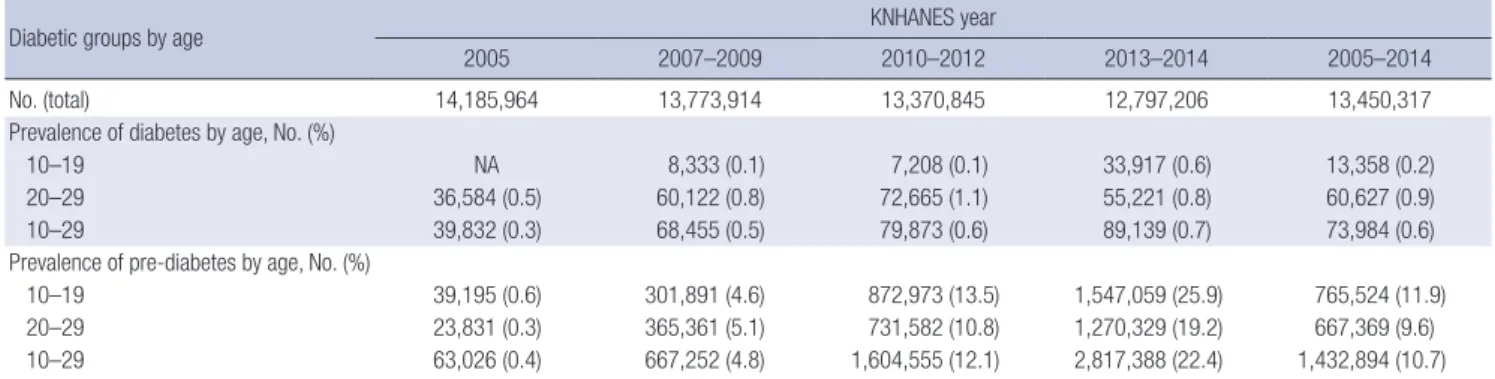
(2005, 2007–2009, 2010–2012, and 2013–2014) and combined (2005–2014). The numbers of participants and prevalences of diabetes and pre-diabetes during these cycles are reported in Table 2. The overall prevalences of diabetes and pre-diabetes among 10–19-year-old individuals were 0.2% and 11.9%, respec- tively. The overall prevalences of diabetes and pre-diabetes among 20–29-year-old individuals were 0.9% and 9.6%, respectively.
However, during the 2013–2014 KNHANES, the prevalences of diabetes and pre-diabetes among 10–19-year-old individuals
increased to 0.6% and 25.9%, respectively. Similarly, among 20–29-year-old individuals, the prevalences of diabetes and pre-diabetes increased to 0.8% and 19.2%, respectively.
An increasing prevalence of diabetes between the 2005 and 2013–2014 KNHANES was observed in individuals between the ages of 10 to 19, with the exception of individuals who were 20–
29 years old. Similarly, the prevalence of pre-diabetes rapidly increased between the 2005 and 2013–2014 KNHANES among all age groups (Fig. 1). Among teenagers (10–19 years old), the Table 1. Baseline characteristics among Korean participants aged between 10 and 30 years in KNHANES 2005–2014
Parameters KNHANES year
2005 2007–2009 2010–2012 2013–2014 2005–2014
No. (total) 14,185,964 13,773,914 13,370,845 12,797,206 13,450,317
Men 7,399,682 7,210,022 7,024,982 6,742,319 7,056,979
Women 6,786,282 6,563,892 6,345,863 6,054,887 6,393,338
Age, yr 19.9 ± 5.9 19.8 ± 5.9 19.9 ± 5.8 19.9 ± 5.7 19.9 ± 5.8
BMI, kg/m2 21.5 ± 3.7 21.7 ± 3.9 21.7 ± 4.0 21.9 ± 4.0 21.7 ± 3.9
SBP, mmHg 107.6 ± 11.4 105.9 ± 10.9 107.8 ± 11.2 108.9 ± 10.7 107.5 ± 11.0
DBP, mmHg 70.0 ± 9.7 68.7 ± 9.5 68.7 ± 10.1 69.0 ± 9.3 68.8 ± 9.7
Values are presented as number of participants or mean ± standard deviation. The numbers of counts in this table were calculated based on the weights designed to account for the complex design, non-response rate, and unequal probability of selection of sample participants to represent the whole population. The values for the periods with multi- ple years are the average values per year.
KNHANES = Korea National Health and Nutrition Examination Survey, BMI = body mass index, SBP = systolic blood pressure, DBP = diastolic blood pressure.
Table 2. Changes in prevalence of diabetes and pre-diabetes among Korean youth (aged between 10 and 30) in KNHANES 2005–2014
Diabetic groups by age KNHANES year
2005 2007–2009 2010–2012 2013–2014 2005–2014
No. (total) 14,185,964 13,773,914 13,370,845 12,797,206 13,450,317
Prevalence of diabetes by age, No. (%)
10–19 NA 8,333 (0.1) 7,208 (0.1) 33,917 (0.6) 13,358 (0.2)
20–29 36,584 (0.5) 60,122 (0.8) 72,665 (1.1) 55,221 (0.8) 60,627 (0.9)
10–29 39,832 (0.3) 68,455 (0.5) 79,873 (0.6) 89,139 (0.7) 73,984 (0.6)
Prevalence of pre-diabetes by age, No. (%)
10–19 39,195 (0.6) 301,891 (4.6) 872,973 (13.5) 1,547,059 (25.9) 765,524 (11.9)
20–29 23,831 (0.3) 365,361 (5.1) 731,582 (10.8) 1,270,329 (19.2) 667,369 (9.6)
10–29 63,026 (0.4) 667,252 (4.8) 1,604,555 (12.1) 2,817,388 (22.4) 1,432,894 (10.7)
The numbers of counts in this table were calculated based on the weights designed to account for the complex design, non-response rate, and unequal probability of selection of sample participants to represent the whole population. The values for the periods with multiple years are the average values per year.
KNHANES = Korea National Health and Nutrition Examination Survey, NA = not available.
Fig. 1. Prevalence of diabetes and pre-diabetes during the four KNHANES cycles. (A) prevalence of diabetes, (B) prevalence of pre-diabetes.
KNHANES = Korea National Health and Nutrition Examination Survey.
Figure 1 (170918) ‐ proof
0.0%
0.2%
0.4%
0.6%
0.8%
1.0%
1.2%
2005 2007‐2009 2010‐2012 2013‐2014
PREVALENCE (%)
YEARS
DIABETES
10‐19 20‐29
0.0%
5.0%
10.0%
15.0%
20.0%
25.0%
30.0%
2005 2007‐2009 2010‐2012 2013‐2014
PREVALENCE (%)
YEARS
PREDIABETES
10‐19 20‐29
A B
Prevalence (%)
Year
2005 2007–2009 2010–2012 2013–2014 1.2
1.0 0.8 0.6 0.4 0.2 0
10–19 20–29
Diabetes
0.5
1.1
0.8
0.6
0.1 0.1
0.8
A
Figure 1 (170918) ‐ proof
0.0%
0.2%
0.4%
0.6%
0.8%
1.0%
1.2%
2005 2007‐2009 2010‐2012 2013‐2014
PREVALENCE (%)
YEARS
DIABETES
10‐19 20‐29
0.0%
5.0%
10.0%
15.0%
20.0%
25.0%
30.0%
2005 2007‐2009 2010‐2012 2013‐2014
PREVALENCE (%)
YEARS
PREDIABETES
10‐19 20‐29
A B
Prevalence (%)
Year
2005 2007–2009 2010–2012 2013–2014 30
25 20 15 10 5 0
10–19 20–29
0.6
4.6 5.1
13.5
10.8
25.9
19.2
0.3
Prediabetes
B
prevalence of diabetes increased six-fold from 0.1% in the 2005 KNHANES to 0.6% in the 2013–2014 KNHANES, and the preva- lence of pre-diabetes significantly increased from 0.6% in the 2005 KNHANES to 25.9% in the 2013–2014 KNHANES. These results indicate that the prevalence of diabetes and pre-diabe- tes during the last decade is increasing more rapidly among teenagers (10–19 years old).
The overall prevalence of diabetes among 20–29-year-old in- dividuals was much higher, compared to the prevalence among 10–19-year-old individuals (0.9% vs. 0.2%). However, 10–19-year- old individuals exhibited higher prevalence of pre-diabetes, com- pared to 20–29-year-old individuals, during the 2005, 2010–2012, and 2013–2014 KNHANES cycles except the 2007–2009 KNHA- NES cycle.
Prevalence of diabetes and pre-diabetes during KNHANES 2005–2014 according to obesity status
Fig. 2 and Supplementary Table 1 show the overall changes in the prevalence of diabetes and pre-diabetes among obese Ko- rean individuals during the four KNHANES cycles. The overall prevalences of diabetes and pre-diabetes among obese 10–19- year-old individuals were 1.6% and 23.6%, respectively. The overall prevalences of diabetes and pre-diabetes among obese 20–29-year-old individuals were 2.2% and 19.3%, respectively.
The prevalence of diabetes among obese 10–29-year-old indi- viduals generally increased during the study period. Obese in- dividuals from all age groups exhibited rapid increases in the prevalence of pre-diabetes between the 2005 KNHANES and the 2013–2014 KNHANES. During the 2013–2014 KNHANES, the prevalences of diabetes and pre-diabetes among obese 10–
29-year-old individuals were 3.0% and 30.2%, respectively. The prevalences of diabetes and pre-diabetes were 2.8% and 28.0%, respectively among the obese 20–29-year-old individuals.
The overall age-standardized prevalences of diabetes and pre- diabetes among non-obese 10–19-year-old individuals were 0.1% and 12.4%, respectively (Supplementary Table 2). The prevalence of pre-diabetes among non-obese 10–19-year-old
and 20–29-year-old individuals increased rapidly from the 2005 KNHANES to the 2013–2014 KNHANES. Obese 10–29-year-old individuals exhibited a 7-fold higher prevalence of diabetes during the study period compared to the prevalence of diabetes among non-obese 10–29-year-old individuals (2.1% vs. 0.3%).
The prevalence of pre-diabetes among obese 10–29-year-old individuals was 1.9-fold higher, compared to the prevalence of pre-diabetes among non-obese 10–29-year-old individuals (20.3% vs. 10.5%). Compared to the non-obese 10–19-year-old individuals, the obese 10–19-year-old individuals exhibited much higher prevalences of diabetes (1.6% vs. 0.1%) and pre-diabetes (23.6% vs. 12.4%) during the four KNHANES cycles.
Awareness and management of diabetes during KNHANES 2005–2014
Table 3 shows the trends in the awareness and management of diabetes among Koreans. The 10–19-year-old group mostly had not available (NA) values, where the numbers of corresponding cases were less than five per study period. The overall rates of diabetes awareness during KNHANES 2005–2014 were 36.6%
among 10–19-year-old individuals, 50.8% among 20–29-year- old individuals. However, each age group exhibited declining awareness of diabetes from the 2005 KNHANES to the 2013–
2014 KNHANES. For example, diabetes awareness among 20–
29-year-old individuals decreased from 84.9% in the 2005 KN- HANES to 18.0% in the 2013–2014 KNHANES. Furthermore, 22.0% of 10–19-year-old individuals were aware of their diabe- tes status in the 2013–2014 KNHANES.
The overall percentages of insulin treatment were 6.9% among 10–19-year-old individuals and 7.5% among 20–29-year-old in- dividuals during the study period. The percentage of insulin treat- ment among 10–29-year-old individuals decreased from 18.8%
in the 2005 KNHANES to 3.5% in the 2013–2014 KNHANES.
The overall rates of medication treatment were 19.5% and 9.0%, among the 10–19-year-old individuals and 20–29-year-old indi- viduals, respective during the study period.
When a HbA1c level of < 6.5% (47 mmol/mol) was used to
Fig. 2. Prevalence of diabetes and pre-diabetes during the four KNHANES cycles according to obesity status. (A) prevalence of diabetes, (B) prevalence of pre-diabetes.
KNHANES = Korea National Health and Nutrition Examination Survey.
Figure 2 (170918) ‐ proof
0.0%
0.5%
1.0%
1.5%
2.0%
2.5%
3.0%
2005 2007‐2009 2010‐2012 2013‐2014
PREVALENCE (%)
YEARS
DIABETES
20‐29 Obese 20‐29 NonObese
0.0%
5.0%
10.0%
15.0%
20.0%
25.0%
30.0%
35.0%
40.0%
2005 2007‐2009 2010‐2012 2013‐2014
PREVALENCE (%)
YEARS
PREDIABETES
10‐19 Obese 20‐29 Obese 10‐19 NonObese 20‐29 NonObese
A B
Prevalence (%)
Year
2005 2007–2009 2010–2012 2013–2014 3.0
2.5 2.0 1.5 1.0 0.5 0
20–29 Obese 20–29 Nonobese
Diabetes
1.2
2.0
2.8
0.8 0.5
2.1
A
Figure 2 (170918) ‐ proof
0.0%
0.5%
1.0%
1.5%
2.0%
2.5%
3.0%
2005 2007‐2009 2010‐2012 2013‐2014
PREVALENCE (%)
YEARS
DIABETES
20‐29 Obese 20‐29 NonObese
0.0%
5.0%
10.0%
15.0%
20.0%
25.0%
30.0%
35.0%
40.0%
2005 2007‐2009 2010‐2012 2013‐2014
PREVALENCE (%)
YEARS
PREDIABETES
10‐19 Obese 20‐29 Obese 10‐19 NonObese 20‐29 NonObese
A B
Figure 2 (170918) ‐ proof
0.0%
0.5%
1.0%
1.5%
2.0%
2.5%
3.0%
2005 2007‐2009 2010‐2012 2013‐2014
PREVALENCE (%)
YEARS
DIABETES
20‐29 Obese 20‐29 NonObese
0.0%
5.0%
10.0%
15.0%
20.0%
25.0%
30.0%
35.0%
40.0%
2005 2007‐2009 2010‐2012 2013‐2014
PREVALENCE (%)
YEARS
PREDIABETES
10‐19 Obese 20‐29 Obese 10‐19 NonObese 20‐29 NonObese
A B
Prevalence (%)
Year
2005 2007–2009 2010–2012 2013–2014 40
35 30 25 20 15 10 5 0
4.6 2.5
10.5 4.3 8.8
3.5
27.0 22.8
7.7 12.3
37.1 30.2 25.0 16.6
1.4
Prediabetes
B
10–19 Obese 20–29 Obese 10–19 Nonobese 20–29 Nonobese
define adequate glucose control suggested by KDA, the rates of adequate glucose control among known cases of diabetes were 45.0% for 10–29-year-old individuals. When a HbA1c level of
< 7.0% (53 mmol/mol) was used as the cut-off recommended by EASD and ADA, the rates of adequate glucose control were 54.7% for 10–29-year-old individuals.
DISCUSSION
There are few published studies regarding the prevalence of di- abetes and pre-diabetes among teenagers and young adults (< 30 years old) (2,5,17,18). To the best of our knowledge, the present study is the first to evaluate the prevalence and man- agement of diabetes and pre-diabetes among young Koreans (10–29 years old). Our results indicate that the prevalence of di- abetes and pre-diabetes has rapidly increased among 10–29- year-old Koreans during the last 10 years, and that younger Ko- reans had lower awareness of diabetes. Particularly, the preva- lence of pre-diabetes substantially increased (from 0.3% to 19.2%) among 20–29-year-old Koreans during last decade, while their awareness of diabetes declined (from 84.9% to 18.0%). The rea- sons for these dramatic changes are unclear, but we suspect that a rapid lifestyle change toward Westernization in young Korean generation (19) and the fact that 18–29-year-old Kore- ans are exempted from the national routine health check pro- gram might have contributed to these changes.
According to the 2015 Korean diabetes fact sheet, the total number of 0–18-year-old individuals with type 1 diabetes has
decreased slightly (2006: 5,531 persons, 2013: 5,007 persons), although the corresponding incidence of type 2 diabetes has been steadily increasing (17,770 persons in 2006 to 21,327 per- sons in 2013) (20). In that survey (2002–2013), individuals with diabetes mellitus were identified using International Statistical Classification of Diseases codes (version 10; E10–E14) from re- cords in the Korean National Health Information Database.
Unfortunately, KNHANES data could not be used to distinguish between cases of type 1 and type 2 diabetes, which precluded a similar analysis in the present study. However, our findings of a decreasing trend in insulin treatment and an increasing num- ber of obese people with diabetes (from the 2005 KNHANES to the 2013–2014 KNHANES) may indirectly reflect a rapid increase in the prevalence of type 2 diabetes in Korea.
A study based on the young population in five regions of US during 2009 found that the prevalence of type 1 diabetes was higher than the prevalence of type 2 diabetes among < 19-year- old individuals (type 1 diabetes: 1.93/1,000 population, type 2 diabetes: 0.46/1,000 population) (2). The same study also found that the prevalence of type 1 and type 2 diabetes increased be- tween 2001 and 2009 among ≤ 19-year-old individuals. How- ever, the percent increase in the prevalence was greater for type 2 diabetes (30%), compared to the increase in the prevalence of type 1 diabetes (21%) (2). According to the SEARCH for diabe- tes in youth study, the prevalence of diabetes among < 20-year- old Americans was 2.2/1,000 population in 2009, and this find- ing was largely related to an increase in the prevalence of type 1 diabetes (17). However, subgroup analysis of the SEARCH co- Table 3. Changes in awareness and management status of diabetes in Korean youth (aged between 10 and 30) years in KNHANES 2005–2014
History on diabetes KNHANES year
2005 2007–2009 2010–2012 2013–2014 2005–2014
Awareness by age, yr
10–19 NA 5,711 (68.5) 2,797 (42.8) 7,473 (22.0) 4,807 (36.6)
20–29 31,070 (84.9) 38,443 (63.9) 38,156 (52.5) 9,945 (18.0) 30,769 (50.8)
10–29 34,319 (86.2) 44,154 (64.5) 40,953 (51.7) 17,418 (19.5) 35,576 (48.2)
Insulin treatment by age, yr
10–19 NA NA NA 3,159 (9.3) 743 (6.9)
20–29 7,220 (19.7) 7,167 (11.9) 4,509 (6.2) NA 4,549 (7.5)
10–29 7,220 (18.8) 7,167 (11.7) 4,509 (5.7) 3,159 (3.5) 5,292 (7.4)
Medication treatment by age, yr
10–19 NA NA NA 7,473 (22.0) 2,141 (19.5)
20–29 8,237 (22.5) 7,212 (12.0) 6,617 (9.1) NA 5,426 (9.0)
10–29 11,486 (28.8) 7,212 (11.8) 6,617 (8.4) 7,473 (8.4) 7,566 (10.6)
Controlled HbA1c < 7.0% (53 mmol/mol) by age, yr
10–19 NA NA NA NA NA
20–29 NA 16,546 (55.5) 18,195 (55.9) NA 12,668 (56.0)
10–29 NA 18,085 (57.7) 20,992 (59.4) NA 14,107 (54.7)
Controlled HbA1c < 6.5% (47 mmol/mol) by age, yr
10–19 NA NA NA NA NA
20–29 NA 9,622 (32.3) 18,195 (55.9) NA 10,631 (47.0)
10–29 NA 9,622 (30.7) 20,992 (59.4) NA 11,618 (45.0)
Values are presented as number of participants (%).
KNHANES = Korea National Health and Nutrition Examination Survey, NA = not available (less than five valid cases), HbA1c = glycated haemoglobin.
hort revealed that the prevalences of overweight status and obe- sity were 10.4% and 79.4%, respectively, among < 20-year-old Americans with type 2 diabetes (5). A single-centre study in South India (1992–2009) also found that the percentage of young par- ticipants with diabetes (≤ 25 years old at onset) increased dra- matically from 0.6% in 1992 to 2.5% in 2009, and that 1,262 of these participants (48%) had type 2 diabetes (21).
Compared to type 1 diabetes, there are fewer data regarding the global prevalences, incidences, and clinical characteristics of type 2 diabetes among teenagers and young adults from dif- ferent races and cultures. In this context, the increasing preva- lence of type 2 diabetes seems to be linked to increasing rates of obesity, physical inactivity, and excessive nutrition. However, the increasing obesity among young people with type 1 diabe- tes makes it difficult to clinically distinguish between obese young people with type 1 and type 2 diabetes (4). Compared to adult cases of type 2 diabetes, young people with type 2 diabe- tes exhibit a rapid decline in β-cell function (10,14,22), more frequent treatment failure (23), earlier onset of diabetes com- plications, and greater mortality (13). Furthermore, in Asian countries, the onset age of diabetes is shifting towards younger ages with deteriorated lifestyle changes and more visceral fat within the same BMI ranges compared with Westerners (24). In this study, we found that the prevalence of pre-diabetes among 10–29-year-old Koreans increased from 0.4% in the 2005 KNH- ANES to 22.4% in the 2013–2014 KNHANES, which suggests that there will be a significant short-term shift in the economic and social burden of diabetes in Korea.
Our findings regarding the increasing prevalence of diabetes and pre-diabetes among Korean teenagers and young adults highlights an important impending crisis. This is because young people with diabetes will enter adulthood with many signifi- cant barriers, such as prolonged durations of diabetes, greater risks of early complications, higher mortality, and few approved therapies with high treatment failure rates. In Korea, the gov- ernment currently provides free health screening with fasting blood glucose measurements for younger students (middle school and high school) and adults who are > 40 years old (25).
However, 18–29-year-old individuals are not included in these screening efforts. Therefore, we recommend that interventions be developed to screen high-risk group of diabetes. In addition, an integrated childhood obesity prevention program in school setting needs to be developed to promote more physical activi- ty, healthy eating and less sedentary life style. This program also needs to develop tools to screen high-risk group for diabetes as well as education for both children and their parents.
The present study has several limitations. First, we were un- able to classify cases of diabetes as type 1 or type 2 diabetes, as the KNHANES questionnaire does not make this distinction.
Second, approximately 17% of the survey responses were ex- cluded from the analysis due to missing information about their
fasting glucose or HbA1c levels. Third, there was a relatively small sample size for 10–30-year-old individuals in the original KNH- ANES design, which may create the possibility of sampling bias.
In order to avoid unexpectedly inflated results, we analysed vari- ables with at least five valid counts in each age group. However, this small sample size also resulted in many NA values regard- ing the awareness and management status of diabetes (Table 3), which hinders appropriate interpretation. Therefore, our find- ings on the awareness and management status of youth diabe- tes should be considered only in terms of trend over the past 10 years, and more studies are needed to confirm these findings.
In conclusion, the prevalence of diabetes and pre-diabetes is rapidly increasing among Korean teenagers and young adults.
Therefore, interventions are needed to diagnose and treat pre- diabetes/diabetes, and to improve glycaemic control, in this high-risk population subgroup. It is necessary for the Korean government to expand the coverage of national health-check screening to young adults in twenties, and to develop policies promoting education for healthy dietary behaviours and physi- cal activity for young Korean adults.
ACKNOWLEDGMENT
We thank Editage by Cactus Communications, Co. Ltd. for their professional editing service.
DISCLOSURE
The authors have no potential conflicts of interest to disclose.
AUTHOR CONTRIBUTION
Conceptualization: Cho EH, Hur J. Data curation: Hur J. Formal analysis: Hur J. Investigation: Shin D, Cho KH. Writing - original draft: Cho EH. Writing - review & editing: Cho EH, Shin D, Cho KH, Hur J.
ORCID
Eun-Hee Cho https://orcid.org/0000-0002-1349-8894 Dayeon Shin https://orcid.org/0000-0003-0828-184X Keun-Hyok Cho https://orcid.org/0000-0003-4419-5578 Junguk Hur https://orcid.org/0000-0002-0736-2149 REFERENCES
1. Rowe PA, Campbell-Thompson ML, Schatz DA, Atkinson MA. The pan- creas in human type 1 diabetes. Semin Immunopathol 2011; 33: 29-43.
2. Dabelea D, Mayer-Davis EJ, Saydah S, Imperatore G, Linder B, Divers J, Bell R, Badaru A, Talton JW, Crume T, et al. Prevalence of type 1 and type 2 diabetes among children and adolescents from 2001 to 2009. JAMA
2014; 311: 1778-86.
3. Tuomi T, Santoro N, Caprio S, Cai M, Weng J, Groop L. The many faces of diabetes: a disease with increasing heterogeneity. Lancet 2014; 383: 1084- 94.
4. Libman IM, Pietropaolo M, Arslanian SA, LaPorte RE, Becker DJ. Chang- ing prevalence of overweight children and adolescents at onset of insu- lin-treated diabetes. Diabetes Care 2003; 26: 2871-5.
5. Liu LL, Lawrence JM, Davis C, Liese AD, Pettitt DJ, Pihoker C, Dabelea D, Hamman R, Waitzfelder B, Kahn HS, et al. Prevalence of overweight and obesity in youth with diabetes in USA: the SEARCH for Diabetes in Youth study. Pediatr Diabetes 2010; 11: 4-11.
6. Cakan N, Kizilbash S, Kamat D. Changing spectrum of diabetes mellitus in children: challenges with initial classification. Clin Pediatr (Phila) 2012;
51: 939-44.
7. Pinhas-Hamiel O, Zeitler P. “Who is the wise man?--The one who foresees consequences:”. Childhood obesity, new associated comorbidity and pre- vention. Prev Med 2000; 31: 702-5.
8. Ha KH, Kim DJ. Epidemiology of childhood obesity in Korea. Endocrinol Metab 2016; 31: 510-8.
9. Park J, Hilmers DC, Mendoza JA, Stuff JE, Liu Y, Nicklas TA. Prevalence of metabolic syndrome and obesity in adolescents aged 12 to 19 years: com- parison between the United States and Korea. J Korean Med Sci 2010; 25:
75-82.
10. Bacha F, Gungor N, Lee S, Arslanian SA. Progressive deterioration of β-cell function in obese youth with type 2 diabetes. Pediatr Diabetes 2013; 14:
106-11.
11. Dart AB, Martens PJ, Rigatto C, Brownell MD, Dean HJ, Sellers EA. Earlier onset of complications in youth with type 2 diabetes. Diabetes Care 2014;
37: 436-43.
12. Dart AB, Sellers EA, Martens PJ, Rigatto C, Brownell MD, Dean HJ. High burden of kidney disease in youth-onset type 2 diabetes. Diabetes Care 2012; 35: 1265-71.
13. Constantino MI, Molyneaux L, Limacher-Gisler F, Al-Saeed A, Luo C, Wu T, Twigg SM, Yue DK, Wong J. Long-term complications and mortality in young-onset diabetes: type 2 diabetes is more hazardous and lethal than type 1 diabetes. Diabetes Care 2013; 36: 3863-9.
14. Hannon TS, Arslanian SA. The changing face of diabetes in youth: lessons learned from studies of type 2 diabetes. Ann N Y Acad Sci 2015; 1353: 113- 37.
15. Jung SJ, Shin A, Kang D. Hormone-related factors and post-menopausal onset depression: results from KNHANES (2010–2012). J Affect Disord 2015; 175: 176-83.
16. Kim Y, Park S, Kim NS, Lee BK. Inappropriate survey design analysis of the Korean National Health and Nutrition Examination Survey may pro- duce biased results. J Prev Med Public Health 2013; 46: 96-104.
17. Pettitt DJ, Talton J, Dabelea D, Divers J, Imperatore G, Lawrence JM, Liese AD, Linder B, Mayer-Davis EJ, Pihoker C, et al. Prevalence of diabetes in U.S. youth in 2009: the SEARCH for diabetes in youth study. Diabetes Care 2014; 37: 402-8.
18. Mohan V, Jaydip R, Deepa R. Type 2 diabetes in Asian Indian youth. Pedi- atr Diabetes 2007; 8 Suppl 9: 28-34.
19. Song Y, Park MJ, Paik HY, Joung H. Secular trends in dietary patterns and obesity-related risk factors in Korean adolescents aged 10–19 years. Int J Obes (Lond) 2010; 34: 48-56.
20. Korean Diabetes Association. Korean Diabetes Fact Sheet 2015. Seoul, Korean Diabetes Association, 2015.
21. Amutha A, Datta M, Unnikrishnan IR, Anjana RM, Rema M, Narayan KM, Mohan V. Clinical profile of diabetes in the young seen between 1992 and 2009 at a specialist diabetes centre in south India. Prim Care Diabetes 2011; 5: 223-9.
22. Levitt Katz LE, Magge SN, Hernandez ML, Murphy KM, McKnight HM, Lipman T. Glycemic control in youth with type 2 diabetes declines as ear- ly as two years after diagnosis. J Pediatr 2011; 158: 106-11.
23. TODAY Study Group, Zeitler P, Hirst K, Pyle L, Linder B, Copeland K, Ars- lanian S, Cuttler L, Nathan DM, Tollefsen S, et al. A clinical trial to main- tain glycemic control in youth with type 2 diabetes. N Engl J Med 2012;
366: 2247-56.
24. Rhee EJ. Diabetes in Asians. Endocrinol Metab 2015; 30: 263-9.
25. Lee SH, Joh HK, Kim S, Oh SW, Lee CM, Kwon H. Income disparities in the use of health screening services among university students in Korea:
a cross-sectional study of 2479 participants in a university. Medicine (Bal- timore) 2016; 95: e3681.
Supplemenatary Table 1. Changes in prevalence of diabetes and pre-diabetes among obese Koreans aged between 10 and 30 years in KNHANES 2005–2014
Diabetic groups by age KNHANES year
2005 2007–2009 2010–2012 2013–2014 2005–2014
No. (total) 2,558,669 12,120,578 12,798,822 13,266,145 11,504,573
Prevalence of diabetes by age, yr
10–19 NA NA NA NA 7,029 (1.6)
20–29 NA 32,695 (2.1) 29,257 (2.0) 43,282 (2.8) 30,555 (2.2)
10–29 NA 34,352 (1.7) 35,791 (1.8) 61,282 (3.0) 37,584 (2.1)
Prevalence of pre-diabetes by age, yr
10–19 NA 40,615 (8.8) 135,867 (27.0) 189,557 (37.1) 105,198 (23.6)
20–29 9,664 (4.3) 173,669 (11.0) 320,384 (21.4) 433,147 (28.0) 267,210 (19.3)
10–29 15,597 (4.6) 214,284 (10.5) 456,251 (22.8) 622,705 (30.2) 372,408 (20.3)
Values are presented as number of participants (%).
KNHANES = Korea National Health and Nutrition Examination Survey, NA = not available (less than five valid cases).
Supplementary Table 2. Changes in prevalence of diabetes and pre-diabetes among non-obese Korean aged between 10 and 30 years in KNHANES 2005–2014
Diabetic groups by age KNHANES year
2005 2007–2009 2010–2012 2013–2014 2005–2014
No. (total) 6,429,723 31,133,829 31,782,679 32,344,451 28,741,322
Prevalence of diabetes by age, yr
10–19 NA NA NA NA 5,946 (0.1)
20–29 10,657 (1.2) 27,427 (0.5) 43,409 (0.8) NA 27,451 (0.6)
10–29 10,657 (0.5) 34,103 (0.3) 44,082 (0.4) 27,857 (0.3) 33,397 (0.3)
Prevalence of pre-diabetes by age, yr
10–19 32,509 (2.5) 261,276 (4.3) 734,520 (12.3) 1,357,501 (25.0) 659,325 (12.4)
20–29 12,618 (1.4) 191,692 (3.5) 404,630 (7.7) 837,182 (16.6) 397,659 (8.4)
10–29 45,127 (2.0) 452,968 (3.9) 1,139,150 (10.2) 2,194,683 (21.0) 1,056,984 (10.5)
Values are presented as number of participants (%).
KNHANES = Korea National Health and Nutrition Examination Survey, NA = not available (less than five valid cases).