A Conceptual Framework for Value Co-creation in an Innovation Ecosystem:
The Case of Technology-based Collaboration Network
Han Eunjung1) and Hong Soon-Goo2)*
Abstract Innovation Cosystems are Conceptualized as Organizational Networks of Economic Actors, Technologies and Social Contexts that Interact for Knowledge Production, use, and Adaptation. This Paper Proposed a Conceptual Framework to Describe Value Co-creation of Organizational Networks Engaged in Technology Innovation. We Adopted Theory-Based Approach by Integrating the Perspective of Service-Dominant (S-D) Logic Into the Evolutionary Model of the Triple Helix. The Framework Gives a Plausible Explanation on how Actors Collaborate to Create Value in Dynamic Contexts of an Innovation Ecosystem. The Innovation Ecosystem can be Considered as a Composite of Sub-Ecosystems, Including Knowledge, Sectoral, and Business Ecosystems. When these Sub-Ecosystems are Recursively Transformed by Coordination of Functional Mechanisms that Serve Value Co-creation in the Innovation Process, the Innovation Ecosystem will be Re-Organized and Evolve. The case of the Digital Living Network Alliance (DLNA) was Examined to Demonstrate the Fundamental Mechanisms for Value Co-creation that was Described in the Framework. The case Study Indicates Features of Value Co-creation when Implementing Innovation in Organizational Networks.
1)
Key Words : Technology Innovation, Ecosystem, Co-creation, Triple Helix, S-D Logic
1. Introduction
It can be said that today's social economy systems operate in the form of organizational
* Corresponding Author: [email protected]
†This work was supported by the Ministry of Education of the Republic of Korea and the National Research Foundation of Korea (NRF-2015S1A3A2046781).
Manuscript receivrd Jun 8, 2017 / revised July 20 , 2017 / accepted Aug 22, 2017
1) Co-creation Innovation Center, Dong-a University, 1st Author 2) Department of Management Information Systems, Dong-a
University, Corresponding Author
collaboration networks. Because organizations take part in different networks and obtain skills, knowledge, and resources from other organizations, through which they achieve economic goals that they cannot achieve solitarily[1]. These network systems should continue to be innovated in order to confront dynamic changes of the market environment, which is described as the notion of innovation systems[7-10]. The traditional research on innovation systems has focused on technologies that are one of the core resources for economic
development[7-9]. This approach has provided the fundamental principles for developing policy strategies that drive innovation in social economic systems. However, not all technologies lead to successful innovation output[12].
Technologies facilitate innovation only when they are used to create economic value[2-4].
The sustainability and prosperity of social economic systems depend on whether the innovation process from technology development to its use is continuously implemented[3]. In this regard, this study took note of how an organizational network creates economic value from technology innovation.
The existing theories on innovation systems have addressed R&D investment in creating innovation rather than facilitating the use of innovation[7-9], whereas the emerging concept of innovation ecosystems deals with the features of organizational networks around technology innovation[2, 11, 12, 15]. Innovation ecosystems emphasize collaborative activities and dynamic changes in innovation process from technology development to its use[15, 17, 18]. Organizations in an innovation ecosystem cooperate to create economic value through resource integration[15]. Some studies on evolutionary systems describe that innovation is implemented by value co-creation[24-29, 40].
This perspective explains that all actors in a social economy system contribute to generating the value of the whole system[26]. In other words, an innovation ecosystem is self-organized and innovated by value co-creation[27].
However, these studies have less plausible explanations on the phenomenon of value co-creation although they shed light on how an organizational network evolves from technology innovation. In this vein, this study has investigated mechanism of value co-creation in an innovation ecosystem, and proposed a conceptual framework to describe evolution in
an innovation ecosystem in terms of the value co-creation perspective.
This paper focuses on explaining the evolution of an innovation ecosystem in terms of value co-creation. For the study, literatures on innovation theories was reviewed in systems perspective in order to derive evolutionary characteristics of an organizational network. And then, a conceptual framework was organized by combining two dominant theories: S-D logic and the evolutionary model of the Triple Helix. This framework is applicable to analyzing how organizations collaborate for value creation from technology development in an innovation ecosystem. A case study of an alliance network was conducted to demonstrate the value co- creation mechanisms of the framework.
2. Theoretical Backgrounds
2.1 Innovation Systems and Innovation Ecosystems
Technologies are a core resource for the creation of innovation. However, not all new technologies lead to innovation[2-4]. Simply introducing new technologies does not guarantee a lucrative return. New technologies become innovation only if they are actually used in a beneficial way[2]. Jalonen[3] points out that any idea that is not implemented is not innovation. Innovation is a new idea that creates economic value[4]. In this regard, innovation can be considered an action plan for harvesting financial benefits from new technologies. This perspective of innovation contains that innovation is a process that spans from the development of new technology to its utilization[5]. The innovation process consists of various stages through which innovative activities are differentiated. Sotarauta
and Srinivas[6] argued that innovation is an evolutionary process of interplay between organizations and environment.
Several studies have investigated the systemic nature of the innovation process[7-9]. Innovation is often difficult to implement by one firm in isolation; rather, innovation occurs through collaboration among different organizations[10].
Innovation can be viewed as a collective process in which firms interact with a variety of organizations, which include other firms and non-profit organizations such as universities, research centers, or government agencies[9].
Therefore, an innovation system is defined as a collection of private/public organizations involved in the development and commercialization of new technologies[10]. Research on innovation systems explains that innovative activities are organized at the level of a system[7-9]. For example, innovation clusters are developed at a regional level. The level at which innovation is implemented is determined by what components an innovation system consist of[3]. This sort of approach, which includes national innovation systems (NIS), regional innovation systems (RIS), and sectoral innovation systems (SIS), has provided grounded ideas in developing policy strategies for driving innovative activities[3].
Although the traditional approach on innovation systems has provided the heuristic principles necessary for the innovation process, it has not always been successful in identifying strategies that stimulates innovative activities[12]. Mercan and Göktaş[11] point out that the existing approach on innovation systems does not explain how the structure of an innovation system drives innovative activities. Yawson[12] argues that the traditional approach deals with innovation process as a linear input-output model. Most innovation policies referring to the traditional innovation systems have focused on input
capacity such as R&D investment in order to achieve economic outcome[12]. Innovation is implemented through a complex network system in which organizations interact with each other for technology innovation. The traditional innovation systems approach lacks explanations on the relationships among organizations in the structural perspective. In this respect, there has recently been a shift toward innovation ecosystems.
The term ecosystem derives from the biological concept of ecology. A biological ecosystem is a set of living organisms that interact with one another and with their environment[13]. In general, an ecosystem is described as a networked system that contains a set of objects that are tied to one another[14].
Following the analogy, an ecosystems approach does not look at a single entity, but relates to interactions among different entities involved in a particular environment[2].
The innovation ecosystems concept is introduced to explain collaborative activities in the innovation process[2]. Adner[15] defines an innovation ecosystem as a collaborative arrangement in terms of business strategy.
Organizations engaged in the innovation process form a community to develop technologies and utilize them[16]. The organizations collaboratively integrate their resources into a coherent solution that meets customer needs[15]. The innovation ecosystems is defined as networks of organizations that interact to develop, disseminate, and use innovation[16]. Rubens et al.[17] emphasize that the innovation ecosystems are related to not only technologies but also political and economic environments. In this regard, Mercan and Göktaş[11] describe the innovation ecosystems as hybrid networks of organizations, technologies, economy, and social contexts.
Both innovation systems and innovation
ecosystems share the common idea of organizational networks involved in innovation process. However, the traditional innovation systems approach deals with relationships among organizations in a static manner[11].
For example, RIS (or NIS) is organized by institutions including norms, rules, and guidelines, which define relationships among organizations[10]. The organizations can play only their own particular roles that are defined in advance by the institutions, which are stable without any transformation in its structure. In today's fast-changing business environments, social economy systems should be continuously renewed in order to respond immediately to the changes that can endanger economic standing. Innovation ecosystems reflect the dynamic nature of structures that are always changing, whereas the traditional innovation systems highlight the institutional relationships among organizations[11, 18].
An alternative approach for explaining the evolution of social economy systems is the Triple Helix. This approach was proposed by Etzkowitz and Leydesdorff[19] to describe relations among academy, industry, and government that are engaged in innovation process. While NIS or RIS is implemented in a form of an institutional program focusing on economic outcome, the Triple Helix emphasizes structural aspects of varying institutional relationships[20]. The Triple Helix describes innovation process as recursive interactions among institutional organizations. The linkage among organizations can be transformed because an organization is allowed to extend its innovation capacity to others' spheres[21]. For example, an academy in charge of technology development can build a technology holding company to commercialize its own technologies.
The Triple Helix considers a network of organizations evolvable. Innovation is not
implemented by fixed institutional programs, but rather through dynamic transition of a self-organized network system.
Leydesdorff and Meyer[20] proposed an evolutionary model based on the Triple Helix framework. This model focuses on the interactions among functional mechanisms supporting the innovation process, whereas the typical Triple Helix emphasizes institutional relationships among organizations engaged in the innovation process. In complex and dynamic networks, functions are not subordinate to any particular organization[20]. The functions are changeable according to new governing rules. This evolutionary model describes dynamic changes of social economy systems as interactions among three functional mechanisms: the novelty production in knowledge development mechanism, the economic transactions in market mechanism, and the resource controls in governance mechanism[22-23]. The interactions are recursively re-organized by governing rules[20]. A set of the functional mechanisms are re-organized by a governing rule when the structure of an organizational network is re-shaped[21]. When the mechanisms are synergistically operated, the organizational network continues to implement innovation. This perspective sheds light on the conceptualization of an innovation ecosystem model for explaining innovation of an organizational network.
2.2 Co-creation Concept from S-D Logic
S-D logic is an emerging trend used to explain dynamic changes in service-driven markets. As the influence of digital technologies on business has increased, firms' value offerings have been transformed from goods to service. S-D logic emphasizes service as the basis of economic exchange[24]. Whereas service has traditionally been viewed as
intangible output, S-D logic depicts service as the application of resource by its recipients[25].
This service concept even includes goods, which are considered as mere mediators for delivering service. According to this logic, customers want the benefit acquired through the service that is embedded in products rather than products themselves[26].
From the perspective of S-D logic, a social economy system seems to be a huge network of mutual relationships in which various stakeholders exchange services with each other. All actors in a social economy system contribute to generating the value of the whole system through service exchange[26]. A firm and its partners collaborate for value creation through reciprocal service provisions[26]. Even consumers are involved in value co-creation by determining the value of a firm's service offerings in a particular usage situation [25].
In S-D logic, all service exchange phenomena are described as value co-creation.
S-D logic has been extended to elaborate the concept of service ecosystems. This concept is used to explain value co-creation in the innovation of social economy systems.
Vargo and Akaka[25] defined service ecosystems as "relatively self-contained self-adjusting systems of resource-integrating actors connected by shared institutional logics and mutual value creation through service exchanges". In other words, the value of an ecosystem is co-created by service exchange through application of resources. Vargo and Lusch[27] point out that value is determined through the use of particular resources in a particular context.
Thus, the social context in which appropriate resources can be used at an appropriate time is a central factor for value co-creation in social systems. The particular context for resources exchange is established by particular rules or norms for governing the interplay
among actors[25, 28]. Such rules and norms influence value co-creation by providing guidelines for resource integration in a specific context[29].
3. Research Framework
In this chapter, we proposed a conceptual framework to describe the phenomenon of value co-creation in innovation ecosystems. We employed Leydesdorff and Meyer's evolutionary model[20] to determine functional mechanisms that support collaborations in an innovation network. However, this model lacks the detailed explanations on how differently these mechanisms vary according to dynamic changes of the network. Therefore, we embedded the perspective of S-D logic into the evolutionary theory for innovation ecosystems in order to explain how value is co-created in the innovation ecosystems.
The conceptual framework describes the evolutionary process of an innovation ecosystem in terms of functional mechanisms, which are then specified in the perspective of S-D logic to explain how the mechanisms drive value co-creation. This framework emphasizes value co-creation in the diffusion and commercialization of technology standards.
3.1 Conceptualization of Innovation Ecosystems
An innovation ecosystem is conceptualized as an organizational network of economic actors, technologies, and social contexts that interact for technology development, use, and adaptation. Leydesdorff and Meyer's evolutionary model considers innovation to be the result of interactions among functional mechanisms in an organizational network[20]. Such a network changes through coordination of the mechanisms, which shapes an evolutionary trajectory[23].
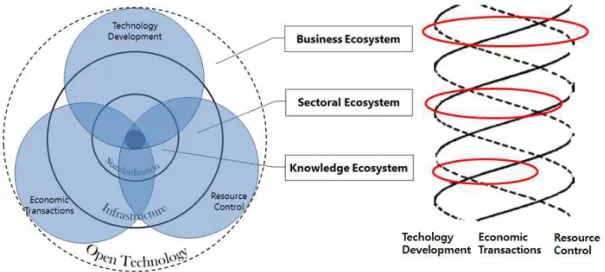
Fig. 1 Conceptual Framework for an Innovation Ecosystem The innovation process is not linear, but
increasingly complex and dynamic[30]. Thus, innovative activities cannot be arranged according to a linearly defined process; rather, they take place along an evolutionary process. That is, an innovation network evolves in contextual conditions that continuously change over time.
Such an evolutionary network is can be regarded as an innovation ecosystem. Its evolutionary process is driven by coordination among functional mechanisms.
Leydesdorff and Zawdie[23] explain that functional mechanisms interact both horizontally and vertically. Horizontally, the functions work together when the innovation process is activated[23]. Vertically, interactions among these functions are recursively re-organized, shaping a life-cycle[21, 23]. In this regard, an innovation ecosystem can be described as a self-organized system evolving through coordination among different functional mechanisms. This coordination is continuously re-arranged along the evolutionary process of technology innovation.
Fig. 1 illustrates the conceptual framework
for an innovation ecosystem. An innovation ecosystem can be described as a composite of sub-ecosystems. In this study, we conceptualized sub-ecosystems as social contexts requiring collaboration in the innovation process. The value of technology innovation is generated when actors use appropriate technology resources at an appropriate time[27]. A certain context in the innovation process is made through coordination of functional mechanisms that support collaboration among actors in implementing innovation[31]. These mechanisms include technology development, economic transactions to disseminate technologies, and resource control to govern economic exchange[20, 23].
The coordination among functional mechanisms improves collaboration among actors in creating economic value from technology innovation.
Sub-ecosystems are increasingly re-organized by changes in the interactions among these mechanisms[20]. The evolutionary trajectories of technology innovation are shaped while functional interactions are transformed recursively.
An innovation ecosystem may be initiated
by developing new technologies as standards.
A knowledge ecosystem plays a role in introducing new knowledge or technologies to an organizational network. Technology standards act as an important mechanism in coordinating an organizational network for the development and commercialization of technologies[32].
Actors create products for economic exchange by adopting technology standards.
Standard technologies should be disseminated throughout an industry for successful market penetration. In this study, this context is conceptualized as a sectoral ecosystem. Actors create products by combining technology components based on the infrastructures that support resource exchange between the components or products. Technology components and products are linked to be interdependent and interoperable by infrastructures that play the role of a mediator.
The level of a sectoral ecosystem is determined by the coverage of infrastructure use. For example, a sectoral ecosystem is treated as a regional cluster if the use of infrastructures is restricted by locus. Technology innovation can be broadly diffused through interactions between different clusters[23]. This means that technology resources need to be opened to external actors. In this study, the context supporting open technologies is defined as a business ecosystem.
Our conceptual framework for an innovation ecosystem indicates that an organizational network can achieve sustainable innovation through transformations among sub-ecosystems.
These sub-ecosystems are recursively re-organized when shaping evolutionary trajectories of technology innovation.
3.2 Functional Mechanisms of Value Co-creation
In the conceptual framework for an innovation ecosystem, innovation is implemented through the synergistic coordination of functional mechanisms [33]. These mechanisms support collaboration among actors around technology standards[31-32]. An innovation ecosystem is built through value co-creation that is driven by these mechanisms. According to S-D logic, value co-creation is conceptualized as service exchange through resource integration[26].
Actors can use resources provided by others to create their own products or services.
These resources can be classified into two types: one that requires a certain action and the other that acts on other resources[24, 34].
Technologies are the latter because technologies can be integrated with other resources to create products or services. In an innovation ecosystem, value cannot be generated without sharing technology resources.
In the conceptual framework, sub- ecosystems refer to social contexts for collaboration in implementing innovation that require a set of functional mechanisms. In this study, we applied the perspective of S-D logic to differentiate the aspects of the mechanisms according to the evolutionary process in which the sub-ecosystems are recursively transformed.
Vargo and Akaka[25] point out that value is created by service exchange through application of resources. In this regard, the three mechanisms can be considered important factors for service exchange in an innovation ecosystem. In other words, actors co-create value through the collaborative development of technologies, economic transactions through the application of technologies, and governing rules for controlling the application of technologies.
Akaka, Vargo, and Lusch[29] argue that a particular context serving value co-creation is established by institutionalizing governing rules to control resource exchange among actors. In
Sub -ecosystems
Functional Mechanisms Technology
Development
Economic Transactions
Resource Control Knowledge
Ecosystem
Development of technology standards
Product creation by adopting standards
Institutions supporting adoption of standards Sectoral
Ecosystem
Development of technology infrastructures
Product creation by integrating components
Infrastructures supporting resource exchange Business
Ecosystem
Development of enabling technologies
Hybrid/new business model generation
by external actors
Open technologies for external adaptation Table 1 Functional Mechanisms of an Innovation Ecosystem
this vein, we proposed that each sub-ecosystem is organized by a governing rule that defines a way to use technology resources. Table 1 indicates how the functional mechanisms serve value co-creation at each sub-ecosystem.
A knowledge ecosystem focuses on making value propositions around new technology standards. Standard technologies are developed by collaborative arrangement among stakeholders.
Actors adopt technology standards to create products or applications that deliver value propositions to customers. Institutions are required for governing the process of creating products from technology standards. Institutions include programs, guidelines, and rules[29].
Actors can use technology resources arranged by institutions in creating products that are compliant with technology standards.
A sectoral ecosystem requires infrastructures that enable dissemination of technology standards. Infrastructures are a combination of technology components and products that are shared by multiple stakeholders[35]. The components and products are interoperable through infrastructures. Actors create products by integrating a set of interdependent components rather than developing new technologies.
Infrastructures mediate transactions by supporting resource exchange between the components or products.
A business ecosystem is driven by an open technology strategy. This strategy allows external actors to use technology resources that serve the application of technology standards and infrastructures. These technology resources, so-called enabling technologies, help external actors create products or services.
Potential actors are encouraged to participate in the business ecosystem because they can promote new business opportunities. They can generate hybrid or new business models through the interdisciplinary or cross-sector convergence that is driven by the application of enabling technologies.
4. Case Study
4.1 Qualitative Approach
We conducted a qualitative case study to investigate the aspects of collaboration in an innovation ecosystem. The qualitative method is used to understand a complex situation in a social reality[36]. A case study is a specific form of qualitative research that provides detailed information of a certain decision or process[37]. A case study is suitable when there is a theory being developed[38] and
when the research question is of the how type[37].
This paper focused on explaining how organizational collaborations take place around technology innovation and how an innovation ecosystem evolves. We took a longitudinal view because the conceptual framework describes an innovation ecosystem in terms of the flux of time. A longitudinal case study provides a deepened understanding of a process[36].
The DLNA, a case of a technology collaboration network, was selected to demonstrate the conceptual framework. This network has seen over 10 years of change through technological development and improvement. The DLNA is an appropriate case to cast light on the dynamic changes of an innovation ecosystem.
4.2 Case Overview
The DLNA is a technology standards organization founded in 2003 by a group of consumer electronic (CE) manufacturers to develop interoperability guidelines for sharing digital media in a connected home network.
The DLNA is an industry-wide collaboration network comprised of more than 150 CE companies across the world. Since the first guideline for DLNA-compatible products was published in 2004, the DLNA has continued to implement innovation in its standard guidelines and ecosystem.
It is easy for consumers to share data on DLNA-compatible devices, including TVs, PCs, smartphones, set-top boxes, audio/video (AV) receivers, game consoles, printers, and so on.
For example, one can stream videos from PCs to TVs or play MP3 music stored on smartphones over hi-fi audio systems. To use a DLNA home network, two types of
DLNA-compatible products are required:
DLNA servers, such as PCs or networked storage devices, and DLNA client devices on which shared content is viewed or played.
According to the DLNA guidelines, the process of setting up a multimedia home network is simplified by establishing a single protocol through which DLNA-compatible devices work together regardless of their manufacturer. To achieve this, the DLNA has operated a certification program through which different DLNA-certified products have been released to the market. Based on the DLNA certification program, the industry-wide collaborative network among device manufacturers has been growing and evolving with the aim of increasing the economic value of the whole network system. This study analysed the DLNA network in terms of the conceptual framework.
4.3 Findings: Evidences of the Evolution
In this study, we demonstrated our conceptual framework through the case of the DLNA ecosystem. The DLNA ecosystem has evolved for over 10 years since its certification program was enforced. Its changes are classified as occurring during three periods according to the improvement of the standard guidelines. The first period was from 2006 to 2007, during which the guideline version 1.0 operated for the certified products. The second period spanned from 2008 to 2010 with the operation of a new standards guideline version 2.0. The DLNA product categories increased from 2 to 12, which led to the economic growth. The third period was from 2011 to 2015, a period marked by software being allowed to adopt the DLNA standards. These three periods can be mapped to the three sub-ecosystems of the conceptual ecosystem
Sub- ecosystems
Functional Mechanisms Technology Development Economic
Transactions
Resource Control Knowledge
Ecosystem
Development of DLNA
standard guidelines DLNA product creation DLNA certification program Sectoral
Ecosystem
Development of DLNA component technologies
Integration of DLNA components into products
Infrastructure of DLNA components and products Business
Ecosystem Development of SDK DLNA software/service
Software technologies supporting adaptation of
DLNA standards Table 2 Functional Mechanisms of the DLNA Ecosystem
framework. The sub-ecosystems co-exist in a recursive transition according to the development and improvement of the technologies. Table 2 shows that the functional mechanisms of the DLNA are differentiated in each sub-ecosystem.
In the perspective of a knowledge ecosystem, the DLNA network was organized to introduce the standard technologies that support the sharing of multimedia data between different media devices. The DLNA network consists of board members and general members. The board members are the key stakeholders that collaborate to determine the DLNA standards and governing rules. The DLNA standards are developed by collaborative arrangements of the stakeholders. All the members engaged in the development and use of the DLNA standards are required to obtain the DLNA certification for their products. They create new DLNA products by adopting the DLNA standards.
The DLNA provides technology resources for supporting the certification process. The resources include test centers for certifying DLNA products, the certification test tools necessary for product development, and staff supports. These resources help actors integrate the DLNA standards into their products. The DLNA certification program standardizes the process of developing products compliant with
the DLNA standards. The value of a knowledge ecosystem is generated through product creation by adopting technology standards.
A sectoral ecosystem is organized to disseminate technology standards throughout an industry. Infrastructures stimulate technology diffusion by streamlining the process of product creation. The technological system of the DLNA consists of different technology components, such as middleware, file codecs, network modules, and so on. The DLNA supports technology component vendors to provide embedded technologies that are compliant with the DLNA guidelines. Device manufacturers can integrate the DLNA components into their products rather than develop new technologies. Application of the DLNA components reduces development costs of the DLNA products. The DLNA components and products are interoperable through infrastructure. The infrastructure serves complementary relationships between the DLNA products by mediating resource exchange between the DLNA components. For example, there is a complementary relationship between data storage servers and media players in a DLNA home network. The DLNA components and products need to stay up-to-date with the improvement of the DLNA standard. The Infrastructure contributes
to the diffusion of the DLNA technology standards throughout the CE industry.
Technology innovation could be broadly diffused beyond an industry when technologies are opened to external actors, which can be conceptualized as a business ecosystem.
Recently, the DLNA has started to allow software products to be labelled as DLNA- compliant. The DLNA-compliant software, such as a media player application, allows any media content on it to be accessed by any DLNA devices in a home network. For example, a PC can be transformed into a DLNA-compatible media server by Windows Media Player. Consumers can even build a DLNA home network by themselves with DLNA-compliant software. The DLNA supports software development kits (SDKs) to promote the development of DLNA-compliant products and services. SDKs enable any multimedia devices and applications to be compliant with DLNA-certified devices. This open technologies policy has enabled application services for smartphones to be adapted in the home multimedia market that was traditionally led by CE manufacturers.
The availability of technologies attracts third-party software developers to the DLNA ecosystem because of the benefit of reducing development cost and new market opportunities. This external use of knowledge encourages actors to develop new business models. The DLNA ecosystem is becoming globalized by institutionalizing the way in which potential participants are involved in the ecosystem. Ecosystems can enlarge the business territories and continuously evolve through the integration of external knowledge resources.
5. Conclusions and Discussions
This study focused on the evolution of an innovation ecosystem in terms of value-co- creation, and demonstrated how value is generated in a complex organizational network.
An innovation ecosystem is conceptualized as organizational network of economic actors, technologies, and social contexts, which interact for knowledge production, use and adaptation. The perspective of innovation ecosystems emphasizes that innovation is implemented through dynamic changes in an organizational network engaged in the development and commercialization of technologies[11, 19, 20].
Organizations participating in an innovation ecosystem collaborate to create value through technology development, market transactions, and social contexts that affect diffusion of technology innovation. Existing studies on innovation ecosystems do not illuminate fundamental mechanisms in the value co-creation and evolution of an organizational network although they have developed theories to determine characteristics of innovation ecosystems. In this regard, we proposed a conceptual framework to describe value co-creation in innovation ecosystems by embedding the perspective of S-D logic into the evolutionary model of the Triple Helix. In our framework, an innovation network evolves through the arrangements of functional mechanisms that shape evolutionary processes, which are conceptualized as sub- ecosystems that mean social contexts for collaboration in implementing innovation.
In this study, the framework was demonstrated in the real case of the DLNA.
The case study indicates features of value co-creation when implementing innovation in an organizational network. Findings from the case study are listed here. Firstly, an innovation ecosystem is initiated by the collaboration of
key stakeholders in developing technology standards. They collaborate to standardize the process of creating products that adopt the technology standards. New technologies can be adopted efficiently when they are integrated into products or services in a standardized way defined by institutions. Secondly, new technologies are widely disseminated through infrastructures, in which the structure of resources exchange between the technology components or products is defined. Actors collaborate to create products by integrating a set of interdependent components through the infrastructures. Thirdly, an ecosystem continuously evolves through open innovation[39]. When it is possible for technology resources to be used by external actors, the ecosystem is enlarged beyond its immediate boundary[41]. The case study sheds light on value co-creation in the evolutionary process of an innovation ecosystem.
The conceptual framework proposed in this study accounts for how social economy systems are sustained and prospered, and describes innovation phenomena in terms of value co-creation. Value co-creation is one of the main concerns of contemporary research in social sciences. The framework provides insights to develop policy strategies for the continuous innovation and progress of organizational networks.
This study contributes to the current academic research on innovation as follows.
First, we determined that technology innovation is not diffused through a linearly defined innovation process: rather, it takes place along an evolutionary process. The traditional policy strategies for promoting innovation have dealt with innovation as a linear input-output process, and overlooked structural dynamics of an innovation network that is self-organized.
This study emphasized that innovation is the
result of dynamic changes in interactions among actors engaged in innovation.
Second, we identified how actors collaborate to create value in an evolutionary process.
Value co-creation is one of the main concerns of contemporary research in social science.
However, its concept has not been defined in the field of technology innovation. We conceptualized the value co-creation in terms of resource integration by merging the perspective of S-D logic into the evolutionary process. This approach enlightens evolutionary mechanism of an innovation network.
Policy makers can utilize the conceptual framework to develop strategies for making an innovation network for technology diffusion.
The first step is defining a governing strategy for resource control, which will lead to collaboration in creating products that utilize technology innovation.
On the other hand, there are limitations to this study. First, the conceptual framework needs to be verified in more cases studies to ensure its applicability. Future research should empirically demonstrate various innovation cases including regional or national innovation ecosystems. Second, a more rigorous approach is required in describing the conceptual framework. Although the framework reflects realistic views of an innovation ecosystem, it lacks a structured method to evaluate its logic.
Further research may refine and validate the theory-based framework.
References
[1] Raab, J. and Kenis, P., "Heading Toward a Society of Networks Empirical Developments and Theoretical Challenges", Journal of Management Inquiry, Vol. 18, No. 3, pp.
198-210, 2009.
[2] Durst, S. and Poutanen, P., "Success Factors of Innovation Ecosystems: A Literature Review." In CO-CREATE 2013:
The Boundary-Crossing Conference on Co-Design in Innovation, Edited by R.
Smeds and O. Irrmann, 2013.
[3] Jalonen, H., "The Uncertainty of Innovation: A Systematic Review of the Literature.", Journal of Management Research, Vol. 4, No. 1, 2011.
[4] Bessant, J. and Tidd, J., "Innovation and Entrepreneurship", John Wiley & Sons, 2007.
[5] Rogers, E. M., "Diffusion of Innovations", Simon and Schuster, 1995.
[6] Sotarauta, M. and Srinivas, S., "Co- Evolutionary Policy Processes: Understanding Innovative Economies and Future Resilience", Futures, Vol. 38, No. 3, pp.
312-336, 2006.
[7] Lundvall, B., "National Systems of Innovation: Toward a Theory of Innovation and Interactive Learning", London: Pinter, 1992.
[8] Cooke, P., Uranga, M. G., and Etxebarria, G., "Regional Innovation Systems: Institutional and Organisational Dimensions", Research Policy, Vol. 26, No. 4, pp. 475-491, 1997.
[9] F., "Sectoral Systems of Innovation and Production", Research Policy, Vol. 31, No.
2, pp. 247-264, 2002.
[10] C., "Systems of Innovation: Perspectives and Challenges." In Oxford Handbook of Innovation, Edited by Jan Fagerberg and David C. Mowery, New York: Oxford University Press, 2006.
[11] Mercan, B. and Göktaş, D., "Components of Innovation Ecosystems: A Cross-Country Study", International Research Journal of Finance and Economics, No. 76, pp. 102-112, 2011.
[12] Yawson, R. M., "The Ecological System
of Innovation: A New Architectural Framework for a Functional Evidence-Based Platform for Science and Innovation Policy", In the Future of Innovation Proceedings of the XXIV ISPIM 2009 Conference, Vienna, Austria, 2009.
[13] Miller, G. and Spoolman, S., "Living in the Environment: Principles, Connections, and Solutions", 16th Edition, Brooks Cole, 2008.
[14] Basole, R. and Karla, J., "On the Evolution of Mobile Platform Ecosystem Structure and Strategy" Business &
Information Systems Engineering, Vol. 3, No. 5, pp. 313-322, 2011.
[15] Adner, R., "Match your Innovation Strategy to your Innovation Ecosystem."
Harvard Business Review, Vol. 84, No. 4, pp. 98-107, 2006.
[16] Wang, P., "Popular Concepts beyond Organizations: Exploring New Dimensions of Information Technology Innovations", Journal of the Association for Information Systems, Vol. 10, No. 1, pp. 1-30, 2009.
[17] Rubens, N., Still, K., Huhtamaki, J., and Russell, M. G., "A Network Analysis of Investment Firms as Resource Routers in Chinese Innovation Ecosystem", Journal of Software, Vol. 6, No. 9, pp. 1737-1745, 2011.
[18] Papaioannou, T., Wield, D., and Chataway, J., "Knowledge Ecologies and Ecosystems? An Empirically Grounded Reflection on Recent Developments in Innovation Systems Theory." In The 6th International Triple Helix Conference on University-Government-Industry Relations, Singapore, pp. 16-18, 2007
[19] Etzkowitz, H. and Leydesdorff, L., "The Dynamics of Innovation: From National Systems and "Mode 2" to a Triple Helix of University-Industry-Government Relations.",
Research Policy, Vol. 29, No. 2, pp.
109-123, 2000.
[20] Leydesdorff, L. and Meyer, M., "Triple Helix Indicators of Knowledge-Based Innovation Systems: Introduction to the Special Issue", Research Policy, Vol. 35, No. 10, pp. 1441-1449, 2006.
[21] Leydesdorff, L., "The Triple Helix of University-Industry-Government Relations
" In Encyclopedia of Creativity, Innovation, and Entrepreneurship, Edited by Elias G Carayannis and D. T. Campbell, New York: Springer, 2012.
[22] Leydesdorff, L., Dolfsma, W., and Van der Panne, G., "Measuring the Knowledge Base of an Economy in Terms of Triple-Helix Relations Among 'Technology, Organization, and Territory'", Research Policy, Vol. 35, No. 2, pp. 181-199, 2006.
[23] Leydesdorff, L. and Zawdie, G., "The Triple Helix Perspective of Innovation Systems." Technology Analysis &
Strategic Management, Vol. 22, No. 7, pp.
789-804, 2010.
[24] Vargo, S. L. and Lusch, R. F., "Evolving to a New Dominant Logic for Marketing", Journal of Marketing, Vol. 68, No. 1, pp.
1-17, 2004.
[25] Vargo, S. L. and Akaka, M. A., "Value Cocreation and Service Systems (Re)Formation: A Service Ecosystems View", Service Science, Vol. 4, No. 3, pp.
207-217, 2012.
[26] Lusch, R. F., Vargo, S. L., and O'Brien, M., "Competing through Service: Insights from Service-Dominant Logic.", Journal of Retailing, Vol. 83, No. 1, pp. 5-18, 2007.
[27] Vargo, S. L. and Lusch, R. F., "Service- Dominant Logic: Continuing the Evolution", Journal of the Academy of Marketing Science, Vol. 36, No. 1, pp.
1-10, 2008.
[28] Vargo, S. L. and Lusch, R. F., "It's all B2B…and beyond: Toward a Systems Perspective of the Market", Industrial Marketing Management, Vol. 40, No. 2, pp. 181-187, 2011.
[29] Akaka, M. A., Vargo, S. L., and Lusch, R.
F., "An Exploration of Networks in Value Cocreation: A Service-Ecosystems View."
Review of Marketing Research, No. 9, pp.
13-50, 2012.
[30] Carayannis, E. G. and Campbell, D., "Mode 3 Knowledge Production in Quadruple Helix Innovation Systems", Springer, 2012.
[31] Lyytinen, K. and King, J. L., "Around the Cradle of the Wireless Revolution: the Emergence and Evolution of Cellular Telephony", Telecommunications Policy, Vol. 26, No. 3, pp. 97-100, 2002.
[32] Yoo, Y., Lyytinen, K., and Yang, H., "The Role of Standards in Innovation and Diffusion of Droadband Mobile Services:
The case of South Korea", The Journal of Strategic Information Systems, Vol. 14, No. 3, pp. 323-353, 2005.
[33] Leydesdorff, L. and Fritsch, M.,
"Measuring the Knowledge base of Regional Innovation Systems in Germany in Terms of a Triple Helix Dynamics.", Research Policy, Vol. 35, No. 10, pp.
1538-1553, 2006.
[34] Akaka, M. A. and Vargo, S. L.,
"Technology as an Operant Resource in Service (eco)Systems." Information Systems and e-Business Management, Vol. 12, No. 3, pp. 367-384, 2014.
[35] Star, S. L. and Ruhleder, K., "Steps Toward an Ecology of Infrastructure:
Design and Access for Large Information Spaces", Information Systems Research, Vol. 7, No. 1, pp. 111-134, 1996.
[36] Collis, J. and Hussey, R., "Business Research: A Practical Guide for
Undergraduate and Postgraduate Students", Palgrave Macmillan, 2013.
[37] Yin, R. K., "Case Study Research: Design and Methods", Sage Publications, 2013.
[38] Eisenhardt, K. M., "Building Theories from case Study Research.", Academy of Management Review, Vol. 14, No. 4, pp.
532-550, 1989.
[39] Chesbrough, H., "Open Innovation: the New Imperative for Creating and Profiting from Technology", Harvard Business School, MA: Harvard Business School Press, 2003.
[40] Han, E., Suh, B., and Shin, S. K.,
"Development of a Reference Model to Analyze Value Co-creation in Mobile Platform Business: from an Ecosystem View", The Journal of Internet Electronic Commerce Research, Vol. 17, No. 2, pp.
89-110, 2017.
[41] Hong, S. G., Lee, H. M., Lim, S. B,, and Kim, N. R., "Co-creation: Overview and Research Agenda", The Journal of Information Systems, Vol. 23, No. 1, pp.
203-223, 2014.
한 은 정 (Han Eunjung)
∙정회원
∙순천향대학교물리학과 이학사
∙숙명여자대학교 경영학석사
∙숙명여자대학교 경영학박사
∙동아대학교 공동가치창출혁신연구소 연구원
∙관심분야 : 혁신네트워크, 산업생태계, 플랫폼 비즈니스, 비즈니스모델
홍 순 구 (Hong Soon-Goo)
∙종신회원
∙영남대학교경영학과 경영학사
∙Univ. of Nebraska-Lincoln 경영학석사
∙Univ. of Nebraska-Lincoln 경영학박사
∙동아대학교 경영대학 경영정보학과 교수
∙동아대학교 공동가치창출혁신연구소 소장
∙관심분야 : IT기반 지역혁신, Co-creation, 중 소기업 정보화, 정보시스템 평가