혁신 중학교 과학 수업 사례를 통해 본 구조가 학생과 교사의 행위성에 미치는 영향:
정책과 실천에 대한 시사점
박지선1, 산야마틴1*, 주혜은2
1서울대학교, 2호주 맥쿼리대학교
Examining How Structures Shape Teacher and Student Agency in Science Classrooms in an Innovative Middle School: Implications for Policy and Practice
Jisun Park1, Sonya N. Martin1*, Hye-Eun Chu2
1Seoul National University, Republic of Korea, 2Macquarie University, Australia A R T I C L E I N F O A B S T R A C T
Article history:
Received 27 May 2015 Received in revised form 9 June 2015
30 June 2015
Accepted 30 June 2015
Conducted as an ethnographic examination of science teaching and learning in an Innovative Middle School in Korea, this study employs sociocultural theory to examine how structures afford and limit student participation in an innovative school designed to promote student-centered learning. Data includes teacher and student interviews, student responses to a questionnaire, classroom observations, and analysis of video recordings of ten lessons in two in two 8th grade science classes. Using structure|agency dialectic theory, we identify and describe some structures that afford and limit teacher and student agency at the micro (science classrooms), meso (school), and macro (Korean society) levels to raise some questions about current reform measures, such as innovation schools, that seek to position classroom teachers as agents for change in science education reform in Korea. Findings suggest that while teachers and school administrators play an essential role in structuring learning opportunities at the meso and micro levels, they have limited agency to address structural constraints originating at the macro-level, which can negatively impact teaching and learning in the science classroom. We offer implications for policy and practice and argue the need for more qualitative research, informed by sociocultural theory, to inform science education reform efforts in Korea.
Keywords:
Innovative Middle School, participation,
structure|agency dialectic theory
* 교신저자 : Sonya N. Martin ([email protected])
** 이 논문은 2013년 정부(교육부)의 재원으로 한국연구재단의 지원을 받아 수행된 연구임 (NRF-2013S1A3A2042832).
http://dx.doi.org/10.14697/jkase.2015.35.4.0773
Ⅰ. Introduction
Drawing from the 2006 PISA results, researchers (Seidel et al., 2007, as reported in Prenzel et al., 2012) found that in comparison to 30 other OECD nations, students in science classrooms in Korea reported the lowest frequency of interactive teaching patterns, including explaining ideas in class, stating their opinions, engaging in class debate, or discussing topics. While these exams (i.e., PISA 2006, 2010, 2012) show that Korean students have high achievement, they also indicate that Korean students have lower than OECD average scores for interest and enjoyment in studying science (Choi, 2014).
This paradox is disconcerting for science educators because low student interest in science could have negative consequences for STEM innovation and development in Korea in the future. To counter these trends, a variety of reform efforts have been introduced in an attempt to change how science is taught and learned in Korean schools, but these efforts have not been effective in solving the intrinsic problems facing the Korean public education system (Park et al., 2009). Many reform efforts have been “top-down” approaches, which
have focused on making changes to structures external to the classroom in hopes of transforming teaching and learning, and, as a result, researchers and educators are increasingly voicing the need for voluntary reform from stakeholders in schools (Park et al., 2009).
In science especially, a number of science curriculum reform measures aimed at increasing Korean students’ exposure to hands-on science activities have been introduced and there has been increased emphasis on research introducing science teaching strategies shown to increase opportunities for students to engage in small group interactions and dialogues (Kim, 2015). Studies examining Korean science classrooms have identified time constraints (Kwak, 2012), class size (Jang & Kim, 2003), misalignment of curriculum goals with teaching strategies (Paeng & Paik, 2005) pressures for Korean teachers to cover large amounts of curriculum as test preparation, and students’
lack of experience engaging in small group dialogue (Kang et al., 2001) as potential impediments for teachers and schools to actively engage students to participate in student-centered learning. In 2006, a more expansive reform effort was introduced through by the government, which has the potential to positively impact science
Journal of the Korean Association for Science Education
Journal homepage: www.koreascience.org
education reform efforts. The Innovative School (혁신학교) policy offers school administrators autonomy from the government, which allows for the re-structuring of schools in ways that will allow teachers to implement changes in teaching and curriculum. While the Innovative Schools program was initially met with skepticism and distrust, the success of the development of such schools by the superintendent of Kyunggi-do in 2009 has contributed to the spread of the Innovative School movement in other cities, such as Seoul (Kim
& Lee, 2012). There are now more than 582 innovative schools across the country (Chung, 2015), including 89 designated Innovative Schools in Seoul (S.M.O.E., 2015).
Since the expansion of Innovative Schools in 2009, studies have begun to emerge in which researchers have explored the roles of principals and teachers in developing democratic school cultures and professional learning communities that help teachers to implement innovative teaching strategies and create and maintain channels for engaging parents in supporting these changes in the school (Baek et al., 2013). With the exception of one study, which focused on conflicts between teachers, principals and policy that affected classroom practice (Nam et al., 2015), these studies have mostly focused on describing the successes of Innovative schools. Because Innovative schools are designed to allow independent decision-making regarding management of personnel, curriculum, course offerings, and student evaluation methods, we have situated our research in an Innovative School where we could observe science teaching and learning practices that are not typically seen in Korean classrooms. We sought a science classroom in which students engaged in inquiry learning, and where they were supported to develop knowledge and understanding of scientific ideas through active mental processes that demand active participation of the student as learner (Anderson, 2002). We identified an Innovative School in which science teachers were implementing reformed science teaching strategies that routinely placed the teacher in the role of coach and facilitator while positioning the students in self-directed learning tasks that included a variety of activities and opportunities for students to ask questions, conduct investigations, and engage in collaborative learning.
The goals of this research were two-fold. First we wanted to explore the potential for an Innovative School to effectively support a teacher to implement student-centered instructional practices in science classrooms and second, we wanted to examine the impact of such a learning environment on Korean students’ engagement and participation in school science, which is an area that has been understudied (Yu et al., 2008). Other research examining limitations to science education reform have identified various barriers and dilemmas, ranging from physical and economic limitations (lack of resources), ability of the teacher (lack of science content or pedagogical knowledge), and political or cultural issues regarding what science is taught, to whom, and for what purpose (Anderson, 1996).
In order for us to examine such a complex issue, we need a theoretical
lens robust enough to support an exploration of multiple factors that can affect how science is taught and learned in the classrooms in the Innovative School in our study. In the last few decades, science educators have paid increased attention to cultural sociology (Bourdieu 1986; 1992; Sewell 1992; 1999) as a useful framework for describing and making sense of students’ and teachers’ practices when engaged in the teaching and learning of science.
By viewing classrooms with a sociocultural lens, researchers have found that the practices and beliefs held by individuals shape how science is done in different learning environments (Aikenhead &
Jegede, 1999; Gaskell, 2003), that individuals play a variety of roles when participating in the doing of science (Tobin, 2005; Elmesky &
Tobin, 2005), and that pedagogical and methodological strategies that support teachers and students to reflect on and reflexively change their practices and beliefs can be effective in improving how science is taught and learned (Levin & Wadmany, 2006; Siry et al., 2014). In this research, we introduce structure|agency dialectic theory as a lens for helping us to identify various factors, (which we conceptualize as structures), existing at different levels (classroom, school, and society) that can potentially support or limit science teachers in Innovative Schools from effectively implementing reform science teaching practices. We are also interested in understanding the potential for different structures to impact Korean students’
perceptions about engagement and participation in science. The research questions framing our investigation are:
1. What are students’ general perceptions about engagement and participation in science in an Innovative School?
2. What structures at the classroom, school, and societal levels afford or limit teacher and students’ enactment of student- centered science teaching and learning practices in Innovative Schools?
3. What are the implications of our findings for science teaching and learning in Innovative Schools in Korea?
By identifying and describing some structures that afford and limit teacher and student agency in the classroom (micro level), in the school (meso level), and Korean society (macro level), we hope to raise some questions about current reform measures, such as Innovation Schools, that seek to position classroom teachers as agents for change in science education reform in Korea. Our findings have important implications for administrators and teachers in Innovative schools, as well as teachers in regular public schools that want to incorporate more innovative practices in their teaching. Ultimately, we hope our work can provide some insights to policy makers, administrators, and teachers about the kinds of structural supports that are necessary for affecting transformation in science teaching that can improve how students experience school science. In the sections that follow, we provide more details about the theoretical and metho-
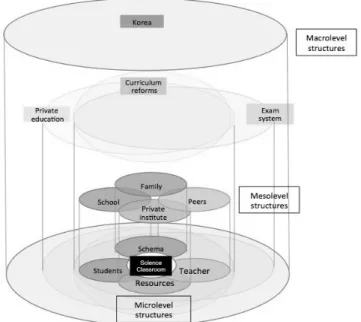
Figure 1. Structural influences shaping teaching and learning in science classrooms in innovative schools dological frameworks supporting this research.
Ⅱ. Theoretical Rationale
Drawing from William Sewell’s (1992; 1999) structure|agency dialectic perspective, we conceptualize classrooms as social fields in which teachers and students enact culture as practices. Culture here can be conceived as science culture, classroom culture, or even Korean culture. The extent to which a teacher or student is able to enact cultural practices to help them meet their goals is referred to as agency.
The agency of an individual or collective is recursively interconnected to the structures that exist in any given field. Structures consist of schema and resources, both of which exist in a dialectical relationship to one another within any field (Sewell, 1992; 1999). According to Bourdieu (1986; 1992), fields can be physical spaces, such as schools or neighborhoods, or fields can be social spaces that are momentarily defined by the schema and practices held by individuals within a shared space. In either case, Bourdieu reasoned that fields are nested within other fields and that fields are porous in nature, meaning that the structures and practices associated with one field (such as the neighborhood) can be enacted in another field (such as a classroom).
This is because the field of the classroom is nested within the fields of the school and neighborhood and the boundaries separating these three fields are permeable. As people pass through these fields, they carry with them their ways of being and acting in the world (their culture) and they consciously and unconsciously enact practices formed in one field in another field. The cultural practices people enact within fields are structured by schema (including beliefs, values, and rules about how students should behave or what science should be taught), by the availability of physical and human resources (including science equipment or the existence of a laboratory technician), and the opportunity for individuals to make use of resources to meet their goals (Sewell, 1992; 1999).
Drawing from Bourdieu’s notion of nested fields (1986; 1992), we conceptualized the classroom, school, and Korean society as representing three interconnected fields (at three levels: micro, meso, and macro), each with structures that impact science teaching and learning in the classrooms in this Innovative School (see Figure 1).
In this research we seek to explore a classroom setting in an Innovation School in which the structures commonly associated with what it means to “teach and learn science” or to be “good at science”
are expected to be different from what is found in typical Korean classrooms. By observing science teaching and learning in an Innovative School, we can identify “patterned actions”, meaning practices that occur frequently and are enacted by many participants in a field. Practices identified as commonly occurring provide strong evidence of the kind of culture of learning that exists in the classroom.
By characterizing what learning looks like in a science classroom in an Innovative School, we hope to demonstrate the potential for
teachers in these schools to affect changes in how Korean students experience science. However, because beliefs (schema) about what it means to learn and to teach, to do science, to be a good teacher or good student are all shaped by structures that exist in multiple fields at the same time, we can also expect to see contradictions to these patterns of coherence (Tobin, 2005). Contradictions are important because they reveal misalignments that exist between structures in different fields. As such, these contradictions can serve as important sites for transformation, because once we are aware that structural constraints exist, we can begin to interrogate what can be done to transform these structures (via changes in schema or the existence or use of resources). In doing so, we seek to expand opportunities for teachers and students to become more agentic in teaching and learning science in ways that increase student enjoyment and interest in science, while also improving their understanding and achievement.
Ⅲ. METHOD
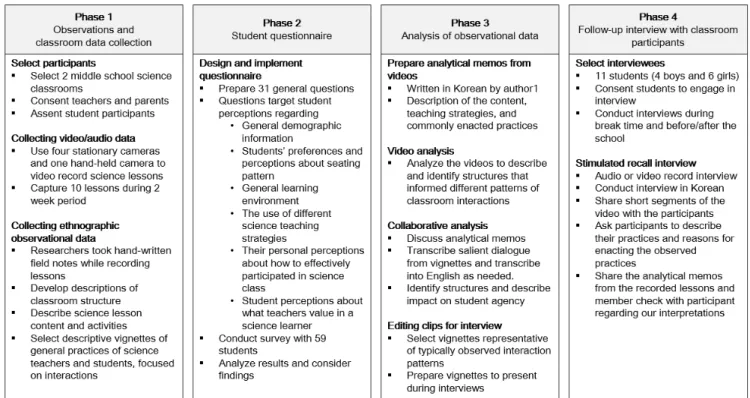
The methodology was informed by interpretive research (Erickson, 1998) focused on looking for patterns of coherence in the practices enacted by participants in a field. Analysis of these patterned practices allowed us to identify schema about how science teaching and learning happened in the observed classrooms. Conducted as an ethnographic examination of science teaching and learning in an Innovative Middle school in Korea, this study employed four distinct phases of data collection (see Figure 2).
During Phase 1 of the project, we observed and video/audio captured 10 science lessons in two middle school science classrooms.
In Phase 2 we prepared a student questionnaire based on findings from the observations. The questionnaire was designed to assess
Figure 2. Overview of methods for data collection and analysis
student perceptions regarding the openness of the learning environment, the purpose of science class, what it means to
“participate” in school science, and their general preferences for engaging in different types of activities. In Phase 3, we analyzed the videos using video analysis tools and traditional ethnographic observational tools to describe and identify structures at the classroom, school, and society levels (micro, meso, and macro) that informed different patterns of classroom interactions. Finally, in Phase 4, we interviewed teachers and students to discuss the findings from our analysis and to expand our understanding by asking the teachers and students to a) discuss their perceptions of our analysis (member checking), b) to verbalize their reasoning for their individual actions captured in the video observations, c) to provide feedback regarding their individual preferences for choosing to engage or not engage in different types of activities, and d) to provide insight regarding their beliefs about the role of teachers and students in promoting positive and productive classroom interactions during science lessons.
1. Participants
This study took place in two 8th grade science classes in a public Innovative Middle School (IMS) designed to deliver the national curriculum standards with an emphasis on utilizing student-centered instructional strategies in a collaborative learning environment. While there are various types of IMS, the school in this study focuses on innovation of teaching. For this, curriculum of this school was based on Japanese educational research citing the benefit of building a
‘learning community’ (e.g. Son, 2004) and focused efforts on introducing teachers to concepts like collaborative learning and peer
learning, both of which they were supported to use in their own classrooms. This IMS is located in a socioeconomically depressed neighborhood in Seoul, which is a megacity with more than 11 million inhabitants.
Eunhee (pseudonym) was the teacher participant in this study.
Eunhee is a veteran teacher with 17 years of science teaching experience at the middle school level. Hiring and placement policy in Korean public school requires that teachers move to a new school site once every four or five years. As a result, this school was Eunhee’s fourth public school assignment. Eunhee holds a doctoral degree in science education and she actively engaged in on-going professional development with a small learning community of science teachers at IMS. The small learning community focused on learning how to improve teachers’ use of collaborative instructional strategies. At the time of the study, Eunhee had been working at this school for three years.
Each section of 8th grade had thirty students, but only 43 students gave consent to participate in the observation and video recording of the science classes. However 59 students consented to take the survey. Of the 59 students who consented, 30 were boys and 29 were girls. Of the 43 students who consented to classroom observation and video recording, 21 were boys and 22 were girls. All students ranged in age from 13 to 14 years. Although this research was conducted as part of a larger study focused on understanding the impact of culture on science classrooms in Korea, for the purpose of this paper, we focus our attention to describing the conditions and experiences impacting contradictions to science learning for eleven students who participated in both the video recordings, survey, and interviews (including four students (1 boys and 3 girls) from one class and seven
Table 1. Student participants for each source of data collected
Data Collected Boys Girls Total Number
Questionnaire Responses 30 29 59
Recorded Observations 21 22 43
Video Recall Interviews 4 7 11
(3 boys and 4 girls) from the other class). We consider these contradictions in relation to structures at three different levels (micro, meso, and macro) to make sense of how structures can impact how science is taught and learned, even at a school where the use of innovative instructional practices are encouraged.
As this study involved direct contact with minors, the Institutional Review Board (IRB) of Seoul National University monitored all procedures, including teacher and parental consent and student assent processes and data collection. The authors provided all required documentation to parents, students, and the teacher prior to start of the study and the researchers orally explained all ethical issues to the teacher and to student participants before commencing the study.
In accordance with guidelines for conducting ethical research, the authors use pseudonyms for the name of the school and for all participants in the study.
This study engaged all researchers in data analysis and interpretation, but Jisun collected the majority of the data from the school site. Specifically, Jisun conducted all of the interviews and administered the survey to the students, and she conducted most of the classroom observations and recorded all of the video data. Jisun was born and raised in Korea and has no educational experiences in another country and she is both accustomed to and knowledgeable about Korean culture and the Korean education system (as a student and a science teacher). As such, Jisun brings an emic or insider perspective to this study. In contrast, Sonya, who is Caucasian and was born and raised in the United States brings an etic or outsider perspective to the data interpretation. However, because Sonya taught middle school science and science teacher education courses for 15 years and has been living and working in Korea for four years as a researcher, her etic perspective to the Korean culture and Korean education system is also informed by her own experiences as a former science teacher and as a science teacher educator in Korea. Hye-Eun, supported the teams’ validation and analysis efforts for the ques- tionnaire data and as a native Korean who has been living and working outside of Korea for nearly 10 years, Hye-Eun brought both an emic and etic perspective to our analysis and interpretation. Drawing from all our experiences and understandings about science teaching and learning and culture, all three authors engaged in on-going collaborative interpretation and analysis of the data. Conducting analysis from both an emic and etic perspective is valuable for this research because structures are often unseen by participants who
“belong” to a social field. An etic perspective is useful for “noticing”
contradictions to patterns. Interpreting the contradictions was enriched by discussions with researchers and participants who have an emic,
or insider perspective.
2. Data Collection and Analysis
All data was collected over a 12-week period and includes extensive field notes, video recording of ten science lessons (five per class section), stimulated recall interviews with 11 students, and student questionnaire data with all students in both sections. Analytical memo generated from analysis of video recordings of each science lesson and collaborative research meetings between Jisun and Sonya to discuss the field note and the analytic memo occurred frequently. In this section, we describe each data source and the methods used to collaboratively analyze the data that supported our identification of patterned practices and contradictions observed as students and their teacher engaged in student-centered science teaching and learning at IMS.
Field Notes. Field notes were created using traditional ethnographic methods (Creswell 2012). The notes containes sketches of the classroom structure, student seat arrangements, notes about the content of the lesson and a general description of the unfolding lesson plan.
Field notes also described general participation patterns (i.e., how often individual students raised their hands, spoke in class, were called upon by the teacher, failed to engage, etc.) and reminders to examine the video at certain time periods for more detailed examination during video analysis phase.
Video Data. Jisun captured the video data over a 4-week period, during which time she observed and recorded five science lessons from each class for a total of 10 lessons. The video was captured using four camcorders, two of which were set to record from the front and left side and two were set to record from the back and right side. In addition, sometimes a hand-held camera was used to capture small group interactions. We used multiple camera positions in an attempt to capture as much detail about teacher and students’ practices as possible.
Analytical Memos. After each class was recorded, Jisun watched each set of videos (4 camera angles per lesson) in real time to prepare an analytical memo. All memos were initially written in Korean. Jisun watched each video, stopping to record time stamps and to write descriptions of individual and collective practices and salient participants’ utterances. Each memo included a general description of the content for each lesson (i.e., properties of matter or trends of the periodic table), a description about the teaching strategies that were implemented (i.e., small group activities, demonstration activities, whole class discussion), and specific notes to describe common practices students enacted (i.e., hand-raising, coming to the board to write, or putting head down on desk). Thus, memos focused the observer’s attention on describing actions and utterances. The memos also focused on identifying schema and resources that could serve structures that either afforded or limited student agency.
Collaborative Research Meetings. During research meetings, Jisun and Sonya would read through an analytical memo while simultaneously scrolling through the video from the lessons (all four angles were available for examination). We orally discussed the memos, translating the Korean to English as needed. When both researchers identified a segment of a video that either supported or contradicted emerging patterns of student or teacher practices, the researchers stopped to watch the video closely several times. These segments of video were transcribed into Korean and then orally translated into English during a subsequent research meeting. Sections of the video that included dialogue or interactions between the teacher and a student or students and a peer that we identified as salient to our research were edited to make shorter clips, which were then transcribed more carefully in both Korean and English. These clips were used to stimulate participant recall about their own actions during the recorded lesson during one-on-one interviews between participants and Jisun. The collaborative research meetings were either audio or video recorded to provide additional insights to support our on-going analysis.
Stimulated Recall Interview. Using the analytical memos and discussions from our research meetings, we selected short segments of the video (30-120 sec long) for simplified simulated recall interviews (Gass & Mackey, 2000) which were conducted with 11 students and the teacher. During interviews, Jisun shared videos as prompts to help the participants recall the moment when the episode took place. Participants were then asked view the video and describe the practices they were enacting and reflect on why they were enacting those practices in that moment. Each interview lasted between 10-40 minutes, depending upon the content of the video to be discussed.
In addition to the videos, transcripts and personal analytical memos from the science lessons were also shared with participants for member checking. All interviews were conducted in Korean and the interviews were also audio or video recorded to provide additional data.
Student Questionnaire. In addition to observations and interviews, we designed a questionnaire (Engagement and Participation in the Classroom - EPIC). The EPIC questionnaire includes 31 questions (divided into six sections) with a five-point Likert Scale (ranging from (1) strongly disagree to (5) strongly agree) was administered to all students in both class sections. We developed the questionnaire to help us probe more deeply about some issues that emerged from our observations. Students’ positive answer percentage were calculated and ANOVA analysis was conducted to investigate factors, such as students’ science achievement and gender, on their perceptions of engagement and participation in their science classroom.
Ⅳ. FINDINGS AND EMERGENT ISSUES
This section has been divided into four subsections. In the first section, we report findings from the student questionnaire, which
provides evidence as to the general perceptions held by students in Eunhee’s class about their engagement and participation. We share these findings to provide some insights into how students are experiencing the learning environment and to provide student-reported data about how students engaged in the science classroom and how they viewed the participation patterns of their peers. We also used questionnaire findings to help identify types of students whom we should target for the stimulated recall interviews. In the middle section of this paper, we draw from classroom observations, field notes, and video analysis of recorded science lessons to identify and characterize commonly occurring interaction patterns observed in the field of the classroom. We classfied the observed interaction patterns using Tobin’s (1988) description of four basic types of activity commonly seen in classrooms. Using off-prints from the videos, field notes, and transcripts from interviews with the teacher, we provided episodic events from the classroom to which we applied Sewell’s structure agency dialectic theory as a lens for making sense of how structures shape teacher and student practices in these science classes. We organized the middle section of the paper to examine how structures at the micro and meso level afforded or limited student-centered learning in science. In the final section, we focused on discussing the limits of the structural supports at the micro and meso levels to support all students to be engaged and to participate actively in the student-centered activities provided by Eunhee. In this section, we highlight how structures at the macro level, in fields outside of the classroom at the school, limited some students from fully engaging and participating in the science learning community that was valued by the school administration and actively fostered by Eunhee in the classroom.
1. What are students’ perceptions of engagement in science in Innovative School
We begin this section by sharing findings from student responses to the Engagement and Participation in Classroom (EPIC) ques- tionnaire, which we designed to describe students’ general perceptions about their experiences in science in IMS. The EPIC includes sections to measure students’ preferences and perceptions about the general learning environment (4 items); the use of different science teaching strategies (8 items); students’ perceptions about how to effectively participate in science class (11 items); students’ perceptions about what teachers value in a science learner (4 items); and students’ perceptions of themselves as a learner (4 items). The Cronbach reliability of these 31 items was 0.8. The questionnaire also included questions about general demographic information (ex. gender, age, grade level) (5 items) and students’ preferences and perceptions about seating patterns in class (5 items). Table 2 shows the percentage of students’ positive responses on the EPIC.
Perceptions of the ambience of the science class subscale showed
Table 2. Percentage of positive responses on the EPIC
Subscale Subscale description Mean percentage of positive
responses (%)
Range of positive responses (%) Ambience of the science class
(Q1-Q4)
General learning environment 70 59~81
Teaching and learning method (Q5-Q12)
The use of different science teaching strategies 37 17~78
Participation (13Q–23Q)
Personal perceptions about how to effectively participate in science class
36 12~57
The purpose of science class (Q24–Q27)
Personal expectations in science classroom 48 42~54
Personal characteristics (Q28-Q31)
Personal traits/preference in science classroom 31 17~36
Table 3. Students’ EPIC mean scores on science achievement groups and gender from ANOVA analysis
Variables Science achievement score Gender
High Medium Low Male Female
Mean STD 3.5±0.3a 3.2±0.3b 2.9±0.4c 3.3±0.4 3.1±0.4
F 15.4* 1.0
Eta2 0.37 0.02
Different subscripts indicate that there are significant differences between achievement groups
*p<0.05, **p<0.005
the highest mean percentage of positive answers. Among items in this scale, over 65% of students answered positively they “willingly ask questions to the teacher” (Q1), that they “can ask questions to their peers during their science lessons” (Q2), and that they “have opportunities to answer their teachers’ questions most time” (Q4). In addition, 59% of students answered that they “tend to help each other if there is something they don’t know during science class” (Q3).
However, students’ low positive responses to items in the participation subscale implies that the students in these science classrooms tend to be more passive in participation. In both statements, “I express my questions a lot during lessons” (Q22)” and “I give explanations to my friends voluntarily” (Q15), only 12% and 20% of students (respectively) positively agreed. At the same time, 44-45% of students positively agreed that they “listen hard to their teachers’ explanations”
(Q13) and “listen hard to friends’ presentations or explanations” (Q15).
These findings support our observations that the science classroom environment is perceived positively, and the teacher-student inter- actions are perceived as being slightly more positive than peer-peer interactions.
In the teaching and learning method subscales, most students, 78%, suggested that they “liked science practical work” (Q8) more than classroom discussions. Only 34% of students answered that they “liked discussions during science lessons” (Q9). However, 17% of students answered that they “study more effectively alone than by discussing with friends”. In our study, 66% students showed that they “liked their teacher’s explanations” (Q5) but only 34% of students indicated that it was possible to learn by “having friends explain science concepts in front of the class” (Q5). Students preferred participating in science experiments and listening to the teacher’s explanations more than they enjoyed class discussions. However, when asked about their preferences for studying, they preferred to engage in peer discussions
rather than study alone.
About 49-54% of students indicated they think “the purpose of science is to develop thinking skills and practical skills” (Q25 and Q27) while about 42-47% of students positively indicated they think the “purpose of science classes is to perform well in exams” (Q24) and the purpose of classroom participation is to “get a good grade in science” (Q26). Students in this research showed low confidence with regards to their scientific knowledge. Only 17% of students answered confidently they “have a lot of a scientific knowledge”
(Q30), while more than half of the students answered that they were
“interested in science” (Q28) and “in the science class” (Q29). More than 25% of students answered that they “are sleepy and tired during science lessons” (Q31). The overall findings present a contradiction for learning in a student-centered classroom, so we decided to interrogate these issues more deeply in our examination of structures supporting or limiting specific types of practices from being implemented by teachers and students in this classroom.
To support our interpretation of the ways in which structures may have constrained agency in the classroom, we engaged students who identified as “low”, “medium” or “high” achievers in member- checking activities using video recordings that were made in class. Students were asked to self-identify their science achievement level by describing themselves as high, medium or low achievers. Our analysis of students’ responses revealed that students’ perceptions about engagement and participation were significantly and strongly influenced by students’ science achievement (F=15.4, Eta2=0.37).
Students who identified as being “high” achievers showed signifi- cantly more positive perceptions about their participation in science than students who identified as “medium” or “low” achievers. As well, students who identified as having “medium” achievement showed more positive perceptions about participation in science than students
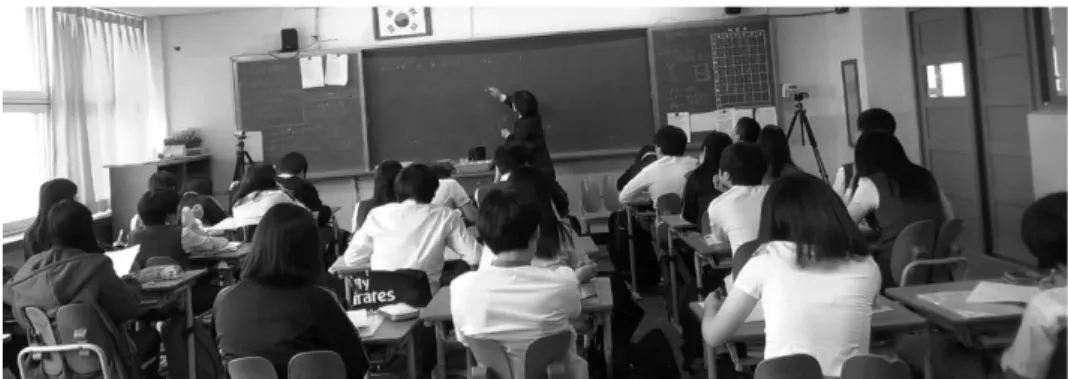
Figure 3. Offprint from video demonstrating practices enacted by teacher and student during WCNI activities
Figure 4. Students seen seated in pairs facing the front of the room and 8 students raising their hands to volunteer to add on to the explanation of the previous student
who self-identified as “low” achievers. Gender was not a significant variable in our research, but male students generally held more positive perceptions of science lessons and reported being more actively engaged in the science classroom. This finding is consistent with much of the research on achievement and gender in science, which has found that a) students who perform well in science academically tend to have more positive perceptions of the course and of the teacher (Seymour & Hewitt, 1997; Tobias, 1990) and b) male students tend to be more actively engaged in classroom discussion and laboratory activities than females (Tobin & Gallagher, 1987; Martin et al., 2006).
Despite these findings, we were able to identify both female and male students who identified as “high achieving” and who also chose not to participate actively in class.
2. What micro level structures afford or limit student- centered science learning in an Innovative School?
In this section, we describe four patterned practices we noticed from observations and video analysis of all 10-science lessons. We used Tobin’s (1988) description of four basic types of activity commonly seen in science classrooms to categorize the four observed patterned practices: whole class non-interactive (WCNI), whole class interactive (WCI), individual activity (IA), and small group (SG). Following a brief description of each practice, we apply the structure|agency dialectic theory to consider what structures (schema and resources) supported Eunhee and her students to enact these four observed interaction patterns practices. While we offer episodic vignettes to describe each pattern of practice we observed, in our analysis, we focus our attention more keenly on activity types that are contradictory
to what is most often observed in public schools in Korea. Using these vignettes, we consider how structures at the micro and meso levels afforded Eunhee opportunities to teach science using a more student-centered approach. This becomes the basis of our discussion about the extent to which teachers can be responsible for transforming science in classrooms without appropriate supports at the macro and meso levels.
1) Whole class non-interactive (WCNI) – affordances and limitations
During WCNI activities, Eunhee typically had students place their desks in rows facing the chalkboard (see Figure 3) onto which she would write notes for students to copy into their notebooks.
Observations revealed that the shared expectation between the Eunhee and her students during WCNI activities was that students should remain silent and observe Eunhee without interrupting with individual questions or comments. Eunhee typically enacted this practice when introducing and explaining procedures for engaging students in activities, or conducting science demonstrations which required students’ attention to be focused on the front of the room (i.e., looking at the blackboard or teacher standing by desk).
Interviews with Eunhee revealed some misalignment between Eunhee’s personal schema regarding what constitutes good science teaching and the use of WCNI activities. Eunhee acknowledged the seating arrangement limited student opportunities to engage in dialogue with their peers about the content, which she greatly valued, but she also reasoned that the structure of WCNI activities afforded students more opportunities to see the board and to clearly hear and
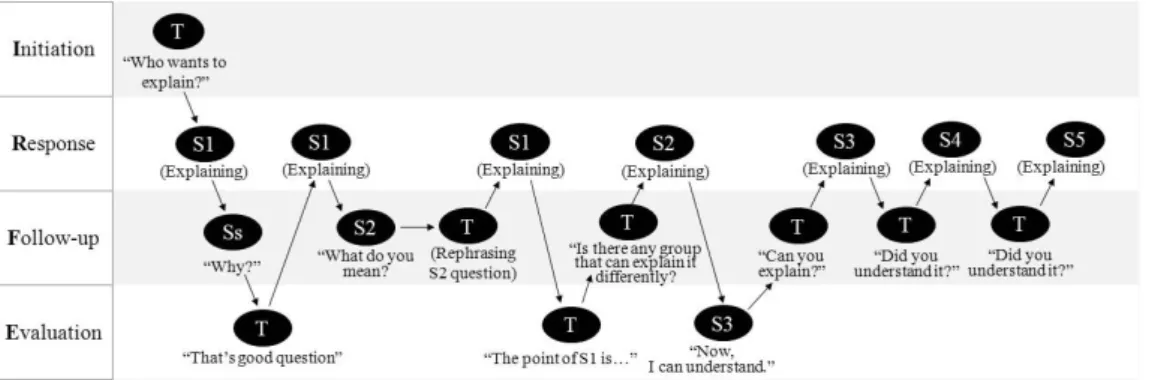
Figure 5. Map of dialogic interaction typical of WCI activities
see her explanation of content. Therefore, Eunhee said that she tried to enact this practice as quickly as possible and usually only when introducing and explaining procedures students needed to know to be able to engage in activities or conducting science demonstrations.
2) Whole class interactive (WCI) – affordances and limitations
The second most frequently observed teaching pattern involved Eunhee engaging students in WCI practices. Figure 4 is a screen-shot taken from video recorded lesson in which the students were engaged in a WCI discussion after they had observed a demonstration at the front of the room. In this demonstration two chemicals were mixed together in a beaker, forming a precipitate that sank to the bottom of the glass.
Following the demonstration, students were asked to move their desks into groups of four and to use a small white board to represent the phenomena they had observed by using chemical symbols to write a balanced equation on the boards. After all small groups had written their equations, Eunhee asked students what precipitate had formed and she called on several students to share their answers without providing any feedback. After four students shared their groups’ ideas, Eunhee asked, “How do you know that this precipitate is calcium carbonate?" She then called on the first student to volunteer to come to the front of the room to explain how she knew the precipitate was calcium carbonate. The following figure is a map of the dialogic interaction that occurred after this question.
This map represents the pattern of discussion that most commonly occurred during WCI activities. In an interview with Eunhee, we learned that this more open WCI pattern was not a practice she would have typically used prior to coming to the IMS.
Eunhee: I tried to do more what students to present their group work with their white board in this school and this is what learning community does a lot. So I have come to use this (strategy) a lot. Long ago, I didn’t give (students) many opportunities to present their group work. Just I would say something and then have a few students answer, and then I would say yes and then move on like this.
Eunhee indicated that this practice of allowing students to engage in more student-centered and student directed dialogue had grown out of her changing beliefs that students needed to be actively engaged in the lesson and to have some ownership for the knowledge they were building. She felt this change in her beliefs regarding the value of this kind of student-directed discussion was influenced by her interactions with the IMS faculty and staff, who valued the concept of a “learning community” and who supported teachers to foster a similar atmosphere in their own classrooms. Eunhee credited this shared schema among the school staff with a change in her teaching practices.
We offer this as evidence of the interactive/dialogic approach most often employed by Eunhee with her students during WCI activities.
Typically, she engaged the students in conversation around a topic and then explored the views of her students by supporting them to respond to one another’s turns at talk (Mortimer & Scott, 2003).
During this time, Eunhee supported the development and negotiation of meaning about the concept they were discussing without overtly negating student contributions or authoritatively shutting students down. Observations of these patterns of interactions revealed that Eunhee enacted practices intended to elicit students’ ideas and her questions served as a resource for scaffolding interactive dialogue among students. In doing so, her students were afforded a social space to articulate their own understandings and questions through an extended exchange.
3) Small Group (SG) – affordances and limitations
A prominent feature of student-centered classrooms is small group activities (SG). While rarely used in typical Korean secondary school classrooms (Choi et al., 2004), SG activities were implemented at least once per lesson in Eunhee’s class and sometimes the entire class was spent working in collaborative groups. In SG activities, students were expected to collaborate to collect data and discuss findings, and to complete specific tasks (such as worksheets or other assignments).
Figure 6 shows the physical structure typically used during SG activities.
Observations of SG activities revealed that Eunhee did not hold
Figure 6. Seat arrangement in SG activities provide for one- on-one engagement with peers and teacher
Figure 7. During IA activities, classroom structures support one-on-one dialogue between teacher and student
Figure 8. Flyer announcing a lecture to be given at the school as a professional development opportunity
the expectation that students should raise their hands to speak and she did not remind students about the noise level, which she did often during WCNI and WCI activities. In an interview, Eunhee said she tried to have students do group work in order to give more opportunities for them to talk about their science learning with their peers.
4) Independent Activity (IA) – affordances and limitations
During IA, students tended not to engage in dialogue with any peers, but occasionally asked questions of the teacher which were then answered during one-on-one dialogues. Tasks during IA included reading from the textbook, copying notes from the board, or solving problems on worksheets. During these activities, it was clear from observations that both the students and Eunhee held similar schema regarding the expectation that students should remain relatively silent and “on task”.
During IA activities, Eunhee had students place their desks into groups of 4-6, but students were not engaged in collaborative activities.
Placing the desks together provided space for Eunhee to stand next to any student in the room, allowing her to engage in more one-on-one dialogue with students (See Figure 7). This structure afforded opportunities for some students to speak with Eunhee during IA activities who did not typically choose to participate during whole class interaction or small group activities. The structures necessary to support these practices included physical resources, like the layout of the desks, and Eunhee’s personal held schema about the value of having students work independently while she connected with students on an individual basis to check students’ conceptual understanding.
We found that the IA structure afforded the greatest opportunity for students to equally engage the teacher for individual support and
attention.
3. What meso level structures afford or limit student- centered science learning in an Innovative School?
In this section, we consider how structures in fields outside of the classroom may limit or afford teachers and students to successfully implement the desired student-centered instructional practices in science classrooms at IMS. Specifically we offer examples of structures within the school (meso level) to describe how structures at different levels can support teachers and students from successfully enacting student-centered strategies that benefit science learning. We begin by considering how these structures, enacted at the school (meso) level afforded teacher and student agency in the classroom (micro level).
1) Professional development programs
As evidenced by photos taken while observing at the school (Figure 8), the administration actively supported the teachers in this school to engage in regular professional development opportunities to promote the goals of the Innovative School. Figure 8 offers evidence of professional development opportunities typically advertised at IMS.
Eunhee recognized and valued that the school supported teachers to engage in small learning communities to share experiences about how to effectively teach using student-centered strategies. In an interview,
Eunhee: Last year, in the case of us science teachers, (we) collaborated very well. Because five teachers would teach the same lessons, we had a meeting once a week to prepare the lesson, which helped us to easily share our lesson plan ideas. (…) In our school, when we talked about the lesson in general, not (with) same subjects (teachers), we gathered for 2-3 weeks with the open class topic. (We) often met in several days before the open class and (we) planned together almost a month before the open class.
Eunhee’s explanation indicates that her participation in the
Figure 9. A new seating arrangement provided by school
professional development community at her school helped to improve her classroom practice by providing a group of teachers (both science teachers and general education teachers) with whom to plan lessons and then reflect on the enactment of the lessons. Collective collabo- ration was an expectation of the school administrators and they provided common planning time for teachers to be able to meet to discuss their work. These are important structural supports that expanded Eunhee’s agency as a teacher because she had a professional support network with whom to develop her ideas and receive feedback on her teaching with a goal of improving her practice. School administrators and teachers fostered the shared schema that collaboration and engaging in co-reflection was necessary and they supported this endeavor through actions, such as providing common time in the schedule for meetings and encouraging teachers to engage in on-going planning sessions with same content and cross-content teaching peers.
2) Supporting material resources and human resources
School administrators also made efforts to support their teachers by providing the material resources and human resources needed to successfully implement the kinds of strategies they learned about during professional development in their classrooms. One example was the promotion of a new school policy related to classroom seating arrangements. In an effort to break away from the traditional practice of placing student desks in rows facing the front, the school introduced a new seating arrangement designed to provide students in marginalized seating areas (like the back of the room) a chance to place their desks in groups that were perpendicular to the board so students could easily engage in group activities while still being able to see the board. Figure 9 shows the seating arrangement resource sheet provided by school so teachers could easily use this resource.
This resources suggested an arrangement that allowed for individual and group seating possibilities.
It was clear in our observations that the students in Eunhee’s class were well accustomed to this seating arrangement because they moved into different formations quickly and with minimal instruction. That the school administration fostered innovative teaching and that Eunhee shared similar schema meant that their efforts were aligned. The strongly held belief that teachers need to be supported to enact
student-centered teaching practices was also evident in the kinds of resources provided by the school to improve classroom teaching, including material resources such as white boards to facilitate small group discussion. Every classroom was equipped with these white boards, which teachers throughout the school used to engage students in collaborative group work. These meso level structures were critical in affording Eunhee agency to enact strategies in her classroom that were new to both her and her students.
Besides supporting material resources, the school administration also made an effort to provide a human resource as a part of innovative teaching and learning. This school developed a mentor-mentee program for students that paired high achievers as mentors for low achievers. This program is based on the research that students can better understand the explanation of a peer (Smith et al., 2009).
In a student interview, it was shown that students valued this program for their learning.
<In student interview of student Y who is high achiever>
Researcher: How do you think about this system (mentor-mentee system)?
Student Y: It is fun as well and just… (…) As I need to summarize when I explain (to my mentee), I have the chance to study once more.
<In student interview of student E who is high achiever>
Student E: I have a mentee. Last time, she got 20 points something, but now she has higher grades, more than 40 points something. Actually she was sleeping a lot (in the lesson) but now I wake her, and then she can listen to the lesson for a while. So it is good that her grades are getting higher.
The mentor-mentee program is representative of one of the ways that school administrators recognized that not only teachers, but also students could serve as a valuable human resource that can be effective for improving peer learning. Developing relationships among students and providing them with opportunities to take responsibility for the learning of their peers is a schema not often fostered in teacher-centered learning environments where students are positioned to compete with one another and teachers are positioned as
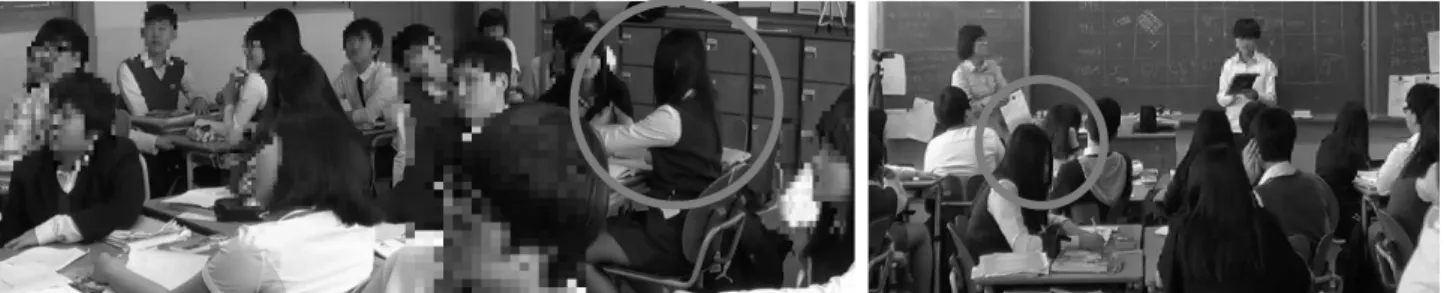
Figure 10. Offprint from the video that shows that Yuna’s gaze is on her paper instead of at the front of the room where her peer is sharing his explanation for the phenomenon they have witnessed in demonstration WCI activity
authoritarians who hold all of the knowledge. This program is an important example of how the school administrators and faculty worked to promote a student-centered learning environment. However, there were some contradictions as revealed in an interview with a middle-level achieving student who noted that the mentor-mentee program was only intended to support low achievers. Students who were identified as being middle level achievers received no benefits from this program. This is an important contradiction, which could be addressed by expanding the program to include all students and to consider mentor-mentee activities beyond academics so that students who may be lower achievers academically could also be positioned as a knowledgeable peer within the learning community in a different area, such as music, art, or sports.
3) Teacher Supports from a learning community
We also see that experiencing three years at the IMS has had an important influence on Eunhee’s thinking about the way that students should experience science. In 2010, Eunhee’s previous school was also working to become an IMS and Eunhee was selected to help to prepare the proposal for submission to the SMOE. While preparing the proposal, she made many efforts to improve her understanding of student-centered learning, such as taking in-service teacher training programs, attending lectures by invited researchers, and reading books on various pedagogical strategies with other teachers. However, Eunhee was troubled that her classroom practices did not always align with her changing beliefs about how to teach students. In an interview, Eunhee expressed this conflict and how she dealt with it.
Eunhee: Students should be the center of the lesson. So I encourage and help students to teach and learn from each other, to speak out, and to express themselves in their own words.
But there really is the gap between the knowing and practice.
I tried to keep waiting because I can feel that it definitely works for students anyhow. But it is not easy because there are many cases that (students) play without paying attention when a task is given. For instance, thinking about the atomic model and presenting their ideas, we had a great fun when we did it. (….) Like this (atomic model) was not in the previous
curriculum. And I have taught this for over 10 years to second year middle school students, but I would not have done it like this. I would have just simply said, ‘An atom looks like this’.
It is not uncommon for teachers to report that their teaching experiences may be in conflict with their beliefs (Haney & McArthur, 2002; Raymond, 1997). For example, Eunhee believed it was important for students to participate in discussions, but she was concerned about what would happen when this practice ended when they transitioned to the high school. She felt conflicted about whether she was preparing her students for their future high school experience.
In surveying students about their experiences, we could see that Eunhee’s students’ beliefs were informed by her teaching as many students reported that they saw both their teacher and their peers as resources for their learning. More than 70% of the students responded that they were willing to ask questions whenever they needed and about 68% of student responded that they freely ask questions to their peers in science. Almost 60% of the students also responded that they regularly collaborated with their peers during class.
When practices are routinely enacted in a field, they become part of the structure (Tobin, 2005) and can exist as a resource for others.
Eunhee’s beliefs and practice of engaging students in dialogue had become a structure that resonated with the students, supporting them to enact this practice in the classroom. However, this same survey also revealed some interesting contradictions for students. In the section that follows, we introduce some examples of macro level structures that did not support the type of reform science teaching practices intended by the school and Eunhee.
4. What macro level structures can limit student-centered science learning in an Innovative School?
In this final section, we work to uncover contradictions by highlighting moments from the data that demonstrate how structures that expanded opportunity for some students and failed to support other students to participate at the same time. In this section, we incorporated student responses from 11 stimulated recall interviews to highlight how macro-level structures were experienced as contradictions by
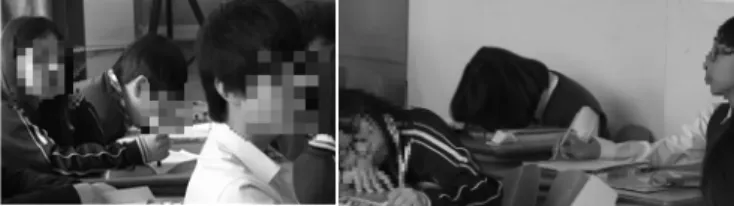
Figure 11. Offprint from classroom video showing students who sleep or rest their heads during science lesson
Eunhee and her students in the science classroom.
1) Prior knowledge and experiences are not considered
Yuna is a high achieving student who did not generally participate in the class activities, even when the structures should have supported her to do so. For example, during one small group activity, Yuna was observed to be writing her answers on the worksheet provided instead of listening to her classmate’s explanations (See Figure 10).
When asked during the interview to explain her reticence to engage in whole class or small group activities, Yuna indicated that while she is willing to actively engage in experiments in the small groups, she prefers not to ask or answer questions in the small group or whole class activities. When asked why, she stated, “I have already learned the contents of these lessons in private institutes”. Because Yuna already had the “right” answer, she felt she had nothing more to gain from listening to her classmates as they explained their ideas.
The concern that private education and tutoring negatively impacts student engagement in lessons in public school is emerging as a serious issue to be addressed in educational research (Bray, 2013; Lee et al., 2010). In Korea, 63.9% of middle school students are estimated to participate in private institutes designed to prepare students for the exams (Statistics Korea, 2014). In a 2001 study of classroom engagement patterns by students in public schools, who also take lessons at private education institutes, Byun and Kim (2001) reported three typical participation patterns, ranging from active participation, no participation, and participation that is disruptive of the lesson. Byun and Kim found that for some students, participation in the classroom activities served as a reinforcement for previously learned material, such that students who had already covered the material in after-school institutes were provided a “second chance” to review material.
They also found some students were “bored” or found the review of old material to be “tedious or a waste of time”. Instead, these students sat quietly in class and not participate at all. In our own study, when we asked some students why they chose not to participate in class, they indicated that they were either tired or bored as a result of the additional time they spent in private lessons after school. As a result, they decreased their engagement in school to save their energy for the evening classes. The final group of students, as described by Byun and Kim (2001), was actively engaged, but their participation
served as a disruption to the flow of the lesson because they readily answered all questions and provided no space for their peers to wrestle with the new material.
Based on our observation of all video recorded lessons (see Figure 10) and our interviews with Yuna, we categorized her as a student who remained passive and non-participatory during WCNI, WCI and SG activities. Responding to additional interview questions, Yuna confirmed that while she always listened carefully to what Eunhee said during review lessons for exams and during demonstration and laboratory classes (which are always conducted using the WCNI and WCI structures, respectively), she preferred not to interact with her peers in small group or whole class activities.
When asked whether she felt it was important to listen to her peers and to be part of the learning community in her class, Yuna revealed a reticence to accept her peers’ answers, citing she was “not sure her peers have the right explanation”. When asked to reflect on the perceived value of engaging students in WCI or SG, “the way the teacher teaches class is not helpful for me”. These sentiments are not consistent with the kind of learning environment that Eunhee and the school were trying to foster. Neither was Yuna’s insistence that participation entails listening in order “receive a good grade”. We believe that macro structures, in the form of widely accepted meritocratic ideologies that foster competitive classroom atmospheres, play a role in conditioning Yuna to be concerned with getting the
“right answer”. This pressure would be especially true for students who regularly attend afterschool and weekend private education institutes to focus on preparing for the college entrance exams (Lee et al., 2010).
The strategies implemented by Eunhee and supported by the school administrators may be misaligned to the goals Yuna may hold as a student who wishes to “pass the exam” rather than engage in student-centered science learning where building community consensus for understanding science concepts is being pursued. The misalignment of these goals can be experienced as a contradiction for Yuna and for her teacher who expects to see students participate in WCI activities. Teachers and school administrators have limited agency as individuals to combat macro level structures that value certain forms of learning (i.e. passing specific exams) over others. As a result, there is a limit to changes that Eunhee and her colleagues can affect in the participation practices of all students.
2) Students are exhausted and lack interest in topics they have already learned about
Some students expressed that their unwillingness to participate in class was due to personal situations, including being too tired to engage in class. The primary reason given by the 11 students interviewed was that they lacked sufficient sleep because they attended 3-4 hours of additional lecture at private institutes each evening after
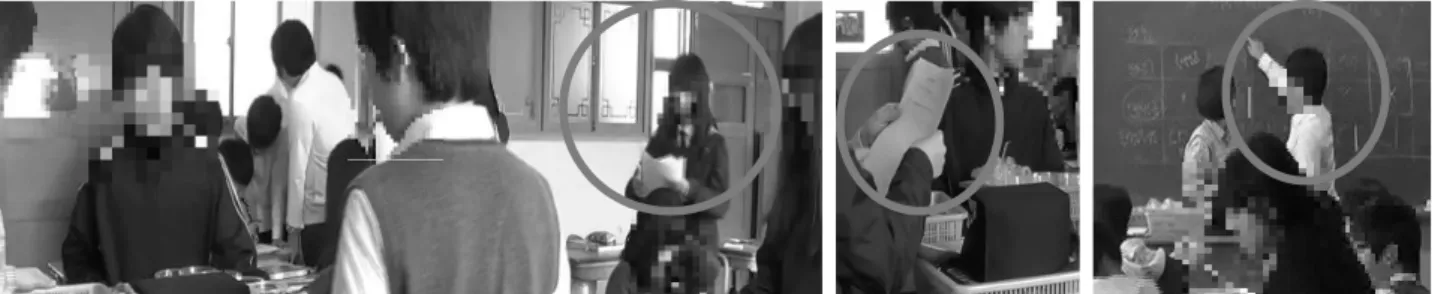
Figure 12. Offprint from the video that shows students asking questions of Eunhee after the lesson
school, meaning they did not go home until 10:30pm each night. As a result, students expressed they were too tired to pay attention during class. A 2014 survey examining the rights of children and youth (Kim et al., 2014) reported that the average middle school student in Korea gets only 7 hours and 20 minutes of sleep per day. This is less than the 8-10 recommended number of sleeping hours (Hirshkowitz et al., 2015) necessary to ensure appropriate health and growth rates for adolescents. In the same survey, 54% of middle school students responded that they lack sleep and 30% cited attending private education institutes as the reason for not getting enough sleep (Kim et al., 2014).
A student (see Figure 11) reported in an interview that because he must do his homework assigned from both the public school and his private education institute, he did not usually go to sleep until after 1am. When preparing for midterms or finals, the student said it was not unusual for him to stay awake until nearly 3am.
As introduced in the previous section, some students indicated that because they had already covered the science curriculum materials in their studies at the private education institutes, they were bored during the class activities and because they already knew all of the content, they had no additional questions and no motivation to explore the topic further. All public schools must use the national curriculum and must adopt textbooks that have been authorized and approved by the Ministry of Education. As a result, there is limited variety in the market and these texts and the curriculum are easily accessible to the private institutions. In some private institutes, students cover the same material being taught in the public schools, only they do so at a much faster rate, meaning students in private institutes may encounter much of the public school’s science curriculum well ahead of the academic year schedule.
3) Misalignment between expectations for student behavior in Innovative classrooms and in Korean Society
Not all of the students who chose not to participate in class did so because they attended private education institutes after school.
Instead, we found that some students were worried that by asking questions during WCI and SG discussions, they would monopolize the discussion, which would take an important learning opportunity away from their peers. To avoid this situation, these students chose
not to engage during class. However, analysis of video revealed that some students who did not ask questions during class regularly stopped Eunhee before she left the room to ask her questions (See Figure 12).
During the video recall interviews, we showed students the video and asked them to tell us about their questions and why they waited until the end of class to ask. One student, Hyun, said she was too afraid to ask a question during class because she did not want to take the time away from other students during the class. She felt that other students may already understand the material, so if she stopped the class to ask her own question, she would inconvenience other learners. A second student, Jin, said she preferred to ask questions of the teacher during IA activities when Eunhee is walking around the room rather than during WCI or WCNI activities because was concerned her question may interrupt the flow of lesson.
Students whose practices were influenced by a desire not to “bother the teacher during the lesson” or not to “inconvenience other students”
might be influenced by macro level structures in Korean culture that shape expectations for what is considered to be courteous behavior.
According to Kim (2011), proper etiquette requires young people to speak only when necessary and to instead provide more opportunities for older people or more senior status people, such as a teacher, to speak without being interrupted. Waiting to ask a question during a more private time would be considered more courteous behavior.
Finally, some students reported that they failed to participate in classroom activities for fear that they would be publically embarrassed should they answer incorrectly, thereby, revealing their lack of knowledge and understanding. To avoid embarrassment, these students chose to avoid participation. Fear of public humiliation is a strong emotion that shapes many aspects of Korean culture. The desire to avoid personal humiliation is deeply engrained in Koreans societal norms (Kang, 2004). While being afraid to be wrong is a universal phenomena reported in various classroom studies in different cultural contexts, concerns about the practice of “saving face”, fear of being wrong or being rude to others might prevent students from asking or answering questions during a lesson. As such, this could be another example of a macro level structure that may shape students practices in ways that do not align to the goals of a student-centered classroom.