J Vet Sci 2018, 19(1), 99-106ㆍhttps://doi.org/10.4142/jvs.2018.19.1.99 JVS
Received 9 Mar. 2017, Revised 29 May 2017, Accepted 6 Sep. 2017
*Corresponding author: Tel: +82-2-880-1273; Fax: +82-2-880-1213; E-mail: [email protected]
†
The first two authors contributed equally to this work.
Journal of Veterinary Scienceㆍⓒ 2018 The Korean Society of Veterinary Science. All Rights Reserved.
This is an Open Access article distributed under the terms of the Creative Commons Attribution Non-Commercial License (http://creativecommons.org/licenses/
by-nc/4.0) which permits unrestricted non-commercial use, distribution, and reproduction in any medium, provided the original work is properly cited.
pISSN 1229-845X eISSN 1976-555X
Integrated analysis of microRNA and mRNA expressions in peripheral blood leukocytes of Warmblood horses before and after exercise
Hang-Ah Kim
1,3,†, Myung-Chul Kim
1,3,†, Na-Yon Kim
1,3, Doug-Young Ryu
2,4, Hong-Seok Lee
1,3, Yongbaek Kim
1,4,*
1
Laboratory of Veterinary Clinical Pathology,
2Laboratory of Environmental Health and Biomarkers,
3BK21 PLUS Program for Creative Veterinary Science Research, and
4Research Institute for Veterinary Science, College of Veterinary Medicine, Seoul National University, Seoul 08826, Korea
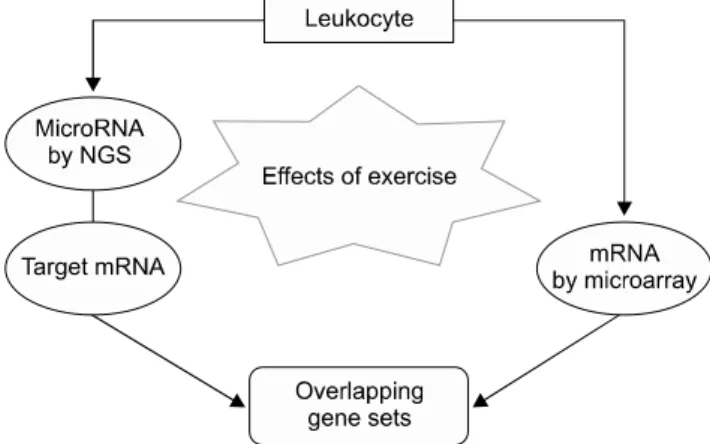
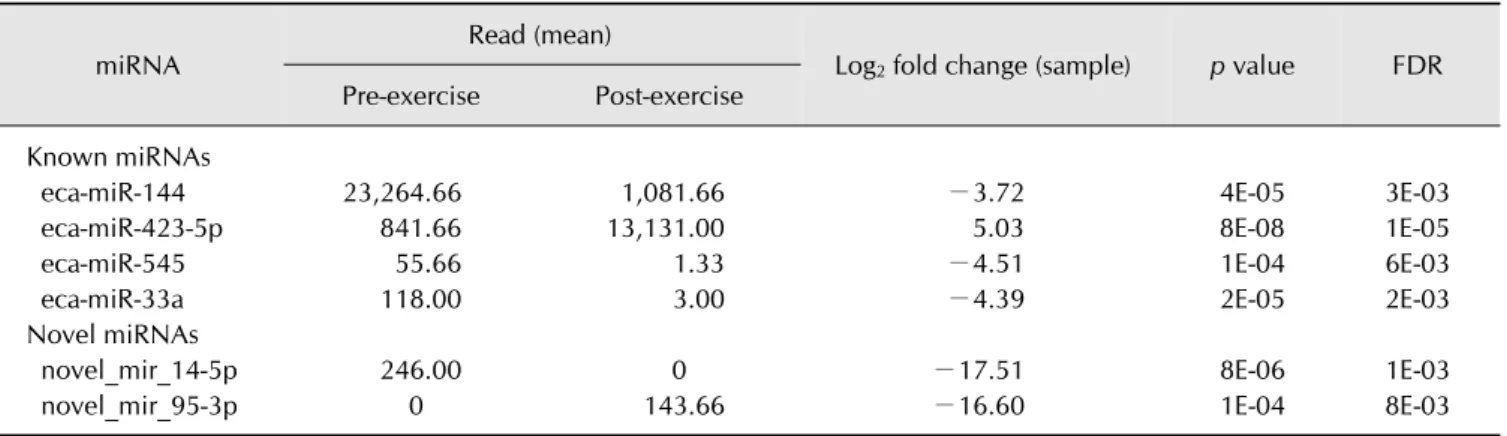
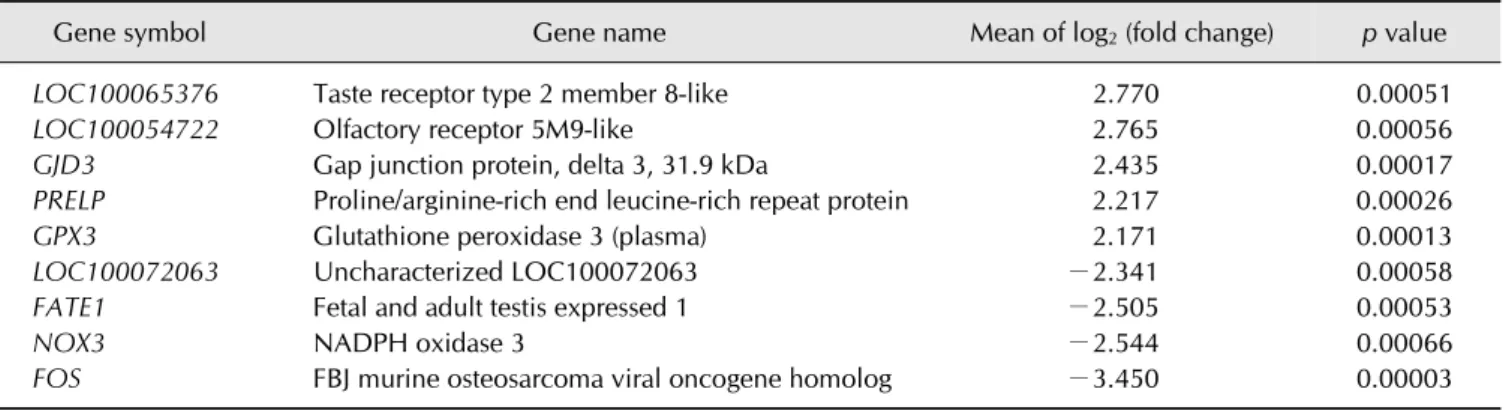
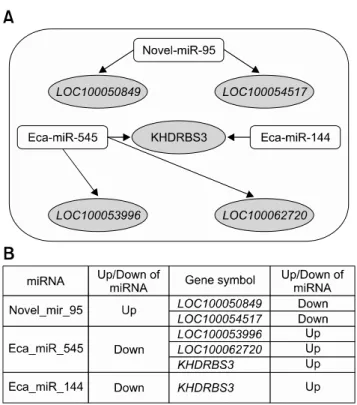
Exercise capacity is a valuable trait in horses, and it has been used as a horse selection criterion. Although exercise affects molecular homeostasis and adaptation in horses, the mechanisms underlying these effects are not fully described. This study was carried out to identify changes in the blood profiles of microRNAs (miRNAs) and mRNAs induced by exercise in horse leukocytes. Total RNAs isolated from the peripheral blood leukocytes of four Warmblood horses before and after exercise were subjected to next-generation sequencing (NGS) and microarray analyses to determine the miRNA and mRNA expression profiles, respectively. The expressions of 6 miRNAs, including 4 known and 2 novel miRNAs, were altered by exercise. The predicted target genes of the differentially expressed miRNAs identified by NGS were matched to the exercise-induced mRNAs determined by microarray analysis. Five genes (LOC100050849, LOC100054517, KHDRBS3, LOC100053996, and LOC100062720) from the microarray analysis were matched to the predicted target genes of the 6 miRNAs. The subset of mRNAs and miRNAs affected by exercise in peripheral blood leukocytes may be useful in elucidating the molecular mechanisms of exercise-associated physiology in horses.
Keywords: exercise, horses, messenger RNA, microRNAs, next-generation sequencing
Introduction
Horses have been domesticated for working, riding, recreation, sport, and racing, and the development of specific breeds has resulted in the selection of athletic phenotypes [21]. Exercise and performance are important factors in the selection of horses because the value of the domesticated animal is determined by its abilities to show improved performance [16]. The Warmblood breed, which has been used for dressage and show jumping, was selected based on its good athletic performance [16]. It has generally been accepted that equine genetics and genomics have a critical role in determination of the horse’s capabilities [2].
Many studies have tried to identify the candidate performance genes related to genetic contribution or heritability of various equine performance traits [2,12,14].
Exercise and training induce molecular homeostasis and adaptations controlled by the transcriptional and translational regulation of genes that encode proteins [34]. Short- and
long-term exercise in athletic horses has been shown to cause immediate molecular changes in a wide range of mRNA transcripts [3,26,31]. Genes underlying an adequate stress response and exercise-adapted phenotypes include those related to energy metabolism, muscle structure and function, hypoxia, and fatty acid oxidation [14,35]. Appropriate gene expression and regulation have been believed to have important roles in the determination of most exercise-related phenotypes in different equine breeds [2,3,31]. However, little research has been conducted on the non-genetic regulatory mechanisms of exercise-related genes.
There has been an increase in studies of small RNAs (sRNAs),
including the gene expression and regulation of microRNAs
(miRNAs), which are approximately 22 nucleotides (nt) long,
and short non-coding RNAs (ncRNAs) that have important
roles in regulating target gene expression through mRNA
degradation and translational inhibition [11]. In horses, miRNAs
have been identified in equine major organs and blood, and they