Effects of Manipulative Therapy Applied to Menstrual Discomfort:
A Meta-analysis
Jung-Hee Jeon, Hyeon-Ju Lee*
Department of Nursing, Tongmyong University
월경불편감에 적용한 수기요법의 중재효과 : 메타분석
전정희, 이현주*
동명대학교 간호학과
Abstract This study examined the effects of manipulative therapy interventions applied to alleviate menstrual discomfort caused by premenstrual syndrome (PMS) and dysmenorrhea. To identify all relevant articles, a search of the articles published from inception up to May 31, 2018 revealed 1,808 studies in eleven databases. Two researchers independently evaluated the quality assessment of theses for 30 studies (31 reports) that satisfied the inclusion criteria using RoB (Ris of Bias) and RoBANS (Risk of Bias Assessment tool for Non-randomized Studies). The data were analyzed by meta-analysis. The effect sizes of the intervention applied to alleviate PMS were -1.20 (95% confidence intervals (CI): -1.55 to -0.86) for foot reflexology, -0.44 (95% CI: -0.68 to -0.20) for auricular acupressure therapy, and -0.56 (95% CI:
-0.80 to -0.32) for acupressure therapy. The effect sizes of the intervention applied to alleviate dysmenorrhea were -0.64 (95% CI: -1.07 to -0.20) for foot reflexology, -1.09 (95% CI: -1.46 to -0.71) for auricular acupressure therapy, and -0.75 (95% CI: -1.00 to -0.50) for acupressure therapy, -0.68 (95% CI:
-1.08 to -0.27) for massage. This study suggests that the manipulative therapy is effective in alleviating the menstrual discomfort caused by dysmenorrhea and PMS.
요 약 본 연구는 월경불편감을 겪는 대상자들의 월경전증후군 및 월경곤란증을 완화하기 위해 적용한 수기요법의 중재 효과를 확인하기 위해 실시한 메타분석 연구이다. 2018년 5월 31일까지 출판된 문헌들을 대상으로 검색한 결과 11개의 데이터베이스에서 총1,808개의 연구가 일차적으로 확인되었으며, 두 명의 연구자가 포함기준 및 배제기준을 충족하는 30개의 논문을 최종 선택하여 RoB과 RoBANS를 통해 각각 질 평가를 수행하였다. 연구 결과, 월경전증후군에 적용한 수기요법의 중재효과는 발반사요법이 -1.20 (95% CI: -1.55 to -0.86), 이압요법이 -0.44 (95% CI: -0.68 to -0.20), 지압요법이-0.56 (95% CI: -0.80 to -0.32)으로 나타났다. 월경곤란증에 적용한 수기요법의 중재효과는 발반사요법이 -0.64 (95% CI: -1.07 to -0.20), 이압요법이 -1.09 (95% CI: -1.46 to –0.71), 지압요법이 -0.75 (95% CI: -1.00 to –0.50), 마사지가 -0.68 (95% CI: -1.08 to -0.27)로 나타났다. 본 연구를 통해 수기요법이 월경전증후군 및 월경곤 란증으로 야기되는 월경불편감을 완화시키는 효과를 있음을 확인한 바, 추후 표준화된 수기요법 개발의 기초자료로 본 연구의 결과가 활용되기를 기대한다.
Keywords : Manipulative Therapy, Menstrual Discomfort, Premenstrual Syndrome, Dysmenorrhea, Meta-Analysis
*Corresponding Author : Hyeon-Ju Lee(Tongmyong Univ.) email: [email protected]
Received August 23, 2019 Revised October 17, 2019 Accepted January 3, 2020 Published January 31, 2020
1. Introduction
Menstruation is a normal physiological phenomenon that is used as an indicator of women’s maturity and health from the menarche period to the menopause, but it causes discomfort in everyday life due to physical, mental and behavioral symptoms of varying degrees including pain. Dysmenorrhea and PMS are the representative diseases that induce discomfort related to menstruation. In Korea, 92% of women in childbearing years appeal dysmenorrhea. The prevalence rate of PMS is 74% according to the International Classification of Diseases (10th revision, ICD-10) and 38% according to the American College of Obstetricians and Gynecologists (ACOG) [1].
Although there are differences in the degree and aspect of symptoms of menstrual discomfort among individuals, they were found to repeat periodically and affect women’s quality of life including difficulties in daily life, decline of concentration, poor academic performance, bad social relations, and reproductive health such as pregnancy and child delivery [2,3]. In terms of the socioeconomic aspect, looking at the results of ‘2007 ~ 2011 Health Insurance Medical Fee Payment Data’ of the National Health Insurance Service, patients who received medical treatment for dysmenorrhea were increased by 47.9% and resulted in a 78.9% increase of health insurance medical fee for dysmenorrhea [4]. This confirmed the burden for medical expenditure.
In other countries, the menstrual discomfort is eased actively and systematically considering the personal, socio-economic impacts due to menstrual discomfort. On the other hand In Korea, adequate diagnosis and treatment are not performed even though it is severe enough to cause discomfort in daily life. Most women who have experienced menstrual discomfort have been found to either rely on bed rest or lying down [5], or relieving pain medication that can
be easily handled without prescription [6]. If the pain persists or women just keep on standing, it may lead to poor health condition due to increased menstrual discomfort, and periodic medication without prescription may lead to side effects and risk of dependency. So adequate intervention should be done.
Since menstrual discomfort caused by dysmenorrhea and PMS results from combined effects of biomedical, psychological and social factors [7-9], many studies are being carried out on intervention methods according to diverse causes, nutritional supplements, pharmacotherapy, exercise and stress relaxation. However, there is no definitive treatment yet [10]. Moreover, as the degree of physical, mental and behavioral symptoms vary widely among individuals, it is difficult to alleviate menstrual discomfort simply using a single intervention method. Considering that this discomfort is caused by a normal physiological phenomenon, primary approach should be taken by a non-pharmacologic intervention before applying a disease-specific treatment method. Furthermore, since menstrual discomfort is not temporary but repeated periodically, it needs to be managed in the long term by focusing on alleviation of symptoms. It would be necessary to propose diverse and specific measures for women to manage and prevent symptoms on their own in everyday life.
Looking at precedent studies related to intervention of menstrual discomfort, there were studies that applied a variety of non-pharmacologic therapies including cognitive behavioral therapy, aromatherapy and complementary and alternative therapies like acupuncture therapy. However, the intervention effects did not agree among studies. In overseas, a meta-analysis was performed though systematic literature review of existing studies on different intervention methods. As a result, detailed information and more effective method of practical application of various intervention methods such as cognitive behavioral therapy
[11], acupuncture therapy [12], and vitamin, mineral and herb therapies [13,14] were verified.
On the contrary in Korea, there was a comprehensive meta-analysis [15], that included 12 complementary and alternative therapies.
Such methods were difficult to be performed by women on their own in daily life, sometimes requiring professional knowledge.
Among complementary and alternative therapies to alleviate menstrual discomfort, manipulative therapy is a technique that uses the simplest and convenient tool called hands to stimulate the nerves using pressure of fingers.
Types of manipulative therapy include auricular acupressure therapy, acupressure, massage, chiropractic therapy and foot reflexology. Among them, auricular acupressure therapy was found to be non-invasive and have strong effects compared to short intervention period [15].
Manipulative therapies are relatively simply and can be used for self care. These non-invasive methods can be applied to different parts of the body. In addition, they can be applied to diseases caused by functional changes rather than physical changes and show several effects at the same time [16]. Manipulative therapies are regarded as methods appropriate for alleviating various menstrual discomforts on physical, mental and behavioral aspects resulting from dysmenorrhea and PMS. Accordingly, the purpose of this study is to overcome limitations of precedent studies carried out in Korea and verify the effects of manipulative therapies that can fulfill various requirements of menstrual discomfort intervention among different complementary and alternative therapies through a meta-analysis. The analysis results can be utilized as basic data to provide evidence-based, practical nursing. The specific purpose is as follows:
- To identify general characteristics of studies on manipulative therapy interventions applied to menstrual discomfort caused by dysmenorrhea and PMS;
- To assess quality of methodologies used by studies on manipulative therapy interventions applied to menstrual discomfort caused by dysmenorrhea and PMS and to analyze details of intervention; and
- To analyze the effect size of manipulative therapies applied to menstrual discomfort on dysmenorrhea and PMS and to verify effective interventions.
2. Methods
2.1 Search StrategiesThis study searched papers published in Korea and overseas until May 2018 using academic research databases (DB) and literature. Foreign DBs used include Cochrane Library, PubMed, Ovid, CINAHL and Embase, and Korean DBs include KoreaMed, KMbase, RISS, National Assembly Library, KISS and NDSL. Major keywords were derived from subjects and interventions that constitute the core question as ‘(premenstrual syndrome (MeSH) OR dysmenorrhea (MeSH) AND manipulative therapies such as acupressure (MeSH) OR massage (MeSH) OR chiropractic (MeSH) OR manipulation, spinal (MeSH) OR foot reflexology (All Fields))’
2.2 Inclusion Criteria and Study Selection This study selected data according to the PICO-SD. Participants (P) are women in their childbearing years who experience dysmenorrhea and PMS. This study applied manipulative therapies such as acupressure, massage, chiropractic therapy and foot reflexology as interventions (I) to reduce premenstrual syndrome and dysmenorrhea. The comparison (C) group was selected as a group that either did not receive manipulative therapies or received a sham intervention. Intervention outcomes (O) were presented as the values that measured PMS using
the mood disorder questionnaire (MDQ) and measured dysmenorrhea using the visual analogue scale (VAS). The study design (SD) was limited to randomized controlled trial (RCT) or non-randomized controlled clinical trial (NRCCT).
This study presented the mean or standard deviation to calculate the effect size of the experimental and control groups, as well as test statistical values or confidence interval.
Studies that performed or paralleled complementary and alternative therapies other than manipulative therapies, studies that cannot calculate the effect size, studies whose original text cannot be found because only abstracts are available, and studies that were not published in Korean or English language were excluded.
2.3 Data extraction
In the data selection process, two researchers independently reviewed all the studies included in the analysis. First, a list of the literatures retrieved through the database was created, and duplicate data were removed through the EndNote (version X7, Thomson Reuters, New York). In the second process, the titles and abstracts of the literature were checked to exclude literature that was not suitable for this study. The bibliographic information of all literature was managed in the same way, and records were excluded in stages for the excluded literatures. In the third process, the final literatures was selected by reviewing the whole text of the searched literatures using the selection and exclusion criteria.
2.4 Quality Assessment
Among final studies selected in this study, RCTs were assessed using the RoB (The Cochrane’s Risk of Bias) tool developed by the Cochrane Bias Method Group. Non-RCTs were assessed using the RoBANS developed by the National Evidence-based healthcare Collaborating Agency. After checking the
original text of studies according to the assessment guideline, the questions were assessed to classify the risk of bias into high, uncertain and low and applied to the quality assessment determination criteria of the RevMan program.
2.5 Statistical Methodology
The effect size and homogeneity of studies were computed using Comprehensive Meta-Analysis (CMA) 3.0 Version. The effect size was selected using the standardized mean difference (SMD) for the same outcome variable. The SMD was selected as the analytical method using the mean, standard deviation, and sample values after the intervention of the experimental group and the control group [17]. The random effects model that resets the weighted value considering heterogeneity among individual studies was computed [18].
Homogeneity of the effect size was verified by visual review of the forest plot, chi-square test using the Q-value, and the Higgins I² value. The I² value indicates the degree of variation of the estimated effect value among studies in %. A value closer to 0% indicates less heterogeneity and a value closer to 100% suggests a high possibility of heterogeneity. When I² is 0%, it means no heterogeneity, 50% means moderate heterogeneity, 75% or more means heterogeneity [12].
A funnel plot was created to visually check symmetry of distribution and test publication bias. The trim and fill method injecting virtual missing values was applied to correct asymmetry.
It was determined that there is no publication bias if the difference in the effect size before and after correction is within 10% [19]. In addition, the safety factor (Fail-safe N, Nfs) was calculated to determine reliability of the test results. Safety factor 5k+10 (k=number of papers subject to the meta-analysis) is a method of verifying whether the effect size calculated by the results of studies published so far appears to be insignificant due to the results of unpublished studies.
3. Results
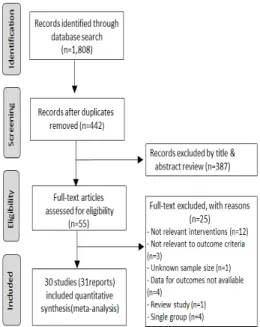
3.1 Data SelectionBased on data search of this study, a total of 1,808 studies were found in 11 DBs. EndNote was used to exclude 1,366 redundant data. The two researchers reviewed the data selection and exclusion criteria using title and abstract of studies, and 387 studies were excluded as they did not satisfy the selection criteria. By reviewing the whole text of 55 studies, 25 studies were excluded to select 30 final studies (31 reports) that satisfy the selection criteria (Figure 1).
Fig. 1. Flowchart of Study Selection
3.2 Description of Included Studies
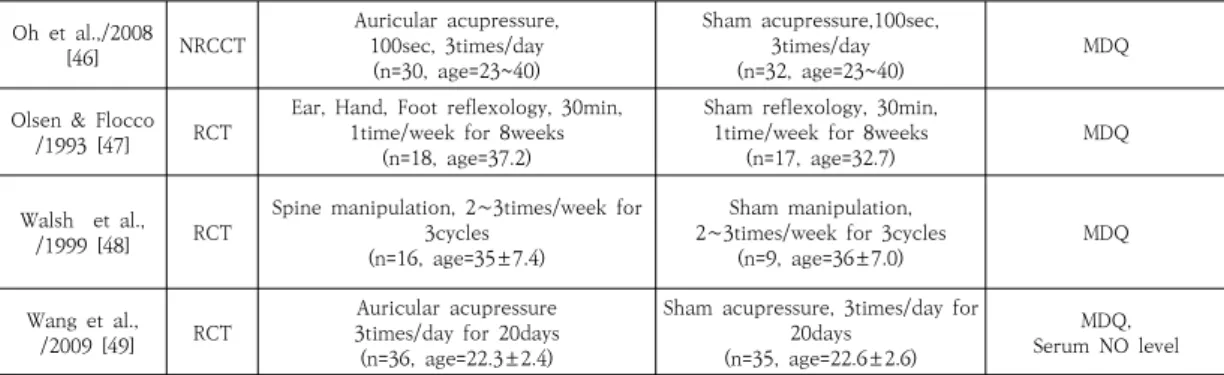
The results of analyzing characteristics of the 30 final studies (31 reports) that applied manipulative therapy interventions are as Table 1. Study design was RCT for 17 studies (54.8%) and NRCCT for 14 studies (45.2%). Age group of subjects was women in their teens for 8 studies (25.8%), women in their 20s for 11 studies (35.5%), women in their 30s for one study (3.2%) and women aged between teens and 40s for 10 studies (32.3%). One of the studies
did not present age of subjects. The range of number of samples was from 13 to 72 for the experimental group and from 9 to 72 for the control group. Intervention types included auricular acupressure therapy (41.9%), acupressure therapy (32.2%), massage (9.7%), foot reflexology (9.7%) and chiropractic therapy (6.5%). Intervention body parts were abdomen (9.7%), feet (9.7%), hands (3.2%), ears (41.9%), San-Yin-Jiao(SP-6) (19.4%), pelvis (3.2%), spine (3.2%) and multiple parts (9.7%).
There were 16 studies that measured symptoms of PMS as a dependent variable and 28 studies that measured dysmenorrhea.
3.3 Quality Assessment
Characteristics of the bias risk assessment used in this study are as presented in Figure 2.
Among the 30 studies (31 reports) selected, quality of 17 RCTs was determined by ROB. For the domains of random allocation order and concealment of allocation order, 65% of studies showed low risk of bias. About 35% of them were described to be random but ambiguous because they did not specifically explain the method. A sham intervention was carried out in 65% of studies for blinding of participants and researchers. For the domain of blinding of result assessment, about 65% of studies showed low risk of bias. For the domains of insufficient results and selective reporting, all studies showed low bias.
Other biases were determined based on the existence of an intervention manual and expertise of the intervention provider, and 59% of studies showed low risk of bias.
The 14 NRCCTs were assessed using the RoBANS. All studies showed low bias in ‘selection of subjects’ assessing selection bias. Whereas bias of ‘confounding variables’ was confirmed in about 57% of studies, it was found to be uncertain in other 43% of studies. For ‘intervention measurement’ which indicates performance bias, risk of bias was high because all studies used standardized tools but only
(a) (b) Fig. 2. Risk of Bias
(a) RoB (b) ROBANS
Author
/year Study
design Intervention group
(Sample size, age) Control group
(Sample size, age) Outcomes measurement Azima et al.,
/2015 [20] RCT Abdomen massage 30min, 2times/week
(n=34, age=21.4±0.9) No treatment
(n=34, age=21.0±1.1) MDQ, Anxiety, Duration of pain Baik/1999 [21] NRCCT Foot reflexology, 30min,
2times/week during the 3weeks (n=19, age=23.9±2.3)
No treatment
(n=18, age=25.1±2.3) MDQ,
VAS, Anxiety Bazarganipour
et al.,/2017 [22] RCT Foot reflexology 20min, 5times/week (n=30, age=22±1.7)
Sham points reflexology, 20min, 5times/week (n=30, age=21.7±1.7)
VAS, Duration of dysmenorrhea, QOL Behbahani et al.,
/2016 [23] RCT Abdomen massage, 20min, 1st∼ 2 days of menstruation for 2 cycles
(n=40, age=20.0±1.4)
Taking ibuprofen 400mg, 3times a day for 3 cycles
(n=40, age=20.3±1.5) VAS
Cha & Sok
/2016 [24] RCT Auricular acupressure, 3days
(n=45, age=16.6±0.9) Sham acupressure, 3days
(n=46, age=16.8±0.6) MDQ, VAS Chen et al.,
/2015 [25] RCT SP6, BL32, Liver3 acupressure 30min, 3times/week
(n=65, age=18.7±1.7)
manual of menstrual health education
(n=64, age=18.7±0.6) MDQ, VAS, ODI Chang & Jun
/2003 [26] NRCCT SP6 acupressure
20min, 1st day of menstruation (n=30, age=19~28)
SP6 touch, 20min, 1st day of menstruation (n=28, age=19~28)
VAS, Cortisol, Epinephrine, Norepinephrine
Jun/2003 [27] NRCCT SP6 acupressure
20min, 1st day of menstruation (n=30, age=19~28))
SP6 touch, 20min, 1st day of menstruation (n=28, age=19~28))
VAS, Skin temperature Table 1. Characteristics of studies included.
Jung et al.,/
2012 [28] NRCCT Auricular acupressure 2times/week for 5 weeks
(n=31, age=19.8±1.1)
Sham acupressure (n=33, age=20.2±0.8)
Negative emotions, VAS, Automatic nervous
system reactions, Skin resistance Jung & Song/
2013 [29] NRCCT Auricular acupressure 3times for 60days(n=13) No treatment (n=14)
Physical symptoms,VAS, Emotional symptoms Kashefi et al.,/
2010 [30] RCT SP6 acupressure, 30min, 1st day of menstruation for 2 cycles
(n=40, age=18∼28))
Sham acupressure, 30min, 1st day of menstruation for 2 cycles
(n=41, age=18∼28) VAS
Kim et al.,/
2004 [31] NRCCT Foot reflexology
50min, 3times/week for 2weeks (n=24, age=teenage)
No treatment
(n=24, age=teenage) MDQ, VAS
Kim et al.,/
2005 [32] NRCCT
Abdomen massage, 5min/day during the 6 days from the 5th day before menstruation to the 1st
day menstruation (n=42, age=20~49)
No treatment
(n=43, age=20~49) MDQ, VAS,
Difficulty of ADL
Kim & Kim/
2014 [33] NRCCT SP6 acupressure, 3days
(n=34, age=21.1±1.9) No treatment
(n=34, age=21.0±1.9) MDQ, VAS, Difficulty of ADL Kim/2013 [34] NRCCT SP6 acupressure, 3days
(n=24, age=21.0±2.0) No treatment
(n=20, age=19.8±2.2) MDQ, VAS Kim et al.,/
2015 [35] RCT Auricular acupressure, 10∼15min, 4times/week for 4weeks
(n=18, age=21.3±1.7)
No treatment (n=19, age=22.2±3.0)
VAS, Difficulty of ADL, Negative feelings, Autonomic nervous
response
Kim & Lee
/2010 [36] NRCCT
Auricular acupressure, 3days, 2times/week from the 1st day before
menstruation to the 6th day menstruation (n=31, age=13~18)
Sham acupressure 3days, 2times/week from the 1st
day before menstruation to the 6th day menstruation
(n=30, age=13~18)
Autonomic nervous VAS, system reactions, Negative emotions Mirbagher et
al.,/2011 [37] RCT SP6 acupressure, 20min
(n=15, age=22±1.6) SP6 touch, 20min
(n=15, age=22±2.6) VAS
Molins-Cubero
et al.,/2014 [38] RCT Pelvis manipulation
(n=20, age=30±6.6) Sham manipulation
(n=20, age=30±5.8) VAS
Ro et al.,/2013
[39] NRCCT
Auricular acupressure 4∼5days from the 1st day before
menstruation to the 3∼4th day menstruation (n=30, age=21.0±3.2)
Sham acupressure, 4∼5days from the 1st day before
menstruation to the 3∼4th day menstruation (n=27, age=20.1±3.1)
MDQ, VAS, Academic stress
Park/2010 [40] NRCCT Auricular acupressure 1 time/week for 10weeks
(n=35, age=13.9±0.9)
Instruction on auriculotherapy
(n=36, age=13.7±0.9) MDQ, VAS Shin/2013 [41] NRCCT Auricular acupressure, 60∼100sec,
3∼5times/day for 2days (n=23, age=17~19)
Sham acupressure, 2days
(n=26, age=17~19) MDQ, VAS
Wong et al.,/
2010 [42] RCT
Auricular acupressure 20min, 2times/day from 1st to 3rd days
of menstrual cycle (n=19, age=22)
Sham acupressure, 20min, 2times/day from 1st to
3rd days of menstrual cycle (n=21, age=21.57)
MDQ, VAS
Yeh et al.,/
2013 [43] RCT Auricular acupressure
6min, 4times/day for 2days (n=24, age=17.9±0.8)
Sham acupressure, 6min, 4times/day for 2days (n=20, age=17.7±0.8)
MDQ, VAS, SF-MDQ Pouresmail et
al.,/2002 [44] RCT
Hagu, Daheng, Zusanli, Sanyinjiao, Taichong acupressure, 10min, 1 time/day
before menstruation (n=72, age=14~18)
Sham acupressure, 10min, 1 time/day before menstruation
(n=72, age=14~18) VAS
Koleini &
Valiani/2017 [45] RCT Auricular acupressure 20min, 1time/week for 10weeks
(n=42, age=18~35)
Taking B6 400mg, 1time/day for 2 cycles
(n=42, age=18~35) MDQ
Oh et al.,/2008
[46] NRCCT Auricular acupressure,
100sec, 3times/day (n=30, age=23~40)
Sham acupressure,100sec, 3times/day
(n=32, age=23~40) MDQ
Olsen & Flocco
/1993 [47] RCT Ear, Hand, Foot reflexology, 30min, 1time/week for 8weeks
(n=18, age=37.2)
Sham reflexology, 30min, 1time/week for 8weeks
(n=17, age=32.7) MDQ
Walsh et al.,
/1999 [48] RCT Spine manipulation, 2∼3times/week for 3cycles
(n=16, age=35±7.4)
Sham manipulation, 2∼3times/week for 3cycles
(n=9, age=36±7.0) MDQ
Wang et al.,
/2009 [49] RCT Auricular acupressure 3times/day for 20days (n=36, age=22.3±2.4)
Sham acupressure, 3times/day for 20days
(n=35, age=22.6±2.6)
MDQ, Serum NO level RCT=randomized controlled trial; VAS=visucal analog scale; NRCCT= non-randomized controlled clinical trial; ; MDQ=menstrual distress questionnaire; QOL=quality of life; SP6=Sanyinjiao; BL32=Ciliao; Liver3=Taichong; ODI=oswestry disability index;
ADL=activities of daily living; SF-MDQ=short form menstrual distress questionnaire; B6=vitamin B6; NO level=nitric oxide
Fig. 3. Forest plot of effect size and 95% CI by manipulative therapy on MDQ 29% of them performed repeated measurements. Bias
was determined to be low in most of studies for detection bias, attrition bias and reporting bias.
3.4 Effects of Manipulative Therapy 3.4.1 MDQ
The effects of manipulative therapies were analyzed according to intervention types applied to PMS are as Figure 3. The overall effect size of
manipulative therapies performed to alleviate PMS was -0.53 (95% CI: -0.69 to -0.37, Hedges’s g:-0.52), which corresponds to a medium effect sizes, and the heterogeneity of these studies (Q=22.56, p=.094; I2=33%) showed small heterogeneity. The effects of manipulative therapies were analyzed separately for different intervention types. Among 16 studies, massage and chiropractic therapy whose number of effect size (k) is less than 2 were excluded.
Fig. 4 Forest plot of effect size and 95% CI by manipulative therapy on VAS The effect size of foot reflexology applied to alleviate
PMS was-1.20 (95%CI: -1.55 to –0.86, Hedges’s g:-1.05). The effect size was -0.44 (95%CI: -0.68 to –0.20, Hedges’s g:-0.41) for auricular acupressure therapy and -0.56 (95%CI: -0.80 to –0.32, Hedges’s g:-0.49) for acupressure therapy.
3.4.2 VAS
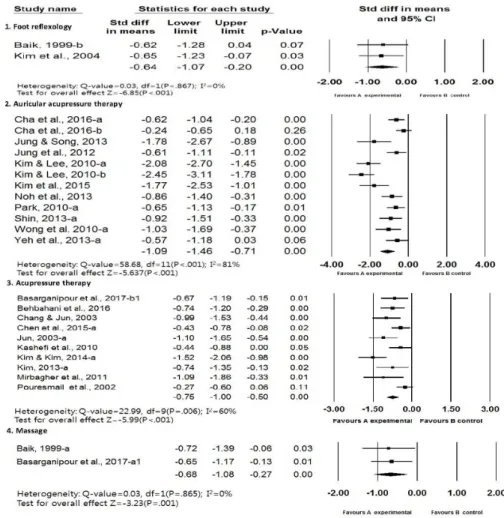
The effects of manipulative therapies were analyzed according to intervention types applied to dysmenorrhea are as Figure 4. The overall effect size of manipulative therapies applied to alleviate dysmenorrhea was -0.98 (95%CI: -1.18 to –0.78, Hedges’s g:-0.94), which corresponds to a
large effect size and was statistically significant (Z=-9.53, p<.001). But in these studies, a relatively large heterogeneity (Q=108.20, p<.001; I2=75%)was identified. So In order to confirm the heterogeneity of each study, Among 28 studies, chiropractic therapy whose number of effect size (k) is less than 2 was excluded. The effect size of foot reflexology applied to alleviate dysmenorrhea was -0.64 (95% CI:
-1.07 to –0.20, Hedges’s g:-0.58). The effect size was -1.09 (95% CI: -1.46 to –0.71, Hedges’s g:-1.05) for auricular acupressure therapy, the effect size was -0.75 (95% CI: -1.00 to –0.50, Hedges’s g:-0.71) for acupressure therapy, -0.68 (95% CI: -1.08 to –0.27, Hedges’s g:-0.60) for massage.
(a)
(b) Fig 5. Funnel plot
(a) MDQ of funnel plot (b) VAS of funnel plot
3.5 Funnel Plot
We were conducted funnel plot for the analysis of publication bias (Figure 5). The studies on manipulative therapies performed to alleviate PMS were distributed symmetrically with the overall effect size of –0.53 at the center. The effect size remained the same after applying the trim and fill method. The number of studies required to reject the meta-analysis results, Nfs, was 240. On the one hand, the studies on manipulative therapies to alleviate dysmenorrhea were not symmetric with the overall effect size of -0.98 at the center. The effect size corrected by the trim and fill method was -1.06 (95% CI: -1.27 to –0.84), increased by 8% compared to the size before correction.
Nfs was 2,381 Based on the fact that there is no influence on the publication convenience when the effect size change is less than 10% after applying trim and fill [19], it is judged that there is no publication convenience in this study.
4. Discussion
This study was attempted to analyze the effects of manipulative therapy interventions applied to menstrual discomfort caused by dysmenorrhea and PMS and to verify more effective intervention methods. Before discussing the results of this study, the results of a meta-analysis study [15] that analyzed studies on intervention of menstrual discomfort embracing diverse complementary and alternative therapies are to be compared with the results of this study. It should be noted that there are limitations in direct comparison of the results due to differences in the intervention methods, collection time and details of analysis.
Complementary and alternative therapies that appeared as non-pharmacologic management strategies for intervention of menstrual discomfort were consistently developed since 1990, and many
interventions were developed including aromatherapy, Koryo hand acupuncture, moxibustion, magnetic field, yoga, heat therapy and auricular acupressure therapy [15].
Among them, the number of studies on manipulative therapies was only 7 from 2001 to 2010 but increased greatly after 2010. Many studies were carried out on different types of manipulative therapy such as foot reflexology, auricular acupressure, acupressure, massage and chiropractic therapy. This is probably because the direction was changed from treatment to prevention and the focus of nursing was shifted to self-nursing ability. The interest in non-invasive manipulative therapies that can be used by women on their own to gain various effects was increased
because of temporal and economic efficiencies. in this sense, this study can provide practical evidence-based data related to hand therapies by comprehensively analyzing and determining latest manipulative therapies.
Compared to the results of a precedent study [9] that women in their 20s appeal physical discomfort related to menstruation the most, many subjects of this study were in their 20s. The ratio of studies conducted on teens was 25.8% (8 studies), which is higher than the precedent study [15]. This is probably the result of increase in teenage students who appeal menstrual discomfort due to earlier occurrence of the first period.
About 54.8% of studies were RCTs, among which 65% showed low bias in the domains of random allocation order, concealment of allocation order and blinding of result assessment. This indirectly confirmed that researchers are trying to increase quality of study methods compared to the precedent study [15].
However, about 35% of studies did not specifically mention their study method and have limits in utilizing and standardizing the study results.
For vitalization of intervention methods, it would be essential to describe study methods in detail.
When there was less than two studies on a manipulative therapy intervention, there were difficulties in verifying the intervention effects.
So we analyzed the effect of manipulative therapies after excluding those studies, but in order to verify the effects of different manipulative therapy interventions and utilize them in practice, it would be necessary to perform a meta-analysis that includes more studies in the future.
The overall mean effect size of each manipulative therapy intervention applied to alleviate PMS was a -0.53, and most of interventions were found to have effect sizes above the median size. The largest effect size among the manipulative therapies to alleviate PMS was foot reflexology. This was different
from previous studies [15], because of the meta-analysis of small-scale studies with a small number of articles with foot reflexology, it is difficult to generalize them even if they are statistically significant. For future meta-analysis, it is necessary to increase the number of studies using foot reflexology. Therefore, further intervention studies using foot reflexology need to be performed additionally.
The overall mean effect size of manipulative therapies applied to dysmenorrhea was -0.98, which corresponds to a large effect size. The range of the effect size of manipulative therapy interventions to relieve dysmenorrhea was -0.64~-1.09, and the largest effect size was shown by auricular acupressure therapy. But it was found to be relatively heterogeneous in the homology test.
In Kim et al. [15] study, it was found that the auricular acupressure therapy, which had the largest effect on the PMS rather than dysmenorrhea.
However, both studies showed the same results in the homogeneity test.
Auricular acupressure therapy has been actively researched more than other manipulative therapies, This means that auricular acupressure therapy is relatively simple, self-care is possible, and is considered to be an effective intervention for relieving menstrual discomfort due to PMS and dysmenorrhea. But like the previous study, there was still a large difference in pressure position, duration of intervention, interval and frequency.
In order to apply auricular acupressure therapy to practice, it is necessary to acquire homogeneity and develop standardized intervention methods.
The limitation of this study was that the number of papers included in each intervention was small, and the details of the intervention period, the number of times, and the intervals were not confirmed for each intervention. As a result, there is no concrete analysis of the intervention and there is a lack of a basis for providing a standard for practical application.
5. Conclusion and recommendation
This study searched domestic and foreign papers which applied manipulative therapies to alleviate menstrual discomfort until May 2018.
The purpose of this study was to investigate the effects of manipulative therapy on menstrual discomfort and to provide basic data of the evidence based practice.
Based on the funnel plot and trim and fill method, the studies on manipulative therapies applied to alleviate PMS and dysmenorrhea were found to have no publication bias.
In this study, 31 reports were analyzed, and it was confirmed that manipulative therapy applied to alleviate menstrual discomfort due to dysmenorrhea and menstrual syndrome. The overall effect size of manipulative therapies performed to alleviate PMS was a medium effect sizes with small heterogeneity. The overall effect size of manipulative therapies applied to alleviate dysmenorrhea was a large effect size with a relatively large heterogeneity. It was confirmed that the manipulative therapy applied to relieve menstrual discomfort due to PMS and dysmenorrhea was more effective than moderate.
Therefore, there is a need to develop a standardized manipulative therapy method and further study on some manipulative intervention therapies with a small number of studies.
References
[1] T. H. Kim, H. S. Park, H. H. Lee, S. H. Chung,
“Premenstrual syndrome and dysmenorrhea in the career women at Bucheon city”, Korean Journal of Obstetrics &
Gynecology, Vol.54, No.9, pp.523-528, Sep. 2011.
DOI: https://dx.doi.org/10.5468/KJOG.2011.54.9.523 [2] B. M. Kim, J. I. Jung, Y. M. Song, J. K. Lee, J. H. Yoo,
“Association of premenstrual syndrome with quality of life in young korean women”, Journal of the Korean Academy of Family Medicine, Vol.29, No.2, pp.108-113, Feb. 2008.
[3] M. O. Kim, “A study on the premenstrual syndrome
and health promoting behavior in female college students”, Journal of the Korean Data Analysis, Vol.20, No.3, pp.1565-1577, Jun. 2018.
[4] Ministry of Health & Welfare. 2007 ~ 2011 Health Insurance Medical Fee Payment Data’ [Internet].
Ministry of Health & Welfare, Available From : http://www.mohw.go.kr/react/al/sal0301vw.jsp?PAR_
MENU_ID=04&MENU_ID=0403&CONT_SEQ=281441&
page=1. 2013 (accessed Nov 10, 2017)
[5] K. H. Nam, Y. H. Lee, “Difference in premenstrual syndrome by physical activity level in high school”, Journal of Korean Public Health Nursing, Vol.28, No.2, pp.320-332, Aug. 2014.
DOI: http://dx.doi.org/10.5932/JKPHN.2014.28.2.320 [6] J. H. Han, S. Kim, S. H. Kim, S. K. Lee, “Relationships among menstrual attitude, premenstrual distress, and premenstrual coping in korean college women”, Korean Journal of Women Health Nursing, Vol.23, No.1, pp.11-20, Mar. 2017.
DOI: https://doi.org/10.4069/kjwhn.2017.23.1.11 [7] J. H. Jeon, S. K. Hwang, “A structural equation
modeling on premenstrual syndrome in adolescent girls”, Journal of Korean Academy of Nursing, Vol.44, No.6, pp.660-671, Dec. 2014.
DOI: https://doi.org/10.4040/jkan.2014.44.6.660 [8] S. H. Moon, H. H. Cho, “Job seeking stress, stress
coping styles, and perimenstrual symptoms in female college students”, Journal of the Korean Data Analysis Society, Vol.16, No.4, pp.2261-2272, Aug. 2014.
[9] S. H. Ahn, S. O. Lee, “A Study premenstrual discomfort and related factors in female college students”, Journal of the Korean Data Analysis Society, Vol.8, No.6, pp.2221-2235, Dec. 2006.
[10] K. A. Jeong, “Premenstrual syndrome (PMS): clinical approach of diagnosis and treatment”, Korean Journal of Obstetrics &
Gynecology, Vol.50, No.3, pp.416-422. Mar. 2007.
[11] M. Kathleen B. Lusky, W. G. Gerrish, S. Shaver, S. L.
Keys, “Cognitive-behavioral therapy for premenstrual syndrome and premenstrual dysphoric disorder: a systematic review”, Archives of Women's Mental Health, Vol.12, No.2, pp.85-96, Apr. 2009.
DOI: https://doi.org/10.1007/s00737-009-0052-y.
[12] S. Y. Kim, H. J. Park, H. Lee, “Acupuncture for premenstrual syndrome: a systematic review and meta-analysis of randomized controlled trials”, BJOG : an International Journal of Obstetrics and Gynaecology, Vol.118, No.8, pp.899-915, Jul. 2011.
DOI: https://doi.org/10.1111/j.1471-0528.2011.02994.x [13] G. Dante, F. Facchinetti, “Herbal treatment for alleviating premenstrual symptoms: a systematic review”, Journal of Psychosomatic Obstetrics and Gynaecology, Vol.32, No.1, pp.42-51, Mar. 2011.
DOI: https://doi.org/10.3109/0167482X.2010.538102 [14] A. M. Whelan, T. M. Jurgens, H. Naylor, “Herbs,
vitamins and minerals in the treatment of
premenstrual syndrome: a systematic review”, The Canadian Journal of Clinical Pharmacology, Vol.16, No.3, pp.e407-e429, Fal. 2009.
[15] J. H. Kim, M. K. Park, M. R. Oh, “Meta-analysis of complementary and alternative intervention on menstrual distress”, Korean Journal of Women Health Nursing, Vol.19, No.1, pp.23-35, Jan. 2013.
DOI: https://doi.org/10.4069/kjwhn.2013.19.1.23 [16] K. R. Wren, C. L. Norred, Real world nursing survival
guide: complementary and alternative therapies, p.5-320, Elsevier-Health Science Division, 2002.
[17] S. M. Yoo, “Effect size calculation in meta-analysis for program evaluation”, Journal of the Korean Data Analysis Society, Vol.19, No.1, pp.197-208, 2017;19(1):197-208.
[18] J. P. T. Higgins, S. Green, Cochrane handbook for systematic reviews of intervention, p.5-226, The Cochrane Collaboration, 2008.
[19] A. J. Sutton, S. J. Duval, R. L. Tweedie, K. R. Abrams, D.
R. Jones, “Empirical assessment of effect of publication bias on meta-analyses”, BMJ: British Medical Journal, Vol.320, No.7249, pp.1574-1577, Jun. 2000.
DOI: https://doi.org/10.1136/bmj.320.7249.1574 [20] S. Azima, H. R. Bakhshayesh, M. Kaviani, K. Abbasnia,
M. Sayadi, “Comparison of the effect of massage therapy and isometric exercises on primary dysmenorrhea: a randomized controlled clinical trial”, Journal Pediatric and Adolescent Gynecology, Vol.28, No.6, pp.486-491. Dec. 2015.
DOI: https://doi.org/10.1016/j.jpag.2015.02.003 [21] H. G. Baik, The effectiveness of foot-reflexo- massage to
premenstrual syndrome and dysmenorrhea, Master’s thesis, Seoul National University. Seoul, Korea, pp.1-48, 1999.
[22] F. Bazarganipour, S-A. Taghavi, H. Allan, N. Hosseini, A.
Khosravi, R. Asadi, S. Salari, R. Dehghani, Z. Jamshidi, M. Resaei, M. Saberian, F. Javedan, Z. Salari, F. Miri, “A randomized controlled clinical trial evaluating quality of life when using a simple acupressure protocol in women with primary dysmenorrhea”, Complimentary Therapies in Medicine, Vol.34, pp.10-15, Jul. 2017.
DOI: https://doi.org/10.1016/j.ctim.2017.07.004 [23] B. M. Behbahani, L. Ansaripour, M. Akbarzadeh, N.
Zare, M. J. Hadianfard, “Comparison of the effects of acupressure and self-care behaviors training on the intensity of primary dysmenorrhea based on McGill pain questionnaire among Shiraz University students”, Journal of Research in Medical Sciences, Vol.2, pp.104, Nov. 2016.
DOI: https://doi.org/10.4103/1735-1995.193176 [24] N. H. Cha, S. R. Sok, “Effects of auricular acupressure
therapy on primary dysmenorrhea for female high school students in South Korea”, Journal of Nursing Scholarship, Vol.48, No.5, pp.508-516. Sep. 2016.
DOI: https://doi.org/10.1111/jnu.12238
[25] H. M. Chen, H. H. Wang, M. H. Chiu, H. M. Hu,
“Effects of acupressure on menstrual distress and low
back pain in dysmenorrheic young adult women: an experimental study”, Pain Management Nursing, Vol.1, No3, pp.188-197. Jun. 2015.
DOI: https://doi.org/10.1016/j.pmn.2014.06.002 [26] S. B. Chang, E. M. Jun, “Effects of SP-6 acupressure on
dysmenorrhea, cortisol, epinephrine and norepinephrine in the college students”, Journal of Korean Academy of Nursing, Vol.33, No.7, pp.1038-1046. Dec. 2003.
DOI: https://doi.org/10.4040/jkan.2003.33.7.1038 [27] E. M. Jun, “Effects of SP-6 acupressure on dysmenorrhea
and skin temperature at CV2 acupoint of low abdomen in the female college students”, Korean Journal of Women Health Nursing, Vol.9, No2, pp.128-137. Jun. 2003.
DOI: https://doi.org/10.4069/kjwhn.2003.9.2.128 [28] H. J. Jung, I. S. Jang, S. M. Park, “Effects of the
auriculotherapy on menstrual cramps, dysmenorrhea and skin resistance variability (SRV) of the female university students”, Journal of the Korea Contents Association, Vol.12, No.9, pp.217-225. Sep. 2012.
DOI: https://doi.org/10.5392/JKCA.2012.12.09.217 [29] H. M. Jung, J. S. Song, “The ear acupressure therapy on
prementrual syndrome and dysmenorrhea on female college students”, Journal of The Korea Society of Computer and Information, Vol.18, No.5, pp.87-94. May. 2013.
DOI: https://doi.org/10.9708/jksci.2013.18.5.087 [30] F. Kashefi, S. Ziyadlou, M. Khajehei, A. R. Ashraf, A. R.
Fadaee, P. Jafari, “Effect of acupressure at the Sanyinjiao point primary dysmenorrhea: a randomized controlled trial”, Complementary Therapies in Clinical Practice, Vol.16, No.4, pp.198-202. Nov. 2010.
DOI: https://doi.org/10.1016/j.ctcp.2010.04.003 [31] Y. S. Kim, M. Z. Kim, I. S. Jung, “The effect of self-foot
reflexology on the relief premenstrual syndrome and dysmenorrhea in high school girls”, Journal of Korean Academy of Nursing, Vol.34, No.5, pp.801-808. Aug. 2004.
DOI: https://doi.org/10.4040/jkan.2004.34.5.801 [32] J. S. Kim, Y. J. Jo, S. K. Hwang, “The effects of
abdominal meridian massage on menstrual cramps and dysmenorrhea in full-time employed women”, Journal of Korean Academy of Nursing, Vol.35, No. 7, pp.1325-1332. Dec. 2005.
DOI: https://doi.org/10.4040/jkan.2005.35.7.1325 [33] I. K. Kim, J. H. Kim, “Effects of SP-6 Seoam pellet
therapy on menstrual pain, menstrual distress and difficulty of ADL in female university students”, Journal of Korean Public Health Nursing, Vol.28, No.2, pp.187-199. Aug. 2014.
DOI: https://doi.org/10.5932/JKPHN.2014.28.2.187 [34] K. H. Kim, Effect of self acupuncture therapy at the
Sanyinjio (SP6) on dysmenorrhea of female college students, Master’s thesis, Kyungpook National University, Daegu, Korean, pp.1-30, 2013.
[35] N. Y. Kim, M. A. Kim, S. E. Choi, “Effects of auricular acupressure on menstrual pain, difficulties in daily life, negative feelings and autonomic nervous responses in female college students”, Journal of
Korean Biological Nursing Science, Vol.17, No.2, pp.159-168. May. 2015.
DOI: https://doi.org/10.7586/jkbns.2015.17.2.159 [36] S. Y. Kim, H. Y. Lee, “Effect of the auricular
acupressure therapy on dysmenorrhea of puberty girls”, Korean Journal of Women Health Nursing, Vol.16, No.1, pp.20-28. Mar. 2010.
DOI: https://doi.org/10.4069/kjwhn.2010.16.1.20 [37] N. Mirbagher-Ajorpaz, M. Adib-Hajbaqhery, F.
Mosaebi, “The effects of acupressure on primary dysmenorrhea: a randomized controlled trial”, Complementary Therapies Clinical Practice, Vol.17, No.1, pp.33-36. Feb. 2011.
DOI: https://doi.org/10.1016/j.ctcp.2010.06.005 [38] S. Molins-Cubero, C. Rodríguez-Blanco, A.
Oliva-Pascual-Vaca, A. M. Heredia-Rizo, J. J.
Boscá-Gandía, F. Ricard, “Change in pain perception after pelvis manipulation in women with primary dysmenorrhea: a randomized controlled trial”, Pain Medicine, 15(1), 1455-1463. Sep. 2014.
DOI: https://doi.org/10.1111/pme.12404
[39] S. O. Ro, H. Y. Lee, J. Lee, M. Kim, “Effects of auricular acupressure on menstrual pain, dysmenorrhea, and academic stress in women college students”, Korean Journal of Adult Nursing, Vol.25, No.3, pp.356-364. Jun. 2013.
DOI: https://doi.org/10.7475/kjan.2013.25.3.356 [40] S. Y. Park, “Effect of the auriculotherapy on
dysmenorrhea in school-aged girls”, Korean Journal of Adult Nursing, Vol.22, No.5, pp.529-536. Jan. 2010.
[41] E. K. Shin, The effects of auricular acupressure therapy on menstrual pain and dysmenorrhea of high school girls, Master’s thesis, Chung-Ang University, Seoul, Korean, pp.1-48, 2013
[42] C. L. Wong, K. Y. Lai, H. M. Tse, “Effects of SP6 acupressure on pain and menstrual distress in young women with dysmenorrhea”, Complementary Therapies in Clinical Practice, Vol.16, No.1, pp.64-69. May. 2010.
DOI: https://doi.org/10.1016/j.ctcp.2009.10.002 [43] M. L. Yeh, Y. L. Hung, H. H. Chen, Y. J. Wang,
“Auricular acupressure for pain relief in adolescents with dysmenorrhea: a placebo-controlled study”, The Journal of Alternative and Complementary Medicine, 19(4), 313-318. Apr. 2013.
DOI: https://doi.org/10.1089/acm.2011.0665 [44] Z. Pouresmail, R. Ibrahimzadeh, “Effects of
acupressure and ibuprofen on the severity of primary dysmenorrhea”, Journal of Traditional Chinese Medicine, Vol.22, No.3, pp.205-210. Sep. 2002.
[45] S. Koleini, M. Valiani, “Comparing the effect of auriculotherapy and vitamin B6 on the symptoms of premenstrual syndrome among the students who lived in the dorm of Isfahan University of medical sciences”, Iranian Journal of Nursing and Midwifery Research, Vol.22, No.5, pp.354-358. Oct. 2017.
DOI: https://doi.org/10.4103/ijnmr.IJNMR_120_16
[46] E. J. Oh, O. J. Jang, H. J. Jeong, H. J. Lee, E. J. Kim,
“The effect of auricular acupressure therapy on dysmenorrhea for women working in the hospital”, Journal of Korean Clinical Nursing Research, Vol.14, No.1, pp.113-123. Apr. 2008
[47] T. Olsen, W. Flocco, “Randomized controlled study of premenstrual symptoms treated with ear, hand, and foot reflexology”, Obstetrics & Gyneology, Vol.82, No.6, pp.906-911. Dec. 1993.
[48] M. J. Walsh, B. I. Polus, “A randomized, placebo-controlled clinical trial on the efficacy of chiropractic therapy on premenstrual syndrome”, Journal of Manipulative and Physiological Therapeutics, Vol.22, No.9, pp.582-585. Dec. 1999.
[49] N. C. Wang, M. C. Hsu, L. W. Chien, C. H. Kao, C. F. Liu,
“Effects of auricular acupressure on menstrual symptoms and nitric oxide for women with primary dysmenorrhea”, The Journal of Alternative and Complementary Medicine, Vol.15, No.3, pp.235-242. Mar. 2009.
DOI: https://doi.org/10.1089/acm.2008.0164.
Jung-Hee Jeon [Regular member]
• Aug. 2007 : Pusan National Univ., Master’s degree in Pedagogy
• Feb. 2013 : Pusan National Univ., Nursing, PhD
• Mar. 2013 ∼ current : Tongmyong Univ., Dept. of Nursing, Associate Professor
<Research Interests>
PMS, Critical care nursing
Hyeon-Ju Lee [Regular member]
• Feb. 2015 : Inje Univ., Nursing, Master’s degree
• Aug. 2018 : Inje Univ., Nursing, PhD
• Mar. 2017 ∼ current : Tongmyong Univ., Dept. of Nursing, Assistant Professor
<Research Interests>
Meta-analysis, Critical care nursing